← The Brett Cooper Show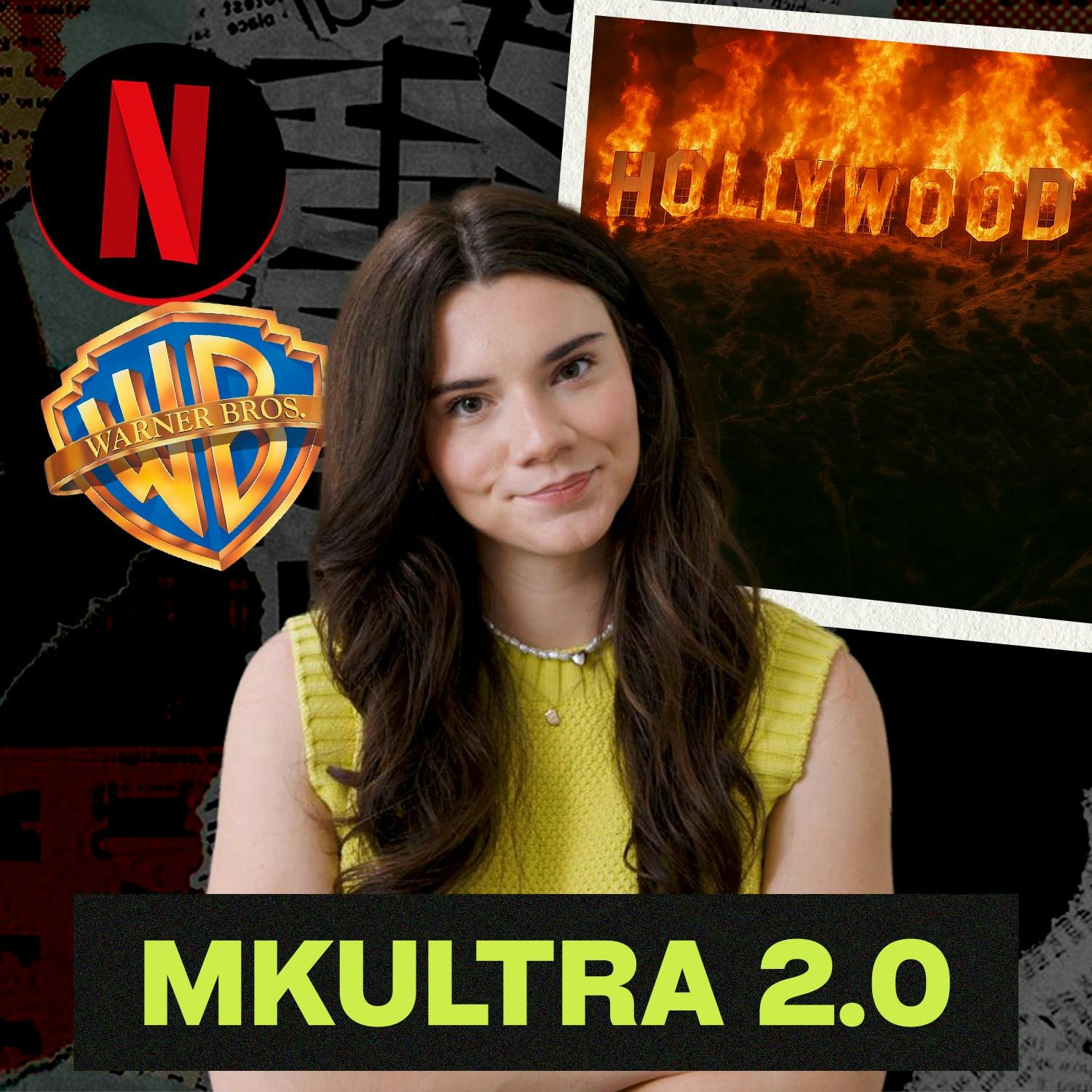
The Brett Cooper Show
Why Both the Left & the Right Hate the Netflix-Warner Bros Merger | Episode 104
00:21:57
Loading summary
Transcript14 lines
- [00:03]
A
Kids, they grow up so fast. One day they're taking their first steps and the next they don't fit into the tiny sneakers they took them in. You blink your eyes and their princess dress is two sizes too small. And their dinosaur backpack isn't cool anymore. But don't cry because they're growing up. Smile because you can profit off of it for real. There are a bunch of parents on depop looking for the stuff your kid just grew out of. Download depop to start selling. When it comes to gifting, everyone on.
- [00:34]
B
Your list deserves something special. Luckily, Marshall's buyers travel far and wide, hustling for great deals and amazing gifts so you don't have to. That means your mom gets that cashmere sweater, your best friend that Italian leather bag, your co workers unwrap their favorite beauty brands, and your nephews the coolest new toys.
- [00:53]
A
Go ahead.
- [00:53]
B
A price is this good. You can grab something for yourself too. Marshalls, we get the deals. You gift the good stuff. Shop now@marshalls.com or find a store near you guys.
- [01:03]
C
If you thought everything in Hollywood was already gay, just wait until the Netflix Warner Bros. Merger goes through.
- [01:13]
All right, so I don't know about you guys, but my entire social media feed across TikTok and X& Instagram is completely dominated by the news that Netflix just won the bidding war to completely acquire one Warner Brothers. I mean, like, can you imagine? I was thinking about this this morning. Could you imagine telling yourself 15 years ago that the DVD rental company Netflix was going to one day be buying Warner Brothers? Like, that is just simply insane. But yes, that is the news that came out on Friday. I'm filming this on Friday. So it came out this morning and you might be thinking like, Brett, why are you doing an episode on this? Why do I care about what is going on in Hollywood with these streaming services? Well, possibly nothing. You literally might not care at all. But this is already becoming a huge political issue and it will definitely have an impact on viewers and possibly more importantly than the content that we and our families all consume. But before we dive into that, make sure that you guys check out cooperconfidential.com, which is our subscription platform, which has brand new farm vlogs, behind the scenes things, cooking vlogs, birth stories, plus ad free episodes. All of that is to cooperconfidential.com all right, let's just dive right into this. So a few months ago, Warner Brothers began receiving offers from Netflix, Paramount and Comcast. And everybody and their mother thought that Paramount was going to bring this deal home, quote, thanks to a combination of financial firepower but political relationships, which you'll see is very important and a relatively smoother regulatory path. And that was the assumption up until a few hours before the news broke. But as of this morning, Friday morning, it was announced that Netflix is officially the winner. They are acquiring Warner Bros. For a whopping $83 billion. In their press release, they said that our mission has always been to entertain the world by combining Warner Bros. Incredible library of shows and movies, from timeless classics like Casablanca and Citizen Kane to modern favorites like Harry Potter and Friends, with our cult defining titles like Stranger Things, K Pop Demon Hunters and Squid Game. I'm sorry, like, comparing Casablanca to Squid Game and K Pop Demon Hunter should not be allowed. Like, this is just too insane. Anyway, just had to say that they said we will be able to do that even better. Together we can give audiences more of what they love and help define the next century of storytelling. This acquisition will help improve our offering and accelerate our business for decades to come. They said with their reach and proven business model, we can introduce a broader audience to the worlds that they create. Warner Brothers giving our members more options, attracting more fans to our best in class streaming service, strengthening the entire entertainment industry and creating more value for shareholders, which is just like, so funny to me. I don't know if you guys are on TikTok, but there's such a joke on there where it's like locking in for my corporate job. I'm just here to make more value for shareholders. And so this line from their press release has been going viral simply for that reason. They're like, all right, we're gonna blow up the entire entertainment industry, but at least we're bringing value to shareholders. And in my mind, this trajectory for Netflix makes complete sense because from the beginning, Netflix has openly stated that they wanted to not only own streaming, but they also wanted to own production. They're making their own TV shows, they're making their own movies. Obviously, it's a little slower going, probably not as high quality as some of the other big studios, but they have been putting themselves in the race. They want to be there. And since every production studio and other network has watched the success of Netflix and then decided to start their own streaming platforms like Peacock and Paramount and HBO Max, all of that, it made Netflix's goal a little bit harder. And so therefore, by acquiring Warner Brothers and their entire catalog and HBO Max their production capabilities, they've done it like, this is basically the end of the entertainment industry as we know it. Because it would be nearly impossible for anybody else to edge out the hold that Netflix will now have on Hollywood. This tweet summed it up well. This guy said not just Warner Brothers haters said that Netflix would never be as big as HBO. They now have 300 million subscribers versus HBO's 20 million haters said Netflix would never be as quality as HBO. Then in 2021 they won more Emmy awards than HBO. And today they just bought HBO and DC Studios, Harry Potter, Game of THR, Looney Tunes, Mortal Kombat, the Matrix, Mad Max and hundreds more in their library which are now up for remake if the deal goes through. And so that being said, and controversy aside, and there is controversy and we will talk about it, do not worry. But all of that aside, that alone just kind of is a badass story arc for Netflix. So snaps for them, I guess. But it is not all rainbows and sunshine because Netflix is also acquiring Warner Bros. 33 plus billion dollars in debt. Hence I think why there was a motivator for them to do a merger. Now it is also important to note that Netflix is not acquiring every single Warner Brothers property. Because Warner Brothers had already decided to do a split down the middle for their business where they would keep their streaming and their production studio in one category and then the other category would be their cable networks which will now be something called Global discovery. And that means that things like CNN, Discovery Channel, HGTV, TruTV, Turner Classics, the Food Network, they will all go to Global Discovery. So do not worry, we are not about to have a Netflix CNN collaboration, at least not yet. And honestly, Netflix might help that poor network, I have no idea. But anyway, that is not coming to your TVs anytime soon. So what does this leave Netflix with? Well, it leaves them with the biggest catalog of movies and TV shows from Friends to Harry Potter to DC Comics, like you heard earlier and in a very uninvolved way. Again taking the controversy out of this. Like as a consumer of this already pre existing, pre produced content, I look at this and I'm like whatever. Like streaming is king now. Like this is less subscription platform to keep up with. It's me saving time from having to Google to see which platform the movie that I wanna watch is on. Like it's consolidated. It seems simple for the consumer. But that is not the bigger issue here and we need to go deeper because it does seem like this will have a massive impact on the future of entertainment. And shockingly, this is actually bringing people together from across the aisle. Like even Jack Posobiec and Elizabeth Warren are agreeing on something like the only other thing that they're agreeing on is how amazing the Bon Charge infrared sauna blanket is. And guys, this thing is incredible. I literally have my sauna blank right here. It is amazing. It gives you all the benefits of an infrared sauna, like sweating out toxins, boosting circulation, easing sore muscles, improving sleep, all of the things. But it is in the comfort of your own home. Literally in my room. No spa appointment, no nasty dirty shared gym sauna with weird people sweating next to you. You just roll it out, hop in it by yourself and relax. I love using it. After long work days or tough workouts, I always come out of it feeling calmer, clearer and more energized. It is literally like hitting reset on your body and on your mind. And Bon Charge. As you guys know, I have worked with them for years now. I think they are amazing. Seriously raising the bar for At Home Wellness. Their sauna blankets are amazing. And use infrared heat, which penetrates deep to support recovery and detoxification without overheating your environment. It is portable as you can see. I literally pulled it across the room. It's easy to use and honestly it is kind of addictive. Like just get in it, turn on a show, read a book. You will be so relaxed. And currently Boncharge is running their holiday sales so that you can save a massive 25% off. Just head on over to boncharge.com and your 25% off code will be automatically added to your order. And but hurry because this sale will end on December 31st of this year. So do not miss this massive chance to save big on your new favorite Bon Charge products. This is one of the wellness tools that you will not regret investing in. Total Game Changer. And speaking of game changers, let me tell you about my friends over@dupe.com, dupe.com is the best holiday shopping hack because if you're out shopping and you spot an amazing chair or maybe a cool jacket at the store, but it is insanely overpriced and you just cannot fathom spending the money on it. You can go straight over to dupe.com, paste the product URL into their site or a photo and and boom. It will find you the same item or similar but for way less. Dupe.com really is the easiest holiday shopping hack. Just type in dupedupe.com before any product URL into your browser and it will instantly find you more affordable alternatives. Perfect for gifting they even have an app and a browser extension that you could easily download. No account required. No signup required. It is completely free to use. So stop overspending on brand names and start saving on holiday gifts with dupe.com immediately.
- [08:52]
A
Instagram Teen accounts default teens into automatic protections for who can contact them and the content they can see. Explore Teen Accounts and all of our ongoing work to protect teens online@instagram.com teenaccounts.
- [09:07]
B
Toast the holidays in a new way and raise a glass of Rumchata, a delicious creamy blend of horchata with rum. Enjoy it over ice or in your coffee. Rumchata. Your holiday cocktails just got sweeter. Tap or click the banner for more Drink Responsibly. Caribbean rum with real dairy cream, natural and artificial flavors. Alcohol 13.75% by volume 27.5. Copyright 2025 Agave Loco Brands, Pojoaaukee, Wisconsin. All rights reserved.
- [09:35]
C
Anyway, back to Bosoviek and Senator Warren Jack Bosobiec was quick to speak out about this early this morning, and his response was political. He said, Obama, Netflix purchasing Warner Brothers, a monopoly to own the minds of America and America's youth. And you might be thinking, okay Brett, now I'm really confused. Like, what do the Obamas have to do with anything? Well, you might remember they have a major deal with Netflix to produce and distribute Obama Cent. And Susan Rice, who worked both under Obama and Biden as the National Security Advisor and the Domestic Policy Advisor, is on Netflix's board and she was brought onto the board to use her political expertise to drive the company forward in that way. And so Posobiec's argument is that this is just giving Netflix more political power over everything that we and our families watch and consume. And I mean, they have already been at the forefront of politicizing content and remakes, and this just gives them even more content, infrastructure and opportunities to do so. And in Jack Bosoviek's mind, I think this is a really interesting argument is that this is what MKUltra has turned into. And somebody responded to him saying that and said yes, MK Ultra never left. It just evolved. Instead of dosing one person with acid, they dose billions with repetitive scripting, trauma imagery and behavioral nudging. Watched A bit of the Beast in Me the other night. That's a new show. First episode had a child death, presumably to shake people into an altered state, and then commenced into hypnotic programming. Within a few episodes there was already a lesbian protagonist, a straight white male, secretly evil and and murderous antagonist, bad Guy expressed antisocialist views and pro right wing views. Living away from cities mocked AOC type shown as hero who is uncorruptible violent agent provocateur is shown to be secretly right wing. Left is shown to be peaceful protesters. The only straight white male good guy is an adulterous drug addict. The NPCs won't notice any of this. They will absorb it as normal. Same format every time. Shake you with traumatic imagery, then program you. Think the opening scene of Stranger Things. MK Ultra is alive and well. Warner Bros Accusation will quintuple their influence. This is scary. Now in reading all of this, this reminds me of the reason why my mom never let TV into our home. Like we had a tv, but I had certain shows that I was allowed to watch. You know, the Andy Griffith Show, I Love Lucy, that sort of thing. We had VHS's of the OG Disney movies that I would watch, but that was it. Her reason for that was not just that she wanted me to go outside and touch grass and play make believe and you know, play with my American Girl dolls, but it was because she did not want somebody else's values to come into our home. She saw that as the door with which other people's ideas and opinions would come in and influence me. And understandably, in her mind, she went, no, I'm the parent. I'm going to teach you what I believe. I'm not letting anybody else sit you down in front of a television to teach you and take you away from me. Every day I realize how right and ahead of the curve she really was. Now moving on from that, Where Posobiek and Elizabeth Warren do seem to agree is on the issues of monopolies and antitrust laws. And in an article on his website Human Events, they wrote, Ultimately this $82.7 billion behemoth of an accusation by one of the most progressive predatory corporations on planet Earth deserves legislation directed at it because this is a blatant antitrust violation. A conservative controlled ftc, Federal Trade Commission and the GOP controlled House of Representatives need to take action against the Marxist coalition that has just been built to disenfranchise American families and indoctrinate the minds of our youth, whether it be the usage of the Clayton and Sherman Acts or imposing fines. This merger needs to be made an example of for the obvious takeover that has been committed to for the sole purpose of communist indoctrination. Now, to be clear, I do not think that Senator Pocahontas agrees that this is Marxist indoctrination. I don't think that that is why she's against this, but she does see this as a dangerous monopoly over the film industry. In a tweet from this morning, she said news Netflix is trying to buy Warner Bros. And she said this deal looks like an anti monopoly nightmare. A Netflix Warner Brothers would create one massive media giant with control of close to half the streaming market. It could force you into higher prices, fewer choices over what and how you watch and may put American workers at risk. But the thing is, as I'm looking at all these posts online, as I'm reading the comments, as I do, a lot of just normal people, normal consumers do not seem to care. Like again, as I said at the beginning, we are already spread so thin across all the different various streaming sites and families are already having to pick and choose what they want to put their money towards, what they want to subscribe to. And now actually it's really annoying that we just got rid of cable, that movie theaters barely exist anymore. And now if you want to have full access to everything, you have to pay for a million different platforms and bundles. Like it has gotten completely, completely ridiculous and consumers are over it. And it's not just for entertainment, it's also for sports and those kinds of things. Like consumers are just done. And so for a lot of people this does seem like it's simplifying the system for them. Like one person said, well, I'm already paying for about 150 different streaming services. If you're telling me that it is consolidated into one payment and platform, I actually think I'm winning. I mean, again, basically cable, which somebody commented about and said now they finna combine all the streaming services and introduce Gen Z into a new streaming service called cable. I mean, imagine that we have come full circle, which actually this is even more full circle than just coming back to cable. And we'll talk about that at the end because this does relate to a Supreme court case from 1948 that is incredibly relevant. But getting to that soon anyway. Now, from the inner Hollywood industry perspective, there is also the more positive argument that Netflix or whoever would have purchased Warner Brothers is effectively bailing them out because they have so much debt. It's giving them more distribution, therefore helping keep Warner Bros. For afloat, keeping its legacy alive and making sure that people's jobs are safe. But the majority of people do not see it that way. In fact, Hollywood on a whole is just completely and utterly unhappy. In fact, an anonymous list of producers has already sent an open letter to Congress by This morning, they had already penned and sent an open letter to Congress begging them to do something. Of course. And here's the thing. Even though my gut response is to laugh at their open letter, their argument is really not that crazy. And it's a concern that a lot of people are sharing online, which is that now Netflix will effectively control the entire entertainment industry and that this will be the final nail in the coffin for independent films and for movie theaters. Because Warner Brothers, the company, will now give Netflix the infrastructure to produce and create whatever they want. They don't have to buy from anybody else anymore. And theoretically, they will be able to take those projects, those TV shows, those movies, and put them directly onto Netflix without going to theaters. They're completely jumping over the theatrical system. Variety wrote about this letter and said that these, these producers said that Netflix could stand to destroy the theatrical marketplace by escalating or eliminating the amount of time that Warner Bros. Films would play in theaters before hitting a combined Netflix HBO Max streaming platform. But apparently if Paramount were to buy it instead of Netflix, they were going to allow Warner Bros. To operate as a standalone business and produce films for theaters. I think they were gonna do 14 theatrical releases a year. And so because of that, people were far more in favor of that acquisition. And even outside of the industry, outside of that list of Hollywood elite and producers, people just don't seem thrilled about this kind of bottlenecking. Like one guy, Jake, said, hbo has made some of the greatest TV shows of all time. Warner Brothers has made some of the best movies ever. Netflix has made some of the worst of both. They will not have the same level of excellence with their new work that Warner Brothers did. This is horrible for the film and TV industry. And listen, like, he's not wrong. It is funny to think about, like, you know, Warner Brothers and hbo, they have the Sopranos and True Detective and Big Little Lies. And then Netflix has Bridgerton. It's like, okay, we're really can't compare here. And like, no hate at all, because I definitely have watched Bridgerton, but it is just a funny comparison. And the thing is, there is an audience for all of that, for all of those shows. And Netflix knows that. That is why they want to merge. That is why they want to buy Warner Brothers, because now they are capturing both. But again, people see that as being at the expense of traditional storytelling and movie magic. HD Movie Source on X said Netflix buying Warner Brothers feels like the end of an era. This is not about growing cinema. It is about locking everything into streaming and forgetting what Made movies matter in the first place. Warner Brothers was the studio that gave us classics on the big screen. And now it is swallowed by a company that only cares about pushing content through an app. When you put it that way, guys, like, it genuinely is very depressing. Like, thinking about, we're completely jumping over movie theaters. We're missing the in person magic of storytelling. People are not going to Broadway shows anymore. We're not going to theater. Tech is taking over everything in our world. AI is replacing jobs. I mean, like, I'm blackbilling you guys right now, but that is is what this feels like. He goes on, and he says, collectors know the difference. Physical releases, theaters, the shared experience of film. That's humanity. That's like real person interaction, art. That is cinema. When the focus shifts to streaming only, you lose the artistry, the permanence, the respect for the medium. It is not progress. It is the death of cinema dressed up as convenience. We will know more in four years. And all the current productions have played out. That is when the real impact will be clear. And the thing is, the CEOs of Netflix are not actually denying any of this, because when pressed, one of them said, no, we're saving Hollywood. We are in a period of transition. Folks grow up thinking, I want to make movies on a gigantic screen and have strangers watch them and to play them in the theater for two months and have people cry and have sold out shows. It is an outdated concept. I mean, like, I don't even know. Like, that's just so sad. But there you have it. The writing is on the wall. They are not mincing words at all. Apparently, those authors chose to leave that letter unsigned. They decided to be anonymous, quote, not out of cowardice, but out of fear of retaliation, given Netflix's considerable power as a buyer and a distributor. So they are really driving the point home that they cannot even attach their names to this letter because of how powerful Netflix already is and how powerful it will become after this merger. But other people who are already big names in the industry were happy to attach their names. Mark Ruffalo, in fact, tweeted out an op ed by Jane Fonda against the sale, which is just like, so classic, because if you have followed anything in politics over the last 10 years, like whatever the current thing is, Mark Ruffalo and Jane Fonda, they will be on the front lines, they will be protesting, they will be tweeting. And so, of course, they believe that this is, quote, a threat to democracy. Now, I have concerns about this merger. I don't know how this is gonna work in Hollywood, but them saying that this is a threat to democracy makes me want it to go through. I'm like, okay, this is laughable. This is not a threat to democracy. But that's just my gut response, because I don't like the two. Anyway, moving on. Christopher Nolan, who is the president of the Directors Guild of America, also spoke out, and he said, quote, we believe that a vibrant, competitive industry, one that fosters creativity and encourages genuine competition for talent, is essential to safeguarding the careers and creative rights of directors and their teams. And I just have to say it is just, like, incredibly ironic that they are now all in favor of this vibrant competition for talent and movies when so many of them in Hollywood grandstand about capitalism and support socialist candidates. It's like, okay, so now you want competition. Now you want the free market and the capitalist marketplace when it helps you Just food for thought. Because it is incredibly ironic. Now, the good thing is not all hope is lost because the deal is not officially done yet. And actually, as of, like, five minutes before I sat down to record this episode, Paramount announced that they are preparing a hostile bid to kick Netflix out of the running. And regardless of who ends up acquiring Warner Brothers, they are still going to have to go through a stiff DOJ antitrust review. And it honestly is not looking great for Netflix. A source allegedly close to the White House said, quote, nobody is buying what they're saying, either at senior levels of the White House or DOJ antitrust. The key concern is that Warner Brothers streaming service HBO Max, is the number three streamer with 100 million subscribers. Combine it with the 300 million subscribers already held by, number one, Netflix, the merge entity would be twice as large as its nearest competitor in streaming, which. Which would be Disney. And to circle back to what I hinted about earlier on in the episode, this will be particularly interesting considering a Supreme court case from 1948, and that was United States v. Paramount, which you can see here. And this is important to talk about, because before this case in 1948, the major Hollywood studios like MGM and Warner Brothers and Paramount and Fox and rko, they controlled the entire movie pipeline from production to distribution. They literally owned the theaters. And because of the Supreme Court case, movie studios are no longer allowed to own the theaters. And this, in 1948, it opened up a whole world of independent storytelling and created what I would say was the golden age of movie storytelling. But with this deal, we're now seeing the opposite. We are seeing the theater or the streamer. Now owning the studio. And that of course is the major concern.
- [21:14]
D
Limo, cable and Doug. Here we have the Limu Emu in its natural habitat helping people customize their car insurance and save with Liberty Mutual. Fascinating. It's accompanied by his natural ally, Doug.
- [21:31]
C
Uh, Limu is that guy with the binoculars watching us.
- [21:34]
D
Cut the camera. They see us. Only pay for what you need@libertymutual.com Liberty Liberty Liberty. Liberty Savings. Very underwritten by Liberty Mutual Insurance Company affiliates.
- [21:43]
C
Excludes Massachusetts.
- [21:45]
A
If you're an H Vac technician and a call comes in, Grainger knows that you need a partner that helps you find the right product fast and hassle free. And you know that when the first problem of the day is a clanking blower motor, there's no need to break a sweat. With Grainger's easy to use website and product details, you're confident you'll soon have everything humming right along. Call 1-800-GRAINGER clickgrainger.com or just stop by Grainger for the ones who get it done.