← The Brett Cooper Show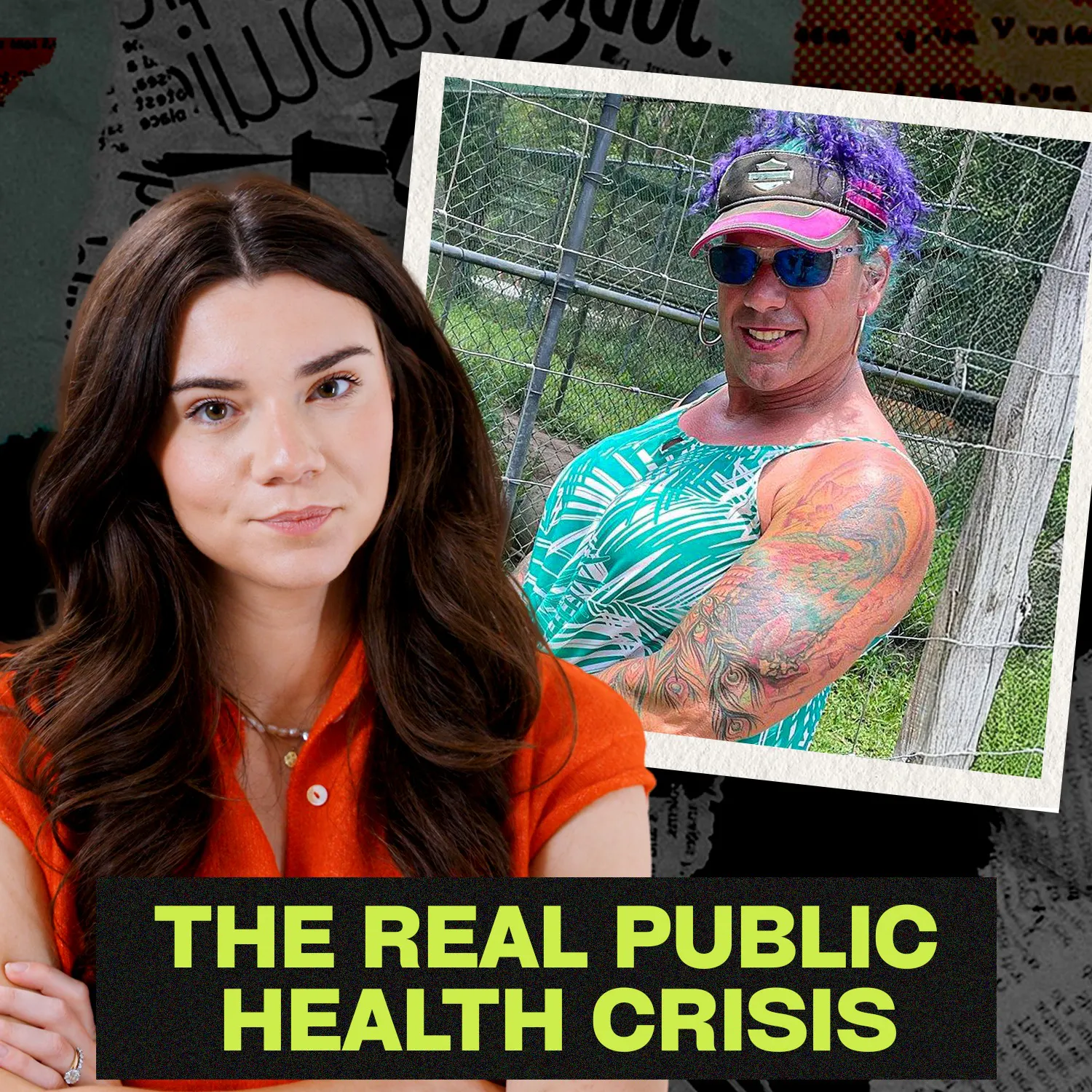
Loading summary
Transcript17 lines
- [00:00]
Brett Cooper
Two days ago, a 58 year old man named Robert Dorgan shot and killed his ex wife and their son while attending their other son's hockey game. He also shot and wounded three other people, including his ex wife's parents and one of her mother's friends. And as of the time I'm recording this episode on Tuesday afternoon, all three are still in critical condition. And as normally happens after any kind of high profile shooting, the Internet and the media jumped into action dissecting every single part of the of the story. But what's interesting to me about the discourse going on right now is that anytime there is a mass shooting like this, the left and the right launch out. You guys know what I'm talking about. They're looking for a way to make it political. They're hoping or often assuming that the shooter is on the other team. And then they use that information as, you know, political fodder. The left runs with it. If it is a straight white man, they say that it is racism, that it is misogyny, especially if he likes Trump. Oh my God, then that's even worse. The right jumps into action if it is a gender confused they them these days, usually the latter. Just saying. But that's what happens every single time. But right now with this shooting, even though this is happening a little bit, there is something a little more niche going on because the shooter is so complex. And so instead of just seeing the left versus the right, we are actually seeing two factions within the right duke it out. And honestly at this point I am just tired of the finger pointing because obviously this issue is so much deeper than politics. Okay, so from where I am sitting personally, I see no debate over this man's motivation. This man went to a hockey game where his entire family was going to be. He intentionally killed his, his family members. And court documents that we all now are seeing show a long history of domestic disputes within this family, starting around the time that he transitioned back in 2020, because yes, this is another trans shooter. Now one article says that Dorgan went to the North Providence Police Department, this all happened in Rhode island and reported that he had recently undergone gender reassignment surgery and that his father in law wanted him out of their North Providence home because of it. So there's an issue there with the in laws. And then the article goes on to say that around the same time his then wife Rhonda, who is the woman who was shot and killed, filed for divorce under grounds for divorce. Rhonda initially wrote quote, gender reassignment surgery narcissistic and personality disorder traits. Those reasons were then crossed out and replaced with irreconcilable differences which have caused the immediate breakdown of this marriage. And yeah, I would say that your husband transitioning is irreconcilable differences. So I understand her there. Now, that divorce was finalized in June of 2021, according to court documents. So what I'm trying to get at here is that this entire thing was personal. This was not a political assassination. This was not just somebody open firing in a movie theater or a direct and clear targets. And tragically, if you guys did not know this, but these types of family disputes are the most common type of mass shooting. One article talking about this reads that between 2014 and 2019, 68.2% of mass shootings included the perpetrator killing at least one family member or having a history of domestic violence. And also on top of that, nearly half of female homicide victims are killed by a current or former romantic partner. So obviously, Dorgan's ex wife, Rhonda is now in that category. So again, this is not inherently political, but because it's the Internet, in 2026, it is going to become political. Now. Soon after the shooting, as she was leaving the local police department, the press caught Dorgan's daughter and asked her a few questions. They just stuck a microphone in her face. And she also confirmed that he was mentally ill. Just watch. My father was a shooter. What happened? Shot my family and he's dead. What was the reasoning? Was there a family argument?
- [03:29]
Ad Read Host 1
He has mental health issues.
- [03:32]
Ad Read Host 2
So, yes, she goes on to describe those mental health issues a little bit more. She says that he had been struggling with mental health for quite some time. She said, quote, he was very sick.
- [03:44]
Brett Cooper
Now, in another interview later on, that same daughter said that her father struggled with mental health his entire adulthood, adding, quote, I think that his gender identity issues are a symptom of a deeper issue. And so I'm guessing that all of this is probably why our lovely friends over at Blue sky went totally silent after it was revealed that this man was transgender. Because at first, everyone on that app was talking about the story. They were doing their usual posts calling for gun control, like saying things like a hockey rink, a school, a grocery store, a church. It keeps changing the location so we pretend it's different. It isn't. This is the cost of choosing gun absolution over human life over and over again. But, you know, in response, I would say that maybe, just maybe, this is the consequence actually of a society that affirms somebody's delusions over and over again instead of encouraging them to get help. Just a thought sir, but we will get back to that later on. Because then again, after the news broke, after his identity was revealed, people went silent. And people and Bluesky are even accusing the app of hiding specific conversations. For example, one person said, I find it interesting that when searching Rhode island shooting, all the posts have a lot of comments. When searching Robert Dorgan, all of the posts that mentioned that he also went as Roberta have no comments, wrong narrative. And then the same person replied to himself and said, it is now over 10 hours since the name Robert Roberta came out and still no a few comments on the posts. Plenty of comments on the ice rink shooting. Is Blue sky censoring posts to protect a narrative? It sure looks like it is. I mean, I wouldn't put it past them, but I also wouldn't put it past people on that app to just conveniently ignore that part of the story. Like it might not be Blue sky censoring them, it might just be like, ooh, that doesn't fit my narrative. So I'm just not even gonna talk about it. Moving on to the next thing. Well, what's Trump doing? I'm gonna talk about that and maybe I'll comment on the posts that just say ice rink shooting rather than diving into the harsh reality that maybe this is connected to something other than than just guts. Now, before we dive into the rest of this story, I do wanna take a moment to tell you about my friends over at jevoty who have sponsored this episode. Now, between being postpartum and having an infant and breastfeeding and doing all the farm stuff and the show and traveling, I know that I am depleted of all my nutrients. But it does not have to be that way. And we all know that if I went to a traditional doctor they would pass it off as me just being a new mom. They would send me home, but not Jevoty. And that is why I love them. Because my friends over at Jevity, they test you for 100 plus biomarkers to figure out what is actually going on inside of your body. And they are 100% physician led, taking a funct approach to the solutions. And to make it convenient, a phlebotomist comes to your house and then everything else happens right from your phone or your computer, virtual appointments in app messaging. All of it. And based on the results from your blood work, they build you solutions. Custom supplement blends tailored to you and what your body needs. Lifestyle advice. All of it. And thanks to their subscription model, which I love. The barrier for entry is lower and it is so much more affordable than their competitors because they want as many people as possible to have access to this kind of support. Now to learn more about Jevoty and to get started, just head to gojevity.com BrettCooper and use code Brett at checkout for 20% off. Again that is G-O G-E V I T I goevity.com BrettCooper use code Brett at checkout and they'll even help you with your brain health so that you can ace all of your classes that you're hopefully taking at gcu. Now, Grand Canyon University is a private Christian university in the beautiful Phoenix, Arizona and they offer over 360 academic programs which are all informed by industry and student learning outcomes, which is so important they are doing things differently and on top of that it is affordable. Now, in addition to federal grants and aid, GCU's on campus students received approximately 196,000 million in scholarships in 2024 and many have also had the opportunity to graduate in less than four years, which saves you money. But really, they want to get you trained and educated and into the workforce so that you can start building your future as soon as possible, which is what higher education should be about, not just taking your money and locking you in there for years and years on end. Now to learn more, just visit gcu.edu myoffer to see what scholarships you may qualify for. Admissible high school seniors and transfer students can schedule a complimentary visit from anywhere in the country. Again, that is gcu Edu myoffer Find your purpose at GCU today. Now back to the story.
- [07:27]
Ad Read Host 1
Eczema is unpredictable, but you can flare less with epglis, a once monthly treatment for moderate to severe eczema. After an initial four month or longer dosing phase, about four in ten people taking ebglis achieved itch relief and clear or almost clear skin at 16 weeks, and most of those people maintain skin that's still more clear at one year with monthly dosing.
- [07:47]
Ad Read Host 2
MGLIS Lebricizumab LBKZ, a 250mg injection, is a prescription medicine used to treat adults and children 12 years of age and older who weigh at least 88 pounds or 40 kilograms with moderate to severe eczema, also called atopic dermatitis, that is not well controlled with prescription therapies used on the skin or topicals, or who cannot use topical therapies. EBGLIS can be used with or without topical corticosteroids. Don't use if you're allergic to Eglis. Allergic reactions can occur that can be severe. Eye problems can occur. Tell your doctor if you have new or worsening eye problems. You should not receive a live vaccine when treated with Eglis. Before starting Ebglis, tell your doctor if you have a parasitic infection.
- [08:20]
Ad Read Host 1
Ask your doctor about eglis and visit ebgliss.lilly.com or call 1-800-lilyrx or 1-800-545-5979 and.
- [08:28]
Brett Cooper
People online and the media confronting this incorrect narrative. Classic New York Times. I mean it is just almost comical at this point. They are basically bending over backwards in their refusal to say that Robert Dorgan was transgender. And instead in their headline they wrote this 2 killed in shooting at a high school Hockey game in Rhode Island. And then this was their subtitle. They said the shooter was born in 1969 and went by two different names. Thank you New York Times. Got it. Totally normal. Makes a lot of sense. Thank you for that hard hitting journalism. Like I'm sorry, New York Times, this is not a Charlie but went by Chuck situation. Let's be honest here. His name was Robert, but in recent years he had gone by Roberta. And you can see Roberta in this photo right here that interestingly, the mainstream media has decided not to publish. They're not posting a lot of photos of him as Roberta now as they do Internet sleuths immediately found this man's ex and it is as disturbing and chaotic as that photo that I just made you all look at. And people were quick to see that the night before he decided to go kill his family, he was making threats online under one Kevin Sorbo post about Congressman Tim Sara McBride Roberts said, Keep bashing us but do not wonder why we go berserk. And then in that same thread he issued a similar warning to Alex Jones after he commented so creepy under Kevin's post. And Robert Roberta then replied, shut the F up Alex. Don't be so butthurt over somebody different. Then wonder why trans people go effing berserk. Both of those comments were on February 15, three days ago, the night before the shooting. Now the other thing I will say here is that this sentiment of trans people going berserk if you do not affirm them or treat them as they want to be treated, that's not new because for years now we have watched the radicalization of people on the left, especially especially those in the LGBTQ community. And antifa really is the culmination of all of that. But they have talked about buying guns, they have threatened people, and obviously they have carried out shootings. We have experienced all of this. And so, unsurprisingly, soon after the news broke, people were on Reddit echoing that sentiment. And I wanted to share this with you guys, just so you know what we are dealing with here. One person said, until society stops ostracizing and demonizing people with different sexual preferences or mental illnesses, this sort of tragic occurrence will continue. Care, acceptance, tolerance, and inclusion are the only smart path forward. So sad. Now, the original poster on this entire thread then replied and said, whenever a trans person commits an act of violence, we should all pause and consider what led them to take this drastic step in the first place. Drastic step? Killing their family is a drastic step. Got it. Most of the time, their story ends up being sadder than the victims. I mean, it's just. It is insane. It's focusing on the shooter who took innocent people's lives over the people who. Who are dead. And also, I'm sorry, actually, I'm not sorry to say this at all, but care and acceptance and tolerance, that is actually what got us here. Because all of that care was fake to begin with. Because real care does not involve affirming somebody's delusions and their mental illness. Care does not involve egging people on as they start to believe that everyone is out to get them, that their human rights are being stripped away. All of that is toxic empathy, and I want none of it. It is not productive. It is the opposite of healthy. And it's not just in regards to the trans community. When you are dealing with anybody with severe mental illness, you cannot affirm that. And we've tried. I mean, I've done so many episodes talking about mental health, mental illness, talking about my experiences in my family, with my brother, an illness of that severity, the things that you see on the streets, if you're walking around Los Angeles or San Francisco or New York City, you cannot fix that with tolerance and affirmation. We have tried. That's why those cities look like that. That's why we see shootings like this. I'm sorry, but that is simply the fact. Greg Price summed all of this up well. And he said if a white guy named Robert, who decided one day that he's now a Latina woman named Roberta, got sent to an asylum instead of having his delusions affirmed, his wife and daughter would still be alive. And I agree, and I know that it's controversial to a lot of People, especially in the mental health world, the aclu, all of those types. But that is why I am in support of reopening our institutions. I know that they were not perfect. I know that there are institutional problems that need to be fixed. I know that it should be done differently. But we do need to figure out how we compassionately protect and care for individuals like this and compassionately protect and care for their family members who are left vulnerable. Because right now our system does none of that. Back to Robert's story and this is getting more into the discourse on the right. I wanna note that both of his tweets that we just read were targeted at prominent people on the right, which normally would make sense in the case of any other trans shooter. But Robert Roberta here was a Republican. There are countless tweets and replies from him about supporting Trump. Like this one from November 9, 2024. He's a trans my whole life post operation back TRUMP 100% love America. They don't stand for me. They don't speak for me. F these commie assholes. He was even against transitioning children. Back in May he even tweeted and said, post op trans here six kids gotta leave the kids alone. It is a commie plot to divide and destroy the country, believe me. Then I read this and I immediately think like, sir, maybe we don't just stop with the kids at this point because you have not set a glowing example right now for supporting your community and supporting these transitions back to the point. I'm showing you guys this because this was not your average Republican. This was not your average trans person. Somebody commented and said, when there's a mass shooting in the us half the country expects it to be a far right person and half the country expects it to be a trans person. So I suppose the day was bound to come when it would be both. It's insane. But yes, I mean this is the horseshoe political theory at work. But again, and this is where I wanna go a little more direct to the right. Like I said, he was not obviously your average run of the mill moderate Republican. He often engaged with Nick Fuentes. He retweeted Alex Jones, he wanted Thomas Massie and Marjorie Taylor Greene to run president. And because he seemed to like Massey and Fuentes and Tucker, now people on the right have begun to point fingers. And so now I'm seeing people argue over how radicalizing that specifically that type of content is. AG Hamilton tweeted last night and said, so the alleged Rhode island shooter was a trans, anti Semite and racist who is a huge fan of Nick Fuentes, Thomas Massie and Marjorie Taylor Greene. If any of that surprises you, then you haven't been paying attention. And here's the thing. I am not disappointed disputing that any of those figures could drive radicalization at all. I mean, they're all polarizing. But stop acting so holier than that when there was literally somebody driven to try to assassinate Candace over her views on Israel. Both things are bad. Both things are radicalization. People can and are radicalized on all sides, on all issues. So stop using this as a gotcha moment. It's weird when the left does it, it's weird when the right does it. It's weird when anybody does it. Because maybe this isn't the politics, maybe it isn't the commentator, maybe it's the vulnerable American populace. Maybe it's the Internet at large and doing to our brains. Maybe it's our mental health crisis, which honestly is at the crux of this entire issue. Now over on Blue sky again, where people were blaming the guns per usual, there was one comment that did stand out to me again. You see here, it's always the guns. We have strong gun laws. And then this person said sad and terrible and ordinary gun violence is a public health crisis. Okay, again, but what about the real public health crisis here? The mentally ill people who are lonely and insecure who then turn to the Internet for affirmation and they find it in a myriad of different factions across the Internet who are vulnerable, who are radicalized on both sides. That is the actual issue. This was a chronically online, angry, politically engaged, mentally ill man. And based on his comments that I can see, he seems like he was easily set off and easily influenced, which is a recipe for disaster while being online obviously. But that also correlates clearly to his actions in real life. Now this is not confirmed, but somebody shared this tip where a friend said from what I am hearing, the man shooter was very upset that he was not invited to the Senior day ceremony because his ex wife wanted to spare the son the embarrassment of having a transparent walk out with a student. They believe that that is why he snapped. John DePretto show posted this and he said parents walk out on the ice on Senior day. It's like they do with football games, soccer games. It is a normal thing in American high schools. And this also makes sense to me, especially considering the comments that he was publicly posting the night before. His family. Based on everything we know from court documents from his comments, understandably due to his mental illness, had pushed him aside. And I'm sure that there was a level of embarrassment and anger on their part. And then he felt rejected, he was angry and he snapped. That's everything those commenters on Reddit were saying as they tried to rationalize this individual's actions, but according to their worldview on Reddit, the solution would be to further coddle the unstable individual to continue to feed into their delusion and self importance rather than acknowledging point blank that this is a dangerous individual and addressing the root issue of mental illness. And I also want to say that this is not exclusive to the transgender community like we see domestic violence and family disputes across the entire spectrum of mental illness all the time. Bipolar disorder, schizophrenia, all of it. We see it happens every day and we just brush it under the rug and we still don't have a solution. They're bouncing around between jails and temporary hospitals and the streets and halfway homes. That is not a solution. And affirming that illness, regardless of what kind of illness it is, only makes it worse. So that is the public health crisis. It's not the guns, obviously.
- [17:07]
Ad Read Host 3
New Year, New Me. Cute. But how about New Year, New Me, New money? With Experian you can actually take control of your finances. Check your FICO score, find ways to save and get matched with credit card offers giving you time to power through those New Year's goals. You know you're gonna crush start the year off right. Download the Experian app based on FICO scoring model offers an approval not guaranteed. Eligibility requirements and terms apply subject to credit check which may impact your credit scores. Offers not available in all states. See experian.com for details.
- [17:34]
Brett Cooper
Experian.
- [17:37]
Ad Read Host 3
Lifelock how can I help?
- [17:39]
Brett Cooper
The IRS said I filed my return, but I haven't.
- [17:41]
Ad Read Host 3
One in four tax paying American has paid the price of identity fraud.
- [17:45]
Brett Cooper
What do I do? My refund though. I'm freaking out. Don't worry, I can fix this.
- [17:49]
Ad Read Host 3
LifeLock fixes identity theft guaranteed and gets your money back with up to $3 million in coverage.
- [17:54]
Brett Cooper
I'm so relieved.
- [17:55]
Ad Read Host 3
No problem. I'll be with you every step of the way. One in four was a fraud paying American. Not anymore. Save up to 40 your first year. Visit lifelock.com podcast terms apply.