Podcast
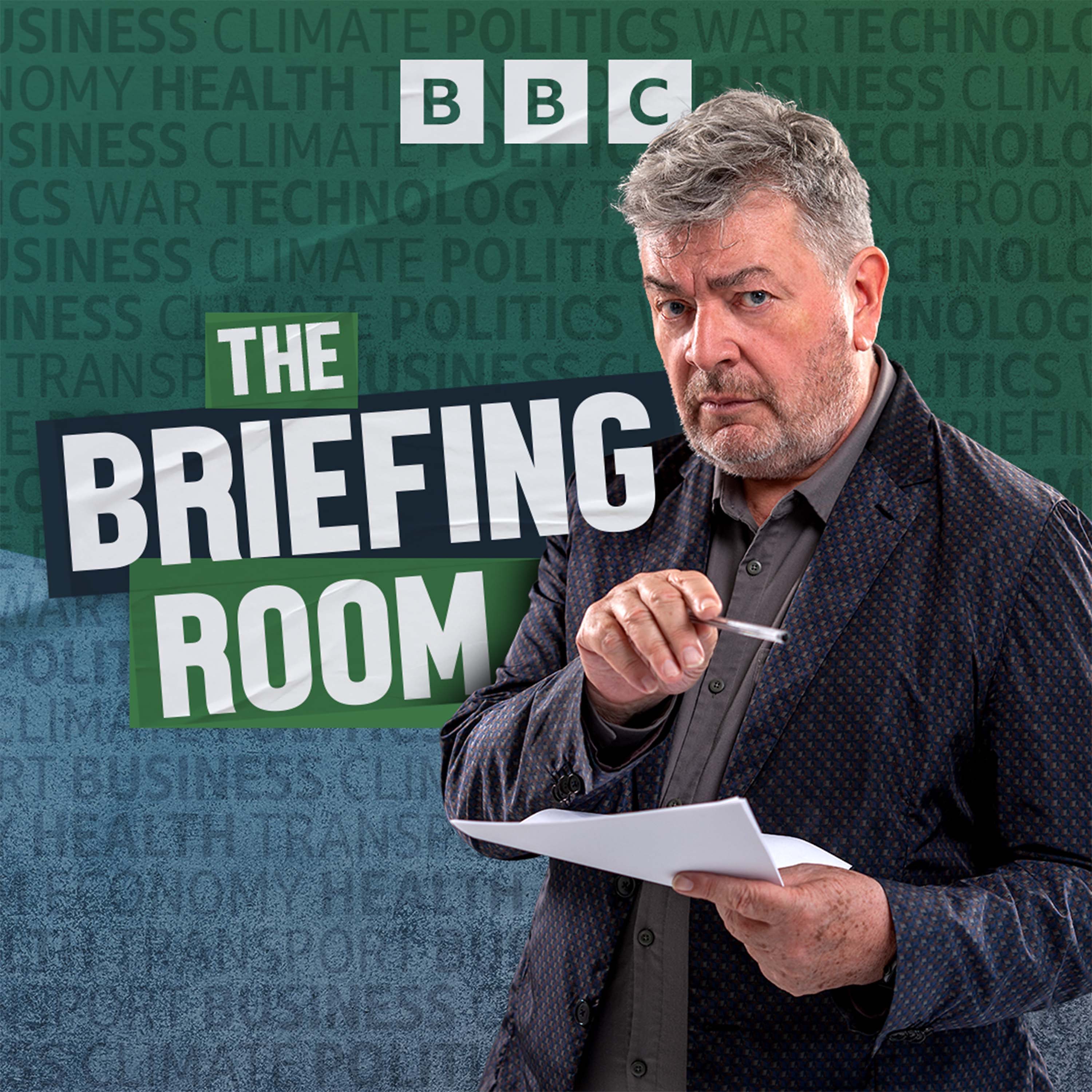
The Briefing Room
Hosted by BBC Radio 4 · EN
David Aaronovitch and a panel of experts and insiders present in-depth explainers on big issues in the news
28episodes
Episodes
Newest firstAll episodes
Part 2: How do we reform social care?
3d ago00:28:59Tap to summarizeUntil recently Baroness Louise Casey was going to deliver her huge review of English social care by 2028. Then the PM changed and so did the date. Now the whole shebang is timed for next summer. Last week we looked at what we mean by social care, who gets it, who provides it and who pays for it. And why our current system is deficient. This week we find out what the alternatives are, how much they’d cost and who’d pay. Guests:Thea Stein, Chief Executive of the Nuffield Trust Simon Bottery, who leads independent charity The King's Fund's work on adult social care Sir Andrew Dilnot, the economist who was asked by the government back in 2010 to chair a commission to find a fair and sustainable way of funding adult social care in EnglandProduction team:Presenter: David Aaronovitch Producers: Ben Carter, Sally Abrahams and Kirsteen Knight Editor: Richard Vadon Sound engineer: James Beard Production co-ordinators: Siobhan Reed and Maria Ogundele
Transcribe →Part 1: How do we reform social care?
1w ago00:28:47Tap to summarizeIt’s social care time again. That moment every five years when politicians and civil servants are on the cusp of coming up with a new system to replace the perceived arbitrary and unfair way in which we in the UK pay for the care that many adults need to be able to live a decent life.Right now Baroness Casey, appointed by Keir Starmer to conduct a urgent review into social care in England with the objective of recommending a new plan, has been asked by Andy Burnham to make it even more urgent and recommend it more quickly.In this first of two episodes looking at what the review is likely to find and its impact on all of us, we’ll look at what we mean by social care, its history and who gets it.Guests:Thea Stein, Chief Executive of the Nuffield Trust Simon Bottery, who leads independent charity The King's Fund's work on adult social care Sir Andrew Dilnot, the economist who was asked by the government back in 2010 to chair a commission to find a fair and sustainable way of funding adult social care in EnglandProduction team:Presenter: David Aaronovitch Producers: Ben Carter, Sally Abrahams and Kirsteen Knight Editor: Richard Vadon Sound engineer: James Beard Production co-ordinators: Siobhan Reed and Maria Ogundele
Transcribe →Part 2: How's the government doing on immigration?
2w ago00:28:48Tap to summarizeAccording to polls immigration remains near the top - or at the top - of public concerns. And now a new prime minister inherits that popular anxiety. Last week The Briefing Room examined arguably the most visible aspect of the migration question: the small boats, asylum seeking and illegal migration. This week we look at legal migration, the issue of reliance on overseas workers, changes to indefinite leave to remain and public opinion about migration.Guests:Madeleine Sumption, Director of the Migration Observatory at the University of Oxford and author of What is Immigration Policy for? Dominic Casciani, BBC Home and Legal correspondent Rob Ford, Professor of Political Science at the University of ManchesterProduction team:Presenter: David Aaronovitch Producers: Ben Carter and Kirsteen Knight Editor: Richard Vadon Sound engineers: Duncan Hannant Sound mix: James Beard Production co-ordinators: Siobhan Reed, Maria Ogundele
Transcribe →Part 1: How's the government doing on immigration?
3w ago00:28:07Tap to summarizeNew PM, old problems. When Labour took office they vowed to tackle the people smuggling gangs behind the small boats crossings, to reduce net inward migration and to act to replace cheap imported labour with better paid indigenous workers. Meanwhile Andy Burnham faces polls showing immigration still sitting near the top - if not the top - of public concerns. But what are the facts here? What does the record show after two years of this government? This issues here are so big and complicated that we’re devoting two programmes to them. In this - the first one - we’re going to focus purely on small boats, asylum seekers and illegal immigration. Guests:Madeleine Sumption, Director of the Migration Observatory at the University of Oxford and author of What is Immigration Policy for? Dominic Casciani, BBC Home and Legal correspondent.Production team:Presenter: David Aaronovitch Producers: Ben Carter and Kirsteen Knight Editor: Richard Vadon Sound engineers: Duncan Hannant and Andy Garratt Production co-ordinators: Siobhan Reed, Maria OgundelePicture credit: Ben Stansall Via Getty
Transcribe →Will a devolution revolution help boost the economy?
4w ago00:28:42Tap to summarizePower to the people! Or, at any rate power to the mayors! As government prepares for yet another new prime minister it is keenly aware that this one has moving power away from the centre to the English regions as his big idea. His central idea. The argument is that such devolution will lead to more and better economic growth. But how does that actually work? Would you get more growth that way? Guests:Jennifer Williams, Northern correspondent at the Financial Times Tony Travers, Professor in Practice in the LSE Department of Government Liam Sides, Associate Director in the Cities and Regions team at Oxford Economics Thomas Pope, Chief Economist at the Institute for Government Production teamPresenter: David Aaronovitch Producers: Ben Carter, Nathan Gower and Kirsteen Knight Editor: Richard Vadon Sound engineers: Sarah Hockley and Neil Churchill Production co-ordinators: Siobhan Reed, Maria Ogundele
Transcribe →Relationship recession: Why are fewer people coupling?
Jul 900:28:38Tap to summarizeFor previous generations, coupling was something only trains did. Then it became a word to describe the business of finding a partner. An important business for the future of the species. But today in the developed world - and even beyond - the data shows that coupling is significantly down. Increasingly, people are just not forming those relationships. There are all kinds of theories out there now about why this is happening, ranging from the intriguing to the improbable. So what do we know about this noncoupling and its implications? Guests:Dr Alice Evans, visiting Associate Professor at Stanford and author of the upcoming book The Great Gender Divergence John Burn-Murdoch, columnist and chief data reporter for the Financial Times Presenter: David Aaronovitch Producers: Ben Carter and Kirsteen Knight Editor: Richard Vadon Sound engineer: Gareth Jones, Neil Churchill Production co-ordinator: Siobhan Reed, Maria OgundeleImage credit: Malte Mueller, Getty Images
Transcribe →Iran: If the war is over...who won?
Jul 200:28:23Tap to summarizeTwo weeks ago a Memorandum of Understanding was signed between the Americans and the Iranians aiming at ending a bomb, missile-and-drone conflict that has lasted four months. Victory has been claimed by everyone and on behalf of everyone. So is the US/Israeli/Iranian war effectively over bar the seemingly inevitable bombast? If so did anyone win? On what terms? And where does it leave the rest of us? Guests:Shashank Joshi, The Economist’s Washington bureau chief Ali Vaez, Project Director, Iran at the Crisis Group in Washington DC Suzanne Maloney, VP and director of the Foreign Policy programme at the Brookings InstitutionPresenter: David Aaronovitch Producers: Ben Carter and Kirsteen Knight Editor: Richard Vadon Sound engineer: Neil Churchill Production co-ordinator: Siobhan Reed
Transcribe →Is Russia under pressure from Ukraine?
May 2100:27:57Tap to summarizeThe war between Russia and Ukraine has shifted closer to Moscow. In the past week Ukraine has sent drones, made by Ukraine, to Moscow. While many were intercepted, 3 people died when an apartment block was hit. For many Russians the war - or special military operation as President Putin calls it - has been far away. But not any longer. At the same time though, Russia continues to hit cities across Ukraine and civilians continue to die. David Aaronovitch and his guests discuss whether Putin is under greater pressure now and whether the trajectory of this conflict has changed with the use of drone-warfare?Guests: Steve Rosenberg, BBC Russia Editor Christopher Miller, Ukraine Correspondent, The Financial Times Angela Stent, Senior Fellow at the American Enterprise Institute and former US National Intelligence Officer for Russia and EurasiaPresenter: David Aaronovitch Producers: Caroline Bayley and Kirsteen Knight Production Co-ordinator: Maria Ogundele Sound Engineer: James Beard Editor: Richard Vadon
Transcribe →Ten years of The Briefing Room
May 1400:28:42Tap to summarizeIt's ten years since the Briefing Room was first transmitted in May 2016. And what a decade it's been. To mark the tenth anniversary the programme looks at the biggest changes at home and abroad since that momentous day in British broadcasting. We’ve had Brexit, a pandemic, the Gaza war, the Russian invasion of Ukraine and Donald Trump - twice. It is hard to remember such a time. So David Aaronovitch's three expert guests will help him answer the question: are we even the same people as we were back then? Guests: Anand Menon, Professor of European Politics and Foreign Affairs, King’s College London Bronwen Maddox, Director and CEO, Chatham House Meg Russell, Professor of British and Comparative Politics in the Department of Political Science at University College London. Presenter: David Aaronovitch Producers: Caroline Bayley, Kirsteen Knight, Sally Abrahams Production Co-ordinator: Maria Ogundele Sound engineers: James Beard and Neil Churchill Editor: Richard Vadon
Transcribe →Are we still going to Mars?
May 700:28:03Tap to summarizeA month ago the Artemis II crew landed safely in the Pacific Ocean, completing their historic space mission to the far side of the moon. It’s been several decades since the last human mission to the moon - although this time there was no landing. However, the 4 astronauts travelled further from earth than any human ever has so far. David Aaronovitch asks his guests whether space exploration is back in fashion and if so what’s next? And are we any closer to a human mission to Mars and what would we hope to achieve there?Guests: Dr Julia Balm, Research Associate, Freeman Air and Space Institute in the School of Security Studies, King’s College London Professor Andrew Coates, Mullard Space Science Laboratory, University College London Libby Jackson, Head of Space, Science Museum, London Presenter: David Aaronovitch Producers: Caroline Bayley, Sally Abrahams, Kirsteen Knight Production Co-Ordinator: Maria Ogundele Sound Engineer: James Beard Editor: Richard Vadon
Transcribe →