← The Briefing with Jen Psaki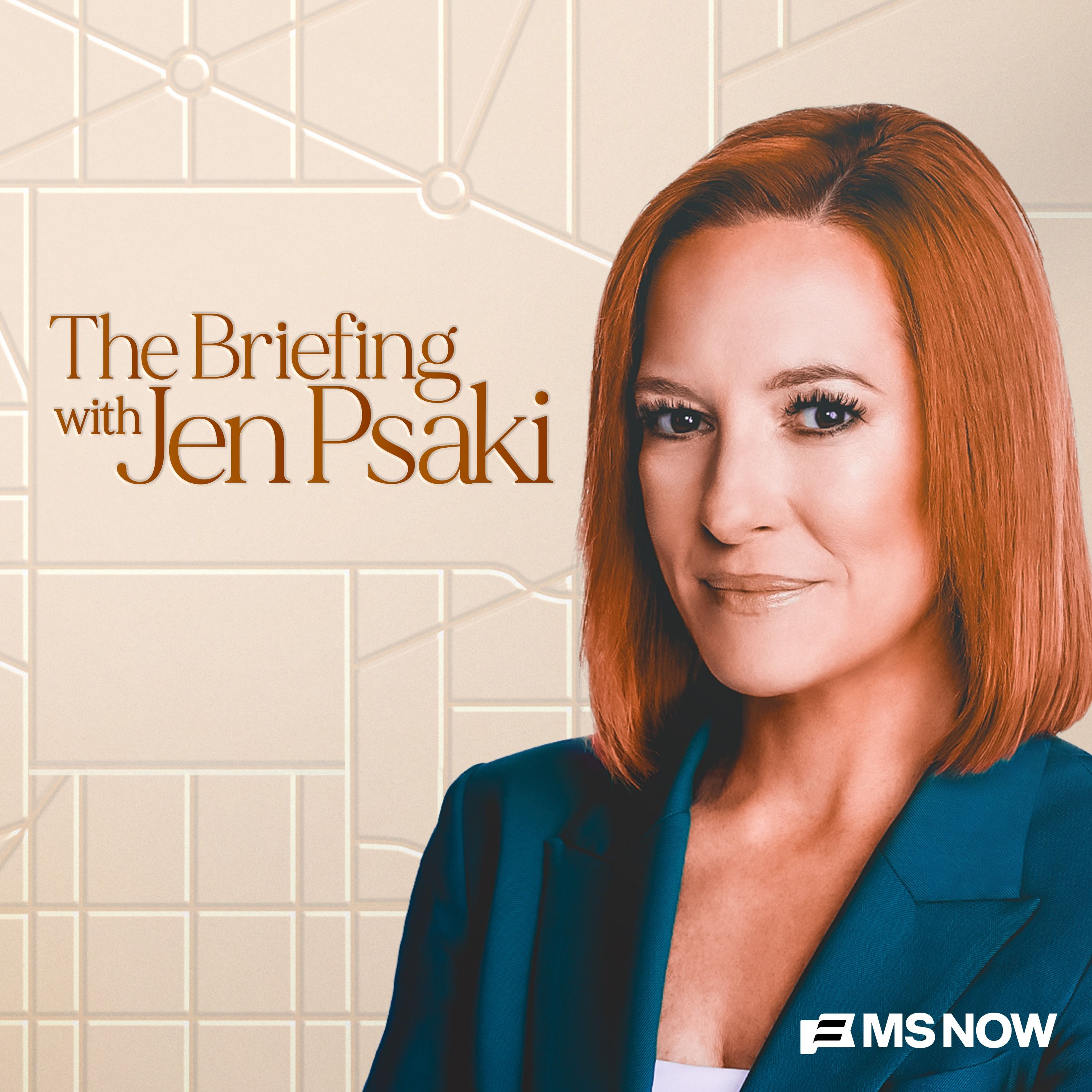
The Briefing with Jen Psaki
Everywhere and All at Once: A Path Forward for Democrats
00:42:57
Jen Psaki welcomes Governor J.B. Pritzker, who gave a speech yesterday in New Hampshire lambasting Trump, criticizing “do-nothing” Democrats and calling for mass mobilization against the growing number of unprecedented attacks the Trump administration has launched against migrants, universities, and the American economy. They discuss the administration’s stance on migrants, which hits home for Pritzker personally, as the child of Ukrainian immigrants. Jen also speaks with The Atlantic's Ashley Parker, who interviewed Trump in the run-up to his 100-day milestone.
Loading summary
Transcript66 lines
- [00:00]
Host
Here's why April chose to vaccinate her child.
- [00:04]
Chris Hayes
I think actually meeting someone who was not vaccinated and now has a lifelong struggle with a childhood disease really cemented for me that it's super important that we as parents continue to vaccinate our children.
- [00:24]
David Frost
Talk to your pediatrician or visit yvaccines.com.
- [00:27]
J.B. Pritzker
Brought to you by Merck Sir David.
- [00:31]
David Frost
Frost gave us an intimate look at some of the most compelling personalities of our time.
- [00:36]
Chris Hayes
What makes people tick fascinates me. You can't fake interest.
- [00:40]
J.B. Pritzker
You can't fake curiosity.
- [00:42]
David Frost
MSNBC Films presents a six part documentary series, David Frost versus On the next episode, Jane Fonda.
- [00:51]
Chris Hayes
The war is being escalated in the most tragic, cruel way.
- [00:56]
David Frost
Sunday at 9pm Eastern on MSNBC.
- [01:09]
Chris Hayes
Okay, the first thing I want to tell you tonight is that Illinois Governor J.B. pritzker is going to join me live. And you may have seen the speech, you may have seen clips, but he gave quite a speech last night in New Hampshire. He attacked the Trump administration with some of what I would consider the most direct and clear language we've heard from any elected Democrat in a very long time. He also went after what he called do nothing Democrats, which is a very interesting and important part of the conversation, what it means. He called for mass protests and for mass mobilization and basically for disruption. Now, if you haven't seen that speech, and you may not have, it happened on a Sunday, we want you to see that speech and we're going to play a lot of it throughout the course of the next hour. And we're also going to talk to Governor Pritzker about it, including the do nothing Democrats, because I really do think it raises a lot of important questions about how Democrats should be approaching this moment in the story, in my view, of what the opposition has done across these first 100 days of the Trump administration, and frankly, what they're going to do moving forward is every bit as important to focus on as what the Trump administration has done and what they're going to do moving forward. And one of the things I've noticed is that the disagreement among Democrats about how to approach this moment actually isn't really an ideological one. I mean, yes, of course there are debates and disagreements on big issues, on the margins, and even some bigger than the margins. Those are important, too. But Democrats generally agree that taking a wrecking ball to the economy with a half cocked trade war is a bad idea, as most people agree. Democrats agree that letting the world's richest man, you know who I'm talking about, and his band of weird interns rifle through the federal government and fire people who answer the phones at Social Security offices, people who track extreme weather events, people who research cancer is a bad idea. Democrats agree that mistakenly shipping a legal resident to a notorious foreign prison is outrageous because it is. And deporting US Citizens as young as two years old is appalling because it is. Democrats agree that abusing your power to go after law firms and the media and universities is the stuff of tin pot dictators. They agree on that, all of that. So the values in that sense are all pretty aligned. But there are what I consider, for the most part, some healthy disagreements about how to respond to all of that, including what issues to focus on and elevate. What tactics should be used to stand up to the actions of the Trump administration, what's effective. I mean, there are some Democrats who appear to have chosen at this moment the age old, strongly worded letter route.
- [03:56]
J.B. Pritzker
He is using antisemitism and it's appropriate to go after specific incidents of antisemitism as a pretext to hurt these great universities. It's going to hurt every American. So we sent him a very strong letter just the other day asking eight very strong questions about why this isn't just a pretext.
- [04:17]
Chris Hayes
Well, you'll let us know if you get a response to that letter. I do want to say you said.
- [04:20]
J.B. Pritzker
You hope that I will.
- [04:23]
Chris Hayes
So Chuck Schumer sent a strongly worded letter to the administration about their attacks on Harvard with, by the way, eight strongly worded questions, apparently. Watch out, world. Sounds like it's going to change things. Now, in contrast, Minnesota Governor Tim Wals decided to actually go to Harvard University tonight for a conversation about the future of the Democratic Party and what Democrats should do to push back on the Trump administration. What tactics, what things, what policies can people be talking about? There's more contrast, too. I mean, James Carville, as we all know, suggested that Democrats should essentially roll over and play dead and let the Trump administration implode. Others like Senator Bernie Sanders and AOC have had rallies with tens of thousands of people across red states. Others like Cory Booker have spoken on the senate floor for 25 hours to rail against what this administration is doing to the country. Others like Chris Van Hollen have traveled to foreign countries at risk to highlight the lack of due process for his constituent who was shipped there by mistake. And look, I do think we all need a little humility in this moment. Of course we do, because it's hard to know what's going to work. We don't know yet what the best strategy is. What's going to matter when it comes time for people to actually vote again. But what does feel pretty clear is that the traditional ways of opposing Donald Trump, the old tactics, the old letter writing, is not going to work. So it's worth trying all sorts of things right now. So we're showing up in surprising places and doing surprising things and taking risks, leading the protests, giving the speeches, taking the trips, because the future of the party and even the future leadership of the country is going to be determined by the people who do those things and not by the ones who play it safe. And one of the people who's modeling that theory of this case is the guy I mentioned at the top of the show.
- [06:16]
J.B. Pritzker
Fellow Democrats, for far too long we've been guilty of listening to a bunch of do nothing political types who would tell you that, that America's house is not on fire, even as the flames were licking their faces. Here's the problem with the do nothing crowd now telling us what to do. Well, they spent their years watching Republicans illegitimately pack the Supreme Court, take away voting rights from people of color, systematically chip away at the constitutional order, and all the while, they offered in response a simple defense of norms and decorum and a blind hope that one day soon Republicans would wake up to find their better angels. Well, that got us exactly where we are today. So, folks, the reckoning is here. And now that this culture of timidity is on full display, those same do nothing Democrats want to blame our losses on our defense of black people, of trans kids, of immigrants, instead of their own lack of guts and gumption. Voters didn't turn out for Democrats last November, not because they don't want us to fight for their values, but. But because they think we don't want to fight for our values. We need to knock off the rust of poll tested language, decades of stale decorum. It's obscured our better instincts. We have to abandon the culture of incrementalism that has led us to swallow the cruelty and the callousness with barely a cowardly croak. It's time to fight. Everywhere and all at once.
- [08:22]
Chris Hayes
Everywhere and all at once. I mean, that sounds like a pretty good strategy. Maybe it should be the strategy. And also, I would note, Donald Trump is also losing ground, kind of everywhere and all at once. So this is the perfect time to do this strategy. And he's losing ground. That's according to an absolute avalanche of new polling. I mean, rarely is this much polling happening in a weekend that has come over out over the past couple of days showing Trump losing across the board his support. The Washington Post ABC News poll this weekend put Trump's approval at just 39%. That's the lowest rating they found in 80 years for a president at the 100 day mark because this mark in a presidency is typically the high water mark, by the way. But he's at 39% and voters don't seem to like him as much anymore on some of the biggest issues that decided the election. That helped propel him back into the White House after electing Trump to address inflation and reduce the cost of living, which was part of the argument that helped him a full 62% of Americans disapprove of his handling on that issue, according to a poll from CBS News. On immigration, an issue that propelled at least some voters to support him last November, Trump's biggest actions have turned out to expose some of his biggest weaknesses. I mean, an AP poll out on Friday found that by a nearly 20 point margin, more Americans oppose deporting students from protesting Israel's actions in Gaza than favorite. The New York Times found that most disapprove of Trump's handling of the Kilmar Abrego Garcia case, 52% compared to just 31% who approved. And the overwhelming majority of people in a CBS News poll made crystal clear that they reject some of the most outrageous actions the Trump administration has already taken. When asked if it's okay to mistakenly deport some legal U.S. residents to foreign countries, 81% of Americans said it's not acceptable. And when asked what the administration should do if the Supreme Court rules against them, 85% of Americans said the Trump administration should follow the ruling, which of course they're not really doing. So from the economy to immigration, an issue that a lot of people Democrats have said don't talk about to rule of law, voters seem to think Trump is going way too far. He's way overreaching. So he is vulnerable. It's clear in these polls, not just the top lines but the issues ones. And when he was elected, he's weaker than when he was elected in November and when he took office. That's clear. You can see that in all of the data and all of the numbers. But his loss of support, which is significant, has not yet translated into Democratic gains. I'm not saying that to be a downer. I think this is actually a huge opportunity and you have to be clear eyed about this out there if you're part of the opposition. I mean, when NBC News poll asked the Americans the question, who fights for voters like you? The Most popular answer, 38%, was that neither party fought for them, 38%. So, yeah, it is definitely true that most of these polls should be pretty jarring to the Trump team. Whatever they say publicly, they deny. They look at them. There's no way that's the case. But they also show that Democrats have a lot of work ahead, a lot of opportunity, too. And again, we can't say for sure, we don't know yet that it'll work to be as fiery as JB Pritzker or go to El Salvador with like, Chris Van Hollen or stand on the floor of the Senate for 25 hours like Cory Booker or hold rallies in red states like AOC and Bernie Sanders. But the data shows there's an opportunity because the seemingly unstoppable Trump of a few months ago is no more. And that also seems to be making him, in my view, even more delusional. Because despite all of that, despite all of those very real, very specific, very consistent across many, many polls, bad numbers. Donald Trump seems to think everything is going great. He's going to cling to the idea that he is strong and powerful and successful, even as everything he touches is kind of crumbling a little bit, or a lot. At least that's the image he's trying to project. I mean, he's sitting down for a number of interviews this week. And the fact is really, really clear when you read one of the interviews, he's already done. The new interview with Trump out this morning from the Atlantic's Ashley Parker and Michael Shearer. I mean, take a look at this exchange. Quote, we asked the president if his second term felt different from his first. He said it did. The first time I had two things to do, run the country and survive. I had all these crooked guys, he said. And the second time, I run the country and the world. Quite a thing to say. I run the country and the world, Buddy. You're at 39% in the polls, just so you know. And take a look at this one on immigration, quote, we pressed further again bringing up his efforts to deport undocumented immigrants without due process. What would happen, we asked, if his administration accidentally got the wrong person, a legal resident or even an American citizen? Let me tell you that nothing will ever be perfect in this world, he said. I mean, first of all, mistakenly sending a legal resident to a foreign prison and refusing to bring them back isn't even a hypothetical, as we all know. But sure, no big deal. Things happen, can't get it right every time. According to Trump. No wonder why his polling is dropping so much in immigration now. He also talked about the media. He said, quote, you know, at some point they give up, he said, referring to media owners generally, and we suspected Bezos specifically. At some point they say, no mas, no mas. He laughed quietly, which is a little disturbing. The Atlantic goes on to write, quote, media owners weren't the only ones on his mind. He also seemed to be referring to law firms, universities, broadcast networks, tech titans, artists, research scientists, military commanders, civil servants, moderate Republicans, all the people and institutions he expected to eventually, inevitably submit to his will. The Trump he can propel things to be true even when they aren't. To Trump, everyone in every institution will bend to him. To Trump, he's all powerful, immune from mistakes, and he will always come out on top in his view. But just because Trump thinks it, doesn't make it true. I mean, it's true. That's what we're seeing in polling. That's what we're watching at protests. That's what we're hearing in speeches like the one J.B. pritzker gave last night. And that's what we're hearing from people across the country. Here's what Michigan Senator Alyssa Slotkin told the Atlantic, quote, I can't tell you how many Trump voters have said to me, like, look, I voted for him to make the economy work. I did not vote for all this craziness. And I certainly didn't vote, for instance, for cuts to the va. That is not what they signed up for. The Atlantic's Ashley Parker, one of the reporters who interviewed Trump in the Oval Office and then again on the phone, which is part of the story, is standing by. And she joins me live in just 60 seconds. Hello.
- [15:14]
David Frost
Stay connected with the MSNBC app bringing you breaking news and analysis anytime, anywhere.
- [15:20]
Chris Hayes
All the stories that we're covering are live and happening as we speak.
- [15:24]
David Frost
Watch your favorite shows live.
- [15:26]
Chris Hayes
What's happening right now is a hostile takeover of the US Government.
- [15:31]
David Frost
Read live blogs and in depth essays and listen to coverage as it unfolds. Go beyond the what to understand the why. Download the@msnbc.com app.
- [15:46]
Chris Hayes
As promised. Joining me now, fresh off her interview with Donald Trump is staff writer for the Atlantic, Ashley Parker. Ashley, it's great to see you. I mean, one of the many reasons one, you're an excellent writer, but I also think these interviews, especially the Q and A's, do give you insight. You've also been covering for him for a long Time, and it tells you some things, but that's why I was looking forward to talking to you. One of the things I think was really interesting, having been on the receiving end of a lot of these pitches myself. First of all, I think you give way too much credit to how extensive the pitches are. Usually the pitches are like, hey, it's our turn to have a news of the day interview with a president. It's not today, but you spend time in your story talking about how this transpired and the Oval Office interview, as well as the phone call. Why did you do that? And what do you think it tells people about Trump and how he operates?
- [16:32]
Host
So we thought the backstory was revealing in part, because for before we got into the Oval Office for this interview with the President that occurred last Thursday, there were actually two truth social posts attacking us by name, by name, quite derogatorily. And so we thought just this entire process revealed something about this president and this White House. So, for instance, we do this pitch, we make the appeal. We're doing a cover story. Will the President participate? We're told, essentially, yes, he's going to do it. An interview is tentatively scheduled, and as it gets known to a wider circle of people in his orbit, somebody who decides he should not be sitting down with the Atlantic, and specifically myself and my co author, Michael Scheer, basically goes to Trump and plays him clips of me on television that he doesn't like what I'm saying, shows him clips of things I've written that he doesn't like, and the interview gets called off in a public truth social post. And that's unusual. After that happens, we go out and we track down the President's cell phone number, and Michael calls him at 10:45 on a Saturday when he's in Bedminster. I know Michael's number. It is presumably an unknown number to President Trump, but he picks up and starts talking. That, again, is unusual. That reveals something about how this president operates, how this White House works. We finish the story, we close it. It's after the signal gate scoop by the Atlantic Senator in Chief Jeff Goldberg, and the story is basically headed to the presses. And we get summoned on Wednesday to the White House the following day, saying, can you do this inter. And we basically have to scramble to get the story back and go in and do it. And so all of these things just give you a little insight into this president and his team, and that's why we included it.
- [18:25]
Chris Hayes
Yeah, I mean, one of my suspicions, and I sort of said this, is that his poll Numbers are consistently bad right now. I mean, they have moved downward even on issues that he ran on, like cost of living, immigration. And he wants to project strength and joy or something. I don't even know if it's joy, just strength. This is an age old tactic in White Houses, right? We're gonna tell everybody everything's great. That's what he kind of said in the interview. He seemed to try to be attempting to project that they're doing other interviews. Why do you. Is that really his mental space or is this sort of a tactic from the White House to just try to project that?
- [18:59]
Host
So a couple things. One thing about I think he is trying to project strength. I think one reason he specifically brought us in at the Atlantic and included for the second interview, Jeff Goldberg, the editor in chief, was that it was a little bit of game, Respect's game. He had said in a second Truth Social post that Signalgate was somewhat successful. So Jeff asked him, what did you mean by that? Did you mean that we revealed, you know, operational security flaws that the administration has now fixed? And President Trump basically said, no, no, you were successful essentially because you got publicity for your story and you really owned that news cycle. And again, that's another window into the president. And also when we were there, he was. And people who know him know this. He has the capacity. He was charming, he was charismatic. And his goal in that moment was to win us, and most specifically Jeff over. So that was one of the reasons he did it. But we did put the question to him. We said, look, the first 100 days have sort of been the easy stuff, so to speak, right? It's these executive orders you come in now, we're in the middle of tariffs, waiting to see what happens after this 90 day pause. The war in Ukraine still isn't over. Does this. Are we getting into the hard part? And his answer was interesting. He said it still feels softer. And by that he meant compared to his first term. It still feels, you know, I don't necessarily know in his heart how strong he feels, but for him and his team, it still feels so demonstrably different than the Trump who came in in 2017.
- [20:26]
Chris Hayes
Well, he picked a very different team and seems to be operating like he's not subject to the law. So that may be part of it. He did you guys asked him about running for a third term? Part of it, which is certainly in the news right now. And he talks about a fair amount. He said that would be a big shattering, wouldn't it? He mused, laughing. Well, maybe I just, I'm just trying to shatter. He noted twice that his supporters regularly shout for him to seek a third term, but concluded it's not something that I'm looking to do. That's a natural question. Any reporter like yourself would ask, what do you take from that, having covered him as long as you have?
- [20:58]
Host
So again, we had, we'd been talking to his aides about this because we had actually heard a rumor that we asked him about in the interview that he had asked his attorney general and his Justice Department to look into the legality of seeking a third term. And he told us he hadn't. That's what we had heard behind the scenes. But his advisors had sort of said like, look, it's a troll, it's owning the libs. It's a kind of joke. But also, if he actually thought it would ever be feasible, he definitely seriously consider that. And that's sort of what his answer was. He sort of acknowledged it would be a long shot. It would be, as he put it, a shatter, a very big shattering. But he didn't quite definitively rule it out.
- [21:36]
Chris Hayes
Ashley Parker, I know you've been doing stuff all day. You just wrote a very long piece. I always think it's interesting to hear and understand kind of the thinking behind some of these things and why some of those certain questions were asked. I really appreciate you being here. Thank you for having me coming up. I've talked about it a little bit on the show already, but my conversation with Illinois Governor J.B. pritzker after one of the most effective speeches I've heard a Democrat give since Donald Trump's second term began. We'll be right back.
- [22:06]
David Frost
Stay connected with the MSNBC app bringing you breaking news and analysis anytime, anywhere.
- [22:13]
Chris Hayes
All the stories that we're covering are live and happening as we speak.
- [22:17]
David Frost
Watch your favorite shows live.
- [22:19]
Chris Hayes
What's happening right now is a hostile takeover of the US Government.
- [22:23]
David Frost
Read live blogs and in depth essays and listen to cover as it unfolds. Go beyond the what to understand the why. Download the app now@msnbc.com app.
- [22:39]
Chris Hayes
Okay, I mentioned this at the top of the show, but Illinois Governor J.B. pritzker delivered a speech last night in New Hampshire. It was quite a speech that I just think you need to hear more of because there's not a moment in this speech where he holds back and he makes a pretty compelling case for why calling things out directly and clearly is the really the only way to go.
- [23:01]
J.B. Pritzker
Let's start with something that should, well, be easy to say. It's wrong to snatch a person off the street and ship them to a foreign gulag with no chance to defend themselves in a court of law. Standing for the idea that that the government doesn't have the right to kidnap you without due process is arguably the most effective campaign slogan in history. It's the OG of political messaging. Today it's an immigrant with a tattoo. Tomorrow it's a citizen whose Facebook post annoys Donald Trump. There are plenty of people in this country who hold opinions that I find abhorrent. But my faith and our Constitution dictate that I fight for their freedoms as loudly as I defend my own. And as a Ukrainian American Jew who built a Holocaust museum whose family immigrated here as refugees from the Russian pogroms, let me say this to Donald Trump. Stop tearing down the Constitution in the name of my ancestors.
- [24:09]
Chris Hayes
I mean, for Democrats who are unsure about how to talk about Trump's lawless deportation program, that just gave you a pretty good idea. How about Elon Musk and the rest of Trump's cronies? Well, don't worry, he talked about them, too. The governor had a few things to say about them.
- [24:26]
J.B. Pritzker
Our small businesses don't deserve to be bankrupted by unsustainable tariffs. Our retirees don't deserve to be left destitute by a Social Security administration decimated by Elon Musk. Our citizens don't deserve to lose health care coverage because Republicans want to hand a tax cut to billionaires. Our federal workers don't deserve to have, well, a 19 year old doge bro called big balls destroy their careers. Autistic kids and adults who are loving contributors to our society don't deserve to be stigmatized by a weird Nepo baby who once stashed a dead bear in the backseat of his car. Our military service members don't deserve to be told by a washed up Fox TV commentator who drank too much and committed sexual assault before being appointed Secretary of Defense that they can't serve their country simply because they're black or gay or a woman. If it sounds like I'm becoming contemptuous of Donald Trump and the people that he has elevated, it's because I am. You should be, too. They're an affront to every value this country was founded upon.
- [25:47]
Chris Hayes
They're an affront to everything this country was founded upon. That is definitely not holding back. And then Governor Pritzker ended his remarks with a very stark and very direct call to action. Listen to this.
- [26:00]
J.B. Pritzker
When we emerge from this, and we will emerge from this, our Democratic agenda must be bold and our ideas fearless. We must be willing to slay sacred cows and allow the courage of our actions to match the immediacy of our words. And we must deliver on that agenda for working families and for the real people who truly make America great. Listen, I understand the tendency to give in to despair right now, but despair is an indulgence that we cannot afford. Forward in the times upon which history turns. Never before in my life have I called for mass protests, for mobilization, for disruption, but I am now. These Republicans cannot know a moment of peace. They have to understand that we will fight their cruelty with every megaphone and microphone that we have. We must castigate them on the soapbox and then punish them at the ballot box.
- [27:22]
Chris Hayes
These Republicans cannot know a moment of peace. I told you you'd want to hear that speech. You're not going to want to go anywhere because Illinois Governor J.B. pritzker joins me next. We're back after a very quick break.
- [27:37]
J.B. Pritzker
Never before in my life have I called for mass protests, for mobilization, for disruption, but I am now. These Republicans cannot know a moment of peace. They have to understand that we will fight their cruelty with every megaphone and microphone that we have.
- [28:02]
Chris Hayes
I just had to play that part one more time. And joining me now is Illinois Governor J.B. pritzker. Governor, it's great to see you. That was quite a speech last night. We've been trying to play parts of it for the audience. I just wanted to start by asking, I mean, in my experience with big speeches like this, they kind of come from a fire in the heart of the person delivering them about something they really want to get off their chest. What did you tell your team who wrote the first draft about what you wanted people who watched it to take away from it.
- [28:35]
J.B. Pritzker
Thanks, Jen. And look, let me be clear. We're in a perilous moment in this country. There is, I mean, tumult around everyone in this country that we've had our economic rights taken away, we've had our civil rights taken away, and it's only been 100 days, and it's time. People have to stand up, speak out. And I wanted my team to make sure that what we're conveying to people is that they do have power, even in this moment when they feel powerless, where there's a Congress that has given in entirely to a president who's, frankly, taken us off the rails and who lied to the American people. When he ran and won in November, he told us he was going to lower prices for people. He told us that he was going to make the world a safer place, that he was going to bring peace in Ukraine. And the fact is he's done none of those things. And indeed the opposite of that. Now what he's doing is raising prices and taxes on middle class Americans, working class Americans, in order to give a massive tax cut to the wealthiest people in the country. So when you don't control Congress, when you don't control the White House and people are feeling helpless and powerless, it's time for people to mobilize. And I wanted people to hear that. They do have power.
- [29:55]
Chris Hayes
Maybe you just answered my question, but there was a very powerful call to action. We've played this in your speech. Mass protests, mobilization. You also say the reckoning is here. What does that mean? What should people, how should people understand that?
- [30:12]
J.B. Pritzker
Well, that was specifically about what we as a Democratic Party need to be doing. That we can't be a party of do nothing, of not getting things done for again, the people that we care the most about, the people that we're focused on, that's working families, right? The middle class, working class, the most vulnerable in our society. It's important to us to stand up in this crisis and to speak out and again, push back. And so, you know, hyper important for we as Democrats to recognize this is the moment where we need to convey to people what we really stand for. It didn't do a great job of it, frankly, in the last election and that's why we didn't win as Democrats. It's time to speak out. And then very importantly, we have to deliver for the American people. And I think frankly, in the states, and you've seen states where there are Democratic governors, not just me, but lots of Democratic governors around the country, we've been delivering for the people of our states, but we need to do this on a national level. And the Congress isn't getting the job done. Indeed, now it's controlled by MAGA Republicans who are taking us back.
- [31:21]
Chris Hayes
Court, the overall vibe of the speech or emotion of the speech, I think was a bit wake up everybody or that was one of my takeaways from it. You talk in a very personal way. You kind of called out the administration in a very personal way for its authoritarian power grabs under the guise of combating anti Semitism. And you said, stop tearing down the Constitution in the name of my ancestors. I mean, clearly you feel it in your bones. A lot of people watching feel it in their bones. It feels like you were basically saying, my ancestors have lived this movie before. Wake up. Everyone I mean, do you feel like people even within the Democratic Party or people in Congress don't understand or they're not tracking where this is all headed?
- [32:06]
J.B. Pritzker
I think that's right. And I have to say you're right. It does come from a place deep inside. You know, remember my family emigrated to this country from Ukraine when the Russians were killing Jews during the pogroms. This country accepted us as refugees and we had nothing right, except the kind of, the shirts on our backs and frankly, the motivation of not just the escape from danger and the safety of the country, but also the opportunity that was here. And you know, that is, by the way, what immigrants, most immigrants who come here feel is a real dedication to what America offers. And so. But what I feel anyway is that the dangers that my family experienced in Ukraine, the dangers that we saw in Nazi Germany, especially in the earliest days of Nazi Germany, are the dangers that we need to react to now. If we don't, things will get much, much worse. I talked about habeas corpus and I know that sounds like a concept no one wants to really hear about in the public, but what does it really mean? It means the government doesn't have a right to snatch you off the street and put you in prison without you having your day in court. And that is what Donald Trump not only has done to legal residents of the United States, including U.S. citizens. And you talked about 2 year olds, 4 year olds, a 4 year old with stage 4 cancer. Indeed, who's a U.S. citizen. Right. Without any ability to fight back. Right. They're taking people off the streets and sending them away. These rights. He then goes on to say in private, someone caught it on camera and on video, on audio, that these rights, he's willing to take these away from US citizens now on a regular basis. So this isn't just speculative, this is something. Yes, I feel it in my bones because I've seen this happen before. And so we've got to raise alarm bells to everybody. It's a five alarm fire, everyone. It's time to step out of your comfort zone and step out into the streets and speak up and make your voices heard. Because that's the only thing that we have, that's the power that we have. And we can stop them in their tracks. Because you know what? Republicans in Congress don't wanna lose reelection. And if they see that you're willing to stand up and speak out. And by the way, Republicans, farmers and veterans all across, even the state of Illinois, we're considered a blue state, but lots of Red counties are speaking up and they're deeply, deeply concerned. We're seeing it across the country. That's why you see tens of thousands of people showing these rallies. So I'm glad to see it. But yes, I had to raise the alarm.
- [34:56]
Chris Hayes
You just mentioned this. I mean, you spoke about immigration repeatedly in this speech. I don't think this wouldn't have been a speech most people would have given a year ago. There was a lot about immigration. Obviously. It's quite, people's rights are quite under threat right now, as you mentioned. You said, as you kind of mentioned very clearly, that the idea that the government doesn't have the right to kidnap you without due process is arguably the most effective campaign slogan in history. I, I mean, it is, it's very clear. Everybody understands that. And this morning, I mean, the morning after his speech, Trump's borders are basically defended, deporting children who are U.S. citizens. It's still, at the same time, there seems to be still a divide within the Democratic Party about talking about immigration. I mean, some have said it's a trap, that it's not one that should be debated. I mean, clearly you think they're wrong, but why are they wrong? And I agree with you, by the way, on that.
- [35:49]
J.B. Pritzker
They're wrong. Well, I have to say the people who want to avoid the topic are wrong. Here's what we stand for, right? What we stand for is a secure border and comprehensive immigration reform that says that the people that we want in this country are the hard working, tax paying, law abiding people, some of whom are already here. They're undocumented, some of them, and we've got to make sure they have a path to citizenship. Because once you have a secure border and you're actually allowing immigration on this basis, these are the very people that you want to have come into your country. So let's give them a path to staying in the country legally, the ones that are already here. That's the argument that we Democrats want to make. Secure border, comprehensive immigration reform. And let's keep the hard working people that are frankly making our economy run. And let me be clear about what I mean when I say that it's not just that they're doing the jobs that people say other Americans won't do, but, but, you know, 46% of the Fortune 500 companies in this country, the biggest corporations, 46% of them were founded by immigrants or the children, the first generation children of immigrants. This is the lifeblood of our economy. Again, we need immigration. We're the only country in the world that is truly made up almost entirely of immigrants because we have a pact with one another about what American values are, not because we have a certain color of skin or a certain religion, but because we agree with one another that the fundamentals of our Constitution are what we're all buying into. That is what Democrats believe. The Republicans and Donald Trump especially are demonstrating that is not what they believe in. And we've got to stand up and fight back for the fundamental principles of this nation.
- [37:35]
Chris Hayes
I'd also add that the massive overreach and the immoral and illegal actions people don't like, we've consistently seen that in the polls in these individual cases. There's so much more to ask you about. We haven't even dug into the Democratic Party and where it needs to go. You had a lot of things to say about that. We're going to sneak in a very quick break. Governor Pritzker is going to stick around and we'll be right back.
- [37:57]
David Frost
Stay connected with the MSNBC app bringing you breaking news and analysis anytime, anywhere.
- [38:03]
Chris Hayes
All the stories that we're covering are live and happening as we speak.
- [38:07]
David Frost
Watch your favorite shows live.
- [38:09]
Chris Hayes
What's happening right now is a hostile takeover of the US Government.
- [38:14]
David Frost
Read live blogs and in depth essays and listen to coverage as it unfolds. Go beyond the what to understand the why. Download the app now@msnbc.com app Sir David Frost gave us an intimate look at some of the most compelling personalities of our time.
- [38:32]
Chris Hayes
What makes people tick. Fascinating. You can't fake interest.
- [38:37]
J.B. Pritzker
You can't fake curiosity.
- [38:39]
David Frost
MSNBC Films presents a six part documentary series, David Frost versus On the next episode, Jane Fonda.
- [38:47]
Chris Hayes
The war is being escalated in the most tragic, cruel way.
- [38:52]
David Frost
Sunday at 9pm Eastern on MSNBC.
- [39:03]
Chris Hayes
We're back with Illinois Governor J.B. pritzker, who stuck around. He's still here. So we didn't even get to Democrats before the break. And this was a big part of your speech. I mean, you didn't exactly hold back last night. You said in part, quote, what I find ironic about the current conversation surrounding our party is that the voices flocking to podcasts and cable news shows to admonish fellow Democrats for not caring enough about the struggles of working families are the same ones who, when it comes to relieving the struggles of real people, have been timid, not bold. This, to me, this strikes me as. But you tell me, of course, that you're saying it's not just a messaging issue. There are messaging issues. It's a bold Policy issue. It's a boldness issue. And by the way, I think these are constructive debates to have because you need to have them to figure out the path moving forward. But it's more than messaging, right? It's policy and other things. Or what do you mean by that?
- [39:57]
J.B. Pritzker
It is. Let me give you an example. Our current federal minimum wage is $7.25. That's $14,000 a year if you work a full time job. Now the $7.25 minimum wage came from the 2,000 aughts, right? I mean, almost 15, 17 years ago. We haven't raised the minimum wage since then. We Democrats, we believe that people ought to be able to earn a decent living, right? A living wage. And, and $7.25 is not a decent wage. Almost every Democrat that you'll talk to agrees on that. Why have we not fought to raise the minimum wage? I mean, why have we not made it a central focus of campaigns for Democrats? And what do Republicans believe, by the way? If you want to know the contrast here, Republicans, if you ask them, almost all of them think that we shouldn't raise the minimum wage. And some large portion of them think we shouldn't have a minimum wage at all. Now think about that. So why haven't we Democrats made that a central focus? Because we're talking about a whole lot of people in the country who make minimum wage. Now I'm giving that as an example of we Democrats want to fight for working class people and yet we haven't been able to get that done. Even when we had majorities in the Congress and we had the presidency, we didn't get it done. Why not? Because we need to be bold and we're not being bold enough. And by the way, we believe in universal healthcare. I think every Democrat believes everybody ought to have a doctor, everybody ought to have healthcare. And most Republicans don't think that everybody deserves to have healthcare. They think it is a privilege, not a right. And so that's a huge contrast. Why have we not fought to get that? And Barack Obama got a lot done, but we haven't nearly covered everybody and we haven't done a good enough job of even covering the people that have the Affordable Care Act. So these are things that I think we need to stand up and speak out about. PBMs, pharmaceutical companies. We have not been bold enough to take them on. And yet we Democrats know that the bulk of us believe that we must do. That hasn't been done. So there's a contrast between people who want to get these things done, some of us getting it done at the state level and people who are, I don't know, sitting around and saying, well, I couldn't get it done. I couldn't get a majority to get it done. No, fight, fight, fight for these things. Don't leave the chamber until people listen to you about it. So that's what I'm concerned about, is we have not been bold enough. We've been too timid. And I said that in my speech in New Hampshire last night.
- [42:37]
Chris Hayes
You can always fight for these things. There are contrast. Now, before I let you go, I mean, I gotta ask you, I've been around this a long time. I've done three presidential campaigns. You're not gonna tell me right now what you're thinking about. You're gonna say that you're thinking about and focus on the people of Illinois as you should be. But I do want to ask you, have you thought about, you gave a speech in a Barnbrone speech in New Hampshire. Have you set yourself a timeline for when you might make a decision about your future plans?
- [43:02]
J.B. Pritzker
Listen, I appreciate, I'm flattered by the question. And I can tell you this. It is about winning in 2026 for Democrats all across the country because we've got to take the Congress back if we're going to stop Donald Trump in his tracks. Right? We've got to be out in the streets now and making our voices heard in order to win in 2026. If we don't win in 2026, I'm fearful that they're gonna take away so many voting rights from so many people that won't vote for Donald Trump that indeed will be completely iced out in 2028 and have no chance at all. So I'm about fighting for the people of Illinois by making sure that at the federal level, we stop them from taking away health care, from taking away jobs, from tanking the economy, from raising tariffs and making middle class and working class people.
- [43:52]
Chris Hayes
My mother says bite the elephant one bite at a time, which is quite applicable here. Weirdly, Governor J.B. pritzker, always a pleasure. Thank you so much for joining me. Really appreciate it. We'll be right back. Okay, a couple of very quick announcements before we go. First, my book say More comes out in paperback tomorrow. The hardcover came out last year. This one is later and it's cheaper. And it also turns out that story is about pushing back against bullies. There are plenty in here, including the Kremlin. And stories about preparing for how to explain things that are complicated are kind of more relevant now than maybe even a year ago. One more thing to tell you. This is also our last show in this hour on Monday nights. And I just want to say thank you for watching. Thank you to all of the brilliant people who have helped us put this show together each Monday. I know you see me, but there are so many amazing people behind this show. And Starting on Tuesday, May 6, we're moving to 9pm Eastern four nights a week, Tuesday through Friday. So mark your calendars for May 6th. I hope we have lots of exciting things planned. And we really hope you'll join us for the first episode of the Briefing. Okay, a couple of very quick announcements before we go. First, my book, say More comes out in paperback tomorrow. The hardcover came out last year. This one is later and it's cheaper. And it also turns out that stories about pushing back against bullies, there are plenty in here, including the Kremlin. And stories about preparing for how to explain things that are complicated are kind of more relevant now than maybe even a year ago. One more thing to tell you. This is also our last show in this hour on Monday nights. And I just want to say thank you for watching. Thank you to all of the brilliant people who have helped us put this show together each Monday. I know you see me, but there are so many amazing people behind this show. And Starting on Tuesday, May 6, we're moving to 9pm Eastern four nights a week, Tuesday through Friday. So mark your calendars for May 6th. I hope. We have lots of exciting things planned. And we really hope you'll join us for the first episode of the Briefing. That does it for me tonight. You can catch the show every Sunday at 12pm and Monday at 8pm on MSNBC. And don't forget to follow the show on Facebook, Twitter and Instagram. For now, goodbye from Washington and we'll see you next week.