← The Briefing with Jen Psaki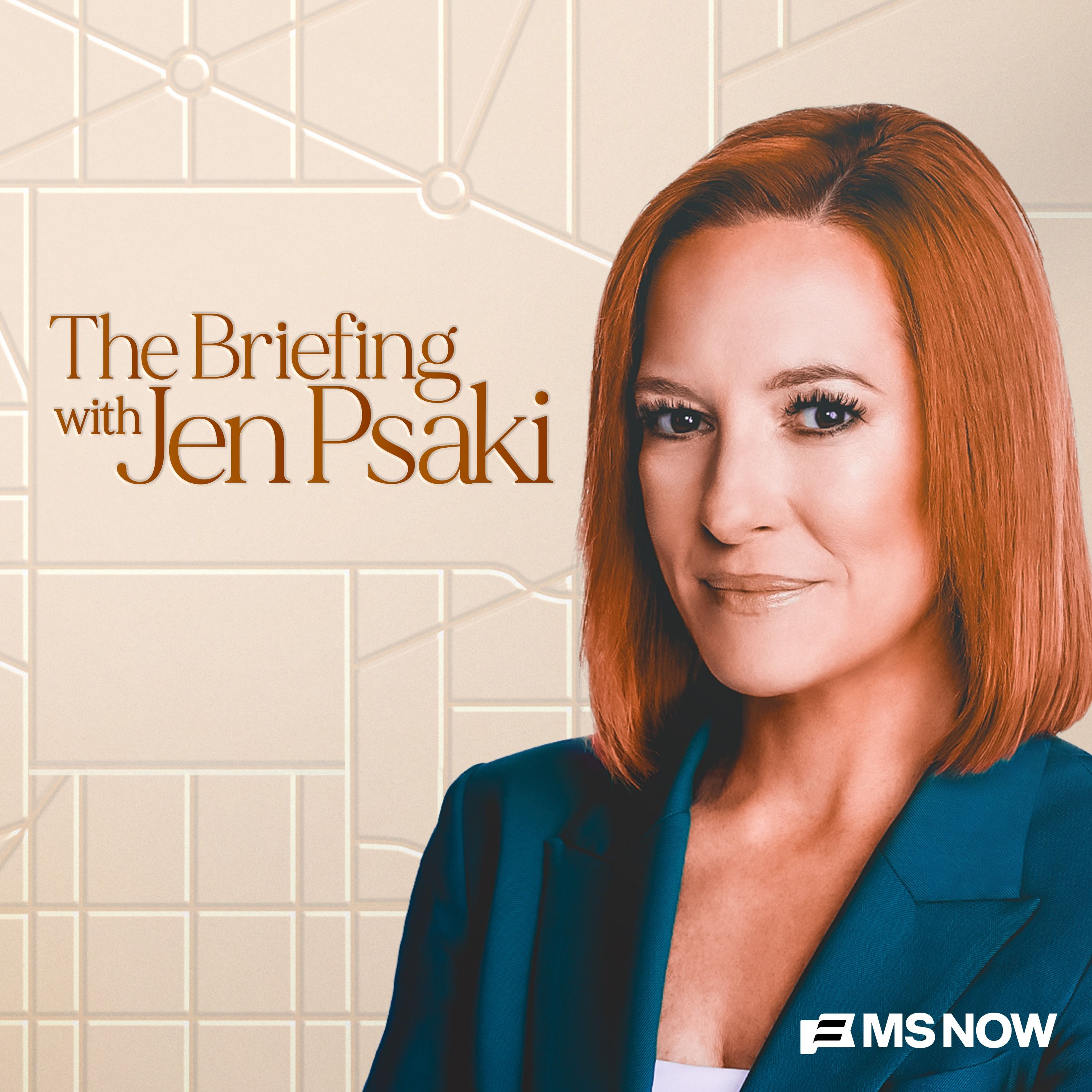
The Briefing with Jen Psaki
Maddow: Trump's attacks on immigrants serve a more sinister purpose
00:41:46
Jen Psaki introduces viewers to Rachel Maddow's new podcast, "Burn Order," about Japanese internment in the U.S. during World War II, and points out that unlike Americans of that era, Americans now are being much more outspoken in support of immigrants and in condemnation of Donald Trump's anti-immigrant policies. Rachel Maddow joins to discuss Trump's use of anti-immigrant scapegoating as a means of giving himself more power.
Loading summary
Transcript122 lines
- [00:00]
A
If you are a fighter, Modelo is your reward. So listen close.
- [00:03]
B
You are strong.
- [00:04]
A
You are fearless. You are a fighter.
- [00:06]
C
And every last drop of this rich.
- [00:07]
A
Golden Modelo is yours. So raise it up high because you've earned it. Modelo, the mark of a fighter. Drink responsibly. Being reported by Carlinports, Chicago, Illinois.
- [00:15]
B
The McDonald's snack wrap is back.
- [00:18]
A
You brought it back. Ranch snack wrap. Spicy snack wrap. You broke the Internet for a snack? Snack wrap is back. Ba da ba ba ba. It's kind of the perfect night. It's kind of the perfect night, any night to have Rachel Maddow here. But tonight is really kind of the perfect night because not only does Rachel have an incredibly timely new podcast, I was just talking with Chris about out that I have definitely been binging. There are four episodes out now. But just a few years ago, Rachel quite literally wrote a book about the corrupting influence of the oil industry on global politics, which feels incredibly relevant today because today we learn that Trump once again escalated his military aggression against Venezuela, this time by seizing an oil tanker off of that country's coast. I've also got Senator Ruben Gallego of the Senate Armed Services Committee standing by for his reaction to that news a little bit later in the show. And Senator Jon Ossoff is going to come by to talk about Democrats shocking win in his home state of Georgia last night. Of course, what the heck's happening on the Hill with health care as well. The point is we have an embarrassment of riches tonight. But I wanted to start with the news that we unfortunately can't report today. I wish we could because we didn't get widespread condemnation from the Republican Party for Donald Trump saying this.
- [01:40]
Why is it we only take people.
- [01:42]
B
From shithole countries, right?
- [01:45]
A
Why can't we have some people from Norway, Sweden, just a few. But we always take people from Somalia, places that are a disaster, right?
- [01:57]
B
Filthy, dirty, disgusting, ridden with crime.
- [01:59]
A
The only thing they're good at is going after ships. I mean, first of all, that was a speech that was supposed to be about the economy, but that was obviously just a repulsive and racist thing to say. And yet with a few exceptions, just a few, barely a peep, not an even barely a peep from most Republicans. And it made me think back to that time during Trump's first term. Remember when the Washington Post reported that Trump had used that term as whole countries behind closed doors? It was a massive scandal at the time for good reason. And Trump at the time denied it. He vehemently denied, he said those words. And while it was by no means all of them, lots and lots and lots of Republicans immediately denounced Trump's language. And most importantly, Republican leadership did at the time. I mean, here was then Republican speaker of the House Paul Ryan.
- [02:49]
Yeah, I read those comments later last night. So first thing that came to my.
- [02:53]
B
Mind was very unfortunate, unhelpful.
- [02:57]
A
Whether you're coming from Haiti, we've got.
- [02:59]
B
Great friends from Africa in Janesville who.
- [03:02]
A
Are doctors, who are just incredible citizens.
- [03:06]
B
And I just think it's important that we celebrate that.
- [03:11]
A
I mean, his head is literally hanging down as he's being forced to respond to the president at the Times comments. But now Trump is not just saying these disgusting things behind closed doors. Now he feels emboldened enough to say them out loud in public into a microphone. And now here's what we're hearing from the current Republican speaker of the House, Mike Johnson, about Trump's remarks.
- [03:35]
C
The President is expressing his frustration about the extraordinary challenge that is presented to America.
- [03:41]
A
We have people coming in, not assimilating.
- [03:43]
C
And trying to take over the country.
- [03:47]
A
First of all, I can't believe I have to say this, but that's an insanely inaccurate depiction of these communities. But also, that's quite the contrast to the response of the former speaker just a few years ago. But of all the elected Republican officials, you might expect to stick up for the Somali American population, all of them should. But for all that, you'd expect that Trump is demonizing right now. The most notable is Republican Majority Whip, Minnesota Congressman Tom Emmer. And that's because not only is his state home to the largest Somali population in the United States, but the city of St. Cloud, Minnesota, which Emmer represents, is home to thousands of Somali immigrants, most of whom are US Citizens or legal permanent residents. And when that population first arrived in St. Cloud, Congressman Emmer was one of their staunchest defenders. I mean, in Congress, Emmer even helped launch the House Somalia Caucus to advocate for his constituents. And he did that even though there were a number of his other constituents in his district who were adamantly opposed to the influx of Somali people in their city. They even pushed Emmer to put a ban on Muslims moving to St. Cloud, which he refused to do. And here's how Emmer defended Somali immigrants 10 years ago.
- [05:02]
C
And if you're asking me how I feel about immigrant populations who are in.
- [05:06]
A
This country legally and who are actually trying to.
- [05:09]
C
To find a better way for themselves.
- [05:11]
A
And their families, I support it wholeheartedly.
- [05:14]
C
I'm gonna say it out loud when.
- [05:16]
B
You move to a community.
- [05:17]
C
As long as you are here legally, I am very sorry, but you don't get to slam the gate behind you and tell nobody else that they're welcome. That's not the way this country works.
- [05:29]
A
You don't get to slam the gate behind you. That's not the way the country works. That was 10 years ago. But now that Trump and the MAGA movement have decided to scapegoat the Somali population, Emmer isn't just refusing to denoun Trump. He is demonizing the Somali community himself. I mean, here was Emmer last week after Trump called Somalis garbage that he doesn't want in the country.
- [05:53]
But you know what we're not talking about today. Do you realize that, you know, it's.
- [05:57]
C
Not that all Somalis are committing crimes, but 80% of the crimes being committed in the Twin Cities in Minnesota are being committed by Somalis.
- [06:07]
A
Even though, again, that it is obvious. It should be obvious. I should point out that Emmer's disgusting statement there is. It is wildly inaccurate, but it fits the bigger lie that Trump and his followers have been pushing about immigrants more broadly. That immigrants are committing the overwhelming majority of crimes. They are not. That immigrants are people to be feared. They are not. Over and over again, we have seen Trump and his administration say that they are only arresting the worst of the worst when they arrest immigrants. That's their major talking point. And over and over again, we have seen proof that that is not at all the case. But Trump and his followers are demonizing immigrants anyway. Clearly, there's been a shift here since Trump's first term in some ways. I mean, Republicans now either seem too afraid to speak out against Trump's demonizing of immigrants, or they're echoing it themselves. And they might think that is politically expedient for them. Many of them may be making that calculation. You know, that way they survive politically. The way they can do that is to basically not make the big boss mad. That's part of their calculation. But the long view of history, I really think they're going to regret that decision. I mean, one day, Donald Trump is going to leave political office, and they are going to be left with a stain that they will never be able to shake. And that brings me back to our first guest tonight. Because there are so many lessons from history to look to as we attempt to navigate the moment we are all living through. And I know we're all trying to navigate it and work through it. And nobody explains the lessons of history better than my first guest, Rachel Maddow, has A new podcast out called Burn Order. It is about the US government's incarceration of Japanese Americans during World War II. Specifically, the podcast is about the people inside the US government who orchestrated the whole thing and about the small but mighty group of people who tried to stop it. Because for the most part, when we learn about the incarceration of Japanese Americans, we learn about it, of course, as a horrible thing that happened. But we don't focus all too much on just how many Americans let it happen. I mean, in the immediate aftermath of Pearl harbor, the nation was swept up in a complete wave of xenophobia. All across the country, elected leaders followed that xenophobic path. And here's a bit from Rachel's new podcast about how those elected leaders expressed those views.
- [08:21]
C
The governor of Wyoming says people in my state don't like Orientals and says that in Wyoming, quote, there would be Japs hanging from every pine tree. The governor of Kansas and the governor of New Mexico both say that they will direct police to physically block, to physically turn back any Japanese Americans who appear at their border. The governor of Idaho says, and forgive me here, but he says, the Japs live like rats, breathe like rats and act like rats.
- [08:56]
A
We don't want them.
- [08:59]
Now, as disgusting as all of that is, and it is disgusting, it's important to hear, to understand that that was the popular political stance at the time. But there was one politician who didn't take that stance, Colorado Governor Ralph Carr. And here is how he responded to the nation's surge in xenophobia after Pearl Harbor. Our first duty this morning and today.
- [09:24]
B
Is to try to be calm.
- [09:27]
A
Our version now is that our emotions may take too great control of our activities and our thoughts. Three days after the attack at Pearl Harbor, Ralph Carr goes on statewide radio and says that he personally will not.
- [09:43]
C
Judge the loyalty of any man based.
- [09:45]
D
On where their grandparents were born. He sends a letter to the Japanese.
- [09:50]
C
American Citizens League newspaper saying, to the.
- [09:53]
A
American citizen with Japanese parents, we offer you the hand of friendship. Friendship. While people are asking anyone of Japanese descent to be killed, Ralph Carr is extending the hand of friendship to these individuals.
- [10:10]
So after, I mean, Governor Carr then went town to town around his state of Colorado defending the rights of Americans of Japanese descent, he faced crowds of his own constituents who quite literally told him that all Americans of Japanese descent should be killed. And he tried to talk sense into them. And clearly, when you take the long view, Governor Ralph Carr was on the right side of history. But ultimately, he was voted out of office for doing what he did for sticking up for what was right, even when it isn't popular. And that is actually where Rachel's podcast and our current politics may have a bit of a hopeful contrast. Because clearly sticking up for immigrants is not only the right moral thing to do, it is also far more politically popular than it was back in the 1940s. I mean, all across the country we have seen massive protest after massive protest demanding that the government stop its draconian immigration agenda. And electorally, people that are standing up for immigrants keep getting voted into office. I mean, take for instance, Miami's new Democratic mayor, Eileen Higgins, the first one in 30 years. She ran a race that was about affordability and getting things done as any mayor would in this day and age. But it was also about the cruelty of Trump's immigration policies. She didn't hold back on that at all. She called out her opponent. And last night, while Trump was making his disgusting comments about immigrants, Higgins became the first Democrat to win the Miami mayoral race in nearly 30 years. She won a city in which Trump and Kamala Harris were neck and neck, and she won it by a resounding 19 points. Here were some of her first comments as mayor elect Just this morning.
- [11:45]
When I speak to our residents, it's not just about frustration, it's also about fear. They've never been afraid of their government before, and now they are. And there has not been a community meeting that I have gone to where I have not had someone come up.
- [12:05]
Give me a hug, whisper in my ear and say, my brother was taken, my uncle was taken. Sometimes they'll tell me it was to Alligator Alcatraz. Sometimes they have no idea where their relative is. We don't want law abiding people to be ejected from our country, impoverishing their family, and driving our economy into ruin. This all just makes me think about, I mean, what is the point of being an elected leader if you don't lead, if you don't stick up for the people without power? And what can history tell us about what it means for so much of the Republican Party to be abdicating their responsibility like this? Joining me now is my friend and colleague, Rachel Maddow. Episodes three and four of her incredible new podcast, Burn Order are out now. It is so good. You make history just fly. I would have been a history major if there was a Professor Maddow teaching, but here we are. Let me just start. I mean, in the podcast, you don't explicitly draw a comparison to what we're seeing today. And I tried to do that with the help of some of our amazing producers. But as you look back at the moment you cover in this podcast and you look at everything I just laid out, how do you see the parallels and also, of course, the differences?
- [13:17]
C
Well, first of all, Jen, thanks for having me here. And that was an incredible lead in. That was an incredible a block that was really, really good. Really thought provoking for me, who's been steeped in all of this stuff. But let me just say, you know, I think that the parallel that you drew, the positive parallel that you drew is really useful, that we are seeing Americans protest right now against what the Trump administration is doing. And one of the things that didn't happen in 1942, when Japanese Americans were being thrown out of their homes, rounded up, put on buses, put on trains, and taken to detention centers and then taken to prison camps, which FDR called concentration camps, one of the things that didn't happen was, you know, mass street protests, other Americans turning out and saying, stop, we're not going to stand for this. And yes, there was a lot else going on in 1942 when we were just into the war and we were losing the war, and there was a huge mobilization happening. But when more than 100,000Americans were.
- [14:19]
Incarcerated this way, essentially in defiance, an open defiance of the Constitution, most Americans did not peep. And so this is the story of the regret of a country that didn't stop it when we could have, the way that we investigated it, apologized for it, literally paid reparations. But also the stories of the true, truly unique people who did stand up. It took a special kind of person. And that means it's, for me at least, looking back on it, a special kind of role model for what it means to not go along, to get along, to actually recognize when something's wrong, stand up and object, even if you don't think you can stop it. It matters when you ob and when you try to mitigate the harm.
- [15:01]
A
The history books or Rachel Maddow podcast will certainly talk about it, which is important for people to remember how they will be looked at in history. One of the other parallels, it seems. But I want to know your thoughts on this. You've done such a beautiful job explaining it. Is the legal pushback. I mean, as you noted, I mean, the pushback was effective, small but mighty, but effective in some ways, even though a lot of people didn't participate in it. And we're seeing a bigger version of that now publicly. But we're also seeing a lot of legal pushback today. I Mean, just today, A judge ordered U.S. troops get out of Los Angeles. There's so many cases out there of different legal groups standing up for people who are being detained. Tell us, obviously, the legal. The courts were a bit different then, but talk to us a little bit about the legal pushback around the time of Japanese incarceration, how you think that compares to the role the courts are playing now.
- [15:55]
C
It's a really interesting point of comparison. So the heroes of Burn Order are Japanese Americans who brought cases that challenged the incarceration, who brought them all the way up to the Supreme Court. And the thriller aspect of the podcast is that there was essentially a crime perpetrated by the government. In defending against those cases and defending the incarceration policy, they withheld evidence from the court, which lawyers are not allowed to do, government is not allowed to do. And the uncovering of that crime, of that government.
- [16:30]
Misconduct is an incredibly thrilling story that it takes all sorts of interesting characters to unwind over decades. But, you know, the courts essentially greenlit this because they took the government's word for it when the government didn't deserve to be trusted. And we see a lot of parallels to that right now with the Trump administration in court telling judges things that the judges palpably can't believe and that aren't true and that are disproven the presumption of regularity. We keep hearing about that when the government lies to the courts, it clears the way for the courts to essentially greenlight things that are.
- [17:11]
Things that the country will regret. And I think one of the most corrosive things the Trump administration is doing, particularly around the way it's treating immigrants, is. Is lying to the courts about what they're doing. And that puts both the courts and the government and the victims of these policies in absolutely untenable positions that will be vindicated by history and that will ruin a lot of lives on both sides of these fights.
- [17:35]
Over the course of these issues, as they play out.
- [17:38]
A
The way they're arguing things in courts and some of the people they're putting in courts to argue them, I would also say is so emboldened. Feels much more emboldened than the first term and different to me, and I think you alluded to that, too. It also feels like Trump himself is more emboldened in terms of what he's willing to say publicly. I mean, I just talked about how back during the first term, he felt the need to deny that he used the phrase s whole countries in the first term. I'm just, you know, you could say the word, but I'm not gonna say it right now. And last night, he kind of. I mean, he shouted it into the microphone. It feels just so different. Even though as we look at kind of how the public is responding to the xenophobia and racism, it's not positively. What do you make of this and why he feels so emboldened to be this way?
- [18:26]
C
Yeah, it's really interesting, and it's a challenge for us in the media, and it's a challenge for us as citizens right now, because I feel like so much of the way that we interact with people who have those kinds of views or who express those kinds of sentiments is that we try to nail them for it. We try to prove that Trump actually said it. We try to, you know, get that reporting in the first term that he said this behind closed doors, and we try to assess the validity of his denials. Well, that's the kind of reporting you do. When they have at least the shame that leads them to only do this behind closed doors, when they're doing it out loud. Our receipt of that information, our sort of analysis of information, the way we make sense of it, has to instead be, well, why is he doing it? What is this for? And just like those Western state governors whose language you alluded to in that clip from Burn Order, I mean, these guys only do these things for one reason, right? You are trying to blame a scapegoat for everything that's wrong in the country so that you're not held accountable for it. You're trying to turn people in this country against each other so that they blame each other. They see some group of people in this country as inhuman, that then justifies inhumane treatment toward them, which justifies radical government powers that the Constitution says we're not supposed to have. When you talk about people as rats and rabbits, and you talk about them being unassimilable and responsible for all the crime and all these other things that we're hearing from the Trump administration now openly. All they are trying to do is pave the way for authoritarian powers for themselves, for emergency powers, toward an inhuman set of scapegoats that's supposed to justify anything they want to do. It's augmenting their own powers at the expense of a scapegoat. And it's the authoritarian playbook down back to the very beginning of time when they're doing it openly. We need to change our analysis to recognize what they're using it for and not just point out that they're saying it.
- [20:32]
A
Yeah, that is such an important reminder of how we consume it and how we talk about it, which I know you remind us of so often. We're going to be greedy with you because you literally wrote a book about the greed of the oil industry and it feels just so topical today. So if you don't mind sitting tight.
- [20:48]
C
Where you are just for a quick.
- [20:49]
A
Break, we'll be right back and we'll talk about that on the other end.
- [20:52]
C
Great. Thanks.
- [20:56]
A
Find new customers on a platform that's here to stay with TikTok for business, anything is possible. If you've ever thought about advertising your business on TikTok, now is the time to do it.
- [21:06]
B
You can drive more customers to your.
- [21:08]
A
Website, sell products right in the app, and you can even use TikTok's creative.
- [21:12]
B
Tools to easily make content and find creators to help sell your products for you.
- [21:16]
A
Find new customers today. Just open your browser, type in get started.TikTok.com TikTok ads and grow your business fast.
- [21:26]
Holiday PSA from DSW this is a reminder that shoes are a gift.
- [21:31]
C
Literally.
- [21:32]
A
So unwrap something good, like boots that inspire your next big adventure, or cozy slippers that give you an excuse to stay in, or sneakers that feel like pure joy. Because shoes aren't just shoes, they're exactly what you wanted. Let us surprise you so you can surprise them. Find shoes that get you and everyone on your list at prices that get your budget at DSW stores or dsw.com busy work weeks can leave you feeling drained. Prolon's five day fasting mimicking diet rejuvenates you at the cellular level, lets you enjoy real food, and does not require an injection. Developed at USC's Longevity Institute, Prolon supports biological age reduction, metabolism, skin health and fat loss when combined with proper exercise and nutrition. Get 15% off plus a $40 bonus gift when you subscribe at prolonlife.com PandoraPro.
- [22:32]
Today the United States government seized an oil tanker off the coast of Venezuela, accusing it of transporting sanctioned oil from Venezuela and Iran and escalating what is already a group of mounting tensions in the region. Now, to be honest, we don't exactly know what is going on here or what the end goal is at this point, but earlier tonight Attorney General Pam Bondi claimed that the tanker was previously sanctioned by the US for its involvement in an illicit oil shipping network supporting foreign terrorist organizations. Though I should note Bondi has not yet provided any evidence to back up those claims. And listen to what Trump himself said when a reporter asked him what happens to the oil now that the US has seized this tanker?
- [23:14]
C
What happens to the oil on that ship?
- [23:16]
A
Well, we keep it, I guess.
- [23:19]
We keep it, I guess. I don't know. I mean, so what happens now? I mean, we were trying to figure that out. We're learning more. But thankfully I have just the person to ask who's probably been thinking about this, too. Back with me is my friend and colleague, Rachel Maddow. So I don't expect you to know exactly the answer to that, but you, as I noted before the break, I mean, you wrote a book a few years ago called Blowout, which of course covers how the oil and gas industry effectively corroded and corrupted democracy. It feels quite relevant to all of this, given what we saw today. I mean, what went through your head when you saw this news about all the reasons for it, when you saw Trump's answer as to whether he would keep the oil? What was going on in Rachel Maddows head?
- [24:02]
C
Oh, Jen, this is, I just feel.
- [24:04]
A
Like, I mean, I feel like if.
- [24:06]
C
You stop somebody on the street, just like, man on the street interview, like, why are we going to war with Venezuela? Anybody? Like, if you asked 100 people, would a single one of those people have an answer that would be the same answer as anybody else? It'd all be different than anything that the administration would say. They'd all be different. And so first it was, we're blowing up those drug boats off of Venezuela because of fentanyl. Fentanyl doesn't come from Venezuela. Okay. No, no, no, we're not doing that anymore. No, we're just trying to stop drug trafficking. These are all. That's why we're doing this. Drug trafficking. It's drug trafficking. Boats, it's. Maduro is involved in drug trafficking somehow. So that's okay. And then simultaneously, Trump pardons the president, Honduras, former president of Honduras, who is one of the most prolific drug traffickers ever convicted in this country. Now they're saying, oh, it's violating Iran sanctions. Oh, okay. Violating Iran sanctions. That's why we're going to war with Venezuela. While Trump just pardoned the Binance guy. What did the Binance guy need to be pardoned for? $898 million worth of Iran sanctions violations. Right. Plus funding Al Qaeda and ISIS and Hamas and the Islam, I mean, and Islamic Jihad. So, like, all of the things that they keep saying it is. Clearly they're not. And so what is it? Apparently, it's a regime change war, so we can try to take their oil. Well, That'll work. Work out great. That's always worked out great for us in the past. I mean, what's going on here and who's driving this? Trump doesn't seem to have any idea what's going on here or why.
- [25:45]
A
No. Which is an evergreen statement about Trump and national security in general, it seems. I keep thinking, and again, it's important we don't totally know what's going on here, but about his obsession over the course of time with taking oil from other countries, which he has talked about for so many years and I am betting his oil baron friends are in his mind. But we will learn more over the coming days. I mean, this is all kind of to your point. I mean, these extrajudicial strikes, the seizure of this oil tanker, it's so many things going on that feels over the legal line and feels like it's setting incredibly dangerous precedents as you look at the totality of it. I mean, what concerns you most about what you're seeing and really where this goes? Because this is a very slippery slope. They could see. I think they feel justified to seize more oil tankers. We'll see what happens.
- [26:38]
C
Yeah. I mean, I think there's basically three things going on here. I think one is that Trump wants to demonstrate that he is unconstrained by law, politics or public opinion like he wants to. The reason there's no kings protests against Trump is not just because he calls himself a king and you know, looks the part, but because he is trying to create an illegal or sort of non legal regime around himself in which he is unconstrained by any of the things that legally constrain an American president. So that's dangerous. That's part of what this is. The other thing that's really bad about this is it looks like we might get a war and it really looks like a regime change war to try to take their oil. Which really is something we know a lot about in this country and is supposedly part of the reason that Trump arose in Republican politics. Cuz he was against those sorts of things. Like that's supposedly the whole theory of the case for why J.D. vance exists. Right. As a political figure. But the last thing I think is the weirdest thing to worry about, which is that Trump really doesn't seem to have any idea why he's going to war in Venezuela, nor does he seem to be in charge of any of the decisions that are leading us to this war. And so we also have to worry about who's actually running the government. Right. Now and who is actually driving us toward this regime change war that the president doesn't seem to be at the helm of. We don't know who is and we don't know why. And that sort of careening feeling that you're having right now is the most worrying part of all of this to me.
- [28:04]
A
It is. I work for two presidents. I've never seen such a lack of interest in what we are doing with our military power from the commander in Chief, Rachel Maddow. I could talk to you for a long time, but we are going to wait for Senator Jon Ossoff, who's standing here and I'm looking forward to talking to him. Thank you so much. Your podcast is excellent. Looking forward to more episodes.
- [28:25]
C
Thank you. Jen. Really nice of you to have me. Thank you so much.
- [28:28]
A
Thank you. Okay, coming up. After a shocking win for Democrats in Georgia last night. It was a big one. One journalist tweeted. That sound you hear is Jon Ossoff pouring himself a glass of scotch. That's because Senator Ossoff is up for reelection in Georgia this year. He's the only Democratic senator running in a state Trump won. And after last night, I'm betting he's feeling a whole lot better. I don't know that he had scotch. We'll ask him about that, but he joins me here at the table when we come to bet.
- [28:57]
TikTok for business is helping owners like you reach new customers every day. We saw up to a 10x return on our Tik Tok Shop ads a few years ago. I started sharing my love for fashion on social media and Willow Boutique was born. We're not just a place to shop. We've really become a community. TikTok allows us to find more people to have that great experience. I cannot imagine my business without TikTok. It's completely changed my life and I.
- [29:21]
C
Could not be happier.
- [29:22]
A
Head over to get started.TikTok.com TikTok ads holiday PSA from DSW. This is your reminder that shoes are a gift. Literally. So unwrap something good like boots that inspire your next big adventure, or cozy slippers that give you an excuse to stay in, or sneakers that feel like pure joy. Because shoes aren't just shoes, they're exactly what you wanted. Let us surprise you so you can surprise them. Find shoes that get you and everyone on your list at prices that get your budget at DSW stores or dsw.com busy work weeks can leave you feeling drained. Prolon's five day fasting mimicking diet rejuvenates you at the cellular level, lets you enjoy real food, and does not require an injection. Developed at USC's Longevity Institute. Prolon supports biological age reduction, metabolism, skin health and fat loss when combined with exercise and nutrition. Get 15% off plus a $40 bonus gift when you subscribe at prolonlife.com pandorapromo.
- [30:29]
You may have noticed this, and we've certainly been talking about it, but Democrats are on an insane electoral hot streak right now. I mean, last night that hot streak continued. We saw it in Miami, but we also saw it in Georgia, where a Democratic candidate for the Georgia state House pulled off a huge upset in a district that Trump won by 13 points in 2024. And for folks who may not follow every race, that is an enormous swing. And it of course follows the long and growing list of huge electoral swings towards Democrats during this off election year cycle ahead of next year's midterms, including two statewide elections. Democrats in Georgia won by large margins back in November. And someone who has to be feeling very good about all of these wins is Georgia Senator Jon Ossoff, the only senator up for reelection in a state Trump won in 2024. I mean, the winner of yesterday's special election ran on a platform of improving health care and increasing affordability, which just so happens to be the core of Senator Ossoff's reelection campaign. And remember, this is all coming at a time when Republicans in Congress can't seem to agree somehow on how to avoid the spike in health insurance costs that millions of Americans are facing if ACA subsidies expire at the end of the month. It is so obvious what they should do, and they just won't do it. Joining me now is Democratic Senator Jon Ossoff. There's so much to talk to you about. As always, let me just start with this Georgia state House win because it was a huge swing, a huge victory. It wasn't one everybody was paying attention to, but a very good sign nonetheless. There were a lot of memes out there. I referenced one of them. If you drinking scotch, watching the results coming out, I don't know if that's true, but tell me, as you and your advisors kind of looked at the outcome of this race, what does it mean for your race? What do you take away from it?
- [32:18]
D
First of all, I want to congratulate the representative elect on the great campaign. Also, give a shout out to our state Democratic Party chair Charlie Bailey for doing a great job. But look, this victory, what we've seen for the last few months demonstrates the strength of feeling that the American people have against what this administration's doing to the country. As life becomes more and more unaffordable, with health insurance premiums about to double or triple for millions of people, the abuse of power, the overt corruption, the president is eroding his support even among many of his strongest supporters. And so if you'd asked me six months ago, I might have told you that what concerned me was that people were feeling such despair that they were paralyzed. Now the risk is complacency because nothing is preordained. And this Senate race in Georgia, for example, will be the most brutal and expensive in the country. I'm the only Democrat defending a seat in a state that Donald Trump one. I expect the Republican Party to spend hundreds of millions of dollars targeting me. And if folks want to help me, they can go to electjohn.com, electjon.com and support my campaign. This is something people can do right now that really makes a difference.
- [33:25]
A
Very smooth. But you are right that they are going to spend a gazillion dollars approximately against you. And people can't be complacent if they're really interested in the Democrats taking the Senate back. Let me ask you about health care. I mean, this is an issue you talk about a great deal on the trail. You've thought about it a lot. Your wife is a doctor. It's kind of part of your life life. And right now, tomorrow, there's going to be two votes in the Senate or two bills brought forward in the Senate. I should say there is the Democratic bill that would expand or extend, I should say the Obamacare subsidies, something that would prevent the doubling of the cost of health care for millions of Americans, something that an overwhelming majority of the public supports. And a number of some Republicans are supporting that. But there are, there's a Republican alternative that is basically about health savings accounts. Not a bad thing, health savings accounts. But explain to people out there who are trying to differentiate between why the Democratic plan is better. They want better health care, they want lower cost of health care, why that's the best solution. And the Republican alternative is not.
- [34:21]
D
And I'm not sure the GOP has consolidated but their proposal. But let me just put it this way, because inside the Beltway, there's a lot of focus on the politics of this. I've been hearing stories from constituents for weeks about what this really means in Georgia. Let me tell you one I heard from a constituent who has diabetes when she learned that the Republicans might let these ACA benefits expire she cried not for herself, but because she thought that meant that other people might die. And then she got her new insurance premium quote and it's $700 more per month than what she's paying now. Again, she's diabetic. She just had major surgery a few months ago for something else. She told me she cried again because she realized she's going to have to cancel her insurance plan. And she believes that she might die. She might die because of a policy choice that politicians in Washington would make. Yes, there's the red versus blue aspect of this, but we're talking about life and death. We're talking about financial ruin potentially for hundreds of thousands of Georgians, for millions of Americans. And there's only one way that we have right now. This deadline is in just a couple of weeks.
- [35:47]
A
Right.
- [35:47]
D
Folks have to stop signing up in just a few days. The new premiums hit in just a few weeks. We need to pass this extension of these tax credits. And I hope Republicans will hear from their constituents those kinds of stories and join us to do it.
- [36:01]
A
And I think this is such an important point. I mean, people are going to be impacted by this, millions of people. I think also sometimes people hear, well, Republicans are saying they want to lower costs, too. Their plans don't suggest that. And the reason I brought up Health Savings Accounts is because they won't do what the extension of subsidies will do. There's other alternatives. To your point, they haven't coalesced. But why are none of those the right answer for people who are worried about their costs going up?
- [36:24]
D
Look, I would love to work with the GOP to both extend these tax credits and go deeper reforming a broken health care system. Let's build on the work that we did, capping insulin at $35 a month and empowering Medicare to negotiate lower drug prices with drug companies. Let's hold health insurance companies accountable for price gouging. Let's introduce more real competition. Let's let folks buy in if they want to, to Medicare. But I'm not hearing anything concrete from the gop. What I'm hearing is that they can't bring themselves to support something that's associated with the Affordable Care Act. And as a result, they're going to make a decision tomorrow. I fear that is literally going to result in Americans dying and for many more Americans facing financial hardship that they cannot afford right now.
- [37:15]
A
It feels like they're waiting for people to suffer in January and February. It's just really outrageous. Senator Jon Ossoff, great to see you Here.
- [37:25]
D
Thank you so much.
- [37:25]
A
Thank you so much for being here. Thank you. All right, coming up, I honestly don't even know where to start with Senator Ruben Gallego tonight. Do we start with a massive shift among Latino voters toward Democrats last night? Did we start with Trump freaking out another reporter who asked him about the video of that controversial vote spike? Lots of things to talk about. I guess you're gonna have to stick around, find out where we start. Senator Ruben Gallego is standing by, and he joins me next.
- [37:57]
Beyond last night's win in Georgia being the 25th state legislative flip for Democrats this year, Republicans have zero, by the way, if you're just keeping track on a board anywhere, there was that big win for Democratic candidate Eileen Higgins in the mayoral race in Miami, and she'll be Miami's first Democratic mayor in nearly 30 years. It's a very big deal. Appeal. It's the latest of many signs that Latino voters of all different backgrounds who may have found Trump appealing in 2024 may still be movable, are still movable and are moving away from Republicans. Higgins won by about 19 percentage points in a city. Kamala Harris won by just one point a year ago. And Higgins did it by making major inroads in heavily Latino precincts in a city with large Cuban and Venezuelan American populations. It's also worth noting that this is a change happening nationwide. I mean, in February, polling BY CBS and YouGov had Trump at two points, just two points underwater with Latino voters. In their latest poll, he's down by a margin of 38 points. That is quite a drop in not that long a period of time. Joining me now is Senator Ruben Gallego, who campaigned in Miami with Eileen Higgins. So many things to ask you about. I mean, but you've been on the ground for this. That is quite a swing from a year ago. What do you attribute that, too?
- [39:13]
B
Well, number one, the candidate, she was a great candidate. She had great relationships that she had built with Latino community. You know, if you saw her effective ground game, it was multicultural people talking different languages. I went to, you know, different masses with her, went to markets, went to different parties. She covered all the ground. She was a great candidate. Number two, speaking to Latino voters in different areas in Spanish, what I heard was a total rejection of Donald Trump and his deportation policy. And these are people that were mad about the fact that they had revoked TPS for different populations, Venezuelans, other populations, that they felt they were being targeted just for being Latino. And they were mad that the local Republicans that they had elected the Latino electeds that they had all supported in the past. The three members of Congress down there had not done anything to make the situation better. And so this is the first opportunity they felt that there was for them to send a message. And they were going to use that opportunity to send a message that you are, that they do not appreciate what's happening. They feel attacked by this administration. They feel betrayed by this administration. And the three members of Congress down in South Florida are not representing them anymore. And they want to send a message to them.
- [40:30]
A
One of the things I started the show talking a little bit about is just this talking point we hear all the time from the Trump team about how they're going to go after criminals. They're going to go after criminals. That is not at all what they do in any city. The majority of people do not have criminal records. And we've even seen them, of course, arrest US Citizens and of course they're terrorizing communities. I'm just curious, as you were talking to people in Miami and just in general about whether there are some people who may have supported him who thought, oh, he's just going to go after criminals, that's what he's going to do. Or we saw what he did during his first term. He doesn't go after mass migration. And now they're looking at it and they're like, this is not what we signed up for.
- [41:06]
B
I did hear from a couple of women that. But I've heard it across the country where we thought you were going to go after criminals and now you're coming after us. The thing that this administration is missing is that they keep talking to their base and they believe that they can keep saying these talking points to this base and that somehow is going to save them. What they don't understand is that the Latino community is looking at, you know, media. They're looking at WhatsApp, looking at all these videos. They're looking at social media about, you know, the racial profiling that's happening of Latinos, of veterans, of, you know, women being dragged out of courtrooms that, you know, already some type of protection of people that are about to go to a naturalization ceremony and get sworn in and being pulled at last minute. They see this day in, day out, and it doesn't matter that the Latino in Florida is seeing this and it's happening to somebody Latino in Chicago or that the Texan is seeing to somebody in New York. They see it as a full attack on the community and they see it that it's being done by Both Donald Trump and the Republican Party, they can't punish Donald Trump. So they're going to go after the Republican Party every opportunity they have. And if you've seen the elections where Latinos have had the opportunity, they've been sending a message. The thing is, the Republican Party does not want to listen to it because they're afraid against going to Stephen Miller. They're afraid of going against the base of the MAGA movement. But it's there, it's coming, and they're trying to send the message and they're just not listening.
- [42:29]
A
Better start listening to the politics. They're going to lose their seats.
- [42:31]
B
Absolutely.
- [42:32]
A
Which, you know. Hey, let me ask you, you're on the Armed Services Committee. Let me ask you about what's happening with Venezuela. There seems to be new developments, of course, every day. There was the oil tanker seizing today. We've also seen Trump answer a range of questions about this. I just wanted to play. And he seems to always convey he's like, disengaged. I just want to play what he just said about this or he said about this today and get your thoughts on it.
- [42:56]
C
Has Secretary Hexif told you why he.
- [42:58]
A
Hasn'T released the video of the second strike? No, he hasn't. I thought that issue was dead. You're surprised you're bringing him. You must be. Lawmakers are seeing it. You must be seeing it. Lawmakers are still falling down on the Hill. Are you seeing it?
- [43:10]
C
I am with cnn.
- [43:11]
A
Oh, don't you? I'm shocked to find that.
- [43:14]
He seems to want to convey or project that the issue is behind us. Now. We've seen a lot of bipartisan, some bipartisan kind of efforts to push for more information, push for legal justification, push for the video to be up. But then today we saw the chairman of the House Armed Services Committee in the House say there's no more need for investigation. So what exactly is going on here? How gauge for us kind of the bipartisan coordination or work on this.
- [43:41]
B
Let's be clear. This administration, since they started striking these boats illegally from day one, has been very happy to show their snuff films every time they took out one of these boats.
- [43:53]
A
Yeah.
- [43:54]
B
Now suddenly they're willing to show the first hit on the boat, but they're not willing to show the second hit on the boat. Why is that? There's nothing that you're showing the second hit that is showing any types of leads about our intel or anything else like that. What they're afraid of is that the American public is going to see that the US Military killed two men that had surrendered. And it is against the core of the American identity that we are those people. And the fact is this administration, led by Hexseth and by Donald Trump, were willing to do that. So that's why they're covering it up right now. They're trying to move it on. And the fact that, you know, our Republican colleague were at first showing some level of courage, I think for them, they knew they were always going to give. They just wanted to show that they were at least a little independent. But at the end of the day, they were always going to hide this because they are not willing to stand up to this administration. But the moment this video comes out, the American public is going to be discussed because that's not what America is.
- [44:53]
A
That makes me sad. We're still rooting for it. Senator Ruben Gago, thank you so much.
- [44:57]
B
Thank you.
- [44:58]
A
All right.
- [44:58]
C
We'll be right back.
- [45:02]
A
That does it for me tonight. You can catch the show Tuesday through Friday at 9pm Eastern on Ms. Now. And don't forget to follow the show on Blue sky, Instagram and TikTok.
- [45:11]
B
The holidays mean more travel, more shopping.
- [45:14]
A
More time online and more personal info.
- [45:17]
B
In more places that could expose you.
- [45:19]
A
More to identity theft.
- [45:20]
B
But LifeLock monitors millions of data points per second.
- [45:23]
A
If your identity is stolen, our US.
- [45:25]
B
Based restoration specialists will fix it, guaranteed your money back. Don't face drained accounts, fraudulent loans or financial losses alone.
- [45:32]
A
Get more holiday fun and less holiday.
- [45:34]
B
Worry with LifeLock, save up to 40% your first year. Visit LifeLock.com SpecialOffer Terms apply.