← The Briefing with Jen Psaki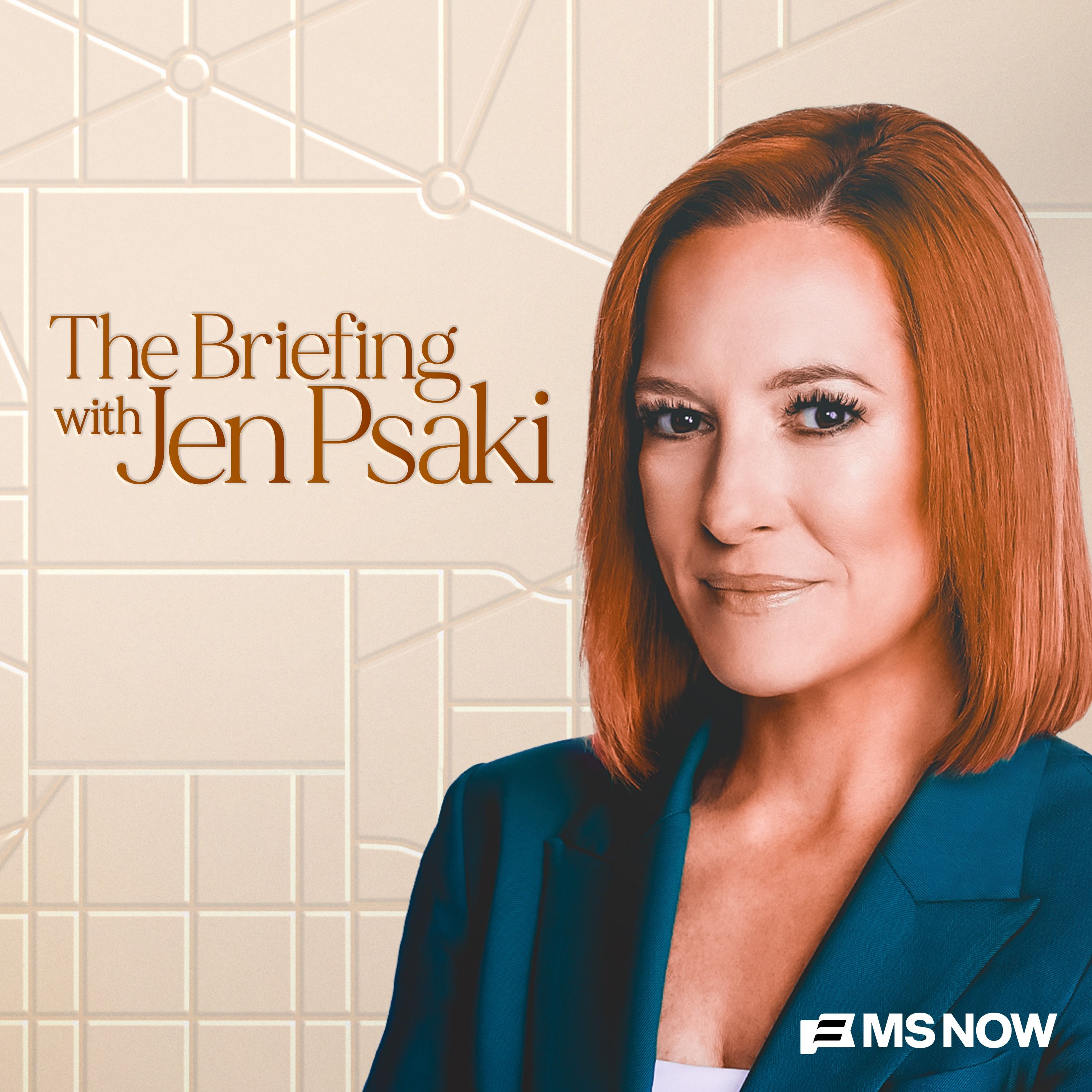
The Briefing with Jen Psaki
New Epstein docs point to potential co-conspirators; Trump DOJ still slow-walks release
00:42:03
Jen Psaki reports on some of the new discoveries in the latest tranche of files released in the Epstein document collection, as well as new questions raised by what is being concealed by inappropriate redactions and the slow-paced release of material from Donald Trump's Justice Department. Rep. Ro Khanna joins to discuss what is still missing from the release and what materials will actually address the question of who worked with Epstein and participated in his abuses.
Loading summary
Transcript85 lines
- [00:01]
A
Welcome to Walgreens. Looking for a holiday gift?
- [00:04]
B
Sort of. My cousin Freddie showed up to surprise us.
- [00:07]
C
Oh, sounds like a real nice surprise.
- [00:10]
D
Exactly.
- [00:11]
B
So now I have to get him a gift, but I haven't gotten my bonus yet.
- [00:14]
A
So if we can make it something.
- [00:15]
B
Really nice but also not break the bank, that'd be perfect.
- [00:18]
E
How about a Keurig for 50% off?
- [00:21]
B
Bingo savings all season. The holiday road is long. We're with you all the way. Walgreens offer valid November 26 through December 27. Exclusions apply. Own a small biz and need a reliable way to reach new customers. Try TikTok for business.
- [00:34]
F
We've generated over 100,000 leads which has converted into over 40,000 sales for our pet insurance policies. I am the CEO of Spot Pet Insurance. TikTok's smart AI powered automation takes the guesswork out of targeting, bidding and optimizing creative. If I can advertise on TikTok, you can too.
- [00:52]
B
Drive more leads and scale your business. Today with TikTok for business, head over to getstarted.TikTok.com TikTokads nothing like a Christmas.
- [01:02]
A
Eve Eve news dump today. We got yet another document dump in the ongoing release of the Epstein files and a few things remain true. And we've gone through. Our amazing team here at msnow has gone through a lot of this, as much as they can. I mean. One, despite a legal requirement based on a law that was passed, again remember this, with near unanimous support to release all the relevant documents by last Friday, only a fraction of that material is available as of yet, even after the news dump today. Two, the Justice Department continues to redact vast swaths of information and in many cases, those redactions don't seem to have logical explanations really at all. And we'll talk about that. But despite all of that, this batch, probably of the batches, had the most new information about Jeffrey Epstein, his criminal enterprise and the many attempts to hold him accountable. Now, perhaps the biggest bombshell in today's jump of files is this July 2019 email exchange between DOJ officials suggesting that investors investigators were looking at 10 potential Epstein Co conspirators at the time. That's obviously huge news since to this day only one Epstein co conspirator has ever been charged in the case. And that's of course Ghislaine Maxwell. But in this email exchange, the names of most of those suspected co conspirators are redacted and it's really not clear why, especially because the law mandating the release of These files does not allow redactions on the basis of embarrassment, reputational harm or, or political sensitivity. I mean, the whole reason so many people have demanded the release of these files was to expose the people who participated in Epstein's crimes without consequence. And there may be even more information on potential co conspirators that the Justice Department is still holding onto. I mean, another email that appears to be from a federal prosecutor in New York reveals the existence of a seven page memo on quote, coconspirators we could potentially charge. The email also mentions an apparently updated 86 page coconspirator memo that appears to have been drafted later in 2019, as well as a corporate prosecution memo that is 13 pages. And to be clear, we don't know why that email was drafted, but so far it does not appear that any of these memos have been released by the Justice Department. And again, exposing potential co conspirators is a big reason that Epstein survivors have been fighting to release these files. This is not just a story about what Donald Trump did or didn't know. I mean, of course that's important, he's the President of the United States right now. But it is about a much larger coverup of rich, well connected men who preyed on young women trafficked by Jeffrey Epstein. So when I learned about some of what was in these files and some of the big questions it still leaves out there, I was immediately reminded of what Charlene Richard told me earlier this year concerning what survivors know but still cannot say about who participated in Epstein's crimes. Are these people when the list is released that people would know? Are they people who are famous in some capacity? Yes. And are there names out there that have not been out there yet? Yes. That you were trafficked to. There's names of people that are out there that are not on the list. All of that is a reminder that there's still a lot we don't know about the people who enabled, abetted or participated in Jeffrey Epstein's crimes. I mean, today Senate Minority Leader Chuck Schermer responded to DOJ's decision to redact the names of those Epstein co conspirators, saying the Department of Justice needs to shed more light on who was on the list, how they were involved and why they chose not to prosecute. Protecting possible co conspirators is not the transparency the American people in Congress are demanding. No question about that. I mean, today's file dump also shed light on other aspects of the Epstein investigation with even more bizarre and difficult to explain redactions. I mean, for instance, in one file, two unnamed people who appear to be investigators correspond via email about a photo one of them claims to have obtained from the cell phone of former Trump adviser Steve Bannon, who, I should note, has not been accused of wrongdoing in connection with Jeffrey Epstein. But the email reads, quote, I've been looking through Steve Bannon's phone. I found an image of Trump and Ghislaine Maxwell on Bannon's phone. See screenshot attached. Then there's a large redaction covering whatever the sender attached to the bottom of the message. Now, why is it redacted? We don't know. In another file released today, someone at the Department of Justice alerted a colleague in 2020 that, quote, Donald Trump traveled on Epstein's private jet many more times than previously has been reported. Now, of course, we've known for years now that Trump's name appears multiple times on the flight logs for Epstein's private jet, despite Trump's assertions as recently as last year that, quote, I was never on Epstein's plane. We know that's not true. Now. We've known it. But this 2020 email from a DOJ official sheds new light on who accompanied Trump and Epstein on some of those flights, including one flight in 1993 where the only passengers listed were Epstein, Trump and a then 20 year old whose name is redacted. Now, the DOJ official goes on to note that on the two other flights with Trump, two of the passengers respectfully, were women who would be possible witnesses in a Maxwell case. That's what we know at this point. We also learned from these documents today that in 2021, the Justice Department subpoenaed Trump's Mar A Lago Club for employment records. We don't know whose employment records they were seeking, but we do know that Epstein accuser Virginia Giuffre had previously been employed at Mar A Lago. There are also new revelations about other public figures as well. I mean, one file released today shows an email addressed to Ghislaine Maxwell in 2001, which appears to come from the person formerly known as Prince Andrew. In it, the man who vaguely himself identifies himself vaguely as a vaguely, asks if Maxwell has found him some, quote, new inappropriate friends. We've reached out to the Royal Family for clarification on that and have yet to hear back. Now, the documents released today also include images of what appears to be a fake Austrian passport with Jeffrey Epstein's photo under a different name. Another email chain from the day of Epstein's death suggests that U.S. attorney's office was left in the dark for hours after Epstein was found dead in his prison cell. As someone from that office complained, quote, it has now been hours since this was reported publicly. It is extraordinarily frustrating to have to tell Epstein's attorneys that we have less information than the press. There's also an email in which Alex Acosta, the former U.S. attorney for the Southern District of Florida, appears to be explaining why his office never consulted Epstein's victims before granting Epstein a sweetheart deal. His office was later found to have broken the law by not doing exactly that, by the way. So we're learning different new things about the Epstein case in these documents. We're getting some new insight into Epstein's criminal behavior, new details about how prosecutors bungled the case against him. But answers to the big questions concerning who knew about Epstein's crimes and who may have participated in them are still shrouded in a lot of black ink. The DOJ is still required by law to release that information and the members of Congress who wrote that law are holding them to account. This week, Congressman Ro Khanna and Thomas Massie threatened Attorney General Pam Bondi with inherent contempt charges if the full Epstein files are not released. And Congressman Ro Khanna joins me here now. He's the lead co sponsor of the Epstein Files Transparency act, which required the Justice Department to release all of the Epstein files by last week. Again, just to restate for everyone, thank you for being here with me. I just kind of highlighted some of the big pieces that stuck out to me. And what the incredible team has tried to comb through here, it really raises a whole lot more questions than are answered. But what did I miss there in my run through?
- [09:11]
F
You got the central fact, which is a document came out saying there are 10 co conspirators of Epstein that weren't charged. And the reality is talking to survivors, talking to survivors lawyers, they're a whole group of rich and powerful men, many of them on Wall street and finance, some politicians who have been named who were at the Epstein island or abused these girls or covered it up. And none of those names have come out. Now there's a simple way we know for those to come out. They're the 302 FBI witness interviews with these survivors. How do I know those names are in there? Because the survivors have told me that they told the FBI about these names. The survivors lawyers were in those FBI interview memorandum. None of them have come out. They're all required to come out by law. And you see now the Justice Department Backpedaling and really scrambling. They did not anticipate that Maga would be so upset with the impartial release.
- [10:07]
A
The 10 coconspirators really stuck out to me. We saw Leader Schumer also call that out. Oh, let's give you a moment there. We'll give him a moment to come back to get it.
- [10:17]
F
All right, there you go.
- [10:18]
A
It's all right.
- [10:18]
F
Thank you.
- [10:19]
A
It's a Christmas Eve Eve. All sorts of things happen. And we'll give you a moment. I just was saying that it really stuck out to me. The 10 co conspirators. It also stuck out to Leader Schumer. Clearly stuck out to you. We don't know who the majority of these people are. Let me just start by asking you this. In the law that you wrote, is there anything that would require the redaction of these individuals from what was released?
- [10:45]
F
No, quite the contrary. When Massey and I wrote the law, it's a two page law, we actually said that you cannot consider reputational harm, you cannot consider embarrassment, you cannot consider the fact that someone was not charged. And what we see is that the Department of Justice, frankly, and this is not an exaggeration, is more concerned about hurting the reputation of the rich and powerful men who abused the survivors than. Than they are protecting the survivors. When it came to the survivors, they've released the names. In one case, a survivor's name was released in a horrible way. And she then asked why the FBI file which she was mentioned in was not released. They didn't release the file she's mentioning though she's requesting it and they released her name. So they're breaking the law very clearly.
- [11:35]
A
And I want to come to that because that is so outrageous. And part of what the law says is that they should be protected. But let's just go back to these 10 co conspirators. We don't know who they are. It sounds like from what you're saying you think that they are potential individuals who women were trafficked to. I don't wanna take put words in your mouth, but who do you suspect they were? Do you know who they are?
- [11:58]
F
Look, I've heard second or third hand names, but obviously it would be irresponsible to just be speculating. But I could tell you as they're in those 302 FBI files and this is not that complicated, everyone is saying redactions and this document and that document just release the FBI files where the survivors were interviewed. And the names are there. The names, Some of the names are famous names. A lot of them are financial people in powerful positions. And what did they do? They showed up on what I believe was Epstein's rape Island. They showed up. Now, not all of them abused underage girls, but some of them were at parties where you had 13 and 14 year olds paraded naked. In my judgment, that is horrendous, horrific that you showed up at a party, you watched 13 year olds being paraded naked and you didn't say anything. Some of them had girls trafficked to them and some of them actually did abuse underage girls. But if you don't take Massey's word for it, if you don't take my word for it, if you don't take the survivor's lawyer's word for it, and if you don't take the survivor's word for it, there's one way to settle this. Release those files. And they're hiding it. And the reason, if they were honest, the reason they're hiding it is they're protecting people. And I believe some of these people are obviously affiliates of Trump and they don't, they, they don't want to cause what he says it. Trump says, I don't wanna hurt these people. Well, that's what's going on. But you know what? They did disgusting things. And this Epstein class needs to be held accountable.
- [13:24]
A
It is disgusting. And the whole scale of this, and this is something I have learned so much from talking to survivors, from talking to you and others. It's so much bigger than just Trump. It is about a web of the rich and powerful who have, many of them have, have been had, women trafficked to them by Epstein. What can be done there is bipartisan. You have you, Thomas Massie, others, you know where these documents are. You've called for them to be released. What can be done to get them at this point?
- [13:52]
F
Well, gen 1, we need you and others covering this. Look, this started out as something intellectual for me. It became and has become very personal. I've seen and spent so much time with these survivors. It is one of the greatest scandals in American history. When this comes out. There are 1200 victims and many men who were abused. And you know, they preyed on working class girls, they preyed on girls who were vulnerable. But what we are going to do is hold Bamboo in contempt and she's going to have a $5,000 fine every day that those documents all get released. We're getting Republican support for that. But we also are planning to bring the survivors back to the Capitol and some of them are willing to come to the Capitol and they're going to continue to put the pressure. The interesting thing is there's so many Republicans, MAGA influencers who are just appalled by Pam Bondi and who want these documents out. I think they thought this would go away because we're coming to Christmas and the holidays. Massie and I are not gonna let it go away. But the country is not gonna abandon these survivors.
- [14:53]
A
We certainly won't either. We're gonna be talking to Annie Farmer shortly as well. Congressman Ro Khanna, thank you so much for joining us. Up next, one of the revelations in the newly released Epstein files is leading to some very hard, long overdue questions about why he wasn't stopped a long time ago. Annie Farmer, as I just mentioned, who is a survivor of Epstein's abuse and so is her older sister who tried to get the attention of the authorities 29 years ago. She joins me next.
- [15:25]
B
The holidays mean more travel, more shopping, more time online and more personal info in more places that could expand expose you more to identity theft. But LifeLock monitors millions of data points per second. If your identity is stolen, our US Based restoration specialists will fix it, guaranteed your money back. Don't face drained accounts, fraudulent loans or financial losses alone. Get more holiday fun and less Holiday worry with LifeLock. Save up to 40% your first year. Visit LifeLock.com SpecialOffer Terms Apply Bubba Wallace here with Tyler Redick.
- [15:57]
A
You know what's more nerve wracking than.
- [15:58]
B
Waiting for qualifying results?
- [15:59]
A
Waiting for the green flag to drop.
- [16:02]
F
Instead of pacing, we rev up with.
- [16:03]
A
Chumba Casino's weekly new releases.
- [16:05]
B
It's like a fresh set of tires for your brain.
- [16:08]
F
Play for free@chumbacasino.com let's Chumba no purchase.
- [16:13]
D
Necessary VGW Group voidware prohibited by law.
- [16:16]
G
CT&C is 21+ sponsored by Jumba Casino.
- [16:19]
H
Thanks to TikTok ads, I was able to open up a business with my childhood friend and even hire employees. My name is Julian and I am one of the founders of the Snacks Lab. We are an exotic snack company. We import snacks from from all over the world. We had over $100,000 in sales from our TikTok ads in the first month. So our orders went from five a day to over 250 orders a day. You definitely have to use TikTok ads.
- [16:40]
B
TikTok for business is helping owners like you reach new customers every day. Head over to get started.TikTok.com TikTok ads.
- [17:00]
A
On September 3, 1996, Maria Farmer filed a complaint with the FBI about Jeffrey Epstein warning of his involvement in child pornography more than 29 years ago. She alleged that Epstein was stealing photographs that Maria, an artist, had taken of her sisters and was selling them off. And one of those sisters was just 16 years old. The other one was just 12 years old. Now in the decades that followed, Marie went public speaking out about abuse by Epstein and by Ghislaine Maxwell. Earlier this year I spoke with her about this years long effort.
- [17:33]
C
When I called, I told them I was reporting kind of an international pedophile.
- [17:38]
A
And I called it child pornography ring.
- [17:40]
C
And those photographs are a permanent way that my sisters are being abused and.
- [17:46]
A
That I'm being abused.
- [17:47]
C
It's been very an arduous journey over 29 years of just trying to get.
- [17:52]
A
People to hear me for all those years. Can you imagine this? The complaints she filed had never been made public until Friday when the DOJ released the first batch of its Epstein piles. Now we can see it in full. It took nearly 30 years, but Maria Farmer has her proof. She warned the FBI and they did not stop Epstein from committing further crimes for many more years. Now today, Maria Farmer released a statement saying this revelation brings some validation, but not just justice or accountability. It must lead to real answers about who knew what and when and why our government's justice system failed so badly. Congressman Robert Garcia has now asked for that accountability, writing to the Justice Department's Inspector General to ask them to investigate why Farmer's complaint went nowhere and was hidden for so long. Incidentally, that kind of investigation is something Maria and her family's attorney, Jennifer Freeman have been pushing for since 2023 when they wrote to then FBI Director Christopher Wright asking the agency to look into it. Maria's sister Annie is also mentioned in the original complaint from 1996. She is a survivor of abuse by Epstein and Maxwell and one of the two sisters in the photographs Epstein allegedly took and sold. And Annie Farmer joins us now alongside her attorney. I just mentioned Jennifer Freeman. Thank you both for being here. Annie, let me start with you. I do wanna talk about what we learned today or what we didn't learn today, I guess. But amidst all of these questions about what we don't know, how are you feeling knowing that the world can see the proof that Maria did go to the FBI. As you have known all those years.
- [19:26]
C
Ago, it was very emotional for this to finally come out. I think for all of us. I know a tremendous relief for her to not feel like she has to continue to prove this to people. And I just feel so proud of her and so proud that people can now recognize she blew the whistle on this back in 1996. And it's just been devastating that no one did anything.
- [19:48]
A
No question, I think of all of the justice and there's so much more that needs to happen. I hope this is a moment of justice that she and your whole family feels. Jennifer, I just mentioned this. I mean, Congressman Robert Garcia called for the inspector general to investigate why Maria's complaint was ignored for so long. Unquestionably good step. But as I just mentioned, you went and wrote letters to not only the Attorney general, but also the DOJ, IG, the FBI director back in 2023. Tell us what happened then and what's happened, if anything, since then.
- [20:22]
E
Well, we did make numerous efforts to get at the truth, just like Maria and Annie and so many other survivors have wanted for so long. We did make a formal request to the inspector general as well as the FBI director and the Attorney general, and the answer was silence. We really didn't get an answer. We just, we got nothing. And that is really unacceptable. That's really not the way this should work. Interesting, because it was a similar, similar letter, similar request as Representative Garcia. So we're so delighted that he is now taking that step.
- [21:01]
A
Yeah, long. I know you've been waiting a long time. It's a good step forward and hopefully the focus on it now will propel something to actually happen. I think we all can root for that. Annie, one of the things I've learned from talking with survivors like yourself and over the last couple of months is that this story is so much. It's larger than Jeffrey Epstein and Ghislaine Maxwell and certainly larger than what Donald Trump did or didn't know. It's important to know that. But there's so many aspects of this. What did you make today of the redaction of Most of the 10 individuals who were reportedly being licked into, according to these documents, as co conspirators?
- [21:40]
C
It was very troubling to see that despite the law requiring that those types of things not be redacted, they had been. And especially in light of learning that victims names were not being redacted properly. And so just I think that that contrast there is exactly why so many of us have lost faith in the DOJ and why I believe something like what Robert Garcia is calling for is so important. We're tired of being the ones that are continually outraged and trying to highlight these things. We're, we need a neutral investigative body to look into this and show what is wrong so others can join us in recognizing the institutional failures here, unquestionably.
- [22:20]
A
And I think a lot of people have learned from the tirelessness of you and your sister and so many survivors out there. But it should not all be on your shoulders. And that's such an important note, Jennifer. I mean, there's a law. We've been talking about this that you can point to. Everyone can point to a deadline that the government has missed. More evidence in the public eye, more questions probably raised and information out there with each of these tranches. What might be next? We've seen what Robert Garcia has called for. We've seen what Leader Schumer. We've seen a number of things being called for by members of Congress. But what might be next? The next kind of legal actions you could take going forward?
- [22:57]
E
Well, certainly the investigation would be a terrific step. And we also have a lawsuit that is ongoing on behalf of Maria Farmer and other survivors will join that lawsuit in the future. But this is a lawsuit seeking transparency, accountability, which is what we've been seeking from the very beginning. And that lawsuit is ongoing, and we will continue to do that.
- [23:20]
A
Annie, this is just yet another news cycle where there's another round of media appearances. You're putting yourself out there. There's more pictures of the man and the woman who abused you. I know you and other survivors are experiencing this kind of over and over and over again. This, like, drip, drip, drip of some details. Not all the details. Not all the details you want. What is that like? And kind of what is the information that you all would really like to see out there? I know it's all the files, but help explain to people why it's important for it all to be out there and what every survivor is really looking forward to. Give them some justice.
- [23:55]
C
Yeah. A couple great questions, I think. First, just to have it. I mean, we've been in communication so much with each other, and I think everyone is saying, wow, I feel really exhausted. I feel stressed out. I'm struggling with sleep. You know, I have a stomach ache. Right. Like, all these physical ways that this is manifesting for us, and I. It just makes me think about, you know, the. The physical effects of living under threat. And it makes me think about, honestly, Maria, you know, why I'm here speaking for her and she's not able to be here at this point is because she's dealt with so many chronic health issues over the years. And I really believe. And her doctors believe, you know, that the stress and threat that she's lived under has really contributed to that. So I just want to highlight that because I think that's something people don't always recognize or understand. And so as this information continues to drip out, I think there's a lot of that going on. But we have pushed for it and we've demanded it despite that, because we believe that things like individuals own FBI reports, you know, we're not seeing a lot of those yet. Those statements that they provided that included names, that included details. And it's, it's just wild to me that we'd be getting some of these other things without those kind of documents, because I think those are going to be some really important pieces of the puzzle.
- [25:09]
A
Unquestionably. I think it's important for people to hear that what you're looking for is information about your own stories. Jennifer, let me end with you. I mean, you've been fighting the legal fight on this for so long. What do you want to see in these documents? What are you looking for every time there's a set of documents that's released? Annie mentioned a really important part of it. What about you?
- [25:31]
E
I think we're similar in some ways in that we also want those FBI witness reports. We want to see the actual nitty gritty of what happened because that's really where the truth is. That's very, very important. And we need to see what did the government do in 1996 in response to Maria Farmer's report that is so critical? We have now one piece of paper which is a very important piece of paper, and that helps our case a lot. It helps everyone to understand that this is something that went on. But we really need to understand what did they do and when did they do it and what did they know?
- [26:07]
A
Annie Farmer, Jennifer Freeman, thank you both so much. You're tireless. I hope you have a break and a breath with your family. Thank you so much for everything you've done to bring light to this really difficult, challenging battle you've been going through for decades over the last several months. Thank you again. We're going to take a quick break, but when we come back, turmoil at CBS News over its editor in chief spiking a news story about migrants deported to an El Salvador prison. It's raising new questions about the challenges of covering the actions of this Trump administration and the role of the free press. Veteran journalist Terry Moran joins me to discuss after a quick break. Stay with us.
- [26:47]
B
The holidays mean more travel, more shopping, more time online, and more personal info in more places that could expose you more to identity theft. But Lifelock monitors millions of data points per second. If your identity is stolen, our US based restoration specialists will fix it, guaranteed your money back. Don't face drained accounts, fraudulent loans or financial losses alone. Get more holiday fun and less holiday worry with Lifelock. Save up to 40% your first year. Visit lifelock.com Specialoffer terms apply hey, Riley.
- [27:17]
G
Herbst here with 23XI Racing, waiting for the bus, staring at traffic crawl hard pass I rev up Chumba Casino instead. Fast spins, blazing winds, all fun. No downloads needed. Why let the clock drag when you can let the real spin? Next stop chumbacasino.com let's Chumba no purchase.
- [27:38]
D
Necessary VGW Group Void where Prohibited by.
- [27:40]
G
Law CTNC's 21+ Sponsored by Chumba Casino.
- [27:43]
H
Thanks to TikTok ads, I was able to open up a business with my childhood friend and even hire employees. My name is Julian and I am one of the founders of the Snacks Lab. We are an exotic snack company. We import snacks from all over the world. We had over a hundred thousand dollars in sales from our TikTok ads in the first month. So our orders went from five a day to over 250 orders a day. You definitely have to use TikTok ads.
- [28:05]
B
TikTok for business is helping owners like you reach new customers every day. Head over to get started.TikTok.com TikTok ads.
- [28:19]
A
Over the course of nearly two decades, fielding inquiries from journalists in the White House under two different presidents, at the State Department on Capitol Hill, I probably fielded, and this is a very rough estimate, tens of thousands of questions from members of the press, which included fact checks, difficult questions, investigative questions, every flavor of question. Reporters have a responsibility, good ones, to ask for comment on a story they're working on. That's standard practice. And if officials choose not to comment on any given story, news outlets reserve the right to publish anyway. I mean, sometimes you miss a timeline offered if you are asked for a comment. Sometimes there isn't anything to offer. That's also happened sometimes. You know that declining to comment sends its own message. And if you provide a comment that's not related to the story at hand, I mean, remember Stephen Chung and his merry band of MAGA spokespeople have a tendency to attack the questioner viciously rather than answer the question. Well, the media outlet isn't under any real obligation to include the unrelated comment. I mean, it's a judgment call, right? So it's no wonder that when CBS News Editor in Chief Bari Weitz forced 60 Minutes to pull a segment covering accusations of torture surrounding Trump's deportations on the partial basis that Trump officials were not given adequate space for comment. Red flag shot up immediately. I mean, having been on the other sides of 60 Minutes inquiries or big stories they're working on before, and on the other side of thousands of other stories often critical of the administration I was working in, I know how the process works, and that is not how the process should work. And of all the takes on the decision, it was the email Sharon alfonsi, the veteran 60 Minutes correspondent who reported that segment sent to her colleagues that I felt really got to the heart of what should be chilling to everybody. According to the New York Times, Alfonsi wrote in a note to her colleagues, our story was screened five times and cleared by both CBS attorneys and Standards and Practices. It is factually correct. If the administration's refusal to participate becomes a valid reason to spike a story, we have effectively handed them a kill switch for any reporting they find inconvenient. We are trading 50 years of gold standard reputation for a single week of political quiet. That cannot be the bar, and it should not be the bar. And I say that as somebody who has spent most of my career on the other side of dealing with difficult questions. Joining me now is former ABC News senior national correspondent Terry Moran, author of Real Patriotism with Terri Moran on Substack. Really excellent substack. I have been really looking forward to talking to you about this. I mean, let me start with this. Your previous job, I think everybody watching probably knows, was senior national correspondent, ABC News. You've had a multi decade career in journalism. When you found out about the 60 minutes, I mean, I tune into 60 minutes. I still, I DVR it still sometimes, you know, I mean, it's a great program. It's a great program. Program. When you found out about this, what was your initial reaction?
- [31:27]
G
I was shocked. I couldn't actually believe it. And then when I saw Sharon Alfonsi's email, I was completely disheartened. My heart sank because I knew what it was. It was either a rookie editor in chief who didn't go to any of those five screenings. Look, when a news network does a big investigation like this, top brass is involved, right? All the way through the reporting and then the putting together of the story. They're screening it constantly. She didn't even show up. Then a few days before she shows up, she looks at it. She has a few comments. And the producers and writers and Sharon Alfonsi say, okay, we'll integrate your comments. It was the Next day, all of a sudden that she starts piling on these other suggestions, including an interview with Stephen Miller. And she provided Stephen Miller's personal phone contact information and to change the word migrants in the story to deportees, which sound me like a Stephen Miller change. So she's got some questions that she must answer for that staff, who I'm sure is demoralized by this. Did Stephen Miller influence what she was saying? And why wasn't she doing the work when it counted? She wants to weigh in on these things. She's the editor in chief. She's got to get on the ball. But in general, it feels like this is a tremendous blow to one of the great American journalistic institutions, as you know well.
- [32:48]
A
And people out there may or may not know, I mean, the timeline for a 16 minutes piece. I mean, sometimes they'll do an interview with like a president when there's huge breaking news and it turns around quickly. But they are. It's a process for weeks and weeks and weeks typically. So the timeline here of all of this seems incredibly questionable.
- [33:05]
G
Yeah, she crashed into it at the end and then tried to wrench it into a shape or at least provide certain things in there. Remember, this had already been researched, reported, written, produced and screened and then okayed by CBS's legal team, which is very strict, and their standards and practices and fact checkers, which are the best in the business. So it passed muster with everybody. But whoever got to Bari Weiss between.
- [33:34]
A
Thursday and Friday, which we don't know, maybe we will know, 60 Minutes reportedly did receive a statement from the White House which said in part, and I sort of alluded to this a little bit, and this sort of being a judgment call in general, 60 minutes should spend their time and energy amplifying the stories of angel parents whose innocent American children have tragically been murdered by vicious illegal aliens that President Trump are removing from the country. Now, this is not a direct response to the story itself. It's essentially attack on the journalism. I mean, I guess they make a judgment call. But you're not, I mean, my experience. You're not under an obligation to include an unrelated comment.
- [34:11]
G
No. Especially since they were invited to sit down for an interview and speak their piece to the American people about this story, which was the Venezuelans who were deported to a prison where they were tortured by, you know, in that El Salvador prison. So it's a choice for the reporters. Do we want to include that kind of non responsive, boilerplate, inflammatory language? I'd err on the side of sure. Why not they indict themselves in a way about the seriousness of how they're addressing the torture that these guys underwent at the hands of the El Salvadorans after they were shipped there by the administration. But still, what they really had was an opportunity to sit down and speak to the American people directly on this piece, and they decided not to.
- [34:57]
A
And Bari west could have said, you have to include the comment, which wouldn't have been required, I guess, normally. But that wasn't even what satisfied it in order to get it on air.
- [35:07]
G
Right. She wanted more of the perspective of the administration in there, which they had been invited to contribute to, and they did.
- [35:13]
A
Four months.
- [35:14]
G
Yes.
- [35:15]
A
The bigger picture here, neither of us know, unless you have some secret insight and by all means, share. I mean, there is a. The whole kind of paramount situation here with the ownership of CBS and them wanting to expand their empire, so to speak, and keeping Trump happy and what influence that has on media reporting. How? I mean, as somebody who's been a veteran journalist, how do you see all of this and where this sits right now?
- [35:42]
G
Well, this is creeping urbanism, right. Viktor Orban, who took over the media of Hungary in a similar way that Putin did in Russia, but not with soldiers and truncheons, but with cronies. He strips the media assets from one people or gets a sale and he makes sure that his cronies get it. And then they lean on their own reporters. And it sounds to me like that is what's happening at abc. I've been told I don't have any personal knowledge, but I've been told that the White House coverage is now being overseen by a Disney vice president, which was not the case when I was covering the White House at abc. This is essentially one of the challenges of corporate America under an administration that demands that corporates, the corporations, law firms, universities, bend the knee to them or their whole business, their whole life will be jeopardized. And that, I think, is what we're seeing. And that is an attack on the free press, basically.
- [36:45]
A
No question. I have spent a lot of time traveling around the world as well. And it's important to remind people everybody doesn't have a free press like the United States. There is a bevy of people who work for the Kremlin, following their leaders around. That's not what we want here. We need tough questioning. Thank you, Terry Moran.
- [37:01]
G
You bet.
- [37:01]
A
So much for being here. All right, coming up next, Jeffrey Epstein, Greenland and Windmills. I'm not making it up. You might say these three things are definitely not Related. But the Trump administration says they're all matters of national security. It's Trump's latest, greatest excuse, and I'll tell you more about that after a quick break. Late last night, after days of factual, hard nosed reporting from the New York Times about Trump's relationship to Jeffrey Episode Epstein, the President of the United States seemed to get a little cranky about the coverage and decided it was time for the New York Times to be, quote, dealt with and stopped explaining it was a national security matter. A matter of national security. There you go. Now, the day before that, on Sunday, Trump justified his desire to annex Greenland by saying it was a matter of national security. The reason Trump halted all American offshore wind power projects this week, even though they could power more than two and a half million homes. Well, according to the Trump administration, that was a national security issue, too. The reason the White House gave to justify why Trump's $400 million White House ballroom construction project can't be stopped. You guessed it. I think you're onto me now. National security. National security has become Trump's justification of choice for everything these days. If there is something Trump wants to do. But that thing is hard to justify. Trump simply claims it is a matter of national security. It's a neat trick for trying to stifle debate, I suppose. And when it comes to justifying actual matters of national security, like, say, hurdling the nation toward a potential war with Venezuela, Trump has yet another neat little trick. As the Wall Street Journal put it, Trump keeps shifting his rationale. Sometimes it's drugs, sometimes it's oil, sometimes it's regime change. U.S. officials told the Journal that even internally, in internal Trump administration deliberations, multiple rationales are being cited as to why the US Military is doing what it is doing, leaving officials unsure what exactly the White House is trying to do. And a week ago, Trump's top national security officials, Defense Secretary Pete Hegseth and Secretary of State Marco Rubio, briefed Congress about the US Military strikes in the Caribbean and Eastern Pacific related to Venezuela. Lawmakers on both sides of the aisle said they received no clear answers on the administration's endgame here. But whether there's an end game here or not, Trump appears to be moving ahead anyway. This weekend, the US Seized yet another oil tanker as part of Trump's blockade around Venezuela. Yesterday, the US Military struck yet another alleged boat. That marks at least 29 boat strikes since September, killing at least 105 people. Then last night, Trump once again said that the US Military would soon start striking targets on land inside Venezuela. And today the Wall Street Journal reported that the US has moved large numbers of special operations aircraft, troops and equipment into the Caribbean this week. Joining me now to help us actually understand the state of our national security degree, it's possible right now is John Brennan, former degree director of the CIA and Ms. Now senior National Security and Intelligence analyst. Thank you so much for being with us tonight on Christmas Eve Eve. Let me start. I mean, you are not in the inside anymore, but you have been in that room many, many times. Help us understand from everything that's being reported out there about Trump's military buildup around Venezuela, what he's doing in the Caribbean. What exactly is happening here?
- [40:41]
D
Well, Donald Trump's concept of national security is far, far different than national security that I was involved in for close to 35 years. I think your topic really explained, well, just how confused and chaotic things in terms of how this administration is approaching issues from Venezuela to Greenland to China to Ukraine, all across the board, they're trying to articulate a policy, really, that they still have not, I think, landed on. And so what we're seeing in Venezuela now, I think, was Trump's effort to try to intimidate and threaten Maduro out of office, which has not worked yet. And the strikes against the boats and also this, you know, the gathering of this armada, this naval force that we have off the coast there. Sometimes things like this, when there's outside aggression to a country, it tends to bring and unite people together against that external aggression. So I think the Trump administration still has to decide what they want to do here. As you pointed out, what is the end game? And are they actually going to go forward with military operations that would be initiated, in fact, by the United States?
- [41:38]
A
To your point, I mean, yesterday, representatives from both China and Russia kind of reaffirmed their support for Venezuela and against the US Strikes. Maybe that's not a particular surprise, but there's. You spent a lot of time in your career out in the world talking to other leaders, talking to people in countries. What do they think? What is the view out there right now of what exactly is happening?
- [42:00]
D
Well, I was always teased very recently, and people are shaking their head trying to figure out what we're doing. When we were involved in, for example, the strikes against Al Qaeda, it was seen as justified. This was a terrorist organization that carried out these awful attacks that killed thousands upon thousands of people, not just Americans. But when they look at what's happening in Venezuela, they really have. They really question the basis, both domestic, legal as well as the international legal basis for it. And it's not being articulated by this administration. So again, I think it's the mercurial nature of Donald Trump that really gives a lot of individuals concern. And I know our allies and partners around the globe really are worried that the United States is different than it has been before. The release recently of the National Security Strategy, which basically emphasized the profits of the US Foreign policy. Where is our dedication to the defense of human rights and the democratic principles and the other things that have been the hallmark of US foreign policy since World War II? It seems to be gone right now.
- [42:58]
A
Yeah. And it's hard to put it get it back after the damage that's done.
- [43:02]
D
It's going to take many, many years, I think, to try to restore our reputation on the international stage.
- [43:06]
A
I wanted to ask you because you are a top target, unfortunately, of the Trump administration. And yesterday your lawyer wrote kind of a dramatic letter to the chief judge in the Southern District of Florida saying that the U.S. attorney down there has told you that you are the target of a grand jury investigation, that you have reason to believe that the investigation is breaking and bending grand jury rules to try to manipulate a case against you. Help us understand what is happening here, the reason for the letter. And also I'll also note before you answer this, your lawyer also sent yesterday a letter specifically saying there were leaks from the grand jury process and also asking that the case not be tried. That saying that the case was that they were trying to judge shop to get the historically Trump friendly alien cannon. So there's a lot going on here. What should people say?
- [43:51]
D
There is a lot going on. First of all, the basis of this investigation really is farcical. They're claiming that there's been a multi year, basically a nine year conspiracy against Donald Trump by a number of individuals, including myself, that dates back to when we had the intelligence community assessment on Russian interference in the 2016 election. And trying to knit it together with other types of things, the raid on Mar a Lago and other. And so bringing this case and the investigation down to the Southern District of Florida, when I have never really done any work in the Southern District of Florida in itself is highly, highly questionable and dubious legal standing. But what my lawyers are concerned about is there's an effort now to move this grand jury from the Southern District of Florida to Fort Pierce. And the only presiding judge there is Judge Aileen Cannon, who was the person who really, I think, allowed Donald Trump to escape justice during the, you know, previous administration. And so my lawyers say it's bad enough that they're abusing the system of justice to try to bring this case against multiple people and conspiracy theories, but now they are also doing the forum shop and looking to move it to an area where there's going to be a more sympathetic judge. And so I think my lawyer is saying, you know this, you lawyers down there, you prosecutors and district attorneys down there, you have to make sure that you're going to be adhering to your ethical principles and ethical obligations as lawyers, because there could be consequences of this. So, yes, this was highly unusual. But what we want to do is make sure that we send the signal that we're not going to stand for this abuse.
- [45:21]
A
I think this moment calls for an aggressive response, and we're seeing that from others who are being targeted as well. Thank you for explaining all of that. And I think the name Alien Cannon makes people's heads spin off their axis. So thank you, John Brennan, for being here. We talked through a lot. I really appreciate it. Okay, we'll be right back. That does it for me tonight. You can catch the show Tuesday through Friday at 9pm Eastern on Ms. Now. And don't forget to follow the show on Blue sky, Instagram and TikTok.
- [45:55]
B
The holidays mean more travel, more shopping, more time online and more personal info in more places that could expose you more to identity theft. But LifeLock monitors millions of data points per second. If your identity is stolen, our US Based restoration specialists will fix it, guaranteed or your money back. Don't face drained accounts, fraudulent loans or financial losses alone. Get more holiday fun and less Holiday worry with LifeLock. Save up to 40% your first year. Visit LifeLock.com SpecialOffer terms apply.