← The Briefing with Jen Psaki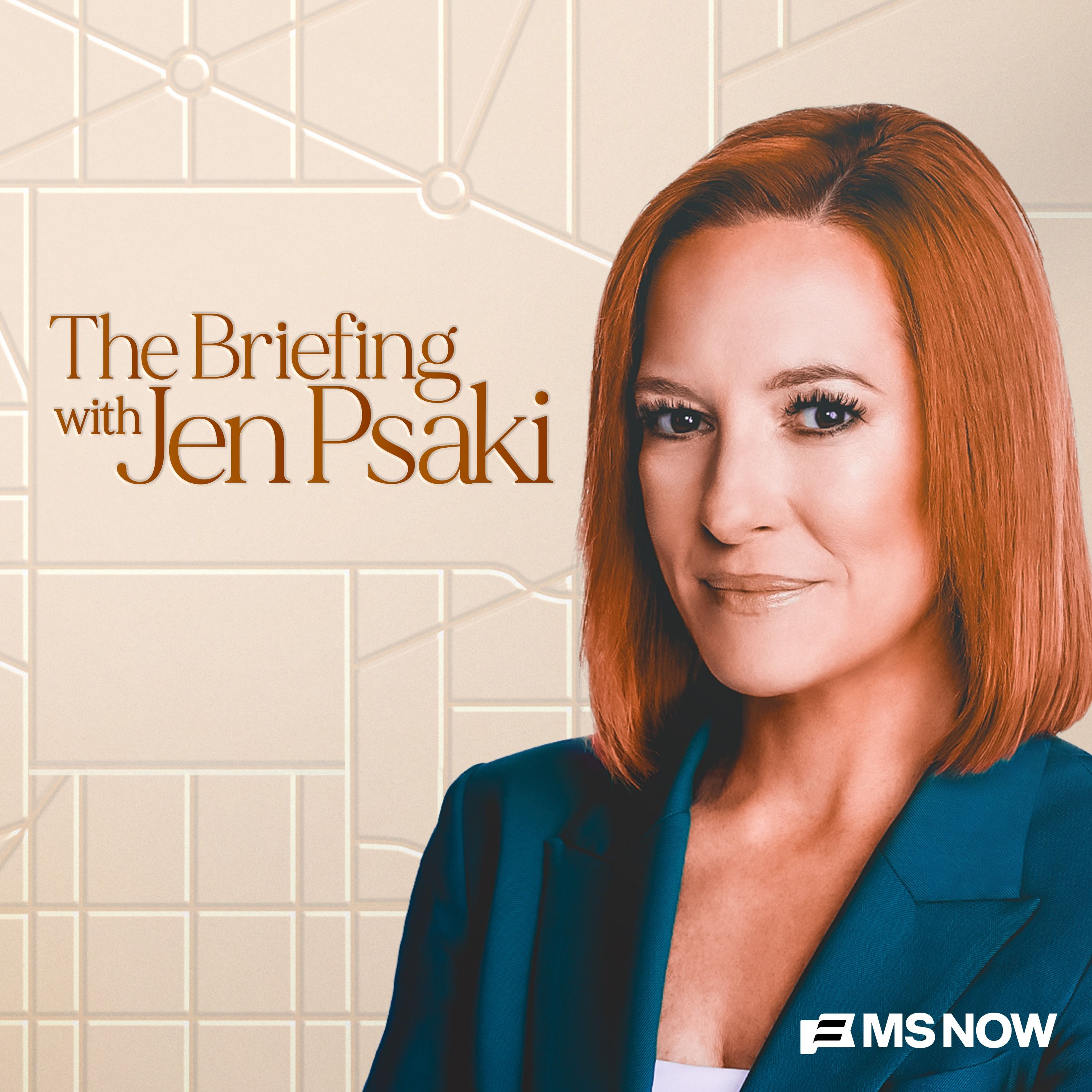
The Briefing with Jen Psaki
Psaki: Tariffs are a tool of Trump's corruption at taxpayers' expense
00:41:17
Jen Psaki points to examples of Donald Trump manipulating tariffs against other countries for reasons that have nothing to do with economics and everything to do with his own personal enrichment or petty grievances. And while Trump abuses his power in order to serve himself, American taxpayers foot the bill by paying for the consequences of Trump's tariffs.
Loading summary
Transcript64 lines
- [00:00]
ThirdLove Advertiser
Thirdlove makes bras that actually fit so they know if your bra feels uncomfortable. The problem isn't your body, it's the bra. ThirdLove designs for comfort first soft fabrics support that doesn't dig, pinch or slip bras that feel good and look good under everything you wear. Shop ThirdLove and explore over 60 sizes, including AA through H and half cup sizes you won't find anywhere else. Get $15 off your first purchase at thirdlove.com with code podcast15 shipping, billing, admin, payroll, marketing.
- [00:35]
Stamps.com Advertiser
You're managing all the things, so why waste time sending important documents the old fashioned way? Mail and ship when you want, how you want with stamps.com print postage on demand 247 and schedule pickups from your office or home. Save up to 90% with automated rate shopping. That's why over 1 million small businesses trust stamps.com go go to stamps.com and use code podcast to try stamps.com risk free for 60 days as you all
- [01:02]
Host/Interviewer
know, it was another one of those Fridays where the news gods dumped a massive story on us, with the Supreme Court striking down the vast majority of Donald Trump's tariffs and sending the president spiraling into an absolute toddler esque temper tantrum on national television with some very creepy dark lighting in the briefing room, I would Note. Now, Illinois Governor J.B. pritzker, as Steph just mentioned, is going to join me here in just a moment. My bet is he has some thoughts on that public tantrum. I'm also going to ask him about his very direct message to Trump after the decision came down. Steph also referenced this he basically said Illinois wants its money back, demanding the Trump administration refund residents of his state $1,700 each for the money they lost to tariffs. He even sent the Trump administration a literal invoice for the money. We'll show that. You can see that right there. So there's a lot to talk with the Governor of Illinois about tonight. And with a big decision like this reversing one of Trump's most catastrophic economic policies, and with Trump threatening to try and revive the policy in almost any way he can, I think a lot of people are wondering what this all means for the economy, from how much things cost to whether they will actually ever see a dime back of the cost of these tariffs. And the one person I can know who can answer all of these questions and knows all the levers is Senator and Professor Elizabeth Warren, who's also going to join me here later to explain what happens next. So we've Got a lot to get to tonight, but I just want to start with this. Every president has specific things they like to focus on. And I worked for two. I know this. Certain issues or beliefs or campaign slogans that they will go back to over and over again. But there's only one president that I know who has taken to such a liking to one particular word, a single noun from the English language which he seems to prize above all else.
- [02:53]
Donald Trump
It's called tariffs. I said my favorite word in the whole dictionary is tariffs. I said tariff is my favorite word in the whole dictionary. I said my favorite word of every word is tariff. I've loved it for 40 years. My favorite word in the English dictionary is the word tariff. One of my favorite words is the word tariff. My favorite word is the word tariff. My favorite word, tariffs. I said tariff. My favorite word is tariff.
- [03:23]
Host/Interviewer
It's like he's grunting it out. It's his favorite word. That's clear. Nobody loves tariffs, it seems, more than Donald Trump loves tariffs. It's why, against all reason, Trump blanketed the world with steep tariffs arbitrarily and chaotically driving up prices for millions of American consumers. And it's why today, when an aide walked into a meeting between Trump and a bunch of governors and handed him a note saying. Saying that the Supreme Court had struck down the vast majority of his tariffs, Trump went ballistic. I mean, immediately after that meeting, Trump held a hastily assembled press conference to mourn his precious tariffs. I mean, again, it's like the lighting in there is a funeral of sorts. I've never seen it lit like that. Over the course of 45 minutes, the American people got to watch him experience basically all five stages of grief live on television. I mean, there was stage one, denial.
- [04:16]
Donald Trump
I have the right to do tariffs, and I've always had the right to do tariffs. The Supreme Court's decision today made a president's ability to both regulate trade and impose tariffs more powerful. I don't think the court meant that. I don't think the court meant it. I don't think they meant that. I'm sure they didn't.
- [04:34]
Host/Interviewer
They didn't mean it. Lots of denial. Now, of course, there's also stage two, anger.
- [04:41]
Donald Trump
They're against anything that makes America strong, healthy, and great again. They also are a frankly disgrace to our nation, those justices, they're just being fools and lapdogs. For the Rhinos and the radical left
- [04:57]
Host/Interviewer
Democrats, there was stage three, the form of bargaining.
- [05:05]
Donald Trump
I want to be very well behaved because I understand the court. I understand how they are very easily swayed. I want to be a good boy.
- [05:17]
Host/Interviewer
I want to be a good boy. Okay, There was stage four, which is depression.
- [05:24]
Donald Trump
The Supreme Court's ruling on tariffs is deeply disappointing. And I'm ashamed of certain members of the court, Absolutely ashamed.
- [05:37]
Host/Interviewer
And then eventually there was stage five, some form of acceptance.
- [05:42]
Donald Trump
It's ridiculous, but it's okay because we have other ways, numerous other ways. Now I'm going to go in a different direction, probably the direction that I should have gone the first time. Now I'll go the way I could have gone originally.
- [06:00]
Host/Interviewer
And because it was Donald Trump, there was, of course, also a sixth stage of grief, saying whatever absolutely unhinged thing popped into his head at any given moment.
- [06:13]
Donald Trump
I could do anything I want to do to them, but I can't charge any money. So I'm allowed to destroy the country, but I can't charge them. A little fair. And I don't like them. I think they're real slime balls. I read the paragraphs I read very well. Great comprehension. For 30 years longer they may chip, chip, chip. He said, sir, I want to kiss you so badly. This is a very powerful man. I don't want to be kissed by that man.
- [06:41]
Host/Interviewer
So that was all that was on one press conference today. Everyone, I mean, it's very clear Donald Trump is going through some things right now. It's the only way to explain it. He desperately, obviously did not want to give up his tariffs, and there's a reason for that. For the past 40 years, long before he ever ran for president, Donald Trump has been obsessed with the idea of levying tariffs on other countries, talking about it in interview after interview, and it has never been based on any sort of economic theory. It's always been about one thing and one thing only, power. Because Trump believes tariffs give him power over other countries, he doesn't care if that power comes at the expense of regular Americans who end up paying the tariffs. He's okay with that pain as long as it gives him power over other world leaders, as long as he gets to feel big and tough and powerful. Just listen to the way he talked about using tariffs against the nation of Switzerland.
- [07:36]
Donald Trump
You know, I had an incident with a very nice country, Switzerland, so I put on a 30% tariff, which is very low still. We were having a big deficit, but it was half the deficit. Then I got an emergency call from, I believe, the prime minister of Switzerland, and she was very aggressive, but nice, but very aggressive. Sir, we are a small country. We can't do this. We can't do this. We are. I couldn't get her off the phone. We are a small country. I said, you may be a small country, but we have a $42 billion deficit with you. No, no, we are a small country. Again and again and again, I couldn't get off the phone. So it was a 30%. I didn't really like the way she talked to us. And so instead of giving her a reduction, I raised it to 39%.
- [08:27]
Host/Interviewer
Okay. First off, when Trump says the Prime Minister of Switzerland, he's probably referring to the former president of Switzerland, Karen Keller Sutter, who you can see right there. But the point here is that Trump claims he raised tariffs on Switzerland by 9% simply because he did not like the president's tone. It didn't matter that it would be regular Americans and Swiss citizens who would suffer as a result of those tariffs. All that mattered was Trump's ego. And even this conservative majority Supreme Court could not deny that there's no rationale or constitutional basis for letting a president create that kind of pain for his own personal vanity. I mean, Trump repeatedly claimed that his tariff policy was about helping American workers. At one point, he even promised to send every American a rebate check from all the money the US Was taking in from the tariffs. But this was never actually about helping regular people, to state the obvious, which is why, even after the Supreme Court declared these tariffs illegal and paved the way for repayment, paying the people who were hurt by them, the Trump administration suddenly has no interest in helping regular people. I mean, here was Trump's very in touch Treasury Secretary, on that particular subject just today.
- [09:37]
Illinois Governor J.B. Pritzker
Well, it's gonna be a food fight going after $175 billion, isn't it? So I got a feeling the American
- [09:45]
Host/Interviewer
people won't see it. I mean, he sounded almost gleeful there. Trump doesn't want to help people with his tariffs. Neither does anybody who works for him. He wants power. He wants to act like a king, which is why tonight he signed a new executive order that will impose new 10% tariffs on all countries under a different statute. Now, those new tariffs are also likely to be challenged. And the statute he's using only allows those tariffs to be in place for 150 days before Congress would have to make them permanent. And for those of you who don't have calculators in front of you right now, 150 days from now, you is August, which is right before the midterm election. So there's that. But the point here is that he won't give up on this. He refuses to admit he does not have this power. Trump's tariff policy embodies everything that is wrong with this administration. The thirst for power, the willingness to ignore the Constitution, the chaotic implementation and lack of regard for any consequences. It's the policy of a petty tyrant prone to tantrums. But today's ruling showed that the tyrant isn't as powerful as he thinks he is. And the real pushback against Trump's tariffs is just getting started. And joining me now is Illinois Governor J.B. pritzker, who we've already been talking about. Okay, I'm gonna ask you all about that invoice you sent to Donald Trump today. We already showed it to the audience, so they know what it is. But I just wanna start with the big picture here, cuz I think today told us a lot. I mean, the Supreme Court strikes down Trump's signature policy. He has a meltdown in the White House briefing room. And I just want to know what was going through your mind as you watched it all unfold today.
- [11:20]
Illinois Governor J.B. Pritzker
Well, it was unhinged. I mean, watching his press conference today where he just, as you pointed out, I mean, he just fell apart about this and attacked Supreme Court justices and could not understand why he could not wield this power that he believes is his that has now been found unconstitutional. So, so, and what does he do? He turns to yet another statute that allows tariffs in certain circumstances. And now he intends to reimpose these tariffs that are truly devastating small businesses. They're hurting families across my state. And as you saw, $1,700 per family. These are working families. $1,700. Remember, this is the guy who lowered taxes on the wealthiest people and he raised taxes, the tariff taxes on the, the middle class, the working class, and frankly, people, just everyday folks going to the grocery store, just buying goods. Let me just tell you one other thing. The farmers, these are folks mostly who voted for Donald Trump. He has devastated, for example, the soybean farmers in my state as a result of his tariffs and the way he has activated trade wars. We no longer are selling soybeans to, to the Far East. And that's billions of dollars of sales for family farmers across the state of Illinois. So the $1,700 doesn't even talk about the small businesses and the farmers that are hurt by what he was doing and now wants to reimpose.
- [12:56]
Host/Interviewer
No question about it. And I mean, I showed this invoice earlier. You basically said Illinois wants their money back. $1,700 per family. We already know that a lot of businesses who have paid the tariffs have already hired lawyers to try to sue the government to get the money back. So explain to us, in your view, kind of how this could happen, what should happen and how could this happen? How could people out there watching get any money recouped?
- [13:21]
Illinois Governor J.B. Pritzker
Well, if he actually gave a darn about working families, he would just institute the rebates that people should get. These refund checks should just come. That's what he should do. He won't do it because he actually doesn't care about working families. And he, he thinks he's right. And so he's going to hold onto that money. And the result of that is that think about the small business that just wants to get their money back. It's going to take them, it may be years that they're in court trying to get this money back. Meanwhile, he's reimposing tariffs. So it's getting worse for people. It's so damaging to the U.S. economy. And you saw the effects of that last year. We had the lowest job growth in a very long time as a result of Donald Trump taking over as president and what he's done to the economy with tariffs.
- [14:09]
Host/Interviewer
And Scott Bessen is almost gleeful about it. I don't know if you saw this because you're busy, you're governing a state, but it seems like your invoice has at least gotten under the Trump gang skin a bit because Stephen Miller of all people was asked about this request of yours tonight on Fox News. So I just want to play this for you and we'll talk about on the other side. J.B. pritzker, though, is pretty happy because he thinks now the federal government should return $1,700 per Illinois family because the tariffs were struck down.
- [14:41]
Donald Trump
Well, Governor Pritzker is not only economically
- [14:45]
Illinois Governor J.B. Pritzker
illiterate, historically illiterate, and probably functionally illiterate, but he is also somebody whose every action and policy is designed to hurt and betray America.
- [14:56]
Host/Interviewer
I mean, I felt like Stephen Miller was about to jump out of his skin there. There was a lot there. But you're clearly under their skin. What is your reaction to that?
- [15:05]
Illinois Governor J.B. Pritzker
Well, I thought I was just living rent free in the president's head. Apparently, I'm living rent free in Stephen Miller's head, too. All I can say is, I mean, remember, he's done more to damage this country with his unconstitutional recommendations to the president. The attacks were on families and people, everyday people across the United States with ICE and CBP and frankly, moms getting shot in the face because of Stephen Miller. So honestly, I just don't take anything he says about me seriously. I take very seriously, though, the impact that he's having on the country in such a terribly negative way. So, look, he doesn't seem to understand that $1,700 out of the pockets of everyday people across the United States is a lot of money. And the damage that they're doing is that people are not earning more. People are losing jobs as a result of Donald Trump, and they now have had to pay $1,700 that they're apparently not going to get back because they're going to have to fight in court to get it and may never get it. And now they're reimposing these tariffs that everybody knows harming the US Economy.
- [16:20]
Host/Interviewer
There's a lot packed into today. Oh, and you know, you have been critical at times. I have been critical at times of the Supreme Court and what they have done and decisions they have ruled. Today, Donald Trump spoke about the Supreme Court in a way I've really never heard a president speak about the Supreme Court, even when they disagree. I mean, he said they are very unpatriotic and disloyal to our Constitution. He said the court has been swayed by foreign interests. He called the decisions by Justices Gorsuch and Barrett an embarrassment to their families. I know you don't always agree with the court and their rulings, but what did you make of his kind of meltdown and really attacks on the court, as he did in a way I really, again, haven't heard a president do before?
- [16:59]
Illinois Governor J.B. Pritzker
Well, that's who Donald Trump is. You know, he doesn't care about decorum. He doesn't actually care about the fact that these are public servants who, even when I disagree with them, you don't treat them with disrespect the way that he just did. By the way, he's attacking people he appointed to the Supreme Court. And that isi mean that's just who he is. And he does that to members of Congress, members of his own party. Anybody who disagrees with him is all of a sudden on the enemy's list for him. So here, you heard him, you know, go after Gorsuch, go after Barrett again. He appointed them, and they had very reasoned opinions about this. I just don't understand how we can put up with this much longer where he's justi mean, tearing apart the government by going after very important, respected people, both in the Supreme Court, but also in the United States Congress. And I'm just, I'm disappointed at the direction thatI think he'sI've said this before. You know, I really think he's suffering from dementia. And, and it's got him just lashing out at people constantly. Now he's lashing out at the very people that he appointed.
- [18:14]
Host/Interviewer
It was hard to watch that press conference and think everything was going okay there. Let me ask you, I mean, as much as this is obviously an economic story and it has, tariffs have had a huge impact the people of your state, people across the country. Today was also a story about Trump's power being checked. I mean, in his concurrence today, and you mentioned how reasoned the opinions were, Justice Gorsuch wrote that essentially sidelining Congress on issues like this could lead to the continual and permanent accretion of power in the hands of one man. I mean, a little late for that, I'm just going to note, and a little rich from a justice who voted to give Donald Trump presidential immunity. But that aside, I mean, do you see this Supreme Court, they're all humans, right? Do you see this as any sign that the court is willing to really start reining Trump in, or do you think this is very particular to the tariffs?
- [19:03]
Illinois Governor J.B. Pritzker
Unfortunately, I think this is particular to the tariffs. I think the philosophy that guides Kavanaugh, that guides the other, you know, very hard. Right. Members of the Supreme Court, that's going to live on, these folks are not going to abandon that. And I don't believe that they think that they're reining in Donald Trump when they're doing this. They're just, frankly, they're following the law and the Constitution. And even though they fall on the wrong side of the decisions, in my view, but they're trying hard. And again, there were people on both sides that voted to remove these tariffs and take away this power from the president. So I would argue, I guess, that the reasoned legal opinions that were shared on the liberal side, the conservative side, probably came to the right conclusion. If you've got both sides agreeing.
- [20:00]
Host/Interviewer
Yeah, that's true. I wish it was a sign of things to come, but it's important to be clear eyed, which is why I wanted to ask you about it. You've been so generous with your time. We do have to sneak in a very quick break. That's how these things go, as you know. But when we come back, I want to ask you about a really interesting piece of color from today, because the moment Trump found out about this Supreme Court decision, he was actually meeting with with a big group of governors at the White House, you were not one of them. But I wanted to ask you about why. When we come back, we'll talk about that.
- [20:31]
Illinois Governor J.B. Pritzker
CIDP can make your daily routine feel not so routine.
- [20:36]
Host/Interviewer
The good news, with a self injection
- [20:38]
Illinois Governor J.B. Pritzker
for chronic inflammatory demyelinating polyneuropathy, you have the option to treat at home. Discover more at CIDP6 and talk to your doctor. That's CIDPselfinjection.com brought to you by Argenics.
- [21:06]
Host/Interviewer
We are back as promised with Illinois Governor J.B. pritzker. So as I mentioned before the break, Trump found out about the Supreme Court's decision on his tariff policy while he was meeting with a big group of governors today. You decided not to attend. I mean, first of all, why is that and what did you think of the decision? Cuz a number of Democratic governors did attend. What did you think about that?
- [21:27]
Illinois Governor J.B. Pritzker
Well, the first thing I'd say is that, you know, showing up at the White House and trying to negotiate or discuss with the president something that you need for your state, it's completely ineffective. You can't trust anything that he says or does. You know, you can make an agreement with him and he'll break it at a moment's notice. So that's one reason why it's ineffective to show up. Now the National Governors association is a really important organization. It was founded by Teddy Roosevelt and it's been a gathering point for Republicans and Democrats who are governors of our 50 states. And Donald Trump for the very first time, the only president that I'm aware of that's ever uninvited a couple of people governors that he disagreed with. It happens that he uninvited the only gay man who's a governor, the only black governor governor. And you know, he articulated some reasons for it. But why would you uninvited. And he uninvited all the Democrats to this morning's meeting originally. And I give some credit to Kevin Stitt, the Republican governor of Oklahoma, who's the chairman of the nga, who I think convinced the president that, you know, it's a business meeting, you should have all the governors there for the morning meeting on Friday. I've been at those meetings before. But there's a Saturday night event at the White House that's a black tie event. And again, it's a celebration. You know, Joe Biden didn't uninvite Greg Abbott, uninvite Desantis because he disagreed with them. But Donald Trump picked out two and said not inviting them. So I really think that, you know, again, decorum is out the window in this White House. And I felt, anyway, that it was appropriate to boycott the, the events at the White House as a result of the position that he took with regard to two really great governors who, whether you disagree with them or agree with them, they should be invited.
- [23:28]
Host/Interviewer
It's also how you spend your time. There's nothing more valuable than your time when you're running a state or you're running a country. I want to shift to another topic that's really been dominating, one of the topics that's been dominating the news lately, and that's all of the fallout from revelations out of the Epstein files. And your cousin, Thomas Pritzker, of course, recently stepped down as the executive chairman of Hyatt Hotels after his affiliation with Epstein was revealed in new documents. He said he regrets associating with him. But what was your reaction when you learned about those details and his name in several occasions in the files?
- [24:04]
Illinois Governor J.B. Pritzker
Look, I've said all along that anybody that may have committed some kind of offense here needs to be held accountable. Anybody, I really mean that. And that includes the President of the United States. So, look, I'm not close to my cousin, but I can tell you that it's important that everybody get rooted out and determined whether they did something wrong or didn't. And there were, I think, a lot of real atrocities that were committed here. I mean, terrible things that were done to underage women. I don't know who did what, but that was the whole point of releasing the Epstein files. If Donald Trump did something wrong, he should be held accountable. So far, he's been protected, as far as I can tell, by his own Department of Justice. It's not fair. Everybody, everybody should be revealed and investigated and determined if they committed a crime.
- [24:59]
Host/Interviewer
That's why I asked you, because just because you share a last name, it doesn't mean that. What you're saying is, I think if Congress were to want to ask him more questions, you're not going to try to stand in the way of that. There's a process that's pursuing anybody who's mentioned and anybody who they see, they want to ask more questions of. Right.
- [25:18]
Illinois Governor J.B. Pritzker
And there are lots of powerful people that have been named. Again, I don't know that they've all done something wrong or who has. What I know is that if someone has been named as having done something wrong, then again, they should answer questions. And if they did something wrong, they should. If they have to go to prison, they should go to prison or they should be held accountable in an appropriate way.
- [25:44]
Host/Interviewer
One of the people who. And people have been very frustrated, to your point, with the lack of accountability in this country. I'm sure you've heard from people, you hear about all sorts of issues. But, I mean, Trump's Commerce Secretary, Howard Lutnick, has admitted to lying about his relationship with Epstein. He denies any wrongdoing. But there he was today standing directly behind Trump during his press conference meltdown after kind of admitting last week that he had actually lied about his association and how long he'd been talking to Epstein. What do you think still needs to happen and what is your message to those who are really frustrated out there with the lack of accountability?
- [26:22]
Illinois Governor J.B. Pritzker
You know, the Howard Lutnick situation is more an example to me of the corruption that has pervaded this entire administration right from the top. Of course, you know, where he's enriching his own family himself, and then people like Howard Lutnick and others are enriching themselves also while they're in office. It seems like, you know, the idea of doing public service and doing it for the right reasons, at least in this administration, out the window. So, look, Howard Lutnick admitted things, I think, before Congress that, that no one knew before. And that's why we've got to hold hearings on these things. And that's why when Democrats retake one or both houses of Congress, that's why we've got to have hearings about the corruption, about the crimes that have been committed. And people do need to answer for what they've done. And I include in that people like Tom Homan and Kristi Noem and Gregory Bevino from ICE and CBP and the attacks on people's constitutional rights across this
- [27:28]
Host/Interviewer
nation, no question about it, they are top of the list, I think, for a lot of people out there. Governor J.B. pritzker, thank you so much for being here tonight.
- [27:38]
Illinois Governor J.B. Pritzker
Thank you.
- [27:40]
Host/Interviewer
We have to sneak in a very quick break, but Senator Elizabeth Warren is standing by. I'm going to ask her about the corruption at the heart of Donald Trump's tariffs and what this corrupt administration and their rich buddies might try to do next. We'll be right back. Try Angel Soft for your tushy. It's made by Angels Soft and strong. Budget friendly. The choice is simple. Pick up a pack today.
- [28:08]
Senator Elizabeth Warren
Angel Soft.
- [28:09]
Host/Interviewer
Soft and strong.
- [28:10]
Ollie Advertiser
Simple.
- [28:18]
Host/Interviewer
To truly understand why Donald Trump likes tariffs so much, I think you have to look at the Trump international real estate development currently underway in Vietnam. When Trump held what he called Liberation Day, as he called it in April of last year, announcing his slew of proposed new tariffs, Vietnam was slated for some of the highest. Trump was threatening to put a 46% tariff on Vietnam. Now, at the same time, the Trump family real estate business was trying to get permission to develop a $1.5 billion new property in Vietnam. They basically wanted to build enough villas to house 35,000 residents, a 36 hole golf course, of course, theme parks, and a commercial district. Now, the approval process for something like that in Vietnam typically takes somewhere between two and four years. But somehow, last year, the Trump family managed to get the Vietnamese government to approve everything in just three months. Just one month after Trump threatened a 46% tariff on the country. Vietnam's central government short circuited the process for the Trump family property. And legal experts described it this way to the Times, saying that to fast track the Trump development, Vietnam ignored its own laws. Vietnamese officials have allowed the Trump project to break ground without completing at least a half dozen legally required steps, from securing all the land and financing to conducting environmental reviews. The government essentially forced the locals who lived or farmed on the land to sell to clear the space for, for the Trump property. Now, in a letter obtained by the Times, Vietnamese officials explicitly stated that the project required special support from the top ranks of the Vietnamese government because it was receiving special attention from the Trump administration. And President Trump personally. The Prime Minister of Vietnam himself even spoke at the groundbreaking. I mean, here he is with Eric Trump. Yeah, there he is. Now, at the time, the White House said that, quote, all of the President's trade discussions are totally unrelated to the Trump Organization. Okay. And Vietnam's Foreign Ministry did not respond to questions about the project. But after all that, when it came time for Trump to actually implement the tariffs, he threatened on his so called Liberation Day, after the Vietnamese government had hustled and ignored their own laws to fast track Trump's $1.5 billion project. What do you know? Trump dropped his tariff rate for Vietnam from 46% to, to just 20%. Gee, I wonder why. And if that example isn't clear enough for you, you could also look to Trump's tariffs on Switzerland, which I mentioned earlier. I mean, last August, Trump hit Switzerland with a 39% tariff, one of the highest tariffs in the world. Trump has since openly explained that his reasoning for that tariff was personal. He said that he made the tariff so high simply because the President of Switzerland, quote, rubbed him the wrong way. Now, in an effort to get that tariff rate cut down, Switzerland appeared to Trump personally. The Swiss sent a delegation of Swiss industry Tycoons bearing gifts for Trump. A special Rolex desktop clock. There it is. And a personalized golden bar valued at a little more than $130,000. Now, the White House says that Trump merely accepted the gifts on behalf of his presidential library, making them legal. But regardless of the legality, the charm offensive appears to have worked, because 10 days later, Trump cut Switzerland's tariffs from 39% to just 15%. Again. I wonder why. Last year, we also saw Trump try to use his tariffs to help his personal political buddies abroad. Back in 2022, the former president of Brazil and Trump's buddy Bolsonaro lost the Brazilian presidential election, but tried to stay in power anyway by mounting a military couple. Now, that coup, much like January 6th here, didn't work. But unlike January 6th here, where Trump managed to avoid all accountability, last year, the government of Brazil was criminally prosecuting Bolsonaro for his coup attempt. Whether it was to help his buddy or to quash the precedent that governments could prosecute former leaders for coup attempts, Trump decided to intervene. He threatened a 50% tariff on Brazil, partly in retaliation for Bolsonaro's prosecution, demanding that Brazil's current president that he drop the charges. And guess what? Brazil didn't comply. Trump did hit the country with a 50% tariff, but Brazil prosecuted Bolsonaro anyway, sentencing him to 27 years in prison. And then after all that, after all that chest pounding and all that bluster, Trump dropped the tariffs anyway. He chickened out. Now, what makes Trump using tariffs like this all the worse is that it is not just foreign countries that end up paying the price for all of Trump's wheeling and dealing. It's, of course, you. Last week, economists at the Federal Reserve bank of New York and Columbia University determined that through November of last year, 90% of the economic burden of Trump's tariffs fell on US companies and consumers. And days before that, a conservative leaning think tank released their own research showing that Trump's tariffs cost US households an average of $1,000 last year. And that's a conservative estimate in more ways than one. Other estimates go as high as $2,400. So now that the Supreme Court has struck down most of Trump's tariffs as illegal, does anybody get a refund? Does anybody get any money back? And now that Trump has issued yet another round of tariffs, where do things go from here? Luckily, I've just the person to ask. Senator Elizabeth Warren joins me next. Okay. Joining me now is someone I have been waiting to talk to all day, Democratic Senator Elizabeth Warren of Massachusetts Senator Warren, I think our viewers, and I include myself as one of these people, are probably dying to know what you think about this ruling from the Supreme Court today. So let me just start by getting your top line thoughts on what we saw this morning.
- [34:12]
Donald Trump
Sure.
- [34:12]
Senator Elizabeth Warren
And that is the Supreme Court stepped up and actually applied the law. They said it's clear we both, under the Constitution and then under the statutes that Donald Trump did not have the authority to engage in all of these random tariffs that he put in place. They were illegal. I mean, it was justthere wasn't any room for doubt in that. And that was a 6, 3 opinion. So, yes, the Supreme Court got it right. And then Donald Trump, President of the United States, instead of saying, okay, I'm not supposed to take money from the American people that way, turned around and said he's just going to find another way to steal the same kind of money from the American people going forward. You know, it's one more day in the Donald Trump presidency of chaos and of putting Donald Trump first instead of the American people.
- [35:09]
Host/Interviewer
There's no question about that. It's a never ending theme, it seems. Let me ask you about that because to your point, he seems hell bent on moving forward with tariffs even after the Supreme Court ruling. He has been talking about it for decades now. Not based on economic policy, but to your point, he put in place, he signed an executive order this evening, earlier this evening with a 10% global tariff. Give us a sense, you know, all the levers of the law and of legality in Congress. What is he, how is he trying to get around the Supreme Court here? That's one of the ways. But what is he going to be allowed to do and what isn't he going to be in terms of what you've seen so far?
- [35:48]
Senator Elizabeth Warren
All right, so he's going to try to put a tariff in place under a different statutory authority only. There's a reason he didn't start out with these other laws. In this particular case, it's because it's capped at 10%. And it's also because it only lasts for a limited period of time and it's going to have constraints on it. He's actually going to have to prove things before he can keep these tariffs in place. But, but what he loses is the ability to say, I don't like you, therefore the tariff is up. I do like you, therefore the tariff is down. And that's what Donald Trump has loved about this, this kind of shoot from the hip. Donald Trump gets to make a deal. Donald Trump is the kingmaker. He decides who's up and who's down. The problem is it's the American people who are paying for this. It's America's small business businesses that are paying for this. And as you rightly said just a few minutes ago, the estimates are somewhere between last year cost between $1,000 and $2,000 for every American family. That's money that the Supreme Court has said was stolen from the American people, and that's money that Donald Trump and the Trump administration needs to give back to those people.
- [37:07]
Host/Interviewer
So let's talk about that because you're always direct and you've sort of said, this is going to be hard to see this happen because we've already seen corporations hire lawyers. We saw this back in December, even before this ruling to sue the administration over this, over the money they had paid for tariffs. Walk us through what could happen. Is there any way to stop this from happening and is there any way, in your view, to. For the American people to get any of their money back from what this is costing?
- [37:35]
Senator Elizabeth Warren
Okay, so let's start with the part that has me really worried, and that is Donald Trump just keeps it all and doesn't give money back to anybody. Second one is giant corporations come in and because they have lawyers, they go into court, they say it's illegal for him to keep that money. We can show the receipts on what was paid on tariffs, give the money back to us, and then they keep it. In neither of those cases do the people who really paid American families actually get the money back. So here's the deal. Donald Trump's job today should have been both to say, ok, I get it, and he will now follow the law and we've got to work out a way to get this money back into the hands of the people it was taken from. That should be the job of his Secretary of the Treasury. Instead, Scott Bessant, that Treasury secretary, gets interviewed and he smirks while he says, oh, I don't think the American people are ever going to see that. You know, damn it, this is your job, Scott Besant. It is your job to find the way to get that money back into the hands of the American people from whom it has been illegally stolen.
- [38:56]
Host/Interviewer
I don't think anyone's ever accused Scott Bessen of being in touch with the American people and what people are going through. So that was another example of that today. Let me ask you, I just talked through a number of examples, and you've talked about a lot of these before. You've written Letters. You've sounded the alarms about them. You're one of the reasons we wanted to talk about all these examples of how Trump is using tariffs in an incredibly corrupt way. I mean, the Vietnam example should blow people's freaking minds. But what did I miss? And kind of walk us through. You've thought about this so much. Your concerns about how he's using tariffs as kind of an economic weapon to benefit himself and his buddies and really punish others.
- [39:37]
Senator Elizabeth Warren
Well, this is one more example of the corruption of the Trump administration and the impact it has and how it filters all the way through the system. So you've identified some of the big places where you can see it, where Trump makes himself out to be this big guy. He doesn't like, you know, how somebody talks to him on the phone, so he raises the tariff. But the word that starts to drift around Washington is for foreign countries. If you're really worried about your tariff rate, if you're really worried that one of your local industries is going to collapse because Donald Trump is going to smack you with a 50% tariff, you got to know the right person in Washington. You got to know the right person, and you've got to be friendly to the right person. You've got to be friendly in ways that help the right person. All of this is like a Mafia shakedown. You know, where are favors being traded? Where is money changing hands? Donald Trump is certainly not investigating that. He's the one who's helping it set it up. Where is the Department of Justice on this? They're not around. They're not there to try to make sure that we have a country where decisions are made, not to try to help the guy at the top or help the intermediaries who grease the skids for the guys at the top. We are supposed to be a country where the decisions are made, at least as best we can, to benefit the American people. But, boy, not in the Trump administration. And the Supreme Court has just said today that Donald Trump doesn't get to use tariffs to enrich himself, to play favorites all around the world, that that is illegal, and that he has stolen that money from the American people. That makes this a very important day. And like a cornered animal, Donald Trump, instead of backing up and trying to calm down, instead he goes out and says, nope, he's just going to add another tariff here and do another one there. He's going to use other parts of the law to keep from. To keep from making sure that the American people both get their money back and that they don't have to pay more money illegally in the future. I mean, that's just where we are right now. Donald Trump deciding that he, his ego, his pocketbook and that of a handful of people around is a lot more important than helping the American people.
- [42:21]
Host/Interviewer
He certainly looked like a quartered animal when he was having his temper tantrum meltdown in the briefing room today. Senator Elizabeth Warren, I was looking forward to talking to you all day today. Thank you so much. Appreciate you being here with me tonight.
- [42:33]
Senator Elizabeth Warren
Thanks.
- [42:35]
Host/Interviewer
Okay, we have to sneak in a quick break, but do not go anywhere because Neal Katiel is coming up on the Last Word. Neil argued this tariff case before the Supreme Court. Neal won this tariffs case before the Supreme Court. And you are not going to want to miss what he has to say. We're going to be right back after a quick break. Okay, that's going to do it for me tonight.
- [43:00]
Ollie Advertiser
And this week, 91% of dog parents say their pup is an important member of the family and 40% would even save their dog over a human stranger. If that's you, you're not just a dog lover. You're obsessed at Ollie. We get that because we're obsessed, too. Caring for your dog isn't just routine. It's a reflection of how much they mean to you. And what goes in their bowl is one of the clearest ways you show that love. That's why our chefs, vets and food scientists create fresh human grade meals designed to support your dog's whole body well being. Every recipe is crafted with intention backed by real nutrition insight so you can feel confident that you're giving your pup something truly good. Build a plan tailored to your dog's needs with perfectly portioned meals and five recipes to choose from. Visit ollie.com obsessed and use code OBSESSED for 60% off your first box.