
Podcast
The BritChips Podcast
Hosted by Anthony Miller · EN
The only podcast entirely dedicated to entrepreneurs, leaders, investors, partners, in fact everybody involved with UK semiconductor startups. Created and hosted by award-winning tech industry guru Anthony Miller.
anttheantidote.substack.com
anttheantidote.substack.com
10episodes
Episodes
Newest firstAll episodes

BritChips Talking Heads: Tom Atkins, Vulkos
Jun 800:03:36Tap to summarizeHow Tom Atkins came to juggle a career on the catwalk with leadership of a startup is one of the stranger stories I have heard from a tech entrepreneur and merits a future full-fat podcast.But for now I’ll let Tom do all the talking in this second ‘Talking Heads’ episode of The BritChips Podcast.Could Vulkos be a solution to the shortage of chip design skills in the UK?Watch the clip and see what you think. It’s under 4 minutes long so you have no excuse not to.Talking Heads is also available on the BritChips YouTube channel (https://www.youtube.com/@BritChips) and in audio-only form on Apple Podcasts and Spotify. This is a public episode. If you would like to discuss this with other subscribers or get access to bonus episodes, visit anttheantidote.substack.com
Transcribe →
BritChips podcast: Metahelios - The Metasurface Nerds!
Jun 400:38:55Tap to summarizeNow, who wants a car that you can only drive in daylight hours? Or to put in another way, would you not want a car that drives as safely at night as it does during the day?Glasgow-based imaging technology startup Metahelios has developed next-generation pixel technology based on metasurfaces which can replace the traditional red/blue/green filter arrays that image sensors use to ‘see’ in colour. RGB filter array-based sensors have been used for years in imaging devices ranging from cameras and smartphones, and more recently robots and autonomous vehicles.But they have two main drawbacks.Firstly, colour accuracy tends to be compromised when the sensors encounter poorly lit environments.Secondly, RGB filter arrays require complex manufacturing processes using environmentally unfriendly organic chemicals.Metahelios’ metasurface filters are manufactured in aluminium using tools and processes already well established with image sensor chip foundries.And they ‘see’ much better than pixels with RGB filter arrays in poor lighting.In this podcast, Metahelios cofounder and CEO Charles Altuzarra shares insights on navigating research, product development, and funding in the high-tech landscape, and explains how cutting-edge innovation, strategic pivots, and strong industry relationships are shaping the future of image sensors.PS: An apology! I kept mispronouncing Charles’ surname in the podcast but managed to correct the spelling in the captions in time. Sorry about that!Podcast outline* Origins of Metahelios and the significance of its name* Collaboration and friendship with co-founder Yash Shah* Development of metasurface technology as a replacement for traditional color filters* Initial applications in defence and space optics* Strategic pivot towards automotive and robotics industries* Challenges in fundraising and navigating the image sensor market* The importance of patents and IP protection* Engaging with accelerators like Silicon Catalyst and NATO Diana* Building industry relationships and licensing strategies* The role of UK innovation programs and future growth plans* Lessons learned and advice for scientific entrepreneursTopics* Introduction to Charles Altuzarra and Metahelios’ vision* The story behind the brand name ‘Metahelios’* Innovation in optical imaging: The nanostructure-based filter technology* Early applications in defense and aerospace sectors* Pivoting from defense to automotive and robotics markets* Navigating confidential large markets and customer insights* Advancements in imaging sensors for autonomous vehicles and low-light conditions* The licensing model and collaboration with image sensor manufacturers* The development timeline and manufacturing locations* Fundraising milestones and UK investor engagement* The importance of patents and protecting IP in high-tech markets* The role of accelerators (ChipStart, NATO Diana, Luminate) in growth* Building industry relationships and strategic collaborations* Lessons learned: What would Charles do differently?* Future leadership and expansion plans* Final thoughts on innovation and entrepreneurship in high-tech UKThe BritChips Podcast is proudly sponsored by Silicon Catalyst UK, Official Partner of the government-funded ChipStartUK semiconductor incubator. This is a public episode. If you would like to discuss this with other subscribers or get access to bonus episodes, visit anttheantidote.substack.com
Transcribe →
BritChips Podcast: Cosine - A new angle on Sovereign AI
May 2000:32:29Tap to summarize“What’s the dream?” I asked Yang Li, cofounder and COO of AI code generator startup Cosine.“We want to be ten-times bigger than Deep Mind,” came the response.Of course you do, I thought to myself - and you might too.But can I encourage you to watch/listen to the full 30-ish minute episode of The BritChips Podcast: Cosine - A New Angle on Sovereign AI before making up your mind.You see, the market that Cosine is addressing is not all the new stuff.It’s all the old stuff, the legacy code that has been deeply embedded in commercial enterprises and public sector bodies for years if not decades.And often there’s nobody left in the organisation who really understands how it works, making maintenance and upgrades an arduous and highly risk-prone exercise.Yang believes they have the answer - an AI codegen specifically designed to maintain and enhance applications coded in arcane - even archaic - languages.And Cosine has a USP that Yang believes the ‘usual suspect’ AI codegens can’t beat.They see Cosine as the only end-to-end sovereign AI coding platform built, owned, and operated entirely in Britain.The UK government is clearly a believer. Cosine was one of the first startups to be accepted into the government’s £500m Sovereign AI initiative, awarding it access to Isamabard, the UK’s most powerful supercomputer.So, see what you think.Podcast summaryDiscover how UK-based startup Cosine is leveraging AI to transform legacy code management across defence, finance, and semiconductor industries. Cosine cofounder and COO Yang Li explains their innovative approach, funding journey, and ambitious future plans to make Britain a leader in sovereign AI.* Yang Li introduces Cosine and their mission to build the first end-to-end sovereign AI coding platform in Britain* The origins of Cosine and how a chance meeting at a wine bar sparked the project* Differentiating between greenfield and brownfield projects in AI coding applications* The technical approach behind Cosine’s language models trained specifically on legacy languages like COBOL and VHDL* How Cosine’s platform enhances maintenance and feature addition in critical sectors* The UK government’s £500 million sovereign AI initiative and its impact on Cosine’s growth* Current customer deployment status and future industry targets, including semiconductor manufacturing* Funding journey: bootstrapping, YC acceleration, US and UK investment, and strategic partnerships* The long-term vision: making UK AI as influential as DeepMind and aiming for global leadership* The role of Form1 Partners in supporting Cosine’s go-to-market strategyTopics* Yang Li’s background and Cosine’s origin story * Differentiating greenfield vs brownfield projects * Cosine’s approach to legacy system maintenance * Use cases in defense, finance, and critical infrastructure * Ensuring AI decisions are audit-trailed for regulation * Entering the semiconductor language market * Training models for low-level hardware languages * Collaborations with chip industry players * Funding origins: bootstrap, Y Combinator, and investments * UK government’s sovereign AI program * The capabilities enabled by government support * Current team size and growth plans * Key milestones: training a sovereign large language model * Future vision: positioning Cosine as a UK AI leader * How Cosine engaged with Form1 PartnersThe BritChips Podcast is proudly sponsored by Silicon Catalyst UK, Official Partner of the government-funded ChipStartUK semiconductor incubator.We gratefully acknowledge the support of Form1 Partners in the making of this podcast. Form1, for which Anthony Miller is an advisor, is the fast-growing commercialisation partner for B2B tech scale-ups and established corporates. See here for more information about Form1. This is a public episode. If you would like to discuss this with other subscribers or get access to bonus episodes, visit anttheantidote.substack.com
Transcribe →
BritChips Talking Heads: Mark Isaacs, HarwellXPS
May 1800:04:25Tap to summarizeWelcome to the first episode of Talking Heads, a new BritChips series of short-form videos featuring people who are helping to support UK semiconductor startups.My first ‘Talking Head’ is Mark Isaacs, who leads HarwellXPS, the Engineering and Physical Sciences Research Council’s national facility for photoelectron spectroscopy, based at the government’s Harwell research campus.This world-class facility is engaged in surface analysis of advanced materials such as semiconductors in order to detect microscopic defects which could cause the device to underperform or fail completely.After listening to this clip you might want to swing over to The BritChips Podcast: Deep Fabrication - Predicting Defects in which I am in conversation with Dr. Yasir Noori, cofounder and CEO of London-based semiconductor design tool startup, Deep Fabrication, which is developing AI tools that can predict defects in semiconductor designs prior to manufacturing.After all, they do say that prevention is better than cure!Talking Heads is also available on the BritChips YouTube channel (https://www.youtube.com/@BritChips) and in audio-only form on Apple Podcasts and Spotify. This is a public episode. If you would like to discuss this with other subscribers or get access to bonus episodes, visit anttheantidote.substack.com
Transcribe →
BritChips Podcast: Chipletti - Let's Get Physical!
May 600:26:27Tap to summarizeI first spoke to Chipletti cofounders Kauser Johar and Catriona Wright in The BritChips Podcast ‘Chipletti’s Big Stack’ in June last year. Chipletti, you may recall, was one of the startups selected to participate in the third cohort of the government-sponsored ChipStart incubator, managed by Silicon Catalyst UK.At that time they were hard at work developing high-speed cache memory chiplets (the clue is in the company name) designed to stack on top of logic chips so you get more cache memory without needing extra space on the silicon.But that’s all changed as you’ll hear (and see) in this latest episode of The BritChips Podcast, in which they explore the latest developments in edge AI hardware, focusing on innovative memory stacking, chiplet integration, and simulation tools that are revolutionizing the design and deployment of AI inference systems at the edge, aka Physical AI.In this episode:* The progression from cache memory optimization to edge AI applications* Challenges and solutions in 3D memory stacking for low-power devices* Designing chiplets for AI inference in mobile and real-time applications* The role of simulators in predicting hardware performance before silicon fabrication* Milestones: FPGA prototyping, chiplet integration, and silicon manufacturing timelines* The strategic focus on supply chain sovereignty and local manufacturing for AI hardware* How this integrated approach uniquely positions the company within a competitive marketTopics:* Introduction to the evolution from cache memory to edge AI inference hardware* Detailed benchmarking results on memory stacking performance improvements* Bridging cache memory work with new edge AI chip architectures* Exploring applications suitable for 10-15 watt power envelopes, including drones and robots* Real-time AI inference and the importance of latency in safety-critical systems* GPU limitations in real-time environments and architecture optimization for edge AI* Designing chips that are more resilient, reliable, and power-efficient for edge AI use* Transition from memory chiplet design to integrated compute chiplets* The move from selling memory chiplets to providing complete system modules* Development of a high-fidelity simulator for hardware performance prediction* Creating the simulator with internal expertise and academic collaboration* Engaging potential customers and enabling early deployment through simulation* Making the simulator accessible to developers early in the hardware development cycle* How the simulator models future technology and non-existent hardware* The abstraction level and accuracy of the simulation models* Using simulation to inform design decisions across multiple future hardware scenarios* Customization and flexibility in the simulator for different hardware architectures* Commercial use: Charged for simulation or a strategic tool?* Milestones: FPGA prototypes, module integration, and upcoming silicon tape-outs* Industry-standard FPGA development plans and timelines for demonstrations* Funding strategies and milestone timelines, including venture capital and grantsThe BritChips Podcast is proudly sponsored by Silicon Catalyst UK, Official Partner of the government-funded ChipStartUK semiconductor incubator. This is a public episode. If you would like to discuss this with other subscribers or get access to bonus episodes, visit anttheantidote.substack.com
Transcribe →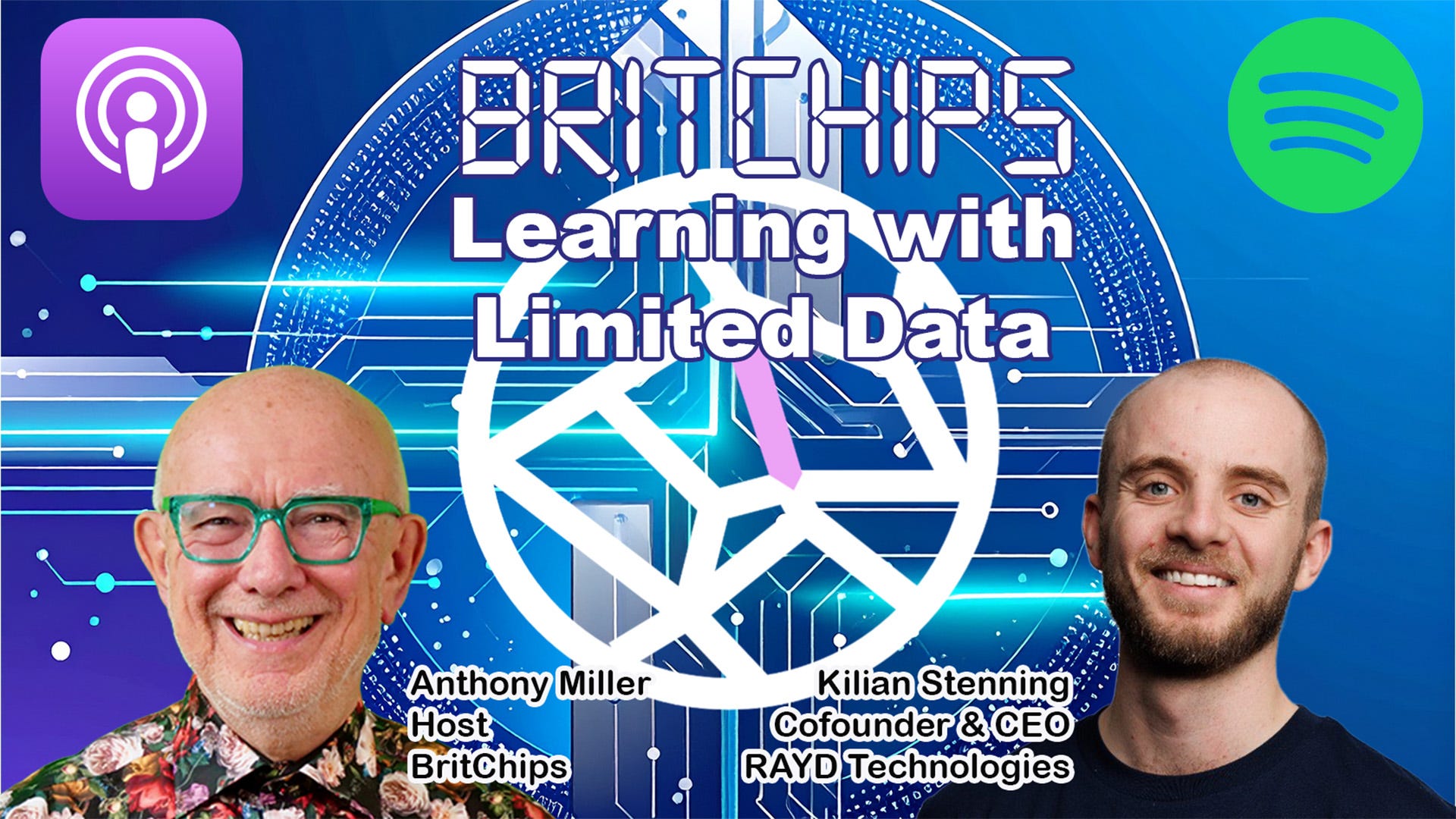
BritChips podcast: RayD Technologies - Learning with Limited Data
Apr 2300:36:22Tap to summarizeIn this latest episode of The BritChips Podcast, Rayd Technologies cofounder and CEO Kilian Stenning explains how he, co-CTOs Riccardo Sapienza (Professor of Physics at Imperial) and Kirsten Moselund (Head of Laboratory at PSI Paul Scherrer Institut) and CSO Jack Gartside (Associate Professor of Physics at Imperial) are leading pioneering work on photonic semiconductor technology and novel algorithms with the potential to shape the future of AI.In this episode:* Killian’s unexpected journey from nuclear accident analysis to semiconductor startup founder* The origins and evolution of RayD Technologies and its unique name* How brain-inspired dynamics enable learning from limited data* The role of photonics and nonlinear systems in ultra-fast AI processing* The current hardware prototype and plans for miniaturization* Application focus: medical imaging, robotics, and beyond* Funding progress, including support from the Royal Academy of Engineering* The startup’s strategic collaborations and upcoming milestones* Insights on balancing technological deep dives with business growth* The importance of team, network, and perseverance in startup successTimestamps (approx)00:00 - Introduction to Kilian and the fusion of photonics and brain-inspired computing02:05 - Kilian’s early career in nuclear accident analysis in Japan03:04 - How photonics hardware inspired the company’s research direction04:11 - Developing scalable semiconductor photonic platforms at Imperial College05:24 - The collaboration between hardware and algorithm teams to create RAYD’s technology06:45 - From academic research to commercial startup: the journey of recognition07:01 - Key breakthroughs in processing medical images with limited data08:23 - The story behind the company’s name, RAYD09:47 - Differentiating RAYD’s neuromorphic approach from traditional AI and neuromorphic systems10:34 - Brain-inspired features like parallelism and nonlinear activation functions11:41 - How the system learns efficiently, mimicking human learning with minimal data12:46 - Achieved reductions of up to 30x in training data requirements13:26 - Hardware versus algorithms: the photonics platform’s critical role14:22 - Unique nonlinear photonic processing in RAYD’s device, using laser systems15:31 - Application scenarios in medical imaging and robotics, sourcing data from public datasets17:22 - Development stage: tiny device, large supporting hardware, and plans for miniaturization18:27 - Roadmap to portable systems and real-world testing19:14 - Interest from robotics companies for on-device learning and adaptability21:01 - Funding updates: success with the Royal Academy of Engineering’s Green Future Fellowship22:13 - Hardware refinement, engineering teams, and future milestones23:15 - Focus on robotics applications and exploring broader use cases24:54 - Funding plans, runway, and potential for co-funding from industry partners28:13 - Insights from the ChipStart program and strategic mentorship30:39 - Meet Robert Swann, chairman with a rich industry background31:37 - Future ambitions: balancing technical depths with business growth34:11 - Advice for researchers aspiring to start their own ventures35:36 - The significance of team and market understanding in startup success36:14 - Competitive landscape and uniqueness of RAYD’s approach37:25 - Final gratitude and future outlookResources & Links:* Royal Academy of Engineering Green Future Fellowship* Imperial College London* PSI (Photonic Systems in Switzerland)* Robert Swan - LinkedIn, Alpha MosaicThe BritChips Podcast is proudly sponsored by Silicon Catalyst UK, Official Partner of the government-funded ChipStartUK semiconductor incubator. This is a public episode. If you would like to discuss this with other subscribers or get access to bonus episodes, visit anttheantidote.substack.com
Transcribe →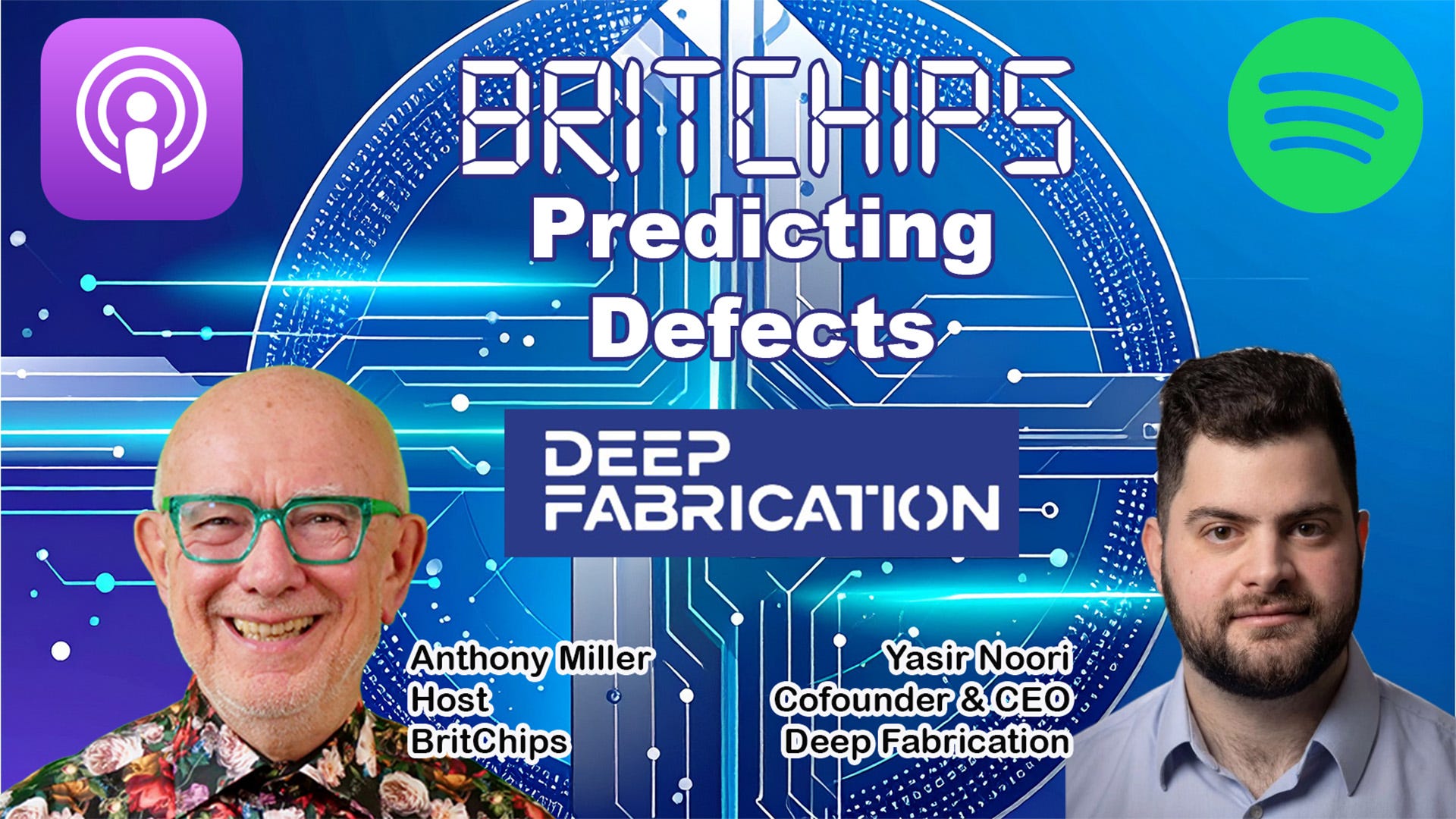
BritChips podcast: Deep Fabrication - Predicting Defects
Apr 1500:43:57Tap to summarizeIn this episode, Yasir Noori shares his entrepreneurial journey from quantum computing research to founding Deep Fabrication, a startup developing AI tools to predict defects in semiconductor manufacturing. Discover how AI can transform chip fabrication processes, reduce costs, and accelerate innovation in the industry.Key Topics* The evolution from quantum computing to semiconductor fabrication, and why semiconductors remain a passion.* How Southampton’s advanced clean room facilities influenced Dr. Noori’s focus on deep tech.* The origin story of Deep Fabrication and the importance of AI in defect prediction during manufacturing.* Details of the company’s flagship tool, Deep Litho, designed to optimize lithography processes.* The strategic approach to building a team, including insights from a “speed dating” exercise with AI experts.* The process of market testing with pilot projects within UK and European foundries.* The funding journey, including grants from Innovate UK, angel investors, and future plans for growth.* The balance between academic research, entrepreneurship, and personal life.* Lessons learned, including negotiation strategies and valuable business books like “The Lean Startup” and “The Mom Test.”* Future ambitions: expanding the AI tools across the entire semiconductor manufacturing chain.Timestamps (approx)00:00 - Introduction to Dr. Yasin Noori and Deep Fabrication02:00 - From quantum computing to semiconductors: a strategic career shift04:00 - Southampton’s world-class fabrication facilities and their influence05:30 - Inspiration behind Deep Fabrication’s defect prediction AI solution07:00 - The concept development of Deep Litho and its potential impact09:00 - Building a cross-disciplinary team through networking events11:00 - Organic growth of AI models and expanding into manufacturing processes13:00 - Critical steps of semiconductor fabrication and lithography explained15:30 - How AI can optimize and accelerate lithography process18:00 - Pilot testing with UK companies and plans for scaling globally20:00 - Business model: licensing software and expanding modules22:00 - Funding journey: grants from Innovate UK and plans for investment26:00 - Navigating the challenges of startup incubation and university spinouts33:00 - Managing time between research, entrepreneurship, and personal life35:30 - Advice for young entrepreneurs and lessons learned along the way42:00 - The importance of negotiation and customer validation strategies43:00 - Future plans: raising funds, expanding team, and scaling impactResources & Links* The Lean Startup by Eric Ries* The Mom Test by Rob Fitzpatrick* Innovate UK Funding* Southampton University Zeppler Institute* Future Worlds SouthamptonThe BritChips Podcast is proudly sponsored by Silicon Catalyst UK, Official Partner of the government-funded ChipStartUK semiconductor incubator. This is a public episode. If you would like to discuss this with other subscribers or get access to bonus episodes, visit anttheantidote.substack.com
Transcribe →
BritChips podcast: RED Semiconductor - Looking for 10 in 10 billion
Apr 700:57:34Tap to summarizeIn this episode, industry veteran James Lewis, now CEO and co-founder of RED Semiconductor, shares his extensive journey through the semiconductor industry, highlighting his current work on microprocessors optimized for AI at the edge. Discover how his team is pushing the boundaries with innovative architectures tailored for complex data processing, cryptography, and AI inference to detect minute quantities of cancerous blood cells in a sample of billions.Key Topics:* James Lewis’s career trajectory from analogue design to semiconductor startup founder* The origin story and naming of RED Semiconductor (one for Bruce Willis fans!)* The strategic choice of RISC-V architecture and open-source microprocessor foundations* Development of proprietary architectures for mathematical acceleration and AI processing at the edge* The application’s use cases: biomedical sensing, industrial control, cryptography, and AI inference* The process of simulation, FPGA testing, and planned chip production timelines* Funding journeys: from grants to seed rounds and investor support* Business models: licensing IP vs. manufacturing chips* Lessons for young entrepreneurs, especially the value of naive optimism and risk management* The future of edge AI, ambient intelligence, and the company’s vision for growth over the next 3-5 yearsTimestamps (approximate)00:00 - Introduction to James Lewis02:14 - James’ diverse career path from analogue circuits to startup success06:24 - The founding and growth of Oxford Semiconductor11:08 - Tackling GPS spoofing and jamming with antenna array processing13:45 - The move toward custom microprocessor architectures for AI and edge applications18:42 - The significance of RISC-V in modern microprocessor design21:02 - How RED employs RISC-V for mathematical acceleration and AI at the edge25:26 - The critical role of situational awareness and AI’s response in edge devices30:03 - From simulation to FPGA testing: the process of hardware validation36:15 - Collaborative biomedical sensing project and its hierarchical data processing challenges41:20 - The pathway from prototype to production chips via the government-sponsored ChipStartUK incubator and the Silicon Catalyst UK programme45:57 - Funding strategies: grants, seed funding, and investor support for scaling49:23 - Vision for the next 3-5 years: product commercialisation, licensing, and chip sales52:57 - Advice for aspiring semiconductor entrepreneurs: follow your dream yet manage risksResources & Links:* RISC-V Architecture* Silicon Catalyst Accelerator Program* Verilog Hardware Description Language* RED SemiconductorThe BritChips Podcast is proudly sponsored by Silicon Catalyst UK, Official Partner of the government-funded ChipStartUK semiconductor incubator. This is a public episode. If you would like to discuss this with other subscribers or get access to bonus episodes, visit anttheantidote.substack.com
Transcribe →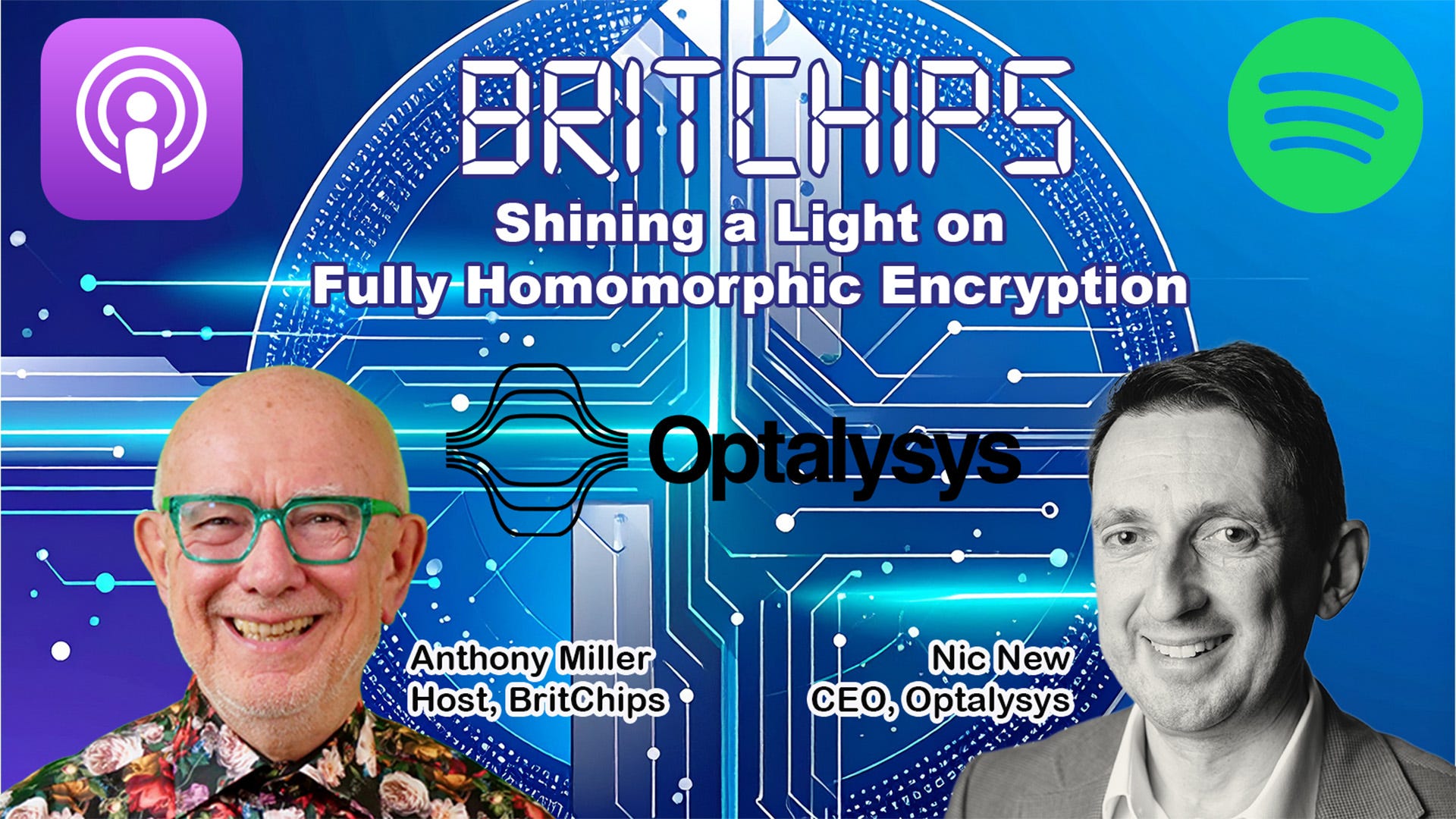
BritChips podcast: Optalysys shines a light on Fully Homomorphic Encryption
Mar 2500:44:31Tap to summarizeUnlocking the Future of Computing: The Rise of Photonics with Dr. Nick NewExplore the journey of Optalysys from fundamental optical technologies to cutting-edge photonic computing solutions transforming encryption, AI, and data processing. Discover how UK-based innovation is positioning itself on the global stage amid massive funding and technological advances.In this episode:* Dr. Nick New’s background in optical pattern recognition and his motivation for joining the tech industry* The evolution of optical and photonic computing from lab prototypes to market-ready products* Applications of optical computing in defense, healthcare, AI, and cryptography* The development of Optalysys’ Light Locker, a digital cryptography infrastructure, and its market rollout* Insights into funding rounds, international expansion, and the future of photonics in global tech* The strategic importance of maintaining UK roots while expanding into the USTimestamps (approximate)00:00 - Welcome and episode overview: Optical computing’s potential and Nick New’s journey02:16 - Nick’s early interest in bringing optical pattern recognition from lab to market03:02 - Formation of Cambridge Correlators and its defense sector projects04:32 - Transition from defense to commercialization and founding of Optalysys06:16 - The core vision: integrating optical math processes into digital systems07:35 - The evolution from early optical pattern recognition to AI applications09:12 - How liquid crystal displays enabled faster, higher-res optical data processing11:15 - The shift from classical optics to silicon photonics for higher speed and scalability12:38 - Initial product applications: from medical diagnostics to automotive slip detection14:04 - Optical processing in video analysis, satellite imagery, and fluid dynamics16:07 - The Light Locker: a digital infrastructure for cryptography using optical transforms17:35 - Fully homomorphic encryption and the need for secure, encrypted data processing19:46 - Photonic chips and the timeline for development and market entry22:02 - The role of optics in post-quantum cryptography and protecting data in a quantum era24:06 - Current product offerings, customer adoption, and plans for full photonic chips25:17 - Manufacturing partners, supply chain, and UK-based assembly26:44 - Expansion into blockchain security and international clients28:31 - Protecting sensitive data through cryptography and secure data sharing30:22 - R&D teams and the pathway to scalable integrated photonics32:49 - Upgrading existing products with new photonic capabilities33:20 - Current team composition and expertise within Optalysys34:19 - Funding journey: seed rounds, grants, and strategic investments36:05 - The US as a major funding and growth hub, with UK roots maintained37:17 - Future funding plans, including Series B and scaling manufacturing39:11 - Moving into the US market and strategic international positioning41:02 - Vision to remain UK-headquartered while expanding globally42:17 - The ambition to scale Optalysys into a listed, global tech leader43:15 - The critical role of photonics in sustainable, next-generation data centers44:00 - Closing remarks and Nick New’s message for UK tech innovationResources & Links:* Optalysys* Fully Homomorphic Encryption explained* Silicon Photonics* DARPA ProgramsConnect with Dr. Nick New:* LinkedIn* TwitterThe BritChips Podcast is proudly sponsored by Silicon Catalyst UK, Official Partner of the government-funded ChipStart UK semiconductor incubator. This is a public episode. If you would like to discuss this with other subscribers or get access to bonus episodes, visit anttheantidote.substack.com
Transcribe →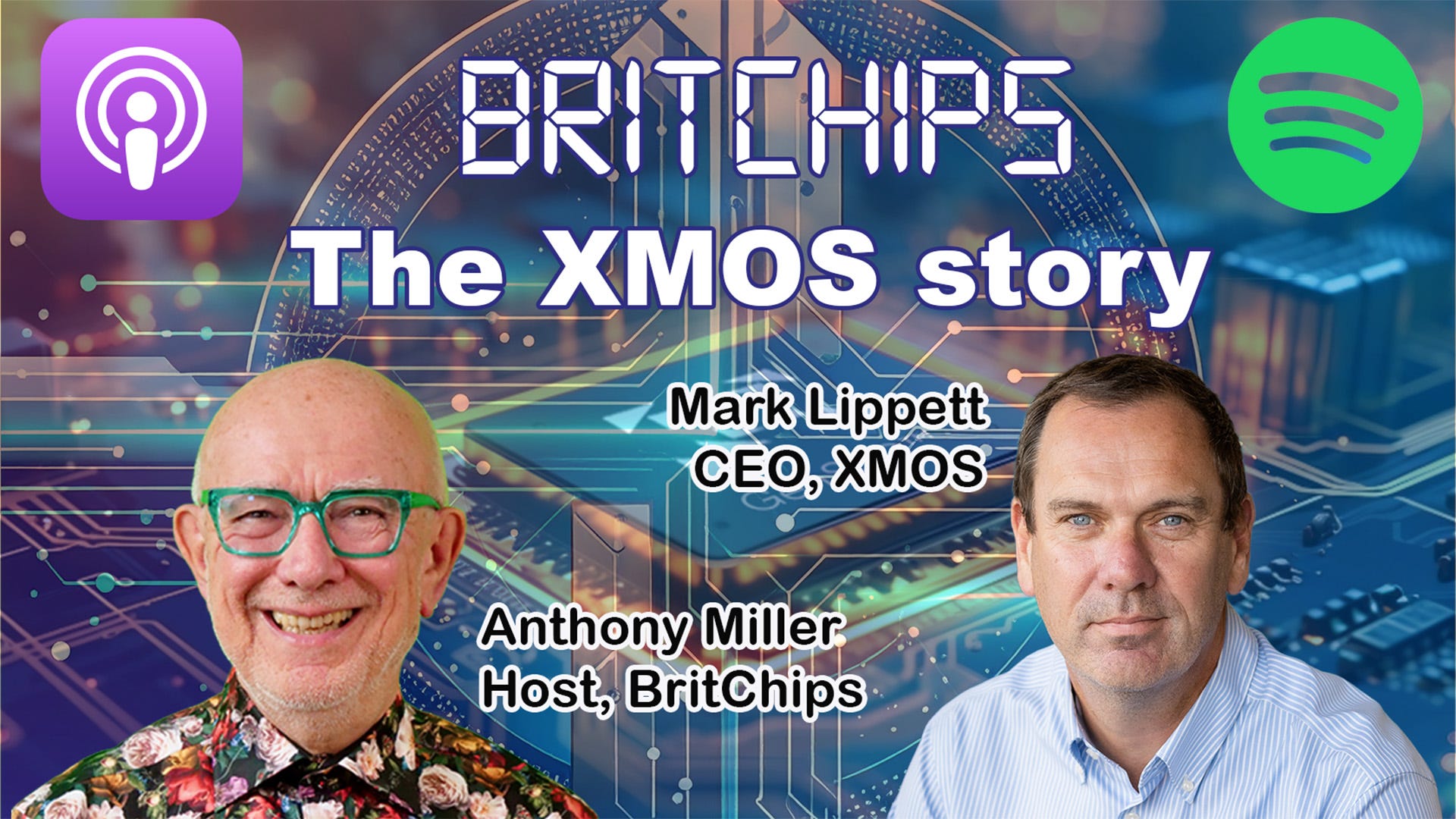
BritChips podcast: The XMOS Story
Mar 1600:50:16Tap to summarizeIn this in-depth interview, Mark Lippett, CEO of XMOS, shares his journey from engineer to industry leader, exploring the evolution of embedded systems, AI integration, and the future of semiconductor innovation. Discover how XMOS is shaping the next generation of low-latency, multifunctional chips and the strategic vision to become the go-to platform for embedded system design.Key topics* XMOS’s evolution from startup to industry leader* Integration of AI and imaging in embedded systems* The role of RISC-V in XMOS’s strategy* Low latency processing as a core focus* The UK semiconductor industry and innovation challengesTimings (approximate)00:00 Introduction to Mark Lippett and XMOS01:59 The Challenge of Growth for XMOS27:01 Navigating Customer Education and Adoption28:54 Innovations in Generative SOC Tools (including a demo!)34:25 Identifying Market Opportunities38:18 Financial Sustainability and Investment Needs43:12 Vision for the Future of XMOS47:24 Lessons for the UK Semiconductor IndustryResourcesXMOS Official Website - https://www.xmos.comRISC-V Architecture - https://riscv.orgGenSoc Tools by XMOS - https://www.xmos.com/products/gensocThe BritChips Podcast is proudly sponsored by Silicon Catalyst UK, Official Partner of the government-funded ChipStart UK semiconductor incubator. This is a public episode. If you would like to discuss this with other subscribers or get access to bonus episodes, visit anttheantidote.substack.com
Transcribe →