
Podcast
The Bullvine Daily Brief
Hosted by The Bullvine · EN
Every article from TheBullvine.com — read aloud so you can keep up with dairy while you're milking, hauling, or driving fence. Daily dispatches on genetics, milk economics, herd management, policy, and the stories the trade press won't touch. No fluff, no PR, no filler — just our journalism in your ears.
New articles go live in audio within hours of publication. Subscribe and the day's Bullvine comes with you.
138episodes
Episodes
Newest firstAll episodes
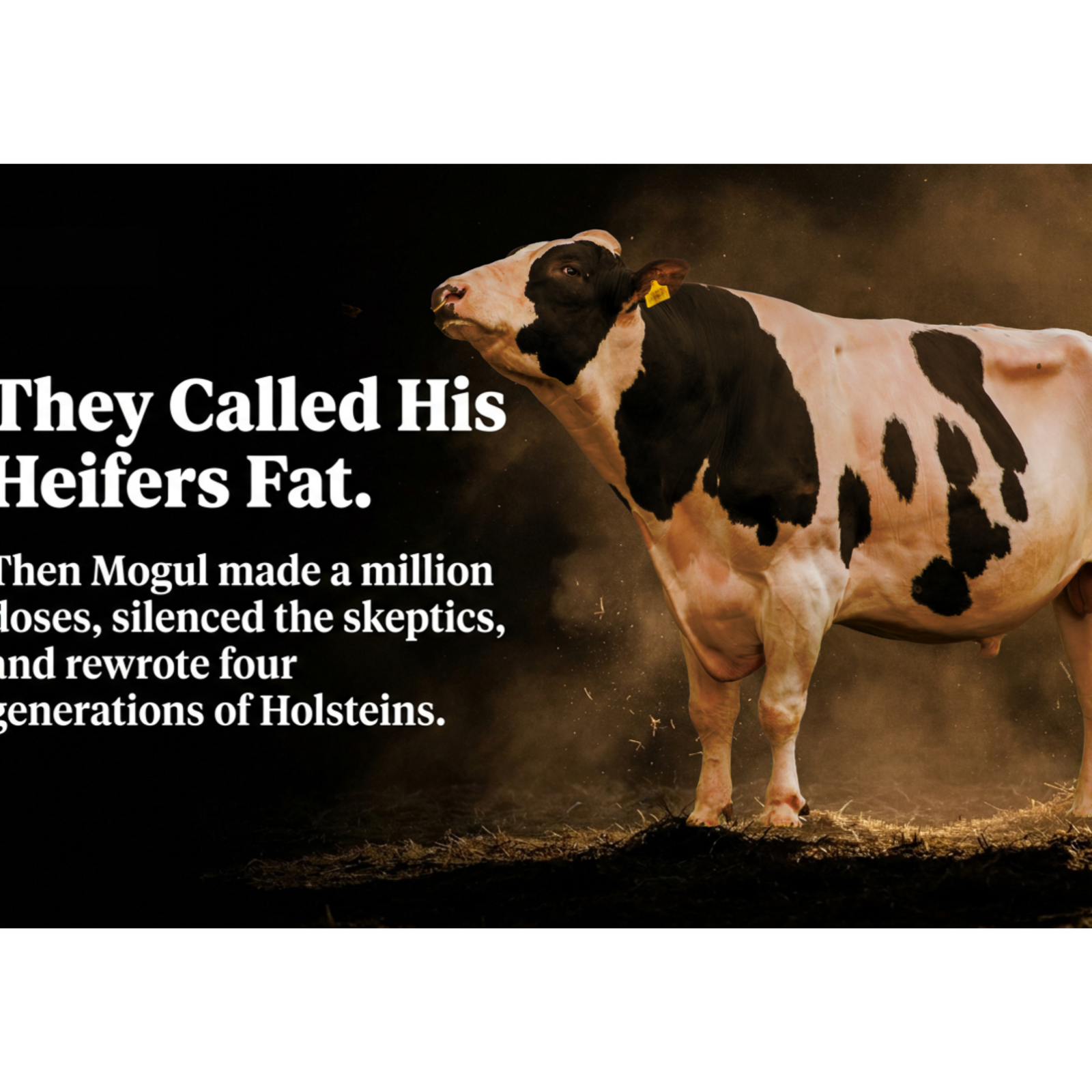
E599 They Called Mogul’s Heifers Fat. Then Came the Million Doses.
Jun 2700:42:29Tap to summarizeMountfield SSI DCY Mogul arrived with daughters so deep-bodied that breeders dismissed them as "fat heifers" — then those heifers grew into the best cows in the barn. In an era when the show ring still trained the eye toward tall and angular, Mogul did the opposite, and the industry didn't know what it was looking at. By the time the proof landed, the joke had stopped: udders that looked engineered, frames that held up on concrete, daughters winning on six continents. This is the story of how a bull the establishment underestimated quietly rewrote what a great commercial cow should look like — and why his shadow still falls across the pedigrees you're reading today.Key MomentsWhy early adopters mistook Mogul's deep-bodied daughters for a fault — and the moment the barns flipped from skepticism to scrambleHow "Mr. Consistency" earned the nickname: daughters cut from one template across herds, climates, and management systemsThe milestone that made him a young millionaire — and what a million doses actually signaled about breeder trustHow a Cookiecutter herd in upstate New York turned Mogul daughters like Handy and Hanker into living proof of the typeThe night a Mogul daughter — Tahora Mogul Paris — won Supreme Champion in New Zealand and beat the specialized show bulls on their own stageWhat it meant when Mogul reached the Red & White breed, and a daughter took a European national titleMogul isn't a name in a museum case — he's a name in your pedigrees right now. Look behind the high-type sires moving semen today and you'll keep landing on his daughters and granddaughters, the maternal anchors of cow families breeders still chase. His real legacy wasn't a single banner; it was repeatability, the rare ability to stamp the same correct udder and durable frame on tens of thousands of daughters across more than sixteen thousand herds on six continents.The full written history profile — with deeper pedigree detail, daughter records, and the breeders who built his reputation — lives at https://www.thebullvine.com/sire-spotlight/they-called-moguls-heifers-fat-then-came-the-million-doses/, alongside related Sire Spotlight profiles on the bulls that shaped the modern Holstein. Subscribe so you never miss a history episode, and share this one with someone who's seen Mogul's name in a hundred pedigrees without ever hearing the story behind it.
Transcribe →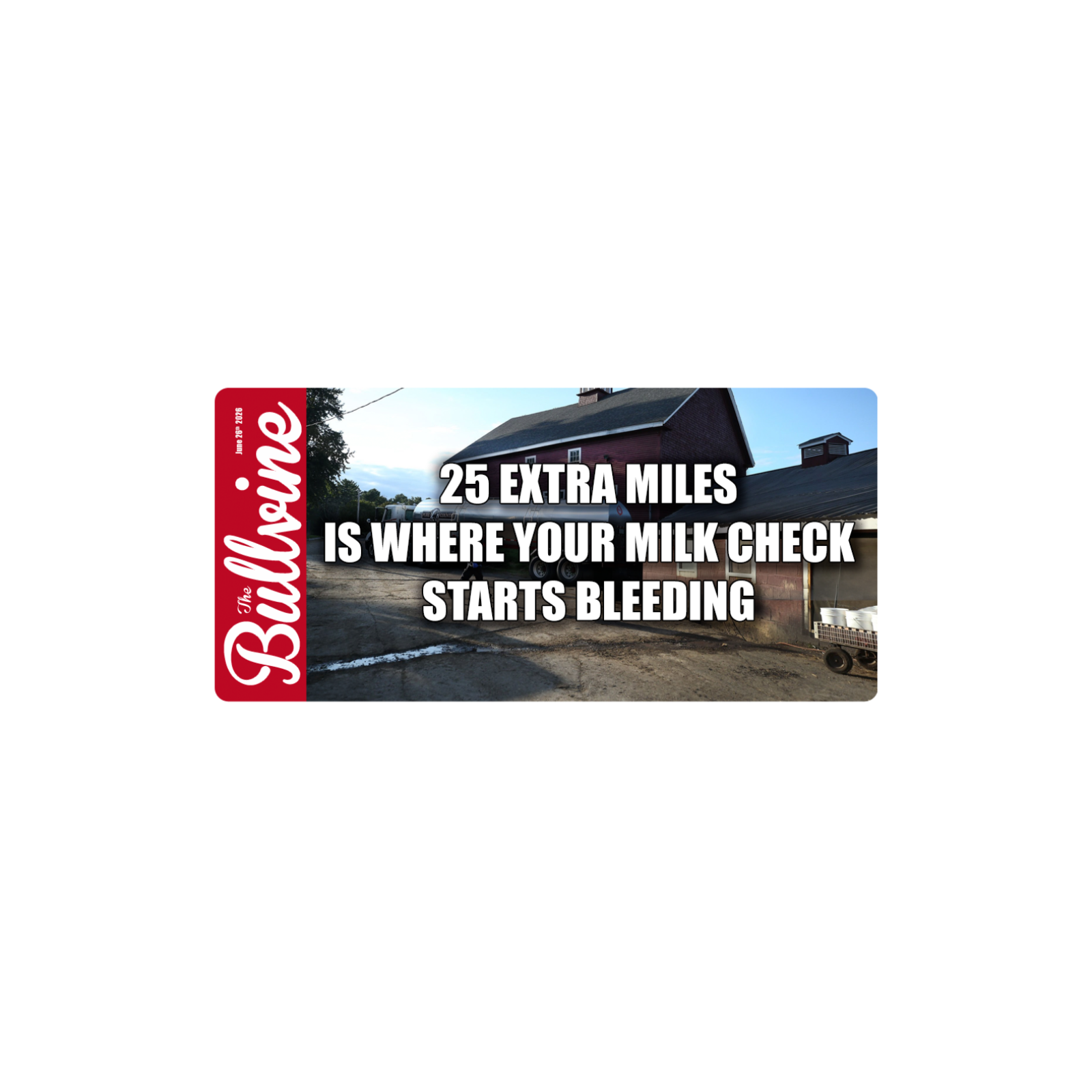
E598 25 Extra Miles Is Where Your Milk Check Starts Bleeding
Jun 2600:29:52Tap to summarizeWhen four plants close but the cows stay, your milk drives farther and you pay for every mile. Past 25 extra miles, a 500-cow herd loses 1% of gross before feed or labor.Franklin County, Vermont lost four processing plants in roughly 18 months. The cows didn't leave. The plants did. This episode of The Bullvine Podcast runs the real hauling math: at the USDA mileage factor of $0.00824/cwt/mile, an extra 50 miles costs a 500-cow herd about $52,600 a year, and 180 miles pushes near $189,500. Plus the basis cost nobody warns you about.What you'll learn:Why 25 extra miles is the line where your milk check starts bleedingHow a plant idling resets two inputs at once — the haul and the basisWhat DFA's St. Albans statement says, and the cost it leaves outThe Agri-Mark $5/cwt precedent every co-op member should knowThe one written question to ask your co-op before the next rerouteHow one plant manager bet on reopening when everyone else closedWith Northeast milk prices forecast $2.50 to $3.00/cwt lower in 2026, there's no slack to leave on the table. This episode hands you a barn-math rule you can run on three milk stubs in two minutes, and a 30-day move that exposes your real hauling exposure before the next route change, not after.Full article and sources: https://www.thebullvine.com/farm-economics-management/milk-hauling-cost-cwt-franklin-county/ Subscribe for straight-talking dairy analysis. Share this with a producer who needs it.
Transcribe →
E597 A Third of Retail Milk Tested Positive. The Map Said Under 0.1%.
Jun 2500:20:13Tap to summarizeA third of retail milk tested positive for H5N1 while the official map said fewer than one herd in a thousand was infected. The virus was months ahead of surveillance.The Bullvine Podcast breaks down why H5N1 behaves nothing like the textbook says — going for the udder, not the lungs — and how it hid in plain sight as "mystery mastitis." One Ohio dairy lost $737,500 in 60 days. We do the barn math on what an outbreak costs your operation, and why federal testing is being pulled back just as fresh cases land in Texas, Idaho, and Utah.What You'll LearnWhy H5N1 targets the udder, not the lungs — and walks past respiratory testingWhat a 200-cow outbreak really costs: roughly $38,000 before the production dragWhy "the dairy cases were mild" is true for B3.13 — and dangerous shorthand for D1.1How 10 virus particles in one udder quarter trigger severe mastitis in three daysWhy "unaffected" state status is a reporting metric, not a biological all-clearThree questions to bring to your vet this weekH5N1 has hit more than 1,000 herds across 19 states, and infected cows can shed virus at staggering concentrations — which is why 36% of sampled retail milk lit up. With USDA dropping pre-movement testing for 41 "unaffected" states, the responsibility for catching it has quietly shifted onto you. This isn't a 2024 retrospective. It's a live exposure question for any operation, whether you milk 200 cows or 2,000.Full article and sources: https://www.thebullvine.com/highly-pathogenic-avian-influenza/h5n1-dairy-cattle-biosecurity-cost/ Subscribe for straight-talking dairy analysis. Share this with a producer who needs it.
Transcribe →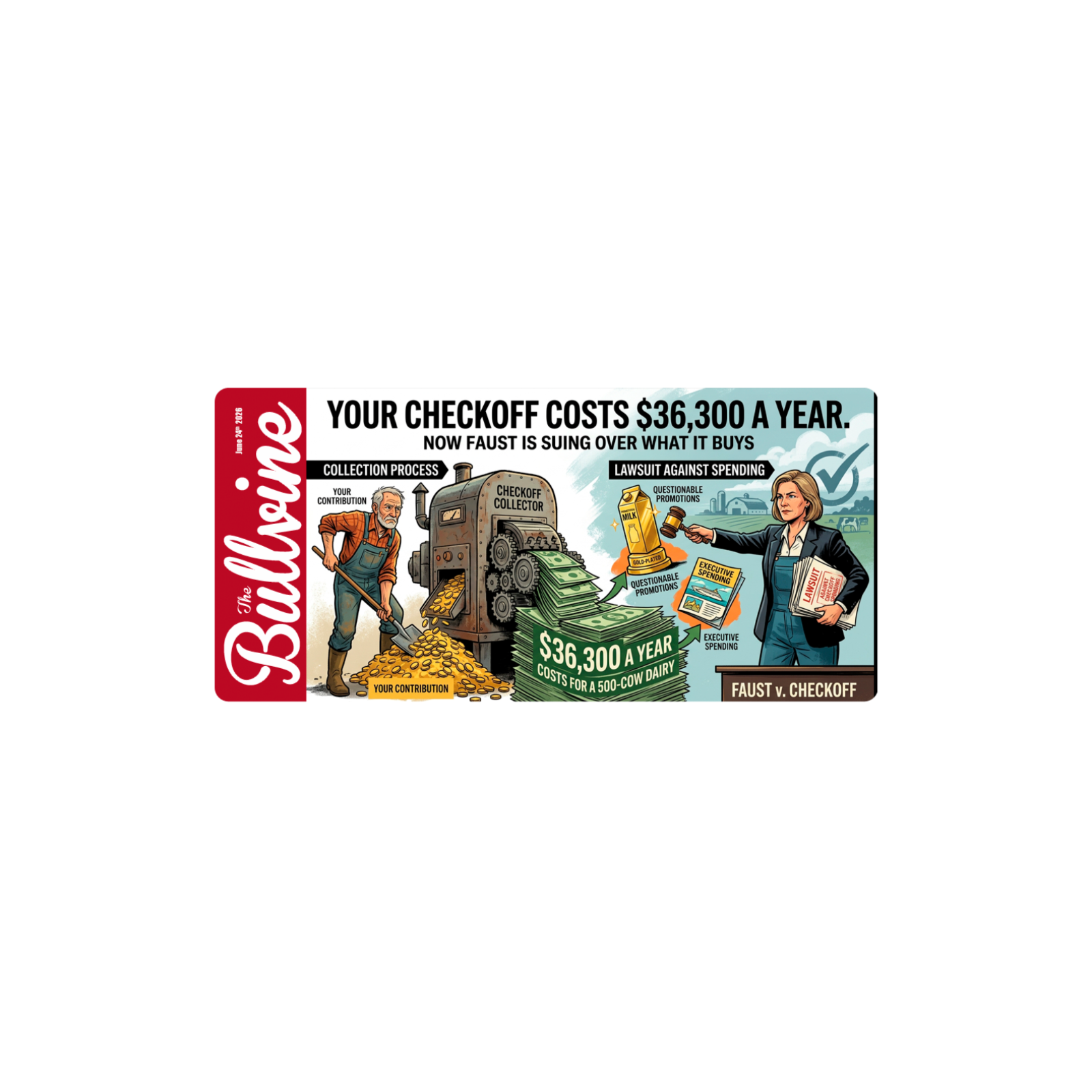
E596 Your Checkoff Costs $36,300 a Year. Now Faust Is Suing Over What It Buys
Jun 2400:32:00Tap to summarizeYour mandatory 15-cent dairy checkoff is running a $36,300 bill on a 500-cow herd while a federal judge decides what your nickels are legally buying.Three Wisconsin dairy farmers have filed a lawsuit in federal court challenging whether the national checkoff can legally bankroll private climate and ESG initiatives like the Net Zero Initiative. This episode of The Bullvine Podcast breaks down the real barn math behind the case, the post-Chevron legal landscape, and the hidden contract risks of buyer-enforced data demands. Listeners will walk away with a clear blueprint on how to track their national versus state checkoff splits and protect their own farm data.Why the national checkoff spends 43.4 percent of its budget on reputation and innovation workThe Supreme Court Loper Bright ruling that strips USDA of its automatic legal shieldWhy cutting checkoff funding could actually trigger fragmented, costlier processor auditsHow a European cooperative attached a clear $1.25 per hundredweight price signal to ESG complianceFour immediate steps to audit your checkoff deductions and secure your farm-level dataThis episode breaks down the raw cash-flow exposure farmers face during the 18-to-24-month trial window, where a 1,000-cow dairy will pay up to $72,500 with no mechanism for a refund. It exposes the critical legal distinction between USDA-controlled government speech and funneling mandatory dollars into private third-party nonprofits like the Innovation Center for U.S. Dairy. Producers will see exactly how real-world ESG compliance is shifting from regulatory law to privatized reporting enforced by milk pickup contracts.Full article and sources: https://www.thebullvine.com/latest-news/your-checkoff-costs-36300-a-year-now-faust-is-suing-over-what-it-buys/ Subscribe for straight-talking dairy analysis. Share this with a producer who needs it.
Transcribe →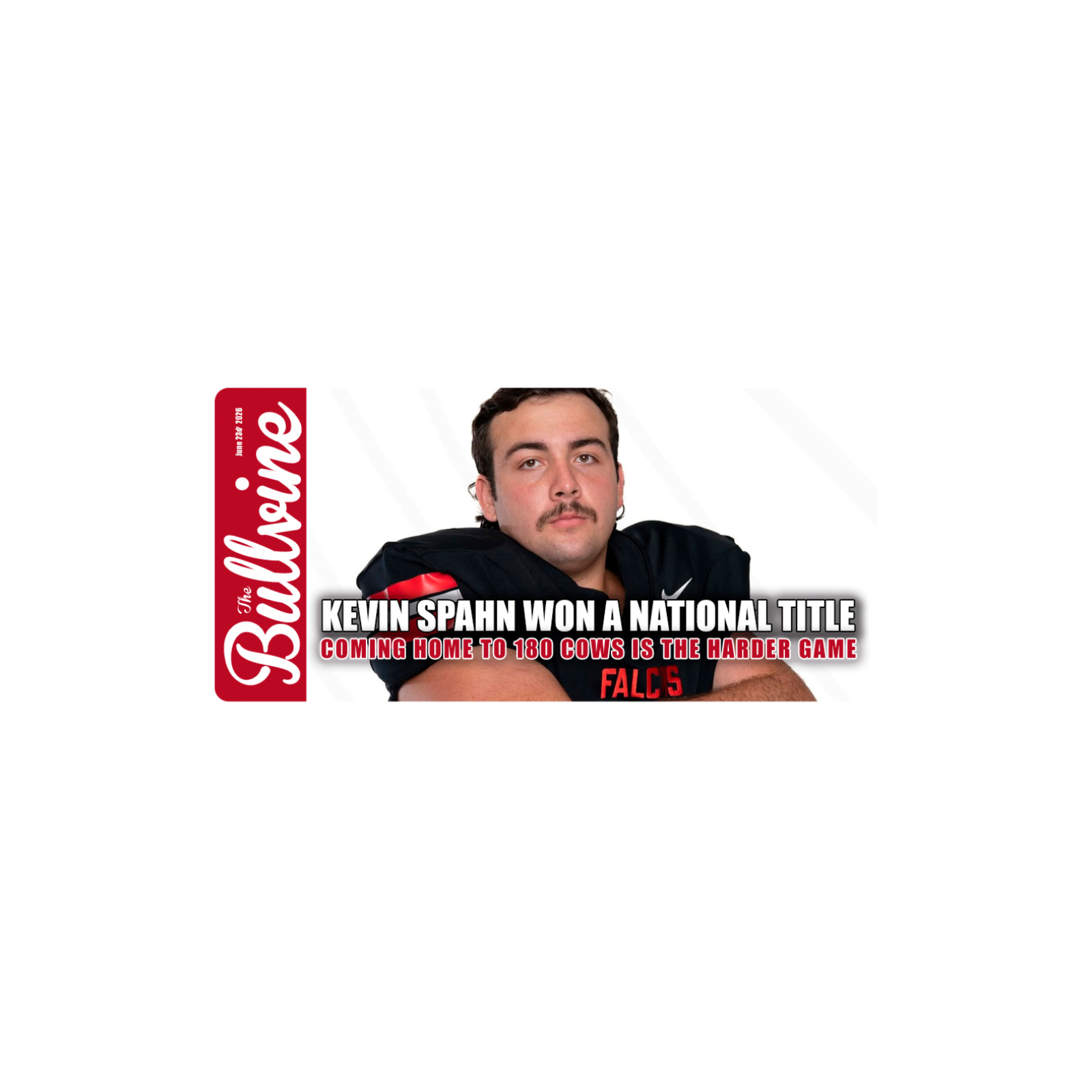
E595 Kevin Spahn Won a National Title. Coming Home to 180 Cows Is the Harder Game.
Jun 2300:24:10Tap to summarizeA national champion wants to come home to milk 180 cows. The math says he might not get to — and Dane County land at $7,401 an acre is why.Kevin Spahn won a 2025 NCAA Division III football title, then went back to the parlor over winter break. The Bullvine Podcast breaks down the brutal arithmetic facing every farm kid who wants in: 200 acres at $7,401/acre runs $1.48 million, while FSA direct loans cap out far below that — a gap north of $480,000 before a single cow is bought. With milk near $17.50/cwt, the numbers decide who gets to farm.What You'll LearnWhy FSA loan caps leave a $480,000-plus hole on a modest land buyHow $7,401-an-acre farmland prices lock out the next generationWhat Wisconsin's herd-count collapse means for who's leftWhy succession is a structure problem, not a desire problemThe 30, 90, and 365-day moves that actually open a path homeWhat a retired NFL lineman's lost family dairy teaches about timingMost succession talk pretends the barrier is willingness. It isn't — it's capital and timing. When a kid who wants to farm, knows the work, and has a dairy science degree still can't make the entry math close, that's the real story behind every empty parlor. This episode hands you the actual numbers and a plan to run against your own county's land prices and milk check before the decision gets made for you.Listen & Connect Full article and sources: https://www.thebullvine.com/people-legacy/kevin-spahn-won-a-national-title-coming-home-to-180-cows-is-the-harder-game/ Subscribe for straight-talking dairy analysis. Share this with a producer who needs it.
Transcribe →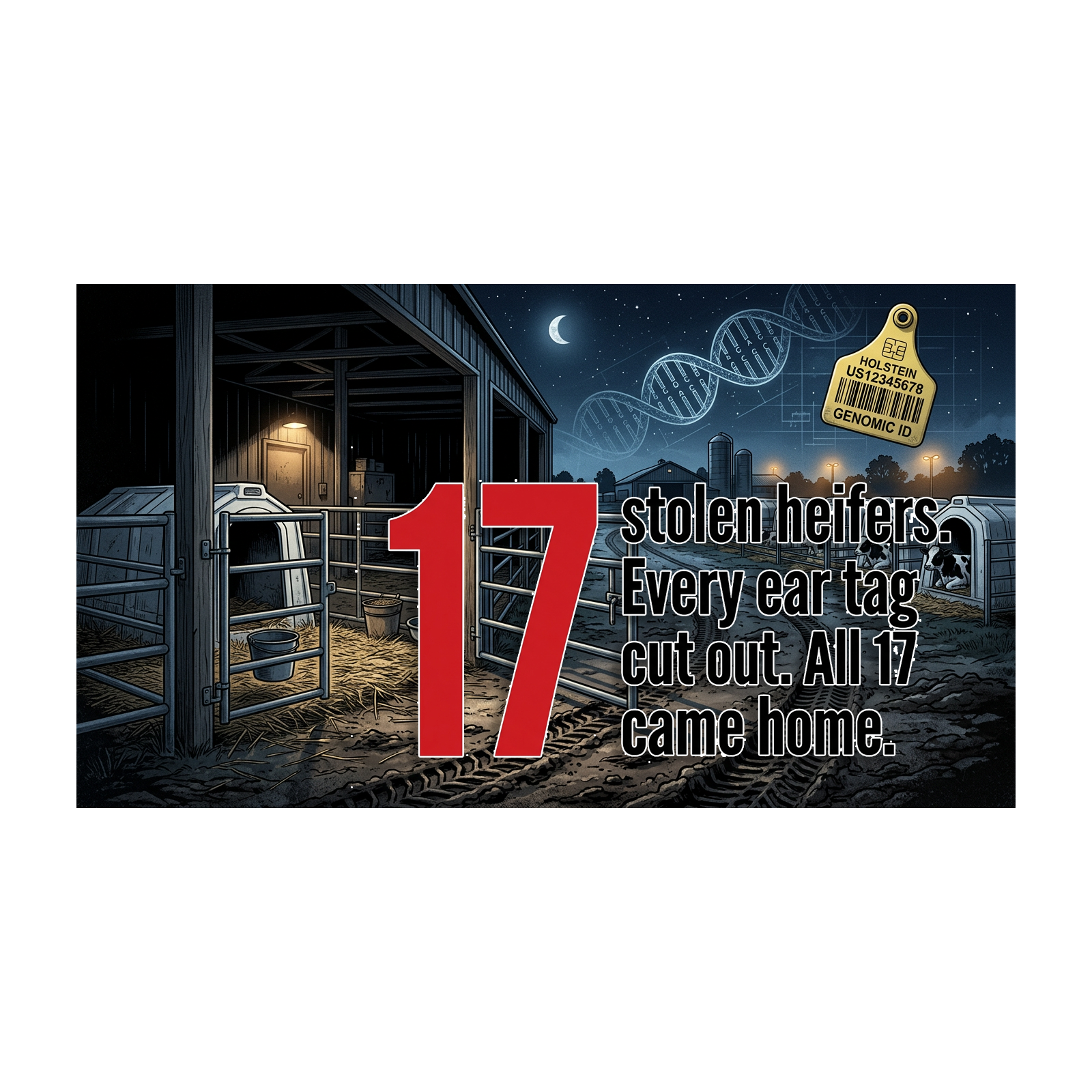
E594 17 Genotyped Heifers and Cut Every Tag. The Dairy Network Got Them Back. The DNA Makes Sure They Can’t Disappear Clean.
Jun 2200:27:36Tap to summarizeThe DNA didn't find them — the dairy network did. Seventeen genotyped Holstein heifers vanished from Oakfield Corners in the night, every ear tag cut. They were home within days.The Bullvine Podcast breaks down a real theft and a real recovery: 17 registered heifers stolen from Lamb Farms in Oakfield, NY, valued at $41,000 — recovered within days off one tip. Three weeks earlier, an Ohio farm lost 64 calves and got nothing. The difference wasn't luck. It was a fast community alert and a genomic record thieves can't cut off.What you'll learnWhy a tip — not the DNA — actually brought the heifers homeHow genotyping makes stolen genetics nearly impossible to sell or registerWhy replacement heifers at $3,010/head are now worth stealingThe insurance gap that can leave you eating $20,000 on a stolen penThree things to lock down before a trailer backs up to your barnReplacement prices hit $3,010 per head as of July 2025, up 75% from April 2023 — and a tight heifer pipeline turns a quiet calf pen into a target. Most farms genotype for breeding and never realize they're carrying an ownership-proof system. With the federal cattle-theft bill (CORCA) passed by the House and pending in the Senate, this is the moment to know whether your best genetics have a way home.Listen & Connect Full article and sources: https://www.thebullvine.com/farm-economics-management/dairy-cattle-theft-genotyped-heifers/ Subscribe for straight-talking dairy analysis. Share this with a producer who needs it.
Transcribe →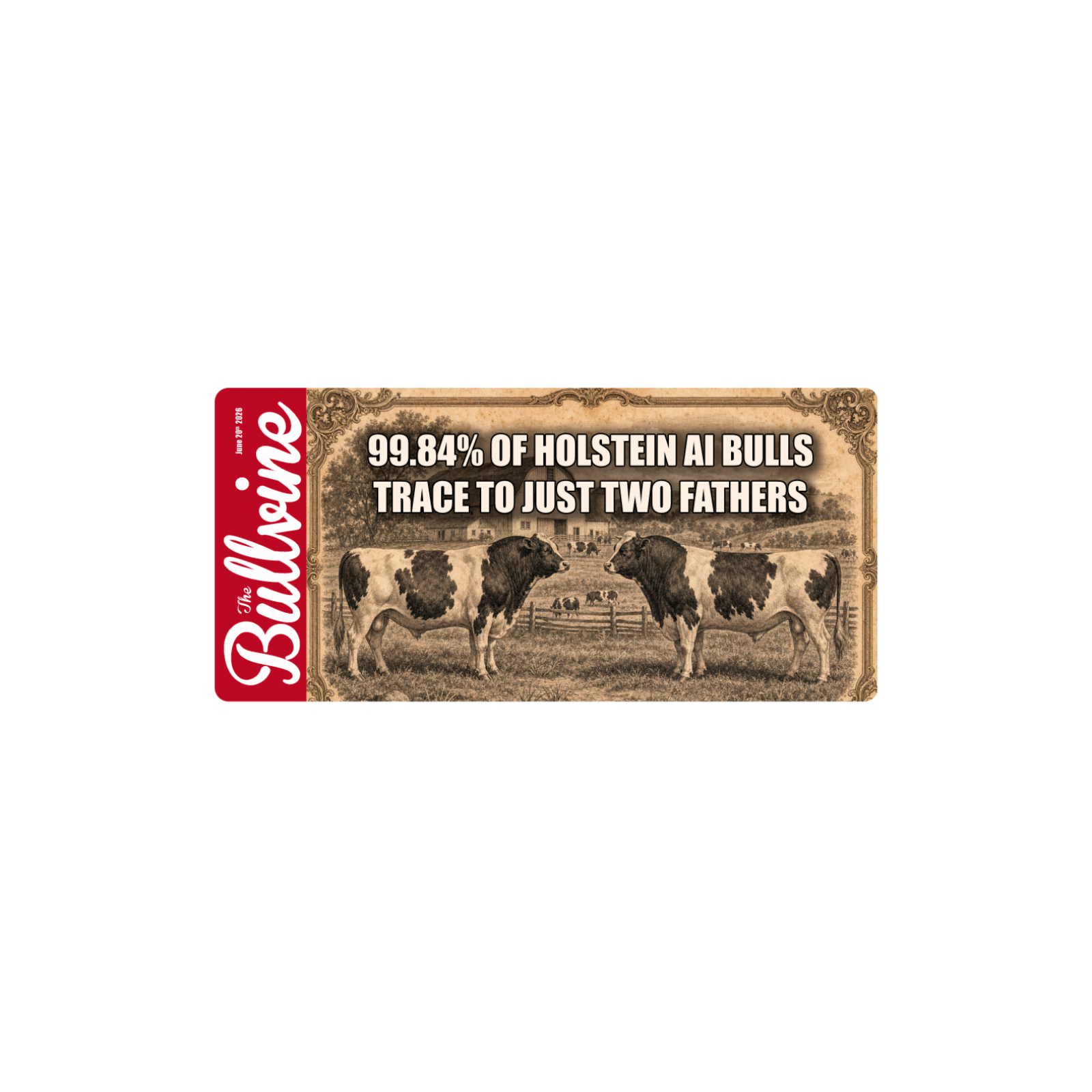
E593 99.84% of Holstein AI Bulls Trace to Just Two Fathers
Jun 2000:38:56Tap to summarizeChief and Elevation never met — yet between them, two 1960s bulls fathered nearly every Holstein alive in North America. One began as a $4,300 gamble on an Indiana auction floor. The other came from a slow-maturing "B-team" dam on a modest Virginia farm, bred on a cousin's hunch nobody expected to work. This is the story of how two animals built the modern dairy cow — and the hidden bill their descendants are still paying, from a recessive defect traced to one of them to a nearly ten percent inbreeding figure now landing in today's heifer pens. You've seen these names in a hundred pedigrees. Here's the story behind them.KEY MOMENTS:How a cow who sold for $4,300 in 1962 produced a son with 16,000 daughters and more than two million great-granddaughtersThe "B-team" mating that should never have worked — and produced the bull Holstein International would call the Bull of the CenturyWhy a backup bull, sampled only because his brother died, came to account for 7% of every Holstein genome on the continentThe moment USDA researchers realized thousands of calves were never being born — and traced the cause to one celebrated sireHow a $2,500 calf named Hanoverhill Starbuck became a $25-million phenomenon across 45 countriesWhy the whole enormous family tree narrows back to a single bull born in the 1880sThis isn't distant history — it's the genetics walking into your parlor tomorrow morning. Pawnee Farm Arlinda Chief and Round Oak Rag Apple Elevation didn't just shape their own generation; their blood runs through Walkway Chief Mark, S-W-D Valiant, To-Mar Blackstar, Hanoverhill Starbuck, and the deep maternal lines tracing back to Johanna Rag Apple Pabst. Look up almost any modern North American Holstein and you'll find one or both grandfathers standing in the pedigree. Their influence is so total that Elevation's DNA still makes up a measurable share of the very reference population modern genomic predictions are trained on.Read the complete written history — with sources, pedigrees, and the barn math behind every number — at https://www.thebullvine.com/genetics-breeding/holstein-inbreeding-chief-elevation/, alongside companion profiles of Walkway Chief Mark, Hanoverhill Starbuck, and the breed's inbreeding reckoning. Subscribe so you never miss a history episode. And share this one with someone who'd recognize these names in a pedigree — or someone who should.
Transcribe →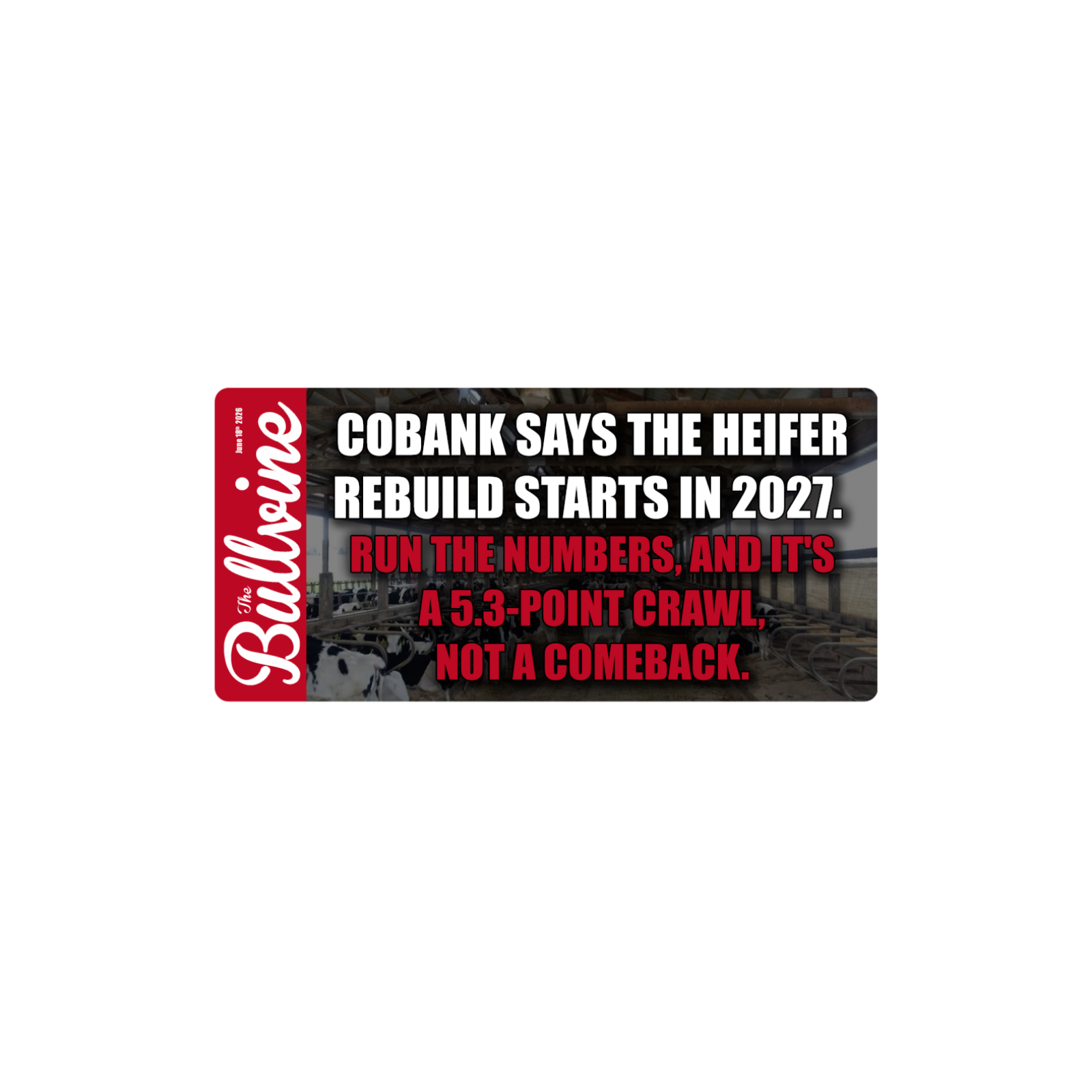
E592 CoBank Says the Heifer Rebuild Starts in 2027. Run the Numbers, and It’s a 5.3-Point Crawl, Not a Comeback.
Jun 1800:17:04Tap to summarizeCoBank says replacements rebuild in 2027 and 2028. Run the numbers — it gives back less than half of what got pulled out, and never clears the danger zone.The Bullvine Podcast breaks down CoBank's new replacement-heifer forecast and finds the rebuild is real but thin: 360,200 head added over 2027 and 2028, just 3.75% of the herd, against 796,000 drained in the prior two years. Replacement values sit above $3,100, with top heifers clearing $3,400 to $4,400 at Minnesota and Wisconsin auctions this spring. Here's what it means for your 2027 breeding sheet.What You'll LearnWhy a 360,200-head rebuild barely dents a 909,400-head, 19% inventory slide since 2016How a snap-back in cull rates erases part of the recovery before it landsWhy $251/cwt beef futures keep the replacement pipeline starvedThe one scenario CoBank didn't model — and why it's the fastest path to a rebuildThe 30-day move to make while the cattle market is still calmThe beef check now drives margins more than the milk check on many farms — calf and cull sales jumped from 5% of the bottom line to 12 to 15%, some near 20%. As long as beef pays, dairies keep beef-breeding the bottom of the herd and replacements stay tight, especially in processing-growth zones like New York, Texas, Wisconsin, Michigan, Idaho, and the I-29 corridor. If you're budgeting replacements for 2027 and 2028, $2,600 to $2,800 is the optimistic case — not the number to bank on.Full article and sources: https://www.thebullvine.com/farm-economics-management/dairy-heifer-rebuild-cobank-2027/Subscribe for straight-talking dairy analysis. Share this with a producer who needs it.
Transcribe →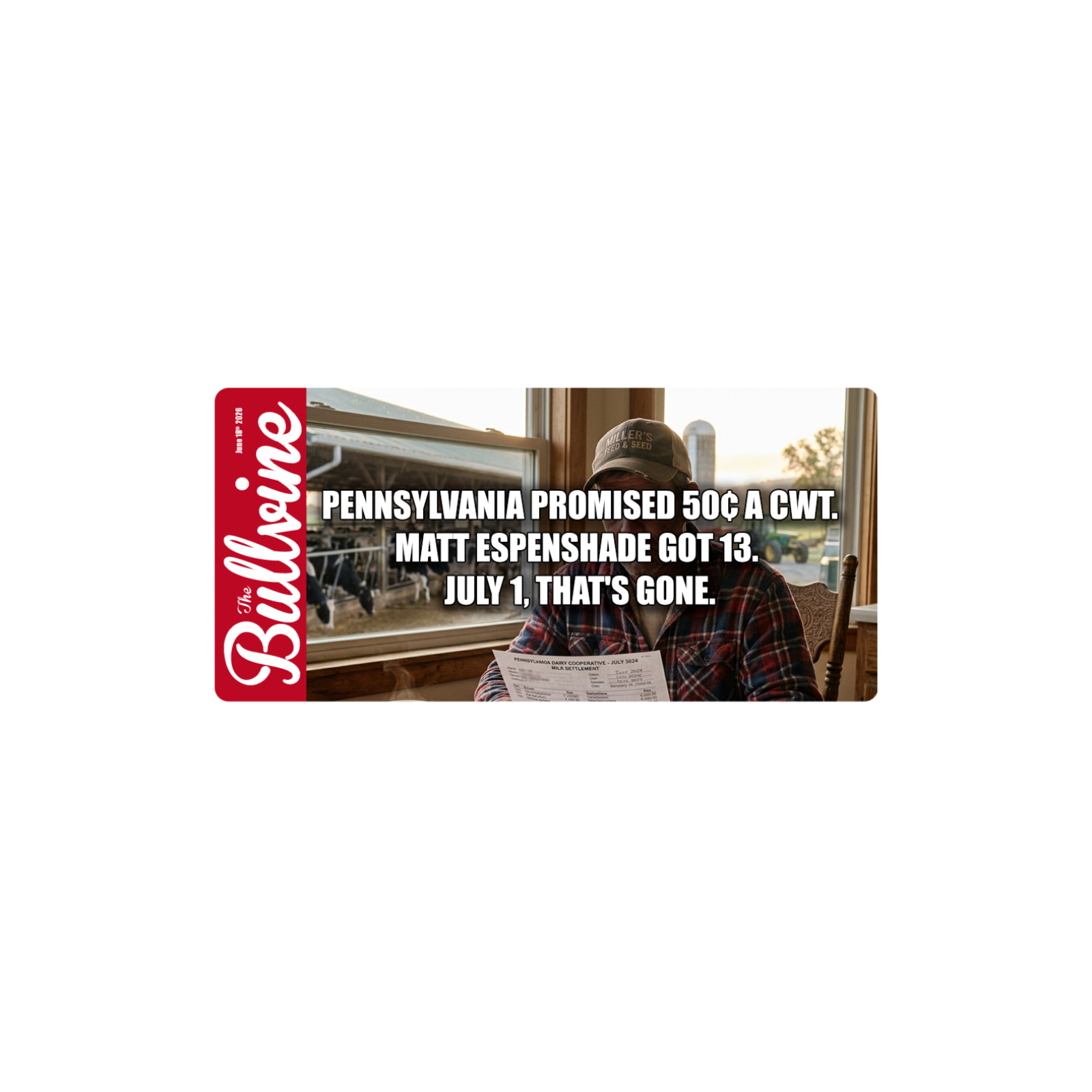
E591 Pennsylvania Promised 50¢ a Cwt. Matt Espenshade Got 13. July 1, That’s Gone.
Jun 1800:30:41Tap to summarizePennsylvania set its milk over-order premium at 50 cents a hundredweight. Matt Espenshade's March check showed 13. On July 1, 2026, even that disappears.The Bullvine Podcast runs the producer-side math the trade press skips. The Pennsylvania Milk Marketing Board deadlocked, and a 38-year-old premium is set to sunset June 30. We break down who actually captured the money, why most of it never reached the farm mailbox, and what losing it costs your herd, by herd size, starting July 1.What you'll learn:Why 50 cents on paper became 13 cents in one farmer's mailboxHow co-op pooling spreads your Pennsylvania premium to members in other statesThe per-cow, per-month hole on July 1, for 100, 400, and 800-cow herdsWhy only 15 to 20 percent of the state's milk ever qualified for the premiumThe fuel adjuster nobody mentions, and why it lapses on the same dateWhat to confirm with your handler before June 30Pennsylvania lost 490 dairy farms in 2025, an 11.7 percent drop in a single year. The premium was never the thing making farms profitable, with cost of production near 21 dollars a hundredweight, it was a buffer. This episode shows you how to read your own statement, size your real exposure, and rebuild cash flow with the premium line at zero before your July check surprises you.Full article and sources: https://www.thebullvine.com/farm-economics-management/pennsylvania-over-order-premium-sunset/ Subscribe for straight-talking dairy analysis. Share this with a producer who needs it.
Transcribe →
E590 A $240,000 Warning: What a $5/cwt Gap Really Does to a 400-Cow Dairy
Jun 1700:22:50Tap to summarizeA 400-cow herd can burn about $240,000 a year when full cost runs $5/cwt over the milk price — and a generation of young farmers is done absorbing it.At a projected $20.70/cwt milk price in 2026, a 100-199 cow operation still faces $31-33/cwt in full production cost. The math doesn't pencil. This episode of The Bullvine Podcast follows the young operators routing milk into ice cream, curds, and direct sales instead of the co-op tanker — and runs the barn math on whether value-added actually pays.What You'll LearnWhy $20.70 milk still leaves small and mid-size dairies underwaterHow a 20% value-added slice nets ~$1,200/day — and why that doesn't fix the other 80%The five honest filters before you build a creameryWhy a $1.5-2.5M build and a 4-7% grant rarely add upWhat it means for your co-op when under-35 members peel offThe U.S. lost roughly 39% of its dairy operations between 2017 and 2022, and only 9% of producers are now under 35. The youngest members are the ones rerouting milk, which thins the co-op fluid pool you'll need in 2050. Natalie Paino of Hightail Delivery in Iowa spent six years getting licensed — proof this is an on-ramp, not a quick pivot out of a bad year.Full article and sources: https://www.thebullvine.com/farm-economics-management/value-added-dairy-milk-check-gap/ Subscribe for straight-talking dairy analysis. Share this with a producer who needs it.
Transcribe →