
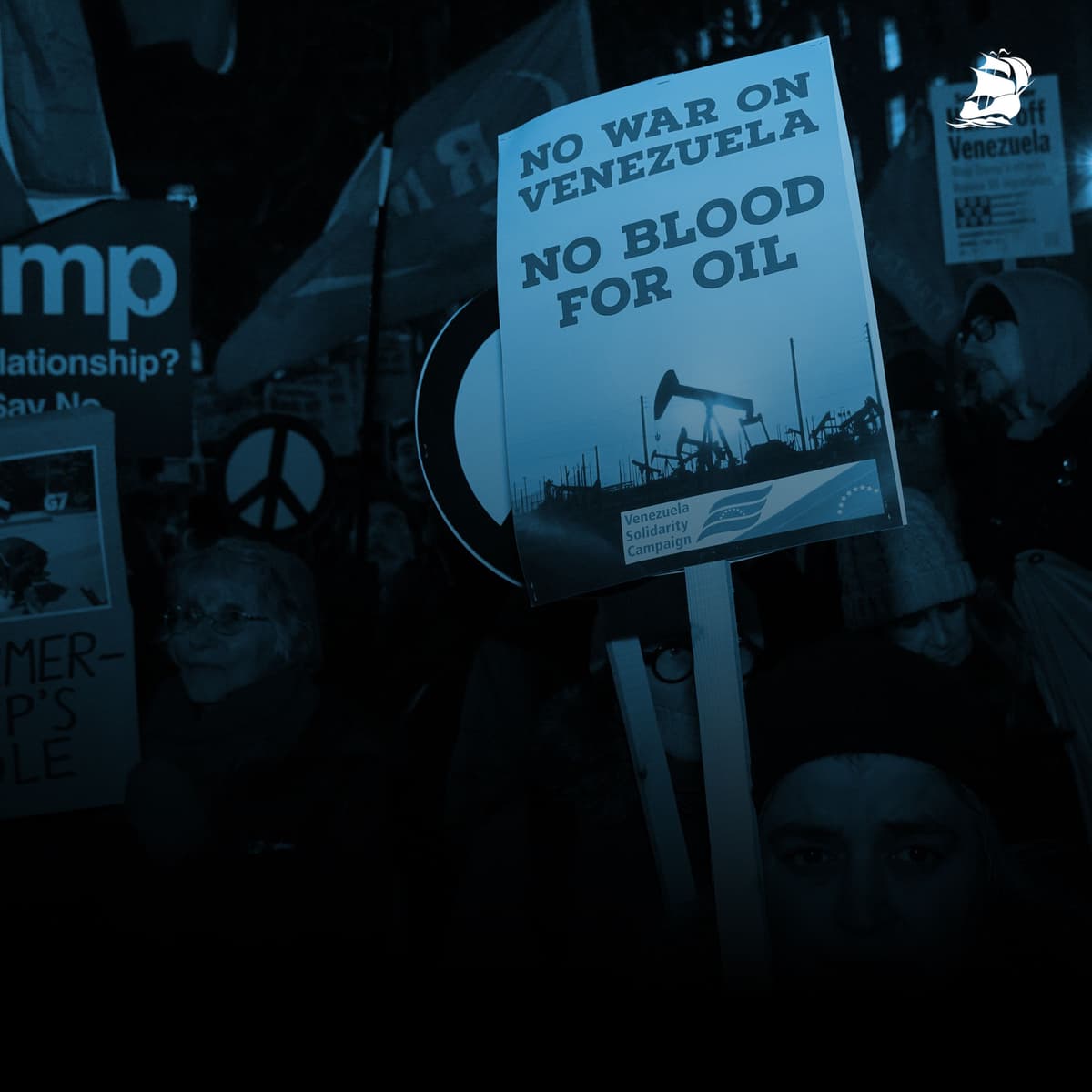

The Bulwark Podcast — "Jonathan Blitzer: The Stars Aligned Against Venezuela"
Host: Tim Miller
Guests: Jonathan Blitzer (The New Yorker), Imran Ahmed (Center for Countering Digital Hate)
Date: January 6, 2026
Overview
On the fifth anniversary of January 6th, Tim Miller dives into two current crises: the US-led regime change in Venezuela and the Trump administration’s crackdown on activists. The first segment features Jonathan Blitzer, New Yorker staff writer and author, who unpacks the rationale, execution, and fallout of US actions in Venezuela, as well as the broader regional history. The second segment is an interview with Imran Ahmed, who's facing US deportation as a result of his advocacy against online hate and disinformation.
This episode combines expert reporting, sharp historical analysis, and insider perspective on how nativist ideology, personal vendettas, and administrative chaos drive US policy in the Western Hemisphere—and at home.
Segment 1: The US Intervention in Venezuela
Guest: Jonathan Blitzer
Start: 02:08
1. Prelude to Military Action
- Background: In September 2025, the US began bombing boats allegedly connected to Venezuelan drug trafficking.
- Public Rationale: Claimed strikes targeted drug flows threatening American lives due to opioid overdoses.
- Blitzer’s Rebuttal:
- Fentanyl, the drug fueling US overdoses, does not arrive via Caribbean shipping lanes.
- Most cocaine transiting the Caribbean goes to Europe, not the US.
- Bombings had flimsy to no legal or evidentiary footing.
- Quote:
- "No aspect of that explanation or rationale actually makes sense or is legitimate really in any way..."
— Jonathan Blitzer [03:09]
- "No aspect of that explanation or rationale actually makes sense or is legitimate really in any way..."
2. Internal Trump Administration Dynamics
- Ideology & Players:
- Marco Rubio (Secretary of State): regime change hawk
- Stephen Miller: pushed strikes as part of a nativist immigration crackdown; invoked the Alien Enemies Act (used only three times before, all during wars).
- Trump: waivers between regime change and deal-making.
- Rick Grenell: advocated more conciliatory approach.
- Pete Hegseth (Defense): wanted bold, aggressive action.
- Result: Policies motivated by a mix of personal vendettas, anti-immigrant sentiment, and lack of planning.
- Quote:
- "It was never clear, frankly, how those boat bombings actually were meant to be a part of the broader ideological vision for regime change in Venezuela."
— Jonathan Blitzer [13:23]
- "It was never clear, frankly, how those boat bombings actually were meant to be a part of the broader ideological vision for regime change in Venezuela."
3. Linking Immigration, Drugs, and Venezuela
- The administration blurred issues:
- Used pretexts from Central America's "Northern Triangle" migrant crisis to justify action in Venezuela.
- Depicted migration as a form of “foreign invasion.”
- “Don Row Doctrine”: Nickname for current nativist, interventionist approach.
- Quote:
- "The logic that Miller and others inside the administration were operating under was that mass migration constituted a kind of foreign invasion."
— Jonathan Blitzer [04:34]
- "The logic that Miller and others inside the administration were operating under was that mass migration constituted a kind of foreign invasion."
4. Regime Change Execution & Aftermath
- Maduro is deposed, but his vice president Delcy Rodríguez is installed—implicated in all regime abuses.
- The Venezuelan opposition, while victorious electorally, is sidelined.
- US “plan” creates power vacuum, harsher crackdowns, and further instability.
- Quote:
- "You have now removed Maduro to replace her with his number two, who was implicated in all of the misdeeds of the regime. And so obviously that raises profound questions about what it means for you to have intervened in the first place."
— Jonathan Blitzer [26:51]
- "You have now removed Maduro to replace her with his number two, who was implicated in all of the misdeeds of the regime. And so obviously that raises profound questions about what it means for you to have intervened in the first place."
Key Quotes & Memorable Moments
-
On the rationale for action:
- "We're going to bomb something in Central or South America, we just got to figure out what it is."
— Tim Miller [13:19], summing up the slap-dash White House process
- "We're going to bomb something in Central or South America, we just got to figure out what it is."
-
On Stephen Miller’s worldview:
- "There isn’t, I don’t think, any really clear logic, aside from this feeling of deep and abiding aggrievement, feeling that our country has somehow been overrun."
— Jonathan Blitzer [09:54]
- "There isn’t, I don’t think, any really clear logic, aside from this feeling of deep and abiding aggrievement, feeling that our country has somehow been overrun."
-
On repeating past mistakes:
- "The regime always was going to be able to survive without him [Maduro]. The key players...remain in their places."
— Jonathan Blitzer [29:59]
- "The regime always was going to be able to survive without him [Maduro]. The key players...remain in their places."
Historical Context and Recurring Patterns
-
Echoes of 1980s Central American policy:
- Elliott Abrams (ex-Reagan official) criticizes latest regime change—showing that even hardliners see historical mistakes repeating.
- Past US support for repressive regimes shaped immigration, asylum policy, and regional instability.
-
Quote:
- "If the United States were to recognize and legitimize the asylum claims...that would tacitly mean acknowledging the abuses committed by an American ally."
— Jonathan Blitzer [35:02]
- "If the United States were to recognize and legitimize the asylum claims...that would tacitly mean acknowledging the abuses committed by an American ally."
-
US motivations have shifted from fighting communism to fearing migration, leading to “militarized” border and foreign policies.
-
Quote:
- "The force of this ideological belief...motivated a lot of this behavior."
— Jonathan Blitzer [39:51]
- "The force of this ideological belief...motivated a lot of this behavior."
Policy Paradoxes & Consequences
-
US actions “fighting” the Maduro regime result in keeping regime insiders in charge and intensifying domestic repression.
-
US opposition activists (e.g., Machado) are sidelined, regimes harden, and the US’s moral and practical objectives are undermined.
-
Quote:
- "It is such a mess and it is such a tangle. It is hard to know exactly what the right outcome is."
— Jonathan Blitzer [44:45]
- "It is such a mess and it is such a tangle. It is hard to know exactly what the right outcome is."
Personal Stories & Human Cost
-
Venezuelan immigrant families in the US:
- Face relief at Maduro’s ouster but fear deportation and policy whiplash, e.g., loss of TPS/work authorization.
-
Quote:
- "There is this personal feeling of like, okay, the person who has run our country into the ground is now no longer in it."
— Jonathan Blitzer [51:11]
- "There is this personal feeling of like, okay, the person who has run our country into the ground is now no longer in it."
On El Salvador and Oscar Romero
- Oscar Romero, portrayed as an accidental radical and human rights champion.
- Used sermons to document atrocities—a model for moral witness during political violence.
- Quote:
- "Every Sunday...he would dedicate the final part of his sermon to deliver a kind of human rights bulletin..."
— Jonathan Blitzer [53:26]
- "Every Sunday...he would dedicate the final part of his sermon to deliver a kind of human rights bulletin..."
Segment 2: Attacks on Advocacy — The Case of Imran Ahmed
Guest: Imran Ahmed
Start: 57:57
1. Trump Administration’s Retaliation Against Critics
-
Ahmed, a UK citizen and permanent US resident (with American family), faces attempted deportation for anti-hate advocacy.
-
Cited as "coercing American platforms to censor American viewpoints" (per Sec. State Rubio).
-
Temporary restraining order blocks his detention + deportation (so far).
-
Quote:
- "Truly crazy that these supposed free speech absolutists...are literally trying to deport somebody...because of their advocacy."
— Tim Miller [63:43]
- "Truly crazy that these supposed free speech absolutists...are literally trying to deport somebody...because of their advocacy."
2. The Real Reason: Elon Musk’s Vendetta
-
Ahmed’s group, CCDH, published studies showing spikes in hate speech on X/Twitter post-Musk.
-
Musk sued Ahmed for research, case dismissed with court siding strongly for free speech.
-
Ahmed attributes targeting to personal retaliation and Musk’s political donations.
-
Quote:
- "He keeps calling me a rat and calling us evil on his platform and has targeted us again and again."
— Imran Ahmed [63:03]
- "He keeps calling me a rat and calling us evil on his platform and has targeted us again and again."
3. Disinformation and Tech Platform Accountability
- Ahmed’s work goes beyond fact-checking: investigates and exposes how platform algorithms amplify hate, extremism, and harm.
- Presses for transparency and accountability, not censorship.
- Praises litigation as the American route to reform, not top-down European-style regulation.
4. Reflecting on Disinformation Advocacy
- Ahmed and Miller both skeptical about effectiveness of content moderation/fact-checking, prefer focus on systemic accountability.
- Quote:
- "Stop having systems that cause real world harm because of the ways that they operate."
— Imran Ahmed [77:22]
- "Stop having systems that cause real world harm because of the ways that they operate."
5. The Human Dimension
-
Ahmed’s family faced emotional and legal turmoil over the holidays.
-
Highlights the dangers of government using immigration as a bludgeon against critics.
-
Quote:
- "What the government is doing right now, threatening me with deportation for my advocacy, that is classic censorship."
— Imran Ahmed [69:27]
- "What the government is doing right now, threatening me with deportation for my advocacy, that is classic censorship."
Timestamps for Important Segments
- 02:08 — Jonathan Blitzer joins; immediate breakdown of boat bombings and the faulty rationale.
- 09:03 — Miller and Blitzer dissect Stephen Miller’s worldview.
- 13:19 — The administration’s slapdash approach to military intervention.
- 25:57 — Who runs Venezuela now? The Delsey Rodriguez dilemma.
- 34:00 — Reflections on Elliott Abrams, past US policy, and history’s repetition.
- 44:31 — Can/should the US engage differently? Discussion of post-intervention policy options.
- 48:34 — Venezuelan immigrant family’s perspective in Aurora, Colorado.
- 53:26 — The story of Oscar Romero as resistance icon.
- 57:57 — Imran Ahmed on targeted for deportation.
- 64:11 — Ahmed explains the origins of Musk's grudge.
- 72:26 — Debate about effectiveness and direction of counter-disinformation efforts.
Final Thoughts
This episode illustrates, with nuance and clarity:
- How nativism and improvisation have replaced strategic thinking in US policy, especially regarding Venezuela.
- The cyclical nature of regional intervention—and the consequences for real people.
- The creeping danger of using state power against domestic critics, even under the guise of “defending free speech.”
- How immigration, foreign policy, and technological accountability are all colliding in 2026 America.
Notable Closing Quotes:
- “Being an asshole is a fundamental human right of anyone and being shown to be an asshole. The question is freedom of speech versus freedom of reach, right?” — Imran Ahmed [77:46]
- “Fuck these people going after you.” — Tim Miller [79:56]