

The Bulwark Podcast
Episode: Mark Hertling: The Cowards of ICE
Date: January 14, 2026
Host: Tim Miller
Guest: Lt. Gen. Mark Hertling (Ret.)
Episode Overview
This episode, hosted by Tim Miller, features retired U.S. Army Lt. Gen. Mark Hertling, a frequent Bulwark contributor and former commander during the 2007–2009 Iraq surge and of U.S. Army Europe. The discussion centers around the recent actions and culture of ICE officers in the US, drawing sharp parallels to lessons from Hertling’s experience with masked security forces in Iraq, and how such policies erode trust and undermine American democratic values. The episode also touches on international security flashpoints: the brutal crackdowns in Iran, military strategy confusion in Venezuela, the Biden administration’s bizarre flirtation with a Greenland invasion, and grim updates from the war in Ukraine. Throughout, the tone is urgent, candid, and at times exasperated with the state of American and global affairs.
Key Discussion Points & Insights
1. Masks, Cowardice, and Accountability in ICE (03:18–09:20)
-
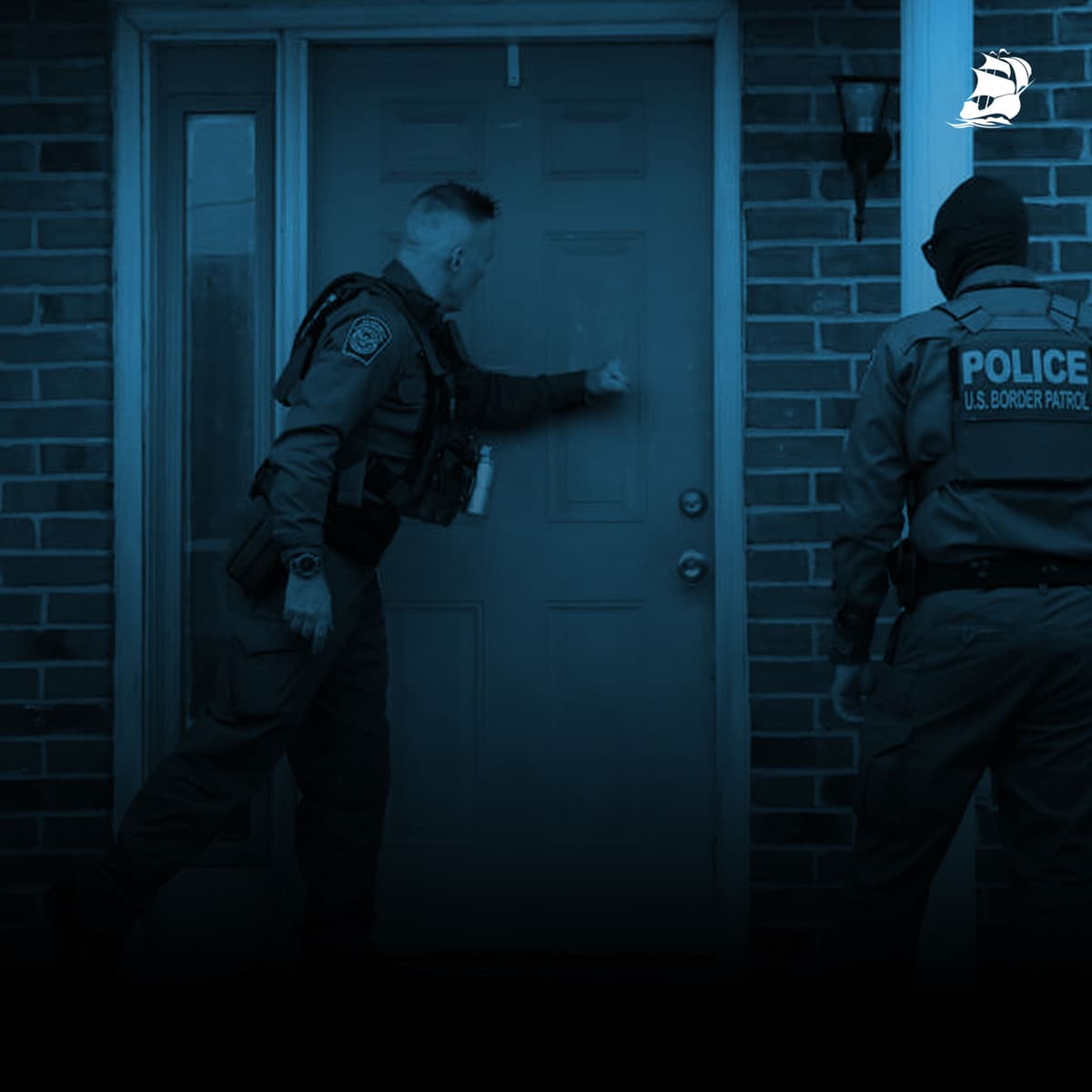
ICE’s shift toward masked, unidentified officers:
- Hertling draws on his experience with masked Iraqi police who initially hid their identities for fear of retribution but shed masks as pride and legitimacy increased.
- By contrast, ICE agents’ anonymity and thuggishness represents, to Hertling, a lack of pride and accountability, instead aiming for intimidation.
- “They are thugs. And I'll add to that, cowards... They are being sent on the street to create havoc and to violate rights.” (Mark Hertling, 04:28)
- The American tradition of policing “to protect and to serve” is being upended by this approach, with masked agents violating constitutional norms and trying to provoke conflict to justify further crackdowns.
-
Public backlash against ICE:
- ICE’s net favorability went from +16 to -14 post-inauguration (“a 30 point swing in a year”), suggesting broad discomfort with these tactics—even from some Trump voters.
-
Political manipulation:
- There's a concern the administration is baiting protestors to justify invoking the Insurrection Act.
- “That is exactly what they want. They want the pushback so the president can declare the Insurrection Act...” (Hertling, 08:12)
- There's a concern the administration is baiting protestors to justify invoking the Insurrection Act.
2. The Shooting of Renee Nicole Goode: Law Enforcement Standards in Perspective (09:20–13:24)
-
The Minneapolis shooting:
- Hertling analyzes the killing of protestor Renee Nicole Goode, emphasizing how poorly it reflects on the training and judgment of ICE officers when compared with military rules of engagement—even in far more dangerous and ambiguous warzone situations.
- “Even [guards in Iraq] knew the rules of you don’t shoot through the windshield, you shoot to disable the vehicle… The ICE folks are saying…he was fearing for his life. Anyone that sees the film knows that he wasn’t fearing for his life. This was a purposeful act.” (Hertling, 10:21)
- The interaction—leading with “Get out of the fucking car”—was guaranteed to escalate fear and chaos.
- Hertling analyzes the killing of protestor Renee Nicole Goode, emphasizing how poorly it reflects on the training and judgment of ICE officers when compared with military rules of engagement—even in far more dangerous and ambiguous warzone situations.
-
Training and culture deficit:
- Hertling is critical of the lack of restraint and the apparent culture of “bloodlust” among some officers.
-
Quote:
“It’s a reflection of someone who likes bloodlust, who wants to do something like this… Those aren't the kind of people that you should have on a police force.”
— Mark Hertling (11:34)
3. Iran: Uprisings, Regime Crackdown, and U.S. Options (15:32–25:36)
-
The current Iranian protest movement:
- This uprising is especially large and driven by economic hardship rather than strictly politics or religion.
- The regime’s crackdown is brutal; likely five figure death tolls.
-
Debate over military options:
- Calls to “destroy security forces” (IRGC + Basij = ~800,000) are militarily unfeasible and would bring incalculable consequences.
- “There are those who say we've got to destroy these security forces so the regime can collapse... But that's a pretty major mission for any military force. It certainly isn't going to be conducted by bombings, which seems to be the first resort of recent presidents.” (Hertling, 15:55)
- Calls to “destroy security forces” (IRGC + Basij = ~800,000) are militarily unfeasible and would bring incalculable consequences.
-
Lack of coherent US strategy:
- US has pulled carriers out of the Middle East; has alienated key allies (e.g. Denmark refuses cooperation), showing costs of diplomatic neglect.
- Four pillars of national power (diplomacy, information, economics, military) are not being used in concert.
-
Diplomacy and targeted sanctions:
- There's little evidence the administration is leveraging non-military means effectively—in fact, Radio Free Europe broadcasts have reportedly been shuttered, and existing economic sanctions aren’t precisely targeted.
-
Quote:
“The first response is usually, let's use the military because it's the most forceful... But have we extended a diplomatic approach?... Have we instigated an information campaign?”
— Mark Hertling (20:28) -
Danger of regime change rhetoric:
- Politicians, like Sen. Markwayne Mullin, are caught in illogical circles—wanting strikes to “take out the regime” but denying they seek regime change (24:12–24:26).
4. Venezuela and Military Resources: The Dunro Doctrine in Action (28:29–31:49)
-
Confused objectives:
- The US recently moved a carrier task force from the Middle East to the Caribbean, supposedly for “drug boat bombings,” widely seen as a cover for intervening in Venezuela.
- There’s no clear leadership in Venezuela post-operation, oil companies refuse to get involved, and corruption persists.
-
Risk of strategic drift:
- This scattershot approach leaves critical questions unasked: who will govern after interventions, what’s the follow-up plan, and what does victory look like?
5. Military Culture and Sentiment (31:00–31:49)
- Mixed reactions inside the military:
- Some leaders might relish action, but real professionals approach war with seriousness and a preference for deterrence.
- “The professionals won’t be all that excited about going to war...let’s build some alliances and deter conflict so we don’t have to send our sons and daughters into harm’s way.” (Hertling, 31:38)
6. The Greenland Invasion Absurdity and NATO Tensions (32:57–39:39)
-
Alleged US invasion plans:
- Reports claim JSOC has been ordered to prep for a potential Greenland invasion—absurd, as Greenland is sparsely populated, 80% ice, and a Danish/NATO territory.
- “Whenever you give a mission to invade somewhere like World War II, Eisenhower was given a one paragraph mission, enter the continent of Europe and defeat the Nazi war machine. I don’t know what the [Greenland] mission would be.” (Hertling, 36:02)
- Reports claim JSOC has been ordered to prep for a potential Greenland invasion—absurd, as Greenland is sparsely populated, 80% ice, and a Danish/NATO territory.
-
NATO complications:
- Invading Greenland would make the US the aggressor against a NATO ally, a complete reversal of alliance norms.
7. European Reactions & Alliance Strain (39:46–41:50)
- Nordic & Baltic concerns:
- Nordic-Baltic 8 countries are growing closer and more fearful; Sweden is even seriously considering going nuclear, a dramatic shift.
- Recent US actions are undermining the very alliance structure (NATO) designed to promote security and prevent proliferation.
8. Ukraine: Media Attention, Battlefield Realities, and Western Support (41:50–46:16)
-
Current Russian tactics:
- Russia is devastating Ukrainian civilian infrastructure with nightly ballistic missile and drone strikes, seeking to break Ukrainian will.
- American volunteers continue to fight and die (~110 killed), but dwindling Western media attention is letting Russia “take advantage.”
-
Western aid:
- Internal EU disputes about funding, and US pressure has reportedly undercut Ukraine’s ability to buy arms.
- “There are all sorts of things that are taking place below the noise level and below the radar that I think are critically important at this particular time.” (Hertling, 45:12)
- Internal EU disputes about funding, and US pressure has reportedly undercut Ukraine’s ability to buy arms.
9. Risk for Military Critics & Sen. Mark Kelly’s Lawsuit (48:55–50:30)
-
Retired officers speaking out:
- Hertling acknowledges there’s a real risk for retired officers (like him and Sen. Mark Kelly) to become targets for criticizing the administration, but feels a duty to speak honestly.
-
Senator Kelly:
- Kelly, a personal friend, is handling the government’s attempts to silence him with tenacity, planning to sue under the First Amendment.
10. The “Seven (Now Eight and a Quarter) Wars” Claim (50:30–53:13)
- Trump’s claim to have “solved” wars:
- Hertling and fact-checker Daniel Dale both find that all the conflicts Trump claims to have solved remain unresolved, at best under fragile ceasefires or frozen.
11. Havana Syndrome—Russian Directed-Energy Weapons Confirmed (53:13–57:39)
- Vindication for advocates:
- Recent leaks confirm the US military spent over a year reverse-engineering and testing devices believed responsible for “Havana Syndrome,” matching longstanding claims about Russian involvement.
- These “non-lethal” incapacitating weapon systems are very real; Hertling always believed the reports, based on his own classified knowledge.
- “Does the Defense Department have these capabilities? They do. Are they very well classified? Yes, they are.” (Hertling, 54:21)
Notable Quotes & Memorable Moments
-
On ICE’s masked officers:
"They are thugs. And I'll add to that, cowards. You give me any one of those guys without a weapon and without a badge and without an association to, you know, the federal forces, and they would be a nobody."
– Mark Hertling (04:28) -
On the Insurrection Act ‘trap’:
"They want the pushback so the president can declare the Insurrection Act... That's what's troubling to me."
– Mark Hertling (08:14) -
On law enforcement escalation:
"Within a span of about 5 seconds there was a 'Get out of the car. Get out of the fucking car.' Well, that immediately puts someone on the defensive and you don't want to stick around to see what's going to happen next."
– Mark Hertling (12:55) -
On Iran strikes and poorly considered military interventions:
"The question shouldn't be what should we hit? The question should be what end state are we trying to achieve? … A massive bombing campaign without the other elements of national power coming to play would make things worse in Iran."
– Mark Hertling (25:14) -
On military participation in dubious operations:
"The professionals won't be all that excited about going to war... they're more apt to say, let's build some alliances and deter conflict so we don't have to send our sons and daughters into harm's way."
– Mark Hertling (31:38) -
On the logic of a Greenland invasion:
“Greenland has about 50,000 citizens... About 80% of that island is ice. So I'm not sure what an invasion looks like.”
– Mark Hertling (34:10) -
On European response to the US:
"The Danes... have offered them, hey, you want to reinforce your bases, the old bases you had, knock yourself out, we'll let you do that. The Danes have said that. But invading is a whole different thing."
– Mark Hertling (37:58) -
On classified advanced weapons & Havana Syndrome:
"Does the Defense Department have these capabilities? They do. Are they very well classified? Yes, they are."
– Mark Hertling (54:21)
Timestamps for Major Segments
- [03:18] – Masks, Courage, and Accountability / ICE & comparison to Iraq Police
- [09:20] – Minneapolis shooting of Renee Nicole Goode / Law enforcement training vs. military
- [15:32] – Iran protest movement & crackdown; US military options and failures in diplomatic strategy
- [28:29] – Venezuela: Intervention, resource shift, and lack of post-coup planning
- [32:57] – Greenland: Reports of invasion planning, international ramifications
- [39:46] – European/Nordic/Baltic reaction to US alienation; rise of nuclear power in Sweden
- [41:50] – Ukraine: Russian missile tactics, US/EU aid, waning attention
- [48:55] – Risks to retired military critics, Mark Kelly’s lawsuit
- [50:30] – Fact-checking Trump’s “solved wars” claim
- [53:13] – Havana Syndrome: Russian weapons, US acknowledgment, classified programs
Tone & Takeaways
The episode combines urgency, deep frustration, and measured analysis. Hertling’s military background brings sobering comparisons between policing at home and security abroad, and the parallel failures of US strategy in volatile global theaters. The dialogue warns against normalization of lawless security behavior, slapdash foreign policy adventures, and the collapse of alliances. There’s no shortage of gallows humor as Miller and Hertling marvel at the surreal extremes of current US policy, but the undercurrent is clear: without a return to lawful, strategic, and values-driven security, both the US and its global standing are in peril.