Loading summary
Transcript129 lines
- [00:00]
Tim Miller
The holidays are expensive.
- [00:02]
Mark Hertling
You're paying for gifts, travel, decorations, food, and before you know it, you've blown way past what you were planning to spend. Don't start the new year off with bad money vibes.
- [00:13]
Tim Miller
Download Rocket Money to stay on top of your finances.
- [00:16]
Mark Hertling
The app pulls your income, expenses and upcoming charges into one place so you can get the clearest picture of your money.
- [00:22]
Tim Miller
It shows how much to set aside for bills and how much is safe.
- [00:26]
Mark Hertling
To spend for the month so you can spend with confidence, no guesswork needed.
- [00:30]
Tim Miller
Get alerts before bills hit, track budgets.
- [00:33]
Mark Hertling
And see every subscription you're paying for. Rocket Money also finds extra ways to.
- [00:37]
Tim Miller
Save you money by canceling subscriptions you're.
- [00:39]
Mark Hertling
Not using and negotiating lower bills for you.
- [00:42]
Tim Miller
On average, Rocket Money users can save.
- [00:44]
Mark Hertling
Up to $740 a year when using.
- [00:47]
Tim Miller
All of the app's premium features.
- [00:49]
Mark Hertling
Start the year off right by taking.
- [00:50]
Tim Miller
Control of your finances.
- [00:52]
Mark Hertling
Go to rocketmoney.com cancel to get started. That's rocketmoney.com cancel rocketmoney.com cancel.
- [01:12]
Tim Miller
Hello and welcome to the Bulwark Podcast. I'm your host Tim Miller. We are dialing in on military news both in American streets and abroad on today's show. But there's a lot of other stuff going on, particularly on the legal front, including the dramatic resignations in Minnesota of prosecutors who are refusing DOJ pressure to investigate the widow of Renee Nicole. Good, I guess, for talking to ICE officers inappropriately. Just disgusting what we're seeing on the doj, but good on those prosecutors for resigning. Much more on that and all the other stuff in the legal news over on our newish podcast, Illegal News with Sarah Longwell. This is our relaunch of George Conway. Explains it all since George is running for Congress. You heard George on this show last week. He was pretty hot. And we're going to keep the legal news going, though, or the illegal news in this case. Sarah is getting a rotating cast of sharp experts. She's got Andrew Weissman and others to break everything down. The new episode that Today with Asha Rangapa, who I've got to know recently and I love. So go check out the illegal news over on YouTube substack or your podcast app of choice on this show. He's back. He's a retired U.S. army lieutenant general. He's commander during the 2007-2009 troop surge in Iraq. He's also commanding general of the US Army Europe. He writes on military affairs for the Bulwark. It's Mark Hertling.
- [02:36]
Mark Hertling
How you doing, sir hey, I'm doing great, Tim. Good to be with you. And if I can just reinforce what you just said about Ashura Ngappa. She's awesome. I've gotten to know her really well over the last couple years, and a brilliant legal mind. She's really great.
- [02:49]
Tim Miller
She is. And, you know, while we're glazing people, just having you here is just amazing. I feel so lucky to have you with us at the Bulwark for people a little behind the scenes. It's a little weird, I would say, to have a commanding general of US Army Europe sitting through our Monday meeting where we're discussing whether to do a blog post on the groipers or reading the slack discussions about buccal fat removal. But you're in all of it. You're just. You're diving straight in, and we appreciate you.
- [03:14]
Mark Hertling
I've been in staff meetings that have been much worse, so everything's going fine.
- [03:19]
Tim Miller
All right. We have so much to cover. I want to start with morning shots. Your section was called Masks, Courage, and Accountability, and you wrote about your experience with the Iraqi police and masks and kind of some lessons from that and how it relates to what we're dealing with now with these masked ICE and CBP agents roaming the streets. So I want to just kind of let you cook on that for folks who missed the newsletter.
- [03:45]
Mark Hertling
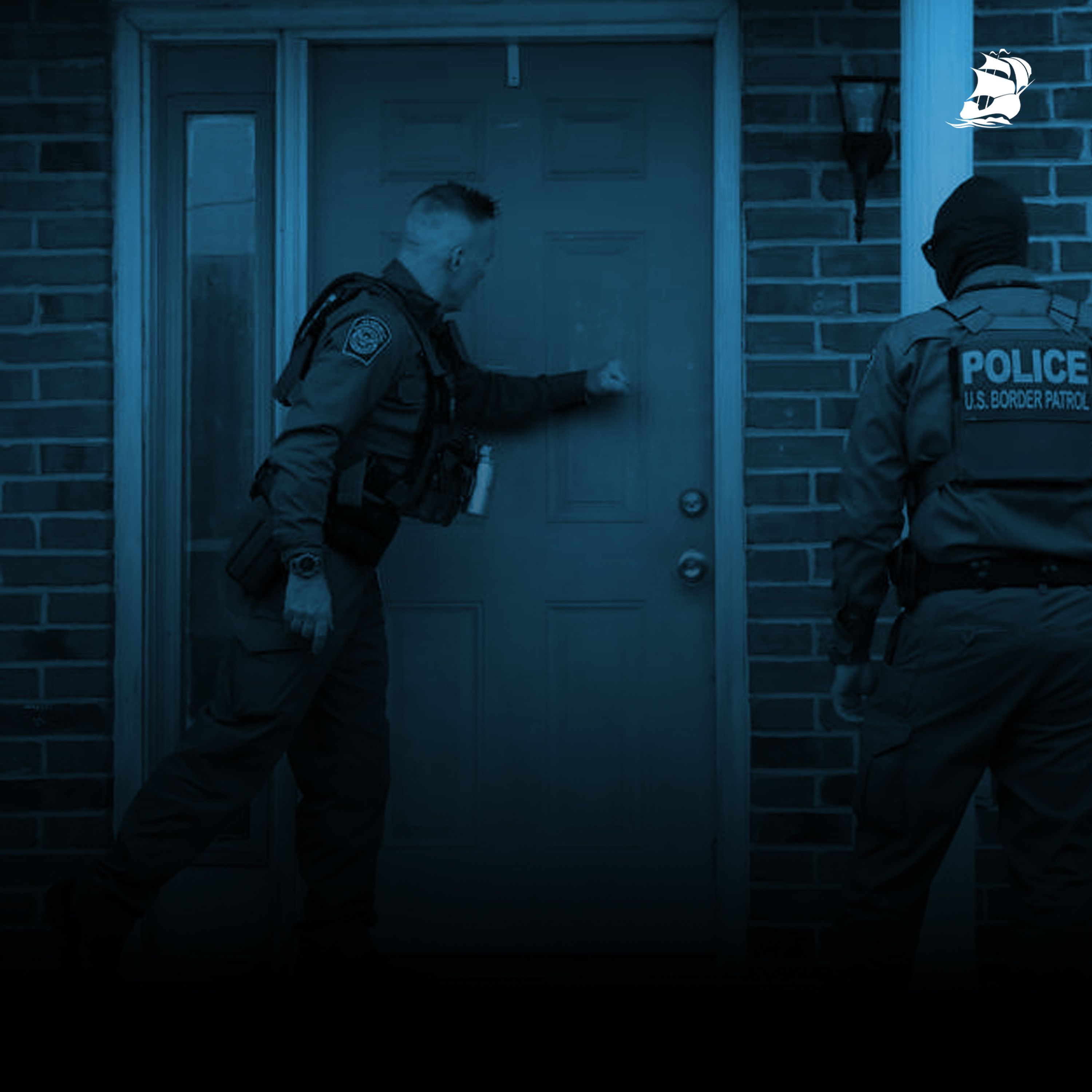
Yeah. Tim, I tell you, watching these guys, these ICE officials who. We don't know how they're recruited. We don't know how they're trained. There's stories now popping up about some lapses in even vetting them, another story about some of them being January 6th participants. But the thing that's just been bothering the hell out of me is the fact that these guys are wearing masks with no identification whatsoever. And they're thugs. They are thugs. And I'll add to that, cowards. You give me any one of those guys without a weapon and without a badge and without an association to, you know, the federal forces, and. And they would be a nobody. But they're using that generated power to really influence what's going on on the street in a negative way. They're countering what our Constitution says is right in terms of the freedom of speech and the right to legal protest. It's why we formed our nation and given it some of the values and ideology we have. They are just counter to everything we are. So, you know, after watching these for a couple of months, these guys doing these kind of things, every time I saw him, it reminded me of the Iraqi security forces and The Iraqi police forces early on, because they would all wear masks and they would tell their commanders and the US Forces, well, we're wearing it because, you know, people don't like us associating with the US Military. Okay, got that. But as they became more and more capable and more and more effective in terms of security actions and they were doing things the right way, we noticed that both the army and the police forces started taking those masks and kaffeas and the scars that they were wearing over their face, they were taking them off. It was because they were generating pride in serving their country. These guys are not generating pride. They are being sent on the street to create havoc and to violate rights. So it just infuriated me. And that's even starting to get hot talking about it. That's why I wrote the piece.
- [05:48]
Tim Miller
Yeah. There's one anecdote and piece that I thought was telling you said that your kind of second or third time there, you know, as things started to change, there was a billboard campaign featuring soldiers and police, Iraqi soldiers and police, smiling and proclaiming their dedication to a safe, stable environment.
- [06:05]
Mark Hertling
Right.
- [06:06]
Tim Miller
I just thought that was such a telling anecdote, like they were living in an oppressive situation where there was no trust and where the we can just be honest, like where the police and federal agents were corrupt. And I guess part of engendering trust, they took their masks off and then had a billboard campaign about it. I think that kind of tells you all you need to know about how backwards we're going.
- [06:30]
Mark Hertling
And by the way, that idea for the billboard campaign was generated by the Iraqi Minister of the Interior, the guy who was in charge of police forces, kind of the equivalent of the Homeland Security secretary. And it just was fascinating to us that they had come such a long way. I was first there in 2003 and 2004, and the next time was 2007 and 8. And what we saw was taking a pride. And even if you see pictures of me in the second tour, I'm wearing the American flag on one shoulder and the Iraqi flag on the other because I wanted to be associated with their security forces. And they were constantly out with our troops, doing combined operations with both our military police and also, you know, our infantry and armor and artillery guys as well. So it just showed a change of attitude. And one of the things I didn't put in the article, you know, you go to any American city, and on the side of police cars, there is the equivalent of something like to protect and to serve, or, you know, any kind of motto like that in a local police. That's not what these guys are doing. That's not what these ICE people are doing. They're intimidating and being thugs. It's anathema to what we believe in, in terms of security forces.
- [07:45]
Tim Miller
The one mildly encouraging thing, and we talk about a lot of bad political news around here, is people are reacting negatively to it. My friend Peter Hamby over in Puck is out with an article last night just kind of analyzing the polling around ice. And after Trump's inauguration, ICE had a net favorability of + 16. So even some people who voted for Kamala Harris had a favorable view of ice. Now it's underwater with a minus 14 favorability rating. It's a 30 point swing in a year. It's a dramatic political collapse in our polarized times. And I have to assume that a lot of it is related to what you're talking about. Just fundamentally, Americans, even people that voted for Trump, I just don't want our police or our security forces acting this way.
- [08:32]
Mark Hertling
The thing that bothers me, though, Tim, is they don't seem to care what their favorability rating is. And this is what's troubling because I think we are at an inflection point after last week's killing where it could go one way or another. Either they could be really subdued because they realize how bad they're being seen, or they're continuing to generate these kinds of actions which will eventually create some kind of pushback. And that is exactly what they want. They want the pushback so the president can declare the Insurrection Act. You know, you hear all the government officials saying, don't take the bait. That's become the mantra that can only hang on for so long. Someone's going to be furious about what's happening and there's going to be danger on the streets both ways. That's what's troubling to me.
- [09:20]
Tim Miller
So you mentioned the murder of Renee Nicole Goode and that event. It's just horrible tragedy in Minneapolis. And I wanted to ask you about this because I was suffering some fools over on the Piers Morgan show yesterday. We were kind of arguing about this situation. And to me, that just seems so obvious. I watched that video and I'm just like, I just don't see how somebody could incredibly be scared for their life after that sequence of events. But I do think I have some limited credibility on this, having never been in law enforcement or in the military. And I just kind of was curious your perspective on that, watching all that, not necessarily getting into Jonathan Ross's Head. But you were in Iraq, you were in all these other dangerous war zones. You trained people. I just have to imagine many people who have served this country have been in much more dangerous situations than that. And thanks to their training and judgment, you know, have not fired three bullets into a woman's. And I was just kind of wondering, as you look at that from like a training perspective, how you assess that.
- [10:22]
Mark Hertling
They'Re ineffective and incapable of doing what they're being asked to do. Your comment about being in Iraq, this is. I hadn't thought about this before, but we had guards at gates that were prepared to counter suicide attacks with trucks, you know, car driven bombs and things like that. And even they knew the rules of you don't shoot through the windshield, you shoot to disable the vehicle, you shoot through the engine block first and then when you have to, then you may have to kill the driver if it's approaching too fast. The ICE folks are saying, oh, this was a split second decision and he was fearing for his life. Anyone that sees the film knows that he wasn't fearing for his life. This was a purposeful act on his part. He wanted to kill somebody, he pulled the trigger. I mean, I can't get into his head. That's conjecture on my part. But it just shows someone who's not trained in the limited use of force, which is what security forces do. It's different when you're in combat and you're facing a threat. I mean, I'll say this publicly, Tim, and it's in my new book coming out. I've killed people at close range and you don't like to do that, but when you have to, you do. So it's a reflection of someone who likes bloodlust, who wants to do something like this. It doesn't matter that he was involved in another occasion that, you know, he feared for his life a couple of months before. Each incident is different. And the other thing I don't understand is why did they release the film? Why did DHS release the film of his camera showing the woman saying, yeah, I'm not mad. You don't kill somebody for that. Unless you have a unique insecurity and an inferiority complex and you like to use power. And those aren't the kind of people that you should have on a police force.
- [12:12]
Tim Miller
Just thinking about that, like you're saying, like people that are guarding the gates. So many times we've had to train people who are doing legitimate security work. You know, you don't, you're not even speaking the Language, Right. You know, you're going into a foreign country and it's hard to know, you know what I mean? Is like this person a threat or are they just unhappy that we're here? Right, like, and you just have to use judgment in those situations and try to de escalate and it's just like comparing like all of the dangerous situations where people have chosen not to escalate to like this with a 37 year old woman with stuffed animals in her passenger seat, like clearly turning her car away. It's just crazy.
- [12:50]
Mark Hertling
And she was a protester. Okay, that's great. But even if you see before the shooting what occurred, within a span of about 5 seconds there was a get.
- [12:59]
Tim Miller
Out of the car.
- [13:00]
Mark Hertling
Get out of the fucking car. Well, that immediately puts someone on the defensive and you don't want to stick around to see what's going to happen next. And that was their first approach. That's the first thing they did to her before the shooting. So you have to take the entire incident in context and, and I just can't believe the people that are defending this shooting because it's not what security forces do.
- [13:25]
Tim Miller
This episode of the Borg show is brought to you by. Wild Grain. Wild Grains is the first baked from frozen subscription box for sourdough breads, artisanal pastries and fresh pastas. Plus all items conveniently bake in 25 minutes or less. Unlike many store bought options, Wild grain uses simple ingredients you can pronounce in a slow fermentation process that can be easier on your belly and richer nutrients. There's no preservatives and no shortcuts. Wild Grains boxes are fully customizable. I like the Wild Grain. We like it. I have fond memories of my mother making me cinnamon rolls. Now I can try to offer that for my child. Those cinnamon rolls straight out of the freezer, 25 minutes. It's a yummy and you know, maybe not the most nutritious breakfast, but that's what you remember. Okay? You need those fond memories as a child. You know who likes wild grain even more than me, if this possible, is JVL and his 19 children. Okay, so the more children you have, the better Wild grain is for you. But you know, empty nesters, you'll probably like it too. There's nothing like having an artisan bakery in your freezer to chase away the winter chill. Now it's the best time to stay in and enjoy comforting homemade meals with wild grain. I highly recommend giving wild Grain a try. Right now, Wild Grain is offering our listeners 30 bucks off your first box, plus free croissants for life when you go to wildgrain.com thebullwork to start your subscription today. That's 35 bucks off your first box and free croissants for life when you visit wildgrain.com thebullwerk or you can use promo code thebullwerk at checkout. All right, I'm going to move on. We're going to go a little around the globe with you. I want to start with Aran. You have an article out for us today on this, how Iran is more than just a target set. I guess I'm going to start with what we're seeing on the ground, what kind of protest and uprising this is and how this might be different than some of the other ones in the past. You write about this and kind of how we should be thinking about this, given that there is just a really horrifying, brutal crackdown right now happening on these protesters. We don't know a real number at this point, but five figures, I think it's pretty safe to say, have been killed by the Iranian regime.
- [15:32]
Mark Hertling
And this is different than past uprisings in Iran. I mean, the uprisings against the government are episodic. They occur all the time. This one's huge. It's large, but it's not about the policies or the religion. It's about economics. The people of Iran are in really horrible shape, and they have been for a while. And it's coming to a head. And they certainly are being suppressed by the Iranian Republican Guard, the Bajis. But I was on a show last night talking to a guy who is a expert on the irgc, and he basically said, you guys are talking in theoreticals. You've got to go in and kill them all. Well, the IRGC consists of estimates about 200,000 people. The Bajis consist of another 600,000. So there are those who say we've got to destroy these security forces so the regime can collapse and the uprising can occur. But that's a pretty major mission for any military force. It certainly isn't going to be conducted by bombings, which seems to be the first resort of recent presidents across the board. You know, if we can get airstrikes in, people think we're doing something. But you know, when you're talking about the IRGC spread across parts of of Iran, what they're capable of doing and the supporting militias they have behind them, it's a pretty big force. And even if you're lucky enough to kill all of them, which you certainly wouldn't be able to do when you're talking about a million people, which is more than the U.S. army, by the way. You've got some concerns about what's gonna happen next. Are the hardliners in government going to blame the Great Satan for doing what they're doing and killing all these people? Certainly the people who are protesting want to see their enforcers, the ones that are subjecting them to the death and the suffering, killed or done away. But surgical strike airstrikes are not going to do that. And even beyond that, Tim, you got to take a look at who are the forces in the area. You know, the carrier strike group Forward has been taken out of the Arabian Gulf and the Mediterranean to go to Venezuela.
- [17:51]
Tim Miller
That is crazy. I saw, I saw this this morning. So we have no, we have no aircraft carriers in the Middle east at all.
- [17:58]
Mark Hertling
Right.
- [17:58]
Tim Miller
Because we sent it right now.
- [18:00]
Mark Hertling
We do have some air bases in the Middle East. But breaking news, as you just mentioned before we went on, if we're talking about Qatar, you know that's where our major air base is in the Middle East. And if we're bringing forces out of there, according to the presidential order.
- [18:16]
Tim Miller
Yes. Is a Reuters report. Yeah. That we're removing some personnel from these bases right now because of tensions.
- [18:23]
Mark Hertling
Yeah, that's. That's going to knock the forces down even more. And you have another report from Denmark that the president has asked them to assist in a campaign against Iran. This is the same Denmark he's threatening to invade as part of their Greenland holdings. So Denmark is basically saying, pound sand. We're not doing anything with you. This is what happens when you dis your allies. You pull forces out willy nilly for other contingencies that doesn't have a major strategy. And you're basically insulting your alliances and even playing them as almost enemies because they don't either pony up cash or pony up forces or do what you want them to do by giving away their land. The last attack with Israel that went against Iran had Danish aircraft with it. I believe it had German aircraft with it and it had French aircraft with it. So these are the three allies that we're now insulting who don't want to play with us in any kind of action, especially one that might instigate a major campaign and create havoc on the European and Middle Eastern continents.
- [19:36]
Tim Miller
Just sticking with Iran and what the options are for a second that you're talking about the limitations of airstrikes and the risk of destabilizing Orange is something that you got to think about as you're looking through the various options. I do get a little bit frustrated sometimes because we've had some of these failed efforts. I think it's important to learn from them, but it doesn't mean that we're helpless. I do think sometimes the opponents of getting involved have this view that we should do nothing and that we have this helplessness and there's a risk of status quo, of keeping rod. And obviously they're cracking down on their own people, but they are funding terror groups and they're funding other organizations that try to destabilize us and our allies. So what are things that we might be able to do that could be productive? Maybe short of just kind of bombing a couple of things and saying that we helped.
- [20:29]
Mark Hertling
That's what I laid out in the article about the elements of national power. And the major element is diplomacy. And then you have information and then you have economic power, and then you have military power. But the first response is usually, let's use the military because it's the most forceful and you can publicize it. But have we extended a diplomatic approach to. I don't know if we have or not. If we have, it's very secretive.
- [20:55]
Tim Miller
It does seem like there was some contact. I just am seeing reports someone from the Iranian side did. At least Per Trump contacted them about restarting the nuclear deal. But who the hell knows what the seriousness of that is?
- [21:10]
Mark Hertling
But it's beyond that. What are you doing to your population? Have we used a diplomatic approach on the world stage at the UN Has Michael Waltz, the UN Ambassador, gone up and given a speech about how we should universally condemn what Iran is doing to its citizens? Have we instigated an information campaign? Reports are saying Kerry Lake has turned off Radio Free Europe. That would basically blast information into the people of Tehran. So there's not an information campaign going on. What are the economic situations? Well, parts of the economic sanctions that we've held against Iran for decades now has gone against the entire society. Is there a better way to use the economy to target key leaders of the regime, like we've recently done in some cases with Russia? Or is it just a massive. We're going to block everything. The president's announcement that if they don't stop, they're going to get another 25% tariff. Well, what is that going to do to the people who are already struggling in the economy of this nation?
- [22:10]
Tim Miller
We're not really doing enough trade with Iran for a tariff to really make.
- [22:13]
Mark Hertling
A difference at this point. So all of those things. And a consistent approach to the use of military power with a smart approach, in my view is the right way to do it. You combine all elements of national power, the four elements of diplomacy, information, economics and military, in a major campaign. And I don't think that's being done. I don't see indicators of that. In fact, I see in some cases just the opposite, that we're ignoring some elements of national power.
- [22:42]
Tim Miller
I do just want to mention Irfan Sultani is this 26 year old shopkeeper in Karaj who is protesting. He's scheduled to be executed on Wednesday. Trump was asked about this by Tony Decouple last night and basically said that if they do that execution is going to lead to consequences. My sympathies are always towards other productive things that we can do to help the Iranian people because what they're dealing with is just unimaginably horrible. And it's been that way for decades. The problem on that is, okay, is it imaginable that what we're going to do is productive? And I want to offer the senator from Oklahoma, Mark Wayne Mullen was on CNN last night with Kaitlan Collins and it's not exactly encouraging. Here are a few clips from his convo with her.
- [23:26]
Mark Hertling
20,000. So you're taking out the Iranian regime? I am at this point. They're murdering their citizens. We're not into regime change. We're not. We're not.
- [23:34]
Tim Miller
This isn't the Arab Spring like happened.
- [23:37]
Mark Hertling
Underneath Secretary Clinton, but this is the people of Iran standing up to a murderous regime. And if that leadership is going to kill their own people, the president said we'll come to your rescue. But you just said you are for regime change. No, I said I'm for the strikes.
- [23:53]
Tim Miller
I didn't say.
- [23:54]
Mark Hertling
You said before that you're for taking out the regime. Yeah, absolutely. Because they're the ones murdering their own people. That's different than regime change. The regime change is up to the Iranian people. We didn't, we're not going actively to remove the regime. We're going after the people that are killing their own people. And that happens to be the regime.
- [24:12]
Tim Miller
But just to be clear, you support taking out the supreme leader? If he's the one that's calling these airstrikes or the killings of his own people, then absolutely.
- [24:21]
Mark Hertling
Okay, but that would be regime change.
- [24:24]
Tim Miller
Well, how do you, how do you decipher that one?
- [24:27]
Mark Hertling
That's what's known as a circular argument. You know, you can't make sense. And it's a guy that has very little experience in terms of what military force does and what happens as an after effect of taking out leaders of a country. So that should be part of the planning. It's the same thing that's occurring in Venezuela. The plan should include what happens if the regime topples. Then what do you do to support the people as opposed to just having chaos because they no longer have a government. One of the things I said in that article I wrote about Iran and it's the same thing that you say about Venezuela or any place else we go. The question shouldn't be what should we hit? The question should be what end state are we trying to achieve? What kind of government are we wanting to see? How are the people going to be treated and what action might we take that could make everything worse. And I'm suggesting that a massive bombing campaign without the other elements of national power coming to play would make things worse in Iran.
- [25:36]
Tim Miller
Okay, I was up here in my podcast Hole Taping when I got an excited text from my husband. It was this picture, something we got in the mail. It's a huge bag of materials for making cold brew. We love cold brew at our house. One by one, little by little, I've been teaching you things about the gay experience and skinny jeans we've talked about in the past. Moisturizing face. Moisturizing. That thing is cold brew. Even in the winter, the gays drink cold brew. And so we are so pumped about our new sponsor, our friends at Trade. Trade is the number one coffee destination in the U.S. their team of expert baristas, tasters and Q graders use real coffee knowledge to match you coffee you'll love. They curate over 500 coffees so you can try something new with every delivery. Trade has spent more than a decade building relationships with 55 top roasters across the US giving you access to coffees you won't find at your neighborhood shop. Each bag is roasted to order and delivered fresh to your door at prices comparable to grocery brands but with cafe level quality in every cup. You can take Trade's quick quiz and they'll find you the perfect match. For me, I like them kind of fruity and natural and just dark. Just give it to me. I want a big flavor, black flavorful coffee. We just got our first batch of Trade as I mentioned earlier this week and that's great. I'm going to love trying out different flavors. My husband used to do this thing. It was like an advent calendar of coffees. This is how just kind of in it we get on the Coffee front. It's like a different bean every day during the Advent season. We're just thrilled with trade and we'll be trying out the different varietals they have to offer. So right now trade is offering a 50% off at a one month trial@drinktrade.com bulwark that's drinktrade.com bulwark to get 50% off one month. Drinktrade.com bulwark why don't we test that out with moving on to what was happening in Venezuela and the Denro doctrine. It's just kind of crazy. Wrap your head around the fact that like, you know, we have this, a limited number of ships and like, we moved the carrier that might be needed for, you know, if there were an emergency to happen at the Middle east over to the Caribbean for these. I don't even think we need to call them drug boat bombings anymore because obviously that was just pretext for what they wanted to do with, with the coup. What is the status there now? I mean, like, does it seem like they're moving on? They're kind of like, okay, mission accomplished banner, you know, we're to send military personnel back to the Persian Gulf. And when you get the oil guys in there and hope everything's for the best, or are there other elements that you're seeing still kind of out there from the military standpoint?
- [28:29]
Mark Hertling
You're asking the questions that should have been asked beforehand. The first question, who's in charge of Venezuela right now? The president said he was. Then he pointed to four of his cabinet members and said they are. But it appears that the former vice president of Venezuela is in charge and the same corruption is occurring. The oil companies don't want to go in. I think that was a major surprise to the president when most of them said it's not a smart move. We can't make any money out of this. We've already had people there. We know what the situation is like. Which by the way, also happened in Iraq when I was there in 2007, because we had the major oil facilities of Iraq and our area of operation is the Beijing oil refinery and the Kurdish oil fields. And Trump at the time said he wanted to take Iraqi oil and the oil company. I tried to comment on CNN that the oil companies had already been in and it wasn't a money making venture for them, so they weren't going to do it. These are the kind of questions that you ask and you plan for. So when the actual strikes take place and you snatch the leader even Though he's a very bad guy out of the government. You kind of have a plan for who's going to take their place and what they're going to do very quickly. That doesn't seem to be occurring right now. You know, to use your comment, it does seem like they've kind of, hey, it's over. We've done what we needed to do and now what comes next? We're not sure. I don't know what's coming next in Venezuela, do you?
- [30:00]
Tim Miller
No. Do they? I don't.
- [30:02]
Mark Hertling
Does anybody? And yet we've moved on already. We're now thinking about Iran and Greenland. So it is that scattershot of national security that is part of what they say in their doctrine. They have the ends and the means. They don't have the ways to execute a security strategy.
- [30:24]
Tim Miller
What do you think the internal feeling is among kind of military leaders? We were texting at this the other day because I heard through the grapevine from somebody that was kind of a mid level military leader that was really rah rah about kind of being more aggressive now in Central and South America and getting excited about the Dunro doctrine. You told me you were kind of hearing different things. I could kind of imagine, I guess, military leaders being excited about all this because it's like, hey, we get stuff to do. I don't want to be bored. But you could also imagine the counter, which is like, what in the fuck are we doing? We don't have a plan. This is crazy.
- [31:01]
Mark Hertling
I've never been able to speak for the entire military. There are certainly some leaders that are going to say, oh, this is great, I can't wait to go to combat and all that. All I'd say is when you've, when you've been in a leadership position and you've lost a lot of soldiers in combat, it's not that exciting anymore. And in fact, it brings back that scene from Patton where Patton and Bradley are talking to each other and Bradley turns to Patton and says, george, the difference between me and you is you do this because you love it. I do it because it's my profession. And the professionals won't be all that excited about going to war. In fact, they train for it, they prepare for it, but they're more apt to say, let's build some alliances and deter conflict so we don't have to send our sons and daughters into harm's way.
- [31:49]
Rocket Money Advertiser
Want to feel more confident with your finances this year? If you have 60 seconds, I can show you how quick and easy it is. To start building healthy money habits that could last you the entire, entire year just by using rocket Money. Step 1 Download Rocket Money. Step 2 Link all your accounts and see your entire spending picture your subscriptions, your upcoming bills, your due dates, everything. Step 3 Tap a subscription you don't use and cancel it. Boom. That's money back every single month. Step 4 Create a financial goal for something you want to save for, whether it be a vacation, a retirement account, or a pet's birthday. We don't judge. Now. Let the app automatically move small amounts of cash towards your goal. In a month, you'll see real dollars piling up. In a year, you'll be shocked at how much money you saved, similar to the over 10 million members on the app that have saved up to $740 a year when using all of the app's premium features, use the Savings Challenge as one step closer to feeling better about your finances. Today@rocketmoney.com Cancel that's RocketMoney.com one more time. It's RocketMoney.com Cancel Speaking of alliances that.
- [32:58]
Tim Miller
We are collapsing rather than building, let's go back to our friends in Europe. This was a report from a couple days ago that Trump had ordered jsoc, the Joint Special Operations Command, to prepare contingency plans for a potential invasion of Greenland. The Danish sent an advanced contingent of their armed forces to Greenland, so they sent more troops there. What is that request? If you were there and you were part of JSOC and they're like, come up with a plan for invading Greenland. Where do you even start with that?
- [33:31]
Mark Hertling
I've got a piece coming out probably today or tomorrow on exactly that. First of all, JSOC is not necessarily an invasion planning headquarters. They fall under socom, the Special Operations Committee.
- [33:43]
Tim Miller
Okay, so, yeah, explain that how that all breaks down to us, because I don't really understand.
- [33:46]
Mark Hertling
JSOC is, as we've talked about before, they are the folks that are the Delta SEAL teams, Rangers, pararescues from the Air Force, the MARSOC from the Marine Corps. They're all the special operators who train extensively on several missions. Counterterrorism, abduction missions like we saw with Maduro, the kinds of things that take a hard strike and get out quickly. And they're very well trained. When you're talking about an invasion that normally goes to a combatant commander like southcom or Northcom or now what they're calling hemisphere command or a word, something like that, where they're attempting to combine both the North American and South American command structure. So it is in their sphere of influence. Just like European Command takes care of the continents. Central Command is overseeing the Middle east and others. Indo Pacific Command is in the Pacific. So each one of them has an area of operation. JSOC is a subordinate of Special Operations Command. They are the ones that hold. These guys are given a mission, say go conduct a counterterrorism operation or snatch a body out of someplace and they do it very well. But when you're talking about an invasion, you're looking at land routes, logistics, operations, sea forces, air forces. And they don't do that from a bigger contingency. So just saying that JSOC had been given the mission to plan an invasion of Greenland. Greenland has about 50,000 citizens on the island. About 80% of that island is ice. So I'm not sure what an invasion looks like. Would they take over the towns of Nuuk, which is the capital of Greenland, which has, you know, a bunch of very beautiful colored buildings? Do they reinforce what used to be called Thule Air Base on the northeastern portion of the island, which is now, I can't pronounce the name. Petafik Space Force Base, which is where the American forces are now on the island. I mean, I just don't know. Whenever you give a mission to invade somewhere like World War II, Eisenhower was given a one paragraph mission, enter the continent of Europe and defeat the Nazi war machine.
- [36:02]
Tim Miller
Clear mission.
- [36:03]
Mark Hertling
Clear mission. Yeah, I don't know what the mission would be. And you know, enter the, the island of Greenland and defeat the citizens of Nuke. I don't know. And then what do you do once you invade, what's the next action? Is it start drilling for rare earth minerals and, and oil? I don't know.
- [36:22]
Tim Miller
I think so, yeah.
- [36:23]
Mark Hertling
The excuse that's being given is to protect the Arctic region. Well, we're already doing that as part of NATO. The Danes have a key to that responsibility. So do the Canadians who have we pissed off to an extreme. And truthfully we don't have right now in our force structure the kinds of at scale forces that would conduct Arctic operations. We depend on our allies to the north in both Europe and the western hemisphere to do that because that's why we've claimed them as allies. If we're going to start doing those kind of missions too, we're going to need a whole lot more icebreakers. It's insanity, Tim.
- [37:01]
Tim Miller
It is insanity.
- [37:02]
Mark Hertling
It is insanity. There's no other word to use, I.
- [37:04]
Tim Miller
Guess maybe pictures it like landing on the moon or it's just like you land and then you put the flag down and you're like, then what? Maybe that's what they imagine. I don't know. It's interesting. We've all had to learn about all this stuff now. I think it's petufic space that they have down there. It used to be called Thule Air Base, but so we have one base there. We used to have a bunch, I guess during the Cold War. Yeah, there were a couple, but they closed those. So it's like it's all about. Trump said it to the New York Times. He's like, I have a psychological need to own it. And that's what this is, right? Because the military excuse is just like it's even stupider version of the drug trafficking excuse for Venezuela. It's like we're coming up with some reason that we need it for security, but we, we can have as many bases there as we want. I think, I don't think the Danes are going to care about that.
- [37:59]
Mark Hertling
The Danes not only don't care, they've offered them, hey, you want to reinforce your bases, the old bases you had, knock yourself out, we'll let you do that. The Danes have said that. But invading is a whole different thing. And I guess there's a bill trying to get through the Senate right now that basically is the NATO Protection Act. The other thing that's involved here is we are attacking basically another NATO member, Denmark and its constituency on Greenland. If that happens, we have violated what would be an Article 4 constraint on any nation. When one nation attacks any NATO force, all the other NATO nations come together to counter that. So we are the ones attacking a NATO force at this point. And by the way, that NATO alliance is a congressionally mandated alliance. It was, was signed in 1947. And no one has taken that alliance document away saying we no longer believe in the alliance. There's no other word but insanity on this Greenland thing.
- [39:00]
Tim Miller
Did you ever go up there?
- [39:02]
Mark Hertling
Yeah, I've been there twice. I landed in Thule Air Force Base twice on the way to Europe and a little Air force base with enough room for one plane to land. And it's got a nice little terminal with one vending machine with candy bars in it, another one with coffee, and that's it. But I dated. That was probably 20 years ago. The first time I landed there, it was June and it was cold as hell up there. That's all I can say. It's not a pleasant environment.
- [39:29]
Tim Miller
Yeah, if it was a different part of the world, you'd be thinking he's planning a golf course there. But I don't think that there's going to be kind of a Trump casino and ice fishing resort in Greenland.
- [39:40]
Mark Hertling
But it does have some great northern lights that you can see in that area, so could be a tourist threat.
- [39:46]
Tim Miller
I'm wondering if you've had any conversations or heard anything from old European counterparties about all this and whether their mood is changing. And I was talking to Susan Glasser about this yesterday, and she was like, she's talking to a senior European official who seemed to be legitimately worried about this. He's like, I don't think we're going to fight over Greenland. And said that they're kind of thinking through those contingencies a little bit already. I'm just wondering if you're kind of hearing anything from anyone on the military side.
- [40:13]
Mark Hertling
I have. In the last year and a half, Tim, I've been very involved with the Nordic and the Baltic countries. Visited there a couple times. They asked me to speak at the Swedish Defense College and they were worried at the beginning of the administration. Every once in a while I'll get a text from some of the guys from Sweden. In fact, I got one yesterday from a colonel in the Swedish army who's doing a PhD and he actually cited one of the Bulwark articles and said, thanks for doing this. He says it shows that not everybody is insane in your country. But the Nordics and the Baltics have, have grown into a powerhouse. They call themselves the Nordic Baltic 8. And in fact, Sweden the other day have reinforced some things they've been saying for the last two years that they ought to start producing nuclear weapons. You know, we're now saying for nations to defend themselves that are advanced, nations like Sweden's, they're now considering, hey, this is going so crazy that the only way we can compete with some of these guys, not just Russia, but obviously now the United States, is to produce our own nuclear weapons. So we have them under our control. This is exactly why we generated the NATO alliance, to prevent that kind of stuff. Arms going crazy, nations doing their own thing as opposed to doing as part of the alliance, as sometimes bad as NATO was. And I got to see it for many years within my career. It is a great organization. Yeah, they piddle and diddle and resolve and all those kind of things, but for the most part it's pretty good in terms of a security alliance of.
- [41:51]
Tim Miller
32 different nations, it's worked pretty good by comparison to what came before it. For example, what's your sense for the latest in Ukraine. I kind of feel like we're in this like never ending doom loop where the same cycle happens over and over again. I'm wondering if there anything that maybe I'm, I'm missing as far as like kind of changes on the ground either in Russia or Ukraine that might be influencing events right now.
- [42:15]
Mark Hertling
There are. What Russia has been doing for the last couple of weeks, ever since the attack into Venezuela, which has really deflected attention away from Ukraine, is they have been increasing the number of ballistic missiles and other type of missiles they've been launching into key areas is in Ukraine. Russia has not been gaining any additional ground, but what they're doing is continuing to try and affect the will of the Ukrainian people. So they have been hitting substations for electricity as opposed to just, you know, oil producing or electrical producing. They've been hitting substations that lead to towns. I'm in contact with a couple of Americans that are over there right now. You know, there was a little bit of hubbub about a couple of Americans who had gone over to fight for Ukraine. There have been 100American killed in Ukraine and that's not making the news.
- [43:06]
Tim Miller
Really?
- [43:07]
Mark Hertling
Yeah.
- [43:07]
Tim Miller
On the front lines or where on the front lines?
- [43:10]
Mark Hertling
Yeah, on the front lines in buildings that have been bombed. This morning it was 14 degrees below zero in Kiev and their electricity has been shut off and their energy supplies have been shut off because that's the intent of the Russians. They are trying to hurt the civilians in Ukraine and yet we have diminished our approach to how we're reporting what's going on. And Russia has taken advantage of us being, I guess, overwhelmed by events in other parts of the world.
- [43:39]
Tim Miller
Well, I feel kind of ashamed I'm looking at this now that I didn't believe you. But I'm just trying to get a sense for what's happening. And yeah, it does. It's 110Americans. Volunteers have been killed on the Ukrainian side. Looks like was the last number.
- [43:54]
Mark Hertling
Let me read this note I got last night from someone who's over there. The Russians have now seized upon a more effective military tactic. They are firing ballistic missiles, which are hard to defend against, atop hundreds of drones every night into local substations. The few final miles of power to users in Odessa, Kherson and Kyiv is a huge humanitarian issue. The temperature in Kyiv right now is 3 degrees Fahrenheit. The weather forecast shows this Arctic blast continuing for 14 more days. Generators are in short supply. Pipes are bursting. Civilians are now genuinely scared for their lives. There are no easy fixes to these strikes. According to very well placed friends in the military, it's all hands on deck. But the conditions are vicious and the Russian poundings remain nightly unabated. One more thing. Meanwhile, it's been reliably relayed that both Russia and the White House pressured Belgium to not relinquish Russia's 300 billion in frozen assets at Euroclear in Brussels. This is shameful. A loan by the EU was provided to Ukraine in lieu of the White House Kremlin interference in Belgium against leverage the EU based frozen assets. I'm told that French President Macron is now demanding that no EU money from the EU loan be used to buy US weapons system. His position is that EU money should be provided to EU defense manufacturers only. Ukraine cannot be encumbered with that kind of condition. So there's all sorts of things that are taking place below the noise level and below the radar that I think are critically important at this particular time. And yet Ukraine continues to stand four years into this.
- [45:29]
Tim Miller
Do you think it's like those conditions are impacting the negotiations at all? It's kind of hard to even see how. Right. Because, and I guess it's been a few months now where Ukraine did seem more willing or Lasingsky seemed a little more willing than he had in the past to kind of move to a negotiated resolution. But Putin isn't interested in that, right?
- [45:48]
Mark Hertling
He's not. Personally, I think the strategy of Zelensky is saying, hey, I'll do anything, I'll negotiate. I'll come to the negotiation table to stop all of these attacks against my population. Because he knew specifically that Putin wouldn't come to the negotiating table. And that's the one thing I think the White House doesn't seem to understand. And Witkoff seems to be a partner of Putin. And now Marco Rubio, our Secretary of State, is in Venezuela and potentially in Greenland.
- [46:17]
Tim Miller
Woof. I was in the habit of checking in the Kyiv Post. I don't know if you ever read that. Just every couple days for a while, but just there's been so much with the holidays. There's so much crazy shit in our world of Venezuela and elsewhere that I hadn't been. And I just kind of opened it right now and yeah, I mean, look, it's a lot of disheartening, disheartening news what you're seeing over there. You have more on this tomorrow. We're doing a thing now which I appreciate on the Bulwark Takes feed and on YouTube on Thursdays called Command Post. We're just kind of giving more of these military updates. Tomorrow you're going to be talking about this with Bill Kristol, but anything else you want to share about that for folks who might be interested?
- [46:54]
Mark Hertling
You know, again, I think that as a population, our citizenry is being overwhelmed by a lot of different stories that seem to make us all drop our drawer, drop our jaws, drop our drawers.
- [47:10]
Tim Miller
It's not that exciting. Exciting? I mean, it's. We're excited you're doing a new Bulwark Takes thing with us, but I'm not drawer dropping yet. At least we'll see how the one goes tomorrow.
- [47:18]
Mark Hertling
Yeah, well, and we're just in disbelief. I mean, every morning we wake up something to something more that says unbelievable. Like you were talking about the prosecutors that quit in Minnesota. Another thing, an attack against Powell as the Fed chair. I mean, it's just one more news thing to jam into a news day. And. And the devil's in the details and we're being forced to shift from one thing to another and not see the totality of the kinds of things that are going on.
- [47:48]
Rocket Money Advertiser
Want to feel more confident with your finances this year? If you have 60 seconds, I can show you how quick and easy it is to start building healthy money habits that could last you the entire year just by using Rocket Money. Step one, download Rocket Money. Step two, link all your accounts and see your entire spending picture. Your subscriptions, your upcoming bills, your due dates, everything. Step three, tap a subscription you don't use and cancel it. Boom. That's money back every single month. Step four, create a financial goal for something you want to save for, whether it be a vacation, a retirement account, or a pet's birthday. We don't judge. Now let the app automatically move small amounts of cash towards your goal. In a month, you'll see real dollars piling up. In a year, you'll be shocked at how much money you saved, similar to the over 10 million members on the app that have saved up to $740 a year. When using all of the app's premium features, use the Savings Challenge as one step closer to feeling better about your finances. Today@rocketmoney.com cancel. That's rocketmoney.com cancel one more time, it's rocketmoney.com cancel.
- [48:56]
Tim Miller
A couple other things before I shoot Mark Kelly. Just. Just having this conversation made me wonder. I don't know, are you concerned at all with all this time you're spending with me and Bill Kristol, that you might get Demoted in retirement. I'm only being slightly cheeky about that. And also just kind of tell it what the latest is with Mark Kelly. He gave some pretty powerful speeches on that this week.
- [49:18]
Mark Hertling
Yeah, he did. And he and people like Slackton and others are going to be the targets. Could I potentially be a target? Yeah. My wife is concerned about that all the time. The concern is that if you say anything that has to do with common sense or an analysis of a factual condition, that that's contrary to what the administration wants people to hear. So, yeah, it's taken a risk as a retired general officer to say these things, but I also think it's somewhat my duty to do that.
- [49:51]
Tim Miller
Anything else on the Kelly situation that you think is noteworthy?
- [49:55]
Mark Hertling
He is handling it very well. Senator Kelly is actually a friend of mine. We were in contact before he became a senator. He spends a lot of time here in Orlando, where I live. I met his wife, Gabby Gifford. So we exchanged notes and he told me exactly what he was going to do when he said, I'm going to sue. That's going to be a hard case. But I think it's exactly the right thing to do because it deflects the attention away from them going after him to him going after them. And it needs to be said because it's clearly a First Amendment issue and he's in the right, in my view, and it should be an easy case to win.
- [50:31]
Tim Miller
I forget if it was the last time you were on or a couple times ago, but we went through Trump brags about all these wars that he solved was seven for a while. It was eight. I think your latest count is eight and a quarter. I don't know exactly what constitutes the quarter, but this is a common Trump talking point. You had debunked that, and I was so pleased with that. We kind of turned it into an article, too, from last September, just about just kind of going through because some of it's so crazy. People are like, what are you even talking about? What is he even talking? What was he even referencing? And so you went through all those. I'm not going to ask you. I'm not going to quiz you and ask you to do all eight and a quarter again. But I do think kind of a little update on where all those other more minor skirmishes stand and with the state of the Trump talking point on solving all these wars.
- [51:18]
Mark Hertling
Well, I was kind of happy this morning. I saw on Twitter that Daniel Dale, the great fact checker, basically did the same thing. That was one of his fact checks And I can't remember exactly what he said, but he said three of them are still at a stalemate. One of them has had a peace thing signed, but nothing has occurred after where there's still killing in the Congo. You know, the uprising there is still going on. There's no difference in Serbia and Kosovo. And, and truthfully, we've had forces, U.S. forces in Kosovo for the last, well, since the 1990s, the late 1990s, after President Clinton said they're going to be out in a year, they are still going there. And there's still rotations of US Forces under a German general in Kosovo to protect the peace. So not a whole lot's changed there. There's still tension in that region. The Kashmir issue between India and Pakistan is not changed all that much. You know, he had the presence of Azerbaijan and Armenia in to allegedly sign a peace treaty about Nargano Karabakh, which has been a frozen conflict since the 1990s. Not a whole lot of changes there other than that there's been a piece of paper signed. So obviously, you know, he didn't completely destroy the Iranian nuclear facilities because we wouldn't be paying more attention to it now if he had. And there's still problems with Hamas in the Gaza Strip. So I don't know which ones he solved or which nations he's brought peace to, but the ones that I conclude that he's talking about, the seven, now eight and a quarter, I don't know where he got the quarter from, have not been solved. And if you hunt down every single one of the major concerns he had or the peace deals he thought he prescribed, none of them have been solved.
- [53:02]
Tim Miller
The Nile dam between Egypt and Ethiopia.
- [53:07]
Mark Hertling
That was one of them. And that's still problematic. There's still water flowing. So not even that one? Nope.
- [53:13]
Tim Miller
I hadn't checked in on the Nile Dam. All right, last topic. A lot of this is related to a sensitive classified information, so there's going to be some limits to what you can talk about. But I do at least want to mention it. This is a new story from cnn. This out this week about related to Havana Syndrome. Part of the reasons I want to mention it is because this is a full accountability podcast and it seems like I was just totally wrong on Havana Syndrome. I thought it was psychosomatic. It didn't smell to me. There might have been something happened to these people. I wasn't saying they were lying, but I didn't believe it, really. And Michael Weiss, who's frequently on the pod, we got to get him back on again soon was always like a dog on a bone on this. Now this is real and it is Russia. And I should have listened to the smart people on this, it turns out, because the Defense Department, according to cnn, reportedly spent more than a year testing a device that they believe was making people sick with Havana Syndrome. And we've been, I guess, doing tests at how we could use a similar type device against our foes. So maybe that's wrong. I don't know. What do you kind of just make about how I defined what we know about the situation?
- [54:22]
Mark Hertling
Yeah. What I'd say is the reports are probably correct in terms of the Defense Department doing testing on devices that they've seen that they believe come out of the Russian Federation and the gru, which is what, what Weiss reported. But the truth is bigger than that and that there are capabilities. They're called non lethal weapon systems and they are capabilities that incapacitate your enemies for short period of times. There's audio blasting and there's others. I'll just leave it at that. And in fact, when you and I were talking the other day about it, I misconstrued what you were talking about. I thought you were talking about the reports that came out of Venezuela a, from a Cuban soldier that said they were incapacitated and their ears were bleeding and you know, they, they couldn't do anything because of a sound wave. Well, that's a non lethal aid. They didn't kill people. But yeah. Does the Defense Department have these capabilities? They do. Are they very well classified? Yes, they are. I mean, I can't get into. And again, I'm dated. Some of these things were being tested when I was still wearing the uniform. So I knew about some of them. But you know, there's all kinds of capabilities in the Defense Department that the American citizens don't know about. And really they have no need to know about them because then they get in the press and our enemies might take advantage of that. I never had a doubt that these were audio weapons being used in Cuba. And I don't think anybody in the administration had any doubt because they know the capabilities of some of these things.
- [55:57]
Tim Miller
Did it kind of dampen that story a little bit? It like the ways that White House officials, way that they talked about Havana Syndrome. Let's just say they weren't like full throated in support of the people that were saying that they had been attacked.
- [56:11]
Mark Hertling
Right. But they never said it didn't happen either.
- [56:14]
Tim Miller
That's true.
- [56:15]
Mark Hertling
And that's the deniability Part of it. Because when you talk about, yeah, it happened, there's more news that can come of that.
- [56:24]
Tim Miller
Fascinating story.
- [56:25]
Mark Hertling
Weiss was like a dog with a bone on this, and it is fascinating, but there's a whole lot more than that that are in the secret archives of the Pentagon.
- [56:33]
Tim Miller
You know who else was wrong? I hate having any fucking single thing in common with JD Vance besides the fact that we were both Never Trump bloggers 10 years ago. But J.D. vance was like, trolled Michael Weiss about this and like, quote, tweeted him a couple times saying that, like, the media's lost their mind with the Russians and their secret audio weapons. And it turns out that I was never that dismissive. And yeah, the current Vice President was extremely dismissive of this, mocked Michael, and score that one for Michael Weiss, I guess. And that's another L for JD What.
- [57:08]
Mark Hertling
I would say in defense of JD Vance. I hate to do this.
- [57:11]
Tim Miller
Oh, come on. There's no defending JD Vance on this podcast.
- [57:16]
Mark Hertling
You're gonna like to hear what I say. He probably didn't know. I mean, he probably didn't know. He doesn't have a need to know what's going on in the Pentagon on these kind of things. I mean, he's not an employer of these things, kinds of of weapon system. So there's a lot of things the Vice President doesn't know. That's. That's the uniqueness of the classified documents case against Trump that he was giving people that didn't have a need to know some of these things the knowledge that they shouldn't have.
- [57:40]
Tim Miller
Okay, well, in anti defensive JD Fans, if you don't know something, you shouldn't be condescending about it. And. And he can't help himself. All right, well, I appreciate you very much. Much more. Tomorrow, subscribe to the Borg Takes feed or check it out on YouTube if you haven't. It's going to be Command Post with Mark Hertling on Thursdays. And as I mentioned, Sarah's back with the revamped George Conway Explains it all. It's called the illegal news this week with Asha around Gampa. Subscribe to both of those if you haven't. General Hertling, appreciate you very much, brother. We'll be talking to you soon.
- [58:13]
Mark Hertling
You got it, Tim. Thank you, buddy. Appreciate it. It's good to see you with that Tigers hat on, too.
- [58:17]
Tim Miller
All right. Yeah. Go Tigers. Big win for the LSU winners.
- [58:20]
Mark Hertling
The Lady Turkey. It's Go Hoosiers. It's Go Hoosiers. That's what you should be saying.
- [58:24]
Tim Miller
Right now, I'm torn about the Hoosiers and the Canes, okay? They're a great story. But I got a lot of friends. I mean, Jeff, I got a lot of friends down there in Coral Gable, so I'll be happy for whoever wins. How about that?
- [58:38]
Mark Hertling
I'm a Hoosier alum. You knew that, right? I went to grad school at iu.
- [58:43]
Tim Miller
I did not know that. Actually, I knew about your high school in St. Louis, but I did not.
- [58:48]
Mark Hertling
Know, you know, about my college. Now you know about my master's program at Indiana University.
- [58:53]
Tim Miller
Good luck, then, to you and the fellow Hoosiers.
- [58:55]
Mark Hertling
When nobody went to a football game, they all went to see Bobby Knight play when I was there.
- [58:59]
Tim Miller
Yeah, my cousin was there. Man, the team looks good. I think maybe part of the other reason why I'm a little bit torn is that. Is that they almost look as good as that 2019 LSU Tigers team. And sort of there's a lot of pride around here. That's the best team of all modern times, at least. And I don't know, if Indiana puts it on Miami like they've been doing all these other games, they're going to have a case for that. So, anyway, we'll be watching it. Thank you so much, sir. Everybody else will be back tomorrow. See you later, Tim, with another edition of the show. I don't know who the guest is going to be yet. We'll figure it out. It'll be somebody good. We'll see you all then. Peace.