Loading summary
Transcript117 lines
- [00:00]
A
The number one resolution for people last year was to save more money, but nearly half gave up by February. Don't let that be you. Download Rocket Money to reach your financial goals this year. Track your spending, cut waste, and automate savings in one simple app. Rocket Money shows you all your expenses and categorizes them so you know exactly where your money's going and where you're overspending. From there, the app cuts waste by canceling your unused subscriptions and lowering your bills. No customer service needed. With that money freed up, the app will automatically set some cash aside for your goals. Whether it's an emergency fund, paying off debt or saving for vacation, Rocket Money's got you covered. Users love the app, with over 186,000 five star ratings. And on average, users can save up to $740 a year when using all of the app's premium features. Make saving money a priority this year. Go to rocketmoney.com cancel to get started. That's rocketmoney.com cancel get rocketmoney.com cancel.
- [01:12]
B
Hello and welcome to the Bulwark Podcast. I'm your host, Tim Miller. Delighted. Welcome back to the show. Professor of marketing at NYU Stern School of Business. Author, including his most recent notes on being a man. We're going to discuss manhood in a minute. He also hosts three podcasts. Feels Like More the Prof. Gpod, Raging Moderates, and Pivot. That's because it is More. Don't you have another one? Don't you have four? Anyway, it's Scott Galloway.
- [01:33]
C
Yeah, I lose track. Something to resist his feudal. I'm like AOL in the 90s. If you stick your hand into a cereal box, you're going to pull me out. I'm everywhere.
- [01:43]
B
That's kind of a yucky thought. Well, I want to start by talking about the campaign you've been working on. You emailed me the other day. You're working on an unsubscribe campaign. People have been talking about it.
- [01:54]
C
Yep.
- [01:54]
B
And just in candor, because we're all about candor here. I replied. And I was like, yeah, I'm not so sure about this.
- [01:58]
C
You're skeptical.
- [01:59]
B
So let's just do it. Let's. Let's hash it out. Let you tell me what the case is for it, and then we can hash it out a little bit.
- [02:05]
C
Well, I think a lot of us feel frustrated and want to do something. Action absorbs anxiety. And what I think I wanted or the objective is to just signal, send a signal to people that there's a weapon Hiding in plain sight. And that is your economic power, or specifically, the most radical act of activism in a capitalist society is not participation. And if you just, for example, unsubscribe from a paid version of ChatGPT because they're raising money at 40 times revenues, you're literally denting that company's valuation by $10,000 by just using the free option. And if you look at 40% of the S&P is 10 companies. And those 10 companies are highly sensitive to their growth or slowdown in their growth of their subscription revenues. And you look at where the President has walked back his plans to annex Greenland or tariffs, it's been with one catalyst, and that is when the bond market or the stock market falls. And I think that the people he listens to and the people he keeps trotting out and whoring around, I think if they start seeing a downside economically to continue to provide infrastructure and support for ICE and this President, I think that is the kill shot. I think that's the string we can pull on to have the most impact. I think it's wonderful. People protest. I hope everybody gets out and votes. But the fastest, highest impact thing you can do today to send a real signal and have real, real impact is to unsubscribe from one or more streaming media platforms, ride hailing programs, LLMs, AI, whatever it might be. I've listed them all at unsubscribe or resistantunsubscribe.com and you're going to find you're spending more money than you need and that it's really easy to unsubscribe.
- [03:38]
B
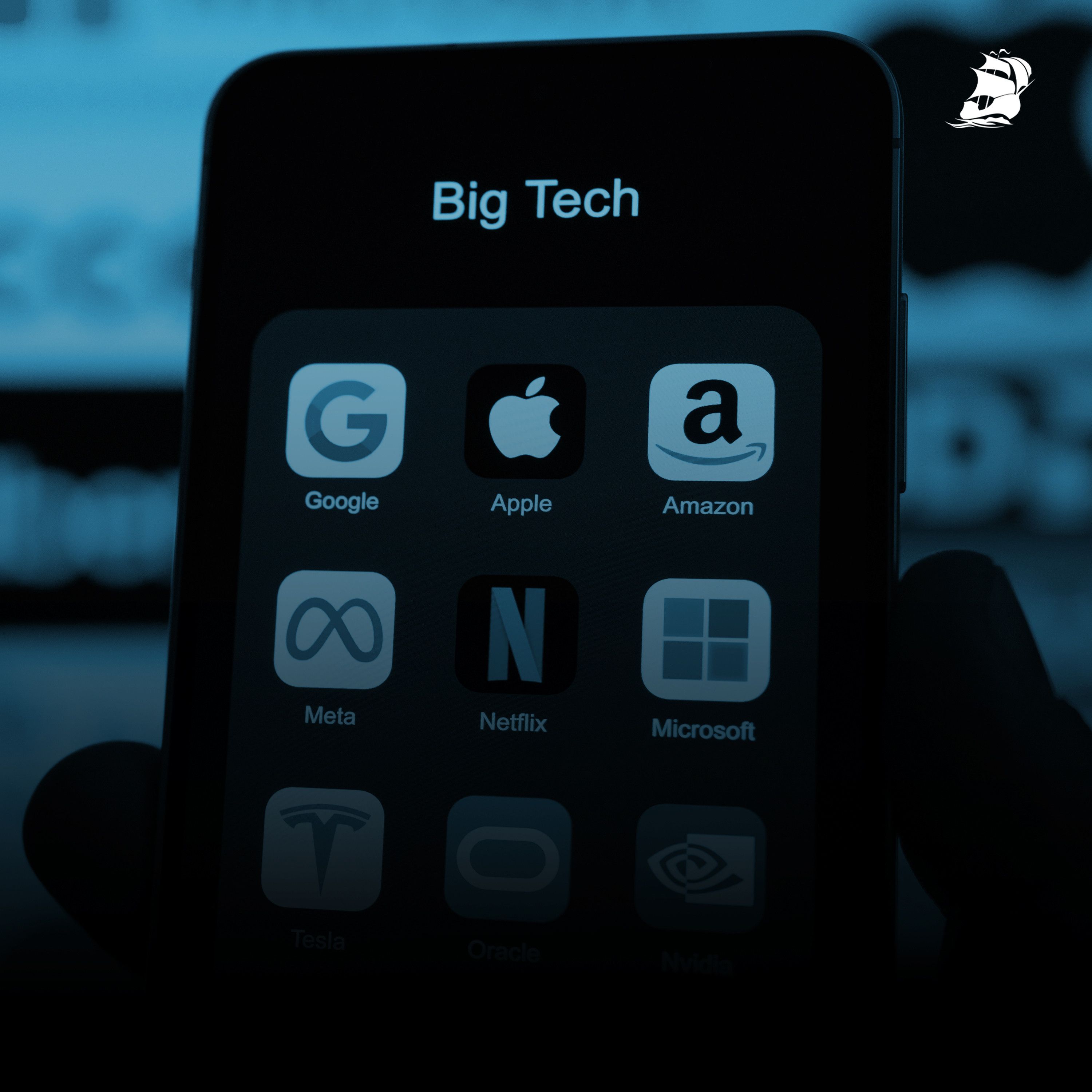
Well, here's the good part of that. Any listeners that unsubscribe to here, I just pulled it up. Amazon, Apple, Google, Microsoft, Paramount, Meta, Uber, Netflix, OpenAI, X AT, and T, Comcast. You know, that's an extra 10 bucks you could have to join Bulwark Plus. And so that's something to consider if you just want to keep supporting. You know, you don't, you don't want to crash the economy.
- [03:56]
C
That's not a terrible idea.
- [03:57]
B
Not a terrible idea. We welcome all. But here's my question. Like, yeah, it's just, I just. Is the scale of it enough? And you've got, you know, not to glaze you, but you have reach. All right, people, listen to Scott Galloway. But like, even still, like the scale to have an actual impact, I mean, sure, is there a little bit of this concern? This is like a gnat on an elephant's ass kind of, you know, right?
- [04:17]
C
And if there's enough gnats, the elephant goes down. So, like, I'm getting about 60 to 80,000 uniques a day to the site. I'm all over AI. It estimates that I get 4 to 5% conversion, meaning that for every 100 people that come to the site, 4 to 5 unsubscribe. Because these people are intentional. They're not being driven by any paid advertising. They, on average unsubscribe from two platforms. They spend about an average of $200 per platform. So that's 2,500 subscribers unsubscribing across $400. That's $100,000 a day on subscription platforms. Or, excuse me, it ends up being approximately a million dollars in unsubscribes revenue, 10 times revenues. It's 10 million bucks a day. I think I'm going to take a third of a billion dollars out of the market cap of these companies, Tim. Now, does that mean anything when they're trading at trillions of dollars? Not overnight, but if slowly but surely other people, as they're starting to do, start to build their own resistance movements over time, these individuals are going to notice. I've already heard from 20% of the CEOs, they already notice what's going on. If tangible reason to say, look, if, if Sam Altman reports 8% growth month on month in subscriptions, not 9, he's not going to be able to close his $850 billion round. Microsoft missed its earning estimates by 1 percentage point and stock was off 10%. So the most famous kind of strike was the Montgomery bus strike. And we remember the cinematic, what we think was kill shot of a very brave woman refusing to give up her seat. That's not what moved it here. It was a sustained drive, Collective effort by Dr. Martin Luther King to have thousands of carpools over the course of a year. And then finally they did the math and said, we're losing $2 million a year, the municipal bus system, and they decided to desegregate the buses. So my point is, every day a guy like Tim Miller, I can do the math for you. If you posted your unsubscribes, you would probably hit these guys between 3 and 20 million dollars in market cap. And if enough Tim Millers decide to do that, these guys are going to notice.
- [06:23]
B
So we picked these companies because the CEOs are assholes or because they might have influence over Trump. What's the motivation here? Some of them are obvious, right? Amazon, Apple, Google. But what was your thinking?
- [06:37]
C
Well, all the above. One, they're the companies that drive the markets. 40% of the S&P is just 10 companies. These are the companies most vulnerable to just a small slowdown in subscription growth or cancellations. Two, they also happen to be the CEOs who seem to be enabling this president and be willing to be trotted out and show up with signed hard drives, or show up at his premiere, or make excuses or send me text messages about how much they hate themselves. But don't say this out loud. In addition, many of these companies are actually providing infrastructure for ice. This is 1. The people enabling him. 2. The strongest way to send a kind of blue light signal and then the free gift with purchase here is if, like me, you go onto this site, you're going to find out I had four AT&T subscriptions, three of which were going to BlackBerrys and iPads that have been in landfills for 10 years. I found out when I unsubscribed to Amazon prime that it was a member of Amazon One, their healthcare service. They charge $199 that I used once in 20 to get a prescription of Paxlovid. I found, Tim, that I have three HBO Max subscriptions, that I take 370 Ubers a year. I can guarantee you that the free gift with purchase here is you're going to find you're spending money where you don't need to be and that this will save you money. Send a signal and it's the quickest way to send, in my opinion, to have the greatest amount of impact with the least amount of disruption to your life.
- [08:01]
B
How are you getting around without the 370 Ubers?
- [08:04]
C
I'm taking the tube and the subway and I'm doing UberX.
- [08:07]
B
What's UberX?
- [08:09]
C
The cheaper version.
- [08:10]
B
Oh, God. You mean you're not doing the black cars anymore? You've cut the black cars out of your life? The Lyft? Yeah, that's the easiest one. I can just move to Lyft. That's easy.
- [08:18]
C
Well, do you have paid Allison?
- [08:20]
B
I might get on some trouble on the home front on some of these. Paramount. I might have to unsubscribe from Paramount, the Allisons, but I think it might be the husband or child that's using that. So I don't know. I got to do some. Some recon. I was paying foul loans, but I quit that. Not for protest reasons, but I think that makes sense. Or you could just pay for Claude. Or should we not pay for Claude either? I guess that kind of gets to My fundamental question, it's like, is this a strike of the specific companies or is this a general strike? Or how do you focus it towards success? I was on your Reddit page, actually, just kind of looking for ideas, and one person said this, why am I canceling Spotify again? What did they do? Why Uber? Are they offering free rides to ICE agents? Should I stop shopping at Macy's, too? Are we just picking random companies for no reason? Like, how do we. How do we dial in?
- [09:03]
C
I have two. I segmented it into two categories, what I call ground zero. And these are the companies that are highly sensitive to unsubscribes, and that with a small amount of economic movement here, they're the tail of the whip. They'll send a strong signal to the markets and I believe ultimately the President. In addition, those companies, a lot of them, are the ones sitting around the table of the White House who I think are enabling the President and sending a false signal that America and the markets and our premier business leaders are on board with the President's programs. And what I call the blast zone are companies that are directly working with ice, whether it's to house them like Hilton or provide infrastructure AT&T. But also, Tim, I recognize that a guy with some economic security living in London. I don't want to be the arbiter of where you spend money or don't. I'm trying to give you the option to unsubscribe and recognize it's not that hard. Huge ROI here. If you're trying to send a message. But you might decide that you're going to go from six streaming media platforms to two, you might say, okay, I'm going to cancel the ChatGPT subscription, but I'm going to keep Claude. I may resubscribe to Amazon prime in March. And I want to be clear, I'm not giving up my iPhone. You know, I'm just not. But I am on.
- [10:12]
B
I'd like to, because I'm. Tim Cook is one that pisses me off the most.
- [10:16]
C
Yeah, actually, it's funny you say that. I think he pisses me off the most, too. I think there are few people who have benefited more from our embrace of civil rights, our embrace of competitive markets. And it seems to me he has totally turned. And then this bullshit memo to his company. I'm upset about ice, but I'm not going to actually do anything about it.
- [10:36]
B
I said something in private to Melania when I showed up to the ball at the White House the day after the night of the killing of Alex Preddy. I'm talking about somebody who's benefited so much from the American system, it's spitting in our face on a lot of levels. I'm with you. I'm looking at the Apple one now. We'll just not have to subscribe to the other stuff. I'd like to throw iPhone in the trash can, but then I'd get the green dot.
- [11:01]
C
But an easier one is unsubscribing from Apple, Apple music. Do you really watch Ted Lasso? Well, okay, Apple tv Plus, I don't want to be the arbiter of what people should do. I want to provide them with the insight and make it easy for them to unsubscribe where they feel like they have the least friction. They may even decide it's a value add. Opting out of $260 in monthly recurring payments. I was paying for the last six years at&T. That's a value add. Should you subscribe from all streaming platforms? Should you unsubscribe from ChatGPT or Anthropic? That's your call. I'm just trying to educate people about the power they have for economic spend or where not to spend and how easy it is to unsubscribe and how much money you'll save.
- [11:45]
B
You're not calling for the Benedict option. You're compelling to me because just as a former Republican and a capitalist, part of this is I just get queasy about these sorts of things. There have been a lot of eye roll boycotts in modern. I think the only thing I've ever actually boycotted was the hate chicken during the height of the gay marriage stuff. I didn't do Chick Fil A, but even then I kind of felt bad about myself for boycotting them. But you as an avowed, almost unapologetic capitalist, you're a compelling messenger, I guess.
- [12:17]
C
Well, let's be clear. Most economic protests don't work one day. Economic protests are an annoyance, but they don't do anything. And unless they're sustained and they build, I don't think the president is going to reverse policies based on resist and unsubscribe what I think could happen. And I can show the analytics. I know people in these companies are talking about it. And it's one more point of light that says to these guys, there is an economic downside to my continued support of ice and maybe at some point it is worthwhile for me economically to resist. It's gonna take more than my movement. It's gonna take more than protests. But it is all additive and it's all cumulative. We need to send a signal to these CEOs there is a downside to keeping quiet and also supporting explicitly or implicitly or symbolically. What the fuck are you doing showing up for the Melania premiere? Literally. What the fuck are you doing? What are you doing paying $45 million for a documentary that is a shitty piece of film that you know is gonna make no money. Oh, it's coin operated autocracy, kleptocracy. Well, guess what? If in the 70s, 80s and 90s we had let that shit go on, Apple wouldn't have never made it out of the crib. Amazon would have been put to sleep by Sears and J.C. penneys who controlled the government. You have some obligation to look at the American values that made you a billionaire and built these great companies. So what am I hoping to do? People don't realize they've got a weapon hiding in plain sight. And every pimple on the elephant, every gnat on the elephant's ass matters. Chelsea Handler put out an Instagram reel today. It's gotten a couple hundred thousand likes. It sent, I think about 2,500 new people to my uniques to my site today. I think she alone today is going to take one to $3 million out of the hide of the market cap of big tech. If enough people do that at some point, it will be a data point when they're evaluating should I provide infrastructure for ice?
- [14:17]
B
You got me. Goodbye, Apple tv. I'm not buying Ted Lasso. I fucked you. I'm not watching Ted Lasso. Goodbye, Apple tv. Plus, I'm still rivalry. My congenital skepticism to this remains.
- [14:29]
C
It's justified. The majority of these things don't hate.
- [14:32]
B
Tim Cook more than I hate any of this other stuff at this point, frankly. So goodbye, Apple tv. It's the least I can do. I'll tweet about it.
- [14:38]
C
I appreciate that, Tim.
- [14:41]
B
All right, guys. Well, Scott Galloway might be a little bit of an AI optimist, but after listening to that run of topics, there's a lot of stuff out there in the news that could make you feel a little uncertain, could make you feel a little rocky about the way things are going. One way to bring some certainty to your life is with our friends from SELECTquote. For over 40 years, SELECTquote has been one of the most trusted brokers in insurance, helping More than 2 million Americans secure over $700 billion in coverage. Their mission is simple, to find you the right insurance policy for your unique needs. They shop, you save. Unlike other one size fits all life insurance companies select quotes licensed agents work for you in as little as 15 minutes. They'll compare policies from top rated carriers to find you the best fit for your health and your budget. And they work for you for free. No medical exam. No problem. They partner with providers offering same day coverage up to $2 million without needing to visit your doctor if you have high blood pressure, diabetes or heart disease. Selectquote has partners with policies designed for many pre existing health conditions so you get the protection you deserve, get the right life insurance for you for less and save more than 50%@SelectQuote.com Bulwark save more than 50% on term life insurance@SelectQuote.com Bulwark today to get started. That's SelectQuote.com Bulwark let's talk about the economy more broadly because I think that's this is again just one small element of that. But there are other factors that are causing potentially economic concerns. We had this jobs report earlier in the week that they were crowing about because there was like 100,000 something new jobs, which would have been a tiny jobs report during the Biden years. The guys that looked at it closer, Kevin Malone, wrote this. If you exclude health care jobs, the US labor market's been declining for 24 months. Everything is not fine. I just wonder what your take is on how precarious the situation is on the economy because I'm a little bit of two minds about it.
- [16:34]
C
I think there's some nuance here. So to be fair, I think the economy's stronger than people who are catastrophizing about the tariffs, including myself, thought. Now, as it relates to the labor market, we added I think about 150 or 160,000 jobs, which was more than the 60,000 they were projecting. Having said that, the average monthly job add during the Biden administration was 330,000 jobs. And also buried in that data was a revision that is we didn't add any jobs in 2025. And then if you go one layer further, and granted I'm looking, I have a bias against the president, so I'm looking for the negatives here. But there is a negative component to this job addition and that is as you referenced, the majority of them come from healthcare. And that is we are aging as a society and there's some economic growth there, there's some innovation. But that isn't what sustains an economy, is the money being spent on old people who are less Productive. In sum, if you look at the. The Trump presidency from a job standpoint, it's been very weak. It's taken a substantial tick down. The underlying economy is stronger, I think, than people thought. GDP growth is strong. Unemployment is, you know, not good, not great. So I would say it kind of depends how you look at it. If you look at some other things, there's a thing called the quit rate, and that is how many people are looking for another job that is really low because people are worried. They don't see other opportunities. And in addition, income inequality continues to march on the Gini coefficient. 0 means everyone has the exact same amount. 100 means one person owns everything. The French Revolution in Marie Antoinette was when they were at 82. We hit 83 this quarter.
- [18:14]
B
Wow.
- [18:15]
C
So I don't care what it is. Things have just gone out of control. Young people don't feel. They feel like the game is rigged. They feel like if they play by the rules, they end up with a lot of student debt and a situation where they can't afford a house. So I think there's. I think the economy is really wobbly right now. And then my favorite indicator, and this is why I'll wrap up my word salad, is I track super bowl ads, and this was the AI Super Bowl. A quarter of the ads were AI. The last time tech dominated the commercials was in 2022. It was FTX and Binance in 2022. If you remember, that's when crypto crashed and all those companies went out of business. And to go back to the last time tech controlled a quarter of the ads was in 2000, when it was pets.com and Amazon. And we know what happened in 2000. In sum, I think we're on the verge of what is a pretty large correction around our AI stocks. And if the AI companies sneeze, the whole global economy is catching pneumonia. So I think we're in for a rough Road in 26.
- [19:15]
B
I want to come back to AI in a second. I want to touch on two other economic things. First, you mentioned that Gini coefficient. And we all intuitively understand that income inequality is growing and it's a problem and that we're in a populous moment. But every once in a while, somebody gives you a stat that really sticks with you. For me, I was interviewing Marty Baron last week. I knew that Jeff Bezos had earned a lot more money recently, but he pointed out that he was worth 23 billion when he bought the post in 2013 or 14, whatever that was. 10 years later, right? Now I just googled, he's worth 240 billion. That is enough to between you turning me into an economic boycotter and that stat. I'm about to go full Bernie over here. All right? And I worked for Jeb Bush. That's insane. Obviously built a great company, deserves to earn profits off of Amazon. It's a product people use. But to think that he was at 23 billion then, he's at 240 now, without really anything put back into the society or the community that people feel good about. That is a pitchfork type anecdote for me.
- [20:23]
C
Yeah, I think if you were to slow it down, I think it's good to have billionaires, but I'm not sure we need trillionaires. And if you think about on a very basic level, George Washington to George Bush, $7 trillion in deficit spending, which chooses the market. Since George Bush, another $31 trillion. And that's gone into the hands of people own assets, specifically the people who own equity and very successful companies or own real estate. So if you're a super owner, the last 20 years have been champagne and cocaine. But if you're an earner, that is, you have to, you make a good living, but you spend most of it or you just have debt or you're trying to acquire assets or save enough money to acquire assets, all you're really inheriting is $30 trillion. I mean, you're much younger than me, but the average person my age is 72% wealthier than they were 40 years ago. The average 25 year old is 24% less wealthy. So this deficit spending just juices the wealth of people who already own assets. And young people. I'm in the club partying with Rales Academy and champagne. And the closest young people get is they get to throw their credit card in where I run it one more time.
- [21:29]
B
They don't even keep an open tab anymore.
- [21:30]
C
There you go.
- [21:31]
B
Gen Z doesn't keep the tab open, they close it every time. That's, that's, that's how bad the economy is.
- [21:36]
C
But at a very basic level, the greatest transfer in wealth in history has probably been the transfer of wealth from people under the age of 40 to people over the age of 60 the last 30 years. And the D in democracy is working too well. And that is old people have figured out a way to vote themselves more money. And the way they do that is by inflating asset prices. Specifically, they sequester housing supply and college degrees and create all sorts of tax goodies for large publicly traded companies. Corporate tax rates haven't been this low since 1929. As a percentage of the GDP, corporate profits have never been higher. Meanwhile, as a percentage of GDP, labor is at like a 40 or 50 year low. So it's just sort of do the math. The tax code has gone from 400 pages to 4,000 and those 3,600 incremental pages are quite frankly there to the middle class. And I'll use myself as an example. I start in Celsius companies. The last two companies I've started and sold, the first 10 million out of the company were tax free. To me, that doesn't make any fucking sense. But someone from the Small Business Administration has figured out a way to convince everybody that these are the most talented people, productive people, and if you don't give them tax incentives, they won't take risks. Tim I have never known the tax rate when I've started a company. That is not why entrepreneurs start companies. Oh, 1202 tax exemption after five years of a company of asset value less than 50 million. No entrepreneur knows that shit. The $120 billion cost of living adjustment for Social Security flies right through the $40 billion tax credit child tax credit that would help young working families get stripped out of the stripped out of the infrastructure bill. Because I someday hope someone loves me as much as private equity loves Kyrsten Sinema and vice versa. We have a Washington that is the cross between the land of the dead and the Golden Girls who continue to vote More and more money to corporations and to old people.
- [23:22]
B
I didn't realize I was wasting $415 a month until I downloaded Rocket Money. I thought I had my finances under control until the app laid out all my spending and categorized it for me. Takeout shopping and unused subscriptions were quietly draining my account, and as a result, my savings took a backseat. But Rocket Money doesn't just tell you what you're wasting money on, it takes action to save you money. First, the app looks at your income and monthly expenses and calculates how much you can safely spend each day to stay under budget. Rocket Money also fines and cancels unwanted subscriptions for you, and even negotiates better rates on your bills so you have more money in your pocket. On average, Rocket Money members can save up to $740 a year when using all the app's premium features. Users love the app with over 186,000 five star ratings. It's time to simplify your finances and take control of your Money. Go to RocketMoney.com Cancel to get started. That's RocketMoney.com Cancel. RocketMoney.com Cancel. All right, so here's my last topic in the category of pitchfork capitalism. We're the pitchfork capitalists on this podcast. We're doing it. We're going red. Here's another anecdote I read today. James Van Der Beek. You ever watch Varsity Blues?
- [24:36]
C
Dawson's Creek, Rules of Attraction?
- [24:38]
B
Yeah. Rules of Traction. Amazing movie. I love Rules, attraction. Sadly, he died yesterday at a battle with cancer. It was a two year battle with cancer. This thing just stopped me short. Somebody retweeted it and it was his wife. They had a bunch of kids. His wife posted a GoFundMe.
- [24:55]
C
Yeah.
- [24:56]
B
She was like, we're not gonna have enough money because the two years of cancer treatment has bankrupted us. Now, I don't know exactly how James Van Der Beek spent his Dawson's Creek money, but even if you did spend that money on ivermectin and ketamine, the medical debt issue is very, very real.
- [25:14]
C
This has such profound implications, macro and micro. On the macro level, I'm very into economic policy and am writing a book about it. And if you want to take our $7 trillion in spending versus our $5 trillion in receipts, all roads lead to the same place and that is healthcare. We spend $13,000 per capita. The rest of the G7 spend $6,500 in exchange for spending twice as much as everybody else. We're more obese, more anxious and die sooner and have higher infant mortality because we have monetized the healthcare of America. We've decided it's not a public good, that it's an opportunity for innovation and to build shareholder value. 45 cents on the dollar for insurance companies goes to profits and administration. We need national, single payer, socialized medicine, full stop. It is time. 40% of Americans, 40% of American households have medical or dental debt. You're a dad working your ass off. Your 16 year old daughter's in screaming tooth pain. You got to get her a root canal. And then you have debt. Can you imagine how shameful that makes you feel? And on a personal level, the kind of the moment in my life where, and in some ways, it motivated me. I was in graduate school, I was at Berkeley. I had no money. My mom had no money. My mom got very sick. Second diagnosis of breast cancer. She went into the hospital. We were hugely underinsured. She got discharged early because hospital systems want to kick people out as quickly as possible. And she called me and said, you need to Come home right now. So I jammed Oakland Airport, flew home, and I walked into a situation Tim I just did not know how to deal with. It was such an ugly situation. And there's just certain things the son can't do for his mother. And I thought, okay, I'll call the hospital. And I said, we can't take her. You need to call an ambulance. But if you call an ambulance, they're taking her to County. And I called a friend and said, you do not want your mom at County Hospital. So I said, I'll call a nurse. Called a nursing agency. $35 an hour. I had $700 in my name. So I literally had 20 hours in nursing care to take care of the woman who raised me and cared for me. I felt it was so much, just so much shame. And when I think about like the wealthiest country in the world that has added literally the GDP of Germany and Spain in the last seven years, and we are inflicting that kind of shame on people there, there's literally no excuse for it. So for me. And again, this goes back to Democrats who just want to throw money at people and redistribute virtue. We need to move from being the party of indignance to the party of ideas. And our first idea needs to be nationalized, socialized single payer healthcare that brings down the cost of it, such that 40% of American households don't feel that shame because they can't afford to take care of their family. But healthcare and the amount of anxiety it is levying on America under the auspices of capitalism and these great companies that keep growing their shareholder, I mean, it's just enough already. It's capitalism gone crazy. The top 1% get the best healthcare in the world, but the bottom 99% are there as nutrition for the top 1%. So this, I think, is the issue. Not only affordability, but for democrats going into 2026, compelling.
- [28:28]
B
I don't know. I don't know what happened to me. Boycotts single payer healthcare investment taxes. I hope Jeb's not listening to this episode because we turn it down to skip unattachable.
- [28:39]
C
We need him. We need Chap to speak out.
- [28:41]
B
I'm just joking. I just mean my past. Tim doesn't know what's happening, but it's hard to argue.
- [28:46]
A
I didn't even realize I was wasting $415 a month until I downloaded Rocket Money. I thought I had my finances under control until the app laid out all my spending and categorized it for me. Takeout shopping and unused subscriptions were quietly draining my account and as a result, my savings took a back seat. But Rocket Money doesn't just tell you what you're wasting money on, it takes action to save you money. First, the app looks at your income and monthly expenses and calculates how much you can safely spend each day to stay on your budget. Rocket Money also finds and cancels unwanted subscriptions for you, and even negotiates better rates on your bills so you have more money in your pocket. On average, Rocket Money members can save up to $740 a year when using all the app's premium features. Users love the app with over 186,000 five star ratings. It's time to simplify your financ and take control of your Money. Go to RocketMoney.com Cancel to get started. That's RocketMoney.com Cancel RocketMoney.com Cancel I want.
- [29:47]
B
To get your insight on AI stuff. You mentioned that you think the all the super bowl ads are a bad signal about where things are going. Here are a couple other bad signals. Somebody posted this on X and so I'm just going to crib it from them. Here are the bunch of things that have happened this month. February, head of Anthropic Safety Research quit said the world is in peril, Moved to UK to become invisible and write poetry. A little bit different than your move to the uk, but same country. Half of Xi's co founders have now left said recursive self improvement loops go live the next 12 months. Anthropic's own safety report confirms Claude can tell when it's being tested and adjusts its behavior accordingly. ByteDance dropped Sea Dance 2.0. A filmmaker, said that 90% of his skills can already be replaced by it. Yoshua Bengio, the literal godfather of AI or the international AI safety report, said, we're seeing AIs whose behavior when they are tested is different from when they're being used and confirmed that it's not a coincidence. That's alarming. I don't know how to interpret all of the AI news. On the one hand it's like we might be in a bubble. On the other hand, the machines might be learning and destroying all of us. Where do you fit on that trajectory?
- [31:02]
C
Well, let's bifurcate it into the economic impact and the social impact on the economic impact. I think if you look at every big tech firm, there hasn't been a year just in the last 10 years where they haven't been down at least 50%. People forget in 2022, I think Meta lost 70% of its value. In 2000, Amazon lost 92% of its value. So it is time. These guys have gotten way out over their skis in terms of their valuations. So I think there's going to be a pretty severe or significant correction in the value of these companies on the social side, and I might be wrong. There's a lot, a lot of people much smarter than me who are really worried about this technology. But when we split the atom, there were nuclear scientists that committed suicide because they thought, this is it, it's the end of the world. We're never going to be able to maintain control over nuclear detonations. I'm actually an AI optimist. I think over the medium and long term, it's going to do what every technology has done and it's going to create more jobs than it destroys. Unfortunately, probably the V of destruction in labor in the short term will be pretty severe. And we are really bad at America looking after those people. But, you know, 40% of us used to be in agriculture. Now it's less than 4%. I think it's going to create a ton of new industries, a ton of new opportunities. I think the catastrophizing around it becoming sentient and wanting to kill us, I don't see why AI can't be used for defensive measures as much as for offensive measures. I think the fact that America is the leader here is probably a good thing. So I'm a bit of an AI optimist. The risk of AI that I don't think people see is the following, and that is there are millions of people with billions of dollars and trillions of data points who are going to leverage AI to slowly but surely try and convince people to spend 1 second less every day with their relationships and more on their screens. And slowly but surely, I think we're going crazy. Men 20 age 20 to 30 are spending less time outdoors than prison inmates. Only 42% of men age 18 to 24 have ever asked a woman out in person. 62% of men under the age of 30 aren't even trying to date. I think slowly but surely, we're evolving a new species of asocial, asexual males who end up at 30, depressed, living at home, obese and anxious. And those people tend to be much more prone to nationalistic, misogynistic content. They start blaming immigrants for their economic problems. They start blaming women for their romantic problems. And they become very seduced by a strong man who offers certainty over Competence. So I see the primary risk and danger of AI. It'll convince people they can have a reasonable facsimile of life online with a screen and an algorithm. So I see the risks, I just see them in different places.
- [33:40]
B
Yeah. I want to talk about two of the risks. With the one that you mentioned. First with the young men. Since that's been part of your beat, have you engaged much with the looks maxing trend, with the bone smashing clavicular? Has it updated your priors at all, that the newest trend online among young men is to basically change the way they look, to try to look as handsome and muscled as possible. And going along with that is a little bit more of a nihilism about the world. Is that an upgrade from the right wing radicalization of the last wave or is that concerning you more? How do you see it?
- [34:22]
C
I don't think I can lecture people on it because I've had stuff done.
- [34:26]
B
You've had some work done. Let's talk about it. New teeth facelift.
- [34:31]
C
I've had teeth bone smashing.
- [34:33]
B
Bone smashing in your cheeks?
- [34:35]
C
Yeah. No, not bone smashing on my cheeks, but I've had my eyes done. I mean, the reality is, Tim, it's not easy to be a four. I think it's even harder to be mediocre looking, especially get older. Just wait, you're a good looking guy. Just wait.
- [34:46]
B
Just wait.
- [34:47]
C
About 20.
- [34:47]
B
It's a six and a half over here. I'm gonna find myself round up to a seven.
- [34:53]
C
But anyways, the. I'm saying the bar is higher for gay dudes. A seven is like a four in the straight world. In your world, anyways. But happiness. One of my new kind of Yodas is Jimmy Carr. And he said happiness is your prosperity, minus your envy. And when people are spending hours a day on Instagram seeing how beautiful everybody is and seeing an unreal hallucinatory version of everyone's life, you're under the impression, especially women, I'm not hot enough. And if you're a dude, it's like, well, I haven't made a million dollars selling crypto. Something's wrong with me. So there's kind of this treadmill of unreasonable expectations.
- [35:30]
B
And I've seen some women commenting on these trends about the look smacks thing and what the guys are doing online. And now they're like, oh, well, finally guys get to know what it's like. Unreasonable beauty standards, feeling like they need to be anxious about their presentation. I don't. At some level that's maybe leveling the playing field. But I don't know if that's how it's supposed to be.
- [35:52]
C
And here's the thing, they're not looking at the data. I can understand women doing it because the reality is we disproportionately evaluate women on their aesthetics. We disproportionately evaluate men on their economic viability. But the three, there's a lot of research here for dudes. The three things in terms of the heterosexual market, that women is sexual currency for women. What women find attractive to men is one, their ability to signal resources. You show up with a Range Rover or Panerai, you're probably going to find someone to have sex with you. Now, the key word there is signal. Because as long you don't have to have the resources, as long as you signal resources, what does that mean? You have your shit together. The reason women, like guys are in shape is not because of the aesthetics of their muscles, but it says they can commit to something. They're disciplined. You're going to night school to learn how to install H vac energy heaters. You're not the douchebag that orders a bottle of vodka at 1am you go home because you have shit going on the next day. You're a good person. You groom, you take some pride in your dress. That is signaling future resources. Number two is intellect. The fastest way to communicate intellect is actually humor. It's not easy to be funny. You can't force yourself to be funny. But you can force yourself to have a good sense of humor by laughing at yourself and laughing at other people. And then the third thing, and this is a man's secret weapon in the heterosexual mating market, that is the most undiscovered weapon. It's kindness. Women feel instinctively. At some point they will be vulnerable due to gestation. And they want a dude who is kind, who practices random acts of kindness, who does nice things for people without any reciprocal expectation. And I was not that person when I was younger, so I developed a kindness practice. But what I think young men don't realize is that is working out, having a plan, trying to be kind, being well ready. That's going to do a lot more for a man than high cheek pones. Unfortunately for women, hi cheekbones matter more than if they're kind. But for dudes, we're lucky. Be smart, have your shit together and be kind.
- [37:47]
B
Well, it underscores all that, which goes back to the AI. Concern is you can't do any of the three things you just laid out. If you're too crippled with anxiety to communicate.
- [37:55]
C
Well, here's the thing.
- [37:56]
B
You can't signal, you can't have a sense of humor, and you can't be kind if you're, you know, living inside your phone.
- [38:02]
C
Well, the two things that I really think have really hurt young people is one, remote work. I think people need to be in a place where they're forced to have standards and bump off of one another. And also, one in three relationships begin at work. Show me an HR manager putting in strict no dating policies. I'm going to show you someone who found their wife at work or their husband at work. And two, I hate the anti alcohol movement. I've had Attie and Huberman on my podcast, but 6% of teens are clinically addicted to drugs and alcohol, 24% to social media. Women fall slowly in love with men, but they need to demonstrate excellence. And one of the lubricants of interaction and approaching strangers and taking risks is alcohol. And my advice, and I've gotten pushed back, is that people need to get out of the home more, drink more, and make a series of bad decisions that might pay off. And if you have a history of addiction in your family, fine. If you need to do an assessment of your abuse of alcohol or any other addictions, fine. But I actually think this anti alcohol movement is not good for young people.
- [39:03]
B
No pushback here on that one. I'm going to give you some pushback on going back to the AI optimism take. Here's the crux of my AI pessimism. And we've talked about this before, but the more I learn, I want to be convinced that this pessimistic take is wrong. I want to be optimistic. And nobody's been able to convince me. So we'll see. I was at this conference this week and an elderly woman, nice woman, educated, smart, wealthy, said that she was watching TV, she must have been streaming on YouTube or something and came across a video. And it was George Will. And he was talking about something. And it took her a while to figure out that this was not actually George Will. This was some kind of AI fake pretending to be George Will. And I have not heard a single AI optimist or executive give me a compelling case that people are going to be able to know the difference between what is real and what is fake. And I just think that the smart people will, in society, people that are very adept at the technology, people that try to learn, but I think the average person is going to be drowning in a sea of bullshit and will eventually stop caring.
- [40:17]
C
I think that's a possibility. But I think what's already happening with troll farms when you put this out on YouTube or wherever you distribute it, the really vile comments about either you or me or both, you click on it and it's dog woman from Madison, Wisconsin with 11 followers. That's either a bot or an Albanian troll farm that's decided that they either want to create division in our society or they don't like you or they don't like me for whatever reason. So it's already happening. What we need is regulation. There should be no synthetic relationships under the age of 18. No, every social media company should be forced to watermark anything that's AI produced. They have the technology. So we have regulations that can fix most of those who score those.
- [40:58]
B
Anybody the head of Anthropic? Maybe? Any of the big tech executives for those.
- [41:03]
C
That's a fair question. But we had huge pushback from the tobacco industry. And I want to be clear. You're right. So far there's been zero regulation on big tech. But I think people are opening up mostly foreign nations who are banning entire social. You know what you're going to see in the next 12 months, Tim? You're going to see a European nation, a big nation, ban a big tech company. Their reciprocal tariffs are going to say, you know what? You come in here, you depress our kids, you kill our media companies, you extract billions in gdp. We're done, you're out. And not only that, you keep making arguments for why the free speech rights of a 14 year old. More important, despite the fact that teen suicide has skyrocketed, I don't see any reason why we can't do what we did with opiates by what we did with tobacco. We need to regulate big tech. But all the problems you're talking about are fixable. And the illusion of complexity is what Big tech wants you to be overrun with such that you're bereft and say there's nothing we can do about this. Sure. Label AI. Make companies responsible for any damage that comes from AI. Algorithmically elevated content. Remove section 230, 30 protections, age gate social media. No synthetic relationships for anyone under the age of 18.
- [42:12]
B
25.
- [42:13]
C
We this up. 25. There you go. We this up, we can unfuck it.
- [42:19]
A
Let's do the 60 Second Savings Challenge. Step one, download Rocket Money. Step two, link your accounts and see every subscription you're paying for. Tap one you don't use and cancel it. That's money back every month. Step three, create a financial goal. $50 every paycheck or let the app automatically move small amounts of cash. When you can afford it in a week, you'll forget you set it up. In a month, you'll see real dollars piling up. In a year, you'll be shocked at how much money you've saved. Bonus Challenge Upload an Internet or phone bill and let Rocket Money try to lower it. You only pay if they find you savings. On average, Rocket Money members can save up to $740 a year when using all of the app's premium features. Users love the app with over 186,000 five star ratings. Make saving money the resolution you actually keep. Start the 60 second savings challenge at RocketMoney.com cancel that's RocketMoney.com cancel RocketMoney.com cancel.
- [43:20]
B
There'S sort of two sides of the concerns about AI. You know, there's the society is going to be ruined by it, the safety people are warning us. And then there is the other side, which is this is all hype. Things are going to crash. And I kind of feel like in the journalist community, in the commentator community, there's an over indexing on a feeling that this is all hype and that when they use chatgpt they see these hallucinations and it's not as good as everybody says. And Derek Thompson wrote this today. There are a lot of journalists and commentators that think this is still not much of significance. A mildly fancy autocomplete machine that hallucinates half the time. I think these tools are spooky and unnerving and powerful. And I want to persuade my industry that AI capabilities have raced ahead of journalist skepticism. How do you adjudicate that?
- [44:09]
C
I think there's some truth to that. But as someone who writes a lot, I find the worst insult I can give my team is I say this reads like AI wrote it. I find that AI is kind of all chip, no salsa. It's pretty anodyne.
- [44:21]
B
I agree with that.
- [44:22]
C
So I think of it as a great assistant, a great proofreader. I use it for statistics and data a lot. But I thought I was going to write my next book using AI and just collect a check. No, you can't do that. So far I don't see that the.
- [44:36]
B
Industry people you talk to in the investment community isn't the sense that it's getting a lot better very fast.
- [44:41]
C
Yeah. Keep in mind there is an economic incentive to catastrophizing around this.
- [44:47]
B
Well, there's economic incentive both ways to catastrophize or to hype. That's why it's kind of hard to.
- [44:51]
C
Well if you want to protect your industry. But I'll give you an example. Every year I pick a technology of the year. I picked AI in 22 and 23 in 24. I think a bigger, more transformative technology and a lot of people laughed at this is not AI I think it's semi glutides. Talk to someone who's on a GLP1 drug who's all over AI and ask them what's had a bigger impact on their lives. So I think AI like the PC like the semiconductor, like gps, like nuclear fusion. I think it's going to be enormous. But when Sam Altman talks in hush phones about we need to be thoughtful about it going sentient I think what he's saying is give me your fucking money. I am changing the world. This is world groundbreaking scary technology. Want to make money so you can build your own bunker from the oncoming rise of the robots. I think a lot of this is people self important narcissism that this is going to. Absolutely. Because if you look at for example it's. It's kind of hard to look at how it's impacted employment. There's. They think there's a negative impact on entry level jobs right now. But youth unemployment is at 10% where it usually is. Unemployment's at four and a half percent. I mean you see, you're seeing some layoffs of information intensive workers but it's kind of taking these companies back to where they were two or three years ago post Covid so.
- [46:08]
B
And also it's like a lot of software kind of jobs coding. Right. But like that would be naturally the job.
- [46:15]
C
But isn't that a good thing? I've never met a more entitled group of assholes and that systems engineers in my company is demanding 30% raises every month. Couldn't happen to a nicer group of guys. Jesus. Showing up in bare feet and saying they're going to work for Google unless I give them $300,000 because they got a fucking systems engineering degree from Indiana State. Have at it.
- [46:36]
B
I haven't met a lot of charming coders. Yeah I do. This is close to my take of San Francisco is on the rebound as we saw during the Super Bowl. They've got a great mayor. But like five years ago when people were complaining about San Francisco I was always like if your complaint about San Francisco is the homeless people in the poop, I don't have respect for you because it's not great. They should clean that up. That is something that needs to be fixed. But the biggest complaint about San Francisco is that you can't. There's nothing cool anymore. All these. The fucking coders and the VC guys have ruined every bar and restaurant. You can't meet an interesting person. You can't have a conversation about something besides RSU's.
- [47:09]
C
It's got the sex appeal of a Marriott lobby. Most of the bars, yeah, it's not. Now you're in New York, in Nashville, it's got a little bit more edge to it, but people are still going to want to hear the snark and the intellect and the inside of Tim Miller.
- [47:22]
B
Yeah, I'm not worried about my job, but I think economically, just. I think across the economy, I do think that I just want to check my own priors. I think there's something about being in the creative class or whatever. If you're a writer or if you're a commentator, those are going to be kind of hard jobs for AI to replace. And I worry that a lot of the people who are in my line of work kind of understate the impact it's having in other lines of work because we're snobs about the pros.
- [47:54]
C
The biggest destruction in human capital, and it may not work, but the best experiment in the destruction of human capital will happen if the Ellisons get Time Warner because they are not fond of or appreciate the creative class. The Igers and the Zaslavs of the world still like the Paul West Thomas. They still like the creative stuff. They're still willing to spend $300 million for Leo DiCaprio to collect another Academy Award. If the Ellisons have to overpay and end up getting Time Warner, they're going to come in with. With AI LLMs. You have one kid, right? How old?
- [48:30]
B
I have a kid, yeah. I have one kid, yeah. She's eight.
- [48:31]
C
Okay, so you're about to enter the seventh circle of hell, where you have to go to superhero films. And I went to go see the Fantastic four with my 15 year old. And he makes me stay to the very end because they. These evil people create a. Have an Easter egg at the very end. The credits took seven minutes. 3,300 people worked on the Fantastic Four, including, I think, like a dozen costume designers in Sweden for their shoot. In Sweden, if the Ellisons get a hold of a large studio, Dad's going to say, all right, you got to cut 30% of the costs here. And the way you cut them is with AI. We need two costume designers speaking with An AI agent to a fabricator in China. You want to hear a yell, a scream from the creative community. If the Ellisons get a hold of Time Warner, like Ted Sarandos is a disciplined operator. He still kind of likes the creative community and making stuff the old way. If the Ellisons come in with their, you know, Oracle, their ties into OpenAI, and they have to justify the price they're going to have to pay to get Time Warner, you're going to see five Batmans made for 3% of the cost using AI. They're going to totally reconfigure the risk profile and the way human capital applies to creative. That's where you'll really see, in my opinion, some labor destruction.
- [49:50]
B
Last topic, I just want to hear you cook on these prediction markets. Did you see the Kalshi CEO's interview on CNBC?
- [49:57]
C
I didn't, but do you realize they increased the amount of betting on the super bowl was up 2,700% on Kalshi this year.
- [50:05]
B
I don't have the number in front of me, but it was astounding the amount of money spent in Vegas on the Super bowl versus on Kalshi. Kelshi dwarfed all of Vegas. It was like 8x, maybe more. It's alarming. Then they're asking him about the insider trading. People were making money on what the halftime show was because they were in the halftime show or they had friends in the halftime show. It's totally unregulated and it seems pretty concerning both culturally and economically.
- [50:35]
C
There's the economic side and again, there's a sociological side on the economic side. We've seen one of the biggest transfers of economic value in the last 10 years happened in the last three months. And it's the transfer from the gaming or betting sites like Flutter, you know, MGM bet to the prediction sites and you've seen Flutter shit. The bet on its earnings. Vegas continues to go down. People are fascinated with these prediction markets and also they're going to be weaponized by bad actors. Because if you want mom dummy as what ends up two thirds of the money being bet on the prediction markets in the mayoral race was from betters in Russia and in the Gulf. And I would argue they might have alternative objectives. Because if you can get Calsh here, polymarket to say this person is leading the race, strength begets strength. The insider trading you're talking about if you're a AAA player who's been elevated for a few games to the major leagues and they're betting on whether this next Pitch is going to be over 90 miles an hour and you have your brother in law just like wink at you. Okay. Pitch it at 85 and you're gonna make more money than you've ever made.
- [51:42]
B
Chris Hayes said he didn't know how this happened. Chris Hayes said to me, he's like, I've never felt older.
- [51:46]
C
Talk show.
- [51:46]
B
Yeah, he went on a talk show and then there was a prediction market. Somehow it got put on the first page. I was like, did he say the word Trump? And he said, I knew that I hadn't said Trump, which was very unlikely. So he's like, I could have made $100,000 or something to this effect.
- [51:58]
C
That'll get arbitraged out.
- [52:00]
B
Will it?
- [52:01]
C
You never want to bet against someone who might have more information than you. And people who realize they're betting on something where they don't have insider information, but someone el will realize that's a bad bet and they'll stop making those bets. I think that'll go away. The problem in general is that when young people don't have a relationship or the goal of saving for a house, they take more risk. In my opinion, it comes down to good and bad risks. Young people need to take less risk on speculation markets and on gaming apps and on crypto and take more risks with potential romantic partners, potential jobs they're not qualified for, and expressing friendship. They need to take more risks outside of the house and take less risks on a screen.
- [52:40]
B
I don't know. I think that when it's all said and done at the end of this Trump administration, we're going to find out. Barron and a bunch of other bozos were making bank on these things.
- [52:50]
C
Well, we know they are. I mean, what are they up to now? $1.5 billion. The spy sheik invests, what is it, 150 billion?
- [52:57]
B
Well, no, that's direct money that they're getting, bribes wise. But I just mean, think about all the other schmoes all through this administration who are betting on what Carolyn Levitt says at the press conference. And, you know, whether we're going to bomb Iran and whether Craig Bevino is going to be fired. I mean, like, they have inside information on everything and there's no oversight. That's insane.
- [53:18]
C
Well, I think it's already happened. There was, there was an inordinate amount of options activity in the S and P about an hour before Trump announced he was stepping back from the tariffs, which sent the market skyrocketing. So clearly someone connected the dots at. Oh, and by the way there's hundreds of people that see that press release are involved in it. Someone said, oh, that means the markets are going to go up. He's about to announce that he's walking back from the tariffs. I'm going to go buy calls in the S and P. And unfortunately, that creates a lack of trust. And what has typically been one of our biggest advantages in the west, and that is we have tremendous capital markets, very deep pools of capital.
- [53:51]
B
Scott, we'll have to keep it going. I hope you can come back here soon.
- [53:53]
C
It's resist, resist and unsubscribe, Tim.
- [53:56]
B
Resist and unsubscribe. It's just, you know, I've got to be drug along sometimes. All right.
- [54:03]
C
That's right. We need you to organize a carpool. We need your help here. You alone. If you unsubscribe from something and you put a screenshot out and you put resist and unsubscribe, I will be able to show you that you took one to $3 million out of the height of big tech.
- [54:21]
B
I'm coming after Tim Cook. I'll send you my screenshot for Apple tv. All right, thanks so much, Scott. Everybody go check out his shows. We'll be talking to you soon. All right, man.
- [54:29]
C
Thanks, brother. Congrats on your success.
- [54:31]
B
Hey, thanks so much. Appreciate it. Everybody else will be back here Monday with Bill Kristol. See y' all then. Peace.
- [54:49]
C
Clothes don't fit me right.
- [54:53]
B
The Borg podcast is produced by Katie Cooper with audio engineering and editing by Jason Brown.