Loading summary
Transcript86 lines
- [00:00]
Rocket Money Advertiser
I didn't realize I was wasting $415 a month until I downloaded Rocket Money. I thought I had my finances under control until the app laid out all my spending and categorized it for me. Takeout shopping and unused subscriptions were quietly draining my account, and as a result, my savings took a backseat. But Rocket Money doesn't just tell you what you're wasting money on. It takes action to save you money. First, the app looks at your income and monthly expenses and and calculates how much you can safely spend each day to stay under budget. Rocket Money also fines and cancels unwanted subscriptions for you and even negotiates better rates on your bills so you have more money in your pocket. On average, Rocket Money members can save up to $740 a year when using all the app's premium features. Users love the app with over 186,000 five star ratings. It's time to simplify your finances and take control of your Money. Go to RocketMoney.com Cancel to get started. That's RocketMoney.com Cancel RocketMoney.com Cancel.
- [01:12]
Tim Miller
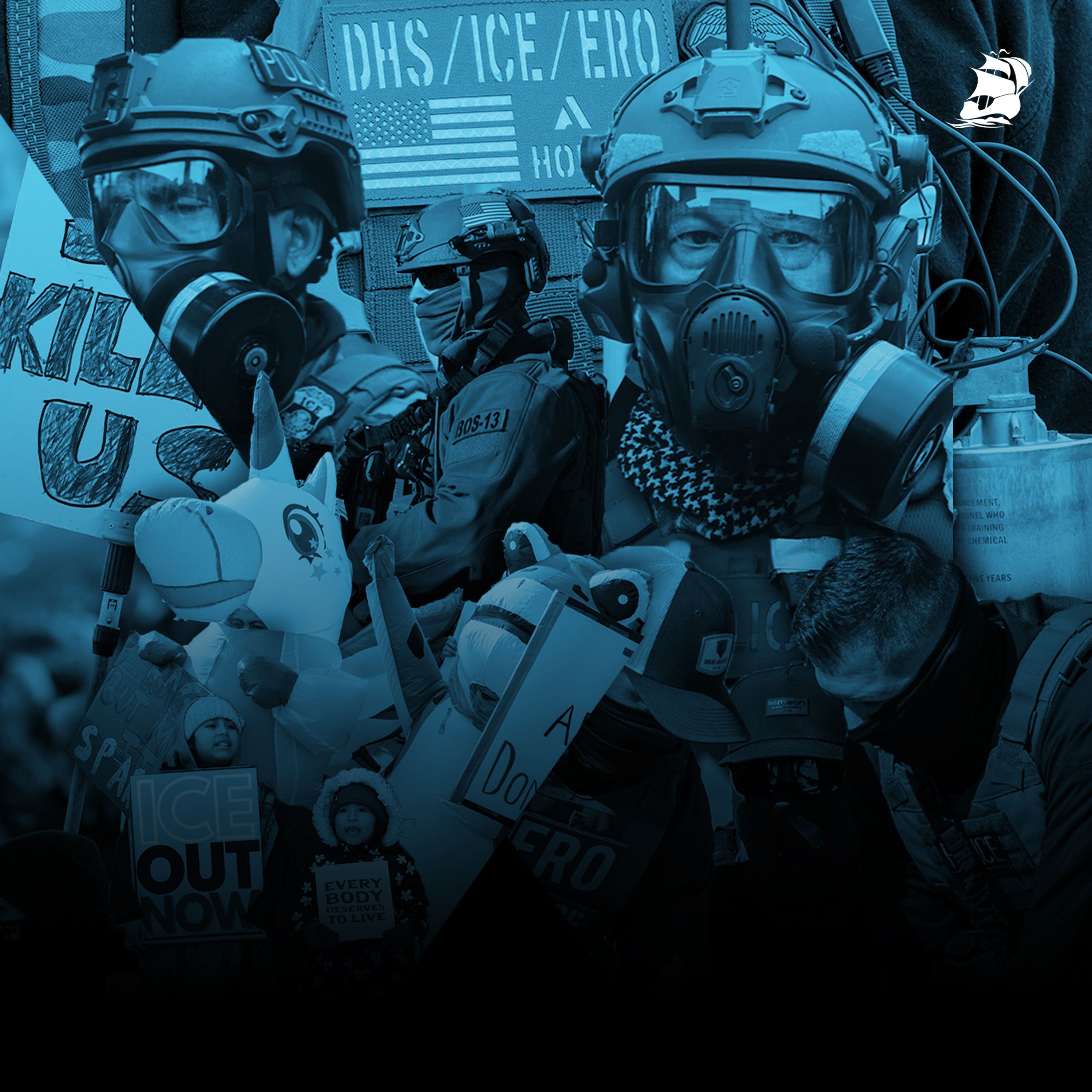
Hello and welcome to the Buller Podcast. I'm your host Tim Miller. We've got some good news about the Minneapolis live shows coming tomorrow. So if you were hoping to get a ticket but it sold out too quick, keep a close eye on your email tonight and tomorrow morning go to thebork.com events. We are, you know, trying to give people more opportunities. It's an awesome response. We really appreciate y'. All. So we'll have some more news on that tomorrow. But you see tickets went fast so keep an eye out on thebork.com events. Also, stick around at the end of this show for a little monologue about a bunch of stuff. But I'm particularly the Texas Senate race which might end up being my 13threes and why if something doesn't change down there. So I've got some thoughts on that. But first, he's a Minneapolis based attorney, an anti ice activist, a former state legislature candidate, a researcher on housing policy, a social media fire brand. It's Will Stancil. How you doing, man? Welcome to the show.
- [02:07]
Will Stancil
All right, glad to be here.
- [02:09]
Tim Miller
You got a little shiner. What's that? What's happening there?
- [02:12]
Will Stancil
I do I face planted on the ice and so I've got half my face is a little swollen up but that's a normal Minneapolis winter hazard. And of course we have a different kind of ice that's a bigger hazard here lately.
- [02:23]
Tim Miller
We obviously spent most of the show talking about that for people who are not social media sickos like me who maybe aren't familiar with your work product, with your really the artistic canvas with which you take short form text based social media. Tell us a little bit about you first date stuff. Where did you emerge from? I don't even know. You just kind of emerged into my vantage point sometime on social media. What's your story?
- [02:49]
Will Stancil
I mean, I'm a pretty ordinary guy. I live in Minneapolis. I'm an attorney. I work mostly on civil rights and housing, law school policy. And then I've been involved in local politics up here to a reasonable extent. I ran for office, didn't win. I, you know, involved a lot my neighborhood, in my community. And I'm pretty vocal on social media about national politics. I'm a no fan of the current administration, the current president. You know, I, I think that I've got some criticisms of both sides, but ultimately I would describe myself as primarily someone who's pretty fanatically fixated on the threat posed by Trump and all of his minions. And unfortunately they have come to us.
- [03:27]
Tim Miller
You're in a good place. I think people have said the bulwarks fanatically fixated on Trump and his minions. Why did people start following you on social media? What happened? Did you have a moment? Did you have a breakout tweet that went viral? Or did it all just happen gradually over time?
- [03:41]
Will Stancil
I think, I think there's been a few different things. But the main thing, I think in 2016-2020, I was pretty singularly fixated on the idea that Democrats were not doing enough to obstruct Trump, to investigate him, to impeach him, and to hold him accountable after he left office to ensure that he couldn't come back. I have been fairly convinced from day one that Trump is by all practical considerations a fascist and a authoritarian. And that all of the people who want to downplay him is, you know, just joking around or, or, you know, Trump being Trump, that is, that's reckless and dangerous and he would do any of this stuff if he was given half an opportunity. And I think that, you know, as time passed, that view has unfortunately been somewhat vindicated.
- [04:26]
Tim Miller
I have some more thoughts about some of your big social media moments of yore maybe at the end, but obviously we have some more pressing matters. So, you know, I reached out is like, people kept seeing you, you know, you're like in the background of these videos of things that are happening on the ground of Minneapolis. And all of us have been kind of watching with Such great interest. You've been part of the reason for that, I guess. You've been tracking ICE in your 2011 Honda Fit.
- [04:53]
Will Stancil
It's the best part ever made.
- [04:54]
Tim Miller
Yeah, talk about that. So how did that start? What are you seeing on the ground? Just like paint a little picture for us.
- [05:00]
Will Stancil
Yeah. So essentially what we have here in Minneapolis is we've developed this extremely dense network of community observers and rapid responders, ice. And the reason this has happened is because, especially in the. The early days and after Renee Goode was shot, around, around when that happened, the way ICE and Border Patrol have conducted themselves here in Minneapolis have been. It's hard to even describe to people who weren't here. You would go around the neighborhood and you would see armed masked men abducting people, tear gassing, you know, major businesses, major commercial intersections. People getting beat up in the street by these folks. They were rolling around, you know, in these armed convoys. It felt like a military occupation. There was a push to figure out what we do about this. I think that the approach that we have landed on, which is partly adopted from tactics that were activists put together in Chicago when ICE was in Chicago, but has been expanded on, is this sort of observer system. All the neighborhoods have signal chats that are rapid response signal chats. I saw neighborhood, specifically suspected ICE vehicles are reported into there. We have people that are looking at directories of known ICE plates to confirm whether or not they're ice. We don't know all the places. Sometimes it's ICE and we don't know it. You know, and then you also just try and look in the car. I mean, if it's two guys in uniform with masks on, it's best confirmed if we identify an ICE car or ICE agents. You know, a report goes out and we have people doing what we described. The term we've adopted now, and I think this comes from Minneapolis, I've learned, is commuters. And so what I've been primarily doing is what we call commuting. Commuters are essentially car controllers. I drive around the neighborhood, my car, I try to look out for ICE vehicles. I call them for plate checks over my phone. And if someone calls in a report or an observation, I try to get in front of them, get to them really fast, and then we just follow them. The ICE people hate it. They do not like being watched when they work, if they get out of the cars, we film them, we put in the rapid response. People come running. 50 people show up with cameras within a few minutes. Sometimes, not always. Sometimes there's an attempt to make some noise to alert people or to problem observers. So there have been a few instances. For instance, we had a large convoy, and I've gotten behind them and just lay on the horn, and then dozens more people come in. You get 10 more cars, and they just get swarmed and basically followed out town. It is proven relatively effective, I think, at restraining them, although it has certainly not stopped them. I've seen them abduct a number of neighbors, and I've seen them do a lot of terrible stuff, but it's clearly.
- [07:27]
Tim Miller
Been, yeah, what's the goal? It's effective in doing what they. They just. They don't hassle people as much if they think they're being watched or, like, what. What's the objective?
- [07:37]
Will Stancil
So I think there's a few different things. I mean, first, the goal is when I have seen them abduct people, for instance, it's hard to even describe the violence of it and the suddenness of it and. And how shocking it is. This isn't like a police stop where they pull over. They arrest someone, and they put them back in a car. They, you know, they write up everything. They talk to people. You will be driving along. Suddenly, out of the SUV in front of you, Jeep Wagoneer or whatever. In a Wagoneer, two masked men jump out. They run someone down on the street. Maybe three more Wagoneers show up, and suddenly there's 20 armed guys on the street. They grab the person. They don't talk to them. There's no attempt to say, who are you? They scrabbed them. They are carried struggling into the back of the suv, and then the doors are gone, shut, and they're gone. The whole thing can last 60 seconds. There's no chance to find out who it is. There's no record of it. So if we don't get the person's name before the car, they're just gone. We can't. We can't confirm who they are. We can't confirm what happened to them. We can't get them an attorney. We can't confirm if they're a citizen or anything about them. And there's no sense that they know who they're taking. Often it seems like they are lurking until they spot someone on the street who's walking unaccompanied, who's a person of color. The people I've seen being taken were. I think two of them were black and two were Latino. It's shocking. It's like. It's like watching an abduction. If you didn't know if they didn't have uniforms with on it, you think it's a kidnapping.
- [08:54]
Tim Miller
So you've just seen this just from your driving around, you've seen four of these is what you're saying?
- [08:57]
Will Stancil
I've seen this happen. Four, four times. Two of them were ICE cars I was following that suddenly stopped and grabbed someone. One was, one was a, like a military operation. They deployed into an intersection. There were tons of agents, they pepper sprayed a bunch of people. There was almost a riot because of the violence of it. It was a major commercial intersection. One was a car that I was following that I had flagged as ICE or thought was ice, but had only a moment to confirm. And they suddenly pulled into an alley and chased a man into an alley and grabbed them there. I think I was probably the only witness. And then two of them were 16 year old teenagers that were taken out of a car. I showed up, you know, after a number of other people showed up, but they were still in the process of taking them. That turned into a massive showdown. There was a crowd, they end up tear gassing about half the neighborhood, the beating up several protesters. The infamous picture of them, of them pepper spraying someone from, you know, three inches away on the ground was from that incident.
- [09:45]
Tim Miller
Got it.
- [09:46]
Will Stancil
And so this was happening all over the city and all over the region.
- [09:49]
Tim Miller
Yeah. And so circling back to like, okay, I mean just almost like to be the devil's advocate. Right, like, whatever. Like so you might think people on the other side would say, well you guys are creating the problem by following them around. And like it's, you're not actually really solving anything. Like they got the guys anyway. And you know, this is some whatever, white knighting bullshit that's not actually achieving anything. Like what's the, what would be your reaction to that?
- [10:13]
Will Stancil
You know, they were doing this before many people started doing this. I mean this appeared to be how they wanted to operate. Yeah, it's really difficult to even describe it, but for instance, I've seen many instances where ICE have gotten out of the cars and not really done anything related to immigration, simply gotten out, brandished weapons, waited for a crowd to gather and then tear gassed a crowd. Bavino would do this frequently. Bavino would roll around in a large convoy park somewhere, often at a gas station, often a speedway gas station for some reason. He would sort of wander around in front with his little platoon of guards around him while the crowd gathered. He would sort of posture. He always had photographers with him and they would take pictures of him sort of posturing and Staring at the crowd, and then he would peel out, and they would just toss some tear gas canisters out the window on the way out. Or Bavino would even throw one as he tear gas a park near me for no particular reason. When you see them operating, it becomes obvious that there's not any effort here to do this in a, you know, the right way. There's not an effort to do this in a way that is consistent with what we think of as law enforcement. And so what has happened, of course, is that, is that the observers, like me, have been forced to adopt more aggressive tactics, that we're on them more consistently because they don't give us an opportunity. Otherwise, if you are not behind them at every minute, they may jump out and grab someone, and that person will disappear. And one of the reasons I feel so strongly about this is that when I saw this happen, you know, especially the one I saw that I mentioned was in an alley, you know, I was the only witness. And that was one of the first times I'd seen something like this. And I did not get that guy's name in time. I could have gotten my car and said, what's your name? What's your name? He may not have given it to me. Is they. They don't always have the presence of mind because they're being abducted, but sometimes they do. The teenager, I actually managed to get her name, and she was very brave. She was crying, and she looked at me and stayed her name for the camera. But, you know, this guy, I didn't say it in time. And I remembered as he was being pulled into the car, and I went out there and tried to say, what's your name? But he was gone. And because of that, we will never know what happened to that man. We don't know who he is, and we don't know what happened to him. And when you see that, and that's on your conscious and you realize that, you know, you could have been there a few seconds earlier. You could have gotten his name. You could have gotten. Helped get him a lawyer. You could have figured out, you know, what happened to that man. It's really very, very hard to want to let these guys operate in secret.
- [12:19]
Tim Miller
All right, guys, I've been waiting to update you on the cat situation in the house until the next small zad came back in the rotation. So this is the big moment for everybody, all right? People have been wondering. People have been asking, and dead happened. I folded. I folded like a cheap suit. And my daughter and husband got a cat an indoor cat, not just the neighborhood cat. Neighborhood cat's still coming around. So now I'm like a cat lady. And you know, I'm not that happy about it, but the family's happy and the cats are happy because they've got Smalls. So, you know, that makes me feel good, I guess. Inside. New cat's name's Slinky. In case you're wondering, it's kind of a one part about Slinky I like. He's sort of a doggish cat and he plays fetch. Just kind of. Do cats play fetch?
- [13:10]
Will Stancil
I don't.
- [13:11]
Tim Miller
I have no idea. I've never heard of that before. But, you know, I'm not a cat person. I guess I am a cat person now, but historic. Historically, I haven't been, so I don't really know. As mentioned, this podcast is sponsored by Smalls. For a limited time. Get 60% off your first order plus free shipping when you head to smalls.com the Bulwark Smalls Cat food is protein packed recipes made with preservative free ingredients you'd find in your fridge and it's delivered right to your door. That's why cats.com named Smalls their best overall cat food. Smart eating with Smalls is easy. You just share info about your cat's diet, health and food preferences. And Smalls puts together a personalized sampler for your cat. No more picking between random brands at the store. Smalls has the right food to satisfy any cat's craving. And that's true about Slinky. I got to tell you, there's a Wall Street Journal article about millennial parents who are going bankrupt because they're feeding their children so much sushi. And that's me. I was just totally clocked by a trend story. And now it's true of the cats. It's like the child and the cat both have tastes like they're in Versailles. All right, like they, it's like they're in the Queen's court, these little animals. But I'm happy to do it. Happy. The cat's happy. Cat doesn't want the crap. All right, the cat is happy with smalls. So make 2026 your cat's healthiest year yet. Take advantage of their New Year's Special and get 60% off your first order plus free shipping when you head to smalls.com the bulwark one last time. That's 60% off your first order, plus free shipping when you head to smalls.com the Bulwark the economists called this what you guys have been doing one of the most significant civil disobedience efforts in America since the civil rights movement. And to me, I think that the value of it from a distance is obvious. We have all of this now, first person video of what's happening. People are seeing it. You're seeing the negative reaction. Even the fucking cowardly Republican senators are starting to get weak kneed a little bit. And it's in big part because of the images. That's how, you know, convince people what is real and like what is happening in front of their face. And so I think that there has been some backlash.
- [15:16]
Will Stancil
So the first purpose is to get the names of the people abducted to put some restraints on them so they can't operate like secret police. The second goal here is just to make a record for the public. The records that are being made by observers. And it's not just me. I want to be really clear that what I'm doing, many thousands of people are doing, there's nothing special about me, but. But what people are doing, that record is now filtering into the public and is changing public opinion. And I think that's vital. And even getting the press in, I mean, there's been some controversy recently in the local rapid response groups about whether to bring press. And I actually got kicked out of my local rapid response, although there's some others that are strict for bringing press but getting press in the car and then they see this happen firsthand on camera.
- [15:54]
Tim Miller
The view of the not having press in there is because some of the folks want to do it anonymously. They're worried that the government will come for them or something. Is that why they don't want press around?
- [16:02]
Will Stancil
There's a lot of paranoia and I would describe in the activist circles that the government will come and you know, impose consequences later if they're identified. But the reality is, I mean there's not. I would say it's mostly irrational. We're following ICE in our cars. They have our license plates. And in fact, what they'll do sometimes, and it happened to me twice, is they'll look up your license plate when they're following you. And then they will drive and park in front of your house and tell you you live here, we're going to arrest you if you keep following us.
- [16:24]
Tim Miller
They have done that to you.
- [16:25]
Will Stancil
They've done it to me twice. Yeah.
- [16:27]
Tim Miller
Yeah, I saw another story about somebody who lost their clear. Like there are some other. And it's hard to kind of verify all this stuff. Like is that a coincidence or this.
- [16:33]
Will Stancil
Happening, there's some remove your PSA pre check, but the reality is, I think everyone who's involved in this understands there is a level of risk. These are violent men. The real risk comes from the fact that they could confront you on the ground and it would go out, get out of hand, as happened to Alex Brady. Renee, good. You know, they could remove your TSA PreCheck, too. I mean, I guess I. Okay, that's fine. I don't know you fancy enough to have TSA pre check, to be honest.
- [16:56]
Tim Miller
But you can take your shoes off. You know, I will live with that.
- [17:01]
Will Stancil
I will live with that. For the. For the purposes of protecting my neighbors. I do not believe that they could, like, legally charge me in a significant way. They have occasionally detained observers like me. I have actually, when they have stopped me in the past, there's been a few times where they stopped me and said, threatened to arrest me. I said, arrest me. Do it. And I will figure out in the court, because I have a legal right to be here.
- [17:20]
Tim Miller
What about the fear? I mean, obviously Alex Preddy and Renee Goode were doing some version of this, and so I do wonder what that's like among other activists you talk to. Are folks more afraid? Are there more precautions being taken?
- [17:34]
Will Stancil
The real risk is that they are. These men are quite violent. They're not well trained. Often they're not well disciplined. Even when they are well trained, they're heavily armed. There's always the possibility that this could escalate into. And I've seen. I've seen observers get their windows smashed. I've seen them get pepper sprayed and dragged up, kind of beaten up. And then, of course, in those two instances, they got shot. I mean, in Alex Brady's case, I mean, just. Just. Just brutally executed. You know, shot in the back 10 times. That's the fear, I think, that everyone understands that's a risk. You know, I would recommend, if you're doing this, to take precautions to avoid that. I, you know, not to criticize. I was proud of you because obviously, I don't. Who knows if he. What situation he thought he'd end up in. But if I was doing this, I would definitely never take anything that would look like a weapon because it could be used as a rationale. And when you. When you get confronted with ICE agents, you know, don't escalate. You say, I'm not impeding you physically. You say, I have a right to be here. I say, if you want to arrest me, you can arrest me here. But don't do anything that looks like escalation. With that said, ultimately, I don't think Renee Goode escalated. I don't think Alex Predia escalated. There is just an element of risk to this, and it's inherent in the effort.
- [18:41]
Tim Miller
Talk to us about the supposed de. Escalation, what that looks like on the ground. It's kind of hard to see from a distance and tell everything is mediated through what's coming in our social media feeds, et cetera. And I saw some reporting from Minneapolis Star Tribune that like, about the same number of cars are going out on patrols as were going up before. Obviously you don't have like the little Goebbels, like running around, smoke bombing people. So that's a minor plus, I guess.
- [19:09]
Will Stancil
Yeah. So the major changes that we've seen have primarily been that you don't see these militarized convoys rolling through. With Greg Bevino, there was these really, really aggressive escalatory actions. They almost seemed intended to incite community violence, where he would just roll through and. And try and cause chaos in the streets. And we haven't seen as much of that. But what we have seen there's the other side of this is what I would describe as the secret police side of this. And what we have seen is an increase in these, or really, I guess, of stability in the number of these lurking ICE cars that hide in alleys, unmarked cars, agents just sort of rolling through the neighborhood, scoping things out. And we've also seen, I think, at least no change and maybe an increase in aggressiveness towards observers like myself. And so it's a little confused on the ground what direction we're going.
- [19:58]
Tim Miller
Well, I think that's because probably the administration's a little bit confused about what direction they're going. So there have been, I think, the last really 48 hours, a lot more sort of social media conversation about some of the more aggressive tactics from protesters. Like on the left, we saw they had lit something on fire in the neighborhood and got into a little altercation with somebody. There's this video going on yesterday of people shutting down a street and checking every car's plate that went by. That makes me uncomfortable. Part of what I don't like about ICE is the papers, please culture, you know. And so I don't think that our side should be doing papers, please, either. What's your sense of what's happening, you know, in the protest movement?
- [20:33]
Will Stancil
Unfortunately, as this has gone on, I think there has been sort of an increase in paranoia among the community responders. For instance, at the beginning of this, I found it relatively easy to bring press on right alongs to see this stuff. There's an increasing suspicion of the press. Some of that is just kind of the evolution over time as people have been in this high stress state for a long time. I think some of it may be that you have more traditional left wing protest leaders that have and were not initially not prominent in this at all, have made an effort to sort of step forward and sort of take control of some of these structures. And you know, to be clear, the vast majority engaged in rapid response are just everyday people. They're not even particularly ideological necessarily. They're certainly not necessarily far left. I mean, it's just moms and dads gar standing watch outside their kids school, for instance. And so there's been a bit of a clash there. My view of it is that most of this stuff is, is, is pretty excessive. I'm not a big fan of putting barricades and checking people's plates. You know, I think that creates fear, you know, almost as much as ICE does. Certainly the other day that was at the site of Alex Preddy's killing. But you know, when people were lighting fires, I very strongly objected to that because I was here in 2020 and I saw the risks that, you know, if this spills over in the civic unrest. And I think it's very important that what we're doing here, part of why we have such a massive buy in from the community and part of why it's been really effective, is that we are restricting ourselves to things that are legal and constitutional. We are simply driving public roadways. We are observing people's license plates. We are communicating publicly through public channels, we are maintaining lists of suspect plates, we are blowing whistles when we see something fishy. None of that is too dramatic behavior, although when you aggregate it to thousands of people, it's pretty effective. If we start doing things like setting up barricades, we start setting fires if things get violent, for God's sake, I really think that undercuts our case and I really hope we can avoid going down that road. And I think by and large people agree with me. I mean, I think the rank and file of people doing rapid response are again, they're just ordinary people and they don't want that. But there are certainly, as always, there are some people who are more radical or more aggressive and they want to push us in that direction. And I think that there's some tension here.
- [22:37]
Tim Miller
All right, guys, I want to tell you about one of our new sponsors. Helix. The Helix mattresses. And they're sick. Okay. It's great. And I got a little problem actually for myself, which is that we had just got a new mattress for our bedroom before Helix became a sponsor. So we got the new Helix mattress for the guest bedroom. And I got a guest stand here this week. He's in for the Nine Inch Nails concert on Thursday and he's sleeping on a better mattress than me. And I'm reflecting on that. I guess that makes me a good host and all that. But the Helix mattress is. It's comfy, sturdy. It's exactly what I'm looking for in a mattress. I guess that's the key thing about Helix, is that it can be a little bit different depending on what you're looking for. You got a Helix sleep quiz that matches you with the perfect mattress based on your personal preferences and sleep needs. That makes buying a mattress easy. You get free shipping and seamless delivery. They deliver the mattress right to your door. I can tell you, I experienced that. It's awesome. They also got a Helix guarantee, which means you can rest easy. There's seamless returns and exchanges. It's a customer first experience designed to ensure you're completely satisfied with your new mattress. 120 night sleep trial and limited lifetime warranty. And let me tell you, it's worth it. Helix, they got a study. They even did math. They did some math for you, if you don't believe my testament to how much better the Helix mattress is. A study they ran found that 82% of those involved saw an increase in their deep sleep cycle while sleeping on a Helix mattress. So get on board. Go to helixsleep.com bulwark for their President's Day sale. It's 27% off sitewide. Exclusive for listeners of the Bulwark podcast. That's helixsleep.com bulwark for 27% off sitewide. Make sure to enter our show name after checkout so they know we sent you. That's helixsleep.com bulwark back to the regular folks you were talking about. You mentioned this also on Bluesky yesterday. There's a bunch of other activism happening that's a little bit off the radar of folks. And I just thought it'd be nice for you to talk about the other things you're seeing from the community as far as community response in Minneapolis.
- [24:44]
Will Stancil
Yeah. So this gets overlooked. It's not as exciting as following an ice car on a car chase, which is getting all the attention. But what is happening? We have thousands of people in hiding here in Minneapolis, not just people who are undocumented. ICE appears to be pretty indiscriminately targeting anyone who's not white. And so many families of color, you know, black, Latino, are basically afraid to go out in public. They're afraid to send their kids to school. Some of our schools are 50, 60, 70% absenteeism. Our school system is more or less in a state of collapse right now. It's kin to Covid. It's a disaster. As someone who works in school policy, and what we've seen is that many of these people are basically being supported by their neighbors. So I have friends, you know, we're talking, not particularly political, middle class white moms who are spending all their time just going to Costco every day, loading up on food and supplies and then driving down this, you know, to a list of 40 homes that they have and dropping off food for the families every day. There are thousands and thousands of people engaged in this. It's less public, partly because it's just less, you know, it's less glamorous, I guess, but also because these are people who are directly engaging with families who are afraid of being targeted. So no one wants them in the public eye because they have lists of houses and vulnerable families. But they're in some ways, I think, the. Almost the most heroic of all of the people here because they are doing this kind of selfless work just to keep their neighbors fed and supported, delivering supplies for the kids, delivering games for the kids, delivering them school material so they can at least try to keep up with their schooling.
- [26:10]
Tim Miller
Yeah, and this goes back to kind of what you're saying earlier about just the mass appeal. The thing that's been so inspiring about what's happening in Minneapolis, the thing I think has been so effective about it, like, politically, is just like these sort of just regular acts of kindness, these sorts of defending your neighbors and trying to protect your community, you know, from this mass, like, invading force. Like, it's something that just resonates with most people who aren't sociopaths, you know, And I think that, like, focusing on that is something that is politically salient in a way that some of the other more tenuous political issues are not, is not.
- [26:45]
Will Stancil
You know, there are people here who make this into, you know, a movement to push out law enforcement generally or, or, you know, even people who want to make it, you know, a democratic thing. What has really made it like you say it's made. So given this mass appeal is the sense that there's something just offensive about the idea that armed men are going to come into your community and they're going to grab your neighbors, and they could terrify your neighbors, and they're going to keep your neighbors kids out of school. These are. These are people we live with. Some of them we know, some of them we just see it doesn't matter. You know, our sense is that our job is to protect our neighbors. And I think that that sentiment is. It just goes deeper than any political ideology and people have written about this. This is not an original idea on my part, but what's ironic here is in some ways the. It seems that the premise of Stephen Miller and the Trump administration is that we wouldn't feel this way about our immigrant neighbors. You know, we're different culture than them, we're different race than them, and so we wouldn't have those bonds of community. And it turns out that not only do we have them, but they're so much more powerful than ICE ever expected.
- [27:45]
Tim Miller
Yeah, actually, the vice president's made the opposite case. Right. That, like, social cohesion is hurt by having all these different immigrant communities in the city. And you guys have demonstrated that to be not the case. And it's the vice president that is the one that is trying to be socially discohesive. There's just one element, as you kind of mentioned, Covid in 2020, and there's like, this kind of masking subtext of all this, and it's, like, brought some clarity to me. I got into a little trouble over Christmas break. I was on with Jon Stewart, and we were making some old jokes about people that were still like, we're forever mask. And that created some backlash on social media, as you might imagine. And obviously, I want people to protect themselves if they're sick and protect their neighbors if they're sick, obviously. But one of the reasons, I think, why a sort of permanent masking culture is a turnoff for me is that it is unneighborly. There is this kind of cultural norm of communication of being able to say to your neighbor that, you know who I am. I know who you are. We live here together. We care about this community, and we want to help you. And having these masked thugs come in and try to screw with that, I think brings a little clarity to why maybe some of us were uncomfortable with some of the arguments around masking. I'm wondering what you make of that.
- [29:01]
Will Stancil
I'm not a libertarian to say that if people want to mask, you should.
- [29:05]
Tim Miller
Do whatever they want.
- [29:06]
Will Stancil
Yeah. If they want to mask and mask. I mean, if it makes them feel safer, that's fine. I will say that personally, I don't really wear a mask ever. I'm not overly worried that ICE will identify me, you know, and I, you know, sort of take the risk, I guess, with, with, you know, getting sick. And one of the things that has made the ICE agent so unnerving when you see them is they are all masked. They're. They're all masked. And it looks like a street gang, right? There's something disturbing about a bunch of men unloading from a black SUV who are all heavily masked. Their identity is totally obscured, and they're all carrying weapons and. And they start engaging in violence and grabbing people in the street and carrying people away. There's something about that image that leaves you shocked. The first time I saw it, I had to come home. I literally came home and I laid on the couch over there for about two hours and just sort of tried to process what I'd seen. And I think that if they were not masked, if they wore uniforms that looked more official, if they basically look like employees of the government as opposed to a street gang, you know, maybe the public backlash would be lessened. So. So I think there's probably a lesson in that.
- [30:11]
Tim Miller
What other news items, other, you know, kind of people that are showing some. Some heroism right now are the folks that work for the government. We had eight additional federal prosecutors who are quitting the Minnesota U.S. attorney's office. According to the Minneapolis Star Tribune Yesterday, there are six other prosecutors had already left. So that's 14. Basically, the short of this is that they are being asked by the government to use the power of the state to terrorize people like Renee Good's wife and others. And it's nice to see that level of resistance and pushback as well. I don't know what else you're seeing on that front or otherwise.
- [30:47]
Will Stancil
It's hard to sort of even put into words the unanimity of opposition. ICE in Minneapolis especially, but really across the Twin Cities and a lot of Minnesota, I think at this point, no one here really believes that what ICE is doing is immigration enforcement. If you were doing immigration enforcement, this is a horrendous way to do it because you require many men with guns and a lot of violence to even arrest one person. The overwhelmingly sense on the ground here is that this is a retributive campaign against our city and our state. And I think that that has leaked through into the broader culture here. There's anti ICE material on every street post on every storefront, you know, every business. And I just think that, you know, you've seen it in even, you know, in places that are more ordinarily, I think would be more predisposed to be at least, you know, somewhat friendly. I mean, I think that, for instance, our police department, that while there's a complicated politics within the police department, I can tell you from the ground that it's very obvious there is no love lost between the Minneapolis Police Department and ice. You will be doing a rapid response observing ice. You know, frankly, I've had a couple of times I was buying an ice car and they try and get away from you by making a legal turn or running a red light. And it's like, I'm sorry, no, I don't not going to let you do that. So I'll just follow them right through. And, you know, there's a police car right there. They don't see anything.
- [32:04]
Tim Miller
They're not pulling you over.
- [32:06]
Will Stancil
They know what's happening. They're just letting me go. ICE is not making the jobs easier for law and rest of law enforcement here in Minnesota.
- [32:12]
Tim Miller
We appreciate those guys looking the other way.
- [32:15]
Rocket Money Advertiser
Five years ago, I was paying $65 a month for my subscriptions. Today, those Same subscriptions cost $111 and I don't even use half of them anymore. That's why now I use Rocket Money to manage my subscriptions for me. The app gives you a list of all of your subscriptions and reminds you of upcoming payments so you're not hit with any surprise charges. On top of that, it also sends you alerts when subscription prices go up, so you always know the price you're paying. If you decide you no longer want a subscription, you can cancel it right from the app. No customer service needed. And the best part is Rocket Money even reaches out and tries to get you refunded some of the money you lost. On average, people that cancel their subscriptions with rocket money save $378 a year. And overall, Rocket Money has saved its members $880 million in canceled subscriptions. Stop wasting money on things you don't use. Go to rocketmoney.com cancel to get started. That's rocketmoney.com cancel. Rocketmoney.com cancel.
- [33:16]
Tim Miller
All right, we're gonna go rapid fire through a couple of your past Internet controversies just to get updated on them. All right, Are you ready? Well, your biggest one, I guess, was you're fighting a lot with people during the campaign in 24 about whether the economy is actually Bad or whether we're in what you'd call a vibe session, whether people just felt like it was bad. It wasn't that bad. I would say that that argument split us at the bulwark as well. My colleague JVL was, I think, more on your side of that case. I was kind of more on the other side of it, that the economy was annoying. It wasn't a recession, but it was really annoying for people. And it was in people's faces how much they had to more and how quickly that happened. We're like a year away from that now. The Trump economy is a little worse, but it's kind of on a similar trajectory. I'm wondering how you feel about all of that now and what you think the current state of affairs is.
- [34:04]
Will Stancil
I definitely haven't changed my view on that. I think that Trump's economy is, like you say, it's worse. It definitely seems like it's on the downslip a little bit. But the amount of anger about Trump's economy is extraordinary. People really seem to think that we're experiencing severe inflation. And while certainly tariffs are a terrible policy and not helping, inflation is not that high. I mean, it's much lower than it was during a lot of Biden's administration. And I can't think of any reason that people would be so angry about 3% inflation or whatever beyond kind of this social media and media narrative that the economy is terrible. It just seems severely disconnected from what we're seeing on the ground. I expect that whatever happened with Biden would essentially end with Trump, that Trump would take office and that the sort of aura of good economy that seems to surround the Republican presidents would suddenly attach to him and that everyone would think economy is great. I was completely incorrect. People hate it. People are miserable. And so at this point, I really just don't see any other explanation then that there is just a deep seated pessimism that is somehow leaking into the psychosphere.
- [35:10]
Tim Miller
So you're blaming the phones, you're buying the phones, not inflation being annoying.
- [35:14]
Will Stancil
I think it's largely the phones. I think it's, I think is that we communicate all day on social media and media and then what, what sells on social media, what gets clicks and retweets and, and shares is, is gloom and doom. No one's going to click. Somebody says, oh, it looks okay, it looks pretty good. But if you say worst economy ever, no one can afford anything. No, absolutely nothing's affordable. Inflation's 50%. Everyone shares that. And that is what permeated you know, all of our brains.
- [35:38]
Tim Miller
All right, this one is a little harder to explain for people who are not on the Internet, so stick with me. But last year GROK targeted you. GROK is Elon Musk's AI program inside of X. I guess this AI explained in detail how to break into your home, assault, you do other gross things to you. This happened after an update to grok, so I think there's some theories about what was happening there. Exactly. Just explain that. And then I have an updated news item for you on it.
- [36:08]
Will Stancil
Yeah, I mean, essentially Elon Musk updated GROK to make it less, woke up and immediately malfunctioned. Started calling itself Mecca Hitler. I actually noticed initially I was making really egregious anti Semitic comments, making comments about people's Jewish sounding surnames. The far right asked it to essentially generate sexual assault fantasies about me. It did so enthusiastically and then they just extended from there into telling people how to break in my house, how to kill me. Just very, very graphic material. And it has become, you know, kind of a fixture, unfortunately. And you know, my public reputation, I guess, is that someone always comes in and starts talking about Grok and me. And it's, it's pretty weird.
- [36:48]
Tim Miller
How did you react to that in the moment? I. Did you.
- [36:50]
Will Stancil
I mean, I was another lawyer.
- [36:52]
Tim Miller
Did you call authorities?
- [36:53]
Will Stancil
I have spoken to some lawyers about it. My example I've used is that there were safety restrictions on Grok. They were there for good reason. They, they knew why they had them. They took them off. It's like taking the seatbelts off a roller coaster. You knew someone was going to get tossed out. And I was the lucky one. But clearly Elon Musk has just continued to be pretty reckless with Grok, given what he's doing now.
- [37:12]
Tim Miller
Well, I'm rooting for a lawsuit. You should do what's best for you. There's a GROK news item today. This is from Faze Siddiqui at the Washington Post. I thought this was interesting. Elon Musk has pushed internally to get Grok to lean into nsfw. Not safe for work. Content workers were told they'd be working with sexual material. They're advised to gauge new job candidates comfort with doing so soon. They're training Grok on lewd conversations and depictions of sexual violence. So that was happening internally. It's a new Washington Post story that seems kind of relevant to your backstory.
- [37:45]
Will Stancil
That does seem relevant. I'll have to think about that a little bit. I mean, it's honestly one of the Things that I'm interested in here is it seems very clear that Grok's malfunctions are just directly flowing down from Elon Musk's severe personality effects. No reasonable product engineer or even company head would push for any of this. But Elon Musk believes himself untouchable and thinks that he can make this into his pet robot that will just do horrific things for his amusement.
- [38:15]
Tim Miller
You might even call it Mecca Musk.
- [38:17]
Will Stancil
Yes.
- [38:19]
Tim Miller
Here's the third one. This one was even hard for me to follow. It's the Will Stancil show. There's Neo Nazi propaganda. This was a person. This is a real story, okay? For people who are listening, who are like, what in the hell are you talking about? Like, this is going to feel like it's a Mad Libs of a dystopia. There was a person who worked in concessions at the Philadelphia Phillies Stadium. They were fired for their commitment to white identity politics. She created a cartoon about you that was neo Nazi propaganda. Essentially a white supremacist cartoon that then Musk obviously allowed to proliferate on his platform. It's particularly relevant just in kind of the bleak path of where we're going. And it just got a lot of views. And if somebody that doesn't have a lot of resources can use these AIs to so easily make white identity politics cartoons targeting not really public figures, no offense, like very minor public figures, that's pretty scary.
- [39:19]
Will Stancil
I'm a strange person to be a subject of a show. This actually kind of flows out of the. Of the Grock incident and that I think it attracted a lot of attention to me from the far right, which found it very hilarious. And one of the things that happened is that they did create this cartoon show about me, the premise of which is just basically that I'm. I think I'm just the. The ultra liberal that is constantly being assaulted by Grok, and periodically I transform into a Neo Nazi and, you know, brutalize somebody. It's very strange, but it's a little surreal. But it is. It does. You know, it has gotten more of an audience you would expect, I think. I think that, you know, Elon Musk has made jokes about it. It's gotten written up in the Spectator somehow by the raw nationalist, who's a prominent fascist. I think it really kind of goes to show how much of our politics now is just kind of this. This weird. I would describe as almost like a digital dream space that. That, you know, random ideas and people like myself, who, again, I'm not A person of any particular public relevance just kind of bubble up into the. Into the consciousness and then become these figures. And I mean, I. I would say that as the person who's subject to that, it's. It's a really bizarre experience. I mean, you know, you know, I just go about my day, and then someone says, oh, there's an. Someone created a cartoon episode about you. And I'm like, well, I guess I'll go watch that at some point and figure out what that's about, but I've got to go to work.
- [40:36]
Tim Miller
I guess that is, in some ways that sort of ties us together to, like, the gap between that, like, what is happening in this. In this digital world. And, you know, having AI create these kind of disgusting, like, sort of fantasies and cartoons about you versus what is, like, happening in the community, like what you're seeing from neighbors, helping other neighbors. It feels like at some point where you need to figure out a way to, like, you know, create some better connective tissue. And I don't know, maybe it's. Our kids will be able to figure that out because there'll be more digital natives.
- [41:08]
Will Stancil
It's strange. And I mean, I'll say the. My personal experience, I'm very involved in my community. I am the vice president of my neighborhood board. I. I'm chairing my dfl, my Democratic caucus. Tonight, I'm convening it. I am organizing that. You know, I know all my neighbors. I knock all the doors. I ran for office. I know all the business owners in my neighborhood. I'm out there just doing this for a rapid response. And then there's also the second half of my life. This essentially kind of this fantasy version of me that exists on the far right. There's also kind of a fantasy version of me that exists on the far left. That's this, you know, reactionary, ultra centrist, maybe collaborating with the feds kind of guy. And at some point, it feels like they all have to collapse together a little bit. I live in constant fear that these Internet versions of me will leak into my real life. And it seems like maybe that has even happened a little bit with the ice Rapid Response, where there's been some hostility to me taking part. And it is difficult to know what sort of the future holds for this because it's not a particularly fun way to live. I mean, I know people sometimes say, oh, you know, everyone, you're in for the clout. But it's like, really, it'd be nice just to not have all of this happening.
- [42:14]
Tim Miller
Well, Man, I appreciate you. I appreciate that you're out there doing this. I really wanted to have you on and talk to you about it, so thank you. I have to ask, since you're in Minnesota, since you're this, you know, you're in the politics, you're in the dfl. There's a Senate primary happening there. Angie Craig and Peggy Flanagan. I haven't followed it that closely. I don't really know Peggy Flanagan that well in candor. I like Angie Craig. We have some disagreements on a couple policies, but I'm wondering what you make of that primary.
- [42:37]
Will Stancil
I have to say that I'm not. I haven't at the moment, I haven't paid that much attention to the. To that. It's a little bit ways off, and we got a lot going on.
- [42:43]
Tim Miller
Yeah.
- [42:43]
Will Stancil
I would say that my sense of it right now at this moment, and this could be totally incorrect, so don't hold against me if I'm wrong, is that it's a tough moment for Angie Craig simply because ice is so predominant an issue here in Minnesota. And. And Peggy, I think, has been a bit more consistent in her opposition. You. Angie has voted for things like the Lock and Riley act that I think will be used against her. So. So I would have probably have. I had to give someone the, you know, the Calci advice. Yeah, it'd probably be Peggy. But honestly, like, I don't really know. And, you know, they're both pretty strong candidates ultimately, and I think it. It probably go either way.
- [43:24]
Tim Miller
Well, I appreciate you being out there in the streets. All right. We keep us posted as things are going off, and if there's anything we can do to help out.
- [43:30]
Will Stancil
I want to say this also, but thanks for paying attention to Minnesota. It's really important what's happening here and. And really keep us in. I mean, again, I'm just one guy. There are thousands of people out here doing this, and. And they are every day standing in the cold for hours, watching for ice and trying to keep their neighbors safe. And so we. Every one of the things that's really been a problem here is there's a sense sometimes that the rest of the country has just forgotten about us. And so the attention paid to what. To the sacrifices of the city of this region and my neighbors, it's. It's just greatly appreciated. It really helps us, you know, like, keep hope alive right now. So.
- [44:02]
Tim Miller
Man. Well, that's easy for us. You're doing the hard work. We appreciate it. Thanks so much. Talk to you again soon. Everybody else, stick around. I got a couple things to get off my chest.
- [44:16]
Rocket Money Advertiser
I didn't realize I was wasting $415 a month until I downloaded Rocket Money. I thought I had my finances under control until the app laid out all my spending and categorized it for me. Takeout shopping and unused subscriptions were quietly draining my account, and as a result, my savings took a backseat. But Rocket Money doesn't just tell you what you're wasting money on. It takes action to save you money. First, the app looks at your income and monthly expenses and calculates how much you can safely spend each day to stay under budget. Rocket Money also fines and cancels unwanted subscriptions for you and even negotiates better rates on your bills so you have more money in your pocket. On average, Rocket Money members can save up to $740 a year when using all the app's premium features. Users love the app with over 186,000 five star ratings. It's time to simplify your finances and take control of your Money. Go to RocketMoney.com Cancel to get started. That's RocketMoney.com Cancel RocketMoney.com Cancel.
- [45:17]
Tim Miller
All right, everybody, before I get to my rant, I just want to shout out my friend Savannah Guthrie and her husband Mike. They're going through some really brutal stuff right now. I guess there is good reason to believe, according to the Pima county sheriff in Arizona, that Savannah's mother, Nancy Guthrie, age 84, was abducted out of her house. She's disappeared. It happened over the weekend. They're asking for tips down there, so few know anybody down in Pima county in Arizona. Please make sure to have them reach out to the sheriff's department and if not, just, you know, keep Savannah and her family in your prayers. I want to talk a little bit about the Texas Senate race on the Democratic side because I'm going to lose my fucking mind about it. But before I do so, I'm going to take you on a little winding road. So I want to reflect a little bit on my conversation with Ta Nehisi last week. I gotta tell you, I love that dude. He is in good cheer. He's like the ideal, the platonic ideal of a podcast guest for me, when other people are like, what are you looking for in a podcast guest? I'm going to send them that convo. The first question I ask him, he responds with a question. You would think that would be rude, but opposite. That's actually great. That's how normal people talk and what you're trying to do on a Show like this is have conversations where you get into challenging topics and learn about the other person's perspective. And sometimes to understand their perspective, you have to understand why they're asking something, right? The guy makes me think, even when I disagree. I thought his point from the last show about thinking back to the civil rights era and the internal factions and how that gets sanded down over time. It was a super important perspective that I lose from time to time. I wish that Kamala Harris was president so I could have more conversations focused on big think, stuff like that and less just focused on the latest atrocities. But unfortunately, that's not where we're at. One person emailed criticizing me about this, and I think it's a legit critique. And I want to explain my response to it in the context of the Texas Senate primary. When I was pushing back on Ta Nehisi on various things, I was talking about how there were some excesses of this period of whatever you want to call it. I kind of hate calling it the great awokening, whatever you call it, the critical race theory. This moment where a lot of these kind of issues came to the forefront. There were some excesses to it, in my opinion. And a person that, you know, replied basically saying to me, hey, man, like, you want to live in, like, a colorblind society that, like, isn't reality? And I don't, actually. And I think that's wrong. And I also think that there's just a lot of space between, like, the cliche, like, I don't even see race, like that nonsense, and a, like, racially essentialist worldview where, like, skin color is the central, central factor you look to in every social problem, right? And, like, there's a huge territory between those extremes. And by the way, I'm not saying that Ta Nehisi is in the other extreme. And, you know, I'm just saying that, like, there's a lot of different nuance in there and a lot of ways to kind of navigate all that. And I think that it's important to think about it. And, you know, one way I think about this is, like, in the Hegelian view, right? There's, like, in any big social movement, there's a thesis, there's antithesis, and there's synthesis, right? And I think we're in this period now, we're trying to find some synthesis. You know, like, there was all this good stuff that I think came out of that period, like, increased visibility. Like, I always tell the story about how awesome, like, how lucky I am that, like, now like for my kid, there's a lot of kids books and kids stories that I feature people that look like her, which wouldn't have been true a generation ago. That's awesome. I think that representation matters. I think that having diversity of thought and experience matters. I think about that obviously a lot on this podcast. I try hard to have people that have different backgrounds, different perspectives, different ideologies, of course, different racial perspectives. Like, I was a white guy. I don't want to have just white guys on now. White guys do love to podcast, I should say so. Like, the list of people pitching me is a lot of white guys. Maybe there's something structural about that we could learn about. But some of the structural issues, right, like redlining. One of the other things Ta Nehisi said last week that caught my ear was just the way in which, like, yeah, sure, we've desegregated the schools. Kind of the school is really desegregated in New Orleans. I don't know. I think that there are real questions that are worth exploring all that. I also think that there was just some bad stuff, right? Like there were. Some of these are extreme examples, but there were examples of like resegregating classes, right, where like you had race based struggle sessions among kids. I got that. I don't think is the answer. Like some of the worst stuff you saw to the San Francisco school board fucking just. Just go follow the news about what's happening in the San Francisco school district. If you don't think that there are some potential drawbacks to the policies that were advanced during, you know, this, this kind of awokening and Covid period. Another thing I don't really like is using skin color as a pejorative just for white women. Like, I don't understand why the only group that we can. That we can attack their skin color and is white women. And I think that's very common right now. You see that on social media a lot. And I don't think we should do that. I'm not saying that like reverse racism is as bad as racism or anything, but like, that's not great. I think we could stop that and move forward as a society and be just fine. And another bad thing I think is that I don't think we should be trying to stir up identitarian race wars when none exactly exist. And this takes us to the Texas Senate race. Here's this drama that was going on yesterday. There's this tiktoker who says that in a private conversation, James Talarico told her that when he got in the race, he thought he was running against a mediocre black man, but it turns out he's running against a very talented black woman. Did he really say that? I don't know. That seems like a very weird thing to say. I don't understand the context of the conversation. Maybe this person was, like, putting it in a worse light than it would have been in if she actually had a recording in the conversation. When she doesn't. But that happens. People on social media pop off. But the reaction to it then from the candidates I thought was madness. First, I should have mentioned the aforementioned supposedly mediocre black man that he mentioned is Colin Allred. I love Colin Allred. Got to meet him a few times. Obviously, extremely talented person, nice guy. For whatever reason, he had a reaction to this that was extremely disproportionate, I think, to what happened. And I want to just play for you a little bit of it. I understand that James Talarico had the temerity and the audacity to say to a black woman that he had signed up to run against a mediocre black man, meaning me, not a formidable, intelligent black woman, meaning Jasmine Crockett. Let me just break this down into a few segments here. First of all, let me just give you some free advice, James. If you want to compliment black women, just do it. Just do it. Don't do it while also tearing down a black man.
- [52:46]
Will Stancil
Okay?
- [52:47]
Tim Miller
We've seen that play before. We're sick and tired of it. We're tired of folks using praise for black women to mask criticism for black men. You are not saving religion for the Democratic Party or the Left. We already had Senator Reverend Dr. Raphael Warnock for that. We don't need you. You're not saying anything unique. You're just saying it looking like you do. So that's what I'm talking about. About, like, trying to find synthesis. It's like every sentence in that reply is, like, about race. It's like, I'm a black man, she's a black woman, he's a white guy. Like, he randomly brings up Raphael Warnock and, you know, talks about how James Talarico only is getting attention because of how he looks, and he's saying the same thing that Raphael Warnock says. But I guess it's because he's a white guy that he's getting attention. Can we just show everybody a little grace here? Does anybody really think that, like, James Talarico was, like, intentionally, like, trying to be racist and denigrate people? Like, there are A lot of fucking racists out there right now. We just talked about it with Will Stancil and he has a cartoon targeting him by some white supremacist. Let's maybe focus on the act, the racists. Not that we all can't live and learn and get better, but just in the political sense. Like these are allies, supposedly. This is an important Senate race. The Democrats want to take on the Senate. They need to win this Senate race. Why are we escalating this and making it into again this identitarian war between factions within the parties? I don't get it. I want to come back to the Raf and Warnock part in a second too. Then there's Crockett's reaction. Crockett puts out a statement. It begins, it's unfortunate that at the start of Black History Month, this is what we're facing. Then Talarico puts out a statement. He talks about how he knows how hard it is to be a black person in America and how it's harder for Colin Allred. And I just. All that stuff may be true or whatever, but like, is this the message for Texas voters? This is a Texas primary. Donald Trump won Texas by double digits. Like, why are we doing this? Do we think this is helping anyone? Do we think this is helping the Democrats win in Texas? To make this primary about this about like racial tension between Jasmine Crockin and James Talarico? When you read all these people's statements, it sounds like they're in a racial studies symposium at Bowdoin. There is a place for racial studies symposiums of Bowdoin. It isn't a Texas Senate race though. And the median Texas Voter is a 60 year old white guy that didn't go to college. A key swing demographic which I talked to about Bobby Polito last week. Hispanic voters that didn't go to college. What is the message for them? Who's talking to them? If you're running for Texas Senate, you gotta have to think about those people in your mind. Not that you don't think about black people or college educated people or whatever, but like your message needs to appeal to the people you need to win. You should be talking about costs and how health care costs are going up and how housing costs are going up and how fucking Ken Paxton doesn't care about them and how he's a corrupt twat. That's what you should be talking about, how Donald Trump is screwing them over, how he let them down. Like that's the stuff that you should be talking about. And they're Playing right into the hands. You know who else put out a statement after all this? Tim Scott. Tim Scott put out a statement that said something ain't white here. James Talarico. Fuck you, Tim Scott. Now he's trying to play on this and try to stir up racial tensions between the candidates. Let's just be honest. Tim Scott doesn't care about black and brown people. If he did, he would have spoken up when brown people were being sent to a foreign concentration camp in El Salvador. He would have spoken up when the Trump administration went after black refugees in Ohio and said that they were eating dogs and cats. He didn't do any of that. He's not doing that. He's just trying to stir up racial tensions in the Democratic primary, and the Democratic candidates are letting him. This is all crazy. You have to talk about things that voters care about. This isn't about. Let me just use this as another example. This is also not about Jasmine. I would like for her to run a campaign that has a message for Texas voters. Right now, she doesn't have an issues page. Seems like all that she wants to talk about is drama between herself and Trump and herself and James Talarico. There are a lot of strong black women candidates out there. I don't know if you guys know this. I just wanna tell you about of these other candidates, Juliana Stratton and Robin Kelly. They're both running for Dick Durbin's seat in Illinois. Does anybody even know they're running? How about Lauren Underwood? She's a congresswoman in Illinois that I love. She's great. Are people talking about her? Angela. Also Brooks, she's the new senator from Maryland. Lisa Blunt, Rochester, she's the new senator from Delaware. All of these are black women running in blue states as less polarizing candidates, not attacking other people within their party on, like, racialized grounds. Who doesn't like any of them? They're great. We mentioned Warnock earlier. Think about how Warnock ran. This is one example about Raphael Warnock I love. I was trying to get him on this show, fucking, I don't know, a year and a half ago, and I couldn't get him to do it. And I was like, why? And I started searching for, like, the interviews he does and the profiles he does. The only profile I ever. I saw at the time, I'm sure he's had more sense, was, like, in the Atlanta Business Journal or something like that. Raphael Warnock was in Minnesota this week talking about the ICE shootings, getting people into the streets and getting ice out of the streets. Good on him for going to Minneapolis talking about actual issues. He has an actual issues page on his website. He knows how to run in a swing state, and he's doing a great job. And so we need more people of every race on the Democratic side learning from Raphael Warnock and talking like him. Hopefully, they're ripping him off because he knows how to win. All right, like, that's good. Doing like, Real Housewives of TikTok between the Real Housewives of Salt Lake and the Real Housewives of Houston. Like, that's not good. That's not helping anybody. Right? That's not. That's not how you win. Raphael Warnock knows how to actually win. So I'm begging everybody in this race, learn from Mary Peltola. She's running in Alaska, and it's kind of. There is an element of identity politics to it. I should just say not all identity politics is bad. She's running on fake fish, family and freedom. That is about Alaskan identity. It's about issues that matter to people of Alaska that she is talking about. And if the Democrats are going to win back the Senate, they need to win in Alaska or Iowa or Kansas or Texas or Ohio. And right now, Sherrod Brown is running a race that is authentic to him and authentic to the people of Ohio, and Mary Peltola is doing that in Alaska. I've seen some decent things about the Iowa Senate candidates. We'll see how that shakes out. I've heard some good things about the person potentially running in Kansas. So, yeah, that shakes out. It's time to turn this around in Texas. I'm begging James Talarico and Jasmine Crockett and their supporters to focus their campaign on Ken Paxton and John Cornyn and how much they fucking suck and focus their campaign on having a message for Trump voters that are disappointed about the way Trump has managed the economy and how he only cares about himself and the Trump Kennedy center and his crypto bag and the East Wing and how he doesn't give a fuck about Texas voters. How about contrasting with Trump by demonstrating that you actually care about Texas voters and they don't? You can criticize each other over issues, electability. That's fine. It's a campaign. But like doing this drama nonsense where, you know, everything is about James Talrico being a white man and Jasmine Crockett being a black woman. It's not helping anybody. It's not good. Nobody's learning from this. Nobody's growing. I think that both of those candidates would be much better for the average Texan of every race than fucking Ken Paxton would. And so make your case to those voters and stop with the bullshit.
- [61:17]
Will Stancil
All right?
- [61:18]
Tim Miller
There's my rant on the Texas Senate race. If you stuck around for that, you are also a sicko like me and David Plouffe. We'll be back tomorrow. Do we have a fun one tomorrow? Yeah, we've got a double editor tomorrow. It might be a little kooky. We'll see how it goes. All right, so we'll see y' all tomorrow. Peace. After, I'll hit him with a Texas way.
- [61:45]
Will Stancil
Wrong.
- [61:45]
Tim Miller
Here on after the Board podcast is produced by Katie Cooper with audio engineering and editing by Jason Brown.