Loading summary
Transcript18 lines
- [00:00]
A
Foreign.
- [00:07]
B
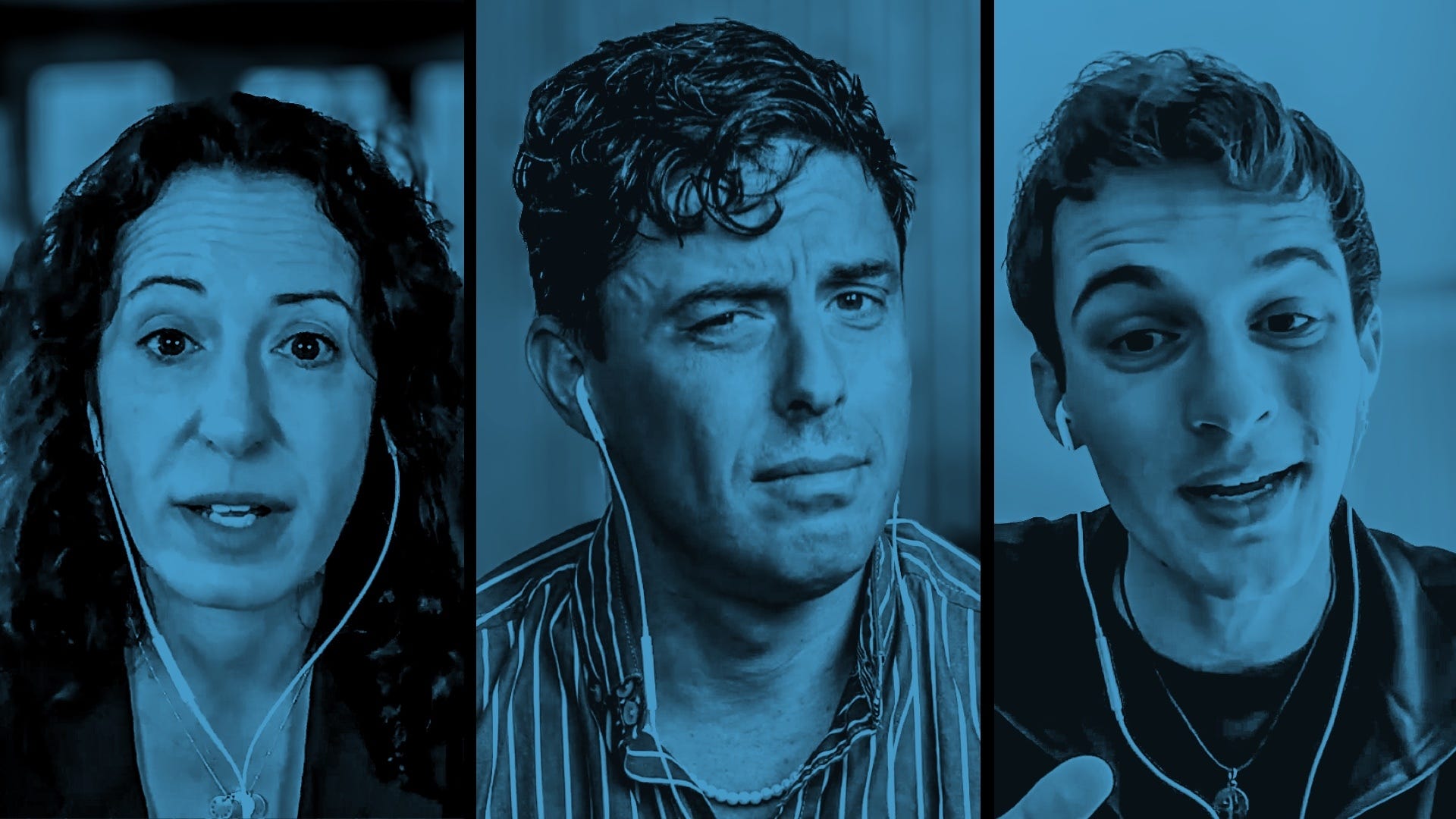
Welcome to the Bulwark Podcast. I'm your host, Tim Miller. We got a double header for you today. In segment two, it's the podcast favorite, Gen Z, bisexual, quasi communist. We're assessing what's been happening with the DSA in the primaries. That's my man, Cameron Caskey, of course. But first, she's a New York Times White House correspondent, author of Confidence man, and co author with Jonathan Swan of the new book Regime Change Inside the Imperial Presidency of Donald Trump. It's of course, Maggie Haberman. What's up, girl?
- [00:34]
A
How are you? Thanks for having me.
- [00:36]
B
I'm doing great. It's been a minute and it's like you guys have sold so many of these books. Can I just say. I'm just gonna say it. We have this relationship. I can just be blunt. I don't get it. I mean, people wanna relive the first year of the Donald Trump presidency in written form and long form. I mean, I understand wanting to watch Yellowstone reruns, you know, or the World Cup.
- [01:02]
A
I appreciate you talk, having me on to talk about a book that you say you don't understand why people want to read, but I am grateful that I read it.
- [01:10]
B
After reading it, I understand it.
- [01:12]
A
I appreciate that there are very long queues at libraries, which is great. In all seriousness, there's a very long audible queue. I don't think it's about reliving it him honestly, because we a couple of things. This book nearly killed us. And I know Jonathan's line, my co author's line is always, we're not in Fallujah and we're not. That's correct. But this was incredibly hard to do because this is not term one. This is not walking around with what Swan would call the slop bucket. And you're waiting for your scoop to just drop into it because everybody was fighting and everybody was leaking. And half of that government, if not more, half of that White House, if not more, viewed Trump as dangerous or at least unmoored for some of them and were concerned about his behaviors. This is a group of people who are relatively tight knit. They really believe in Trump. They want to see him succeed. If they are concerned about some things that they see, they believe in his worldview and they want to see his agenda implemented. So this took us a really long time, but this was for us, this wasn't reliving last year. This was trying to understand much more about last year. And it took a really long time. And we focused on various aspects of how Trump has transformed you know, we'll see what aspects of it are permanent. But I think more than people realize, he has transformed the US Presidency into something very different than we've ever seen in our lifetimes. And that that was the impetus for the title regime change, because we, we are witnessing a form of it in our own country.
- [02:53]
B
Well, with the Supreme Court news yesterday, maybe that's a good place to start about the way that he is changing the nature of the presidency. You have a scene in the book where he is walking around saying, I'm immune, I'm immune. And that is another element of this. It's not only that he has a different staff, but it's this idea that he feels like he has carte blanche to do whatever he wants, that there's no consequences for what he wants. He doesn't have to follow the laws. He could just make declarations by fiat, and there isn't anybody that can stop him.
- [03:25]
A
Well, there's a couple of aspects, and you're right that it is not just one thing. There are many, many factors as to why this presidency has been the way it has and why he has expanded executive power to a degree that I think it was foreseeable that there would be an expansion. Exactly how it has gone has been at rapid speed and as maximalist as they've been able to do. Every, you know, this, every, every president for decades now has, you know, incrementally expanded executive power. Sometimes it's bigger increments than others, but obviously the, the biggest was right after 911 during the second Bush presidency. This is just, you know, orders of magnitude different. And it's a combination of factors. It's the fact that he became much stronger in, you know, within his own party during the years out of power. The fact that being banned off of social media really did help him, frankly, because he was relegated to Truth Social and is the social media site he started. A lot of people were not seeing his most caustic social media declarations. The whole premise of our case, and I frankly think it's hard to argue otherwise, is that he is, he is in a much better position than he would have been with two consecutive terms because he would have been dealing with post pandemic inflation. He would have been dealing with the withdrawal from Afghanistan, which may not have gone exactly the way it did under Biden, but there's no reason to think that it would have been easy or smooth. He became something of a, of a, of a mystical figure within his party and certainly for his staff and because of all of These things that he went through, you know, indictments, a conviction, criminal conviction, civil suits, two assassination attempts, and onward. So many of the Congressional Republicans are both in awe of him and in fear of him. And so he could not have accomplished a lot of what he has so far, at least in terms of keeping his party in line, had he not been wielding them with what he and his team proudly describe as an iron fist. And so various factors have led to why we are where we are.
- [05:42]
B
You know, this stuff, like the difference of the term and the immunity that he feels for himself and the immunity that he feels for his. His criminal fans was evident. Like, as you're reporting, I think, for the first time, like, from day one, he was trying. He was contemplating, I guess, putting the J6 pardons in the inaugural address.
- [06:01]
A
We have this remarkable scene. Early on, they were preparing for his inaugural address, which is obviously a very different inauguration than had been planned. It was in the Capitol Rotunda, notable because this was where there was this riot on January 6, 2021, in this effort to stop the validation and Electoral College certification of Joe Biden's victory over Trump in 2020. So they had been discussing what to do about pardons with people who were convicted in connection with the JSX riot for some time. And they had done this big evaluation led by Dave Warrington, now the White House counsel, on different groups. Most people around Trump did not think that there were going to be pardons of people who had, say, attacked police officers. But that did end up happening. And Trump was planning to include a line saying that, you know, he was going to do sweeping pardons for what he calls the J6 hostages. And an aide said to him, you know, and there were these. These sessions preparing for the speech. And one of the aides said, you know, this is going to be a bipartisan crowd, and if you do that, a bunch of the Democrats are going to get up and walk out, and it just may not be the visual you want. And so Trump said, okay, fine, you know, good call. And as we said, this was, you know, essentially his last concession to decorum, because he goes on and pardons them all later that day. But it was remarkable that he even wanted to put this in the speech. And that one of his first acts as president was issuing this roughly 1500 grants of clemency remains astonishing. And exactly how he was thinking about doing it and how these discussions went gets almost lost in all of the activity of the first three months.
- [07:49]
B
That ties kind of what JD was saying this week about Nixon. For me, how JD's talking about how there's a Nixon renaissance and Watergate would only be a 12 hour story. I thought that was just very instructive of their mindset. We're talking about this like Trump's walking around saying I'm immune day one. He's pardoning the violent criminals who are his supporters. Now they're like eh, Watergate's not that big of a deal. I mean just kind of the unapologetic we can do what we want, laws don't apply to us. As I mean I think pretty plain throughout the book.
- [08:21]
A
What I do think Vance was right about is that it would have been a 12 hour story essentially or multi days. That is true in this news environment. There's no question.
- [08:30]
B
I mean it would have come out in your book. There have been another 12 hours, then a year later.
- [08:35]
A
But look at, you know, this is what happened yesterday was also that you know, President Trump filed his financial disclosures and that was actually on paper how much money he has made off this presidency while in office. Which is, it's breathtaking. We haven't seen anything like it. But to your question about pardons and the mindset, you're right that Trump goes into this term with a presidential immunity ruling that came out of one of his cases, one of his indictments where they were fight his team was took it all the way up to the Supreme Court. Supreme Court rules that all presidents have immunity for presidential acts, you know, official acts in office. Exactly what that means we still don't know Tim, because that hasn't been tested. But the belief is it will be pretty broad.
- [09:22]
B
It means though.
- [09:22]
A
Well, he's quite clear, we report on that in the book. You know, I'm immune is what he says. And he has said that he is going to pardon and we report this, you know, many, many times he has said to people that he is going to issue a preemptive pardon to anyone who's come within 250ft of the Oval Office. Sometimes he says 200, sometimes he says 25. But what's clear is there's like a pardon radius right around the Oval Office. And we spoke to several people who have said to us, you know, they're counting on their own pardon, they expect that they will get one. And so it does create a certain mindset.
- [09:58]
B
Good thing for state attorneys general. A couple of the other early things that you get through in the book, you.