Loading summary
Transcript77 lines
- [00:07]
A
Welcome back to the Bulwark Goes to Hollywood. My name is Sonny Bunch. I'm culture editor at the Bulwark and I'm very pleased to be rejoined today by our first and possibly one day final guest on the Bulwark Goes to Hollywood, Richard Rushfield.
- [00:20]
B
If the world goes to hell in the last week, in the next week, I'll go down as the first and last right there.
- [00:26]
A
I think that's what we're. My aim is to do your last episode with me right before the Apocalyp. So you never know. Could be this week.
- [00:36]
B
That's how I want to go out too.
- [00:37]
A
So no, Richard. Richard, of course, is over at the Ankler and we can discuss what's going on at the Ankler. Because you guys just moved off of Substack. This remains Bulwark Goes to Hollywood. The Bulwark remains a Substack publication. You guys just moved off of Substack, but you are keeping your presence on Substack. I'm just curious what the thinking was there strategically, because it feels like. Feels like a big move.
- [01:03]
B
Yeah, I mean, the Ankler has become kind of a larger platform for a lot of different products now. We have, I think, something like 15 different newsletter. I'm bad at numbers, so I probably got that wrong. 15 different newsletters. We do events, we do all sorts, just like you folks at the Bulwark do. So sort of the Ankler is kind of the hub of all that and that we moved to a new plat called Passport where it can accommodate a lot of these different things and advertising interests and all sorts of special projects. We have a lot of different products. One of those is my own sort of personal substack that I've started, the Rushfield Jamboree, where I'm going to be doing interviews, I'm going to be writing things. My main columns about the entertainment industry will continue to run on the Ankler. But the Rushfield Jamboree, which is a product of Ankler Media and will deal with the wider world and continuing adventures of Richard Rushfield will continues to persist and hopefully flourish on Substack.
- [02:21]
A
Yeah. No, it's just interesting the way it felt like everybody was going to silo off for a bit and now I think everybody is realizing that they need to be where the audience is. Like, I'm fascinated by what Sean Fanty and the Ring Ringer are doing. Right. So, you know, the Sean Fantasy has a newsletter now. It's surged to the top of the film and TV charts, you know, on. On Substack. But you know, the Ringer website still exists. Like Ringer. The Ringer is owned by Spotify, which is a competing podcast podcast platform. But like there's an audience for newsletters and if you want newsletters, you know, the substack remains kind of the place
- [03:00]
B
to be and in particular Substack has a really vibrant kind of independent film community that's known as Film Stack. That I, that, that was a big part of my reason for wanting to keep doing things on Substack because this, this indie film community is something I've really been involved in and dear to my heart. So, so it's a place to do it. So you, you know, some things you do on TikTok, some things are a live event, some things are, are, are Instagram, some things are articles on the main site and some things are your personal, your personal product there.
- [03:41]
A
Yeah, that kind of segues into what I wanted, what I wanted to have you on to talk about today, which is tv. Usually we talk film, we usually we talk the film, film business, film industry. We're talking TV today. But you know, let's be, let's be real. Those two things are very much overlapping at this point. It's, there's not much point in distinguishing between film and tv at least in the sense of, you know, how the companies operate. As you, as you mentioned in one of your pieces in this series of the fewer companies than ever are, are, you know, making them. But they're, but the, the issue of distribution hubs and going to the audience for the content or going to the audience where they are meeting them at their, at their level is I think a kind of key, key fact to understand when we think about the big news this week, which was the purchase of Roku by Fox. Now this had been rumored for a little while. There had been talk about Roku was kind of on the, on the sales block. I think it was slightly surprising that, that Fox is the one who wound up with it, but not that surprising. The cost was a little bit surprising. $22 billion, that's, that's a decent premium on the stock price. But you know, what is, what is Fox's thinking here? I have some, I have some theories, but I am curious to get your insight as you know, the man, the man in town.
- [05:04]
B
So a. So with. In the, the. The fast category which stands for. What does that stand for?
- [05:12]
A
Free ad supported streaming TV channel, something.
- [05:16]
B
Yeah, exactly. So, so Fox had, Fox always already had the leading business in that with Tubi there and this gives them a Chance to combine that with Amazon, abandoned that business. So this really gives them a chance to consolidate that and if not monopolize that entire category, which is I would say the least glamorous section of Hollywood. But you know, very impactful and used by, I mean, the numbers on them, on the fast category suggest that they're, you know, it's watched by certainly more than lots of your favorite prestige networks.
- [06:04]
A
Yeah, well, it's interesting because I look at the Nielsen gauge, which is their chart of, you know, who is watching what on television, specifically on television. And I'm always, I'm always taken aback by the success of YouTube. You know, YouTube remains. YouTube is the number one individual channel, if you will, for, for streaming viewing on television. I think it's 13% of the market. And then you go through the other categories, you know, Netflix is 10 or 11%, something like that. And then, you know, the, the Disney family of networks is 8%. But there was one that I always noticed and I was always kind of surprised by which is Roku tv. The Roku or the Roku Channel? The Roku Channel, which is, I think it's at 3% or something like that of all TV hours viewed is on the Roku channel. And that always struck me as odd. But then when I started looking at the details on this deal, it starts to make a little more sense given the penetration of Roku just through there, set top devices and TV OSes.
- [07:09]
B
Right? Yeah, exactly. I mean there's a lot of people watching this and a lot of people who are, you know, we, we, we here in the critical establishment assume that, that everyone will make unlimited space in their budget for every, every single streaming service and whatever they want to charge us. A lot of people don't want to pay that. Who don't have the money to pay that. And, and if you look at Roku and Tubi, they're spending a lot of money making original things. It's not just a little side project for them. It's a significant investment in original production. And I think Tubi has a lot of things aimed at like high school students and everything. And they are not the big splashy, high, high production value, prestige things that we know. But between them they've got a significant audience. I'll give you an example to be there. There was a significant meme that went around a couple of years ago. If you have, if you have a teenage teenager, just say the words that you won't know what this is. But if you say to any teenager the words nice catch, cheer and they will know exactly what that meant. There was a high school movie in which there was a scene where the quarterback threw a ball and missed his target and went off field and was caught by a cheerleader standing on sign. He said, nice catch, cheer. And she threw it back to him, made a very competent throw and said, not my name, quarterback. And go on your favorite social network, TikTok, Instagram and search nice catch, cheer. And you will find millions of people reenacting that, staging it, recutting it. You know, huge, huge penetration for something that is completely below our. I didn't hear about this until a year after it had been up.
- [09:16]
A
This is, well, that's, that's terrifying. I don't, I don't like to imagine the culture having passed me entirely by, but here we are. That's, that's, that's all right. So it's, it's. And the other, the other thing of course here is, is advertising, right? These are, you know, the future of, it's funny, the future of streaming is the past of tv, right? It's, this is advertising is what all of these brands are trying to push people into. They're, they're making their ad free services, their ad free tiers incredibly expensive to try and push people into the advertising because that's where the real money is, right?
- [09:51]
B
I mean free ad supported television, which used to just be called television tv, that was everything and now we're reinventing that and mining it. So yeah, that is what's coming out. And it faces for Netflix at the top of the heap and everybody else subscriber growth has sort of flattened out and there's not much world left to conquer. So ads are, ads are where everybody goes at that point.
- [10:24]
A
Yeah. The other element of this deal that I think some people certainly in the just the general population are kind of overlooking is the fact that Roku does generate an enormous amount of its revenue from these kind of pass through deals. Right. Like you can subscribe to other services through Roku and then Roku, you know, takes 10% or whatever, whatever their cut is. And that, that is kind of a nice source of passive income. But it does kind of change the equation for some of these other studios. Right. Because before Roku was a neutral territory that, that everything just kind of passed through and now it's owned by a competitor, like it's owned by, you know, a company that has a streaming service, Fox, one that I'm sure that they will place prominently on the Fox. You know, they'll put that prominently on Roku Home screen and Roku City. Make sure you sign up for Fox one, et cetera, et cetera. And I do wonder if that changes the equation a little bit.
- [11:26]
B
Yeah, I mean, I think everybody wants to become the hub, like the place, like do, do all your business at Roku. You don't need any other subscriptions outside of us. If you want something, you can get it, get it through us here. And, you know, Amazon has tried to be that Apple, Apple also. And if you're any other business, you don't want someone else to be the hub. You don't want your. You're just overthrowing the cable bundle and now you got someone else coming to take a slice off the top and who's going to have the direct relation. Direct relationship with consumers is kind of the whole premise of this entire era. So, yeah, very threatening to them.
- [12:17]
A
Yeah. Is there any concern about Fox, you know, doing the, you know, highlighting the Fox News Channel, which remains their, you know, kind of biggest product since 20th Century Fox has been spun off. Like we should. I, like I, maybe we should explain to people that, you know, 20th Fox is basically, you know, Fox sold the 20th Century Studios portion to Disney in an enormous deal, like a $70 billion deal which also included, you know, they got rid of Hulu, which. There's a big irony in all of this. You know, Fox originally had a significant piece of one of the biggest streaming services, and now they're trying to rebuild kind of from scratch. But the, but, you know, like the Fox one channel, their two big draws are sports during football season in particular, and then Fox News, which is, you know, that it's the only way if you, if you're a boomer and you love Fox News, that's your only way to get it on streaming. Is there, is there any concern that that is going to be, you know, kind of larded onto the Roku homepage
- [13:19]
B
eventually when they, when and you know, if they're, if they're at near monopoly status at that point, then sure, that would, they would favor their own product at this point. I think they're still trying to grow a business and grow subscribers and get everyone in the door. So that wouldn't be. I, I don't think they'd want to alienate other, either other businesses from doing things there or, or other, or potential customers by, by painting it with one, one brush there. So I wouldn't in the short term be too worried about that in the long term, certainly.
- [13:58]
A
Yeah. All right, so let's, let's switch to your so you, you wrote a series of posts last week, culminating in the Mount Rushmore of tv. I' debate about the, the Mount Rushmore tv because that, that's a, that's a fun evergreen topic. But let's, let's talk about, let's, let's talk about a little bit of the nitty gritty here because I do think that there are a handful of real. There, there, there are structural questions here. The, the biggest of them being really, what is the state of television? Like, what is television in 2026? What is television? What does that, what does that word actually mean in the year of our Lord 2026?
- [14:41]
B
That's. Yeah, I mean, I don't, I don't think there's any easy answer to that. It's like people looking at things on screens. Like if someone it, you know, we, we kind of put social media in a different category. But how is TikTok different from YouTube? And YouTube includes a lot of things that we know of as TV shows. Intruder. So you could say TV is script. TV is certainly not just scripted or produced. And there's things that are done on TikTok or YouTube that are, that probably have bigger budgets and things done on some, some of the cable networks. So it, you know, it has come down to things that are on screens that are on small digital screens rather than projected in a movie theater. And that can, that can include anything. At this point,
- [15:37]
A
we are kind of past the era of peak tv, right? The age of endless expansion. We're just going to produce and produce and produce to support all of these new streaming channels. We want people to sign up for these new basic cable channels. We want people to sign up for. And then get mad if Comcast says no, we're not going to have FX or AMC or whatever. And as a result, it is really kind of messing with the fundamental economics of working and living in the industry.
- [16:09]
B
Yeah, yeah. No, TV was the, was the gold mine. TVs are everything. I mean, I recall when I first started doing the Ankler, a very smart CEO of one of the major things explained to me said the business of studios is a cable TV business. And even film is a cable TV business. Like cable TV paid for everything. And that was, and if you were working on a tv, on a tv, on a traditional TV show with, with union wages and all that, that had the potential to go to four or five, even nine seasons like your, your life was made. It was. And, and, and, and this, this was the engine that kept everything going. And now we are in this, this time of pullback and, and seasons are shorter, seasons are fewer, protections are less. There's no back end. There's no there. There's no pots of gold with the residuals. So it's, it's all very up in the air. And you know, you, the, the range of possibilities of, of where this could all land are, are almost infinite. And anyone who could, who says they can tell you what TV is going to look like even five years from now, I think is full of hot air there. Yeah.
- [17:34]
A
It's really interesting. In one of the pieces you wrote last week, you talked to some folks who were talking about the difference between film and television in terms of prestige. Right. Once upon a time, film was where you went to film and you made serious things and that's where you could win Oscars and you would, you know, get the plaudits from, from critics.
- [17:56]
B
Yeah. Movie star was the highest cultural achievement in the land by far.
- [18:01]
A
It was like the, it was the thing. It was the thing everybody aspired to. It's why Los Angeles was the dream factory. Right. And then TV was just kind of an industrial product.
- [18:11]
B
It was just wasteland, as Nathan Minow put it.
- [18:15]
A
Yeah. As Newton Minow put it. Newton Minnow as vast wasteland. You know, it's Gilligan's island and all sorts of cr. And that obviously changed over the last. Certainly starting. Starting particularly in the late 90s with David Chase, who's one of the spoiler. One of the members of the, the TVs Mount Rushmore, you know, comes in the Sopranos, changes things. People, people, people who heretofore had not wanted to be involved with television in any real way were like, oh, I can do serious things here. This is, this is great. And then of course, we're off to the races. So. But then, but we have now seen kind of a, an inversion of this.
- [18:59]
B
Right?
- [18:59]
A
What, what is going on in terms of the, the inversion of prestige? The reversion maybe of prestige.
- [19:06]
B
Well, you say with we. We had Peak TV, which. In which there were, I think 700 shows being made a year, which is up. Was up from 200 before the, before the streaming era began. So there's this huge rush of tv and really, I think prestige comes out of when you're, you're starting a service or network. You gotta, you gotta get it off the ground. Like you've gotta find a new audience somehow. And it's, it's the approach pioneered by HBO back when. And which is, you know, the best way to get the quickest way to get attention for your service is to win Emmys and to have people write about, you know, a suddenly you're the, you're the network that has Mad Men and, and everybody wants to be a part of AMC and, and that so it, Prestige TV is really about the race to brand it through that, through that, that, that prism which doesn't serve that many people, but it, it's, you got to brand your network somehow, your service somehow. And when that was happening, it really felt like this was culturally the most vital living thing at a time when film was probably in its most mortibund studio filmmaking was. I've said that the year before last was the worst year of studio filmmaking in Hollywood history. Can you, can you back me up on that?
- [20:45]
A
What was this? 2024.
- [20:47]
B
2024. The word. I say that not, not including Covid, but, but just creatively. And I'm not including, I'm not including independent filmmaking also which has, which has its own issues. But, but for reach a real creative nadir of.
- [21:06]
A
Well Richard, you may let me just read the top 10 from the yearly box office from 2024 for folks to get a sense. So number one was Inside Out 2. Number two, Deadpool and Wolverine. Number three, Wicked. The closest thing to an original on this list and that is based on the most popular Broadway play of the last, I don't know, 30 years, which
- [21:27]
B
was based on an 80 year old movie, which was based on a 100-year-old series of books, so.
- [21:32]
A
Exactly, exactly. Moana 2, Despicable Me 4, Beetlejuice, Beetlejuice which is, you know, Beetlejuice 2, Dune Part 2, Twisters, a legacy sequel to Twister the Godzilla vs Godzilla, X Kong, the New Empire and Kung Fu Panda 4. That's, that does feel pretty dire. Pretty dire.
- [21:54]
B
Yeah. I mean you're, you're talking about big. And you know what's in that also is those aren't actually terrible films for what they're doing. To my eye, that, that, that I, I, I, I probably enjoyed most of the films but just collectively there, there's not a lot of creative excitement coming out of that when you're, when, when so and also if, if that was a top 10. But there were, but, but in the 40 films below it, there were, there were all sorts of things that were different and all sorts of big swings and out of the box things. Then you could say okay, we have some cookie cutter, we have some cookie cutter reboots and sequels, fine, but we also do these other things. But you don't have Those other things, they pretty much cut out. So beneath the big successful blockbuster sequels and reboots, you have 50 failed sequels and reboots that didn't work. So it, so that was what. So while TV was, was expanding and going through this, this, this huge moment, film was in this like sort of creative abyss of studios making it worth a thing. And, and sort of the most talented writers and creative people fled to television. Netflix was writing these. When Netflix started making movies, you just said, well, no, no serious director or star is ever going to do that for any amount of money. And that proved extremely wrong. And to date, I think everyone except Spielberg and Christopher Nolan have made tv, have made movies for. Just about pretty much have made movies for Netflix. I don't think there's what stars are left. Tom Cruise has it. Tom Cruise may be the only star who hasn't gone in that direction.
- [23:53]
A
I think Tom Cruise is just about, just about the only one. I'm sure there's. I don't know, maybe. I know Denzel did the Apple Coen Brothers movie. I don't know. Or not Coen Brothers, but I'm trying to think. I don't know. That's a great question. I think Tom Cruise is probably about it.
- [24:09]
B
Yeah, Leo certainly has and Tom Hanks and everybody else. So you had talent becoming willing to make things for TV and recognizing that they weren't just doing movies of the week anymore. And for writers, it was like a place where you can do. TV was taking all sorts of chances and going in all kinds of directions and making all kinds of swings when film was taking a lot less chances. And then you had the crash and the pullback of it. And now forget the. I think we're back down to about like 350. So about half of those shows have been eliminated. And the streamers are increasingly going to. What always happens when they're pullback, they go to the safe places, go to the comfort zones. So TV is becoming safe. And once again, film after. So last year Warner Brothers shocked the world when they made a bunch of original auteur driven films that did really well and performed well at the box office, won awards, starting with sinners in one battle after another. So film is opening up again while TV is in sort of a defensive crouch. So the pendulum swings again. But there's still so many fewer films than there are TV shows. So I wouldn't say it swung all the way back. It sort of swung to the middle. I would.
- [25:49]
A
Yeah. And look, and these things are always so, you know, kind of Group think and, you know, chasing the trends. Right. Like, this is why. So now we have, you know, Kane Parsons with Backrooms has a huge hit and Curry Barker with Obsession has a huge hit. So all the studios are like, get me the cheapest YouTube Reddit thread you can find and make a movie out of that. Which is, you know, could work that maybe that's a thing that'll work.
- [26:17]
B
I think that what's going to work is that the studios are going to take a lot of meetings with, with a lot of. And with a lot of YouTube geniuses that are, they're not going to be able to figure out how this is a movie in the end. And those meetings are going to, are going to lead. I mean, studio didn't just discover that. I know that like anyone who's had any success on TikTok, any one of those influencers has gone out for auditions and meetings everywhere for the last five years. They've been meeting with them, they've been seeing them. It's just very few of them. You had with Backroom someone that really had a vision that could translate and carry over and an audience that was willing to follow that. But there's not a thousand of those just sitting there waiting, picked up.
- [27:19]
A
Yeah, again, these are things that have been percolating for a while. You had the Filippoo brothers who made Talk to Me and Bring Her Back, which they started in YouTube. And you know, you've got the. What was the. Oh, God, what was the A24 movie? Zola, was it that was based on a, like an epic Reddit thread or, or some such. Or epic tweet thread or something like that, which, you know, again, like kind of, it's kind of been there, but it does feel, it does feel different right now. This feels like, okay, this is the thing. This is. We're doing this now. We're all in.
- [27:56]
B
Well, you know, I mean, in some genres, like, studios have pretty much stopped making comedies. And you know what? TikTok and YouTube are having a comedy renaissance. There's all kinds of comedy talents doing stand up, doing sketches, doing a million things. So they should be looking to them for it because it, you know, the pathway from SNL to big screen feature film hits has, was dismantled long time ago. So they need to find something new. But it's easier said than done.
- [28:30]
A
Yeah, yeah. All right, let's talk about the Mount Rushmore. The Mount Rushmore of television. So explain your methodology here for folks so they have a good sense of what you've put together.
- [28:43]
B
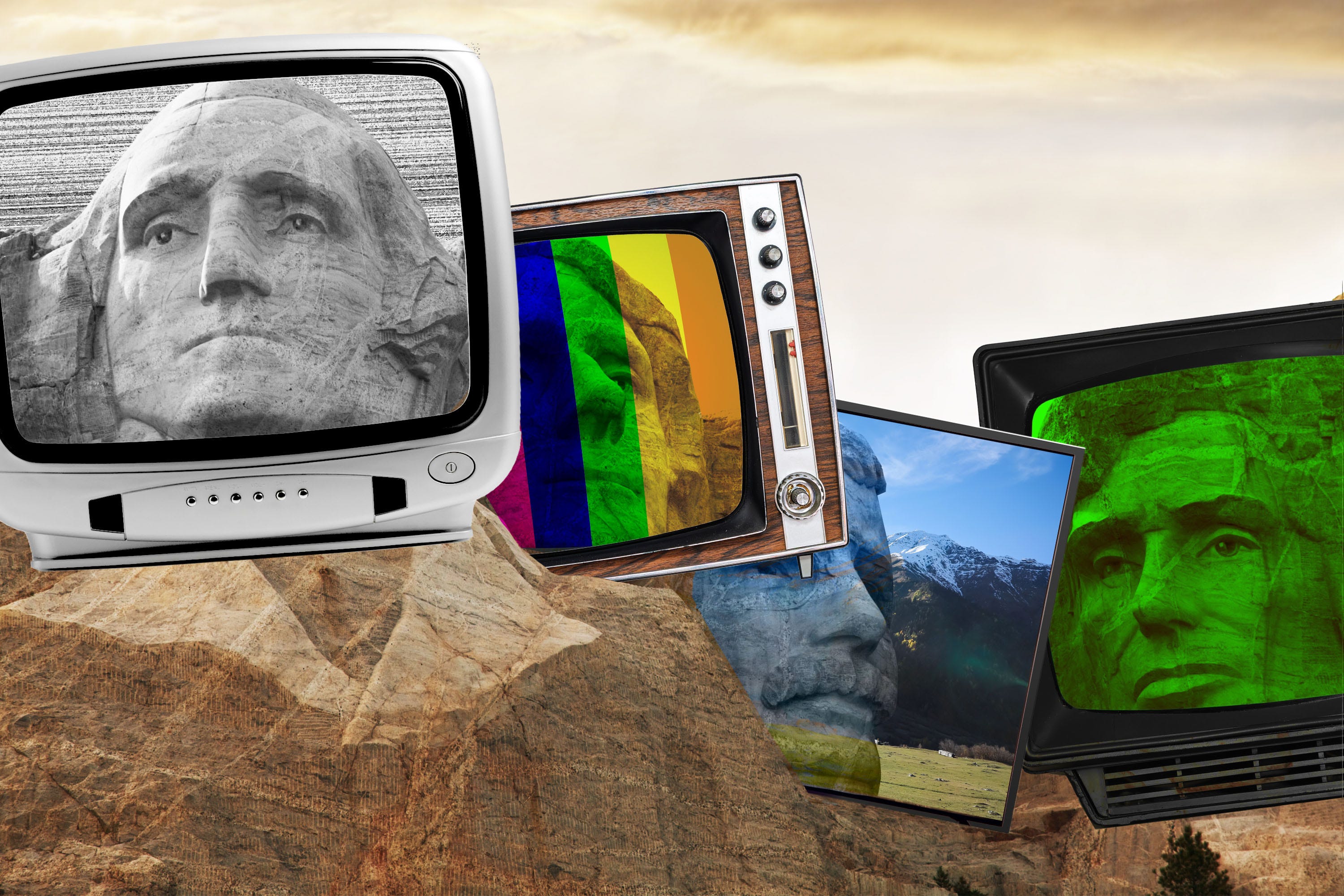
Very subjective So I wanted to find, I wanted to create kind of a, a TV history iconography. Because TV is so disparate and spread out. There's different genres of different networks, there's eras, there's, you have all kinds of, there's producers, there's network executives, there's stars. So then the exercise of who are the four people, just four people who belong on Mount Rushmore. And to do this I went to 50. I created my own television academy of 50 TV professionals who are in my Rolodex and surveyed them all and they mostly came back with answers like number two is a four way tie between these people. And number three is the entire history of snl. And I had to explain over and over, Mount Rushmore has four faces on it. It doesn't have four people. There are no ties on Mount Rushmore. You need to narrow it down to five. So I took the votes and here was the results of TV professionals. Shall I reveal the.
- [29:54]
A
Yes, please count them down for us.
- [29:56]
B
So from the top, number one got twice as many votes as number two. So by a huge margin, the George Washington of television is Lucille Ball. And that was because she's influential both on screen and on screen as the first sort of giant sitcom star, but also invented syndication, invented shooting with her husband Desi Arnaz, invented shooting TV episodes on film, which are why we sort of know these today, because everything else was shown on this crazy video that is unwatchable at this point. So she was hugely number two. Norman Lear, the great producer. If you're going to look at the 70s, which was the period where TV really broke out of its doldrums, he was the critical producer who introduced the idea of quality and serious conversation into film there. Number, number three was Johnny Carson, who was, you know, I think the last sort of presiding MC over the monoculture. And number four was David Chase, which is a controversial pick. People say, well, he only, only had one show. That's a vacant. I think he's sort of this, the, the Sopranos may be one show, but it comes at the exact right place point in the timeline. So he is sort of the stand in for all of prestige tv.
- [31:36]
A
I think there's also a Greek tragedy element to David Chase being on the Mount Rushmore, given his own kind of self loathing about being so associated with television. He was one of these guys who always wanted to be a movie guy. He was like, I'm a movie guy, I'm not going to deign to do television. And then he did it and he did it the best. He did it the best.
- [31:58]
B
But he continued, they. When I never saw the Sopranos movie, but it was okay, but continues to try to make the leap there. And it's a common theme with writers refusing to embrace where their talents lie. I think that is a frequent thing. But those were. The four is picked by 50 TV professionals. And I would say the first. If I, if I asked 200 more, I would say the first two spots, Lucy and Norman Lear would be Locke's. And no matter how many people I asked, those two would be there. I think. I think the other two spots could go a lot of different ways. Walter Cronkite was a very close number, maybe by one or two votes. Missed. Missed that fifth slot. So the fourth slot.
- [32:55]
A
Yeah, that is interesting because you can kind of parcel these all out into very discreet buckets, right? So Lucille Ball is the originator of so much of what we think of. Of modern tv just in terms of how it's distributed and everything else. And then Norman Lear is, you know, Norman Lear is the sort of guy who could also be Dick Wolf, right? Like, they're the guy who has a whole empire, right? The mega producer. And they're all kind. They're all similar enough. Like, they're not necessarily the same show, but they're. They're similar and they have similar ideas and ticks and Johnny Carson, again, you could put Walter Cronkite in there or. Or somebody else, but you couldn't put, for instance, I don't think, like a Dick Cabot there, right? Because he was not big enough. He was not like, you know, as ensconced in the monoculture as Carson himself.
- [33:46]
B
And that was the thing about Carnes that really presided was the Ma, you know, hosted the Oscars, was the master of ceremonies of would show up to mc, Frank Sinatra concerts and all these other things at a time when there was a monoculture.
- [34:05]
A
I feel like this is a very obvious question, but is it possible to have another Carson like, figure anymore? I mean, it seems like obviously, no. The. The. The culture is simply too fractured. You know, we have more than three television channels, but maybe, yeah, I mean, there's that.
- [34:22]
B
That yearning there. The. The yearning always, always butts up against, like, yes, I want someone that every one can like, but I want that to be a person that's like me most of all. So. But I, I mean, if someday there's a. I mean, I can name comedians that are sort of broadly likable enough and kind of appeal to the whole world and are Kind of committed to that medium. I mean, I think the format of late night TV has gotten so stale and I mean, post early Letterman, it just, it has really just sort of been calcifying and falling apart and it doesn't speak to me and I don't see it swinging for the fences anymore. But I don't think it's impossible. I think it would be very hard.
- [35:27]
A
It's interesting. All right, so maybe these categories will come up. I don't know, the extended list. The, the. Also rans. The honorable mentions. That's the word I was like, honorable mentions. Nicer way of saying also rans. The, the. But there, there are, it does feel like there are some, some big gaps here. Again, like those are four very discreet buckets that like, are, I, I think important and, and need, need to be filled. But there is no, there's nobody on here that covers, for instance, sports. And I, I think it's hard to disentangle the emergence of television as a mass phenomenon with the emergence of sports as, you know, the NFL, Major League Baseball and like there, there's no, there's no John Madden figure here, but I don't even know who that. Would it be an announcer? Would it be a player?
- [36:17]
B
Like, would it be Run Ar Glidge or Rune Arledge or, or Howard Cosell maybe, both of whom got votes? I, I, I, I, I think they would, they would be up there. But the problem is, you know,
- [36:31]
A
and
- [36:31]
B
this is the case of TV down to today, any four buckets will leave lots of other buckets on the outside. There's no four buckets that include everything or even half of everything. So you've got to just kind of pick your top buckets.
- [36:49]
A
I don't know. This is why you need ties on Mount Rushmore. Maybe Richard. The other one that did jump out was animation. There's no real. And I don't know, maybe that's just because animation is generally not big enough. The Simpsons notwithstanding, it's 40 year run or whatever we're on now. But the, you know, but maybe I just not, not persistent. Consistent enough.
- [37:14]
B
And how about. There's no executive, there's no. How about William William Paley who created the first TV network or, or, or, or the people created HBO or, or, or Ted Sarandos and Reed Hastings? You know, there's no one representing the entire executive. Barry Diller, I think he created the miniseries and movie the Week and so that, you know, TV sitcoms of the 70s, which, and variety shows of the 70s, which I think are the apex of creative achievement in Western society are completely ignored.
- [37:55]
A
All right, so who. I'm going to put you on the spot now. You put everybody else on the spot. Who is on your mount, Rush. Certainly you have a list here. I know it.
- [38:04]
B
I published it on.
- [38:06]
A
It was in the store.
- [38:07]
B
I know my own list after which. So my top of my list would be Rod Serling, who I think the Twilight Zone. I think all dramatic and scripted television follows in the steps of the Twilight Zone, that it was so creative and original and breathtaking. And there's nothing that prestige TV has done that isn't just following in the footsteps of Twilight Zone. Number two, I went with Lucy Ball, Lucille Ball, you can't ignore that. So I went with the consensus and then maybe I went off the rails in my picks. Number three, I selected Martin Moll for Fernwood Tonight, which I think is a great open the doors to TV comedy in ways we still haven't done. And number four, I said the king of the miniseries, Richard Chamberlain, because the mini. The miniseries is the miniseries of the 70s. If you follow the legacy backwards from the Sopranos, you'll go through Oz and then St. Elsewhere in Hill Street Blues. And before that, you'll get to the miniseries, which is where the idea of prestige TV was born. And Richard Chamberlain was the king of the miniseries. So that leaves the entire sort of unscripted sector, which I wrote a book about, no less to the side. Where's Jeff Probst? Where's Simon Cowell? Where are all these people there?
- [40:10]
A
No, that's a great point I hadn't even thought about. And this goes back to our first bit of conversation about the fasts, right, which is that Survivor is enormously popular still. People watch that all the time.
- [40:25]
B
And you want to talk about what's had an effect that's been consequential. I mean, you want to put Survivor side by side with. If you looked at everything we call TV today and see like, which traces a lineage to Survivor and which traces his lineage to Sopranos, I mean, I think it would be like 10 to 1 survivor.
- [40:50]
A
I think that's probably, that is probably right. That is probably right. The only name I was a little surprised and he made it into the honorable mentions was Lorne Michaels. I was a little surprised.
- [41:02]
B
Lorne Michaels, he was very, I think he was in like sixth or seventh place. Very, very close. Just a few more votes would have got them on the mountain. But, but, but he got a lot of.
- [41:13]
A
Yeah. Well, anyway, this is, it's, it's Great. It's a great list and everyone should go. You, that's on the ankler.com go to the ankler.com and sign up there if you are, if you're not a subscriber to the Ankler, you should be. They, they do everything I do, but better. So they're very good, they're very good at, at what they do there. It's a fun, it's a fun website. Many different facets of stuff to, to look at. And then of course you, you do have your. The RichardRushfield Jamboree.
- [41:44]
B
TheRushfieldJamboree.com, which is free, entirely free. We're a fast. Except we're not ad supported. We're fast. Non finast
- [41:57]
A
fast. What's the fast Aspirational. You want.
- [42:01]
B
Exactly.
- [42:03]
A
No, that feels familiar. As you know, I always like to close by asking if there's anything. I should have asked if there's anything folks should know about TV or anything else. What, what did we not discuss that we should have.
- [42:16]
B
I usually have a funny answer to that. But I, you know, there's always the thing. This is always the thing in movies, but even more so in tv, like the thing. Like, oh, this is the, this is the thing. This is the new thing that, that, that is going to happen. Like now it's all live sports is what is what we're doing or it's all medical shows. You know, the pit has inspired anything. And the thing about TV is it will never be. Nothing will ever be the thing. Nothing will ever. TV is such a mix of stuff and there's so many things going on at any given moment that, you know, that's what gives me hope that it won't just be like 10 second videos of people riding skateboards into a wall or something. Micro genres are now said to be the same. What they want are very cheaply made over the top romantic soap operas. That's what everybody wants. And TV has to serve everybody. And everybody is a lot of people with a lot of different tastes and every individual person wants a lot of different things in the 12 hours a day they spend staring at a screen. So I think there will always continue to be room for a lot more than we think there are. As much as corporate consolidation will try to push us in another direction.
- [43:50]
A
Yeah, it is a vast land. I won't call it a wasteland. There's good stuff out there, but it is a vast land of stuff, that's for sure. Richard, thank you again for being on the show.
- [44:01]
B
My pleasure. Thanks for having me back. I hope the world doesn't end in the next week. So you're. So another guest can succeed me?
- [44:10]
A
Fingers crossed. I don't know. We'll see how it goes. And my name again is Sonny Bunch. I am culture editor at the Bulwark. And we'll be back next week with another episode of the Bulwark Goes to Hollywood. We'll see you guys.