Loading summary
Transcript37 lines
- [00:00]
Peter M. Hoffman
Foreign.
- [00:07]
Sonny Bunch
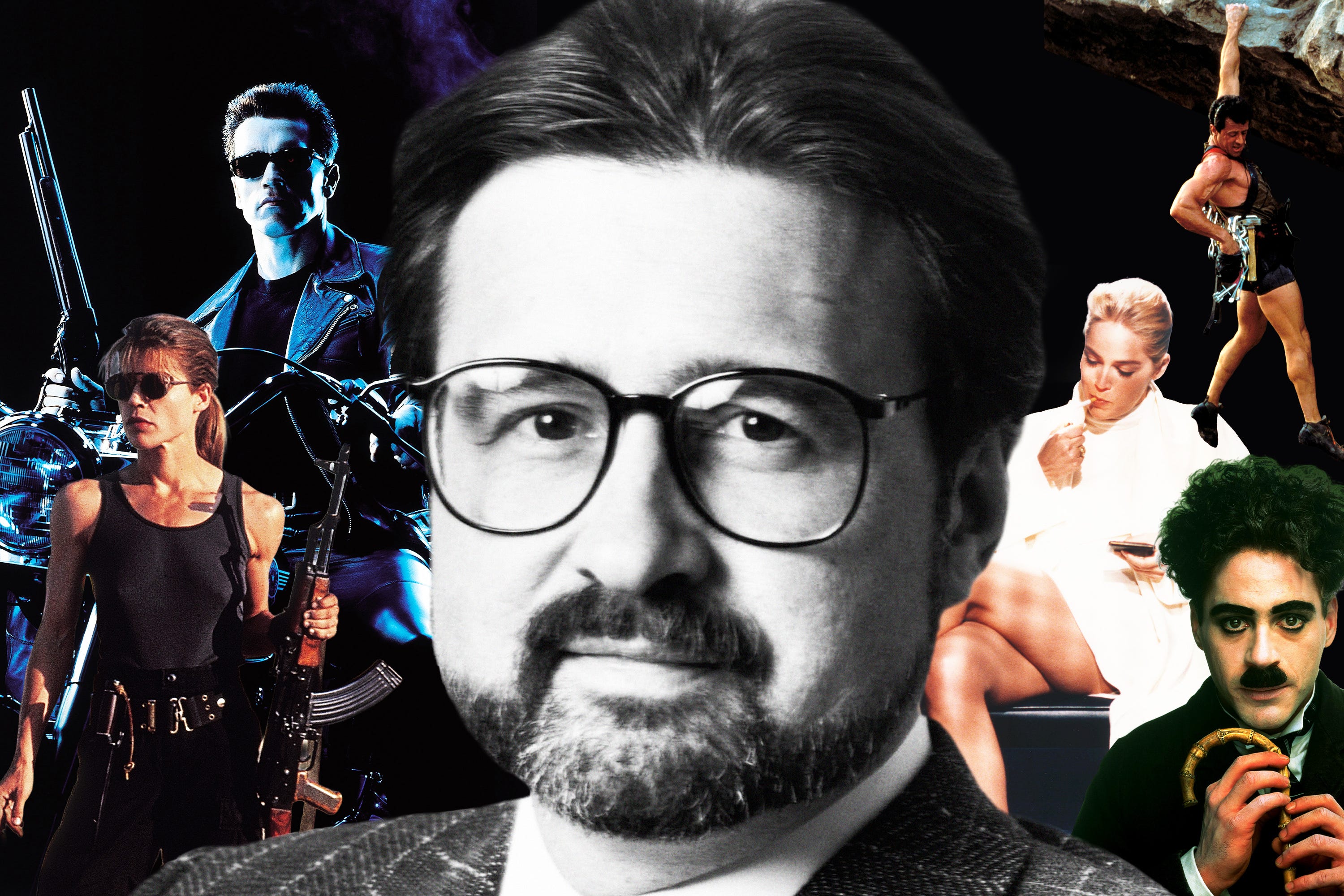
Welcome back to the Bulwark Goes to Hollywood. My name is Sonny Bunch. I am culture editor at the Bulwark. And I'm very pleased to be joined today by Peter M. Hoffman, the author of a new book, Karmic Wins, about his time in the entertainment industry. A, A terrible injustice that was done to him after the fact by some zealous federal prosecutors and a whole bunch of other stuff. But I'm excited to have Peter on today, really, because I, he. His career really corresponds to the beginnings of my film fandom. You know, he worked for Golan and Globus at Canon Films. He was at Carolco. I'm sorry, I always, I always mispronounce this, Peter. It's Carol Co. Right?
- [00:57]
Peter M. Hoffman
Carol. Carol is the way we always said it.
- [00:59]
Sonny Bunch
Just CAROL CO. CAROL Co. You know, where, where he was making movies like Terminator 2, Basic Instinct, Total Recall, I mean, just some, some real late 80s, early 90s classics and, and, and, and other films. But Peter, thanks for being on the show today. I really appreciate it.
- [01:18]
Peter M. Hoffman
Good to be here. Look forward to it.
- [01:20]
Sonny Bunch
So I, what I want to talk to you about is something that is a little bit in the weeds and, and, but it is the kind of guts of this show which I always describe to folks as a show about the business side of showbiz. You are well versed in all of the crazy. And I use this non pejoratively, just, you know, as a, as a descriptive, the crazy ways films get financed, because financing a film is a very difficult thing and has been for many years. And getting money to make something is always, is always hard. And I want to, I want. I was hoping you could run through how that process has changed during your tenure in the film industry, because I feel like things have really, you know, it's, it's there, there are, there have been changes throughout. There are tax rebates now, there are tax incentives. You've got films being made overseas, more than in the United States. And, and a lot of this has to do with a fairly obscure tax code change in the 1980s in the Reagan administration that kind of upended everything. So I want to get your perspective on what was it like to get a film financed and made when you first started in the industry. What were some of the things that you had to do to get that done?
- [02:49]
Peter M. Hoffman
Well, when I started in the business, I was a lawyer and we were representing what I call these international independents, all the, basically the children of Dino de La Renais. And we were making movies outside the studio system in the studio system, you know, the movies got funded because the companies had the money to do it. They had lines of credit, they had equity investments. They were all public companies and they would, if they decided to make a movie, they wrote the check and did it. You know, although they would find that there were often times when they wanted to go finance a movie. But for us independents, we had to do it the hard way, which was essentially have banks that would bank against the value of the picture. And the value of the picture would be reflected both in our ability to enter into licenses, often pre sale licenses, guaranteeing a certain level of revenue from particular territories and hopefully enough guarantees that they would cover the cost of the movie. And, and so we would do that on a picture by picture basis, often with a completion bond to guarantee the bank that yes, the picture would be delivered for this budget and also as parts of lines of credit like we had at Carolco, where again, the same basic thing we would draw down against the value of rights or a presale and that would be the sufficient collateral for the bank to be comfortable that yes, in fact they would get their money back on that picture. And tax incentives were always a decent part of the deal until 86. And then, as you say in 86, when they did away with tax shelters or thought they did, then that ended a lot of the tax preference financing that we had done, say starting when I started in the business, 76 through 86 in that first decade, and modestly, I did a lot of the tax preference transactions in those days, including several hundred million dollars of business with Warner Brothers. And that essentially meant that we were now going overseas. But they were also cutbacks in overseas financial incentives. And so from that point on, it was more about what, what the distributors would be able to put up in guarantees or the confidence the banks had in our ability to sell a picture and get it released. So we would pitch, patch those kinds of deals together. And when I made my, after I left Carolco and made my deal with Paramount, then I would go in with certain commitments from Paramount that would help us pre sell and get the banking that we needed for independent pictures with the result that we would own the negative and copyright, license it for limited terms, we would be in control of it. And it was a real independent movie as opposed to a studio production. I don't know if that's sort of an overview, but gives you the sort of high points of it.
- [05:35]
Sonny Bunch
Yeah, no, I think this is, I think that's a good starting point because I again, I want to I want to emphasize to folks that, you know, a lot of these, a lot of these deals were put together through as you say, kind of a pitch patch, right? Like this is a, this was a, you had to, you had to sell the individual for overseas territories and that gets part of your budget. And then you, you have to line up before you can do that, right? You have to line up distribution with Paramount or whoever. Because my understanding is that for those foreign sales, right, Like a, a movie that gets real distribution in America is more valuable overseas than a movie that is not guaranteed that sort of distribution. Am I, am I understanding that right?
- [06:18]
Peter M. Hoffman
Yeah, of course. And it was, it's very hard to sell a picture internationally even in the old days, much less today when you didn't have either a commitment to distribute in the US or you had the credibility that the licensees would accept that you were going to get the picture released in a certain way. At Carolco, obviously we had our deal with tristar, so we knew how the pictures were going to be released. Canon had their own distribution and for a while we had an MGM distribution. So again, everybody that was buying those pictures knew what was going to happen with them in the U.S. and yes, that was a critical part of the pre sale strategy and a critical part for the banks to lend against it, thinking that they had that as the ultimate backstop.
- [07:02]
Sonny Bunch
So let's, let's talk about, let's talk about your time before Canon because you have this really kind of interesting story about working Superman out of a jam. The original, the original Superman film, it's over budget and they're trying to figure out how to get people paid. When you came in to that project, what was the, what was the state of play?
- [07:27]
Peter M. Hoffman
Well, Alex Salkind, he was, he was the son of Michelle Salkind who got out of Russia and went to Germany and made Street Without Joy and was one of the first original producers of pictures in Germany. And Alex had made pictures with the family in England and he had done a bunch of this kind of Sword and Sorcerer kind of stuff. And, and he, he came up with the idea of doing Superman. And you know, and he was the one who then found the money, sort of a very strange way to get the rights from DC Comics and then to make the deal with Pluzo to write the screenplay for Richard Donner to direct, and then the big deal with Brando to play Zor El. And when I got involved in the picture, they had completed 1 and 2 because he shot them together like he did the 3 and 4. Musketeers and they had gone way over budget and so that they had to suspend production. And so Donner at that point wasn't going to come back unless he had certain assurances that Alex wasn't prepared to give. So they basically, Donner ended up directing the first and I can't remember the name of the guy who finished at number two, but I got involved after Number One had been released and it was then the largest independent grossing picture of all time. Although essentially Warner had almost all the world on the picture. And we were now trying to get enough money for Alex to deal with all his debts because he not only owed money on the picture to vendors, he owed money to the bank, Slavenberg bank, which had bailed him out of some very bizarre loans that had been done. They were in for like 75 million. He owed Donner and Brando and Puzo almost $20 million in participations. And Warner wanted to know those got paid. And to make it matters worse, he had, you know, Swiss revenue on his case because he had been sending money in and out of Switzerland, from Warner's in Switzerland and Switzerland to, to the UK where they were making the picture. And he would. He violated the Swiss circular. So these was treaty abuse. So they were coming after $40 million. So the, you know, the Warner executive in charge, a guy named Sidney Kiewit, said to me at the time, he said, peter, Alex has more problems than God. And, and he did. And you know, but of course, from a young rookie lawyer like me, it was, you know, great because then I could go out and do a whole bunch of things that would immediately get me quite a reputation in the business. And so my first deal was a tax deal. We did a tax shelter transaction in, in, in Holland, you know, on number two. And then we did another one and we did two on two of them on number three. And we did a second sale leaseback on number two. And then I did a tax deal to settle Brando and you know, and suddenly they ease off making more movies. So, yeah, we took care of, you know, $100 million of debt for Alex and got out of it mainly with tax deals and various kinds of, you know, complicated financing. And yes, that was what really established my reputation in the business, particularly the, you know, the, the deal to get to pay off Brando because that was a very tricky deal. But in any event, yeah, that was. And then Alex, Alex, you know, became a good friend and a good client and he went off to make Supergirl and number three and you know, and then Ultimately, those didn't really work. And you know, I still know his Pierce Bengler and his son Ilya, you know, who've been around forever. But that was Alex's. The high point of Alex's career was making those Superman pictures.
- [11:06]
Sonny Bunch
Yeah. Again, it's fascinating my head, I'll be honest with you. I am not a tax person. I'm the guy who uses TurboTax every April to get things done. So my head swims a little bit reading some of these deals, but it's just fascinating. It's a fascinating logic puzzle to, to, to watch you work them out. When you were, when you were sitting, you know, when you were in law school trying to figure out what you were going to do. Did you ever imagine that this was going to be your, your forte, this, this world of movies and the, the crazy finance financial instruments that would be used to get them made?
- [11:54]
Peter M. Hoffman
Well, I was, I went to the Yale Law School and you know, Boris Bitger was the sort of the dean of tax in the United States and he was our professor. And so I was always very interested in tax. And when I came out to Los Angeles, I joined a very prominent firm that specialized in taxes, not particularly in the entertainment business in general. And so, and the, the guy who co wrote Bitger's textbook, Larry Stone, formerly of treasury, was of counsel. And so they had some of the best tax minds in the country, in my opinion. So I went into it assuming I was going to be involved in it. That's why I got assigned to do this tax deal for Alex and then to get into dealing with all of his problems in Switzerland. How we got him out of Switzerland into the Islands and managed to avoid any taxes there. And, you know, all that was, you know, part of an expertise in tax that I had always expected to develop and had, was working on in things outside the film business as it related to film finance. That was sort of a thing that later came. Afterwards I started just trying to do these tax structures and yes, they were complicated and they were puzzles and. Yeah, and my solving the puzzle and coming up with a great result was a beautiful thing. And I still think it is, even though that's what got me in trouble with the government. They started thinking I was public enemy number one, you know, because of it. Yeah, well, that was because of the later things with the Carol company when we bought out Binance interest and he got $100 million in the Islands and paid no taxes on it. And at a time when the revenue was doing a, you know, general industry review with a big audit team in, in Los Angeles. And they saw this and that's when they got sort of, you know, they started focus on it because everybody said, if you want to know anything going on in taxes with these independents, so you got to go see what Hoffman's doing over there at Carolco. And they did, they, they came and they, that was my first indictment. They indicted me because they had screwed up the assessment of Vina and they, they had screwed it up. They ultimately had to surrender entirely. He ultimately won his case by surrender. They got that 110 million in the islands and never paid a nickel of taxes on it. And, but they decided to prosecute me on really complete claims, which I won. I beat them, which is, you know, they don't like that either. Right. And so, so the result was that, you know, suddenly I'm this guy that, you know, is a, you know, one of the people in the U.S. attorney's office said to the son of my former partner, oh, that's your father. Partners with that Peter Hoffman, we're going to get him. You know, we're going to get him. So that was, that was the problem. When you get your reputation at a certain level, as I did then, you know, that, that created some whiplash there in treasury. And, and you know, they, they decided to come after me. And then later when this craziness happened in New Orleans, that was part of the story, you know, because my, I hired a local guy. He said, you know, they're saying you tried to get tax credits on the post production center you built here. And, and you know, we said, come in. Look, I mean, whatever you think happened, they built the post production center. It's fully built, all the money was spent. Like they said, what's your issue? Whatever it is, you can see, it's done, it's in service. They did everything they told them we were going to do, to which the prosecutor said, we don't need to see this building. We know who this guy is. He got away with it once, he's not going to get away with it again.
- [15:29]
Sonny Bunch
Yeah, well, we'll come to that. That's a little later in the story here. No, no, it's fine. I, I can understand being frustrated by it. You know, you, you, you went to prison. Not fair. But let's, let's, right, let's, let's jump back to canon. So you, you, you're, you blow everybody away with your work on, on Superman. And you're, you're helping with some of these other projects and then the the kind of famous pair of producers, Menachem Golan and Yoram Globus, who are the guys who may, who start Canon films. And again, anybody who loves 80s action movies will recognize that Canon logo. It is, it is, there's, there's a great documentary about it came out a couple years ago that is really, is really fun. And, and you know the, the trick with Canon was that it in addition to having you know, the kind of tax structures and shelters and foreign financing, et cetera, et cetera, it also comes into the industry at a very interesting time where home video is starting to become a dominant financial force. That having a home video library is all of a sudden a very valuable thing. Could you talk a little bit about how the home video revolution played into Canon's valuation? How they decided what would get made or what they were going to buy
- [17:04]
Peter M. Hoffman
and
- [17:06]
Sonny Bunch
what was worth paying to get produced?
- [17:11]
Peter M. Hoffman
Well, I mean, yes, the home video when it started to blow up in the late 70s and early 80s, then become a major source of pre sales, not just in the US but everywhere. Because the thing about video as it was done then and what the real loss of physical video is that you know, in those days, you know, you knew you could ship, you had a picture with a certain element, so you were going to ship enough units and you could put them in a store where you get frames of windows and you'd know you'd move enough of it. And you know, every month you'd go into the video store and they'd have a list of the new releases and you were going to do a certain amount of business on it. And particularly if you had end caps and frames of window promotion which you could do then, you know, you were going to move a certain number of units. And that was a major source of pre sale financing. And yes, it was a critical thing for the boys because once they gave up the MGM deal and we, they were distributing themselves, they went and did major home video deals with very large advances that we, that we banked. But you know, they didn't make pictures for home video. They came out of the theatrical world in Israel and they wanted to make pictures that had theatrical potential. And they had some successes, you know, with this Lemon Popsicle series that was huge in Israel and then did enormous business, believe it or not, in Germany. And you know, and they sort of then used that to take over this small public company, Canon, that was nowhere and, and then started, you know, making those kinds of movies. Then they got into the Chuck Norris business and then they started Making too many movies and tried to go a little higher in what they were doing and I think made some mistakes. But whatever it is, they, they were very, very dependent on the home video value of the product they were making.
- [19:01]
Sonny Bunch
Yeah, I mean, I should emphasize this, that they were not, you know, these were not straight to, straight to DVD, straight to or, well, at the time, VHS or LaserDisc or Beta or whatever. But the, you know, these were, these were films that you could, you could kind of count on future revenue and thus get more money to just to get them made. Right.
- [19:23]
Peter M. Hoffman
Well, I mean, we had a line of credit, we had a couple of lines of credit and. But we needed collateral for those lines of credit. And what we would do is pre sell the video and the foreign on it. And a lot of the foreign pre sales were based on the video value and then in a limited amount what could be pre sold to tv. Right. Based on the elements. And that was the way in which independent finance worked in those days. That's been the great loss of the streaming revolution and the destruction of physical home video. All that certainty, all that sort of guarantees that you could get these kind of pictures made are all gone. So you'd have no idea whether you can get anything out of these pictures anymore. But in those days, that was what, what got it, what got them going. And you know, the problem with it was that there was not enough discipline, you know, on what needed to get made. That was ultimately what led to me deciding to take the offer from Carolco. Because I'll tell you one story, you know, Michael Jackson, this guy did some videos for Michael Jackson, got Michael Jackson to call up Menachem and told him, you got to make a movie with this guy, he's so talented. And you know, and the people in the company, including my wife who was there, really didn't think this was a good idea. But Menachem was sure, so he gave him a project of a remake of Journey to the center of the Earth. All right? And so this guy goes off and starts shooting this. And after a while they know they're in trouble. And Menachem finally says, you know, bring it in, put it together. I got to see what you got, right? Because he wasn't finishing and you know, so they had screening at the, at the old Carico Screen, at the old Canon screening room there on San Vicente. And Menachem went in with his, his Israeli fixer, a guy named, we affectionately called Alan the Butcher, right? And, and they went in to look at the movie and you know, when they came out, Menachem was extremely worried. And he says, Alan knew, now what do we do? What do we. And Alan says, it's simple, Menachem. We cut out every other frame and we call it an LSD trip. So that was that to me, as I say in the book, was kind of this. That was where you just realized that as much as I enjoyed Menachem, he was just unable to, you know, as I like to say, and I said it later, there's nothing, the Canon business plan was nothing wrong with it, but that you didn't need to make bad pictures to do it. And, you know, they just made picture after picture. My biggest fight with Menachem was when at the Yoram's daughter Orly had a wedding in Tel Aviv and we were all there and they had, you know, the whole company was invited in some Chinese restaurant. And they sit me between them and start yelling at me, what are you doing? Complaining to the board and talking to the bankers and saying, we got to stop the pictures. And I said, Menakum, you know, we, Tom Pollock and I told you you had $60 million to make pictures for this year. 1980, 1986, I think 85 and 1985, you have $60 million to make pictures this year. And, and you said that was fine. And we give you the, you know, over the top, the Stallone that you were going to direct, a separate. We gave you the financing for that. You've spent more than 60 million on six months. And these movies. I said to him, your own theaters won't, won't play these movies, Menockum, because they had theaters in England, they had theaters in Holland, they had theaters in Italy, and they had theaters in, in Israel, of course. And I said, so, you know, you, you, these movies are bad. You shouldn't be making them. I need to make every one of those movies. It's okay. I, you know, but what, what can you say? You know, he just, was, he just. If there was a movie, if you, you know, my wife called it the Summer of Money, you got a meeting with Menachem, you got a picture bait, you know, and, and it was, and it was a bad thing for us all. And yet at the same time, I have nothing but feeling. Menachem would spend his last dime to get a picture made, as he did, you know, and he was a guy who was 100% in on the movie business. But, you know, the problem is there were so few of the movies they made that you would really want to come back at you Know, Runaway Train. But that, you know, Runaway Train, that was one where it was really all. The second unit guy sort of made it work. And then the greatest movie they made, believe it or not, was one my wife produced that was an incredible story called the Reverse Not. Oh, my God. With Mickey Rourke and Faye Dunaway and Barfly. Barfly.
- [23:49]
Sonny Bunch
Firefly. Firefly, yeah.
- [23:51]
Peter M. Hoffman
Yeah. Which is a. Which is a, you know, a brilliant little movie. And so, you know, but they just made too many bad movies and. And Menachem just really wasn't willing to go through the discipline and the process to do it. So in a sense, all the pre sales and all that just gave them too much money and there was a loss in discipline.
- [24:10]
Sonny Bunch
Yeah. Let's talk. All right, let's jump ahead a little bit and talk about Carol Co. And really, let's jump all the way to the end because I do think this is a real cautionary tale because you have a company like Carolco, which has, again, hugely successful films. Basic Instinct was an enormous hit, right? Terminator 2. Enormous hit. You know, you've worked out a deal that. For James Cameron to make a Spider man movie, kind of, you know, there's some rights issues, etc. But you know, theoretically, that's. That's in the works and everything. Then just it all. It all kind of falls apart very quickly, which is such. It feels like such a Hollywood story, like huge success and then. Oops. What are. What's going on here? What happened with Carol Co. Well, you
- [25:04]
Peter M. Hoffman
know, that's obviously a subject of some discussion. Although it's funny, you haven't really had anybody really write about it or talk about it, you know, because it is an amazing story. You know, we did something that no independent company has ever done and may never be able to do, which is we had the number one worldwide grocers back to back, Terminator 2 and Basic Instinct and. And we then had Cliffhanger and we had Total Recall and we had some major titles and we had some titles that didn't do a lot of business but were very highly regarded, like Jacob's Ladder and Angel Heart and the Doors and Chaplin and, you know, I mean, on and on. I mean, you know, I'm very proud of that. That program that Kassar and I did between 89 and 93. You know, I don't know that an independent company will ever be able to do that again. So what happened? And, you know, one of the cautionary tales of our business is that you can have big successes and then you think, you know, Something, but you don't know any more than you did before. Right. So, you know, and I think that what happened was the battle within the company was, you know, to me Terminator was a great success, but it's not really what you build your business on. You build your business on what I call the mid range pictures. Because the Terminator we ended up with the over budgets and everything. At 110 million is the cost on the picture. Our ultimate, when I left the company was about 160 million, something like that, which is good. I mean, that's fine, but 110 million, a $50 million profit over two years. Yeah, that's good. But when are you going to be able to do that and how often do you try to do it? Whereas we had another little picture called Universal soldier which had SQL value, we spent about 20 million on that, did about 50 million in ultimates in it. And we had plenty of ongoing value in the picture, you know, so to me we needed to make more of these mid range pictures, you know, maybe not all 20 million, maybe 30, 40, but in that range. And that we could use our strength. And then we do the so called tent pole or event pictures or whatever phrase we would use in those days. We would, you know, make those pictures when it made sense to do so, but carefully. Right. Terminator was in a sense an easy one. But remember Basic Instinct went over budget, but it still only cost 56 million, you know. You know, I remember Verhoeven said at one of the Academy Awards and he said, you're mad at me because I spent so much money on this movie. I said, well, you know, you know, I spent a million dollars on the fourth man. And so I said, yeah, Paul, you made an incredible movie. How can anybody mad at you? But I'm thinking to myself, yeah, you could have made that picture for $40, you know what I mean? But nevertheless, I mean that's still a, that's still a mid range picture to me. That was a picture that at the time nobody thought could do that kind of business. And, and, but then, you know, all of the things that, you know, Mario had done, he then went to an extreme and when I wasn't there and he didn't have anybody to pull him back in my immodest judgment, he ended up making a series of terrible mistakes. And this is a guy who was a genius at picking pictures because he was the one who picked the pictures. He was the one who developed the relationships, not me. I was the guy who did the deals and found the money and put it all together. But, you know, he was the one who came up with this. He was the one who took the risk on Jacob's ladder. He was the one who, you know, came. Look, I actually, you know, he was the one talking to Schwarzenegger and Cameron when Cameron came up with the brilliant idea of what to do for number two, you know, because now Arnold has to be a good guy, right? You can't be a bad guy. So. And you know, the genius of that, just like the genius of Cameron and coming up with the sequel idea for Rambo 2, you know, and so that was all Mario and he got that. And I was the guy who figured out how to get the rights on Terminator 2, which was to me, one of the great deals I did. And you know, I, I ended up buying, owning the sequel rights of Terminator 10 million outright for monies that we had already paid. So. Yeah, and that's what, you know, there, that was a brilliant piece of work in my modest judgment, but nevertheless. So Mario, so Mario now goes off and what does he do? He wants to do his Pirates of the Caribbean, so he wants to do Cutthroat island, except that he goes with Rennie Harlan to direct it with Michael Douglas attached. But then Rennie rewrites it for his wife, you know, Regina Davis, and he's out. And Suddenly you have 110 million dollar movie starring Geena Davis and Matthew Modine. And the picture is a disaster picture, does $20 million in box office worldwide. So you go from Terminator 2 to Cutthroat Island. Yeah, and then. But he's.
- [29:37]
Sonny Bunch
Yeah, yeah. No, I'm sorry, I'm sorry. Go ahead, go ahead.
- [29:41]
Peter M. Hoffman
And then, you know, he's. The next big one he's going to do is, you know, Verhoeven and Schwarzenegger want to do the Crusades, you know, because Verhoeven's a big guy about, you know, the real history of the Middle East. He was father of the Jesus seminars. He's got a lot of opinions in this area. Written a book on the life of Jesus, which was quite brilliant in many ways. There was a very difficult guy, but, boy, is that there a mind there. And, and, and so, you know, they. But it was the same problem like I fought with Alan Marshall on, On Basic Instinct, you know, whether it was going to be 40 million or 50 million. This is a question of whether it's going to be 90 million or 120 million, you know, and remember when we determinated, that was the most expensive picture ever made today. It's a, it's a small budget picture, but, you know, in those days it was a huge thing. And they couldn't finance the 120 million. The partner didn't have the bank lines for it. The partners didn't want to do it. And Sony said, we'll give you 95 million for the picture and you guys can own it and we'll take it on distribution. And you know, Verhoeven and Schwarzenegger wouldn't make it for that price. They were pay or play with him. They had over 20 million in the movie all gone. All right. And the picture never got made.
- [30:52]
Sonny Bunch
Yeah, yeah, yeah.
- [30:53]
Peter M. Hoffman
So, and then, and then there's Lolita. All right, so you want, you think Basic Instinct worked and you can go to the edge and you know, and you know, they, he had laid off, you know, Showgirls. You know, he had laid that off. But Mario was sort of involved in it, you know, when, because Paul was so upset that the, at the MPAA cut out, you know, five seconds of one of the scenes to, you know, to get an R on Basic Instinct. And Paul was very upset about that. So he wanted to know that he could get A, an NC17 rating on Showgirls. And so when they ended up doing that elsewhere, he did. And of course it turned out to be a disaster. But the big disaster was not that the Showgirls isn't a bad movie. Showgirls is a good movie. But it just, there was a lot of reaction to in the picture did not work for MGM then, then they wanted to make Lolita. And now when we bought the rights to Lolita, when Swifty Lazar sold that to us, we thought, hey, you know, that's a. This is great. But I told Mario at the time, you got to do this movie as a, the way it was done at the time by the original Seven Arts. You have to do it small, you have to do it kind of, you know, oddball, you know, something that is not like in everybody's face. But instead he hires Adrian Lime. They're going to make a $60 million picture and they're going to do the real Lolita, right? Not the one that they, but the real Lolita that talks about having sex with a 15 year old girl or a 13 year old girl, whatever it is. And you can't do that. You know, that's illegal. Yeah, it's illegal to even portray it, even if the girl isn't 15, you know what I mean? And so they got into all kinds of trouble. I remember seeing Adrian when he was shooting the picture in New Orleans. And, you know, and it was just, it was. And they ended up doing the picture and it was a disaster. And that was it.
- [32:37]
Sonny Bunch
Yeah, yeah, that was, that was Carico.
- [32:40]
Peter M. Hoffman
At that point. They decided to liquidate the company and sell off the assets to pay the debts, which is what they did.
- [32:47]
Sonny Bunch
And we, I, look, we haven't even gotten into the, the Hernandez case, which, you know, I had forgotten.
- [32:54]
Peter M. Hoffman
Menendez
- [32:58]
Sonny Bunch
case, which I, I had, I had totally forgotten was part of the, the Carol Co story. But I, I'll let, I'll let people read about that because I don't, I don't want to. I don't. It's, it's, you know, that's a, that's a complicated one. Let's talk. I want to, I want, I want to give you a chance to talk a little bit about the, the tax case in New Orleans, because I know this is, you know, it's, it's a, it's a big reason you wrote this book to, to kind of clear the air. So, you know, New Orleans is famously a town that has very good tax credits. Louisiana. The Louisiana tax credits are very good. Lots, lots of films were shot in New Orleans. You went there to build a post production studio, and there was some back and forth about, you know, oh, you know, are these credits good? The state clears it and then all of a sudden the feds come in and charge you with essentially wire fraud.
- [33:57]
Peter M. Hoffman
That's what it was. Wire fraud. You bet. Yeah. I mean, look, first of all, my wife loved New Orleans. I bought her a place down there. When I went down there for a birthday weekend with Bob Shea and Alan Shapiro in 1990, and we had, you know, we had a great weekend. And I bought her a place and she loved it. And so we were, she was down there and we visited and family did a lot of stuff there. So we were connected to New Orleans. And at that time, yeah, they had the best tax credit regime in the country. You know, one of the things, facts that I tell you in the book is the year before I was indicted or the year actually of my indictment before my trial was $1.2 billion of film production in Louisiana. The next year after my indictment, there was 250 million, and it's never recovered. Georgia took over. These prosecutors destroyed what was the best tax credit regime in the country because they were convinced it was all so bad and they just didn't know what they were doing. And this is the problem. There's so many outrages about it, which I like to talk about in the book. The biggest one being that how can I be found? Wire fraud and getting credits by the federal government for getting credit from the state government that the state said were validly granted. And indeed, not only validly granted, but there was still more money that I was due. They never paid me. And when the judge said, you know, in the restitution hearing, there was no victim and no loss, and yet I'm going to prison for a $3 million loss. What. What $3 million loss? I mean, it was just complete fantasy, and it was based on essentially just really bad decisions by the prosecutors who hated the program because of other things that had happened and figured this was the case because of my background in which they could go after it. Because one of the things that, you know, they knew was that the New Orleans Saints had done exactly the same thing. Circling money to prove that you actually had a commitment, as had the guy who did the Mardi Gras floats. They all did the same thing. Except, of course, you can't prosecute the sainted Saints, and you can't prosecute the guy who does the Mardi Gras floats. You got to get that thief from Hollywood, right? And so that's what this was, a way to destroy the program by picking on me and trying to make it appear as if something that was actually required by the state was somehow fraudulent. And they did it all. The most incredible part of it is they did it all based on the wrong law. The law, at the time of my trial, said that in order to get to tax credits for movies, you actually had to prove you had paid for it. Okay? But the law that was applicable to the infrastructure credits building the post production center was an old law, and that law said you just had to have a contractual commitment. That's it. And the way you would document that to show you were entitled to it was you would circle money, which the state made you do. It wasn't like we wanted to do it. They told you what we have to circle. We gotta see an actual transfer as an audit trail to show that this was an expense and this amount in Louisiana for something associated with your production. And the same thing was done on the Mardi Gras floats, and the same thing was done on the Saints. All right, exactly the same thing. But they had to say with us, it was fraud. But it was all based on an assumption that you actually had to have paid cash. But they were wrong. And they got the people on the stand and say, oh, well, if you hadn't paid cash, we, we'd known that then we would never have granted the credits. Complete lies. And then the prosecutor gets up there and says, what do you, do you want to get a T shirt at Walmart? You go, you have to pay your money to get your T shirt at Walmart. Of course you can buy with a credit card at Walmart. And of course, what's the T shirt got to do with the tax credit? But it was all based on the wrong law. The law did not require it. And it wasn't even just that. That was what the law said when there was this big dispute. When the laws changed in 19, in 2009, the industry, because they were having trouble with the department that was responsible for this, we got a law passed, a private law passed by the legislature saying that the new law applies only to film tax credits after 2009 and for all infrastructure. It's only the own law and only capital commitments are required. We had a law that said it, which was never given to the jury because the judge wouldn't do it. I mean, it's just, you tell the story, you think this is insane, but you know, you got to understand they wanted to get me because I beat them in my other trial in la and they wanted to, they thought the tax credit program was a big scam and they wanted to stop it and they figured they could use me for that purpose. And it's terrible and it was a tough thing for me to go through, but that's what happened. And yes, I wanted to tell that story in the book and I do think I lay it out pretty, pretty strongly.
- [38:57]
Sonny Bunch
You sure do. The name of the book again is Karmic Wins. I'm talking to Peter M. Hoffman here. So if you just go, go to Amazon, look it up, bookshop.org look it up, you'll find it. That was everything I wanted to ask. I always like to close these interviews by asking if there's anything I should have asked. If you think there's anything folks should know about the film industry or, you know, tax law or whatever, whatever else. What did we not discuss that we should have?
- [39:25]
Peter M. Hoffman
Well, first of all, I think you did discuss things that would be appropriate for what you're trying to get at. One of the things I hope when people go to the book, they'll read about my process of education and learning from going from being a finance and tax oriented guy to actually, the process, the bloody parts of actually making a great movie. Because at the end of the day you know, that's what it's about. All of this is in service of pictures that are hopefully memorable. The pictures that can change your life, pictures that you can watch and always remember. And so it's all about. That was the big learning process for me and I, I did talk about that and that's, let's say, more meaningful in the long run than, than all of my travails in Louisiana.
- [40:06]
Sonny Bunch
Yeah. And again, it is, it is a really. It is a. Like if you're a fan of 80s action movies and you know, the. That kind of great run of interesting big independent cinema with Canon and Carolco, you're gonna like this. There's. There's stuff for you to. To read and enjoy and also like again, crash. Crash course and tax law. If that's, if that's more your bag as well. Again, my. My head was swimming, but I, I tried to. I tried to get as much as I could. Peter, thank you so much for being on today. I really appreciate it.
- [40:36]
Peter M. Hoffman
My pleasure.