Loading summary
Transcript99 lines
- [00:00]
A
Hey everybody, this is Sonny Bunch. I am sharing this episode on this feed. This has already gone out on the takes feed. It went out on the takes feed last week. I just wanted to share it here because I frankly spent a lot of time prepping for this and doing work for it. It was, we rewatched three movies and read a bunch of stuff. But I'm talking with John Kohn about pandemic movies and virus movies and all of the fun things that you can learn from and the band played on Outbreak and Contagion, which is what we covered here. We might do a whole zombie episode. You know, I got a zombie episode coming up, actually. Stay tuned. But we may do, we may do a zombie outbreak episode at some point in the near future because that's kind of what it feels like is headed our way next. But anyway, so listen to me and John cone talk about these outbreak virus movies and I'll be back next week with an all new episode of the Bulwark Goes to Hollywood. But enjoy this one for now.
- [00:55]
B
Foreign.
- [01:02]
A
Welcome back to Bulwark Takes. I'm Sonny Bunch. I'm culture editor at the Bulwark. I'm joined here by Jonathan Cohn, who is wearing a mask because we are discussing outbreak movies, virus movies, contagion movies on the show today because, you know, we got bad things in the air, Jonathan, which I know this is why you're wearing masks. We got hantavirus on cruise ships. We got Ebola in Africa. We got the occasional monkeypox still coming out. It's, it's a nightmare out there, Jonathan. We are remote, though, so I think you can take off the mask. I think the people want to see your face. It's.
- [01:37]
B
You can't be too careful, you know,
- [01:39]
A
you can't be too careful. That's my.
- [01:42]
B
Actually, you can be too careful.
- [01:43]
A
But yeah, well, that's, this is one of my takeaways from, from this series of movies that we are looking at today. Let's just, let's just set the stage for folks, though, because this is a little bit random. And we're like, oh, we're doing, we're doing virus movies. But, but it's not because things are bad, right? Things, things don't seem good right now, John.
- [02:00]
B
They're not good. You know, we've had in the last month, right? Give or take, we've had two outbreaks of concern. One is this hantavirus outbreak on a passenger ship in the South Atlantic. Hantavirus is this disease. Normally you only get it from rodents, but there's one version that can be transmitted between people. It seems to be people on this boat have gotten it and someone, you know, we've already had some deaths from it. There are people around the, around the world. We're tracing, we're contacting several in the United States. We're watching. It is a potentially fatal disease. And then more recently, we've gotten word of a major outbreak of Ebola in Central Africa. This one's really, I, I think, you know, if you talk to the people in public health, a lot scarier because Ebola, the numbers, we're catching this one late. The, the toll. And out in these countries, Democratic Republic of the Congo, Uganda. That area could be quite devastating. Now, that jokes aside about the mask, no one I've talked to thinks we need to be worried about another pandemic here in the United States. But these are, these are very serious problems, and they highlight gaps in our global health system, a lot of which have gotten worse because Donald Trump has basically taken a wrecking ball to the agencies and programs we have to protect us against these diseases.
- [03:18]
A
Yeah, I mean, the, the, the gutting of the various USAID programs, you know, are, I don't know how to describe exactly our antipathy towards the who. You know, it's not, it does not seem like a great moment for, for a series of deadly. Not that there's ever a good moment for Ebola unless, unless you're watching a Wolfgang Peterson movie. But we'll get to that. We'll get to, we will get to all of this in a minute here. All right, so we're talking about three movies today. And the way I have kind of structured this is going from most realistic depiction of disease to the least realistic. We're going to be Talking about the 1993 HBO film and the Band Played On. We're going to be talking about Outbreak, and we're going to be talking about the 2011 film Contagion. Now, the order is going to be and the Band Played on, then Contagion, then Outbreak. Turns out that the big Hollywood blockbuster film, least realistic depiction of what happens in a viral outbreak situation. But we'll come to that, too. But let's start with and the Band Played on, because this is a movie that comes out, as I said, in 1993. It's after the kind of real peak of the AIDS scare at the end of the 80s, beginning of the 90s. But it's also before, as we were just discussing is before the drug cocktail comes out that helps slow the spread of HIV Helps stop Turn HIV into aids. What was the mood like when this movie drops? I mean, yeah, I'm a little younger than you, but, like, not that much younger. And I remember being vaguely terrified about AIDS all the time in the 90s. And this movie does a really good job of kind of depicting what the state of play at that moment. Yeah.
- [05:13]
B
So, I mean, I remember very distinctly, a little bit older than you, I remember this time very distinctly. And aids, when this movie comes out, is still a death sentence. Remember, this is a disease with basically, you know, 100% fatality rate. You get it, you're going to die. So very scary. And this movie comes out as a way of looking back, as a kind of reflection of. On the failure to address. To recognize it, to address it, to put all of our resources into finding ways to treat and cure it over time. And that takes us into the second part of the narrative, which is. It's very much caught up with these sort of changing perceptions, social attitudes about sexuality. This, you know, this. This movie very much captures how. And it talks about, in the early years, it was talked about as the gay cancer, the gay disease, and how much for the early years of this. Of this epidemic, it was thought of as a disease of gay people and IV drug users who, frankly, a lot of people didn't care about. And it was a time when it was a real struggle just to get Ronald Reagan, the president, to acknowledge this. It was a really big deal when the surgeon general, at that point, C. Everett Koop, talked about aids, talked about HIV in a medical way and made clear that it could affect anybody. And you see that sort of transformation take place in the movie. And we're in a time in the 90s when sexual attitudes about sexuality are changing. I think for people who are much younger, if you're live today, to know that there was a time, well, maybe it doesn't seem quite so strange, but certainly when the majority of the country really did, I think if you took polls, depending on how you phrase the question, you would have detected a lot more just explicit homophobia, explicit willingness to discriminate against people who were gay, or at least they're weird, they're different. And that is all caught up in this time, in this disease. And I think the movie captures that.
- [07:09]
A
Yeah, let's talk about the differences between the movie and the book, because this is based on a book by, I believe, a San Francisco Chronicle reporter. It was it and it. And it is very much kind of set in that. In that milieu, a lot of the film is. But it's also a globe trotting sort of thing. It's like. It's all over the place. This is one of those. This is one of those early big HBO made for TV movies that was like this. We're gonna win some Emmys. Where. We're gonna try and win some Emmys. I don't think this one was well received critically. We'll get to that in a second. But the. But it was. But it's. But it's an interesting film because it is like a big important movie. This is seen as an important film. We're gonna be addressing and tackling a big, important topic. What were some of the differences between the book and the movie?
- [07:55]
B
Well, I would say the biggest difference is that the book, although it has a narrative structure to it, it very much tries to tell a big multifaceted story of the AIDS epidemic in its early years. And so it really is quite sprawling and goes to a lot of places and goes into a lot of scientific detail that you just don't see in the movie. Now, the movie itself is actually pretty sprawling, and we can talk about that as a movie, whether that helped or not. But believe it or not, the movie really winnowed down the story to just a handful of people when in the book there are many more players and there's much more scientific background. I remember very early in the book. I haven't actually meant to check this right before memory serves. The very opening of the book is about a Navy day. I think they call Navy Day in New York City or Ship's Day. I forget what it's called, but where there are a bunch of sailors in New York and many of them were having sex. And how this was, you know, an early instance when maybe the virus might have spread or it was a kind of preview of what was coming. That's not in the movie at all. So the main difference there, I think, is that it's. It narrows it down. Characters are compressed. Robert Gallo, who's the player, the scientist played by Alan Alda, who is doing the viral research and gets in this very, you know, nasty, territorial, ego driven fight over whether he's getting credit or not, is sort of compressed into this. Well, into that, you know, basically being somebody, you know, solely concerned with his own credit there. That's not out of the blue. He's a very controversial figure and there was a lot of turf fighting. But also, obviously, he's a scientist who did a lot of really important research and is credited with doing a lot of Important research.
- [09:39]
A
What's interesting in all of these movies is that they have, they have kind of different messages. They're not, they're not all, strictly speaking message movies, but they do have different things to say about like how, how we respond to these sorts of outbreaks, these sorts of problems. I think one of the real takeaways from this film is the importance of messaging and the importance of consistency of messaging. There's a big kind of subplot where the CDC doesn't want to talk about the spread is through sex, sexual activity and more frequently, gay sex. Like it's hard to. I don't, I don't want to dance around this because it comes up in a lot of the discussions of this film. There was a lot of criticism from the gay community about this film. Actually they were like this focusing on Patient Zero makes it seem like a gay disease. All of these characters are gay.
- [10:31]
B
I was the best in the business, Ask anybody, leave it to me to get some disease nobody ever heard of.
- [10:39]
A
And some actually came in and re edited the whole thing. But this was an enormous problem in the gay community. It destroyed entire generations of gay men in San Francisco, New York, Louisiana, et cetera. And it's a real issue here that you have the government not being able to say that, not being able to message about the spread of it, how it is spread, the sexual clusters that have been identified, which causes confusion and leads to an inability to, or a greater difficulty in slowing the spread of the disease.
- [11:17]
B
Yeah, I mean, it's always this challenge, right? You have a disease that, you know, absolutely, at that point in time was clearly disproportionately affecting one group of people or two groups of people. And they are a group who has been historically, and I mean historically, like through human history, discriminated against, being actively discriminated against. And there's this double edged sword. You want to, as a public health professional be able to deal with that. It's the facts on the ground. You're not going to be able to deal with the problem if you can't talk candidly about who it's affecting and how. At the same time, you're living in a political world where number one, you know that the more people who, the more the public as a whole perceives it as a gay disease, the less sympathetic they're going to be. And you're living in a time of administration, the Reagan administration that also is at best indifferent as a whole in terms of not whatever any individuals in the administration thought as a policy matter, as a Whole is indifferent to the gay community and how you balance that. I'm always one of those people who. I look at that I'm very sympathetic to the people at cdc. There's a couple scenes in the movie where this comes up where. Where the head of the CDC lab is basically saying, look, I got to get money from this administration. I got to get funding. You need to be careful about how you talk about this. You need to be careful about, you know, whose feathers you ruffle. Give us a number so we won't annoy you again until the amount of money you begin spending on lawsuits makes
- [12:50]
A
it more profitable for you to save people.
- [12:52]
B
And, of course, you want to be sort of, you know, the underdog. You always want to be, you know, the hero in these sort of situations is always the brave scientist speaking out, the truth teller. And that's all true. But, you know, if you know how government works, I mean, you needed that money, too. And, you know, I've always had a soft spot for the people who know how to maneuver around bureaucracies, and that is a real skill. And I will say, I mean, look, I was young when this movie came out. Younger. And I was Young in the 80s and 90s. I was still in school then. So it's hard for me to sort of. I don't think I was fully aware of what was going on politically at the time, locally, nationally. But, you know, there's a scene in the movie relatively early where the time of whether to shut down these bath houses and stuff in San Francisco. And it's a really fraught issue with all kinds of layers of complexity. You know, San Francisco at that point was where the gay community had gone for a place where people could be free, could be who they were, and they didn't have to be ashamed, didn't have to worry about people attacking them. And the bath houses grew out of that culture to some extent. And yet at the same time, that wasn't the whole gay community by any stretch of the imagination. And, you know, and there was a real public health concern. And there's a scene in the movie where when they're sitting around in the house of the political. There's a political operative in San Francisco. He's a very important character in the movie and in the book, he's genuinely an important character in history. And they're all kind of going back and forth. I personally thought that scene was a really. You know, for insofar as a scene in a Hollywood movie can capture that complexity, I actually thought that scene did it pretty well because you had different people arguing those different points of view.
- [14:29]
A
Yeah. And you. There's also a public hearing later when they're trying to decide if they're gonna shut down the bathhouses. And you have the people who are like, I moved here because I was tired of being harassed and, you know, this is where I can be. And now you're telling me I can't be myself.
- [14:44]
B
My hometown were telling me I was a freak because of my sexual orientation
- [14:50]
A
until I came to San Francisco. And scientists are like, you're gonna. You're gonna get sick and die. Like, this is just that this is bad. We have to shut these down. And what's interesting about this is that it's a good. It's a good depiction of the trade offs. And I think it's a movie that empathizes with everybody enough that you can have like an honest discussion of this issue without overtly villainizing any of the people in it. Which is not always the case in these movies. There's often like some crank character. We'll get to that in Contagion in a second. Who is. Who is purely villainous. Which is, which is interesting because these. Look, real life is all about trade offs. We saw this with COVID right? We saw this with people saying, you can't shut down my business. I'm gonna go out of business, am I not? Can I not get married? Can I not bury my husband? Can I not, you know, bury my parents? Like, it's. It's trade offs. Life is a series of trade offs. And this movie does, I think, a very good job of setting that stage. Which is, which is always interesting. It is, again, it's really interesting reading the kind of reactions to this movie, because originally the film, as it was cut and shot initially was all about Patient Zero, who was this gay flight attendant who was connected to the hundreds of cases of AIDS around the world because it's flying all over and infecting people. But the gay community freaked out. They were like, you can't. You can't do it this way. We gotta change it. So they called somebody in to re edit it and change it and put it out. And I think it's probably slightly better as a result. It's more overarching. It's a broader look at this thing.
- [16:37]
B
Yeah, it is. And I think the Patient Zero part, you could get the impression from the movie that this really was literally Patient Zero who gave. That's the reason AIDS came to the United States. And that's not true. I mean, he did, you know, give to us. So I think that was a. That was. I agree. I think it was probably a good change.
- [16:53]
A
Yeah. All right. So that's. And the band played on most realistic. Because it's about a real thing. This is a history. And, you know, we can debate over little changes here and there, but it is, you know, pretty. Pretty straightforwardly what happened. We're going to talk about Contagion next, but I want to. I want to set the stage here. This is how I first watched Contagion. I watched it at home. I watched it on vod. I didn't catch it in theaters. I watched it at home on vodka. And after watching it, I started to feel a little bit sick. I was like, oh, I got a cough or something. This is totally psychosomatic. I'm fine. My wife was going out of town that weekend. At the time, it was just me and her and our dog living in an apartment in D.C. she was going out of town. So I was like, go out of town. I'll be fine. I'll be fine. She left like 3 hours later. I spiked 104 degree fever and was I like. I took my dog outside one time, one last time for the night, and almost passed out trying to get back into the house. Turns out I had walking pneumonia, not swine flu or whatever from Contagion. But it was. I was like, actually very sick and possibly could have died. And that would have been very ironic, me just ignoring it because I was like, no, I'm just imagining things. This movie has gotten in my head. But that's how effective this movie is. Jonathan, you rewatched it when you were sitting down to watch it this time, how much of it felt like, oh, yeah, this. This all feels very familiar.
- [18:23]
B
I think it's uncanny how well done that movie was. And I'll say I just mentioned I don't remember the first time I saw Contagion, but I very specifically remember when Covet started watching it on video. I'm the kind of person, I like to lean into my fears, my anxiety. So I thought, yeah. And everyone in my family was like, you are crazy. But I kept. I watched it because. And I thought it was very realistic. Now, there's a reason it was realistic. They did their homework. They did research at the cd. They talked to CDC researchers. They really tried, within the confines of a movie, to get the science right, to get the policy reaction. And if you read. There were a number of assessments. There's sort of two ways, right? When the movie came out and Then when Covid was like, oh, let's go back and watch that movie and see what we can learn from it. And the general consensus I saw, and I'm not a scientist, just to be clear, but the consensus I saw was that they. It was pretty darn accurate in terms of the science, in terms of understanding how this would work. On day one, there were two people, and then four, and then 16 in three months, it's a billion. That's where we're headed. And I think if you watched the COVID we all lived it. There was a lot there that it predicted correctly, some things it didn't predict correctly. I think in some ways we did better, in some ways we did worse. But I thought. I thought they. I thought it was a uncanny that, you know, 10 years, nine years before how much it got right.
- [19:52]
A
Yeah, it's. It is wild just to watch this movie, in part because it is. It. It just feels like a scarily prescient film about the way. More than anything else, the way everybody would react to Covid.
- [20:10]
B
They're calling out the National Guard, they're moving the President underground. People will panic, get away, it will tip over.
- [20:16]
A
The truth is being kept from the world. The one thing that really jumps out, rewatching it now and having just rewatched relatively recently, all the President's Men with you and Jonathan last on a. On a video podcast, is that this really is a. This is a journalism movie, like you. It's not a journalism movie, but it is. It is a journalism movie. This is a movie about doing. Oh, boy. What do they call it? Shoe leather epidemiology is. Is the. Is the phrase that is used in I believe and the Band Played on. But it also applies here. Shoe leather epidemiology, it's about going places and finding out the truth and trying to figure out where this thing comes from in order to figure out how it got into the human population and stop its spread, which is. I. You know, we're journalists. We like. We like that sort of thing.
- [21:06]
B
Yeah, it was an actually outbreak also does a little bit of that too, now that I think about it.
- [21:11]
A
Well, does the idiot version of that.
- [21:13]
B
It does. It does. But that's a really important part of what the CDC does. You know, these disease detectives are very famous. It's hard work, and it is, you know, piecing together. It's one part science, one part investigative journalism. Who did you talk to? Where were you? What happened? And logic. And I thought it got that right. It's a very, you know, you can see how it's a very labor intensive activity and how, you know, this is actually, it's funny this is coming up right now in this Ebola scare, which is it stresses the importance of having surveillance systems that pick up diseases early, early, as early as possible. They're really one of the reasons I think I mentioned at the top people are really worried about this Ebola scare in Africa is that they didn't catch until it was a month into it. We've already had, you know, when the first notice you hear of a outbreak is that the numbers are in the hundreds. That's bad because you know there's more cases coming already because you haven't detected yet. People are just developing this disease. If you're going to do contact tracing, that's the name for it. You know, you just think about the labor involved because you know, is that many more people now you have to go find. And ideally you go find them, you quarantine them and then you work your way backwards. And we saw that in Contagion really well, right. We saw. That's the Kate Winslet character.
- [22:34]
A
I need you to get me the names of everyone who serves this room.
- [22:37]
B
It's an emergency. She's interviewing everyone. She has that meeting in the office with which people had been with, hadn't been with the Emhoff character, know the sort of who turns out to be the patient zero in this case. And, and of course, you know, it's, it's, it's, it's, it's hard work. It's labor intensive and genuinely hazardous, you know, depending on the disease obviously. Of course. Spoiler alert for anyone who hasn't watched these movies by now, don't listen to this, but you know, Kate Winslet dies, she picks up the. Contain the disease in Cajun and she does not survive. And that is also a real thing that happens.
- [23:16]
A
The thing that this movie really gets at again is, is the, the questions of trade offs. Right? So the disease outbreak occurs right around Thanksgiving. One of the discussions that the, the authorities are having in Minnesota, I believe, which is where the, the, the, the first big outbreak is, is picked up on is, you know, what are we. All right, so we're going to shut down the mall during the busiest shopping day in America. We're gonna shut down our schools. Where are the kids gonna go? Who are, who is gonna watch? Kids?
- [23:51]
B
When the word goes out, there will be a run on the banks, gas stations, grocery stores, you name it.
- [23:57]
A
People will panic. And these are literally, these are literally the arguments we had during COVID just. I don't know, nine years later. It was. It was the. It was. It is like looking into a. A preview of everything that would come.
- [24:13]
B
Yeah, yeah. I remember watching the movie the first time. Again, I don't remember what it was, but I do definitely have distinct memory of watching the movie whenever I did see it the first time. And thinking during those passages, come on. People are gonna not react that way. They're gonna re. You know, that the character from like the Minneapolis city council or whoever she's supposed to be, who's sort of pushing back against these restrictions because it's gonna be expensive and it's gonna be so disruptive. I'm thinking, come on, that's not how people are going to react. They're going to be spooked. They're going to be. They're going to do whatever they can to stop this thing. They're going to realize how dangerous it is. Obviously, I was wrong. That movie got it right. And both. They got it right in the sense that actually these were debates that people had. And actually they were complex debates. We are still litigating some of these debates. We are still trying to figure out, did we close the schools for too long, did we have too many restrictions? And smart people of similarly trying to similar sets of values don't always agree on these things. These are hard, hardcore questions. And the movie did a really good job of anticipating those.
- [25:14]
A
Yeah, I mean, in some ways the movie almost stacks the deck because the virus that is. That is in contagion has a mortality rate of. What was it? 25%? 20, 25%. Covid. Much closer to, you know, 1 or 2% with higher, obviously certain demographics. And this is part of the debate, right? This was. This was a big part of the. Particularly now in the after effects. While, you know, if it's a disease that primarily affects the elderly or the, you know, the people with bad lungs or whatever, like, can we separate those groups? Can we, can we. If children are going to be unsafe in schools, can we keep those schools open? Which is, again, it is a complicated argument about trade offs and safety, but this movie really did nail a lot of it, particularly with regard to my favorite character in the film, Jude Law's scammer, selling the forsythia substitute, you know, herbal remedy, whatever. Whatever that is. Forsythia.
- [26:13]
B
There is no proof that forsythia works.
- [26:16]
A
Who conducted the studies?
- [26:17]
B
What defines works against what strain of the virus?
- [26:21]
A
Again, this is just like a thing that we saw. You can pronounce this word, Jonathan, you are Ivermectum Ivermectin. Thank you. There we go.
- [26:31]
B
You know, I struggle with it too.
- [26:33]
A
I never, I never get it right. Ivermectin or, you know, whatever else. Like there are chloroquine. Yeah, yeah. Clorox in your, in just directed directly into your veins. You know, we get it. Well, that's how we, that's how we save ourselves. And it is again, this is just like, oh, yeah, no, that, that happened. That happened. And it was a real problem. And it is still kind of a real problem.
- [26:59]
B
Very much still a real problem. Let's not forget who the Secretary of Health and Human Services is. Let's not forget who he's put into positions at HHS. I'm talking about Robert F. Kennedy Jr. Quite apart from the anti vaccination part of it. I mean, he also, I mean, there are people, they are trying to tell you that vitamin A is better than the measles vaccine. And of course you need to spend about 5 seconds on Twitter in any of these, on any public health issue, measles or now Ebola or Hantavirus, and you will see it full of modern day Jude Laws. They're out there. And you go on YouTube, they're all over the place. And it's incredible. And like Jude Law, I think what was interesting, again, to his credit, this movie did so much so well. What made the Jude Law character, I think, very realistic portrayal is that number one he sounds when he presents, right? I mean, we see him as kind of behind the scenes, we see who he is. So we see he's got this sort of paranoid edge to him. But, you know, they show us, we watch some of his videos, right? We see them and they see, you can see how they would seem persuasive. And of course, he's not all wrong, right? I mean, he's the guy who underestimates the story about the Laurence Fishburne character having sort of warned his, I think it's his girlfriend, his wife, to get out of town. And again, how much of that did we see during the pandemic? Or we see now where are the. There are these fringe characters who peddle misinformation or lies. But you know, you dig into these and you almost always find there's at least like 10 or 20% reality there. Maybe not always, but there frequently is. And that's what makes it A, hard to disentangle sometimes because you hear something like, oh, actually, I think that's correct. But then B, sort of, you know, you know, it creates this, you Know this dynamic where the people who are in power are sort of trying to anticipate this and it just goes round and round. It's just, you know, we live in this age of misinformation, which is a. Which is a real threat to public health and our general. I don't know about you, but it threatens my sanity.
- [29:15]
A
Well, I know we live in a post truth age, and this is the sooner we all come to accept that we live in an age where truth is very fungible. We'll probably be better off. The Jude Locke character is great because he does a thing that conspiracy theory movies, when they get this right, they really get it right. JFK also has a sequence like this, but he's in a news interview situation and he just starts rattling facts and suppositions and he intermingles them and he does it in this kind of sloppy list way that's like, oh, why would you trust the pharmaceutical companies to, you know, tell you the truth about this? They have so much money that they are gonna be making.
- [29:58]
B
You won't even tell us the number of the dead, will you, Dr. Cheever, but you'll tell your friends when to get out of Chicago before anyone else has a chance.
- [30:06]
A
And it's perfect. It's actually perfect. It's a perfect representation of the kind of ridiculous ways that the truth and the untruth mingle so elegantly.
- [30:21]
B
Yeah, Yeah. I mean, I think the one thing I got wrong is that in the movie, or maybe, you know, maybe they made a sequel. I guess if they made a sequel to Contagion, we'd find out that Jude Law had been appointed head of the fda.
- [30:32]
A
Yes, I think that's certainly. Certainly a Smith administration possibility. Let's see. All right, so we've discussed. And the band played on, which is about a real virus. We've discussed Contagion, which is a very realistic movie about a fake virus. Now let's talk about Outbreak, which is a very unrealistic movie about a fake virus.
- [30:53]
B
Your town is being quarantined.
- [30:55]
A
We got 19 dead.
- [30:56]
B
We got 100 more infected. It's spreading like a brush fire. What are you talking about?
- [30:59]
A
Motaba's not real, right, Jonathan? I'm not. I'm not going. I'm not aware of.
- [31:04]
B
Same caveat. I'm not a scientist, but I've never. I've never heard of it.
- [31:06]
A
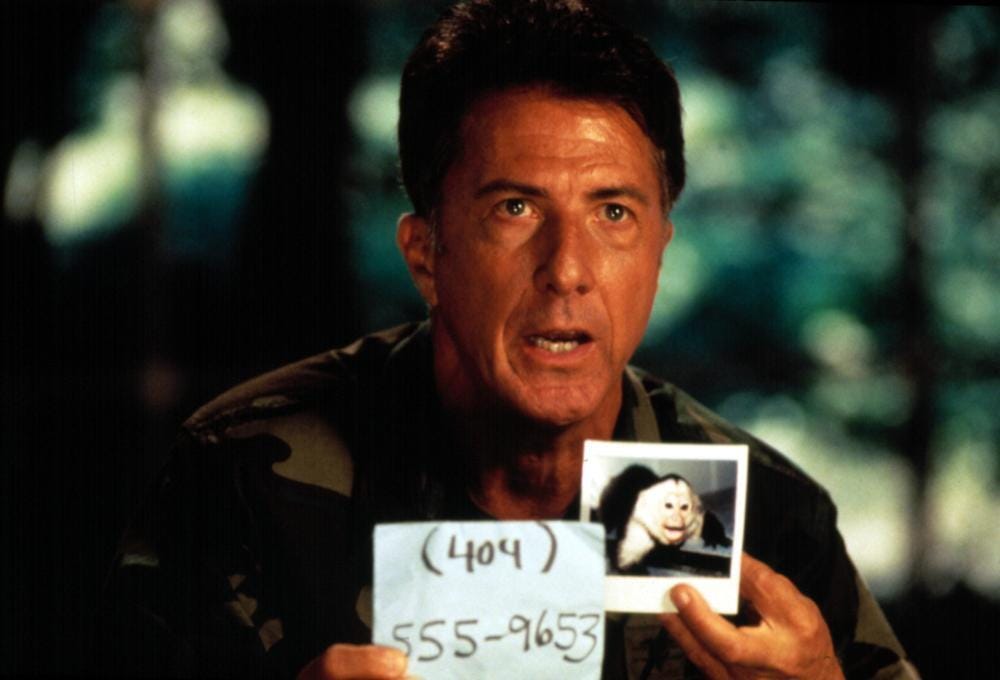
Yeah, but. So Outbreak is the Wolfgang Peterson action adventure movie stars Dustin Hoffman, Renee Russo, Morgan Freeman, Donald Sutherland, young Patrick Dempsey. It's got an all star cast, is What I'm saying it is, and it is a prime example of high concept, 1990s big, well, medium budget. It's only a $50 million movie, though. That's. That. That was real money back in 1990. $50 million. Get you an episode of House of the Dragon now. But the, you know, $50 million, that's a lot of money. It's a. It's a big. It's a big movie. It's got great actors, people who would go on to have great careers. Cuba Gooding Jr. And it's ridiculous. It's a. It's a. It's a fairly ridiculous film, but I think it actually really captures the actual response people would have to being quarantined in their town. Possibly better than any of the other things we've seen so far or discussed so far today.
- [32:06]
B
Yeah, no, I mean, they definitely got some things right. It got that reaction. And when you think about it, given the nature of that particular virus in the movie that they. Fictional virus, obviously, but, you know, quarantine a town would make sense in that kind of. In that kind of environment. And you can see how people would rebel against also, you know, the disease. The one part I think it did get right also, we were talking about it before, but the sort of contact, you know, the contact, the contact tracing, the sort of putting the mystery together of where this came from. I mean, it's more stylized because it's Hollywood and, you know, they're on a helicopter onto a boat.
- [32:44]
A
Yeah.
- [32:45]
B
You know, there's the monkey and all. You know, it's the same basic process, right. It's like, well, this person got it from this person. We know this person got it here. Oh, there was this movie theater. Could we trace it back? We go back, we get this plane, huh? And they eventually figure out it came from this monkey that, you know, whatever. And.
- [33:05]
A
And the.
- [33:06]
B
The leap from monkeys to humans is a thing, you know, the species cry. I mean, that's how these diseases sometimes appear. Ebola today, you know, that it was first detected in the 70s. And, you know, one of the theories is that it was circulating for a long time in the bat population and it kind of made some kind of jump to humans or was given to humans in some of the minds of the drc, Democratic Republic of the Congo. So, you know, there, you know, as. I think the standard. I think it really depends on what standard we're going by here. If we're going by the standard of contagion and the band played on, it was ridiculous, you know, by the standard of your standard Hollywood movie, you know, not bad.
- [33:42]
A
One of the entire sub genres we have avoided for this. The purpose of this discussion is the zombie film, of course, which you know, is. Is another kind of disease movie and has. But those are the connotations. There are different. It's usually less about the disease itself than standing in for some immigration or whatever, which is a whole different. That's a whole nother episode. Maybe we do a follow up on the zombie surge of the post 911 era.
- [34:09]
B
I am Legend. Right? There's a little medicine.
- [34:12]
A
I Am Legend. I Am Legend is. Well, I mean, it's the most realistic movie about vampire zombies that are created from an. I think an AIDS vaccine. Is that the. Is that. Is that what it was?
- [34:23]
B
I thought it was a cancer.
- [34:24]
A
Or was it a cancer vaccine?
- [34:26]
B
I can't remember. I don't. I don't.
- [34:28]
A
It's been a while since I watched I Am Legend. Good movie. I've always liked it.
- [34:32]
B
Scary. Scary movie. Scary movie.
- [34:34]
A
Scary. It is a scary movie. Those are some scary vampires. But Outbreak is great. Could you imagine? So I did not see Outbreak in theaters. I saw it when it was on hbo. This was a pretty regular HBO film for a long time. But could you imagine having seen that? The theater scene with a guy coughing and spreading all of the germs everywhere. In a theater with people, You could just. I just imagine Wolfgang Peterson being like, yes, yes, this is perfect.
- [35:09]
B
I mean, I'm pretty sure I did see it in the theater. I don't remember if I sort of started paying attention because, I mean, think about it. If you're in any large room, if you've ever. And I'm a public health guy, so I do this. If you like to stop for about three minutes and just listen, you'll hear sneezes, coughing, you know, everything. And people just, you know, our bodies make noises all the time, even when we're healthy. So yeah, that would have been. That would have been wild. I don't think I was paying attention. I don't recall paying attention to that at the time. I thought that was a really well done scene. The sort of. The way that movie portrayed transmission different from contagion. And this is the movie technical stuff. I don't know this stuff at all. I mean, Soderbergh, though, like, he's got these like flashes where like you stop the scene and you see where someone is touching a thing. Whereas in Outbreak, right, you sort of followed the droplets. Remember the scene in the hospital where the droplets go in the Air duct.
- [35:59]
A
And through the air duct. Yeah, yeah, yeah.
- [36:02]
B
Which I thought was good. I thought it was very well portrayed.
- [36:05]
A
No, that is. It's funny because that is a very literalist way to be. Like, how do I demonstrate visually what is happening with this disease? I'll go through the air ducts. Yes, that will work. But I do love if we will jump back to contagion here for a second. I do love what Soderbergh did with the editing and the musical choices there. The film is scored by Cliff Martinez, who's best known for Drive and some other things. But he has this kind of techno. This kind of driving techno score that it really feels like a rhythm every time somebody touches a door or touches their face, as we learn you do 1,000, 3,000 times a day, whatever. The. Just this. This kind of constant sourcing of transmission. And you don't realize it at first. You don't realize what these. What these very intentional camera shots are doing until a few minutes into it. You're like, oh, this is the path of transmission. This is the. These are the vectors. Peanuts at an airport lounge. Never again. Never. Never. Not even once.
- [37:10]
B
You don't. You don't want to know what people cover healthcare. Like, that's like the third. Like, one of the first things you always hear is like, never eat the peanuts or pretzels. Like, never. You don't want to know because just think about it. These things are sitting out there. People are sticking their hands in. Do you know where people's hands have been?
- [37:25]
A
They're sneezing all over them. They're coughing. It's. It's. It's everywhere.
- [37:29]
B
Worse than that, right?
- [37:32]
A
My favorite shot in this film, though, Jonathan, maybe you notice this. We. There's a prologue in an African village, and then we. We go to Dustin Hoffman, and he's got some family drama. And then we basically take a tour of the BSL labs, which is done in a single tracking shot. Where we go from BSL1, which is where a little title card says, like, flu, cold, whatever. BSL2, which is, I don't know, more contagious diseases. Then we get to, like, measles. And then finally you get to BSL4, and it's, you know, Ebola and Hantavirus, I think. So anyway, the shot is like. It's a. It's this oner. It's a tracking shot all around the lab. And it's important because it shows you in a very continuous and fluid way, the leveling up of security in these rooms. The leveling up of, you know, precautions that are taken. And I sat there thinking to myself, oh, man, this is the Copacabana shot from Goodfellas. This is actually the. This is the same shot. And then I stopped for a second. I was like, wait. And looked it up. And sure enough, Michael Ballhaus was the cinematographer on both Goodfellas and this. And I was just like, I wonder if he went to. Wolfgang Petersen was like, I can do the Copa shot, but for BSLs. And Wolfgang Peterson was like, yes, do it.
- [38:54]
B
That is wild. Yeah, it makes sense. It's the same shot, right? Except instead of, you know, slipping a couple bucks to the usher and all that, you're putting on the biohazard suit. Yeah.
- [39:05]
A
Probably took less time to light. Cause you don't have to go through the kitchen. But it's a great shot and it's a great sequence. And look, this is a really entertaining movie. It's silly in a lot of ways. It is silly in a lot of ways. One of them being the paranoid thriller aspect. So before the show, we were talking about this a little bit. It is a little bit like, this is the thing that rankles the most with me on this film. There's a version of this film where they're just trying to stop this disease. And I think that's slightly better than the version that we end up with, which is where the military is trying to keep this disease a secret so they can use it as a weapon at some point. Which, I mean, maybe. I don't know. You're. You're the disease expert. Is this a regular thing that we do? Do we have a big collection of secret viruses that we can deploy at any. At any point, Jonathan.
- [39:54]
B
I mean, I. You know, I don't know. And if I did know, I'd have to kill you or give you the virus, I guess. You know, I mean, who knows what kind of, you know, research is going on in our. In our. In our bioweapons labs, et cetera. You know, the paranoid there. First of all, by the way, it does. Don, you know this, but is Donald Sutherland. If, like, if I see him in a movie, should I assume we're in a 70s paranoid movie?
- [40:17]
A
Yes.
- [40:17]
B
Like, I feel like he's always. That's always what he does.
- [40:20]
A
That's his.
- [40:20]
B
In jfk, too, right? He's in jfk, yeah.
- [40:23]
A
He's the. He's the best sequence in JFK is where he is. He's laying out the whole conspiracy to Kevin Costner. It's one of my favorite favorite moments. In film. Yeah.
- [40:32]
B
No, he's. He's great. So I don't know. You know, certainly. Right, though. I mean, now we get to Covid, right? I mean, one of the COVID theories is that this was a bioweapons lab in China or some kind of research lab, and it kind of walked out of a lab. So I don't know what we do and don't know, and I wouldn't know. That's not my kind of thing. I'm not clear if they can get hurtling on here. All right, maybe ask.
- [40:56]
A
Keep your secrets. Keep your secrets, Jonathan. That's fine. That's fine. But no, that's the one thing, because there's a version of this film that has a real debate, again, at a heightened level of we're gonna wipe out this town with a sub nuclear blast to stop the spread of the virus. Which, like. Okay, I mean, a little extreme, but that's a conversation we could have, I guess. That's a debate. That's a debate Americans could have. And there's that great scene with J.T. walsh, who's playing the chief of staff of the president, and he's like, I am not taking this to the President. I am not taking a plan to murder 2,000Americans to the president. Unless we are all saying in public that we're going to do it. Because that's a disaster politically, which, yes, also potentially morally and ethically. But again, at least that's a debate. Once you start getting into, like, oh, well, they're doing it to benefit themselves. That's crass. I find that crass less interesting, frankly. Less morally ambiguous.
- [42:00]
B
Yeah, yeah, No, I mean, there was a clear bad guy, right? I mean, the government developed this bioweapon and now they want to keep it secret. And that's why they're not going to. That's why they're going to massacre a town instead of curing the people. Yeah, it doesn't really, you know, and then they realize, you know, that, that, that I. I mean, you have to be pretty far on the paranoid spectrum to think that's how things would work. I mean, as we saw in the other two movies, government can get things wrong, it can mess up, but you're much, you know, it can. You know, it's much like, more likely to because of, you know, bureaucratic infighting or funding issues, political agendas, or the fact that, you know, the people at the cdc, like everyone else, are human beings and they're gonna make mistakes, they're gonna fuck up and, you know, that Happens. And that happens in the first two movies in multiple occasions. So, yeah, that was not. But, you know, whatever. I mean, it was to me. I know, you know, it's pretty obvious their commitment to reality was out the door once we got into these sort of helicopters topping the airplane. I mean, I guess that could actually work that way, you know. Sure. But just, I mean, sure.
- [43:04]
A
That's probably more realistic, frankly, than finding one monkey in the forest of, you know, of California.
- [43:11]
B
The.
- [43:12]
A
All right, so, you know, each of these movies kind of has a message that we can take away from them. Again, they're not message movies, but they have messages that we can take away from them. And the band played on. It's, you know, the importance of the consistency of messaging and search, like searching for the actual truth instead of trying to massage political reality with contagion. It's, you know, the importance of maybe having a plan in place to stop the spread of a virus that people can, you know, adhere to. What do you think is the message we should take away from Outbreak? I have one. I have a message, but I want to. I want to hear what you have to say first, John.
- [43:53]
B
I mean, I feel like that was, you know, keeping with what we were talking about. There's a reason we said 70s throwback, thriller paranoia. I mean, very much. The government is out to get you. You know, don't trust them. And that was the message I got that there are, you know, there might be good people working in places like cdc, but you need to be insanely distrustful of the governor General, the defense establishment in particular. Again. And if you see Donald Sutherland anywhere, assume he's lying to you and he's conspiring against you.
- [44:19]
A
It really is interesting. You have this, you know, in the 90s, we have this period of unparalleled peace and prosperity in American history. And then we also get, like, the X Files and Outbreak. It's like, really don't trust the government, though. That's. That's the number one issue. No, the lesson, the lesson. And I'm sad that you missed this, Jonathan, because it's very important. Lesson. Lesson is don't smuggle monkeys into the country. This whole movie starts when somebody smuggles a monkey into the country. You know what? That's no good. Don't do that. Don't try to steal monkeys from labs and sell them for pets. The monkeys aren't pets. They're not. Unless you're Michael Jackson. No. Monkeys as pets. That's. No. That's not allowed. Don't do that. That's my lesson from Outbreak.
- [44:59]
B
Good. Good life lesson. Good life lesson.
- [45:01]
A
Good life lesson. Well, Jonathan, thank you for discussing these viral films with us. And you know, again, I do not think, I do not think anybody has too much to worry about from Ebola or Hanta. But, you know, if things start getting out of hand, watch these movies and take away the lessons from them. Don't panic. Just let's try and figure this out. Let's do a little better job this time.
- [45:29]
B
Wash your hands, too. That's good. Wash your hands. Wash your hands.
- [45:32]
A
I still have bottles of hand sanitizer all over my house. Little remnants of the COVID era. All right, thanks, Jonathan. And everybody make sure you hit like and subscribe. Share this with your friends. You know, if you enjoyed this and you can watch these movies, I think Outbreak and Contagion are on vod. You can pick them up on Blu Ray for relatively cheap. And the Band Played on is on hbo. Max. You can watch that there and that. But we didn't even talk about the cast of that movie. But that is a, that's a really, really great. I was a little bit surprised to, to realize that critics were not that into it because it, it's, I think it's really good. It's really, it's, I think it holds
- [46:14]
B
up better than the initial reaction. I'll just say, can I put in a plug for the book, the Randy Schultz book? It had some problems. Like any book is written in the moment by someone in the middle of the story, but as a piece of journalism, as someone who does tries very hard to write narrative journalism that is also about larger substantive issues. I think it's an incredible book. If you're interested in journalism or if you really want to be transported back in time. And again, to get that theme we were talking about, about how attitudes about sexuality have and haven't changed since that period. I can't recommend the book enough.
- [46:50]
A
Yeah. And the name of the book is and the Band Played on and the Band Played On. Politics, People and the AIDS Epidemic. You can pick it up anywhere books are sold, so you should check it out. Great. Well, Jonathan, thanks for being on. And we'll be back with more takes here at Bulwark. Subscribe like, Share do all those things.