Loading summary
Transcript212 lines
- [00:00]
Beth Shelburn
Well, the holidays have come and gone once again. But if you've forgotten to get that special someone in your life a gift, well, Mint Mobile is extending their holiday offer of half off unlimited wireless. So here's the idea. You get it now. You call it an early present for next year. What do you have to lose? Give it a try@mintmobile.com Switch limited time
- [00:20]
Narrator/Interviewer
50% off regular price for new customers. Upfront payment required $45 for three months, $90 for six month or $180 for 12 month plan taxes and fees. Extra speeds may slow after 50 gigabytes per month when network is busy See Terms Support for the show comes from Public, the investing platform for those who take it seriously. On Public you can build a multi asset portfolio of stocks, bonds, options, crypto and now generated assets which allow you to turn any idea into an investable index with AI.
- [00:45]
Beth Shelburn
It all starts with your prompt. From renewable energy companies with high free
- [00:48]
Narrator/Interviewer
cash flow to semiconductor suppliers growing revenue over 20% year over year. You can literally type any prompt and
- [00:54]
Beth Shelburn
put the AI to work. It screens thousands of stocks, builds a
- [00:57]
Narrator/Interviewer
one of a kind index and lets you back test it against the S&P 500.
- [01:01]
Beth Shelburn
Then you can invest in a few clicks.
- [01:03]
Narrator/Interviewer
Generated assets are like ETFs with infinite
- [01:05]
Beth Shelburn
possibilities, completely customizable and based on your
- [01:08]
Narrator/Interviewer
thesis, not someone else's.
- [01:09]
Beth Shelburn
Go to public.com podcast and earn an
- [01:12]
Narrator/Interviewer
uncapped 1% bonus when you transfer your portfolio.
- [01:14]
Beth Shelburn
That's public.com podcast paid for by Public
- [01:17]
Narrator/Interviewer
Investing Brokerage Services by Open to the Public Investing Inc. Member FINRA and SIPC Advisory Services by Public Advisors llc. SEC Registered Advisor Generated Assets is an interactive analysis tool. Output is for informational purposes only and is not an investment recommendation or advice.
- [01:28]
Beth Shelburn
Complete disclosures available at public.com disclosures this
- [01:31]
Narrator/Interviewer
is Bethenny Frankel from Just Be with Bethenny Frankel. Most dog food is marketing, not nutrition. That is why Biggie and Smalls eat just food for dogs. Real 100% human grade food with ingredients I actually recognize. And yes, I do see the difference. Better digestion, healthier skin, more energy. Dogs that feel better. My babies, if you've been on the fence about switching, stop overthinking it. What's more important than your furry babies and their health? Go to justfoodfordogs.com right now and get 50% off your first box. No code needed. Just try it.
- [02:07]
Beth Shelburn
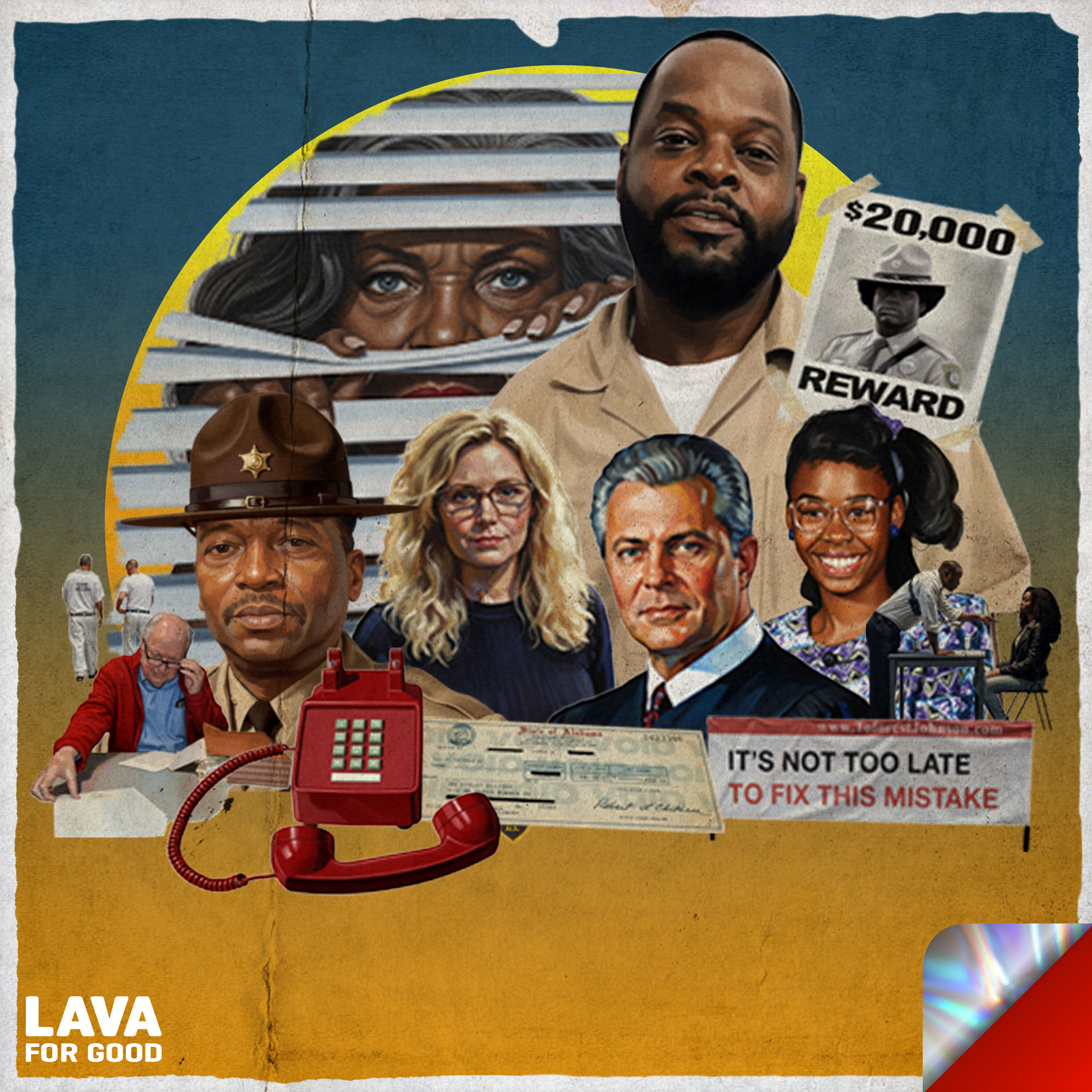
Hi there, I'm Steve Fishman from Orbit Media and I've got a goodie for you today. We're Dropping the first episode of Ear Witness, which is a favorite podcast of mine from our friends at Lava for good. They released it in 2023 and it didn't get enough attention, so. So luckily they're re releasing it in their Bone Valley feed. Personally, I think this podcast will rile you. It riled me. It's the story of Tafarus Johnson, a man who was wrongfully convicted for murder in Alabama and is still on death row. There weren't any eyewitnesses, no physical evidence. Tafores had 10 witnesses who put him at some place other than the scene of the crime. The state tried to convict a different man for the same crime. Maybe most disturbing of all is that his conviction relied on an ear witness. That's the name. This was a woman who claimed to have eavesdropped on an incriminating phone call. A woman whom prosecutors paid for her testimony in secret. A secret they never revealed. Fans of the Burden and Empire and Blood will love this story. All eight episodes of Ear Witness are available now. Wherever you get your podcasts, enjoy.
- [03:39]
Narrator/Interviewer
This is quite a wall here. Oh, these are some great photos.
- [03:45]
Beth Shelburn
That's Jimmy Carter. And that's me.
- [03:49]
Narrator/Interviewer
Uh huh.
- [03:49]
Beth Shelburn
That's me and Loretta Lynn.
- [03:53]
Narrator/Interviewer
How did this come about?
- [03:54]
Beth Shelburn
She was given a concert in Birmingham. Carried me backstage to meet her.
- [03:59]
Narrator/Interviewer
Look at this suit that you have on. Maybe you've never heard of Bill Baxley, but here in Alabama, he's a big deal.
- [04:07]
Beth Shelburn
That's Johnny Cash, isn't we? Oh, wow.
- [04:09]
Narrator/Interviewer
Baxley is 82, slightly balding, with silver hair and eyebrows. In the pictures he's showing me on the wall of his office, I see him looking younger, his hair is dark, and he's standing with famous musicians and politicians.
- [04:26]
Beth Shelburn
That's my daddy swearing me in for my first term.
- [04:30]
Narrator/Interviewer
Wow. Baxley was elected as Alabama's Attorney General when He was just 28 years old. He later served as Lieutenant Governor and he's still practicing law today. During his career, Baxley prosecuted hundreds of cases and sent three people to Alabama's death row.
- [04:49]
Beth Shelburn
There are some crimes that are so wrong and so horrible that they only deserve one punishment.
- [04:59]
Narrator/Interviewer
He's a lifelong defender of the death penalty, a true believer. Like when the US Supreme Court outlawed the death penalty in the 1970s, Baxley worked hard to bring executions back to Alabama. He's that kind of true believer. So it's not surprising that Baxley was skeptical when his son, who's also an attorney, asked his dad to look over a case because he believed an innocent man was on Death row.
- [05:29]
Beth Shelburn
Over the course of my long career, I've had dozens and dozens of instances where these, I'll call them Do Gooders, but they're good people. They take up various causes of people that have been sentenced to death and they get interested in trying to help them and they all think they're always innocent.
- [05:51]
Narrator/Interviewer
Baxley didn't even glance at the case file until weeks later on an icy winter morning. It was too slippery to walk down the driveway and grab the newspaper, so he picked up the file that his son sent him and began reading about a black man named Taforest Johnson who was sentenced to death for killing a sheriff's deputy.
- [06:14]
Beth Shelburn
I mean, mid morning, I couldn't believe what I was reading. I. I wouldn't have believed that something like this could have happened.
- [06:20]
Narrator/Interviewer
What was so unbelievable about it?
- [06:22]
Beth Shelburn
Everything. Everything. I don't know how the guy got indicted, how they got. I didn't see how the jury convicted him. I would have never believed that that could have happened in Alabama. No question in my mind this guy was not guilty of this crime. And I couldn't, couldn't comprehend how this could happen.
- [06:45]
Narrator/Interviewer
There's only one other case where Baxley thought the defendants were innocent. And that case is almost 100 years old. So what is it about this case, to Forrest's case that convinced Baxley that Alabama is trying to execute an innocent man?
- [07:04]
Beth Shelburn
It's a unique absurdity that I've never seen before. It's too late to give him back all those years he's been on death row, but it's not too late to correct it today and get him out for the future. It's wrong that it's gone this long, but it's still not too late to correct it.
- [07:30]
Narrator/Interviewer
My name is Beth Shelburn. Like Bill Baxley, I was born and raised in Alabama. I grew up about a mile away from where the crime at the center of this story took place. I'm a journalist and writer, and for the last three years I've been investigating the case that rocked Bill Baxley's world. The story begins on a hot July night in 1995. It unfolds in two places at once. The Crown Sterling Suites Hotel and a nightclub that's almost four miles away called T's Place. By the end of the night, one man will be shot dead and two others will encounter someone who will put them at the center of the murder investigation. To Forest. Johnson is still on death row and he's running out of time.
- [08:46]
Beth Shelburn
Do you hear my madness?
- [08:54]
Narrator/Interviewer
Laughter hides my fears. Sorrow's depths are endless
- [09:09]
Beth Shelburn
in this valley of tears I wanna see a revelation
- [09:26]
Narrator/Interviewer
I wanna know who you are
- [09:32]
Beth Shelburn
I'm
- [09:33]
Narrator/Interviewer
reaching out in desperation to the one who's holding the.
- [09:48]
Beth Shelburn
To the one who's holding the star.
- [09:57]
Narrator/Interviewer
I'm beth shelburn, this is ear witness. Chapter one. Behind the crown. Turn around.
- [10:13]
Beth Shelburn
911. Yes, ma', am, this is very. Calling from Crown Sterling Suites Hotel in Birmingham, Alabama. I'm calling because I've had several guests report what appears out the window to have been two gunshots and people running in the parking lot.
- [10:27]
Narrator/Interviewer
It's 12:55am on July 19, 1995.
- [10:33]
Beth Shelburn
Oh, here. There's 2300 Woodcraft. That is correct. I have security on the premises, which is Chipewee county police. But I'm calling you because I want to make sure that the Birmingham police arrive, please. All right, we'll get the one out. Thank you very much. All right.
- [10:52]
Narrator/Interviewer
The Crown Sterling Suites Hotel was a nine story building in Birmingham. Today the hotel is in Embassy Suites. Inside the main entrance of the hotel, there's a pale tiled walkway that leads through the lobby. The front desk is to the left, but keep walking past it and you enter a huge atrium, an open space surrounded by windows with an indoor garden of leafy green plants and trees. The tiled walkway leads to a koi pond with the fountain at the center. It's lush and humid inside, but despite all the windows, the feel is dim and moody. Keep walking past the koi pond and there's a short hallway that leads to the hotel's back parking lot. It was here, outside the double doors of the Crown Sterling Suites Hotel, where a deputy sheriff was killed. No one saw the murder, but a few people heard gunshots.
- [11:59]
Beth Shelburn
I remember hearing popping noises from the distance.
- [12:04]
Narrator/Interviewer
Barry Rushakoff was working at the front desk when he made that 911 call.
- [12:10]
Beth Shelburn
When I heard it, I believe that's when I tried to call Officer Hardy on the radio with no response.
- [12:17]
Narrator/Interviewer
Officer William Hardy, who went by Bill, had been a deputy with the Jefferson County Sheriff's office for 23 years. He was also a security guard at the hotel where he worked the night shift to make extra money. Hardy was 5 foot 10, had a thin mustache and wore his hair in a Jheri curl. He was known to be easygoing and friendly. When Deputy Hardy wasn't making hotel security rounds, Barry usually saw him wearing his brown and tan deputy uniform, sitting at one of the tables in the hotel's atrium, smoking Moore Brand menthol cigarettes and drinking coffee.
- [12:58]
Beth Shelburn
You Know when I worked there and when I was working nights it was me, you know, Officer Hardy or whatever, officer on duty and. Or we would sometimes have a houseman who is cleaning floors or something but very minimal group. And I never felt unsafe.
- [13:14]
Narrator/Interviewer
Barry wasn't the only person to hear the popping noises. A few guests at the hotel also heard gunshots, including Marshall Kelly Cummings, a guest in a fourth floor room directly above the hotel's back exit.
- [13:29]
Beth Shelburn
Dude, I can remember it like it was yesterday. Now as far as the details, as
- [13:33]
Narrator/Interviewer
I worked on this project I started referring to Cummings as the Keebler cookie guy because in 1995 he worked for Keebler as a truck driver.
- [13:43]
Beth Shelburn
When all this went on and I was with Keebler driving one of their step vans, delivering cookies and crackers and stuff.
- [13:49]
Narrator/Interviewer
And we had a. Cummings was staying at the Crown Sterling for a company training. After the workday was over, he drank a few beers at the hotel bar with some co workers and then he and the other Keebler employee he was rooming with turned in between 10 and 11pm But Cummings was not asleep for long.
- [14:10]
Beth Shelburn
But he just. I woke up and it was. I kept hearing somebody talk kind of talk orgie.
- [14:16]
Narrator/Interviewer
So you heard some voices and it sounded like they were arguing or not
- [14:20]
Beth Shelburn
really bad, but they were, they were having a conversation.
- [14:24]
Narrator/Interviewer
Was it. It was male voices?
- [14:26]
Beth Shelburn
Well they quit arguing and then I didn't hear anything. So I laid back down and it probably wasn't 20 seconds, 30 seconds, 45. I mean I didn't count them. Boom. Small caliber gun. It wasn't a big caliber. And all of a sudden a few seconds later, boom. About the second time I sat up and went, that was a gun.
- [14:54]
Narrator/Interviewer
He remembers turning to the co worker he was sharing a room with.
- [14:58]
Beth Shelburn
I said did you hear that? And he says yeah. So I stood up and opened the blind to get my eyes fixed because it was dark.
- [15:06]
Narrator/Interviewer
Then it had the lights directly beneath his window. Cummings sees a four door car. It's dark copper or light brown with a vinyl top, parked facing the hotel's back double doors. He sees a tall person get into the driver's side of the car, close the door and slowly pull away with the headlights off.
- [15:29]
Beth Shelburn
And so I called down to the front desk, I said, hey, there's been shots fired out here. Did you hear that? I believe I got a phone call from someone in the room saying they heard gunshots.
- [15:39]
Narrator/Interviewer
So Barry makes that initial 911 call, hangs up and decides to investigate.
- [15:45]
Beth Shelburn
I jumped over the counter to walk back And I was walked back. I saw Officer Hardy's radio.
- [15:52]
Narrator/Interviewer
Barry sees Deputy Hardy's radio on a table in the hotel's atrium. And right next to it, his cigarettes still burning in an ashtray. Meanwhile, back on the fourth floor, Marshall Kelly Cummings hangs up the phone with Barry and goes back to the window.
- [16:15]
Beth Shelburn
And I kept looking, and I kept looking. Finally, my eyes got to where I could see, and I looked down. I could see him laying on the ground. I went, oh, no, this ain't good.
- [16:25]
Narrator/Interviewer
Cummings spots a body on the ground and realizes someone has been badly hurt. It's right around this time Barry makes the same terrible discovery.
- [16:36]
Beth Shelburn
There's a hallway that went to the door that went back out to the back parking lot. As I turned the corner to go down that hallway, and I looked out the door in the distance, I saw Officer Hardy on the ground. That's when I ran back to the front desk, made an emergency phone call to the police. Yes, ma', am, this is Barry from crowd Steel Exchange Hotel. Again, I have a pit. What appears to be a Jefferson county police officer shot in the back of our building. He is not moving. People in the car drove away. And you say, is he in his blind on the. On the pavement? I'm a little afraid to go out. Is he in uniform? Yes, he is a Birmingham police officer, Jefferson County. He is a hired nighttime security for us. Hey, do you know if you can find out anything, like if he's breathing, conscious and how much blood? I'm trying, ma'.
- [17:34]
Narrator/Interviewer
Am.
- [17:34]
Beth Shelburn
My. My problem is I don't know if the people are still out there.
- [17:37]
Narrator/Interviewer
Okay, we.
- [17:38]
Beth Shelburn
We should be there shortly. You find out. Thank you very much. I'm gonna go and try to look on it. Okay, thank you. Got a Jefferson county deputy that's been shot on the back entrance of the hotel Crownstrone Suites. It is one of us, and we are. They have got one down. He has been shot. And they said it looks bad, and it looks bad.
- [18:02]
Narrator/Interviewer
332, do we have any information.
- [18:06]
Beth Shelburn
Do we have anything on a suspect?
- [18:25]
Narrator/Interviewer
After he makes the second 911 call, Barry walks down the hallway to the back parking lot.
- [18:32]
Beth Shelburn
And then I went back out to Officer Hardy. He was not in good condition. He did have a wound to his face. He was making a. A gurgling, gasping noise. You know, he was not conscious. I believe I took my jacket off, my uniform jacket off to try to cover him or put under his head or try to comfort him. But fortunately, officers arrived so quickly, and I was removed from that area.
- [19:01]
Narrator/Interviewer
Immediately, more than a dozen officers from four different agencies arrive at the hotel. One of them is Detective Tony Richardson, who says he'd known Deputy Hardy since he first started working for the Jefferson County Sheriff's office in 1978.
- [19:20]
Beth Shelburn
Being black and Bill being black, naturally I noticed him. I was told more than once to get a haircut that, you know, to be a deputy sheriff you gotta have your hair cut. So the reason I mention that is because from the first day that I ever saw him, his hair was out to here.
- [19:42]
Narrator/Interviewer
Big afro, big Afro.
- [19:45]
Beth Shelburn
And he would put on his hat. He wore that hat religiously. Everybody else at the sheriff's office hated those hats. They didn't want to wear them, you know, but he always wore his hat.
- [19:57]
Narrator/Interviewer
Deputy Hardy often wore his traditional broad, brimmed tan, Smokey the Bear style sheriff's hat. It was later entered as evidence from the crime scene with a bullet hole through the brim.
- [20:11]
Beth Shelburn
And he would have it on his head and all that hair would be on the side, would be out here. And I'm like, who is this guy? How can he get away with that? And not only that, he is in the sheriff's office. How can he get away with that? So I was intrigued by him, fascinated by him, but I was scared of him. I was scared to meet him because I thought in my mind, this guy's got to be crazy, you know, to do that and get away with it, he's got to be crazy. I was scared of him. But anyway, when I first met him, I met him and talked to him, he started to feel better about. Well, I started to feel better about him. We were never just bosom buddies, real close, but we were close and we knew each other.
- [20:59]
Narrator/Interviewer
Tony Richardson and Bill Hardy had been colleagues at the Jefferson County Sheriff's office for 17 years. Richardson remembers the last time he saw Hardy alive.
- [21:12]
Beth Shelburn
The last day I saw Bill, my brother and I. My brother worked for the sheriff's office also. And we were standing there smoking and Bo drove out the alley and he was pulling up 22nd and he stopped in the road and he started to talk to us. And he said, hey, guys, how y' all doing? Loan me some money. Just, you know, stuff like that. And we laughed and talked for a minute and that was the last time I saw him. And the next time I heard Bill's name was about 2 o' clock in the morning when I got the call saying that he had been shot. At that time, I was what was considered a crimes against persons detective, which meant that I worked Homicides. The lieutenant felt like, because it involved detective, deputy, sheriff, and, you know, that we needed all the help that we could get, so I got called out.
- [22:07]
Narrator/Interviewer
Did you go to the actual scene?
- [22:10]
Beth Shelburn
Yeah.
- [22:11]
Narrator/Interviewer
What did you encounter when you got there?
- [22:14]
Beth Shelburn
Well, by the time I got there, Bill's body was gone.
- [22:21]
Narrator/Interviewer
Paramedics had already lifted Bill Hardy into an ambulance and rushed him to the emergency room of Birmingham's largest hospital. He is gravely injured with two gunshot wounds to his head and jaw. A medical examiner notes a bullet wound to Hardy's finger likely means he raised his hand in a defensive posture when he was shot. Police go to his house to tell his wife, Patricia Diane Hardy, and bring her to the hospital. Jim Woodward, the chief deputy in Jefferson county, also rushes over when he hears that Hardy was shot. What do you remember about the incident?
- [23:03]
Beth Shelburn
I got the call that Hardy had been shot, and they told me, it looks very serious. So I got in my car and went down to the hospital. I stood there while they were operating on me, and then I just heard one say, that's it. It's over. We can. We can't do anymore. It's over. We can't save him. He's gone.
- [23:27]
Narrator/Interviewer
What does that feel like when you are a career law enforcement officer and one.
- [23:31]
Beth Shelburn
Well, it's kind of devastating to you. You know, you get to know these guys, and I knew Hardy. That's a very devastating thing to happen to you.
- [23:44]
Narrator/Interviewer
Deputy Bill Hardy is pronounced dead seven hours after he was shot. The cause of death is two gunshot wounds fired at close range. I wanted to know more about Deputy Hardy, so I wrote to several family members inviting them to talk. They never responded. And I can only imagine his murder must be one of the hardest things they've ever experienced. But I have learned a few things about Deputy Hardy. He was married to Patricia Diane Hardy. He had two children and four adult stepchildren. Hardy started working as a deputy in 1972. His duties included delivering subpoenas and directing traffic outside the courthouse.
- [24:37]
Beth Shelburn
You know, It was rough. It was rough. It's rough right now. It's rough right this minute working homicide. I've worked a bunch, but none of them affected me like the killing of a deputy sheriff. You know, you have a bond with the guys you work with in that uniform. Whether you. You know him or not, you have a bond. So when I was a deputy sheriff working another deputy sheriff's murder, do you think that was emotional? Yes, it was very. And had it been my decision, the day we caught the people that did it, let's let's put them on Death Throat.
- [25:39]
Narrator/Interviewer
Lead detective Tony Richardson and his team of investigators have no eyewitnesses to the shooting and there's no known motive. A fellow officer has just been shot and they have almost no evidence to go on. At the exact time that Deputy Bill Hardy was shot, Taforest Johnson and his friend are Dragus Ford were four miles away from the crime scene at a downtown Birmingham nightclub called T's Place, but they would soon become the focus of Tony Richardson's investigation.
- [26:25]
Beth Shelburn
Foreign.
- [26:30]
Narrator/Interviewer
For the show comes from Public, the investing platform for those who take it seriously. On Public you can build a multi asset portfolio of stocks, bonds, options, crypto and now generated assets which allow you to turn any idea into an investable index. With AI.
- [26:43]
Beth Shelburn
It all starts with your prompt. From renewable energy companies with high free
- [26:47]
Narrator/Interviewer
cash flow to semiconductor suppliers growing revenue over 20% year over year over year, you can literally type any prompt and
- [26:53]
Beth Shelburn
put the AI to work. It screens thousands of stocks, builds a
- [26:56]
Narrator/Interviewer
one of a kind index and lets you back test it against the S P500.
- [26:59]
Beth Shelburn
Then you can invest in a few clicks.
- [27:02]
Narrator/Interviewer
Generated assets are like ETFs with infinite
- [27:04]
Beth Shelburn
possibilities, completely customizable and based on your
- [27:07]
Narrator/Interviewer
thesis, not someone else's.
- [27:08]
Beth Shelburn
Go to public.com podcast and earn an
- [27:10]
Narrator/Interviewer
uncapped 1% bonus when you transfer your portfolio.
- [27:13]
Beth Shelburn
That's public.com podcast paid for by Public
- [27:16]
Narrator/Interviewer
Investors Brokerage Services by Open to the Public Investing Inc. Member FINRA and SIPC Advisory services by Public Advisors, llc. SEC Registered Advisor. Generated Assets is an interactive analysis tool. Output is for informational purposes only and is not an investment recommendation or advice.
- [27:27]
Beth Shelburn
Complete disclosures available at public.com disclosures this
- [27:30]
Narrator/Interviewer
is Bethany Frankel from Just Be with Bethany Frankel. Let me be blunt. Most dog food is junk. It just is. And I'm not feeding junk to Biggie and Smalls. That is why they eat just food for dogs. It's real 100% human grade food with ingredients I actually recognize. Not mystery pellets pretending to be healthy. And once I switched the difference was obvious. Better digestion, better skin, more energy. Dogs who actually feel good instead of just surviving dinner. Here's the thing, you care about quality. You make an intentional choice to be healthy. So why are you gambling with your dog's health? So let's think about our furry babies. Go to justfoodfordogs.com right now and get 50% off your first box. No code. Just try it. Because once you see the difference, you're not going back. When you stay in your home, what you love gets to stay too. From the gardens that grow wild to
- [28:22]
Beth Shelburn
the grandkids that run wilder.
- [28:24]
Narrator/Interviewer
From the Friday night baseball games to the Sunday morning brunches, even the daily crosswords and weekly book clubs, there's room for it all. With help from Home Instead, the largest in home Senior Care network. With over 30 years of trusted experience delivering the peace of mind you deserve, visit home instead online for a better what's next? Just a few hours before Deputy Hardy is shot, our Dragis Ford gets into the passenger side of his 1971 black Monte Carlo. It's an old car and the driver's side door doesn't open, so he slides over into the driver's seat, starts the ignition and heads out to pick up his friend Taforest Johnson to go to a club called T's Place. I wasn't able to interview Taforest or Ordregas for this podcast. The Alabama Department of Corrections doesn't allow people on death row to do interviews with reporters like me. So I was unable to talk to Taforest directly and and died in 2021. I didn't get a chance to interview him before then. I was able to speak to Ardragas mother, Joyce Ford
- [29:50]
Beth Shelburn
that particular night. They said they was going to tease and see. He would go to tees every Tuesday and he have his particular same parking space and everything because he would give them good tips.
- [30:03]
Narrator/Interviewer
Ardragas was willing to pay for a good parking space space because he was in a wheelchair. When Rodriguez was a teenager, a group of men began shooting outside an apartment building he was visiting. He was shot trying to shield his cousin and her baby from gunfire.
- [30:22]
Beth Shelburn
My son when he was got shot when he was 15. I had just gotten off from work. I was tired and the phone rang, rang, rang and I didn't answer the phone, you know, and I finally answered it and they stated that he had gotten shot. I need to rush to the emergency room. That was like a dream, you know, you hear about things happening to other people, but when it hit home, you know. And then he got spinal cord injury. Got shot in the back. Yeah.
- [30:57]
Narrator/Interviewer
And he was paralyzed.
- [30:58]
Beth Shelburn
Paralyzed from chest down. T4 they call it. So that was like a nightmare.
- [31:08]
Narrator/Interviewer
In his early 20s, Ardregas outfitted his Monte Carlo with a makeshift system so he could throw his wheelchair in the back and drive the car using just his upper body.
- [31:20]
Beth Shelburn
He would cut a broom, you know that broomsticks he would put had one to the brakes, one to the accelerator and he would tape it to the Car. He would tape it to it.
- [31:33]
Narrator/Interviewer
So he like retrofitted his car?
- [31:35]
Beth Shelburn
Yeah, he did drive him. He didn't buy the regular equipment that he should have used.
- [31:42]
Narrator/Interviewer
Ardragas and Taforest actually came up with this idea together. Here's Taforest's cousin, Antonio Green.
- [31:50]
Beth Shelburn
Drakers was. I guess that was a pride thing. He didn't want the handicap accessible pedals and stuff in his car. But Tafares come up with this great, this genius idea where they're gonna whale some metal rods to the brake and accelerator pedal so he could use his hands and drive. Well, he get to thinking about this thing and metal rods welded from the brake pedal or the accelerator. That's not too good of an idea in case you get in an accident. He'd hate to see dragons impaled through the seat right here. So he goes and buys two brooms out of the little dollar store wherever. And no measurements, no, just. Nothing precise about it. He just gets the broom and breaks them and duct tape the sticks. One to the accelerator pedal and one to the brake pedal. So Dragus could drive his car.
- [32:44]
Narrator/Interviewer
Could he get around? Well, I mean, did he drive well?
- [32:46]
Beth Shelburn
Real well.
- [32:54]
Narrator/Interviewer
It's been a while since Taforest and our dragis have hung out because Taforest had recently gotten out of prison. He was arrested for driving with a suspended license. And as officers patted him down at the city jail, he tossed something into a nearby trash can. Officers reached into the can and found a plastic bag of cocaine. Taforest ended up pleading guilty to drug possession. Taforest served about a year in prison. And by the night of Hardy's murder, he'd been out about three months. Taforest puts on jean shorts and a Tommy Hilfiger blue and white shirt, then gets into the passenger side of Ardregas car and they head downtown. They pull up and park outside T's place, but it's too early to go inside, so they hang out in the parking lot, flirting with some girls who work at the car dealership across the street. Taforest buys a hot dog from a cart on the sidewalk. Regulars start trickling into the club, drinking, dancing and catching up. Inside. There's thumping music, low lighting. It's tasty Tuesday at T's place, which means women get in free.
- [34:12]
Beth Shelburn
I used to go to teas Tuesday, Thursday, Friday and Saturday.
- [34:18]
Narrator/Interviewer
Barbetta Hunt was one of the regulars who was there that night. What was your nickname back then? Mama Cat. That's like in the world of nicknames,
- [34:30]
Beth Shelburn
that's the best Nickname in the world. My mother, Esther Perkins, and my father, Fred Perkins, they gave me that name when I was born. But that's my name. My name is Mama Cat.
- [34:40]
Narrator/Interviewer
When she was in her early 20s, Mama Cat spent a lot of nights hanging out at T's place.
- [34:46]
Beth Shelburn
When you walk into the door, that's my spot right there. It's on the right hand side. Every time I got. That was my spot. I see, I don't move from this spot. I don't walk to the back. I don't walk there.
- [34:58]
Narrator/Interviewer
I stay right there.
- [35:00]
Beth Shelburn
Me and my friend Velanque, Taco Sanders, we was together. We got there before 11 because the club was always free on Tuesday, Thursday and Saturday before 11 for women.
- [35:11]
Narrator/Interviewer
This is Vellanique Sanders, nicknamed quesi anything.
- [35:15]
Beth Shelburn
After 11, it was $5. And me and Barbetta was very cheap. So we tried to make sure we got Dev in free because the little money we had. Say we wanted to buy something to eat. And I love to get a chicken plate from there. Chicken breast with some french fries.
- [35:31]
Narrator/Interviewer
Did you know to Forrest Johnson?
- [35:34]
Beth Shelburn
Yes, I did. I knew him from hanging out in the neighborhood in Ansley, and I. Oh my God, I had a crush on him. He was the finest. Yeah.
- [35:44]
Narrator/Interviewer
What do you remember about what he looked like?
- [35:48]
Beth Shelburn
He was short, a nice body. Oh, my God. Anyway, he was a ladies man. I will say that. Sweet, always kind. He was just a nice gentleman. Like his mama had raised him really well.
- [36:06]
Narrator/Interviewer
Did you guys ever go out or did he know that you had a crush on him?
- [36:11]
Beth Shelburn
He knew I had a crush on him, but we never went out. No, we would just see each other. I smile, be like, oh, there he is. I'm gonna get him. Yeah, that's it.
- [36:23]
Narrator/Interviewer
Taforest mostly grew up in Birmingham's Pratt City neighborhood, or Pratt for short.
- [36:30]
Beth Shelburn
We grew up together. I mean, closer than just cousins. We were like brothers. Cause we were all pretty much raised right in the same little local community.
- [36:40]
Narrator/Interviewer
While Taforest was growing up, most of his extended family also lived in or near Pratt, including his cousin, Antonio Green.
- [36:49]
Beth Shelburn
You know, since we were toddlers, I mean, babies, we. We were kind of together, took out in this thing. And he was a couple of years younger than I am, so he always kind of held on to my shirt tail and, you know, so I've. I've been closely connected with him for our entire life, pretty much.
- [37:08]
Narrator/Interviewer
Tiforest's mom, Donna, was 17 when she had him. And when Tiforest was young, she was more like a sister to him than a Mother Donna leaned on her parents and siblings to help take care of Taforest. And as Ta Forest got older, she leaned on him to help take care of his little brother.
- [37:28]
Beth Shelburn
He started at a very young age, much too young to, to really be faced with that, the type of responsibility that he took on. He was at an age where he was still a kid. I'm talking about 11, 12, you know, just hitting them teen years. And had to take on the responsibility of taking care of his little brother. You know, he had a little brother that he got ready for school, he ironed his clothes, he did, you know, he's always been that caring little dude, you know, and, and he did that. So he had to take on some things during that time. You know, his mom and dad was there, but his dad was a very, very heavy drinker.
- [38:08]
Narrator/Interviewer
Taforest's father Ronald was an alcoholic and would get violent when he drank, which was every day. This made home life extremely volatile for Tiforrest, his younger brother, little Ron, and especially his mother Donna. She eventually left Ronald when Taforest was a teenager and moved in with another man who had an apartment in the Tuxedo projects in Birmingham's Inslee community, also known as the Brickyard.
- [38:38]
Beth Shelburn
Oh, it was called the Brickyard.
- [38:41]
Narrator/Interviewer
Vellanique, AKA Quesi, the one who had a crush on Taforest, also grew up there. It was rough out there.
- [38:50]
Beth Shelburn
You know, my mom had three girls, my aunt had three, and we lived in a five bedroom project without grandparents.
- [38:57]
Narrator/Interviewer
So it was, it was just a
- [38:58]
Beth Shelburn
bunch of girls in the house. But I mean, you know, I just seen people get killed right in front of me. My cousin got shot in the stomach.
- [39:07]
Narrator/Interviewer
You know, a lot of it was rough.
- [39:12]
Beth Shelburn
You had families there that couldn't afford to eat. You know, kids come to school, you know, wearing the same clothes over and over. It, it was rough. It was rough growing up in the projects.
- [39:24]
Narrator/Interviewer
Taforest and his little brother moved there when Taforest was 16. When he was 17, Taforest was shot in a drive by shooting and spent three months in the hospital. Taforest's mom told me the bullet is still lodged in his chest. During this period, seven of Taforis friends would be shot and killed. No one was ever prosecuted for any of these crimes. And it was around this time that Taforest dropped out of school. Several family members tell me that at 22, Taforest was somewhat adrift. He spent his time working on old cars and playing video games. He was having a good time dating different women. He had five children who he loved. But he was also unsettled. He hadn't yet figured out his purpose and he didn't know he was running out of.
- [40:39]
Beth Shelburn
Foreign.
- [40:47]
Narrator/Interviewer
For the show comes from Public, the investing platform for those who take it seriously.
- [40:51]
Beth Shelburn
On Public you can build a multi
- [40:52]
Narrator/Interviewer
asset portfolio of stocks, bonds, options, crypto and now generated assets which allow you to turn any idea into an investable index with AI. It all starts with your prompt.
- [41:02]
Beth Shelburn
From renewable energy companies with high free
- [41:04]
Narrator/Interviewer
cash flow to semiconductor suppliers growing revenue over 20% year over year. You can literally type any prompt and
- [41:10]
Beth Shelburn
put the AI to work. It screens thousands of stocks, builds a
- [41:13]
Narrator/Interviewer
one of a kind index and lets you back test it against the S&P 500.
- [41:16]
Beth Shelburn
Then you can invest in a few clicks.
- [41:18]
Narrator/Interviewer
Generated assets are like ETFs with infinite
- [41:21]
Beth Shelburn
possibilities, completely customizable and based on your
- [41:24]
Narrator/Interviewer
thesis, not someone else's.
- [41:25]
Beth Shelburn
Go to public.com podcast and earn an
- [41:27]
Narrator/Interviewer
uncapped 1% bonus when you transfer your portfolio portfolio.
- [41:30]
Beth Shelburn
That's public.com podcast paid for by Public
- [41:33]
Narrator/Interviewer
Investing Brokerage Services by Open to the Public Investing Inc. Member FINRA and SIPC Advisory Services by Public Advisors llc, SEC Registered Advisor Generated Assets is an interactive analysis tool. Output is for informational purposes only and is not an investment recommendation or advice.
- [41:43]
Beth Shelburn
Complete disclosure is available at public.com disclosures
- [41:47]
Narrator/Interviewer
this is Bethany Frankel from Just Be with Bethany Frankel. Let me be blunt. Most dog food is junk. It just is. And I'm not feeding junk to Biggie and Smalls. That is why they eat just food for dogs. It's real 100% human grade food with ingredients I actually recognize. Not mystery pellets pretending to be healthy. And once I switched, the difference was obvious. Better digestion, better skin, more energy. Dogs who actually feel good instead of just surviving dinner. Here's the thing you care about quality. You make an intentional choice to be healthy. So why are you gambling with your dog's health? So let's think about our furry babies. Go to justfoodfordogs.com right now and get 50% off your first box. No code. Just try it. Because once you see the difference, you're not going back. When you stay in your home, what you love gets to stay too. From the gardens that grow wild to
- [42:39]
Beth Shelburn
the grandkids that run wilder.
- [42:41]
Narrator/Interviewer
From the Friday night baseball games to the Sunday morning brunches, even the daily crosswords and weekly book clubs, there's room for it all with help from home instead. The largest in home Senior Care network with over 30 years of trusted Experience delivering the peace of mind you deserve. Visit home instead online for a better what's next? As Taforest and Ardregas wait outside of Tees, Ardregas beeper goes off a few times. The beeps are from a girl he met a few nights before. But he ignores her, hoping to meet someone else inside. Tease Ta Forest walks toward the club's entrance behind Ardregas and his wheelchair. They're focused on meeting girls and having a good time. They don't know that this night will change their lives. And the people they run into don't know they're about to become alibi witnesses.
- [43:49]
Beth Shelburn
It was a little before 11 and we were standing outside and they came up. Tafores was pushing the Drakers.
- [43:56]
Narrator/Interviewer
One of the first people they run into is Kenyara Pickett, who was standing near the entrance.
- [44:03]
Beth Shelburn
I remember exactly where I was standing right in front of the club when he walked up because I thought I was shot that night. You know, back in the day, it was tlc. They were wearing big clothes back then and I had on some black, some black, big jeans, but shorts. And I had on some black and white Reeboks and then I think I had on a button down shirt. My sister, she had just got out the hospital, she had a blood clot. And when she got out the hospital, we just went down there, you know, to celebrate that she came home.
- [44:31]
Narrator/Interviewer
Taforest and Ardragas make their way past Kenyara and go into teas. Mama Cat and Vellineque are already inside, perched at their table right by the front door.
- [44:42]
Beth Shelburn
Tavares Johnson, I remember he was pushing a' Doricas forward in the wheelchair. They came together. I had saw Tafares pushing a Dreykus in the club. Cause we always stand at the front by the door so we can be nosy and see everything.
- [44:58]
Narrator/Interviewer
You wanted to see who was coming in and who was leaving with who.
- [45:02]
Beth Shelburn
Yes, yes, ma'. Am. About 11 o' clock, I saw Tafarres come in pushing the Dragos in. And I was excited to see him because I hadn't seen him in years because I had just recently got out the military.
- [45:15]
Narrator/Interviewer
Stanley Chandler is also at Tees that night to catch up with friends. He and Tafores knew each other as kids and Pratt.
- [45:23]
Beth Shelburn
So we stood there and we talked, you know, about old times, you know, and I mean, we joke, man, and laugh.
- [45:31]
Narrator/Interviewer
Taforest and Ardragas settle in at a table chatting with people who stop by watching the dance floor.
- [45:41]
Beth Shelburn
I was sitting on the balcony because when you Go around. It's like a little balcony part that
- [45:46]
Narrator/Interviewer
you can sit at.
- [45:47]
Beth Shelburn
And so I seen Drakus and Tafarres when they came in the door because he was pushing them in the wheelchair.
- [45:53]
Narrator/Interviewer
This is Deidre Carter who is celebrating getting released from the hospital with her sister Kenyara. Deidra was also at teas that night
- [46:03]
Beth Shelburn
and him and my cousin Mona and my sister, all us was just there talking. And you know, I think Tafar is liked Mona so you know, he was trying to hook up with her but she wouldn't. No, she would never hook up with him. We used to laugh, talk, joking by giving him we at the club, music playing, we still cracking up, you know, just talking and stuff.
- [46:26]
Narrator/Interviewer
Taforest sips a Long island iced tea and orders Ardregis a brandy and Coke. At one point, Taforest goes back to the bar because Dragus says his drink is too weak and the bartender makes him a new one. They linger at the club into the early hours of Wednesday morning.
- [46:45]
Beth Shelburn
When I say we would probably shut the club down, we was there, I know, to probably like they used to close about maybe 1, 2 o'.
- [46:53]
Narrator/Interviewer
Clock.
- [46:54]
Beth Shelburn
So we would leave right, right before that. So I know it was like maybe one. I ended up leaving the club roughly about, I'm say right about right at one. And like I said, he was standing across the club, you know, you could see him because I mean it wasn't a big, big club, you know. And I just started to do something lines up and I left.
- [47:14]
Narrator/Interviewer
And he was still there?
- [47:16]
Beth Shelburn
Yeah, he was still there when I left.
- [47:22]
Narrator/Interviewer
There are at least 10 people who say they saw Taforest and Ardregas at T's Place between 11pm and 1:30am Deputy Bill Hardy was shot right in the middle of that time frame, around 12:50am 4 miles away at the Crown Sterling Suites Hotel. People like Kenyara, Deidre, Stanley, Quissy, Mama Cat all remember that night. Their corroborated statements weave together a shield. That shield should protect Taforest and Ardregas from the accusations about to head their way. But it doesn't. The state would arrest Taforest and Ardragas, try them, and seek the death penalty against both of them for Deputy Hardy's murder. For the last three years, I've been trying to figure out how this happened. I've read through thousands of pages of court transcripts and investigative documents. I've done a full audit of all the media coverage and interviewed more than 80 people, including several who were directly involved in this investigation and prosecution. And many who have never spoken publicly about the case. I'm not trying to find the real killer of Deputy Hardy. I'm investigating why that person was never found. One of the first things I tried to unwind how did Taforest Johnson and Ardragas Ford end up at the center of the investigation when they were somewhere else at the time Deputy Hardy was killed? Here's one thing everyone agrees on. After they leave T's place to Forrest and Ardregas pick up two girls in the Monte Carlo. One sits in the back by Hardragus wheelchair. The other one sits between Ardregas and Taforest in the front. And that girl, the one in the front seat. What she tells police will land Taforest and Ardregas right at the center of the investigation.
- [49:50]
Beth Shelburn
I'm at the sheriff's office headquarters along with Yolanda Michelle Chambers. Yolanda is a Black female. She's 15 years of age.
- [50:02]
Narrator/Interviewer
That's next time. Ear Witness is a production of Lava for Good podcasts in association with Signal Company Number One. Executive producers are Jason Flom, Jeff Kempler, Kevin Wardes and me, Beth Shelburn. The investigative reporting for this series was done by me and Mara McNamara. Producers are Mara McNamara, Hannah Beale and Jackie Pauley. Kara Kornhaber is our senior producer. Britt Spangler is our sound designer. Additional story editing from Marie Sutton. Fact check help from Katherine Newhan and special thanks to Taforest Johnson's legal defense team. You can follow the show on Instagram, TikTok, Facebook and Twitter lavaforgood. To see behind the scenes content from our investigation, visit lavaforgood.com earwitness.
- [51:17]
Beth Shelburn
This is Matt Rogers from Las Culturistas with Matt Rogers and Bowen Yang. This is Bowen Yang from Las Culturistas with Matt Rogers and Bowen Yang. Hey, so what if you could boost the WiFi to one of your devices when you need it most? Because Xfinity WI fi can. And what if your WI fi could fix itself before there's even really a problem? Xfinity is so reliable. It does that too. What if your WI fi had parental instincts? Xfinity WI fi is part nanny, part ninja, protecting your kids while they're online. And finally, what if your WI fi was like the smartest WI fi? Yeah, it's WI fi that is so smart it makes everything work better together. Bottom line, Xfinity is smart and reliable. You deserve the peace of mind of having WI fi that's got your back. Xfinity. Imagine that. This podcast is supported by FX's Love
- [52:03]
Narrator/Interviewer
Story, John F. Kennedy Jr. And Carolyn Bessette. The new limited series from executive producer Ryan Murphy. It explores the complex courtship of the iconic couple considered to be American royalty, whose love story captured the attention of the nation. Their fairytale romance would unfold in front of the public eye, where their private love would also become a national obsession. FX's love story John F. Kennedy Jr. And Carolyn Bassett.
- [52:27]
Beth Shelburn
Watch now on FX, Hulu and Hulu on Disney for bundle subscribers.
- [52:31]
Narrator/Interviewer
This is Bethenny Frankel from Just Be with Bethenny Frankel. Let me be blunt. Most dog food is junk. It just is. And I'm not feeding junk to Biggie and Smalls. That is why they eat just food for dogs. It's real, 100% human grade food with ingredients I actually recognize, not mystery pellets pretending to be healthy. And once I switched, the difference was obvious. Better digestion, better skin, more energy. Dogs who actually feel good instead of just surviving dinner. Here's the thing. You care about quality. You make an intentional choice to be healthy. So why are you gambling with your dog's health? So let's think about our furry babies. Go to justfoodfordogs.com right now and get 50% off your first box. No code. Just try it. Because once you see the difference, you're not going back.