← The Burden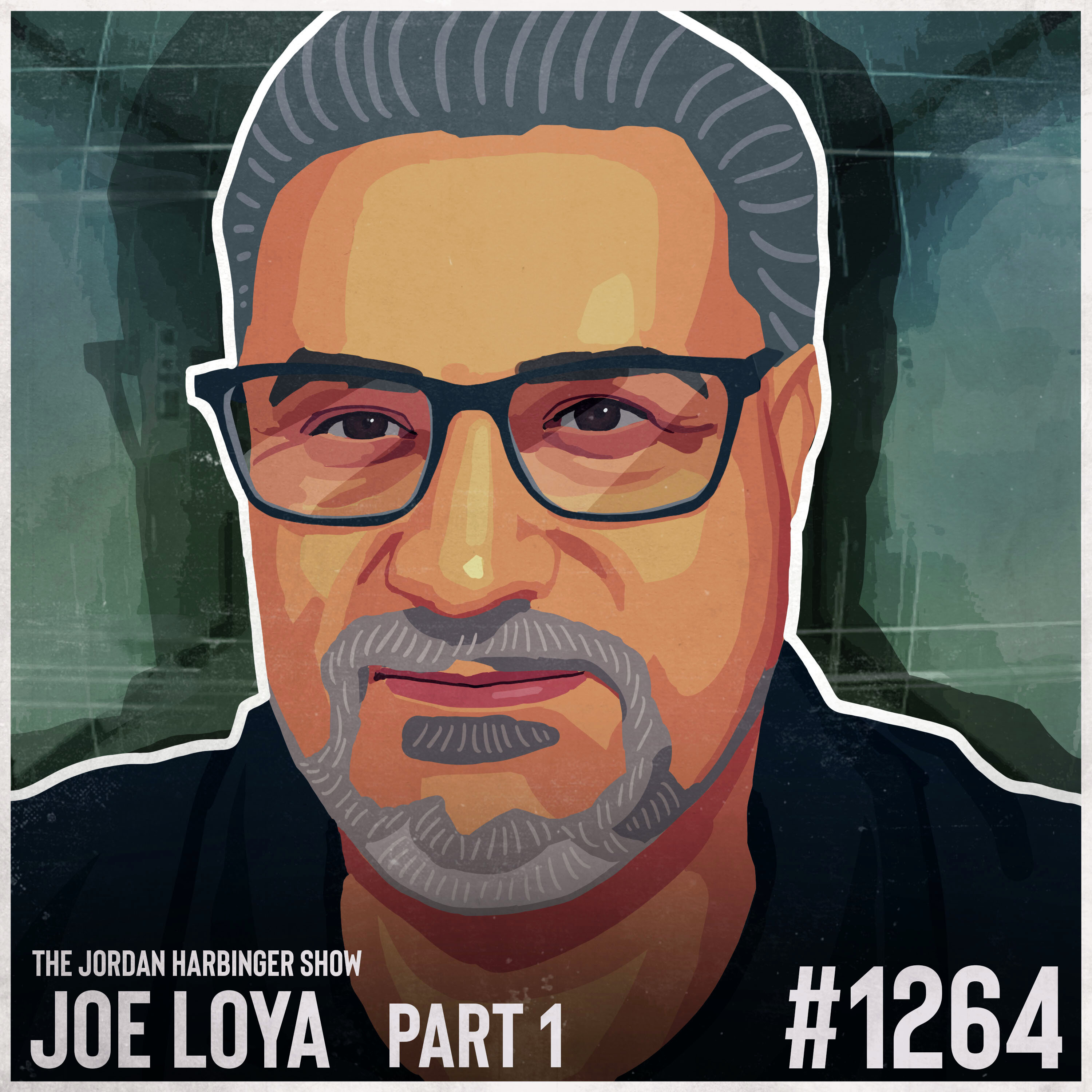
The Burden
Introducing - The Jordan Harbinger Show: Joe Loya | Confessions of a Bank Robber Part Two
01:03:49
Loading summary
Transcript156 lines
- [00:00]
Jordan Harbinger
Well, the holidays have come and gone.
- [00:02]
Steve Fishman
Once again, but if you've forgotten to.
- [00:04]
Jordan Harbinger
Get that special someone in your life a gift, well, Mint Mobile is extending their holiday offer of half off unlimited wireless.
- [00:11]
Joe Loya
So here's the idea.
- [00:12]
Steve Fishman
You get it now.
- [00:13]
Jordan Harbinger
You call it an early present for next year.
- [00:15]
Joe Loya
What do you have to lose? Give it a try@mintmobile.com Switch limited time.
- [00:20]
Mint Mobile / Greenlight Advertiser
50% off regular price for new customers. Upfront payment required $45 for three months, $90 for six month or $180 for 12 month plan taxes and fees. Extra speeds may slow after 50 gigabytes per month when network is busy. See Terms.
- [00:32]
Spin Quest Advertiser
Forget everything you had planned for this weekend because you are sitting on your couch and winning from the comfort of your own home. I'm here with Spin Quest where you can play hundreds of slot games, all the table games you love, and you could even win real cash Prizes. New users 30 coin packs are on sale for 10@Spinquest.com SpinQuest is a free.
- [00:54]
Jordan Harbinger
To play social casino void where prohibited. Visit spinquest.com for more details.
- [01:00]
Mint Mobile / Greenlight Advertiser
Did you know that parents rank teaching financial literacy as the toughest life skill? That's where Greenlight comes in, the debit card and money app made for families. With Greenlight, you can send money to kids quickly, set up chores automate allowance, and track spending with real time notifications. Kids learn how to earn, save and spend responsibly while parents have peace of mind knowing smart money habits are being built with guardrails in place. Try Greenlight Risk free today@greenlight.com iheart that's greenlight.com iheart hello there.
- [01:37]
Steve Fishman
It's Steve Fishman from Orbit Media. We've got a special show for you today. It's an interview with Joe Loya, the star of our podcast get the Money and Run. The interview is by one of the podcast universe's more intelligent and interesting interviewers. That's Jordan Harbinger. Jordan did two shows with Joe. We've got the first one for you today. Thank you, Jordan. Briefly, in our podcast get the Money and Run, Joe's the person who gets the money and runs. Literally. He was a track star in high school, though you wouldn't know it by looking at him today. Sorry, Joe. My favorite part of the podcast is when Joe explains how he got into bank robbing. Spoiler alert. He says, I got on this path by trying to murder my father. It's happened to a lot of us, right? Joe gives Jordan a pretty good rendition of this story. Please find our podcast get the money and run on Apple or wherever you listen. Jordan's many fantastic interviews and there are over a thousand of them can be found at the Jordan Harbinger show on Apple or wherever you get your podcasts. As always, to listen ad free, please subscribe to True Crime Clubhouse on Apple. Enjoy.
- [02:55]
Jordan Harbinger
Special thanks to Kaiman Jack for sponsoring this episode of the Jordan Harbinger Show. Coming up next on the Jordan Harbinger.
- [03:02]
Joe Loya
Show, the choreography of a beating, right? I don't know at the time, but I'm nursing a couple fractures of rib in her elbow. I'm beat up real good. Put my brother in the bathroom, I lock him in. I go to the kitchen and I pull out a steak knife and I walk over to the bedroom, I put it under the pillow and I just sit there and I wait. My dad comes in. He looks at me over there, you know, glares at me. So I'm thinking like, what am I, what's he going to use to hit me? I'm through. This is like a new level of improvised savagery, right? So I'm like, okay, screw it. And I grab the knife out and I stand up and now I'm standing there with a. With a steak knife in my hand.
- [03:41]
Jordan Harbinger
Welcome to the show. I'm Jordan Harbinger. On the Jordan Harbinger show, we decode the stories, secrets and skills of the world's most fascinating people and turn their wisdom into practical advice that you can use to impact your own life and those around you. Our mission is to help you become a better informed, more critical thinker through long form conversations with a variety of amazing folks, from spies to CEOs, athletes, authors, thinkers and performers, even the occasional rocket scientist, investigative journalist or hacker. And if you're new to the show or you want to tell your friends about the show, I. I suggest our episode starter packs. These are collections of our favorite episodes on topics like persuasion and negotiation, psychology and geopolitics, disinformation, social engineering, China, North Korea, crime and cults, and more. That'll help new listeners get a taste of everything we do here on the show. Just visit jordanharbinger.com start or search for us in your Spotify app to get started today on the show. How does someone even get the idea to rob a bank? Not the Ocean's Eleven version. No team, no gadgets, no vault lasers. Just you, a piece of paper and the decision to walk up to a stranger and tell them to hand over a pile of cash. The 80s and 90s were probably the golden age of bank Robbery. No cell phone pings, no facial recognition. Maybe one blurry VHS tape that looked like some Bigfoot footage, and then you're gone. You don't run, you don't speed away. You just walk out. Today we're talking with Joe Loya, a guy who robbed dozens of banks calmly, methodically, often wearing a fedora like he was heading to brunch or maybe a game of Dungeons and Dragons instead of committing a felony. But the story isn't really about bank robbery. It's about fear and how you push through it. The first time you do something that permanently changes who you are. It's about violence, power, and what happens when the person who hurts you the most is also the person who raised you. It's about prison, redemption, and whether you can really walk away from the worst things you've done. Here we go. With Joe Loya. A good place to start is probably, how does someone find themselves, even with the idea of robbing banks? Like, where is it? Like, hey, here's the move. I'm gonna start robbing banks.
- [05:40]
Joe Loya
Well, I mean, you have to start a lot earlier than, hey, I wanna rob banks.
- [05:43]
Jordan Harbinger
Okay?
- [05:44]
Joe Loya
Most of guys I knew rob banks actually were drug addicts, which meant they were doing it to subsidize a drug habit. And so they would just go there so they could get a big bunch of money, they could lock themselves in a hotel, get a lot of drugs, get some women, and then that was it. There was no feel for posterity. They're not thinking, oh, how long is this gonna last me? Like, can I sa. You can't have that feel for it. So how does somebody grow up, become an adult, and have no feel for posterity? Trauma. Yeah. You have to have trauma early on. You have to have lost connections to the things in society. Say, here, we do this, we do this, we do that, and then you get to the thing, right? You get to the payoff. Well, for us criminals, part of our impulsivity comes from the fact that we don't have a goal, we don't have that thing we're just doing, what do I need now? What do I need now? What I need now? So I got to there through my childhood, which even though in many ways I was very fortunate in that I had a lot of love early on. I was raised in some private schools. My mom and dad got married when they were 16. They were. My dad was an ex gang member, now a Christian Protestant Christian in East la, which was all a sea of brown Catholics. It's very odd to be Those people. But when we lived in the East La Madavia housing projects, we were very poor, but ambitious. My dad was very ambitious. My dad becomes a Christian and he discovers that he loves the languages. He wants to study Greek, he wants to study Hebrew. So he becomes this little brown academic, little nerdy guy who wants to learn the languages of the Bible so he can read in the original language. So I'm raised in that environment. My mother and him have been dating, so they were 12, they love each other. They're like these little brown mascots in the church. Like, you know, they're very predominantly middle class white church. And my parents, they were young, married at 16 to 17. They had kids. Wow. So when they would go to young married department, it was all these middle class women and men who graduated from college and now they're having kids, but they're in their middle 20s, right. So my dad and my brother, they're little people and they're like, they get all this love. Everyone's taking care of them. So I'm getting a lot of love. I'm being raised in this environment in which our family receives a lot of affection. And one of the things we receive too is they're like, hey, you're poor, but why don't you send your kids to the school and we'll do a scholarship thing. So I get scholarship, I start going to these private Christian schools. Great education. Unfortunately, my dad had been brutalized as a kid. Even though he loves God, even though he loves Jesus, even though, you know, I want now want, I want to grow up and I want to be. I want to do something at church. My dad would get angry sometimes and he would do a little bit more than, you know, than the average person. He would just, he was always on edge. He would get angrier. He was really defensive. Really kind of, you know, he's got a little volatile, but he's young, we're young. We're just thinking this is the way it is in the East LA neighborhood. And you're in the 60s, right? My mother gets sick when I'm seven and she gets kidney disease. I don't know it, but this is gonna kill her in two years. And in the meantime it's dragging her down. There's no fight. She can't get a new kidney. Her body would reject it. That's how far along it was. Now the stress is on my dad. Private schools driving us to school. Has to go visit moms. Moms is having all these experimental drugs on her and periodically she doesn't Know who she is. Not only does she not know who she is, sometimes she thinks she's Elizabeth Taylor. And she would call the house and say, hey, can I speak to my boys? I said, elizabeth Taylor. She was out there. Yeah. And my dad was having to deal with this stress, Right. So when you're stressed out and you're a young man, he goes to aggression. And me and my brother, we would do smaller things and we would get hit pretty good. It's a really weird time. All this stuff's happening. You're a kid, you know something's going on. You know, the mood in the house is changing. You know, you're getting a lot of love. You know, Jesus is. And then all of a sudden, oh, wait, what? Why is it so. And it's just confusing their mind. Well, when I turn nine, my mom dies and she dies. Where are you from? Are you from?
- [09:25]
Jordan Harbinger
I'm from Detroit. I'm from Detroit originally.
- [09:27]
Joe Loya
Okay. Back in LA, in 1971 to February 9, there was this huge earthquake. It was called the Sylmar earthquake. In Sylmar, there was a hospital wing collapse, a 210, which wasn't even completed yet. That was the day we buried my mother. So that was a very traumatic day too. When my mother died, we had received a lot of love from her and everything like that. My dad can't handle the stress. It's just too much for him. And when he gets angry now, he gets brutal. Like, we are getting bigger too. So when we were little, it was easy to just whack us around and we'd get have control. But now we're getting bigger and so we're taking punches. We're getting kicked. Like, it's not your basic spank. It's now. It's not happening all the time. Okay. But only when he would get stressed and he would get angry, which is why we get so discombobulated, because there's all this love and there's all this ambition to be like Jesus, in love of Jesus. And then my dad even became a minister for a while, but he would periodically, like, beat us while he's preparing for his sermons and stuff. And it was just a total moral confusion in the house. Total moral confusion.
- [10:28]
Jordan Harbinger
I'm not sure that that's that rare. I think a lot of people who grew up with religious parents got beat quite severely. I'm not trying to downplay what you went through at all. I'm just saying the moral confusion, I think, is shared by quite a few people with a religious.
- [10:44]
Joe Loya
Let me Go on.
- [10:45]
Jordan Harbinger
No, I know it gets a lot worse.
- [10:46]
Joe Loya
Okay, so list. All I'm saying is I'm getting you ready. But more importantly, what most people don't have is they don't have a minister for a father. Here's what I mean by moral confusion. What most people don't have, certainly none of the kids and friends that I had growing up. When one day I get beat up by these bullies at school. I come home, my glasses are broken right here. My sweater's all been all torn up and everything. Three guys just beat the hell out of me, right? I come home and my dad is at the kitchen table with about five commentaries open because he has to give a sermon on Sunday. He's studying the scriptures, he's doing his hermeneutics. He's finding out what's going on at that time in the Bible, at that particular time, politically, geographically, like everything. He wants to know that passage so he could preach it to you. His boy comes in, broken glasses, torn up. Sorry, what happened? I said I got beat up for that. He comes over, slaps me, and he said, his son's not going to be a sissy. He gets me in the car and says, I got to go fight all. We're going to find those three guys, and I got to fight them each individually. Wow. This is what I mean by more confusion. We're not talking about, oh, my dad, you know, he just raised his voice, he slaps us around. I'm telling you, I walk in, he's preparing for church. And this disillusions me even further because had he just been a regular blue collar worker who went to church with me on Sunday and beat me up, I'm like, okay, that's everybody. You're right. But this is different because I'm being encouraged to aspire to higher themes. And I'm watching my father do it. And on Sunday, I'm watching the entire congregation love on my dad because he's that guy who's inspiring them to the higher themes. And I'm looking, looking around saying, you guys don't see it? We're getting beat up all the time. We got bruises on us. What are you guys doing? And it disillusions me to the whole rigmarole. The time goes on. My dad gets married to another woman. She was a great stepmom. Her name was Brenda. I was 10, she was 20. My dad's 26 at this point, 27.
- [12:34]
Jordan Harbinger
Oh, my God. So young.
- [12:35]
Joe Loya
Yeah, very young, right? So Brenda was out of Turlock up Here she was like a country girl. Her family was from the Blue Ridge Mountains of Kentucky or something. She was white girl. And we're. Like I said, we're in east la. It's all brown. And everyone thinks she's our maid because she's like, she's the. She's so. Out of all my friends at school, she would come to pick me up. Who's that, your maid?
- [12:54]
Jordan Harbinger
White nanny.
- [12:55]
Joe Loya
I'm like, you know, I don't know what you're talking about. But they did not know she was my mom. But she was great, you know, she introduced a lot of things. She introduced me to literature. In fact, she got me reading a lot of great literature and she cleaned up my English to kind of the East LA stain out of it temporarily. Brenda became disillusioned with my dad too. He became violent with her as well. And she saw all the violence that was going on with us. Now she decides the way she. The way what she has to do for herself is she has to leave now. This is all not just telling you a story. This is in service of the question you ask, like, how does somebody become a bank robber? Well, when my dad was a minister, when Brenda was the accountant, they would get the offering, and I'm already like, larcenous in the heart. I'm so angry and confused. One nobody's helping with my grief. My mom dies. They catch me crying. You know, it's the church ladies say, why are you crying? Don't cry. She's in heaven. Oh, the Bible says, absent from the body, present with the Lord. You should be celebrating that she's in heaven. This is the counseling I'm getting from everyone around me, which has the effect of making me feel like shit. Because I'm like, oh, man, I'm selfish. I should be happy for my mom. And why am I feeling these feelings? These feelings are nothing but bad. They're terrible. This is the moral guidance or spiritual guidance I'm getting now. Besides that, that's not helping me in terms of the moral quandary that I'm going to be in to eventually be the guy who robs banks. But it's just a tough time for me to try and process the grief myself and beyond being brutalized. So I got all this aggression growing in me now. I got rage growing. You think kids don't have rage? They got. By age 11, I'm rageful, and by age 13, I pull a bunch of fire alarms at school. Now I'm a delinquent. I'm getting a's. I'm the best kid in school, getting the American Legion award in the end, because I'm gonna. I'm this great kid, but I'm troubled. And what I do, I pull all these firearms one week, and I get suspended. You know, I'm fighting. I'm just acting out because nobody can help me. And so as far as they're concerned, the language that gets thrown at me is sin. Or, you know, all the stuff that we throw at youngsters now who are having problems and act out. We become super predators, gang bang, whatever you want to call them. They're troubled kids. They're messed up. No one's helping them figure it out. And so they act out. They act out of rage and rage that has been put into them, rage that has been fanned in them. And they don't know why. They don't know where it is. It's just. It needs to come out. And the same thing with me. I'm at the same place, so I'm acting out. Brenda's watching all this deteriorating the home. And so what I start doing is I start stealing money from the. From the. From the offering. Like, I tell everyone my first victim was God.
- [15:22]
Jordan Harbinger
Oh, my God.
- [15:22]
Joe Loya
And then I would go to school, and I would pay for all my friends. And I got these 6th grade, 7th, 8th grade friends that are, you know, old school friends of mine. And we were talking about how I used to buy all these taquitos or guacamole or get. Go over there buying burritos for us. I was paying for the stolen money, right? So I wanted to make myself look not poor. And so that is the beginning of me getting the bank. You could track it to that. I'm like, I don't like being poor. I don't like having. Not having money. I'm angry as hell all the time. There's money. Let me just take it. And I don't care what the consequences are. I get away with that. For whatever reason, their bookkeeping was so sloppy, I feel they must have been ripping God off too, because they are. Like, that book even was not accurate. Anyway, fast forward. Brendan leaves my dad. I'm 15, and he now broods around the house like a drunk. When I would tell the story to guys in prison, and we're talking about hardcore badass guys, they would say, oh, he was a drinker. And I was like, no, didn't drink. And one day when I'm 16, he was angry. Brenda left, kind of humiliating him and stuff. And so he walks into the kitchen, my Brother is drying the dishes. Paul's washing them. I'm drying them. My dad comes in, and we're just, like, terrified. And we're skinny, skinny, skinny kids. Real skinny. And my dad comes in, and he all of a sudden sucker punches my brother in the wrist. And Paul winces. And this is the worst memory of my life. Of all the terrible things I've done and all the terrible things done to me, this is the worst moment of my life, hands down. My dad punches Paul in the ribs, in the. Pounces on his neck, grabs his neck, and then starts dunking Paul's head into the soap water, the dishwater drinking. And I'm standing there paralyzed. Now, I have a lot of heart in my body at the time. I'm very arrogant. I feel like I can do. I'm going to grow up in the world. I'm going to be somebody. I just don't know what yet. I have all this confidence in myself. And right there, I am shown to be a complete coward. Because I'm sitting there watching my brother get dunked. And I don't do anything except freeze. And he keeps getting dunked. And at one point, he looks up at me with terror in his eyes, and I can't do anything. And he finally lifts my brother up the third time, and he leans into his ear and he says, you should have died instead of your mother.
- [17:34]
Jordan Harbinger
Oh, my God.
- [17:35]
Joe Loya
So that night, I'm thinking, I have to kill myself. That's the first time I contemplate suicide. I cannot be this guy. I cannot handle this new version of me that has been shown me I'm a coward. I have no guts. Here I am thinking, I'm this and I'm this. And it does not comport, man. It does not fit. But I have to accept the fact that I'm a coward. I let him do that on my brother. I didn't do anything. And I hate on myself. I sit with this for, like, six months, hating myself, wanting to die. I don't like this at all. My dad gets a new girlfriend. When he gets his new girlfriend, we like. I like her so much. And it was Susie, sweetheart of a woman. And I'm like this. I'm gonna sabotage that relationship. So he gets Susie as a girlfriend. And when he gets Susie's girlfriend, I'm gonna sabotage him. We go out to dinner. This is how sweet she is. She takes us out to steak dinner. And at the time, Sizzler was the jam. Sizzler was the jam. We're talking 1978 something like that. She takes us out, we're having dinner, and I start telling her a litany of the things he's done to us, right? The beatings and the brutality. And then all of a sudden I realized, man, I'm just painting myself to look like a big sissy myself. Like I'm always getting beat up. And so I remember specifically grabbing the steak knife there. And they had those really nice steak knives, you know, wood hand, but it's good steak knife. I remember, if he does it to me again, I'm going to stab him in the neck. And Susie says, no, Joey, don't do that. Put it down. Violence doesn't help. It's your sweet sweetheart. And I did that because I wanted to take back some of the, you know, like I'm over here just doing nothing but talking about how I'm being beat on and a sissy. I feel like I'm a sissy now I want to have some. So I put a little macho on my base in my face. And she puts me down, says, don't do it. Well, now it's in my head and I'm thinking, you know what's in your head?
- [19:17]
Jordan Harbinger
Stabbing your dad in the neck with a sample.
- [19:19]
Joe Loya
That'd be my dad in the neck, right? That's when I say it. Now I tell her, listen, you cannot tell my dad. If you tell my dad, we're in trouble. You need to leave him and do a quick. Be clever about it. Well, she's so sweet. She can't lie. She doesn't know how to lie. So all she can do is just pull back from my dad and someone like my dad who's like a con man now at this point, he's selling insurance. A different kind of like, it's like the pulpit and insurance salesman, the same thing. They're trying to save you from fire. So he's just insurance age. Just call him all comment, but he can read. He can read that something has happened, right? And finally a week later, we go to wash clothes and stuff. He doesn't know, but he suspects. And here's how we find out. A week later, we go do laundry. And long and short of it is I, you know, this was 70s, a lot of people wore polyester was disco era. I ruined like half my dad's wardrobe. Accidentally putting that stuff in a hot dryer ruined it. Man shrunk everything, right? He's so angry because we're so poor. Like, you know, he's. He went bankrupt. He's in a bad way after the divorce, it broke him. And so now we're really in the poor place, and I've just ruined half his wardrobe. Well, now the stress of all this, things going on and stuff, and so I go home, I get punched a little bit. He throws me in the room. And I'm sitting there, and they say, hey, Joey, come over here. And I come in there, I'm trembling, you know, and he's like, hey, you know, Susie told me what you told her, and I just wanted to let you know that I'm all right. I understand you felt like you had to tell her. I just need you to admit that you tell her so we can clear it up.
- [20:49]
Jordan Harbinger
Oh, he's tricking you.
- [20:50]
Joe Loya
And that was the first time and the last time that I ever confessed to her crime. He said, you just have to, you know, just, please, just admit what's going on. That's it. And I'm like, all right. And now, here's the thing. As a kid, you want to be right with your parents, man.
- [21:04]
Jordan Harbinger
You do.
- [21:04]
Joe Loya
You can have shitty parents, and there's a point where you come extremely disillusioned, but you want to be right with your. Every child's born wanting to be loved and love their parents. That's it. And that's all. I don't care who you are in this moment. I'm like, maybe he is being magnanimous, right? He has shown magnanimity in time. So I admit to it. Oh, my God. Beating commences First, a teapot's thrown on me, but by the end of it, he leaves the house. I have a concussion. I don't know at the time, but I'm nursing a couple fractures of rib in her elbow. I'm beat up real good. My dad has run down to the 7:11. We don't have a phone because we're. Like I said, we're broke. He's going to 711 to break up with Susie. This is what I find out later. While he's gone, I put my brother in the bathroom. I lock him in. I go to the kitchen and I pull out a steak knife and I walk over to the bedroom. I put it under the pillow, and I just sit there and I wait. Again, we're going towards, how does somebody decide to rob a bank? This is all towards that. My dad comes in, comes to the bedroom door, and now he's ready. I've seen him many times before. The choreography of a beating, right? First he's all loose in the neck, he's on the balls of his feet. You know, he's loose. You're loose, you're ready for it. He looks at me over there, you know, glares at me. Then he looks over on the other side of the room and he sees a weight set, Glares at me, weight set. Starts walking to this weight set and we're talking about, you know, big old, big old barbell. And in those days it was like, the weights are 25 pound, 20 pound cement blocks with plastic around them.
- [22:31]
Jordan Harbinger
They're like made out of that garbage can. Thick plastic.
- [22:35]
Joe Loya
Exactly.
- [22:35]
Jordan Harbinger
And they're kind of round and they don't really. They kind of like bulbous. Yeah, I remember those things.
- [22:40]
Joe Loya
But they do have a really strong, big, strong metal gadget to tie them and loosen them in. Yeah. So I'm thinking, like, what am I, what's he going to use to hit me? And no matter which one of those three pieces, the bar, the weight, the nodule, that ties it and tightens it, I'm through. This is like a new level of improvised savagery, right? Yeah. So I'm like, okay, screw it. And I grabbed the knife out and I stand up, and now I'm standing there with a. With a steak knife in my hand. He sees me, he drops the weight because I stand up with the knife I'm holding, and he sees it and he drops away and he's like, put it down, put it down. And I'm just standing there. Now, I've not done this before, but I have thought about it, and I'm thinking, that neck is a kill shot. What do I know? I've learned since then, I've never stabbed anyone in the neck again. But I thinking, that's going to kill him because I need to kill him, because if I don't, he'll kill me back at once. I put a pin in that real quick. When he told my brother, you should have died instead of your mother. Something important happened. Something clicked in me that gets me to this point. Up until that point, I had twin traumas. My mom's death and the brutality of your experiments. And they were happy next to each other, but never. They never were connected.
- [23:46]
Jordan Harbinger
I see.
- [23:47]
Joe Loya
When he says, you should have died instead of your mother, we're getting beat up and he's talking about the death of my mother. And now they're locked. And I think, oh, shit, he wants us to be dead too. He wishes my brother was dead. That means, by extension, his children are expendable. He wants us dead. He's using the dead language. That's one of the reasons that accelerated into me, this idea that, oh, shit, he could kill us or I could kill myself. But this is, like, in my head, I've made this be a big thing. So now I'm standing there with the knife. I've thought about it. It's time for me to stand up, do the right thing. I'm not a coward. And I'm showing him I'm not a coward. And he starts walking to me, and you give it to me. Give it to me. And I charge him. And when I charge him, he puts his arm up and I go to swing and. And I don't hit him because he has his arm up. And we're like. Now I'm like, oh, my God. And I just. And I end up. And he turns his head and I end up snapping him right here in the back of the neck. And then I start twisting to try and break it off in his neck.
- [24:43]
Jordan Harbinger
Oh, my God.
- [24:43]
Joe Loya
And he's like, ah, he's reaching back. Ah, you kill me. You kill me. And he falls to the carpet. And at that point, you know, I was raised religious and all this stuff, and so my feeling is like I have to say something. And I do. And being a dramatic kid, I stand over him, I say something like, this is what you put. You brought this on yourself. I didn't kill. You killed yourself kind of thing, right?
- [25:03]
Jordan Harbinger
Yeah. I'm surprised he didn't have a Bible quote ready.
- [25:05]
Joe Loya
Dude.
- [25:05]
Jordan Harbinger
That would have been pretty.
- [25:06]
Joe Loya
Literally, could have been. This is what thy hand hath wrought.
- [25:10]
Jordan Harbinger
Feels like.
- [25:10]
Joe Loya
It almost feels like I have to put a biblical note on it. Right? So I do kind of be like.
- [25:15]
Jordan Harbinger
This is like some Pulp Fiction stuff where Samuel L. Jackson's, like, reading the yelling, the Bible.
- [25:20]
Joe Loya
Quoting Bible verse. Exactly, exactly. So but I do say something like, no, I didn't kill you. You brought this on yourself thing. Right. But in the biblical sense. And at this point, I run, Paul, Paul. And Paul's already at the front door. Joey, what's happening? What's happening? I got blood on me and everything. And I go, go, go. And we run. We run to my aunt's house. We run in and I'm like, call the police. My dad's dead. I just killed him.
- [25:40]
Jordan Harbinger
Oh, my God.
- [25:41]
Joe Loya
And at this point, we've run a mile to our house, and we were track athletes. I broke the school record. I like to always brag about. And the three third.
- [25:48]
Jordan Harbinger
Didn't you have broken ribs at this point?
- [25:50]
Joe Loya
Yeah, but I'm still like, you got adrenaline.
- [25:51]
Jordan Harbinger
Oh, yeah.
- [25:52]
Joe Loya
You got adrenaline, right?
- [25:53]
Jordan Harbinger
Yeah.
- [25:53]
Joe Loya
And I'm scared to death because all I'm being driven by is that he could take that knife out and chase me. This is the monster that I've been afraid of my whole life.
- [26:02]
Jordan Harbinger
Yeah.
- [26:03]
Joe Loya
And as much as I think I killed him, I'm still afraid that he's gonna pull out of his neck and come after us. Right? Right. So. Because he's just so monstrous in my imagination. So we get there, I tell her, she calls the cops. And, you know, I've written about this recently. Like, man, her own brother. Like, her. She was born then, my dad was right. Right after. They were very close. And for part of that afternoon, she believed her brother was dead. I've never processed that until the last couple years, because she's now dead. And I feel like I see this story from so many different angles now. But, man, Gloria, we go to her house, they call the cop, the cops go to him, and bottom line is, my dad has some drama with himself on the other end. He lives, he survives, barely. They pull him in, and he, you know, he tried to kill himself. Bottom line, how come you didn't go.
- [26:48]
Jordan Harbinger
To jail for stabbing your dad? Or did you?
- [26:50]
Joe Loya
Well, here's why. So what happens is we get the police come, they go look for my dad. Then they. They get me, and they take me to jail in Alhambra. And when they take me there, the detective actually was interviewing me. He's treating me as if I laid in wait. It was attempted murder on my father. Because that's what I'm confessing to. I got the knife, I sat there, I waited for him. When he came back, I stabbed him, tried to kill him. And I'm bragging about it because now I feel like King Kong. I'm like, you know, I slayed the giant. I'm him. I'm all that. And again, adrenaline. While a certain point, I'm really mad at him because I'm like, oh, all you asshole authoritarians. You back each other's play. You're backing my dad's play. The church is already taking a peek at this, and they didn't punish him. Like, I'm just thinking, all authority, you're all backing each other's play. That's how it goes. And he's now sitting there, basically, I'm telling him I've been brutalized. Well, why didn't you call the police when your dad left? Why didn't you run out of the house? Like, nobody asked that question now? Because you know everything about domestic abuse and how you. You Know you're paralyzed. Everyone knows that now. But back then, he acted like I in the wrong. Well, not long after that, I can't breathe very well. It hurts to breathe. You know, when you're. When you have cracked, broken ribs. Yeah, sure, yeah, it hurts to breathe. And then my elbows hurts. I'm starting to feel all the pain of it.
- [28:06]
Jordan Harbinger
Yeah, the adrenaline's wearing off.
- [28:07]
Joe Loya
They get one of the female police officer take me to the hospital, and then we find out that I've been brutalized. You know, it's right there. X ray show everything. So there's no more talk about punishing me for anything. I was, you know, I was defending myself. And then by that point, my dad had been arrested. And, you know, he said, what happened?
- [28:22]
Jordan Harbinger
So he admitted he beat you up and that you stabbed.
- [28:24]
Joe Loya
He admitted everything. Everything okay. And he was contrite. One thing I'll give my dad. After it was all said and done, obviously he never hit us again. But when we went to foster care, because we went out of foster homes at foster care, the county took us away from him. Obviously, he was a delinquent father, but he jumped through every hoop they told him to jump through to get us back. And he humiliated himself. He had to come into the homes. I was not nice to him. It's like the old who song. Like something about the new boss, same as the old boss, you know, it's like. Like now is my turn to be be the jerk towards him, right? I wasn't magnanimous, and I had the power I had, you know, figuratively. I had social services on speed dial. They came to see us all the time, whatever, so I could threaten him with that shit. So anyway, I was not nice to him my senior year when I went back. But he was humble. He knew what he did. He accepted. And, you know, and to be honest with you, for years and years, decades, he beat himself up for that stuff.
- [29:16]
Jordan Harbinger
How did trying to essentially kill your dad, how did that change your life? I mean, did you have a sense of power at that point? Did you regret it at all? I mean, you're in foster care. Surely you're thinking I did the right thing or I didn't do the right thing. Did you have any sort of feelings about what you had done?
- [29:33]
Joe Loya
Yeah. So, first of all, one of the worst experiences of my life, but one of the most powerful observations, like as a human looking at human dynamics, was that first night that I get to McLaren hall, and it's all the kids that have been brutalized. I'm 16. So I'm sort of at the older age of the spectrum.
- [29:52]
Jordan Harbinger
Is this like an orphanage? McLaren Hall?
- [29:54]
Joe Loya
No, it's McLaren hall is where you go, where they. When they take you from your parents initially, they put you in this big place. You're taken out of the home, put a county care, and it's just this big facility where you are. While you're going to court, you got to go to court to get taken from your parents officially, and all this stuff. And then they tried to place you in foster homes, but you have to stay somewhere until you're in a foster home. And this is where they take you. Like, first night. This is where you go. Right. It's been closed down now because of a lot of abuse occurred there and all that stuff. So. Oh, it was terrible. But in what I saw there when I was there, there was a lot of little kids, and we're talking patches over their eyes, burns, bruises, crutches. It's the worst of the worst. Kids brutalized in LA County. This is where they are. And they've all been rescued. They've all been emancipated. They've all been rescued from the abuse. And now they can go somewhere else and start over. And what happens is the end of the night, we all start going to bed. And I'm in bed, and all of a sudden I start hearing sniffling. First, I think somebody has a cough, maybe a cold. And it's open dorms kind of. Right. So you can hear things down the hall and all this. It's like, it's not just on your own room. There's no doors on the. On these things. It's like, imagine what it. An office where they have all these different spaces, but you can see and hear everyone. It's kind of like that. Anyway, I started hearing sniffling, and I started hearing kind of. And I realized, oh, so I think somebody's crying. And then more and more. And then pretty soon it gets. Becomes like, I want my mommy. I want my. And these kids start crying to go home. I want to go back to my mommy and my dad. And I'm sitting there like, what? I just tried to kill my dad.
- [31:28]
Jordan Harbinger
Yeah.
- [31:28]
Joe Loya
And what I realized that night is I'm not wired like everybody else, and I went to prison, and I saw the same thing. I'm not the only one who was treated like that, but I'm the only one I ever met in the entire time who tried to kill their father. The closest anyone got, several guys their dad was beating on their mom and they picked up a band, they threatened him or they jumped on him, and a couple brothers beat up their drunk dad. That was as bad as it got. Nobody did what I did. Not one person that I meet tried to kill their dad. So I knew in that little McLaren hall place, I'm not wired like everyone else. I wanted to get there. I'm gone. I'm going forward. And I know forward is anxious and anxiety ridden because I don't know where I'm going to go. I don't know where I'm going to be. And I'm feeling the anxiety of the future because it's coming on me. It's like, oh, everything's about to change. But I'm like, I'm about the chaos. I'm about to change agent. I need to go there. One thing I'm not doing, I'm not lurching back to the bondage I just escaped from. And all these kids want to go back. And I tell you this is important because it made me feel like, oh, I'm going to start looking at people one way or two ways, one division. You are either the kind of person who confronts change and emancipation with vigor and fear. Yes, but drive and like, I'm going to embrace it. Or your person when change comes and offers you an opportunity. Like, oh, shit, going to go back. Going to lurch back to a bondage. I'd rather be small. I'm not going to. I'm too afraid. And I'm the guy who goes that way. So I was always interested in meeting people and taking a measure of them and saying, okay, you're that person or you're that person, person. And that night was important to me because I realized I'm the guy who can try and kill their father and be cool with it, and which means everybody else in the world, you're not even my blood. The whole world could be a victim to me. Because if I got over that one taboo thing where you're not supposed to kill your father, and that's biblical, that's mythological. I mean, all the great Greek myth, Roman stories, they have all the even Shakespeare literature, father son shit's important and big deal. The dramas between them and killing the father is not a good thing. So I'm that guy, right? I feel like I have an epic soul. So that's also part of the arrogance and the narcissism and the grandiosity. All that's now growing up in me, right? It's like, oh, shit, here's who we are. Back to your Question. How do you get to be the guy who bankrupts? Well, I realize I'm not made for society. They have all these moralities, but they're too timid for me. I've seen past the curtain and I see that everyone was suckered into believing my dad. They're also suckered to believe that the police are cool. They're suckered to believe that every. The politicians are like I become in my heart like this little sociopath looking at like, you guys are falling for the Okie doke. And I'm not the guy who falls for the Okie doke. I'm the guy who stabs the Okie doke and says get the hell out of my way. I'm not buying it, right? So time goes on. I graduate high school and very poor senior, very, very poor. My dad struggles and everything. I leave the house three days later, I go work in San Fernando Valley and I'm going working two full time jobs. I'm like, this sucks. Yeah, of course, because I remember I feel like I'm a giant now. I'm like, I've become, I know who I am. I'm this guy who has this verb, right? I have gall, I have all of this and I have weapons. You know, I'm like a guy who can do something but I'm not feeling it. I'm going to college. East LA Community College. Though I did tell her when I went to school back east and they would say where I sent East LA College. I was trying to be arrogant about who I was trying to fit my ego, Harvard. But the fact of the. No, my ex wife went to Princeton and I would tell her for grad school and I would always say, man, how come you don't tell anyone you went to prison? Because she would always say she goes to school back east.
- [35:06]
Jordan Harbinger
That's the difference between somebody who went to prison and somebody who went to prison.
- [35:09]
Joe Loya
You know what, that's a. Yeah, she went to Yale, I went to jail. Yeah, anyways, exactly. So. But yeah, no, all that to say that I'm doing school. But the thing I want to say about East LA Community College is I'm going to college. And I realize what am I doing? I'm going to get out of what I'm going to be a lawyer. I'm going to be what I'm going to make 45. This is in 1980, so in those days, you know, 45, $50,000 is a lot for somebody to come out of college and make that money, Right? It's a Big deal. And I'm thinking, wait, what? That doesn't sound right, man. Somebody who has what I have and I'm feeling it. I'm really feeling this. Like something is roaring. I have to be much bigger. I have to dial up my narrative. I don't know what it is, but this line, this track, let me go to college, let me do that. That's not. I'm have no feel for that. And again, this is where the erosion of posterity has already occurred. And I can't have a feel for 10 years down the line. I'll be able to have a pay off mortgage. Like none of that. And so it's already happened to me. I don't have a feel for posterity. Remember, my mom died at 26. There's also included in this the feeling like, I just got to make it to 26. I don't know what happens after that. I just got to make it a 26 because that's where the cutoff date is for me and my aunt. A lot of people think, oh, 76. That's where, you know, when your parents died. That's approximately the age I was like, I don't know if I'm going to make it to 26. I just got to make it to 26. And after that I have no feel for them. So put all that in the mix. And I think, you know what I'm not going to do all these years here so I can go make $45,000. That's it. So I start committing little bullshit crimes. I start bouncing checks, which is the easiest thing to do. And I start borrowing money and not paying it back. I start doing little frauds and then bigger little frauds, but, you know, all small scale because I'm not a gang member, because I'm not a criminal, because I don't have anyone in my family to bring me into it. I have to connive my way into the underworld because I don't know anything. So I commit a bunch of petty, petty crimes, but I committed a lot of them. And I ended up being wanted in five different counties. Oh, wow. The worst of it, I defraud some guy out of a $32,000 733i BMW, which are top of the line at that time.
- [37:13]
Jordan Harbinger
You just bought it, but then the check bounced or whatever.
- [37:15]
Joe Loya
Yeah, it was elaborate. I mean, I literally wrote him a check and told him, hey, my banker's not there till this afternoon. He can tell you this check is good, and then I'll come back and pick the car. Because it was, you know, I wrote it for 35 or $32,000. So I drive down LA from Santa Barbara, and I gave. I crossed out the guy's number. I gave him my dad's phone number. And he calls me, and then I pretend, literally pretend to be an Asian banker on the phone now, talking. I mean, it was so. It was so. And he buys it. He's like, does Joe. I have a checker for Joe. Lawyers. I'm not even gonna do the voice. It was so ridiculous.
- [37:47]
Jordan Harbinger
Don't do the voice. We get canceled for that.
- [37:50]
Joe Loya
I'm just saying it happened.
- [37:52]
Jordan Harbinger
Hollywood people got to figure out how to deal with that delicately. Yeah, that's really funny.
- [37:56]
Joe Loya
But the fact is that, you know, obviously at that time, I didn't care, but he bought it hook, line and sinker. So I drive up there that night. Hey, did you talk to my banker? Oh, yeah. And he gives me the pink slip and everything. I'm gone. I go and I sell it the next day in San Diego. And then I become a fugitive in Mexico, right? So I'm down there with a lot of money that I've just cashed out. Everything, all the crimes I've done and everything, you know, close to $40,000. And so I go to Mexico, I'm a fugitive. I told everyone down there that my family's dead. I don't have anyone, and I'm gonna start over. Like, now I'm a criminal. I'm a bad guy. And I make some friends down there and family, part of the Corona family. In fact, I go there and make friends with them. And one day, I hid my money on walls and all over the place in the house. I come home one day, and somebody who's, you know, shrewder criminal than me, they came in and stole all my money. I only have 2,500 bucks, 2,000 bucks in my pocket. I'm done. I don't have any money. I had to rip off a lot of people to do that, defraud them. And in order to defraud people, you got to get close to them, right? And I don't have that kind of time. No, I can't go back to the United States. I'm like, what do I do? So I'm sitting there on my couch drinking a Corona, and I start thinking, you know, hey, well, you know, I'm in Mexico. This is the place of the bandido, right? But I remember that Pancho Villa, who. Who was a general during the Revolutionary War. Pancho Villa used to Come up to the United States, and he would rob post offices, banks, and then he would take his army back down into. Into Mexico. So I'm like, you know, maybe I'll do that move. Maybe I go up there and start robbing places. And now, remember, at this point, I haven't robbed anything. No 7, 11, no nothing. I'm not a robber. Now we get to your first question. How does somebody do it? One thing I know is I have come to several points in my story, in my life already by that point where I did not like who I was, and I knew I was bigger than where I was. I just jumped into my future, and I innovated, and I became the next thing I was getting victimized by my dad. Boom. I see a future in which I'm bigger. I innovate, and I become that bigger guy. I tried to kill him. I come to a place where I'm a petty criminal. I want to go into crime. I don't know how to do it. I just start, like, innovating. I turn myself from being this good kid where everyone had aspirations for me because this real intelligent man, maybe a theologian, like all those things I aspire to as a kid, I say, nope. I innovate and I become a criminal. But I'm a petty criminal. And now I'm here, and I say, I've been a petty criminal. Now I can go to the United States. I can dial up my narrative, jump in the future, and I'll become a real badass criminal. And that's what I do. I drive up to San Diego the next day. I spend all day trying to figure out how to rob a bank. And I rob a bank by the end of the day. And when I robbed that bank, 4,500 bucks. First Bank. Excited. I've turned myself into a bank robber now. Just like that.
- [40:40]
Jordan Harbinger
Wow.
- [40:41]
Joe Loya
Because I knew I had the gumption. I knew I had the violence. I knew I had the greed because I'd been so poor. I hated being poor. And so it was a perfect marriage of greed and violence. And so I make it happen. I'm excited. I'm staying in San Ysidro that night. I get a good dinner, pack up the car, and I'm there at the last on ramp to Mexico. And right when I do, there's a bunch of traffic. And all the traffic is there on the freeway because the highway patrol has stopped the traffic because they're looking for stolen cars. Periodically they do this because that's. People are stealing cars all the time. And that's at that point I get stopped, I get arrested. I get arrested for all the crimes that I had done in. They got me my five warrants, but they don't arrest me for the bank robbery because they don't know I did it. So I get to keep that money, I go to prison. And for two years while I was in prison, I was like, all right, now I'm going to be a bank robber. That's it. And that's all when I get out. And when I got out two years later, for 14 months I robbed 30 banks, sometimes several in one day. That's how I became a bank robber. Because I lost all sense that my life was gonna be long at all. I just wanted to grab the loot and get the hell outta Dodge as fast as possible and go spend it and have fun. That was my ethos. And so I did.
- [41:56]
Jordan Harbinger
I gotta just say the 80s and 90s must have kind of been a good era to be a bank robber. Maybe they have one crappy tape that's blurry. You know these things you see on crime TV shows where it's like, this is the person. It's like, okay, it's a blob, probably a guy wearing Dark ish clothes, 110 to 210 pounds. He has a hat and glasses. And you're just like, how the who is that? You know, there's no cell phone pings, there's no facial recognition, there's not like they're not looking able to zoom in on the brand on his clothing. Like none of that exists.
- [42:29]
Joe Loya
And there was a reason why Louisiana was the bank robbery capital of the world at that time. Right. So. And I was just part of it.
- [42:34]
Jordan Harbinger
Why L. A?
- [42:34]
Joe Loya
Well a lot of freeways for one.
- [42:36]
Jordan Harbinger
Oh, I see.
- [42:36]
Joe Loya
Okay, you're close to a lot of freeways. So you get on a freeway and guess what, you go left, you go right and then you're gonna come at an intersection and then you can go northwest east, you know, like you can, there's all these options. And then secondly, tons of banks and there's a lot of ways to get away. Meaning like me, I had a way of doing it where I would rob a bank, but. And I would never, I never had jump in my car right away. I'd had, I always parked my car behind a building, a building I could run through to get to the other side so nobody could see my car when they ran out of the bank. I see there was a lot of things like that, but how did I plan or whatever. It was just, you know, I was just robbing mostly towers. So that was, you know, it's not like I was heat or anything like that. I robbed a couple vaults, but mostly it was just, you know, tower stuff. I just knew that I was slick about how I would never get caught. Then no one ever saw my car because I was. I didn't have my car close to me. And, you know, you learn along the way things that work for you. One of the things I learned when I walked out once I walked out into a parking lot, I could see the people walk out of the bank, run out of the bank, and immediately they started swooving their heads this way. If they had looked up, they could see me 30ft away among the cars. I was just standing there, literally watching them. But they were so sort of like conditioned to look at. Looking for a getaway car that was right there that everyone can jump into. So they were seeing, wait, which one of these cars here driving by, might he be in? And I was able to look at them and then turn around and just casually walk away. No one saw me. And so it confirmed to me that as long as I park a walk away through something, they're not going to come out and be looking for the horizon. Their hands, their eyes are going to be here, right? And so you learn along the way little things like that. So that benefited me. I walked in a bank once, and it took so long to just get like whatever a thousand dollars or something out of these people. This one teller, and it was only one teller at the time because it was just right when the bank opened up and there was nobody else in the lobby, Just me and this person. They. They were taking forever. I was so angry when I walked out. Even though I knew that they now had set off the alarm. I walked into the bank right next to it and rob bit. Even though police were coming and walked on my car and got away. So it was like part of it was just ballsy too. Remember, you know, I already had stepped through fear on the other side of fear is where you get things done. So you just have to walk through the fear to get the thing done. I had to do that to stab my dad. It was a very. And sometimes your body, most of the time, almost every time on the way to a bank robbery, as also this on the way to committing crimes that I committed when I was in prison, any assaults or whatever, there's a part of your body that knows, like, okay, we might die, we might get shot, we might. It's going to be. It could be bad for me. I'm banking that it's not, but it could be. And so your body wants to shut down. And in my case, on the way to the bank robbery, I would tremble. My teeth would start grinding, my stomach would start hurting. My hands would, like, jump off the steering wheel. Like, I just. I couldn't. There's just so much energy in my hands. And then a wave of fatigue would hit me. Like, if I pulled over, I feel like I would have been able to sleep for three hours. It was like. And it was almost like my body was saying, red line, stop, stop, stop. You know, train crossing, fight or flight. It was really intense. And so I would just push through it by bringing up all this rage. I would just remember humiliating things in my life, and the rage would come up, and then immediately all the noise would quell in my body and I was still. And that's how I'd go in. I would march through it and get it done. Not unlike, you know, how I ended up doing what I did as a prisoner, but also how I started with my father. I just had to get done. I was standing there with my dad. Can you put it down? Put it down. I'm like, I got resolve and I'm going to do it, and then I do it.
- [46:01]
Jordan Harbinger
A lot of this sounds like the same thing you hear from a keynote speaker who's talking about winning a boxing match, a Super bowl, or starting some sort of really big business. Except for you were robbing banks. Like, you. You kind of were just a Catholic slash college education away from applying a lot of these same concepts and being, you know, somebody who is, I don't know, in Forbes instead of in Rikers island, for example. Right. Like, it's just really crazy to hear about. I hope you don't mind that comparison. It just. It really is clear that you are a smart, talented person.
- [46:34]
Joe Loya
Thank you. I mean, it's. When I came on, I wrote my memoir. My memoir was. We got a great review in the New Yorker magazine. I turned myself into a literary man.
- [46:42]
Jordan Harbinger
Did you see that coming?
- [46:43]
Joe Loya
Yeah. No. And. But more importantly, it's like I got myself in the magazine I wanted to get into, which is the literary. Premier literary magazine in the country.
- [46:51]
Jordan Harbinger
How does this work? You walk in and you hand a note to the teller? Or have I just been watching too many movies?
- [46:56]
Joe Loya
The first time I did that. The issue is that when you drop. When you walk in, you hand a note. You've given a reason to look down and not look up. And that's what happened to me. I sent a note the very first time. You know, the first one before I got arrested and went to for all those other things in San Diego. I slide the note, thinking I'm clever. And then she looks down. She won't look up. And I'm like, hey. And I grabbed the note, and she's still holding on the note. And I kind of moved the note around like, come on, come on, hurry up. And she just keeps on the note, right? She's, like, not going to look up. Why would she look up? She's better off just looking down. Like, I don't want to pretend like you're not here. And so I have to now say literally, like, give me the money, or I'll jump over this counter and I'll shoot you. And I pat my gut a little like, I got a gun. And then she slowly looks up and she starts giving me the money. And I'm like, I had to talk. I had to talk. The note was worthless.
- [47:41]
Jordan Harbinger
Yeah, that's right.
- [47:42]
Joe Loya
Because I still had to open my mouth, right? So I never did a note again. And so, yeah, I had a thing that I would say every time, and you say, how do they get you? Well, one of the ways they get you is they don't necessarily need to know who you are. They need to know what your MO Is. My MO Was, we have a bomb. I have a gun. Give me the money now. You know, sometimes if I said it to somebody, like a manager who looked like he didn't want to believe anything, I would say, we have a bomb. I have a gun. Give me the money now. I'll blow your head up. I might throw in that last part, right? But the point is that it was enough to say, I'm serious. We have a bombing. There's other people, like, make it sound like it was more than me. Like, really threatening and shocking. So then I would say, now give me the big bills first and this and that. That's how I did it. Now, you go into a bank now, you can't do that. Like, most of them have bandit glass and all sorts of other stuff. So it's not like it was back then. There was no bandit glass. I robbed three banks where there was an actual guard in the bank.
- [48:36]
Jordan Harbinger
What do they do? They just go, I'll call this one in. When the guy leaves, like, is that what the guard does? What's his job?
- [48:42]
Joe Loya
Actually, who knows? Here's the thing. I went to this bank that was so big that he Was way over at an entrance way over there. And it was kind of a rotunda kind of bank. It was huge. It was in a. It was in San Diego somewhere, one of those rich neighborhoods. But it was almost like a rotunda inside. And then he was way over there. I walked in that door and I walked all the way over here to talk to him. So I robbed the bank and ran out that way and he was over there. And it was just like. It was like he wasn't there. So the point I'm trying to make is not that I was some great bank robber, but that in those days you could get away with it because it just wasn't that like it is. It wasn't like it is. Now they have one door to get into, maybe two, and there's a guard there. Sometimes two, sometimes. It doesn't stop people from robbing banks, but a lot of these banded glass things are deterrent anyway. And also, banks don't keep money like they used to.
- [49:28]
Jordan Harbinger
There's no gold bullion.
- [49:29]
Joe Loya
There's no online banking. Yeah, you had a check, you had to go and get a cash or you had to deposit it. You had to go into the bank and on paydays you had. The banks had to be have a lot of money. And ATMs were there, but even then, you know, the ATMs were in the bank. So the money was in. Was in the bank there. Right, because they had to fill up the bottom of the. Yeah, they still have to put in. Every ATM had to have $160,000, some in the thing and then under some underneath it there was a number it had to have. So there was money on those days. But now you have online banking, you get, you know, I don't have to go and I could deposit by sending a picture of my check. You know, you move money around with online. You use apps to move money around. You don't have to go and even deposit money, withdraw money from atm. You know, there's all these ways that banks don't have to have money like they used to anyway. So that's your answer to the question. That's how I robbed it. That's also when. When they went to get me, they knew they would look at the M.O.
- [50:18]
Jordan Harbinger
Right, like what did he say this there?
- [50:20]
Joe Loya
He said that here? Yeah. Yeah.
- [50:21]
Jordan Harbinger
So what was the take back then, what you're leaving with? You said 4,500 bucks, which is what, like probably 10 grand in today's money or maybe more.
- [50:28]
Joe Loya
So the average bank robbery for tower robberies is like 1200 bucks today. It might even be less today. This is back in the day. Wow. But because I had a couple big robberies, you know, 12,000, 16,000, that's like.
- [50:42]
Jordan Harbinger
Five grand in today's money. So it's not that good for risking your life.
- [50:46]
Joe Loya
Yeah. And then I had a 32. I went a vault and stole $32,000 out of it. So like 7,000 is what I averaged out of 30 banks. Okay, 7,000, 8,000.
- [50:57]
Jordan Harbinger
Okay.
- [50:57]
Joe Loya
It wasn't a lot, but it was a lot for 14 months. 30 bank robberies, but it was. And it was more than 1200 bucks a bank.
- [51:03]
Jordan Harbinger
How do you get to. Into a vault, though? Like what. How does that work?
- [51:07]
Joe Loya
The vault was savings and loans. And I walk in and I just tell the manager, we gotta get in that vault. Let's go. And they take me to the vault, and with somebody else, they had. They needed two keys. They take me in there. I put them up against the wall. So just put your hands behind your back, kneel down against the wall. And I started taking the money. And there's not much money there. Like I said, the bank, it was a savings alone, even. It wasn't even really a. Like a big bank. I take them in there, I get the money. I walk out the door to get to the. From the back to the lobby. It's locked, so I just jump on the counter and jump off right in the middle of the bank. If you were looking at me like I'd just walk out. And then I went and robbed another bank. So that day I robbed two banks.
- [51:46]
Jordan Harbinger
And pardon me if I misunderstood you, you robbed 38 banks. The average from each bank was 7,000. Did I get that right?
- [51:51]
Joe Loya
I robbed 30 banks.
- [51:52]
Jordan Harbinger
30 banks.
- [51:53]
Joe Loya
Okay. And the average. I don't remember the exact amount because I haven't done the counting, but it was something. If I recall correctly, it was seven to $8,000 per bank.
- [52:01]
Jordan Harbinger
So let me do 30 banks times 7,000 is $210,000 in like 1980 money.
- [52:07]
Joe Loya
Yeah, it was closer to 250 from what I remember. So I don't know what I was thinking. Maybe it was. Maybe it's 8,000.
- [52:12]
Jordan Harbinger
It's about a million bucks is your total take.
- [52:14]
Joe Loya
Yeah, it was a lot of money.
- [52:15]
Jordan Harbinger
Yeah.
- [52:16]
Joe Loya
You know, and the thing is, I'm not doing drugs. I don't do. I wasn't a big party. I was just a hedonist. So I was just like. It was all about, like, you know, like, nice restaurants and nice clothes and taking a Lot of friends to concerts, that kind of thing. It wasn't big partying. I wasn't the big drug guy. I wasn't spending. I wasn't that guy.
- [52:34]
Jordan Harbinger
Do you think you're going under the radar because people think bank robberies happen like they do in movies? Like gunshot in the air. Everybody get on the floor. Like you're just sort of going in, getting some money. You walk out calmly, walk through the parking lot, walk around the bank, get in your car and leave.
- [52:47]
Joe Loya
It was really effective. And the other thing that was to my favor was I didn't have to make a thing. Because when they asked the women, like, how did he show a gun? They said, no. And they said, well, then why'd you give him the money? I said, because of his eyes. It was weird to read that when I got the discovery, I was menacing enough to do it, and it was quiet menace. I didn't have to pull out a gun. I would just speak to a way. You know how I spoke. I spoke the way my dad did when he menaced me as a boy. Just slow and tired and just, like, giving. And like, the energy of that. I had it. I had a. Why? Because I was conditioned, habituated to it. So when I would dial up my thing and I would look at them and do it, they'd be like, oh, okay. I was able to get things done with just a sheer madness and intensity of my presence. Now, that said. And also by that time, I got out of prison the first time, two years. And Skinny Joe went in, and Joe came out yoked, you know, like Bank Robert. Joe was not that other Joe. So I now had. And, you know, I'd committed violence in prison, too. Now I had this other new confidence in me. So I go in there and I walked in and I. And I handled business the way I did. And I think that was to my advantage also. You know, I knew that I could make them do the thing I needed to do. I would say, give me the big bills first. Give me the hundreds. Give me a fifth. And it was. They were like automatons at that point. Once I scared them. And so it was. It became this thing that I could do right? And I was loose with it, you know, and it made it happen.
- [54:08]
Jordan Harbinger
What time of day is the best bank was Morning. Morning.
- [54:12]
Joe Loya
I went the morning. Why is that always I try to be the first guy in. Several times I was there when. With a couple other people when they were unlocking the bank. I was one of the guys there. I think he let everyone In, I said, oh, can I see you when you close it? He closed the door and I robbed him right there. Like, take me to the vault. So like, it went in the morning. Because what happens is I knew somebody in prison who went to go rob a bank in the afternoon. It had been robbed in the morning. The FBI was already there. They arrest him on the spot. So I'm like, yeah, that's not going to happen to me.
- [54:38]
Jordan Harbinger
Like, it's a bad day for you. We got no money. But what we do have is a shitload of cops. You just put your hands in the air. That's so crazy. That's bad luck for him.
- [54:45]
Joe Loya
I was eventually arrested and they got me for, at that point, 16 banks. And they're counting, right? They arrest me, I go to court two days later for arraignment. And they're like, we don't know who he is. He's the Beirut bandit. And here's 16 pictures of him. And these are 16 photos. And we're still counting. Your honor, I was a Beirut Bandit because get this, when I would go into these banks to rob him, the police would come and say, you know what he looked like? Oh, he looked Indian. He looked Pakistani. Oh, he's Pakistani. Oh, he might be Indian. And the reason very few of them said Mexican is because they said, oh, no, he wasn't Mexican. He didn't have an accent. Oh, they would say he didn't have tattoos on his hands or his neck.
- [55:23]
Jordan Harbinger
Oh, geez.
- [55:24]
Joe Loya
Like they were so used to being robbed by gang banging drug addicts that I did not fit that profile at all. So when I walk in with my glasses and my dark hair, I was black hair at the time, really thick black hair, really dark skinned. Like right now you can't tell, but I'm a Mexican from northern Mexico. And when we get the sun on us, I get almost black. Like I get dark brown. Right. So they could be confused for calling me Pakistani or Indian.
- [55:53]
Jordan Harbinger
Sure.
- [55:54]
Joe Loya
But what the FBI should not be excused for is saying, oh, did you say Pakistani and Indian? Okay, well we're gonna go to Lebanon, right?
- [56:01]
Jordan Harbinger
Like that's, I'm, I'm still like connected to Beirut. I'm still waiting. Yeah, no, just 80s ignorant shit right there.
- [56:07]
Joe Loya
That's how I become the Beirut Bandit.
- [56:09]
Jordan Harbinger
Yeah, Beirut, Pak.
- [56:12]
Joe Loya
Beirut by way of Pakistan. That's right, yeah. So that's how I get it. But the story I wanted to tell you was that I get arrested and when I get arrested, I find I get bail. My aunt Gloria puts up her Home, I go rob five more banks. Five more banks that rob on bail. Now, when I go rob this one bank, the day before I get arrested, it's the last one. When I'm walking out of the bank, who's coming to the bank? Walking up with the bank, I see a big Brinks truck, and the Brinks guard is coming in with the money. It's even to see who's going to get to the door first. And I have money in my blue bag. I got money. He's got a bag of money much bigger than mine. And part of me wants to rob him, but a part of me is like, I just got to get the hell out of Dodge because there's two of them.
- [56:53]
Jordan Harbinger
But aren't you worried about your aunt losing her home? She put it up for on bail as collateral.
- [56:58]
Joe Loya
Nope, I was not. That's how bad I was.
- [57:01]
Jordan Harbinger
Oh, my God.
- [57:01]
Joe Loya
You know, because a lot of people hear this story. Oh, he's sexy background. No, no. I was a real terrible person. Yeah. And not only was I a terrible person, we had a lot of people. You were robbing banks. I wasn't just robbing banks. I was a real terrible human being, especially in this regard. Perfect example. I was willing to put my ass place in jeopardy. I didn't care. This is the grandiosity narcissist, all that nonsense that was going on inside of me, Right? So, yeah, it was fun. And I spent a lot of money throwing around. And, yeah, I was poking the banks in their eyes, but that's not happening in a vacuum. It's happening because I don't care about anything except myself and my pleasure. That's it. And that's all. Cheated on my girlfriend all day long, emotionally brutalizing her. I was never physically violent with any women that I was with, but I was emotionally abusive. So I was a terrible person. And some people would like to give me a pass and say, well, you know, you didn't hit them. My dad beat the shit out of us. And the worst thing that ever happened to me in childhood is when he said something to my brother, he didn't have to hit me. Emotional abuse is sometimes worse than actual. The physical thing. The bones heal, the bruises go away. But that emotional stuff, when you say stuff to people, that's terrible. So I don't give myself a pass on that. But I do want to say that I was that guy. I was a terrible guy. And all the way around, I could be generous. You know, like when I steal money, sometimes I would give it to poor Mothers who were single mothers at Christmas time who had a bunch of kids, I could do that. But that doesn't cover the fact that I was a bad person and was willing in this case to have my aunt lose her home. So, yes, that happened. And terrorize the hell out of every tower I got a hold of, I just terrorized them. Right. So that's a terrible thing.
- [58:32]
Jordan Harbinger
Whenever I interview people who rob jewelry stores, banks, anything like that, I get emails from show fans that say, hey, you did a good job on this, but be careful glorifying this kind of thing, because we live in fear of people like this. People who have been through robberies, they have nightmares for weeks, they have nightmares for months afterwards. It changes their lives. They don't want to go out at night anymore or they don't want to work anymore. Now that you're out of the whole mess, what do you think about all that? I mean, do you think about the women who. When men for that matter, who are just scared to death that didn't want to go back to work, that retired early or had nightmares for six months after this? It's especially scary for women, I think.
- [59:10]
Joe Loya
Absolutely. I mean. Okay, so a couple things I need to say about that. One, it's true that I robbed the banks, and banks are terrible places. I have no respect for banks. They do really terrible things and always have. There is a reason why in this country, the original bank robbers from the Depression, those guys were heroes. They were folk heroes. Why? Because they knew that the banks had ripped off so many people that when they would go into those banks, like Pretty Boy Floyd, he would go there and because they didn't have computers at that time, he would set fire to the mortgages that the banks held on those farmers. So they became folk heroes because they were like banks had brought on the depression for everyone. So when I rolled those banks, I don't feel guilty about it. I did the time for those banks. I served my time. That's equal now. Like I did something bad, I served time for it. But I never could serve time for the pain that I. That I inflicted on these women and a few men. And so I don't give myself a pass for that. I feel terrible about. In fact, the worst thing that I have worst regrets and shame. Well, I carried on for a long time was what's for that. That's the terrible part of the crime that I couldn't deal with. And also what's interesting is they for a podcast once about me called Bank Robber Diaries, they interviewed the Women who. A woman who was one of the tellers, right? But they interviewed her and they played it for me. And when I heard, I fell apart. I broke down because she said everything you just said shit scared her. She had to drop out of night school. She said all these things that happened to her, which are terrible. And now that I'm on this side, now that I have a conscience, now that I'm raising a young daughter, you know, whatever. I've been out here 29 years now. I'm a new man. I'm different. I have a different relationship to people. You know, inflicting trauma on people since they've been afflicted on me. That broke me down, man. Broke me down. Especially when she got to the part where she said, but I forgive him.
- [60:56]
Jordan Harbinger
Oh, man.
- [60:57]
Joe Loya
And here's the other thing, too, right? People will say stuff like, hey, so have you tried to reach out to these women who. You robbed us. I'm like, what are you talking about? That sounds like the most asinine thing, plan, idea.
- [61:09]
Jordan Harbinger
I don't think they want to hear from you. I'm going to go out on a limb and say they don't want to hear from you. Well, I don't know.
- [61:14]
Joe Loya
More importantly, this is the way I look. Once upon a time, Joe Loya couldn't handle his emotional shit, and so he ambushed them with it and said, you know, I'm going to give you all my emotional shit. How do you like it? Right? And now to me, if I was to contact them, I'd be like, I can't handle my regret and my grief. I need to contact you so I can give it all to you. Can you forgive me? Like it's the same thing. Exactly. It's the same thing to me, right? And I don't care how good my spirit is. It's ridiculous to think that, oh, I'm holding all this stuff, now they got to hold it, too. No, If a woman came up to me and says, by the way, you robbed me and I want to tell you some things, I would just say, first, I'm sorry and now. Go on. I'm not going to say anything anymore. Just tell me what you need to tell me. And if they said they want to hear anything from me, that's fine. Like, it's there. It has to be in their terms, and they have to be able to do whatever they want, you know, short of kicking me in the balls. Like, you can lay into me. I got that coming, and I'll take it. I.
- [62:13]
Jordan Harbinger
What if love isn't about fate or chemistry, but cold, hidden calculations we don't even realize we're making. Psychologist Orion Taraban exposes the uncomfortable truth about what men and women really want versus what they say they want.
- [62:25]
Orion Taraban
It's not socially acceptable to come right out and say what it is that you want. One of my most popular YouTube episodes is called the part that Women Always Leave Out. And I was approaching the women in my life, friends and older mentors with this good faith question is like, what do you want?
- [62:44]
Joe Loya
Because I want to give it to.
- [62:46]
Orion Taraban
You or someone like you so that I can have a successful relationship with a woman. And I heard all kinds of things that were like, I want somebody who's kind and I want somebody who makes me feel safe and I want somebody who buys me flowers and makes me feel like a little girl. And I'm thinking, what the, man? I'm all of those things. I don't understand what the problem here is. And so the part that women always leave out is that they do want those things, but they want those things from the men they're already attracted to. If she's not attracted to you, buying her flowers is not going to make her attracted to you. So the determination of attractiveness is based on other variables. And as a guy, you have to attend to those, because if you don't, it won't matter if you're the kindest, gentlest, sweetest man on the planet. Sometimes people know what they want, but they're not allowed to say it out loud because they will be judged for being superficial. If you want to observe or understand what people actually want, you have to notice who they hook up with, who they actually enter into relationships with. That's what they want, regardless of what they say with their mouths.
- [63:53]
Jordan Harbinger
To hear Orion Taraban break down the hidden rules of attraction, check out episode 1212 of the Jordan Harbinger Show. That's it for part one, part two. Out in a few days if it's not already. Advertisers, deals, discount codes, ways to support the show, all on the website@jordanharbinger.com deals please consider supporting those who support this show. Also, our newsletter, we Bitwiser is really a lot of fun. I love writing it, you love reading it. The idea is to give you something specific and practical that'll have an immediate impact on your decisions. Psychology Relationships in under two minutes, every Wednesday or just about. And if you haven't signed up yet, I invite you to come check it out. It's a great companion to this show. Jordanharbinger.com news is where you can find it. Don't forget about six minute networking as well. Over at sixminutenetworking.com I'm ordanharbinger on Twitter and Instagram. You can also connect with me on LinkedIn and this show is created in association with podcast one. My team is Jen Harbinger, Jace Sanderson, Robert Fogarty, Tata Sidlowskis, Ian Baird and Gabriel Mizrahi. Remember, we rise by lifting others. The fee for the show is you share it with friends when you find something useful or interesting. In fact, the greatest compliment you can give us is to share the show with those you care about. If you know somebody who loves a good crime tale, definitely share this episode with them. A redemption story if you will. In the meantime, I hope you apply what you hear on the show so you can live what you learn and we'll see you next time.
- [65:18]
Spin Quest Advertiser
Forget whatever plans you have this weekend because you're staying at home and playing on Spin Quest and there's never been a better time to sign up than right now. New users get 30 coin packs for just $10. All the table games you love with hundreds of slot games and real cash Prizes. That's at spinquest.coms P-I-N q U-E-S-T.com Spin.
- [65:40]
Jordan Harbinger
Quest is a free to play social casino void where prohibited visitors spinquest.com for more details. The new year brings new health goals and wealth goals. Protecting your identity is an important step. Your info is in endless places that could expose you to identity theft leading to lost funds. Lifelock monitors millions of data points per second. If your identity is stolen, LifeLock's restoration specialist will fix it, guaranteed or your money back. Resolve to make identity, health and wealth part of your New Year's goals. With Lifelock, save up to 40% your your first year. Visit lifelock.com iheart terms apply.
- [66:18]
Steve Fishman
This is Jacob Goldstein from what's yous Problem? When you buy business software from lots of vendors, the costs add up and it gets complicated and confusing. Odoo solves this. It's a single company that sells a suite of enterprise apps that handles everything from accounting to inventory to sales. Odoo is all connected on a single platform in a simple and affordable way. You can save money without missing out on the features you need. Check out Odoo at o d o o.com that's o d o o dot com.