← The Business of Fashion Podcast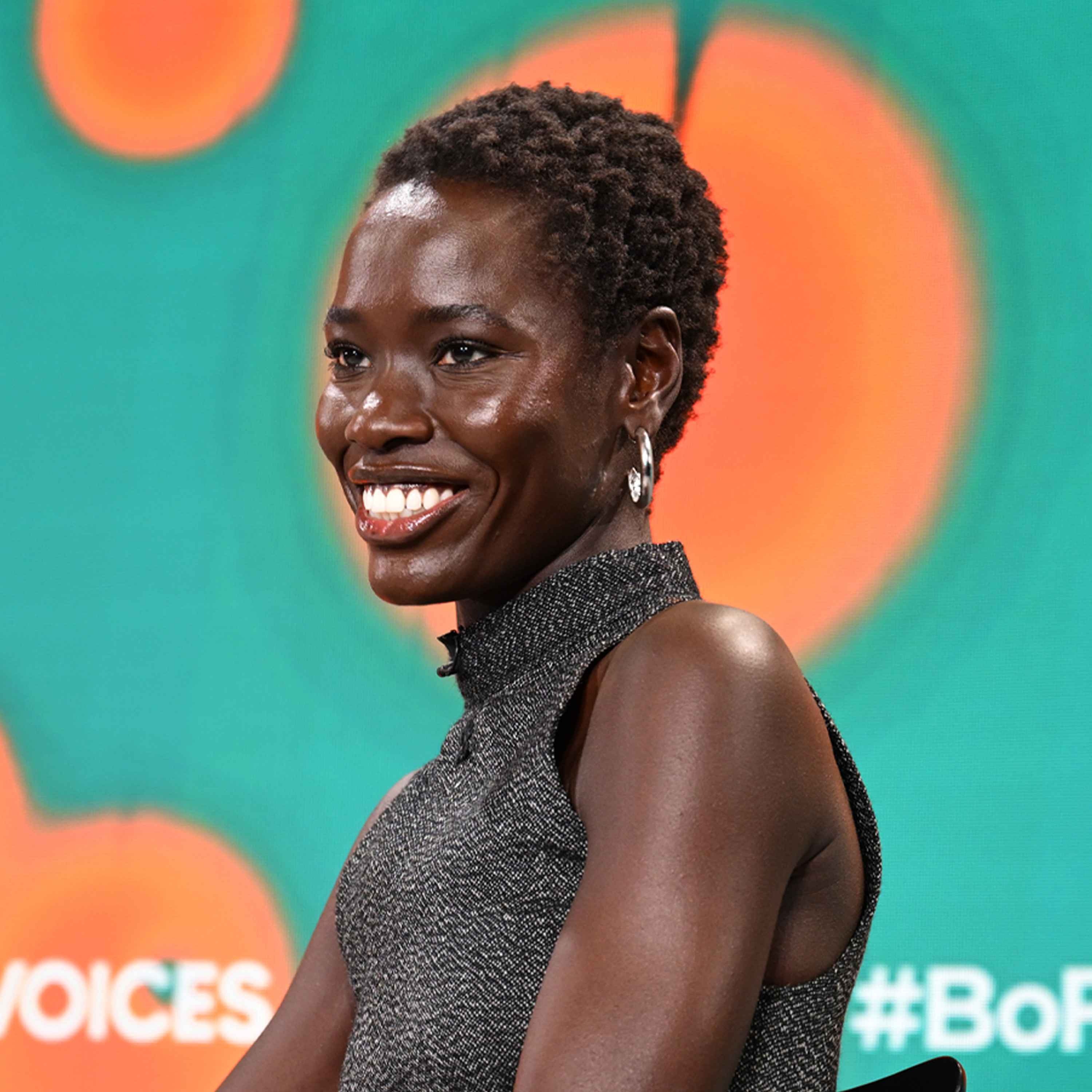
The Business of Fashion Podcast
Awar Odhiang on Joy, Inclusion and Her Viral Chanel Moment
00:26:25
At BoF VOICES 2025, Awar Odhiang speaks about why inclusion has to extend behind the camera, and the boundaries she is setting to protect her sense of joy in an industry that rarely slows down.
Loading summary
Transcript69 lines
- [00:00]
A
Foreign.
- [00:05]
B
This is Imran Ahmed, founder and CEO.
- [00:07]
C
Of the Business of Fashion.
- [00:08]
B
Welcome to the BoF podcast. It's Friday, December 19th. Born to South Sudanese parents and raised in Canada after arriving as refugees in 2002, Awar Odiang grew up far from fashion's orbit. She was studying health sciences, planning a career in medicine, when she was scouted at her first job. Modeling began locally in Calgary and then accelerated fast after she launched internationally in 2019 with early Runway breaks, a packed show schedule, global campaigns, and of course, a moment that stopped the industry when she closed the most watched debut of the season at Mathieu Blaisey's Chanel show in October.
- [00:54]
A
I was told by Matthieu, he looked me in the eyes and he said, awar, like, this is your moment I want you to do. I just felt so, so free, so confident, so beautiful. I mean, it really is all to Mathieu because he creates clothing for women and for women to feel beautiful. You can tell he loves women just by his designs.
- [01:19]
B
In this conversation from BoF Voices 2025, I speak with Awar about the gap between being celebrated publicly and understood privately why inclusion has to extend behind the camera and the boundaries she's setting to protect her sense of joy in an industry that rarely slows down. Here's Awar odiang on the BoF podcast.
- [01:47]
C
All righty. I've been so looking forward to this. Me too. Thank you for coming.
- [01:53]
A
Thank you for having me.
- [01:54]
C
You look beautiful. Of course. But I know from our conversation the other day, your story, your personal story, is extraordinary. And what I wanted to start with was the girl in Calgary before fashion found you. Right, sure. Tell me the journey of your family from Ethiopia to Canada first, of course.
- [02:27]
A
So my family, we came to Canada as refugees, and in 2002 is when we had arrived in Canada. Before that, I was actually born in a refugee camp in Pinyuro, Ethiopia. My family is South Sudanese, but they were fleeing the war at this time, before I was born, while my mom was pregnant with me. And so when we had arrived in Penyuro in Ethiopia, we were sponsored by a church called Victory Church. And this was in Moose Jaw, Saskatchewan.
- [03:01]
C
Does anyone know where Moose Jaw, Saskatchewan is?
- [03:04]
A
I would be surprised.
- [03:06]
C
One person. Okay, explain to people what Moose Jaw is, because.
- [03:11]
A
Well, Moosejaw is a very small town in central Canada in Saskatchewan. When we moved there, me and my family, I think there was about 50 to 70,000 people there. So it was quite small compared to where we live now, which is in Calgary, Alberta.
- [03:28]
C
And your family ended up in moosea because of this organization? Yeah. Do you remember time before Mooseja, like, being in Ethiopia? Do you have any memories from that time?
- [03:42]
A
I really wish I did, but unfortunately I was maybe way too young. I was two years old when we had moved to Canada. So if you ask my siblings, I'm sure they could give you another answer, but me, myself, no.
- [03:55]
C
So your earliest memories are in Moosejaw?
- [03:57]
A
My earliest memories, yes.
- [03:59]
C
And what was it like for like, someone like you growing up in a place like Moose Jaw?
- [04:05]
A
Well, I have to say that I'm really grateful that my family had come to Canada because it really is a melting pot of different cultures and diversity. And so for me and my family, of course, we were not always surrounded by diversity. I went to a private Christian school and it was very much just Canadian people. Really, there was no diversity in that. In my classroom, I was always the tallest and darkest person in the room. That also goes for my siblings as well. But, you know, for me, that wasn't something that mattered too much because we still had the diversity in our community. And so that made it really okay.
- [04:46]
C
By the time your family moved to Calgary, age 14. 14, is that right? You were now grappling with multiple different identities at that time in your life, when you're trying to figure out, like, who am I? That kind of eternal question.
- [05:03]
A
Yeah.
- [05:04]
C
Do you remember what you were thinking about who you were and what defined you at that time?
- [05:12]
A
Well, coming to Canada, I know that my family, we had come for safety, for security, for opportunities, and for education as well. And so as a little girl, I knew that that was something that was very, very important for me to accomplish in life. And so for me, I knew that my plan was written. I needed to go to school, I needed to work, I needed to make my parents proud, my family proud, my people proud. And so before modeling, I was doing just that. I was in school, I was in university, I was studying, I was participating in sports, the community activities as well. But I didn't have my future exactly written for me. I didn't know what was going to happen.
- [05:59]
C
But then that moment happened. When Kelly found you.
- [06:03]
A
He did.
- [06:04]
C
Every model has their scouting story, so we have to hear yours. Like, you were in Market Mall?
- [06:11]
A
Yes.
- [06:12]
C
Okay. Folding clothes, Folding a sweater.
- [06:16]
A
A table of sweaters. Actually, I was working at Old Navy. It was my first job ever. It's a family department store in North America, and that's where I was working. And while I was folding my sweater, I had this sweater up like this. I put it down and I see a man, and this is Kelly Straight. And so he now is my mother. Agent love him very much. But if you've ever met him, you know that he is. Has a very large personality, larger than life type of man. And you know, for me, I had just been trying to figure myself out and see what was right for me for the future. And he had told me, I know you, I think you're beautiful, and I think I could change your life. And for me, as somebody who has had to work for everything in my life, we really started from the bottom up. That was very surprising to hear because what do you mean you're going to change my life? You know, I've always had to work for that myself. So who are you to say this to me? And so in that moment, I was very shocked, very scared as well. I wasn't who I am now. And so I was very shy, very reserved. And that scared me, the message that he gave me. But at the same time, that was a moment that now I can look back at and realize that he believed in me before I even believed in myself. And so a few months later, we had reconnected again. And that's when I started working in Calgary. First I was doing trunk shows at Holt Renfrew. I was doing shoots here and there. But in 2019 is when I saw started my international career.
- [07:53]
C
Before we talk about the kind of ascent, were you at all interested in fashion? Like, is this, you know, some. Some young women that I've met that are models, they know they want to be a model. Like, you know, they have the genetic makeup to do it, and it becomes something that they think about early on. Is it something that you had ever considered? And was fashion something that you were drawn to?
- [08:18]
A
To be honest, no. Fashion is something. A world that was very different from my reality and different from my dreams as a person. And so I actually wanted to go into medicine. I studied health sciences. And so that was the path that I thought I was going to go through after graduating university. But I was scouted during university and I was working as well. So fashion wasn't something that I really had believed or even thought about being in in the future. But it's an opportunistic career, I believe, and I took this opportunity.
- [08:55]
C
So. Okay, let's talk about your first impressions of the fashion world. For someone who wasn't interested in fashion. Like when you first shifted from Canada to it, was it Italy that you went to?
- [09:09]
A
Milan.
- [09:10]
C
Milan. What did that feel like?
- [09:13]
A
Well, I was a bit thrown into the Deep end. When it came to that. I didn't have walking lessons or a crazy amount of test shoots in Milan because Canada is one industry, but Europe is another, and I think they're very incomparable. But my first impression, I guess I was very shocked to see, well, one, the ambition that a lot of the models have and how much work really goes behind creating a single thing that the typical person wouldn't really appreciate. But, you know, I was able to really see how things were made and how much work people and passion people put into their work. And for me, that was something that really opened my eyes as to why the fashion industry is important. And it's not what most people think. Maybe it's vain or very superficial, but there's so much more to it. And that's something that I realized as my first impression, really.
- [10:15]
C
The first designers to cast you in a show were Luke and Lucy Meyer, who were working at Jill Sander at the time. Luke is a fellow Canadian.
- [10:24]
A
Yes.
- [10:26]
C
What happens when you get on that catwalk the first time? How does that feel?
- [10:30]
A
Well, my first catwalk, I was extremely nervous, as anyone would be, I think. I wasn't a pro. Like I said, it was a learning experience. Every show that I did, and this first one in particular, I remember being so nervous behind the curtain, ready to walk. And to be honest, like working with Lucy and Luke, they really compose themselves in such a way that brings peace. And so, as nervous as I was in the moment, they gave me a little smile right before I took on the Runway, and that really just brought me a lot of confidence. And so after that Runway, I just remember feeling so, so good about myself, about the clothing I was in. I felt beautiful. I felt free, I felt confident. And so, yeah, it was scary in the beginning, but afterwards, I really gained my confidence.
- [11:20]
C
And then what happened after that or.
- [11:23]
A
What happened after that? I mean, I think that's where my career really started to build. Jill Sander was a really great stepping stone for that, and I'll be grateful to them forever. But for sure, that's when I started doing more and more shows, had a lot more work on my schedule, and, yeah, that's where my career took off.
- [11:45]
C
There was some research that we did when we were doing the BOF 500 curation this year, and one of the pieces of data I always ask the team to pull is the number of shows. You know, who's walking the most shows, and your name was right up there. And I think it was something like 65 shows in a season.
- [12:07]
A
Oh, wow.
- [12:08]
C
Yeah, you don't even. I didn't even realize that it was definitely above 60. I mean, those of us who work in the industry knows what it's like. We know what it's like to go and sit in front of a and wait in the front row and like, wait for a show to happen. And like, that's tiring enough. But 60, 65 shows in a season, like, what is that like?
- [12:30]
A
Well, as you could tell, I didn't even realize there was 65, 67 shows, to be honest. I'm really, I'm full of gratitude for all of the designers that have given me the opportunity amongst hundreds and thousands of other girls and people that wanted to be in that position as well. It really is surreal, to be honest. It's hard to believe that I have these blessings coming in like this. And so 65 shows, wow.
- [12:59]
C
What's a day like? Just like, it must be obvious to you because you live it like every day. For those of us who've never, including me, I mean, never been a model, you wake up at what time?
- [13:11]
A
Well, it really depends on the shows that you're booking in that day. For me, I can do up to five shows in a day, so that would mean a very early start. For me, some shows start as early as 9, and many designers, they want the models to arrive sometimes eight hours before the show. For me, I'm really grateful for my short hair. I don't got too much work, so that made my call times maybe around 5.35am but that wouldn't mean that, you know, I do that one show and that's it. The day would continue on. A lot of times, not being able to eat, to rest, to sit down, it's constantly go, go, go. But typically my day would end maybe around 11:30 midnight if I don't have any more fittings between that. Fashion Week is a very fast paced, fast paced moment for models.
- [14:08]
C
You've been really open with me the other day that all of your experiences in the industry haven't always been positive. And I love that you emit this gratitude and this graciousness about the experience that you're privileged to have. But I do think it's important for us to have the discussion about the challenging moments on this stage in 2016. James Scully, who's somewhere here. There he is. We opened up a conversation about the abuse of models in the industry that year. We also had Joan Smalls on this stage talking about her experience as a black woman being a model. We had Adut Akech Another refugee, South Sudanese refugee who rose to the top of the industry. And the consistent message has been, oh, you know, we're trying to create a more inclusive industry. We're trying to create a more safe space for young women who are entering this quite, you know, the pace at which you're having to work, the pressure that you're under, it's a lot. Talk to us a bit about what the darker side of modeling can look like.
- [15:16]
A
Well, one of the darker sides of modeling, I would say, is the inclusion. That's a huge problem, I believe, in the industry. I think that this has been going on from day one, really. And the fact that we're still talking about this today really shows how big of a problem that is. For me, inclusion is being able to be in a room and not have to translate yourself, being in a room where you're not the only person who looks like you, where you're not the only person who's expected to speak on certain matters. And that's something that I still face to this day, that many people like me, that many minorities in the industry face. And it's very disappointing that in this day and age that's where we're still at.
- [16:05]
C
But at the same time, you're like one of the most in demand models. So there's a real interesting kind of contradiction there, which is like you're getting cast, you're getting the big campaigns, you're walking the biggest shows, you know, the industry is hiring you, but inside, sometimes you're not feeling like you belong. Why is that, do you think?
- [16:29]
A
Well, I think it's because there's a big gap. So for me, how I see the gap is between being welcomed publicly and being understood privately. I think they're two very different things. And you know, a lot of it comes from performatism of inclusivity. And so a lot of the times that's shown in campaigns, in photos, in statements, but you know, behind the scenes there's no diversity. There's nobody who's really understanding you, your story, how you've been treated. So that's really dismissed a lot.
- [17:08]
C
You mentioned to me the other day some specific experiences where as a, and to use your words, a dark skinned black girl, you were treated differently than other girls. Can you tell us a little bit about that?
- [17:20]
A
Well, I think that a lot of this goes on in casting, in budgeting, in narratives as well. So for me I've seen that and you know, a lot of people have seen that in girls of a certain minority, they speak up for for example, not being treated fairly on set for not having the same treatment in general as the next model next to them. And so this is something that is very, very apparent and continues on to this day. And that's one of the big ones, I would say.
- [18:00]
C
So if you were able to talk to those people who are making those decisions or creating that kind of environment, what's your message to them?
- [18:09]
A
I think that there really needs to be change. I think that there's three things specifically. The first thing that needs to change is the decision making. You can see that there is diversity, a bit more diversity that's in front of the camera. But diversity also needs to be in the rooms where we're speaking about budgeting, we're speaking about narratives, we're speaking about casting. Everything that concerns every model. There's no. There's really not much diversity when it comes to that. Second thing I would say is. Sorry, this is my first panel, guys. The second thing I would say is just the consistency. Consistency in not just listening and, you know, having cultural moments or societal trends be something that is very temporary. And so in the moment, yes, now we want Asian girls the next season. Yes, now we want more black girls, you know, and all types of minorities. I think that consistency is key in really showing up for everybody. And the third thing I think would be taking lived experiences seriously. And so I think that brands really need to stop asking the same people to share the same stories without really changing the system, because that doesn't allow for any growth. That doesn't allow for any inclusivity, really. But I think that if those three aspects can change, I think we could really move towards a better future for every single person. I think everyone deserves the exact same experiences and to be treated just like their neighbors are being treated. So, yeah, I think with those, we can definitely make a big difference.
- [20:13]
C
It kind of brings me to that Chanel moment because, well, first of all, when you walked out in that huge space of Document Palais, it was electric. For all of us watching, it was electric. And you did that spin, like, literally right in front of me. And I'm sure if we looked at the faces of everyone in the room that everyone was smiling, everyone could feel that joy that you were emitting. I want to understand where that joy came from, because we just talked about experiences where you're made to feel different, you're made to feel smaller, you're made to feel less than the other models. But there was something of that experience. You were closing the show of the most important debut of One of the biggest brands in the industry. And you could have been all nervous or scared. What was it about what was going on in that moment that enabled you to break the rules and do a spin and, like, clap your hands and, like, do the whole thing?
- [21:23]
A
Well, for me, I would say that the moment that really allowed me to fill that space in that way was the freedom that I was given truly behind the scenes. Before the models were coming out, I was closing, right? And so I was situated next to the screen where I can see all of the models on a screen. You know, I can see how beautiful the show was. I can see everyone else's reactions in the room, how proud they were of themselves, how much hard work they have been putting in. And they can see in life right now that, you know, their hard work was paying off. And, you know, right before I had gone off into the stage, I was told by Matthew, he looked me in the eyes and he said, awar, like, this is your moment. I want you to do what, whatever you feel is right for you in this moment. You know, show your emotion. Do you? And, you know, I was just filled with so much excitement from the very beginning, just watching the entire show, the entire collection. I mean, I think we can all agree it was the most anticipated show of the season. And so, you know, there's a lot of pressure. There's a lot of eyes on Matthieu, all eyes on, you know, the entire team. Where is Chanel gonna go? What direction is it going to take? And in that moment, I think was a moment for me that I just felt so, so free, so confident, so beautiful. I mean, it really is all to Mathieu, because he creates clothing for women and for women to feel beautiful. You can tell he loves women just by his designs. And so that was really why.
- [23:07]
C
And when you were walking on that Runway in that show versus your first show, the Jill Sanders show, how did it feel when you came? What was going on in your body? Give us a sense of, like, how it felt.
- [23:21]
A
Well, I have to be honest. Compared to my first show, I was not nervous at all for the Chanel show. I had such confidence that was brought to me by everybody in the room. And I think that we all genuinely felt the same thing. You know, right before we all walked out. We're full of smiles, we're full of excitement. But then when we come back, we're all in tears. We're all crying and tears of happiness, tears of joy. And I was just overwhelmed by that feeling, really. I wasn't nervous at all because I knew that behind me was a great group of people who support and love me. And, you know, at home I have my family and my friends who are also watching me, so supporting me, sending me so much love. And so for me, it was just a moment of gratitude. I felt honored, really, because I was also the third black woman to ever close Chanel, the last person being a Duda catch. And so it was really a moment of just pure bliss, pure joy.
- [24:25]
C
Were you surprised by the response afterwards? I mean, the other day, Kelly sent me a clip from the national news in Canada, and it was everywhere. How did that feel? Because, you know, I think you've been kind of a fashion industry secret, right? But all of a sudden, everybody. Were you surprised?
- [24:47]
A
Well, I don't know if I was surprised, but I was very much overwhelmed. I was not expecting as much feedback as there was internationally on an international scale, because I think that that moment genuinely inspired so many people. It brought hope and it brought joy to them when in this fashion industry, that's something that we don't always come across. And so I was a bit overwhelmed for sure, but in the best way possible.
- [25:18]
C
So now that the industry knows your name, now that you've done your first panel talk conversation, how are you going to protect this incredible, peaceful, joyful energy that you have as your career continues to inevitably rise?
- [25:38]
A
Well, I would protect this joy, this joy in my heart, this joy in my soul, by continuing to set boundaries, I think by also keeping the company around me honest and close, and by also not allowing the pace of the industry to impact the pace of me as a human. I think that joy can be cultivated in this way and it will definitely stay.
- [26:09]
C
Thank you.
- [26:10]
A
Thank you.
- [26:16]
B
The BoF podcast is edited and produced by Olivia Davies and Eric Brea.
- [26:28]
D
And now a next level moment from AT&T business. Say you've sent out a gigantic shipment of pillows and they need to be there in time for International Sleep day. You've got AT and T5G so you're fully confident, but the vendor isn't responding. And International Sleep Day is tomorrow. Luckily, AT&T 5G lets you deal with any issues with ease. So the pillows will get delivered and everyone can sleep soundly, especially you. AT&T 5G requires a compatible plan and device coverage not available everywhere. Learn more@att.com 5G Network.
- [26:58]
E
Is it time to reimagine your future? The right business skills may make a difference in your career. At Capella University, we offer a relevant education that's designed to focus on what you need to know in the business world. We'll teach professional skills to help you pursue your goals like business management, strategic planning and effective communication. And you can apply these skills right away. A different future is closer than you think with Capella University. Learn more at Capella Eduardo.