← The Business of Fashion Podcast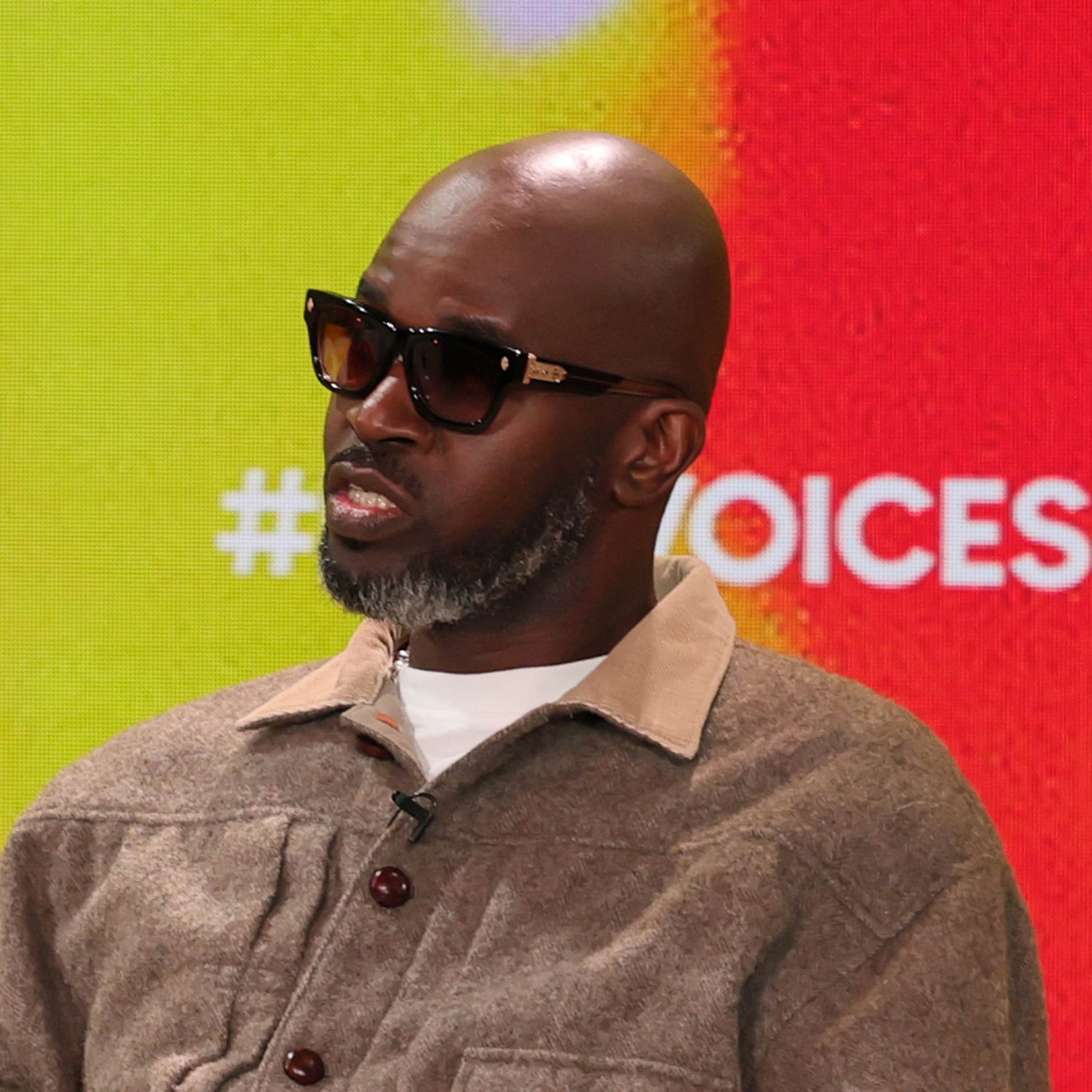
The Business of Fashion Podcast
DJ Black Coffee on Breaking Barriers and Building Global Credibility
00:26:50
At BoF VOICES 2025, the South African DJ speaks with BoF founder Imran Amed about his path to global success and how he is reshaping perceptions of Africa through music, fashion and talent development.
Loading summary
Transcript52 lines
- [00:00]
Black Coffee
Foreign.
- [00:04]
Imran Ahmed
Hi, this is Imran Ahmed, founder and CEO of the Business of Fashion. Happy New Year and welcome to the BoF podcast. It's Friday, January 2nd. A DJ from South Africa who survived a life altering accident on the night of Nelson Mandela's release, Black Coffee has gone on to headline the world's biggest stages. At BoF Voices 2025, he reflected on building global credibility and reshaping how the.
- [00:33]
Interviewer
African continent is seen.
- [00:36]
Black Coffee
If you Google a picture of Africa, it's not going to be the most positive picture you see. To be a DJ in South Africa, it's one of the toughest things because almost every DJ is as amazing. To be a DJ on the global level is way more tougher because I come from a continent that is or was, maybe still is not seen as how it truly is.
- [01:01]
Imran Ahmed
This week on the BoF podcast, I'm pleased to share this conversation with Black Coffee, where we talk about rejecting pigeonholes, earning trust on a global level and opening doors for the next generation. Here's Black coffee on the BoF podcast.
- [01:25]
Interviewer
Thank you for coming.
- [01:26]
Black Coffee
Thank you so much.
- [01:27]
Interviewer
You must be the busiest guy I know.
- [01:29]
Black Coffee
I'm the most nervous guy right now.
- [01:33]
Interviewer
You shouldn't be nervous. I'm so fascinated by your story and I'm really excited to have the opportunity to kind of go into it a little bit with you. Before we dive into the backstory, we were talking with Alvaro Barrington earlier about what it takes to be a great artist. I'm curious, what does it take to be a great DJ on a global scale in a global culture like the one we live in now? What is it? What is that?
- [02:06]
Black Coffee
Wow. I have great respect for Alvaro. Really enjoyed the talk earlier. There's two things for me to be a DJ in South Africa, it's one of the toughest things because almost every DJ is as amazing. To be a DJ on the global level is way more tougher because I come from a continent that is or was maybe still is not seen as how it truly is. If you Google a picture of Africa like on your phone right now, you know it's not going to be the most positive picture you see. So to leave the continent and be able to be great outside, there's a lot of work that one had to do, like internally and externally. The more I was growing as a brand, fashion played a very big role for me. How I'm seen and how I walk into the room in every show that I play, I was very conscious of how I present myself. And the bigger the brand, the more intentional I was in terms of, like, visually, how do I look, how do I speak, how do I present myself? Totally different from the DJ from South Africa that I was before. So it took a lot of work.
- [03:26]
Interviewer
You said now that you know the way, if we Googled Africa or African culture on our phones and the way Africa really is. And I say this as the son of immigrants from Africa.
- [03:38]
Black Coffee
Yes.
- [03:39]
Interviewer
So I share that perspective with you. The image that we have of Africa or the image that Westerners or people outside of Africa, what's the gap? Like, what's the way that you see it versus the way that it's seen?
- [03:55]
Black Coffee
There's a lot of difference. I mean, the biggest lie about the continent is if you look at the picture of the globe, Africa is made to be smaller. And that's the truth. That's a fact. That's number one, how we are made to be seen. Just the continent of Africa, if you look at the globe, it's made smaller, but it's bigger than what it actually is. I'm not even talking about its talent, its taste, its fashion, its music, its culture. I'm just talking about how the entire continent is made to look, you know, which is a bigger picture and everything else that comes with it. You know, we have to work 10 times harder. We don't have opportunity. We have the talent we have. And this is across the board, not just in music. And everything that we do, we import more than we export. I have great interest in the fashion world. There's something that we're working on, and it's common knowledge that Africa is. It's a $31 billion industry today, projected to be 50 billion by 2030. But still we import more than we export. And I'm one of the few exports of the continent. And the idea is to something that I'm working on every year. If you look at my residencies across the world in Ibiza, I bring more African DJs on the island, residency in Italy, where I do residency in Greece, all the residents that I work in, I try to bring more African DJs, not just because I'm from Africa, because I know how much we like opportunity and I know how much we are ready for the global platform. And what often happens is the world will then create subgenres or categories for African people at the Grammys. Instead of Tyler from South Africa, who has the biggest song in the world, instead of giving her number one pop award, they will create a new genre or category where it's Best African.
- [06:33]
Interviewer
It's like we were Hearing earlier with the chefs.
- [06:35]
Imran Ahmed
Right.
- [06:36]
Interviewer
When you're a chef coming from the global south or a different culture, they want to put a label on you.
- [06:42]
Black Coffee
Yes. So I've experienced this as an artist, you know, I once received big award in la, the Bets. And at the time, I was staying in LA and we were invited to this award ceremony. And me staying there at the time, it was such a big thing for me, you know, I was very excited. South African going to the Bets, who knows, you know, I'm going to see Beyonce, I'm going to see all the big stars, you know, on the weekend. And then during the week, we were told the African categories were only going to be on Friday. Not televised, not televised alone. So we attended the ceremony on Friday, and it was just us, you know, and we were all given our awards on Friday, and we were not invited on the main show on Saturday. But if you watch the show from Africa, they managed to edit the show so that you see us receiving the awards on TV on the same day. But we could. We could not attend the show with everyone else.
- [07:43]
Interviewer
You weren't actually invited into the show.
- [07:45]
Black Coffee
You know what I'm saying? So that's how we've been slowly slaughtered into the system. And the Grammy Award that you're speaking about was one of my biggest ways to fight that category, where I created an album with an intention of being nominated or being categorized with my peers. So I worked with my peers. You know, I have David Gaet on the album who was also nominated. I have Deep Law, who was also nominated on the same category. I featured the world's greatest musicians on the album because I was very intentional about landing at the right place and not being categorized on any African genre.
- [08:37]
Interviewer
And so to do that, did you need that adjacency with those Western DJs in order for them not to put you in that box? Is that what you're saying?
- [08:45]
Black Coffee
No, no. It was just me being intentional about song selection, the tempo, the features, you know, because music is such a universal thing. There's no language in a piano. You know, a piano doesn't speak Zulu, you know, it plays notes. It doesn't matter who's playing it. So I was very intentional about what I'm trying to do with that album. And when I got the nomination, you know, I felt very rewarded even before the award. At that point, I didn't even care about the award. The fact that I was not categorized as an African DJ on an African category, you know, I felt like my voice was heard on a global Scale, where it belonged. And that's what drags us, makes us slow. As African, we are not given an opportunity on the same level as the world players. You know, any African artist who comes up, they will create a category. I mean, there's been so many artists from here, from the uk, like Sam Smith came. They didn't create a British category, you know what I'm saying? So that slows us down a lot, you know, whether it's in art, music or fashion.
- [10:09]
Interviewer
Your personal story is a remarkable one. And growing up in South Africa in the apartheid era.
- [10:19]
Black Coffee
Yeah.
- [10:20]
Interviewer
And at the time when that era came to a close and then experiencing life post apartheid today.
- [10:27]
Black Coffee
Yeah.
- [10:29]
Interviewer
What was it like for you to experience that massive almost over, like a shift? Like, talk to us about that time in South Africa.
- [10:40]
Black Coffee
It's very complex even today, just to live together. You know, when Nelson Mandela came out of jail and he became the president, the word that was used to promote South Africa was. It was called a rainbow nation. You know, this was his vision. You know, a vision of, like, equality. Everyone's the same, we're all different people. Black, brown, you know, whatever color. Which I think was the most beautiful thing you can see. This man stayed in jail for 27 years. And he came out and he was preaching equality and peace. But in reality, the country is still suffering. We silently are suffering because we still don't see each other the same way. There's still fear from both sides and there's so much positivity, but negativity overwhelms the positivity because we haven't dealt with the truth. You know, I speak about it openly. I remember reading about how in Australia there was a formal apology to the Aborigines. Like a formal apology to say, we are apologizing for what happened to your ancestors. And I feel like in South Africa, that's what's needed. What happens instead is people saying, oh, that was the past. Get over it. Which I think everyone is working towards that. But I feel like what could bring real change is being outspoken about what happened in the past. Because then we're dealing with the issues in the right way. You know, today we have kids that are young, that don't know the history, that are very positive, that are the rainbow nation, but the truth is still hidden. And you almost see change when they turn 18 and they are. They start knowing the truth because no one speaks about it openly. And then they start looking at each other different. And it's constantly going to keep happening.
- [12:56]
Interviewer
Yeah. Until that.
- [12:57]
Black Coffee
Until we speak about it openly and it's not taboo to speak about it because it is the past. So I live in a very, very positive country, but it still has wounds.
- [13:13]
Imran Ahmed
We'll be right back with more on the BOF podcast.
- [13:21]
Workday Go Advertiser
New products to launch, new people to develop, new goals to crush. Workday Go is designed for small and mid sized businesses. By bringing HR and finance together on one AI platform, you'll have everything you need to think big, go big and grow big. And activation is fast. It takes just 30 to 60 business days to get you up and running. Simplify your SMB on an AI platform, you'll never outgrow Workday Go.
- [13:51]
Progressive Insurance Advertiser
This episode is brought to you by Progressive Insurance. Do you ever think about switching insurance companies to see if you could save some cash? Progressive makes it easy to see if you could save when you bundle your home and auto policies. Try it@progressive.com Progressive Casualty Insurance Company and affiliates. Potential savings will vary. Not available in all states.
- [14:15]
Interviewer
The night that Nelson Mandela was released from prison was also a defining moment for you in your personal life.
- [14:24]
Black Coffee
Yep.
- [14:25]
Interviewer
Can you take us back to that moment and what happened because it changed your life forever.
- [14:30]
Black Coffee
That Evening I was 13, about 10, 14, 13. Yeah. And we lived with our grandmother who was extremely strict. And it was all over the news that Nelson Mandela is coming out of prison the following day. And there was basically tribulations all around the country, was all over radio, tv and what happened in the township where I was staying, people were going to camp overnight. So we lived not far from a local stadium. So people started singing, kind of like going through all the streets, gathering up in numbers so that they can go camp in the stadium which was near my house. And this group of people came past my house and we all came out to see and a parade was going. Yes, like right in front. And we didn't live on a big main road, but it came right in front of our house and me and my cousins, we quickly like went in because I love music. So they were singing, I went in and my cousins went back and I didn't go back. It was around 8, 9 at night. I didn't go back and I just kept going with the crowd to a point where I was now scared to go back home because it was late. It was going midnight, one o', clock, we were still going. And when we were a few meters away from the stadium, like on the main road, we just had like, like a knob. I personally had a big, big noise, like something was like, like a big bang. And I was Light out, you know, and I think few seconds or maybe a minute, you know, I gained consciousness. People were screaming and. Yeah, I mean, later, what happened, the taxi came and bashed onto the singing crowd, and they say intentionally switch off the light so we couldn't see. And in high speed, he just came in the front and rammed through the crowd. And I was with my friends, and we were not in the front, and I was with my two friends and, you know, lights out. And then cars came, ambulances to pick us up, take us to the hospital. And I remember it got to the hospital, I saw my friends. They were also injured. So we got injured. And I suffered an injury called brachial plexus, which is the damage of the nerves. So I got a dislocated shoulder. And I don't think it was from the impact of the car. I think it was from the impact of the people pushing back. So we were in hospital early hours of the morning. They couldn't figure out what to do with me, and they sent me home. And I remember getting back home in pain, sitting on the couch, watching the television. And Nelson Mandela was coming out of jail that same few hours later, which was a big thing for the world and for the country. And in the stadium where we were going, it was my full capacity. I could hear it from my house and the singing and the tribulations. So his release out of jail marked a beginning of a different journey for me as a kid who was 14 years old, who loved music, who had dreams of becoming something in music. At that age, I wasn't clear about what I wanted to do, but I was already in a music class in school. I was very much dedicated to music. So that was basically the first day of the beginning of Black Coffee.
- [18:21]
Interviewer
What changed for you after that in terms of, you know, you've lost use of your left arm now as you're paralyzed?
- [18:27]
Black Coffee
Yeah.
- [18:29]
Interviewer
What happened in your mind after that happened?
- [18:32]
Black Coffee
I went through a lot. I mean, I was a kid, you know, most of the time I would ask myself, why, you know, why me? Why. Why would God do this to me? You know, it just didn't make sense for me as someone who I thought I had everything figured out. I found my love for music very early in my life, which I knew, like, music was my thing. And it's crazy because at that age I was kind of like a big deal as a dj, underage. And so we. And my cousin and his friend had a mobile DJing sound system. And I think around 12, 13, I started following them around and I was very curious and I started learning how to dj. And so they will come to my house, speak to my grandmother to ask if they can take me to the gigs. And they would do like 21st birthday, like graduation parties and. Which fascinated her, you know, like, why are you picking him up?
- [19:40]
Interviewer
You know, they saw something in you.
- [19:42]
Black Coffee
Yeah, I was, you know, I was quite talented in music very early, and then this thing happened. So I was very, very confused as to where to go, you know, in music class. Then it was a little bit different for me because we had a piano in class and all of a sudden I was excluded in certain exercises in class. But I had a very understanding teacher, you know, who knew how to manage the situation. But, yeah, I went through many different phases of my life as a kid, asking myself so many questions, and eventually I just. And I used to do physiotherapy after school, like three times a week after school I would go see a physiotherapist and I would do some stretches and eventually I came home and I told my grandmother, because as a kid I expected to see results, you know, And I used to have dreams about, I wake up, I'm like, oh, I woke up and I was fine and nothing was happening. And I told my grandmother, I was like, can I please stop with physio? Because I'm not seeing any change. And it was making me anxious and I don't know, it was. My depression was becoming worse as a child, you know, and she understood and I stopped physio. And I think stopping physio helped me to kind of like ignore everything that was negative about me. And I literally blocked, you know, the accident. I blocked that experience for many, many years. And I remember the first time I spoke about it was probably 2007 when I released my second album, because I went with the music. And I released my first album without talking about it because I didn't want people to see me as that artist. I didn't want pity, you know, I wanted to come in the industry and be accepted as a musician who has passion and love for music. And after the release of my second album, I was doing a radio interview and I spoke about it for the first time. And I spoke about it because I felt like I was ready to have conversations about it. And I've been speaking about it till today.
- [22:04]
Interviewer
So after the accident, you find a way of kind of pursuing this budding interest in music and you start DJing in South Africa first. What was the moment that enabled you to go global? To be the South African export.
- [22:24]
Black Coffee
There used to be a. I don't know what to call it, a concept that was done by Red Bull. It used to be called Red Bull Music Academy, where they would invite different producers and DJs from around the world. Basically, you need to go online and apply, and if you're lucky, you be chosen, and they will fly you wherever they're doing the Academy every year. And I applied for it in 2003, I think, and it was in Cape Town in my country, and I was chosen. And so I attended the Rare Book Music Academy, and we were about, I think, 40 different students. And being there for me changed my perspective because I was there with other DJs and producers from around the world, and I was playing them the music that we've been making. And most of the songs were in my language, and, you know, some they were not understanding. I had to translate a lot of stuff. And that was the first thing I wanted to fix about production, to know how to make a global sound without limiting myself because of the language. And I was very intentional about when I can use my language and when I cannot, depending on the releases. So, long story short, one of the lecturers there was Hugh Masagella, a South African legendary artist. May soul rest in peace. I was sitting on this side of the room and he was talking, and we were taking notes and seeing him for the first time in the room. And I listened to a lot of the stuff that he was saying. And after the Academy, then I started working on my album. And I reached out to him and he agreed to be on my. On my album. And my first single was with him, and he agreed to do a music video. And so I can say being in that academy helped me look at the world different. And I was more intentional about how to approach a global scene and how to play for a global scene.
- [24:42]
Interviewer
So you're now the man on the stage speaking to lots of people, like here and watching online. What's the advice that you offer young creatives that might be in Africa, they might be in Indonesia, or they might be in some other country that's overlooked by kind of mainstream Western culture. Like, what advice do you have to offer to those young creatives who want to find their global voice?
- [25:12]
Black Coffee
Just listen to your voice. You know, as an artist, we all have a voice, you know, and it tells us what color palette to choose when we're painting, you know, it tells us what genre of music do we choose as our medium, whether it's shares or house music. And what happens is over time, people come in and start dictating to you what voice you should use. And it doesn't matter, you know, whether it's music or anything that you want to be, Just listen to that inner voice, because that voice is the voice that will make you the greatest. Listening to people sometimes can water down your ambitions and can change your direction. And I say this a lot because coming from the continent where I come from, we've looked out outside a lot. You know, we grew up watching American television thinking that's the greatest country in the world and that's where we all belong. As black people, they are the coolest. Like, you know, and over time traveling there and seeing the reception, as someone who comes from the continent and seeing the respect they give me, I realized that actually we still have more stories to tell as people of the continent. We haven't even touched the surface when it comes to storytelling our sound, our different cultures. For instance, in South Africa, we have 11 official languages. Just in my country alone, we have so many different cultures. And each culture comes with a different approach to language, to melody, different approach to singing itself. And we haven't even started touching, you know, the surface when it comes to showcasing our talent. So we have a lot of story to tell and we cannot allow anyone else or you can't allow anyone else to tell you no, sing your melody like this or approach your art like this. So the message for me is like, listen to your voice and let your talent and your voice guide you.
- [27:30]
Interviewer
Thank you so much for being here.
- [27:35]
Imran Ahmed
The BoF podcast is edited and produced by Olivia Davies and Eric Brea.
- [27:47]
VRBO Advertiser
VRBO makes it easy to claim your dream summer spot with early booking deals, from homes with pools to poolside loungers. When you book a vrbo, you don't have to reserve any loungers. They're all yours. Get that early Booking deal@vrbo.com Influencer marketing.
- [28:03]
Progressive Insurance Advertiser
Isn'T what it used to be. We're shifting from reach to resonance, from impressions to impact. It's no longer about how many people see your content, it's how deeply you connect with them. And nothing creates that connection quite like podcasts. Acast's podcast Pulse 2025 report reveals how podcast creators are redefining influence through resonance. Multi platform fandoms and their ability to shape culture. So if you're a marketer who's tired of vanity metrics and looking for meaningful results, podcasts are where you need to be. Download the full research free at podcastpulse2025.com.