← The Business of Fashion Podcast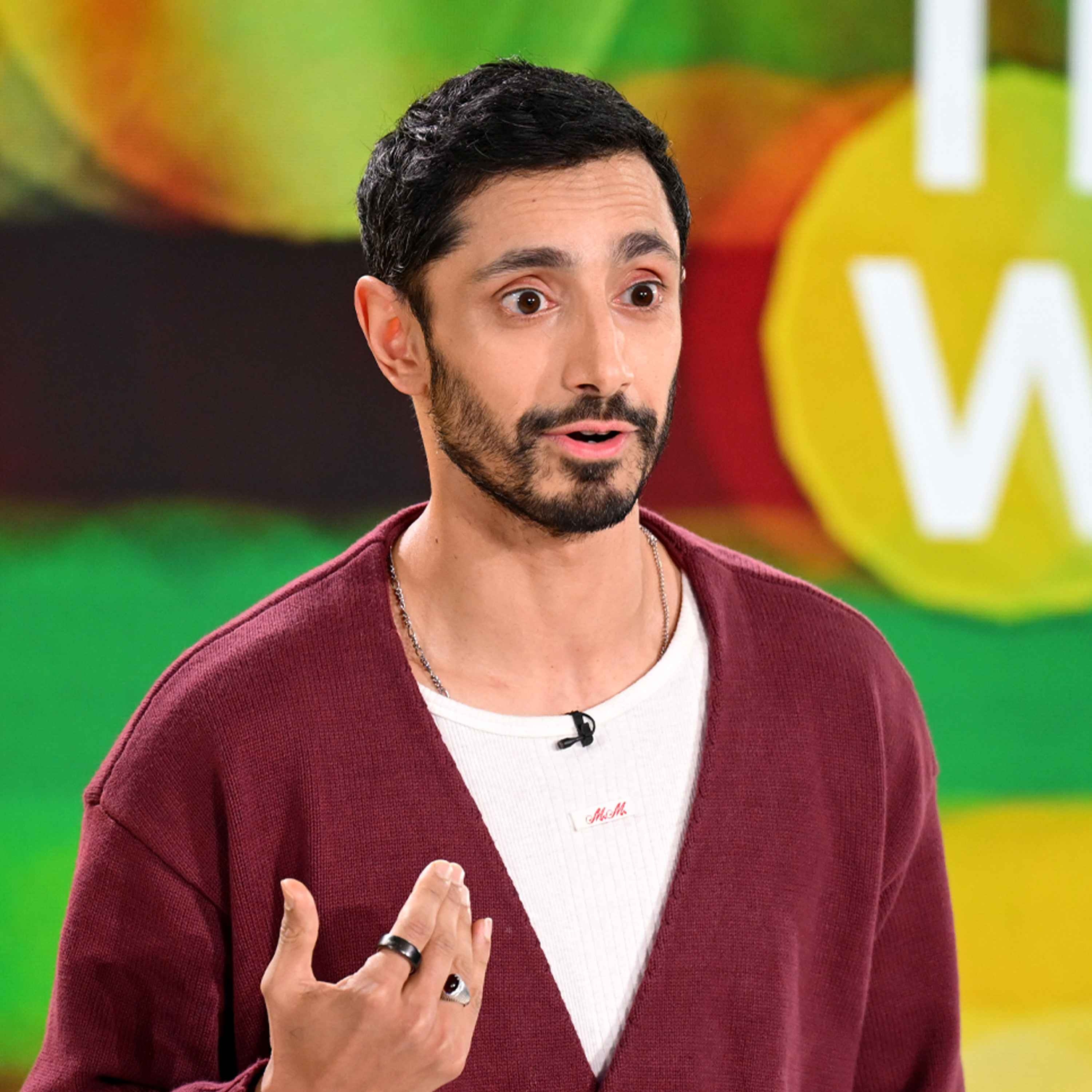
The Business of Fashion Podcast
Riz Ahmed on the Radical Power of Storytelling
00:16:59
At BoF VOICES 2025, the Academy Award-winning actor, musician and activist reflected on what Shakespeare’s “Hamlet” reveals about unity during divisive times.
Loading summary
Transcript5 lines
- [00:00]
A
Foreign.
- [00:04]
B
Hi, this is Imran Ahmed, founder and CEO of the Business of Fashion. Welcome to the BoF Podcast. It's Friday, December 12th. To close the first session of this year's BoF Voices on the Wider World. We wanted a voice that could cut through the noise and offer a clear, powerful call to action for human unity. At a time when everything feels like it's breaking down. Few artists are better positioned to do that than Riz Ahmed. An Oscar and Emmy winning actor, producer and musician, Riz has built a career at the intersection of culture, politics and humanity. From Sound of Metal to the Night of and through music and activism that challenge how stories are told and who gets to tell them. Drawing on his upcoming adaptation of Hamlet set in contemporary London, Riz argues that one of the most famous speeches in history, to be or not to be, has been misunderstood, de radicalized and stripped of its original power. For Riz, Hamlet is not about despair or inaction. It's about resistance, moral reckoning, and the fear that stops us from standing up when injustice feels overwhelming. This is a talk about grief, complicity and courage. About why stories endure and about what it means to take responsibility even when the cost feels high. Here's Riz Ahmed on the BoF podcast.
- [01:41]
A
Thank you for having me. Hi everyone, my name is Riz Ahmed and my call to action is how do we vote for Marley Diaz to be president? You can't just get on stage, drop the mic and ask me to go next. This is a complete setup. Thank you very much. I've been really inspired to by everybody I've heard back there today watching on the big screen. I wanted to talk to you a little bit about something that's been on my mind for the past 20 or so years. It's a very famous speech. I'm actually going to just do a bit of audience participation. If I start the line, could you finish it? Right. To be or not to be. That's the question. Woo. We've got some English majors in the house here today flexing on us. Well, everybody knows it. Everybody knows this line of dialogue. It is the most famous line of dialogue ever written in the English language. In fact, it is probably and arguably the most well known line of story ever written in any language. In fact, Shakespeare's Hamlet has never ever been out of production since it was written. I mean, the ultimate little black dress, right? Timeless banger. I mean, the only time it was out of production was a few years when Oliver Cromwell, annoying dude, took over. It depends actually how you think about it, but he Took over the country and shut down all the theaters. And obviously, when he shut down the theaters, he knew what he was doing, because story is inherently something very radical. More on that later. But that was the only period of time that Shakespeare's Hamlet was not performed Somewhere in the world. Ever since it was written 500 years ago, it's been playing. And right at the heart of this play are these iconic lines, this iconic speech. Does everyone here know the story of Hamlet? Roughly, it's okay if you don't just put your hand up if you don't know the story of what happens in Shakespeare's Hamlet. Okay, yeah. It's super straightforward, right? This guy's dad dies, right? And his uncle marries his mum pretty soon afterwards. He understandably thinks that's really weird and gross. But then his dead dad's ghost turns up and says, I was killed by your uncle, so can you go and kill him? Just standard kind of stuff that happens at Christmas dinner, right? Very relatable. But to be or not to be. This speech is right in the middle of it. It's the heart of the play, right? Really iconic, beautiful, lyrical, profound speech. And most people think it's about suicide. Usually what happens is the play stops. Dude comes out, he's holding a skull, he stares at it, and he's like, to be or not to be. That is the question. It's performed as though it's about suicide. This introverted, meditative moment of depression. It's understood to be that in the culture as well, but that ain't what it's about. This speech is far more radical. This play is far more radical than your English teacher would have you believe. And when I found out what it was really about, it blew my mind. And I think it's really speaking to us in this moment. I think we need to rediscover it, reframe it, and reacquaint ourselves with the message of this timeless smash hit. But before I share my views on what this speech really means, I want to take a step back, tell you my own journey with this play, right? I think it's no coincidence. Most of us don't understand what this speech is about, because most of us basically don't understand Shakespeare. When I was at school, I found myself to be very out of place, kind of in my own skin, like many of us at my school, but also in this country. And Shakespeare felt like the epitome of everything that I was on the outside of. And I had this amazing English teacher who was like something out of dead Poet Society. Mr. Roseblade. Shout out. Mr. Roseblade. Where's the camera? White Jewish guy from Wolverhampton, spoke fluent Punjabi, right? Yeah, I know. We've all had one of those, right? One of those teachers in our lives. And he gave me this play, took me under his wing and he said, check this out. This belongs to you. You belong in it. And I found in it exactly how I was feeling then and now. And I found really in it myself. What was crazy was this quintessentially British play, this thing at the heart of the Western canon, echoed and overlapped exactly with my experience as a British Asian. Let me explain. Hamlet is about someone haunted by the disappointment of their father. Say no more. Hamlet is about Hamlet not being able to marry Ophelia because she's from the wrong family. Right, there we go. Hamlet is about bickering over who gets to run the family business. It doesn't get more Asian than that. But it's also weirdly about marrying your sister in law if your brother dies to protect the orphans. Yes, you may laugh, but it's also a cultural tradition in South Asian culture. Some of you may know it's called chadhar dagna to protect with a blanket. I grew up with two people who had to do that. Their brothers died in car crashes or of cancer. They married their sister in law because they themselves were unmarried to protect the orphans. I was like, this is the most brown shit I have ever read in my life. I totally belong in this. This totally belongs to me. I did some more research and realized, hang on a minute. Hamlet, like most of Shakespeare's plays, is not something Shakespeare came up with himself. Believe it or not, dirty secret, Shakespeare was the reboot king. He only wrote two original plays. Every other story, every other play that Shakespeare wrote was a reboot or a historical drama. Right? It was a Tempest and love's labor's lost. And when you go back, you realize that Hamlet, the thing that really blew my mind as a kid was like, Hamlet sounds a lot like the foundational Hindu text, the Bhagavad Gita. The Bhagavad Gita is about Arjuna being paralyzed on the battlefield with inaction, unsure whether he should fight his uncles and cousins because that's the right thing to do, or side with him because that's his blood loyalty. That's basically the whole of Hamlet. And we know that there were trade routes going from ancient India to the Nordic countries going back thousands of years. We know that Shakespeare took the myth of Hamlet from the Nordic countries themselves. I was like, this belongs to all of us. This belongs to me. And I loved it lyrically because I was writing rap and listening to rap. I was like, this is just the be. I decided then as a teenager, I am going to make a film of Hamlet if it's the last thing I do before I die. Twenty something years later, after 13 years of development, I made the film and it did almost kill me. And I really hope that if there's an English teacher now teaching Hamlet to their class and they say, all right, you're zoning out in front of the text. Let me show you the film version. It's meant to be performed, that they might show them this version that happens to be the first non white Hamlet in the history of cinema performed in Shakespeare's verse. I really hope there's a kid there that feels like they don't belong. Like British heritage is not theirs or theirs is not British. It might change how they see themselves in relation to the culture in the way that Mr. Roseblade did. For me, as much as I would have liked to share this film with you 10 years ago, I think now is the exact moment we need this story. And I think that's why it's popping up everywhere in the culture. I saw someone made a video game remake of Hamlet called Grand Theft Hamlet. Anybody see this? It's literally. It's out there right now. Tom York is staging an interpretive dance performance version of it called Hail to the Hamlet. Like Hail to the Thief, right? It's everywhere. You've got Hamnet, you've got. I mean, something's on at the National Theater right now. Don't get me wrong. A timeless story is always timely, but it's never been more urgent and timely than it is right now. And here's why. Hamlet is about somebody who is grieving the illusion that the world is a fair place. That's how I feel right now. I think that's how millions of us feel. He feels powerless in the face of this increasingly shameless injustice. It's how we all feel right now. He feels gaslit by it. Everyone's like, no, nothing to see here. Nothing wrong going on. That's really speaking to the moment. And most of all, worst of all, toughest of all for him, he realizes he is complicit in all the injustice. Let's face it, we're all part of the problem. So it's speaking urgently to this moment we are in right now. We need to reacquaint ourselves with it. We need to understand why these lyrical pieces of poetry. This to be or not to be speech is all embedded in our minds and bring it into our hearts and really look at it again. What does this speech say? It's not about suicide. To be or not to be could probably get you arrested. Let's walk through it. To be or not to be, that is the question. Whether it is nobler in the mind to suffer the slings and arrows of outrageous fortune, or to take arms against a sea of troubles and by opposing end them. To die, to sleep, no more, and by sleep to say we end the heartache and thousand natural shocks that flesh is heir to. Tis a consummation devoutly to be wished. To die, to sleep. To be or not to be is about resistance. The most famous lines ever written by a human being have been defanged and de radicalized. It's about fighting back against oppression. The oppressor's wrong, the proud man's insolence, the insolence of office, the law's delay. And I wanted to share that today. When Imran was like, come up and speak to these people, I was like, well, how am I going to square this? Like, how is this relevant? And I was thinking, I wanted to share that with all of us. Because the moment we're living in, we're living in a moment where, like Hamlet, we are dealing with the law's delay, the insolence of office, the oppressor's wrong. But I also wanted to share it with you specifically, because this is a room full of storytellers. And in the same way that we need to rediscover the radical truth of this speech, I believe we need to rediscover the radical purpose and truth at the heart of storytelling. Storytelling has been lost to content and distraction and entertainment. But at its heart, when it works best, is reminding us of a profound and very radical spiritual truth, which is that we are one. Let me back up a little bit. Explain. I'm watching love, actually. I'm crying my eyes out. I'm 12 year old Nicholas Hoult at this moment. Or I'm watching Dame Judi Dench and I am Dame Judi Dench in this moment. How is that happening? How is that possible? Story is this profound, most powerful technology we've ever invented. It's a body swap technology, kind of like that Tom Hanks movie Big. We all are suddenly reminded that underneath the differences that seem to separate us, we are the same. Underneath. That's the spiritual truth at the heart of Sufism, Hinduism, Buddhism, Christianity, all world faiths. Difference on the surface unity below, underneath the differences that seem to separate us. I'm watching this story about this gay kid in Miami whose mother is addicted to crack. And I am him right now. We share one consciousness. We share one well of emotions. That's what story is here to do. That is the radical purpose of story. You are storytellers. That is the purpose. That's the underlying mechanism by which story works. And so we have to kind of take a step back and ask ourselves, how do we as storytellers contend with the fact that. That we are living in a time when the most dominant narratives around us are not ones of oneness? They are divisive narratives. They are the us and them narrative. That person with that different colored skin, different colored passport, that person on the boat, that person on the other side of the border, that person that loves a different kind of people, that person who speaks a different language, that person who dresses a different way, who genders themselves a different way, they're not human. We're not one. We're not the same. It's us versus them. This is the moment we're living in. And yet we happen to be storytellers, people for whom insisting on our oneness is not an added option or extra. It is a foundational purpose of what we do and the underlying mechanism of how we do it. So what do we do? We push back. We have to be brave. We have to be brave in this moment when we are being divided. We have to remember our purpose as storytellers. We have to remember those words that we already remember. And I guess the thing that stops me from pushing back, the thing that stops me from taking a stand and standing up against oppression, all this kind of stuff is fear. I'm scared of losing things, scared of losing my living, losing my reputation, losing my life, losing my freedom. And Shakespeare kind of lays it out for us. Spoiler alert. At the end of Hamlet, just like the end of life, everyone dies. It's a great spiritual teaching. We all die, dude. All of us. We die. I'm going to die. You're going to die. We're all going to die. Marly Diaz will never die. She will live on immortally, and there will be statues built to her name, but the rest of us will die, okay? And so these things that you're scared of losing, you're going to lose them, dude. You're going to lose them. They were never really yours. That's what this play has to teach us. That's what Hamlet teaches us. Hamlet says when he finally gets his shit together and realizes the power of surrender, he says, speaking of death, of loss of his life as he knows it. If it be now, it's not to come. If it be not to come, it will be now. If it be not now, it will come. Since no man can know the world he leaves behind, what is it to leave? Let be. The readiness is all. And so my uplifting conclusion is, we're all going to die. So just like, you know, don't fucking switch. Honestly, the things that we are afraid of, things that we stand to lose, were never really ours. We will lose them. But what we stand to gain when we step into our purpose is something so profound and something that is truly what we are here to do. And so I would like to invite us as a room full of storytellers and really invite a conversation as we're here across these few days together to talk to each other and work out what that means for us. What does it mean to rediscover not just the radical truth at the heart of the most famous speech ever written, but what does it mean to rediscover our radical purpose as storytellers, insisting on our oneness in a time when people might try and divide us? Thank you very much.
- [16:50]
B
The bof podcast is edited and produced by olivia davies and eric brea. If you're listening to this, you're ready. Ready to join the Industrial Intelligence generation. A generation defined not by age, but by a shared mindset to connect teams, accelerate efficiency and drive innovation. Using the power of Aviva software to reshape industries, turning real time insights into real world growth. Discover our stories@industrialintelligence.com join Generation I hi.
- [17:33]
C
It'S Paige Desorbo from Giggly Squad. You ever stand in front of your closet and just say I have nothing to wear while you're literally surrounded by clothes? Because same so I started listing pieces. I'm over on Depop and honestly, it's been amazing. You can sell what you're done with and someone out there will love it. And the best part about it is there's no seller fee, so. So the money you make actually stays in your pocket, which feels very chic. It's also insanely easy. I listed something while watching TV and it sold before the episode even ended. So download the Depop app and list your first item today because your old outfit could be someone else's new favorite. Depop where taste recognizes taste. Payment processing fees boosting fees still apply. For more info, visit depop.com.