← The Carey Nieuwhof Leadership Podcast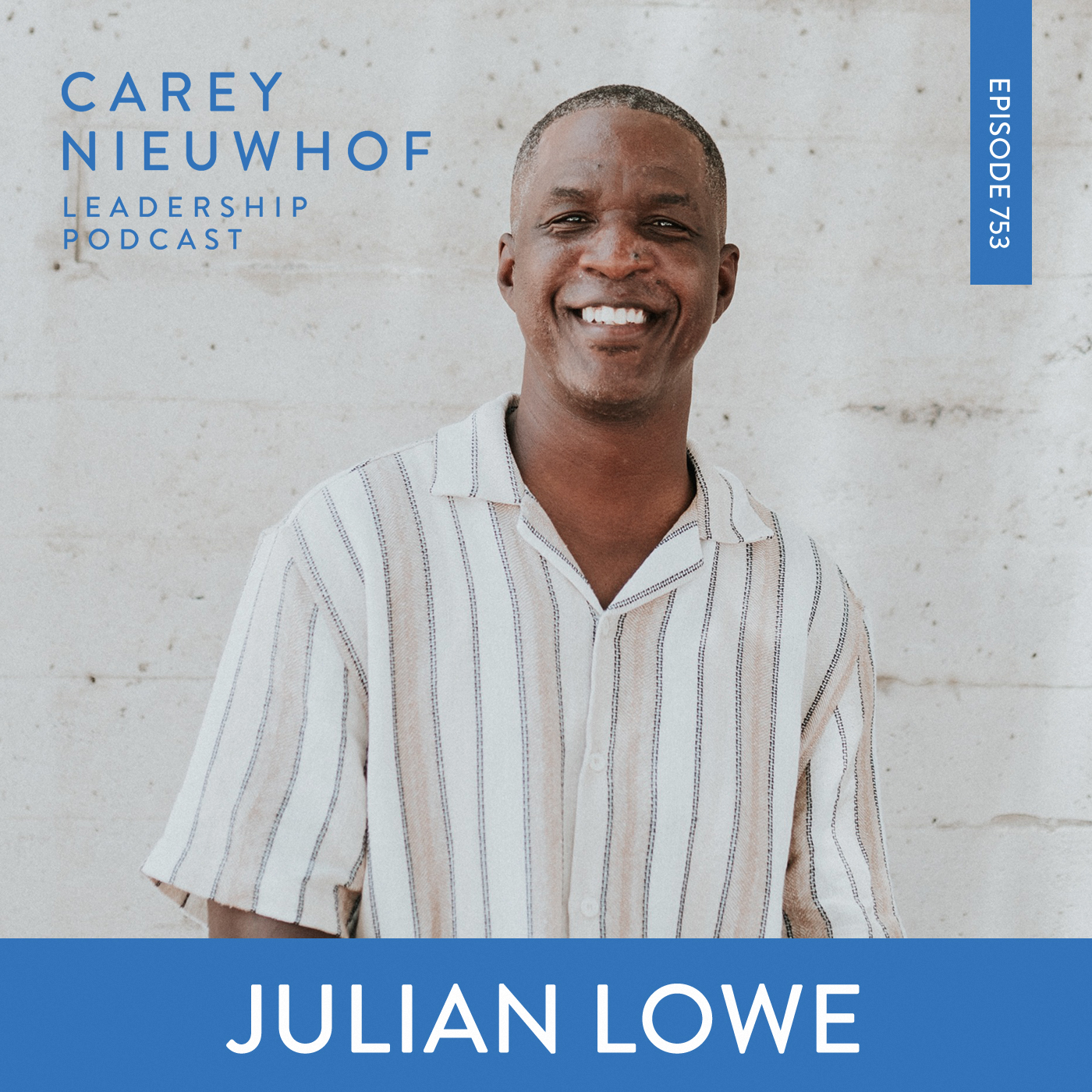
The Carey Nieuwhof Leadership Podcast
CNLP 753 | Why White Christian Men Are Afraid to Preach the Bible — Therapy, Calling, and Comedy with Julian Lowe
01:21:10
Julian Lowe never expected to be a pastor, which ironically freed him up to become one. He talks about what he learned at the Groundlings, in Music, and in ministry, sharing why he feels white men are afraid to preach the Bible, and how to speak the...
Loading summary
Transcript119 lines
- [00:01]
Carrie Newhof
The Art of Leadership Network.
- [00:03]
Julian Lowe
There was a real strong effort in media and culture to make specifically white Christian men afraid to preach the Bible. And this is gonna sound weird, but one of my biggest advantages is that I'm black. Honestly, I think I can say things that other people feel like they can't say.
- [00:27]
Carrie Newhof
Welcome to the Carrie Newhof Leadership Podcast. It's Carrie here, and I hope our time together today helps you thr in life and leadership today. Julian Lowe. I met Julian about five years ago. Fascinating guy, preaches in la, and I wanted you to hear his story. I found some really surprising things, like, you know, have you ever heard of the Groundlings? Well, they're like the comedy troupe that almost everybody on Saturday Night Live and so many of the comedians you love have come through. Well, he went there, too. And he was also in the music industry. Now he's a pastor. How does that all mix together? And he's got a really fascinating take on why white Christian men are afraid preach the Bible. It has something to do with the culture, and I think a lot of you will relate to it. We also talk about going to therapy, about staying strong in ministry. He's got a lot of fascinating points. I think you're going to love it. Hey, wherever you're listening to this podcast, really glad that you're here. Some of you are brand new. I love how this thing keeps going like 11 years into it. Crazy to see so many of you discovering it for the first time. And then I always meet OGs who've been here from the very beginning. So I'm on the road a lot. I was. Well, most recent Trips, New York, LA, Chicago. I'm going to be in Dallas in September and, well, a whole bunch of other places that escape me right now. But if you're at an event I'm at, would you come up and say hello? Let me know how you love the podcast. Of course. We got a YouTube version as well, and we're on pretty much all of the platforms. A lot of you starting to listen, watch on Spotify as well. So welcome. Really glad that you're there. If you love conversations like this, please share it with a friend. Maybe send it to your team and leave a rating and review when you do that. It helps the show grow. When it grows, we get incredible guests. So Julian Lowe is a passionate and engaging teacher of God's word who actually has some notes on comedy, too. You're gonna love it. Whose journey to faith began after a successful career in the music industry. He was introduced to Oasis Church by a friend where he later met his wife Christina, a Florida native who moved to LA in 2007 to pursue a decade long career in the film industry. They married in 2012 and he'll tell the story, but they became the lead pastors of Oasis Church in October 2019. So I think you're really going to appreciate this. We're going to jump into my conversation with Julian in just a minute, but first a word from our very trusted partners. This episode is brought to you by glue. We all know how fast things move in ministry and how hard it can be to keep up. Well, that's exactly what the Glue Feed is built for. It's a completely free regular text that delivers the latest research, trending topics and updates from from across the church. For example, did you see the surprising reversal in which Americans are trending in their commitment to Jesus? It's going up. Or did you catch the fresh insights on where pastors say they don't have enough support in their ministry? Well, you would have if you saw the text from Glue Feed. This is the best way to stay informed about what matters, when it matters, and you don't have to sift through the noise, right? So if you want all the latest research, updates on AI in the church, access to resources, and a whole lot more, join the Glue Feed today for free. Here's how to do it. Text my name, Carrie to 46816 to join for free. That's C A R e y to 46816. This episode is brought to you by Convoy of Hope. So mark your calendars and make plans to join me this fall for a very historic event incredible conference held by my good friends at Convoy of Hope. I'll be at the Convoy of Hope's global headquarters and training center in Springfield, Missouri November 5 through 7 for for the inaugural Hope Summit. It's a gathering of more than 1200 church and marketplace leaders and it's going to provide you with a wealth of resources designed to help you have a significantly greater impact in your ministry. From neighborhoods to nations, Hope Summit has an amazing lineup of speakers like Chris Hodges and Jenny Allen. I'll be speaking as well. Natalie Grant will be leading worship. And can I tell you, they got a great little coffee shop in that airport at Springfield. Anyway, you can register@hopeSummit.com Carrie to take advantage of a special discounted rate. That's HopeSummit.com C-A-R E Y and hope to see you this November at Hope Summit. And now to my conversation with Julian Lowe Julian, you had a successful career in the music industry before you ever got into ministry. Can you tell us like what you did in the music industry and how that might have prepared you or not prepared you for the life that was ahead in ministry?
- [05:02]
Julian Lowe
You know, I think successful means I made some money. Successful means I got a chance that, you know, to have published songs, had a publishing deal. I definitely wouldn't have been at the top rung of anything in the business, but I definitely had some traction. I think that creativity is the solution to problems. You know, God said, you know, came down to earth. He saw that the earth was dark void without form and it says, so God created. So I think creativity is the solution to problems. And those who are not creative are going to have a harder time solving problems. So I would just say that for me, creativity is such a big way that I solve problems. You know, we were, we didn't have much time in the studio, so I wasn't a recording artist, I was a songwriter. So they put on a track, a pre produced track. And really you wanted to show the studio and the record label that you could produce something on a relatively fast time frame. So you got four hours, you gotta create a song. So a lot of that was improv and a lot of people don't know this. Carrie. I went to a comedy school when I was 19 years old. Groundlings, which is one of the most popular comedy schools in LA for improv.
- [06:20]
Carrie Newhof
I mean, 80% of SNL are Groundlings grads.
- [06:23]
Julian Lowe
80% of SNL, SNL a Groundlings graduate. So I didn't graduate from the program, but went there for two years and didn't. Did something else. But so my background in creativity and comedy plays a huge role when I preach or lead. I mean, huge.
- [06:41]
Carrie Newhof
I did not know that you are a Groundlings. Well, kind of alumni, yes. What do you learn there? I mean, literally the list is so long of people who went through the Groundlings. What did improv and comedy teach you about communication?
- [07:00]
Julian Lowe
Well, number one is that it's primarily improv. So I was on the improv side. So you get thrown into scenarios where you're sitting there at a table with a young lady and they're saying, okay, you are a married couple and you guys are out to dinner celebrating your anniversary. Go. And you have to make it funny and you have to make it real and then they will stop it in like 15, 20 minutes in at least one of the things I did and said. Now you've just received evidence on your phone that your wife is cheating on you. And you have to go through that scene all improv. And somehow people have to laugh. And so you have to find a way to take a serious situation and make it funny. So really it's about speed. So, for example, I'm able now to. I still study for my sermons, but I'm able now to improv certain thoughts or certain things because I'm trained to do it fast. And so that's really the real thing. People can be funny, but how fast can you be funny and how can you follow the. The rules of being funny? Which is a lot of things we could get into. There's certain techniques that I would love to go there.
- [08:14]
Carrie Newhof
I mean, I love talking to comedians. I tend to be funnier in real life than I am on the stage or behind the microphone. You know, boy, that sounded really dull the way I said it. So case in point. Case in point. Like, I'm pretty quick wit if we're just hanging out in the backyard or on a trip or something like that. But I find it harder on stage. So I'm curious, let's go there. What are some of the rules of comedy or the principles you learned?
- [08:41]
Julian Lowe
One of the big rules is contrast is always funny. Now, if you're not afraid of offending people, you can use contrast a lot more. But our church is super diverse. So I want to say 20 something percent of our church is black. 20% is white. 20 something percent is Hispanic. Another 20% is Asian. So there's differences in contrast between our cultures. So one of the bits that I've been doing recently is, is seasoning food, where I would say some of you have two seasonings in your cabinet. I have two cabinets for my seasoning. And then the whole church laughing.
- [09:23]
Carrie Newhof
Are you talking to my group about having salt and pepper in their cabinet? Is that what you're doing there?
- [09:28]
Julian Lowe
Yeah. So I said, you know, if I go to your house and you got pepper and a bottle of pink Himalayan sea salt, I go, oh, no. You know, so. And everybody kind of knows who you're talking about without saying who you're talking about and you're exaggerating. We know that most people don't have two seasons, but contrast and then exaggerating the contrast. I went on a thing where another thing is called, like a misdirect, where I will say something like. And also using contrast where in cultures where I was talking about, my daughter is really challenging me as a father. I said specifically as a black father. And the whole room gets, like, silent and gets like, man, like praying for you. And I'm like, yeah, she's been asking me to go swimming. And every. And then everybody's just like, oh my gosh, this is crazy. So it's, it's simple techniques that you could use. And honestly, as like if you happen to be a pastor, I know there's communicators that listen to this that, you know, aren't pastors, but really is the moment you enter into a space as a pastor that other pastors probably would not say or wouldn't dare to try or say, it ends up being funny by default.
- [10:50]
Carrie Newhof
So any other rules or things you observed in the Groundlings? What does it take to be a comedian?
- [10:59]
Julian Lowe
I would say that Steve Martin said this in his masterclass. He said you have to be a master observer. So you have to be very observational. You have to notice things and you have to train yourself to notice things. And once you train yourself to notice things, then you can be funny. The other day I was driving around LA and there's these self driving vehicles called Waymos. And I don't know if they have them where you are, but.
- [11:32]
Carrie Newhof
No, but I've seen them. Yeah.
- [11:34]
Julian Lowe
Yes. And so back to the contrast thing. I was going to post something on the Internet because I've been seeing them everywhere and I'm like, there's something funny about this, but I can't figure it out. It's always going to post on the Internet something stupid where I was like, you know, I would never get in one of these Waymos. You know, I don't think they're safe. I'd rather get in an Uber and I'd rather get in a Lyft. You know what I thought to myself? Every time I see a Waymo, I think there's way more safer options to get where I'm trying to go. And set it like that. And it's, you know, just stuff like that. So, you know, it's a bit of a dad joke, but like just that's the way my brain thinks is noticing things that aren't funny and what's funny about something and then someone can go there is funny. So I would say the number one thing is observation and being able to watch and being a student of people and a student of your surroundings and not being afraid. And not being afraid.
- [12:29]
Carrie Newhof
How do you train yourself to observe? I'll give you an example. I don't know that you know John Acuff or not. Frequent guest on this podcast, a good friend. John and I have spent a ton of time together offline. And I mean, that's just how he sees the world. We had lunch last week. He's always noticing things. He's noticing things at the restaurant we're at. He's noticing things. Things in the green room we're at, like, just pointing them out. I'm in the same room. I'm not seeing it the same way. I might see a church trend or something. So how do you train yourself to observe that way? And what are you looking for?
- [13:02]
Julian Lowe
I think, even from a leadership perspective, I think, and this would be obviously a personal opinion or conviction of mine, I think that you have to have the discipline of observing so much, but also the discipline of not feeling like you have to do anything about everything you're observing. I think what destroys observation is observing five things. And let's say you see something wrong, but it never goes to that filter. Does this matter to me or does it matter to God? Does it matter to this organization? Does it matter? And being able to filter through that information, it's kind of like, you know, Instagram or YouTube. I mean, they're capturing billions of pieces of data, and they're able to filter through that data to get down to the data that matters to them. And so I think for a lot of people, being observant is overwhelming because they think they have to do something about everything that they're observing. But for me, I just. It's training yourself to notice things without focusing on everything you notice. So it's an observation without a focus, if that makes sense.
- [14:11]
Carrie Newhof
What, what value do you think humor brings to a sermon? Let's not talk keynotes, but let's just talk about preaching. I love to, like, have something in a message, sometimes three or four times that kind of loosens people up, makes them laugh a little bit or etc. And I kind of chip away at that. And, you know, nine times out of 10, it works. I mean, if I'm doing a keynote, it's super easy because I know which jokes work, and I haven't done that crowd before. Kind of like a comedian with. With a routine you know is going to land in Phoenix or Chicago or wherever you happen to be. But for the average preacher, what is the value of humor? And then what would you. What tips would you give them?
- [14:52]
Julian Lowe
Well, you know, a lot of times, you know, there's this verse in the Bible where Jesus says, blessed are those who are not offended because of me. There's also plenty of verses about anger. There's plenty of verses when the whole room is laughing. It's almost impossible for anyone to be offended when the whole room is laughing. It's almost hard for anyone to be angry. Laughter is one of the most healing things you could possibly imagine. When I was four years old, you know, my dad would put me down four or five years old, and he'd listen to these comedy albums. If you're a young person, an album is a circular thing that you put on a record player and anyway. But he and I would like, crawl out of the room on my belly and lay in the hallway and listen to my dad laugh after he thought I was in bed. And I remember this feeling of seeing my dad looking back. I don't know if I could recognize at the time, being five or six, my dad was such a hardworking man. He carried weight in the family. And I remember feeling this feeling on how much joy that my dad was having while laughing. And I. And I. I think I decided in that moment, whatever I do, people are going to. To be able to laugh. It is the range of emotion in a human when they're listening to you that really creates, I think, an impartation. If someone's only angry, if someone's only sad, if someone's only convicted, if someone's only laughing. I think ministries without weight, everybody laughs, but nobody ponders or thinks or actually feels any. So I think someone feeling a range of emotion when you are up there for 35 minutes, the best films do that, the best songs do that, and I think the best sermons do it as well. And I think one of the things that's overlooked in communication or sermons is humor, because people think that they're not funny, but everybody's funny, and everybody loves to laugh in their own way.
- [16:56]
Carrie Newhof
So if somebody's like, okay, I'm convinced I want to put more humor in my messages. What. What's one step they could take?
- [17:04]
Julian Lowe
Well, one step that every communicator could take is. And. And obviously, you know, I understand you have an audience that's not everybody's pastors, but I. That's my framework, so it'll. I think it'll make sense to you. But Paul said not only did I share the gospel, but my own life as well. And I think there's a piece of me that has to not just be willing to be Pastor Julian because there's so many things Pastor Julian would never say. There's so many jokes Pastor Julian would never say. But then there's that joke that Julian would say. There's that joke that Julian would do, and there's obviously, you know, boundaries for all of that. And like I'm never going to say anything super crude, but I think it's bridging the gap and marrying the leader. There's a joke that a leader wouldn't say and I'm not, and I'm not talking about crude or course or anything like in those lines. I'm just talking about this image that you're presenting and there's something that's real about you that would break this image that you're presenting. So the first step would just be to ask yourself, am I being myself? Is this who I really am? We did a video for Easter that had virtually a million views where we posted something about something and people like, I don't know, would this get mad? Will people get mad about this? Yeah, but that's who I am. So if people get mad at something that's who I am, then I have to eat that. So I would say that's step number one is a lot of people are operating in a, almost like a character caricature of themselves, not who they really are. And so with these things coming up they go, I can't say that I'm a leader or I can't say that I'm a pastor or I can't say that I'm this. But really when they're home, that's who they, who they really are. So that would be number one. Number two, I think humor is, you can start off with self deprecating humor. One of the things that I believe that, that I did is I started making fun of myself long before I would ever poke fun at anybody else. And so a balance between self deprecating humor and you know, making fun of other things. The other thing too is like, like being willing to make fun of the church. Being willing to make fun of like poke fun. I shouldn't say make fun, but poke fun and being light hearted about things would be another step where you, where you can talk about. Everybody in the room knows about church. So you can bring something up. I'll give you example. I was preaching on Abraham once, right? And I was talking about, hey, for all the Christians that grew up in the church. Remember that song? Father Abraham had many sons and all the Christians joined in. Many sons have Father Abraham. And then I went, is there anybody in this room has no idea what I'm talking about? And like a third of the room raised their hand. I said, all right, for the sinners, let's sing along. Just a small town girl living in a lonely and the whole church went, he took the midnight train. And the whole church joined in, and we did a song. I said, you got to make sure you always include the sinners when you. And so I'm calling them sinners while making a joke about it. So how easy would it be as I preach the gospel for that same person to. To repent? And so it's those types of things. You got to know your, you know, know your audience, know your different things and all those different things. And I'm not an expert on comedy, but, you know, I've done a lot of research on and had comedians speak in my life and help make me better at it. And I don't know that anyone who ever heard me communicate and not laugh or at least chuckle, depending on, you know, what. What the audience is. So hopefully that's helpful and makes sense.
- [20:59]
Carrie Newhof
Yeah. So comedy and music. What is one aspect of the music business, particularly in a place like la, which, you know, between LA and New York, you're in the music capital in Nashville. I guess. What is one side of the music industry that nobody really realizes is there that you saw?
- [21:18]
Julian Lowe
One of the. Is that people who have dreams for doing music. One of the things that people don't realize about the music business is the way that the business side of that industry can kill the soul of a human being. You know, I. The church healed me from the music business. I think that when people say they have a dream to do music, that's not what they're really saying. The moment you try to monetize your dream, which is really difficult to do, you're basically saying, not that your dream is music. Some people say they have a dream to do ministry when real. Their real dream is that I want to be compensated to do ministry. And those are two different things. And so I would say that what most people don't know about the music industry is that the monetization, the attempt to monetize a dream is super taxing on the soul of a human being. And it brought me to a low place. And I would say that the church had to help me heal from my pursuits, to monetize something that I felt like God had put in my heart. I wouldn't wish that on my worst enemy. The weight of having a dream that you cannot monetize, or might I add, monetizing something heavily that really isn't your dream. Those two things are really hard to wrestle. Wrestle with.
- [22:40]
Carrie Newhof
Boy, there's a lot there, Julianne.
- [22:43]
Julian Lowe
There's a lot there, Carrie. A lot of people Monetize something that isn't their dream.
- [22:48]
Carrie Newhof
What was your dream?
- [22:52]
Julian Lowe
I think I would have said back then my dream was music. But to be honest, growing up, I had a really tough relationship with my mother. She passed when she was 19. I didn't feel like I mattered to my mom. My dad was wonderful, but often we adopt the mindset of our worst experiences, not our best ones. I think that's part of a human nature. My dad was amazing. My mom was really tough, and I adopted the mindset of my mom that didn't know how to love me more than my dad that did. And I think that I would have said my dream was music. But Carrie, my real dream was to matter. I wanted to matter. And I thought that being famous and known for my creativity would mean that I mattered. And I wanted the world to know that I mattered. And that's, I think, a good portion of anybody that's pursuing anything in the entertainment industry. Otherwise you wouldn't mind being at your local theater, you wouldn't mind making music with your buddies. But there's something in our soul that we want to matter. So that's you. In hindsight, that's what I would have said.
- [23:58]
Carrie Newhof
Were you in the music industry before your mom passed away? You were 19 when she died.
- [24:03]
Julian Lowe
Yeah, I mean, I. I would have been the first time I ever recorded a song. We drove up to Ice T's house when I was 16 years old in Hollywood Hills, and we would. On the weekend, I drive up there, my friends, it'd be Friday night. He'd be in the studio till 1am we'd sleep on the floor till 1am and he'd go somewhere and we would record in his studio in his home from 1am to 5am and then sleep on the floor another few hours and drive home. So, yeah, it was a lifelong thing, comedy, music, anything like. It was a lifelong thing, just anything creative. But it kind of balanced itself and landed on music.
- [24:45]
Carrie Newhof
What was the height of your career in music for you? The song you wrote, the moment that you remember as sort of, oh, I've hit this was the highest you got.
- [24:57]
Julian Lowe
I think the first time we signed a publishing deal with Cobalt Music Publishing, and the first time that I had, you know, tens of thousands of dollars hit my account for something that I wrote, you know, I was in tears. I think the second time would have been we were on this album of this massive K pop back then, pop star boa. We were told, this is going to change your life forever. And to some degree it did, because it opened up more doors. But yeah, I would say, like, those types of moments, but really, to be honest, like, I could go down the list of the things that I thought were something and in music and where it led to in the end wasn't what that height felt like in that moment. And I remember now being the lead pastor of Oasis now for six years. I remember I could take you to the table I was sitting at with the very first time my pastor, who's our founding pastor, Pastor Philip, invited me for coffee. And that didn't feel like the height of anything. But that was probably one of the most significant moments of my life because that was the first time that I sat down with the pastor. I would literally nine years from that day be the succeeding pastor. So I could bring up a lot of moments, but none of those moments when they all look back were what I thought they were in that moment. But I've had some unbelievable moments, Carrie. Like moments where Beyonce's listening to our music and is thinking about recording our songs. And I remember what that felt like. Or moments where some huge producer is saying, hey, I want to. I believe in your music. Most of the moments are being believed in. I could pull up old emails right now. The president of Apple Music, Larry Jackson, I could pull up old emails from him when he was at Arista Records with Clive Davis. And you guys are going to be the biggest songwriters. So most of the moments were. Most felt like, yeah, they're big names. Most of those moments felt like moments that my life was going to be changed forever, but they weren't. And most of the moments that I could tell you right now that you don't think would mean anything have actually changed my life. So it's the weird. It's a weird thing with my life. Some of the most insignificant things have turned in the most significant things. And some of the things I thought were so significant ended up not being much. So. But yeah.
- [27:31]
Carrie Newhof
So, you know, I think a lot of us who do this kind of semi public role in ministry, we're looking for validation. When Beyonce is listening to a song you wrote or Clive Davis is emailing you, what was that like? Did that feel like validation? Was validation a part of that? How did it leave you feeling in the end?
- [27:53]
Julian Lowe
I think about, for me, and I think about the presence of God. I think about the presence of God being with me right now, the presence of God is on this podcast with me and you. And I think one of the traps of the industry for me personally, was there was always someone else's presence that was a human that would validate who I was more than God's presence because I was a Christian. But, like, if I get in a room with God, that matters. No, that doesn't matter. I need to be in a room with this person. And being in a room with a person was validating my existence, my art, my creativity. And it was a slippery slope. Later on, when I would be a pastor, I had a relationship with one of the most massive pop stars in the world, so much so that they performed at the Super Bowl. They were the headliner of the Super Bowl. And to give you example, I was already pastoring the church. And I text them, I'm so proud of your super bowl performance. And I remember thinking, I always wanted to be in a place where I could be associated with people that are headlining the Super Bowl. And so it was crazy. So I went and text that person, great job. So proud of you. But then five minutes later, I found myself on Instagram posting a picture of their performance and saying, hey, I'm so proud of you. And I felt the Holy Spirit. I felt God say to me, why did you do that? Because I'm proud of them. Well, you already told me you're proud of them. And what I realized is that wasn't enough. I needed to let people who were following me know that I knew this person. And so even as a pastor, that has still crept into my heart a little bit, like who I know and who I'm with. And I got to do a wedding of a celebrity at People, and the wedding ended up being in People magazine. So I was in People magazine. I went to post that I was in People magazine and felt a check. You know, it's one of the reasons why if I. If I ever go to a church, Carrie, I don't let people host me, Meaning that, hey, you can give me a hotel room, but I don't want to be waited on hand and foot. And churches hate it when I do this. And I just like to walk in the front door, please don't park my car. I'm good. And they hate it when I do this. And so one guy asked me about it, and he said, well, why do you do that? I said, if you had a recovering alcoholic, would you take them to a bar? And he said, no. And I said, well, I'm recovering from pride and insecurity, so I don't need to be waited on hand and foot. It would harm. He's just, like, laughing. But it's like, for me, that. That's my sickness. That's my illness needing to be seen, known, treated like I matter. And so when people are treat. Over. Treating me like I matter because I'm the one with the microphone, it actually hurts me. It hurts my ministry. It hurts my perspective on who God is. So that's the way I would kind of like, say it's all a. It's like a mist that fades. And it feels so good to be in the mist. It feels. I can't tell you how. How amazing, Carrie, it feels to be in the midst of influence and famous people and money. And I cannot tell you how profoundly painful it is when the mist fades. And it always does. It always does. I was somebody for a few years and a nobody for more. For more years than that. And that's. There's no pain to describe when I had to pick myself up off of the. When the phone calls stop and the sessions stop in the. You know, and, you know, they. They found somebody else, you know, so, yeah, that's the way I would describe that whole thing.
- [31:57]
Carrie Newhof
Yeah, I'm just processing. I mean, thank you for your transparency. I mean, just being totally transparent. I'm sometimes a little too excited about who the guests on this podcast are. You know, it gives you proximity to people. It's a name association sometimes, you know, with your friend at the super bowl, texting him, but then posting about it after. I totally understand that dynamic, and I think there's a lot of that in ministry. There's a lot of insecurity. There's a lot of ego. There's a lot of, oh, I'm in a green room. I want to get a picture with xyz, right? When the mist fades. What helped you adjust? Because there's a day when all of our phone stop ringing and the email stopped coming and we're not who we once were. What. What has helped you adjust to a, quote, less glamorous calling?
- [32:55]
Julian Lowe
I think what helped me adjust the most would be, you know, I would say that a lot of people do not reflect right, so they live in the future. What's next? And there's a good way for doing that. Most people are driven today by something they want to happen tomorrow. Your average leader is driven today by something they want to happen tomorrow. And when I say tomorrow, I say that from, like, this generalization of the future. A goal, a dream, a vision. You know, most pastors would have a vision Sunday. They would never have a reflection Sunday. They would never say, hey, this is like, what I've learned in the last 10 years. This is what I did 10 years ago that I hope you don't do today. Everything is forward, forward, forward. So I think creating a habit of. Like when you ask me about. I haven't been in the music business in 15 years, but when you ask me about it, I'm able to articulate clearly what I've learned, because I spend more time reflecting about yesterday than projecting about tomorrow. And that makes my tomorrow way more clear and allows me to live by when God's wanted me to live by. Faith, clarity is my enemy. So in every season, I don't always know what's ahead, but I always have that part of me to reflect on. This is what I've been through. This is what my experiences. This is where I messed that up. This is what I would have done different. Yeah, I think that would. That's how I would answer that question. Just the developing the principle of being reflective about yesterday and not just visionary about tomorrow.
- [34:38]
Carrie Newhof
When you got the tap on the shoulder, that conversation that opened up the possibility that you might become the lead pastor of Oasis, what went through you? What was that conversation like?
- [34:52]
Julian Lowe
I think fear, honestly, some disappointment. You know, I had worked really hard to be in another space.
- [35:04]
Carrie Newhof
Wait, wait, wait, wait. Disappointment. Okay, say more.
- [35:09]
Julian Lowe
I'm gonna be like. I think transparently, I. My wife and I was never our dream to pastor a church. I feel like one of the reasons that makes me an effective leader if I want to, if I'm careful to use that word and not sound arrogant or prideful. But I think the church is doing really well. It's growing, it's healthy. This isn't my dream. So when you leave the church on last minute notice, you know, and you quit after I've invested in you, you're not hurting my dream. You're not hurting me. My identity is not wrapped up into it. And so it was never my dream. This started off with. Wait a minute. That pop star that I told you about? I was pastoring them. I wanted to write with them, not pastor them. I wanted to write with them. And so it was a little bit of a disappointment. I didn't want to pastor a church. I wanted to do something creative. And so that disappointment has now turned to joy. But in the beginning, I was like, I was doing this to help my pastor. I was doing this because I loved him. I believe in him, still do. And I was doing this to serve him. I wasn't. This wasn't a stepping stone for me. Oasis is the only church I've ever been planted In. I've never. I didn't. I grew up in church, going to church here and there, but, like, I. I never served on a church. Oasis is the first church I served. I would have definitely been going to heaven, but if they give away mansions in heaven, I would have had a duplex in the back. Like, I. I was not following God like that at all. Like, my entire 20s. So I go to Oasis. I'm serving. So from the time I went to Oasis, the first Sunday that I attended was in the summer of 2010. I was transitioning into the lead pastor role in October of 2009. This was like a whirlwind of, like, miracles and calling. So while what God wanted for me in the church was thriving and living, everything I had ever wanted from my own life was dying. And so it's like you're dressed for a birthday party at a funeral or dressed for a funeral at a birthday party. And it's like the dichotomy of all those same emotions. If you're doing anything for God, something's living and dying at the same time. I think if you're doing it right. So there's. There's pain and promises in the same person. Like, you know, it was so fruitful and so painful. It was so awesome and so scary. It was all those things. So it was tough. Really tough.
- [37:49]
Carrie Newhof
Did you say you got tapped on the shoulder before you started attending the church?
- [37:54]
Julian Lowe
No. No. So I was.
- [37:55]
Carrie Newhof
I just wanted to get the chronology right. Maybe I misheard.
- [37:58]
Julian Lowe
Yeah. So I was a volunteer in 2010. I came on staff. I was a kids guy. So kids pastor. I'm probably not even. I can say this. I'm one of the greatest kids pastors, Carrie, That I've ever lived on the face of the earth. I can say that with full confidence. I had. I mean, preschool pastor Carrie. I had my own puppets. I had Reverend Billy Graham Cracker was one of my puppets. TD Milkshakes. And for diversity, Tito testimony. Come on, somebody. This I am. If kids ministry at Oasis had a hall of fame, I'm in it. Let me just say that as far as lead pastor, who knows? But kids pastor, I'm in it. So I grew up in kids ministry, and even today, like, you know, I'm still known as a kids whisperer. We have a rule on our staff that any kid can interrupt any meeting for any reason. That's just our culture. I. I have a cake pop budget so that any kid can come get a cake pop after church. So I was a kids guy, and Pastor Phillip said he wanted to meet this guy that everybody was calling the Kids Whisperer. And he started spending time with me. They eventually had me come on staff in 2013, I believe he got cancer at 20, 2014, and it took him a year to beat cancer. And a lot of change happened in transition while he was gone recovering from that. It was about a two year recovery. A lot of change. A lot of people quit. They thought certain people were going to be pastors. I don't know what was going on with that. And so I kind of was just helping him rebuild things and recover from cancer. And it turned into me leading the church. There was no real big plan. I just kept taking things off his plate, trying to help him. And when I took something off his plate to help him, it flourished. That was kind of the plan. He told me maybe a year. So if I took over the church, my wife and I, October 2019, he told me one year earlier than that. Got it. But I found the date that I was taking over the church in May of 2019. I found out that it was going to be October. Man, that was fast. And a lot of obviously the calling of God, but a lot of just unfortunate health challenges I think expedited that a little bit. But yeah, it was a pretty quick. I was only on. I was on staff six years total before my transition service and started off as staff as an elementary school director in preschool. So.
- [40:27]
Carrie Newhof
So six years in. What's your biggest surprise about the job?
- [40:32]
Julian Lowe
My biggest surprise at about the job? Wow, that is a great question. I would say my biggest surprise about the job is I'm surprised by the weight that leaders carry. There's nothing to prepare you for the weight. I thought, I'm on top of God. I'm pretty confident, hey, I got it. Let's do it. There is a weight you wake up with. You feel it. You got to manage that when you go to bed, you feel it. So I'm really surprised by the weight. The other thing I am really surprised about is how much preaching the truth of the Bible works to reach young people. I, I felt like I, you know, young people stuff had to be hip, vibey and cool. But I think I'm really surprised about how many young people in our church just want to hear God's word unpacked in a sound, doctrinal, theological way. That's the biggest thing I'm surprised is that we don't really do vibey things to attract young adults. Nothing wrong with that. But I'm really shocked at how Many young adults are in our church.
- [41:40]
Carrie Newhof
Today's episode is brought to you by glu. You know, with summer winding down, it's officially back to church season. A crucial window to reconnect with your community and reignite momentum at your church. And Glue plus gives you everything you need to hit the ground running this fall. So here's what you can do. You can send texts and emails personally to invite people back and keep them engaged all through the autumn. You can create custom groups like parents, volunteers or new visitors and automate follow ups for prayer requests, first time guests or events. You, you can be more communicative than ever so no one and nothing falls through the cracks. You can use AI powered insights to understand your community's needs and tailor your outreach accordingly. And you can welcome new families into your area with a new mover program. So thousands of churches are seeing real impact with Glue Plus. How do you get on board? Well, join them today@glu.com plus that's G L O-COM plus. What do you do with the weight?
- [42:37]
Julian Lowe
Well, for me I just remind myself it's not my church, it's God's church. And it might sound cliche but, and I think every pastor would say it's not my church. I personally believe a pastor should have vision, but they shouldn't have so much vision that people think they're serving their pastor but don't realize they're serving God. It's like a weird thing. I think a lot of weight pastors create for themselves, not I was creating a lot of weight for myself. So I think for me usually there's somebody around me that God has sent that if I would just empower them that I would just stop controlling it. They would take that weight off of my plate. So when I feel the weight, I just remember the church is not mine. I remember that there's likely someone around me that God has sent to help me manage that weight that I'm either not developing, not trusting or trying to control it. And so those are the two big things. And then I'm a person who I'm not a huge believer in sabbaticals, if that makes sense. Like I don't. My idea is not like I'm going to work until I'm dead and then take three months off. I build rhythms into my schedule. So for example, I golf twice a week and my mindset it sometimes 3. And my mindset is when I'm golfing, I'm at work because it's my job to do things that care for My soul. So if I go to the gym, I'm at work. If I'm hanging out with somebody, having coffee, I'm at work. I put it all together. I believe being rested and healthy is part of my job. So I have really healthy rhythms. We work all, all day on Sundays obviously because we have, you know, people, but we. Monday is 10 to 3 so you can drop your kids off, pick off your kids Wednesdays 10 to 3. And then everything else is remote. So we only have a three day in office work week. Everything else is remote. We have unlimited time off and vacation. We don't have two or three weeks. We don't. Like if you wanted to take six weeks off, you could, you know, because we want people to be refreshed and the church is blowing up. So just more building healthy rhythms. I would say that's the third thing. Instead of having really unhealthy rhythms and then having to commit a season to health.
- [45:03]
Carrie Newhof
We have very similar approach on that one. Yeah, that's great. But I hadn't really thought about my workouts and bike rides as work. I used to. I kind of forgot. I'm glad, I'm glad you brought that up. Glad you brought that.
- [45:14]
Julian Lowe
Yeah, it's part of my job.
- [45:17]
Carrie Newhof
Yeah. An unhealthy you is not going to help anybody.
- [45:20]
Julian Lowe
You know where I learned that from Car. Like when I came lead pastor the church, our board took out something called Keyman insurance.
- [45:27]
Carrie Newhof
Yes, I'm familiar with that.
- [45:29]
Julian Lowe
And I said, what's key Man Insurance is if you die.
- [45:34]
Carrie Newhof
The church, they get money.
- [45:37]
Julian Lowe
Yeah. The church gets like whatever. So. But it was, it was not. It was seven figures or more. And so that was the first time I thought, wow, that if I die, the church needs money. I. It's probably part of my job not to die. Yeah, yeah. Like maybe we should put that on somebody's job description. Hey, don't die before you're supposed to. That's part of your job. But if your job is a 50 hour work week and now your hobbies are to keep yourself alive or keep yourself healthy to some degree, then if I don't have time for my hobbies, then that's the first thing that goes. So I just incorporate those things that keep me and I have my ups and downs. You know, right now I got to get back like I can the guy to go to in and out and have a hamburger when I'm in a. So right now I think my discipline is more needs to be towards like making sure I'm eating. But anyway so that's the way I look at it. So it's been helpful.
- [46:51]
Carrie Newhof
Yeah. And, you know, that can always be abused. But, I mean, most of us, you're either. Somebody said this. I think Tony Morgan, the late Tony Morgan, said it. In ministry, people are either lazy or they're workaholics. There's no in between. And I know I tend toward the workaholic side.
- [47:07]
Julian Lowe
So, yeah, I don't. I would say that if someone's not abusing and taking advantage of you on your staff and team, your culture is not healthy.
- [47:17]
Carrie Newhof
Okay, say more about that. What do you mean?
- [47:19]
Julian Lowe
If everyone is abusing or taking, then your culture is not healthy. So if you. If. If you have a. A team full of lazy people. Right. And this is obviously relative to the size of the team. If you have a team, a staff of two or three people, everybody's got to go hard. If you're a startup, everybody's got to go hard. But what I'm saying is, when you get to the point where you have 30, 40, 50 people on your staff, somebody in the room. God has how many sons and daughters in the world? Right. And some of them are taking advantage of a cheaper type of grace where, because of the grace of God, I'm not going to pursue God fully. And that's just kind of what happens when you preach love and the gospel. So we don't have. I guess I would say there should never be anyone on your staff and team that you're not doing anything about. But I think it's healthy if there's someone on your staff and team that you have to have a conversation with about accountability, because it's enough. There's enough freedom that someone could be dropping the ball if they.
- [48:22]
Carrie Newhof
Okay, that's fair. That's fair.
- [48:24]
Julian Lowe
Yeah. That's more what I mean by that, not that.
- [48:26]
Carrie Newhof
Yeah. And you do get to a certain level of staffing. I had a coach of mine point that out a long time ago. He goes, it's easy to hide in large organizations, much harder to hide in small organizations. But it's easy to hide when you get dozens of staff. That's easy. Julian, did I read this right? You went to therapy with Philip and Holly, your predecessors, when you were preparing for the transition, you went to therapy together?
- [48:52]
Julian Lowe
Yes.
- [48:53]
Carrie Newhof
Wow. Can you tell us about that?
- [48:55]
Julian Lowe
I would. When I tell you that Philip and Holly Wagner could have taught a master class on transitioning a church.
- [49:05]
Carrie Newhof
Wow.
- [49:05]
Julian Lowe
I don't know why. You know, one stat says that hundreds of thousands of churches will have to transition in the next 10 to 15 years, if you are watching this and you are in transition, you know, you gotta call Philip and Ollie Wagner. The way that they did it. Never heard of anything like it, never seen it. And one of the things that Philip did because he was in, you know, therapy, is he invited me to his therapy sessions with him and Holly, and we processed emotionally. His transition and me coming into the new role in front of a trained professional.
- [49:42]
Carrie Newhof
Wow.
- [49:42]
Julian Lowe
I didn't have the sphere of saying things. I said things in that meeting that made him cry. He said things in that meeting that helped me cry. You know, the maturity and the vulnerability of a leader to do that, I will never forget that. You know, it prepared me emotionally to be able to take the role. It gave me specific insight on how him and Holly were feeling in that moment. It was. It was powerful. It was powerful. I'll never forget it. It was life changing. I'm not even communicating the words of how impactful that was for me.
- [50:20]
Carrie Newhof
What else did they do? Well.
- [50:23]
Julian Lowe
They the right next to that, if not more, is I was really empowered before I took over the church. So I was preaching more than they were. I was already leading the staff meetings. I was already making a ton of decisions. From my understanding, a lot of people is we bring this guy in, he works for us. The day he becomes the lead pastor, right? The day he becomes the lead pastor, that's when he starts preaching every Sunday. That's when he starts. And I was doing all those things. So I. By the time they announced that I was a next lead pastor, the whole church basically went, oh, that makes sense.
- [51:07]
Carrie Newhof
Yeah, exactly. It's like, oh, he's not already. Oh, okay.
- [51:09]
Julian Lowe
Yeah, that was a formality. It would have been obvious to the whole church I was the next pastor.
- [51:15]
Carrie Newhof
What's your favorite part of the job and your least favorite part?
- [51:18]
Julian Lowe
This is a great question. My least favorite part of the job is the. Is operations, like fundraising, staff management. You know, we. I will say this. One of the things that I've always said about transition is that pastors think they're getting a church, but pastors are getting both a church and a nonprofit. And so I was really good at the church side and had to grow at the nonprofit side, which is managing debt, paying off debt, raising money, buying buildings. This church, our insurance company told us the $37 million property. It's a big cathedral in the corner of Wilshire and Normandy. And we have figure out our. We have a ARM loan that matures in a couple years. So we have to make sure that we're ready financially to do that. So that's my worst part. I just kind of love people. My favorite part of the church is just the people. We, Christine and I, my wife, we never wanted to lead a church we actually were not a part of. We function in our church not just as the lead pastors, but we're in community. We. I still lead a connect group. My wife serves in the kids ministry. You know, so there's just things like that. That's my favorite part of our church right now is how rich and awesome our community is. We have multi generations, our kids have mentors in the church. You know, it's just a beautiful thing. Just the people of the church right now just. I'm so grateful.
- [52:57]
Carrie Newhof
What's the most misunderstood thing about what you actually do as a pastor? The most misunderstood people don't understand, staff don't understand.
- [53:12]
Julian Lowe
I think the, the, the most misunderstood thing right now, and I'm going to speak generally for me, because I know there's a lot of pastors, is that the truth of God's word has been politicized. So if I say something that's true, like politics have like hijacked that. So I think that's the most misunderstood thing on both sides. So I can't bring up anything that politic, that's in the Bible that politicians are certainly arguing about without people thinking I'm taking certain sides.
- [53:49]
Carrie Newhof
Everything's been politicized, ideologicized, if that's a word. And weaponized, right?
- [53:55]
Julian Lowe
Yes, it's weaponized. So, yeah, that would be probably the most misunderstood thing.
- [54:03]
Carrie Newhof
How do you guard against that? I mean, you're part of a church in la. You've already said you've got a pretty diverse congregation, at least, you know, ethnically diverse. I imagine it's somewhat politically diverse too. How are you navigating around that?
- [54:22]
Julian Lowe
Well, how I navigate around it is like I'm an equal opportunity rebuker. So what I mean by that in politics is I haven't just said things that liberals need to do differently. I've said things conservatives need to do differently. So I think that if people hear you on not challenging just exclusively one side, you know, we love that it's, you know, it's not perfect. So it's like whenever I say to my wife, I mean, I'm not perfect, but you really. I mean, I wouldn't say that conservatives are perfect, but those liberals. So in anytime you're generalizing sin with it's not perfect, or I think for Me, like, I was like, you know, transparently, I. Whether, no matter where your values are conservative, I don't think we can call pride personality and say, oh, you know, you might not like his personality. No, that's not his personality, man, that might be glaring pride that needs to be addressed. But also, hey, like, I have a conviction that. About the sanctity of life. So watching you go back and forth between parties, like going like, hey, like, I get why you don't like this side or I get why you don't like this side, I think that that's important and that's what not try to do. I'm not trying to be nuanced. That's what I believe. I believe that both, both political parties have areas of the Bible they're not following. And so if I'm open to having discussions around both of those sides, then now I earn trust that when I really get strong about this issue, they're like, oh, no, you're not coming from the political party. You're actually talking about the Bible. One of the. I'll give you a really practical example. When all the ice was in LA and LA was super fearful. And while I do believe that we shouldn't have completely open borders, I also think that there's a human way to go about dealing with this that I didn't feel like was happening in la. And I'm speaking to that. And so I'm talking about this, and I'm talking about this. And somebody in the middle of our service yells, it was someone that didn't go to the church they were visiting. Yells at the top of their lungs, Carrie, Leviticus says that we should be kind and embrace the foreigner at the top of his lungs in the middle of the service. And I stopped the service and I said, sir, you are right, but Leviticus also says something pretty, pretty strong about sexuality. Would you like to go ahead and yell that out as well? Dead silence. And I said, and this is what I'm trying to solve. Church selective theology, where we are passionate about one part of the Bible and disregard the other. And that's what I think most political conversations are about. And so if we can take the whole counsel of the Word, we would discover that there are things that each party is doing wrong. For me, I feel like I'm a conservative that is not so caught up in it that I can't challenge the way that conservatives do things. So that's the way I would.
- [57:40]
Carrie Newhof
How are you doing that? Because I think you've hit attention and, you know, one of the ways is just avoid it. But, I mean, but you're in la and when ICE is rounding up people or the National Guard is deployed, I mean, that's happening in your city in real time. I'm sure it wasn't addressed in every pulpit. You went there. How do you do it in a way that doesn't blow the church apart? What are some, you know, either mistakes you made or like, oh, yeah, if I approach it this way, it tends to go better. What are, what are some notes for the rest of us?
- [58:12]
Julian Lowe
Well, you know, I told you at the beginning of the interview that, you know, I'm the type of person, I'm going to say what I feel like the real answer is. And, you know, people can do that what they must. But there was a real strong effort in media and culture to make specifically white Christian men afraid to preach the Bible. So what I mean by that is that, like, if I say something, and this is gonna sound weird, but one of my biggest advantages is that I'm black, so that if I say something that is a biblical verse that they may have heard from a white Southern pastor, they can't tell me that I am some conservative, you know, white privileged person that doesn't understand the plight of the brown and black community. And so that's. Honestly, I think I can say things that other people feel like they can't say on the other end. I can say things that, you know, you went to that thing in 2020 where only people of color could say something. I do feel like that was a little bit a part of that. And so really it is. I actually have friends from both sides. So I have. I have people that I deeply love that are really liberal and I don't agree with a lot of stuff they say. I have people who are deeply conservative and I don't agree with a lot of stuff that they say. If you don't, if you're not friends with people, the Holy Spirit helps you be friends with people that without the Holy Spirit, you would never be friends with.
- [60:03]
Carrie Newhof
I have friends like that, too. I'm just keep my mouth shut a little bit.
- [60:07]
Julian Lowe
I think we'd hate each other if it wasn't for the Holy Spirit. I think we'd hate each other. There was a one pastor friend of mine, he's a great leader as a church in Arizona. Unbelievable. And we actually got in an argument about some stuff. I think I was more being nuanced about something that was clear biblically. And he called me out on Instagram about it and I was so mad he was trying to call me out and then God told me he was right. We ended up having a conversation and I ended up preaching in his church. And we're friends now, so I think it's more. What helps me is I listen to people from both sides and I'm. And I'm compassionate, but I've already taken a stance. We will not compromise ourselves theologically in the effort to show empathy. And I do think that being a person of color in LA helps that because people can accuse me of not having context when I speak into racial tension like that. So I think that's helpful.
- [61:13]
Carrie Newhof
Well, I think you make a really interesting point that the culture has done certain things that make it. White Christian preachers afraid. Now, I would say, at least based on what I see in the church, not every white Christian male preacher is afraid. Some of them are on the whole anti woke thing and becoming bold and their churches are growing like crazy, et cetera. And they're enjoying it. They're enjoying this cultural moment. But I think you raise a really good point that there are a lot of white Christian men who are afraid because of what they say, being taken the wrong way or alienating people, et cetera. Two questions for you, Julian. How do you think that happened? And then what's your advice?
- [61:53]
Julian Lowe
I think that happened when the church got involved in separating people racially, when we were supposed to be one group. You know, for me, in 2020, I went. I went on a really deep journey. I was angry, man. I was kind of mad at the church. I was.
- [62:13]
Carrie Newhof
In 2020?
- [62:14]
Julian Lowe
Yeah, man. I felt like we were handling it wrong.
- [62:17]
Carrie Newhof
How so?
- [62:18]
Julian Lowe
It just. I felt like I was just hurt by the racial tension. Being somebody black in America and people saying that all of it was, like, not real. That, you know, it felt that people were saying that, you know, there was no challenges for black people in America, that we just needed to work harder. And I had experienced some of those challenges. I've been golfing recently and at a really nice golf course and a golf patron handed me their bag and said, could you put this up for me? That's happened to me, like. And so I. I think I was just like, really upset, upset. I was trying to figure out what did I need to do for the black community, because I was just upset and I was frustrated. It got to the point where it got unhealthy. I was going to events and counting black people and God was like, what are you doing? Like, these are your brothers and sisters in Christ. And I was reminded of this. And I watched this speech, and I remember I'm weeping in my living room watching Martin Luther King's speech and the moment where he said that his heart was that the son of slave owners and the son of slaves would sit together at the table of brotherhood. And his last public words were mine. Eyes have seen the glory of the coming of the Lord. And so Martin Luther King's attempt to bring about equality was not because inequality angered him. His attempt to bring about equality is because his eyes had seen the coming of the glory of the Lord. And he was trying to make God's people look the way that God wanted to look at it. So for me, that just changed my whole perspective. And I realized I was like that, yes, there's. Race is a real thing, but I've been blessed. You know, I was the only black person that I could find in LA who a white pastor, transitioned their church to him. And the Lord was blessing me, and he wanted me to be a bridge to bring sides of a perspective together in unity and by the grace and glory of the Lord. And I'd had to let some things go and humble myself in order to be able to do that. And I think that we, in our society, part of the way America is wired is we are. We are always trying to silence somebody else's voice to make somebody else's voice more important or louder. And so I think there's some ways where when women didn't have a voice, it's like, maybe the plan is to silence men so that the women can have a voice. Or when men don't have a voice, we try to silence women. We're always trying to put somebody on the bottom rung on their voice matters. And I do think that the, the, the Christian male, there's. There was a, an attempt to silence that voice. I do think that. And I do think pastors felt the weight of emptying their churches if they just say something that's actually in scripture. And so I do think that. I do think that there's certain things you can't say. I've been asked to go to public events, pray for the city, and they say, we're good with you being here. Just when you pray, can you not say, jesus, we don't want to offend anybody. I'm like, I thought we were all here to be ourselves and be our authentic selves. So I would say that that's what I've experienced, but I experienced less of it because you can't call me racist, can't Call me a white supremacist. You know, you can be mad, but you can't label me in the way that you could label other people. So everybody has a label in their pocket that they're ready to slap on somebody's chest if they don't like what they have to say. And I think that's one of the greatest cultural crimes of our day. Racism is being replaced what I would call thoughtism. I don't have permission to hate you for the color of your skin, but I do have permission to hate you for the way that you think. And we are replacing racism with thoughtism, and we are validating hatred towards anyone who views something differently than how we view it. And I think that coined phrase thoughtism will be the new racism inside the next 20 years in America if we don't do anything about it.
- [66:49]
Carrie Newhof
I hadn't heard that, but it completely resonates. So we all have our own critics and our own challenges. And it seems, Julian, like, you've done a decent job in being able to speak what you want to say and handle the critics. So for the preachers who are in the corner, still a little bit afraid, like, ugh, I don't know whether I can say that. What advice do you have for them, either in the framing of what they say or how they handle the critics? Because fear is a silencer.
- [67:22]
Julian Lowe
So let's say, for example, you really had a conviction about abortion, right? And you know, you're speaking to a congregation of liberals. The last thing you would want to do, in my opinion, is say, Roe v. Wade was from God. When you're talking about a room full of liberals. And even if you think that there's gotta be a better approach than that, because you just politicized something that's in your heart, theological. Whether you agree with this or not, you've made a political statement about a theological principle that you have in your heart. When I felt like I wanted to address this, one of the things that I said was, in 2016, more children of color were aborted in New York City than born. And you felt the breath leave people's bodies in the room. I just want you to fathom that more black children were aborted in 2016 in New York than born. And I said, this is not political. But I want you to pull out your phone right now, and I want you to try to look to see if there's a Planned Parenthood in Beverly Hills. Try to find one in the Palisades, try to find one in Bel Air. Try to find One in Studio City. Try to find one where there is a prominent rich people. Now I want you to go to every neighborhood that has people of color in it. And now I want you to try to find one. And everyone could.
- [69:05]
Carrie Newhof
Wow. So you can't find them in the rich, affluent, white neighborhoods. You find them in the more impoverished neighborhoods.
- [69:10]
Julian Lowe
Yes. If you are a black woman, you're five times more likely to have an abortion than a white woman. What if, what if, what if children are really the blessing of the Lord that God says they are? One of the reasons why people used to sacrifice children in the Bible is that they believed children were a threat to their prosperity and they had to sacrifice their children to these gods that then would release prosperity. So I'm not here to talk about what we force women to do or not force women to do. That's not what this sermon is about. This sermon is about this church will always serve the mother, the single mother who's pregnant. This church will always serve children. We will value children in this church. And then I would, I brought the kids ministry. They started bringing babies out of the kids ministry one by one. And we prayed for every single one of them. And so if you weren't ready to hear about Roe v. Wade, you were ready to hear about that.
- [70:22]
Carrie Newhof
That's such a different reframing than the weaponized debate that's raging in the public eye right now.
- [70:30]
Julian Lowe
Yeah, because we're not leading people to the truth. The Bible says the Holy Spirit will lead you to the truth. The church is being truth tellers, not truth leaders. So I'm not asking anyone to be bold about telling the truth. Come up with a leadership plan to lead someone to the truth. So if you know your church is liberal and you know you're in a liberal city, come up with a plan. I've been talking about children for three years. I've been talking about four years, I've been talking about this. We've been serving children, serving single moms. So now I'm building a case that I believe these children matter to God. I will say phrases like, I've never met a child that I wish wasn't here. Like, that's just who I am. I'm not asking you to agree with that. Now here's the other thing I will say. In these hyper structured services that are designed to pump people in and out, whenever Moses was given a law, he was given a law in the atmosphere of glory. So we wanted to make so when Moses got the Ten Commandments, the mountain was on fire. With the glory of the Lord. So we want to pursue a presence in our church that is so powerful, tangible, and impactful, Carrie, that it creates an atmosphere that I can tell the truth in. I don't want to tell the truth on bold truths on Instagram and bold truths on podcasts and bold truths. I get that there's a place for that, but for our church, when everyone is like, you know, maybe slower the cities slower to. I have some of these biblical values, I want to create atmospheres that are easy to tell the truth in. And I know that an atmosphere of compassion, empathy, and God's presence can allow me to say something like that and people can receive it because we've kind of built the case over the last couple years. So for me, it was like, one of these days, I'm going to bring up what I think about abortion. Now for the next 18 months, I'm going to build the case and lead the church to what I'm going to tell them in 18 months, depending on where they're at.
- [72:36]
Carrie Newhof
What is one thing God's teaching you right now that you wish you would have learned? 10 years ago?
- [72:42]
Julian Lowe
I think 10 years ago, I believed in a God that saves, but did not satisfy. So I was saved from my sins, but I needed to find satisfaction in life through the things that I achieved, through the increase in the growth of our church, through the increase in growth of the finances and influence. And so Now I turned 48 this year. I'm really on this journey to understand that Jesus both saves and satisfies and that there's nothing that I could accomplish, do, or achieve that could give me more satisfaction than Christ. And. Sounds hyper spiritual, but it's just where I'm at right now. I. I don't. Everything that I've achieved has failed me. When I rely on it to make me feel good about who I am. All of it's all. It's all. It's all failed me. So, yeah, I think that's the big thing. I think I knew Jesus saves, but Jesus also satisfies.
- [73:44]
Carrie Newhof
Well, sign of a good conversation. I didn't get to most of my questions, so well done, Julian. This has been a real joy. Is there anything we didn't touch on that we need to touch on before we wrap up?
- [73:55]
Julian Lowe
You know, I think. I think I will say this. I think that. And I don't know if you guys will keep this, but I will say, Carrie, that you were always a big voice to the world from leadership world, church world. And so in 2020, I got invited to be a part of a cohort I believe is the. Towards the end of 2020, that was in your backyard talking life leadership. And I was in a bad spot when that happened. Those conversations and the hours you guys, you know, spent, you know, speaking into to us really helped shaped and really helped me explore some of the things that I've got the chance to share now. And I would just say that, you know, if you're watching this, you know, podcast and, you know, I said something that you don't agree with, or I said something that you vehemently don't agree with, don't allow that to give you permission to hate me. I don't mind growing in front of people. Growing in front of people means that I'm so unafraid of growth that I can say something today that I wouldn't say two years from now. So, you know, that's kind of where I'm at. I just want to be free. I want to be unafraid. And it's more important for me. And I want to encourage anyone watching. It's more important to me for to be unafraid and grow than it is for me to be liked and loved so. Especially by people. So if that encourages anybody out there, praise God for that, to the extent that you're comfortable.
- [75:34]
Carrie Newhof
Julian, what was that dark place a few years ago?
- [75:39]
Julian Lowe
I didn't belong to anybody. You know, I was given a church, but I didn't belong to anybody. I wasn't liberal enough for the liberals. I wasn't conservative enough for the conservatives. Wasn't black enough for the black people, surely weren't wide enough for the white people. I just was like, I didn't belong to anything. And I felt like I had to be what people needed me to be or I was like pushed out and ostracized. This feeling that everybody's like, you know.
- [76:10]
Carrie Newhof
Like.
- [76:12]
Julian Lowe
Those games that are like, you know, where you're sitting in this chair and there's like a. And they throw something at the target and they hit the target. You just sink down. Like, that's what I felt like. I felt like that everybody was waiting on anything that I said to get rid of me or cancel me or. And I think that you can only be canceled if you are afraid of being canceled. But I know that my wife is not going to cancel me. My kids won't cancel me. The people that really know me won't cancel me. And I know Jesus won't. And so I was getting free from this thing that I was going to say something that was going to ruin this incredible legacy that I had been given, that I was going to do something that was going to just destroy what 35 years of faithfulness from my pastors had built. And honestly, that there was no way that somebody black could. Could lead something that somebody white used to lead and be successful. I'm being real. I was afraid that it was going to turn into something that my pastors didn't want. I didn't believe that I could do it. So it was super, super tough and, you know, proven by, you know, the evidence that I'm always looking for. You can always prove something that you feel if you're looking for it. So, yeah, so I just had to stop.
- [77:48]
Carrie Newhof
You feel it, you can find it.
- [77:50]
Julian Lowe
Absolutely.
- [77:51]
Carrie Newhof
What helped you get out of that place?
- [78:03]
Julian Lowe
I was in a place where I was really burdened by race. Really burdened by this idea that as a black man, how could I do this? You know, I would say that conversation like I had with you, and then obviously conversations that I would have with my pastors, Philip and Holly. But in later years, it would have been Frank Dimasio who just, you know, passed away. It's hard. Everybody's had, like, I've had people that weren't the same color as me be my leader. But when you start to have people that aren't the same color as you father you, it deals with a lot of detention in that space. And I just think that in the church world, I will say what solved that tension for me and the race part is that if you're a pastor and you're white or black or brown or whatever, and you're a white pastor, and you've only led people who don't look like you, but you've never fathered anyone who doesn't look like you. Or as a black man, you've only led people who don't look like you. But you've never fathered or mothered people that don't look like you. They've never become spiritual sons and daughters. That solved, I'm not kidding, 90% of the things that I was dealing with. I think I bring up that moment because it was like you weren't just talking, you were talking leadership, but you also opened up your barbecue grill in your home. Like that was. I've never. That was crazy to me. So there was this leadership thing, but there was also this spiritual mentor father thing that happened. We ate together. We. It wasn't just, you know, so it.
- [79:58]
Carrie Newhof
Wasn'T a 40 minute talk with a keynote?
- [80:01]
Julian Lowe
No, it wasn't a 40 minute talk with a keynote. It was hours and hours and hours. And we, we, we ate, we talked, we laughed. And you know, I remember looking at my watch like it's like 8:30, like, like, or 7:3. We've been here all day, like, and there was never this, like, I don't know. So that's what I would say, you know, that's what it did for me. And I think that the, the leadership emphasis of the church, when all God wants to be is a father. If we do not, you know, have an impartation from a father and we go leadership and nobody's dads and moms. Spiritually, I think it hurts people. And so I was healed by spiritual mothers and fathers who didn't look like me. You know, we love to talk about how media makes everything about race. And I was almost 30 years old before somebody who was white and Christian said, I love you. So it's easy for them to leverage that because we're not, we're trying to diversify our churches, not our dinner tables and birthday parties. So that's what I would say. The, the diversity not of the people who were around me, but the diversity of the people who loved me freed me from that.
- [81:25]
Carrie Newhof
That's very moving. It's been a few minutes since I had a cohort like that in my backyard and you've just reminded me how special it is to me too. So, so grateful. God set that up. Really am. Really am. Man, this is Ritz, Julian. I didn't know where it was going to go, but it went into some beautiful, beautiful places. I want to thank you so much for opening up not just the time, but your heart and your life and the truth. And this is leadership, you know, this is life. This is what we're all in. And you made us all better today. And I can't thank you enough for that.
- [82:05]
Julian Lowe
Appreciate you so much. What a blessing to be a part of this podcast and so grateful for all that you do. Love you guys so much.
- [82:14]
Carrie Newhof
So if people want to find you online, where's a good place to track with all things Julian Lowe these days?
- [82:20]
Julian Lowe
Ulian Lowe on Instagram. So I got my first and last name with no random numbers after it. Awesome. Praise Godulianlo. And then oasisla.org for any, um, you know, if you want to check out any sermons or the stuff where God's doing in La Fillian.
- [82:39]
Carrie Newhof
Thank you.
- [82:40]
Julian Lowe
Appreciate you, Carrie.
- [82:41]
Carrie Newhof
Appreciate you. Coming up soon on the podcast, we have got Rick Warren. I'm going to do a flip the mic that I'm kind of excited about this year and the last 18 months have been unlike any that I've really had. 29 stress points in 14 months and a wake up call around my health. It's been my hardest year in leadership in 20 years and want to share that with you. Also coming up, Mark Clark, Faith Yuri Cho, Eric Geiger, Megan Fate Marshman, Judah Smith, Les Parrott, and a whole lot more coming up on the podcast and want to thank all of you who are leaving ratings and reviews sharing this with friends. When you do it, the show grows and as it grows we get better. So thank you so much for listening. If you're looking for show notes, you can find them over at my Art of Leadership Academy. Just go to theartofleadershipacademy.com or click the link. Wherever you're listening to this podcast, it'll take you there. Create a free account. Man, we're having some great conversations about these episodes there. And best of all, it is troll free. That's kind of the environment online you want. At least it's what I want. And if this conversation was helpful, tune in next time because I hope we've helped you identify and break a growth barrier you're facing. Hey, before we go, pastors, I know how hard it can be to keep your sermons fresh and relevant, especially when you are preaching week after week after week after week. So whether you're hitting writer's block or you're in a rush trying to put the finishing touches on your sermon, it can be hard. And so I want to help. I've created a 10 step preaching cheat sheet. Actually, I just totally revised it. After decades of preaching, I've simplified my sermon prep into a series of steps and reminders. Now updated, they're engaging, relevant, memorable, and ready for preaching in Today's culture. It's 10 simple prompts with examples that you can start using as early as today for next Sunday. So start transforming your preaching. Visit preachingcheatsheet.com get your new copy for free. Even if you downloaded this a year ago or so, we've had 40,000 church leaders download it. It's updated. Check it out. Preachingcheatsheet.com to download your copy absolutely free.