← The Carey Nieuwhof Leadership Podcast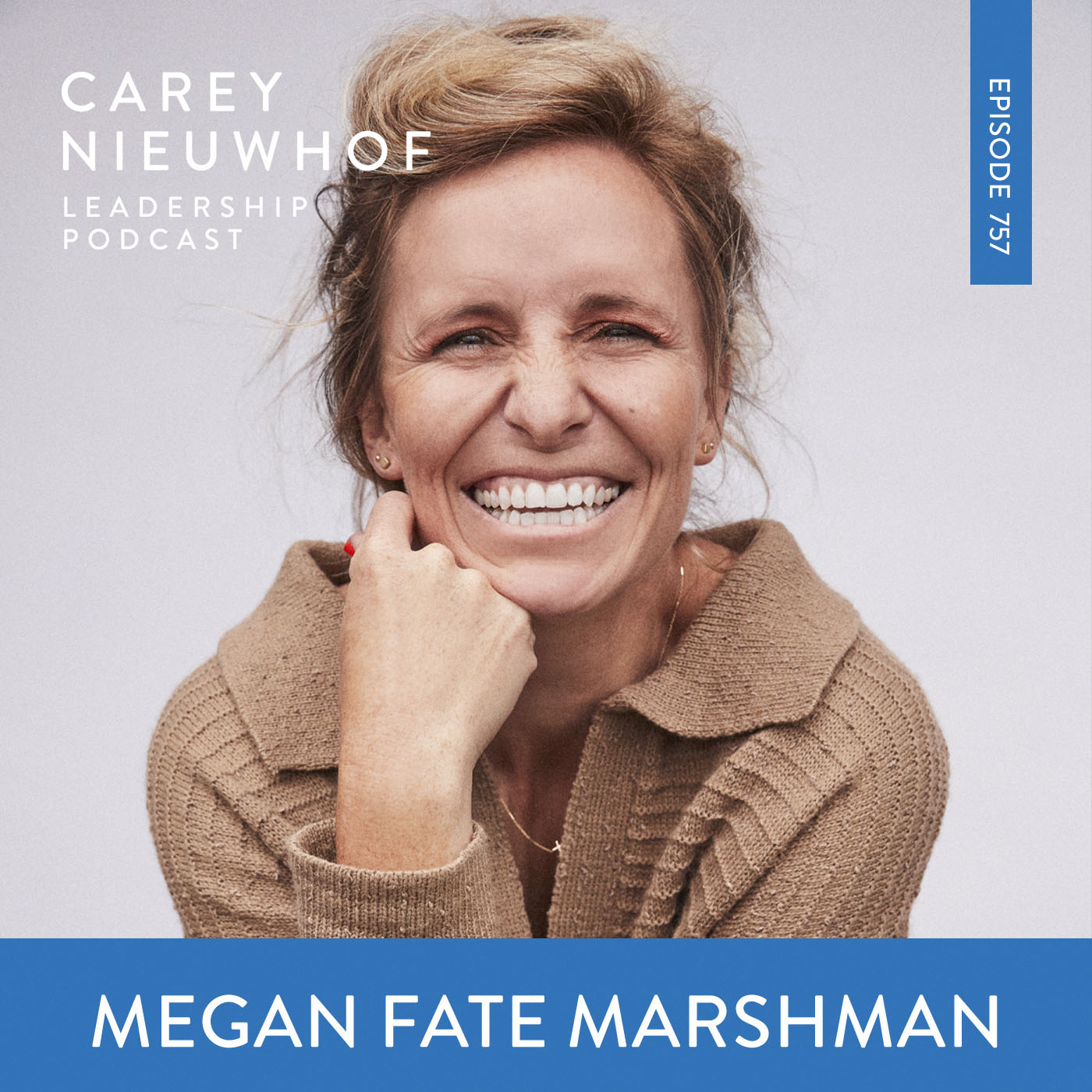
The Carey Nieuwhof Leadership Podcast
CNLP 757 | The Key To Better Preaching is NOT What You Think: Megan Fate Marshman on Preaching and How to Use Your Voice and Body for More Effective Communication
00:53:03
Megan Fate Marshman is an incredibly compelling preacher who speaks in many of the largest churches in America. She shares how her preaching has evolved since she started, what she does right before preaching to create better sermons and connections,...
Loading summary
Transcript104 lines
- [00:00]
Carrie Newhoff
Well, welcome to the podcast and before we dive into today's episode, I am here with David Kinnaman and we are doing our monthly State of the Church update. And David, I want to talk for a couple of minutes about some of the surprising data, like actually more encouraging data about trends you've, you've uncovered related to church attendance among young adults. What are you seeing?
- [00:21]
David Kinnaman
Well, we found some really interesting data that I think will encourage church leaders, and that is that millennials in Gen Z are now the most frequent churchgoers. That is reversing decades of trends where older adults are usually the most likely and regular church attenders. So I actually think we've come up with a way of measuring church attendance that is more relevant to pastors. Typically, social researchers talk about, have you attended church in the last seven days? Yes or no? That is, that is subject to people's, let's say halo effect or lying about their attendance. But you know, we know that it's about exaggerating. They, about a third of all Americans say they've attended in the last seven days. That's up somewhat from the last couple years. And it's, it's significantly from COVID But what we came up with was a way of measuring among active churchgoers the number of times per month that they attend. So we know that the average is 1.6 times per month that a churchgoer attends. I think that's very relevant to church leaders because, you know, you're looking at like, how many times will people come? That's a little bit less than 40% of the time. If you figure there's about 4.25 Sundays in a, in a typical month because some months are five, five weeks and some are four. But so people are coming about 40%, two out of five weekends. And so 1.6 times. Here's what's so fascinating is that in the 2025 data, Gen Z attends 1.9 times a month, millennials attend 1.8 times a month, Gen X is 1.6 times a month, and boomers and elders are 1.4 times a month. So that is just a real reversal of some of our long term tracking. Where you see older generations, elders and boomers, about 15, 20 years ago were coming two and a half times a month. It was much lower among Gen X at the start of the pandemic. Millennials and Gen Z, you know, they have been, they were just one, one time a month. But what's so fascinating is that it's really been spiking the Church attendance levels. The frequency of church attendance among active churchgoers is highest among Gen Z millennials. That is really newsworthy stuff.
- [02:42]
Carrie Newhoff
Yeah. And if I read the data right, I got a couple of quick questions for you. One is, this is true, like when, when you go back data, you know, it was generally young people didn't attend as much. So when the millennials were younger, they were attending as much. When Gen X was younger, the people who were older than them were still out hunting them in attendance. So this is kind of a historic thing where now it's actually the kids, the young adults who are attending more frequently than their parents and grandparents.
- [03:09]
David Kinnaman
It is. And I think what's interesting is that it's part of this larger narrative. We were on this podcast talking about this a few months ago, and you might have come across this in other places. Barna data, pew data, other data are saying there's something happening spiritually in our society. The question is sort of what? And where will it lead? But there are more people, young generations who are interested in Jesus, who are saying they're committed to Jesus. There seems to be the spiritual openness. We see data in the UK about return to church. So there's something happening among younger generations. They're hungry for spiritual answers. And then the real question is, what will we make of this as church leaders? How will we take this return to church, this frequency of church attendance, this interest in Jesus Christ, how will we point people towards, you know, more than just a flash in the pan, but towards a life, a lifetime of following Jesus and growing in the knowledge and love of him.
- [04:04]
Carrie Newhoff
And so I guess the surprise is if you're looking for the people who are most engaged, look to the younger set, not the older set at this point.
- [04:11]
David Kinnaman
Exactly. I think that is the big reversal. And it seems as though boomers, you know, they're not only sort of retiring from their, from their careers, they're also sort of retiring from regular church attendance. And, and the big real question, I think about sort of, how do you connect people across generations? Because churches don't do best when they're just lopsided with older or younger people. They do best when they're intergenerational relationships who are on mission with Jesus. So I think there's a lot of, of really good positive momentum. This is, it's an unusual year for me, for us at Barna, in that we've got this sort of like continuing stories of hope and of, of actual. We always have hope, but continuing stories of real data driven change.
- [04:55]
Carrie Newhoff
That seems Tangible turnarounds.
- [04:57]
David Kinnaman
Yeah. There seems to be some things that are making a difference and, and we should just. These are the days we're praying for, Carrie. This is the moment we're asking. We've been praying for this kind of spiritual openness that young people would have hearts and minds open to Jesus, that they'd be coming into our churches. Let's not waste this moment. Let's not give them some of the things that they don't really need. Like, let's give them Jesus. Let's give them a heart to be, to be discipled in the. In, in, in. They're, you know, Monday through Saturday, not just on Sundays, but the fact that they're coming more frequently on Sundays, I think is a real, is a real data story worth sharing.
- [05:31]
Carrie Newhoff
Well, it makes me wonder, too, if you're seeing consumer Christianity literally fade into the sunset and this new church emerge where you see much more engagement, much more sincere devotion to Christ. So. Well, we're going to be back next month with more findings and it's great that it's good news. If you want more, you can head to stateofthechurch.com carrie for more. Any other place you would direct them to, David?
- [05:56]
David Kinnaman
Well, we'll be organizing a lot of this data on our website@barna.com where be we'll be working on a faith and culture report coming out on Mondays. And so please consider signing up for that. It's free and happy to give, you know, sort of a fresh look at what's happening in our culture and how we as faith leaders can make a difference.
- [06:16]
Megan Fate Marshman
The Art of Leadership Network. I could get emotional on this one. I genuinely believe that my dad is always proud of me. It's so funny. We could talk about the like, oh, how do you use your voice? And that's really, it really is helpful. Like a lot of this my dad and I would communicate about. But I'd say the reason that I'm even listening to my dad in the first place about any of it is because I know that he's proud of me, that he delights in me, that he loves me.
- [06:50]
Carrie Newhoff
Welcome to the Carrie Newhoff Leadership Podcast. That's Carrie here. Man, this year has gone faith. I hope you enjoyed September. I can't believe it's almost over. We got Megan Fate Marshman on the podcast today, and we're going to talk about the key to better preaching is actually not what you think we get into. Well, some technique. Talk a lot about her voice. I think she has a masterful use of Voice and body. But my goodness, when you hear about what she does right before she reaches it was very convicting. And I am going to do the same. Same thing or something very similar. One of the best communicators out there today is Megan Fate Marshman. And we're kind of celebrating the launch of my brand new revamp. Totally rethought from the ground up. Ready for the 2000s and beyond art of preaching course I did with my buddy Mark Clark. And I want to give a shout out to Danisha, who left a review on Apple Podcast five star review. For years, I've been listening to Carrie's podcast. It's like having a mentor with a small, smartest friends right at your fingertips. Best guests and discussions. Thank you, Carrie. Hey, really glad, Danisha. You know what? That's why we do this, right? We have access to some of the best thinkers and best leaders around and we want to bring that to you. Megan Fate Marshman is one of them. She's an incredibly compelling communicator and she's using her life to spread hope, share truth, and celebrate others. She holds a doctorate of ministry, serves as a teacher, teaching pastor at Willow Creek Community Church, and the director of women's ministries at Hume Christian Camps. She also shepherds women at Arbor Road Church in Long Beach, California. She invests her time in people writing books and more. Her latest book is called Relax. And she's also written the book seven Family Ministry Essentials. So I'll tell you, I enjoyed this. This could have gone so much longer. I think you're gonna love it too. Hey, why don't we listen to words from our trusted sponsors and then we'll dive right into the interview. Today's episode is brought to you by Spiritual Gifts Plus. So if you're like most pastors I talk to, you're struggling to find volunteers and you're probably struggling even more to keep them. Well, what if I told you one simple change this year could double your volunteer retention and boost church volunteer satisfaction by 80%. You want to know what it is, right? Well, here it is. Stop pitching people where you have a need and start placing them where they're gifted. So the easiest way to do that is by upgrading your membership track with spiritualgiftsplus.com when someone takes the spiritual gifts test, they're intelligently matched to actual teams inside your church based on their spiritual gifts and their disc personality profile. And as a leader, you see exactly where they fit so you can place them where they'll thrive. Plus, you'll love these features. You can customize the test to your theology, you can customize teams based on your actual ministries, and you can share it via link or QR code. It's super simple to use and it connects to planning center. Paper tests are really in the past when it comes to spiritual gifts. Try spiritualgiftsplus.com free for seven days and experience it for yourself. Use the code Carrie20 at checkout for 20% off any plan. That's C A R e y. That's spiritualgifts.com move people from sitting to serving. And now my conversation with Megan Fate Marshman. Megan, I'm so glad we're finally having this conversation.
- [10:15]
Megan Fate Marshman
Yes.
- [10:16]
Carrie Newhoff
I wanna rewind the clock a little bit. How did you first get into preaching and realize that perhaps there was a call of God on your life?
- [10:24]
Megan Fate Marshman
Yeah, my backstory is pretty funny. When someone will walk up and go, like, I wanna become a preacher. What do I do? I feel like I can go down three very different lanes.
- [10:33]
Carrie Newhoff
Okay.
- [10:34]
Megan Fate Marshman
First one would be, love the local church. I used to volunteer when I was in middle school. So go serve the kids ministry. And then, you know, high five the children's director. That's one lane. The second lane is just typically talking about, I don't know, like, you know, practicing your skill, like, making sure that you're really serving the church, but then, like going to coffee and being a better listener. And I'll highlight the whole listening piece. Cause I think how I got into preaching was learning how to listen so that I knew who I was preaching to. So I'd go the listening route. The third one is probably the most vulnerable. And since we're on your podcast, I'm not gonna go that like. So go back to the listening. I'm just kidding. Gotcha. Nice one, nice one, nice one. I will go this one. Because this is the true backstory to how I became a teacher was I went to jail once. And when I did, it was a silly thing. In college, I had some friends who got into stealing because one of them worked at a department store. And she brought home one of those things that takes off the tag. They kept going. One day I went, oh, wow. And of course, that one day I got caught, thanks be to God. And I went to jail. And my parents were on a bike ride, so we couldn't get ahold of them. And then they didn't go on a bike ride for 10 years after that. True story. And when they bailed me out, I walked out. And mind you, to this point in Life. I felt like I had kind of been the good Christian kid. I was at a Christian college at the time. I mean, I even remember when I got actually arrested in the department store. Someone saw my card, and they're like, you go to Westmont College. That's a Christian college, right?
- [12:15]
Carrie Newhoff
So you're like, 18, 19.
- [12:16]
Megan Fate Marshman
Yeah.
- [12:17]
David Kinnaman
Wow.
- [12:18]
Megan Fate Marshman
And he's like, oh, Christian, huh? You know, all the judgment. And I'm like. And I wanted to. I wanted to blurt out, like, this isn't me. Like, imagine just some of you are going, that's all you did. And some of you are going like, you got arrested. I don't know how people are thinking, but I had. My parents ended up having all these family friends write letters on my behalf to the court saying, super out of character. This is not who she is. You have the chance, you know, to give her a second chance, or her life will either go this way or she'll learn, you know, whatever. And so when I stood before to get my sentencing, I remember the judge goes, all right. I got a lot of letters. I'm like, did you? And he's like, and I'm gonna do something I've never done. Your consequence is gonna be speaking publicly to every local high school on the power, decision making, and friendships.
- [13:07]
Carrie Newhoff
Whoa.
- [13:07]
Megan Fate Marshman
Go ahead. And I did. And I remember doing it, and I remember going, whoa. And it was like they would bring an assembly. Imagine, like thousands of students were in an assembly.
- [13:17]
Carrie Newhoff
Don't shoplift.
- [13:18]
Megan Fate Marshman
Exactly. And I got there, and I. The story. But there was one part of the story I didn't tell that I told once I started preaching from a stage, God's word, because it was actually the moment that changed my life. It wasn't the grace that allowed me to learn and discover in my weakness my surprising gift. It was actually when I walked out of the jail cell and I walked out again. Been a Christian for majority of my life at that point. Look up at my parents, and my mom is standing there like this, and I'm like, I don't deserve that. And I'm so ashamed. And she hugged me. I said, mom, I don't deserve this. And my dad whispers, my girl, you never did. When did you think we deserved grace? And I went my whole life. And so it was the first time I understood the power of grace, the first time I ever gave a message all combined in one little oopsie that changed my life forever. And then I remember telling the story at Humelich Christian camps where I've worked for the. I mean, gosh the past, like 17 years, something like that. First message I ever gave. How cool is this? I remember that. I even remember my three part outline that I had. I'm telling the story, and the guy I had looked up to as a preacher was in the front row of the first message I ever gave. Specifically Christian. And I'm teaching. I remember teaching Daniel getting up to pray and I share the message. And this guy had looked up to my whole life. And he goes, let's get coffee. And I'm like, for sure. And I'm like, so excited. And we sit there, he's like, you got a gift. I'm like, and it took me back to. Which I had kind of forgotten about, you know, five or six years earlier when I stood up in front of these assemblies to tell about decision making. He goes, you have a gift and it will either be all about you, or you'll partner with the Holy Spirit and be a part of eternity shifting.
- [15:17]
Carrie Newhoff
Oh, my goodness.
- [15:18]
Megan Fate Marshman
And that was Francis Chan in the middle of writing the book, Forgotten God. How cool. And he wasn't uber famous Francis Chan. He was the same Francis Chan who he is today. The faithful, humble servant of God, partners with the Holy Spirit, wants to be a part of what God's up to, instead of really obsessed with the culture of making it about you. And I remember him giving that message. Doubt that he remembers it, but it changed my life for the better. And I went, I wanna do this. So that's the backstory.
- [15:50]
Carrie Newhoff
All right. There's a number of things I wanna talk about. One is, it's funny when you recognize a gift, I call it it. And I've really been sensitive to that now that I'm not preaching as much as I used to. You know, when I was a lead pastor of a church, I'm often asked to evaluate communicators. And I feel like I can tell in the first 10 seconds whether there's an it factor. And I don't know what that is. It could be a diamond in the rough, where somebody just isn't that polished, but they're so compelling. And it's like, wow. I think you have exactly what Francis affirmed in you. You have the it factor, in my view. Just. I've got to listen. I can't not listen. There are other people who are very polished and really well prepared. And it's like, yeah, all right, that was good. Do you notice something like that? What is it? I've never asked anybody that question. And I could be totally off base here, but I don't know whether that's spotting a spiritual gift. And I pulled some people aside where I've heard them speak, even if it was, like, really extemporaneous where. And I'm like, just come over here, men and women. I'm like, I think you have a gift. Yeah, I think you got a gift. Any comments on that? The it factor, or you feel free to reframe it?
- [17:02]
Megan Fate Marshman
Yeah. No, no, no. I would say I like it. I'm very encouraged by it. Thank you. I think what Francis did to me we could do to anyone, not necessarily in speaking, but in their life. So he noticed a gift. It's something that I try to do, although I forget it a majority of the time. So recently, someone encouraged me. And I remember looking at her and going, whoa, that's a gift. And she said, what? I said the way you encouraged. I really touched my heart. Sometimes an encouragement can be like, that was nice. But it didn't put me in a box of what I have to be. Your encouragement opened up the box to what I could be. That is a gift. And I spoke that into her. So I would say when you're talking about the it, I think you're using it in the category of speaking. I would say it's a joy and a delight in the same way that he did that for me, for me to do that for others and finding just little places where how God made us is thriving there and we're offering it up for his glory and not our own, that is a gift because suddenly it is something that was given to us that we're then giving back to Him. Right. And so it's about Him. So I'd say I hope that I'm in the right lane, and I hope I'm finding ways to find people in all of their different lanes, too, because although they may not have the it in speaking in front of a stage with the audience and not feeling nervous or being able to, you know, pastor the conscience or whatever, they may have a gift, which biblically, they do. They have one. And if we can only name it, and specifically in those spaces that we're using that and giving it back to the giver by giving it away to others, I hope we name it in more people, because when he did it for me in speaking, I believed it.
- [18:45]
Carrie Newhoff
Yeah. You were telling me you've already mentioned your parents. Your dad gave you a lot of feedback on your speaking preaching. Yes, in the early days, perhaps he still does. I don't know. He does. What kind of feedback did your dad give you and how did it form you or shape you as a preacher?
- [19:01]
Megan Fate Marshman
Yeah. So not common or well known fact. My dad was an actor.
- [19:04]
Carrie Newhoff
Oh, wow.
- [19:05]
Megan Fate Marshman
And then he ended up running a theater academy for a number of years. So I grew up watching my dad act. I was really quiet as a kid, but not like shy. I was almost like shy on purpose. I was just pretty observant, just paying attention. And I watched my dad a lot. He could entertain the crowd, he could sit with someone one on one. And I watched the way that he leaned into people.
- [19:26]
Carrie Newhoff
What kind of actor? Stage actor.
- [19:27]
Megan Fate Marshman
He was actually a theater, theater actor. So I remember early on in preaching I used to work at a church called Rock harbor in Costa Mesa, California. And my dad would come to the. There was a 7 and a 9pm service and they lasted 2 hours. And so by 11, I mean people are. The young adults are 10 o'.
- [19:43]
Carrie Newhoff
Clock.
- [19:43]
Megan Fate Marshman
At 11, my dad would come to the 9pm, it's now 11, and he walks up afterwards. And his feedback, typically the first feedback wasn't. It was all his training. It was his it. His training was all in how to use your body, how to use your tone, how to use your voice. Inflection. What's that word? He would know. And so how do you use your whole self to communicate? And so his feedback would be like, you know what I really liked Megan? I'm like, what? And I'm expecting him to talk about like, oh, when God said no, it was, I like that when you made a point and you knew that they had to lean in to get it, that it's them sitting back in life, wouldn't receive it, that you would actually use your hands and you would bring them in like you were telling him the best secret ever. He goes, I love when you did that. And he goes, and there was a moment you made this big point and then he would actually, sometimes he'll critique it too. He'll go, you're making this big point. And then you zoomed past it to the next one and no one got to sit and think about that point that was so important for them. Make sure if you make the point, if you tell them that God loves them, that they can consider it and what you can do with your timing and your pacing. And he goes, and also if you're asking them a question and you genuinely want them to think about the answer, they need space to do that. And as you can tell right now I'm doing my voice and all you are doing your voice. So you can see. But this is the type of feedback he gave me. I didn't know at the time how valuable it would be and I wasn't as conscious moving forward, but it was his affirmations of things that I naturally did. And every once in a while he did a certain critique that was just really helpful and asked the right types of questions to where I could discover it. For instance, he didn't just say, hey, when you ask a question, give it time. He would say, when you asked that question, did you want them to think about it? Yeah. Oh. Cause maybe you need to give them time too. I was like, oh, for sure. So when I would say, do you ever feel like, insecure and you're, I mean, you're not like insecure, you're just not quite secure. And then you lean in and give the answer. And the other thing I think I learned, I remember in talking about the question asking piece was, who answers the questions that we can relate to? Is it me? And my clever response, if so, that will likely be quoted right? And okay, spend a lot of time crafting those great responses. But something that's been really helpful for me in prepping and teaching has been allowing God's word to actually be the answer to the questions. So they can begin to see that this does answer our questions if we ask them. And especially as preachers when we ask them. Great question. Turn to verse nine. You know, that sort of stuff is transitioning.
- [22:33]
Carrie Newhoff
So rather than having the brilliant line that everybody will quote on Instagram, yes, it's like, great question, but sometimes they'll.
- [22:39]
Megan Fate Marshman
Be brilliant and quota. Spike this podcast. No, no, no. But I think that's gonna probably be the tension for me in life as a communicator is wanting to be good at it so that I can love them and also so that I can be good at it. Wanting one over the other. But I'll say that wrestle. I remember having this conversation with someone where I'm, gosh, I want to serve the Lord, I want to partner with the Holy Spirit, I want their lives to change. I wanna care more about them than I do about myself. I want. But I still think about myself all the time. I still think about what they thought about me. I still think about what I could have done differently. I still think about what I could do better. And I remember a wise spiritual director at one point said, never lose the wrestle. Don't solve it, just never lose it.
- [23:25]
Carrie Newhoff
That's a good point because it is like you can't help but think, how did I do? I spoke yesterday Here in Southern California.
- [23:32]
Megan Fate Marshman
How did it go?
- [23:33]
Carrie Newhoff
Yeah, exactly. That's the question. And the thing is, my five hour flight took me 25 hours, just through a strike, an airline strike, lightning strikes and other things landed me.
- [23:45]
Megan Fate Marshman
Multiple strikes.
- [23:45]
Carrie Newhoff
Yes, multiple strikes. I almost struck out, but I got there with a half hour to spare. And, you know, I was tired because I'd had an overnight in Indy the night before where I wasn't supposed to be. And then early morning flight to Houston and then barely got in in time, drive up to Carlsbad, delivered the talk. And, you know, I moved it from an A to an A minus because, you know, your words get a bit scrambled sometimes when you're a little bit tired or frazzled or whatever. But at the end of the day, it's like, does it really matter? Does it matter more about what they got out of it? They raved about it, which was great. But you're trying to forget about yourself, but if you forget about yourself too much and then you're just kind of not really paying attention and you're not developing that gift. Right. Like, if you see a musician play, you want to, like, your dad was an actor. We went to see George Clooney on Broadway, and it was amazing to see the talent and skill level involved in a Broadway level play live. You know, especially with George Clooney, that was exceptional. And you don't want him to get up there and say, yeah, he totally winged it.
- [24:48]
Megan Fate Marshman
Right.
- [24:48]
Carrie Newhoff
You know, like nobody's.
- [24:49]
Megan Fate Marshman
No.
- [24:50]
Carrie Newhoff
I want to get back into more of what your dad taught you because one of the things I'm noticing when you listen to your messages and we're having a conversation one on one, there's not a big gap. There's no, like stage Megan. And then real life Megan, you are animated. Then you get really quiet and you draw people in, et cetera, et cetera, which I think is beautiful. What did your dad teach you about the use of your voice and the use of your body or other lessons that may have come along?
- [25:19]
Megan Fate Marshman
Yeah, gosh. Yeah. I think probably the most important lesson for my dad, I love this is what it's become, is this may turn into a little parenting piece for those listening in, is I could get emotional on this one. I genuinely believe that my dad is always proud of me. It's so funny. We could talk about that. Like, oh, how do you use your voice? And that's really. It really is helpful. I mean, I can't believe the amount of how useful it is to know how to ask a question. How to use dynamics, how to consider. Here's an example. My mind's wandering too. If I'm teaching a bunch of pastors and I know that they already know the verse that I'm gonna say, I'm gonna speak through it really incredibly fast. And it basically mirrors to them, like I know that you know this. There's all sorts of things that you're gonna naturally do based on your audience and knowing your audience. And I feel like a lot of this my dad and I would communicate about. But I'd say the reason that I'm even listening to my dad in the first place about any of it is because I know that he's proud of me, that he delights in me, that he loves me. And I've already shared with you the story of one of my greatest failures just in life. Just a big old miss. And my parents response to it, like, what a great picture. My parents weren't always perfect by any means, but they also knew how to apologize. And so I would say more than all the other stuff, I listened to all the other stuff. I listened to all the, you know, he used to teach speech, he used to teach the stuff. I've listened to all that. But the reason I listened to my dad in the first place was because I genuinely believed he delighted in me. And I even think about that with my two boys right now. Sometimes I wanna correct, sometimes I wanna encourage, sometimes I want. But they can tell if I'm delighting in them or not. They can tell if I'm speaking from a place of love. They can tell if I'm just bugged with him. And I never got that I was bugging my dad. I never got that him being with me or a conversation. Yeah, I felt like he was always leaning toward the relationship. And I'd say he gave me a really great setup to know who our God is, who wants to teach us to use all the things that he gave us. The mind, the body, our spirit, our passion, our emotions, everything that God made us to be. So I mean, I've learned a lot from my dad. I've also learned a lot from my heavenly Father. In fact, right now what I'm studying is whole body wellness and whole body health, physical, emotional, social, intellectual, spiritual. I wanna be healthy in every way. So when I'm teaching, I wanna use all of it. When I'm speaking with a friend, I wanna use all of it. When I'm considering why my friend is really suffering right now, mentally or whatever, I wanna use all of it. I want to Be mindful of her whole person and make sure that whether I'm pastoring someone or whether I'm befriending somebody, that I'm utilizing the whole thing. And I'd say that that's. Or considering their whole person. That's something my dad's just done for me. So we could talk about the voice piece. Whatever's interesting to you. I love people follow your podcast because you.
- [28:27]
Carrie Newhoff
There's a lot that's interesting to me, but I do want to. I do want to drill down on the voice thing because I got my start in radio, so I have to be careful of radio voice sometimes.
- [28:36]
Megan Fate Marshman
What does it sound like?
- [28:37]
Carrie Newhoff
I don't know. I can't do it. I was like, that was 40 years ago. 45 years ago. I was 16.
- [28:41]
Megan Fate Marshman
Yeah.
- [28:42]
Carrie Newhoff
Walked into a radio station. They hired me, and then I worked there and in Toronto for a little while. But, you know, I think my temptation would be to be too big on stage and too loud on stage and too. And you have to have a projection.
- [28:53]
Megan Fate Marshman
Yes.
- [28:53]
Carrie Newhoff
Otherwise it doesn't work. If you're talking like you would talk, you know, at night to a friend over dinner, it's just not gonna be as compelling from the stage. But let's play it this way. And I don't want this to be a criticism of anyone in particular, but when you watch other messages or other communicators, what are some common mistakes you see in delivery? I would say it can be over, amplification, exaggeration, where it's like, I don't think you really talk to normal people that way.
- [29:19]
Megan Fate Marshman
That's right.
- [29:20]
Carrie Newhoff
Whereas I like to talk in public the way I talk to normal people. The way I talk to people, you.
- [29:24]
Megan Fate Marshman
Can tell if people know their audience. Oh, so you know, I speak differently. Although I can say the exact. I can speak any message, whatever message this is, I can share this with high schooler. Like, I actually don't typically take content and shift it per person, which is different. A lot of people I'm sure would. I don't do that. I have the same content. I could do it to a group of middle school students, a group of high school students, and a group of. Obviously with students. I might throw a couple extra stories in there to keep them engaged in the beginning. But what changes is everything I'm doing in between my notes, which is never in my notes. So it's. For instance, I used to give the, you know, 38 random points to high school students. And then it was cool. Cause, like, all these students came and gave feedback on all 38 different things. I'm like, wow, I'm reaching everybody. And then no one would remember any of the message, you know, a week later, because it was so scattered and so unorganized. But, man, I was passionate. I used to get critiqued a lot for speaking fast because I was so passionate about everything that I was saying.
- [30:21]
Carrie Newhoff
Yeah.
- [30:23]
Megan Fate Marshman
Now I'll tell you one of the tricks that I've learned. I actually learned this one back in school. I went back to school to get my doctorate in ministry. And one of my professors, it was this great moment. He goes, do you think they really need more information? And I'm like, maybe that I do.
- [30:42]
Carrie Newhoff
I might give the wrong answer to that question, too.
- [30:44]
Megan Fate Marshman
Maybe I don't know. And then what we talked about and what I've taken away from it is I now say things much simpler. I say a whole lot less. And so I have my notes of what I want to say. But the thing that varies per audience, and it's very helpful to know your audience. It's very helpful to listen. Cause then you'll have their language, and then you can actually speak to them. Because you know what they're actually thinking is to pester their conscience. So here's an example. If I say to a room full of people, God loves you. If I were to guess, let's say my audience is, you know, let's say it's a congregation. So it's very diverse. I wonder how that lands on you. God loves you. Maybe some of you are thinking, I've known that since I was a little girl. Cool. Tell me something I don't know. Maybe someone is thinking, yeah, but my dad didn't. So how can a. Why does it matter if I don't actually feel loved from the people around me? I feel abandoned from people. How does that meet my presence? Or maybe another person's going, I don't love myself. I can't even make the right choices. How could he love me? And now the sin stuff is rising up. Or maybe. And if you. Here's the weird part. I just said something that most of my audience already knew. But what am I doing? I'm naming what might be rising up in them that they might not even be aware of that's arising in them. And what that's doing is it's opening up the heart. And the reason why that's effective is because Proverbs 4 says that above all else, guard your heart, because everything you do flows from it. In other words, if you want to change Your life. You don't change your life by trying to change your life. You don't change your life by information. You don't change your life by note taking. You change your life when you are willing to open up the heart so that the life changing truth can get deposited the places you need to know it the most. And then your behavior can change. Above all else, guard your heart. Everything you do flows from it. Why do you do what you do? It's in the heart. And so my job as a communicator, especially within church context, man, is to open the heart. And the best way I know to do that is to let someone know I see them. And the best way, when I'm the only one speaking in the audience to let them know that I see them, that I know them, and that I want to love them, is to name them so that they feel seen, that they feel exposed, but they feel exposed in a loving way. So even if I'm bringing up the sin, for me, it needs to be brought up. Like, what are some mistakes people make? I feel like people's tone when it comes to people's sin is not kind yet, as scripture says, like it's kindness that leads to repentance. So man, sin is devastating. And so if my tone can be devastated with them. But here's the truth. Am I devastated about it as I'm saying that, or is that just something I prepared?
- [33:42]
Carrie Newhoff
Yeah, yeah.
- [33:43]
Megan Fate Marshman
Or I'm judgmental about it totally. And so I would say some of my natural critiques probably that come up in my brain is twofold. One, that sometimes I can tell that the message hasn't landed with them personally. And so they feel more performative in the content. Like, well, here's. And it's good content. Like, the best part is God's gonna use it. He uses all truth. So praise be to God. You can kind of tell when it hasn't like met someone, that you can tell that they're not urgent for someone to get it, like they've gotten it. And you'll catch it in their language, you'll catch it in their tone, their delivery, all of that. And the second one is that stress that they feel to convince people of things. And this burden that you could tell that they carry, whether it's. And they use their voice to be passionate, which is great. But I can remember times early on for me, I would rely more on passion than the Holy Spirit. When I felt like I was losing the audience, I would get more passion even though the present I was talking about lost the audience in the first place. If I suddenly got a little bit loud, people are gonna be leaning in. And I was relying more on passion then going the Holy Spirit. Now let me get practical on how do you rely on the Holy Spirit? You come back to what's true and then you allow him. You create space for him to do what he does. He convicts, he comforts he, and he of course uses us. But I would say those are just a few things that just kind of come to mind when I see other people.
- [35:12]
Carrie Newhoff
Today's episode is brought to you by the Preaching Cheat Sheet. So preachers, I'd love to know if you can relate to this. Okay, it's Thursday night. Sunday's message still isn't coming together. I mean, you can even start early and it's not quite right. Right. The pressure is building. It's hard to decide what to add, what to cut, how to tie everything together. You want some family time. And you know by the time Saturday rolls around, you're just gonna have to call it as it is. Even if you're second guessing some of your message. Well, that's where my ten step Preaching Cheat sheet can help. It's your quick check guide to ensure you've got an engaging, clear and memorable sermon ready for Sunday morning. From your opening line to landing the plane at the end of your sermon and every step in between, you can use the 10 steps during sermon prep or even to start or to finish your message, whatever you want to make sure you are ready to deliver an impactful message every single time you preach. And the big news is, I've just released a brand new version of the cheat sheet. So if you've downloaded it before, be sure to get the new version in your hands. We got a lot of feedback. I improved it still. Basically the bones are the same, but it's going to be even better. Okay, you can download your copy for free by clicking the link in the description of this episode or by visiting preachingcheatsheet.com Again, that's preachingcheatsheet.com to download your copy for free or simply click the link in the episode of this description wherever you're listening. I don't even know exactly how to ask this question, but I feel like, you know, watching you, I've been impressed by a number of things and it's giftedness, so we'll give God the glory on this one. But you have a synchronicity between your voice and your body mannerisms that isn't always present in communicators I listen to your voice, and you seem to know intuitively when to get loud, when to slow down, when to get soft, when to. And it seems very natural. It doesn't feel contrived in the least. So you started out by going 28 points 150 miles an hour with strong passion, and now, a number of years later, you're here.
- [37:19]
Megan Fate Marshman
Simple. Yeah.
- [37:20]
Carrie Newhoff
How much of that is learned? How much of that is just reps? And can you coach those of us who might not have that kind of synchronicity or congruity on how to get a little more in sync with your voice and your body and the gestures and mannerisms that actually draw people in?
- [37:42]
Megan Fate Marshman
Yeah. You said something earlier that I found a lot of encouragement in when you said, oh, the person you are on stage is similar to you here. And so my reps aren't just on stage, though I do feel really grateful to have worked at a camp where I got to give the exact same message 20 times in one summer. And so you learn how to do storytelling, right? You learn, like. Cause you're gonna tell the same story, and you learn what works and you practice it. But, I mean, that sermon was way better by the 20th time than it was on the first. So I feel like I got the gift of reps, which, especially a lot of females don't get a ton of reps. And so I feel grateful for that. But I'd also say it's these types of dialogues. And genuinely, I can't urge this enough. Listening to people. That was something I challenged myself with when I did some word study throughout the Bible. And it was like, how many times Jesus asked versus was asked questions. What is it like? I think the stats are, he was asked 184. He asked 307 of the 184 that he asked, was asked. He only answered three directly. Like, how frustrating. So he was always just highly relational. And so I'd say a lot of this stuff has just been from having these types of conversations and learning throughout the entire way how I could be doing things better. And I can remember vivid turning points in ministry. I'm kind of losing the question a little bit. I'm just going over here. But one thing I will say tip and trick, though, for people on speaking. Then I'll get back to the thing that I learned, the tip and trick on speaking. Someone made this comment about me, and I didn't realize I did it, is that I make word pictures, and then I come back to them on stage with my hands.
- [39:20]
Carrie Newhoff
Yes, you do.
- [39:22]
Megan Fate Marshman
But, like, I'll talk about, here's the sin, and it's right there. And it's almost like I have a ball of sin that's just hanging out. And so I can then talk about my message. When I talk about the sin, it's right there. So I'll reference it. And for some reason, it kind of just works. And so get that out of our life. But here's an example of it. So I learned from Dr. John Ko that a wandering mind in prayer is a gift. When I think of the word wander, my mind going like this. And so of course I'd say it instead of just going. A wandering mind in prayer is a gift. Obviously, this is relatable because your mind wanders. And I'm using my face to go like, you're not gonna just kind of somewhere else. Now I'm over here. Like you're using everything you really do. Yeah. So I would use this where I talk about. Okay. So you know when you go to prayer and you're starting to perform in prayer. Dear Lord, thine is the kingdom and the glory forever and ever. And all God's children said amen. And. And you're doing this unintentional performance, and then suddenly your mind starts to wander. And now you're over here. And so if I'm doing this live on a stage, I physically walk somewhere else. Cause now I'm over here. And then you're like. And then what do you do when you realize it? And I kind of wait on the audience and it's like, yeah, you pause the prayer and you shame yourself. And then I walk back over to where my performance was. You shame yourself back to the performance where. I'm so sorry, not sure what happened there. I'm back. I'm back. Lord, where was I? And then I'll teach the idea that from John Coe, a wandering mind and prayer is a gift. Because where's your mind wandering to? Probably the very thing that has your heart. Heart matters. Everything you do flows from it. So let's talk about that. In other words, practical tip. Don't pause the prayer. But what I'm illustrating here is a visual allows people to go with you. And then when you come back to the point, you come back to a physical location. I'll be honest, this isn't stuff I think about ahead of time a ton. But I just wanna encourage people to try a little bit. When you're talking about something, find yourself somewhere, move. And then when you talk about the thing, go back to it. Whether It's a sinball in front of you. Or whether it is a wandering mind that's now way over there enjoying that. And when someone. The reason I bring that one up is when someone reflected back to me, like, you create these word pictures. I was like, I do. And then I just went, I wanna do more of that. Cause this seemed to be useful. So there's been moments that people have reflected back to me. And I'd say this for anyone who has been communicator, what are people saying? Like, receive it in a way that impacts you. I remember at some point realizing that I was a really crummy small group leader when I used to volunteer in a high school ministry. And I'm like, what? And they were basically saying, like, all right, how many of you create space for the Holy Spirit to teach? Or how many of you do you feel the full burden to teach your small group and pull their teeth to get the answers? And I felt so convicted because they spoke out of my conscience. And I remember going back and finding one of my small group girls years later, and I'm like, oh, my gosh, I was such a crummy small group leader. And she goes, no, you weren't. You were the best. And I said, why do you say that? She goes, you knew the answer to everything. And I went, that's it. Did I ever help you, like, discover truth for yourself, or was it all about me just having the right answers? And oddly, that gal doesn't pursue Jesus these days. She never learned how to discover those answers. And I remember that conversation. And so I'll just say, for listeners leaning into this podcast or any podcast, or all the listening we're doing, I don't think it's ever going to be about finding some silver bullet that's going to solve us. Whether it's a certain technique or whatever, I just say this. Keep learning forever. Whether it's the feedback of other people, whether it's listening to people. So that when you're doing Teaching Truth, you know how it lands. Cause you've sat face to face with someone. Or whether it's someone giving you actual feedback on something you do great. Or criticism, if you have the humility to receive it, let everything continue to change you. Let God use everything. And I'd say, I hope that in five years, I'm looking back on who I was or who I am today and critiquing the heck out of it because of how far he's grown me.
- [43:29]
Carrie Newhoff
To then how do you get feedback that's meaningful and helpful.
- [43:36]
Megan Fate Marshman
I invite. There's one friend in particular that after I'll speak. It's so funny. Especially there's. And she's such an encourager. I'll say she'll take notes. And then, like, I legitimately. We have a conversation with feedback. And it's not just on content, although she'll share that how it's like, affected her heart, which I think opens me up to even any of the criticism, which she never or rarely gives, but she'll talk about how. And then she'll go through. And we'll even laugh about the little funny, humorous moments. Or if I've given a sermon somewhere before and then giving it a second time, she's like, I wanna hear it the second time. I happen to have a friend like this, and I invite that type of conversation afterwards. And she'll take notes. So there's like, people that I plan on having those types of feedback. Another thing I is when there's, you know, a couple people in line that want to have a conversation afterwards, I'll ask how. Like, you know, they'll say something encouraging, but then I'll redirect it to go, how did God. Like, how is God speaking to you through this? And that gives me all the feedback I need right there. Because then they'll get into like, oh, and then they'll talk about the content. My goal being that they direct and recognize, like, God's the one really, that is getting ahold of their heart. He's using me. He'll use anyone that's willing. But then I can know, like, what am I doing that actually connects them with him instead of just gets them to like me or like it being the message that I give. So I think some of the best feedback is genuinely knowing how I connected them with God himself. And you can ask people that directly, especially when they're there trying to give you encouragement.
- [45:05]
Carrie Newhoff
You mentioned getting reps as a woman.
- [45:08]
Megan Fate Marshman
Yes.
- [45:09]
Carrie Newhoff
So, you know, we're still in an era where it's not as easy for women preachers as it is for men. What kind of barriers did you run into early on or maybe even today? And then what advice do you have for female preachers who feel a call to ministry?
- [45:28]
Megan Fate Marshman
Yeah. Ooh, Hot topic. That Mike is hot. No, no, no. It doesn't have to be. So I would say have a few stories that I won't go into, but they were hurtful of being a female, as you can imagine. And my advice for a woman who is listening, who desires to share God's word, I would just encourage them to not wait for the platform. Don't wait for the platform. Don't wait for the followers. You have an area and a sphere of influence that's around you, and the reps you need are right there before they're probably gonna be on the stage. I'll have a lot of gals actually walk up and go, like, I think I'm ready to speak. I think I have a message to share. And I would encourage them with two things. Number one, share, and number two, listen. If you haven't noticed, that's a huge one for me. And to define it, listening is not waiting for your turn to talk. Listening is listening. And when you listen, you learn how to love somebody. So it's learning how to love people. Cause really, what teaching God's word is, is an act of loving people. And if we haven't listened to those people, I don't think we'll know how to actually love them. I think we'll know how to speak at them. I think we'll know how to inform them, but we won't necessarily know how to love them. And as my friend Allison Pryor reminded me, if it's without love, it's just crash, crash, crash. And there's a lot of voices, and there's a lot of speakers, and there's a lot of content, and there's a lot of social media accounts, and there's a angry people, and there's a lot of smart people, and there's a lot of informed people. And I think the thing that'll change people is gonna be love. So to the female communicators looking for reps, I would say this. Don't run ahead. Wait. It's funny. This is probably. I'm sure other people sitting in your chair would say differently, and I'm aware of that. And I think it might be a different word for a different time, but there might be someone listening that needs to receive this word. I don't think you need to knock down doors to get your reps. I don't think you need to push open doors. I don't think if you're not welcome there, I don't think you need to try to be. I'd say this. You have been gifted and entrusted with roles, relationships, and responsibilities already, which I'd say is gonna be the best place to practice your, quote, reps. But the way you'll learn how to pastor and speak to people is when you know them. And the best way to know them is, is to ask really good questions. And when they answer, to have listened so well that you know the next one and then you know the next one, and then you might even get to a place that they don't even know the answer to, that only God himself does. And it will acquire his spirit and he'll be a part of that conversation. And encourage people to become, in order to become better communicators with more reps, to become amazing listeners on walks and at table talks. And also to know the person you're talking to, which one they need. Because some people can do the side by side walking and some people can handle the face to face and know your audience, because some people could not handle this. So learn how to know people, how to walk with people, when to walk with people.
- [48:42]
Carrie Newhoff
Yeah, you're right. The side by side convo versus face to face.
- [48:45]
Megan Fate Marshman
Yes. And then when it comes to the parenting technique for teenagers, oh man, I've been studying like all the mind body stuff and the connection between mind body, and then also we won't get into all this, but like even our system, that happens inside of us and what happens. But with kids, if you wanna have a conversation, if you really wanna shepherd kids, just play with them. They will not say, I don't remember who said this. Someone did. They said kids will not ask you, tell you that they need to talk. They'll say, can you play with me?
- [49:14]
Carrie Newhoff
What a gift.
- [49:14]
Megan Fate Marshman
If you're looking ladies, for reps, look to what's around you and where God's already inviting you in to speak, but also to listen.
- [49:22]
Carrie Newhoff
Megan, I don't want this to be a paternalistic question in any way. So if it is, feel free to reframe it. What have men done along your journey that has been helpful to open doors, to extend invitations, anything along the way? Because we have a lot of men listening who probably want to help female communicators.
- [49:43]
Megan Fate Marshman
I would say one of the most practical things you can do is to tell a female that you're trying to empower how you have learned from them. Not that they're great, although they probably want to hear that they're great.
- [49:57]
Carrie Newhoff
Yeah, yeah, yeah, yeah.
- [49:58]
Megan Fate Marshman
That's almost their felt need. I'd say their actual need is to believe they have something that will be helpful and the best piece. And I'm thinking of certain people in my life that have said, oh, here's something I've learned from you that is like the proof of the type of encouragement that they actually need.
- [50:16]
Carrie Newhoff
I was not expecting that answer. That's a great answer.
- [50:20]
Megan Fate Marshman
Thanks.
- [50:20]
Carrie Newhoff
So Last question for you. Although I feel like there could be another 179 traffic time. All that. We'll wrap up a little early. Have you back in the future for somebody who wants to. Okay, I'm going to ask this question to go from you at 21, with a million bullet points, running at 100 miles an hour. Very passionate. It feels like you've had to cut a lot out of your message to make space, to have the time to slow down, to go paint the picture, to draw people in, to slow down, to stop, to allow silence. What's the key to cutting? Cause my fear. And I've got a preaching course. Okay. But my fear is I always go in saying I'm not gonna have enough time.
- [51:08]
Megan Fate Marshman
Yes.
- [51:08]
Carrie Newhoff
And that haunts all of us, I think. So when you walk in there with your sparse notes. Not sparse, but prayed over, thought through. But there's less than there used to be. But you're still able to fill the 35, 42 minutes. Whatever is allotted. And the countdown clock's running. What is the key to cutting so that there's space.
- [51:32]
Megan Fate Marshman
For me, there's. Sometimes I'll have content in there that I know is there because I want to be impressive.
- [51:48]
Carrie Newhoff
Do we have to cut that?
- [51:49]
Megan Fate Marshman
Yeah. Yeah.
- [51:49]
Carrie Newhoff
All right. Oh, man.
- [51:50]
Megan Fate Marshman
And if it is impressive and it happens to be spirit led and God has dropped it, and you know that it's a. You do that. But I think we know when we stick something in there that maybe wasn't in the flow of what God convinced us of and showed us by his spirit, which God hasn't. Like, maybe it's something from 10 years ago that you just kind of drop in there just to feel a little comfortable, you know, like, all this stuff.
- [52:10]
Carrie Newhoff
That we have, I know that's gonna land.
- [52:11]
Megan Fate Marshman
I actually. I have this. Another thing I have on all of my notes is I have a second page, and it says maybe add. And it's usually the stuff that I want to add, but I probably want to add it for the wrong reasons.
- [52:23]
Carrie Newhoff
Oh, wow.
- [52:24]
Megan Fate Marshman
And so I will. It's funny. Cause I have a hard time, like, deleting it. But what I do is I cut it and I put it on a different page. And it's funny at the very end, when I look at it, especially after I'll deliver a message, I'm like, that stuff was about me.
- [52:39]
Carrie Newhoff
Oh, wow.
- [52:40]
Megan Fate Marshman
So that's how I cut. But I also know myself enough that pressing delete would make me sad. So I just put it on a. And if you were to print. All of my notes usually have two pages and the second page is full of might add later that never gets added back because thanks be to God. And I say that not tongue in cheek. Thanks be to God. He's teaching me when it's more about me than about him.
- [53:03]
Carrie Newhoff
Oh, man, that is a convicting, convicting. So you're an author, you're a speaker, your books are out everywhere. If people want to connect with you, what's the best place to find you online these days?
- [53:17]
Megan Fate Marshman
Oh, man, on your podcast, apparently. And then, yeah, just search my name, I suppose. Anywhere but connecting. I like that word. And I'd say if, man, if you want to connect, I'd encourage. So funny. How can you connect with me? I'd encourage you to go local because there's a pastor really probably nearby to you. And if you're looking for me, I happen to be at Willow Creek once a month. I'll be at Arbor Road church down the street any Sunday that I'm home, really present with the people that I'm face to face with. But I do love online conversations. I got Instagram, have the website, all the things to make sure that we can get this word, this truth out to as many people as possible. But I'm gonna be an encourager as a local pastor myself, to go local.
- [53:58]
Carrie Newhoff
Well, we're gonna link to all of that in the show notes. I can't thank you enough. This has been riveting. There's a new word and a little bit mind bending and I've learned a lot from you, so thank you, man. Well, you guessed it, Megan will be back. That was a riveting conversation. And shout out to Mariners Church, who filmed a few of this fall's episodes for us while I was in SoCal. Their crew was amazing and my team so grateful for what they do week in and week out. Next time. Eric Geiger, the lead pastor of Mariners Church. Does simple church still work? That's a great question, right? If you want the show notes to this episode, past episodes, future episodes, go to carynwhoff.com shownotes we have a growing, thriving community of over 10,000 church leaders inside the academy right now. And the conversations we have inside are better than the conversations you'll find on social media. What you've got 10,000 other church leaders who are there in your corner you can learn from, you can teach them, you can contribute. It's pretty cool. Go to carrienewhoff.com shownotes couple simple prompts to set up a free account, no strings attached, no weirdos in the community. It's going to be great. Faith Yuri Cho is also coming up on the podcast, Judah Smith, Tim Stevens, Bobby Gruenwald, Tim Timberlake, Tom Rainer, Dr. Carolyn Leaf, and a whole lot more. If that is not incentive to follow wherever you're listening, I don't know what is. We're gonna bring you some great episodes coming up, so hit the follow button wherever you go. And remember, we got a cool YouTube channel channel, too. We're shooting as many of these in person as we can. And if this conversation was helpful, please, like Denisha, leave a rating or comment wherever you're listening. And don't forget to share it with a friend. I hope our time together today helped you identify and break a growth barrier you're facing.