← The Carey Nieuwhof Leadership Podcast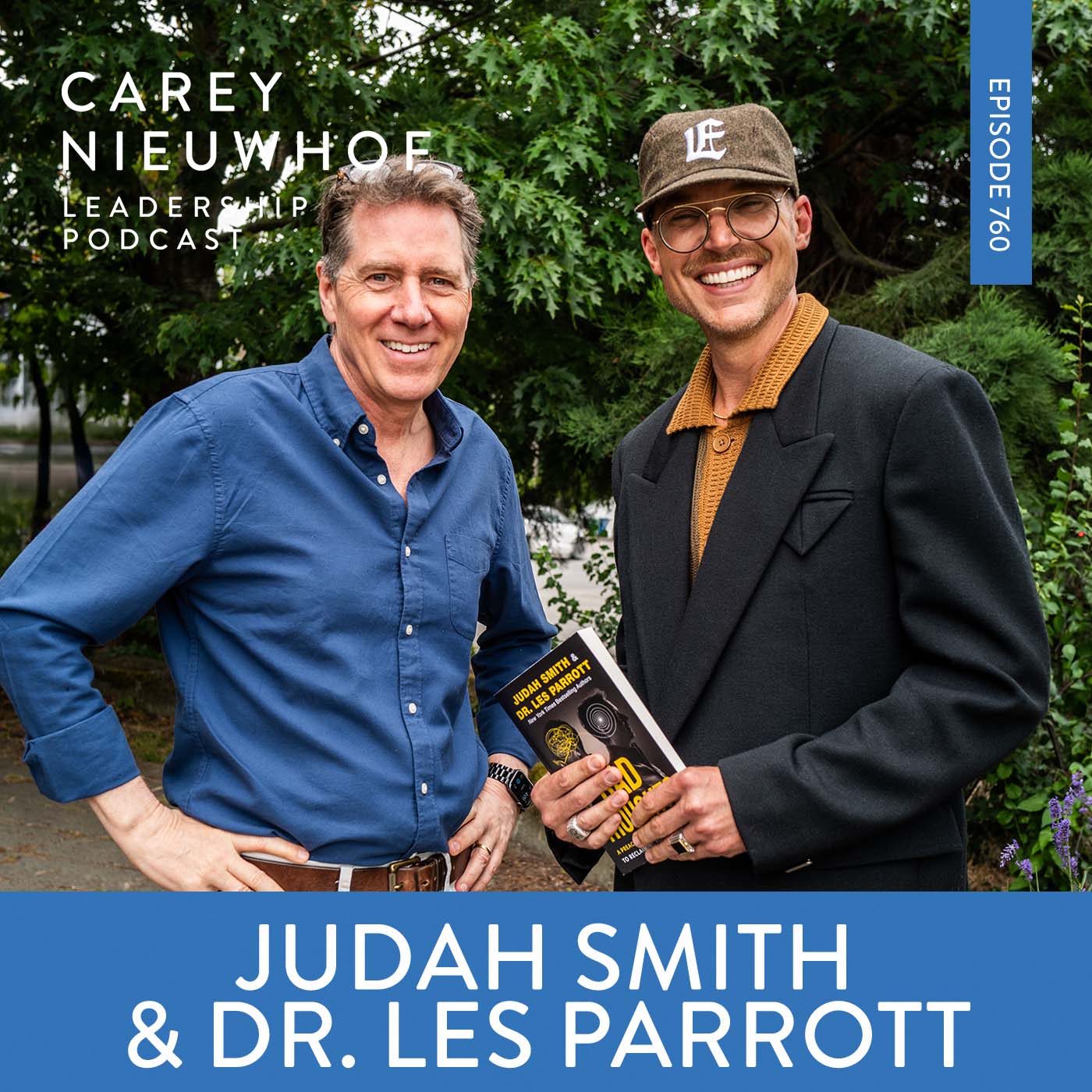
The Carey Nieuwhof Leadership Podcast
CNLP 760 | Your Brain is Lying to You 80% of the Time: Judah Smith and Les Parrot on Why Leaders Self-Sabotage and How to Break the Cycle
01:13:57
Judah Smith and Dr. Les Parrot, Judah's therapist of 15 years, talk about the unique pressures pastors face. Les and Judah explain why your brain is lying to you 80% of the time, offer insights into how pastors self-sabotage, and provide guidance on...
Loading summary
Transcript187 lines
- [00:01]
A
The Art of Leadership Network. A ticking time bomb. I started to feel like it's only a matter of time if this pressure increases at all. I cannot withstand this. I used to think it was perversion. I used to think it was greed. I used to think it was rebellion. I used to think it was witchcraft. You know, all these reasons that people end up sabotaging their life. Now I just realize it's just weariness, exhaustion, fear, anxiety. This feeling that I can't keep all these balls in the air at the same time. I'm going to screw this up. It's only a matter of time. And I didn't know what to do with some of those emotions.
- [00:46]
B
Welcome to the Carrie Newhoff Leadership Podcast. It's Carrie here. I hope our time together helps you thrive in leadership. Well, we're gonna talk about your brain and your thoughts and why they're lying to you like 80% of the time. Judah Smith and Dr. Les Parrott join me on why Leaders Self Sabotage, how to Break the Cycle and a whole lot more. This is a really good got a new book that they wrote together, but the book is really an outcropping of their journey together as counselor, counselee over the last 15 years. And Les Parrott has been Judah's personal therapist for a decade and a half and they decided to take some of that journey into a book. A very good book by the way. So why is your brain lying to you 80% of the time? Do you have like negative thoughts? I do, I do. And well, we're going to talk about that and how that actually plays out in leaders lives and what the downside is and how to get out of them. Judas Smith is a lead communicator of church Home, a thriving community with multiple locations and a killer global app known for cultural relevance, commitment to biblical integrity and love for Jesus. He is author of the New York Times bestselling book Jesus is. And Dr. Les Parrott is a number one New York Times bestselling author and psychologist who's been featured on Oprah, CBS this Morning, the Today Show, CNN and the View, as well as in USA Today in the New York Times. He's written multiple books, many with his wife Leslie. And they have a website called betterlove.com a resource for couples. You're going to want to check that out. We are going to jump right into a fascinating conversation with Les and Judah. But first, a word from our very carefully chosen partners. This episode is brought to you by Compassion. You know, church, if you are in scripture routinely, you're likely aware that there is a very major emphasis on compassion and generosity as core components of God's character and our lives as his followers. In fact, throughout the scripture, God describes himself as compassionate, gracious, slow to anger and abounding in love, aspects that describe his character and nature. And as believers, Scripture calls us to reflect on that nature, living a full life of gospel driven kindness that is set apart from, well, what we know to be the normal posture of this world. So as a pastor, the question is, how is that going for you? This summer I'd like to encourage you to visit my friends at Compassion International to learn how you might grow your compassion and your generosity today. You can find out more@compassion.com Carrie this is something I do personally because honestly, it's changed my life and it's changed my heart. So check it out. Go to compassion.com carrie that's compassion.com C A R E Y this episode is brought to you by Church Salary. So every church leader I know carries a heavy responsibility to honor their team by paying them fairly. But the question is, how do you know what's actually fair? So to talk about a new way to discover this, I've invited Brad Hill from Glue. Brad, what are you learning about this?
- [03:54]
C
You know, Carrie, for a long time, I think for too long, pastors and boards at churches, they really just haven't had a trustworthy place to go when it comes to fair compensation. And so our partners at Church Salary have been working to fix this. In fact, they just, it's good we're talking now. They just launched a brand new version of their online tool. And what it does is it guides ministry leaders through many of the most challenging compensation questions that they're going to have.
- [04:21]
B
So I've heard a little bit about this new church salary 3.0, so I'd love to know, Brad, what questions does this tool actually answer?
- [04:30]
C
Yes, so 3.0 church salary 3.0 is all new and it helps pastors and leaders answer things like am I being paid fairly? Are we paying our team fairly? How should things like cost of living, education, experience affect compensation? And it's using real ministry specific data to give you clarity and confidence.
- [04:51]
B
BRAD that's so helpful. I know leaders really want to do the right thing when it comes to compensation and actually see where they're at compared to everybody else. But it's hard to figure it out. So if you want to figure that out, it's absolutely free. Go to churchsalary.com carrie that's churchsalary.com carrie and get started for free today. And now, my conversation with Judah Smith and Dr. Les Parrott. Judah, Les, welcome. Really glad to have you.
- [05:20]
D
Good to be with you, man.
- [05:21]
A
Come on. I love you. This is a good group right here. We're going to have some fun. It's obviously an honor to be here with such educated men. This is amazing.
- [05:30]
B
It's really great to have you back, Judah, and great to have you for the first time. Les, I gotta ask, how did you two meet?
- [05:37]
D
Judah.
- [05:39]
A
Well, here's the thing, Carrie. I have a wife of 25 years, and she needed to be fixed. So I felt like Leslie. And Leslie could fix my wife, because I, you know, obviously in marriage, I batted a thousand, and I just needed Chelsea to kind of get with the program. And ever since then, our marriage has gotten so much better. Come on. Who am I fooling? No, I needed desperate help to make sure that my marriage went the direction I wanted to go and didn't end up making some dumb decision that ruined everything I loved. And we went to Leslie and Leslie, gosh, a decade and a half ago or something. And it's been amazing. I've grown in adoration and admiration for them both, but mostly for Mrs. Leslie Parrott.
- [06:25]
D
Yeah. Mrs. Doctor to you, Judah. No, I'll tell you the truth, Gary. This, because I really appreciate this about Chels and Judah. They came to Leslie and me about 15 years ago, as Judah said, for not a crisis, not because there was some huge thing that needed to be uncovered, not because they were falling apart at the seams, but because things were going well and they wanted to make sure they stayed that way. And that's really rare. As a psychologist. Yeah. My wife is a marriage and family therapist. We see a lot of people, a lot of people in Christian leadership. And I truthfully, I don't know that I've ever had anyone else show up knocking on our counseling door to say, hey, help us solve problems before they start. And, Judah, I don't want to put words in your mouth, but I'm imagining looking back on that 15 years ago, you saw a lot of folks that were fallen people, your peers, your friends that were stumbling in their efforts. And you said, man, what can we do? Let's take out some insurance to make sure that doesn't happen to us. Right?
- [07:33]
A
Yeah. I mean, to be honest, it's pretty basic. I think I was kind of scared. I was like, man, there's no reason why that can't happen to me. And in some cases, it was people that were struggling making Dumb decisions that I thought were much more informed and brilliant and more spiritual than I was. So I was like, well, I don't got a chance here if we don't kind of get to the bottom of some of this stuff and really uncover what's really going on. And so I am happy to announce that, in fact, I'm days away from getting away with my wife to some of our favorite parts of the world, and I am more in love with her than ever. So thanks to the parrots.
- [08:07]
D
Well, and Carrie, here's. Here's the issue. What I didn't realize is that Judah, after we did some, you know, work together with the four of us, Leslie and Chelsea and Judah and myself, that he would stand up in his. On his platform, in his microphone and go, hey, we're seeing Les and Leslie Parrott. And he was modeling it, which was fantastic. The only problem for me is that everybody in his congregation started to call Leslie and me for counseling. And we want therapy, too. Ye, exactly.
- [08:37]
A
So.
- [08:37]
D
But it really was a pretty good model for how to probably what. I'm sure we're going to talk more about this, but how do in leadership, how in the world do you balance having the need for something like therapy with being in a leadership role and modeling that so that you're not ministering out of hurt, but out of. Out of redemption, out of. Out of health? And so anyway, that's how we first got together. And I think, Judah, it's kind of morphed a little bit into you and me, and me doing a little bit coaching here and vice versa. And it's really a mutually beneficial relationship at this point.
- [09:12]
B
Truly two things that kind of resonate with my story. My most recent round of counseling has been with a counselor coach. And it was exactly what you said. Now, it wasn't couples therapy, but I was in a pretty happy place. And I'm like, I just see so many people imploding and exploding in ministry. How do I know that I'm not next? And there was nothing wrong, but, like, I dialed him in and I said, I haven't got a crisis I'm sitting on or thing that's exploding or imploding. But I just want to know, how does this happen? And it's been like a multi year exploration of that and some of the other challenges I've had. So I totally get that. And I think that's because usually we wait, right? You show up for financial counseling the day before bankruptcy. Probably should have been here a minute before, a little bit earlier the Other thing is, my very first visit to a Counselor was over 20 years ago, maybe 22, 23 years ago, where I went to fix my wife Toni, who, you know, has nothing wrong with her, but apparently everything was wrong with me. And so I'm still in therapy two decades later, because I am the problem. I've learned. So, anyway, I'll tell you this.
- [10:31]
D
Here's something that we know from research, and that is that most couples don't come to get the help that they need for seven years on average. In other words, they will put up with a problem for seven years before one of them finally goes, okay, I'll go. You know, isn't that incredible?
- [10:50]
A
Wow.
- [10:51]
B
I feel that resistance, though. Like, I really do. Yeah, I. I feel a resistance. It's like, you know, and the older I get, the more I'm like, have I not figured this out by now? And apparently I have not. I. I don't know. How do you feel? Like, do you feel.
- [11:04]
A
Did you.
- [11:04]
B
Have you ever felt a resistance, Judah?
- [11:08]
A
I've. I've got it figured out, Carrie, and I think that's the point. So I'd like to speak for my. Yeah, resistance.
- [11:16]
B
Yeah, just speak for everybody who's got it figured out.
- [11:18]
A
Like, it depends on what hour of the day. Like, we got in a fight a couple days ago, and Chelsea was like, so her new thing in our marriage is like, you've got to let me express my emotion. Okay. So we're getting older, and we're starting to realize that she is the stable, like, consistent one. And I'm like the just combustible ball of emotion that's always bursting. And she's like, hey, listen, what I need from you going forward, and this happened in therapy. I need you to give me space for emotion. So fast forward two days later, and she's, like, sharing frustration with. Because she can't. There are some clothes that I was supposed to bring on this last trip. We went on to do some speaking, and I didn't bring the clothes. And Carrie, as God is my witness, I told myself, let her just express her emotion. It's not the end of the world. And five minutes later, I'm frustrated, I'm expressing, and she's saying it all over again. This is always what happens. You give me no space. I'm not disappointed in you. I'm simply sharing emotion. And she wanted to sleep in separate rooms. I don't want to get into the details, but yes. Resistance. Yeah, it depends on what time of day it is. And it's humiliating to Say that, but at the same time, it is kind of why we wrote this book. And I can get into more of that because there's a big impetus. That's a big. This is a passion project for a number of reasons, but a lot of it is because of my own resistance to getting the help that I need. And in some cases, God clearly provides.
- [12:50]
D
Yeah.
- [12:51]
B
I want to ask you both this question in turn. Judah, I'll start with you, but you and I have talked before, publicly, privately, about the pressures of ministry. And, you know, Les, I want to get your take on that in a couple of minutes. But how have the pressures showed up in your life, in your ministry, in your marriage? Sometimes I think ministry is like, when you've been there, you feel and you see the pressure. So how has that shown up in your life?
- [13:20]
A
I think it has felt like delaying the inevitable, a ticking time bomb. I started to feel like it's only a matter of time if this pressure increases at all. I cannot withstand this. I used to think, Carrie, that preachers and leaders, some like me, some with much larger scale and platform and influence than I've ever had. I used to think it was perversion. I used to think it was greed. I used to think it was rebellion. I used to think it was witchcraft. You know, all these reasons that people end up sabotaging their life. Now I just realize it's just weariness, exhaustion, fear, anxiety. This feeling that I can't keep all these balls in the air at the same time. I'm gonna screw this up. It's only a matter of time. And I didn't know what to do with some of those emotions. And it only compounds when all of a sudden, you've got buddies doing the same thing and you're starting to wonder, are you okay? And they're telling you they're okay, only to find out they haven't been okay the whole time, and they've been lying to you. So then your brain plays tricks on you, and you start to think, like, oh, my goodness. And then, you know, if you're in the line of work that I chose, it's the people business, which is. I'm honored that it is. But all of a sudden, I'm thinking, I'm going to hurt people I love. This is crazy. And that mindset settles in over your life like a dark cloud. And I'm telling you, you can't get another weather pattern or another weather system with all that you do. And you've got to get some help beyond you. I needed some objectivity I needed someone who wasn't on my staff. I needed someone who didn't have kind of personal interest, that wanted to speak at a conference or wanted to be. And I found that in Leslie and Leslie Parrott. And they were kind enough to sit with Chelsea and I. And so began the conversation. And as I remember it, Les, it was most of, like, all the things we were most afraid of and how I felt like I was minutes and moments away from doing the very thing that I had despised, that some of my peers and friends and heroes had done. So it felt inevitable, Carrie. Which is humiliating to admit. And I needed someone that was skilled. And ultimately, I say all that to say I wanted to write a book with my therapist, because a lot of preachers or people like me that maybe are preachers, first of all, therapy's expensive. But second of all, where do I go? Who do I go to? Who do I call? I don't know. What if I just put it in a book form and said, here's all of my stuff. Here's what we went through. Here's what we processed. And perhaps it could start the cycle of relieving some of that inevitable feelings of doom and a sense of hopefulness. And if nothing else, Leslie and Leslie looked at Chelsea and I. And I do remember this feeling. And I remember feeling this overwhelming sense. We're not crazy. We're not alone. This isn't insane. This is very normal. This is very real. You're gonna make it through. We're gonna help you. And that feeling alone, Carrie, was like. Man, it was like we had been holding our breath for weeks, and we finally got oxygen.
- [16:31]
D
So, Judy, you said something in there that was interesting to me. You said, therapy is expensive. We want to camp out on that. Just a minute, because I don't remember sending you an invoice yet after 15 years.
- [16:42]
A
So. Come on. It's costing.
- [16:45]
B
Now wait for your phone to blow up. Les. Come on.
- [16:51]
A
It was free, Carrie.
- [16:52]
B
I'm not gonna lie.
- [16:53]
C
It was free, baby.
- [16:54]
A
Wow.
- [16:57]
D
I know how I would answer that question, Carrie.
- [17:00]
B
Yeah, I'd love. And you know what I love about the position that you and your wife sit in is you see patterns. Toni did family law for a while, and she can never disclose client information. Never want her to, but, like, she would tell me patterns. Oh, when this happens, then this happens, and this happens. And you've met with, you know, Judah and Chelsea, but obviously many other ministry leaders and leaders, and you get to see patterns as they develop, which I think is fascinating.
- [17:29]
D
That is true.
- [17:30]
A
That.
- [17:31]
D
And it's. It's an honor. It's a privilege to be able to do that. But you're right. You kind of. You have to cloak that all in confidentiality, which is the unique thing with Judah. Judah is just out there. So. But when you think about the pressures in ministry, for me, the word that comes to mind is congruence. I just. I think that that is the biggest pressure that I feel in the kind of ministry. I don't have the traditional ministry of preaching at church every Sunday, but I sure preach in a lot of churches around the country and talk to a lot of pastors. But I do remember Jude. I don't know if I've ever told you this story, but Leslie and I. This is. This was before we all had GPSs on our. In our hands, and. And we were trying to find a church that we were giving a seminar at in Portland, Oregon. So we drove from our hometown in Seattle down to Portland, and we just. We've had this script in our marriage before. We all had the GPS system working in our favor. By the way, do you know that the number of marital conflicts a simple GPS has resolved. Think back to the day. You know, get in the left lane. I am in the left lane. But anyway, we're. We're trying to find this church, and it got to the point because of this script that we've had for a long time, and Leslie not helping me. And I grew up in a home where mom always did the navigating for dad in the car and had the maps out and all that kind of stuff. And Leslie just didn't. She didn't see that modeled. And so it was frustrating to me. And anyway, we got to a point. Have either of you ever made your wives cry in the car?
- [19:11]
A
Never. Not once. More than once.
- [19:13]
D
Next question.
- [19:13]
B
Next question.
- [19:17]
D
So Leslie is crying, and we're late to this event where we have several hundred people waiting for us in this sanctuary to talk about marriage.
- [19:27]
B
So the experts are late and the wife is crying.
- [19:29]
A
Exactly.
- [19:30]
D
And we pull around this corner, and there's this huge billboard, and it's a picture of Leslie and me, and I'm holding her up in the air, and it's very romantic. And it says, becoming soulmates with doctors less and Leslie Parrott. And here we are. I just made my wife not talking to each other. And the church. The church is right there. And Leslie said, just keep driving. Just. So that idea of being congruent, you know, you think we went up to the platform and went, hey, guys, we Just had a big fight in our car on the way down here. Of course not. We have to put on a face and go through the motions when it just doesn't feel congruent, doesn't feel genuine. That's the biggest kind of, I think, pressure for me is that when you're on, you have to be on. And I think that's true for a lot of people in leadership that speaks.
- [20:22]
B
Judy, you and I were talking about PACE over the years, and you had a certain point at which you had how many services midweek?
- [20:32]
A
Well, I was averaging like 11 during.
- [20:34]
B
The weekend or whenever.
- [20:35]
A
Yeah, 11 sermons a week was average. Sometimes it was a bit more. Yeah, it was a lot. It was a lot.
- [20:45]
B
What did that feel like at the time?
- [20:48]
A
Yeah, it felt like I was juggling three, and then someone threw in four, and then they were like, now we gotta go to the grocery store and get groceries. And it was like, wait, but I'm still juggle this. Like, this is. This is crazy. And yet I would call my mentors and I would say, and I've expressed kind of this story before. We were growing at a rate that we had prayed for, I guess. And it was like, always, like, in my tradition, it was like revival. So. But every mentor I called, Carrie just kept telling me, start more services. So then I was like, wait, wait, so nobody has a plan here? Like, wait, we haven't played this out. That if like, multi site, multi service. So wait a minute. It became apparent to me that nobody played this out to its extreme. Meaning it wasn't sustainable. Like. Cause I did it. I added a bunch of buildings and services, and before I knew it. Well, I felt like a caricature. I felt like a caricature. And I never wanted to be a pro speaker. I wanted to be this congruent human. Those were my heroes. My dad was one of the more congruent men that I knew. And the stories he would tell were real. They weren't really exaggerated. And his love for Jesus was. He cried about it on stage and off, and it was a thing. And I thought that was attractive. And I bought into that. And suddenly I was in a space and I was in a delivery system where I couldn't. Nobody's that spiritual. Nobody feels Jesus, you know, that many times a week. Nobody has new content that much. Nobody is, like, praying enough to sustain 11 sermons. And in some cases, I would speak as many as six new ones a week. And it was just like, guys, I can't. I can't even be a human. And prepare this much content. And so it got out of order and it got wonky. And I woke up one day not knowing what year it was and exactly what city I was in, and started calling friends of mine, and they said, man, you're close to a real physical, mental, emotional breakdown. And I think, if I'm not mistaken, it was right around that time we called Leslie and Leslie. And a lot has changed since then, and I'm happy to announce that. And so far, so good.
- [23:02]
B
So, hmm, what are some of the other frequent flyer issues you've seen, Les, in your work with leaders?
- [23:12]
D
I love that question because it always gets me to have to think about the patterns that you mentioned. This one might surprise you, but honestly, I think it's lately a loss of imagination. And I know you're probably going, well, what about depression? What about anxiety? And, yeah, and all that stuff's there, but a loss of imagination. The reason I say that. Did you guys see that study by Barna that showed that 70% of Christians feel discouraged about their future?
- [23:45]
B
70%, no.
- [23:47]
D
So that's a big loss of vision, right? That erodes hope. And so that's where I start. It's just if you can't see, if you're not envisioning the future, you're in survival mode, right? And so I see that a lot. I see loneliness. It's off the charts. We all know that. It's predictable. Even in a crowded room or in full churches, we can feel lonely. Lots of pastors in the last. I think it's the last five, six years, the level of loneliness for pastors has moved from like, around 40, low 40% to the mid 60% of reporting feeling frequently lonely. That's crazy, right? So that's a big one. And then the other one that comes to mind for me, Carrie, is what I would just call a loss of relationship muscle, like the relational muscle that we need to be strong. It's just so easy to ghost, to scroll, to shut down, to move on, to avoid, to bury. And so it's emotional intelligence that's the big. I think that's the one that hurts my heart the most.
- [25:13]
B
I'm glad you raised relationship. We talk about it a lot on this podcast. But, you know, I was at two events. Obviously, we're regular partakers at our church, and I was there Sunday morning, but Sunday night I was at an event in the community. It was small. It was like a tutorial in person. It was at a butcher shop. And I just wanted to learn more about meat because I Love. That's one of my hobbies. And there were, like, 12 of us who signed up for it. And what shocked me, and I had this at another, like, a fitness meetup that I was at. Again, not church events, but it was eerily silent. There's 12 of us standing in this small shop and nobody's talking to each other. And I'm like, ooh, am I gonna be the guy? And a couple of the guys brought their spouses, and they weren't talking to each other. And so I quietly introduced myself to the owners. And then it was like. It was this weird, awkward thing. And I've noticed that in other meetups I've had that are outside of the church, that are small, nobody. Like, we've lost that relational muscle. And I'm like, well, this is good news for the church, because I was at church Sunday morning and we know how to talk to each other, which is awesome. But it is becoming, like, a real crisis.
- [26:27]
A
Yeah.
- [26:28]
D
And it's a sense of. Some researchers call it emotional blindness. We can't even identify our feelings to be able to talk about them. And so you can't go below the surface. You know, you talk topically about the weather and the sports and what you watched on Netflix or whatever. But to talk about feelings, that's scary. Right. Especially when you can't navigate them yourselves. And so that emotional intelligence within the church, I think, is still something that's a struggle. And you gotta get clarity to do that. But it's. Do you know what this thing. This was a study that came out in. I think it was the Harvard Business Journal, that review that said, the single most important question in a conversation, they identified it. This was a study, the single most important question in a conversation. Because we all start with, what? What do you do? Right. Oh, I'm a lawyer. You know, I own my own business, whatever the thing is. And then the single most important question. Do either of you know.
- [27:39]
A
How do you feel?
- [27:41]
D
No. It's a good one, though, Judah. It's the follow up question. The follow up question.
- [27:48]
A
Wow, I love that.
- [27:50]
D
Just to follow up with that. Do you enjoy being a lawyer? I bet you. Was that your dream? You know, anything to follow up on it.
- [27:58]
A
So good.
- [28:00]
B
That is really good.
- [28:01]
D
Yeah. Yeah.
- [28:02]
B
Because otherwise we just move into, oh, yeah, I have a cousin who's a lawyer, or I wanted to be a lawyer. And we just. We don't even ask.
- [28:09]
D
That's exactly right. That's exactly right. And what you want to do, I don't know if you guys Ever read that book by David, you know, how to know a person?
- [28:19]
B
David Brooks.
- [28:20]
D
Yeah, David Brooks, podcast alumni. Yeah, I loved his book on how to know a person. And he talks about illuminating another person. How do you illuminate someone? And by the way, as an aside, I'll do a little name drop here. Well, maybe I shouldn't even do that, but I called a well known pastor who I went to seminary with and.
- [28:43]
B
Well, now we're all wondering.
- [28:44]
D
Okay, John, John Ortberg.
- [28:47]
A
I'll just put it up.
- [28:48]
B
Oh, John.
- [28:48]
A
Yeah, yeah, yeah.
- [28:50]
D
And I said to John, I said, hey, I just read this book. I said, I'm in a small group with some other guys. They're terrible at illuminating me. I need somebody. And John, you know, he's a psychologist as well as pastor. And I said, I need somebody to illuminate me. Would you do that? It was the most selfish phone call I've ever made. But, you know, it's something that we just don't get many places, you know. And so, yeah, those are the frequent flyer issues that I see. Carrie, thank you for that.
- [29:26]
B
And Judah, you said something, and I forget the exact phrasing, but you said that sort of the pull toward moral failure just seemed inevitable. And the way you saw it, it's not witchcraft, it's just the monotony, the boredom, the lack of imagination, all of those things. But you said with a bad decision that would hurt most the people I love, or something like that. But I'd like for either of you, both of you, to break that down a little bit. How does that happen? Yeah, because I think it's easy on the outside looking in to say so and so decided to become a bad person or was never sincere in the first place, or is just diabolical or possessed by a demon or whatever. We make it so unnormal that we don't see ourselves as possibly falling into the same trap. And I'd love for you to kind of explain a little bit more of what you saw or what you felt.
- [30:29]
A
Well, I actually have a story and we will not share the name. But peer of mine.
- [30:35]
D
I shared my name.
- [30:36]
A
Come on, pastor friend. No, I definitely can't share this name. But as a pastor friend, and I remember, Les was the first person I'd ever heard describe this. I was frustrated with their course of action and a decision that they had made that was very public. And I said to Les, I don't get it. Why would that. This isn't what's best for the community. It was confusing. It was Frustrating. It was agitating whatever. And Les goes, oh, that's easy. That's sabotage. That's a leader that can't keep it up, can't keep up the presentation, the pretense, the president can't keep it up. And so they're going to now sabotage it so that they have a way to get out. And so the church went from this massive thing growing, and then it didn't.
- [31:29]
B
Wow.
- [31:29]
A
I remember feeling that way to last. Like, this isn't going to. This is going to breed mistrust. It's going to be frustrating and confusing. And Les was like, oh, yeah, well, that's that leader's way of getting out from under the pressure. And I think that story and example exemplifies to me what I didn't know. When I was younger, I thought guys just had a sex problem. I just thought guys had a cheating problem, a lying problem, a greed problem. Now I think more often than not, it's just a pressure problem, and it's a messiah complex. And they think that they hold the world up. And a friend of mine, out of the blue, said, I was praying for you today, and God told me to tell you that you have quite misplaced being needed and known. You think the more people need you, the more you're known, but the two are not the same. And God told me to tell you that. And I was like, well, that's frustrating because it's so accurate and true. It's annoying. I do. I think if I can be needed, I'm needed as the preacher, I'm needed as the man of God, then people know me and I'm known. And they're not the same thing, are they? And I know that feeling of you despise the pressure, but secretly you love it because you feel necessary and needed. So it's this real sadistic, razor edge thing that you live on because you kind of get addicted to the fact that everybody needs your gift or what you bring, and then you go home and kind of despise it. Kind of like the frustrated artist, because, like, people have no idea how hard it is to be me. And it's this whole, like, weird, selfish cycle that you go through. And I tell you this, I knew I wanted out of that because that wasn't getting me anywhere but nowhere good. So, wow, that's some of my thoughts on that.
- [33:22]
D
Yeah, I think that. And I've said this to you before, too, Judah, that most guys don't suffer from a moral failure, they suffer from a meaning failure, and they lose their why in ministry? Because of the things you were just talking about. And so they minister with this functional, sometimes very high functioning emptiness inside. And that is just. You're skating on the edge when you do that. It's a dangerous place to be. But it's.
- [33:56]
B
How do you lose your why?
- [33:58]
D
How do you lose your why?
- [33:59]
B
Yeah.
- [34:00]
D
By doing the very things that Judah's talking about, you realize that life is lived on a pedestal. And I got to keep this performance up and make sure the lighting is good because, boy, I got a sermon today, and it just becomes this kind of egocentric, continual treadmill of feeding that to where you feel that kind of pressure that Judah just described. And your why is gone. You know, I think it was, isn't it something like 70% of pastors read the Bible only to preach it.
- [34:41]
A
Like, I've heard stats like that. It's higher than that.
- [34:47]
D
We just don't feed our soul. You know what I mean? In leadership. Because you are. I mean, Judah, come on. That's an extreme example that you say 11 preaching events in a week, you know, that's just. That's a suicide mission. Right. And so you're, you know, most of us don't do it at that level that Judah was talking about, but we still have this treadmill to do that. And so that's where our why goes out the window. It's just like performance, performance, performance.
- [35:17]
B
Today's episode is brought to you by the Preaching Cheat Sheet. So, preachers, I'd love to know if you can relate to this. Okay, It's Thursday night. Sunday's message still isn't coming together. I mean, you can even start early and it's not quite right. Right. The pressure is building. It's hard to decide what to add, what to cut, how to tie everything together. You want some family time. And you know, by the time Saturday rolls around, you're just gon call it as it is. Even if you're second guessing some of your message. Well, that's where my ten step preaching cheat sheet can help. It's your quick check guide to ensure you've got an engaging, clear and memorable sermon ready for Sunday morning. From your opening line to landing the plane at the end of your sermon, and every step in between, you can use the 10 steps during sermon prep or even to start or to finish your message, whatever you want to make sure you are ready to deliver an impactful message and every single time you preach. And the big news is, I've just released a brand new version of the cheat sheet. So if you've downloaded it before, be sure to get the new version in your hands. We got a lot of feedback. I improved it. Still. Basically, the bones are the same, but it's gonna be even better. Okay. You can download your copy for free by clicking the link in the description of this episode or by visiting preachingcheatsheet.com Again, that's preachingcheatsheet.com to download your copy for free or. Or simply click the link in the episode of this description. Wherever you're listening, I think what you're speaking into is real. But, you know, we do. We drop six podcast episodes a month plus, I travel and I speak and I write and I'm working on a book. And for the most part, it's enjoyable. I have days that are not enjoyable, but most part, it's pretty enjoyable. What is the key? Whether you have, you know, three sites or 30 sites or, you know, 11 messages or two services or whatever it is, we all in leadership end up. And I'm thinking about a CEO friend right now who's not leading in the church at all. But, I mean, the pressure he's under makes my job feel like a vacation compared to the treadmill that he's on. So if you. I guess where I'm going with this question is we can probably all think of some leaders who are leading multiple services, multiple campuses, maybe not 11, but a few who seem to be bearing up well under the pressure. And you've recalibrated your life, Judah, to bear up much better under the pressure. How do you do that without just going, yeah, I'm doing one service a month and just phoning it in. Is there a way to keep up the impact and the scale, but also not lose your soul?
- [37:50]
A
And I think this is what I love. I'll respond. And I love the feeling that less is here, because maybe this is why we make a good team. Because I'm gonna share some feelings and some emotions and then some. Like, not biblical theological interpretation, but some application. That has been life to me. And then what I love about Les is his ability to go well, actually, research shows, and we've learned kind of in our studies, and it's a great team. And perhaps that's why I had the idea that maybe we could put a book together. And it was a preacher and a shrink, you know, walk into your brain. But I do enjoy that journey. And of course, we're both from Seattle, so we're wild and crazy. Cause we west coast for life. Bab. You know, us west coasters Are crazy to me, though, man. Yeah, we're crazy. Okay, so here's what I noticed in my life. There's this scripture in the Bible, and I'm just going to apply it. I'm not going to interpret it. The traditions of men make the story of God not effective anymore. The Bible becomes elevator music. The New Testament becomes white noise. It becomes this rhetoric. It becomes this routine, becomes lifeless. What is tradition? What is tradition? Tradition is routines, delivery systems, programs, processes, none of which is inherently bad, but they become this mindless thing we do, this soulless activity that we do. And ultimately we justify it and quantify it with things like sacrifice. I'm doing this for the people. I'm laying down my life. It doesn't matter. Suddenly you begin to develop this idea that, like, I know that I'm a starving baker. I know that I'm cooking up all these meals and I don't eat myself. But it's in the name of ministry, mission, mandate. I'm doing this. This is awesome. And I know right now, listening to this podcast, there are dozens of men and women, and, you know, I'm talking to you. You know exactly what this feels like. And it might be 11 sermons a week, it might be 11 sermons a year, but you can become a professional. You can give into the routine and the tradition and what gets lost in all of this. And here, to me, is the thing that you got to look out for. You are not curious anymore. You aren't curious anymore. You're not curious when you read your Bible. You're not asking yourself things like, what would this mean? I wonder why Paul wrote that. Who's receiving? You know, the stuff that got us all into this work. I was curious as a kid. My daughter, last night on our front lawn, I'm sitting out there and the crickets are cricketing and we're doing our thing. And I said, who do you want to most be? Like? She goes, I don't have anybody. I said, you got to have somebody, baby. When I was 13, I wanted to be Bishop T.D. jakes. She said, why, dad? And I told her, why. Because I loved how he delivered the story, and I loved how it affected culture, and I loved his journey, and I loved his story. And I felt someday I could be an emotional deliverer of the gospel. And people could weep and we could cry, and I could hold people, and we would have meetings, and it would be amazing. And I was so curious about helping people and reaching culture. And so she came up with somebody. But there's that buzz there's that, that thing that's like a twinge inside of you that's like, ooh, I love this life. Ooh, I'm so curious of what could happen. Like people say, like we. Like when you preach and when I'm really in a healthy state, my response is, so do I. I can't wait to hear what I'm going to say next. Like, it's going to be so fun. Like, this is going to be crazy. I lost that. I lost being curious about people. Here's the biggest thing. If you're going to be in the people business like we are, when you stop being curious about people, whatever you do, stop what you're doing and go get help by all means necessary and through the grace of God. Because if you stop being curious about people, it's so wild. Les said the follow up question, because, man, if we are not the people that do the follow up questions, who is? Like, this is. We're about to be. The mission is people. The point is people. The purpose is people. The prize is people. And I forgot it was about people. And I became a pro Kerry, and I lost my curiosity. I wasn't curious about what could happen in the room. I wasn't curious about who was in the room and I wasn't curious anymore about what the story of God was all about. And I started reading verses like I had read them before. I started listening to Bible stories like I'd heard it a dozen times and I wasn't listening with fresh eyes and fresh ears. So if somebody out there right now says to themselves, okay, I think I'm in a traditional routine, I've lost my curiosity. How do I cultivate that curiosity? Okay, I don't know if this is scientifically proven unless it's about to tell us. But here's what I always do. I go reconnect. I go reconnect to the essence of it all. And here's what I mean yesterday. And I won't cry, I promise. Someone comes backstage after our once a month service in Bellevue and they said, there's a family here who has a young boy who's got cancer and they want you to pray for them. And I just want to be very clear. I was the one blessed. I was the one getting the gift. Not this family. God was ministering to me and I said, of course. I said, of course. We walk out to the lobby and here's this family that's been in our church for quite some time and their 11 year old son's been facing terminal cancer since he was three. He hugged me. His parents said, you're his hero. And I almost felt, you know how you feel humble, but then sometimes you just feel humiliated. Like I felt humiliated by my own self absorbed little bubble that I live in. And I'm holding this baby boy and I'm hugging his mom and dad and it's like, oh, God. You know what's crazy, guys? That sweet family don't care about how many books Les and I sell. They don't care about all the podcasts. And I'm not saying any of that's wrong, but it's wild when you connect to why you got into this in the first place and you have those sacred holy moments where God kind of rips your heart open and he says, isn't this what you wanted? Like to serve real people facing real stuff, and not become a pro preacher who's trying to push Instagram hits and views and podcast numbers. And all I can say is I have gone out of my way at times and out of my way. I mean, it's my privilege and honor to go sit with somebody that doesn't know Jesus. I sat with my son's new college basketball teammates. You know, Kerry, I met him in the lobby of our church on Sunday. And the first question these two young men asked me, they said, what's your name? I said, I'm Judah. That didn't resonate. I said, I'm Elliot's dad. They said, oh, yeah, what's up, man?
- [44:30]
B
That's the best, isn't it?
- [44:32]
A
Do you know what I mean? It's like you reconnect again with real life people. Like, there's real people out there who are just trying to live and make it through another day. And I think that's our cause and I think that's our mandate. So that was a whole sermon. That's what I do. Les, please fix that. Well, before.
- [44:52]
B
Before I go to you, Les, can I throw one more thing in the waters? So I was at a business conference last year and it was. It was a tough week. I wasn't feeling 100% and, you know, my team was asking me, some of my team members were there, how have you enjoyed this week? I said, well, it's not bad. But I said, you know, I was in the pool in the afternoon because we were off, and there were a lot of other leaders there, but they were business leaders. And I said, nobody really came up and asked me any questions or anything. My son, who was with me, looked at me and he goes, welcome to the Rest of humanity. He says, of course people don't know your name. Like if you're me, you gotta go do the work. And I was in such a bubble where I'm just in most of the rooms. I show up, people know who I am. I always introduce myself, but I don't need to. And they always have a million questions. Then I was in a place where nobody knew who I was and I was supposed to interact. And it was just, it was so embarrassing and stupefying and grounding and real. But we get in our heads, right? We get in our heads. So comment on all of that lesson and fix us.
- [46:03]
D
Well, I love that junior that you camped out on curiosity. Curiosity is what connects us and our oldest sons. And we have two boys and one boy is in graduate school outside of Los Angeles and he is studying curiosities, getting a PhD in positive psychology, which is basically a PhD in the fruit of the spirit. It's what goes right with people. I'm a clinical psychologist. We study what goes wrong with people. Positive psychology studies what goes right with people. And so he's doing his dissertation on curiosity. So I hear more about curiosity than the average bear because of that. And I joked with John, my son John a little while ago, and I said, man, I need to call you whenever I can't quite fall asleep. Because if I can get you talking about curiosity, I will zone out so fast. He is so deep into it. But one of the things I've learned from him is that curiosity is the on ramp to empathy. And empathy changes everything. And Judah, you just gave a perfect example of that with that family backstage by being able to see the world from their perspective because you were curious. You can't get there. You can't get to curiosity. I mean, you can't get to empathy without curiosity. And empathy is of course, that capacity to see the world from somebody else's perspective. But it's not. I always tell my counseling students, huge difference between sympathy and empathy. And every pastor is really good at sympathy, right? Sympathy is throwing out a life ring to somebody that's struggling in the water. And everybody in ministry does that. Cause that's what we're supposed to do. And it's easy, right? Empathy, much more challenging. That's diving into the water, risking your own well being to bring that person back to shore. And not everybody does that. In fact, it's so rare. What do we call those people? Heroes. Right? And it's just as heroic when we do that in leadership, as a pastor, as a parent, as a Spouse as a friend. It's just one of those things that goes against the grain of human nature to enter that person's world, to accurately understand it, but you can't get to it without curiosity. So I loved hearing that story. Judah, that's incredible.
- [48:30]
A
So good.
- [48:31]
B
Super helpful. Well, let's dive into the book a little bit. Bad Thoughts. First of all, love the title could have been way more complicated. Just like Bad Thoughts, we all have them. What was the moment you each realized that you had to take seriously the stuff that goes on in your head? Because I think sometimes there can be divide between. Well, this is what I think, but it's not really showing up in the rest of my life. But bad thoughts are something I think we all struggle with. What was that moment for you where you realized we got to take some action around this.
- [49:08]
D
Last one? Well, I was going to say the reason we focused on this is because in our work together as a preacher and a shrink is that we just. When Judah said, hey, would you ever. You know, we'd done some work for a number of years, and he said, I'd like to put some of this in a book. People need to kind of experience this with us. And I said, that means pulling back the curtain, Judah. That means, like, being vulnerable, authentic with what's going on in your life. Are you sure you want to do that? And he said, yeah. Have you listened to one of my sermons yet? You know, that's what I. And so. And so it just made sense to kind of put this together in a way that had a hook that was most relevant. And that hook that. The kind of. The theme that we saw running through our work together was that you are what you think. And so much of what happens in our life is the result of not how we feel, not what just happened, but how we think about what just happened. Because that's where the feelings come from. They're the caboose that follows the thought. And so that's what got us to this place. And, Judah, I'll let you speak more to it, but that is. I will say this. And Judah knows this because he's heard me say it a million times. The Cleveland Clinic did this massive study on how many thoughts we have, on average in a day, 60,000 thoughts per day. The average individual has. And in fact, before. Before I even tell you how they categorize the thoughts, let me do a little thought exercise with both of you and all of our listeners. If you could take a little computer chip out of the back of your head. And slip it into your laptop before you fall asleep tonight. And it would tabulate your internal dialogue, your thought life into either positive thoughts or negative thoughts. Which side of the scale would be heaviest? Positive thoughts or negative thoughts? Either of you want to answer that?
- [51:14]
B
Not publicly.
- [51:16]
D
I understand none of us would. But the Cleveland Clinic found that 80%, on average, for the average person, 80% of our thoughts are negative.
- [51:27]
B
Isn't that crazy?
- [51:29]
D
Yes. 80% of our thoughts are bad thoughts. And when your mind gets hijacked with bad thoughts, it impacts your soul, it impacts your relationships, it impacts your ministry, it impacts everything. The stakes couldn't be higher. And so, anyway, that's what really got Judah and me to go. Let's somehow figure out how to put the cookies on the bottom shelf, make this accessible. And by the way, Kerry, one of the things that we've done in this book, as you know, is every chapter has this little self test, because we're not just interested in staying on a platform and preaching to you about it. We want to make sure this is relevant to your life. So we hold up a mirror, allow you to enter into one of the. You know, of these five toxic thoughts, how relevant is it to your life? And. But. But that. That was the. The genesis of the whole thing. Is that the way you remember it, too, Judah?
- [52:30]
A
Every word, actually. Even the Cleveland study? Yeah, that's everything I was gonna say to a T. Okay. No, but this was the dream. I mean, Carrie, this was literally the dream. And it is a dream to be on your podcast. And I hope you know I was gonna make that dumb statement, you know, how much I love you, but it's like, does anyone actually know? You know, but I do. I love you and Tony so much and admire you, and I'm so grateful to be your friend and so grateful that you continue to trust God. Even through all the chapters and iterations and seasons and even some of the challenges you're facing right now, you continue to be that person in my life that is a constant source of, hey, let's keep going. Let's trust God. Let's be who he's called us to be. And so I thank you for that. This was the dream, though, to partner with less. And in my line of work, you know, I've worked with a lot of emo preachers and presenters and communicators, and it's all awesome, and I love them, and that's who I am. But, man, I needed, you know, an incredible gift like Les Parent, who could say, hey, hey, but, yeah, but Guys, this actually. This actually lines up with all the research and all the data and all the science and all the study says. This is what happens. I'll say this. I. I'll tell you one little story that indicates how profoundly thought life had affected my decorum and my behavior and my action. I'm sitting in Les's office with Chelsea, and I've told this story before, but it's so indicative because it's also, like, some of you been thinking thoughts for so long that you don't even. You're not even cognizant of it anymore, but it is affecting your approach to big things. In the case, my approach to attractive, beautiful women. Now, if you would have caught me 10 years ago, 15 years ago, and said, hey, you have a problem with attractive women? I'd be like, well, no, I don't. I actually. I'm committed to my wife. I'm not, you know. No, no, no, no, no. You have a problem with attractive women. I would be like, what are you. No, I. I. By the grace of God, I don't. Like, I'm attracted to women. You know, don't get me wrong. But, like, no, I don't. There was a point. We were in deep discussion. I don't know how we got there, so for sake of time, I'll just jump right to it. But Les says to me in front of Leslie and Chelsea, judah, when you see a beautiful woman, what either goes through your mind and what do you experience? And in real time? Carrie. I dropped my head. Unbeknownst to me, I dropped my head and went like this. And Les goes, hold on a second. Look what just happened? I literally said, attractive woman, and your head just dropped. Telling me that around that idea of dealing with temptation or beauty or sexiness, you have shame. And he literally then asked, which is so humiliating, he said, do you believe that acknowledging a beautiful woman is a sin? And I was quiet, as if to say, I think so. I think. I think that. Even notice Judah's getting.
- [55:51]
C
Even, though if.
- [55:52]
A
Someone asked me, I would have never said yes to that. And it was like there was a thought pattern in my life that had carried over, probably because of some shrapnel and some trauma and some drama that even the acknowledging of, like, I don't mean that my brain doesn't go, wow, that woman's beautiful, of course. But, like, acknowledging Les literally said, you know, acknowledging that someone is beautiful is not a sin. And I know that might sound trite and simple, and Judah, what's the big idea? It's that we have developed thought patterns. I think we say bad thoughts. And a lot of people go, I don't think I have bad thoughts. And what I think they're saying is, I actually have a thoughtless thought life. I don't even think about what I'm thinking. I don't even think about what I'm thinking. And by the way, here I had developed a pattern of shame, but I hadn't even thought about what I was thinking about when I came across a beautiful woman. But obviously I was trying to look away, but there was shame connected to something as simple and everyday as that. And it was less that helped me uncover that. And so we go through. We talk about shame in the book, we talk about entitlement in the book, we talk about getting off your high horse in the book. And frankly, all of these are my bad thoughts. And this is how Les fixed them. And the next book we're gonna do is how I fix Les Parent. I'm very excited about that.
- [57:09]
D
I can't wait for that book. And I hope you're the one that's gonna write it for us, so that'll be awesome.
- [57:15]
B
So what is a healthier framing? Cause I think that's a really good thing. Do you notice attractive women or what response you have to attractive women? What is a healthier response to that, Les?
- [57:26]
A
Well, I'll tell you what Les told me because it changed my life. And that is we, Chelsea and I, in our marriage. Now we'll actually verbalize it, particularly if it's something that's prevalent to us. We'll be like, wow, she is beautiful. And Chelsea will be like, she really is. Or, wow, he is so handsome. Last night we were watching a show and we hated, like, one of the main characters who was a male. And I said, but he is handsome, isn't he? And Chelsea's like, yeah, he's handsome. And we just chuckle. And it's become such a healthy front street kind of approach. I don't know if that's what you told me to do, but I think it is. And that's what we've been doing.
- [57:58]
D
That's exactly right. Because we're always afraid to name something, but when we name it, it loses control. It's control over us. Right? We're putting a spotlight on it. It's no longer in the shadows. And so by naming it, we're going, hey, there's nothing private here. There's nothing secretive that I'm harboring about. Whatever this thing is. It doesn't have to just Be attractive people. It's whatever it is. It could be sports, it can be whatever it is. But naming it. Remember when I talked about how I see one of the frequent flyer issues of being a lack of emotional muscle? And that's what I'm getting at is it's a lack of even awareness sometimes, like Judah, I love your story and the vulnerability of that and authenticity of that. Judah. But what Judah was not even aware of it. And he's. I'm sure you're so tired of me saying this, Judah, because I say it so frequently to everybody in a therapeutic setting. But awareness is curative. Awareness is curative. You can't do something about it until you become aware of it. And we just tend to not want to acknowledge it. We don't name it and therefore we don't have to do anything about it.
- [59:09]
B
I would love to know. You outline five bad thoughts or main ways of thinking in the book, and I took the assessment and got nailed on a couple. Is one of you comfortable outlining the five primary ways you sort of our bad thoughts unfold and then maybe explain a little bit of each of them? Because I think most of us are going to get owned in one of these or two or three.
- [59:33]
D
I'll jump into this. Judah. It wasn't just like, hey, I loved how Judy, you said a moment ago, hey, this is a book about my five bad thoughts. Like it's a biography or something. It's everybody's biography.
- [59:47]
A
Yeah.
- [59:47]
D
You know what I mean? This is not just one guy's story. And in fact what we did, and we, we talk about this in the introduction, we surveyed a bunch of people to find out these are the five toxic thoughts. We started with a longer list than five, but got it down to these five that are so salient, that are so common. And the first one, the first chapter is take your last guilt trip. It's all about guilt and discovering grace. And guilt is, you know, we're so good at guilt in the church. You know, we just, it's almost like that's just one of the fruit of the spirit. Right? And it's such a self centered emotion. When we're experiencing guilt, it's like having a toothache. And we can pretend we're interested in somebody else or something else, but the whole time we're just thinking, oh my goodness, how do I get rid of this toothache? Guilt is the same kind of pain. It's just, it clouds our capacity to see. We talked about empathy. You can't empathize with somebody Else if you're carrying around a backpack filled with guilt because you're consumed with yourself. Right. So that's the first one. Carrie, we can talk about each one of these, but that's the first one, right?
- [61:04]
B
All right, second one.
- [61:05]
D
Judy, you want to go for the second one?
- [61:08]
A
No, you outline all five of them. Come on, get the doctor, and then I'll jump in.
- [61:12]
D
Come on, man. The second one is the disease to please.
- [61:17]
A
That's my problem.
- [61:18]
B
This is a big one for you. Judo, wasn't it?
- [61:21]
A
I'm telling you, Les is being nice. This is all of my problems out for everybody. This is me and my shrink saying, I'm a nightmare. Somebody come help me. Oh, wait, Les is. Yeah. I thought pleasing people was a calling. I thought it was, like, synonymous with mission. I thought it was like, you are called by God to please everyone. That is what being a pastor is. And it became so ingrained in my thought patterns, in my lifestyle, it became incredibly toxic and destructive. And by the grace of God, I avoided decisions that would ruin everything. But I was addicted to pleasing. I needed to be needed. And my personality is, I want to win with everybody. And when I don't win with somebody, I get so myopic and obsessive about it. It could be like someone literally driving by on the freeway that I wave at, and they don't wave back. I'm like, hey, what? Come on. What's the deal? I mean, it's so symptomatic of someone who's got a big problem.
- [62:20]
D
We spent a lot of time in our work together helping Judah to formulate a single word that's very difficult for him to say. It's two letters. Do you remember what the word is, Judah? Starts with an N and it ends with an O. Come on, you can say it.
- [62:36]
A
Is it on if you're dyslexic? Yeah, a little bit. I'm on. Yeah.
- [62:43]
D
But it really is. The disease to please is is. It kind of goes part and parcel for a lot of folks in leadership ministry, because that's what we feel. You know, we're people pleasers. We want to help people. And kind of bleeds into that. Here's the problem with people pleasing. It creates a veneer of relationships that are only an inch deep. And you cannot go deep with someone when you're trying to please them, because what you really want is for them to like you. That's what fuels the disease, to please, please, like me. And if you want someone to like you, you never show your dark side. You never show your shadow self. And therefore all they're liking is whatever it is you've managed to present. We often call it impression management. And so if you're. If that's all you're putting out to the world, you never really feel secure in being known and loved and accepted because no one really knows you. They just know that presentation of you, the mask that you wear. And so anyway, that's the disease to please.
- [63:52]
B
Okay. I want to get through them because I want people to hear and see themselves in the story. I definitely saw myself in the story. I'll tell you one.
- [64:00]
A
Okay.
- [64:00]
B
Number three.
- [64:01]
D
Number three is what we call extinguish self doubt and rekindle your courage. Now, that's a close cousin to the disease to please, but it is distinct, right. Self doubt. Because, you know, when we don't stand there, there's. There's this thing in psychology we turn. We. We term the internal locus of control versus external locus of control. Yeah. And when we're. When our life is run by external things, you know, it's controlled by the outside. It's. It's whatever you set my agenda to be. Where we're not standing on truth. Right? We're just floating. We're just. And so when you have the courage to be who you are, that gets back to congruence. Right. To be able to not just present something that you think people would like, but to actually present the real you and be congruent with that and show it in a way that also illustrates redemption, by the way, because that's where that's found. But that's what we're talking about when we talk about this. Extinguishing your self doubt. Judah, you want to amplify on any of that?
- [65:16]
A
Yeah, I mean, there's so much. You know, I have so many personal stories and so many moments where this was just surfacing in my life, and I'm just. I'll spare us the details and the time, but can I just say, like, I really am excited. I've read this book multiple times, gone over it, and I just feel like I lived this book, unfortunately. And I'm like, wait, this is not original.
- [65:42]
D
Let me interrupt you for a second, Judah. You know that saying about writers, that writing is simple. You just sit in front of your keyboard and bleed. And I did most of the bleeding on this book.
- [65:53]
A
You did not. I did all the hemorrhaging, and you just used the blood to write the words.
- [66:00]
D
I was gonna say you came in with transfusion every once in a while.
- [66:05]
A
But it's my blood you used.
- [66:08]
B
Okay, well, you did all in the margins. Judah, your art is amazing.
- [66:14]
A
That was my major contribution.
- [66:16]
B
If you read the book, you will see exactly what I mean. It's quite, quite amusing. I've never seen that before.
- [66:21]
D
I talk about it and I had that idea and I presented it to Judah. I said, and it's kind of carrying this book. It really is true that Judah brings the sermon and I bring the science. And so when we did this, I didn't want it to feel like this, you know, heavy book. It's not. It's super accessible.
- [66:42]
A
It doesn't.
- [66:43]
D
But I said, judah, I know people would love just to hear your internal commentary on some of this stuff. Why don't you just do, you know, he doodles a lot and he's an incredible artist. I said, just put some of that in the margins of this book. Let's see if Harper Collins will make the margins bigger for you.
- [67:01]
B
And they did. It's pretty cool.
- [67:04]
D
And I'm telling you, we had some lively sessions late at night, well past midnight. We were working all that through, but.
- [67:13]
B
Well, four and five got me. And I know we're going to wrap soon, but 4 and 5 really got me. So what are 4 and 5? So I was upset that they got me.
- [67:21]
D
By the way, number four is step off your high horse and walk in another shoes. We're getting back and we're out of time.
- [67:29]
A
Okay?
- [67:31]
D
This is all about entitlement. And this was the chapter we didn't know whether we should include or not, because the people that need this chapter are not likely to read this chapter. Do you know what I mean? We all have blind spots and people that feel entitled. And so it had to begin with us. It had to begin with Judah and with me. And I'll be the first to admit I feel like the most entitled person in the world sometimes, especially when I'm traveling.
- [68:00]
B
How does that show up, Les? Because I would say, if you ask me, is Carrie entitled? Most people would say no, but my wife would say, oh, 100%. Yes, absolutely.
- [68:08]
D
Yeah. That's our knee jerk reaction is, oh, no, I'm not entitled. That's other people that struggle with that. Just get on an airplane with me. I want to make sure I'm at the front of the line. I need to make sure I get in that seat. Man, I traveled a million miles on this airlines. I deserve some special attention here, you know what I mean? So here's what I do when I get in an airplane these days. I Am so conscientious of other travel now. I still jockey for my position because I earned that and I get on the airplane, but when I'm on there, I'm so conscientious of other travelers, and I will always help somebody put up their bag or whatever. And I have to do that for my own spiritual discipline, really, to step out of my entitled mindset. So that's a really tiny example, Carrie. But that's at the level that we live, right? And so we all have that to some degree or another.
- [69:04]
B
Judah, any comment on that?
- [69:06]
A
I feel entitled to people's reciprocation to my kindness. I want people to ask for forgiveness. I want people to apologize. I want people to own their stuff, because I feel like I do, and I'm not entitled to any of it. And I have noticed that trend in my life. There's a lot of recent stories that'll tell you that. And I just feel like, hey, I. You know, like, I'll often be the guy that'll be like, hey, will you forgive me for. And then, guess what? I feel entitled to their moment.
- [69:33]
B
Yes, I do. I forgive you. And if that doesn't come. Got it.
- [69:38]
A
And I'm all worked up about it.
- [69:40]
D
Let me just brag on my friend Judah for a quick second, because this is a fresh story, and I'm going to shorten it. And it's your story to tell, Judah. But this. This is such a great example of that. Judah was in his car with his family, and there was some news about somebody that kind of came around to kind of find Jesus in a new way. And they were celebrating that. And Judah's attitude was like, yeah, but the guy never did apologize. And so it kind of brought the whole car down. And I'm zipping through this story, Judah, for interest of time, but Judah, what did he do? He became aware of what just happened. Awareness is curative, right? He became aware of what just happened, and he said, you know what? That is not something I deserve. He will, you know, apologize if and when he ever wants to, but he recognized that that entitlement, like a pickpocket came along and just slipped joy right out of his pocket. Slipped it right out of that car, slipped it right out of that family, and instead acknowledged it and flipped it around. And Judy does steal joy.
- [70:48]
B
You're so right. It does.
- [70:50]
D
Yeah, it really does. Wow.
- [70:51]
B
Okay, we gotta hit number five. And then.
- [70:54]
D
All right, this is a big one. And I think it's big for every Christian leader, truly. We preach it, but do we internalize it. Do you feel it deep down in your bones? It's this. Quit earning credit with God and receive his gift of love.
- [71:10]
B
Okay, so something like 50% of the respondents to your poll said they never struggled with it. And then 20% or whatever was occasional. And I was that minority. That's like, no, I am still earning my salvation. I promise you, I am.
- [71:24]
D
Yeah.
- [71:25]
B
Working it out, man. I don't believe that, but.
- [71:28]
A
Right.
- [71:30]
D
It's akin to that, kid. I remember being in Chicago once and speaking at some conference in this hotel, and I just went away to get regrouped for the next presentation. I was sitting in this little cafe, and I could see through a glass partition to this swimming pool, and I saw a scene that's been repeated countless times. You've both seen it, you've probably both lived it, where the dad was on a business trip. He's sitting over there fully clothed in his suit or whatever, and he's looking at a paper or reading a magazine. And his little boy, that's with dad on a business trip is over on the edge of the pool, and he's looking at dad, and do you know what he's saying?
- [72:04]
B
Daddy, Daddy, look at me.
- [72:06]
D
Watch me, watch me, watch me. The father pulls down the book, the kid jumps in the pool. Oh, that's great, son. Good jump. Way to go. Right back to reading the book. What's the kid do? Gets back out of the pool, goes the exact same place, looks at his dad. What does he say? Daddy, Daddy, watch me. Watch me. We do the same thing in a relationship with God, over and over, even though intellectually we know we don't need to do this because I just preached a sermon last Sunday on grace. But we still are trying to figure out how do I earn my worth with God. Judah, have you ever felt that way?
- [72:39]
A
No, but thanks for bringing that up. I. I, you know, never, Never struggled with that at all.
- [72:47]
D
Pastors aren't allowed to limp, you know, so they keep it all.
- [72:50]
A
That's right. That's right.
- [72:51]
D
But that is. That's a quiet struggle for a lot of pastors.
- [72:57]
A
Well, we live in a cause and effect world, and so it's so easy to make God a high school football coach, you know, who will play us if we practice hard and make the blocks and make the passes and don't fumble. And so we. Super.
- [73:10]
B
Yeah. And if we don't, we're off the team.
- [73:12]
A
That's it.
- [73:12]
B
Fumble too many times and you're gone. Yeah, no, it was something I was starting to work on in my own personal spiritual life and my devotions. And then, you know, I was picked up the book to prep for this interview, and I'm like, oh, stop reading my mail. Like, it's such a gift. It really is.
- [73:28]
A
I love that.
- [73:29]
B
You know what, Judah? You got to get your house remodeled or something and then get off to a special destination with Chelsea. But, guys, we could have talked about this for, like, five hours. This was awesome. And I guess the conversation is to be continued as people pick up your book. It's a really complicated title. Bad Thoughts. Love it. Love it. It is a. Sincerely. And if you've read. I was saying to you guys before, if you read Winning the War in youn Mind or Max Lucado's Taming youg Thoughts, those are both excellent books, but this is a fresh take. And if most of us have 60,000 thoughts a day and 80% of them are negative, probably worth another take at this. And it's a beautiful blend. You guys wrote really well together. And in another universe, I would ask you, how did you do it? Because it is both fun, enjoyable, interesting, and researched, which is a rare combination. But I think you probably picked up on the dynamics in this conversation over the last hour and a bit. So, anyway, highly recommend the book Think youk Should get it available everywhere, anywhere else you want to direct people to, to websites, Instagram, wherever you happen to be. TikTok.
- [74:42]
D
Well, people can find Les and Leslie at the place you would imagine. Lessandleslie.com so lessandleslie.com we have everything there. I will mention one other thing, Carrie, that I'm so excited about, and I'm going to just put this out there with no explanation. If somebody wants a free little tool to assess the state of their relationship right now, go to my heart chart.com myheartchart.com okay. Myheartchart.com It'll take you four minutes, and I'm super excited about that. I want to come back on your podcast sometime later and. And tell you why I'm so passionate about that, but that's a deal less.
- [75:23]
B
And we're out of dinner. I was supposed to go for dinner. Tony and I were gonna go for dinner with you and Leslie, and then I ended up in the hospital, but that's a rain check.
- [75:32]
D
But did you really? Or was that just kind of a good.
- [75:34]
B
It was, you know, we had to get lights in action and, like, you know, all the makeup and everything. But, yeah, it was a nice fake. It was a deep fake. It was a deep Fake Judah, how about you? Where are people connecting with you as you head off?
- [75:48]
A
You can find me on the golf course, mostly in the Western hemisphere. Yeah, you can locate me there. I'm constantly. Had my best score two days ago. I'm very excited about that.
- [75:59]
B
Really? Congrats, dude.
- [76:00]
A
I'm. I guess I'm on Instagram and all that stuff, but.
- [76:04]
B
So you're retiring and going pro. Excellent.
- [76:06]
A
That's the goal. That's the goal. Yeah.
- [76:08]
B
That is the goal.
- [76:09]
A
We have a little church home app. Check it out. Church home 1H. Looks like church home. And every day we'll do a guided prayer with you and we'll help you follow Jesus. You can download that if you want to, but ultimately, I love you both. And Carrie, I'm so happy that you let us do this with you today.
- [76:25]
B
I'm so grateful too. Love you guys. Thank you so much.
- [76:29]
C
And.
- [76:30]
B
But yeah, this was really, really helpful. Well, that one really got me. You know, it's funny, there's been a lot of books about the war in your mind. We had Max Lucado on a few years ago, Craig Groeschel Winning the War in youn Mind. But this one, I mean, they're all different and this one genuinely has a unique contribution. So love the title, Bad Thoughts. If you want to check it out, we have links to everything in the show notes. You can go to carynwhoff.com shownotes for more. We have a thriving community of more than 10,000 church leaders and it's grown so rapidly this year. We would love for you to move from the crowd to the core. If you haven't done it yet, join us by clicking the link wherever you're listening to this or going to theartofleadershipacademy.com and you can set up a free account very quickly. It's absolutely free, no strings attached, no credit card required. You'll be in, you'll get the show notes. Some fascinating discussion around episodes like this and, well, like the next one, we got Tim Stephens coming up on the podcast. Also coming up, Tim Timberlake, Bobby gruenwald, Andrew Stanley, Dr. Carolyn Leaf, J.D. greer, Lisa Turkers, and a whole lot more. If you enjoyed this episode, why don't you share it with a friend and maybe leave a rating or review wherever you happen to be listening? Hit the follow button and maybe comment. That would be great. We love getting your feedback. Always want to make this show better and when you share it, that's what happens. I hope our time together today helped you identify and break a growth barrier. You're facing it.