← The Carey Nieuwhof Leadership Podcast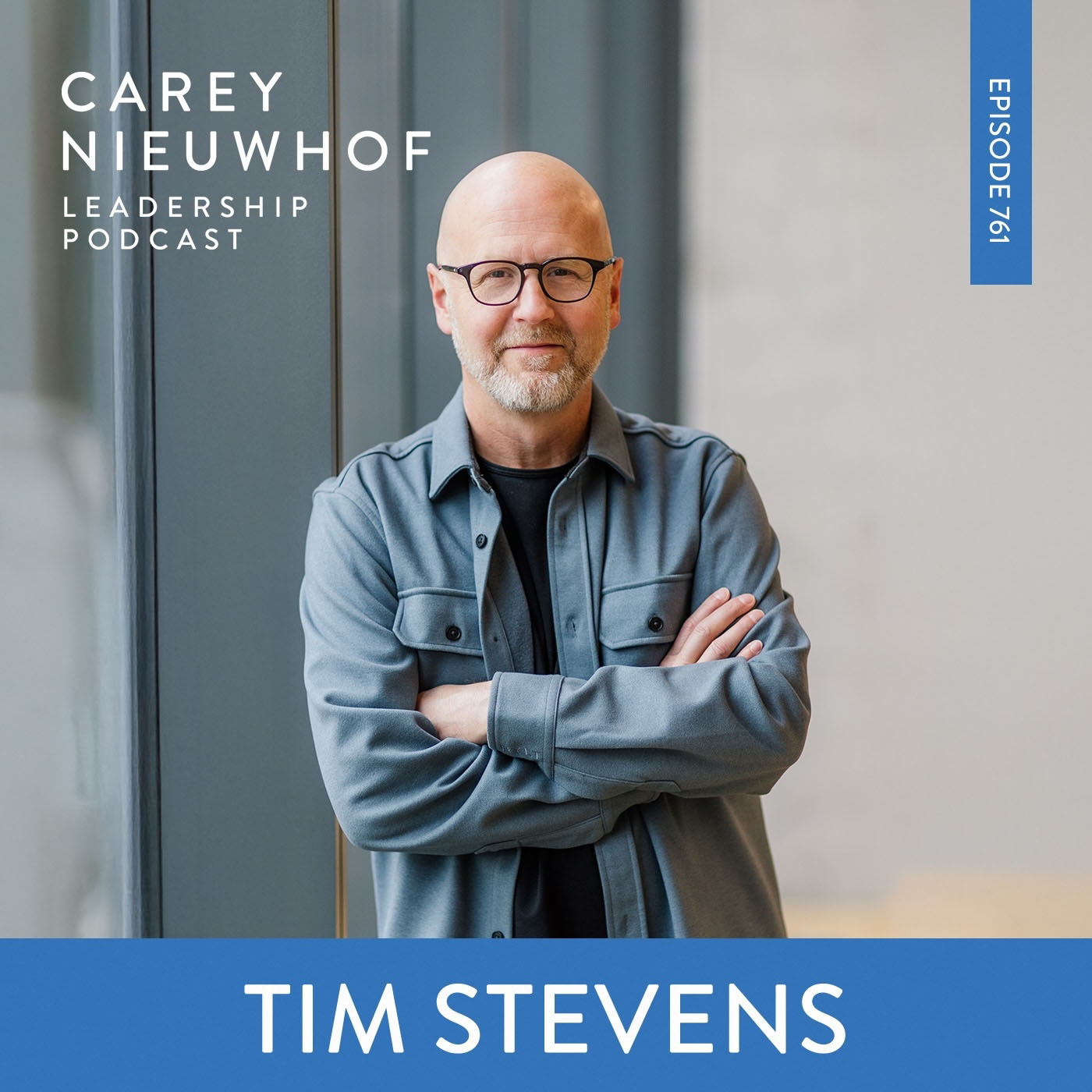
The Carey Nieuwhof Leadership Podcast
CNLP 761 | The Hardest Assignment in Ministry: Tim Stevens on Willow Creek, Firing Well, and Finding Momentum
01:09:49
Tim Stevens returns to the podcast to discuss the hardest assignment in ministry: his three years at Willow Creek. He also talks about how to spot talent, firing well, how to recapture momentum, and his biggest lesson in four decades of ministry....
Loading summary
Transcript120 lines
- [00:01]
A
The Art of Leadership Network. It's the only place I've ever gone where people weren't excited that you were there, you know, initially. And it wasn't, it, it wasn't about me. It was just they were so broken and so mistrusting of leadership. A guy who'd been on staff over 40 years, probably in the first six months I was there, met with him just to get to know him. And he said, tim, you just need to know I don't trust you. And I don't think I'll ever trust any leader again.
- [00:33]
B
Welcome to the Carrie Newhoff Leadership Podcast. Carrie here. And I hope our time together today helps you thrive in life and leadership. Well, wherever this finds you, maybe it's on the golf course, maybe it is on your bike, at the gym, in the kitchen, on your long commute. Welcome. We're really glad you're here. I know a lot of you have been listening for a long time. Some of you are brand new. Well, what do we do? We try to bring you the best long form conversations that help you find a behind the scenes look at what ministry is really all about. And today we're going to talk about the hardest assignment in ministry, at least according to Tim Stephens on his three years at Willow Creek. Turning that around, what can you learn from it? Well, quite a bit. How to fire well and finding momentum. Momentum is fragile. We talk about some of his top lessons from 40 years of ministry, including many, many years as an executive pastor. I think you're really going to enj this conversation. Tim spent 20 years at Granger Community Church, helping a church in a cornfield grow from 300 to more than 6,000 attendees. Then he consulted with church leaders as vice president at Van Der Blumen. And in early 2020, Tim joined the team at Willow Creek to help rebuild and envision what it would look like to see Willow thrive again. As a church in Chicago. Tim now leads Leading Smart, which helps churches all across the country solve problems, improve culture, navigate crises, and lead through the author of seven books, host of the Leading Smart podcast, a speaker and leadership expert, and today, you and I get to pick his brain. So if you're new here, man, so glad you've joined us. If you would subscribe or hit follow wherever you're listening or watching to this podcast, it helps so much. Then you'll never miss an episode. And maybe if you appreciate it, leave a rating and review. We'll jump right in my conversation with Tim. But first, a word from our very carefully chosen partners. This episode is brought to you by Amplify plus from Ministry Brands. One thing you've heard me say a lot of times is time off won't heal you if the problem is how you spend your time on. Well, for so many pastors, our best hours get swallowed up by systems that don't work right. Scattered tools, disconnected processes, constant admin. These hours are the very ones you could be spending on things that matter most. For example, investing in people, shaping vision, or leading your church toward its mission. That's why I want you to see what $55,000 churches nationwide are using Amplify plus for ministry brands. It's a fully connected church management platform that brings your people, communication, events and scheduling all into one place. When your systems work, your time on fuels the heart of Ministry. Visit ministrybrands.com Amplify to learn more. And now to my conversation with Tim Stephens. Tim, 40 years of ministry. Congratulations.
- [03:31]
A
Thank you. I just mean that. Congratulations.
- [03:33]
B
Condolences.
- [03:34]
A
Like what is condolences? Maybe condolences. Okay, okay, we'll go with that.
- [03:38]
B
You've had some, some lightning rod positions. But what I'd love to start with is what has changed the most in the four decades of ministry? It's funny, you know, when you're our vintage, you have memories from the 80s, which is crazy. I have memories from the 70s, but I was a kid then. But you were an adult in the 80s. And what's changed the most in these.
- [04:02]
A
Four decades was thinking. And I do remember church ministry in the 70s because I was Eileen Beige as a junior high and high school student in ministry. And at the time, and it could have just been my tribe, it was bus ministry that was the growing edge. Gosh.
- [04:18]
B
We had one. Yeah.
- [04:20]
A
And like you're buying kind of thing.
- [04:23]
B
Yellow school bus.
- [04:23]
A
Yep. And we would send these buses and. And for a season I had as a bus captain and we would visit all of our kids on Saturday and then we would send buses into the inner city on Sunday morning, pick them up, take them to church, you know, sing all the way there and all the rest. So that was kind of like people were talking about like that was the innovative ministry, was bus ministry. So you think about just the complexity.
- [04:47]
B
That would never fly today. I mean, parental anxiety is at an all time high. It's like some stranger coming to pick up your kid in a yellow school bus and take them to church.
- [04:57]
A
That and the idea of just kind of, you know, typically the white suburban church going into the inner city, bringing them out to the suburbs to go to church, I think is A thing that would be complex this time.
- [05:09]
B
Well, that's definitely a factor. I mean, in our small town, we didn't really have that dynamic, but it was go pick up the kids whose parents won't take them to church. That was our school bus ministry.
- [05:22]
A
Yeah, but yeah, I mean, just what's changed? Complexity, you know what? Growing large church doesn't have multiple locations now. That wasn't a thing at all. Online ministry, discipleship, complexities. Now we're trying to figure out how do we disciple people who won't only show up for, you know, once every four or five or six weeks. And we were still kind of feeling responsible for or to them.
- [05:49]
B
Yeah. You know, it's interesting. I mean, there wasn't even the executive pastor role, per se back in the 70s or 80s. True or not true?
- [05:57]
A
Yeah. I know when I first heard the term, it was probably in 88 and it was a very large church. I was working for the ministry and we were doing some ministry in that church. And I'm like, executive what? Like, what is that? And I actually asked the guy, can I follow you around for a couple days and just see what you do? Because we were there for a couple weeks and it was really fascinating. That's when I first realized, I think I found my calling at least in that phase of life of like, I.
- [06:22]
B
Can actually be in the industry at that point. Like working for the city. Or was that Tony Morgan, who's working?
- [06:27]
A
You're thinking of Tony.
- [06:28]
B
Yeah, Tony was working for the city back then.
- [06:30]
A
I went into ministry about. I just barely turned 18. So I was, from the get go, involved in some type of ministry in and around the church.
- [06:40]
B
All right, so pick up the story. You followed this guy around for a.
- [06:44]
A
While and yeah, there's just a sense. So I knew my grandpa was a pastor probably when I was 15, 16. It's like, I think I'm supposed to be in the ministry. I don't know what that means. I don't think I'm a good preacher. My youth pastor tried to make me a preacher. It's like, ah, I don't think that's going to work. I didn't really like students even when I was one. So it's like, I don't think I want to be a youth pastor. Missionaries that came to my church and had a little slide projector that didn't seem the thing I wanted to do. So when I met this guy and found out I already knew by then I had some leadership, some administrative, some strategic giftings. It's like, there's a place for that in the church. That's pretty cool. And that really kind of sparked me of, like, I think I found my calling.
- [07:27]
B
Yeah. And it's interesting because I had Gordon McDonald on at different points on this podcast, and he was reminding me that in the 70s, having a church in America, over a thousand people was highly unusual and very complicated. And in those early days, I think I first heard about executive pastors in the 90s, and it was probably at Willow Creek, where you most recently served from 2020 until 2023 or whatever. But that was a novel role. And everyone was like, exactly what is an executive pastor? But it's sort of. My working definition has always been like, the COO for a complex organization. Is that basically, what's your working definition of an executive pastor?
- [08:13]
A
I think so. Early on, my personal working definition was when I interviewed the very first time for an executive pastor. I was at granger. I was 27 years old. I'm meeting with Phil McMartin. He's the personnel chair, a lay guy in the church, and he says, you know, basically, what do you want to do? Or how do you envision this role? And I said, I want to put feet to the vision. Like, I want to come alongside a visionary and really put feet to that vision, that dream that I can totally buy into, and then I can help kind of see it happen. I've gotten a little bit more refined in my definition. So now I think of it, the executive pastor's job is to align people, strategy, resources, and culture so the church's vision actually happens. It looks a little bit different. Small, medium, large churches, but I think, in essence, that's what it is.
- [09:02]
B
Are you familiar with Les McKeown's work and his visionary operator processor framework? A little bit.
- [09:09]
A
Or not so much? Yeah, a little bit. Yeah.
- [09:11]
B
Yeah. And I find. I mean, tell me if I'm wrong, but a lot of senior pastors have a visionary kind of bent. And I realized that when we hit about 600 and I hit a ceiling, and I realized, I need an operator. Now, I was years away from meeting Les McEwan. He was years away from writing Predictable Success and his other books. But that, to me. Can you talk a little bit about that? Because I think there are probably church leaders listening who are visionaries and still don't even understand the gap or why it's not happening.
- [09:47]
A
Yeah. And the term. The book I know better than that is called Rocket Fuel. And the terms they use is visionary. And integrator is kind of unlocks the magic of an organization. And in that context of the book, they're talking corporate marketplace. But to me, there's so much carryover, especially when you've got it dialed in between. Like you said, a visionary who is, you know, has a dream. They have, they're coming in, asking questions no one's asking. They start it and they plan a church when everyone says it won't work or we don't need one, and, and then they get in and they're, they're doing everything at that point. And then they get into actually like building teams, building systems, building processes, managing people, figuring out how do we go through the hiring process, what if we have to listen like. And it just wears them out. And, and sometimes most of the time they don't make the curve. I mean, they, they, they survive. Most of them survive, but they don't make the curve. Most of them aren't wired to be both. If, if they are, if they do have a little bit of both wirings on their, in them, probably the church will stay small to medium sized because they're kind of having to wear a bunch of hats and they're happy doing it. And there's nothing wrong with that. There's a ton of small churches in the country with, with pastors, shepherds, people that are having also to do the administrative strategy. But I love it when I see an integrator who doesn't want the number one job. Usually not wired to preach. Some of them preach, but usually not. But man, they are great with people. They got high eq, they know how to spot talent, they can bring great people on the team. They know how to develop people. They know how to set up some systems to unlock ministry so it doesn't get frustrating. That's magic when you see that happen.
- [11:29]
B
Did you ever aspire to be a senior pastor? Was that ever part of your framework over the decades? Never. Never. Okay. This is what a lot of leaders don't understand, Tim. It's like everybody wants this job, right? I gotta be careful. Have you ever drilled down on that? Like, what is it about you? And you're not alone. I've met lots of leaders who don't wanna be in that number one chair. What is it about your heart, your vision, your calling, your satisfaction? That means. Yeah, I didn't ever want to be a lead pastor.
- [12:03]
A
Great question. I've never been in the number one chair till two years ago when I launched out doing leading smart full time. So it's always been, it's always been a second chair.
- [12:11]
B
Which is your thing, right? It's been your hobby for 20 years. 30 years.
- [12:16]
A
Yeah, absolutely. Yeah. It was kind of, you know, side thing for a long time that we just scaled up two years ago. But I've always felt, up till that point, called to the second chair, I loved, like, Like I said earlier, put feet to the vision. I love to come alongside a visionary leader that just. I remember when I first went to Granger and The church was 250 people. Mark Beeson was the senior pastor. You know, one of the greatest visionaries and communicators that I. I'd ever known. And he's. He's passed away, but I just remember coming upside and like, the church was stuck and like, I couldn't do anything he could do, but he needed some stuff I could do in order to free that church up for growth. And, man, we got to go for a ride for 20 years because he didn't want to do what I was doing, and I didn't want to do what he was doing. And together we could make it work. And we had total trust in each other, so we had each other's backs, and it just was magic.
- [13:11]
B
Yeah. I think for a lot of senior pastors, it's hard to believe that someone would be content in that role over the long term. Right. Because if you look at the profile of a lot of senior pastors was student pastor, and then maybe they're in exec position, but they're always hoping to get that lead seat. Anything else about contentment in that role that either people who are in the second chair should realize? No, it's actually cool that I want to sit here or that senior pastors need to understand about that particular profiling gifting that might not be native to the way we operate.
- [13:47]
A
I think I talked to a lot of men and women who are in that second chair role, and I. I try to drill down because it like, if ultimately they want the. To be in the first chair, that can become unknowingly. It could become toxic. It could become a barrier between them and their relationship because it's there. They. They may. It may be subconscious. I just want. They want to preach a little bit more. They get a little bit frustrated because, you know, the person number one chair isn't making decisions like they would make them, and they're starting to dream more and more and more about being in that role and can be. That can become subversive. So I encourage them, before it does become subversive or become a problem for that church, go do it. Don't do it within 30 miles of here, but go do it somewhere. And, you know, if that's a. If that's truly a calling and you've discerned it and people around you that know and love you, well, discerned it with you, then just go do that. And I would say for lead pastors, we always kind of project like, we think, well, no one would want to do that because we don't want to do that. And so we all kind of project, kind of say no for people, because it's like, who would want that job? But there are wired, you know, people out there that are wired with that gift. And I bet over half of the executive pastors I work with went into that role from the marketplace. They're in their church and they just feel a call to ministry, and they're running a business or they're an exec at AT&T or somewhere, and they have a real sense that they're supposed to come alongside their pastor initially to do that role. And that's pretty cool when that happens.
- [15:24]
B
That's another. When you've. When you've either in your own experience as XP or in the work that you've done with other XPs. I think one of the things I've struggled with is. Oh, you mean the stuff I really don't like, I'm really not energized by, and I really don't want to do is what other people wake up excited to do every morning. And so sometimes we can feel guilty about offloading things, or we can just assume that nobody wants to do this. Number one, have you seen that dynamic? And number two, if you have, can you explain a little bit more so that people on both sides of the equation understand what's at stake?
- [16:03]
A
Yeah, I definitely see that. And, you know, I'll just say again, like, I think people there. There are men and women that are absolutely called to that. And it's not an easier job. It's just a different job. There's. There's a weight that I highly respect for senior pastors and lead pastors. And most of my work right now is more with senior and lead pastors than it is with executive pastors. And just so I'm getting a, you know, a sense of, like, the weight that they carry and what they. What keeps them up at night, what wakes them up in the morning is different than executive pastor. I think for the executive pastor, there's a lot of. There's. There's a little bit of a squeeze where they're kind of a buffer from the energy that the senior lead pastor may walk into in any given day and you know, frustrated about this or that or this isn't happening fast enough or whatever. So the executive pastor is absorbing this and then trying to absorb, you know, the action or activity without absorbing the energy and then passing that on to and trying to lead a healthy staff below their level. And there's a pressure and a weight to that too. And especially I've seen it like almost be soul crushing for leaders in that position because they're trying to absorb it without having like any kind of an outlet to, you know, they're not seeing a therapist, they don't have any good. Ask their friends that they're talking to that are somewhere else that they can kind of vent to and get perspective from.
- [17:28]
B
And so I'll just on and not delegate this. When, when you think about your different roles over the years, what were some of the things that you would wake up in the morning as an XP and say, oh, I can't wait to do this. Like, just give us a list of some of your favorite things. Because I think when you see the content of that list, you know, it reminds people who sat in my seat. No, people really love this.
- [17:52]
A
I think early on it was buying land, property development, building development. Our first church, we were meeting in a movie theater. We didn't have land, didn't have a building. If we're going to grow, we need that. There's nothing within me right now that wants to be involved in a building project. But then those first 10 years, I loved it at the time, prided myself on bringing projects in under budget. Not always on time, but under budget. All we did six projects in a row under budget. And so like managing that stewardship for the church just brought me great, great pride and joy because it's like, man, these are ties and offerings from people that don't have a lot. So let's, let's handle it really well. I think as time went on, it became developing people, spotting talent and then developing people. So we, you know, lead teams. We spend so much sideways energy dealing with someone we shouldn't have hired or that we should have dealt with a long time ago. And it just sucks. Our time, our energy, our emotional, you know, it's emotionally weighing on us because we know the family, we know the kids, and we know the people in their small group and we don't want to be hurt. But so, man, if you spend more time and get some gifted people on the front end, vetting who you're bringing on the team, developing those people, especially when you're hiring from within, you're developing them for a long time before they're ever on your team. And then you bring them on and continue to develop them and build a healthy culture so that they can thrive. That's. Man, I could do that every day, all day.
- [19:24]
B
You probably had your share of tough assignments in your time in leadership. If you could take us on a case study basis through your toughest assignment, what would you say your toughest assignment was, and what were the elements that you had to contend with as you tried to deal with it?
- [19:42]
A
Easy answer. The toughest assignment was, was jumping into Willow in 2020. If we talked before about this, it's the only. I've only had four job changes in my life, so to speak. So it was the only one that I absolutely felt absolutely called like, the others were exact, were good decisions, logical decisions, smart for my family. This one was a calling because I knew what I was. I was walking into and hardest thing I've ever done. It's the only place I've ever gone where people weren't excited that you were there initially. And it wasn't about me. It was just. They were so broken and so mistrusting of leadership. A guy who'd been on staff over 40 years, probably in the first six months I was there, met with him just to get to know him, and he said, tim, you just need to know I don't trust you, and I don't think I'll ever trust any leader again. He was just so devastated, you know, so people carrying that brokenness just. There's a lot of just difficult times. So that was a really hard to go into a place that was in a nosedive as far as momentum going, momentum happening, was shut down because of COVID was sinking, you know, financially sinking very quickly and way, way, way overstaffed. So we had to make some really hard decisions initially just to get the staff right size, the budget right size, so that then we can build from there towards being a thriving, healthy church again.
- [21:16]
B
And we talked about that in an entire episode. We'll link to it in the show notes. But looking back on it now with even a little more perspective, you felt an absolute call to go there. You were actually, for the backstory, you were charged. You were a fan of Lumen at the time of finding the new lead pastor, and then ended up saying, yeah, and I'm called to go there as well, which is insane. But, I mean, most leaders, first of all wouldn't want that assignment if they could possibly avoid it. Secondly, most of us would have no idea how to approach it. And I would say probably wasn't an unqualified success. But Willow is a thriving congregation that has a new chapter and a new era because of the five years of transition that you and Dave Dummett and the senior leadership team did. And Sean Williams, who's now there as the senior pastor. Willow has a future, and that was not clear in 2020. So how did you, you know, how did you go about figuring out what to do and then what did you do? What were the broad strokes on how to turn that around?
- [22:24]
A
It's interesting. I was reflecting with Dave recently. He and I both started in the office the same day, May 15th or 18th, I can't remember which, of 2020. So again, picture the world shut down. No one else is. It's a 960,000 square foot building. No one else is there because they're all working from home. But Dave and I don't have any place to work from home because we're just still moving our families. So we're in his office on the whiteboard and he writes up in the corner. 2020, gain trust, earn trust. 2021, figure out a plan. 2022, start to implement plan, which is the smart thing to do, right?
- [23:01]
B
Don't plan even for a year. Just gain trust.
- [23:04]
A
Gain trust, which everyone tells you in change management, that's what you do. Like, you don't start changing stuff. Well then like three weeks later, we realize how bad the finances are and how long we'll be locked down with COVID and thinking like, we can't wait to. We can't wait. And, you know, it ended up being 13 months for us to be in the room with people to build the trust, to earn their trust, and then to be able to start making changes. So we had to start right away without the trust having been earned, which was significantly challenged. I wouldn't recommend it for anyone, but it was a kind of have to. So I think, like first thing, focused on. So, you know, Dave. Dave was the primary communicator. I didn't have to think about the weekend services. I was thinking about the staff. And then we had Matt Sensted, who was our CFO at the time, became our executive pastor. Operations was focused on the money and the property. So, like between the three of us initially building out the staff, like figuring out what the structure we're going to have, realizing that we had a financial model as far as multi site that did not work and would not work and would sink us. So having to change the model significantly, which then changes what those people signed up for that were on staff. They're like, I didn't sign up for that. So then having to transition folks that were like, love, love what you're doing, but I'm not, It's not me. Transition them out, transition new people in. And then once we kind of. It's probably a year, almost a year before we. Okay, we think we have the staff that's going to carry us forward now. Let's work on getting healthy. And we were working on health in between. But that was, for me, a big part of my focus was getting the right people there and working on the health of the staff. Yeah.
- [24:43]
B
Because the boat was sinking. Right. So if you didn't start bailing water, it was over.
- [24:48]
A
Yeah. So what I hear you say, that's absolutely true. I mean, and it was. I remember when we first got there, I think there was a lot of wise stewardship before we got there. So there was a fair bit of money in the bank, but we were bleeding so fast that there was a sense. And I think initially it's like, okay, yeah, two to five years of kind of burn rate. And then, you know, we weren't there very long and it's like, you might have 5 to 12 months of burn rate. It's like, oh, wow, that's completely different.
- [25:15]
B
Yeah. How did you process that level of stress? I mean, you've got a couple years removed from it now. You left in 23, right?
- [25:24]
A
Yeah, mid 23.
- [25:25]
B
And we're recording this in 25. So you had 24 months of distance. Now when you look back at yourself, what did you do well, to process that level of stress, change, pressure. And what would you do differently?
- [25:40]
A
I think what gave me an advantage coming in was I knew I was on temporary assignment, meaning I knew I wasn't going to retire from Willow.
- [25:50]
B
This wasn't a 20 year thing.
- [25:52]
A
No. And we talked about that openly up front. It's just a sense of like, I know for sure I'm supposed to be here and come in to help for X number of years, a short time to help, you know, get this thing back on, to be a part of getting this thing back into a healthy place in a thriving church. So what that does is it gives you. It keeps my identity separate from the church, which I think is healthy, versus back at Granger. My identity was one in the same with the church. I'd kind of grown up with it. Had been there. That was a really hard disconnect later on when it was time to leave. But at Willow is a sense of like, I wasn't emotionally detached, but I was able to. My identity was detached from it. It's like, I want this thing to work. I'm. I knew it was a sprint. And so I think that helped. I think I had a lot of. I went to therapy. It was helpful. I had friends, pastors from other places that were from all over the world, really, that were cheering us on. And that could be an outlet for me at times. I think things, you know, you ask what's the things I got wrong? You know, when we got squeezed, we had a couple times when, like, we were just taking it from congregants that were just mad, upset, emotional, yelling, screaming, open microphone kind of stuff, cussing. And I think I walked in the moment I thought, man, just. I just need to love these people. And that's what we did for those two nights. But like, six months later, I was still feeling the wounds from that and realizing, okay, like that. That sung. And I was probably too emotionally detached on that moment to feel the sting of it, but had to, you know, work through it. And when I. Even now, when I reflect on it, it's. It was a, you know, probably the hardest two nights of my life, Ministry life. How do you.
- [27:38]
B
Because you're right. Grieving your losses is so important. So how. How do you go about doing that?
- [27:43]
A
Yeah, I think time helps. I think what helps to, you know, when you're in the moment, when you're. You're fighting the battle. And I've never, never been at war. But my sense is like, you're in the middle of a war and you don't even know if you're making progress. You think you're doing the right things, but you don't know if you're making progress. So I think there was a sense, There was probably 18 months there where it's like, we're doing everything we think are the right things and we're not seeing one bit of progress yet. But what happens eventually then and we did is like, okay, it's starting to work in pockets. We're starting to see some health here. Brand new people are coming to church. By the time I left, 65% of the church was brand new, full of life, had never had the previous pastor, as their pastor, didn't have the baggage and wounds that some of the long timers had had. So, I mean, that's helpful in the healing process as well. It's like, man, we went through a difficult battle.
- [28:40]
B
A little bit of progress. Yeah.
- [28:42]
A
Yeah.
- [28:44]
B
Anything else about that season, that assignment that you're reflecting on now?
- [28:50]
A
I'm just so grateful, like, for that. That's in my 40 years of ministry, that. That's a piece of it. I really am grateful. Learned so much from it. I would have no idea. I would. I wouldn't have much of an idea of how. How to help a church turn around from a really dark season or how to recover from the, you know, the immediate loss of a pastor. How to help a board that's dysfunctional get healthy. A board that had to. Not dysfunctional from the stance of it they did anything wrong. Dysfunctional from the stance of they had to run the church by themselves without pastors for two years and not a small church. So helping them kind of like, reframe into getting out of the weeds and back to a healthy governance level. So, like, I'm just so grateful for all those experiences. And it's still my home church, so I get to sit there from week to week. And I'm far enough removed now, two years removed now, that I don't still. I don't walk in and think about the lights in the screen or the carpet. You know, I can sit there and enjoy and worship. So that's. That feels good.
- [29:55]
B
That's pretty remarkable that you can still worship there. And, I mean, I've had that experience at Conexus Church. Now. Now, it was a decade ago that we. I stepped out of the lead pastor role. But what makes it possible, do you think, for church leaders who were former staff to be able to still worship? Because that's pretty rare, and that's kind of the norm for former staff at Connexus, which is a tribute to our lead pastor, Jeff Brody, who's done a great job of that. But what are the conditions that make it possible for. Because most of the time, you either discover former church staff who aren't attending church or who had to go across town to a different church. Had to. In brackets. Quotation mark.
- [30:41]
A
Yeah, exactly. Yeah. I think there's a posture of humility that's super important. I get to talk to a lot of staff transitioning away from a church, and then I get to practice it. Right. To see if I actually can practice what I say. So I think there's a posture of humility to say there's this. Everyone leaves a church, leaves a place that in this case, leaves a church, and there's a little bit of push and There's a little bit of pull and those two numbers add up to a hundred percent. So the push could be, I hate my elders and I'm so tired of this place and they're driving me out. So it's an 80% push. You feel pushed, 20% pull to what's next. Sometimes it's 100% push and you don't know what's next, but you just know you have to leave. Sometimes it's a 95% pull. My, my pull to Willa was probably 90% pull, 10% push from where I was. 90% pull. It was just the vision that, I mean, it was like I had to do it. But I think like a sense of that what, whatever reason, whatever the percentage is, there are things that you, like, wish were different, that you would have done different, that you can't believe they haven't done yet, that, you know, counsel you gave them that they're not following, whatever. You just have to, like, have a posture of humility and realize I'm not the master of the universe, like, this isn't on me. I don't necessarily have the best idea. The spirit of God is still alive and at work with these leaders that I'm stepping away from. And if you can have that posture and then really just keep your mouth shut because you are going to have thoughts, you are going to want to say something. Your previous leaders, two months after you leave or two days after you leave, they're going to do something or say something. Your emotions are going to be high because you've been there for two years or five years or 15 years. And you just have to have a lot of self discipline to, you know, breathe some prayers internally and say, God help me not say anything in this moment and be supportive even when you don't feel like it. It's been great for us to like, because I really want to be left there wanting to continue to support Dave and Sean and the rest of the team there because they're doing really good and really hard work. And now I can help them in a different way.
- [32:50]
B
Today's episode is brought to you by the preaching cheat sheet. So, preachers, I'd love to know if you can relate to this. Okay. It's Thursday night. Sunday's message still isn't coming together. I mean, you can even start early and it's not quite right. Right. The pressure is building. It's hard to decide what to add, what to cut, how to tie everything together. You want some family time and, you know, by the time Saturday rolls around, you're just gonna have to call it as it is, even if you're second guessing some of your message. Well, that's where my ten step preaching cheat sheet can help. It's your quick check guide to ensure you've got an engaging, clear and memorable sermon ready for Sunday morning. From your opening line to landing the plane at the end of your sermon, and every step in between, you can use the 10 steps during sermon prep, or even to start or to finish your message, whatever you want to make sure you are ready to deliver an impactful message every single time you preach. And the big news is I've just released a brand new version of the cheat sheet. So if you've downloaded it before, be sure to get the new version in your hands. We got a lot of feedback. I improved it. Still. Basically the bones are the same, but it's gonna be even better. Okay, you can download your copy for free by clicking the link in the description of this episode or by visiting preachingcheatsheet.com Again, that's preachingcheatsheet.com to download your copy for free or simply click the link in the episode of this description. Wherever you're listen, listening. You have conversations with lead pastors and executive pastors across America and probably around the world. What is the secret or off the record conversation they're having that every church leader needs to hear?
- [34:27]
A
Yeah, no, that's a great question. And are you asking like between senior pastors and executive pastors or just.
- [34:34]
B
Well, when you sit around a fire pit, you got a beautiful fire pit in your backyard. When you sit around a fire pit, when you're lingering over a two hour meal, what are the conversations that nobody really wants to have in public that keep coming up?
- [34:48]
A
Yeah, I think one thing that comes to mind is there's a sense when you're leading in a church, doesn't matter if it's senior pastor, executive pastor, or any other role. There's a sense that you can't be vulnerable and you wish you could. Like you. You really, you want to be, but you don't see how you can be because you try once or twice and it comes back to bite you. And so then you're like never again. And so it's either like people that are in your congregation that have put you on a pedestal and you feel like you need to stay there, or they're your staff who you pay, who just, just has a different dynamic that you just feel like you can't be honest. And so what I hear like around Fire pits and stuff with pastors is just a bit like almost a. Not an excessive vulnerability, but like, man, like, I'm. I'm so glad I can finally, like, talk real here, because I can't. There's, like, nowhere in life that I can. It feels like it. I don't know that it's true. It sure feels like it, though. They'll be like, even like a lot of pastors don't, you know, they might want everyone in their church in a small group. A lot of them aren't small groups themselves. Because of that, they don't feel like they can. Some that are still just feel like everyone's looking to them for the right answer, whatever that small group topic is. They can't. They feel like they can't say, I'm struggling with my wife right now or, you know, I just yelled at my kid. I don't know that it's true that they can't, but they sure feel that way. And so when they get a chance to kind of lower the guard a little bit and talk to some people that are in the same seat, same chair, you hear some of that come out.
- [36:29]
B
And without betraying confidences, what are like, is it things are not going well at home, even though they're going well at the church, or is it personnel issues or is it some kind of inner struggle? Like, what are the. Are there common refrains or common themes that you hear from pastors? Because I'm guessing of the tens of thousands of people hearing this episode, some have that outlet, some have got a fire pit, some have got friends they can go to dinner with. Then others are sitting there and they're like a corked bottle and the pressure's building and they don't know when they're going to blow. And I'm just wondering, what are the frequent flyer issues that you would hear without betraying any confidences of specific cases.
- [37:15]
A
Two categories come to mind. One would be family. So it's a struggle in a marriage. It's, you know, my wife told me she doesn't want to even want to be married to me anymore. But we're staying together because we kind of both feel like we have to. It's, you know, my kids struggling with their sexuality, and I don't know what to do, and I can't tell anyone about it because it'll reflect badly on me. It's all those kinds of things. It's my, you know, my kids having addiction. You know, I'm having to do a drug test on my 18 year old every Friday night. And it's like, things like that, it's like I can't talk about. They feel like they can't talk about that stuff out loud because it reflects. The other category would be, you know, just tension within running the church and, like, just being completely exhausted and worn out from that. Having a sense of, like, imposter syndrome, like, I'm in over my head, but surely can't admit that. And I, I, I've got something. There's something broken. It might be my relationship with my board. It might be, like, my staff's a mess, but I don't know how to fix it. It might be I'm being asked to too much to do, too much outside of, like, my comfort zone or my skill set, but we just don't have anyone else to do it. There's a bit of that, you know, if I could. It's almost exhaustion. You hear a lot of pastors will do a sabbatical or extended study break once a year. They don't get a whole lot of studying done because they're just exhausted and they spend three weeks detox. Right, right.
- [38:47]
B
I appreciate that. And, you know, I think you've processed fairly well over your time in ministry. Who have you turned to? Think back a decade, 15 years ago, five years ago, how did you process that kind of stuff?
- [39:02]
A
Taking the good in the healthy seasons, which just grateful to God most of that was as far as having a healthy team around me. Then you could rely on the team because we're all in this together. We're unified in vision. So back when you mentioned Tony, when it was me and Tony and Ken Meyer and Mark Waltz and Mark Beeson and Jason Miller, Rob Wagner, Granger. We're in a really sweet time for probably a decade and really could lean on each other for that. But I do think it's healthy for pastors to have someone outside of their team and organization. So, Leon, I've always had that it's been a little bit different over the seasons of people that I can rely on. I've got my best friend. You actually met him recently, Danny. He's a pastor in Texas. He and I are in vastly different organizations and even phases of life, but he's someone I can, you know, I can talk to about anything. Art stuff, personal stuff, ministry stuff, church stuff, leadership stuff. And so it's been a long, you know, throughout, throughout the four decades, it's been a little bit different, but it's. There's always been someone and something like that.
- [40:09]
B
You and Faith, your Wife have been together for many decades. How has ministry been on your marriage?
- [40:17]
A
Yeah, 35 years. Interesting. So it was very different when we were married in local church and now married in kind of church adjacent. We're working with churches, but not in a specific church. The difference for her and it was an identity shift for her. She loved being a pastor's wife. She loved, you know, just being able to be supportive. She was never on paid staff, but she was always, always supportive and jumping in and volunteering and organizing and meeting with the ladies and pulling staff together and love that. So when we moved to Texas to work with Vanderbilm, and then suddenly I'm getting on a plane for, you know, three days a week and she's going sometimes to church by herself, sometimes I'm there, but we're not doing it together. That was, that we had to, that was a struggle. We had a shift. It probably was a two year struggle of like, okay, we've, we've got new identities. We have to shift into a new way of relating with each other. So when we came back to Willow, she was delighted because she got to be a pastor's wife again. And then even now staying in Willow, as far as our involvement and volunteer engagement, all of her, none of her friend networks changed when I launched out and started leading Smart. So. But ups and downs, right? And especially in those years of, of raising the kids in the church in the spotlight. I got to interview my adult kids. No, no, no, no. It was fun to talk to them recently and just talk to them about, like, what was hard, what was good about being raised in the church and in the spotlight. And they just kind of unpacked, you know, as now as 20 something to 30 something adults for kids, they got to unpack. Like how that affected them, how it impacted them, how it led them to where they are today. What was good about it, what was hard about it.
- [42:10]
B
Yeah, I love my boys, but neither of them desires to be in the spotlight in any way, shape or form. I wonder if that has something to do with ministry. I think it might have been raised in that and they're doing great things. Okay. Shifting gears a little bit. I love the 40 lessons in 40 years of ministry resource that you made available to church leaders. We'll link to it or to where they can find it. I thought it was really good. You've got some real nuggets there. It's just short, pithy wisdom nuggets that I've really appreciated. I want to drill down on some of those. You Say conflict isn't the enemy. Avoidance is. Oh, you're reading a lot of people's mail. Unpack that.
- [42:55]
A
Yeah, I think most of us, and I wish I could measure it feels like 95% of church leaders avoid conflict. And because you feel like it's ungraceful, it's ungraceful. It's, it's not, you know, we're, we're in ministry to love on people, to show them grace, to go the extra mile, all that. So you feel like, especially if it's in a staff relationship or a leadership relationship, that where you've got a conflict, it's like, man, let's just, let's just see. Let's just kind of, we'll love on them and see if it goes away. It rarely does. Right. And so I do think avoidance is the enemy more often than conflict is the enemy. And so we have to have disciplines, have systems in place so that we really don't allow ourselves to spiral into that. I find with leadership, I work a ton with leadership teams at churches, and so I'll sit in their meetings and coach them overtime, 6, 12, 18 months. And what I'll find is they'll be circling back to the same staff problem over and over and over and over again. Still, no one's talked, no one's talked to that person. And it's taken so much energy and time and, you know, sideways energy, and it's like, let's just have a conversation. Let's, let's, let's hear from their perspective. Let's draw some lines in the sand. Let's say, hey, this, this can't continue. We gotta see some changes here. Let's put a plan together. That's hard to do and leaders rarely do do that.
- [44:26]
B
So let's go into a related one. Hire slowly, fire kindly, always with clarity. So I want to take you back to when you realized you had to do some. Right sizing at Willow, so to speak. Right. And you're probably at that point laying off like 100 or more staff or dozens high, dozens of staff. That's sort of a lot of pastors nightmares. Right. I sit down with a lot of leaders and it's that one guy on the executive team who has been there for 30 years is making too much money, but kind of retired a decade ago and they don't know how to make it happen. You've got to go in there and make some wholesale change. So if you're going to hire slowly, fire quickly, always with clarity. How do you do that? When you got a tough assignment like the one you had recently, what I.
- [45:16]
A
Encourage church leaders to do, and especially in this case the folks that we had to off ramp from Willow, it was because of financial crisis, which it came from a leadership crisis turned into a financial crisis. And so in most cases to no fault of their own. It's just like we can't afford to pay for it.
- [45:35]
B
So that one's a little easier, I guess, because you can just say just. But then somebody, okay, I've been sitting next to so and so for 20 years. I lose my job. He doesn't. How do you explain that?
- [45:46]
A
I don't think you have to explain everything. I do think you have. I do think the clarity is important with that person. But you'll find everyone around that person demanding for the details. And I think you have to be real careful with that and more and more all the time just because of HR or employee law kind of stuff. But I do think like the, here's where I find the kindly. So hire slowly fire kindly and fire quickly. And with clarity is that person needs to know where they weren't measuring up. It's going to follow them the rest of their life if they don't know. So and you're not responsible for what they do with that information. But I do think it's important to have to have a process to communicate clearly. You know, you might not be measuring up with performance. Like you can't do your job very well or it might be culture. It might be you're just not living out our values. So they need to know what that is. And, and the kindly part comes with do it soon enough and where you can care for that person. And I think especially in context of church, care for that person and care for their family for a little bit of time to help them make the bridge over to what's next for them. And I do that even when they did the church wrong. I mean, if they may have stolen money or they may have had sex with someone that they're not married to, I'm still going to do everything I can to graciously help them transition. Obviously they can't be on the team anymore, but we're going to help for the sake of their family. And I'm not paying for two years, but I'm going to figure out what's the appropriate amount and be kind and the firing and help them transition, help them move on to what's next.
- [47:18]
B
So let's take it into a specific situation. There is that person who's Been on staff for a couple of decades, makes a big income, really hasn't been contributing. A bit thorny. Do you lead with the reasons or do you just say, hey, we got to tough situation here. You're not going to be on the team moving forward and then let them ask for reasons like what? What is your advice on that? What's your best advice?
- [47:41]
A
So it'd be a little bit circumstantial if, if there is a money reason why you're making here. You know, it's like we have, we, we, we need to cut two people from the team. We're choosing these two because they've been slackers or they don't perform well or whatever. So I might lead with the whole staff. Hey, we're have to lay off two people and we're having some conversations tomorrow about it. So I just want you to know that's coming. Then you're having the conversations with the two people and they're going to say, why me? And then you're going to say, well, we don't have money to pay for as many staff as we have anymore. And there are some things that led us. And let me just be straight with you. It shouldn't be the first time they're hearing. Should be something that showed up in previous conversations. Otherwise it's just unkind. But it's something that's like, man, you know, we've been talking about this over the last six months. We just haven't seen a lot of improvement. And so that's why it wasn't easy to choose you. But that's why it became clear that your positions are being terminated.
- [48:41]
B
And when you do it well, because I'm sure you've done it poorly over four decades. I'm sure you've done it well. When you do it well, everyone goes, oh, yeah, that makes total sense. Thank you so much. Or does it sometimes blow up in.
- [48:51]
A
Your face even if you do it well? It doesn't. Not everyone's going to understand.
- [48:56]
B
Yeah, people are going to leave.
- [48:57]
A
It's going to be. People are going to leave upset because they love that person. And that's the closest staff person there too, and that's my small group leader. And, and there must be something going on here. We can't trust the leader. I mean, there's, there's a bit of that. And I think in those, you can only say what you can say. And I think the closer people are to the, the center, you can say a little bit more. But when you get much, you get Much further out from that. And you can't say a lot and people will still not understand. And you just kind of move forward with integrity and just keep making really good decisions. So it's like they don't understand that decision, but they've seen nine other decisions that they trust you with. And it's like, okay, there must be something going on here I don't see.
- [49:35]
B
Yeah, and I think that's something too. You hinted at it earlier and it's worth drilling down on. There's almost a, like, there's a community aspect to church that's super helpful and healthy. And then there's a gossip access to, you know, part of church that is not healthy. And it seems when there's some kind of termination or parting of the ways, people seem to have a unhealthy need to know. And you would think, well, that's more true of smaller churches, but it's true of a large church with social media, hey, so and so got let go, blah, blah, blah. How come? I think you're right. My instinct over the years has been less and less public information that not everybody needs to know. It's not a secret or whatever, but it's like, no, this person's dignity story and part of leadership is being misunderstood. Right. I'm just going to take some bullets right now for a little while and then wisdom is proved right down the road by all of her children. What are your thoughts on that? How much should you be saying publicly and where is the line on that?
- [50:39]
A
Yeah, I would agree with you. I mean, in this day and age, not much. I mean, it used to be like, don't record in the meeting.
- [50:45]
B
Terry is no longer with us. Or do you even. This comes up in our Art of Leadership Academy. And I'm like, I think you should only announce something publicly if they had a senior public role, period. Like if the lead pastor's gone. Right. Or one of the teaching team is gone, maybe that's worthy of some kind of acknowledgment. But if you're letting go at mid staffing. Yeah, you have to make.
- [51:09]
A
It depends on the size of the church. I mean, if it's a church of 200 and they have three staff and you're letting one go and they've been there for 14 years and it's like, okay, we're probably having to say something broadly about this. And it's maybe not a Sunday morning, but it may be your quarterly stakeholders meeting. Whatever you do at your church. I do think I do agree with you. Like, you know, if it's a church much bigger than that, really, I'm only saying something publicly if that, you know, it's the worship pastor that they see every single week, or it's the senior pastor, the lead, you know, the teaching pastor. It's someone that's really high profile for the entire church, otherwise, keeping it pretty, pretty downscale. And I will also say, like, when I'm. When I'm like, talking, like, you're probably communicating that to your staff, potentially. So if you're talking to your staff, I'm asking, I'm like, calling them to the high road. I'm saying, hey, guys, like, when this information goes out, all of you are carrying a metaphorical bucket of water or a bucket of gas. And when people start to flare up about this, you can pour water on it and you can douse it and you can say, you know what? You don't have all the information and let's just trust our leadership. Or you can pour gas on it and you can say, yeah, I bet they did put something under the rug. I bet there's something there that we don't know. There's probably people we can't trust, and we all have that option, and it's with little tiny words or sort phrases or gestures or facial inflections in those kinds of things when we're either pouring water or pouring fire on the situation.
- [52:34]
B
What is the single biggest hiring mistake that you keep seeing churches make?
- [52:39]
A
Oh, I think one comes immediately to. Mine would be hiring for skill and not for culture fit. The person can do it, they've done it, but you don't dive deep enough to see if they're going to be a culture fit and really live out in your values. I heard Jerry Hurley at Life Church, you know, Jerry said in relation to values, he said, don't hire people who don't hire people and then bring them in and teach them your values. Hire people who already live out your values and then just reinforce them. And I just think that's so smart. And then the obvious question is, well, how do I find out if they're living out our values? So. And, you know, depending on what your values are, you figure out ways to do that. Spending time with. I think we know that best when we're hiring from within the church. We've already seen them live out our values. It's harder when they live in Albuquerque and you're in South Bend. You have to figure out ways to get close to them, approximate to them, to see if they're Living out your values.
- [53:33]
B
How do you do that? How do you determine that when you're.
- [53:35]
A
Making a hire sometimes. So you know, bring them in for, you know, we're probably not hiring someone from, we're probably not moving somewhere from another part of the country unless it's a higher level position. So it's worse. Let's go there. I've like flown across the country with, you know, an associate and let's just spend two days in their environment. Let's talk our way into being at family dinner with them. Let's spend some time with people that they've been doing ministry and lifestyle.
- [54:05]
B
You don't necessarily just bring them to you. You go to them and see them in their native environment. Wow.
- [54:10]
A
Both and heard about that and I think like an extended like you bring a man and they're with you from noon to 4pm you're not, you're just going to see the very best. But if you figure out a time, you bring him in and it's like you're here for two days and you're going to hang out with these people and you're going to this barbecue, I'm going to take you to a movie and let's go do this over here and I want to drive you around town and let's. Those kinds of things. You get extended time in a car in conversations with someone, you start to see who they are pretty quickly. What do you look for again? It depends. Like I think if your values are dialed in, you're like, okay, I'm really looking for these five, six, seven things that we have determined are important in our culture. I'm looking for like just, I'll just talk generally for a second. I'm looking for someone who isn't trash talking the place that they just came from or are coming from that they're not negative about their previous church even if they got fired and, or even if they quit, whatever. It's like. And I really appreciate that. If it's someone who. Another thing would be if it's someone who has messed up in their life at some point in a public way and you know, we've all messed up but it's been public and they got let go 10 years ago because like I want to know in that, like are they hiding the fact that they went through that or are they like they're, that's part of their story now and they're actually living through their story and it's, it's part of like that's part of who they are and how they're leading today, I think that's, that's really important. I think just, you know, graciousness, humility, the way that they treat the server at the restaurant that you guys are eating at, a sense of like, is this. Especially if they're going to be on your team, is this someone I want to wake up every day and just, like, go to work with? If you're getting any sense of, like, this person's annoying or obnoxious or. I don't think I would. Not a good fit for your team. Maybe if you have a large organization, they could be somewhere on the team, but maybe not your team.
- [56:06]
B
It's interesting, you know, the phrase that's coming up to my mind and feel free to disagree, and this isn't the sole determinant. There is values, faith, the whole business. But the phrase easy hang comes up. Is this person an easy hang? Like, is this somebody that you would want to be on a long trip with? We're planning our fall retreat for our team. We're looking at bringing in one of our contractors and, you know, that person might end up staying with my wife and I, you know, in our part of the Airbnb that we're renting out. And I'm like, oh, yeah, that'd be easy. That'd be easy. Or if you're like, ooh, I don't know, like, do we want. That person might not be like, is there anything about that ease of hanging out with somebody that is actually a factor?
- [56:49]
A
Absolutely. And the churches I've been at and even at Vanderbilm, and we would always have a list of those people. We have no positions open right now, but we have a list of the 30 people in the church, or two people, three people in the church. That. Man, if they could be on our team, that'd be amazing because they add so much value in any room they're in. They raise the energy. They're fantastic. I don't know if they could do a specific role, but we want to look at them first. And I hadn't thought of those words, easy hang, but that's a piece of it for sure.
- [57:23]
B
Well, it's strange because we're a tiny team, we're a remote company, but they were all here last month, like six weeks ago. And it's funny because this one was at my house. It was pretty easy to do, but when they walked in, it was like they were there yesterday. And everything was easy and everything was fine. And those were long days, like some 12, 16 hour days together. But if it's easy, it just work is hard enough. Why make it more difficult with the people that you work with? Right. That's the way I look at it. So we're blessed. You mentioned spotting talent. So many leaders I talk to are struggling to develop a leadership pipeline. They don't know how to do it. What are some key lessons about spotting talent?
- [58:05]
A
Yeah, so it's part of what we just talked about in a sense of who do we think would be great in our team? I was thinking, as you were talking, like, a great way to vet that. Like, so your, your retreat and I. My team's off site as well. Of like bringing in a contractor who doesn't even know you're thinking about hiring them or asking them to be on your team. But, like, see if, like, you can survive in an Airbnb for two days together, three days together. Yeah, those kinds of things. And I think that's true with, with hiring staff as well. So what I'm looking for, like, when I'm thinking spotting talent, I'm looking for someone who's like, growth minded. They're like, when I look in the rearview mirror of their life, they've grown some things, they've led some things. It's not, it's not hypothetical.
- [58:46]
B
Already leading, right?
- [58:48]
A
They're already leading. They're already leading at a high level. I'm looking for like, influencers, like galvanizers for most positions, not every position. I'm looking for someone who can galvanize a room around a project, around whatever we're trying to get off the ground at that time. Looking for someone who's humble, who's a learner, who's teachable. That's super important in just about every position. I think high EQ is another one that comes to mind. Someone that knows how to burn down the heat of the fire in a room. When they walk in, when there's some tension, they just got the EQ to like, okay, we got to bring this down or we've got to delay this conversation, or we've got to be a little bit more engaging with this person because they're coming from a difficult place, whatever. They're just tuned in with a high eq. That's true.
- [59:38]
B
That all resonates. Those are the people I want on my team for sure. Couple of other principles I want to drill down on. Momentum is fragile. You probably had seasons where momentum has evaporated. What happens? How do you talk about the fragility of momentum? Because I think if you've led for A little while. You realize that is very true. True.
- [60:02]
A
Yeah. Yeah. Probably the clearest for me would be at Granger. I was there for 20 years, and we probably had momentum for 12, maybe 14 years, where, you know, like, it felt like everything that we tried just turned a goal. It's just like magic.
- [60:17]
B
No matter what you did, just like, boom, there it is.
- [60:20]
A
Yep. And when you have it like that, you really begin. I mean, the. The shadow side of that as you begin to sink. It's something we're doing. Like, we just signed the formula, man. We got this thing dialed in, come to us to find the secrets, and people were. I mean, by the hundreds, coming to Granger to figure out what was going on. And so. So, like. But momentum is amazing. It's awesome. I mean, I'd much rather have positive momentum than negative on the other side. And we went there for a season at Granger, where suddenly it wasn't working, and we started plateauing, and then we started declining, and then offerings started trailing off, and then people started getting mad and leaving. And when that happens, you begin to. Like, for us, we got desperate because we had positive momentum for so many years. And it's like you start pulling all these levers, and then you don't even know if what you're pulling is working because you pulled nine levers at once. And sometimes when you're desperate, you just begin to point fingers, and you say, well, it's because of you, or you're not leading well. And that can have a devastating effect, impact on culture and attitudes and all that. I think at Willow was different, walking into a place that all of the momentum was going in the wrong direction. When we got there, of course, for four decades, arguably, it was going in the right direction, but by time we got there, it was really going down. And so the church was in a state of crisis and conflict. And then it's like you're trying to slow this flywheel down and turn it around so you begin to feel the positive momentum again. And that took three, arguably two and a half, three years.
- [61:51]
B
When you feel the air coming out of the balloon, what are some pivots or moves that are helpful? Like, when you experience that at Granger, what did you start to do?
- [62:01]
A
I think pulling together the team, and I'd say first, making sure that you have the right people at the table. And I'm thinking a lead team right now of an organization. Do we still believe we have the right people at the table? Are these the people that can help us together? Can the five or seven of us pull this thing out. So taking some time to figure that out and I think actually having an outside voice in that, you just can't see it yourself. We called in a guy named Doug Slabel at the time and he could see stuff we couldn't see because he didn't have the emotion connected to it. And so he could just come in and kind of diagnose some stuff, help us figure out where we're missing. You know, you kind of, you end up missing each other in conversations and he could help us figure that out and help us then like lay down a path for where we're going. Like, for us, it's like, okay, we, we tend to think like if we just keep doing what we were doing five, 10, 15 years ago, it's going to start working again. Not realizing we've woken up and it's a brand new world and that stuff's not going to work. We got to figure it out together. And having someone from the outside can. Is super helpful with that.
- [63:07]
B
What do we call healthy in the church that you think is unhealthy? I'd love your broad thoughts on that. Like, there are practices that kind of pass for normal today. Are there any that you notice in that category that we would say, hey man, this is awesome. But it's not, I think.
- [63:26]
A
The frenetic drivenness of an unhealthy leader whose charisma and personality is growing the church. So it appears to be healthy, but it's driven, it's being driven from an unhealthy leader. And it's potentially, it doesn't have to be, but potentially creating some toxicity among the staff and in the church as well, where you're, you're, you're measuring growth without health instead of healthy growth. Obviously there's no one that's against growth. But there's a lot of us that by practice, by observation, we're against health because we're not concerned about either the health of our people who are just, you know, going from one activity to the next with possibly not actually being formed spiritually, or the health of our staffs who are having to focus so much on the ministry that they're neglecting marriage, family, other healthy relationships.
- [64:29]
B
How do you know a leader is unhealthy?
- [64:31]
A
I think there's probably several things on that. What first comes to mind would be a leader who doesn't listen to counsel or to, I almost believe that it doesn't listen, period. The whole thing of speak truth to power, which is really, really, really hard for those that aren't in power, it's hard to speak up. Speak up that org chart to power. I've heard Andy Stanley say information flows downhill. So that the CEO, the senior pastor, they're going to be the last ones to hear the truth. A lot of them like it that way. They don't really want the truth. And especially those that have been it for a long time because they've taken some arrows and it didn't feel good. And so they'd kind of much rather not know and because what they're doing in their minds might be either is still working, it might still be working to however they define that. So I think that's probably the first thing I think of unhealthy. I think as you look at family, marriage, relationships, self discipline, all those things. I think there's some signs there as well.
- [65:38]
B
Yeah. Tim, anything else like 40 years of ministry. Any other observations that you want to touch on before we wrap up?
- [65:48]
A
Someone asked me the other day cause they knew I was in this 40 lessons thing from 40 years of learning. They said, well okay, just tell. Just tell me the doplan. What's the one? So they kind of forced me to it. But it didn't take me long to land there. And I think probably the best learning for me and which helped me pivot and posture. My attitude at heart is deciding to believe the best about other people. About their intentions, their motives, their words. I think I have learned that it is. That is not natural. I think about it like when you're driving in traffic, like if someone cuts me off, I'm super ticked off at them and run them off the road. But if I run, if I like I'm in a hurry because my wife said she needs me to come to the hospital and I cut someone off. I want them to be super gracious and understanding and believe the best in me. But more often than not, what's natural is we don't believe the best in others. We believe that they actually had an intention to hurt us, a motive to come across that way. They're actually being passive aggressive with this. And I realize when you believe the best, it is going to bite you every now and then. You're going to get it wrong. You're totally going to get it wrong sometimes. But I. I'd much rather get it wrong by believing the best than get it wrong by constantly just believing the worst in people's bonus. And that's been something that's probably lifelong learning. I don't get it. I don't get it right day to day, week to week. But it's something that's present in my mind, and that I think, man, if we all just did that a little bit better, goodness, it would just be different.
- [67:28]
B
But that means you can't get cynical. That's something our mutual friend Tony Morgan and I used to talk about, you know, because I remember a dinner with Tony one day, and he's like, you, age and cynicism. They go together. And, gosh, I miss Tony. But, you know, how have you guarded against cynicism?
- [67:46]
A
I think that's it. Like, it's. It's like trying to remind myself all the time to believe the best, to rely, to believe. I don't have all the answers. I don't have all the information. I wasn't in the room when they made that decision. I'm not in that person's heart to know why they. You know, even. Even if, like, my brain 98% believe that. That they had ill intent, it's like, I'm gonna. Like, My heart's gonna say, like. Like in every. In. In how I act at my best anyway, I'm gonna try to, like, communicate that I'm believing the best. So I'm saying, like, tell me more about that. Can you. Can you give me. Give me your. Help me see that through your lens. Help me see that through your context. The other way I would say, like, this might be a little bit of rabbit trail, but to keep from getting cynical is just get out of your echo chamber, whatever that is. Politics comes to mind where you're just in an echo chamber, where you're just listening to people that say exactly what you think and tell you why the other people are evil and they hate America or hate their country or whatever. And we get in those echo chambers, and we get super cynical about the world. We get depressed. We're negative because we're just hearing the same stuff over and over and over again. I don't think your head should be in the sand. But I think if we get out of our echo chambers and begin to believe the best and want to learn, like, have a learner who's like, I want to know why you landed there. I talked to one of my kids recently, and they landed somewhere completely different, like night and day from what they were raised in for 18 years. And I was like, it was everything within me just say, help me understand. How did you land there? What are your thoughts around that? You know, what informed your values and thinking around that?
- [69:23]
B
Yeah, well, Tim, you produced a lot of resources over the years. What would you like to direct people to? Like, where can they find you online these days? We'll link to, if it's okay with you, the 40 lessons in 40 years. That'd be cool.
- [69:38]
A
That'd be great.
- [69:39]
B
Can be on your site if they go to.
- [69:41]
A
Yeah, if they go to leadingsmart.com Carrie we'll put all the resources there, but we'll have a link to the ebook. We'll have a link to the podcast we're doing on that topic right now. We'll have a link to a couple of. We talked earlier about kind of getting with some people around a fire pit. We'll link to some gatherings we're doing for both executive pastors and then separately for lead pastors that are coming up this winter. So I'd say leadingsmart.com Carrie they'll find some good resources there.
- [70:09]
B
Tim, thank you so much. Appreciate it.
- [70:11]
A
Thank you. Appreciate the time.
- [70:13]
B
Well, I hope you enjoyed that conversation, man. I really appreciate leaders who walk right into the fire rather than going, yeah, I'm not touching that. Who say let's go there. Let's try to make a difference. And I hope you picked up some nuggets along the way. If you want more, including the show notes, you can go to carynwhoff.com shownotes click the link in the notes. Wherever you happen to be listening to this podcast, you know what that's gonna do? That's gonna take you to the Art of Leadership Academy. And Tim Stephens said to me after we finished recording, you know, I've heard you talk about the Art of Leadership Academy. I didn't know what it was. It's like, okay. He says it's huge, it's robust. There's so much there. Yeah, it is. And right now we have over 10,000 find in the art of Leadership Academy. Well, really solid troll free, weirdo free conversations. Hasn't got the craziness of social media, just other leaders like you trying to find honest answers to sincere questions and trying to get better as a leader. You'll also find courses, resources, webinars and a whole lot more all for you. We have a whole free tier. You can join the over 10,000 leaders now in the Academy by going to theartofleadershipacademy.com or clicking the link wherever you happen to be listening. That'll get you the show notes as well and some really good discussion around episodes like this next episode I'm going to come at you with some of my latest thoughts. Also coming up Tim Timberlake, Bobby Gruenwald, Tom Raynor, Andrew Stanley, Dr. Carolyn Leaf, Lisa Terkers, J.R. briggs, Sharon Hottie Miller, and a whole lot more coming up on the podcast. Thank you so much for listening today. If the conversation was helpful, please leave a review or comment wherever you're listening, and don't forget to share it with a friend. And I hope our time together today helped you identify and break a growth barrier you're facing.