← The Carey Nieuwhof Leadership Podcast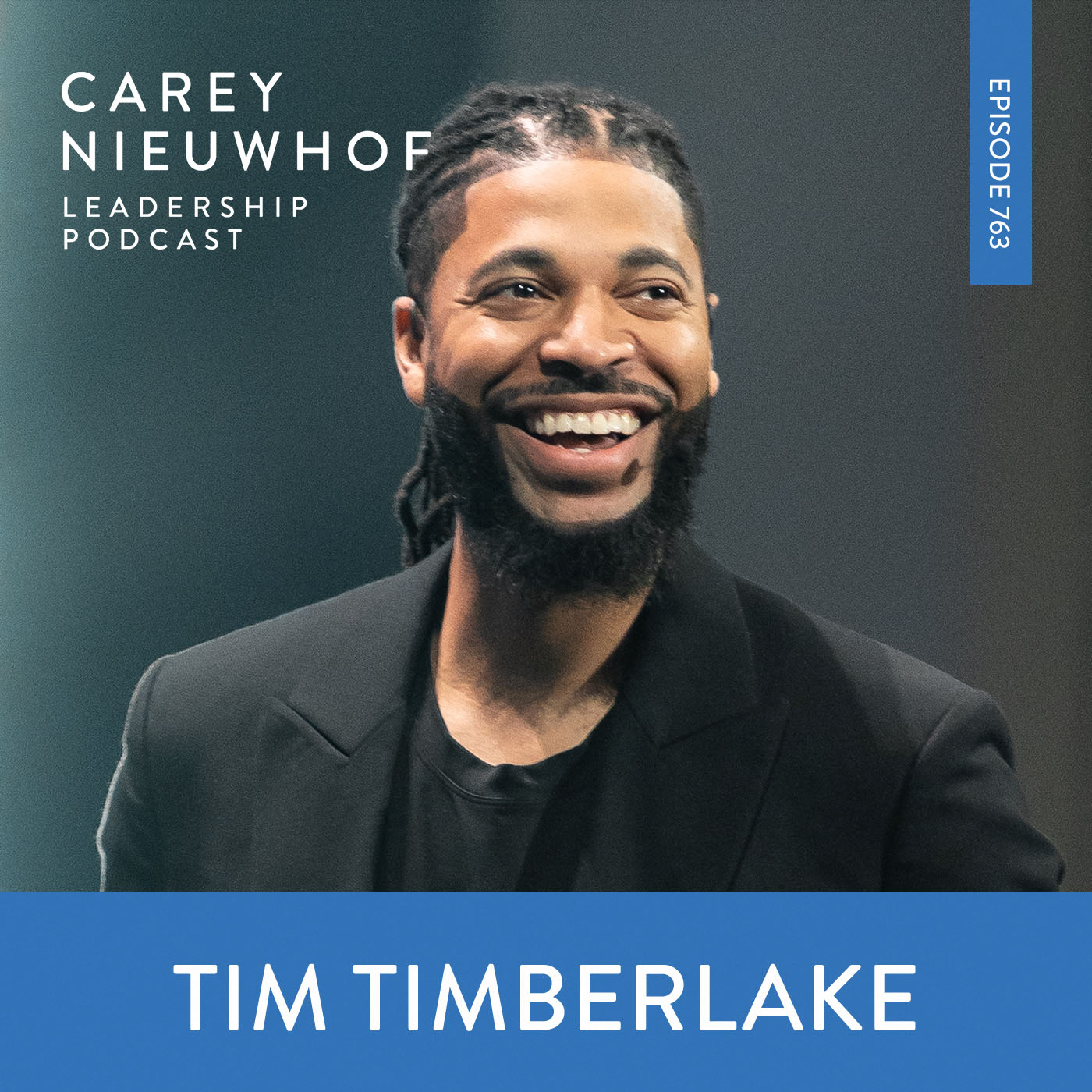
The Carey Nieuwhof Leadership Podcast
CNLP 763 | When Pastoral Succession Hurts: Tim Timberlake on Leading Through Pain and Finding Momentum
01:14:14
Loading summary
Transcript163 lines
- [00:01]
Kerry Newhoff
The Art of Leadership Network. Did you lose friends in that season? A lot of people drop you.
- [00:07]
Tim Timberlake
Oh, man, I lost tons of friends. I lost, you know, most of them were ministry friendships, which, you know.
- [00:13]
Kerry Newhoff
Exactly.
- [00:14]
Tim Timberlake
That's a whole different podcast episode in and of itself. But you know, people who don't know you, per se. People that know your gift and. Yeah. And so.
- [00:28]
Kerry Newhoff
Oh, man. Oh, man, Tim. Yeah. They don't know you. They know your gift.
- [00:33]
Tim Timberlake
They know your gift.
- [00:39]
Kerry Newhoff
Welcome to the Carey Newhoff Leadership Podcast. It's Kerry here, and I hope our time together today helps you thrive in life and leadership. Today we are sitting down with Tim Timberlake to talk about what happens when astral succession doesn't go well. And then leading while bleeding and finding momentum. We talk about pastoral succession. Tim opens up about getting divorced in his 20s, what he's learned about how to lead when it's not going well, and a whole lot more. So he serves as the global senior pastor of Celebration Church, one church with 17 locations. He is a popular thought leader, gifted speaker, and a teacher with the ability to communicate with people from all walks of life. And I am so glad to have him on the podcast. For those of you who are brand new here, welcome. We are really delighted to have you. Particularly, you know, I was revisiting some of our stats. We have so many next gen leaders listening to this. Man, I'll tell you, I am so glad that you're with us. And we hope you will share this with friends and with staff or whoever, because when you do that, the podcast grows. When it grows, we can bring you the very finest guests. So we're going to dive into my conversation with Tim Timberlake in just a moment. But first, a word from our very trusted partners. And now to my conversation with Tim Timberlake. Tim, great to have you on the show finally and to connect.
- [01:57]
Tim Timberlake
Yeah, absolutely. It's an honor, Carrie. Thank you for having me on. Yeah.
- [02:01]
Kerry Newhoff
So I want to go way back and you talk about this. Your grandfather was a sharecropper, and you might have to give an education to our audience on what that is, but he went from living in a one room, literally a one room tin shack, to starting churches and literally changing his family's trajectory for generations. Talk a little bit about your origins, the transformation of your family tree, et cetera. And let's start with what is sharecropping?
- [02:29]
Tim Timberlake
Absolutely. That's a great question. So sharecropping for our audience that does not know or is not familiar, it's kind of one step above a slave and so after they abolish slavery to keep workmen and work women around, they categorize them as sharecroppers. And for the most part, sharecropping was a lot less abusive. You still had some abuse involved. You still had very cheap labor. And what they would do to offset the labor and the work of the sharecroppers is allow sharecroppers to stay on the property in what they would call living quarters for free. And so all the sharecroppers would raise their kids and raise those that were pretty close to the family, that didn't have any family anymore because of a variety of circumstances in this sharecropper's house. And historically speaking, sharecropper homes were a one room, tin roof house. And in the middle of that 10 roof, one room house, there was a potbelly stove that kind of kept them warm. And they would utilize that for primarily everything that they needed fire for. So whether it was heat, whether it was cooking, whether it was to warm up, bath water, that was the primary source of heat in the house. And so my grandfather, he raised his eight children with my grandmother in that sharecropper's house. My father was the oldest of eight, and so he stayed there for quite a while. And as my grandfather was a sharecropper, he got called into ministry in kind of a very odd way. My grandmother was very sick, and they had to rush her to the hospital and found out that she had some type of infection in her lungs. And so they had to remove one entire lung, and they cut her remaining lung in half. And so she lived on a ventilator and life support for the next two days with half a lung. And as doctors were going to take her off of life support, my grandfather asked him if they would give him a moment to go pray. And so he went to the lobby of this hospital and he dropped down on his knees and he prayed to God that he would spare his wife. And if God would spare his wife, then he and everyone that would come through his lineage would serve God. And he got up, Carrie, and went back into that hospital room, sat beside my grandmother, and they pulled her off of life support. And she lived that night, and she lived the next night, and she lived the night after that. And finally she was able to breathe on her own. And they ended up getting her out of the hospital. And she lived until she was about 91 years old. And she was a tough cookie, man. I mean, just tough, resilient, toughest nails. But my grandfather made God a promise and the promise was that if God would spare his life, he and everyone that would come through his lineage would serve God. And so, as my grandmother got out of the hospital, my grandfather started sharing the word of God with people that he worked alongside of the sharecroppers and other people who worked the land that he was working. And eventually that number got so big, they started a church together. And so back then, church was a little bit different. They used to have services, particularly for primarily African Americans in the South. They didn't have a lot of money, and so they couldn't go to church every Sunday. And so church was every other Sunday. So he started a church. They met every first and third Sunday. And because he just felt a call and a demand for the Word of God, he started his second church, which met on second and fourth Sundays. And so the two churches were about 20 miles from each other. And so on first Sunday and third Sunday, he would preach at 1. Second and fourth Sunday, he would preach at the other. And both of these churches began to grow as he began to teach the Word of God. And people started to get transformed and really started to break generational curses and generational chains off of their lives. And so my dad grew up going to those churches and eventually planned the organ for my grandfather. And he felt a call of God on his life, he and my mom. And they ended up taking over a small Baptist church in the same little city that my grandfather was in, called Creedmoor. And at the time, the Baptist church had about 34 members. What ended up happening, they got a hold of some of the teachings from Dr. Oral Roberts in the late 60s, early 70s, and started to hear about the transformative power of the Holy Spirit. And so they started to teach on the power of the Holy Spirit. And the church began to shrink from 34 people. And the only people that were left was about nine praying mothers. And they just began to pray that God would send revival to Creedmoor. And sure enough, God began to change that city. And it grew from nine praying mothers to about 150 people over the course of the next six months. And then that next following year, the church jumped to about 500 people. And it continued to grow exponentially from 500 people to a thousand. And so they outgrew the small Baptist church that they were in and started to develop about literally half a mile down the same street that the church was on, what they would call the Life Center. And this Life center would serve a couple of purposes in the community. One, it would be a larger auditorium to fit the People two, it will be a gymnasium when it is not being used for church to kind of serve the youth in the community, because there was nothing in Creedmoor for youth to do at that time. And they ended up going into this life center. And the church continued to grow. So it jumped from 1,000 to 2,000 and then from 2,000 to about 4,000. And we were having, in that. In that particular life center, five services a Sunday. And they went on global television on a number of different Christian television networks. TvN, Insp. Back in the day, the Golden Eagle Network. And God just continued to grow the church. And people would drive from all over the east coast to come to Sunday services and to hear about godly marriage, to hear how to steward finances, to hear about how to steward families. Well, which in the 70s and 80s, wasn't something that a lot of churches was teaching at the time. And it just began to kind of snowball. And the church in a town of 1400 people grew to about 12,000 people.
- [09:48]
Kerry Newhoff
Where's Creedmoor?
- [09:49]
Tim Timberlake
Creedmoor is right outside of Raleigh, Durham area. So it was considered to be the outskirts, but we call it the countryside.
- [09:58]
Kerry Newhoff
The countryside?
- [09:58]
Tim Timberlake
Yeah.
- [09:59]
Kerry Newhoff
So you're in the South?
- [10:00]
Tim Timberlake
Yeah, we are deep in the South. And growing up, we had one stop sign in Creedmoor and we got a stoplight, and that was like, man, we're turning into a metropolitan city. It was huge news, Tim.
- [10:15]
Kerry Newhoff
I wanted to start there because my first degree is history, political science, and I studied chaircropping. And it's very easy to think, oh, that's a 19th century thing. We're well removed from it. We're so much more enlightened. But the fact that that was your grandfather and your father was shaped by it, the older I get, my parents are Circa World War II. They were born into the war. My grandparents were early 20th century. But I think about how their experiences in Europe during the war probably had an impact on me. Even though I was born in North America in the 60s, that stuff lives generationally. How has that shaped you? Because it is very tempting to think, oh, that's like ancient history. That's Abraham Lincoln. Right. But no, we're sitting here talking today as two people very much alive in the first quarter of the 21st century. And this is in your consciousness and memory.
- [11:13]
Tim Timberlake
Yeah, it shaped a lot about my upbringing. And so my grandfather and I were very close. And my father ended up passing when he was 52, the day after my 18th birthday. And so after he transitioned and went home to be with the Lord, my Grandfather was like my second father. And so the stories that he would share, just even, you know, geographically. The area that we stayed in, one of the larger KKK headquarters, was about two miles from our church. And so we were around this quite a bit growing up. And the south in the 80s and 90s, it wasn't too far removed from intense and severe racism. As a matter of fact, my younger brother, his high school still had segregated proms up until he graduated. And so it was still.
- [12:13]
Kerry Newhoff
That was what, in the. In the 90s? 2000.
- [12:16]
Tim Timberlake
Oh, no, this is. Man, this is 2016. Yeah.
- [12:24]
Kerry Newhoff
Like yesterday.
- [12:25]
Tim Timberlake
Yes. So it's very, very recent. And so there's.
- [12:28]
Kerry Newhoff
Whoa.
- [12:28]
Tim Timberlake
And so we still drive down the street there. You still see a lot of racist rhetoric. You still see a lot of Confederate flags. You still see a lot of that in that particular area. And so it's one of those things where it gives us an opportunity to really share the gospel and the love of Jesus Christ in the face of that kind of tension. And for our church, we opened a school that kind of ran alongside of our church. And so our church and our school served a lot of the community. And in that community, we had an opportunity to serve the grandchildren of some of the KKK leaders. And that, to me, was a very beautiful thing. There's nothing that demonstrates the love of Jesus Christ more than knowing someone hates you, but being able to feed them food and being able to give their grandkids a Christian education so that they know what the love of Christ really looks like. And so it wasn't something that was far off and distant for me, something that was very present in our community and something that shaped who I am today. Hearing the stories of my grandfather, hearing the stories of my mom and my dad, who, you know, growing up, when they heard a car, they knew to run and hide because it was probably driven by someone who wanted to do harm to them. And so understanding that and understanding that, although things have changed drastically, there's still a lot of that tension in the south and in the areas that we grew up in.
- [14:10]
Kerry Newhoff
You're doing ministry in Jacksonville right now, which I think by most accounts, there's sort of a line that goes through Florida. A lot of people would say north Florida is still the South. Would you agree with that? Disagree with that?
- [14:20]
Tim Timberlake
I do. We consider North Florida to be South Georgia. And so there's quite a bit of different pockets in the North Florida area. And there's some of that tension there, but not as prominent and prevalent as it is kind of in the sticks of North Carolina.
- [14:41]
Kerry Newhoff
Yeah. How does that, all of what we just talked about shape your thinking even today? What's the part of that that nobody sitting in my shoes or most of our listeners would really understand?
- [14:58]
Tim Timberlake
Yeah. I mean, raising a young boy who is eight years old, me and my wife, and understanding some of the challenges, some of the difficulties he will face growing up in a world and in a region that, quite frankly, won't like him because of the way that he looks. It gives both me and my wife, who, by the way, is Canadian, opportunity to, you know, steward him, where he sees the love of Christ and knows how to demonstrate that, even against opposition. And so it's something that I think about often, but also from the perspective. I don't want him to grow up afraid. I don't want him to grow up fearful. I don't want him to grow up with this skewed perspective that everyone is against him, because that's not the case. But to make him aware that there will be people that he comes across that will treat him differently because of how he looks. And so it's one of those things that I can't get away from. I can't get out of my skin, and I can't get out of the way that I look. But what I can do is control my reactions and my response. And so I may not be able to control what other people say or do or how they treat me, but I can control what. How I respond and react. And so for us, just making sure that we raise a young boy that knows how to respond and react in the face of adversity, how's that playing.
- [16:29]
Kerry Newhoff
Out in your church, at Celebration Church? You lead a very large church. We'll get into some of the story behind Celebration in a little bit. But when you think about the kind of community you're trying to create, and this is a note for all of us, how do we do a better job of. Because you're right. If anybody has a shot at changing the reality of racial hatred and division, it's the church. If it isn't the church, I don't know what is, because everything else seems to have failed. Right. So how does that impact how you're trying to shape the church that you're responsible for leading?
- [17:06]
Tim Timberlake
Yeah, I think for us, what we are trying to steward is a church that is a reflection of heaven. And a lot of times leaders think, okay, if it's a predominantly black church, if I throw somebody white on stage, it will attract white people, or if it's A predominantly white church. If I throw somebody black on stage, it will attract black people. And that's simply not the case. I think our dinner tables should reflect the church that we desire to see. I think that our relationships should reflect the type of churches that we desire to see. And so if we're not engaging in cultural differences in our homes and in our relationships, then we can't anticipate and expect to see diversity not just in ethnicity, but also in age and our churches. And so that's been one of the things that we have really leaned into over the last three or four years. Being very intentional with our personal relationships, me and my wife Jen, to be a reflection of the church that we want to steward. And I'm that our church is as diverse as it is in both ethnicities and generations. So we serve four generations of people and we have a spectrum of all ethnicities and backgrounds reflected in our church. One of the most diverse churches I've ever seen. And God has allowed us and awarded us the opportunity to steward it. So it's pretty humbling.
- [18:37]
Kerry Newhoff
Why doesn't just putting, you know, if I'm a white lead pastor, why does hiring a black communicator or, you know, an Asian or brown communicator, why does that not change the reality for people?
- [18:52]
Tim Timberlake
I think it doesn't change people's reality most of the time. Now that can work depending on where the church is located, but it may not be sustainable for long periods of time. But the majority of the time it doesn't work because there's still no genuine relationship between that person and whoever is the lead steward or leader of that church. And so if the leader does not engage in meaningful, heartfelt conversations to figure out, okay, what is it that this person has that I don't have that they can offer to a community of people that we desire to be here? If those conversations aren't being had, then it's temporary. And so for a leader, I can only take people to the last place that I've been. What I mean by that is Moses could not take the children of Israel into the promised land because he did not go there. He took them to the desert because it was the last place that he had been. And so if my table does not look like the congregation, community or the church that I want to see, then I will end up taking people back to the last place that I've been. And so I believe that it may be short lived for people to put figureheads or, you know, just people of different ethnicities on Stage, platform them. But if those people don't have the heart of that church, it may end up doing more damage than it does good. And that's what I've seen a lot of times someone. Someone is plugged into a position because of how they look and not necessarily the purpose that God has given them for that community.
- [20:36]
Kerry Newhoff
When you're creating a church that really reflects the community, it means you've got a variety of situations. You've got single people, you've got second marriages, third marriages, recent divorces. You've got all kinds of different people from all kinds of different walks. You've been pretty transparent about your life and your first marriage didn't work out the way you hoped it would. Can you tell us that story and what you learned from it as someone who feels a call to ministry?
- [21:03]
Tim Timberlake
Absolutely, yeah. So when I was 20 years old, I stepped into my first marriage as a pastor and very young and very on fire for Jesus Christ. And, you know, I made the mistake of marrying someone for me and not necessarily marrying someone for my purpose. And what ended up happening was when I got running in my purpose, I was a pretty young lead pastor, 20 years old, leading a church that was a good size. And when I got good into stride into leading that church, my ex wife at the time had no desire to be in ministry, a part of ministry, even to follow Jesus at that particular time. And so it left me in a situation now where I'm leading and stewarding this church. I am having to do so from this position of man. I am bleeding and I am gutted and I am wounded, but at the same time understanding that there's people coming every Sunday that are kind of in the same predicament that I am in. And so I ended up getting a divorce not long after 25. And from that particular point forward, my mentality was I would rather be single than settle. And I want to help as many people as possible to know Jesus and to know that he's a healer, while at the same time understanding that I needed to be healed, understanding that my heart needed to be healed, my emotions needed to be healed. And so I went on this journey, Carrie, for the next few years of therapy and discovering who Christ wanted me to be. And, you know, in doing so, I started to discover there were a lot of people in church and in my community that had walked through divorce. And they came out on the other end pretty fine after season. And, you know, life looked differently. And there were certain aspects of life that looked much better. And after a while When I started to see, man, I'm still here, and God has a plan for me that is still significant, I started to really turn the page in my life and ask God the question, okay, what do you want from me? And I'll be honest with you, when I was asking God that question, marriage wasn't, you know, something I had on my radar. And in 2014, I went to New York and I went there with one of my closest friends. And I was there for my publicist at the time because I had a book coming out, and a friend of mine who I had just met via social media invited me to a conference that they were hosting. And the night before, they had this. This kind of get together for all of the mutual friends that he had invited. And I saw this Canadian girl kind of across the way, and he introduced us. And she started to talk to me about what I did because of the title that my book at the time. And I told her I was a pastor. And kind of in her disbelief and shock, she was like, there's no way this guy's a pastor. You know, he can't be a pastor. He looks too.
- [24:51]
Kerry Newhoff
What was your book called? Which book was that?
- [24:53]
Tim Timberlake
It was called Abandoned at the time and is laying aside your plans for God's purpose. And, you know, it was one of the nights there's those moments in our life, I truly believe this, that mark us, change us, and we never forget them. It was so unexpected, so kind of out of the blue. But I remember the conversation like it was yesterday. And we met, we had a short exchange, and we didn't see each other except for at this conference. And it was probably 1500 people there. And I looked across the aisle to my left, and she was sitting one complete section over, and she was with her identical twin sister. But they didn't look identical because her identical twin sister at the time had bleached blonde hair. So I knew the difference between them, you know, who was who, I knew who was who. And so I was just magnetically attracted to her. And I didn't push it, didn't ask her for her number, anything like that. And we left the conference without exchanging anything, contact information. But all of us were on this group text together. It was about 22 of us. And what ended up happening was two months later, someone in the group text sent out a message asking, where are we coming back to another conference that was being held in New York and would you know it, her and her sister were going to be coming to that conference. Now, the odds of this was pretty, pretty slim because at the time, she was staying in the Bay Area of California, and her sister was back in Vancouver. And so this great migration happened where this group got back together. And as we got back together, man, it was just something special about her. I knew, you know, that not only was it a magnetic draw towards her, but this is someone that I desired to spend the rest of my life with. And so I didn't push it, didn't try to work my plan and lay down some incredible bars of pleasantries. Carrie didn't try to do any of that. And we left New York, and she ended up texting me and asking could she call me. And I told her yes. And unbeknownst to me, she was going through one of the most difficult seasons of her life, and she had tried to get in contact with a few other people, and no one was either picking up or responding. And it was the first time she heard the audible voice of God tell her to text me. And so the first time she hears from God, it's about me, and that's about you.
- [27:48]
Kerry Newhoff
Well, that's a pretty good deal, Tim. Like, not many people get that, man. I did not get that.
- [27:53]
Tim Timberlake
That is how I knew I am a true servant of the most high God. If he would audibly speak to her about me, I must not be doing bad at all. And so he speaks to her. She texts me instead of Colleen. So there's, you know, some subtle disobedience there on her part, but, you know, nonetheless, she was partially obedient. I happened to be up at that particular time because she was on the West Coast. It was pretty late west coast time, which means it was even later east coast time. I'm a night owl, and that night, I just happened to be up praying. And, I mean, it was one of those things that only God could align. And we ended up talking for three hours. She called me crying. She gets off the phone laughing. And I told her when we were getting off the phone, I want to FaceTime you tomorrow to make sure that you're okay. It's hard for me to see that you are okay if I can't see you. And we ended up FaceTiming every single day up until we got married. And outside of Jesus Christ, the best decision I've made in my life.
- [28:59]
Kerry Newhoff
Yeah, that's incredible. I mean, it's great to see that. I want to go back because this is a leadership podcast.
- [29:06]
Tim Timberlake
Yeah.
- [29:06]
Kerry Newhoff
You're not the only leader who's been through a season where you're bleeding how do you lead when you're bleeding? Because that sounded like that might have been a five, six year window.
- [29:17]
Tim Timberlake
Yes, it was a long time.
- [29:19]
Kerry Newhoff
Yeah. So there's some people right now who are bleeding, and maybe it's not their marriage, maybe it is their marriage. Maybe it's whatever. I mean, conventional wisdom would be step aside, heal, whatever. What did you learn about leading while you're bleeding in that season?
- [29:33]
Tim Timberlake
I learned a lot about the power of Jesus in that season, and I learned a lot about how much he cares for us, but specifically how much he cared for me because he would give me the strength to continue to lead. As I was bleeding, as I was going through the various difficulties, the various pains, when I helped other people to stop bleeding in the various situations and circumstances that they were trying to navigate. And to be honest with you, for all of our leaders that are leaning into this moment, there are very few seasons that we're not bleeding. You're bleeding about something, I'm telling you. And so the thing that I had to be very careful of doing, though, I had to be very careful not to teach and preach from a wound. I had to teach and preach from a scar. And so in those seasons where we are bleeding, in those seasons where we aren't in pain, not to utilize those opportunities to bring other people into the wound, but to allow God to heal that area, allow him to provide healing bomb for that area, and then teach from a scar. And so that's what I tried to do in that season, and allow God to work in me and work out of me everything that was not a reflection of him, but I discovered his tender mercy, his care, his love for me in that season. And you know, when you're going through moments and you're going through seasons like that, you often feel alone. Leadership in and of itself is a very lonely journey. But then based upon the compounding pain, you start to look around and ask yourself the question, is there anyone else leading that's navigating pain like this? And that's when it gets even lonelier. And so I had to throw myself into community. I had to keep myself surrounded with godly men and women who had navigated similar pains and similar heartbreak and similar heartaches to just infuse me with hope on a daily and weekly basis and let me know, hey, God did this for me and he surely would do the same for you. And so I would encourage those leaders that are listening and watching right now that may be hemorrhaging and maybe bleeding get to a place that can pour back into you as you pour out into God's people while you're navigating this season. And it's okay to take time for yourself. It is okay to go get healthy. It is okay to go through a process of both grieving what was lost and healing what God desires to renew and to restore. And so as leaders, we don't do that enough. We try to push through it, we try to lead through it. We don't take time for ourselves. And one of the greatest weapons the enemy uses is, is to keep us busy instead of taking time to allow God to heal what needs to be healed. And so I would encourage our leaders that are listening with that. If you need to take time, take it. If you need to take a season where you are absolutely doing nothing but stewarding your soul well and stewarding the process of restoration and health, well, then do that. And there will be great benefits and great seasons have had because of it.
- [33:06]
Kerry Newhoff
When you look back on that five or six year window, or feel free to expand it up to today, what has been, and maybe you hinted at this, the loneliness, but maybe it's not. What was the hardest dynamic to navigate in that season? What was the thing that almost took you under?
- [33:22]
Tim Timberlake
If there was a thing at multiple. I think one of the things that almost took me under mentally and was just burdensome for my soul, not just in that season, but in other seasons before and after, was the loneliness of people pushing you away simply because they did not understand the context of the decisions that I was making. And so sometimes you are lonely because people have pushed you away. And sometimes you are lonely because there are just people that just don't understand the journey that you may be on. And so you can be around people and still feel alone. One of the things that I was asking God, the question, even in a room full of people, is, okay, God, I have these people, but who has me and who is walking with me? Who is on this journey with me? Who is navigating this with me? And it was at that particular time, very few people. And I had family and I had a small group of community, relationships and friendships. But I just felt like, man, I need something different or I need something more that I just wasn't finding. And sometimes it's seasonal. Sometimes God has you in a position and in a place where you are intentionally by yourself so that you can hear who he is making you into being. And for some of us, that's exactly where he wants us. And then for others of us, he has to position us there for a short season to refill us so that we can go out and continue to pour into other people.
- [35:13]
Kerry Newhoff
Did you lose friends in that season? A lot of people drop you.
- [35:17]
Tim Timberlake
Oh, man, I lost tons of friends. I lost, you know, most of them were ministry friendships, which, you know.
- [35:23]
Kerry Newhoff
Exactly.
- [35:24]
Tim Timberlake
That's a whole different podcast episode in and of itself. But you know people who don't know you per se, people that know your gift and. Yeah. And so.
- [35:39]
Kerry Newhoff
Oh, man. Oh, man, Tim. Yeah. They don't know you. They know your gift.
- [35:44]
Tim Timberlake
They know your gift. And when they think that you no longer need them for your gift setting, then they put distance between you and them. And so what I had to find out the hard way is oftentimes people only want you around when you have a need for them, and when that need is no longer of value in their perspective, they put distance between you and them. And so I found out very quickly who respected my gift in that season and who respected me as a person. And so there's something valuable, and this is for those that are leaning into this moment with us. There's something valuable about discovering the difference between you and your gift. And when you discover that you are not what you do. And in that season, I got a revelation of that. I got an understanding of that. I'm not what I do, and I value what I do. I honor God for the gift that he's given me of what he is asking me to carry out. But who I am is not what I do. Who I am at the very pinnacle of who I am, I am a son of God first. I am a son of God first. That is who I am. The second thing I am, I'm a godly husband to my wife. The third thing I am, I'm a great father to our son. And then everything after that is viewed from the perspective of sonship. It's viewed from the perspective of leadership in my home. And that gives me the opportunity to operate in the purpose and the gift that God has placed before me of leading other people. And so if I'm not leading myself to the feet of Jesus to know myself as a son of God first, then I will always look for my identity in the things that God has allowed me to place my hands on. And that's fleeting. And so the relationships that were in my life at that time, based upon what I did and how well I did it, all of those relationships were gone. Yeah.
- [37:48]
Kerry Newhoff
Today's episode is brought to you by the preaching cheat sheet. So, preachers, I'd love To know if you can relate to this. Okay, it's Thursday night. Sunday's message still isn't coming together. I mean, you can even start early and it's not quite right. Right. The pressure is building. It's hard to decide what to add, what to cut, how to tie everything together. You want some family time. And you know, by the time Saturday rolls around, you're just gonna have to call it as it is. Even if you're second guessing some of your message. Well, that's where my ten step preaching cheat sheet can help. It's your quick check guide to ensure you've got an engaging, clear and memorable sermon ready for Sunday morning. From your opening line to landing the plane at the end of your sermon, and every step in between. You can use the 10 steps during sermon prep or even to start or to finish your message, whatever you want to make sure you are ready to deliver an impactful message every single time you preach. And the big news is I've just released a brand new version of the cheat sheet. So if you've downloaded it before, be sure to get the new version in your hands. We got a lot of feedback. I improved it. Still. Basically the bones are the same, but it's gonna be even better. Okay, you can download your copy for free by clicking the link in the description of this episode or by visiting preachingcheatsheet.com Again, that's preachingcheatsheet.com to download your copy for free or. Or simply click the link in the episode of this description wherever you're listening. So you learned that Lesson in your 20s?
- [39:13]
Tim Timberlake
Yes.
- [39:15]
Kerry Newhoff
I think that there are a lot of people. I am learning that lesson. I'm not what I do. But it's very tempting, particularly if you do something that you really love and it's gone well. It's very hard to separate who you are from what you do. That's just. It's almost like administrative into the mix. You got a holy toxic cocktail.
- [39:38]
Tim Timberlake
Absolutely.
- [39:39]
Kerry Newhoff
Because it's so confusing, I want you to play a game of extrapolation. So I want you to imagine that you hadn't learned that lesson at 25, 28, whenever it really began to sink its teeth into you. Fast forward to where you are now. Who might you have become? What might have happened to you if you didn't learn that lesson between who you are and what you do in your 20s?
- [40:03]
Tim Timberlake
I think I would have become a person that was driven by outward success, would have buried myself in ministry because that's where my identity would have been. Rooted, I think that I would have become a person that was a people pleaser because to a person that is really lost, having other people affirm who they think you are is pleasing. I think I would have become a person that believed that comfort and convenience was covering, when in fact it is not. And so I think that that could have been who I had become as a leader that God has allowed to serve other people. And I'm so glad that that was not the end result. And I'm so glad in a very beautiful way that I encountered, I stewarded and went through the pain early in leadership that I went through because it prepared me for other pain points on this leadership journey.
- [41:20]
Kerry Newhoff
What have some other pain points been.
- [41:22]
Tim Timberlake
For you since then on record today? I was probably a part of, along with my wife, one of the worst church transitions in church history.
- [41:37]
Kerry Newhoff
Well, I wanted to go there, so let's go there. Yeah, let's talk about that. We're an open book. We're taking notes.
- [41:43]
Tim Timberlake
And so, I mean, just historically speaking, and you know this because you are a historian, I have not seen a transition go this horribly bad before in modern history. I'm sure there are other scenarios and cases of worse than what we have had to navigate in Stuart, but when you think of drama, when you think of all of the things that could have gone wrong, they happen and unfolded in our.
- [42:20]
Kerry Newhoff
I did a bit of research getting ready for this interview on it because I missed it when the news cycle was fresh. I live in a bubble, I guess. But my goodness, do you want to give us for those who may not be familiar with the situation without, you know, this isn't a place I like throwing people under the bus, but I like naming the issues and, you know, the difference, right. With. With, you know, what, what happened. Because it's. It is crazy.
- [42:44]
Tim Timberlake
Yeah. Yeah. You know, Harry, I still kind of scratch my head and ask myself that question, but what happened? Yeah, I think, you know, I. I think that a part of what happened was the loss of identity for the founders of the church that.
- [43:05]
Kerry Newhoff
So they had led the church for how many years? It was decades, right?
- [43:08]
Tim Timberlake
Yeah, it had to. Had been at the 19 years. I think that they hit a wall and could not get past that and hit a level of leadership burnout that they were not expecting and anticipating and felt like they just could not take the church forward. And so they prayed about who God would desire to take the church forward. They both heard from God that it was both me and my wife. They reached out to us and asked us Would we consider transitioning the church? And originally we said no. We had no desire to do that. We were fulfilling the call of God at that time in North Carolina, at the church that my parents started.
- [43:57]
Kerry Newhoff
Right. And were you the same stream? Like, same not denomination, it's non denominational, similar. Were you in similar circles?
- [44:07]
Tim Timberlake
Yes and no. And so we had some mutual friends and acquaintances, but hadn't spent a lot of time together. We had been probably aware of each other at that particular time for about a year.
- [44:27]
Kerry Newhoff
But you got invited into it. This wasn't, hey, the elders called, here's a mop, here's a bucket, clean it up. This was supposed to be a seamless succession.
- [44:37]
Tim Timberlake
Absolutely. And unbeknownst to us, no one else knew about this succession plan on their leadership team or their board.
- [44:46]
Kerry Newhoff
So the board didn't know, leaders didn't know, church didn't know.
- [44:50]
Tim Timberlake
Yeah. So we just, we, we were told this, you know, had been prayed through and, and kind of bounced around this leadership team and what ended up happening, we got invited to come and speak there. And so while we were there, just kind of doing a little observation, and the people that were hosting us were pretty close to us. And so we're just kind of asking them, you know, how are you guys feeling? How are you guys processing? And they were completely unaware. They're like, we don't know what in the world you're talking about. So I was like, okay, that's a pretty big red flag, but not big enough in my spirit to the point where we were going to say no. And so what we committed to doing was praying through it over the next year. And we prayed through it for six months. Didn't hear anything, didn't sense anything, didn't feel anything from God. And it wasn't until about the nine month mark that we both, me and my wife, had this uncommon peace. And I remember I was upstairs, she was downstairs, and I kind of came downstairs, and my wife's name is Jennifer. I call her Jen. I said, I have this uncommon peace about Jacksonville. And she said, you know what? I was praying I have the same peace. And our prayer was that God would give us an undeniable sign that this is what he wanted us to do. And, you know, at that particular time, I had walked with God long enough that if he gave us that level of uncommon peace, then he would give us direction and clarity to follow. And sure enough, God just started giving us undeniable signs and undeniable things that we knew were kind of God winks that this is what he wanted us to do. And so we moved down to Jacksonville. And, you know, I joined the staff in 2013. Both me and my wife were leading the Jacksonville location. And then Covid happens. And so everything kind of gets shut down in the States. For a period of time, we were in Florida. And so Florida is like a different country in the U.S. yeah, it is. It's just a different beast. And so we weren't shut down that long, but by the time we started gathering again, the only communicator at the time that people had seen was me. And so, you know, it was just a completely different church. The landscape of church was just completely different for all pastors and leaders that navigated and had to steward culture. And so you throw.
- [47:30]
Kerry Newhoff
So you've been the exclusive communicator during the shutdown.
- [47:33]
Tim Timberlake
Absolutely. And so, you know, you throw that on top of transition. It is just a completely different.
- [47:40]
Kerry Newhoff
And was the transition happening then when you moved down or how it was.
- [47:44]
Tim Timberlake
Supposed to happen, but then.
- [47:45]
Kerry Newhoff
Oh, so it hadn't happened yet.
- [47:47]
Tim Timberlake
It was no transition. They didn't see the former founders until two years later. And that was once before the official transition service, which was in September of 2022.
- [48:03]
Kerry Newhoff
So two years radio silence from the founders, no public presence. You're kind of just, as they'd say in law, de facto, without the title, without the whatever, without the announcement, you're just functioning as lead pastor. Yeah, for two years.
- [48:19]
Tim Timberlake
Two years. The transition service. Transition service.
- [48:21]
Kerry Newhoff
All right, let's pick up the story now. Yeah, stay tuned next week. Yeah.
- [48:26]
Tim Timberlake
So that happens. Transition service happens. They set us.
- [48:33]
Kerry Newhoff
End of 2022.
- [48:34]
Tim Timberlake
Transition in the end of 2022. They set us in as senior pastors with the board leaders of the church. A very public service, as a matter of fact, still on YouTube today.
- [48:50]
Kerry Newhoff
Wow.
- [48:52]
Tim Timberlake
And then that December, I'm not sure kind of what happened, but something happened where they decided. They never said that they were transitioning out of leadership. They never said that they were stepping away from the church, despite the fact.
- [49:15]
Kerry Newhoff
That the service had happened. Still on YouTube, public declaration, I'm telling.
- [49:20]
Tim Timberlake
You, very public transition service. Very public statements, very public decisions. And so it got to a point where they started to try to remove board members from the board so that they could regain control of the church again. And so the board at that particular time opened up an investigation and found out that there had been money misappropriated by them for quite a period of time.
- [49:53]
Kerry Newhoff
By the founders or by the incumbents. Yeah.
- [49:56]
Tim Timberlake
And so after that happened, then they decided to sue the church for defamation for releasing that information that we had to inform the church of. We are new pastors. This is a board that carries themselves with integrity, godly character. And so we, me and my wife just kind of stepped out of that, let the board end with that so that it wouldn't become an us versus them type of situation scenario. And men, they just begin to put the metal to everything that they could to try to tear that church apart. And, you know, by the grace of God, on the heels of COVID you know, people started to see the difference of what they were saying and what they were seeing. And our instructions from God was just continue to teach the word of God, let the board steward the church well, stay out of all of the nitty gritty legal things so that we could focus on loving the people. And every single day for an entire year, it was the number one news cycle in North Florida. And so for context, it had been the first time the Jacksonville Jaguars had made the playoffs since 2017, 2018 season. And it had, you know, more engagement, more news cycles than that. And so, you know, it was one of those things where we just had to turn the news off, focus on what God desired to do, focus on people that we were stewarding, the people that we were leading, and try to do so with the heart pure, enhanced, clean. And God continued to send people, and God continued to allow us to serve his people well. And a bunch of people left and a bunch of new people came. And now we're in a season where a bunch of the people that left the church just because they didn't know what was true, what was a lie, you know, are coming back. And the church is the way it always goes. The church is healthy. It's. It's thriving. We are growing at an extremely, extremely fast and healthy pace, which is a very beautiful thing to see because our prayer through it all is, God, please don't allow people to get lost in the cracks through he say, she say kind of scenario, but allow your truth to prevail. So not even my truth, not their truth. Allow your truth to prevail. Allow your word to be the final say, and whatever you decide, that's what will follow. And we've just seen God be faithful and restore dignity to his bride.
- [52:56]
Kerry Newhoff
I have a thousand questions, Tim. Thank you for sharing that the way you did. Were you tempted to get in the fray to say, this is not true? How did you know? Where was the line between keeping your head down and just preaching next Sunday or getting Involved in the melee for you? Where, where was that line?
- [53:18]
Tim Timberlake
Yeah, I think because we, you know, me and my wife, we've encountered a lot of pain over the course of life. And so for me, a lot of the pain that I encountered, a lot of the dumb decisions that I have made were prior to coming to Christ, being in the streets and being a very angry young man growing up and being very angry with God and being a teen that wanted to do everything he could to make God angry with him. And so, you know, having lived in those seasons and having outlived the things that tried to kill me, you know, church politics and church riffraff really didn't move us. And so I never was tempted to kind of go back and forth and say, no, this is actually what the truth is. You know, the thing that God instructed us to do is just keep your head down, focus on the people, love the people, continue to teach my word. And that was our focus and that's what we did. And you know, as I mentioned before, people begin to see very quickly between the truth and the lie. You didn't have to say it, didn't have to say it, didn't have to preach about it, didn't have to teach a series on it. Just continued to do what God had asked of us to do. And we started to see our staff get really, really healthy. And you know, most people don't know this. I'll share this here on this podcast. All but two people on our staff right now are new hires. Everyone else had been there, you know, at least 10 years.
- [55:06]
Kerry Newhoff
Not a surprise.
- [55:07]
Tim Timberlake
Yeah, so yeah, it's just surprises that.
- [55:12]
Kerry Newhoff
Two people are still there from the previous era. That usually is a wholesale trans turnover.
- [55:19]
Tim Timberlake
I mean, the 98% of our staff has been there 10 years or more. And so to see them get healthy and to see them.
- [55:30]
Kerry Newhoff
Oh, sorry, I got it backwards. Most of your staff are long term staff.
- [55:33]
Tim Timberlake
Yeah, absolutely.
- [55:34]
Kerry Newhoff
Oh, sorry, I misheard it. I must have oral dyslexia. Oh, that is a surprise. That is a surprise because 98% of the time it flips. You got a whole new crew you're running with 100%. Wow. How did that happen?
- [55:51]
Tim Timberlake
We just started to discover, man, there's some gold on this staff that has been undiscovered. People in places and in positions that they should not be in and they could thrive in this position. And this is actually what they're calling and their gift setting is. And this is what we've discovered about them because we spend time with them and you Know that to us was a very beautiful journey with the staff. And as our staff got healthy, so did our church. And you know that true.
- [56:28]
Kerry Newhoff
Healthy at the top, healthy throughout. I'm telling you, dysfunctional at the top.
- [56:32]
Tim Timberlake
You're going to get dysfunctional 1000%. And that's what we are seeing. We are seeing them able to love and steward people well because they have been loved and stewarded well. And it's a very beautiful season of ministry and leadership that we're in right.
- [56:53]
Kerry Newhoff
Now at the height of the conflict, which everybody in leadership would hope would be one day. But it sounded like it went on for about a year, maybe longer, maybe a bit shorter, but it was not.
- [57:03]
Tim Timberlake
It's still going on right now. Okay? Absolutely. Still.
- [57:09]
Kerry Newhoff
All right.
- [57:10]
Tim Timberlake
Suits lingering. You know, we, we've been very, very blessed that every defamation lawsuit has been thrown out of court. And you know, it's been one of those things that has been heartbreaking that we have to navigate. Heartbreaking that it has happened to our community. But at the same time, you know, we will do our part as shepherds to make sure that the Bride of Christ is stewarded well. And so, yeah, we're still navigating it, but we're coming out of it with victory in Jesus name on your bad.
- [57:49]
Kerry Newhoff
Days, because we all have bad days.
- [57:50]
Tim Timberlake
Absolutely.
- [57:51]
Kerry Newhoff
What goes on inside you and how do you pull yourself back from the edge?
- [57:55]
Tim Timberlake
It's been a long time since I've been angry and really I can't allow myself to go back to that place. Moments of frustration, for sure. But on those frustrating days, what I have to do, I have to spend time in worship. I have to spend time in the Word. And then, quite frankly, I just need to spend time with my wife and my son. You know, they're reminders to me that life is far greater than these difficulties and these moments of pain and these moments of frustration. And I am constantly reminded that they are my first ministry. And so the church is not my first ministry, they are my first ministry. And as long as I keep my hands clean, my heart pure, my spirit refreshed through the word of God, my soul revived, he's spending time with them, then that frustration is short lived for me. And it helps to refocus me and it helps to keep me grounded in the purpose and the plan of God.
- [58:52]
Kerry Newhoff
What does that kind of controversy and division and opposition do to a congregation? What have you seen happen to the body of Christ?
- [59:03]
Tim Timberlake
Yeah, and I want to be very careful not to generalize it, but I know for us Specifically, it broke a lot of people, and it hurt a lot of people. A lot of people.
- [59:14]
Kerry Newhoff
Like you see mom and dad fighting.
- [59:15]
Tim Timberlake
Absolutely.
- [59:16]
Kerry Newhoff
Or the parents and the kids fighting.
- [59:19]
Tim Timberlake
Yeah. And so it hurt a lot of people in our context.
- [59:23]
Kerry Newhoff
Yeah.
- [59:24]
Tim Timberlake
And a lot of people left. A lot of people were leaving before we came as well, from a number of different decisions that were made that were hurtful. And, you know, and so when we got there, the church was already hemorrhaging. And so we find ourselves kind of being like captains on a ship that had multiple holes in it. We're just kind of trying to patch this up and hold this leap.
- [59:49]
Kerry Newhoff
Yeah, yeah, yeah.
- [59:50]
Tim Timberlake
You know, so we were pretty stretched out pretty early on, but we just had a resolve given to us by God that he was going to do the things that we could not. And we've just seen. And I know I keep kind of going back to this, but we've just seen the faithfulness and the goodness of God in this regard with his bride. And one of the greatest things that we learned pretty early on in this conflict and in seasons of pain is that the church that we steward is not ours, it is God's. And he will do what he does with his bride. And our job is not to carry the weight of that. Our job is to distribute the weight back to him. And he told me something that changed my life. It changed the way that I lead. And it was a statement that said, you can either cast or cares or you can carry them, but you cannot do both. And so every time I feel a care, I try to cast it and I carry it. And it's a friendly reminder to me that I am not God. He is. And he will work through everything that needs to be worked through. And all I have to do is be obedient, and I'll see him and his hand at work in and through my life.
- [61:09]
Kerry Newhoff
Pastor Kerry, that'll preach. Wow. Do you question your calling?
- [61:15]
Tim Timberlake
Never. Church never.
- [61:17]
Kerry Newhoff
No. You don't?
- [61:18]
Tim Timberlake
Never.
- [61:18]
Kerry Newhoff
Why not?
- [61:19]
Tim Timberlake
Because I know what he told me. I know where he called us.
- [61:23]
Kerry Newhoff
But you didn't have this picture in your head when you answered the call.
- [61:27]
Tim Timberlake
Yeah. No. But that's what gave us the resolve to stay. So even though I could not see, I know what he said. And what he said led me through what I could not see. And so, you know, even now, I don't know how, you know, this will or when will it end, but I do know that he is going to work it out and for us to stay the course and for us to continue to be faithful and diligent in what we are doing and what we're stewarding. Because he gave us a word that we have to carry out. And so when we get a resolve like that in a word from God, regardless of what's happening around us, I just know what he's spoken to us and in us. And that's something that I cannot shake. So no, never question once.
- [62:18]
Kerry Newhoff
Tim, I talked to a lot of leaders who are in your position and circumstances and facts and stories are different, but basically they end up taking over from a long time person pastor and they end up with a mop in a bucket. The ship was sinking already a little bit. Things aren't exactly. The financial disclosure wasn't accurate. Attendance numbers were exaggerated. They're there now, they're young and they're trying to rebuild momentum and trying to find a mission. What advice do you have for them? How do you rebuild momentum in a situation like that?
- [62:55]
Tim Timberlake
I would say slowly is the fastest way to get to where you think God is calling you to go. And you know, we didn't rush to make any changes. We still haven't rushed to make any changes. We've been very slow. And something I think that we don't hear enough of in leadership is the word Godspeed. And a lot of times we hear good practices, we hear great systems, great, you know, operational ideas. But any of those things that are implemented outside of God's timing still won't work the way he intends for them to work. And so I think there's something supernatural about God speed. Moving at the speed of God through obedience. Even if it means that you are moving at the pace of a snail, you're moving super slow. You're moving at a speed that's uncomfortably slow. I think that when we do that in obedience, we see God do something that only he can take the credit for. And that is the case with our church.
- [63:59]
Kerry Newhoff
When you look at all the people who are showing up, what are they telling you? This is the church that's been in the news now for years. And when you're in the headlines, it's never positive. You might get that one press release that gets published on page 97 of something. It's like church is growing out at a location, right? Otherwise if you're on the front page of your headline, dude, it's not good news for sure. So you've got all this bad news and you got lots and lots of people coming to Christ. What are they telling you?
- [64:29]
Tim Timberlake
A number of different things. But one of the common things that we get is when people walk through one of our locations, they say they feel loved and they feel valued. And so a leadership principle that I learned from my parents very early on is the word may bring people, but it's the love that keeps people. And so as long as we can continue to model the love of Jesus Christ and really meet, engage, and steward people where they are and lead them to be more in tune and deeper in love with Jesus Christ, I think that's the transformative secret sauce that we have an opportunity to see God do miracles through. And so it's not, you know, the worship. It's. It's not even my preaching or teaching. It is the love that people feel. And so I think for our leaders that are listening, if you want to grow a healthy church, then love people into health.
- [65:38]
Kerry Newhoff
Tim, this has been so helpful, and I just want to thank you for your transparency in the midst of all of it. It went in a lot of surprising places. What is one question you wish somebody would ask you that nobody ever asks you?
- [65:51]
Tim Timberlake
That's a great question, Carrie. I think one question that I wish someone would have asked me that no one has or typically doesn't ask.
- [66:07]
Kerry Newhoff
Is.
- [66:08]
Tim Timberlake
Why do I lead the way that I lead?
- [66:11]
Kerry Newhoff
Well, let's go there. Why do you lead the way that you lead?
- [66:16]
Tim Timberlake
I lead the way that I lead because I want to lead people. I was not led. And the reason I say that is because I never experienced the pastoring of my parents. They were great, great, great pastors, but they were my parents. And so they led us from mom and dad. They led us from that posture, and they were far greater parents than they were pastors, in my humble opinion. And then after my dad died, I really didn't have that pastor.
- [66:55]
Kerry Newhoff
Why do you say that they were better parents than pastors. What's behind that?
- [66:59]
Tim Timberlake
They prioritized us over a church. They prioritized themselves, their relationship with each other over people. I never had to compete with members of our church, me or my siblings, because we knew within our heart of hearts that we were our parents priority, and we got an opportunity to go on a journey with them as they pastored the church and as they stewarded people. It was never, we're going to pastor the church and we're going to parent you. It was just us, and we were on the journey with them. And so they were greater parents than they were pastors, and they were phenomenal pastors. To give you kind of a bird's eye view into both of my parents, I never saw my father raised his voice. I never saw him do anything outside of steward his life from the utmost integrity and character. My mom was tough as nails, resilient. First African American female to be on global television teaching and proclaiming the gospel of Jesus Christ. But there were even greater parents. I mean, just phenomenal, just phenomenal parents.
- [68:15]
Kerry Newhoff
So beautiful to hear because usually you hear the opposite. Great pastors, not so great at home.
- [68:20]
Tim Timberlake
And so they. They set the bar pretty high, you know, for. For us. And after, you know, my dad transitioned, I just didn't have that male figure in my life that was a pastor and could pastor me. You know, my grandfather, he was more like a father figure to me, but not my pastor. And so it wasn't until some years later that I met my pastor and the person that I talked to almost on a daily basis that does an incredible job of both fathering me spiritually and he's like a father to me physically. And so, you know, for me, I wish someone would have asked that question, why do you leave the way that you lead? And it's because.
- [69:09]
Kerry Newhoff
Why?
- [69:10]
Tim Timberlake
There was a large gap in between, in between my dad dying and when I met my pastor that I just felt so alone and felt like I had to discover and figure things out kind of on my own from that male's perspective.
- [69:30]
Kerry Newhoff
And so you lead differently how? Because of that gap and because of that experience?
- [69:35]
Tim Timberlake
Yeah, very hands on, very shepherd, like, so very close to the sheep. And, you know, one of our prayers for our church as it is growing is that we would not just be figureheads that communicate the gospel, but live it out in community with the people of our church.
- [69:58]
Kerry Newhoff
How do you do that at scale? I mean, when you have 50 people, it's not that hard. When. When you got thousands is hard. How do you do that at scale?
- [70:07]
Tim Timberlake
Well, we don't isolate ourselves from them. And what I mean by that is, so every Sunday after each one of our services, we're in the lobby, we're at the altar, we are praying with people, we are talking to people. I have given my cell phone number out publicly to our church, the entire congregation. If you got a question, text me, I'll respond to you. And so I'll block off time every single week to respond to as many text messages as possible because I want people to know we don't just care about them coming to church. We want to bring the word of God to them. We want them to feel shepherded. We want them to know that we genuinely love them and not just what they can do for the church, but this is what the church and Jesus can do for you. And so if Jesus being God in the flesh, I mean, all powerful, the most magnetic leader in leadership history, walked with people, who am I to think that I'm above that? If he lived his life in community, why can I? If he had the power to heal, and I do not. If he had the power to resurrect Lazarus from the dead, and I do not. If he had the power to open up blind eyes, open up deaf ears, and I do not, I come in his name, why can I model my leadership after him? And, you know, there may be pastors that are listening to this right now that have large churches in it. Like, I just simply can't do that. I would encourage those leaders to take the time to do it as often as you can. And it will not just change the church, it will change you. It will change the way that you lead. It would allow you to keep your finger on the pulse of humanity and stay connected to the sheep that you are shepherding.
- [71:57]
Kerry Newhoff
Can you get to all of those texts when you block time off or what do you do with those you can't respond to just because of volume?
- [72:04]
Tim Timberlake
Oh, no, we get to all of them.
- [72:05]
Kerry Newhoff
Yeah, you get to all of them. Okay. Every.
- [72:08]
Tim Timberlake
Every single last one of them. And we oftentimes are the last people in our church because we want to spend time praying for and walking with people. You know, one of the things that I think we fail to realize, you know, the messages are great, they're the word of God, but walking it out is even better. And so people will remember us praying with them in the lobby far more than they'll remember my last point that I made and last of this message. It's true. And so that, to me, is the greatest application.
- [72:41]
Kerry Newhoff
Well, you and Bob Goff, you've got a real narrow category of people who give out their phone numbers to lots and lots of people.
- [72:49]
Tim Timberlake
He's one of the people that I got that idea from. I was like, man, how does Bob respond to all these people? He puts it in the back of every single one of his books. And he's sold millions of dollars.
- [72:58]
Kerry Newhoff
Sold a couple of books, yeah.
- [73:00]
Tim Timberlake
So if he can do it, so.
- [73:02]
Kerry Newhoff
Can I. Tim, that's amazing, man. You got a new book. It's called the Bumpy Road to Better. If you enjoyed this interview, leaders, you're going to enjoy the book. Some of what we talked about is in there. A lot we didn't touch on is in There and it's a very honest, you know, I appreciate your transparency so much and Tim, I'm really delighted to have this conversation. Books available everywhere, right?
- [73:27]
Tim Timberlake
Everywhere, Yep, everywhere.
- [73:28]
Kerry Newhoff
Books are sold and if people want to connect with you, where, where can they find you? On the Internet, Tim.
- [73:34]
Tim Timberlake
Timberlake tv. And you'll see my number at the top and you need anything, text me.
- [73:41]
Kerry Newhoff
That's amazing. That's amazing, Tim. All right, man. Well, listen, thank you so, so much. I appreciate you.
- [73:49]
Tim Timberlake
Thank you, Carrie. It's been a pleasure and look forward to doing this again.
- [73:52]
Kerry Newhoff
Yeah, me too. Me too. Really appreciated that. That was my first conversation connection with Tim and he was just so open, so real, so transparent. I'm incredibly grateful for that. If you want show notes, well, where will you find them? You will find them in the Art of Leadership Academy. Man, you guys have been moving from the crowd to the core so quickly. We have, I think we are at like 3,500 at the beginning of June members. We now have almost 13,000 who have jumped into the Academy. It's free. You don't just get the show notes, you also get some webinars from me, free content, a chance to discuss every episode, and some really like minded church leaders. None of the clutter or the junk that you find on usual social media these days. We curate who's in the Academy very carefully. So we'd love for you to join us. Just go to theartofleadershipacademy.com, sign up for a free account. Of course, there's a lot more beyond that too, but we would love to see you in there next episode. We got Bobby Gruenwald. I love talking to Bobby and you know, a billion downloads on YouVersion, but we talk about AI and can Christians trust ChatGPT. Bobby says not really. Also coming up, Tom Raynor, Andrew Stanley, we've got Dr. Carolyn Leaf, J.D. greer, N.T. wright is back. Man, you guys love NT. So do I. And a whole lot more. Thank you so much for listening, everybody. Wherever you found yourself, at the gym, on the road, maybe raking leaves, I don't know. Where have you found yourself? Really glad you joined us today and I hope our time together today helped you identify and break a growth barrier you're facing. Hey, before we go today, just a quick word. Let's be honest, at a certain point, hustling harder doesn't help. You probably hit that wall, right? I'm not sure about you, but when things aren't going particularly well or growing particularly well and I'm stuck My gut reaction is just to double down and go harder. But what I've learned over time is you know what I need? I need an outside perspective. I need other voices to help me figure out what am I not seeing. Is there a better system, better strategy? Where are my blind spots? And you know what? You only learn from others who have been there. And that's why I created the Art of Leadership Academy. It's an online community of growth minded leaders. It's growing every day and it's a very focused space where you can grow faster and lead more effectively. Now you'll get stuff like show notes for every episode, but even better than that, you get some quarterly free webinars with me, you get real dialogue with other church leaders. It's a troll free. I'm gonna say it. Weirdo free environment. Okay? You're not gonna get the kind of stuff you get on social media. We moderate the content very carefully and the community. So if that sounds like something you'd benefit from, real leaders trying to make real progress in real churches, I would love for you to join in. And you know what's super cool? You're gonna find people who are a step ahead of you, and you're gonna find people who are a step behind you. The people a step ahead of you are gonna help you. The people a step behind you, well, you can help them. And I'm in that community on a daily basis. So if that sounds like something you would love, it's totally free. No gimmicks, no tricks. Just sign up today. Visit theartofleadershipacademy.com or click the link in the description of this episode. A few clicks, you're in and I'll see you on the inside.