← The Carey Nieuwhof Leadership Podcast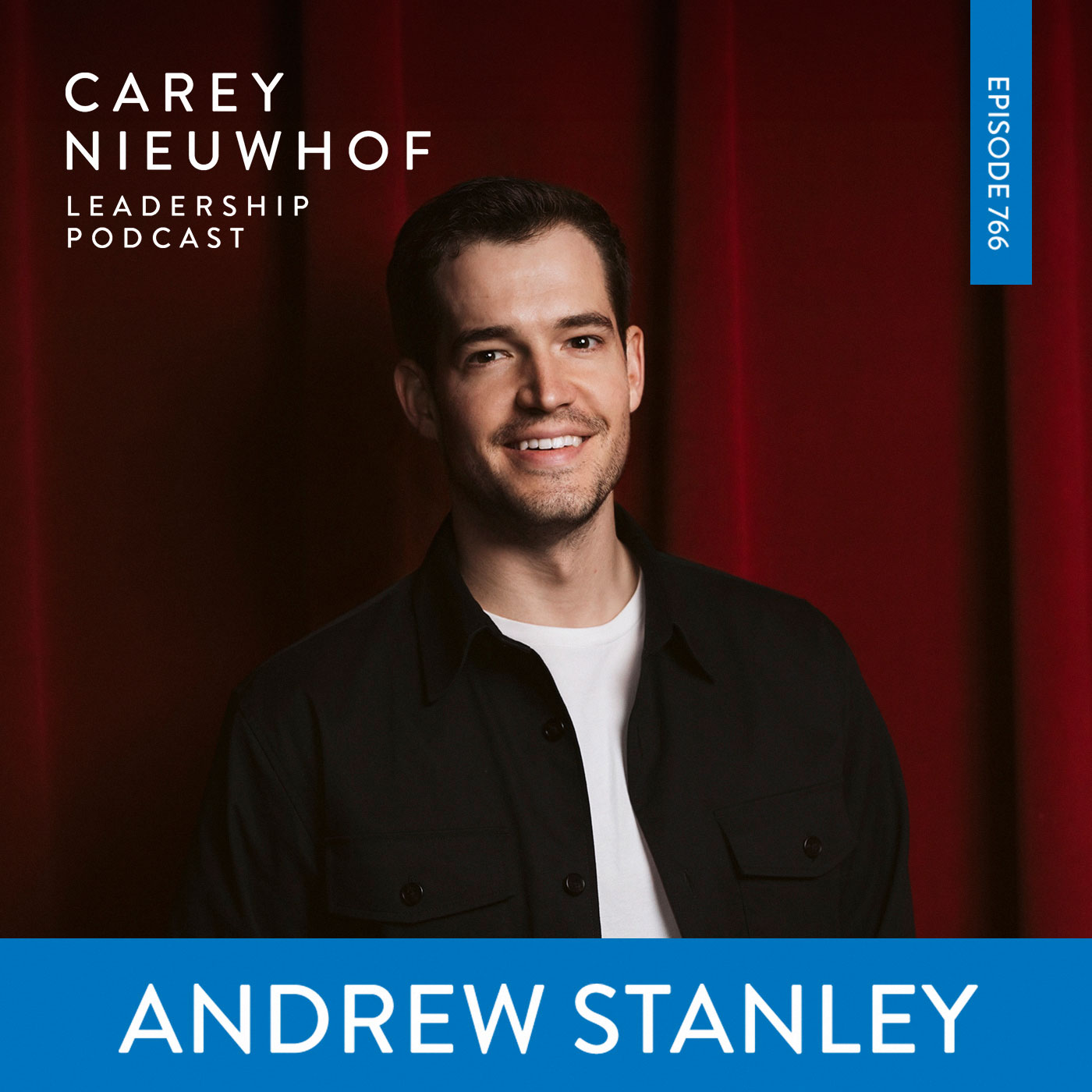
The Carey Nieuwhof Leadership Podcast
CNLP 766 | Rising Comic Andrew Stanley on Resilience, Bombing, and Finding the Punchline
00:39:39
Loading summary
Transcript104 lines
- [00:01]
Andrew Stanley
The Art of Leadership Network. You're just constantly going on stage and you don't get to practice in the garage like a musician and bring it out when it's ready. It's. You're constantly building it in, you know, low stake environments. You're still performing in front of people. But I'm going to the Laughing Skull open mic in Atlanta for four minutes to try three new things. If it doesn't go well, I go cool. Yeah, it's not supposed if it's going well all the time, I'm not taking enough risks. So I'm almost building into my content generation. Like I'm supposed to fail this amount.
- [00:35]
Carrie Newhoff
Welcome to the Carrie Newhoff leadership Podcast. It's Carrie here. I hope the fall is treating you well. Can you believe 2026 is almost over? I cannot. This was a different kind of year, so we thought we'd bring you some comedy today. I love studying comedians and I have them on here from time to time. John Crist is coming back on the show soon, but I sat down with Andrew Stanley. Not Andy, but Andrew. And if you've followed his work, a lot of people in the church have, you know what a brilliant comedian he is. And if you haven't, well, you're really going to enjoy it. We talk about clean comedy, his journey as a preacher's son who studied finance and accounting and how he actually got out and how he has risen to perform with people like Colin Jost, Leanne Morgan, John Crist and others. And I mean, he just started this a few years ago, so I think you're really going to enjoy this conversation. You can hear Andrew regularly on Sirius XM Radio. He was selected as the new face of comedy at Montreal for y' all's very prestigious Just for Laughs comedy festival. He appeared on Nate Bergetzi's the showcase in 2023. And his parents are still alive, as he says, so he still works clean. I think you're really gonna like this. Hey, I know a lot of you are preachers and I can talk like this for 40 minutes, no problem. I can give a message, a keynote. I can write a book. Can I do five minutes of stand up?
- [01:53]
Andrew Stanley
No.
- [01:53]
Carrie Newhoff
Tried it once at family talent showcase and bomb. So I'm fascinated about how they do it, how comedy works, and that's why I'm bringing you this conversation. One more thing before we dive into the interview. Andrew was with us at the Art of Leadership Live in Dallas, Texas this year. That's the annual live event. I do stay tuned for details about Art of Leadership Live 2026. We sold out this year. We're going to sell out again next year. Actually, pre sales were off the chart for next year's event. But I surprised everybody by bringing Andrew in and he brought the house down. He made. He made everybody laugh. When you get a diverse room and everybody is cracking up, you know that he did a great job. Right after he did a standup set, we sat down and did this interview at the Art of Leadership Live. So anyway, without further ado, my conversation with Andrew Stanley.
- [02:42]
Andrew Stanley
We are going to get to hear now from Andrew from Carrie in a podcast style interview. Can we please make some noise for Carrie Newhoff and Andrew? Stan.
- [02:57]
Carrie Newhoff
Get around that. I was just saying we could go rogan tonight. Keep you guys here till 11, 12, 1-5-2 hours.
- [03:05]
Andrew Stanley
He's sitting on backless stools for three and a half hours.
- [03:10]
Carrie Newhoff
Andrew, thanks for making us laugh tonight. We needed that. I needed that.
- [03:14]
Andrew Stanley
Oh, thank you for laughing. It doesn't always. Doesn't always go.
- [03:17]
Carrie Newhoff
I was like, every preacher is like, thank you for laughing. Thank you for getting the joke.
- [03:22]
Andrew Stanley
Yeah, it was a Jeb Bush's thing. It's like, thanks for. Thanks for. Please clap. Just like, I feel like that all the time.
- [03:30]
Carrie Newhoff
So I wanted to. You said we should talk about this. So shortly after, you know that thing I said about being with your dad at an event, Your dad was busy signing books. The host brought a lot of people over to meet your dad. And I was standing in the background in the green room and I saw you were there and we were just chatting and you were like, yeah, I just quit my job. Like, I literally just quit finance and doing comedy full time.
- [03:53]
Andrew Stanley
Yeah, like one week before that, I had quit my job and I didn't have anywhere to go. So my dad's like, I'm going to speak in Chicago. I want to come. I'm like, oh, I can go places on a Wednesday now. This is great. Yeah, I'm not anywhere on a Wednesday.
- [04:06]
Carrie Newhoff
So we were there and shortly after that, we ended up in Phoenix together. And you and I were doing a church planting event and you were still doing like open mic nights and trying to get some bookings and that kind of thing. And you said to a couple of us backstage, this is what, 2018 maybe?
- [04:24]
Andrew Stanley
Yes, I think it was 2018.
- [04:25]
Carrie Newhoff
So you'd quit your job for three months and you're like, hey, I'm doing an open mic tonight. Do you want to come? So we said yes, and I'm gonna let you Pick up the story of what happened.
- [04:35]
Andrew Stanley
Yes. And I love. You'll know why. Carrie just gave a disclaimer of like, Andrew said we should talk about this. But at the end of the story. That's why Kerry said that. Yes. I was emceeing this conference that you were one of the keynote speakers for and it was like a three day conference in Phoenix. S2. It's a really cool conference. And one of the night, one of the days, the session ended at like 5pm and then there was nothing the rest of the night. And so I was like, cool, I'm gonna go try to get on stage somewhere and work on joke. And you heard me say that backstage. And you're like, wait, if you're gonna do that, I wanna go and see.
- [05:07]
Carrie Newhoff
Oh, I invited myself.
- [05:08]
Andrew Stanley
And I was like, oh, please come, that'll be great. I'll show you what I can do. And then my high school small group leader was also in town co emceeing the conference with me. Joseph Sojourner Sojo was there. And then one of my other friends from high school just happened to be there. So I was like, you guys all come see me do stand up comedy. And it was at a club there. And I had emailed them and said, hey, I'm in town, I'm a comedian, I'd love to do your. I just saw they had a show and I said, I'd love to just do some time on the show if you'll have me. And they said, sure, yeah, come on down. I thought this was like a normal comedy show.
- [05:39]
Carrie Newhoff
Yeah, it was not.
- [05:41]
Andrew Stanley
It was this like very specific type of show where these two guys who are very funny comedians would get on stage and basically do like a Weekend Update kind of news report thing. Like a projector screen would come down and they would do like topical jokes. And then they would go back and sit behind their desks on the stage and have open mic comedians come up perform. And then they would interrupt the comedians with like questions and stuff. It was like the worst possible comedy situation of all time. And so the show starts and I'm realizing that I've invited Carrie, my new friend, to come see this like insane show. Which is filthy, by the way.
- [06:16]
Carrie Newhoff
Yeah, not clean comedy. Not clean comedy.
- [06:19]
Andrew Stanley
And I'm waiting for my five minutes in the back and eventually it's my turn. And I decided, all right, I'm just gonna start talking to these guys as soon as I. I'm not gonna wait for them to interrupt me. I'm just gonna like start So I start talking to them, and then I start doing jokes. And I get to a joke that is about, like, me growing up sheltered. And one of the guys interrupts me and he goes, hey, Andrew, So, like, you're sheltered. Like, did you ever watch, like, porn growing up? And before I could even answer, he signals to his guy in the back of the room that's been operating the projector screen and says, go to his porn website. And all of a sudden, pornography is on my shirt. And all I'm thinking is Kerry Newhoff is watching pornography off of my body.
- [07:02]
Carrie Newhoff
All I'm thinking, my white shirt.
- [07:04]
Andrew Stanley
Like, I knew I was the perfect projector screen for this. And I'm just standing there like, please turn it off. I was like, it's a good time to let everybody know I'm in town performing at a church conference. We start Tomorrow morning at 9:30 if anybody wants. And then while just like, who knows?
- [07:21]
Carrie Newhoff
And it was awful.
- [07:23]
Andrew Stanley
And Carrie afterwards was so nice. And he was just like, so is that, like, what normally goes on at these shows? And every time I've seen you since, I feel like you're like, has that.
- [07:33]
Carrie Newhoff
Ever happened to you?
- [07:33]
Andrew Stanley
I'm like, no, Carrie, that is not a normal thing to have. You saw a one of one.
- [07:37]
Carrie Newhoff
All I could think of is mom and your dad, like, oh, my gosh. But you know what was so cool is you won't tell this part of the story. I don't know how long that went on. You know when you see stuff in slow motion and you're like, I can't believe this is happening. But it was happening. It was embarrassing for everybody in the room. You didn't break your clean act. You do clean humor. They were like, baiting you to try to cross the line as a preacher's kid because they figured out you were a preacher's kid. And by the end, they were like, respect. They shut it off. They were kind to you. I think you could have invited them to church and they would have come. I'm pretty sure it was amazing. It was a total change of heart. And you might not have seen that on stage. So Joe and me and your friend, we saw that in the audience. It was so cool. You just stayed in character. Well, character. Stayed true to yourself. Didn't break that. And it was really cool. So that was one of our first experiences in comedy.
- [08:32]
Andrew Stanley
I have not worn a white T shirt since that night. I'm too scared.
- [08:36]
Carrie Newhoff
Yeah, our projector was broken tonight, but.
- [08:39]
Andrew Stanley
So that was pretty much. That was pretty much, yeah.
- [08:41]
Carrie Newhoff
Thanks yeah, you're welcome.
- [08:43]
Andrew Stanley
That was in my writer. I was like, no, projectors. People are always like, why would. Why would that even be in there? I was like, ah, it's a long story. But yeah. Yeah. That was like our second time meeting. So.
- [08:54]
Carrie Newhoff
So we were. When we were in the green room, you were talking about your voice memos, and you have this very. Like, you keep all of your standup acts. I was saying, well, I was asking the question, why do comedians always have stools? And you said, because you didn't really use it.
- [09:10]
Andrew Stanley
Yeah, normally it's because we're jumping on stage and we toss our phone on the stool doing a voice memo so we can go back and listen to it later. Listen to your stat, which now I'm thinking maybe we should go find that one. I wonder if I recorded that one. We'll send it to all of you if we can find it.
- [09:23]
Carrie Newhoff
That's right.
- [09:24]
Andrew Stanley
Yeah. Offline. We'll put it in the gift basket. QR code.
- [09:30]
Carrie Newhoff
You've really changed. Like, you're, you're.
- [09:34]
Andrew Stanley
You say that's all your guess.
- [09:35]
Carrie Newhoff
I don't think. I don't think we're airing this anyway. Yeah.
- [09:40]
Andrew Stanley
This is not plugged into anything other than. It's also the first time I've ever worn this type of microphone before. Why are we doing both?
- [09:47]
Carrie Newhoff
I do not know.
- [09:48]
Andrew Stanley
Cool. Love it.
- [09:51]
Carrie Newhoff
So we have this, this, like, over ear and we got these big mics.
- [09:54]
Andrew Stanley
My dad's gonna be so proud that I wore one of these because I've done it. He's gonna be like, you're one of us. I'm like, ah, you should listen to the episode.
- [10:04]
Carrie Newhoff
How has your comedy evolved? What's changed over the last seven, eight years?
- [10:08]
Andrew Stanley
You know, you hope you've gotten funnier. Getting comfortable on stage is the hardest part when you're starting. I mean, probably same for any kind of communication where the first. If you want to listen to my Voice memos from 2016, they probably are all identical because I would not go off script. I was like, I'm saying the words that are written down. And then if something happens in the room, I will ignore it and just try to get back on script. And then just getting comfortable enough on stage to where you can actually learn, like, here's the best way that people want to hear me say my jokes versus just saying the words and kind of trying to find what your Persona is going to be. It's usually your natural self, plus a couple of things. And you're kind of always the nice Thing about stand up is the audience lets you know what works very. You know, it's not subtle, which can be. This is the hard part and the easy part. I mean, I think most people in their jobs would if they could turn on immediate feedback for a day. You grow a lot faster because there's just so much information about how you're doing all the time.
- [11:13]
Carrie Newhoff
Well, I think that's one of our great fears. You have a ton of communicators in this room. We're afraid of bombing, so to speak. Right. Like a message that isn't connecting. Most of us try to use humor a little bit or we try to tell a story that we really hope lands. What do you do when, like tonight when we stepped out of the room, you're like, oh, man. They were really reacting, really reacting well. I was watching the room and like people are laughing at different parts. You had us in stitches. Brought down the house a couple times. Like, it was really, I think a great show, great audience doesn't always go that way. So what happens inside you and then how do you get back on track when it's not going the way it went tonight?
- [11:51]
Andrew Stanley
Yeah, no, you guys are an awesome crowd. I appreciate it. It doesn't always go like that. Like you said, I'm always so curious about how pastors know when they're bombing. Because I know when I'm bombing, it's so clear to everyone in the room when it's like, this guy's not doing well. And I know you guys can feel it, but I'm like, at least everybody in the room might not know. So I don't know. I appreciate that. I get to know how it's going and I'm sure you guys can tell as well, especially when you try, you know when a joke doesn't work.
- [12:18]
Carrie Newhoff
When you try a joke and it doesn't work.
- [12:20]
Andrew Stanley
Yeah, but the bombing is just such a necessary part of standup because you're always working on new stuff and it has to make people laugh for it to be good. You can say something that's funny, but if it doesn't make people laugh, it's not really good to keep in. So you're just constantly going on stage and you don't get to practice in the garage like a musician and bring it out when it's ready. You're constantly building it in low stake environments. You're still performing in front of people. But I'm going to the Laughing Skull open mic in Atlanta for four minutes to try three new things. If it doesn't go well, I go cool. Yeah. It's not supposed if it's going well all the time, I'm not taking enough risks. So I'm almost built building into my content generation. Like I'm supposed to fail this amount and if I'm not, then I'm not really trying anything scary. So it still feels awful to get on stage. And people are just like, we don't understand what you're doing. And I usually don't put myself in a position for it to be that way all the time. Like, if I'm doing a 10 minute set at a club, I'll open with something that works and then try stuff and then close with something that works. So at least starts good and ends good. Yeah.
- [13:28]
Carrie Newhoff
You started with new material. Stuff we were talking about in the green room. We had you as a mystery guest. We didn't announce that you were coming. Somebody guest in our chat, George W. Bush. So you kind of riffed off that. Why did you open that way? Because it worked.
- [13:43]
Andrew Stanley
It worked. Yes.
- [13:44]
Carrie Newhoff
All right, all right. George W. Bush. Well, he does live up the road, right?
- [13:47]
Andrew Stanley
Also an artist. So close.
- [13:49]
Carrie Newhoff
Yeah.
- [13:54]
Andrew Stanley
You think he'd wear one of these? Yeah, I think he would. I think he's a handheld guy. I don't know. We'll see. See you next year at Leadership Live. Now Kerry knows who you guys are craving. That's a good way to figure out who to book next year is go guess who the guest is this year. And then you just get, oh, I didn't even have to think of anyone. Everybody did it for me.
- [14:15]
Carrie Newhoff
Right?
- [14:16]
Andrew Stanley
Yeah. What was the question? How did you deal with bombing?
- [14:22]
Carrie Newhoff
No, no, no, no. You started with fresh material that you didn't know would work. So I'm always curious, like, you know, and I've talked to Jon Acuff a lot about this, that kind of thing. Like, you just notice things differently than most people. So you made a couple of connections about, you know, George Bush, but you went on and why did you open that?
- [14:41]
Andrew Stanley
Yeah, yeah, yeah. The insult. Yeah, I mean, like, like you guys know as communicators. Like sometimes, especially when you're walking into a room to perform, people, a lot of them probably don't even know who you are. Like, you have to kind of prove, like, hey, I'm in this room with you before you just launch into what you've planned to say. And like, I've learned that it just makes a huge difference to whether I'm doing a corporate event or a fundraiser or volunteer appreciation in a church. I do a thing at churches where I open the shows usually and I read negative reviews from the church, from Google, and I don't pick any bad ones. But it's always like the neighbors are complaining about the traffic and the music and there's some fun ones, but even something as dumb as that is a fun way to be. Like we're all here together doing this together. It's not just me pressing play on something than I wrote a year ago. Like so the most fun part of me for any show like this is 10 minutes before the show trying to think of like what already happened in this room that I can mention to get a laugh but also prove that like I've been paid. I didn't just get off the plane and come here to press play on the stuff I've written.
- [15:51]
Carrie Newhoff
This episode is brought to you by the Art of Leadership Live. So this conversation with Andrew Stanley was recorded live and at the Art of Leadership Live, which is a three day in person experience that my team and I host every year at the conference. So we gather a couple hundred high capacity leaders for three days of learning, connection and growth. It's a space to wrestle with big ideas, to build a powerful personal network, and yes, to even have a few laughs along the way. So you think about all the conferences you've been to. Okay, instead of sitting around for eight hours for three days of keynote after keynote after keynote, no, we do some keynotes, but really we structure this in person event for you to find the right idea, have meaningful conversations with other leaders around your table, and then turn those insights into action. We give you plenty of time and lots of space to process. So if that sounds like the type of bespoke event you'd like to attend, what do you do? Well, right now just stay tuned for more information about the Art of Leadership Live 2026. We'll be announcing details and opening registration very soon. We'll be best way to stay up to date is by subscribing to my email list and listening to future episodes of the podcast you do. Speaking of things that connect, things that don't, we were talking earlier. You will do nights or weekends where you have a 5pm show, an 8pm show, or an 8 and a 1030, that kind of thing. And a lot of us have multiple services, right? So you're up just not once on a Sunday, but two times, three times, five times sometimes. And we all know every crowd is different, every congregation is different. You know your Saturday night is gonna feel different than the first Sunday is Gonna feel different than the last service on Sunday. And the crowd is different. What do you do when you get different reactions from the same material with different crowds? What goes on in your head and then how do you respond?
- [17:48]
Andrew Stanley
I think when you're doing stand up, I mean, if it's at a comedy club, the main difference between the 8 o' clock show and the 10:30 show is how much they've been drinking at a lot of churches, some churches, I've noticed. And for comedy, you learn, okay, someone who is drinking a lot is not going to catch my little subtle little jokes. So you got to be like, maybe I'll do some more overt punchlines versus, like, hope they catch the thing. I'm slipping in there. And so you adjust the material to fit the audience to a degree, but also I'm doing my act. And so you kind of like it or you don't. And if it's really not going well, you'll certainly mix it up. But crowd work becomes an option for comedians. I don't know. I've yet to see any preachers just open it up to crowd work if it's not going well. I think that's a fun. That would be a fun move to see in the church because that's what comedians do. It's like, oh, you guys aren't liking my jokes. What if I figure out what your jobs are? Do you like that? What if we talk specifically about you? And then sometimes that will reset a room to where they're like, oh, he's talking to us. Like, oh, perk up. And then once you've tricked them into thinking you're all talking, you just go back into your material and hope they don't notice.
- [19:02]
Carrie Newhoff
Yeah, I want you know it's funny. I always watch timers. That's just a pet peeve of mine or a hobby of mine. And so we had a timer at the back, and I'm just like, wow. And I looked at it, I think we had 35 minutes for you or whatever, where six minutes into the set, you've already got people laughing really hard. There's 25 minutes left. Listen, I have no problem doing a 45 minute keynote. I can do that easily. When I think about comedy, it's like, oh, my gosh, what are you gonna do? And you did it right up until the last minute. So when you're putting a set together like that, it all has to flow. A goes to B goes to C goes to D, so on. I'd love for you to explain a little Bit more about how you write that and then how you remember that.
- [19:46]
Andrew Stanley
Yeah, it's one of the advantages comedians have over pastors is that we get to do the same message for as long as we want and just go to different cities and preach. We're like traveling preachers back in the day, where it's like, yeah, I got my two talks, and I'll just zip around. And so you're always working on your act. So it's usually an hour is kind of the standard headliner act. So you kind of are always either, you know, once you finish your act, you record it and put it out, then you kind of stop doing that and you move on to the next one. But while you're building one, you're always tweaking and reordering and making sure you have good transitions all the way through it. My wife's a big. She's always helping me get better transitions. She's always like, those are two funny jokes. But, like, you didn't connect. There's. You just jumped right to the next thing. So she always lets me know when I do that. But, you know, I just taped a special back in February that's not out yet, and it was an hour of really tight material that all I figured out. This is exactly the order this should go. Here's the transitions between every single one, and it's not out yet. And so tonight was a combination of stuff from that and new stuff. And so it's like, okay, great. Yeah, I know all these jokes, but I don't know their connections. So it's like, all right, I have the jokes memorized, I'm going to do tonight. But what I'm really focused on, on the plan here is being like, all right, so this is the order I want to do them. How do I get from this one to that one? And the great thing about comedy is that the best transition is a big laugh from the audience because they forgot what you said, and you can just start a new thing. But if they're not laughing, everybody can really see that you don't have transitions. So that's why bad shows are helpful sometimes, because you really notice when you're lacking good transitions because there's a lot of dead air around them, and it feels like you just panicked and started talking about something different. And I'm sure in sermons, it feels that way all the time because people are not laughing between every time you shift. But, yeah, I mean, it's a constantly evolving act that you're working on. And right now, I'm in an in between phase. So it's fun to find a good transition. And then I go, oh, well, in the actual final product, those jokes will never be together. But for the next few shows, I have a good transition for those.
- [21:58]
Carrie Newhoff
So you grew up listening to your dad, listening to your grandfather, Andy, Charles, Stanley, listening to all kinds of great communicators. How did that or how does that influence your communication?
- [22:14]
Andrew Stanley
I think that growing up in church is really good for anybody that wants to be a communicator of any kind, because you really are. Like, when I thought about it, I was like, I was going to church like three times on a Sunday. I was, like, leading a middle school group and then going to big church and then, you know, one other time during the week. And so it's like you're seeing so much public communication all the time, and if you're not going to church, I don't know where you're getting that as much. And so I think just being exposed to communicators, seeing, being able to kind of clock like, okay, that was kind of clunky versus, like, that guy was so, you know, time flew by and you kind of just start to subconsciously absorb what makes a good sermon or good speech. And I think just being around it so much probably helps me learn things I didn't have to learn at the very beginning of starting to do this. But that said, I had no desire to be on stage growing up. I got, as you mentioned, finance, accounting degree, and in school projects, I would do more work, so I didn't have to present. There was nothing in me that wanted to be on stages, and so I was not trying to learn how to do it. But I think that anybody who grows up in church is going to have a leg up when it comes to being a communicator.
- [23:22]
Carrie Newhoff
So we talked a little bit about the origin of how you became a comedian when you were on the show before. And if you're interested, you can go back and pick that up on another episode. But where I want to pick it up today, what do you wish communicators would do differently? I'm not asking you to pick on your dad or your grandfather, but you've heard a million preachers. You've heard more preachers than most people at your age and stage. And when you think about the church, what do you think we're missing? What do you think we should do differently?
- [23:52]
Andrew Stanley
Man, it's so hard, such a hard question to answer, because I feel like I don't go to that Many churches, You know, like, I go to my church, so it's, like, hard to, like, say, like, the big church should do this more. I think the crowd work thing would be fun. I think the one sermon a week could be the crowd work sermon and just be like, do you want to hear what I wrote? Come to this. 11 at noon. We're doing a Q and A. I don't know. I really don't have a good answer for that. I think that communicators are better than ever. I mean, I think that there's certainly things that bother me when I hear preachers. I don't like when preachers are looking for an applause break. That always bothers me when it feels like, oh, yeah, you orchestrated that in your notes. It says applause break. That's always felt weird to me, but that's just more of a preference. But, yeah, I don't have a great answer for that.
- [24:42]
Carrie Newhoff
Your career has gotten a lot of momentum from open mics, and I'll do anything to. This summer, you were with Colin Jost. You have been on Nateland. You've been at different festivals. You've been working with John Crist, et cetera, et cetera. Leanne Morgan. Talk to us a little bit about that trajectory and how it's developed, because every once in a while, you catch a break. Sometimes you don't catch a break. Things have gone really well lately.
- [25:11]
Andrew Stanley
It's so fun. It's so fun to get an opportunity to work with people like that that you're, like, a fan of. And then all of a sudden, you get a phone call. It's like, I'm so and so's tour manager. Are you available these days? You're like, oh, my gosh. And there's nothing. It's not like a regular job where you apply for that stuff.
- [25:25]
Carrie Newhoff
Yeah.
- [25:26]
Andrew Stanley
You don't even know to want it. I didn't even know Colin was doing stand up. Like, yeah. And it's just doing. In comedy. It's just doing comedy as much as possible in front of as many people as possible. And as you get better, the opportunities just come to you, because comedians are always talking to each other. And I've also learned that being clean has really gotten me a lot of opportunities. Not just opening for some of those people, but even comedians that aren't clean like to have clean opening acts because it helps them stand out more. So I've gotten open for some people where I got messages the next day just like, I went to that Marc Maron show, and I could not Believe who walked? My pastor's son walked out on stage. I was already nerfed. Felt like I shouldn't be here. And then I feel like I got caught because Andy's son walked out. And I'm like, well, I'm getting paid to listen to him. And it's really fun. It's a unique spot in standup. You get to really meet those people early on because even the people at that level are needing stage time and really wanting to be working on stuff because it's the only way to get better. So you end up just in a green room with people that are miles ahead of you very early on. And I've learned if you can just not be weird in the green room, that can lead to some good opportunities.
- [26:41]
Carrie Newhoff
Yeah, yeah.
- [26:44]
Andrew Stanley
But no, it's mostly just getting recommended by people. Like Nate's recommended me to. Nate's never had me open for him, but he's recommended me to a lot of other people to open for. Every time I text, I'm like, who am I opening for this week? But it's a ton of fun. It's very rewarding. And I really like to go open for folks like that. Cause it's really a cool glimpse into what my goals are. It's really fun to go do a bunch of theater shows with one of them and be like, okay, yeah, this is where I want to get to. And I get a little taste of it. I get to go on stage for 20 minutes in front of someone else's fans. But it's the same room and it's the same setup that I want to have one day for when I can do my own tour. And so it's a great. It's very motivating to me to get to go do stuff like that because you can really see what it looks like and feel what it feels like when you get to that level. And I'm somebody that needs extra motivation because I naturally not the most ambitious.
- [27:34]
Carrie Newhoff
So when you started, you were single, you got married a few years ago. Now you're a dad, you have a three month old road life. Like, when I look at your tour dates, I look at John, Chris, tour dates, or even Nate Bargetzi, who's definitely having a moment right now.
- [27:50]
Andrew Stanley
Yeah, he literally last night hosted the Emmys.
- [27:52]
Carrie Newhoff
Yeah. Anybody watched that? Yeah, a couple of us did. I mean, he is the biggest comedian in the world right now. I think, you know, clean comedy is having a moment, which I think is amazing. But I look at that, you know, a lot of us come into an event like this, and we're tired. Why are we tired? Because we've been working. We've been working hard. We got services. We're working five, six, sometimes seven days a week. When you think about road life, you know, probably easier when you're single, but, you know, just go on, look at Andrew's tour dates, look at John Chris tour dates. It's insane. And it's not just big stages. It's little stages, small towns. And then you said there's all the private events that never make the tour schedule. When you think about the grind of being a comedian, give us a glimpse into that life. And. And then I want to ask you a couple of other questions about how do you manage it.
- [28:41]
Andrew Stanley
Well, you're absolutely right. When I was single and starting out, I was like, yeah, get me on stage every single night. You had nothing holding me. And it's really. I feel very fortunate that I got to start doing standup before I met my wife, before I was in a relationship. And I could just give everything I had to it for, like, two years. Because if I tried to start doing standup as a married man with a child, it would be the most irresponsible decision I could ever make. Because you have to be gone. You have to be on stage at night. You know, when you're starting out, you need to be on stage five times a week. I mean, early on, I was doing. I was getting on stage like 240 times a year.
- [29:15]
Carrie Newhoff
Wow.
- [29:16]
Andrew Stanley
And I would track it, and now it's less, you know, and then you get. You fall in love and you start dating somebody and it slows down a little, and you try. Then all of a sudden, you being gone costs you more where it used to cost me nothing. And then we're married, and then now we have a baby, and, like, every night away from home cost me more and more. And so managing that is something I'm still very much learning how to do. It's the thing I'm most worried about in my whole career is how to be gone as much as I need to be gone and still be a good husband and dad. And I asked my buddy Dustin Nickerson, who's very funny comedian and has, I think, four kids, and every time I see him, I'm just like, how do you do it? How do you be a good dad and husband and do all this? And he's just like, you're gonna miss stuff that other parents miss, but you can be there for stuff that other parents are not going to be there for. And get all your work done while you're traveling so when you get home, you can be fully home. So when you're in a hotel room, don't go out and, you know, explore, get all your emails done, get all your writing done, get all the stuff done so that when you get home, you're not having to go to work. And so that's what I'm trying to do now. I'm very new at that. But the grind is. Is a lot. It's a lot of flying places for one night, flying out the next day to somewhere else, flying out the next day to somewhere else, and then home for one night and then gone again. And there's peaks and valleys throughout the year, but I love it. And travel, when I'm traveling alone, it doesn't exhaust me that much. When I'm traveling with literally anyone else, it wears me out so much. Because you're introverted, because you're on, like, some. No, because I'm on someone else's itinerary. I like to do things at the airport. I know how I like to move at the airport. I like to. I want to go to that, that lounge and I want to go get my flight at this many minutes before. And if I can be on, like, autopilot, I've learned that that helps a lot. But it's a lot to be gone so much.
- [31:03]
Carrie Newhoff
This episode is brought to you by Glue. Hey, friends, you know, I've got a question for you. What if technology actually helped people flourish? I mean, right now it seems to be doing the opposite, but that's the question Glue is working to answer. We're living through one of the most exciting times in history. Technologies like AI robotics and quantum computing are reshaping what's possible for humanity. But they also bring a lot of challenges and signs. There are already signs that they could be heading in the wrong direction. So Glue is working to ensure that technology becomes a force for good. By training artificial intelligence on values aligned content, helping church leaders measure health and engagement, and connecting an EcoSystem of over 450,000 organizations, Glue is building the most trusted technology platform for the faith ecosystem. Together, Glue and its partners are creating a world where every person can flourish and where they can all become who they were born to be. That's high tech for a higher purpose. You can learn more@glu.com Carrie that's G L O O.com Carrie yeah, when you think about there's managing your time, there's managing your energy, and you've got to show up and be ready for the show. Right. Which is almost always at night. If you're a morning person, I'm sure you're not anymore. But if you were a morning person, that would be really, really difficult because all of a sudden I'm a morning person. But here we are, 14 hours after my peak hours and that kind of thing. How do you manage your energy when you've got demands that high?
- [32:38]
Andrew Stanley
Thankfully, I'm a low energy comedian. I don't know how John Mulaney gets on stage and bounces around, like for three shows or whatever, because that I think would be hard. Thankfully for me. I mean, I used to do jokes about being so uncomfortable on stage and people would always go, oh man, your uncomfortable character you're doing on stage is so great. And I'm like, it is not a character. I am so uncomfortable. And I think being lower energy on stage helps me with that because I'm not having to amp myself up. It almost helps if I'm a little bit. Kind of. As long as I'm mentally sharp enough, I don't have to be moving around. But there are times you get on stage and you're just like, did I already say that? Like, I know you guys are doing multiple services. You're just say that. I don't autopilot for five minutes. What did I say? I think they laughed, but I don't remember what I said. And the worst for me is waking up in the morning in a hotel room and being like taking me three minutes to remember what city I'm in. Yeah, that happens to me a lot.
- [33:41]
Carrie Newhoff
I've been there. Walking out of the parking lot, it's like, what car did I rent? Yeah, what car did I rent?
- [33:45]
Andrew Stanley
What city? What airport?
- [33:46]
Carrie Newhoff
Where am I going? What's the part of being a comedian nobody sees? What's the part that none of us would really be aware of?
- [33:57]
Andrew Stanley
The biggest thing that after I quit my job, my friends are like, andrew, so what do you do during the week? You just watching TV and stuff? I'm like, no, it's like a real job. I gotta manage a whole business. It's like, it's a lot of emails, a lot of contracts, it's a lot of writing, it's a lot of editing, it's a lot of videos. Have to be my own social media person. So it's definitely a lot of behind the scenes stuff that's not as glamorous. But the travel is the main thing, which we just talked about. But you know, I've heard comedians say you know, I get paid to travel, and then a standup is fun. The show's never the part that feels like work. The day of traveling is what feels like work. But the other stuff behind the scenes, the really fun part behind the scenes is I'll be at the Laughing Skull Lounge in Atlanta, which is a showcase club. So it's just. Every night, it's just. You see eight comedians do ten minutes. So the green room there is the most fun place on earth. There's a lot of times that the show's going fine, but the green room is the real show. And getting to hang out with comedians is, like, the most fun part. That is really fun, people. I mean, Nate. Nate used to say an interview one time, I think somebody was like, oh, thanks for being clean. Like, we love. We love how clean you are. We know we hate those dirty comedians. And he goes, yeah, well, those are some of my best friends.
- [35:11]
Carrie Newhoff
But, wow. You talked about you got a special coming out. Can you say anything about it? And. Yeah, what are you working on right now?
- [35:20]
Andrew Stanley
Yeah, the special has been very consuming the last, really, year and a half, kind of planning it, shooting it. We recorded in Atlanta at the Buckhead Theater. I hired a guy that makes Netflix specials to come make it. So it's gonna look really good. We'll see if anybody watches it, but it's gonna look really good. Right now, we're finishing the editing, and then we'll take it out and pitch it to the streamers and see if anybody picks it up, see if anybody goes. And it's crazy. Now, there's some YouTube comedy specials that have, like, 20 million views. So worst case, we'll put it on YouTube and I'll be hearing from me about sharing it. But it's my first one. It's like, for musicians, their first album's always really special, and you have as long as you want to work on your first one. I'm sure it's the same for books and things like that, where it's like, nobody's demanding anything from you, so you can take your time. And it really was eight and a half years of doing standup comedy that culminated in. This is my favorite hour, and I'm ready to put it out. So really excited about that and terrified about having a whole new one, because all your materials. I'm terrified about the special doing really well and a demand for a tour immediately. And I'm like, oh, man, my new stuff is good, but I don't think it's as good as the eight and a Half years developed one.
- [36:31]
Carrie Newhoff
Right.
- [36:32]
Andrew Stanley
So it's really working on the release and figuring out where that's gonna land and then also starting to go ahead and generate the next act. How do you know all the dog stuff you guys love so much? It's gonna be all about dogs.
- [36:46]
Carrie Newhoff
How do you keep eyes out for new material? Because I think a lot of us get wedded to stories and patterns and everything. What is your recipe or formula for new?
- [36:56]
Andrew Stanley
It's just trying to be observing all the time and not letting ideas slip away. I mean, I'm sure people listening to this, and especially the people in the room who are mostly pastors, understand when you have the idea is never in the ideal time to work on the idea. Like, I always have the idea when I'm in the shower, when I'm driving, and I'm like, I gotta write that down. Cause you're like, I'll remember it. And then you do not remember it. I was driving here and I had a thought and I like, I'll say I pulled over and typed it in, typed it into my phone. Cause I was like, I will not remember this. And then, you know, sit down on my back porch one day next week and look through all my stuff and be like, all right, let's try to work on this one. And you know, 10% will make the stage and then 10% of that will turn into something. So it's a lot of volume to find stuff that's gonna really work. But it breaks your brain a little bit because you're always trying to make things. Your brain is kind of trying to make things funny because you're telling it, I need funny stuff. So your brain's always like, how do I make this funny? How do I make this funny? And then that can be real fun to be married to.
- [38:02]
Carrie Newhoff
What's your dream? Everybody's got goals. You mentioned it, you hinted at it earlier. But when you think about like, you know, when, when John Chris got the Tonight show, that was like a bucket list moment for him. We'll have him on the podcast again this fall or next year early. We got it all set up. But do you have a dream like that? Like a moment where you're like, oh my gosh, if that ever happened. I don't even know that this is my life anymore.
- [38:27]
Andrew Stanley
Definitely. I mean, I always feel selfish even having like goals or dreams beyond just getting to be a stand up comedian full time.
- [38:36]
Carrie Newhoff
Yeah.
- [38:37]
Andrew Stanley
Like, to me that's 95% of the accomplishment is like, I get to tell jokes for my Job. Like, how could I. How dare I want anything beyond that? That's crazy that I get to. I feel so blessed and lucky to do it. But of course, yeah, I want to grow my career. I want to be able to travel to cities and sell these theaters like my friends are. But also, there's, like, little things. Like, I would love to do tonight's show this year. I got to do perform at the Grand Ole Opry for the first time, which was such. I didn't even know I could want that. And some of these things just kind of happen, and you go, I didn't even know. That should have been one of my goals, but I think I would. To look back on my career and be happy would be that I, you know, stuck to what I believe in, and I didn't compromise the type of stuff that I, like, talk about on stage. And I was very clearly clear about my faith throughout my career while still being accessible to everybody. And I would love to be able to. One of the things I think would be really helpful for me is right now, most of my calendar is private events. I'm getting hired to go do these very fun events like this, which I love to do, but my calendar's determined by who wants to hire me when, and I don't really get to plan my year. It's a lot of, like, all right, they want me here, there. I'm going to Florida, then California, then Florida again. And it's like, if I could reorder that. So to get to the point where I can just kind of, hey, here's my tour, and I'm deciding when I'm gonna be where. And I'm taking this month off to be with my family. Like, I would love to get to the point where I could call my own shots, to where the family time balance would be completely up to me.
- [40:07]
Carrie Newhoff
I don't think you're far off at all.
- [40:09]
Andrew Stanley
Oh, I appreciate it, Andrew.
- [40:11]
Carrie Newhoff
Thank you so much. Really, really appreciate you.
- [40:13]
Andrew Stanley
Thank you guys very much. So fun. Thank you, Carrie.
- [40:18]
Carrie Newhoff
Well, I hope you enjoy. By the way, he made that joke about salt. That was one of the gifts I gave to everybody who came. Maldon salt. Smoked Maldon salt is the best barbecue hack in history. Sure enough, all of us got stopped by the TSA as we were flying out of Dallas. It's like, what is this powdery substance anyway? Yeah, Andrew called it. Okay, so back to regularly scheduled programming. Next episode, we got Shanti Feldon and Dr. James Sells, who are talking about a brand new way to handle the pastoral care crisis that so many pastors and church leaders are facing. I was so excited about it. I wrote the foreword to their new book. So we talk about that. Also coming up, Dr. Caroline Leaf, J.D. greer. Man, I love that episode. NT Wright, Sharon Hoddie Miller, Matt Redmond and a whole lot more. Also, we've got 2026 church trends, so that'll be out in January. I know we work ahead, so if you haven't subscribed yet, please do so. Hope you like the new format too. We just dive right into the interview. Let us know, give us feedback. We'd love to hear from you. Thank you for listening. If this conversation was helpful. You want show notes, you can go to theartofleadershipacademy.com where you can just sign up for free and get access to the show notes. We got over 13,000 leaders who are now part of the academy. So many of you, like literally over 10,000 of you have joined in the last few months. So you want to move from the cross to the core. That's how you do it. Go to theartofleadershipacademy.com wherever you're listening, leave a comment or review and don't forget to share it with a friend. And I hope our time together today helped you identify and break a growth barrier you're facing. Hey, before we go today, just a quick word. Let's be honest. At a certain point, hustling harder doesn't help. You probably hit that wall, right? I'm not sure about you, but when things aren't going particularly well or growing particularly well and I'm stuck, my gut reaction is just to double down and go harder. But what I've learned over time is you know what I need? I need an outside perspective. I need other voices to help me figure out what am I not seeing. Is there a better system, better strategy, like where are my blind spots? And you know what? You only learn from others who have been there. And that's why I created the Art of Leadership Academy and it's an online community of growth minded leaders. It's growing every day and it's a very focused space where you can grow faster and lead more effectively. Now you'll get stuff like show notes for every episode. But even better than that, you get some quarterly free webinars. With me, you get real dialogue with other church leaders. It's a troll free. I'm gonna say it. Weirdo free environment. Okay? You're not gonna get the kind of stuff you get on social media. We moderate the content very carefully and the community. So if that sounds like something you'd benefit from, real leaders trying to make real progress in real churches, I would love for you to join in. And you know what's super cool? You're gonna find people who are a step ahead of you, and you're gonna find people who are a step behind you. The people a step ahead of you are gonna help you. The people a step behind you, well, you can help them. And I'm in that community on a daily basis. So if that sounds like something you would love, it's totally free. No gimmicks, no tricks. Just sign up today. Visit theartofleadershipacademy.com or click the link in the description of this episode. A few clicks, you're in, and I'll see you on the inside.