← The Carey Nieuwhof Leadership Podcast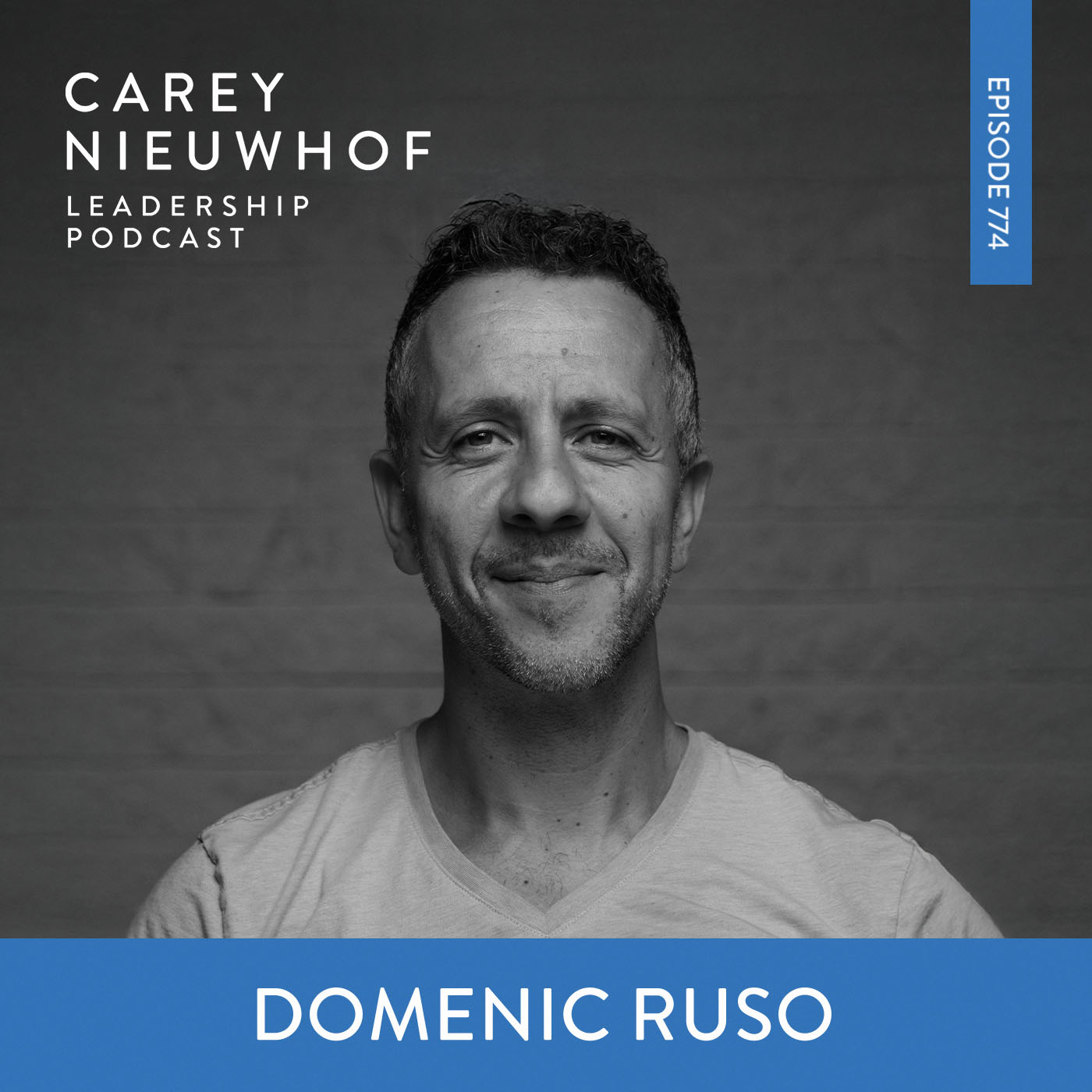
The Carey Nieuwhof Leadership Podcast
CNLP 774 | You're Not Ready for Revival: Dom Ruso on a New Kind of Secularism and Reaching UnReachable People
01:03:47
Loading summary
Transcript228 lines
- [00:01]
A
The Art of Leadership Network. There's a leadership crisis that I think in the life of the church and in the life of leadership. If God did a revival and brought us a thousand new people in our church, we'd be dead.
- [00:12]
B
Oh, we wouldn't be ready.
- [00:13]
A
There's no way we'd be ready.
- [00:14]
B
Welcome to the Carrie Newhoff Leadership Podcast. It's Carrie here, and I hope our time together today helps you thrive in life and leadership. Today I'm sitting down with a guy I've known and followed and respected for years. His name is Dom Russo. And what do you do? You're in an area where it's just harder soil. Like, honestly, it's just difficult. Well, that would be Montreal, Canada, where a very tiny percentage of people go to church. There's a language barrier. He has planted a church there. He's left mega churches to go plant a church there. Dom and I talk about a new kind of secularism reaching unreachable people and why you may not be ready for revival. Dom is a pastoral leader, a teacher, and an author who believes we are living in one of the most strategic times for reimagining the Christian faith and the importance of the Bible. He is the lead pastor at a church he planted in one of the most complex secular spaces in North America. So, hey, before we get into the interview, just want to let you know too. I've spent a lot of time in Nashville this fall doing a lot of interviews in person. And if you're interested in behind the scenes footage, you want to see what's going on in my personal life behind the scenes on the podcast. Best place to follow me is on Instagram. That's where we post that. You can find me. I'm just Arianewhoff. I know that's so easy to spell on Instagram. And you wanna follow me there if you're interested in that kind of thing. And now my conversation with today's guest, Dom Russo. So, Dom, it's so good to be together. Welcome to the podcast.
- [01:42]
A
Awesome. This is great, Carrie. Great to be with you.
- [01:45]
B
So you're in Montreal, you're in Quebec. A lot of my listeners would be like, seems like some exotic land in the middle of nowhere. But you are in a very different Christian environment, post Christian environment maybe than we have even here north of Toronto or New York or la, or certainly different than the Bible Belt. Can you just explain? I mean, kind of feels like a death sentence. Go plant a church in Montreal. I know people who planted churches in Montreal. It's like it's not that the ground is hard, it's that it's basically rock. So just talk a little bit about the secularization that you've seen in Quebec since you've been there. Nine years now.
- [02:26]
A
Yeah, no, I think it's a good place to start. I think for many people, Quebec is a place they visit as tourists. It's a beautiful place, actually.
- [02:34]
B
It's great. We've been in Montreal and Quebec City. By the way, Quebec City is cheater. Europe, guys. If you want to go to Europe, but you don't have the budget, go to Quebec City. It's incredible.
- [02:43]
A
It is, right? And it's one of the oldest places in North America.
- [02:46]
B
Yeah. 1608.
- [02:47]
A
It's incredible. Right? So it is beautiful. But if you visit, you know, you visit these beautiful churches that are now museums, churches have become kind of either multi use facility, Costco type places.
- [02:58]
B
Right.
- [02:59]
A
And there's actually like heritage laws around preserving the memory of these churches. So it's kind of strange. Like the government is involved in preserving these places, but the fabric of religious or Christian faith is kind of slowly leaking.
- [03:13]
B
So in that way, it is very much like Europe, where there's a bit of revival going on in Europe, but it's these big cathedrals that are basically tourist attractions.
- [03:20]
A
Yeah. Often the phrase I've used when I talk about Quebec and what I'm learning is that Quebec is the place where all of your evangelistic ideas come to die, you know, So I think it's the place where things that have worked in other places when they land in the secular, post Christian space that is, you know, Quebec. And I think more and more Canada and other places in North America, you know, there's a sense that what we've done or what we've said or how we've articulated the faith is just not sticking anymore. And I use this story often with people. When we first went back to plant a church, I shared with a neighbor that we were like thinking about this new church. And the idea I would use with them is it's like a startup because nobody has a category for starting a church, right. If you say church plant, they're like, church plant. Like, what is that? Right. And so one person said to me, so when you start a church, do you call the Pope to do that? And I was like, that is a great, like, that's a great way of thinking about this. I'm like, no, but I. I would figure that you would think that. So I realized that even the most evangelistic, even the most aggressively Exciting thing that is Christ centered, which is to start a church, doesn't translate for people. They're like, we don't know what that is.
- [04:30]
B
They don't have a category.
- [04:31]
A
No. And they're not even against it. They just don't know what it is.
- [04:35]
B
Which is interesting because you look at America in the 1950s, and it was sort of the pinnacle of the church. And mainline Protestantism was really big, but evangelicalism was big, too. And then there was this big decline over 50, 60, 70 years. And now we're starting to see a resurgence. Like, the numbers are turning around, but Quebec was deeply religious until the 1960s. And then there was. I mean, you study this in Canadian history, this revolution where they went from the most religious of the provinces, states in Ontario or in Canada to the most secular. Like, what percentage of Quebecois would consider themselves Christian right now?
- [05:15]
A
Well, there's a vacuum in a sense. If you ask people in Quebec if they're Christian, there's a high number of people that would say yes, because culturally they feel that that's just being it. Sometimes it's like our American friends. Right. Like you just are a Christian by the sense of historical legacy, of being osmosis. Exactly. Catholic. And then you meet people and they're like, yeah. Do you go to church? Not really. Do you think about how the Bible should shape your life? Well, not really. Do you think about being formed in the ways of Jesus? Well, not really, but like, you just called yourself a Christian like a minute ago. Right, right. So it's like how they use the term Christian and how they orient themselves in this story of religion. They're not atheists and they're not like another religion. So Christian kind of fits that. And so again, like, one of the things, to go back to the earlier question that I think secular means that secular changes what Christianity, really, how we define Christianity. And this is a shocking thing for people that the secularism that I think is emerging in our culture is not anti Christian.
- [06:14]
B
Yeah.
- [06:15]
A
It's not even anti expressions of spirituality. But what it is is a morphing of stories of faith and religion into something else that moves us further and further away from what the Bible says Christianity is. And this is why I think I needed to write a book on the Bible for a secular age. You know, and when we first went back to Montreal to plant a church, I was ready for, like, the old category of secular, which is like secular culture is people who hate Christianity. Secular culture is a place where people are against everything that the Bible says. And you Know, I used to have this backstory in my mind. Maybe you've heard this, your listeners have heard this, that the gospel's offensive. You know, it needs to be offensive. There's like something about that that is stuck with people. And I'm like, you know, people need to understand something before they're offended. And most people don't even know what Christianity is. So they're not really offended. They're just oblivious to what it means to be a Christian.
- [07:06]
B
Interesting. You know, I didn't plan to go here, but a little tidbits you pick up, like in English, in England, the United States and English speaking Canada, all the profanity is usually sex or body related. In Quebec, it's not all religious related. It's all religious. Right. These are these religious terms. I don't know what the F equivalent is.
- [07:29]
A
It's the word for tabernacle.
- [07:30]
B
Is it really?
- [07:32]
A
The word for tabernacle is translated in slang on the street as the F word.
- [07:37]
B
Wow.
- [07:37]
A
Yeah. Or the word for chalice, the Eucharist. You know, it's basically spitting in the story of the Catholic legacy.
- [07:45]
B
So if you're gonna swear, you're gonna use religious words and yet it's a non religious people.
- [07:51]
A
Exactly.
- [07:52]
B
Fascinating. So you say the old secular, which is, I think, what we're used to. It's like, I don't believe in Christianity, I'm into evolution, I'm into this, I'm into materialism, whatever it happens to be. That's not what you found at all.
- [08:06]
A
What did you find? No, I think what we're really starting to see is one, a shift towards being against religious institutions. So institutions are still seen as something very negative, oppressive at times, really controlling people. But this awakening of spiritual curiosity is something I didn't expect.
- [08:26]
B
So there is a spiritual curiosity, huge spiritual curiosity.
- [08:29]
A
And it's a spiritual curiosity that dabbles in the Christian story. In a sense. It picks up themes of Jesus. That's why you can have somebody who attends our church on a Sunday, and unless they're really rooted, they can do a pilgrimage, walk to an old Catholic church downtown and then explore tarot cards or goddess cards, which are adult cards that you use for spiritual kind of connection. So there's like a kind of mishmash of hunger. And I think this is so important. I hope the listeners get this. This is a great opportunity for Christians to get past the old category of secular and to say, okay, God, this secular is different. So how are we gonna equip leaders? How are we gonna think about Teaching or preaching, which is what I do often in this kind of world, you know, it's not as aggressive or defensive as we thought, because often, you know, you think of the word apologetics, like you have to be ready to defend. It actually is not that. It requires kind of a different posture.
- [09:29]
B
So, you know, you travel a lot in the U.S. you speak in the U.S. a lot, and then you come back to like, I do come back to Canada. You go back to Montreal. I go back north of Toronto, where we are right now. But I'm curious, like, because Barna has documented for about five or six years now this rise of the spiritually curious, right, where there's this openness that they talk about fundamentally the same or fundamentally different. What are you seeing in Quebec is.
- [09:58]
A
That bang on, bang on, bang on.
- [10:01]
B
So we've kind of gone through the anti religious I hate you stage, and now we're in the second or third generation of people who grew up without church. And they're open, they're curious.
- [10:12]
A
And in Quebec in particular, the old stories that were shaped out of an anti Catholic story, right. The next younger generations don't have that. They might know it if their grandparents tell them a story of a long time ago, but they don't really have that. Actually, some of the most popular French shows in Quebec are filmed in churches. And they use actually religious themes in how they shape the show. So I'll give you an example. One of the popular shows in Quebec is like an interview show, like a panel. Think of the View, right? Yeah, yeah. But the host interviews four guests every week. And the way the guests introduce themselves is twofold. One is you meet them in a confessional box, like sharing who they are, which is what a confessional box is about. Like being authentic about who you are. So that's the first time you meet them. It's in a confessional box. They're saying, hey, my name is Dom. I'm so and so if I was on the show. And then when they come out, a choir plays them into their seat, like a religious choir. So it's fascinating that it's almost like we're haunted by a religious story. We want our lives to be anchored in a story that's bigger than ourselves. And we don't want to be Christian if Christian means religious and oppressive and weird. So we don't know what to do.
- [11:22]
B
So what are the obstacles you're facing? And let me back it up a little bit, because you also. Mega churches in Canada are very rare. You preached at one for years.
- [11:32]
A
I used to be teaching pastor at a fairly large church.
- [11:34]
B
Yeah, fairly large church. Thousands of people on a Sunday morning. Then you went, you became lead pastor at a church and it grew meaningfully into a large, mega church. And then you go to Quebec and start over again with no people. And we have to talk about the scary soil is hard. Yeah, I'm poking a wound here right now.
- [11:51]
A
Ptsd. Yeah, yeah, yeah.
- [11:53]
B
But I mean, when you think about that, like drawing a crowd where people have Christian memory. Is that what was happening in those churches? You were sort of. And I don't want to disparage the ministry, but, you know, here's the secret again. More Barna data. The that depending on who, you know what survey, you're looking at, 75 to 90% of all church growth is transfer growth.
- [12:14]
A
There's a little bit of that. Yeah, yeah, there's a little bit.
- [12:16]
B
So what were some of the differences you noticed in preaching to large, large, large churches in Ontario, which is not that far from Michigan?
- [12:26]
A
No, not far. I mean, you're right across the river, I think. I would say if you're in a larger church that has a strong Christian rootedness, Christian story, you're really moving people from kind of like a nominal understanding of Christianity. I mean, they come cause their grandparents come, they come cause it's good for the kids, whatever. But you gotta move them to a deep understanding of discipleship, you know, and that's a certain trajectory in preaching, you know, that this is not like a concert, this is not like an event. This is like a sacred space where Jesus does deep work, you know, and we want you to get that right now. When you go to a place where, you know, we started with about 18 people when the church started in Montreal. Like, I often tell people, we left the church of, you know, 800 to die with eight, you know, just, you know, I wasn't sure how that was going to work. But there is something that is consistent. You're still listening to the ways people both understand and misunderstand the story of Jesus. And you're. And you're teaching in a way to help, correct, encourage, stretch them in that way. Now, when you're in a bigger church, you're not listening to everybody because it's too big. When you plant a church, you kind of have, you know, everybody who's there, you know, the woundedness, you know, the scars, you know, that they're not sure whether they want to be part of church, you know, that they're exploring because they're a young couple that's having a family, and they want to think about how their kids can be part of church. Right. So you're holding all of those things together. And my pattern is. I don't know how it is for you, Carrie, but when I sit down to prepare a sermon, you know, you look at a blank sheet and you just have these people in mind and you pray and you're like, jesus, these people don't need to hear from me. They need to hear from you. And I have to find a way to help them know that you're aware of their situation and that you haven't forgotten them. So I think preaching kind of all should begin in that way. You just have to modify that as depending on the people you shepherd or the people you lead. I think it's Maxwell who talks about you can't lead people you don't love, which is true. But you can yell at a lot of people even if you don't love them. And you can do a TED Talk for anybody.
- [14:25]
B
Right.
- [14:26]
A
But preaching and teaching has a bit of a different tone because of that.
- [14:30]
B
Yeah, I wanna talk to you about that because, I mean, we're in a season right now where a lot of churches are growing. In Quebec, not so much. There's a few pockets. There's pockets. Your church has grown a lot. You're well beyond those 18 people, but you're not seeing the kind of numbers that you were used to previously. And so now we have these talks of revival. I was here yesterday at Connexus, and literally I'm back up on the front row because we were out of seats. Like, just out of seats, which is incredible. So you're there. What is resonating elsewhere that is not yet resonating in your particular culture? And the reason I'm asking the question, I'm very interested from purely finding out more about your story. But there are people listening, pastors listening, who would say, yeah, I'm in a pretty. They're spiritually open, but they're not connecting with Christianity. We're not seeing a lot of churches really connect or find momentum here. That's why I want to be very balanced in. You know, we could tell all the success stories, but we also need to tell some real world stories where it's just hard, man. It's hard. And you're not alone in that. There's a lot of people, Pacific Northwest, the Northeast. We're seeing God move, but, you know. And it could be, you know, middle America, wherever it is, but the ground just seems particularly harder. So do you want to talk about why you don't think you're yet seeing that kind of Renaissance in Montreal? Revival in Montreal.
- [15:59]
A
No, that's good. And it's a great reminder just to encourage people. Cause sometimes you can tell just these rah rah stories and be like, well.
- [16:05]
B
I guess everybody's growing up.
- [16:07]
A
I guess that's for you. Yeah, I guess I suck. And maybe you need to get better as a leader. That's possible. Right? We're not minimizing, but you're pretty good.
- [16:15]
B
And you've got that track record. And I mean your new book, I mean, you're intellectual as well, which I really respect.
- [16:20]
A
No, it means a lot. Carrie.
- [16:22]
B
You think at a deep level.
- [16:23]
A
I think one of the things that I'm noticing that is very particular to our context is that the minute something gets big or bigger, there's this invisible trigger that happens that it feels, it becomes institutional and controlling. And people will use this phrase. Okay. And it's weird. People have a little bit of religious memory, will be like, is this like a megachurch?
- [16:47]
B
And that's not a compliment.
- [16:48]
A
That's not a compliment. That's very negative. That's very negative. And some people, like, people that I know in my family who are not believers actually aggressively against Christianity will be like, why does church feel like Walmart? It's a jab like that. Right. So I think there is something that whether we like it or not, when something gets bigger, people are uncomfortable unless there's high trust in the culture.
- [17:10]
B
Canadians do not like big things.
- [17:12]
A
If it's too big, it feels like there's more room. There's more room to be deceptive. Yes. Right. Yes. It's that idea.
- [17:18]
B
There's that anti institutional trust.
- [17:19]
A
It's still there.
- [17:20]
B
And even in America, as much as you see things changing in real time, trust in institutions is at an all time low.
- [17:28]
A
Yeah. Young people. And that's why the Internet is so powerful with young people. They can connect, but they don't have to commit to buying into the machine or something like that, whatever they use. Now, I think that changes at times when there's high trust. But you know this, Carrie, like oftentimes a church plant, when it gets to about where our church is, the founder leaves. Yes, right. There's a transition. Right. Because the founder has to change how they lead based on where the church is at now. That's very different from people who met you when the church started.
- [17:55]
B
What are you noticing? Like what growth barrier are you up against right now?
- [17:59]
A
Or what's changing they're losing high touch moments with you, which is where trust is found.
- [18:04]
B
Because you now have hundreds who call the church.
- [18:05]
A
Yeah, we're over 400. Like, they're not gonna. So you have to keep telling the people who were there when we were 20, you're not gonna see me as often. Like, I can't have coffee with you for, like, two months.
- [18:15]
B
I think 400 is the most awkward size.
- [18:17]
A
It's about there for us.
- [18:18]
B
Talk to Jeff Brody here at Kinexus, where we're filming this because our rooms are small. Like, we'll have, I don't know, 1700 now on the weekend. 1800. But we max seat 350 people. So you're squeezed in like a shoehorn. And people go, well, I should have access to you because there are only 300 some odd other people.
- [18:36]
A
That's a great point. Yeah. Because they don't know, like, that there's other gatherings or they're not part of those gatherings.
- [18:40]
B
Well, and they don't know that. That's probably half of your people who showed up on a Sunday. Right. So you might have 7, 800 people who now call your church home, but they're looking around going, I think you're still my friend.
- [18:52]
A
Can I have your cell number? And I'm like, I would love to give you my cell number, but if I do, I'm going to burn myself. Yeah.
- [18:58]
B
It's a real. I think of it as the awkward teenage face. If you're not an adult, you're not a child yet.
- [19:03]
A
And yet there's people who come to our church, even when our church was 200, and they're like, this is the biggest church I've ever been to in my life.
- [19:08]
B
Well, and the other thing I was gonna say is 400 is a mega church in Quebec.
- [19:13]
A
It feels for people who are there, it definitely feels that how you lead that, how you structure that is so different than how you start the church. So you also are praying through God. Do I have the gifts to take the church now to the next place? I mean, one of the blessings I think of my journey has been that I've worked in large churches before. I planted a church. Yeah, most church planters don't do that. Like, they're young, they're excited. They plant a church. They haven't been lead pastors, they haven't raised money. So it feels harder where I kind of did a bit of a reverse thing. I experienced all these other things in a big setting. And then I went back and I.
- [19:43]
B
Planted a church this Episode is brought to you by Belay. So my friends at Belay have a resource that is going to help take your ministry's productivity to the next level. And as a leader, one of the most valuable skills you can develop is is knowing when to ask for help. I wasn't very good at that when I started out in leadership. So when you're overwhelmed, here's what happens. You lose focus, you fall behind, and you never operate at your full potential. That's why making productivity a priority isn't just good for you, it's good for your entire organization. So when you get your time, your energy and your focus back, you can invest them in what matters most to your ministry. And Belay can make that happen. They've helped over 10,000 leaders reclaim their time by matching them with vetted expert remote executive assistants, with marketing assistance and financial experts based on their specific needs. So you can stop sweating the small stuff and get back to leading. Well, and to start you off, Belay is offering free downloads of their resource, the Power of Productivity, just for Church leaders. This guide is full of tools and strategies that you can use to boost your productivity so you can lead your ministry with efficiency and with purpose. Don't miss out on this offer. Text Carry that's my name C A r e y to 55123 to get your free download today. That's Carrie to 55123. This episode is brought to you by my 2026 Church Trends. Hey, as you head into 2026, watch Cultural Shifts. Do you need to keep an eye on as a church leader? I mean, it's a really big question, right? You got your head down trying to do the work from day to day, but there's some big stuff happening, right? You and I both know how easy it is to get caught up into the week to week of ministry sermons, meetings, you know, Sunday after Sunday grind. And you just miss what's really going on in the culture. That's why every year I release my annual church trends report. And it's to help you see what what's next and to lead with clarity. So for 2026, I've identified seven disruptive trends that are shaping the future of the church. And we're seeing Gen Z's surprising surge in church attendance. They're kind of leading it. Something very few people expected two years ago. There's a new boldness in evangelism I'm going to be talking about, and maybe the most concerning of all. Most churches still aren't ready for the AI revolution. That's already reshaping ministry and leadership. So those are just a few of the trends that we'll be unpacking this year. The trends are backed by data, and I share my thoughts on why it's important and what you can do about it. So this year I'm doing something new. All the trends are premiering live inside the Art of Leadership Academy. You'll not only get the full 2026 Church Trends Report and the Leader Guide, but also a live interactive Q and A and podcast series. All of that is launching in January, so if you want to be the first to access it, head on over to 2026ChurchTrends.com for free access. Once you've signed up, you'll be in the loop for everything related to my 2026 church trends report. Again, it's all free, so just click the link in the description of this episode or visit 2026churchtrends.com. The Future of the church is still bright, especially for leaders who see it clearly and who respond wisely. Well, and what's interesting too is like, when you were at North Park, I think it is in London, there were already thousands of people in. There's not the expectation.
- [23:12]
A
No, exactly.
- [23:12]
B
That you have to have lunch with them. And then when you were at temple and it grew rapidly, the growth is just so awesome. People kind of get it.
- [23:21]
A
Yeah, they get it. And I think too, one of the things that maybe our American friends might not realize is that there is something in an American culture that I think is beautiful is that there's an honor in, like, trusted leaders. Like, and I think it's embedded in the DNA of like, high sports culture. Like, when you're a football coach and, you know, you'll hear people, even when they're adults, they will call coach, coach. You know, they still reference that leadership position or the military or, you know, schools. There is something about leadership being embraced quicker and more as we need good leaders to go to the next phase where I don't think we have that as naturally in Quebec or even in Canada.
- [24:01]
B
No, there's also. There's always a suspicion, always a suspicion that's there. So, yeah, you're right. The big difference is you started with hundreds and moved to thousands, or you started with thousands. Now you got 18 people and now you've got hundreds. How has that journey been for you personally? Because you must feel. I eventually got to the point where we started with a handful of people and ended up with a lot by the time I left. But if, like, you were Part of those original churches. I always had time for you.
- [24:33]
A
Yeah, Yeah. I try to tell people or remind them. You know, some of those early people were in the trenches with us. I mean, they have access to me. Like, they can connect.
- [24:42]
B
They do have your cell number.
- [24:43]
A
Yeah, they do. But I think because they know the burden I carry for the church and for people who are not Christians yet, they actually are not that demanding. You know, that's funny. You know they're not. No, because they were there from the beginning. The values are so embedded in them of what we're doing. It's more people who weren't there early on but came a little bit after and have a certain idea of what they want the pastor to be. And I think the point you mentioned earlier is important to say, you know, there is a transfer growth that happens when you start something. People want to see it, something new is happening. But nobody tells you how problematic transfer growth is.
- [25:20]
B
Why is it problematic?
- [25:21]
A
People hear it as like, oh, just more people are showing up. This must be great. You took people from another church. What they don't tell you is all those people who come from within the church have expectations they're not willing to change, and they're going to impose those on your church.
- [25:33]
B
There's a reason they left that last.
- [25:35]
A
Church, and now they're going to bring those. So they are bringing the excitement of maybe they're moving. They live closer to where your church is. So the transfer is exciting in numerically, like, you're seeing people show up, but in the DNA of the church, it's actually very hard to help people, you know, come from another church and be willing to die to their vision of what a pastor in a church should be. And listen with you to the kind of church God's calling you to plant. Nobody trains you almost for that.
- [26:04]
B
How do you cast vision for them? How do you do that?
- [26:06]
A
You do it, you know, one. You decide who you're gonna cast vision for. Some people, you want them to leave. That's an important thing. You have to kind of.
- [26:14]
B
Can I tell you a secret?
- [26:15]
A
Yeah.
- [26:15]
B
When I was lead pastor here at Connexus, if people came in and they asked me, what is my theological position on X, I would tell them, this isn't a good church for you.
- [26:24]
A
There's some of that. You feel it right away.
- [26:26]
B
Right. And you're more of a theologian than I am, you know, But I still. Why is that your first question?
- [26:31]
A
And I'll get.
- [26:32]
B
Why is that your first question?
- [26:33]
A
Why the Bible? Like, why don't you use this translation of the Bible? It's the. And I like, how about that, you know. But now we live in a culture of reviews, right? So if I don't honor, I think that journey. You're getting one star, you're getting people. This church didn't talk to me. So I think you're, you know, for young leaders, don't get discouraged. Don't get discouraged. Like, all of us have had to do that. And there's no secret around this. Like, you just have to lead, manage, encourage, pray, and just. Even when it's challenging, just keep walking, stay.
- [27:01]
B
What are some signs that someone's going to stick like that? This is the right kind of transfer growth, because I think you're right. There's the wrong kind of transfer growth. There's the right kind of transfer growth.
- [27:10]
A
One of the signs, I think in our context, where I think somebody's really going to make it, is that they are willing to serve, usually fairly quickly in a place that's very humbling. So the example I use is, I remember early on we had somebody who came, wonderful family. They had been board members at another church. You know, they told me this and, you know, I often listen for people who say that with the idea that, like, I should be on this board at this church, almost like implying you should know that I'm this kind of leader. And I'll often say, hey, we need somebody to clean bathrooms on the weekend. Would you do that? And if they say no, I remind them that I clean bathrooms at our church. And that's what I did when our church started. So there's no thing you can't do that's too low for you. And if they say, I would love to do that, like, what's the scare? I'm like, there's a person that's gonna be here for a long time.
- [28:01]
B
If you're not willing to serve, you're probably not in a position to lead.
- [28:05]
A
That rule never changes, you know, and that doesn't mean people are not able to lead at a high level the way they did where they came from. I think about this with young leaders because now I'm training preachers and teachers at our church. So people are an apprentice. They come in, they have some raw gifts. They're studying theology. I'm like, okay, there's some. For the listeners, they might not know this. I mean, we have a Bible school crisis in Canada and North America. Like, nobody knows where the next generation of leaders are gonna come from, right? So no matter how much you Talk about revival. The real number we should look at is how many people are attending seminary who want to plant churches and go to become leaders in church.
- [28:42]
B
So let me play devil's advocate. Why is seminary still important?
- [28:46]
A
Seminary is still important. I mean, not in the. I'm not talking about the format of seminary, but seminary as theological education. Theological education is still important because secular is going to be the most robust critique of the Christian story we've ever seen.
- [29:00]
B
Oh, wow.
- [29:01]
A
It's going to push back against all the things that, you know, we thought people understood about Christianity, about church, about the Bible. And unless we have a better way of articulating the Christian story that is rooted in a theological story. Right. We will not have answers for people in a secular culture. And what that will do, it'll only fuel what they've always believed about Christians, that they're weak, ignorant people who just need a God in the sky to, like, feel good at night. And I'm like, that's not what the Christian story is.
- [29:28]
B
I'm not talking academically here, like, you know, hypothetically or in reality, but in the general narrative. Is the secular narrative stronger than the Christian narrative right now? The secular narrative, the way the Christian narrative is being expressed in the church?
- [29:45]
A
I think so. I think the secular narrative is more robust in the way that it's, you know, it's making more sense of many religions or it's making more sense of, like, Christianity needs to dialogue with people. What do we do with other religions? What do we do with people who are not Christians? What do we do? The secular culture has more room for that. Where Christianity sometimes is like, well, we've been here the longest. That's the religion. I'm like, well, that's not really the only way we can talk about this story.
- [30:14]
B
I'm interested in this because I'm working on my new book, and I'm working literally this morning before I came to the studio, I'm working on a chapter called Working Title, why we need to become a More Intellectually Vibrant community. And this is actually tied to AI, But I think it's a widespread thing, and I think Christians are largely not quite taking an academic pass. But it's like, we love the Lord our God with all of our heart, soul, and strength, but we forgot our minds 100%. And I think we're not winning the intellectual war. We're seen as simplistic, we're seen as bigoted, we're seen as defensive, we're seen as dismissive, and we're not taken seriously Academically, right now. Comment on that?
- [31:02]
A
No, I think, I mean, years ago you probably have this in your research and in your reading. I mean, Mark Noll, who's one of the most important historians of the middle.
- [31:10]
B
Of the evangelical mind, is that there isn't much of an evangelical mind and.
- [31:13]
A
That it's still true in some ways. And 90s, the Internet is only gonna speed that up, that we can meme our way through the story of Christianity. Right. Or tweet our way through things. So I think it's true. Like we need to think about what it means to provide a more rooted way we articulate the story of Christianity. I think this is going to require that we think about the history of Christianity. A person in my family who's again, not Christian, hasn't visited our church, cares very little about the story of faith. And I mean, I'm the pastor of the church, so they know me very well. Said to me once that Christians need to understand that from a secular perspective, Christianity looks like a pluralistic religion. And I was like, wow. And what they meant is that when somebody's learning about Christianity, there's like hundreds of variations of Christianity that all argue with each other and fight. So which one of you is like really Christian? Not even in a being anti Christian way, just an intellectual conversation, like so on our street, the Baptist, the Presbyterian, Catholic, this, that like you guys don't seem to get along. Why would you invite anybody into the story? So one of the things that I think the intellectual conversations of the future have to do is they have to get Christians talking about what they agree on together, what we affirm as Christians, and that the diversity in Christianity doesn't have to be like a demonizing of other Christians. And the Internet shows us a different picture of that, a very different picture.
- [32:41]
B
Why do you think Christians. Yeah, why do you think Christians are fine not being academically trained and being able to think issues through to first principles? Why are they okay operating in sound bites, ideas that were handed down to them but not really tested?
- [33:02]
A
Yeah, well, one of the reasons is I think that many people today have been raised in a self help culture. Just do it yourself, you know, however you want. And then the Christianity is like, I could do it myself. They wouldn't apply that to being a pilot or being a mechanic or being like a dentist, like, but, but Christianity almost allows somebody to be like, I'm a hairdresser, I'm doing a church, I'm a plumber, I'm doing it, you know, so there is a bit of that part of it too, carries. I think for years we had an eschatology, maybe is a new word for the listener, but. But we have this urgency about reaching people fast because Jesus is coming back.
- [33:35]
B
I don't have time for.
- [33:36]
A
We don't have time to spend two years studying, like, Greek. Who cares? Let's get out there.
- [33:41]
B
Systematics.
- [33:42]
A
Who needs that?
- [33:43]
B
Let's get out there.
- [33:44]
A
So I think the Internet pushes this speed, and I think that we've kind of maybe bought into that, which is not the wisest way to approach leader development. And the other thing, too, is that I think we have to get so serious about the fact that we can't just let anyone practice leadership or unrooted theology on God's people. Like, you don't get to practice on God's people because you were undisciplined to really grow and learn and study under somebody. Right. The word understand means to sit under somebody else. Right. It's the apprenticeship of a person that is trusted, respected, has done the work of, you know, their ideas being tested. And so if we don't deal with this, I think we're going to see two things increase. Celebrity preachers will increase, which most people think is one of the most challenging things of our time, because it's based on popularity by just numbers. If a lot of people follow you, you start a church, right? Versus saying a lot of people might follow you. But there's a lot of things that start that way that are very unhealthy, and younger people are very nervous about that kind of idea. Like, one person having all this power because of a lot of popularity is that, you know, and here's the thing that happens. If it's growing, guess who must be in it?
- [34:55]
B
God.
- [34:56]
A
Well, I know a lot of things that grow, that God is really not at the center of those things. Right. So that'll continue. And I think the literature showing that religious trauma and spiritual abuse, a deep thing that should concern us, will continue to increase if we let unequipped pastors pastor God's people. So this movement to, you know, the chapter of your book and a more rooted formation for leaders is really, you know, is so urgent if we hope to reverse some of the things that people, when they equate with Christianity, they see like these very negative stereotypes and experiences.
- [35:31]
B
This episode is brought to you by the state of the church. So it's hard to believe. We're already looking ahead to 2026, and maybe you've been stuck wondering, how are my people really doing? Well, I've got Brad Hill from GLU here to talk about something that will help you know your people better and lead with clarity next year.
- [35:50]
C
Absolutely, Carrie. It's almost Happy New Year time, right? And really the best time of year, I think, is that start of the calendar year to get a pulse on your people. There's so much energy from them around goal setting and how to flourish well this coming year. So the church pulse, it's a tool that makes it easy to know how your people are doing and where they want to grow. It'll assess things like how they're feeling, what they're struggling with, and what they're looking for from the church right now. So when you think about your preaching and programming and staffing next year, instead of guessing, you can actually use data to shape your 2026 ministry plan.
- [36:29]
B
Well, that's the part that excites me the most. And if you want to discover more, go to stateofthechurch.com Carrie and make a plan now so that you can lead with confidence this next year. That's stateofthechurch.com Carrie, do you have any thoughts? Because, you know, the dilemma is, and I'm just going to sort of broad categories here, Seminaries often are seen as producing leaders who are not capable of particularly doing a great job leading a church. And then the growing churches have a whole bunch of leaders who haven't been to seminary who need to get theological training. In other words, there's a gap. Right. Like, we ran into that here. I've seen so many churches where it's like, yeah, seminaries are not popping out people who are doing a great job in their ecclesiology. Maybe they understand it academically but can't lead on the ground. Meanwhile, you know, growing churches are picking up people from the congregation who are brilliantly gifted but don't have the theological background. So what does theological education look like moving forward?
- [37:32]
A
Yeah, Kerry, I mean, if we solve that today. Yeah, I know, we're going to be rich. You know, all I know, everybody's like, working through that, right? Like, I mean, that is the 3D Rubik's Cube of our time.
- [37:42]
B
It is.
- [37:44]
A
We're figuring this out. You know, the encouraging thing because of my studies in history and my PhD in history, is Christians have had to do this before. You know, they've had to navigate a revolution of learning, printing press, all kinds of new ideas at a time of, you know, a very, a church that was very divided. You think of the Reformation, Catholic Church, European kind of revolution, while the scientific age was emerging. So I often think, like, we have diversity and division in the church. We have new technological tools, and we have an emerging shifting culture. So when you look at the 1600s, 1500s, which is the Reformation period, which is kind of my area of study, you see patterns that the Church navigated that seem very similar to the season we're in now.
- [38:28]
B
What do you see?
- [38:29]
A
Well, one is, we see the church so concerned about getting some things right that it can miss some things that are happening, culture that they should be paying attention to. So, like, while the church, I think, during the Reformation period is very concerned about salvation, justification, and they should have been, right. This correcting, you know, misguided ideas of the Bible, there's this internal argument, like, with the church, within the church, while at the same time, the scientific community is saying, we think we've misunderstood the whole solar system. And you're like, what do you mean? Well, the Earth is actually not the center of everything. The sun is. So while the church is having this conversation here, the world is saying, there's a revolution that, you guys, we should be ready for. Like, and we're not.
- [39:11]
B
And you see that parallel today.
- [39:12]
A
I feel that there is a growing parallel that as the Church is wrestling with this internal struggle of who we are. How are we training leaders? Are people gonna. You know, there's an AI revolution that's brewing around us.
- [39:22]
B
That's what I'm working on.
- [39:22]
A
And everybody's thinking, hey, leaders of the church, as you think about your theological ideas, is anybody thinking about that?
- [39:29]
B
Yeah, because we're all talking about what prompt we should use or whether we should use it. It's like, no, that's not the conversation. That's what my book's about.
- [39:35]
A
Yeah. And think about this simple idea. You know, I have three boys, young boys. I think about the things that they're talking to me about. You know, they're gonna be asking us if they can come to church with a pet robot.
- [39:46]
B
Right.
- [39:47]
A
While we're having debates on who's allowed to speak on stage or who's like. I'm like, oh, my goodness. Like, this is gonna be so complex.
- [39:54]
B
And what if they end up in a, you know, having romantic feelings toward a chatbot?
- [39:58]
A
Bingo. And, like, what verse in the Bible you gonna go to for that? It's gonna figure that out. Yeah. So that's what I mean. It's gonna require deeply rooted, intellectually grounded leadership to one not create a fear culture when that happens to say, hey, hey. The church has navigated pretty complex things in history, so we Got, like, a great legacy for this, but we don't have the answer for this. It's different. We have a trajectory for this. But the answer requires wisdom, prayer, reflection, dialogue, and even mistakes. Like, we're going to try some things and be like, okay, that wasn't a good idea. We have to correct that. Right. And if we're not careful, I think that space of, you know, intellectual dialogue rooted in who Jesus really is and how he makes all things new, right. Becomes, like, absorbed by fear, concern. And if, Carrie, you try something that I disagree with, well, you're a heretic versus saying, you know, Carrie, like, as you try that, tell us what you're learning. Because we know you love Jesus and we know you love the church. Right. It's such a different approach, and I think that's kind of missing right now.
- [40:58]
B
What do you worry about for your boys as they get older? They're growing up in a profoundly secular culture, you know, in the mid-2020s. What are you worried about for them?
- [41:09]
A
You know, one of the things I worry about the most is that they would kind of just miss out on the fact that their gifts, their passions, and the things they're excited about are things that God has given to them in order to use them in a way that is very meaningful in the world. You know, so I'm worried that maybe they'll get unanchored from the story of Jesus because of pace, because of noise, because of everything that they're seeing, and because maybe they hear a lot of things online that says, oh, the Christian story is this old story that people used to believe. You know, the Bible's this ancient book of rules, you know, that you look at sometimes if you have a problem or you might post a little psalm on your social media, but you don't understand the fabric of the Scriptures, you know, the great story that actually allows us to actually have a Bible. Right? And so that's why I wrote a book on the Bible for a shifting secular age. I actually wanted my boys to know that every time you're holding a Bible, you're actually holding the work of deeply intellectual leaders who sacrificed in such a way that we would have the Scriptures in our own language, right? And that gets lost in our culture, right? Oh, the Bible fell out of the sky, and it's just. We just have them. And I'm like, no, no, no, no. The Bible is the greatest revolution of a church that engaged with a changing culture.
- [42:23]
B
What does the secular world or the secular mind does get wrong about the Bible?
- [42:28]
A
Well, One, they think it's irrelevant. Or when they do think it's a little bit relevant, it's like just to solve a problem. Or how they engage with the Bible sometimes happens through Internet devices because that's how you learn it, right? Which makes you hear the scriptures in a disembodied way. Okay. All of the scriptures are given to us in an embodied communities, right? Nobody in the ancient world would have ever heard anything of the Bible if they did not sit next to somebody who was also trying to learn the Bible. Right? There was a community fabric of like saying, hey, I'm listening to this and you're listening to this. So what are you hearing? What am I hearing? And what is God saying to us? And that picture is a picture of that we are accountable for the things we just heard. And I think today, because again, our technological revolutions like the Internet and preachers online. You know, a mentor used to say to me that if you can pause a sermon at any point, you're not listening to the Bible the way it's meant to be heard.
- [43:24]
B
What does that mean?
- [43:25]
A
It means that if you can walk away whenever the microwave goes off or whenever, like their kid was crying, whenever the sacred moment of God speaking to you consistently, that this is for you can be bypassed by something you're doing right now, which is like, I gotta go now. Pause at 15 seconds of that sermon. Gotta go, I'll come back. Oh, what was that sermon about?
- [43:44]
B
Like we're writing sermons with sound bites in mind now and reels in mind now. So what does that mean?
- [43:50]
A
Yeah, exactly. So that's our new. It's our new future. So how do we embrace the gift of technology? Because I mean, I'm not a person that says, you know, no Internet, never had preach. Right. How do we do that? But how do we also embrace that? If we're not careful, this medium will distort the gift of the Bible.
- [44:06]
B
How are preachers, and I'm asking you to speak generally, not specifically, how are preachers distorting or misunderstanding the gift of scripture? How have we been co opted by the culture? I guess?
- [44:17]
A
Yeah, I mean, that's huge. I mean, I don't want to. I love preachers because preaching is so hard, right? I mean, I think we want to be careful. I think preachers can oftentimes one preach in such a way that doesn't draw people to remembering the sacred community of the church.
- [44:33]
B
Right.
- [44:33]
A
You can just have preaching online and it can lose the fact that there is something about this story that requires embodiment and proximity and discipleship. So I don't think preachers do that intentionally, but it can happen, right? I have a lot of followers. I have a lot of followers online, and they just listen to me. And if you don't come to church, it doesn't matter. Well, wait a second. We need to kind of think about what we're maybe teaching by mistake. Like, you know, the other thing, too, is I think there's something about the scriptures that gets lost in our technological age. That is the rooted. I'll use a theological word here, the rooted, sacramental way of the church.
- [45:09]
B
What does that mean?
- [45:10]
A
Sacramental is the term that Christians often have gone back to around the mysterious thing that God does when his people are together. Just that simple idea. It's actually more complex, but in a simple way. Right. And there are two things that we often think about when we think about sacramental, and that is baptism, and that is communion. If you're Protestants, you know, there's other. We can have that debate another time. But in general, just think of baptism and communion. And I often tell our leaders, you know, Christians, there are two things they never did for themselves. No one baptizes themselves, and no one should just take communion by themselves. It was a given. Nobody ever thought somebody would do that. You don't just dunk yourself in the bathtub and be like, hey, call somebody, I baptized myself. They're like, what? Don't you have to do that in and for and among?
- [45:53]
B
Yeah, we would say it's not legit. Right?
- [45:55]
A
And we would say that because there's the mystery of how God is present in this practice is that it's made for other people to celebrate with you, for other people to say, I'm baptized into a family. I'm baptized into a community. Right? So there's all these assumptions. When preachers lose that rootedness to this living, sacramental way of the story of Christianity, the Bible starts to be heard as individual book, pep talk for me. Positivity for the day, this and that. I got my word from the Lord today. And there's a massive kind of devotional, like, culture. Like, I meet people all the time. Like, I haven't seen you at church. You know, we miss you. Well, I did church with my friends at Starbucks. Mike, you did church with your friends at Starbucks. Like, everything in me says that's not the way it should be. But a lot of people would say, but I don't have the words to explain why that's not the way the Bible's meant to be.
- [46:46]
B
Read, right?
- [46:47]
A
So I'm like, so you read this Bible at Starbucks with just some friends? The Bible that was written to churches for churches, for people to learn how to be the church. And you never go to church. Okay, yeah, yeah, we've done something to the Bible when that can happen. Now, I'm not saying you should never go to Starbucks and read the Bible with your friends.
- [47:03]
B
Right?
- [47:04]
A
But the trajectory of this sacred story is a sacred family.
- [47:08]
B
Should the church be online then?
- [47:12]
A
I don't think we can not be online. I mean, the church needs to find ways to.
- [47:16]
B
The genie has left the bottle.
- [47:17]
A
Yeah, yeah. It's like saying, should you have a cell phone number? When phones came out, I'm like, you don't exist if you're not online for some people. But we need to be very wise about how we speak about, you know, the life of a community when we're online, when we're engaging with people. We have so many people in our community that this Sunday, I met somebody for the first time visited our church. They've been just watching us online for a few months because they're nervous, they're not sure. So there is a gift of take your time. There's no pressure. We're happy you're exploring faith on the Internet with us. Right. But I will find ways, maybe God led ways to say, hey, if you're watching online, we have a seat for you here. Yeah. Hey, if you're watching online, today, we're celebrating communion. And that's something that's meant to be celebrated together with other people, you know, and we'd love for you to maybe visit us sometime. You know, there's bridge building in those conversations so people know, hey, I think the greatest expression of the story will only really be realized if I go and sit and worship and sing and am in the midst of God's people. The simplest thing I tell people is imagine your friend invites you to their wedding, right? They send you an invitation like, I'm busy. Really? Lots going on, bro. Like, I can't come. And you ask them, is your wedding on zoom? They'd be like, what?
- [48:31]
B
During COVID for 10 minutes of 100%, right?
- [48:34]
A
But after that, nobody even asks it. Why? Because there's some sacred, loving thing that is about to happen, and you should be there to see it and be present and be part of the singing and the yelling and the eating. Right? There is something. I use that phrase as a simple thing to be like. That would be so awkward if you asked your friend, can we just watch on Zoom. Now, some weddings are done that way. People really live far away, and they're gonna miss, but it's not the way it's done.
- [48:56]
B
Yeah, that's not your primary celebration.
- [48:58]
A
And nobody would expect that. They'd be like, that's so weird. Like, I'm not doing a wedding. We're just going to do something on Zoom. They'd be like, really? You're not going to gather? Forget about whether you're going to be in a church. You're not going to party? So I ask people to think about that a little bit in light of church as well, that there's something really sacred that happens there. And so these tools and the AI revolution that we're experiencing now, you know, it's God's sovereign plan that we would be the first ones to see it. You know, I think in 50 years from now, we'll have corrected some of these things, but we're really on the front edge of, like, podcasting, online tools, AI, and we're like, well, this is coming fast.
- [49:38]
B
It is coming fast.
- [49:39]
A
And so wisdom is more essential than it's ever been.
- [49:41]
B
I want to go back to your context, because I think it's going to help a lot of people. What's it like to do evangelism when nobody is asking you to explain the gospel? Like, nobody. If you just sat there waiting for people to come and ask you spiritual questions, you're probably going to wait for it.
- [49:57]
A
Yeah, 100%. 100%. Well, the encouraging thing is that Jesus said go. So the great thing is he's like, prepared us to be like, nobody's coming to you. You got to go to them.
- [50:06]
B
Nobody's coming to you.
- [50:07]
A
Nobody's coming to you.
- [50:08]
B
Good lesson.
- [50:08]
A
I'm sending you. You're going to have to go. I'm like, you're sending us? Can't we just wait here till they come? Nope. In general, there's going to be seasons where they're actually never going to come this way. Right now, the church in some parts of North America has experienced blessing where people have come and some people come, and if they're not rooted in the right way, they never come back. So they can come and never stay. I would say that evangelism for us is really something that I think is a shift that every Christian in the future will have to wrestle with, and that's that we are living in a world of terms we do not set. You know, this is a great missiologist who said this like, that, you know, a shifting culture is a culture Where Christians have had to live on terms set by others. And if we're not careful, we can interpret that as being persecuted or being like, how are we not in charge? Like, why does the government get to set? Well, Christians for thousands of years have lived in settings where they had to learn that they weren't the dominant voice. They weren't. I mean, the book of Esther Daniel. I mean, we have wonderful stories in scripture to help us with this, right? So evangelism has to happen through deeper intentional relationships, pockets in our communities where we're welcome, but we're not in charge. We're allowed to sit at the table, but we don't get to decide the agenda. You know, so there's. We look for ways of saying God, if you open a door with a neighbor or with an event in the city, you know, we like to walk into that and just be present and remind people, hey, there is a new church in your area. If you have questions about God or spirituality. And you know the shocking thing, Kerry, People are open to all that.
- [51:33]
B
So that would be like an opening line, hey, there is a new church in your area. If you have questions, we're here. And then what happens next?
- [51:39]
A
Then people sometimes show up, or people tell a friend, or people go online because the Internet is the way to go, right? Most people will check us out online, and we're like, hey, you can take a look at things before you ever come. You know? So if you're nervous about church, they do, and then they realize, oh, but there's something for kids here. I'm like, yeah, well, you have kids, or there's something for, you know, children who are learning about, you know, faith in school, about all religions. Well, I know I used to be a Christian, or my family used to believe in God, but I don't know how to tell my kids about that. Well, we can maybe help you with that. So there's all these kind of important things we're learning about being in the community. I mean, I think Keller, Tim Keller was wonderful. It's kind of like a cultural apologetic posture. One story that I use that, you know, is helpful for people is that when we first started the church, people who've been Christians for a long time who started to visit, they wondered about whether we were gonna run. VBS listeners know that, like, VBS tends to be a summer wonderful Kids Kids program that they can, you know, invite all their friends and come to this, right? And I thought, we're a small church. We don't have the money. We don't have the resources. And if we do vbs, are we doing it just for our kids? Like, we don't know enough people in the community that would trust us enough to send their kids in. My head, I'm like, we can't do this. Like, it's too much work right now. But then as I'm walking the community, I'm praying, I'm at the mall, I'm walking around, I realize the city that we live in runs these massive family events every summer park events, blow ups. Like, they're like, trying to get families to be in a community more. And I'm like, wait a second. Why wouldn't we find a way to go to that event rather than run our own event? Like, I wonder if the city would ever let us just have a table at one of these big events that they pay for. They run. They are way better organized than we are. They have all the resources. They got all the blowups. I just prayed and I'm like, God, I mean, I'm gonna send a note to the organizers and see if there's a connection there. So I sent a note and I said, hey, we're just a new community in the area. We love families. We're encouraging them. We talk about faith issues and things that matter to families with their kids. Right? And they were like, you can't do evangelism. Like, you can't be handing out cards. No problem. Right? And here's the crazy thing. They say, you can come to this event. They give us a table along other tables of other people. And the person says to me, we've never had a church want to come to one of these events.
- [53:53]
B
Wow.
- [53:54]
A
And I'm like, okay, we'll come. But what's even more fascinating, and I hope the listeners pick this up, that these events, every person who gets a table pays a fee for the table, and the proceeds go to help another charity in the community that is cancer research, you know, whatever type of charity, like Boys and Girls club for after school programs. Right? So a secular culture is out charitying us. They're out community building us. They're connecting with families, and we're here trying to do what we've always done while there's all these new things that they're doing that we should find a way to kind of be among them and learn with them. Now why is that going to be hard? Because in those settings, we're not in charge.
- [54:31]
B
Yeah.
- [54:32]
A
Like, they can do some weird things. Like there's a band playing and they're playing some songs that I'm like, I don't really like. But we're here now, and there's a church present. And almost everybody who comes by our table, kids face painting, treats for the dog, all that stuff. They're like, there's a church in this community? Where is this?
- [54:47]
B
So you can't do evangelism. How does that work?
- [54:50]
A
Our presence is evangelism.
- [54:51]
B
Ah, conversation.
- [54:53]
A
Our presence is a witness. Our presence. And what's great about those types of events is I think that people that I care about that wouldn't come to church, I can invite them to that event. Mike, are you coming to the big city event that they're doing? They're like, oh, yeah. I'm like, well, we're there. Some people from our church are there. They're like, and here's the beautiful thing. It gives you a certain credibility.
- [55:10]
B
Oh, yeah.
- [55:11]
A
It gives you credibility so that you're there. So you guys are probably, like, part of this community and legit. Like, you're legit, right? We're like, yeah, yeah, yeah. We really are like, we do what we say we're gonna do. We really love families. We really care about the community, and the city knows that, and they're letting us be part of this.
- [55:27]
B
When you've seen the turning point, because obviously your church has grown, you've reached people. Some of that is transfer, but a lot of that is conversion growth.
- [55:34]
A
Yeah, Some newer people.
- [55:35]
B
Now, when you see conversion growth, what are some of the common connectors where someone goes, I get it. Yeah.
- [55:43]
A
You know, one of the big connectors is just a space where they came early on to the church with so many doubts, and they thought I didn't know this was a church, could be a safe place for me to share that. So a massive connector is people who feel it was safe enough or feel that they are not sure. They believe the Bible's the word of God, yet they're not sure. And we say, hey, we'd love to see you again next week. Where for some of them, they're like, hey, when I believe those things, then I should go to church. We're like, no, no, no. You just come. Cause we work those things out together. So they keep coming back. Another thing we do is we encourage people, even if they're not like, 100% bought into the story of Jesus, to gently be involved in little things around the church with us. Like, you can help on our coffee team, or we have this home group. Like, early on, when we started the church, we had so few families that there was somebody who I was praying with and meeting for coffee, and they were not there. Like, they were not sure they believed in Jesus, the Bible, nothing. And they said to me, you know, there's these home things that you do at the church. Like, we were doing these. We call them home groups or small groups, right? And I said, yeah. And he's like, okay, so what is that? I'm like, it's a great question. You know, if you have a church, why are you in people's homes? Kinds of seems weird. So, you know, we often say, well, church on Sunday, there's an overflow of that love and that expression that, you know, we want to keep gathering together to learn about each other, right? And so I say to this person, would you ever let us do, like, a home group in your home? And they're like, really? But I don't know if I believe any of this. I said, it's fine. I'll lead the group. You just open up your home. And they're like, really? Like, almost like, you can do that. Like, do you call the Pope for that? You know, whatever. There's always like. I'm like, sure. So I remember how special it was for this person who opened up their home, had people who were mostly Christians in their group, right? Hear Christians dialogue about what they're struggling with, praying for, wondering about the Bible. And they're like. They're like, me. I'm like, of course. They're like, you.
- [57:31]
B
That's awesome.
- [57:32]
A
You know, and out of those moments that are messy, tricky, you know, you're kind of like, I'm waiting till you get all the ducks in a row before we get too close to you. Out of all those sacred moments, it's a value that you teach your people. You're teaching your people how to talk to people who don't believe in what you believe in. Yeah.
- [57:46]
B
Yeah, you're right.
- [57:47]
A
How to listen. You know, years would go by. I mean, this is a beautiful story. And I baptized that person a few years later. But it was a long Runway. Yeah, it was a long Runway of trust. And there, because of their suspicion, which they should have, they're wondering, like, what is this crazy cult, people in homes, Bible? Like, what are you guys talking about? Like, we did a Google search, and we know what churches are like. I'm like, it's true. Some are. So you know what? Don't take my word for it. Come check us out.
- [58:15]
B
What else do church leaders need to know about the Bible in a secular age? A shifting secular age, what are we missing?
- [58:22]
A
You Know, one of the things I try to do in my book, Carrie, is I try to, one, help people wrestle with the fact that we've gotten secular wrong, number one. Right. So the first part of the book is just saying the old secular story that I think we were preparing for is not really materializing the way we thought. And so if you develop muscles just for that world, you're gonna be like, wait a second.
- [58:40]
B
They're combative. They're out to get me.
- [58:42]
A
Yeah. Only, I mean, there is pockets of that at times, but it's not as prevalent as we really thought it would be.
- [58:48]
B
Right.
- [58:49]
A
A phrase that maybe theological thinkers might understand is, like, while we were expecting atheism, what we really got is Gnosticism. Right. And that's. I kind of developed that idea in the book a little bit. What is Gnosticism? You know, Gnosticism is a movement, like in the early story of Christianity that is a highly spiritually engaging story that hijacks Jesus a little bit. Like, they love Jesus. They love spirituality, so they can mix that in there. And I think that's more reflective of what we see. People who can come one week, and, you know, I had somebody early on, they had this pool party at their house, and they had a tarot card reading person there, and they come to our church, and I'm like. I'm like, can I come to this pool party? Like, what is happening? What is this? So I think in the book, what I say is that if the secular culture is changing, that means how people think about the Bible is changing.
- [59:40]
B
Oh, yeah.
- [59:40]
A
Right. And so what they're not doing people in a secular culture who are curious about spirituality, who have deep questions about science, the paranormal, aliens, is there extra. All these things. Right. What they're not doing is they're not reading the Bible more or properly. Right. So we need to build a bridge for them to say, you know, these deepest longings that you have, the Bible addresses them. And the Bible addresses them in such a way that the Bible honors the fact that you're human. Right. That's why the Bible makes room for doubt. That's why. Because it's human to doubt. Where I think for so many people, like, the Bible is something you get to. When you, you know, again, I use phrases like where you think the Bible is like a manual, you know, that you go to for life. Well, who reads a manual for anything? Nobody. I don't read a manual. Until it breaks. Until it breaks. And yet that's most people's ideas. The Bible's this manual, when my marriage is falling apart, like, how do I fix it? I'm like, that's not what the Bible is. Right. Or the Bible's a book that once you read it once and you know what it says, you don't have to read it again. So it's almost like a textbook of sorts. Like, you don't even have to go to class if you have the textbook, which is why they don't show up at church. What the Bible actually is, is not a textbook, but it's more like a treasure that you keep coming back to and you see layers of meaning and layers of. Because every time you come back to it, the Bible hasn't changed, but you have. Right. And so the Bible can continue to speak to that. And so what I'm trying to do in this book is to say, hey, let's pay attention. That secular culture is shifting right before our eyes. And if we're believers who believe that the Scriptures are the living words of a living God, they need to meet our secular culture in this moment now. And as they do that, my last kind of section of the book is actually introducing a leadership crisis, that there's a leadership crisis that I think in the life of the church and in the life of leadership, if God did a revival and brought us a thousand new people in our church, we'd be dead.
- [61:30]
B
Oh, we wouldn't be ready.
- [61:31]
A
There's no way we'd be ready. So anybody who's praying for revival should be just as aggressively preparing new leaders for the future. You should not be someone preparing for revival and not at the same time thinking, if God answers these prayers, what will we do with all these people?
- [61:44]
B
So we're not ready for revival.
- [61:46]
A
There's no way we're ready for revival. God is gracious by not sending us revival when we pray for it sometimes.
- [61:51]
B
So what needs to happen?
- [61:53]
A
We need to get serious about the kind of fabric it takes to welcome hurting people. People who are ready to say yes to God, people who want to be, you know, saved and formed and transformed. Right. And it's more than just, I heard a talk at a conference. Right. It's more than that.
- [62:07]
B
So this goes back to everything we've been talking about for the last hour. Yeah, Better theological education, better theological training, better understanding of the Bible, better understanding of the culture, and just the sheer number of people being prepared for ministry. What are you doing about that in your context?
- [62:24]
A
You know, the big thing that I'm doing now, you know, I'm working with some different theological school where I teach, and I'm listening to ways to maybe partner with them as a church. I think that's a model that's emerging. One is I am committed to developing new leaders. The catchphrase for the past 20 years has been mentoring leadership this and that. And I ask people, well, how many people are you mentoring? Everybody talks about mentoring until you ask them who they're mentoring. I'm like, tell me their names. You know why? Because it's so much easier to talk about mentoring than to actually add another thing to your busy schedule to mentor somebody. I tell my staff all the time. You know, I spoke about it even this week. Like, whenever we have an apprentice at our church or a new person learning, it's a staff person who already has a full plate. And I say to them, can we add like, one more thing to that? And they're like, no, right? So watching a burnout culture, that can emerge, you know, so at our church, we're really trying to become, you know, there's a language of being a hub church, multiplying leaders, giving them room to serve, high accountability, reminding them that there are no shortcuts. You know, somebody said that to me recently. One of the things that they said seems to be a value of the 180. And I said, well, tell me what you notice, right? Because as a leader, you kind of don't see what's in your culture. And they said, one of the values I notice at this church is you don't let people get away with easy answers. I'm like, bingo. That is our culture. If you give me an easy answer for why that person's not a Christian, it won't work here. I want to know, do you know them? What's their story?
- [63:49]
B
Like?
- [63:49]
A
We're going to dig deeper because easy answers are something that a secular culture already thinks Christians are like. Like, it's their go to thing. And we're like, that's not what we are. When suffering happens, we don't just have, like, five easy steps for why suffering is and God's plan and he's sovereign and all that. No, no, Tell me, tell me how you're doing.
- [64:07]
B
Well, I was honored to write the foreword for your book. If someone's wondering about picking it up, what are they going to get out of it? What is your hope as church leaders interact with your book? What do you hope their takeaway is?
- [64:20]
A
So one thing I hope is that all people who read my book will feel a deep lowering of anxiety in how they engage with culture. I think that the older secular paradigms were often at times aggressively causing a certain fear, anxiety. Things are changing.
- [64:37]
B
Going to war.
- [64:38]
A
Yeah, Everything is war all the time. And I tell people all the time, if that's the only category we give to people, war culture has winners and losers. Gospel culture has people who are lost that can be found. It's a bit of a different thing. Now. I'm not saying there's not places in the world where Christianity is facing very difficult things. Right. But I think we're seeing something else here. And so one thing is, I hope leaders just feel like, hey, let's lower the anxiety and the fear. And when we lower that, you know what it means? We have more time to think about leadership development.
- [65:06]
B
Right.
- [65:07]
A
Because if we're just preparing for war, we don't have time to develop leaders. Well, why are we developing leaders? The Lord's coming back tomorrow, you know, well, what if God does a new thing? What if God starts to draw people back to his church? What if there's a revival that starts to emerge? Where will those people go? Who will teach them the Bible? How will we make sure that they don't just come for like a season and then get lost again? You know, how do we anchor them? So my prayer is that leaders will feel an excitement about saying, hey, the Bible's gonna help us with this and that. You know, in a basic way, I want people to read the Bible more consistently and better properly. You know, understand the Bible in a more proper way, which is a more robust reading of the Scriptures. And so my prayer is that if I can play a little part in that leadership formation, I'm just helping leaders in the church.
- [65:52]
B
Well, the book is called the Bible in a Shifting or for a Shifting Secular Age. And it's available everywhere?
- [66:00]
A
Yeah, everywhere, I guess.
- [66:01]
B
So people are going to want to connect with you with the church and everything. Give us some websites or social media where we can find.
- [66:08]
A
Yeah, DomRusso.com is my, like, cheesy website landing page. You know, just one little place there. You know, the 180 CA is our church website. You know, I think, like, you can find me on Instagram, you know, Facebook, all those good places. You know, people send the link if, you know, if I can serve leaders or pastors, sometimes boards who are preparing for a new season of evangelism. I sometimes do that to say, you know, your church doesn't seem like it's. It's projected in a way or prepared to really do good evangelism, a secular culture. So I step in and try to encourage them to tweak things, think about how preaching should work differently maybe in a post Christian culture. And so yeah, look forward to hearing from people. And this is so great that we got to do this.
- [66:46]
B
Gary, Dom, thank you.
- [66:48]
A
Yeah, yeah, thanks so much, bud. Appreciate it.
- [66:50]
B
Well, I really hope that was helpful, man. I'll tell you, I respect what Dom is doing and you know, I hear all the time from people who are like, it's tough soil here. You gotta go to Montreal. That is tough soil. If you want show notes because you want to access what Dom talked about, we link to everything in the show notes. You can get them these days in the Art of Leadership Academy. Join well, well over 14,000 leaders now who are part of the Art of Leadership Academy. We'd love to see you in there. So just go to theartofleadershipacademy.com or click the link in this episode and we'll get you right there. So next episode we got Sharon Hottie Miller. Talk about what happens when church members break your heart and your trust. And we talk about resilience and speaking into the culture. So Sharon's coming up next. We also have David Ashcraft, my 2026 church trends, David Kinnaman, John Crisp, John Mark Homer, and a whole lot more. If you subscribe, you will never miss an episode and if the conversation was helpful, I would love it. It would mean a lot to me if you left a rating, a review, comment wherever you happen to be listening and if you shared it with a friend, maybe a team member or someone, a friend or a colleague that this would encourage. So thanks so much for listening and I hope our time together today helped you identify and break a growth barrier you're facing. Hey leaders, before we go today, if you want to expand your thinking, grow your leadership and get some really relevant fitness, fascinating, curious content about ministry, the future church and other random topics I find helpful as a church leader. Check out my newsletter on the Rise. It's my once per week Friday newsletter that gets sent directly to your inbox every single week and it's totally free. If you want to start receiving on the Rise along with over 100,000 other leaders every single week, visit ontherisenewsletter.com for free. You can sign up today. So when you sign up, I'll send you a sample newsletter right away. You can get an instant taste of what it's like. If it isn't for you, you can unsubscribe at any time. That's ontherisenewsletter.com to get curated content about ministry, culture, the future, and more. One of my favorite things to do every week. I don't want you to miss it.