← The Centaur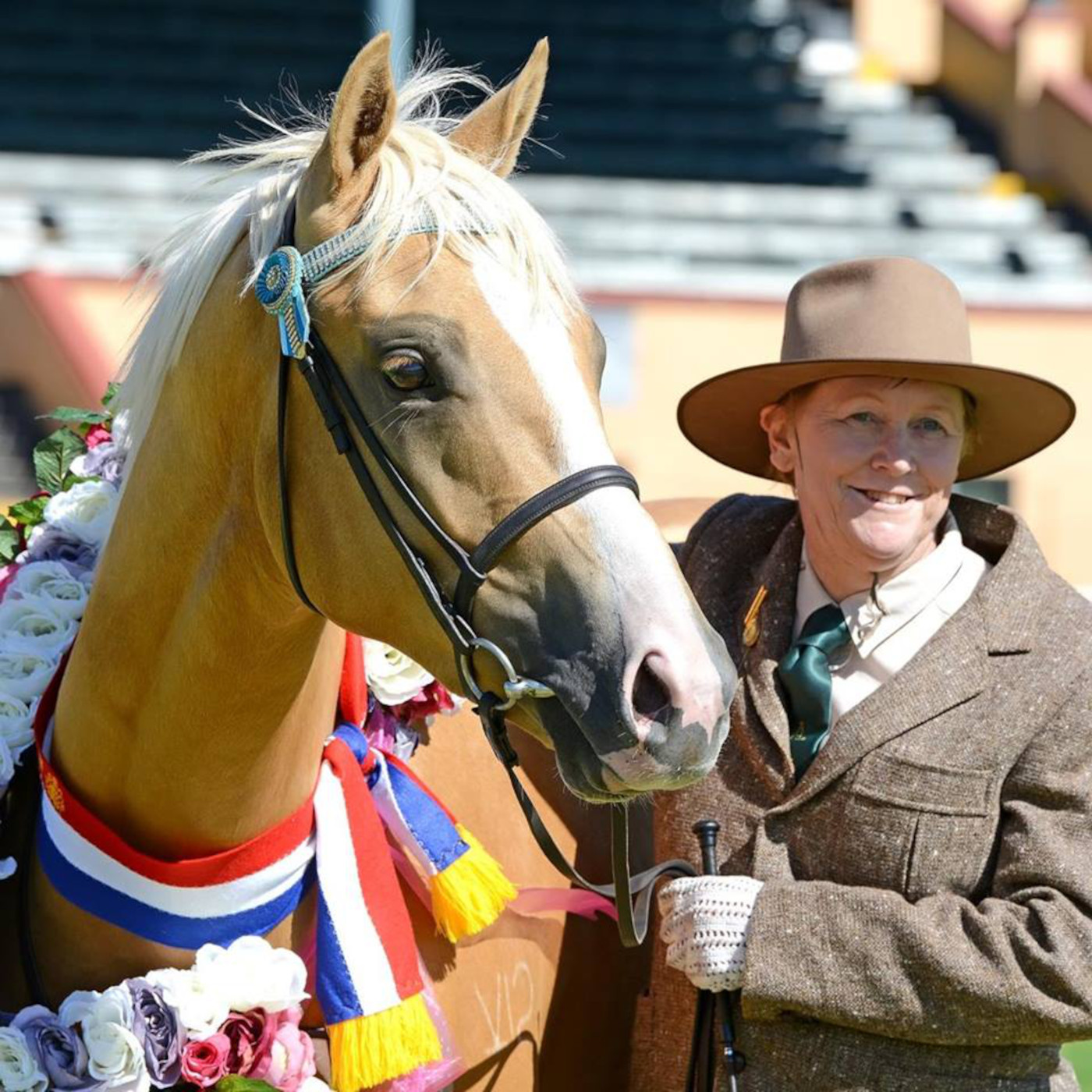
The Centaur
A Visonary Breeder in Austrailia
01:04:28
Jeanette Gower has been breeding Australian Stock Horses for over 55 years in South Australia, operating under the Chalani prefix. Together with her daughter Kim, they have achieved notable success with their stud across Australia. In addition to...
Loading summary
Transcript191 lines
- [00:08]
A
Oh, God. Welcome to the Centaur Podcast. I'm Cameron Adibi and together we'll explore the fascinating world of horse human communication and the extraordinary connections that can develop between our species. In each episode, I interview individuals who share a genuine love for horses and a willingness to spread the love to others. This podcast is for anyone interested in discovering the incredible possibilities these animals have to offer.
- [00:39]
B
I'm excited to introduce my first guest from Australia. Jeanette Gower has been breeding Australian stock horses for over 55 years in Southern Australia. Operating under the Chanel prefix. Together with her daughter Kim, they have achieved notable success with their stud. In addition to breeding, Jeanette taught adult equine studies for 19 years and has written various books and articles. She's the author of the Thinking Horse, a comprehensive guide to successful horse breeding, which is available on Amazon. Jeanette and I found each other on Substack. We both have newsletters and we both follow each other. I reached out to her and asked if I could interview her. We had a very interesting conversation about breeding, about the Chanel breed, about camp drafting, and even the future of horses in Australia. Now sit back and enjoy the show.
- [01:34]
A
Jeanette, this is what an honor. And I, I, I am very appreciative because I canceled on you, really was not my intention and you still are willing to talk to me. But the really cool part is you are. It's 9pm your time right now and it's winter and you're in a winter coat because you live in Australia. What town is it and where is it near? And you're in what?
- [02:00]
C
Well, I live about 50Ks south of Adelaide and in the Adelaide Hills. And Adelaide is in South Australia. So we've just had a drought and we're hoping that the rain we've got this winter is the breaking of the drought, but there's no guarantees to that. Of course. We've had a really bad, really tough season for finding hay right through. Well, people have been bringing hay voluntarily from Perth and New South Wales, which is, you know, thousands of K's away. And we had 80 trucks or what, semis, what you would call tractor trailers, I think come from Perth alone just a month ago with huge bales to help farmers in our states. It's been a bad drought.
- [03:00]
A
This is quite, this is quite, I didn't know this, this is quite a crisis that are, you know, so people are really struggling. How are farms, I mean, our horses, you know, getting their, their needs good?
- [03:10]
C
Yes, yes, yes. We were very lucky because we anticipated and we bought in being in the hills, there was a lot of pasture hay that we were able to buy in. But, you know, we ended up with, I think it was five truckloads of hay that we bought in that we normally don't.
- [03:33]
A
So this is really cool to speak with you because we never. We've met through the Internet. You know, we both. You're a very. You're an accomplished author. You've got a lot of great books which I have yet to see or read, but. So you are a breeder and you.
- [03:48]
B
Breed.
- [03:50]
A
Shalini like champagne Shalani. Australian stocks. That's a very. I never even heard of this breed until I met you. So can you tell me a little bit about the background?
- [04:03]
C
Well, it's an old breed. You may know it as the Whaler. The horses that came from New South Wales and went overseas in the war from Australia, they were known as the Whaler by the overseas people. And all those bloodlines that were formulated to be the Whaler are actually the Australian stockhorse bloodlines. And when in early 1970s, the quarter horse started being brought into this country and people realized they would lose all their bloodlines if they didn't record them. So the Australian Stockhorse registry was formed at that point. Before then, they were just recorded in stud books, on farms and on properties. And then when the meeting was held and they formed the Society in 1971 and started recording all the bloodlines, they realized that they went back to about 14 different sire lines because in the past they'd been known locally, but it hadn't been put together enough for people to realize how widespread those lines had become and had set this type, which. It's a bit hard to explain what an Australian stockhorse type is, but it's probably, if I say, a stronger bond, thoroughbred.
- [05:40]
A
So we're having a little technical difficulties, but we'll keep because it's too, too fascinating. So I read a little bit about the background and so this is your. It seems like you've Multi generations of your family have been doing this. Is that correct? Is this something you've been doing?
- [05:58]
C
No, no, I was the first.
- [06:00]
A
Oh, you're kidding. Oh, congrats.
- [06:02]
C
I didn't have. Yes, I didn't have a horsey background. I was raised in the city and no horses nearby and horse mad kid. And my mum always, she couldn't get me to read, so she'd borrow library books about horses, of course. And my major contact was with a dog that we had, a little Shetland sheepdog. And I had the most amazing connection with him. And at 8 years old, I took him to our local dog training club. And I learned all sorts of things with this dog. And I used to put a halter on him and put a saddle on his back and ride over him. So I was just obsessed. So I didn't ever ride a horse, really, until I was 13. And funnily enough, there was a chap a few miles down the road, bike riding distance, who was looking for somebody to exercise his polo ponies. And my mum heard about this and said, oh, Jeanette can do that. And that's a long story. But anyway, I started exercising these polo ponies. And he. I knew enough in theory, but I didn't know how to ride. But I very quickly learned. And he took me out to polo. So I learned from all the strappers out there how to bandage horses and tie their tails up and put gear on them and everything. And they were very good, those strappers. They really could see how keen I was. And I fell in love with one of the mares he had, and I rode that mostly. And then somehow or other, I'd probably been riding her two years, he let it slip that he didn't own the horse. He was only looking after her. So then I got really, really scared that she might get taken away and I wouldn't be able to buy her or anything like that. So I asked whether I could breed a foal. So I was 15 then, and from my. All my reading, I don't know why my mother allowed this, because she never allowed me to own a horse. Same with dad. But anyway, I just arranged to find a stallion. I decided I wanted an Anglo Arab stallion because there was not many choices in those days. So in 1967, my first foal was on.
- [08:56]
A
Okay, wait, you got cut out? So 1967 was your first foal? Say that again.
- [09:00]
C
Yes, that was my first foal. And she was a beautiful nature. So that was my first horse ever.
- [09:10]
A
It's incredible. That's so cool.
- [09:12]
C
And. And everyone. All the. All the local people said, oh, don't break it in yourself. You don't have enough knowledge. And I thought, oh, well, I've trained dogs. What's so hard? So in my innocence, in my innocence, I ended up breaking in this horse.
- [09:30]
A
But you had some people, you had some people helping you.
- [09:32]
C
It all worked out.
- [09:33]
A
Yeah, this is. Yeah, go ahead.
- [09:37]
C
I didn't have anyone help me break the horse in, and that bloodline's still in the stud, and that mare, that no one ever claimed her back and the old man retired out of polo about a year later, and I just was left with the horse. So I ended up breeding about 10 foals from her and I became addicted to breeding horses. So that's how that started off.
- [10:03]
A
Wait, wait, wait. Hold on, hold on, hold on, hold on. So you didn't even own a farm and you're breeding horses? You're a 15 year old kid?
- [10:11]
C
Yes.
- [10:12]
A
How's that work? This is incredible.
- [10:16]
C
Well, I only bred one foal at a time until I managed to lease another mare from a friend of mine who was actually an extremely good sporting mare. She'd won around the state and I managed to lease her. And then the quarter horses came to the quartermaster that was a King Ranch breeding familiar with King. King Ranch, of course.
- [10:46]
A
So, yeah, I am. But hold on, can you cut out? So you. So then you said the quarter horses came and then what happened?
- [10:56]
C
I fell in love with a particular stallion called Quartermaster, who was of King Ranch breeding. And as a result of that, I sent this next mare I leased off to this quarter horse stallion and decided that I couldn't register polo ponies. And that was what I'd been trying to breed. But now I could register quarter horses if I used a quarter horse stallion. So I made the decision to breed quarter horses at that stage. And then over time, I couldn't find out who. How to work out what color these foals were. And I asked breeders and they didn't know. And eventually I wrote away to some geneticists overseas. And this was by snail mail, of course. And one thing I knew because I'd bred pigeons was that pigeon breeders knew about the genetics of their birds, but horse breeders didn't know about the genetics of their horses. And that astounded me.
- [12:04]
A
That's astounding. What year, what year was that, roughly? That was probably, what, 70s between.
- [12:13]
C
Yes, very early 70s between when I was. I had my first file in about 19 years because after gleaning bits of information from overseas people. I realized that people overseas didn't know, and geneticists didn't know either because at that time they were all academics studying mice. And for example, because they didn't know horses, they'd say a brown mouse was the same as a brown horse, which we know isn't the same thing, completely different.
- [12:52]
A
So you were ahead of your time. This is so incredible, because now it's all genetics. All we talk about are genetics. I just sent off a lab report for $60. I got a full analysis. So you were pushing the envelope here, but you're not a scientist. You're not a genetic. You don't have a genetic background. So were you kind of working with these people to kind of create a new system? Then what happened? What was the correspondence between these people that you wrote? What was the correspondence between them?
- [13:29]
C
They would tell me something that they thought they knew. And I'd realized by the time I got my results that. And I did stumble eventually across a chap in Iceland who did know a lot more. He was into the research side of things, and he came out to Australia. He was invited to Australia to do a sheep conference because his expertise was in wool and because the organizer of that had bought a horse from us. He knew that I was interested in horse genetics. So he arranged for Stefan Adel Steinsson to do a day talk to horse people while he was over here for the wool conference. So I was asked to gather some horses together that illustrated some of the points, and we did a parade. And at the end of the parade, Stefan Adelsteinsson said to the crowd, you know, you better listen to Jeanette. She knows as much about it as I do. Which I was absolutely astounded. And up until that time, you see, I was just considered the local expert. And suddenly I was being asked. I was asked to do a genetics column for our Hoofs and Horns magazine. And the editor told me that that was the most popular part of the magazine, apart from the letters to the editor.
- [15:10]
A
Incredible.
- [15:10]
C
And then I was also asked to lecture on genetics at a Palomino group. And so I really had to up my game to do both those things.
- [15:22]
A
Yeah.
- [15:23]
C
And so I was basically at the forefront and terrified that someone would pull me to bits, both as a lecturer and as a writer of these articles. And then I met my husband. Well, that happened all around the same time. And he was an equestrian photographer, so that all played in together very, very nicely. And we did clinics and we travelled around Australia doing some photographing for the Hoofs and Horns magazine. And that just went from there to the point when then I was asked to teach our equine studies course. And I did that for 19 years. And my students would say, when are you going to write a book?
- [16:16]
A
Now you have at least four books. I counted more.
- [16:19]
C
Yes, yes. Well, the first one was a genetics book.
- [16:23]
A
Okay.
- [16:23]
C
Of course, that was Horse Color Explained. So that was how I compiled all my articles from the Hoofs and Horns into. And it was massive even then, because it was a massive undertaking because we were still using fax machines.
- [16:40]
A
Incredible.
- [16:42]
C
And I was sending things off to China for them to print it out because it was picked up by Simon and Schuster, the big publisher.
- [16:51]
A
Sure.
- [16:51]
C
But they were the ones who sent it off to China. And then it would come back by fax machine and I'd be looking in the middle of the night on this gray fax paper, these tiny little superscripts which were being used in genetics by. At that time. They don't seem to do that anymore, which is a blessing. The nomenclature for genetics has changed considerably in that time. So that was the first book and that sold about 10,000 copies worldwide. And that was in 1999. So just before the Internet really got going. And I remember we had a computer with, you know, with tapes that you had to take, type in and wait 10 minutes before it would fire up. So that's, that's why it was a massive effort.
- [17:46]
A
Definitely. Oh my God. This is so. Yeah, you've got. I had no idea. This is. We're going to talk about this. So I do have to ask more questions now about this, but so, because.
- [17:56]
C
You know, I suppose you want to know. You want to know a bit about the Australian stock horse.
- [18:00]
A
Well, I would love to know that. But this, you know, so this book, first of all, which. Where were you teaching for 19 years? It was a local university.
- [18:10]
C
Yes, well, it was actually what they call a tertiary college and I actually did it on eight different campuses at one point. So I was traveling more than I was teaching. But then that got taken over by the local university and they didn't want to continue with non. What do you call it? Non college, non university staff. So I got dropped with a lot of other people and that's why I finished that, but why I decided I'd better write my book.
- [18:51]
A
Yep, smart. But still, this is incredible. So, I mean, is that program, that equestrian science or equine science program still in existence?
- [19:01]
C
No, because they cut it out.
- [19:03]
A
Sorry.
- [19:04]
C
Because it wasn't that. It was adult education, but it wasn't a university course. So it just got cut out through cost cutting, I suppose.
- [19:13]
A
Yeah, yeah.
- [19:15]
C
Yes, it was a pity, but. Oh, well, I went on to other things and.
- [19:19]
A
Yeah, that's life, you know, so. So I mean, I, I mean, I'm, you know, I'm. If what you just told me, though, I'm thinking you should be in like the Australian hall of Fame of. Of horses or something. Is anybody wreck. Not to pump your ego up here, but you've got. Between the breeding, the genetics, the teaching, you've did a lot. You've Done a lot in your lifetime.
- [19:41]
C
Your, your people can't see this, but I wrote a book called the Ranick Legacy. I saw that is the story of our stud.
- [19:54]
A
I was, that was.
- [19:54]
C
And the reason I wrote that was because he was put into the hall of fame of the Australian Stockhorse Society. And I thought, well, I've got to write it now. I've had all this information, been collecting all the material which I was going to send to them as articles, but it ended up being way too big, as everything I do seems to be. But as a result of that, I decided to turn that into a book. So, no, I haven't. I don't need to go in a hall of fame, but our horse did. So that was something I'm very proud of.
- [20:33]
A
That's the book I probably want to read first. Be honest with you. I love these. That's why I started the whole podcast. These kind of relationships. We get to have these incredible animals. So let's get into breeding. Yeah, breeding. Such a. I think it's in here, in this country. It's, it can be a real nightmare, be honest with you. What's going on? And there's some really good breeders out there, but there's some people, you know, backyard kind of, but. So you started as a backyard breeder, but you've really developed, you developed your philosophy. So what's your breeding philosophy?
- [21:10]
C
Well, breed for excellence. That's my major breeding philosophy. And I think because I read so much when I was a child, I read books by Tessio and a lot of the Arabian books. I was, I read all the Hoofs and Horns magazine from front to back, you know, and I, I picked up what I thought was good philosophy from various people at the time. But I also questioned things like questioning the genetics and deciding that, oh, those answers don't sound right, you know, and furthering my own knowledge. And I would say the same with anyone who gets into the horse world. If they're curious and they're keen to learn, there's so much out there they can learn and you can learn all the good things. And the next thing would be breed responsibly. So a breed for excellence. And secondly, breed responsibly. And most of my books have that emphasis in them about doing everything ethically and responsibly. So, yes, in modern day terms, I would have been seen as a backyard breeder when I started out, but I was always going to get somewhere, you know, I was always going to make my horses pay their way. I actually bought some Unbroken mustangs, not all together, a few here and there, which we call brumbies and broke them in. So that was before I was married and that was so I could pay for my horses because I couldn't get any income from my parents. And then I went to university so I had no money to pay for them. So selling the foals and selling brumbies broken in and handled and all that was my cheap way of being able to get enough income to keep my horses. And slowly but surely I used to pay for adjustment and I'd breed on adjustment. And that's not such a bad idea if you're starting out because other people are paying the mortgage, other people are paying the rates and taxes and you don't have the concerns of property ownership. You only have the concern of looking after your horse and your horses. But I love them and so I handled them very, very well. I've spent all my spare time with them. I didn't leave them to fend for themselves and I didn't neglect them. In other words.
- [24:02]
A
Yes, I think that's what I've noticed the most. That's what I noticed the most. So I appreciate, I think that's a third point in your, in your breeding point is you, you, you have really not only responsible, but you're very, overseeing everything very thoroughly. So yeah, if you, you were, it sounds like a backyard farmer, but a backyard breeder. But you have, it seems like you had a gift right out of the gate and so what was it?
- [24:29]
C
Well, it was a vision.
- [24:30]
A
It was a vision.
- [24:30]
C
It was the vision that I want. I wanted to do the right things by the horses and I always sold them well handled because I believe that if you handle your horses well, they will always find good homes and it will be rare that they'll end up in bad homes because an educated horse. And also if you breed for excellence, you're selling them at higher prices. And usually the higher priced horses go to people who want to give them better homes.
- [25:04]
B
Yes.
- [25:07]
C
And they look after them better because they've spent more money on them. And I also found over time that if you sold a cheap horse, they were the people that would try and knock you down the price and so forth. You know, they were the ones that created problems for you. So it makes sense to learn as much as you can, do things in the best manner that you can. And also you have to have a mentor. I was lucky. I had the polo strappers teaching me in the early days. But also I worked on some very renowned studs over here, the quarter horse stud that I mentioned, I worked on that stud during my university holidays to learn information. And because the horses had come from King Ranch, I again studied Kleeberg's little booklets that he wrote on genetics and inbreeding and line breeding and how he bred the Santas and how he bred the King Ranch quarter horses. And all that fed into me, the person who just had to learn more and more. What changed about the quarter horses for me was they started quarter horse racing here in South Australia and she came second in the All Australian Futurity, which is. Was our highest earning racehorse race. Sorry, for sprint racing.
- [26:42]
A
Hold on, Jeanette. Jeanette, you cut out. So you said they. Oh, sorry, yeah, this is Repeat. I was just to ask you. So you said they. The quarter horse. You just were saying about the quarter horses and what had changed and you said this. You met the. Yes, go ahead.
- [27:00]
C
We bred a horse called Paper Tiger, who was second in the All Australian Futurity, which was a big race over here. But shortly after that, sprint racing started to die because the thoroughbred industry got wind of sprint sprint racing starting to become popular and they were very, very scared of this. So they went and caused a lot of friction and most of the people in South Australia left and went to Queensland and it almost folded over there as well. So there was none, no sprint racing left in the country to speak of. And just at that time we got involved with the Stockhorse Society. We started up the first branch here in our state, my husband and I then, and we had to do classifications to see which horses were of the type and well performed and suitable for being put into the stud book. So I went round as a classifier and my husband photographed and reported on these classification days and we were at one of the first ones ever and we came across a stallion that was being put up and we just fell in love with him. Neither of us saw him together. I was classifying him so I wasn't allowed to speak to anyone else. And he was photographing from a distance and as soon as it was over, we both walked up to each other and said, did you see that horse? We both fell in love with the same horse and we said, we have to have that horse now. He was bred to be a polo pony and he was a full thoroughbred, but he was bred on polo pony lines, not racing lines. And he happened to go back to one of these 14 stallions in the Stockholm Society. This is where it all gets so amazing. So we tried for quite some time to be able to breed mares to this horse. He was privately owned and the chap wouldn't stand him to outside mares. But ultimately he gave way and we managed to breed a couple of foals. And finally one day we got a phone call. I want to sell my horse. Where do you think I can advertise him? And my husband who answered the phone call said, look no further, we'll take him.
- [29:43]
A
I love it. Oh, good. Good on you. Good on you. No, you again. You definitely had a vid.
- [29:49]
C
So that was Rannock and that was, that was Rannick was the one who got us, got us started as a real stud because then we owned a stallion then we had to promote him, you know, and that's what made Shilani really become something.
- [30:05]
A
And this is, this is, this book is on Amazon. Ranick Legacy A story of a Remarkable Horse. I love that you wrote a. I so love that you. Because I have a couple horses I want to write about. But so hey, good on you. Yeah, I think these stories. So yeah. So you kept this breed. This breed is still. Is it flourishing in Australia?
- [30:28]
C
Yes, yes, not so much interstate. He's. He was highly known here in South Australia, but we had nowhere to keep him. My mother in law ran a riding school. So we managed to set up a paddock at her place and put the stallion there. And suddenly we had to learn about stallion behavior out in the paddock and how they round up their mares and how they hand breed, how they serve naturally. Because we couldn't do it any other way, only not owning any land. But the connection we both had with that horse was remarkable. He was the quietest horse. You could take him out of the paddock, put him amongst all the riding school kids and everything. No one would know he was a stallion. And we had him all his life in that riding school environment. We could ride him anywhere. We could catch him in the paddock, take him to a show, win championships with him in stockhorse classes. He was just the quietest animal and yet the most magnificent looking horse you would ever wish to see. I've still never seen a horse that I like more than him.
- [31:53]
A
You have to send me, you have to send me photos, please. But you know, so I do, I do, I have interview. I've interviewed people with, about the wild herds here in the United States. And this is one of the things that I think is so misunderstood about stallions. They're very soft and you know, they're not. You know, you had a rare one, this one is. But they I think there still is a lot of misconceptions about stallions. You know, everybody's like, yeah, you gotta. You gotta. You gotta be on call. I mean, yeah, of course, you know, if they're around a mayor and, you.
- [32:24]
C
Know, they're doing that, I think you definitely have to start with the right genetics and you definitely have to geld those that aren't suitable. Continuing down from Rannoch, we had to geld as much as we could.
- [32:39]
A
Okay.
- [32:40]
C
To preserve the best of them.
- [32:43]
A
How did you select? What traits were you. What traits were you looking for to preserve the.
- [32:48]
C
Well, firstly, we wanted to keep his best daughters, and therefore we wanted to preserve those daughters that were the best by performing them. So we. We didn't play polo ourselves, so we lent them to polo players. And he had a remarkable record. He had. At one stage, he had ponies playing in all state teams in the. For the Adelaide, the. Sorry, the Australasian cup, which is the biggest tournament in Australia. You know, those. The sorts of things. And top polo players used to rave about them at the time. And some of them were ours because we'd lent them to these polo ponies. But then they were being used in the riding school of Mrs. Gower. They were used for such a variety of event. They went eventing and dressage at high levels, especially eventing. So the mares we kept, we ended up keeping about eight of his mares, eight of his daughters that had been well performed for our broodmare band. And I think we only sold three colts at any stage. And the reason we wouldn't sell any more was because we wanted them to be as near to. As excellence as he himself was. Otherwise they should be gilded. Good.
- [34:28]
A
Good on you. Really. This is so, again, so thorough how you approached all this.
- [34:36]
C
We didn't want substandard cults out there representing Rannoch. So that was the idea. And then when he died, we made a decision that we would continue those bloodlines. We would breed two his sons, or we'd use his mares as an outcry and then keep those daughters and breed back because there was no DNA testing or genetic disease testing. So. So the only way to test. And we decided to do what Kleberg had done, and that was to inbreed, start inbreeding and see if we got any faults coming up. And we didn't. And the next generation, we did it again, and we would experiment with inbreeding and we didn't get any faults come up. So we decided that the line was worth keeping into posterity and that's when we started. We bought some stallions of our own and mostly we've kept colps that we've liked for our own breeding program and that's how the lines developed further and spread around the rest of Australia. But the Stockholm Society has become absolutely huge here in Australia and they have national championships which are huge. We still have royal shows, which along the British system.
- [36:08]
A
Yeah.
- [36:09]
C
So we have a bit of the best of both worlds and they've competed very, very, very well in both those types of events.
- [36:17]
A
Yeah. And Paul, you mentioned polo and dressage eventing. You know, they've, they're very, all, all rounded, suited for whatever. Whatever.
- [36:28]
C
And hacking.
- [36:29]
A
Yes. Yeah, good.
- [36:30]
C
So hacking as in British. British hacking, not American. Ha.
- [36:35]
A
Yeah, I know a little bit, but I know. So how about back mares? I mean, not every mare is meant to be. To be bred. How do you select your mares?
- [36:45]
C
That's right. That's why we had to perform them.
- [36:48]
A
Okay. All right.
- [36:48]
C
We selected them on confirmation and temperament and then we performed them. And not everyone would make the grade for us because we wanted to keep the best of the daughters. And also we were using him for outside mares as well. And some of the daughters from outside mares played polo and in there when they were aged mares, sometimes people would give them to us. So we had a few polo playing mares by him that we didn't breed that we also used.
- [37:25]
A
Okay. Yeah. All right, so you ran. This is, you know, is this still ongoing? Are you still breeding now?
- [37:36]
C
Well, yes. We've got about 30 horses on the place now. I handed most of my horses over to my daughter and she, she was never into breeding. She was always into the riding. And when she had to retire her favorite mare, that's when she decided she'd breed from her. And now she's hooked on breeding too. All right, so most of her horses are descendants of her favorite mare or some that I've given to her, but I've still got. Oh, well, I'm expecting three foals of my own this year, so I haven't really gone out of it. I just don't break them in anymore myself.
- [38:18]
A
That's my next question.
- [38:19]
C
And I don't, I don't show them any more myself. I just do the occasional trail ride, but I still handle all the files.
- [38:27]
A
Awesome. That's what I wanted to hear. So, I mean, back to your breeding program, which is, you know, it is a very you. It's no longer. I don't see it as a backyard so it's a very. People know of you. You have a website and people come to you and you probably have a. Do you have a waiting list? You mean people really? Are you. My demand.
- [38:49]
C
We do. We always seem to be able to sell the foals as wieners, or sometimes they're so well before that and people have to wait till they're weaned. And we prefer that because unless we've decided to keep them ourselves, we don't want to have to hang onto them all and break them all in ourselves. Mind you, we're not big breeders and that may surprise some people because of our reputation, but right up until my daughter started breeding a few, we never bred more than five foals a year.
- [39:33]
A
Again, this is back to.
- [39:34]
C
This is back to your average.
- [39:35]
A
That's your philosophy. Back to excellence. You know, if you're doing more, you're going to probably not have as much excellence. It's going to be more about, you know, sending them on. So this is the most important thing I wanted to ask you about the foals. You know, you said you've been handling them, so what is that process like? And how do you really set them up? How do you set them up for success? That. That's. This is what I see missing so much that.
- [40:00]
C
Yes, yes. Well, I put that all in my book, the Thinking Horse Breeder. I've actually got in that book lessons on foal handling, yielding, handling and breaking in as separate chapters and how we go about it with all the photos. But always we start with the foal handling it in on the first day, unless the weather stops us, because we. We foal them outside, not in boxes. The they would be rubbed, scratched, loved upon and have. They'd feel the rope around their rumps and around their neck just for. And we just push them along alongside the dam for a little bit of leading practice. And then when they bend from the rope through their necks, that's when we'll put a halter on. Because if you don't teach them to bend to that pressure first, if you just put a halter on, they'll most likely flip or at least pull away and you don't want to startle them. So we catch our foals out in the paddock, usually just take the mare over to a corner of the paddock and slide in alongside the mare and catch the foal. It's pretty easy. If I find that there's one foal that's particularly nervous, well, my daughter and I will hold the mare and the other will catch the foal as it tries to go under the mare's neck. That's usually the only thing that they do. So then we lead them further and further away from the mare and together with the mare until. Usually we would do that on a daily basis until they're happy with that, pick up their feet. And that takes a process of about a month. And then we might only do it once a week. We just walk out into the paddock and catch them in the paddocks about once a week. And it's pretty simple, really. And we expect at weaning time they will have been gilded, been branded, vaccinated, had all the things necessary for them to go to a new home, and they will have had a float ride. They would be leading, they'd be tying up without a rump rope. They would have had all that practice before they get moved to their new homes.
- [42:45]
A
Okay. Hey, this is good. This is really good. And so what, at what age do you typically feel like they're ready to go to a new home?
- [42:57]
C
We don't wean till they're six months of age, but possibly seven months, depending on the owner and how soon they want them.
- [43:05]
A
Okay.
- [43:06]
C
We do tend to breed the taller stock horses, too. Stock horses average 15 to 16 hands, and ours are nearer to 15, two and up. Because I like the polo height still.
- [43:22]
A
Yeah.
- [43:24]
C
There's a sport we have over here which is polo cross. I don't know if you've heard of it.
- [43:30]
A
Yes, I've heard of it. There's a.
- [43:31]
C
It's a bit like polo.
- [43:32]
A
It's happening here a little.
- [43:34]
C
It's a bit like polo, but there's six to a team, but only three go on at once. So each chaka, you alternate with the three team members, which means they only need one horse to play a full game. Not like polo, where you might need three or four horses, or sometimes eight if you're playing eight chuckers.
- [43:56]
A
Yeah, right.
- [43:56]
C
But so Polar Cross has really taken off in Australia and has now gone overseas. It's very big in England. It's getting quite big in Africa. Zimbabwe and South Africa have huge teams. And America is now taking notice of Polo Cross as well. So we're now starting to export Australian stock horses for Polar Cross to those countries. And what's happened is working equitation has picked up the stockhorse over here, and some of the stockhorse breeders in the United States that bought them for Polar Cross are now starting to do working equitation with stockhorses there's still polo ponies going overseas, particularly to the United Kingdom of these same lions that we've been breeding. And then the biggest sport here is camp drafting. Now.
- [45:00]
A
Never heard of that. I read that on your website. What is that?
- [45:05]
C
Right, well, it's the Australian equivalent, I suppose, to working cow horse and reining and cutting all in one. Fascinating because you've got a huge, what they call the camp, that's the yard, but it's much bigger and that's the cutting aspect in that yard. And as soon as the rider feels he's got control of the cow, instead of letting the cow go, I'm going back to getting another cow. He calls the gate and the gateman open the gate and the cow runs out onto the oval. Now these are just ovals, like an old footy oval or something or a rodeo arena and out goes the cow. Now on this arena is a course marked by trees or flags or similar, but it's a course and you have to do a figure of eight rounds, this course. So like a barrel race in shape. And then you go to the top peg, which is actually two pegs side by side and you have to take the beast through that gate coming back towards the judge. So that's quite narrow. So that's a bit like taking sheepdogs.
- [46:27]
A
Yeah.
- [46:28]
C
For asking them to take sheep through a gate. The cow doesn't always cooperate.
- [46:33]
A
This sounds like this would be entertaining to watch a little bit maybe. Do people like to watch?
- [46:38]
C
Oh, it certainly is. It's huge. And when I say huge, we can have three and four day events from beginners through to novice through to open and very high level camp drafting where you get 200 and 300 entries just for one event.
- [46:59]
A
Right.
- [46:59]
C
And they might go for three or four days. And you've got juniors, kids riding. Kids ride. They only have one cow right up until they're 12 years old. And then when they're 12 years old, they'll get six cows to cut out and cut one from the six and then head out to camp. So you and the adults, they start with six to eight cows, they pick their cow, they cut it out, they go take the cow at flat out speed. Usually because you've only got 90 seconds to do this.
- [47:38]
A
Yeah.
- [47:39]
C
Or you. They don't ring a bell, they crack a whip.
- [47:43]
A
Wow. Okay.
- [47:45]
C
And you get cracked off. If you can't do it in 90 seconds.
- [47:49]
A
That's quick. That's very quick.
- [47:50]
C
If you don't do the course. If you don't do the course if you take a left turn instead of a right turn because the beast went the wrong way, when it goes out the gate, well, you'll get cracked off. So it's really exciting and everyone cheers. And the horse work at the highest level is unbelievable.
- [48:10]
A
And I'm gonna say I've seen, you know, some of, you know, the western riders here in the States, I suspect, you know, it could be very enjoyable for the horse, this, isn't it, you know, very. A cool little, you know, partnership that they get to do, working with a rider. Some horses probably really excel at this. Do you think there's some good horses?
- [48:29]
C
They do love it, yes.
- [48:32]
A
This is like. I won't bring this up because, you know, a lot of people might, you know, in this part of the world would say, oh, that's cruel, you know, you know, you have to. I say, you know, is the, Is it. Is the horse having. Is it. Is it having. Is it enjoying. Is there a moment they get to have enjoyment? And I'd say there's parts of that very much.
- [48:52]
C
Well, there's, there's been the odd time. And I think you have to say they do because although they're schooled and they understand it, they've got to have that cattle sense in the first place.
- [49:02]
A
Yeah.
- [49:03]
C
And they do the work on the station properties usually as part of their day to day job. Right. Mustering or. Well, that's the equivalent of roundup for you. But over very, very wide station properties, you know, thousands of acres. And they don't rope them very much. In Australia, that's only done back at a camp, which means you've got to muster long distances to bring them, the cattle back to one spot rather than hold them together and rope them to then brand them. So the idea is you bring them back to one spot. So horses might be going for days, might go for a week without any change of horse or anything, and do long distances. So unlike the quarter horse, the stock horse has to walk very freely over long distances and have the stamina to do that and still have the cow sense that when he's back in the camp, he can cut out the ones that we want. So camp drafting is really proving what your horse does in weekly, daily work through the week. And everyone comes together and they do that. But there's. So because there's such huge fundraisers, you can have five or 10 camp drafts on around Australia in any one weekend quite easily. And people will travel 500 or 1000ks just to get to one because the distances are enormous.
- [50:43]
A
Ah, this is, I, I, I'm gonna look it up and see if I can get YouTube and watch it. But you know, so Jeanette, we've, this is a, we've covered a lot of ground in this little one little hour here. We're gonna, might have to continue another time but this is like reading genetics publishing before there was Internet, you know, this is like you've done so much here and then and now camp drafting. Camp drafting, it's so fascinating. That's kind of something that I liked by the way. But you know, as I wanted, you know, one of my big concerns right now is that I'm curious, you know, as we wrap up what you feel like the future is for the horses here. But one of the concerns is there's not many, there's less and less young people getting involved in equestrian because it's price and the farms are disappearing in this part of the world I live.
- [51:32]
C
Yes, that is a concern, a real concern.
- [51:35]
A
I'm curious what your thoughts are and in your part of the world.
- [51:39]
C
Well, we have small numbers anyway by comparison to a country like you, but we have very good programs. The Stockholm Society's got a really good youth program for camp drafting as well as their other events that they hold. The pony clubs support camp drafting especially in the eastern states. Not so much here. The pony clubs here support eventing in particular and dressage. So that's quite big. But it's still a problem. The biggest problem is getting boys involved. But they will be involved in camp drafting. So that's a really good one for families. It really is. So I'm not afraid for camp drafting. I think it will always be good. But I think it's starting to turn a bit that kids want to get out and about and you see, I don't know if you've ever watched Temple Grandin's videos. Yes, she talks about, yes, she talks about schools not giving trades anymore and not helping people who learn differently from the academics. The chance to succeed. And the only way this is going to change is if educationers start to realise that we need kids to get out and about and practice using tools and getting skills away from the Internet 100%.
- [53:16]
A
Yes.
- [53:16]
C
Away from their computers and away from these little tiny houses that have no backyard that they, and they can't even keep a dog. You know, there's got to be a change somewhere along those lines.
- [53:33]
A
I agree, I agree. It's very, that's what my whole background is, this hands on experiential learning and with really developing skills that they can use wherever they go. And I love Temple Grant, Temple Grandin's books and her videos are very. But yeah, of course she's autistic.
- [53:51]
B
And that's.
- [53:52]
A
I work with wonderful. I work with a lot of kids that are autistic who are incredibly smart, but they need this, they need a lot of kind of sensory input to guide them. But anyway, this is, you know, they.
- [54:04]
C
Have, they have a lot of rapport with animals, don't they?
- [54:07]
A
They do. Some of them. You know, again, you can't make. What's the saying? If you meet one person who is autistic? You've met one person who's autistic. You know, it's very. All depends on the person.
- [54:20]
C
So much variation.
- [54:21]
A
Yes. But you know, so some kids, like I have boys and a lot of the boys, they might, might not be so much interested in the horse, but they're very interested in the, the architecture of the barn or, you know, the how the fan, you know, any. Something around the farm. So it's. The farm experience is really like you, I think, letting them explore and then I think I follow them and like, okay, let's ask questions about this then.
- [54:52]
C
You know, let's see them get muddy. Let's let boys get a hammer and a nail and bang things together. Let them climb trees. I mean, I used to climb trees a lot too. I don't know what my parents really thought. Well, your parents were, those were the days.
- [55:10]
A
Well, your parents, I think were also very ahead of their time. They saw your gifts and let them come out. They didn't stop you, which is very. Also says a lot about your parents. But hey, that's true.
- [55:25]
C
I really thank them for not stopping me.
- [55:28]
A
So you got your daughter. I gotta. Because this is also, this is an, maybe another conversation we can schedule. But you're, you know, you are a for profit business. You're, you're, you're keeping yourself supported, correct?
- [55:46]
C
No, I had to have a day job all the way through this.
- [55:49]
A
Okay, all right.
- [55:53]
C
No, what, what I worked on. Well, I don't think there's any stud in Australia that supports itself without an outside income of some sort sort. Whether it's adjustment or horse training, whether it's horse activities or whether it's their husband paying for their wife's horse hobby or whether it's like me that had a, had to have a job. But for me, my horses had to pay their way because my job didn't pay for. My job paid for me and my kids and growing up and being a Family. But the horses couldn't eat into that income. The horses had to pay their way. And although I can say they make a profit, I certainly couldn't live on that's.
- [56:42]
A
But the horses had to pay for themselves. So you made that one criteria.
- [56:46]
C
Yes, yes. So I'd. I'd make certain that if you breed for excellence and you sell horses at reasonable prices, and of course, the prices weren't good in those days, they're good now because the Stockhorse Society has a reputation of having good horses from the dedication of the particular breeders that are breeding them. But we've got some auctions now that are world class and we have high prices. And there is something in it for people who want to send horses to these auctions now. They never used to be. And we haven't sold a horse at auction. We've sell them privately. But we can get good prices for our horses now where we couldn't in the past. So now that I'm retired, my horses, my horses still pay for themselves. I don't have to eat into my retirement money to do it.
- [57:46]
A
Yeah. Yep. Yes. Good. All right. I'm glad to hear that you're. And I'm glad to hear you're still, you know, you're still keeping active and that, that's. So that's. That's a horse. I think that's so important with the horses too, by the way, that, you know, we don't retire horses. I'd say we move, keep. Keep them active, you know, keep them, you know, moving. And yes, they do better. But yes. So. So do people want to find you? You have a website, shalani.net Chael Shelani website.
- [58:19]
C
Yes. And Shilani Facebook page.
- [58:22]
A
Great. And that's C H A L A N I. Right?
- [58:27]
C
That's correct.
- [58:28]
A
Okay, great. And then, yeah, you got. And of course, you got your Amazon site with all these great books. Which one should I start with? I really want to start with the story of Roanoke. But the breeding book. Yeah, the Renick, your breeding book is. It looks like the Ranick book is.
- [58:44]
C
His story and the story of our stud and the story of the families involved. And there's a lot of Australian stockhorse history in it. But the thinking horse breeder. That one. Yeah, that's the one. I can just go through a couple of the chapters if you like, to give you an idea of what is in it, just in the way of contacts and what is successful breeding.
- [59:14]
A
I'd like to.
- [59:14]
C
Very responsible breeder. Think before you breed. Starting out, starting over. That's when you might already have a stud, but you want to take it up to the next level. Financial mindfulness. So I talk about keeping your finances in check and being able to afford what you're doing, because I've been and done those hard yards myself. Setting up a property, setting up your foundation, stock confirmation and breed type and movement and how you select for all of those and putting that all together. And then I've got another section on basically the inheritance side of things. The importance of the mare and the stallion, artificial breeding methods, inheritance methods. You can see I can go on and stud work and care of the brood mare, care of orphan foals, raising foals, training youngsters, starting them under saddle routines and first aid and feeding and equipment marketing. I even go into photographing horses because I had that expertise from my husband, but also because this is so important for marketing.
- [60:38]
A
Absolutely.
- [60:40]
C
And then I go into marketing your horses and buying and selling them and preparing your horses for sale. So there's a lot in it. A lot in it.
- [60:49]
A
Very, very thorough book. All right. You got my interest. Okay. And that was just published a couple years ago, so. Yeah. So a lot of recent accumulation of all your years of experience right there. Thank you.
- [61:03]
C
That's the idea. Yes. People asked me to write another genetics book, and I really felt that I hadn't kept up with it enough. There's been so many changes. And then after I retired, I thought, I've got all this background information and knowledge and photos sitting around and all that sort of thing. I should write a book. And I hadn't thought about doing so at any stage until then. And suddenly everything was coming into my head, so I had to write it down.
- [61:36]
A
That's awesome.
- [61:37]
C
And within three months, the book was written and published.
- [61:41]
A
Fast. That's very fast. So, yes. I have to. I have to ask, what was your day job?
- [61:48]
C
I was award secretary in a mental health hospital.
- [61:52]
A
Wow. That's a challenging. That sounds challenging. Very challenging.
- [61:57]
C
It was. It was a big change after teaching.
- [62:00]
A
Yeah.
- [62:00]
C
I can tell you.
- [62:01]
A
Wow, man. Oh.
- [62:03]
C
One of the. One of the mental health patients said to me once, with a finger up very sternly, and she said, I can tell you've been training dogs the way you talk to us. And I. I nearly said to her, you're totally right. But I didn't say anything. I just shrugged my shoulders.
- [62:30]
A
That's hilarious. Hey, hey. Whatever it takes. You made it work for you. And so that is. That's another story there. See, we all have these stories. It's incredible. Your journeys it is. Your journey is a very rich journey.
- [62:50]
C
It's a problem when you're 75 years old that you have all these stories. Stories.
- [62:55]
A
Yeah. Yeah.
- [62:56]
C
I think that's why kids always sit down with their grandparents, so that. Because they're never bored with the stories, hopefully.
- [63:03]
A
So, I mean, that's another, that's another big issue how, you know, grandparents are getting shipped off to these nursing homes and. But, hey, we're. You're doing, you're doing a good work. Keep it up. And so, yeah, look, everybody, please look up Jeanette on her at her website and Facebook page and look for these awesome books. And let's continue our conversation another time.
- [63:27]
C
Thank you.
- [63:28]
A
It's been really enjoy talking with you. Thank you. Finally.
- [63:31]
C
It's been fabulous. Thank you. Thank you.
- [63:35]
A
Okay, have a great day. And let's have stay warm. It's winter. Stay warm.
- [63:41]
C
Thank you.
- [63:42]
A
All right. Good night.
- [63:45]
C
Love talking to you.
- [63:47]
A
Likewise. Be in touch.
- [63:49]
B
If you'd like to learn more about Jeanette again, you can go check her out@thinkinghorsebreeder.shonali.net she's got some books and articles, and if you want to learn more about some of my work, you can check me out@camronadb.com and if you like this episode, please share with your friends and family. I much appreciate your support and stay tuned for more episodes. Thanks so much, everyone.
- [64:21]
A
God.