← The Centaur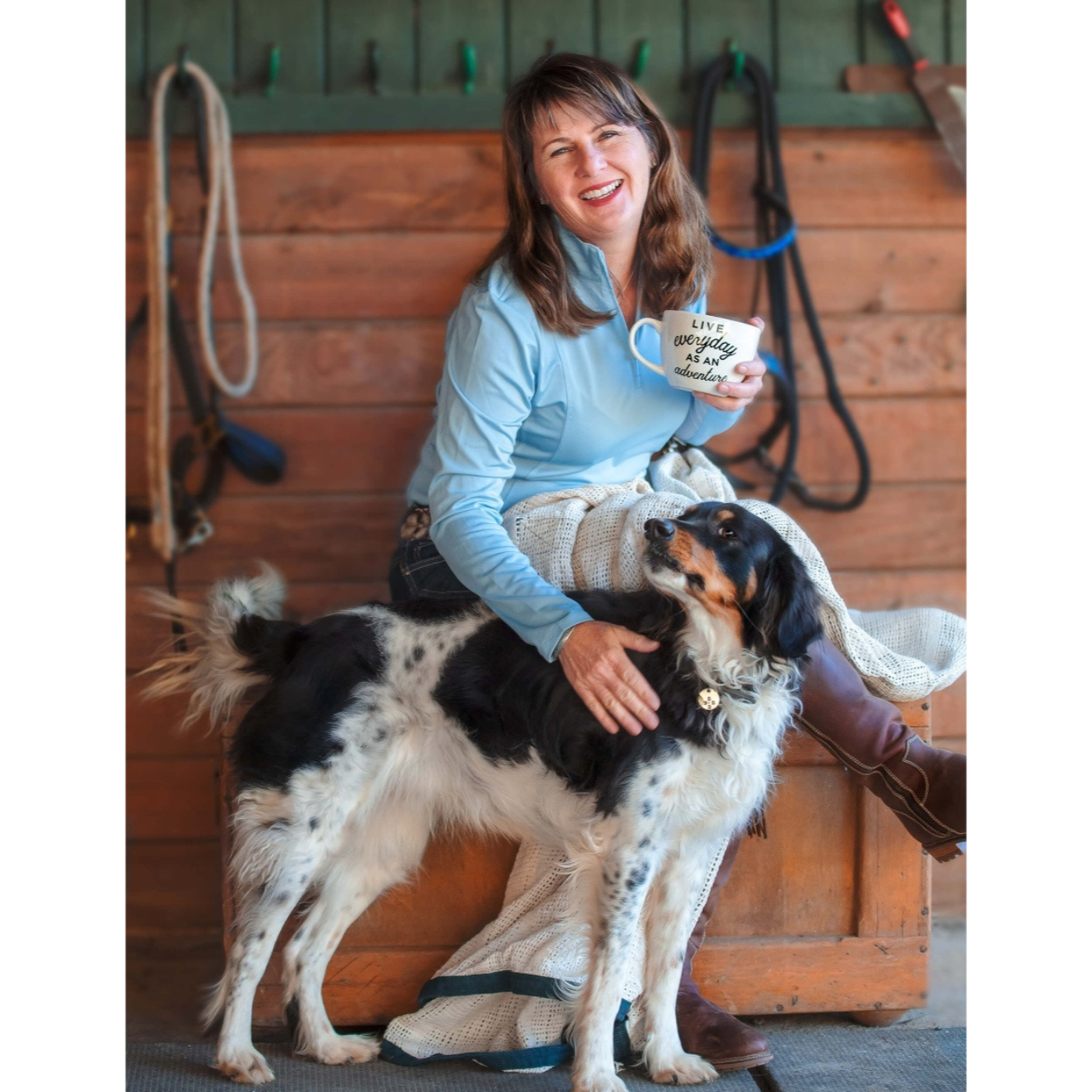
The Centaur
Authentic Partnership: Let Horses Be Horses!
01:04:52
Julie Robins is an equine behavior and relationship specialist with a passion for helping equestrians confidently develop safe, fun, and functional equine partnerships for any discipline. She created The Horsemanship Academy in 2005 to share her...
Loading summary
Transcript125 lines
- [00:00]
A
Foreign.
- [00:06]
B
Podcast. I'm Cameron Adibi and together we will explore the fascinating world of horse human communication and the extraordinary connections they develop between our species. Join me as we delve into the unique ways humans and horses connect and understand each other. Through discussions with true innovators, we uncover the subtle cues, bonding techniques and emotional connections that enrich our relationships with these remarkable animals. Whether you are a seasoned equestrian or simply curious about the language of horses, there's something here for everyone. This interview was super fun with Julie Robbins. I felt like I was interviewing my soul sister. Julie is an equine behavior and relationship specialist with a passion for helping equestrians confidently take develop safe, fun and functional equine partnerships for any discipline. She created the horsemanship academy in 2005 to share her knowledge and expertise. In 2023, she created the nonprofit Leg Up Experiences to share the healing power of horses with first responders and veterans. She's often seen riding bridalists and having fun with liberty work and educating others to build the equine partnership of of their dreams. Sit back and enjoy the show. Julie. Hey, thank you. This is awesome. Glad Karen connected us. Really cool, Cool to learn about you and your background. I checked out your TED talk. Congrats. You know, TEDx talk, but still congrats.
- [01:41]
A
Thank you.
- [01:41]
B
Yeah. And you know, I, the testimony, I always ask for testimonies. You know, this is so important because we get, we get somebody to share what they. Their experiences with us and your, your testimonies from the veteran, you know, what do you say? I shave every. He was, you know, very, very bummed out, so to speak. He was in not even willing to get on a plane to come see you. But then he, I think said, I shave every Wednesday and Sunday. Now that's one of the best testimonies I've ever heard. I'm taking care of myself. Not only on a weekly basis, on a daily basis. That's powerful. It's not just a one time deal you've worked with.
- [02:30]
A
What was really fascinating about that gentleman was that he owned horses.
- [02:33]
B
Whoa, okay.
- [02:38]
A
He just didn't care about anything. And so he owned horses and they were. He'd heard a little bit about natural horsemanship. Didn't really interest him. His horses were just kind of things he hopped on and rode and you know, he just was super shut down. And you know, he'd go into town and you know, I called the editor of the paper because I wanted to use a photo of him kind of the before photo where he was just, he looked like the Town veteran bum. And he said, I don't know what you guys did over there in South Carolina. He came back a different person and so he wanted to chat. So we chatted about it and he was so motivated that he ended up going to a natural horsemanship clinic with Buck Braniman. Yeah. Like he hauled to Oregon, you know. Yeah. He was like, I'm just enthused. But it, it spoke to his soul in a way. I mean horses have that ability, right. They can speak beyond words, which I think is where the change happens and, and it just reawakens. I'm not a scientist, but I know there's a lot of scientific proof about the patterning of the brain.
- [03:48]
B
Yeah.
- [03:49]
A
And the way I believe it is that when we take boys and make them into soldiers, we break them down and they get more in tune with their reactive brain and then they go through their military experience and I feel like the brain compartmentalizes. You know, they just get so used to the way they're doing things. You know, they're not really thinking, they're just doing it becomes automated and it's almost like they build this disconnect between their emotions. And somehow when you go with a horse, and particularly through my, my one day process, you take a deep dive, you learn enough to go in a pen and start communicating that you have to regulate your emotions along with your mental ability. And what I understand though have not had the opportunity to prove is that new neuron pathways are created and, and empathy comes back and it's just. And once it happens in the brain and it fires, then it organically processes. So many times people had come through our program, veterans had come through and their bigger change would be a week, a month, six months later, it organically sort of continues to work its way, particularly if they continue some of the other mental health and well being tools like talking to a therapist and getting out in nature and shaving once a week.
- [05:13]
B
Doing personal self care stuff which is eating well, exercising, all these other things. We know that these all work. So I work with a lot of, mostly children with emotional difficulties, but I've worked with actually one veteran and was really a very powerful experience. But why do you think horses and veterans go so well together? We've known there's a lot of veterans programs out there. Yours sounds very special, but why do.
- [05:46]
A
You think it's very unique? I think that they can relate to each other in a way that a civilian, if you will, for lack of a better word, may not. A trauma survivor has similar things, but I think veterans on a whole, they were taken very young. Many of our kids enlist. They lie about their age, I mean, particularly 30 years ago. And they're. They enlist, they're broken down, they're built back up, and then they're in this community. Right. And they are superheroes. You know, they're snipers, they're. They've got the brotherhood, they've got their own group, and they do amazing things together. Well, after, you know, 20 years is considered, you know, full, full service. And sometimes then they're just kicked out or they retire and. But if you've started at 18 and now you're 38 and you get out and you've been told what to wear, your paycheck gets automatically deposited, you're told where to be, you've known how to act, you've had this incredible structure, and now that structure is gone. And I think particularly with horses, horses need structure, but they don't need discipline. Horses have a hierarchy, but it's way more complicated than just 1, 2, 3, 4. There's nuances within that. And so I think the soldier understands so many things because they've lived it in the military life. That comes natural to the horse life. So they appreciate structure, organization, social interaction, and the hierarchical order. And that can mix up and change. If you're a soldier and you're out in the field and your commanding officer gets shot, you will step in and step up and the team will reorganize just like a herd. If the lead horse in the herd gets hurt or is not present, the rest of the herd will adjust. And I think they come back or they retire from military service and there is no structure. They come back to a culture, you know, our American culture, which, yeah, kind of is, you know, a free for all. If you come out of the military.
- [07:53]
B
I. I think I heard it. I heard you say it. I didn't think of this in. I don't know why until you just said it. The military is so much based about the unit, the group, and that's the herd. That's it. Duh. Yeah. Thank you.
- [08:08]
A
I think when they plug into that with a horse, they're validated. It's almost like they're like, oh. And they see, you know, particularly in the case. I've worked a lot with off the track thoroughbreds, and that connection there really, really paralleled because we'd have an off the track Thoroughbred could be 3, 4 years old, and it's already been booted out of its career because it wasn't fast enough. But it had been regulated since it was 1 years old. It did. You know, we joke like with some of the veterans, like with off track thoroughbreds, they didn't get to go to college and party. Yeah, well, many young people that go in the military don't get to go to college and party. I mean, their early years in the military are tough and they're designed to build them up.
- [08:50]
B
I honor them. And it's not my, not my path, which I have to ask you, because you were, you were the first person that I've interviewed who's a path, Advanced structure, a therapeutic riding instructor. And before I ask you these questions, you said something also very important. Horses not only need, you know, really appreciate structure, but routine. I just were, you know, been working with a horse who just ripped right out of his home and put into somebody's backyard. You know, that just disrupted his whole routine. But the path, therapeutic riding and structure. I take it you're not really utilizing this now, but can you tell me what you had? Because, you know, I've, I've been torn. But you know, the, the, what you feel like the benefits of therapeutic writing are and from your experience and what you think of it as. As of it now.
- [09:44]
A
Sure. I stumbled into it quite honestly and I didn't even really know what it was. So it was very selfish of me. I was in college and I wanted to ride horses and I didn't have any skills and I would go to places to be a working student and all I did was clean stalls and all of that. And so finally I begged and pleaded and they put me on a horse and the horse ran around a few times and bucked me off on a lunge line. And I hit the ground and I get up and they were like, oh, that wasn't too bad for his first ride. And I'm like, are you joking? And they're like, no, you wanted to ride. So this horse, you know, we were just starting him under saddle. We figured you could just sit up there.
- [10:26]
B
Oh boy.
- [10:27]
A
And stuff like that happened to me. So I'm in University of Florida, Gainesville. You know, I picked the school because it's near Ocala and I've been horse crazy since a kid and I just kept going to place after place after place. And even one of my closest friends, she was a hunter rider and you know, had won metal maclays and had big hunter horses and you know, even there I didn't, I just, I needed beginner, good, solid lessons. I couldn't find them. So we had A local therapeutic riding program there. Florida Horses for the Handicapped. I mean, that's how long ago it was that word was acceptable. And I went there to volunteer because I figured the horses working with those with disabilities, if those people weren't getting hurt, then maybe I wouldn't get hurt. That was my justification.
- [11:12]
B
Sorry for laughing. I love it. That's good. That's a good one.
- [11:16]
A
I literally. My logical brain, because I'm rather logical, was like, well, if they're putting kids with disabilities on horses, maybe, you know, they can offer me something.
- [11:24]
B
Sure.
- [11:25]
A
Because apparently I'm not this riding thing. And by that point, I had a lot of fear. And so I did. I got to sit on some really quiet horses, bareback and just kind of leading around. But I fell in love with the kids, and I fell in love with the changes. So we had a woman that was in. This was residential. All of the people lived in this. It was kind of a complex as a housing, you know, basically an institution. And there was a woman, an older woman with a disability, and she had fallen and broken her hip, and she was just mentally impaired. I don't remember what her diagnosis was. And she just declared after she broke her hip, she was never going to walk again, and that was it. And. And the program was inside of this institution, so she could walk over there. So they wheeled her over there one day, and they were like, look, she's too young to sit in a wheelchair. Let's just get her out. So we had a little miniature pony named Santa Claus, and we introduced her to Santa Claus, where she loved the name, she loved the pony. And we said, you know, he really needs, you know, brushing. And we. We just need some help. And so she started doing brushing, and that was her physical therapy. She got her arms going, and then one day she just said, I. This pony needs me to walk so I could take him back to his field. I've got to learn to walk again. In her way of communicating. And darned if she didn't, three weeks later was walking. And when I watched things like that happen, it just gave me goosebumps. That filled my heart, because for me, not growing up around horses, I've had this horse bug. Any adult who has loved horses their whole life and didn't get around horses till later in life could understand that. But it was like, that's what. That's what I love about horses, is the connection. I was never drawn to the performance. I grew up in a household. My father raced golf carts and, I mean, go karts and cars. And motorcycles. And we were a water family. We windsurfed, we sailed, we ski. You know, highly competitive with each other. And for horses, it was relaxing. You know, I always just envisioned, you know, galloping on the beach with my long hair flowing and bareback, you know, like the Black Stallion.
- [13:38]
B
And so saying all this because this is exactly how people think and they won't admit it. I've caught them on this, you know, like so many, so many of the women in this area, they are so obsessed with the Friesians. And I figured it out. Why? It's because of Black Beauty. It's so because of Black Beauty. And they won't admit it, but I.
- [13:56]
A
Got them and they don't. Because of National Velvet. Right.
- [13:59]
B
You know, it's so like, they're just little girls and I'm just a little boy.
- [14:03]
A
They're little girls, but hey, yeah.
- [14:05]
B
You know, we have so much overlap. This is pretty. Actually pretty wild. Not only that, the therapeutic riding. I came from a water backward sailing and competitive sailing. And then we also have the architecture background. I wasn't. Yes, I was an environmental planner, but. Okay, so do you even offer therapeutic riding or is that something, you know.
- [14:23]
A
Just is in the community that I live in. So I'm in Aiken, South Carolina, and I moved here in 2000 and I restarted our local therapeutic riding program. Again, sort of an accidental thing, but they had lost their instructor and they couldn't get insurance. Back then it was nara. So I restarted it for them and worked for them for a couple of years and then had the opportunity to move for more money up to Brevard, North Carolina to be the executive director. And, you know, at that time, I was living somewhere about two, two and a half years, and then I'd move on like it. That's just where my life took me. And just my life was an adventure. I always just. I'm very adventurous. And so I left Aiken and I missed it. I couldn't stay. I had to come back here. I was like, this is. I can't believe I'm going to say this is where I want to live. And now I've been here 25 years. But so when I came back, I had more natural horsemanship, if you will, under my belt than I did. I still had the therapeutic riding, but I came back because two previous people that I had met had met me before I left and I'd helped them a little bit. And they said, well, if you came back, is there any way you'd work for us? One was a polo Player Adam Snow, an up and coming polo player who's now in the hall of fame. And Dr. Maria Golinsky, who had a bunch of young babies out of some Iron Spring mares. Just beautiful 2 year olds, 3 year olds, and she needed them started under saddle. So I was like, well, I could come back to Aiken. I could do those kind of jobs, I could build a house and, you know, I guess I could always go back to therapeutic riding. But I'd passed the program on to two other ladies and they were doing great. They didn't really need my help. And at that point, I really this, I didn't want to limit my client base to those with disabilities because I really saw a need for all people to get along better with horses, particularly in a sporting town like Aiken, where it's very, very traditional. Everything, you know, it's English riding on the bit, heels down, chin up, you know, whether you're dressage discipline. But we have a ton of eventing and polo here. So next thing I know, without really trying, people are sending me problem horses. And I end up meeting a lot of women whose self esteem is in the toilet and their confidence is gone and they've had this dream like you were talking about, probably from childhood movies. And I really found that by educating them about the way of the horse, they became very empowered. So I feel like I've always used the therapeutic realm. I always feel like time around all horses is therapeutic. But not being a mental health professional, I'm always very careful to say that. But I was focused on my horsemanship academy, it's called the horsemanship academy, about educating and training. And there were all these side benefits that people got. Had a woman who was a widow and a local guy was dating her and he was married. And you know, she was, she would always sort of kind of talk and complain and, and I never, you know, didn't judge her. I didn't say anything. But as I empowered her around her horses, she woke up one day and I came to teach her a lesson. She goes, you know what? That man is not treating me right. And I said, really? And she said, you know, you've taught me to ask horses to give me my space and to follow direction and to be in communication. This man is not in communication with me. He's using me. And I was like, okay, what are you going to do about it? She's like, I'm going to break up with him. So I, I feel like the horse taught her that way. So I always feel like the work that I've done through the horsemanship academy and teaching people about horses and relational relationship building really has had a therapeutic side. And then I got involved with. I did not invent the single day with a horse program that was with another organization. But they came to town and asked if I would help. I learned some about their techniques, added some of my techniques with that and worked with them for seven years and then took a break for a few years and in 2023 started my own nonprofit utilizing the thing. Thing. So I'm kind of back in, if you will.
- [18:32]
B
Back in.
- [18:32]
A
But I've kept my certification all along because I. I value P.A.T.H. as an organization. I used to be very involved at a regional and a national level. And then I. I just. I'm all about information sharing and education, so.
- [18:47]
B
Nice.
- [18:48]
A
I. Yeah. I think now though, what's happened is our industry in the. The spiritual realm of horses and the therapeutic realm of horses is so diluted in so many directions, which is good. But I'm also a person that I feel like you need standards, standards of care, standards of processes. You got to be a little careful. I mean, these are horses. They are capable of injuring us by accident. And I am just such a safety person if. If we're not safe, number one, and our horses aren't safe, number two, I am. It does not work for me. So that's. That's the litmus test that I use when I Like when a gala first came out, I followed that a little bit. And Linda Knohov's work, that's been interesting. You know, I'm always kind of watching and observing and tweaking what I do. But I'm always. I'm a little more tangible, practical.
- [19:50]
B
That's why this is. I want to. Because I got some practical questions for you because you really do have a craft that you've developed and you've had so many people. Yeah. Path. I also kept my. I'm keeping my PATH certification because it is valuable to me.
- [20:06]
A
It's very valuable. And it's really hard to get now.
- [20:08]
B
Exactly. I'm not going to go through that again. I paid. That was what. That was almost harder than my graduate degree in architecture, by the way. I had. They made me go through. But I'm glad I did it. Certified 2016.
- [20:22]
A
Okay. Yeah. So you went through. I was certified in 1994.
- [20:27]
B
Yeah. Yeah. It was way different. So now it's like there's a. It was a three day test. I had to go camp out in Connecticut and all these advanced.
- [20:37]
A
Was much More intense. But the first was send in a video, answer some questions on an open.
- [20:42]
B
Book, and send friend, my friend, another friend, Karen told me a little bit of how it used to be. But. So, yeah, you're so also. But nothing we share is. I came into this late. I also kind of just stumbled into it, kind of. So nothing's random in life. But yeah, there's no question. We. These horses are always giving to us. There is no question whatever. If, you know, you're just going, you know, you're doing your, you know, dressage, and there's something always happening. Are we willing to acknowledge it or not? Even before we even got on this call, you told me a few stories. But so you. You mentioned in your website too. You mentioned. I really appreciate this, the horse as a horse, you know, really respecting it as it is. Again, you know, routine and. And structure are very key for a horse. And disrupting those are really, you know, that can take a. A tool on a horse. So what are some of the, you know, the horsemanship academy sounds phenomenal. It's online and in person. But what are some of the misconceptions people have about horse behavior that come to you?
- [21:49]
A
Number one, I think they personify. It's just so easy, you know, I hear it all the time. And this was. I run into this, and this is one of my big pet peeves. But name calling, oh, he's being a knucklehead, always being a brat. He knows better. And my answer is, if he knew better, he'd do better. You know, it's the generalization of that. So personification is. Is one of the challenges. And two, I don't think people really realize the complexity of the horse's language in communication. It's all about angles. It's all about distance. I mean, they are professional body language readers. And if you think about it, you know, if you think about it from the horse's perspective, they look at us and we smile. Well, we're bearing our teeth and our ears are pinned. And so right off the bat, they're like, are you a predator? And so we see with wild mustangs, they, you know, they definitely see the predator. But then some of the domesticated horses and those that we've imprinted are like, oh, well, you don't mean anything. You are unaware of your behavior, of your space, of your angles, of your energy, of your intention, of your voice. You're unaware that I am paying attention to you. So I'm either going to ignore you or I'm going to act Out. So I think the misconception is that the horse already should know how to do things. That's. That's probably one of my biggest things. And. And it's. It's. It's just lack of awareness.
- [23:19]
B
Yeah. Yeah, exactly. It's. And. And the control dominance that we also just touched upon.
- [23:26]
A
So, you know, and. And that one. And you'll. I think you'll totally understand that. When I see somebody hard on a horse or, you know, I try not to watch them, but, you know, we'll get this big thing on Facebook about this professional that beat this horse. Whatever, whatever. And I'm like, what happened to that person to make them think that's okay, right? In that relationship?
- [23:46]
B
Great question. That's a great question.
- [23:48]
A
Not okay, but what happened to them to let them believe that that was okay, that that was the only answer to solve that problem? Yeah, because when we get to force, you know, that is a human thing. Humans do respond to force and coercion. Horses respond to force and coercion, but they don't use it with each other. You know, horses really only touch each other for three reasons. They will stand side by side, you know, and their tails will touch. They'll mutually groom, you know, and they may play a little bit, but really, the only other time they're close and touching is for reproduction. Otherwise, they tend to keep about, you know, their space bubble is 8 to 10ft. You know, you just look at. You drive by any herd of horses, and unless they're, like, really close with nose to tail for the flies, they have their space bubble. And I think humans come in with big hearts, and we love to hug. And. Yes, women.
- [24:43]
B
Oh, God. Yeah.
- [24:44]
A
I'm a woman. You know, I'm Southern. So I'm gonna feed you, and I'm gonna hug you. I'm gonna kiss cheek and hug you some more, and I'm gonna feed you some more. And that's how I show love.
- [24:56]
B
I love it.
- [24:56]
A
And so when I came to horses, I mean, that's what I wanted to do, and it didn't work out for me at all.
- [25:04]
B
And. And. And. And put the carrot in your pocket to sew them. You're gonna get the extra love from the horse. Listen, I. I'm guilty too. I've done this, and I don't do it because I know it's. It's counterproductive, but it's a human people.
- [25:17]
A
That are, you know, that find themselves doing that. I'm like, you are a great human. You are being a great human. And you're relating with a horse that is a great horse, you know, and let's talk about, you know, how you got this way. You know, I can pick on the Southerns because I am Southern. And, you know, foods and food's a thing for me. You know, I grew up in a household and my mother, if somebody stopped by and I didn't offer them something to eat and drink, you know, I'm a bad person. But with horses, they. Food is way. If you go on the hierarchical level of horses, it's safety first, comfort play, then food. And we forget because, you know, of lots of reasons. One, you know, food in our world is a. Is a big reward. You know, we reward ourselves particularly alcohol, sweets, steaks, whatever your. Whatever your poison is. But horses, they don't. There's no way for them to feed each other. If the foal is born and doesn't get up, it will perish.
- [26:16]
B
Yep.
- [26:17]
A
You know, they can't feed each other.
- [26:19]
B
So. You've had so many great mentors, it seems, from your bio, including Ray Hunt, Tom Dorrance, and Buck Brennaman. And Buck. It was in Buck's movie, I think it. I first picked up on this because he was talking about horses. Course would smell if we had a hamburger that, you know, before we arrived, they're going to smell that. And so I was like, you know, I was thinking about, because I'm a former smoker and, and drinker, which I don't anymore. It's like, of course they smell if we're smoking. And they know they're picking up all these things from us.
- [26:55]
A
Yeah. Because their senses are highly sensitive creatures. And bucks are the best. I love this because I've started hundreds of horses under saddle, and I'll often say to them, you know, nobody understands why the horse is upset except the fact that, you know, they're a claustrophobic animal and we're slapping the hide of another dead animal onto their back and tightening it around them at a place where mountain lion would take them down. So, of course, course they're going to be scared.
- [27:19]
B
I do. Yeah. You know, of course, another, you know, synthetic ones, but most of them are leather. Exactly. All right, so I have. In your horsemanship academy, I want to get some practical stuff here. You, you know, so many, you know, people want to, you know, be the leader of their horse. How do you address that? What do you. What's your, what's your method?
- [27:39]
A
Mine is, you know, I'm super simple at that. Now, horses, to me, they engage by moving Each other's feet. And again, this is a simplistic cut because I think the trick in horses is that you can go through on your first cut and keep it pretty simple. But on any of those areas, you can take a deep, deep dive, like all the way down to a gnat's eyebrow level of detail, because that's where horses live. But in general, like, for me, who moves whose feet? Like, if I was going to tell you to stitch a pillow or wear a T shirt. Who moves whose feet is fundamentally the baseline of how I start people communicating. And if they, if people are, are interested in really diving into it, I, you know, I offer a class called between the Ears, and it's a functional look at horse psychology. And basically I have a lot of footage in there showing horses relating to each other. And then I take that concept out and show you how I would relate to a horse. And I'm literally trying to mimic them. Mimic, you know, whether it's, you know, walking in harmony, we're working our breath work together. But at a very fundamental level, if I go out to catch a horse and you know, I always greet first, I like to do the horse handshake, you know, and let them blow on me. And I get permission, step to the side and I put on the halter. While I'm haltering, I'm watching what that horse is doing. Is his head up? Do I have his attention? Is he relaxed? Are we communicating? And then once I kind of get him haltered, if he's over walked me, and that would be the number one thing that most people and horse people are oblivious to is the overwalk. Describe that if.
- [29:18]
B
Describe that please. What's the, what do you have? What's the overwatch?
- [29:21]
A
I'm standing still on that. Horse steps in my space or I'm leading and I stop and he over walks me. You know, it's so common. I have often wanted somebody to come and film me and almost make a parody, but it's almost like when people come to do a, an evaluation. I had one this morning and the horse was like a kite. I mean, it wasn't moving that fast. But while I'm trying to talk like you and I are talking, the horse is like here and then the owner's over here and over here and. And they're just unaware that this horse and them are moving around. So one of the very first practical exercises I teach is a patience game where I ask the horse to back off. And then I call it. Adults are talking, so it's no different than if you had a child standing next to you who was two or three years old and he kept wiggling and dancing around, and you might turn to them and you might hold their hand and help them kind of ground, and you just say, you know, mom is talking. Adults are talking. Can you just give us a minute? If the kid was older, you might, you know, these days they just hand their phones off. But, you know, when they were older, it's like, you know, mom's going to be here and talking. So here's a book. Why don't you sit over there for five minutes and then we're going to talk. Well, if the kid starts to do something, you know, you try to correct it without losing your conversation. And then if you do, you're like, excuse me for just a second. Depending on the parenting style, my child needs my attention for just a minute. And you go over and you go, look. I see your. You know, however. So with horses, I feel like when we're in relation with them, once we put the halter on, or even without, because I do a lot of work without the horse having anything on them, I want them to know that I have awareness of space and that when you start pushing your space bubble on my space bubble, you're engaging in a conversation. And if I can't acknowledge that, you're probably going to continue that. So you can move my feet. Once you move my feet, horses are just asking the simple question, who's running the show? Who's in charge? Who's leading the dance? That's probably my favorite because that's how it is for me with horses. Who's leading? And they just want to know. And they have to. They continue to ask that question because herder, her dynamic herd order. I call it herd dynamics. It's a dynamic thing. It isn't stagnant. It doesn't stay still. And for their safety in the wild and in domestication, when they live in groups, they're always checking the order, you know, with real subtle things, you know, the cockney or they twitch an eye, they move their lips, they take a lean, they take a step, they turn around. And they're always reading each other. And we aren't. We're just kind of oblivious as humans. You know, we're very focused, and horses are very surround focused.
- [32:02]
B
You mentioned the space bubble. I love. You know, definitely. I think that's a valuable. Can you just maybe like one. Like, like small techniques and they could try. If they had horse you're working with.
- [32:14]
A
Yeah, yeah, absolutely. So, you know, a simple technique that I like to think about is, is the two different sizes of my space bubble. So if I'm intimately, if I intimately know my horse and he is calm, relaxed, paying attention, I like to call he's in the arc, which is attention, relaxation and communication. Then he can stay within an elbow distance of me. That's a nice space. But if, if I've got my, if my attention is distracted, somebody comes over and wants to talk to me, or I'm not relaxed for whatever reason, or I feel like I'm not communicating with my horse, or my horse is not paying attention, or if my horse displays a behavior that I don't really want, like coming up and looking for carrots in my pocket, I'm simply going to use any kind of backing technique and ask them to step out at an arm's length. So I've joked that I want to go find one of the old fashioned hoop skirts and make people wear that, like hula hoops around them. So. And it has to go up around their head too, so that they realize that this is their space. And once you declare your space and you can do that, I like to teach a wiggle rope on a rope halter with no snap. But you can teach, you know, I call it the flight attendant, you know, wiggle, move your hand back and forth, asking them to back off of energetic pressure. You could use a stick. And you know, I like to work on the space bubble and then get in tactilely if I have to. But it's just with your feet stick still. As the conductor of an orchestra, could you get your horse to move his body parts?
- [33:42]
B
That's a great idea.
- [33:42]
A
And in general, yeah, just in general, it's like, hey, can you give me some space? I know that you can stand here if I hold the snap, you know, the snap holder club of America. But could you stand here if I had a big loop in my rope? And I always like to say when I have a loop in my rope or float, Buck Brennan calls it a float in the rope, that my rope looks like a smile or jump rope, but it's a smile. So when there's that loop in that rope, my horse is happy. Yes, because he understands there's a loop in that rope. When that rope gets taught, whether he's walking past me or I'm pulling on him to move him, then our communication is getting a little more. It's a little stronger. And maybe one of us isn't happy if I'm, if I'm Having to pull him back and pull him back and he doesn't understand it. Energetic pressure. I. It's called chicken arms. I teach. When I used to teach therapeutic riding and I had a bunch of little kids, we had a safety drill at the beginning of every one of our six week sessions. And it was just about what to do if there's a loose horse, because that is the most dangerous. And what do people do when there's a loose horse?
- [34:48]
B
They panic. They always panic.
- [34:51]
A
And then what do they.
- [34:52]
B
They go. They run after the horse. And that makes it. Makes it even worse. Yeah.
- [34:57]
A
Yep. And my favorite. And you'll see this on racetracks and they'll. There'll be YouTube videos of it. Is that one guy or girl who says, I'm gonna stop them. And they stand and wave.
- [35:06]
B
Oh, God, yeah.
- [35:07]
A
Right. It's a speed bumper that takes them out.
- [35:10]
B
Yeah.
- [35:11]
A
So I teach the kids when they're really little and we turn the horses loose, you know, in the arena to do this exercise. I teach them safety jumping jacks. And I'm like, if you're playing with the horse on the ground or you fall off, if, you know, if you can get up, get up. But I also teach the adults this. If horses are moving around, I want you to move to middle and I want you to do safety jumping jacks. And so we actually bring a few horses around, you know, in a. With safety, you know, in mind, and we turn them loose and the kids, you know, and we're like just, you know, can just. You. If you need to yell, you can yell, but just do your safety jumping jacks. And they do that and the horses scatter. And all of a sudden the kids are like, wow. And. And then playing. If there's a loose horse that is up to the horse handler, but we're just going to let him go settle. Like if he, you know, heaven forbid, buck somebody off and ran off. We're not going to chase the horse down. We're going to account for all the people. We're going to account for the people on horseback. We're all going to come to a stop and kind of come to the middle in case that horse needs to go tearing around the outside. And once the horse stops, then the horse handler will approach the horse and it just brings everything down. So safety jumping jacks, like teaching. It's all about the space bubble that I just want every horse that I know to know that I know where my space bubble is. I. For women who love Dirty dancing that, you know, can't help not loving Patrick Swayze, right. The first thing he taught her was, this is my frame, and that is your frame. And I think if people could understand that with horses, that would bring them. So it's just, it will change. I've literally, I watched it this morning. As soon as I taught a woman a wiggle rope backup and how to correct the overwalk, meaning when she stopped, the horse didn't continue to circle around her, but once she could stop and he could stop, and she had tools to say, you know, stay relative to me. So in, in school, we did square dancing. Did you ever. Have you ever done square dancing?
- [37:07]
B
Long, long time ago. Yeah, I went to this sport, like.
- [37:09]
A
Middle school or pe, Right.
- [37:11]
B
Yeah.
- [37:11]
A
But your partner is to your side and you're holding two hands, but your partner's over here, right? So you've got your hands over there, and the other partner's not, you know, they're not running around you. You're moving together as a unit, side by side, but you're holding hands, one arm in the front, you know, one arm in the back, and that's how you're moving around. And so with horses, I, I'm like that. There's a place I want my horse to be, and it can change. It can be any place. Maybe I want his nose at my knuckles. Maybe I want his nose at my elbow. Maybe I want his nose off to the right, five feet back. Maybe I want his nose in front of me. But if I'm leading the dance, it's my job to put him to that position and make that the place of safety and comfort. So he hunts up the place instead of me forcing him into the place, finding that rhythm.
- [38:02]
B
I, I love this.
- [38:03]
A
Really.
- [38:03]
B
What I'm the jumping jacks. That is brilliant. And I mean for a number of reasons. So, you know, I, I, that's one of the first things we talk about with when I work with the kids. Like, what happens when the kid, when a horse comes barreling down you, you know, let's lose. Because it happens. But the jumping jacks is, I'm thinking about not, not just the kids, but like you said, the adults really works.
- [38:25]
A
Well with the adults.
- [38:26]
B
The adults. Because here's I've noticed. They, they are, they are. So most of them are all fearful. They won't admit that either, either. And they're doing the opposite. They're closing their body down, shutting down the dead shutting down, which is such a common thing for us humans. We shut down.
- [38:43]
A
Well, of course, that's a good human we have to go a fetal. We have to protect our airway, our heart. You know, that that is what we are taught. We don't even think it. Yep, we do it. And horses, they don't think when they run. They just do. And that is the fundamental difference between horses and humans that I don't think people really get. You know, if I could really drive home one point. You're a good human, and when. When something goes kaboom, a car backfires, your body is going to do that. You can't see. Stop it. And when a car goes kaboom, your horse needs to know he can move his feet for safety. Doesn't mean he has to. But if he cannot, if he's on cross ties and he can't go somewhere and he bumps those cross ties, if he gets scared enough and he can't move his feet, he's going to break the cross ties so he can move his feet. So here's a riddle for you kind of thing. People are like, I never hear you say, whoa, stand, stay. And I'm like, I never asked my horse. I don't have a stop cue, but my horse stands still because he knows he can move his feet.
- [39:50]
B
Okay, all right. So, yeah, again, these. These are so counterintuitive. And I. This is deep, too, by the way.
- [39:56]
A
So, yeah, sorry. I should have warned you.
- [39:58]
B
These are deep principles.
- [40:00]
A
Go deep. But I feel like if. If you can go deep. My whole thing with teaching is that if you tell me why, I can get behind it and do it. But if you tell me what, I'm going to always try to remember what you said. Well, what was the buck technique? What was the ray technique? Well, Tom told me to get a soft feel. Okay, Soft feel, soft feel. To this day, you know, even though I have the pleasure of riding with all three amazing, amazing horsemen, I don't know that I could put into words what a soft feel is. And I don't know that I get it all the time, but this is where you're.
- [40:32]
B
This is where you are so powerful, because those guys were, you know, they. They obviously set the groundwork for people like you and me to come along. But you are now putting into words. I think. I think those guys, you know, just had that ability, but they didn't really know how to express it. That's my.
- [40:48]
A
Sure. And I feel like, you know, from Tom's level, Tom never felt that he wanted to charge for information around horses because he felt that a man needed to make a living with horses, and you couldn't charge a man to make a living. And it was your job as a friend or a father or, you know, however, to empower your fellow man to make a living. And that's the philosophy that he lived and breathed, you know, until his dying day. And Ray was like, well, yeah, but instead of me, cowboy and you know, and ranching, maybe I could charge some people and I could help them out. Which was a great idea, you know, because it started that clinician movement. And I felt like Tom talked in riddles. You know, he would say, well, if I had a horse that didn't want to do that, I'd. You know, it's kind of like climbing a ladder and you need a hammer and, you know, you just kind of. You need a hammer. And then if you have to ask for the hammer, well, then you messed it all up. So maybe you ought to think about before you climb the ladder, what tool you need, you know. And of course, you know, you can chew that for 30 years, but. Right. And then you go to talk to Ray. So Ray would be the, you know, sort of the protege of Tom. And Ray gave you more words. So, for example, the very first time I met Ray Hunt, in my very first Natural Horseman clinic ever, I was in the audience and I had a. A stud cult because when I bought my first horse, he came with one for free. Came with a nine month old, half Arab, half Lusitano. And he. Anyway, long story, he's. He's in my care, which was ridiculous because I didn't know what I was doing. And he kept biting me. I mean, this horse had a biting problem.
- [42:30]
B
Is this Ozzy?
- [42:31]
A
And this was Desi.
- [42:33]
B
Desi, okay, because your book, Ozzy. And I want to ask you about that. Okay, Desi, go ahead. Don't listen.
- [42:37]
A
I haven't written Desi's book. But so I'm. I'm in the audience and Ray's taking questions and raised my hand and I'm like, Mr. Hunt, I have a horse and he bites me. You know, I'm in the cross ties or I'm trying to tack him up and he bites me and he's like, little lady, if your horse. It's too late. Next question. Horses bit me. It's too late. Like, what are you talking about? Like, I have bruises. This horse has punctured skin. And so somebody asked a question and of course I'm like, Mr. Hunt, what do you mean by that? Like, John Lyon says, you have three seconds to kill him. Like, should I hit him? He's like, Little lady, if your horse bites you, hits too late. I chewed on that for probably four years. I now would tell someone that biting is the easiest problem to fix. If a horse is biting you, he's too close to you and he's given you six signs to tell you he's trying to move your feet. You've let him invade your space bubble and he's just putting an exclamation point on the sentence that he's been telling you for the last time. Years, days, hours. That bite is, is. It's literally he's not going to eat you because he's not a carnivore. But he's up, going, you know, that's how I'd move another horse. I just give a little chew on him and if that doesn't work, I'll spin and kick him. That's him, really, I think, shouting at you. If a horse has to do that, he's, he's raised his voice at me.
- [44:03]
B
That's a great.
- [44:04]
A
And then Buck, of course.
- [44:05]
B
Yeah, go ahead.
- [44:06]
A
Yeah, Buck gives a whole lot more words. But even then, you know, it's these guys, this generation of cowboys that have left the west and toured the world and shared their lives with us, all of it, you know, and Buck, with his vulnerability in his movie and sharing the backstory of how he became so sensitive to me, I think good horsemanship is like underwear. They don't think about it. They, they just do it. And they may have an underwear preference. They may have, you know, they just, it's clean, it's on. Why do we have to talk about it? You know, I always joked with Ray, I mean, with Buck, which I had a little more time with, like, he did a hindquarter. Like, I put socks on. Like, he just, you know, if your sock slipped, you'd fix it without stopping to think about it. And so if he had a horse with excess energy, he'd just roll the hip over, but it wasn't a big deal. It wasn't a one rein stop. He didn't yank the head, he didn't smack the butt. He just did, you know, did what he had to do to just let that energy bleed off through that hindquarter maneuver. And, you know, I've been in many clinics and, and literally watched him watch people ride into trouble and get bucked off. And then he'd say, well, I'd have hindquartered that if I were you.
- [45:20]
B
You know, it's like, well, you know, this is. Okay, so there's a lot of deep stuff Coming. I gotta. So you really, you're triggering a lot of giver questions here. So this is coming into the spiritual part here, if you're asking. So these guys, they're more like horse. They're thinking more like a horse than a human.
- [45:38]
A
They only know to think like a horse. They grew up in ranches so they.
- [45:42]
B
How they fit into a world of humans. But. So this is like one of these fundamental questions I have for you is, you know that, you know, we do approach these animals like humans, the majority of us. And so what is like what's up? What is something. Can you think of something that serves the horse but not the human and vice versa? There's a principle that serves the horse but not the human.
- [46:09]
A
Well, you know, I'm reading the book Let Them by Mel Robbins. I don't know if you're into.
- [46:16]
B
I know of that author. Yeah.
- [46:18]
A
So I think the principle that serves the horse but not the human is let them. You know, horses need to move their feet. Let them. Horses need to live in community, in big spaces. Let them. That's really inconvenient for humans that show they need their horse clean, they need their horse convenient so they can go grab them. They need to be able to feed them if they're riding them. You know, we forget, I think people forget that the reason we only reason we started feeding horses, concentrated feed was because they worked a 10 hour day, 12 hour day and they couldn't graze. But if you had a horse that was grazing, well, that horse never got grain. That was ridiculous. Only a working horse got grain. So I think that is that what's. That's what serves the horse but not the human. And I'd have to think the question the other way.
- [47:09]
B
That's a great answer. That's a great. I think that's enough because that's again, you're giving a lot of like these are. I'm going to go have to listen to this again because there's some deep stuff in this talk we're having that you're throwing down. You know, I do because I, you know, I do my little essays on substack. But you are an author as well. And Ozzy and I, that was early. That was when it was, I think your first horse, correct?
- [47:35]
A
Ozzy was my first horse I bought.
- [47:38]
B
First horse that you bought. Yeah.
- [47:39]
A
So the first horse I actually got was given to me by a therapeutic riding program and he was an old Arab and he. I lived on St. Simon's and we rode on the beach.
- [47:48]
B
What? Oh, My God, that's like you've lived in some picturesque places.
- [47:53]
A
I have. I've been very, very fortunate. So, yeah, I had my first, you know, big girl job and got my salary and I spent every single penny on that horse and, you know, just had my first horse. And then so Ozzy was the first horse I bought and I didn't know what I was buying. But I wrote the book because I got tired of telling my backstory. But I would. I wanted people to know particular women that were nervous and scared and overhorsed, but refused to give up on their dream. I wanted them to know that I understood them because I too lived it. And my story to me was just everything that I dreamed of. When I finally bought my first horse was a disaster. I mean, it was a train wreck, you know, from the. He was delivered and you know, he had jumped out of a stall on the way. You know, he'd done it overnight to get to where I was in Wisconsin. And this horse was so scary to me that I would tie one lead rope up against a pole and then I'd lead him over to it. But I was too scared to even doctor the back of his legs because he was so explosive. But when I wrote him, he wasn't explo. You know, when I went to try him, he wasn't explosive. But I think I tried him in his home environment. And this was a four year old that had never left his home environment. And so you move into a new environment and like you said, you just yanked him out, you know, away from his family and everything he's known his whole life in a two day trip and dropped off at a barn. And his whole world was mixed up. Absolutely. So I wrote that story really to thank him. And I didn't publish it till after he passed away. And it was mainly just, you know, I'm not a writer per se, even though I wrote that. But the art of writing, writing is a lot of work. There's the writing part, getting it out, then there's the consolidation part and then there's the threading it together and then there's the editing. And I wrote it over time and finally was like, I have to get the story out there. So I gave it to a couple of friends. And mainly so when people, you know, would come to work with me at the horsemanship academy and they're like, you know, well, what's your backstory? And at the time Ozzy was alive, I would just give him the book. I just did a self publish and I'M like, well, read about this. And that's where I came from. That's. That's how I got to be where I'm at. And he literally changed the course. That horse changed the course of my life. I had no intention. I mean, when I was little, I wanted to be a horse professional. And my father said there is no such thing. That if I wanted to have horses, I needed to be rich. And if I needed to be rich, I needed a good job. And so what kind of engineer did I want to be? Because that would be a very good. He was an engineer. My brother was an engineer. Of course I would be an engineer. And so I selected architecture because it was kind of engineering, like. And the best architecture school in our state was the University of Florida near Ocala. And Ocala had horses. That was my logic.
- [50:59]
B
I love it. Very clever.
- [51:01]
A
Very.
- [51:01]
B
You're a very clever woman. All right, so this is, this is gonna have to continue because I just want to wrap this up, but I've just, you know, because you've been. I honor anyone, but especially I know it's not a fair world. And, you know, even though I'm the only guy in the barn, it's still, it's still a male, male dominated world. So, you know, as a, you know, you have been practitioner, business owner, and now you, the non profit leg up, you've relaunched that. What can you just. What are some of the biggest challenges you face as a female in the equine industry?
- [51:41]
A
Oh, it's gotten better as I've gotten older. But I think one of the bigger problems was being taken seriously when I, I was in business with another horseman, a man that I apprenticed with. And, you know, we worked with the Bureau of Land Management. We traveled, we did, you know, Equitana and all the big horse fairs, Midwest Horse Fair, and, you know, just discredited, you know, oh, well, you're just a small girl. What do you know about horses? And so that has been a bit of a challenge, just being taken seriously and heard as a woman, you know, And I'd say sort of the second thing, because I've spent my career and my life building foundations in horses and relational training. I haven't really done anything big. I don't have any giant accolades. I didn't win the Olympics. You know, I don't compete regularly. I don't have a bronze medal in dressage. I don't have, you know, I've done some things, but I think particularly in my town that I live in, that's Important, you know, having your resume, professional accomplishments. So I think that's probably another thing. And then I would say the last thing is the loneliness. You know, this depth of, you know, in this town, physical fitness with horses is understood. Mental and emotional fitness, not so much. And you can forget the spiritual idea. Just even as a practitioner. In a rope halter with a long rope, people called me the voodoo girl that twirled the rope.
- [53:25]
B
Oh, boy.
- [53:26]
A
And, you know, even my friends. And now, granted, I'm in a town where it's like a ski resort, but it's horses. And so you're out in the younger days drinking and partying with, you know, now people that are really famous Olympians eventers, and they just couldn't categorize me. You know, we have five fox hunts in our town, and. And I mean, that's unheard of, right? So, you know, people just were like, well, what do you. What do you do? What do you ride? And they couldn't categorize me. So when I finally said, well, I'm, you know, I work with our local therapeutic riding program. Oh, that explains it. You're a therapeutic riding instructor. And that kind of helped them because natural horsemanship wasn't even a thing when I moved here. And, you know, I was outside of the norms, and it made so many people uncomfortable. I mean, I. I would be bareback, you know, in a bridle, or I would be in a western saddle and a side pole or a rope halter, or I'd be in a dressage saddle and nothing on my horse's head and a neck rope, and people just couldn't. Or I'd be on foot, you know, I'd. And they'd be like, oh, did you fall off? I'm like, no, didn't fall off. And they're like, well, why are you on the ground? I'm like, well, we're working through some stuff. And then I'm sure it was, you know, the gossipy of, you know, that Julie, she's freaking crazy. But as it's gotten more accepted and, you know, Tick Maynard is doing a great job out there. Oh, God, yeah. A lot of these principles. I've known him for a long time, but, you know, people come to me and go, wow, did you know that you could take a horse in a rope halter with a long rope out on the cross country course and you could have them jump jumps and they would get their balance better? I'm like, what do you think I've been doing in the backyard in the cross country course, with all these horses that have come to me, you know, hundreds of horses in the last 25 years. That's what we were doing, you know, and so it's just been funny of people that were my social friends that I know, you know, made fun of me a little bit, but I got some thick skin. So I think being alone in a place where I highly valued horse relationship and there was no one around that valued that. And that's probably what led me back to the spiritual side of horses and the therapy side, because that is valued and appreciated and incredibly powerful. And I think with women in particular, because I can speak to women, that's what we're craving. We're craving connection and emotional support. And I think we turn to animals like we do our dogs and our horses. But I think dogs and horses don't relate the same. Dogs and humans are both predators. Eyes in the front of our head. You know, our pack mentality is similar, but horses are, you know, they're on the left turn. Horses and deer. That's what I always tell people. Think of your horse like a deer, and you're going to do a whole lot better than thinking of them as a dog. So it kind of. For me, it's taken me years to even speak about the spiritual side of horses because of my pragmatic, engineering self.
- [56:30]
B
And criticized, you know, when you start talking. Yeah. Like, oh, you one of those people? Yeah, you're one of those. Yeah, come on.
- [56:39]
A
I appreciate people that have those gifts. I am not. I'm not gifted in the spiritual realm. I don't hear horses talk. I don't. I'm not a psychic. I'm not an energy worker. I admire people who are. That's just not my skill set. I am pragmatic, practical, tangible, logical. I wouldn't go as far as scientific because I'm just. Yeah, that's. I love all that. But Steven Peters can do all that with Martin Black.
- [57:09]
B
Right.
- [57:09]
A
And we'll learn from them. But I'm a little more. I only have one lifetime with these horses. And to me, it's about connection. It's about how far can we go together, how deep is our connection, how deep is our trust. And then sharing that with people, if they can learn quickly to trust a horse, then they can benefit from. From. I just think horses are magical, spiritual creatures that can do things beyond words. And I can't explain it. And I consider myself a facilitator of that.
- [57:38]
B
Awesome. We speak so, so similar. It's so my friend's gonna they're gonna definitely comment when they, if they, when they listen to this. But yeah, we speak a very similar language. Yeah, the connection is the whole point of this, really. So you've, you're doing some incredible work. Can you just tell listeners where to find you and what you're up to right now?
- [58:02]
A
Absolutely. Still residing in Aiken, South Carolina, I run the Horsemanship Academy, which can be found@the horsemanshipacademy.com and the new nonprofit is called Leg Up Experience. And that is@legupexperience.org that's a new organization. It's, you know, we're small, we're local, just in the infancy stages of raising money, and we're currently working with first responders just on a local level. We're operating out of my farm, which is here in Aiken, and my horses, I like potato chips. Have a few too many. There's 12 on the farm, but really only 11 because two of them are minis, so they don't count.
- [58:42]
B
Minis are totally about the most. They're my third. They're my go to. They give me the most.
- [58:49]
A
They do. They have a lot to share. So, yeah, that's where you can find me. I, I hope to do more social media in the future. I do have a Facebook PA and an Instagram page for both organizations. And yeah, just not enough hours in the day to share everything I want to share.
- [59:08]
B
Congratulations for making it this far because it is a journey. But yeah, you are doing the work and I appreciate it and keep up and I. Maybe I'll be lucky enough to come say hi and come visit and see what you're doing down there.
- [59:20]
A
Absolutely, you're welcome here. Aiken is a very special town, but if you do come, please lock the gate behind you because we are to going getting full.
- [59:28]
B
Okay. Okay, good. Hey, you know, I just love exploring and. But you've taught me a lot in this hour call. Thank you.
- [59:37]
A
You are so welcome and thanks for all the work you're doing and working with kids and getting out there on the podcast and sharing because really, you know, we're at an age with so much technology, it doesn't take much to share and I think there's. People are hungry for it. So thank you for all that you do and thank you for having me as a guest. It's been wonderful.
- [59:54]
B
Thank you for joining the episode this episode on the Centaur Podcast. I'm Cameron Adibi again and please check out my website to learn more about what I do@camronadibi.com that's C-A M R O N A D I B I.com I hope you enjoyed this discussion and gained some valuable insights. Don't forget to subscribe and tune in next time for more engaging conversations. Until then, take care.
- [64:38]
A
Sam.