← The Centaur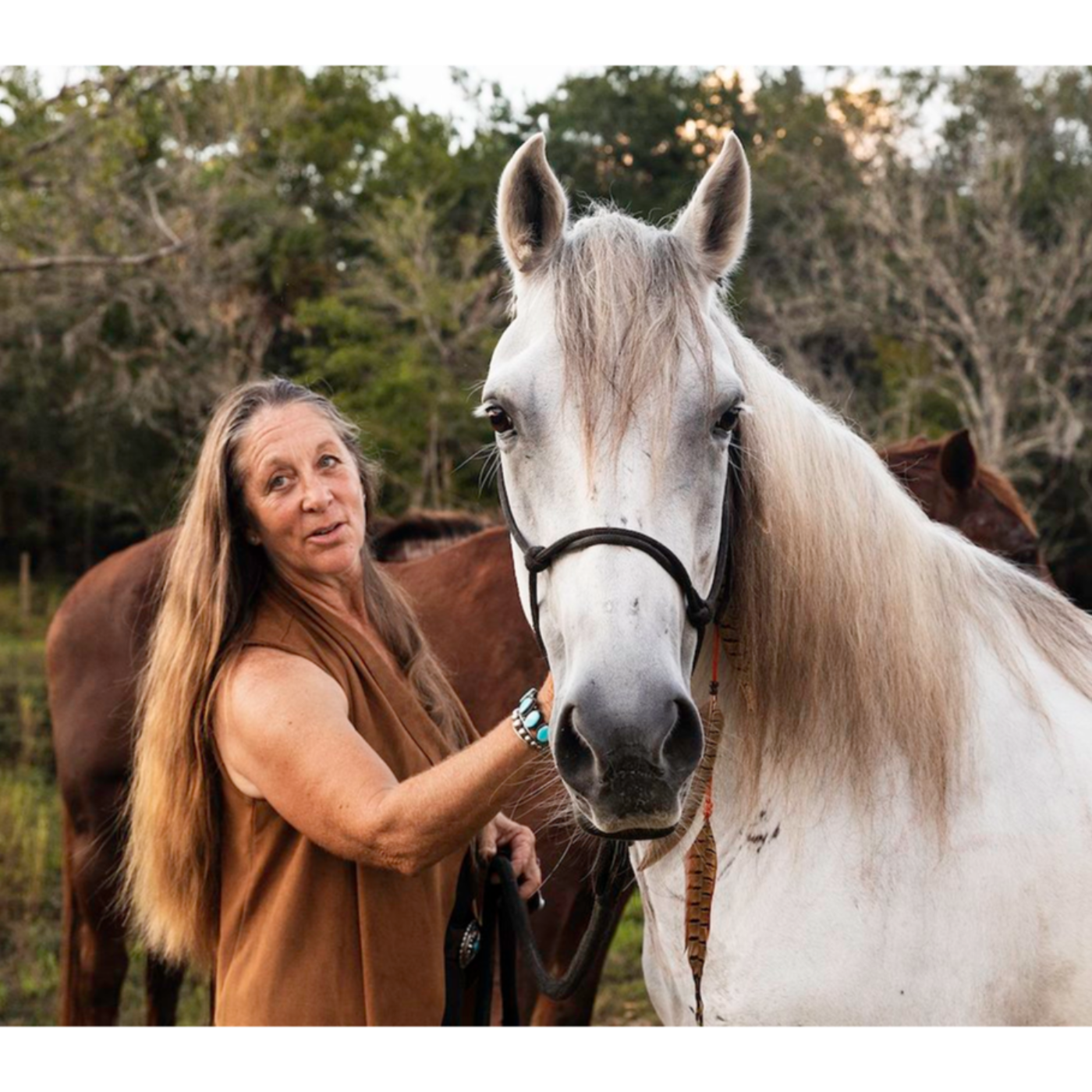
The Centaur
Caretaker of Wild Horses
01:04:52
Diane Delano is the founder of the Wild Horse Rescue Center in Webster, Florida. They are dedicated to the preservation of America's wild horses. They rescue, rehabilitate and find new homes for wild horses, burros and other vulnerable animals. The...
Loading summary
Transcript179 lines
- [00:00]
Diane Delano
Foreign.
- [00:06]
Interviewer
Podcast.
- [00:07]
Cameron Adibi
I'm Cameron Adibi and together we will explore the fascinating world of horse human communication and the extraordinary connections they develop between our species. Join me as we delve into the unique ways humans and horses connect and understand each other. Through discussions with true innovators, we uncover the subtle cues, bonding techniques and emotional connections that enrich our relationships with these remarkable animals. Whether you are a seasoned equestrian or simply curious about the language of horses, there's something here for everyone. On this podcast, I get to interview horsemen and horsewomen who truly practice what they preach. Diane Delano is one of them. She is the founder of the Wild Horse Rescue center in Webster, Florida. They are dedicated to the preservation of America's wild horses. They rescue, rehabilitate and find new homes for wild horses, burros and other vulnerable animals. The 44 acre ranch provides a home to almost 50 mustang horses that were once roaming freely somewhere in the United States. In 2014, they purchased a larger property so they can expand their mission to rescue even more animals in need. I hope you enjoy this. Sit back and enjoy the show.
- [01:24]
Interviewer
We're going to jump right in. So you've been the wild horse rescue facility that you have, you've been doing this for a number of years, but I have to start out what, what attract, what attracted you to the mustangs.
- [01:39]
Cameron Adibi
There's.
- [01:40]
Interviewer
Well, go ahead please.
- [01:41]
Diane Delano
In 1975, I saw my first mustang. I had a horse at a boarding Barn which was $10 a month to board, by the way, and $4 to get their feet done back then in 1975. And a Mustang came in briefly for about three or four months and it was tame and I just fell in love with that idea. So ever since the 70s I wanted to get wild horses and I did not get my first wild horse until I think I was about 28, 29 years old when I finally got my very own wild horse. And that was 34 years ago. So I have continued. At first I just started adopting and I fell in love with working with this wild animal and gaining its trust. And then as I volunteered for the Bureau of Land Management and I went to all the adoptions, I started picking up horses for them. That was within the state of Florida. I became a volunteer compliance officer. In 98, I was one of 20 people in the United States. So I would help volunteer wise the Bureau of Land Management with their horses and I decided to become a Rescue 2000. I took in my first trauma, seriously trauma mustang that I actually took her all the way to the Black Hills in South Dakota. I returned her to her freedom at a sanctuary. And I created a wild horse rescue in 2007, became a non profit and by 2012 I became a international program because I work with wild horses. So we are a international destination for people to come stay at the ranch, stay a week, stay three months, volunteer and help out with the chores with the animals. If you stay long enough, you really get to see a big difference. If you stay a week or two, you know, it's not magic. Gentling and rehab takes months on a lot of animals.
- [03:50]
Interviewer
Okay, I have to ask, since you mentioned South Dakota, did you take them up to Karen Suseman's organization?
- [03:57]
Diane Delano
Nope. I took him to the Black Hills in South Dakota. Dayton Heights.
- [04:01]
Cameron Adibi
Okay.
- [04:02]
Diane Delano
Wild horse sanctuary.
- [04:04]
Interviewer
There's another one. Okay. There's a woman there I talked to. It's not the international Protection of International Society. Protection of mustangs and barrows. No. Okay.
- [04:13]
Diane Delano
But I have, I have their literature from like back and I have kept. Okay. Some people would say it's hoarding. It's not. I have a museum right over here. I have stuff from the 80s, the 90s, 2000s, about wild horses. I have four photo albums that you can flip through of articles from like Western horsemen, newspapers, different stuff like that. I've been in the newspapers for, you know, 30 years with articles as well. And so I've been saving all sorts of wild horse information and stuff. I didn't get to meet Karen. I've never met her. I listened to your podcast. Yeah, I knew about them because they're the original, like wild horses. Yeah, Wild Horse, Wild Horse Annie. She's, I have a, have a cabinet in here with Wild Horse Annie's books and I have one of her photographs that was used in the congressional hearing in 1971. Peggy Hoyt's father was part of the Humane Society of America. He was gifted that because they helped with passing the law as well with Wild Horse Antiac. And I have that beautiful photo in there of a rearing up mustang. Sadly, he was caught. So that poor horse ended up being like many, many, many horses went to slaughter back when there was no regulations.
- [05:37]
Interviewer
Yeah, this is, I, I, I'm happy you're keeping a record because this is such an important topic and I'm new to the game, but you know what? There were over 2 million horses free, free roaming at one time. And now we're down to about 40,000 free roaming. And so what you're doing is, is very important and also what you're doing now, I didn't really? You were. You did the. You did the compliance for the blm. So you got to. You are. You got to see a lot then, so.
- [06:05]
Diane Delano
Oh, I. I did. So, you know the Bureau.
- [06:08]
Cameron Adibi
Yeah, go ahead.
- [06:09]
Diane Delano
Has changed a lot over the years. I mean, I've been involved with them from my very first adoption. I started volunteering. I just love the horses, and I helped out. And then, like I said, the volunteer compliance officers, we were eyes for the bureau. So they were our offices out of Mississippi. Jackson, Mississippi, is who's. The eastern southeast field office. So we'd have horses here in Florida that they couldn't come and see. So they would call me up, they send me paperwork and ask me to go do compliance checks. And. And then if there was. If the horse was not in good shape or, you know, an issue, they would have me pick it up, bring it to my center, and then they'd either come down and get it, or I'd bring it to an adoption or I'd get someone to readopt it out. So I did that for many years with the Bureau.
- [07:03]
Interviewer
Okay, so this is the precursor of your current, then your wild horse rest.
- [07:08]
Diane Delano
Yes.
- [07:09]
Interviewer
Okay, I didn't know that. All right, that's so.
- [07:12]
Cameron Adibi
That is very interesting.
- [07:13]
Interviewer
All right, so I had a. You know, I got, you know, I've got to work not with mustangs, but with, you know, rescues now. But, you know, you. And I saw some photos. So you have really rehabilitated, rehabilitated some of these horses.
- [07:29]
Diane Delano
Oh, we have some great, beautiful horses.
- [07:31]
Interviewer
You got some great stories. But, you know, this is so. I think it's so amazing about horses. But I want to ask you. I mean, some of these horses should just give up when you see them. What. What keeps them. What is that, you think that keeps them willing to keep going and trying when even they've been at the worst possible.
- [07:52]
Diane Delano
Well, it's. It's. A lot of them have been scared to death. I mean, seriously, and just gave up. Especially when neglect is added in there. No food. A lot of the ones that I have a picture board in there that you'll see, they have nothing in their eyes. It's just like they've been imprisoned, and then, of course, they've been treated badly. You know, no food, not proper care, scared to death. I've had horses kept in filthy, filthy pens for, like, six months in a small pen full of their own feces, wet, having skin issues, feet issues. A lot of them can bounce back. It's. I look at it like this. I had three mustangs come in one time from the same abuser, same person, did the same thing to all three. They were two year olds so they were young horses. They were literally almost starved to death. One of them couldn't even get up. It took seven people to get her up. So we named her Hope because we hope she made it and she didn't care what she did. Touch me, I don't care. She had no fight or flight left in her. So the next one was Faith. Faith bounced back. She was human, friendly, gained her weight, psychologically easy to get along with, saddle trained, became a riding horse, still is a riding horse. And then there was Promise. And I promised her that she would never be abused again. And Promise took about a year. She was aggressive, she was mad, she was non trusting, she didn't believe it. And then she became a riding horse as well. But it took a lot longer to negotiate with her. So I parallel that with going on a roller coaster. I'm not a big fan of rides but I have been on roller coasters and I have been on rides and that would be like three people going on a ride together. Hope would be like oh my God, I'm going to die, just sick. Faith would be like woohoo, let's go again. And Promise would be like me, I am going to punch whoever is running this because I asked and asked and screamed for you to stop. So they can all experience the exact same thing and all three can come through it with a different view of how it affected them.
- [10:20]
Interviewer
So well said. Yeah. Each horse has its own personality and you, you took the time to, to really crack that shell that they were, they were shut down. And so this is like so amazing right that this person was allowed to have more horses after already. So you get horse. Where do you get your, you get your horses from a number of different places I take it. Where are the horses?
- [10:44]
Diane Delano
Well, a lot of them are. Owner surrendered on those three that I just spoke about. That's back in 07 and I was still helping as a volunteer compliance officer for the Bureau of Land Management. So they had, they had gotten a call from animal Services in Hudson which is by Tampa. And since the horses were untitled, they still belong to the Bureau of Land Management that I was arranged to go pick them up. So they came into my center and I actually they ended up all getting adopted. They never went back into the bureau. But six weeks after I had picked them up and brought them to my center, Tampa came over to do a newspaper article and I'm going to tell you that, that is pretty incredible because I didn't say anything. I was going through. We didn't know what I had. I'd been going from February and this is like in September, maybe cancer. I'm going through all these different doctors on my throat and I hadn't gotten diagnosed yet. We're still doing scans and stuff. So I picked up the horses at the. Might have been right around October. First week of October is when I actually picked them up and I brought them in. And six weeks later the newspaper came out to do an article. It was a week prior to me doing surgery. So I mentioned that I was having a yard sale and I was going in for surgery and I didn't know and I had lost my job. That month of. It was November now I was worked. That's when all the foreclosures were. In 07, everybody was losing their businesses and I was bartending at a daytime bartending like outside place and they got closed down. So my last day was October, November. I had no job. I'm single mom. I have about 13 horses at that time at my center at the rescue. And. And I was going to have this yard sale so that I can make some money. And believe it or not, that article come out on the Sunday of my yard sale and people started calling me. I needed fifteen hundred dollars to carry me for that month. And isn't that crazy? Look at the prices of stuff today. But in 07, I just needed 1500 to feed house payment, you know, electric, phone, all that. And so two women drove up at the end of that day on Sunday and I had only made $600 and I spent $200 on horse feed. So I only had $400. And they came up, they seen the place, they brought me the newspaper article and both of the women gave me a check. And it ended up being 1500 from them, 1,500. I couldn't believe it. And Lisa still to this day sponsors my horses. So she never stopped sponsoring us. And so since 07 we're 20, 25, Lisa has always given donations to help out with the horses. And she adopted two that are kind of sponsored here. So she always sends a donation for two of the horses that are here that are her favorite. One is Hope and one is Isabel. So when it was said and done, when I got out of the hospital, I did have papillary cancer. I had it in my lymph glands, my thyroid. I was in there for a week. My dad kept telling me, checks are coming in, checks are coming in. You Got envelopes and cards and all this. It was $7,500 given. That carried us and it carried us until April for the horses. So wasn't that a blessing? The horses brought in the funds, but what we had done in that six weeks proved that the horses were healthy and looked great from what they looked like when I picked them out.
- [14:50]
Interviewer
It's so wonderful. Exactly. The horses brought. Brought in the money.
- [14:55]
Diane Delano
They did. They helped me when it. Yeah, it's so cool because I didn't go to work until December 31st. I went to another bar, bartending and. But the horses carried me, which isn't that incredible when the chips are down for people, when things aren't always easy, when you're doing things in life, it doesn't just come to you. And I really stayed devoted to those animals. Even when things didn't look good, we just. I just did alfalfa cubes instead of alfalfa. Hey, you know, you just stretched it. You just made it work. And the animals still thrived and looked great. So I continued and continued with it, never looked back.
- [15:38]
Interviewer
That's awesome. So, yeah, you definitely have a journey here and it's. It's obviously working. So you're. You're a nonprofit. You're. You sponsor. You have people sponsor horses.
- [15:50]
Cameron Adibi
As well.
- [15:51]
Interviewer
As volunteer there, and you have events. But so you have how many horses and how many are wild at heart, meaning they're never going to be adults.
- [16:01]
Diane Delano
We have about 48 horses here right now. And wild at heart, I have probably 12, 15 that are. That you're probably not going to totally rehab. I have quite a few older horses that you're never rehabbing. They're 27, 32, 19, 22. But out of the other horses that we have here, we have some beautiful riding mustangs. Some of these horses I've had Tatanka I've had since he was a year and a half. He's 23. He's still here. Nice beautiful riding horse. Coyote smoochie. We have new horses up and coming that are riding horses. The difference that I see in the mustang, it's really been a sad journey for them. They're incredible horses. And back when the bill was passed in 71 and I saw my first Mustang in 75, they used to get rounded up right from the range, like six weeks. They'd catch them and then they ship them out throughout United States and people would get them. The horses were still curious in humans. They also weren't taking babies back then. You get like 2, 3 year olds you get 6 year olds, you get, you know, a variety of ages, but you weren't getting Winglands 1 year olds or anything like that. So to me, the horse, once he's 2 or 3 years old, he's ready for an adventure because in the herd, in their natural environment, you know, the mom will stop nursing it. The colts might get kicked out by the time they're two years old to go join a bachelor herd. So they're ready, you know, for an adventure. But the babies really need their moms to teach them stuff and the herd to teach them stuff. So in 2004, Senator Burns Bill and I can't believe it's never been reversed that Bill talked about rounding up mass roundups. That's when they started doing long and short term holding and removing the horses by mass amounts off the ranges and stockpiling them. Prior to that, we didn't stockpile them. So by these massive roundups, when they round up say an area of 500, 700 horses in a herd management area, they round everybody up, they scramble them up and they let loose what they want loose. They take all the babies and they take stuff that's older off the range, which makes no sense at all. They're ruining the herd dynamics. Okay. Herds actually can stay together for years. Stallions are mostly seniors that run them. But when you round up and take the seniors off, you're giving those bachelors opportunity now to breed and breed and breed and breed because they're younger horses. So if the bureau would round them up differently like in trap catch situations and worked with these people that actually studied them out there and let the lead stallion and his lead mayor and let them keep their babies, let them keep their winglands with them because they're not going to breed so quickly to react, produce babies because they have their babies, let them raise them. Mass roundups only cause more births. And I am not an, I'm not in agreeance with the birth control. That's not the answer Karen's studying.
- [19:37]
Interviewer
Karen's actually said that it's, it's creating infertility and we're going to eventually have. No.
- [19:44]
Diane Delano
It'S not eggs, right? It's not fixing it. Okay? These aren't a bunch of teenage girls that we need to give them birth control. I mean that's just ridiculous. People, the human ideas on animals, okay? There are herds that never get rounded up because they don't have to because people aren't interfering with them constantly.
- [20:06]
Cameron Adibi
Yeah.
- [20:06]
Diane Delano
There are species like any other species, when the seasons are good, they know the seasons are going to be good when it's not going to be good. They know that horses, just like deer and other animals, are aware of their surroundings and their environment. There was a study on Mountain Lions for 10 years in an area and what they realized with that 10 year study of the mountain lions is that the herd of horses was never rounded up in that area because there was a healthy predator ratio and the sick and the old or the young would be taken by the cats and so they could thrive out there. The stallions are very active with teaching their young and I just wish that there would be changes. Marianne. I knew about Marianne Simmons way back in, I don't know, probably, I don't know, the 90s. I started hearing about her study and the kigers and doing stuff like that. And then I got to meet Marianne which I just adore her. She's wonderful and she actually helped me to really see that idea of the herds and how they're social and how they shouldn't be rounded up and massive. 2002 Temple Grandin wrote a beautiful article to the BLM about slowing down their roundup process by bringing the horses in at a walk and a trot instead of a gallop. And you had less injuries, you had less fear instilled in them. But the bottom line is, is money. Unfortunately, when the helicopter people go there.
- [21:49]
Interviewer
To round up, it's so tragic. And you have, you've, you've covered a lot of points here. I just kind of stop you here because there's so many really important points you just made. And yeah, we both definitely were talking because of Marianne. But yeah, the practices have, you know, been very harmful for her dynamics. I also interviewed Barbara Wheeler, a photographer also thanks to Marianne and she said the same thing by, you know, removing these senior stallions, you've put such stress and so the bachelors are just not equipped. But the mustang itself, I have to just start out a little more questions about the mustangs because you've, you have such a understanding of them. They have such this. I've met a few but they have such a. They're so adaptable and resilient compared to seems to other horses. And I wanted to just ask if you like. We know and they're also, they're, you know, we know they're basically from the Spanish, most of them, right There have been the Spanish but they've now they've, you know, they're, they have a history now with what probably the Thoroughbreds and the Appaloosas.
- [22:57]
Diane Delano
You do realize the thoroughbred came from the mustang, just to let you know.
- [23:00]
Interviewer
Okay. So I thought they. I thought they were actually from Europe.
- [23:02]
Diane Delano
No, I'm sorry. The quarter horse.
- [23:04]
Interviewer
The quarter horse, yeah. The thoroughbreds came from Europe.
- [23:07]
Diane Delano
Yep. You brought the thoroughbred and you mixed them with the mustang and you made the quarter horse. There's not a whole lot of thoroughbred in the breeds of the mustangs. You know what, there's a lot of saddle breads, standard breads, because standard bread was used in the military. There's also a lot of draft horses that are mixed in with it. Because you've got to realize when the west was being settled.
- [23:30]
Interviewer
Yeah.
- [23:31]
Diane Delano
You know, when we started cutting across in the 16, seven, really the 1700s, they started crossing America. Lewis and Clark went across and mapped it in the 1800s. You know, you brought wagon horses, so you had, you know, your Belgiums for pulling logs up in Idaho and stuff. You had Friesians for the fancy people that came. You had all these different breeds of horses. After World War I, the military turned loose their horses into the wild herds. Because back in the 1990s, they didn't destroy them.
- [24:05]
Interviewer
They destroyed. Starting to destroy like millions of them. But they turned them loose, some of.
- [24:10]
Diane Delano
Them, because there was such an outcry from the people. I think a group of army guys went AWOL with a group of horses and that was brought attention. So you have Morgans and standardbreds are some of the breeds that they used. And of course, draft horses and that. And they got turned out to the herds. The herd up in Wyoming, it's called the Saltwells Sweetwater Herd Management Area. It's in that checkerboard that they're fixing to zero out. They have standard bred in them. And that's where some of the military horses went into Wyoming. The Morgans went into Nevada and the Thoroughbreds went into California. So they had put different herd, what they used into these different herds. And matter of fact, a lady that adopted for me just did DNA on one of the mustangs who's a Saltwells. And standard bread was the number one thing that's in him.
- [25:06]
Cameron Adibi
No kidding.
- [25:07]
Diane Delano
And then he also had the curly, which curlies are up in that area. And he also had two Spanish bloods in there, like from South America.
- [25:16]
Interviewer
Incredible.
- [25:17]
Diane Delano
The Creole and something else. So it's amazing. They're an amazing mutt. They have so many different. So they are stuff in them.
- [25:24]
Interviewer
They are. They represent the melting pot of America. So I have to ask.
- [25:27]
Diane Delano
They are.
- [25:28]
Interviewer
I have to.
- [25:28]
Diane Delano
Yeah, they are.
- [25:29]
Interviewer
So what is it?
- [25:30]
Cameron Adibi
Why Is it so important that we.
- [25:32]
Interviewer
Keep these animals, these majestic beings?
- [25:36]
Diane Delano
Well, a couple reasons.
- [25:37]
Interviewer
Yeah, go ahead.
- [25:39]
Diane Delano
One is that the horse originated in North America. And you can say all day long, oh, well, they were all gone. So they don't belong here. That is not necessarily you're talking about.
- [25:50]
Interviewer
But you're talking about 5,000 years ago now, right.
- [25:53]
Diane Delano
10,000 years or whatever. The horse. Yeah, they crossed over the barren straits. You know, the Nez Perce Indians were trading with China. That's how China got the Appaloosa. They didn't have horses over in the other countries until they came over the barren straits when that land mass was connected from Alaska to Russia. And they traded horses. So the horses migrated also through there. Right. And then they spread out through Europe and Africa and Saudi Arabia and all throughout. And then the horses came back in the late 1500s, 1600s, with the Spaniards who came over into the southern area of America first.
- [26:35]
Interviewer
The conquestadores, of course.
- [26:37]
Diane Delano
Yeah. They had a big mission, Mexico and South America. And they reintroduced the horses to the plains and to the eastern. Which I do agree, the horses had disappeared. Whether they had been hunted, whether, you know, climate changes had happened, but the horses were not there. Although in Native American culture, they say the horse never left in the northern area, like, say, Oregon, Washington, Canada, up into that area when Lewis and Clark map through. And they stayed with the Nez Perce for a winter because they didn't realize the Sierra Mountains, I guess it is up there.
- [27:16]
Interviewer
My.
- [27:17]
Diane Delano
I don't know what mountain range is in Washington and Oregon. But they stayed with them for that winter. And they learned about the castration that the net the Indians had been doing Native American people have been doing for years and years on creating the Appaloosa. So that's where the Appaloosa breed was created, was there. And after all, the Wounded Knee was the last warrior fight of our Native American people.
- [27:47]
Interviewer
Well, wait, wait, wait. The Comanches. The Comanches weren't down in the plains.
- [27:51]
Diane Delano
No, no, I think it was Wounded Knee up in the Chief. Joseph.
- [27:56]
Interviewer
My favorite. I don't know, my favorite book is the Empire of the Sun Moon about the Comanches.
- [28:01]
Diane Delano
They were the last, and they were the last ones. Yeah, well, Wounded Knee was Nez Perce Indians.
- [28:06]
Interviewer
Yep, they were. And they were fierce. They were totally one of the fiercest.
- [28:10]
Diane Delano
And that's who had the Appaloosa.
- [28:13]
Interviewer
Yeah.
- [28:13]
Diane Delano
And they slaughtered almost all their horses. By 1936, there was only like 18 Appaloosas left.
- [28:22]
Interviewer
Yeah.
- [28:22]
Diane Delano
Due to wiping them out.
- [28:24]
Interviewer
That's Incredible. I had, I had a good fortune of meeting an Appaloosa here in New England. But yeah, they, I, they, they, they're another like just hardy, real. Sure. You know, a real resilient. So this is the. So this is so two reasons. Why should we keep these. Why should these horses be.
- [28:41]
Diane Delano
Okay, so they belong to North America first off. So they have a right to be out there. Like the wolf has a right. The elk, the moose, you know, the bison, they all have North American animals. So horses should. We should have herds that are never rounded up, left to be wild. Then the next thing is they're amazing horses. Our border patrol here in North America is mostly all mustang. They have gone to mustang horses because they're hardy. They are. They know their environment. They are able to adapt to the going up and down the mountain. Especially if you adopt horses from mountain regions. They are. I'd almost say that they're healthier, but depending on what the bureau on this rounding up that they've been doing has actually caused issues. I have a horse right now that could have gone into being a police horse. He passed everything with flying colors. He's 7 years old, 152 hands from Adobe Town, Wyoming.
- [29:46]
Interviewer
A little small for a police horse, though, isn't that?
- [29:48]
Diane Delano
No, 152 is pretty good. They can't be much less than that. They want them 152 to up to 16 hands. So 152 is a good okay, go or is a decent size. So that horse passed everything with flying colors except for X ray of his foot. He had some bone spurs. So maybe at the time of his roundup, as a cult, he could have just overdid something damaged. And here now, at 7 years old, he's not lame and he doesn't have a problem. He. But maybe in future he will. So he couldn't. He can't work on pavement for the next 10 years as a police horse.
- [30:29]
Interviewer
That'd be cool. I don't ever see a mustang as a police horse. That'd be.
- [30:33]
Diane Delano
Oh, no, they make them all the time. I talked to Hutchinson Prison. They're a Bureau of Land Management training prison. And they just did five for the Chicago mounted. They did another five for Native American tribe police. They do the color guard horses for our military. They have a polymene and a black color guard. They also do some for the caissons up at Arlington Cemetery. So they make a lot of trained horses for these organizations.
- [31:05]
Interviewer
They are definitely, like we keep saying, the most adaptable horse probably out there. And, and how an intelligent. So I have to start Asking about some of the ones you've worked with include so more into your organization. Do you. Do you keep. Keep tabs on all the horses that get rehomed?
- [31:25]
Diane Delano
We hopefully do. People stay in touch with us. They sign an adoption agreement so that the horse always can come back to our rescue. We don't want them. Matter of fact, I'm signing a paper right now. I've got two that are getting signed over to a rescue up in Maryland. They're actually gypsies, they're not mustangs and they have really bad legs. They get their. The feathers get infections in there and Florida is a harsh environment for that because it's so hot, so muggy. So the horses went up to Tennessee, but they're still having issues. So they're going up to Maryland and I'm signing a release to let them go. But normally they can come back into me. I have horses in Germany, France, Canada, throughout United States. People send me pictures and updates all the time. I'm very. I would say 99% of my horses are still where they're supposed to be. That's awesome. I went to court over one one time because the lady gave it away to somebody else and didn't go through me. And so, I mean, there are times I've taken horses back. They're not allowed to neglect our horses. They're not allowed to not care for them properly. So I have gone and taken horses back as well, which is signed in our agreement that states that as well.
- [32:52]
Interviewer
I think we agree with this is still whatever this is way better than the BLM holding areas. Right? I mean to re home.
- [32:59]
Diane Delano
Well, the bureau only keeps tabs up to that until they're titled and then once they're titled, there's no safety net for them. And that's why. Right.
- [33:10]
Interviewer
Tell me her wrong right now. Sorry, Tell me if I'm wrong. There's 63,000 horses right now in the BLM holding area, is that correct?
- [33:20]
Diane Delano
Somewhere like that, Yeah. I have no idea. I wish they would do a real number counting, but who knows?
- [33:25]
Interviewer
And so that's because that's. And. And we don't know what's the future of those horses right now. So you're doing an incredible service. This is very important. So the other question I have then is, do you know how many horses you've rehomed?
- [33:39]
Diane Delano
Oh, I would have to. Look, I've been doing this since 2000 is when I started as a private rescue. Prior to that I was mentoring and helping people with their horses. And then from 2000 to 2005, I went and traveled with a group called the Wild Horse Mentors, Willis Lamb out of Least Resistant Training Concepts out in Nevada. Him and the Bureau of Land Management did these incredible workshops. And then Jill Starr out at Lifesavers did boot camp. And I was up in Maine at a happily ever after mustang. And I was Kansas, Oregon, Utah, California, a bunch of times Texas, all over with wild horse enthusiasts. At 2000 is when everybody kind of got computers because prior to 2000 we didn't have computers, the Internet like we do now. So in 2000 when I got my first computer, I started seeing that there was all these wild horse groups and then I started joining up and I was part of that. I loved it. You learned a lot about working with these horses from people all over the United States. So I would love to see right now the Bureau of Land Management's program just ended that thousand dollar incentive program which was a nightmare, which was a failure. So I am happy that they got rid of that. What I would like to see is that they invest that money into. I'd like to see more prison training programs. I'd like to see real training facilities, not the mustang makeover, which that ended with the bureau as well. And I'm, I'm glad to see that ended and the tip program because a lot of those programs were money incentive and not caring on the animal. The tip program, you were supposed to have the horse three months for a thousand dollars. Most people were flipping the horse between two weeks and one month. That's not enough time to build a good gentling on a horse. You know, breaking these horses is not the way gentling. I've always felt it takes six months to two years to really get a horse really gentle from the wild. So three months is not enough time to make them into a gentle divorce.
- [36:03]
Interviewer
It's, it's you, you, you have a real role here. But I have to just backtrack here. So this, can we just do a rough math? You have your organization, you've been doing this, what, see since 2000, is that correct?
- [36:15]
Diane Delano
25 years.
- [36:15]
Interviewer
25 years. So how many horses per year do you think you re home?
- [36:19]
Diane Delano
Well, we place about, I place about 30 horses a year as far as adopting out.
- [36:25]
Cameron Adibi
Yeah.
- [36:26]
Diane Delano
So some years are more 600 horses.
- [36:29]
Interviewer
Who'Ve helped re home to really nice places. And that's.
- [36:33]
Diane Delano
I should count all my horses. And then I've also taken horses to the Black Hills Sanctuary. You talked about Karen's place. I've never been there, but the Black Hills, Dayton Hyde's place. Five times I've brought horses, Jill Starr's place, Lifesavers and a couple private sanctuaries in Georgia. That and return to freedom as well. That's Netta the Maze out in California. So I've always wanted to make a sanctuary here on the East Coast. I tried very hard to try to get land for that. I tried for 600 acres and then 300 acres. Because honestly, I would love to get some of these groups of horses that are being rounded up and give them a true freedom to live out their days because it's hard on them to be in the confinements. When they put them in the holding pens, you can see that their life has gone from their eyes. I have a gelding back here, the one that's doing the music therapy. Sent you the pictures of him. I love that having music therapy.
- [37:39]
Interviewer
Oh, I got to ask you some questions about that, by the way. So yeah, please.
- [37:42]
Diane Delano
So Zuni had osteopath cranial. He has energy work, Reiki and music. So we do a lot of holistic stuff here as well for healing because I'm going to tell you emotional trauma. And we're in the month of May for mental health animals. Horses get post traumatic stress disorder as well. And I had a clinic back in 2001 with Ramona Sierra from Sierra Earthworks in Utah, Salt Lake City. Ramona is Native American, but she is a. What is the title? Clinical social worker, where you work with brain injuries, whether physical or emotional. And I did a clinic in 2001 called the Non Verbal Communication through the Field of Mustangs. It was an incredible clinic with Upledgers Institute, which is out of Palm Beach. And we had people come in from all over the United States and we did this two day clinic. And that really set me on the path since 2001 on this healing path. Well, when you look at a horse's chest and I still can walk you through my stable and show you when you see a mustang's chest super concaved in, like you can almost put your fingers in between the breast of the horse. Right. That is emotional trauma in the heart chakra. Also, a lot of times you'll look at the horse and he's standing, one side of the breast is sucked up and the other side is not. If you look at horses that have that and even in your regular horse start evaluating, you'll see that they're protecting their heart chakra. So you have to do stuff like osteopath cranial. You have to release those Emotions that are captured in the moment. Something happened. It captured it like a little lightning bug. He just grabbed it and you held on to it. And those emotions are in the fiber of that horse. As he releases, his chest will get plumper and sometimes they'll even sweat out. So Zuni's chest is coming out a little bit from what it was when he first started. So it is helping him. He is showing changes in him now. Granted, he's been here a while and his stalls got all sorts of stuff in it to help him adjust. What a sweet soul that he is.
- [40:22]
Interviewer
So tell me more about the music. I have to hear more about the music there. So you guys, you had a drummer, it looked like.
- [40:28]
Diane Delano
Yep. We have a lady, Liz, that is a sound therapist.
- [40:32]
Interviewer
So what is. She's people invited as well to come and join, or is it just. Well, with the horses?
- [40:37]
Diane Delano
She's just doing with the horses right now. So she just got certified last year. She was always a Reiki master and she came down and did Reiki in that. And then she took about a year of doing this music journey that she became certified to do that. She does it on here in the Villages. So I'm in the villages, which is Sumter county, for the retirement community we have. And so she has like 50 people that attend her class weekly to learn about the drumming and the healing and release. So she comes down and volunteers and is playing with Zuni, particularly as who she's working with. She's wanting to host some workshops here.
- [41:22]
Interviewer
I totally want to talk to her. I want to talk to her. After you. We talk. Finish this conversation. Okay, thank you.
- [41:28]
Diane Delano
So she's wanting to do some workshops here and have people. We can have them sit in all eight pens back there and they could do the tuning forks or they could do the drumming. I just sold my panda drum. I bought one of them because I thought, well, I would do that and. But it's too high pitched.
- [41:47]
Interviewer
I was wondering. I was wondering. I haven't bought one yet. I said, I'm using the tuning forks and drums and crystal singing bowls, which also have been very fun. But, yeah, I was wondering. And I was wondering how her technique of drumming, if she's learned a way that would be a little bit more.
- [42:03]
Diane Delano
Well, you'll have to talk to her. She's very subtle and it's a very low thump. That's what, you know, it's not like. It's not like drumming. That's what Janet.
- [42:13]
Interviewer
Janet Marlow, who did. Who Marianne connected me with. Who's the inventor of pet acoustics said that.
- [42:19]
Diane Delano
Okay.
- [42:20]
Interviewer
She learned that it's more of a softer and short melodies for the horses that they prefer.
- [42:27]
Diane Delano
So the. The pandas got. It's too much. You know, the panda is. So I just thank goodness. One of my volunteers always wanted one, so she bought it from me. Good job. So I'm gonna buy one of the buffalo. It's called Buffalo drum. It's a drum that she uses. So Liz uses. So I'm going to get the same kind, which is a lower sound. I have two Native American drums that are made of elk, but they are a higher pitch. So I guess they come in their sounds as well as flutes and everything else has a keyed into a sound. So. So are the drums.
- [43:06]
Interviewer
Yep. Same with the crystal balls and same with the tuning fork. So. Yeah. And I'm very. I use a lot of silence in between so they can, you know, they can absorb.
- [43:15]
Diane Delano
Right.
- [43:15]
Interviewer
But this is so cool. So you're not only doing this. So you're doing a lot of cool things on. On the ranch or center. Excuse me, Wild horse rescue center. You have. So you have Reiki, you have yoga. I saw yoga day and animal communication. And then you just had this wild horses, wild women and wine. How'd that go? Tell me.
- [43:35]
Diane Delano
We have a wonderful event with that. When I moved here in 2019, I came up with that event. I said, oh my God, we're here in the villages. We've got to do wild horses, wild women and wine. And so it's a very successful event. It's only done once a month. We don't do it for the summer one is the flies. Like right now the flies are everywhere. And plus the heat and plus the rainstorms, I can't guarantee we won't have an afternoon rainstorm. So we do them from November to May, and we do it the first Saturday of the month and it's from 4 to 7 o' clock and we have anywhere from a dozen to 60 people. It just depends. In the winter months, like in January, February, March and April, I always have more people. May I had 18 people. Because a lot of your snowbirds have gone back home.
- [44:25]
Interviewer
Yeah. Yeah.
- [44:26]
Diane Delano
Okay. So yeah, but we put out food. We have. We have wine and food. And then we sit out here where I'm sitting right now, we have all these tables. We put fake flowers out and cushions and then we have carrots and we go and walk and talk about all the horses. I have a wireless mic. We go meet and greet them personally. My Barn can hold eight horses in the stalls, and I can hold eight in the back. So we have 16 there, plus I have the pony pen and the. We have a sheep and a goats and miniature donkeys and miniature horse in a pen so people can pet them and see them. And then we have mustangs out back, mustangs over there, mustangs over there. So we have all sorts of animals. And then we have dogs. We have wonderful dogs. I've had dogs all my life. We have 20 dogs here at the rescue. I have about eight dogs for adoption. So I have 12 dogs that are ranch dogs, and I have two that are sitting here by me right this minute.
- [45:31]
Interviewer
Wow.
- [45:31]
Cameron Adibi
Good job.
- [45:32]
Interviewer
And so how much is there? Like, do you have a pro standard? Like, how much does it cost to adopt?
- [45:40]
Cameron Adibi
Does it depend?
- [45:41]
Diane Delano
That can vary. Some of our horses. I. I'm 63, so I don't saddle train. I can get the horse gentled and ready, but I'm not putting the first 90 days riding on that horse. So I do send horses out to. If I send horses out, then I have to recoup some of that money back in. So my adoption fees can be like $500 up to $3,500. So just depending on what we're doing with the horse. Like the horse that was going to the police. I invested 2,000 into his training and his teeth getting done for the month for the police to evaluate him, the deputies. But then his X rays didn't show clean. So the lesson learned on that is do X rays before you do Y. Yeah.
- [46:28]
Interviewer
Oh, boy.
- [46:29]
Diane Delano
Oh, wow. So I learned a lesson on that. If I ever come across another mustang. And the reason I really wanted, my deputies have one. I do a reading program with my deputies called Wild Horse Tales.
- [46:40]
Interviewer
Oh, you mean like a reading on a book?
- [46:42]
Diane Delano
Yeah, we sell books. The Rotary Club purchases books for first grade. The kids are so adorable. And so then the month of February, over at the deputy stable, we have the school groups or bus there and have a lunch and come in. And they have learning stations. And I have opponents pony that we bring each time. I've been doing this since 2015. And the kids get to pet him because it's eye level for, you know, first graders and his name. Now, for the book we're doing, we're doing Robert the Rose Horse, which is by Dr. Seuss, so his name is Robert. I just found a ring of roses that I'm gonna put on him. I just found one yesterday that I'm gonna make sure he wears his roses. I have a school group coming out on Friday of next week. And that's a preschool group. So they're only four years old. So we'll set that up. The pony will be there, we'll read the book and he'll have his roses around his neck and they'll meet Robert Beautiful, the rose horse.
- [47:44]
Interviewer
So you're doing so many good stuff right now. This is a good job. Hey, so I also have to ask because, you know, you're a non profit, you take donations, sponsor people can sponsor horses. And then you have these events, community events, but you have, you know, you rely on volunteers. And the you I do, I saw on your website because you are an international organization. You have volunteers from at least 27 different countries coming to visit you.
- [48:16]
Diane Delano
That's.
- [48:17]
Interviewer
So you've got a very global audience and it's amazing.
- [48:22]
Diane Delano
Let me tell you, Cam, people come from all over the world and they just want to love animals. It doesn't matter what country you're from. We're all alike. I have a lady coming from South Korea that's. That'll be the first in that travel. They just opened up last year to travel companies in South Korea. Now I've had South Korean people as well as Chinese from colleges on a break, like at Christmas time or Easter time, they would come to the center because they didn't want to fly home, and they'd come for two or three weeks. So I have had people from those countries, but this will be our first travel company in South Korea, the Netherlands. I have people. I just had somebody here from France. I had Australia, New Zealand. They come from all over. It's incredible. I have friends, met some really great people all over this world. I was just talking to a dear friend in Africa and he asked me, why don't you come visit? He's actually a veterinarian. We had three veterinarians come. And this is before I was international. This was back in 2011. And I had Marianne actually come up and do a body language class with them. She volunteered her time and she drove up and she worked on body language and showing them because they were all three vets. Two were from Haiti and one was from Africa. And they worked a lot of abuse a lot of donkeys and things like that. And they were very minimal on their. What they have, you know, financially to take care of these animals. They're from very poor communities. So Marianne did a free class. I had Wes Mailer, who is a cranial sacral for humans, dogs, horses as well. He came out and did one day and they Got to learn about healing touch. And then I had my vet, Dr. Seiler, come out and we showed them how to put animals into squeeze systems with panels and how to work with them, halter them. Doc. Doc talked to them about the drug combinations that you could use to keep them standing or if they lay down, to get up and stand without stumbling. So we had three wonderful classes. They came for five days back and forth to my center, and I was able to give them a ton of medical supplies that had been donated to us from, actually from the Army. It was stuff that was no longer needed, and bandages and suture kits and things that was still all packaged and new. And I sent that with them so that they could have those supplies. But it's amazing to stay in touch with people all over the world. It's wonderful. Actually.
- [51:12]
Interviewer
I've talked to many of my friends and that's. That's wealth. I mean, the money stuff comes and goes, and I've had money and I don't have money that doesn't last, but that. This is the wealth that lasts. Good job you got. You're a wealthy person. So as we're kind of wrapping up, I mean, you have. You've said a couple things I picked out, but, you know, do you have. What would be kind of your wish to send out for people to like. Like for not only the. The horse and the mustangs, but.
- [51:44]
Diane Delano
Well, I would really.
- [51:45]
Interviewer
Yeah, go ahead.
- [51:46]
Diane Delano
Hope that I can continue doing what I'm doing. Prices are skyrocketing. Hay, feed, things like that, veterinarian care, everything. I would love to expand, to have more land, to have these animals. I have 42 acres, so I have a small center. When you're talking about a lot of other areas that have thousands of acres, I would love to have a true sanctuary here in Florida so that people could walk amongst them. These horses are extremely intuitive to humans. A lot of people call it spiritual. They connect with people. I have testimonies from people that have come here which you didn't know were battling depression. You know, you don't always can tell. And they gave me testimonials about how it healed them here, the center, these horses and animals let them know that they were going to be all right. So your mustang makes a phenomenal therapy horse. And he doesn't have to be a horse used by Path or Igala in a program. I'm talking just being in his presence with him.
- [52:58]
Interviewer
It's, It's. It's so simple. I, I totally agree with you. You don't need all this. It's just being or in the taking the time to be present. And then also having horses that have trauma are very good with people that are struggling with trauma, Right?
- [53:13]
Diane Delano
Yes. They actually want to heal you. Back when we did that clinic in 2001 with Ramona Sierra, we were doing a thing called play therapy. We had a play therapist from the Flower in Tallahassee. Ellie came down, and Ellie was acting like a horse to the horse. So the horse was in the round pen, Wyoming, and Ellie would like, make the horse noise and look away and act like she's grazing. And then she'd look at the horse and she was sending the color. I believe she was either sending yellow or green to the horse. And then she'd look away. And the horse, every time she looked away, the horse would do its head like this and bring its nose up. And I said to Ramona, I said, why is Wyoming doing that? Every time Ellie looks away, she says Wyoming is healing her. So then when Ellie came out to talk about her experience and what she was doing, she said she kept feeling yellow come back at her, and she was sending green, but she was feeling a different color. And so Wyoming, as trauma and as devastated as that horse was, she was trying to heal her by sending back a different energy. So it was an incredible, incredible clinic.
- [54:38]
Interviewer
So beautiful. Yeah, you got to do more of those. I hope you are.
- [54:41]
Diane Delano
I do. I do.
- [54:43]
Interviewer
Good. So. So people can donate and sponsor horse directly on your website, wildhorserescuecenter.org and if.
- [54:52]
Diane Delano
And if they want to help with making projects here, they can get with us. Like right now, we have a building behind me that's supposed to be our western museum. And then it's going to have a giant teepee built out of stucco and wood and be a room teepee, and that's going to be Native American because the wild horses are so much of our history. Like, in my education building, I have, like, from the 1920s forward, where horses are in lamps and statues and books and timepieces and jewelry, the wild horse's spirit was always that spirit of freedom that is caught the TV shows, there were supposed to be wild horses in fury and the long rangers horse was supposed to be a mustang, even though they weren't, but the story was for the movie. So we would love to have this museum about our growth of horses here in North America and also how they impacted the Native American people, the plains people, especially with the mustang. So we would like that. We have an education building. We have a Coffee cafe. We have a gift shop upstairs. We always need sponsorship on training of horses as well as care. The care is a big thing. We probably spend about 10,000amonth just on hay, so you can see that. Just that and about another 10,000 on operational. So you're looking at, you know, 20,000amonth on trying to maintain a place that's only 42 acres with these horses.
- [56:35]
Interviewer
It is a tough battle with everywhere right now with the prices. It's so great. So I encourage everybody to kind of continue to donate to you. And then who would be. I mean, who's. Who. Who would you say a good person to adopt would. What would be a criteria for somebody that.
- [56:54]
Diane Delano
Well, we have different. Like I have senior people adopt senior horses, which is great, because in that way, they're not riding anymore. And a lot of my senior horses aren't riding either, so. But it still gives people. I gotta say, people never fall out of love with horses. If you have a love for horses, I don't care if you're 80 years old. I have a dear friend who's 87, and she loves horses still. She just can't have them anymore. But her love for them has never left. So to have. Have senior horses for senior people, I like for my horses that are learning to ride and that. To be with people that have knowledge, because it's really hard to send a horse that's not fully knowledgeable with somebody that doesn't have knowledge. And then you can have some really gentle older horses, but not senior yet, that are good for people that are first starting out with their first horse as a super, super gentle, kind horse that isn't going to worry about the mistakes that they're making, you know. Yeah, but. So I match up people with the horses, and I do deny people. A lot of people, you know, might see a picture of one of our horses and go, oh, I want it, because it's so pretty. But they don't have any knowledge or experience for that particular horse. So I'll invite them to come and I'll show them all the horses that we have available, and then to see, you know, what's going to work for them. Because it doesn't do me any good to have these horses leave out without that home being right. Because it's. It's really unfair for them to go from home to home. I mean, I have dogs that come through my center, through the shelters, and they might have been four or five times returned to the shelter. That's really tough on an animal. So I Don't want to adopt out. I denied two adoptions on the one dog because he's so wound up.
- [58:50]
Interviewer
Up.
- [58:50]
Diane Delano
He's not for a senior person, you know, because he's just going to yank you off your feet. Not any fault of his. He's just a young, playful four year old dog. So you want to match up these animals. I love matching up. I just got the pictures and DNA of two of my Mustangs yesterday. So it's wonderful. The people reach out to me all the time and thank me and enjoy their animals. So know we're very successful with good adoption homes.
- [59:21]
Interviewer
I like it very. I'm glad you're really making a good. Making a good match. So important.
- [59:29]
Diane Delano
Yes.
- [59:29]
Interviewer
Finding good matches. I gotta. As we're. I want to thank you but is that a. Is there. Is that a cat's tail that I keep seeing in the camera? What is that that keeps going in front of the camera?
- [59:40]
Diane Delano
Oh, my hand. Because my phone keeps putting messages up on my stuff, you know, like it's. It puts the little thing over my.
- [59:50]
Interviewer
Funny. Yeah.
- [59:51]
Diane Delano
Over the picture.
- [59:51]
Interviewer
Yeah. So you did.
- [59:53]
Diane Delano
My phone is your phone. The cameras are shooting me right now. They're all like, I guess something's moving. I don't know, maybe I'm moving, but it's telling me stuff. So I keep moving it. And the flies. Okay, we don't have any cats out here.
- [60:07]
Interviewer
No, that's what it was. It was flies. It was a fly. Yeah, the flies are landing on the camera. I was like, what's in front of the camera? Because I could see your hands. It was a fly that kept landing. Seen the flies?
- [60:19]
Diane Delano
Oh, the flies have come out in a vengeance. We have inside the barn. George was here last week and he was just here again on Thursday. He had made up all my fly. Oh, they're so gross. They're like those fly bags. You put water in there and they stink.
- [60:35]
Interviewer
Yep.
- [60:35]
Diane Delano
Yeah, we have them here. And then I have this fly tape paper. Like you roll it out and I change it like three or four times. So we're putting a dent in our flies. Believe it or not, we're already on it. We are on our fly mission. But see, we didn't have a winner this year. I. I think I had like a couple weekends that was kind of cold. Not even. I don't even think I dressed heavy at all.
- [61:02]
Cameron Adibi
Wow.
- [61:02]
Diane Delano
This entire winter.
- [61:03]
Cameron Adibi
Wow.
- [61:04]
Interviewer
Yeah. So we had winter up here, but. So yeah, it's really wacky times all around. But you are doing good work. Keep it up. And I can't wait to visit. I am definitely going to come down.
- [61:16]
Diane Delano
So we'll come on down and visit the mustangs and. And spend time with them and. And see what you think of them as a breed. Like I said, you can walk out in my fields. We have tons of really tame. Once they are tame, a mustang doesn't want to be wild.
- [61:31]
Cameron Adibi
Yeah.
- [61:32]
Diane Delano
Okay. So the sanctuaries really should be the. For the ones that cannot adapt. And there are some that cannot adapt. And I wish the sanctuaries, we had more sanctuaries to take these horses in. But ones that can adapt, they become. They love. Even Zuni, he watches me all the time. He knickers. He talks to me. He loves it when I bring him carrots. He looks at me when he wants to come out because I let him run around the yard and he just, like, looks at me, and then he looks at the gate. He's like, are you getting it? Are you getting what I'm saying to you? So they're telepathic. Almost. You know which they are telepathic, but you can almost feel what they're asking you. The ancients, pretty incredible.
- [62:14]
Interviewer
Yeah. The ancients all knew this, and we somehow got lost along the way. Now we're hopefully re learning what the ancients knew, but, yeah, we're so.
- [62:24]
Diane Delano
Animals are incredible. They really are all animals. I. I don't care. I have a mother chicken raising baby ducks because the tree had split in half and a duck nest fell all over the place. So I collected up the eggs and I put them in the chicken hen house. And I didn't know if anybody would sit on them. So for one day, nobody sat on. Oh, man, these poor duck eggs. No one's gonna sit this little banny hen. She sat on them. She eight have hatched. She's got six more to hatch. She talks to them. They cuddle with her. Is absolutely adorable.
- [62:59]
Interviewer
Very cool.
- [63:01]
Diane Delano
So it doesn't matter what species. You know, animals are very adapting.
- [63:05]
Interviewer
Yep.
- [63:06]
Diane Delano
And they're just honest, honest animals. So I hate that when people use an animal as a terrible attack or thing, because animals are not like that. Animals are really compassionate, really amazing. Dogs in general will bring people up. Cats, you come home maybe feeling blue or this or that. That animal is so incredibly happy to see you every single day. So they're a blessing to have, and I feel very blessed being a caretaker of all these animals.
- [63:45]
Interviewer
Awesome. Diane, thank you. I can't wait to come talk to you on in person. So let's be in touch.
- [63:51]
Diane Delano
All right.
- [63:52]
Interviewer
Thank you for taking the time.
- [63:54]
Diane Delano
Thank you. Bye. Talk to you later.
- [63:56]
Interviewer
Bye.
- [63:57]
Cameron Adibi
Have a good day.
- [63:57]
Diane Delano
Bye. Bye. You too.
- [63:59]
Cameron Adibi
To learn more about Diane's organization, Wild Horse Rescue center, you can go to her website, wildhorserescuecenter.org or her Facebook page. They're always looking for donations and they have really cool volunteer operations. You can go visit them down in Florida. Thank you for joining the episode this episode on the Centaur Podcast. I'm Cameron Adibi again and please check out my website to learn more about what I do@cameronadibi.com that's C A M R O N. I hope you enjoyed this discussion and gained some valuable insights. Don't forget to subscribe and tune in next time for more engaging conversations. Until then, take care of.