← The Centaur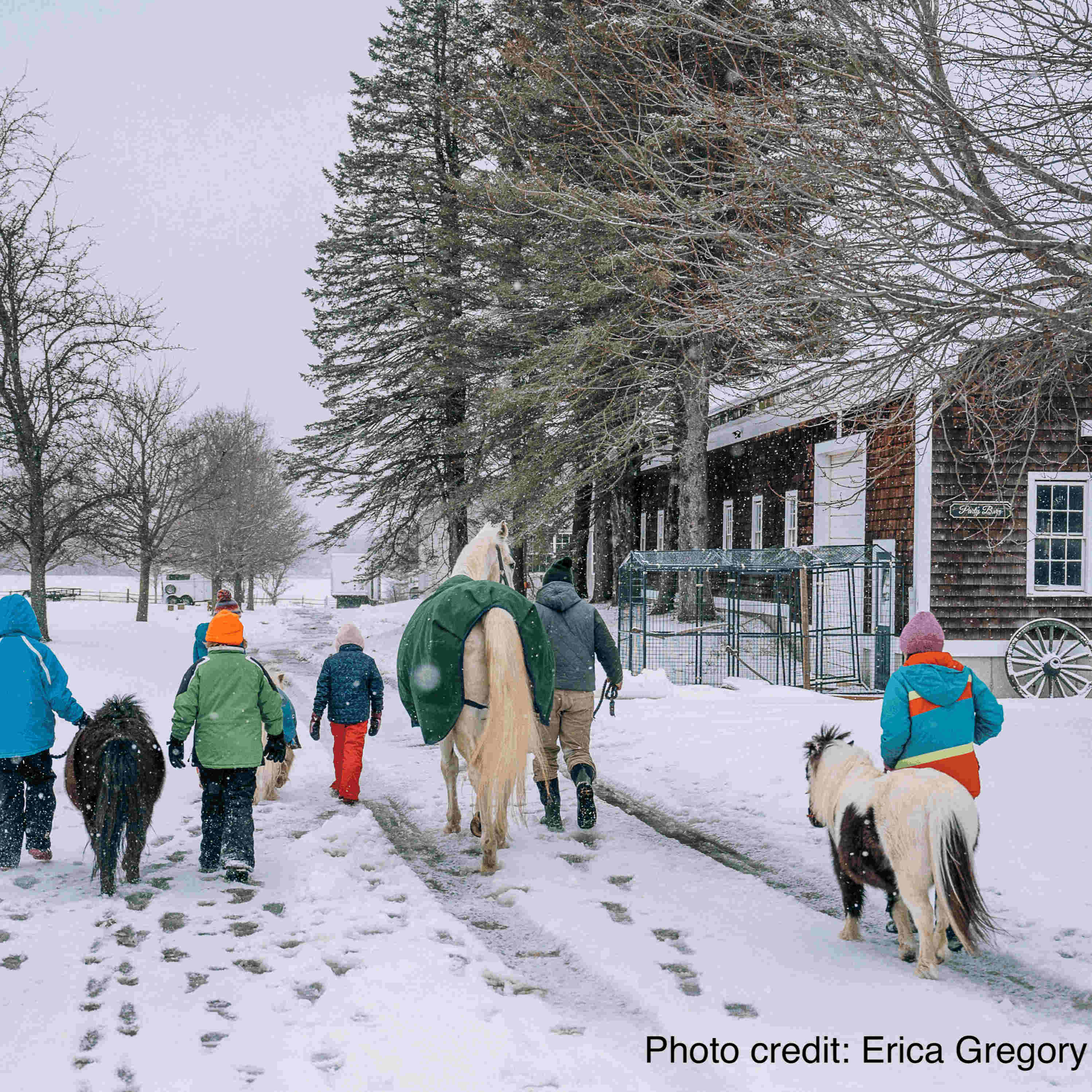
The Centaur
Mother and Students Share Their Experience
00:59:00
As an instructor and educator, the best way to learn is to ask for feedback from your students. So I did! This is a very special interview where I spoke with two students who participated in my unmounted equine learning program, and their mother who...
Loading summary
Transcript242 lines
- [00:08]
A
Oh, God. Welcome to the Centaur Podcast. I'm Cameron Adibi, and together we'll explore the fascinating world of horse human communication and the extraordinary connections that can develop between our species. In each episode, I interview individuals who share a genuine love for horses and a willingness to spread the love to others. This podcast is for anyone interested in discovering the incredible possibilities these animals have to offer. As an instructor and educator, the best way to learn is to ask for feedback from your students. So I did. This is a very special interview where I spoke with two students who participated in my unmounted equine learning program and their mother, who played such an active role in bringing more homeschool families to this new program. These kids were so insightful. And of course, I honor all the parents. It's probably the hardest job on earth. This show is dedicated to Hunter, Romeo, Pixie and Fluff. We love you. If you like this podcast, please share with your friends and family. I much appreciate the support. Sit back and enjoy the show. This is so awesome. I'm in the home of Erica, Olivia, and Emmy, and I've asked them if they would sit down and talk with me. And such an honor to be here with you guys. You guys actually helped me so much. I just want to be that. Put that out right up front. So I, Olivia and Emmy were students in my program, Erica being the mother here. And so I've got. Just caught some. Just some basic questions that would really like to hear your. Your thoughts, and we'll see where it goes. How's that sound?
- [02:00]
B
Sounds great.
- [02:01]
C
Yeah, Sounds great.
- [02:02]
D
Sure.
- [02:02]
A
Good. So I'm gonna start with you, Emmy. So, Emmy, you had a. You actually you told me you shared with me that you did before you came to visit me and the horses, you were doing riding lessons. But so what motivated you to try this style of programming?
- [02:19]
C
Well, like you said, I did horseback riding, and I've been doing that for a few years. And then when I heard about this, I thought that it would be fun to try something a little bit different.
- [02:33]
A
Cool. I appreciate that openness. Yeah. And you brought so much to the table. I mean, really, you're, you know, because you had that comfort already and then. But seeing you adapt and learn was really cool. How about. Olivia, can I ask you the same question? I. So I, I saw you right away and I noticed you were like, hiding behind your mother that first day. I still remember that very well. It was. I think it was in winter, kind of. It was a wintery day. You were all bundled up and I could see you Were, like, not that interested. But you still were motivated to try it. What was your motivation to try this?
- [03:14]
D
Probably, like, I didn't really get to interact with the horses at the barn that we went to before, and I wanted to try to do stuff with horses again.
- [03:35]
A
Yes. So the way I. The way I heard it from you and your mother is that you didn't like going to the horse riding farm. Yeah. It wasn't your style. This wasn't you was what you wanted to do. Right. So you were willing. Did your mom say this wouldn't be. There wouldn't be any riding before you do this?
- [03:52]
D
Well, she didn't really tell me what it was going to be like. She didn't even tell me she was sighting me up.
- [03:58]
B
I didn't know what it was going to be like.
- [03:59]
A
Good. Good mother. Yeah. This is. Try it. Don't think about it. Right. That's. That's actually a good technique when you try something new. Don't think, overthink it. So you just were willing to try it because it was something with horses and. And it was maybe something different.
- [04:14]
D
Yeah.
- [04:14]
A
Okay. I appreciate that. I mean, that's exactly. I think there's so a lot of kids like you that are just want, you know, know, maybe not want to ride. It's not required. It really shouldn't be a requirement. Most the barns. That's what it is. Right?
- [04:29]
D
Yeah.
- [04:30]
A
So, okay, Erica, you know what motivated you to try this with your kids?
- [04:37]
B
Well, as Emmy mentioned, she had been riding, and I actually started taking riding lessons again. My goal when I turned, right before I turned 40, was that I would start riding again. I had briefly done it in high school, and so we jumped in at this local barn that was amazing. And we just. We landed in a beautiful place with beautiful people and had a great experience. But then we heard about your program from some really good friends of ours, and they just. The mom and the kids both separately ran up to me right after they had done it with you, and they just looked me in the eye and said, you have to do this. You guys would love this. We know you would love it. You have to do it. So we got signed up for a session with you, and I didn't fully even understand what it was because we had been at a riding barn, and that was really the only way that you could interact with the horses. And so I was curious, but wasn't sure what to expect. So that's how we ended up coming to you with just kind of an openness to see what you were Offering. And. And we weren't quite sure. And it was freezing cold. It was winter. It was flu season. We kept having to bump back the start date, and, you know, so we were dealing with some obstacles, but when we finally got there that first day, it just right away felt like something really different, and we were excited.
- [06:04]
A
Again. It's like, it brings back so many memories because, like, I remember that first day so well, too. Thank you. Was it Amy that was the parent? Yeah.
- [06:11]
B
So, yeah, our mutual friend Amy.
- [06:13]
A
These are. So these are all. You're in a homeschool network. Emmy and Olivia are homeschool kids?
- [06:19]
B
Yeah, we're a homeschool family. And so we, you know, we have a lot of time in our schedule to seek out really amazing experiences like this, and our other homeschool families that we know had been exposed to your program and just, you know, the word was spreading that this was a good thing that we wanted to be part of again.
- [06:40]
A
I'm so honored that that happened, because, again, that opened so many doors for me, and I learned so much. So I. So we kind of already talked about this, but. So, Emmy, can you describe your, like, initial feelings when you, like, you showed up the barn? I start, like, you know, telling you the. What I'm. What we're up to and introducing you to these horses. What were some of your initial reactions, you remember?
- [07:04]
D
Well, I.
- [07:06]
C
If I'm being honest, I could say I was a little grouchy because it was freezing cold.
- [07:12]
A
It was, like, November. Was it November? December. It's January. It was January. Yes, it was January. Of this. Of this year? Last year. Was he.
- [07:21]
B
Yeah, this past January.
- [07:22]
A
Oh, my. How's the time go? So this is like. This is really. So we are. It's incredible. It feels like years ago to me. Doesn't it? Almost. I don't know. I don't know if you feel that way, but. So, yeah, it was January of 2025, and we. We are almost end of September, nine months ago.
- [07:39]
B
Okay, so it was grumpy. We were grumpy.
- [07:42]
A
Go ahead. I mean, please. So, yeah, you were grumpy, and it was like, would you.
- [07:49]
C
Yeah, I was excited because I. All I had heard from my friends was that it was something really, really fun and you get to work with adorable little horses and that we should definitely try it. So I was excited. I was curious to see what it would be like, and I guess I just didn't really know what to expect.
- [08:20]
A
And, Emmy, I should have asked you this. How old are you right now?
- [08:24]
C
I am 11. Years old.
- [08:25]
A
So cool. Yeah. I mean, you're like, you're. You're living. You're living. You both, you. Actually all three of you are living like a really cool life. You told. Thank you for saying that. So. Yeah, you mean 11 year old to get to experience all this stuff, you got to experience. It's so cool. But this was. Yeah, I could see you're excited and I was trying to make. Make sure that you felt welcomed and that this would be something you would like to. Part of my approach. Right. Was to literally let you know, you discover what you need to discover. Did you feel that way, like you could really learn what you wanted to learn? Did it feel inviting to you?
- [09:06]
D
Yeah.
- [09:07]
A
Good. That's really. That's so key. I mean, because so many places, I mean, I've been in, you know, I've done different types of. Different types of teaching, so to speak, and some of them are more about, we're going to learn it this one way. And, and, and then it's very formal. But you're a homeschool in a homeschool, so you don't have that experience so much. Olivia, how would. How about you? What would some of your first initial feelings or reactions?
- [09:35]
D
Like you said, I was like, shy and I didn't really know what to expect because I thought we were going to be working with, like, big horses.
- [09:49]
A
Not the Minis. Yeah, yeah.
- [09:52]
D
When I walked in, I saw some of the bigger ones outside.
- [09:57]
A
Yep. Oh, yeah. And then you saw the Minis in the. Because I brought them in to introduce you to. Do you remember which one you met first?
- [10:05]
D
I think it was Fluff.
- [10:07]
A
Fluff, yeah. Good old Fluff. And, Erica, thank you. What were some of your initial reactions? Since this is something, again, completely different from what you're used to also as a horseback rider.
- [10:21]
B
Yeah. So I want to just circle back to something that you just said about each person taking from the experience what they were meant to take from it. Which is a really important part of the way that we educate in our home, in our community, is that, you know, I can read something to my children, with my children, and I will take something different than they take from it and write. That first session, I looked at my friends that were there and we all kind of made eye contact and we all homeschool, we all have a really intentional way of living our lives. And I was immediately struck with the way that you were talking to all of us and saying to us, you know, we will each take something different from this. Each horse is taking something different from this. And just your ability to facilitate that in the environment was really incredible because, you know, there's a lot going on. There's kids, there's the dynamic of kids with their parents and their friends, and then there's horses and that's unpredictable. And you just welcomed us into this beautiful circle in the freezing cold barn. But we just all just quickly came into an understanding together and were able to, like, I was kind of aware of what was happening with. I'm taking something from this that's really meaningful for me. But I could see that each one of my kids was getting something different out of it. So I just wanted to touch on that because it really connected with the way that we. We learn. And it was a really beautiful thing to see right from the beginning. And then you, throughout the weeks, continued to just facilitate your educational offerings in that way. And that's something different because like you said, you go to other programs, whether you're learning to ride horses or do math or, you know, you're in a history class or whatever. It's a different thing if the teacher is just saying, this is what I want you to take away from this. And you really gave an open invitation for what is it that you need to take from this today? If you're an 11 year old, that's going to be one thing. If you're an 8 year old, that will be something else. If you're a 40 year old mom, that will be something completely different. So that was what was going through my head on that first day. I was really just wowed by like, oh my gosh, what have we just stumbled upon with this amazing teacher? And we were all, all of us moms were kind of like, okay, we kind of know he's a teacher, but like, what is this background? Why are you able to just give this open offering with this type of program?
- [12:58]
C
You.
- [12:58]
B
It was really different than what I had seen. We were really happy with the exposure to horses that we'd had at this point. But this was like the next level of let's really open our hearts and our minds to what is here. So that was my first day's just wow moment. Thank you for that.
- [13:19]
A
Thank you. I am speechless. Thank you for putting that into words. That was. Wow. I am just taking that in right now. You know, just thinking back, I. So let's see. There were a total of six kids that day. Six kids. And how. Let's see. And then there were four mothers. Four mothers. So six kids and four mothers, you know, and I was, you Know, so I gotta be honest, I hide it well. But I was anxious too. I was like, oh, my God, what am I doing here? And, you know, so just so you know, a lot of people, I did have to chat, I did have to defend myself quite a bit, I've heard a little bit. But a lot of people challenged me, claiming that what I was offering was unsafe because, you know, I let a lot of, you know, let the horses have a lot of more freedom than, you know, you know, this, right? I mean, when you go to a barn, you know, you put. You never groom a horse unless they're on cross ties.
- [14:15]
C
Yeah, yeah, right.
- [14:17]
A
So I'm already like, wait, why? Why can we do it differently if we build that relationship? Right? So you guys were so open and willing and that was like, that's why I think, again, it was such a good match for both of us. You have that mindset and that's what I'm offering because, you know, a lot of people are like, that's, you know, there's. There is a value sometimes for that top down approach where you have one person telling you what to do if the person's very uncomfortable. But I could, I felt, you know, I pick up things quickly and I felt like you guys were ready and willing to try this, especially with our little minis. Come on. Those minis and Hunter, they were so. And again, I spent the time to build a relationship. Yeah, you go first this time, Olivia. I mean. Yeah, Olivia. I mean, how do you so. Olivia, first. I forgot to ask you. Your mom said, how old are you now?
- [15:11]
D
Eight.
- [15:12]
A
Say again?
- [15:13]
D
I'm eight.
- [15:14]
A
Yeah. Again, I honor you for, you know, just like, who is this crazy guy? What's he asking us to do? You know? And you were like, okay. And you went right into it, so. And you had to work and you knew these other kids that were with this, in this program, they're all. You all kind of had relationships because you're all in the homeschool network. But how did working with the horses impact your understanding of teamwork, communication?
- [15:43]
D
I. We were work. Working with one horse and one other kid most of the time. And that helped both kids work together and all three of them with the horses.
- [15:59]
A
Yeah. We never worked alone. Right. With one horse. So you always had a partner. Right. So he. So you got to do that. Did that help you learn, do you think, when you got to watch somebody else do it? Yeah, I think that's a. For me. I don't know. Do you know your learning style? We all have different Learning styles. I watch. I learn by watching. Do you.
- [16:20]
B
That's a great question.
- [16:21]
A
How do you. How do you think? Yeah, how do you think you learn best?
- [16:26]
D
Probably watching, listening, and just like, yeah.
- [16:32]
A
You are a good listener. I have to make a plug for this family. There's like, they're voracious readers. You guys read more than me. That's the embarrassing part, I have to admit. But you read so much and you listen to audiobooks, too, don't you? Yeah. So you guys were just always, like, right there listening. But, yeah, that was the idea. So you'd have a partner to work with. You guys want know, instead of me being there, you'd have a peer to work with. And so you get to talk in your style of learning to show up each other. So. Yeah. And do you feel like you got. You. You were. You are able to express and. And communicate?
- [17:16]
D
Yeah.
- [17:16]
A
Good. I mean, that's. That's what the horses. Right? That's what the horses appreciate, too. Right. Thank you. And Emmy, same. Would you. Well, how did working with the horses impact your understanding of teamwork and communication?
- [17:30]
C
Well, I'm sort of thinking the same thing that Olivia is, like how she said, we always work in pairs of two people with one of the horses and that. And we switched off, like, who's leading the horse and who's on the other side guiding them. And I think that definitely helped with building teamwork. And you talked a lot about how we need to communicate with the horses to tell them what we want them to do. And if we don't, they're going to be confused and upset, anxious and, like, frisky maybe. So we need to really do good communication with them when we're working with them.
- [18:31]
A
Yeah, that's it. That's it. You know. Do you think the horses are listening to us when we speak to them?
- [18:37]
C
Well, it depends on how you're speaking to them.
- [18:39]
A
Oh, there you go. Good. Explain that. What do you mean?
- [18:43]
C
Well, if you are yelling at them, there are different ways that you yell at them. Like, if you're yelling at them because you're angry at them, that will make them anxious, and most likely they won't listen to you. If you're yelling at them, as in, like, yelling a command. If you're, like, running with them, that's different. And I guess the way that you speak to them definitely makes a difference.
- [19:25]
A
Very nice. Yes. I'm glad you said that. Yeah, they pick up. Right. Well, first, we know, like, they, they. They. They're very good at reading body language. Right.
- [19:36]
C
Yeah.
- [19:37]
A
Right. So. And then. So when we express what we're verbally, we're also probably using part of the partial partially for some of our body language. So, like, again, if you're, like, upset. Right. You're going to raise your body up and they're going to feel that. Right. And if you're not, you're just firm with them yelling, like you said, or firm, they're going to hear that differently. Right.
- [19:58]
C
About body language. At the barn that I rode at, we used mostly body commands. But on the other hand, the barn that my cousin rides at, they use more voice commands. And when I'm riding there or at that barn, they do some groundwork.
- [20:16]
A
Good.
- [20:17]
C
When I'm there, I find it very different because they use more voice commands than what I'm used to, which is body commands.
- [20:30]
A
Yeah. So I think one, you bring up some log. Great. This is why I like having a conversation. You bring up some really good, important things. Like. Right. It is. Are all horses the same?
- [20:42]
C
No, not. They all personalities.
- [20:44]
A
Yeah. They're all going to respond differently. But do they. If you are clear with them. Right. Do they respond better than they. If you're, you know, like, if you say, you know, I want you to stop now versus whoa. Right.
- [21:00]
C
Yeah. There are different commands that horses know rather than the words that we would normally use, like whoa, stop, or like, halt is stop. And we use those different words because they. Well, we. We have different words for different things in the horse world.
- [21:29]
A
Yep.
- [21:30]
C
And I'm guessing. I don't know, but I'm guessing that we use those words instead of the actual words because it's easier for the horses to understand.
- [21:42]
A
It's so good you're asking these questions. Yeah, It's. It really fundamentally is all about our energy. Right. So you. You mentioned, you know, the different tones with yelling. Right.
- [21:56]
C
Yeah.
- [21:56]
A
So it's really what the words aren't. So as important as what energy we're communicating, because that's how they signal each other. Right. Remember when a horse is in a paddock and another horse is, you know, 50ft away, they can send a signal.
- [22:12]
C
Yeah.
- [22:13]
A
Without even saying anything. So that's the idea. So it's. It's really like, what's. What's this? How's the best way to communicate with this horse? Is this horse, you know, more shut down, for example, like Hunter was.
- [22:26]
D
Yeah.
- [22:27]
A
Or is this horse more anxious or, you know, lively? That's where you have to adjust. Right. And then being clear and being consistent. So these are great topics. I'm going to get Olivia's. These are. I appreciate. This is why, like, I like having interviews because it goes different, like, places. And you're bringing up some great questions, Emmy. Olivia. I mean, I. There's so many things we did, but do you have any, like, any specific activities or exercises that really stood out to you? And if so, which one and why?
- [23:03]
D
I really liked trotting and walking with the horses in the arena.
- [23:09]
A
And this is all on the ground, right? Yeah, yeah. We. So. And we went over. What. What did you like? We went over obstacle courses. You remember that?
- [23:19]
D
We went through, like, cones. We did poles to walk over.
- [23:24]
A
Yeah, yeah. And you went over, I think, a small jump, right? Yeah. With. Was it. Who was it with Pixie?
- [23:33]
D
Yes.
- [23:34]
A
Yeah. And it was like, what was who. Which horse, like, was the easiest to work with for you?
- [23:43]
D
Probably Pixie.
- [23:44]
A
Pixie. What a cutie. She was the. The young one, the youngest one out of the three minis. Out of all of them. And what was it like? Did you get it the first time?
- [24:00]
D
No.
- [24:00]
A
Yeah. You take some time to practice it, right? Yeah. And you first had to start learning. First you first had to learn how to walk. Right. And what was something like with a lead rope that you had that you learned? Like, using the lead rope, your knuckles.
- [24:14]
D
Have to be up while you're holding it. You have to leave at least a foot of rope between you and the horse, and you don't want to leave it dangling. The rope that's in your hand.
- [24:30]
A
Yeah. You don't want to drag it on the ground. Good job. Yeah. So, yeah, this is like. That was a. This is a. Another way to connect with the horse. Right. And using your body language like, so you can. They feel it, right? They feel everything in. In the rope.
- [24:46]
C
Yeah.
- [24:46]
A
So you. This by squeezing the rope, right. They could feel what you're, you know, if what you're asking. So there was really. Did you learn. Did it. Did it make it. As you progressed, you remembered it. Was it easier for you to use, like, use less lead rope? Because as you get a better communication, sometimes you don't need much on the lead rope. Did you remember that?
- [25:06]
D
Yeah, I think it was easier to use less lead rope and just have mostly in my hand, both you guys.
- [25:19]
A
And I'm just going to, you know, give you guys some kudos here, but Eric, I want you to fill in here. But. But both you guys were. They. They started to pick up what you're asking. So what happens when you get this clear communication, partnership? You don't. You don't need to do much. They were picking up everything. I remember it was very. You were doing very little asking. And they would. You know, you've seen this in horse riding. I mean, you probably too, but, Olivia, that. You know, there's a lot of kicking, you know, getting the crop out, getting the horse to really respond, a lot of force. Right. And that's the idea we want. Can we do something different than, you know, using all that force? Can we use something that invites them? Go ahead. What? Are you gonna say something? I think you were ready to say something, Emmy.
- [26:07]
C
No, I wasn't.
- [26:08]
A
Are you sure? Okay.
- [26:08]
B
I have a thought on that.
- [26:09]
A
Yeah. Okay.
- [26:10]
B
You know, being a student of writing and seeing my daughter be a student of writing, I heard a lot of times the instructor would say, ask them to do this. Ask them. Ask them. But then we weren't really taught how to ask. And I think that's a big difference is asking an animal to do something versus telling them to do something. I think there's times when both are needed, but we really learned how to ask these animals to do what we. We wanted to do with them, and that was a huge difference. But we needed someone to teach us how to do that. And I think you. You know, like I said, we landed at a great barn, and we had an amazing experience with being taught how to ride. But I wish that we had also had this at a parallel time to learn all of the groundwork and all of the ways to talk to these horses, because we don't speak the same language. And you are this master of communication that really came in between and bridged the gap between all of us who were in this program who hadn't had the opportunity to learn how to ask. And then seeing, you know, how you modeled it so wonderfully over and over again for us, and you're, you know, really amazing, quiet way of doing this. And you had a relationship with these horses already, and so we could see, oh, this is what is possible. And I think a lot of parents are excited to get their kids into riding lessons. And then you're kind of standing on the sidelines seeing someone say, ask, ask your horse to do this. Okay, now give them a kick. Use the crop a little bit. Okay, go ahead and do that and make them do it. And so I just was so struck by your ability to teach us this other really much harder thing to say, ask them to do it and learn how to ask them the right way so that they understand what you want. And that was just, you know, again, it's mind blowing. It's so simple, but it's turning everything on its head that we had already been doing. And we were able to say, oh, there's a, there's a better, more effective way to do this. But we needed a teacher to show us how to do that. And you really, you did that so well. So that was again the parents perspective of taking this all in on a bigger level and comparing it to another way that we had been doing it.
- [28:40]
A
So thank you, thank you, thank you. Erica, I gotta also just put a plug in your photography is your fault. Your photos are so beautiful.
- [28:48]
B
Thank you.
- [28:49]
A
I mean, and just so if anybody's looking at my photos and my social media, it's mostly Erica that's taking those, including my profile photo as a photographer and an artist. Really, I mean, what were some of the fun things for you to document?
- [29:04]
B
So it's always, for me it's just telling the story. And this was such a beautiful story to tell. I mean, it was freezing cold and we're all bundled up in these like bright mismatched snowsuits in this beautiful light filled arena with these. You know, I think horses are the most beautiful animals. They're just, they're majestic and they're very spiritual. We've talked a lot about that, how spiritual they are. And they just have this amazing presence. And so I was able to tell the story with my photos, which is my favorite thing to do with my camera. And that was a whole other layer for me that I was getting out of this experience was kind of standing back and just telling the story with my camera. And then of course it was fun. I shared those with the group after each session session that we did. And then I think it's kind of nice for the kids and the participants to be able to say, oh, there I am doing that hard thing that I was struggling with or not sure how to get the horse to trot with me. And there I am like trotting along and going over the jumps. So it was such, such a pleasure for me to be able to capture that on, on camera and share those. And you know, I hope more people can see them and see the beauty of what was happening because our words can describe it, but those images really tell the story of what was happening in there.
- [30:26]
A
So yeah, and I have thousands. I still have to get, get more out. But thank you. You did a lot. So Emmy, you know, the. Just so you both you guys realize this, right? You, you guys were learning the basics of liberty work. Honestly, that's what it is. It's Liberty. Liberty is right. Without any ropes or attachment. And you're. So you're using. You're using lead rope, but very little. So I'm gonna. We gotta go. We have to talk about the horses. Which horse do you think about most and why?
- [31:01]
C
Well, I have spent most of my equine life with bigger horses, and I guess that means that I probably thought about Hunter the most. I mean, he's this beautiful horse, and he has.
- [31:27]
D
Such.
- [31:30]
C
A sad backstory.
- [31:31]
A
And can you share that on the. For the listener, what was his backstory?
- [31:36]
C
Well, you've told us that he was a schooling pony. Is that correct?
- [31:42]
A
Schooling horse, yeah. Over at a local barn. Yep.
- [31:46]
C
And he was not being treated very well, and he.
- [31:50]
A
He was probably being treated, you know, as well. But he was in pain. Right. He was in pain for some reason. Right. And so he was. He was. He throw. He was. He was throwing riders. He put his former owner in the hospital. I want to be careful because, you know, a lot of people would challenge that he was being treated well. He was getting, you know, the best vet care. He was getting the best food. He was getting. He had, you know, nice indoor stable, you know, so he was being treated well externally, but something was wrong because he threw his. He was throwing riders. He put his former owner in the hospital. Did you know that? Did you hear that story?
- [32:30]
B
Yeah.
- [32:30]
A
She was severely injured. He even dumped the trainer, put him on the ground. So he. He was at the end of his line. Because. Because when a horse can become unrideable at a schooling program, that's it. You either, you know, you can either do the job or you go to the auction. I found out from the vet. I probably. I didn't tell you this guy. I didn't tell you this because this happened this summer. The vet came for an emergency visit and told me that he was going to be euthanized until this other person stepped in. So he was. He was. He was near. At the end of his life, which happens to so many horses. That was the backstory. I just wanted to make that very clear. But. So. Yeah, you like. I love Hunter Tooth. So. Yeah. How. What was it? Can you describe more of his personality?
- [33:20]
C
He's very gentle now because you've been training him so well, and he is very majestic.
- [33:30]
A
It's 100% right. Beautiful. I did a DNA test on him again. I did. So. I did. Just did a lot because he brought so much joy to me. But he had not only thoroughbred, but he had. Oh, shoot. He Has a French sports horse. He's part friend. He has this French sport horse background.
- [33:47]
C
Which.
- [33:48]
A
Right. Was it? Yeah, yeah, yep.
- [33:53]
C
Any Arabian in him?
- [33:54]
A
No, I'll send you the. It was a third, but anyway, yeah, he has this just, you know, majestic look to him. So he was across thoroughbred with this French sports horse, mixed breed. And we still don't even know really know his age, but the vet, who I trust the most, because the vet worked with him, we found. I found out later, he's actually 31 years old.
- [34:20]
C
Wow.
- [34:21]
A
I was telling you, he's 25, but he's pretty old. Right. And look how good he looked. Yeah, right. So. But he had severe arthritis and back pain, which happens so many horses. Just like, you know us, they get. They get arthritis as they get aged. As they age. And so he was in pain and he was in pain. He was throwing riders and. And nobody was asking. And so he could. He shut. He just got. He was. He shut down and like, he was done with all humans.
- [34:49]
C
More on his personality. You could definitely tell that when we were working with him and the Minis, that he's definitely the leader. And it's so cute when Romeo will come up behind him and he's kind of like the little co pilot, but it's so sweet. They're this little herd and he's definitely the leader, although Romeo sometimes tries to take over.
- [35:20]
A
He's definitely. I love that I haven't heard that before. Co pilot. I agree. All right, thank you. Very well described, very good description. Olivia, which horse do you think about the most? And if so, why?
- [35:33]
D
I think equally about Pixie and Hunter because Pixie is special to me because.
- [35:46]
B
I.
- [35:48]
D
I really feel like she's very special because she doesn't have an eye and she.
- [35:56]
A
She's missing one eye. Right. She's. She had a. Emergency surgery, had to have one eye removed. Yeah, Go ahead, please.
- [36:06]
D
And what's good about Hunter is that he is so gentle and he. He can't be ridden anymore. Like, nobody rides him because he has pain. But.
- [36:26]
A
He.
- [36:29]
D
I can't believe he's that old because he looks so young, doesn't he?
- [36:33]
A
Again, a lot of people, a lot of. Lot of horses out there, their age is unknown because they get sold and traded. So it's not 100% clear what his age is. But again, the vet records were 31 years old. But yeah, Pixie was the. The. The lowest ranking in the herd, so to speak, and Hunter being the biggest. And they. They took care of each other. Right. Hunter really looked After Pixie and they did. He was very kind to her often.
- [37:06]
D
Like Emmy said, Hunter's definitely the boss.
- [37:10]
A
Yeah.
- [37:10]
D
And he. Yeah, like she said, also Romeo tries to get to be the boss too.
- [37:21]
A
But, yep, Romeo. Romeo is our other many. And I still say he's the smartest. Smartest horse on earth. I really. I've never met Horace that smart. He's. He knows so much and he's very. So the owner calls him mischievous. Is there another word we could use besides. I actually challenged her on that, by the way. Is there another word you would use besides mischievous?
- [37:49]
D
I can't think of one.
- [37:51]
A
He is so curious.
- [37:53]
B
I was thinking curious.
- [37:54]
A
Yeah, he's curious. He's like, you know, he can open gates. He's trying to find where the. Where the food is. He figures out how to get out. You know, he can do a lot because, again, he's get. He's so. He gets so bored. And so many horses get bored because they're just stuck in a paddock doing nothing. And that was kind of his life. So when you guys showed up, you brought him joy because you gave him something new to do. And that's what. Really what that was. What. Again, there's this partnership. Right, Erica. Oh, do you want anything else to add? Okay, Erica, what did you. What was your favorite horse and why?
- [38:32]
B
Oh, that's like asking to choose their favorite child. It's an impossible question. I don't know. I was immediately captivated by Hunter. I as me taking photos while we were there. He just connected with the camera. His eye was always on me. His eye was always on everything that was happening. He just had this, like, you know, like, protective aura for everyone. The Minis and it seemed like the children. Like, he kind of stepped in and. And managed the situation. So Hunter. And then just seeing the whole herd dynamic, because that was a really beautiful way to see horses interacting. Something that you don't get to see a lot at a lot of the local barns. There's seen some barns where they do keep the horses more together, but just the playfulness and the freedom that they could experience during their sessions. And I know you said, like, you had to push back on some criticism and people saying, I don't know if that's a good idea, like, you've got loose horses. But I have to say, like, it felt very, very safe and well managed and. And like a really beautiful way to see this experience that a lot of people don't get to observe this happening. And horses are herd animals in the wild. Like, it's it's just we should be seeing that and we don't often get to. We don't get to interact with them. We were part of that herd when we were in that arena and that was just a crazy, beautiful thing to. To experience. So. Yeah. Hunter, Romeo, Pixie, Fluff, all of them.
- [40:18]
A
Yeah.
- [40:19]
B
You know, they all have their personality, like you said.
- [40:22]
A
Yep. So they. Thank you. And as we were talking, by the way, I gotta just mention that your dog just rolled over as we were talking about the horses. What's her name again?
- [40:33]
B
Charlotte.
- [40:33]
A
Charlotte. And she's just comfortable on the couch and so she's listening to us, right?
- [40:38]
B
Yeah.
- [40:39]
A
She's enjoying this conversation because we're talking about some other four leggeds, but yeah. Do you guys remember Emmy? Do you remember the meditation we did with the horses and how that worked?
- [40:49]
C
Yes, I do remember that.
- [40:50]
A
Can you just like, what was that like for you? We did. So we did a. It's kind of like near the end we did. All the horses are in the indoor arena, free roaming. And we stood in a circle and what? Yeah. And then we kind of just focused on our breathing. Right. And kind of.
- [41:08]
C
Yes, we did. Horse breaths.
- [41:10]
A
Yes. What was that like for you and what do you remember?
- [41:16]
C
I remember that Beth shared a very. Beth was one of the moms that did the program. She shared that she had had a very special moment with Hunter and we just all stood there and we breathed with the horses and at one point Hunter came and stood in between some of us and he really seemed to be listening.
- [41:46]
A
Yes. I mean, how. You know, remember that. That Heartmath Institute thing?
- [41:52]
C
Yes, we did that.
- [41:53]
A
Yeah. So they were like. When they get. We get in that proximity, we get in their bubble or. Right. Their.
- [42:00]
C
With my cat.
- [42:01]
A
Nice. Yeah. So. And then. So yeah, Beth, one of the moms. Yeah. She had very emotional experience. I can't fake I remember it vaguely now. I think Hunter came over to her and put his head on her somewhere. Right. Do you remember Erica?
- [42:16]
B
Yeah. I think she was. She was praying, which is a spiritual thing for her. And. And she just said, I wondered what it would be like to pray for a horse. And she prayed for him and he stood with her for a long time and she actually. I'm going to get emotional.
- [42:32]
A
Oh yeah.
- [42:33]
B
She saw a tear come out of his eye.
- [42:35]
A
Wow.
- [42:35]
B
So really impactful moment.
- [42:38]
A
Yes.
- [42:38]
B
And then she shared that with all of us and we got to experience a little bit of what they had shared.
- [42:43]
A
Yes. I've seen Romeo cry, by the way too. So They, I, I do believe they cry. Then we know they have the emotions. We don't. There's no, there's science behind that. There's no question about they have emotions, so why can't we start acknowledging that? But yeah, that was beautiful. And again, I think when the horses really appreciate, because they are herd animals, they loved seeing your family together. That's what they, they like. They get it. They know it. They know you guys are bonded. So Hunter, really, I think, really, that was a. He's never going to forget that, by the way. That's what keeps me going. He's going to remember that moment just like we do.
- [43:20]
D
Yeah.
- [43:24]
A
Olivia, I want to ask you what were some of what's really like what do you think this is how all that's so long. Well, it's not that long ago, but how this has impacted you, your, your own personal growth and who you are. Right now.
- [43:41]
D
I am a lot more interested in horses and I really want to go back again.
- [43:49]
A
Cool. Cool. And do you think it helped you bit with your communication? Do you feel like you can that help any more of your own skills with learning how to interact with others or. Yeah, how about. Yeah, cool. How about. Do you, you know, you guys are, you know, I'd say, you know, have a, you know, you're very balanced from what I can see people. But did it help you with anything that you were struggling with? You don't have to go into details, but it feel like you feel like you're less shy or more confident.
- [44:29]
D
I feel like I'm less shy and like I don't get that shiny one.
- [44:42]
A
Awesome. Awesome. You're doing great, by the way. Emmy. Yeah, you. How about you? Do you feel like, by the way I'm putting guys, I'm putting you on the spot. You guys are doing great. I'm really, you know, like, I'm quizzing you because I want to know what you know, you're doing. Thank you for, again, for doing this. What are some things that impacted your personal growth and who you are right now? Well, it was only eight. Was it eight weeks? We did?
- [45:08]
C
Yeah, I'm pretty sure it was eight weeks.
- [45:10]
A
Yeah.
- [45:11]
C
I learned a lot of new stuff. I feel like I really got in touch with the horses and the minis and I think that was just something that we're so lucky to be able to do because, I mean, that's one of the great things about being homeschooled. We have way more free time and that means we get to do way more really cool stuff. And I don't think that other people would have as good of a chance to get to do something that amazing. And I just feel like hanging with animals, especially horses, you can really meditate with them because they can tell by your feelings like so many animals can, like dogs and cats. They can tell by your body language how you're feeling, and that affects how they're feeling.
- [46:27]
A
Absolutely. Wow. I see you doing a podcast. You're going to be doing a podcast. You already did one, actually, with your cousin. Right. But I could see you doing a podcast. You're really well spoken, all you are. But thank you, Emmy. I mean, Olivia, same thing. Oh, actually, as we wrap up here a little bit. First of all, actually, Olivia, you first. I mean, why would you recommend this style of programming, which was. The style was what? Unmounted equine guided learning, where we did everything on the ground, but we really was about. About learning how to communicate and build a relationship with a horse. So many. So I was a, you know, a therapeutic horseback riding instructor for a number of places, and so many of the students would show up and we would just. There was not enough time, so we would. They would just get on the horse. This happens a lot of places, by the way. A lot of writing centers.
- [47:19]
C
You.
- [47:19]
A
You don't spend any time other than get on the saddle and learn how to ride. There's no relationship. So that was like one of the keys. Another one is like, how to really learn to communicate with them more or less in their language. So how would you recommend this to others?
- [47:35]
D
It helps you be less anxious. It teaches you how to be kind with animals, and it also teaches you how to be kind to anything.
- [47:51]
A
Yes. Yeah.
- [47:53]
D
Other animals. Horses.
- [47:55]
A
Oh, my God, you're such good humans. We need more humans like you. You're a good human. Thank you for being a good human. And thank you for saying that, Emmy, why would you recommend this style of programming to others?
- [48:10]
C
It's therapeutic equine learning. And horses sometimes also need therapy. And a lot of bad things happen to tons of animals, like they'll be treated badly or they'll be neglected, and humans can help them get over that, and that's horse therapy. And horses can also give therapy for humans in return.
- [48:41]
A
I think that's such a great concept. Get one of my many ideas. We're going to have to. Have to have this is what you just said. We're going to have to have horse therapy, animal therapy centers just for the animals. Do you want to add anything, Emmy? Emmy, Olivia, go ahead.
- [49:00]
D
I wanted to Circle. Back when we were talking about standing in the circle and doing the meditation, Hunter walked right over to me.
- [49:07]
A
I remember that.
- [49:08]
D
And just stood there.
- [49:09]
A
Yep.
- [49:11]
D
And I didn't move. I was just like. And then he came closer and closer.
- [49:14]
A
And I'm like, yeah, you didn't get scared at all. Cuz you knew.
- [49:19]
B
And I was watching that you were documenting, wondering what would happen, because I knew that might make you a little nervous. But you had built trust with Hunter at. By that point. Right. And so you. You felt okay about it, right?
- [49:31]
C
Yeah.
- [49:32]
A
You were, You. You understood his language. You understood. That was a very. He was very interested in you and being with you. It wasn't. He was charging you or trying to push you over. He was very. He was showing his love for you. Right. That was curiosity, curious.
- [49:52]
B
What is, what is this girl feeling right now?
- [49:57]
A
So you love Pixie. You were his pixie, basically, is what he was telling you. I remember that very well. And you guys can add it more. But Erica, you know, as a mother and a homeschool parent, why was this so important, do you think? This kind of programming.
- [50:16]
B
So the thing that I loved about this, I. I'm big in. You know, we're involved with a lot of different things in our life. And I feel like I'm always hoping that we are in a program or a group where generosity is encouraged more than what you're taking. There is so much that you get when you have a spirit of generosity. And I feel like you are teaching humans to be generous to the horses. And through that generosity, then we receive so much. I, you know, I've had a lot of people ask me, like, oh, you know, you're paying for this. And the kids don't even get to ride. Like, I don't know if that's what we're gonna invest in. And I say to them, well, you know, you. You will lose out on something very important by skipping to that step. And we, we kind of talk about. It's kind of goes back to like when you're. When you have preschoolers, you talk to them about, is your bucket full or empty or half full? And I said to the girls this morning, we were talking about our experience. I said, did you leave feeling like your bucket was full? And they said, yeah, but Livy said empty because she was sad to leave. And I said, do you think that the horses buckets were full? And they said, yeah. And we felt like we left your program each day that we were there with this amazing sense that we had given. And I Think that that's a key for me. And anything that we're involved with is that, you know, people are selfish. We live in a selfish world. The focus of your life is yourself. And I think I want to teach my children. I want to practice myself, a spirit of generosity and. And just the mindset that if you give and open yourself and give to something else or someone else or. Or these animals, you know, like Emmy was saying, that was therapeutic for those horses too, 100%. You know, and so us being able to be a part of that, whatever we got out of it was amazing. But it was also amazing to see we've impacted the lives of these horses through your facilitating these amazing groups. So as a parent, that was just a priceless opportunity that you provided for. For us and for the other families that did it. So I would just highly recommend that if people are able, they participate in something like this. It was incredible.
- [52:56]
A
And yeah, once. You guys, we're going to wrap up here, but thank you, Erica. Exactly. I have to defend myself to parents that want riding. So I was trained as a therapeutic courseback riding instructor. There's a lot of scientific data that. That is a very stressful for the horses because they don't get to. They have to do the job and they don't have any, you know, any say in it. So it's. And they take on all that emotion of that person. So it's a very hard thing. And that's. Well, that's mostly how most horses are treated. You know, you're gonna. You have a. You have a choice. Either you do the job or you. You don't. You suffer. So this was what you guys helped these horses that you were willing to try this because you were really my first group of kids. I did this, you know, in a group setting like that. And again, I just. I felt like. Like you. Thank you for Erica saying it was safe. And I had we. The air. These animals really were really open, receptive to this because this was allowing them to be expressive and also have be a participant. They are watching you guys the whole time. And they were watching your camera too. Hunter was always watching the camera. Go ahead, stick in the camera. I mean, sick. And yeah, he was.
- [54:18]
B
And I think seeing this group of humans and animals participating together, like exactly what you just said, it was such a. More. It's an experience that will stay with us forever and also just teaches us things to take into life. Right. Like the openness that we were encouraged to have and the way that we learn to communicate all of those things, we will take that wherever we go, whatever we end up doing with horses or other animals and. And with humans around us, they're. They're life lessons that can be applied so beautifully to our own experiences.
- [54:58]
A
Yay. I have to. Emmy pointed out the. The cat's trying to get in the conversation, so we got the dog creeping in, which I love. I love what the animals want to.
- [55:09]
B
We love being surrounded by animals. In case you can't tell, that's our house.
- [55:12]
A
Oh, you got chickens and rabbits. But I love it when the animals want to get on the. On the interview. That's my favorite. They're like, oh, let's get. Let's go. Get. Get all the microphone.
- [55:21]
B
That Kitty would probably talk. She's very vocal cat. She. We say she speaks human.
- [55:26]
A
All right, final thoughts. Anything you. You want to add?
- [55:28]
C
Cameron, I would like to ask you a question.
- [55:31]
A
Please. Fire away.
- [55:32]
C
Which horse. And you might not be able to answer this. Which horse do you think about most?
- [55:40]
A
Oh, boy. It depends on the day, honestly, you.
- [55:43]
C
Know, but out of the four that.
- [55:45]
A
We worked with, Romeo was, you know, he's young. He's young, he's pretty. He's. We think, by the way, the three minis are rescues, by the way, so they had a bad start as well. Traumatic. And you guys helped him. But Romeo, he. I did the ski shoring with him.
- [56:03]
D
He.
- [56:03]
A
He did everything. Everything I asked him. And I love Rome. I love Hunter so dearly. I'll never. He was always. He was the first, of course, and he brought all this to us and why we're talking right now. But Romeo has, you know, along pretty much, you know, another 15, 20 years of life. Many live longer. And I asked if I could be the caretaker and work with him. And unfortunately, that was not her response. So this is the tough part in life. But, you know, I saw. I think about Romeo a lot because he's so, you know, so smart. And I wanted to teach him how to play music because he was already. Remember the sound bowls? I used to.
- [56:45]
D
Yeah.
- [56:45]
A
He was learning. He was playing them with his. He was taking the mallet with his mouth and playing.
- [56:51]
C
That's amazing, right?
- [56:53]
A
And not the skijoring. So it was skijoring. We didn't get to try that. He loved that because that was then what. There's just. There's so much more. And you. Did you get to drive him? Yeah.
- [57:05]
B
You and Olivia and Grace did.
- [57:07]
A
Olivia, sorry. You didn't come for that. Yeah, they giggled driving Romeo. Yeah. Yes. Remember that. You had to ground drive him. That was the ski Jorians.
- [57:17]
D
We didn't go on skis.
- [57:20]
B
That was during the summer.
- [57:21]
A
That was summer, right. I had rollerblade. I have rollerblades too, for that. But anyway, yeah, so thanks for asking that question. So honestly, it depends on what day. But I do think about Romeo. Cause he has, you know, he still has a long future ahead of him.
- [57:34]
C
Two things about the rollerblades. I actually have held onto my dog's leash while I was rollerblading. That was wild.
- [57:43]
A
I bet you didn't kill yourself, did you?
- [57:45]
C
No.
- [57:45]
A
Okay, good.
- [57:46]
C
And I actually, I didn't drive the Minis, but I have driven a Percheron.
- [57:51]
A
Whoa.
- [57:52]
C
Nefair.
- [57:53]
A
Oh, no way. Good for you.
- [57:54]
C
That was awesome.
- [57:55]
A
Yeah, Percherons are big horses. Olivia, do you have anything else you want to add?
- [58:02]
B
Any final thoughts?
- [58:03]
C
Nope.
- [58:04]
A
Okay. All right. All right. Well, thank you both. All three of you, and that was awesome. And I will get this edited and out soon.
- [58:14]
B
So thank you, Cameron, for an amazing interview. This was fun.
- [58:18]
C
Thank you for inviting us.
- [58:20]
D
Yeah, thanks.
- [58:21]
A
You're welcome. Let's go. Let's try it again. Thanks so much for listening. If you want to learn more about my work, you can check me out@camronadb.com and if you like this podcast, please share it with your friends and family. Really appreciate all your support. And please check out my Substack newsletter as well. Substack.com CameronADB Stay tuned for more episodes. And thanks again.