← The Centaur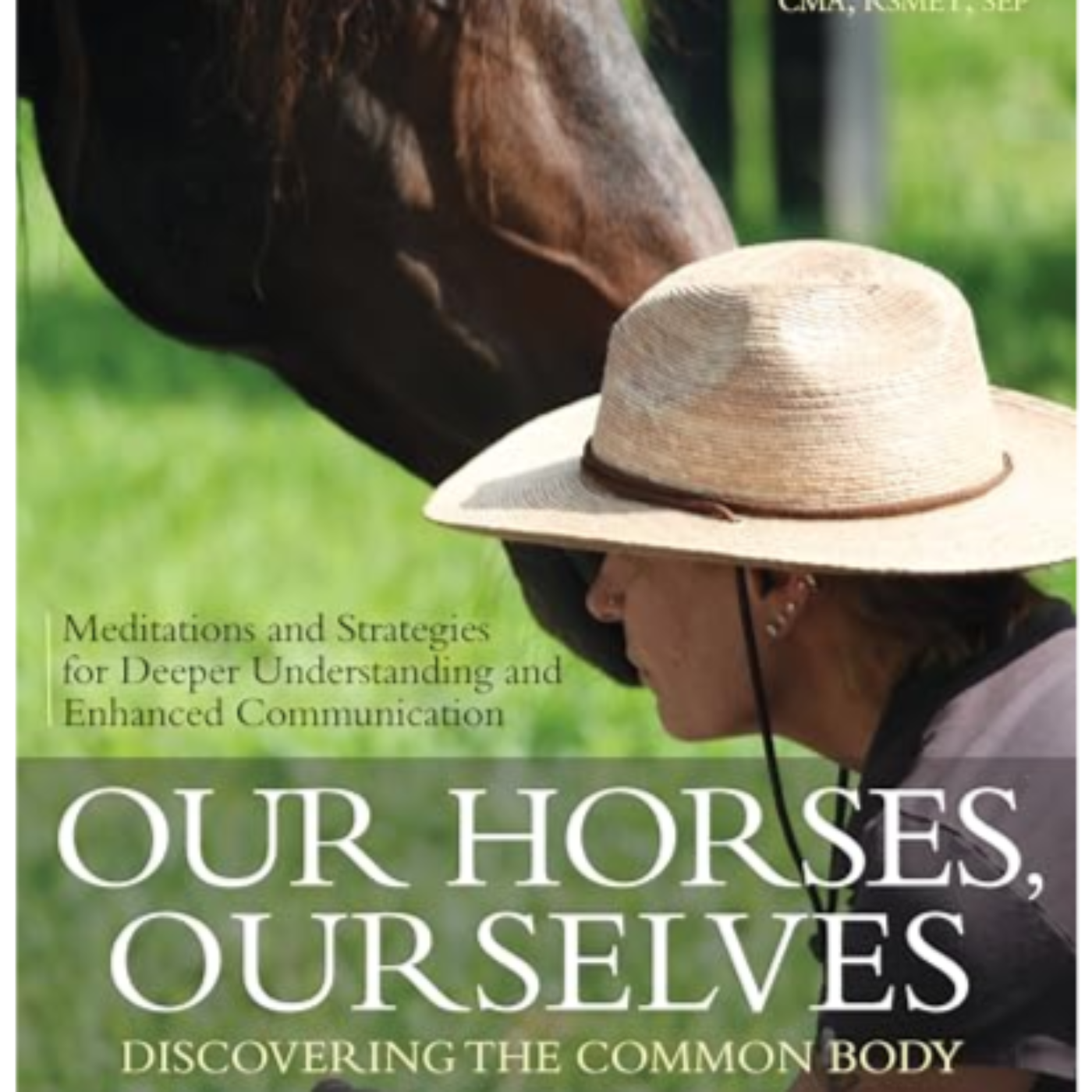
The Centaur
Movement Explorations with Horses
00:39:08
Paula Josa-Jones is a dancer/actor, choreographer, writer, visual artist and movement educator known for her visually rich, emotionally charged dance theater. Her work includes dances for humans, inter-species work with horses and dancers, film and...
Loading summary
Transcript84 lines
- [00:00]
Cameron Adibi
Foreign Podcast. I'm Cameron Adibi, and together we will explore the fascinating world of horse human communication and the extraordinary connections they develop between our species. Join me as we delve into the unique ways humans and horses connect and understand each other. Through discussions with true innovators, we uncover the subtle cues, bonding techniques, and emotional connections that enrich our relationships with these remarkable animals. Whether you are a seasoned equestrian or simply curious about the language of horses.
- [00:40]
Interviewer/Host
There'S something here for everyone.
- [00:42]
Cameron Adibi
Paula Joseph Jones is a dancer, actor, choreographer, writer, visual artist and movement educator known for her visually rich and emotionally charged dance theater. Her work includes dances for humans, interspecies work with horses and dancers, film and video. Her dances have been produced in Russia, Europe, Mexico, and throughout the United States. Paula produced and created Ride, a theatrical performance that explores the bond between horses and humans through a powerful mix of music, dance, and aerial ballet. Paula is a master somatic movement educator and therapist and works with clients in Connecticut. Paula is the author of the wonderful book Our Horses Ourselves Discovering the Common Body. Sit back and enjoy the show.
- [01:37]
Interviewer/Host
Paula.
- [01:38]
Cameron Adibi
Thank you.
- [01:38]
Interviewer/Host
This is such an honor. You have just an incredible ceva and thanks to a mutual friend or person we know, we got connected. I'm still learning about your work and it. There's. There's you. Just the amount of things you do is pretty, pretty impressive. But I just have to like, just.
- [01:58]
Cameron Adibi
Start with.
- [02:00]
Interviewer/Host
You know, all you know, how did your interest in horses begin? And then how did you become one of the leading choreographic conceptualists with equine performances? Which is like, there's only a handful of you out there. So I mean, this is like from. Know, a big question from a.
- [02:16]
Cameron Adibi
To.
- [02:17]
Interviewer/Host
To where you are, but can you just kind of give a little background?
- [02:21]
Paula Joseph Jones
Well, I mean, I. Horses were always, just always fascinating to me from, from childhood. I. I would say, you know, the two things that I wanted in my life the most were ballet. I wanted to take ballet lessons. I grew up in Minnesota and, and I. And I wanted to ride horses. And my parents thought it was a much better idea that I learned how to play the piano. Time has a way of resolving those things. And dance and horses are really the dance, I have to say, not formal choreographed step sequences. That's not really how I view dance. I mean, to me, movement is a deeply embodied practice. And I'm wanting to not frame dance as choreographic practice, but more as a curiosity about how movement arises from the body without our shaping it intentionally. So we can come back to that. But having said that, I would say about 25 years ago, I. I was experiencing. My hips were failing.
- [03:47]
Interviewer/Host
And you were a professional dancer at that point, right?
- [03:51]
Paula Joseph Jones
Oh, yeah.
- [03:52]
Interviewer/Host
Okay. Yeah. It's a brutal. Right? It's very. It's a heart.
- [03:55]
Paula Joseph Jones
It's a terrible. It's a bad thing. I mean, I. I would say I went for, like. And dancers can do this. We have a very high pain tolerance. And probably went for about 20 years with severe pain, which at the end was really like. I couldn't walk at all. I couldn't sit, couldn't teach it. Just not so. But prior to that, I had been seeing a. I saw an osteopath, a woman. I was living on Martha's Vineyard at the time, and I. I just realized that there's a pretty active horse community on the vineyard. And I was driving around, I just kept seeing horses. Just they. Or I would see them in a field. I would see them close up. I found myself kind of pulling over to the side of the road and just watching, and I just felt like they're like the thundering hooves. I could feel them coming. And she put her hands. This. This osteopath put her hands on my head, and I hadn't said anything about this. And she said, I'm just seeing horses. And I started to cry. I just wept because it was so. It was such a confirmation, like, yeah, this is. This is coming. This is really a huge pull. And it's coming not just in my dreams. It's not just coming in my obsessive reading as a child about everything that I could find about horses. It's coming physically. I'm going to meet them. And she said, you need to go see a friend of mine whose name was Susan Fieldsmith, who I. I think of as my. My horse mama. And she had a backyard barn. And I went there and started to take lessons because I had this hope, this sort of prayer that. That sitting on the horse and that the rocking movement of the horse and that support of my body on the horse would mitigate some of the pain that I was in. And I tell the story in my book, Our Horses, Ourselves, that almost the moment that I got on them, I loved. I. I loved, loved, loved the feeling of being on this horse and feeling the connection, this bodily connection with the horse, the warmth, the. The kind of what. The reciprocity of that, what my body was receiving, what I felt like I could. How I felt I could settle into the horse with. Even given the pain I was in. And I. But I got really curious. I said, I just, I don't think I want to be on the horse all the time. I think I want to be on the ground and I think I want to have this. I want to have a conversation in movement. I want to see how do I understand them in this primal primary language that is shared, which is movement. It is our brains. In embryologically, our brains develop. So the first thing they can do is to recognize movement. And so I just felt like I want to see how do I understand them, how do I. What's the felt sense of if I listen, if I'm just opening to receiving whatever it is that they're communicating, if I'm not just flying to cognition and trying to interpret it and name it and catalog it, which is very top down kind of way that we tend to be. But if I, if I listen more from my cells, if I listen more from my tissues, if I listen more from my heart, what will I. What will I receive and how will they receive what I might offer in movement? And that became a kind of, you know, foundational curiosity for me over the years and is still, is still kind of the basis of, of how I feel myself in relationship to, to the horses, mine and, and other horses that I have the privilege of working with. And then, and then I got my first horse. I rescued my first horse. I shouldn't say I got.
- [08:33]
Interviewer/Host
Yeah, right. They find us. And was that, I have to ask, was that on Martha's Vineyard?
- [08:39]
Paula Joseph Jones
Oh, yes. Yeah.
- [08:40]
Interviewer/Host
Okay. So we have a connection there. I am. My family has a place on Chappaquiddick. So I saw on your cv, the Red Pony Barn, which is not there anymore. Did that turn into the. No, it turned in. It's still there, but it's a different name. Yeah. Is it the. So is it the over one on West Tisbury?
- [09:00]
Paula Joseph Jones
I don't know.
- [09:01]
Interviewer/Host
Anyway, so that's so fascinating because you got. I know the type of people you were hanging out with. You know, my family built the house in the 70s, so I got to meet some of those people that were very creative.
- [09:13]
Cameron Adibi
Very.
- [09:14]
Interviewer/Host
So, well, I just. Yes, please. Yeah, go ahead. Well, so, yeah, so it's so fascinating about hearing this. So I have an interest in, you know, sound and I've been doing a lot of things with sound and horses and kids. But yeah, it's, it's. The horses are all about rhythm. Right. Dressage.
- [09:34]
Cameron Adibi
Right.
- [09:34]
Interviewer/Host
It's all rhythm that and this movement. And so, and so you're, you've been. It's not. Okay, so can you explain that? I mean, in general, like, when you're even, you know, you're trying to. I'm trying to work with students is how do we get in more of their timing and synchron, synchronization of the horse? What would you say that. How is it different then? When is the rhythm there and when is it not?
- [09:59]
Paula Joseph Jones
Rhythm is. Rhythm is a tiny piece of what I'm looking at and experiencing and sensing into what are they consciously or unconsciously expressing? And how do we need to shift our movement, language to make ourselves a place of curiosity and safety for the horse rather than igniting the sense of threat and stress physiology in the horse. And so that also undergirds a lot of the work that I currently do with trauma resolution and working with horses as support for that work, which is my private practice now.
- [10:50]
Interviewer/Host
You know, I read in your bio, you know, you started an interspecies company with horses, humans, riders. And I'm just like, how. You know, that's. That's. That's quite a feat. How do you. When you. You have a vision, how do you communicate that? How did you communicate that? Because they're the language. You know, there is different languages here. And how did that work? Like, when you came up with a vision for a performance and then had to put these pieces? I mean, I'm very fascinated with. I don't have a background in choreography. Choreography or dance, but I'm very fascinated about the process of that.
- [11:28]
Paula Joseph Jones
Well, you know, I. As I said before, it was a really exploratory, improvisational. I'm an improviser. That's the basis or foundation. I know I'm using the word foundation a lot, but that really is the ground that I stand on as a mover, is not shaping movement in a kind of intentional way, necessarily, but allowing movement to arise more spontaneously and being curious about. In working with the horses, being curious about how they respond to that, how do I respond to them? So it's really an improvisational practice. And then, you know, early in the early work that I did, that became more formal over time, because what we realized was to do a performance, we needed to create kind of the banks of the river for the horses that if we were just staying in that improvisational modality all the time, that there could be a sense of them feeling less confident, feeling less trusting of what it was we were doing. So in this big piece that I did, the first big piece that I did ride, there were sections that were very improvised. And one of them was with a beautiful Marwari mare, Marwaris are horses that are raised in the Rajasthan. They're performing horses in the Rajasthan. And there was someone on the Vineyard who was bringing them to this country and breeding them. So we had the privilege of that. And. And then there was another section of the piece that was improvised, but it was a very upper level horse with a very upper level rider. So this horse had a lot of chops and a lot of tolerance and a lot of ability to. And this became very rhythmic, a lot of rhythmic conversation with this horse because he was. He or she was so skilled and so able to move easily with so little apparent direction from the rider that he was comfortable with us improvising. So that's. That's always has to be the guidance for me is what's okay here. And that's a guidance that I use when I'm working with humans as well. I mean, I'm always like, are you comfortable? How do you know what tells you that? I mean, I want more than anything, I think, to inspire a sense of curiosity about how we are witnessing another, but also how are we holding our own being? How are we witnessing ourselves? Are we sitting in the seat of the critic, the observer, or are we in a place of a deeper kind of listening?
- [14:55]
Interviewer/Host
Beautiful. Yeah. This is a lot here that I'm just trying to keep up. There's a lot of here to dissect here for somebody that's not. I don't have a whole lot of background, but. So I got to ask some more the elementary questions.
- [15:12]
Paula Joseph Jones
Sure.
- [15:13]
Interviewer/Host
So how can you. Can you explain somatic movement? And how does that differ if, if at all from a horse and a human? And how do you. How does that work in your practice?
- [15:26]
Paula Joseph Jones
Well, which practice? All of the practice.
- [15:28]
Interviewer/Host
Oh, I mean. Right. Well, you mentioned more the current. You're working more individually, I think, with clients. Is that.
- [15:36]
Paula Joseph Jones
Yes, I am.
- [15:36]
Interviewer/Host
Okay. Yeah, So I meant that, I meant that side of the practice now shifting into a little bit more of this therapeutic model.
- [15:48]
Paula Joseph Jones
I mean, I, I feel like a place that I start often when I'm working with a human and a horse. And the work is never mounted, it's always unmounted, it's always on the ground. Is. Is to begin to feel that sense of, like, how, how. How do I. What part of me is perceiving you? Am I all up in my cognition here? Am I thinking, am I feeling? How am I feeling? Where am I feeling? A lot of folks might come, for example, someone might say, oh, well, I'm feeling a kind of like a tightening in my Belly as I, as I am with a horse. And I will often say, well, let's just hang out with that for a moment and see, is it deep in the body? Is it more on the surface of the body? How big is it? Where does it want to go? What happens when you move a little bit away from the horse? Does it change? What's it like if you expand your vision more peripherally? Does that change anything? So there's just a lot of inquiry about what, what the human person is feeling. And then when we begin to work with touch, because touch is a big part of my practice, all of my practices. What happens when you place a hand on the horse? And what if you're not just petting the horse or scratching them or doing some of those kind of automatic things that humans tend to.
- [17:30]
Interviewer/Host
Right.
- [17:31]
Paula Joseph Jones
Comfort themselves or to. It's because they, it's what they know. But what happens if your hands are listening? What's coming to you? What are you sending? What are you receiving? What's the reciprocity like in that touch? How do you feel yourself differently when you place a hand on the horse? Where does your hand want to go? So it's every. I mean, I really feel like it's all about listening and about having a very big somatic map of how I listen and from what system I'm listening.
- [18:18]
Interviewer/Host
Yeah, okay, thank you. That helps. That helps a bunch now, you know, just trying to get more from somebody who may be listening, maybe have, has their own horse or you know, kind of investigating this kind of from also from a new standpoint. Can you, can you get, can you, you just offered a couple by the way, but can you offer any more possible like techniques or practices that you can, somebody could use to build somatic awareness?
- [18:45]
Paula Joseph Jones
Well, yes, you should read my book Packed. There are probably over 60 different practices that I outline in the book that are somatic practices that are ways of engaging oneself in relationship to the horse and in relationship to other two leggeds or your dog or your child or the earth itself. That, that they're all ways of deepening into a greater sense of embodiment, a greater sense of I'm really inhabiting myself here in a different way. Not in the way, not in the habitual kind of automatic way that I come into myself, but that in the presence of the horse I have this opportunity to deepen into myself differently, to feel myself in an unfamiliar way.
- [19:45]
Interviewer/Host
Yeah, I, and I do need to read your book.
- [19:50]
Paula Joseph Jones
Indeed.
- [19:51]
Interviewer/Host
Definitely. And Trafalgar Square publisher is a great publisher and that was in 2017, I think I read.
- [20:00]
Paula Joseph Jones
Yes. That only took me 12 years to write.
- [20:02]
Interviewer/Host
Oh, my. Yeah.
- [20:04]
Paula Joseph Jones
I mean, it was just an enormous obsession.
- [20:08]
Interviewer/Host
Yeah.
- [20:09]
Paula Joseph Jones
And it's quite autobiographical as well, because it really traces my relationship with the horses, is so tied with my relationship with my autistic godson, for example. He's, he figures deeply in, in the book and taught me so much about how to listen differently because I've worked with him since he was an infant. He's now over 20. And so I, I, I'm making connections among the parts of my, my own embodied experience and my own kind of map that I think are, can be quite surprising and unexpected. But, you know, one, one of the, one of the big drivers for me is, and this is often for many of the people that I'm sure you're interviewing is we want to make things better for the horses. We. And in order to do that, in order for that to happen, I think we have to step out of our habitual ways of approaching them, of even the simplest thing, like how do I put the halter on? Do I put the halter on? How do I pick up the lead rope? What changes in my body, in my body when I pick up the lead rope? Because that immediately sets up this very kind of top down. Okay, now I have you by a rope. We're going here. Are we going here? Where do you want to go? And so that sense of like, dismantling and this is a. Something that I'm integrating into some of the workshops that I teach this. The sense of being able to dismantle some of this dominance model, this hierarchical top down. You belong to me. You need to do what I say now. No, it's got to be a question. We have to stop and pause and listen, and then we have to respect the answer.
- [22:34]
Interviewer/Host
I, I love that. And I've got a, I've had some really good guests. One of them was Stormy May, who, Who's been her. Did this great documentary. Maybe you've seen the Path of the Horse. Yeah, the Path of the Horse. And she's got a really cool kind of community. Autonomous horsemanship is what. So this idea of breaking away from this dominance. You mention it, it's everywhere and it's really built into our society. It makes me think about the whole nonviolent communication kind of also ties into that. But so, yeah, we have actually quite. Now we need to learn.
- [23:13]
Paula Joseph Jones
We have quite a little.
- [23:14]
Interviewer/Host
We have a few overlaps besides Martha's Vineyard and our philosophies. I appreciate yours And I'm getting to learn more. But so I'm really curious now about your practice with individuals and groups. It sounds like coming to you. So you have. I mean, it does. Please forgive me, but it does from my practice. It's art and science and there's a combination. And you mentioned improvising in your artistic work, but is there. Do you feel like you offer that or how can you. Here's a bit. Me backtrack. Can you kind of like say without, you know, you know, revealing anything about personal clients? But what is it like if I, you know, a person came to you and what would, how would that, you know, like open, you know, how, where would they go and how does that kind of unfold? I take it first of all, you have a farm in Connecticut, is that correct?
- [24:18]
Paula Joseph Jones
I don't have a farm.
- [24:19]
Cameron Adibi
You do not.
- [24:20]
Interviewer/Host
Okay.
- [24:20]
Paula Joseph Jones
My horse is aborted. I know my limitations in terms of time and Smart, very smart.
- [24:29]
Interviewer/Host
Yes. It's a full time job just taking care of. Yeah, yeah.
- [24:32]
Paula Joseph Jones
So, yeah, Blue is boarded at a what I call a shiny barn. It's a quite a beautiful facility. And because he is a working horse and in, in a practice of dressage, which has always been. Blue is a rescue. Blue. Blue came to me with no feet. His gut was gone, his back was just a mess. He was fearful, he was completely green. He was, had no right, you know, just the vet said, don't do it. And I said, well, and my wife met him and she said, I love him. And so we, we, we brought him into our lives, we invited him into our lives and, and he, and so everything along the way with him has been. I just feel very weepy even just talking about it. But everything with him has been, is this okay? Is this okay with you? And he's very clear. I mean, he's very, very, he's quite specific and he's quite clear. And he will, he will say nope. And then, but then as he began to get a little bit stronger, healthier, as we were able to heal his feet, treat his back, treat his allergies, treat his gut, treat, you know, one thing after another, that as he began to feel better, you could see him kind of go, oh, this, this is, this is. Actually feels kind of lovely. And to begin to have a sense of, of his own agency and his own appetite for the work we were inviting him to play with. So, so that's Blue. And then Izara is a rescued mustang. I know you did an interview with someone that works deeply with mustangs and isora was a. Was called from a herd in Nevada, and she ended up in a. She was adopted and then ended up in a kill pen in South Carolina. And some friends of mine that I work with at a sanctuary in upstate New York heard about her, and they had done a lot of mustang rescue and went down and got her. And then I met her, and there was just this immediate. I could feel from her. She was extremely untrusting and just. But also curious. Also curious. Like, I would move and I could see her going, oh, yeah, okay, I can do that. So the conversation immediately with Azara became one. One that was rooted in movement and that was rooted in that sort of call and response, in a way. Sometimes she would be the call, and I would be the response. Other times, I would call and she would respond. And to this day, that is the kind of the most delicious place that we share. I don't ride her. I have no interest in writing her. I don't do extended groundwork sessions with her. We will do, like, short. Like, just. What about this? How's this. What if we go over here and just. With the intention of. Of expanding the safety map for her, the sense that, oh, this is okay for me to do this. I. I did this. I went over to this part of the pack with you, and I'm still here. I'm still alive. I'm still safe. So she. She's the guide. I'm really the learner with all of them. I'm the learner, which I love. So that was a big detour.
- [28:47]
Cameron Adibi
Thank you.
- [28:48]
Interviewer/Host
That was a. Come on, let's always talk about the horses. Of course, there's no last round. You gave a great description of both your. My friend Farah gave me this term faculty members. That's how I kind of call my guy, my hunter, and the three minis I work with. So you have two really beautiful teachers, faculty providers, you know, and so. And this is at a. You're very smart, by the way. You know, it's. A lot of people forget how much work it is to care for a horse. I always honor those people, by the way. I bring them gifts a lot to the barn. Very similar. I have. I'm at a private boarding facility right now. And so you bring clients. And so how does that begin? Like, hey, we're gonna. We're not gonna. Obviously, you're not gonna. You're not gonna ride.
- [29:38]
Cameron Adibi
You already said that.
- [29:39]
Interviewer/Host
I'm right. Unmounted, is it? And do you.
- [29:43]
Cameron Adibi
Do you.
- [29:43]
Interviewer/Host
You know, do you go through.
- [29:47]
Paula Joseph Jones
There's not a Protocol.
- [29:48]
Interviewer/Host
No protocol.
- [29:49]
Paula Joseph Jones
Okay, There is not a protocol. No, no. Because if there is, then I'm not listening. Then I'm just working on a little frame that isn't responsive to whatever is arising in the moment. Because I'm working with folks who have trauma, complex trauma, ptsd. It's always different. It always depends on what's arising. So I start with them, just with them, and we just kind of see how. What's it like to be in this facility with. To be around all of these big creatures? What's that like? But I don't. It's always different. Even if I'm working with someone over time, it's always different because what we're working with is really this sense of interoceptive, exteroceptive, proprioceptive, equilibrioceptive, nociceptive, neuroceptive consciousness, awareness, mapping their sense of safety in all of those ways, their sense of how they are feeling their bodies from moment to moment. I don't have a. Oh, we always do this at the beginning. I mean, there are certainly things that I come back to. The touch work is a big part of it. The movement work can be depending on because it's important to kind of stay within this sort of window of tolerance that they have for activation and for a sense of feeling their own. Their own bodies more clearly and the way that their bodies are responding to being with this big 1200 pound being.
- [31:51]
Interviewer/Host
But. So, yeah, again, pardon me, but there's some.
- [31:55]
Cameron Adibi
There is.
- [31:55]
Interviewer/Host
It seems like there's a little bit. Again, I can't use another. The word that comes to mind is improv. So you're.
- [32:01]
Paula Joseph Jones
Oh, absolutely.
- [32:02]
Interviewer/Host
Okay, good.
- [32:03]
Paula Joseph Jones
And so you're absolutely, totally improvisational.
- [32:06]
Interviewer/Host
Yeah, excellent. And so are you encouraging that with the person that comes to you?
- [32:11]
Paula Joseph Jones
Absolutely.
- [32:11]
Interviewer/Host
Okay, that's cool.
- [32:13]
Paula Joseph Jones
Because there's. There's, you know, we're not. We're not taught that improvisation and being able to move spontaneously and allowing response to arise not from cognition, not from a thought, not from framing something in a. In a cognitive way, but from. From this aliveness, from this kind of fundamental vitality and aliveness and consciousness in the body. We're not. We're not taught that. It's not a part of our education. It's not a part of our culture. It's just not. And so it is for movers, especially for, you know, dancers who are not ballet dancers or not coming out of that sort of very formal framing of movement. It is a basis of how we kind of discover ourselves, is moving improvisationally. Also, I have to mention that one of my great mentors and my great teachers and collaborators was the brilliant composer Pauline Oliveros. And I began to work with her. She is really the godmother of improvisational music. Her work is just the basis of so much that has followed. But I began to work with her collaboratively in 1990. How that happened was the stars aligned. And. And so working with her and working with her deep listening strategies and her deep listening practices completely transformed the way that I approached both choreography and my own movement practice. And my work with students and clients is just completely rebuilt the way that I. Or reframed or reimagined the way that I had been working. So, for example, and this fits with the sort of nervous system stuff that I often encounter in working with folks who've experienced trauma. Not. Not necessarily anything to do with horses, but trauma from early childhood is when something happens when the horse moves. How do you respond? Do you respond instantaneously? Is it an instantaneous, like startle kind of reflex, or is there a delay in your response? Are you trying to anticipate what might happen? Are you in a state of kind of bracey readiness? So. So that even that quality of listening and translating that into the work with. With Horses has been just transformative. It's another. It's another lens, I think I'm always interested in which. What lens am I viewing things through? What. Which lens am I bringing to this particular person, this particular course, this particular situation?
- [35:35]
Interviewer/Host
You mentioned this performance just home now, is that still. That was only during the pandemic. Is there anything coming up with any kind of performances?
- [35:46]
Cameron Adibi
Possibly.
- [35:46]
Paula Joseph Jones
You said, oh, just the performances of this piece called Husk Vessel, which is a. It's a piece of human choreography in a theater. But it arises from. From many somatic questions. The dancers are working with big pieces of fabric. And I said, I want you to feel like. Not just like this is an outer skin, but I want you to feel like it's. It reflects the membranes inside the body, that this is an extension of your body, that it is a part of you. And so that it grew from that question.
- [36:26]
Cameron Adibi
Okay, those questions.
- [36:27]
Paula Joseph Jones
Yeah. And that piece is touring right now.
- [36:29]
Interviewer/Host
Okay. All right. And then. So, yeah, so people curious about your work besides your book, Our Horses, ourselves, your website. Paulajosephjones.com Darter Excuse me. And want to kind of learn more. You know, we got. You've got a lot of articles, it seems like, but they can contact you as well and absolutely. Schedule.
- [36:57]
Paula Joseph Jones
My email is bjj.paula Joseph jones.org I'm, I'm always happy to hear from folks who are curious about the work. I mean, I guess my, you know, the, the most important thing that I would say is that it's the human that has to shift first. We have to become more just in our own bodies. What does that mean? You know, what does that mean to you? What does that mean to become more alive, to become more feeling, to become less constrained by our habitual ways of moving through the world, our habitual ways of being in relationship with each other and with other beings that, that we have to be willing to unravel some of that and to look in the interstitial spaces for what hasn't been felt, what haven't I touched into, what where am I drawn? What. What are the deeper layers of my desire?
- [38:15]
Cameron Adibi
Check out Paula's book, Our Horses Ourselves Discovering the Common Body, available on Amazon, and some really good stuff. There's a chapter of the space between Two Minds Touching the body with some interesting touching strategies. Highly encourage you to check that out. Thank you for joining the episode this episode on the Centaur Podcast. I'm Cameron Adibi again and please check out my website to learn more about what I do@camronadibi.com that's C A M R O N A D I B I dot com. I hope you enjoyed this discussion and gained some valuable insights. Don't forget to subscribe and tune in next time for more engaging conversations. Until then, take care.
- [39:05]
Paula Joseph Jones
It.