← The Centaur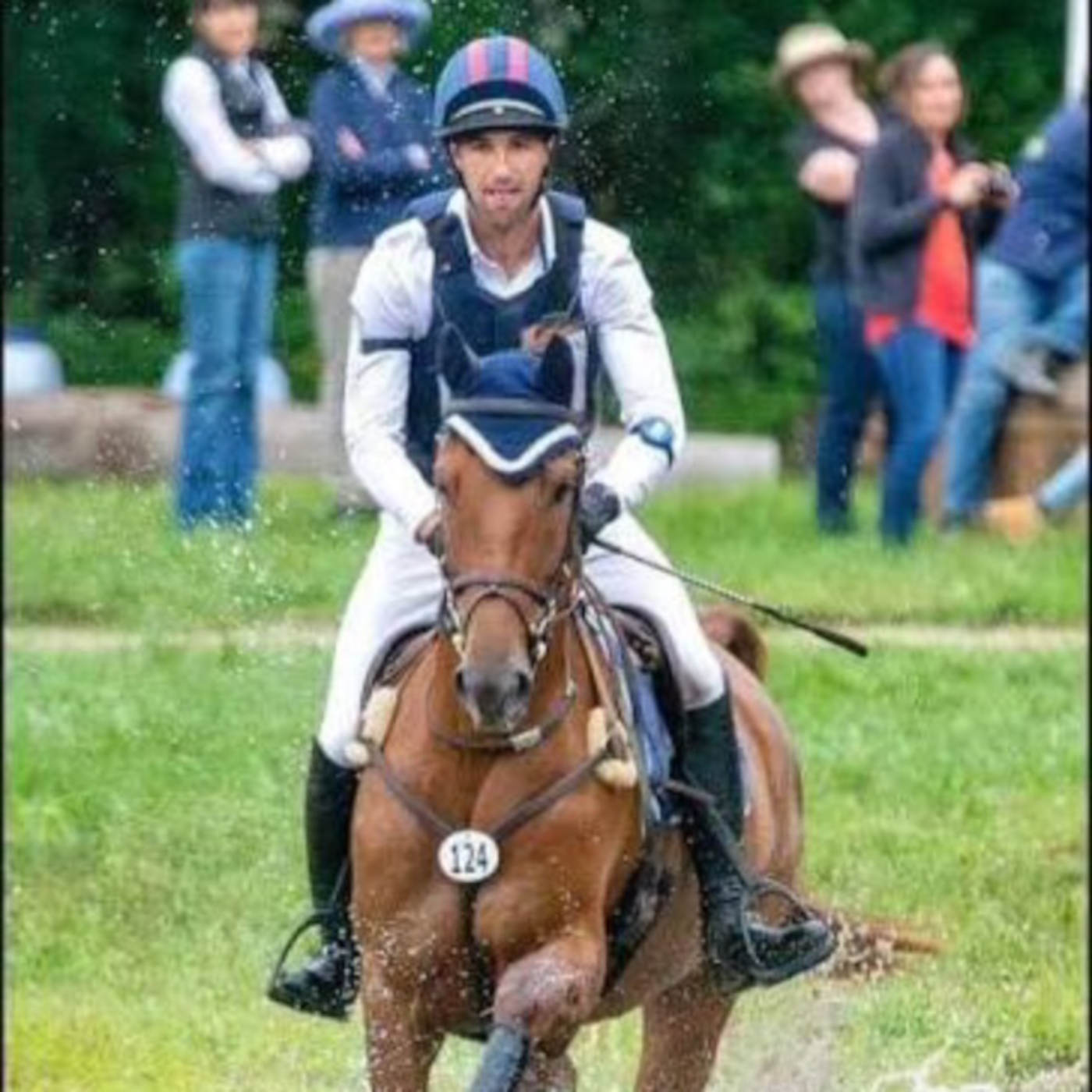
The Centaur
Riding Horses as a Professional
00:56:33
Alex Conrad is a professional eventer who founded Conrad Equestrian in 2018. He recently participated in a 4-star event and offers clinics, lessons, and training. Alex emphasizes that "riding is only 30 percent" of his work with horses. He is a true...
Loading summary
Transcript91 lines
- [00:08]
Alex Conrad
Oh God.
- [00:15]
Interviewer
Welcome to the Centaur Podcast.
- [00:17]
Cameron Adibi
I'm Cameron Adibi and together we'll explore the fascinating world of horse human communication and the extraordinary connections that can develop between our species. In each episode, I interview individuals who.
- [00:29]
Interviewer
Share a genuine love for horses and.
- [00:32]
Cameron Adibi
A willingness to spread the love to others. This podcast is for anyone interested in discovering the incredible possibilities these animals have to offer. Alex Conrad is a professional inventor who founded Conrad Equestrian in 2018. He recently participated in a four star event and offers clinics, lessons and training. Alex emphasizes that riding is only 30% of his work with horses. He's a true advocate for horses and is dedicated to mentoring young riders. I had the chance to talk with Alex after attending a clinic he offered in Ipswich, Massachusetts. I was surprised to learn that he started riding at the same farm where I used to offer equine guided lessons, even though it was under a different name back then. We had a great conversation about how he got started. Especially for those who don't own horses, this is a great lesson and how he navigated a predominantly female environment. We also discussed the dedication of his team and the importance of giving back to the community. For those without a background with horses, this is a great interview to learn about how rider works with the different personalities of horses. If you like this show, please share with your friends and family. Please check me out at my my substack, which is the Centaur by Camron Adibi. And there you can learn about some free offerings. And again, thanks so much for your support. Now sit back and enjoy the show.
- [01:55]
Interviewer
All right. Hey Alex, this is awesome. Thank you for taking the time to speak with me and it was good to meet you and do a clinic with you. That was really super cool. So you are. Go ahead.
- [02:05]
Alex Conrad
Yes, no problem. Happy to be here.
- [02:08]
Interviewer
Cool man. Yeah. So you are a busy guy and so you're. You're competing at. I just. Right. You're in Montana for a four star, four star event. I just got for as an eventer which is for those who don't know show jumping, dressage and a cross country course. And so I just got to ask right out of the gas because so many people want to be doing what you're doing. Did you quit your day job and if so, when?
- [02:35]
Alex Conrad
I actually didn't. I was at. In college. I went to Boston University and I was in the pre med program. I have a degree in human physiology and it was my junior year at Boston University and all my friends were kind of starting to apply to medical school and they were picking what kind of kind of part of medicine interested them and some of them wanted to go into oncology and some of them wanted to go into orthopedics. And I was very unsure. And I remember saying that I wanted to do radiology because I wanted something that had reliable hours and then I could ride as much as I wanted and, and have it be a little bit more of a kind of reliable way of making money. And I, I was just kind of writing all my essays and stuff and I realized, you know what? I really have always been so passionate about the riding. And I was competing while I was in college and I was taking the train back and forth like a madman trying to balance school with riding and working at the barn and, and I decided that I was going to not apply to medical school and instead I was going to work in Pennsylvania for one of the top riders in the country. I, I went and was a working student for a while and, and one year turned into three years and then I wanted to open my own business and I just kind of kept rolling with it. So it's been kind of a dream that I've had since I was a little kid. But I didn't really let myself fully have the dream until after I finished college and then I kind of ran with it.
- [04:28]
Interviewer
You sure did. So you're not working in the medical field, you're.
- [04:33]
Alex Conrad
No, not at all.
- [04:34]
Interviewer
Yeah. So this is cool, man. So you really are living the dream again. A lot of people would love to be where you're at and this is not, this is a very, you know, tough path because I know a little bit. Anybody in the horse industry, it's a tough, tough path. It's. And you're doing it. So congratulations. So. Yeah, so I mean you're small town kid who made it big and, and you're in your, you're doing it. So what, you know, so from, originally from this area. So what are some of the influences that shaped your riding and training and over these years?
- [05:10]
Cameron Adibi
Yeah, go ahead.
- [05:12]
Alex Conrad
So in the, kind of. In the Hamilton area. I grew up riding at, in, at Ipswich at Buttonwood Stables, which is now Cedar Crest, I think Cedarwood, which is.
- [05:25]
Interviewer
Where I've been working at. We're doing my therapeutic work with a couple horses over there that I don't own, but. Yes.
- [05:31]
Alex Conrad
Yeah. So I, I learned to ride in the indoor at Cedar Wood. That's incredible.
- [05:35]
Interviewer
That's so funny that, you know, we're talking because this is where I, I'm bringing all sorts of students to do this therap Unmounted therapeutic work. But so, yeah, it's, it's a, it's like one of these, you know, again, all just beautiful historic farms, right?
- [05:51]
Alex Conrad
Yeah. Yeah. And I, I rode there for years. Like, I learned how to post. I did. I jumped my first jump in that indoor. I, I, I was like a barn rat there from the age of nine to probably 15. And then I met Ann Getel, who owns Groton House Farm. And I worked at Groton House Farm for probably eight years throughout high school, throughout college. I rode horses for Ann Getel. I was a working student for Beth Perkins and Ashley McVaugh, who were two eventers that Ashley's local to the Hamilton area. And then Beth would come up from North Carolina and spend the summers at Groton House. And those are two top event riders that I kind of worked with and worked for from the time I was probably 15 to 20, maybe. Probably maybe even later, 2024. And they really kind of shaped my early career in the sport and introduced me to eventing and just really got me started. And I, I think the people who give you your foundation are so important. So I'm thankful to Kathy and Libby, who owned what's now Cedarwood, and, and then Beth and Ashley, who really kind of got me my start in eventing and really kind of put me on a path to have the foundation to do what I do now.
- [07:25]
Cameron Adibi
So.
- [07:25]
Interviewer
Cool, man. Yeah. You, you had, so, you had a. Sounds like you had a, you know, a vision of what you wanted to do, and it was eventing. But so I have to ask because, you know, I can, I can tell you the first horse, I really kind of built a relationship. But can you describe that first horse that you really felt that, you know, that strong relationship you had?
- [07:46]
Alex Conrad
Yeah. Yeah. So an interesting thing about me is that I actually didn't own my own horse until I was 24 years old. And I, but I started riding when I was nine. So I always kind of was given horses to ride or borrowed horses or would work at the barn in exchange for, like, a lease situation on a horse. And I'd say my earliest horse that I really fell in love with was a horse named GHF Society Max, or we called him Max in the barn. And an. It was kind of an interesting situation. I showed up at Groton House, and Max had been in training in New York and had just come back from training. He wasn't sold. He was a good horse, but wasn't incredibly athletic. And I kind of showed up at the same time that he did and an said, if you work at the barn, I'll let you have Max and you can do whatever events you want on Max and have lessons on them and when you're. So I kind of became a working student with Max as my main ride and he took me to my first event and we, I think it wasn't a great start. We were eliminated. He did not. He was in dressage training and I taught him how to jump at kind of a later age. And I was determined. I didn't know what I was doing, he didn't know what he was doing. And we got eliminated probably at the first three or four times. We didn't, we didn't even make it around the cross country courses. But I loved that horse more than anything and, and he actually, later we found a little bit more success and. But he kind of got me my start in the sport and it's just funny that I, I love this sport so much, but the start was pretty rocky. Like I, I'm, it's, it's kind of interesting how much I loved it when I kind of had to walk off the course the first four or five times because I couldn't even cross the finish line. So.
- [10:06]
Interviewer
That's a great story. Come on. This is why this. Horses teach us humility, period.
- [10:11]
Cameron Adibi
Yeah.
- [10:12]
Interviewer
If you lose the humility, you're my experience, then you're getting in trouble.
- [10:17]
Alex Conrad
But.
- [10:17]
Interviewer
So. Yeah, so you had. Yeah, exactly, man. You, you didn't have a hors. You didn't have, you know, you were just kind of finding your way. It. I also have to say, you know, being, you know, a guy. Come on, man. This is like, there's not a whole lot of us. I'm sorry, maybe. No, at the higher levels, obviously there are. And you're working with a, I think a pretty well known eventer, but there's. Come on, man. You were like the only guy probably, right?
- [10:44]
Alex Conrad
Yeah, yeah, I was definitely the only guy in the Hamilton area doing it. And I, I always felt a little funny because I, I got, from a young age, I got very used to being around like a lot of young women and even the borders at the barn and I remember at the student teacher conferences, they'd always be like, you know, Alex is very comfortable and outgoing and easy to talk to. And my mom would always joke and say, yeah, at the barn he talks to probably like 30 to 70 year old women all day. Like that's, that's the people that he's around. So he's very comfortable with his teachers. Like that's that was very normal to me.
- [11:31]
Interviewer
So I have some training to do with you. I still struggle, but I'd be honest, I still struggle with the women, but I do my best. But anyway, I mean, that is. You have another career, by the way, in counseling, if you can do. If you can work in those situations, because they're tough. And this. And this is the thing is we. We are minorities. And, you know, and so it's. It's kind of a role reversal. So a lot of challenges for you. Now you're doing this, You're. You're based in Pennsylvania. So what, you know, what's. This is. You know, this is a real. You're at the professional level, and this is a real skill. So what. What's the typical training week for you, you and your horses?
- [12:12]
Alex Conrad
So I teach a lot of clinics, and I kind of travel all over the place teaching. And so based on kind of what I'm doing that week, usually I'm either competing a group of horses or flying out to teach a clinic. So I kind of set up the week Monday through Sunday, and we'll usually do, like. I'll run you through what kind of. I would do, like tomorrow, early tomorrow morning, I fly back to Pennsylvania and I'll do some dressage work on all the horses once I get back.
- [12:53]
Interviewer
How many horses? How many horses are you working?
- [12:56]
Alex Conrad
We have got 20 horses in the barn, so by the time I get back from the airport and stuff, I probably won't get on all 20. But I have a great assistant rider, and I've got a barn manager, and I've got a great support team around me at this point. That really helps kind of make it all happen. Um, but. So we'll do kind of some dressage work on a Monday. Then maybe on a Tuesday, we'd work on our show jumping, set up a big show jump course and kind of school all the horses over the course. Then after kind of a day of jumping on Tuesday, they might have a light day on Wednesday, maybe go for a long walk. I'm a big believer in keeping the horse's bodies really strong by long slow hacks, like slow trot sets, and doing things like, just like, if. If you lift weights, you feel sore the next day. So making sure that we alternate. Like, if it's a. Something heavy like a show jump school, the next day would be something a little bit quieter. Then on a Thursday, maybe we would do more dressage work. Again. Friday we'd go for a gallop. There's a lot of Conditioning involved with the event horses. So on a Friday, we would maybe take them for a gallop. There's a big hill locally that I'll ship out to, and based on where they are in their conditioning schedule, we'll do slow canner sets up the hill. And then maybe they'd have Saturday off to kind of recuperate after the long gallop. I'd be really diligent about checking their legs and feeling them over A lot of times. If they get body work, they'll kind of get maybe body work done on their day off, Whether that's chiropractic work or massage work or acupuncture, just to kind of keep them in top working order, especially when we're in the heat of the season. And, um. And then on Sunday we have this cool. We call it the pond at the farm. That's water. That's. I'd say it's a little bit over knee height. And we walk them in the pond for like half an hour. And it's just again, that long, slow work of building muscle without a lot of wear and tear. A lot of pounding on the horses. So they just walk in a big circle in the pond and just the action of having to flex their joints and it's. It's good for their top line. It's good for their back, their neck, their hocks, their stifles. Just really strengthen everything without a lot of pounding.
- [15:45]
Cameron Adibi
That's.
- [15:45]
Interviewer
So thanks for describing that. That's the first time I've really heard somebody like you talk about that. And so this is like a CrossFit gym for. If they were like, how you approach this, you're really doing a lot.
- [15:56]
Alex Conrad
Yeah, yeah.
- [15:57]
Interviewer
Good deal, man. And so, yeah, this is. I mean, 20 horses. That's, you know, that's. That's a lot of work. And so, yeah, we all know each horse has its own unique personality. Just like a human. They're very. All very different. All their gifts, weaknesses, Strengths. So how would you describe your relationship with your horses?
- [16:17]
Alex Conrad
I think doing this professionally, it's a. It's a unique relationship because they're are so many different personalities of horse that you have to get along with. So. And sometimes I'll. A horse will be relatively new to me and I'll have to get along with it quite quickly to get it out competing, or maybe it's only going to be with me for a couple months and I'm either sorting out a training issue or helping the owner maybe find it another home. And so with the horses that I Kind of compete at a high level and are kind of my horses to really compete. And I have a more of a long term career with. I love like getting to know their personalities and I, I spend a ton of time like I, I like to be the one actually grooming and tacking them up myself. So I, I, I just, I, I just like to know, kind of see how they are on cross eyes, like feel them over myself, put their boots on myself, put the saddle on myself. I think you can just know how they're doing and just get used to kind of who they are as people and just what's the norm for them when they might be feeling a little under the weather, when they might be in a energetic mood or a quiet mood or kind of what you're, what, what you're dealing with that day. So those horses I like to really form a daily connection with and then kind of the horses that I have in for training that are maybe shorter term or kind of kind of producing for somebody else, I have the same mentality of, I, I try to get to know them as best as I can and I'm always trying to just kind of see what makes that horse tick. And, and if there's been a training issue in the past like you, you almost have to diagnose like is it physical, is it a management issue, is it a strictly a training issue, is it a lack of understanding like there. I think there's a lot of components that go into a horse's well being that as a professional rider you have to be able to not just ride the horse and be able to do that well, but you also have to be able to look at the horse and say, what can I do to improve this situation? And you have to know about the nutrition, the shoeing, the veterinary side, and not that you have to be an expert in everything, but you have to know enough that you can talk with the experts and be able to communicate what you're seeing well. So I actually like being someone who spent a lot of time going to school. I, I really like the blend of like being emotionally in tune with the horses but also being educated on just like what they need. And I feel like I'm always learning about all different aspects of being a horseman. And it's funny, I feel like maybe 30% of it is the ride. And that's the truth.
- [19:34]
Interviewer
I mean really, even in the therapeutic world, it's really, this is, you know, I, you know, I do therapy, the equine therapeutic stuff and you know, the writing is really just a little sliver of what's possible. So you are unique. I'm going to say it right now because I have, I don't know, you know, if you're the first person I've really spoke who's at this level. But most barns that I know of, they hire a groom. And so, you know, you're one of the rare ones that are doing this. I mean, you probably have a groom, but when you're more in competitions. Right, but.
- [20:08]
Alex Conrad
Oh, yeah, yeah. And. And I do have like, just. It's a tricky balance because I would like saying all this. I'd love to be tacking every horse up on my own and like really being able to put my eyes on everything on all the time. But having 20 horses, like I have my person, my kind of top ones that I spend a lot of time with tacking up and all that. And then the others, I kind of have to rely on my team to help me. And, and that's where like you, it's just all forming, like being able to communicate with each other and knowing what's the norm for this horse, what's. What might be going wrong and if it's not, you have people around you that have the same level of awareness and see things and say things. And it's really about building strong team, you know, and, and when we go to shows, if I'm. I have to walk the courses and I have to do all the pre rides and the jogs and that there's so much going on that I rely on my grooms to kind of help me with all of it. But it's definitely very collaborative and I tend to have people that are kind of on the same wavelength as me because as a competitor, I'd hate to miss out on a detail that could have made the performance better or just make the horse's life better in general, you know.
- [21:44]
Interviewer
Yeah, you were a true advocate. I appreciate that. But so there's a saying as you're speaking, it's what's it? So if you want to go fast, go alone, if you want to go far, go together or something along those lines. And that sounds like that's part of your success, which I appreciate, you know, really, you know, building a team around you, not just horses, but humans. And so I did one. So you just went to. I wanted to ask you about this because you just went to Montana for this four star event. Yeah. And I think you said you were. I spoke to you on the phone. I think you said you were taking your Family was going with you up, I think you said, right, if somebody. Yeah. So I mean, I mean you're probably traveling a lot, but you know, alone, bare minimum, you know, you're, you got a grant, by the way, to, to go to this from the USA foundation to go to this in Montana. You're taking. So you're, so this is a, again, this is a, I mean, you know, it's not staying at four star hotels. You know, you're doing it. So how do you get, how, how does your team work and how do you like, have to, you know, a lot of these things. You can't travel together. What do you do? How do you get, I mean you're, how do you get your team to be part of everything and still travel to all these events?
- [23:06]
Alex Conrad
So I would say when I'm out, away competing, like for example for Montana, we shipped my horse, Malibu Preacher commercially. So he went on a big rig, he got a box stall and he went with six other horses. And I dropped him off in Virginia and he, he shipped. It was almost 40 hours to Kalispell, Montana. And then I flew, my groom flew, my family flew and we landed in Kalispell a little bit before Malibu Preacher arrived. And then I was there. I got his stall already. I took him off the R, put him away and kind of got him settled in. And then we, we started the weekend and, and kind of did all that. But then the tricky part is while I'm away competing, I, if I just take one or two horses to a major competition, there's still 18 at home that need to get ridden. So I do usually a daily call with whoever's the group of people that are back at the farm and I go through the list for the day or I'll send them a list kind of a day ahead of time of what each horse should do that day. And then we'll kind of be in touch. Usually we'll do another call or text toward the end of the day if anything went wrong or if there were any horses that needed to get looked at by a vet or anything that might have come up that day, we'll kind of manage. So it's a lot, and it takes a lot of organization and there's a lot of financial pressure to do this. I think it's a, it's an extremely expensive sport. So this grant through the USDA for me to compete there was huge because I wouldn't have been able to do something like that without the grant. And like I said, I'm, I, I Kind of go non stop. Like, if I'm not competing, I have the weekend booked to teach a clinic, and then all that money will go toward my personal competition goals. And then Monday morning, I'm right back at it, trying to kind of keep the ball rolling for the next one. So I go kind of seven days a week, nonstop. But it's kind of. It's for the love of the sport, and I've worked really hard to create this, so I'm going with it now that the ball is rolling.
- [25:48]
Interviewer
Yeah. I'm guessing you're somewhere in your 30s, but you. Right.
- [25:51]
Alex Conrad
Yeah.
- [25:52]
Interviewer
Okay. So, I mean, you're working seven days a week and you're wearing multiple hats. Right. Let's be honest, you're not just riding, you're doing a lot of different jobs here, which is what your team has to do as well. Especially you're still working your way up here. But. All right, I gotta ask, what keeps you motivated?
- [26:14]
Alex Conrad
I think this particular. I, I have to say, like, for me, this truly never felt like something I was going to be able to do. I just. It was always a dream of mine, and I used to have. It's actually funny, I'm actually filming this from my, like, bedroom when I was a kid, and I'm looking at all the old magazines and books and stuff, and I had like, all the US Eventing magazines and a million, like, eventing books and dressage books and pictures of different professionals that I looked up to. And I, I just wanted this so badly from a young age, but never really believed I could do it. And I think even, like, it's funny, throughout college, I almost went to college because I was like, there's no way I'm going to be able to ride professionally. I've got to have another plan. And so I, I went throughout college not kind of fully thinking I could do this. And then when I gave it a shot and things were kind of coming together and I was like, wow, I can do this.
- [27:25]
Interviewer
I just finished up. You were saying you could do. You were just.
- [27:30]
Cameron Adibi
That I could do this.
- [27:31]
Interviewer
You know, that was. Yes, you could do this. You did it. You're doing it. You're not. You're at it. You're so. You're, you're. You are pushing and succeeding. And I guess you're getting more sponsors, correct?
- [27:45]
Alex Conrad
Yeah, yeah, I'm getting a lot more sponsors. And the last thing that in eventing in the fei, there's a star system and you can compete one star up through five star. And I am very determined to get to the five star level. I'm. I'm close, and I am really close to finishing the qualifications. So it's funny, like, there's. It's been. It feels very real lately, but every day I get up and I'm kind of like, alex, you've come this far. You got to get to that five star. Like, come on, you got to get to that five star. So I think on the days when it's rainy and cold and it's been a long day and I. That really keeps me going. Like, I just. I really want to check off that last box. And I think when it's. When it's not been easy and has not been handed to you, I think every milestone is so meaningful that it would. It would really mean the world to me to get to that final, final star in the FEI system. So I'm pushing and pushing for that and that. It's amazing how much that motivates me.
- [29:05]
Interviewer
Yeah, man, it's. What's. It's the Kentucky three day, right? In May. Is that your goal?
- [29:12]
Alex Conrad
Yeah, yeah, yeah. That's what I'm trying to get to right now.
- [29:14]
Interviewer
Right, man. You can do it. You do it. So how did you. How did it go in Montana? It was a four star, right? How'd that go?
- [29:20]
Alex Conrad
Yeah, yeah, it was good. You know, we, we put in a solid performance, and the horse that I took was an off the track thoroughbred that I got off the track six years ago. And we've done everything together from poles on the ground all the way up to this level. And he's the one that I'm hoping to do a five star on soon. So it's just been. It's been cool. It's been really cool to take them across the country and do a big event like that and keep pushing toward this next goal.
- [29:56]
Interviewer
So this is it. So this is still a very popular. I'm glad to hear that people are still getting off the track. Thoroughbreds for venting. It's still very popular. So you got a. You got. You found a good one. So what are the qualities you look for in a horse for venting? I mean, you don't. What do you. When you know that this horse is going to be a. A real solid competitor for you?
- [30:20]
Alex Conrad
Well, I think. I think everybody goes about it differently, and I, I really like finding or having good cross country horses. Like, I like horses that feel very brave to me. Like, they're like, when you try them, they feel like they're willing to take on new challenges. They're naturally confident. Like, there are some horses. Like, I remember when MP first came out of the stall, he just kind of like walked in like he owned the place. And he's done that every day inside. Like every situation he walks into, he strolls in like he owns the place. And he just like, has this natural confidence about him that you can feel when you're around him. And, and I look for that in the horses that they're not, um, kind of maybe spooky or kind of like nervous about new things. Like they kind of take on challenges. I really love that in a horse. And I just look for, like, confirmational correctness, like good feet, uphill balance thing, things like that. But, but really just maybe nice movement, good natural jump ability, but then just that, some kind of wow factor, like something about them. And it doesn't even have to be a look. Like it could just be the way they present themselves or just there'll be something that I'll feel about the horse that I'm just like, you know, I think this horse is really cool and I can't quite put my finger on it, but it's definitely kind of a gut feeling that I'll have.
- [32:14]
Interviewer
Yeah. I think this is the fun part I love talking about is these relationships. And so you're looking for a horse that just loves the job. And I've found horses that love the job that I asked them to do and they excel. So you are obviously passionate about what you're doing, so you're trying to find that partner. Right. Who just loves his work. He shows up. So MP Is showing up for you?
- [32:38]
Alex Conrad
Yeah, and he always has. From, from the moment I've had him, like, he might. He's a little quirky. He's. He's very excitable and energetic and he's tricky in the dressage. Sometimes when we go into these big arenas and there's a lot of people and he can get very amped up. But, but when you are introducing him to something new or you've. You're at minute nine of a cross country course and he's been galloping and he's a tiny bit tired. He's. He's a real fighter. Like, he digs deep and he'll. He wants to get it done. And I, I think that's what's so special. And that's what I look for in the horses is the ones that'll kind of really try for you and fight for you. That's.
- [33:28]
Interviewer
That's awesome. So we've mentioned this is you know, eventing has got three phases and so. And you just mentioned that you're looking for more of a, you're looking first for the cross country horse. That really. And so this is like something I wonder about and I was wondering how you approaches, you know, so do you, do you keep building on the strength or do you try to improve the weakness or how do you approach? Like, so one horse is going to do better at one of these three event, you know, show jumping, dressage or the cross country. You know, there's a few that really, you know, can do, but still there's like most every hat, right? Every horse has one that's really, that's really strong at one of those three. So what do you do? Do you, do you kind of keep pushing for the, their strengths or do you try to work on their weaknesses or is it a combination?
- [34:16]
Alex Conrad
I think it's a combination. Because I think the interesting thing about eventing is that the three phases do kind of interact with each other. Like the better the dressage is, the more rideable they are for the cross country, the more, the easier they are in the show jumping, the better kind of all around athlete you've produced. So the three disciplines really kind of intersect with each other in a, in a nice way. But I think definitely like each horse has a strength and sometimes like I've, I've had horses that were really competitive in the dressage and then you get halfway around the cross country course and there you can tell they're like a little tired or a little worried and they don't love it out there and that's not a great feeling. So, so I've always gone back to finding the ones that are really cross country machines because you can make the dressage better, you can make the show jumping better.
- [35:21]
Interviewer
All right, so yeah, just a bad connection here. But so you were just saying before you cut out. So you're just saying that with a cross country, that's really what you really. And so with a cross country is the first thing you're really looking for. But you were just saying again about how you look at these, these three disciplines.
- [35:38]
Alex Conrad
Yeah, so the, the three disciplines really kind of intersect with each other in the sense that if you make the dressage better, the cross country gets better. If you make the, like each, if you focus on one discipline, the other disciplines get better just from the nature of kind of practicing and getting the horse stronger and everything like that. And. But I, I have found that for the higher level horses, you can make them better in the dressage, you can make them better in the show jumping, but they either have that grit and that desire to go around the big cross country courses or they, they might. It's a very kind of internal thing. And I think while you can get them to understand the cross country better, you can get them fitter, you can get them stronger. They have to really want it and really love it to be able to do it at a high level or else the jumps are too big. The questions are very technical. If they're a little anxious or backed off it, it's just not, it's not fun for them, it's not fun for the rider and it can get a little dangerous. So you have to make sure that that horse is completely on your side out there. Even if there are things that they need work on at the end of the day, they, they have to want it and they have to be really on your side on the cross country course.
- [37:07]
Interviewer
Yeah. And it's just, I'm gonna re. Reemphasize this. This is like, you know, an NBA sports player, you know, NBA professional player. I mean, there's a very small percentage of you out there that can get to this level. And I know a lot of people that would like to say that they. I'm not going to go there. But there are a lot of people that, you know, claim they've gone to your level, but there really aren't. There really only like a handful of you people that like. So the, the same with the horses. There's only a handful that can really do this. And so it's. Yeah, like we, you can have. It's like the Sea Biscuit story. Right. It's like you can have the most, most beautiful horse, but it doesn't. If it doesn't have that inner drive, forget it. So how do you, like, when do you know it's time to just cut your losses and say, well, this horse really should be, you know, somebody else's horse or be doing a different job. When do you know that? When do you feel that come out and do you have.
- [38:02]
Alex Conrad
You know, I think it's kind of, it's, it's very much a feel thing. And like, if I feel like they, like, I can, you can kind of feel the power in their jump. And if they're starting to reach a point where they're struggling a little bit to get it across the fences or they're struggling with the height or they're feeling a little insecure in the cross country course, like, you can just kind of Feel like sometimes you'll, you'll finish the course and say, you know, we made it around, but I feel like I made him do it or I made her do it. And I, I didn't love that feeling of like, having to make it happen, like their heart just wasn't in it. And usually then I'll kind of take a step back and say, you know, I felt this way a few events now where we completed it. It was successful, but it, that particular horse felt a little anxious or felt like they were struggling with the conditioning or they were struggling with the fence height, and maybe it's time for them to have a lesser job or to go with somebody that maybe wants to compete at a lower level. And, and oftentimes and I have sold horses that go on to do that and are dream horses for other people and, and they do wonderful things with their new owners. And it's, it's sad and it's sometimes hard to kind of see these horses go on to other homes when you've spent so much time getting to know them and working with them. But when you know it deep down, it's in the best interest of the horse. You, you feel good about it. Even though when you first kind of see them leave it, it can be sad. But I think you look back in a few months and you're like, you know what? That was the right call for that horse. And I actually feel really good that I was able to put in that training and now somebody else can go out and enjoy the horse at a level where both of them are really comfortable and having, and, and enjoying the sport together.
- [40:18]
Interviewer
Good on you, man. I mean, come on, it's gonna be way worse to keep pushing that horse to do the job that they're not really feeling good about. So, I mean, that's totally. I give again, you're advocating for these animals very well. I appreciate. This is the other thing. I, I think actually I heard this, but you can help me out. But this may also, I think, as I heard you say, or somebody tell me that you. So let me backtrack. So there's two, two questions here. One is, when do you know it's time to retire a horse? Now, you've been doing this for a few years and then what do you do with that horse?
- [40:58]
Alex Conrad
So I have a horse right now that's getting a little bit older. He's, he's 18 years old and he's competing at the three star level with me, and he's been a fantastic partner for some years. Now, and I'm kind of thinking that this might be his last season moving forward with me. And so I'm going into the season, we have a few more events left in the season, and we're kind of building up to some bigger events in October where the endurance will be a little bit tougher. The. He's doing a lot of conditioning, getting ready, and I told myself that after every gallop, I'm gonna kind of look at him and, and kind of feel him over and really think and say, all right, did he, did he feel good coming out of that gallop? Did he enjoy that gallop? Was he tighten his body? Was, did he feel loose the next day? How is he feeling? Is it more than just a little kind of muscle soreness? Is, is there anything that's telling me maybe he isn't quite up to this? And I kind of take it week to week with him at this point, and we have big events on the calendar, and I just, at the end of every big gallop or every big jump school, I kind of say, all right, how are we looking? Is, are we all systems ago, or do I need to back off a little bit? And so far, he's, he's doing great. And I, I, he's like, he's pulling me up the hill and he's thrilled to be jumping. And he's, sometimes he'll throw in like a little, like, scooter, get a little playful. And I actually love when he does it because I'm like, okay, he's, he's in it. He really, he's having a great time here. But if, like, I'll probably finish the events this season, and then I have a lot of kind of people in my life that are kind of up and coming riders or riders that I really believe in that don't have a horse at that level right now. And so my plan with this horse is to maybe finish off the season, try to keep them in really good shape, and then give one of the other riders in my program a chance to compete them for a little while, maybe at a lower level. So maybe at the one star, two star level, he'll go out and be successful with that rider. And again, he'll do that as long as he's happy and comfortable and confident. And then if, if we ever get to a point where he's having trouble physically holding up to that, whether he just seems a little bit more sore than normal or is kind of lacking that spark, that's kind of telling me he wants to keep doing this. Then I'll give him another step back where maybe he'll go with someone who just wants to trail ride for a little while or. But I, there are certain horses that have done so much with me that I'll always keep them in my life and I think I'll always be their owner, but they might have different phases of their retirement so that other people get to enjoy them because they're not quite ready to be in a field, but they're not quite ready to be at the top level of the sport. So you've got to kind of find the in between. Because I actually think it's a lot for some of these high level athletes to just go out in a field and, and they're like, what happened? I was just galloping and jumping. And I think sometimes they like the in between of being able to go out trail riding or maybe compete at a lower level. And to them a field seems a little too much too soon.
- [44:56]
Interviewer
I appreciate you saying that. Really, this is, again, I work, I'm, again, I'm doing the therapeutic work, but I'm working with these older horses that were just left in a field, left in a paddock. And it's, it's, it's not necessarily the best thing for a horse. You know, it's movement, movement, movement, movement. That's the best thing you can do for a while. And so I have to ask you this because I just, I just put this together. I didn't realize this now till now that you are mentoring others now, which is so cool. So you are, you're passing it forward to the new, the next generation or the younger people coming up the, up the ranks that I got asked, who are some of the trainers or mentors that you've had in your life? You mentioned a few earlier.
- [45:35]
Alex Conrad
Yeah, I've had some really fantastic people, like I said, like Ashley McVaugh and Beth Perkins from my kind of earlier eventing days. And, and Ashley McVaugh is still a good friend of mine and I call her all the time for advice and tips and she, we have a special friendship. She was at my first novice and she came to my first advanced and I think she was at every move up along the way. So it's, it's cool to have somebody in your life that's seen you from a low level of the sport to a high level of the sport, especially when it's taken you probably 15 years to spin the levels. And then after college, I worked for Ryan Wood, who's an Australian event rider based in Pennsylvania. And I was his assistant rider for three years before starting my own business. And right now I train heavily with Boyd Martin, who I'm based at his farm, um, in Cochraneville, Pennsylvania. Um, and everybody knows him, he's a household name. And eventing, he was world number one celebrity.
- [46:50]
Interviewer
World celebrity, yeah. Good job added.
- [46:52]
Alex Conrad
Yeah.
- [46:53]
Interviewer
How's it, how's it. I gotta ask, how's it like, what's it like being in Boyd's shadow or whatever? I mean, is he, is it defined? I mean, you don't have to. I mean, again, it's just so cool. I'm talking to you, you're talking to Boyd. I think that's very cool. But what's that like? What's that really? What's that, you know, you know, whatever you feel comfortable sharing. What's it like, you know, being with boy?
- [47:13]
Alex Conrad
Yeah, you know, it's, it's, it's very cool because my barn is separate from his, so I'm on a separate part of the property. But, but what's nice is that we share all the rings. So when I'm in the ring every day schooling. He might be on horse schooling or his wife Silva is a very accomplished dressage rider and she's in the ring schooling or were out on the cross country course together or. And I'm just always kind of watching him and seeing what he's working on. And he'll bring in different trainers to coach him. Like he has show jump trainers and dressage specialists who come in and he's always, he'll text me and say, alex, do you want to do a session with Peter Wilde for the show jumping? And, and so he'll kind of involve me and I get access to some very high level coaching. He's been a great mentor and he's, he's very laid back and I think it's impressive that you can have somebody that is so accomplished but kind of takes it all in stride. Like he has an enormous amount on his plate, but he's always happy to answer a question or give me advice. And it's nice of the million thing that, that are on his mind that he's still kind of thinking like, oh, Alex, you should like enter this event or have you thought about this? Or. It's nice that he really makes me feel included in the community.
- [48:47]
Interviewer
That's so cool. I mean, you really are, you're in a community that's really supportive and it takes a village. I mean, it just doesn't happen. And so you found a really, you know, it's not by accident. I feel like these things happen when you really have a intention and it sounds like you do. So as we just kind of wrap up here, I really appreciate this, Alex. You know, you, you, you know, this is, this is a mental game that you're playing, you know. Yeah. And so how do you as a.
- [49:18]
Cameron Adibi
Rider prepare mentally and physically for these competitions?
- [49:25]
Alex Conrad
Well, I will say physically, I, I've gotten very into running and I, I've been running a good bit and I, I think the running, I actually just like to have something else that I do because I think my work life is so crazy and my competitions are. I'm always traveling and all over the place and it's just nice to have something besides the horses to kind of do and kind of just gets me to relax and kind of take a, a breath and just kind of do something different. So the running is, is good for my kind of cardiovascular and just my stamina when I'm out there on the cross country courses. But mainly the riding all these different horses really keeps me in shape to do it. And then mentally, you know, it's a tough, it's a tough sport because you can get. There have been some serious accidents and it's hard. Especially leading up to the big competitions, like the morning before cross country, there's definitely a moment where you're kind of like, I do love this sport. Right? Like, this is fun. Like, I think this is fun. Like, it's. You have a, a moment where sometimes the courses look so big that you're just trying to wrap your head around how you're gonna kind of get around. And. But as soon as I try to take it, like, kind of one step at a time, like, I'll kind of get on and be like, all right, Alex, you're just in the warm up. And then I'll just warm up. And then I'm like, okay, you're in the start box. You're just going to gallop down. Defense number one. Okay, fence number one felt good. You're just going to go to fence number two. And if I stay very much in the moment, that really helps me. And it's when you start thinking of, oh, God, the combination at 20 AB. Oh, that's been keeping me up all night. And I, what if this happens? And that's when you start to get worried. But if you can just stay very focused, present in the moment, I find that really helps. And, and honestly, as soon as I do it and as soon as I finish, I'm like, oh, God, that Was awesome. When's the next one? Like, I can't wait to do this again. So it's a really funny mental game and a process of just getting to know yourself and getting to know what amount of nervous is normal, what amount of nervous is good, actually, what is detrimental and how to kind of work through that.
- [52:02]
Interviewer
I appreciate that. And you know, it's a cliche, obviously, stay in the present moment, which you have to. And every athlete says this, but I was just thinking as you're saying that, you know, that's all the horse knows is the present. So yeah, if you're not, you're not in the present, you're already not going to have that, you know, that sync with that horse. So the horse is feeling, if you're starting to think about course 20 or the chump 20, whatever, you know, then the horse is going to be out of tune, out of sync with you. So they, they want you to be in the present moment. So it's such a great analogy, especially with a horse, but so well spoken and just, you know, final question, like, what are some of your. Besides the Kentucky three day in. It's in May, I think, right? June, May, something like that.
- [52:48]
Alex Conrad
Yeah. It's actually last weekend in April.
- [52:50]
Interviewer
Yeah. What are some of your big long term goals? What do you have some good, what do you. Olympics. What do you think?
- [52:57]
Alex Conrad
Yeah, you know, I, I really love to do whatever I can in the sport. I'd love to not just do like there are a couple five stars internationally too, like Burley and badminton and Poe and I, I'd really love to do all of those and if I can make a team one day, great, I'd love to represent the US And I, I also like, it's, it's interesting like just recently in the past couple years, I, I'd really love to mentor and coach up and coming riders too. And I'd love to be a part of someone else's career that I see working really hard and kind of struggling to make it. And I've, I'm really invested in kind of helping certain people and making sure that they have kind of a leg up and they're getting what they need to get to take the next steps forward in their career. And I sometimes feel like it can get very selfish like doing this. Like, I, I'm so focused on my own goals that I would hate to look back and say, oh wow, you accomplished all this stuff, but it was kind of all about you. So I, I try to always focus on what I can do. For kind of the eventing community or what I can do for some of the riders that work with me and say, like, okay, if. If I give them access to this horse or if I help coach them at this level, or I'm just always thinking about that kind of stuff so that I kind of leave a mark on more than just my own career.
- [54:40]
Interviewer
A lot of wisdom there. A lot of wisdom. Yeah, you know, it's. That's the true wealth I found in life. You know, you can go, you know, go for your own little. The ego tricks, but, you know, the real wealth is, you know, the community and passing it on like you're. You're already doing. But you really do have a gift. If you can deal with the women at Cedarwood, formerly Buttonwood, you can deal with anyone. I'm. I'm not being. And I've talked to my friends about this. I'm not exaggerating. I just don't do very well. So I have a lot more.
- [55:08]
Alex Conrad
It can be a lot.
- [55:09]
Interviewer
I have a lot more learning to do, but really great to talk to you. And so. And then. Do you got a. What do you have a website? What do you got? Can people support you? What do you do?
- [55:20]
Alex Conrad
Alexconrad.com I have an Instagram Conrad equestrian. And then I have. Conradequestrian.com is my website.
- [55:29]
Cameron Adibi
Okay.
- [55:29]
Interviewer
All right. Yeah, I can track what you're up to and maybe have some merchandise or something like that, or something fun that people can purchase anything.
- [55:38]
Alex Conrad
Yeah, for sure. I have hats and I. I've got a lot going on, and people are always welcome to come to some events or come by the farm or.
- [55:47]
Interviewer
Oh, take a clinic. Or take a clinic with you.
- [55:49]
Alex Conrad
Yeah. Or sign up for a clinic. Totally.
- [55:51]
Interviewer
Excellent. All right. Hey, Alex, this has been great. I appreciate you taking the time.
- [55:55]
Alex Conrad
No problem. No problem at all.
- [55:57]
Interviewer
Hey, I'll be in touch.
- [55:58]
Cameron Adibi
Thanks again for listening. If you like the show, please share this with your friends and family. Much appreciated. Please check me out at my substack, which is the Centaur by Camron Adibi. And there you can learn about some free offerings. And again, thanks so much for your support. Stay tuned for the next episode on the Centaur Podcast.
- [56:26]
Alex Conrad
God.