← The Centaur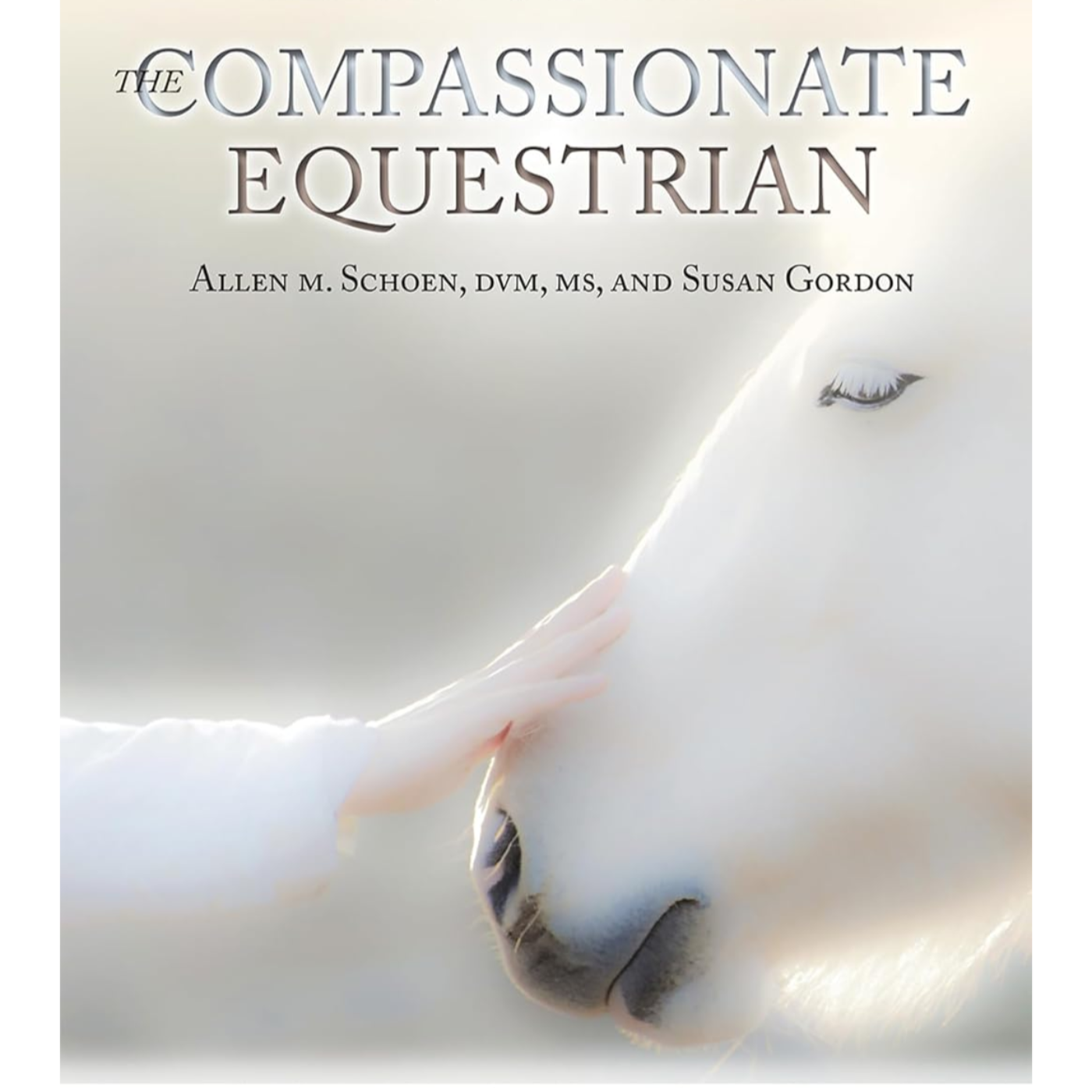
The Centaur
The Compassionate Equestrian
00:59:54
Susan Gordon is the co-author of The Compassionate Equestrian. She was a professional hunter-jumper trainer from 1983 to 2009. After retiring from training and teaching, Susan founded Green Pony Productions for the production of digital media content...
Loading summary
Transcript134 lines
- [00:00]
Susan Gordon
Foreign.
- [00:06]
Cameron Adibi
Podcast.
- [00:07]
I'm Cameron Adibi and together we will explore the fascinating world of horse human communication and the extraordinary connections they develop between our species. Join me as we delve into the unique ways humans and horses connect and understand each other. Through discussions with true innovators, we uncover the subtle cues, bonding techniques and emotional connections that enrich our relationships with these remarkable animals. Whether you are a seasoned equestrian or simply curious about the language of horses, there's something here for everyone. One of the cool things about having a podcast is I get to speak with people I would never get to speak with otherwise. I got to speak with Susan Gordon, who is the co author of the Compassionate Equestrian. Susan was a professional hunter jumper trainer from 1983 to 2009. After retiring from training and teaching, Susan founded Green Pony Productions for the production of digital media content relating to social justice issues for horses. She writes and blogs regularly regarding the 25 principles of compassion equitation. This conversation was so fascinating. I really got to learn a lot about the history from, from Susan and why it's become so complicated. Sit back and enjoy the show.
- [01:29]
Susan, thank you so much for joining me today. This is awesome. I'm really excited to talk to you. You just, you've got a really interesting background and off, of course, you know, an author. I always, I'm aspiring author, you know, but I. Having fun like you just mentioned on my substack essays. But you've got such a. Yeah. Such a wide experience and very, you know, you were in the professional realm as a trainer and you know, all your experiences. I have to ask, right what, you know, what you've seen so much now and what has been some of the biggest shift in your perception from all your years? You mentioned about, you know, know, some horses were not. You thought all horses might be trainable.
- [02:22]
Susan Gordon
Yeah. Changes in the horses overall over the decades. Yeah. So many issues now that I just, I just kind of call a full stop in some cases or I try. It's hard with owners. They just want to keep the horses going and I just see, nope, can't be done. So, yeah, that's, that's a big change for me.
- [02:52]
Cameron Adibi
I appreciate that. You know, this is, you know, I found, you know, found these old, old gelding and you know, he's, he's doing great, but it's definitely not, he's not interested. You know, he had a tough life as a school horse. So like I, this is, you know, already leading to, you know, like what the, what you might think of with the future of horses. But and seeing them differently. But so you know all these horses that you've, you've gotten to seen throughout your. And you were a professional trainer. Again, I want to make that very clear. Yeah. Because you know the deal a lot. Everybody can call, anybody can call themselves a trainer nowadays and that we do have a lot of the people that. Yes, I'm very careful there by the way I, I. Because there is also the other side of it that any action we do creates a response or a reaction. So we are.
- [03:50]
Susan Gordon
Yeah.
- [03:50]
Cameron Adibi
Like the whole treat training nonsense, it still bothers me.
- [03:56]
Susan Gordon
I have to learn about it.
- [03:57]
Cameron Adibi
But you. So you've seen all this. But so I mean you've got, you talked a little bit beforehand or communicated a little bit by email. But I asked you because if you do have a very classical background with training.
- [04:12]
Susan Gordon
Correct. Yeah. I was fortunate to have excellent instruction. Well, starting at Spruce Meadows actually it was kind of funny story. I was at age 17, president of riding club in Calgary and Spruce Meadows showed up to our schooling shows and all of a sudden here's, you know, here I am with Appaloosas at a quarter horse show barn and this huge Mercedes horse van pulls up. These gigantic horses come out and that was my introduction to real classical European style horses and training. And I was so intrigued. Actually took my horses to Spruce Meadows and boarded for a couple of years and yeah, so I had firsthand experience with the best and I studied Podeyski and it just became a real passion to focus on classical, real classical training. I had a 15 hand Appaloosa stallion and the Germans loved him. I started him myself. They go, they call him the little Abalousa and he could just, he could move with the bust. It was, it was training exactly what dressage is. It's training and yeah, I love it.
- [06:02]
Cameron Adibi
That's so cool.
- [06:03]
Susan Gordon
You had.
- [06:04]
Cameron Adibi
So you're already a little bit of a rule breaker though because you know, bringing in Appaloosa. Come on. Right. I love. I know I got to work with one. He was one of the, he was one of the. He was so funny. He was a, he was a jokester. He had all these.
- [06:19]
Susan Gordon
Mine was too.
- [06:20]
Cameron Adibi
He totally played jokes.
- [06:22]
Susan Gordon
Oh, so did mine.
- [06:24]
Cameron Adibi
No kidding. What was his name?
- [06:26]
Susan Gordon
What? What his his registered name was Top Canadian and his. He was by Top Hat Jr. 1 of the foundation AP Soc from Texas, I think. And his. I called him T.C. and he was, he would do things and anything to attract attention to his like. Oh, he liked to carry flakes of straw in his mouth and and when people would come up to his stall, he'd try to stuff the straw through the, you know, through the bars into the people. He always had a crowd of people around his stall when the horse shows were on. So I touched and then they'd all follow me to the grooming talking up area and follow me into the arena and watch him. But, yeah, he. He was quite something. Quite a horse. Yeah.
- [07:26]
Cameron Adibi
So, I mean, that breed has a very interesting background. So.
- [07:30]
Susan Gordon
Yes. I mean that.
- [07:31]
Cameron Adibi
You just said it. You know, dressage in literal translation means training. And so really it's for any horse. But of course, when you think of dressage, oh, it's got to be the warmblood or, you know, this Hanoverian whatever. Very. Oh, it's really.
- [07:46]
Susan Gordon
So it's training you. You got.
- [07:49]
Cameron Adibi
You got the. Because I love watching the old videos of the. These classical trainers that are still around, but. So you got a taste of that.
- [07:58]
Susan Gordon
I did.
- [07:59]
Cameron Adibi
You mentioned one of your. One of the people you still turn or you really respect, which I haven't read, but I know of his book. My Horse is My Teachers. I believe my friend Karen had the same kind of training. Military men who were in the war. And he was an Australian colonel who then went to the Olympics. But he was a. He was a trainer. And so.
- [08:26]
Susan Gordon
But he.
- [08:26]
Cameron Adibi
You mentioned how he had that compassion and kindness, which kind of.
- [08:32]
Susan Gordon
Yeah, well, there's a lightness. There's. It's. It's all about that lightness. And, you know, people are so impressed with. It was writing Bridle is riding, and that's great. If the correctness is still there. It's very much. It's a process of development, so that the horse builds the muscles and the balance and the carriage to carry a rider and stay sound through his lifetime, which my horse did. And those, you know, the big, big warm, which are now bred with this weird, huge, huge movement, are so hard to sit that a lot of people should really be going back to smaller horses. My 15 hand appaloosa could beat the big warm bloods and thoroughbreds in dressage tests. He was that spectacular. But it was making the most of the movement that he had. So his natural movement perhaps was an 8. So with training, I could make that a 9 or a 10. So these giant warm bloods, because they're so hard to sit, they're born as a 10, but then they're diminished back to, you know, eight or nine or worse if people are pulling on them because they're terrified of this huge movement and the back, like, it's Like a springboard. It's like you're trying to set, you know, that much movement where it's much better. Like the Liposhters are such close coupled little horses. They're tiny but you can make the movement you get used to like creating the free freedom in the shoulders and freedom in the joints. And then you have this partnership because you're, you know, you're both bold and you're trusting and it's, it's fun. Those big warm bloods, in my experience, not so much fun. And what happened was they took those big. The original antharion and. Which was hard to say because they floated. They literally floated. So it's been really interesting to watch decades now of breeding and reshaping these horses into what they are now. So yeah, it's kind of interesting but a lot of people probably shouldn't be riding them.
- [11:31]
Cameron Adibi
I get that. I get that. So I mean this is again, you have a very long history and got. You've got to see this and I only read about this stuff but so first of all, back to Colonel Pahaski, that right, yes. But yeah, my horse is my teachers. It should be on everybody's friggin bookshelf.
- [11:49]
Susan Gordon
It's. It should be.
- [11:50]
Cameron Adibi
I don't have.
- [11:50]
Susan Gordon
It's.
- [11:51]
Cameron Adibi
And your book's going to be also soon to be.
- [11:54]
Susan Gordon
Thank you.
- [11:55]
Cameron Adibi
Yes. Come on. But yeah, I mean you look at the videos with him and his horses and yes, he's got a very heavy tack on them but they're not stressed. That's the. I think this is what's where people are getting lost, you know, oh, we got to ride brighter lists or whatever, you know, bridal. It's how the equipment's used and how.
- [12:20]
Susan Gordon
Oh, very much so.
- [12:21]
Cameron Adibi
This is. As a professional trainer. What's your take on all these different types of equipment now?
- [12:29]
Susan Gordon
Well, it's kind of shocking actually to. I mean we used to put snaffle bits on everything. I started my horses in rubber, just a plain rubber snaffle. It was never a problem, it's never an issue like the big. Even those big can of arants back then it was just a snaffle bit. I used to, you know, school my horse, my stallion into ring when Albert Cly who was Sprayman master trainer was schooling his young horses and all snap full bits. It was just, you know, not a thought given otherwise. But now you know what I see like there was very particular way of schooling those big warm bloods and a lot of work and walk and a lot on suppleness like just suppling, of course, is every step and the rider has to be very active with that supple, suppling exercise. You're not just sitting there. So the athleticism of the rider is directly proportional to the athleticism of, of the horse. And I think a lot of people think that the horse is going to carry them over, you know, four and a half, five foot fences just because it's bred to do that. It's sort of trained. I mean, I see people pulling and pushing, kicking and, you know, yanking horses through turns where it should just be invisible. It should be possible if the snaffle. So I think people have gotten quite impatient and they're trusting that this horse has you generations of super jumpers in his bloodline. So sure he'll clear the fence, but he's got a hollow back. I see tons of hollow backs, disproportionately developed musculature and strange riding, especially in dressage, like those big saddles with huge knee rolls and things like that. It's, I don't want to say it's created lazy riders, but a whole different classification of writing that is really kind of coming under fire for its pretty much abject cruelty to the horse. It's, it's, it's just not fair to the horse.
- [15:33]
Cameron Adibi
And something happened here.
- [15:34]
Susan Gordon
Something.
- [15:35]
Cameron Adibi
So how many. Yeah, there's something. This is what you got to see because you were so. You brought something up very already a couple times now about these emphasis on the breeds too, by the way. And you know, like, yeah, this whole kind of idea just, you know, and this is, you know, ties into your book Compassionate Equestrian. It's like there's, you know, not every, Some, some, some breeds are, you know, how do you like, you know, really start to think about what's the best breed or horse for you and your type of writing in whatever discipline you're in. Marianne talks about that a lot. So I mean, that would be one. And the other one is that, you know, again, what happened? What was it, Was it the money thing? What happened with that? You know, from this over complication of everything, very stressed horses to something that you. Yes, it was actually and I, I'm very careful about. Oh, it's better. We have to go back to, you know, a time that doesn't exist. Time doesn't exist, period. But, you know, we only have now, blah, blah, that's me and myself. But, you know, there's. It sure there was the problems back then when you, when you're starting out your career, I'm sure. But it was not as complicated and. No, it's much more simple and a lot, a lot more freedom to move right now. It's a lot more. Anyways. Yeah, two questions of the breed for the person and. Or the horse for the person as you found the Appaloosa and then.
- [17:04]
Susan Gordon
Right. What happened?
- [17:05]
Cameron Adibi
Why did it get so complicated?
- [17:08]
Susan Gordon
Yeah, that's such a good question because it sure did. Well. Okay. So when the warm bloods first started showing up like, okay, so we had some trainers with Irish drafts. So the Irish draft horses were classic field hunters imported from Ireland. Fabulous, fabulous horses. The Hanoverians were quite expensive at the time. There were a couple. Well, besides Free Meadows, Frank sellinger at St. George's Stables also brought in a couple of foundation mares. So these were old type Hanoverians, obviously out of most people's price range. Even back then it would. It was expensive to acquire these horses and they were pretty much bred for, let's just say. I don't want to sound sexist or racist, but this was the case. I'm just going back in history for big German men to write that's they used to pull, they used to pull the beer wagons in Germany. That's what he saw. Because the warm blood breeds are related to the region that they come from. So we have these big draft type horses that were found to have some talent in the jumping ring and they certainly did, but they were too heavy for the average North American rider. So this comes straight from one of the breed inspectors that came to one of my barns and I said, this is okay. So I'm fast forwarding out to the 90s when those old ant variants now looked quite different. And he said, well, we started to breed the horses for the average North American buyer, which is the middle aged woman who has pretty deep pockets. So they were actually in the process. So they, they saw what the market was. They kept the best stallions in Europe and let some of the later stallions come to North America, breed with thoroughbreds and Arabians. I had a neighbor that was breeding, let's see, she had really gorgeous. He wasn't Hanoverian. I think he was Oldenburg stallion breeding to Arabians. So you're starting to get some interesting crosses. Sometimes they worked, sometimes the confirmation was off. You'd have to, you know, look like two different horses one into the other. But so these horses started to get bred lighter for the people. It had the, you know, wherewithal to purchase these horses and of course, lower levels. I don't. Here's what kind of happened to dressage? And this comes from one of again, a top show barn that I was at and, and they want to get to the upper levels as quickly as possible. So the horses were, it was hit or miss, I would say in those days. They're still charging, you know, quite a bit of money to purchase these horses. They were holding up okay, but. And these are the days when like contour side Danielle would come to the barn for a clinic and his Stefan Peters, who is a great, great rider. And they were still on some of the older horses. Debbie McDonald was, was her great mare. And so he see them at first level and it's like, wow, there's talented horse. The next year, maybe second level. Then three or four years later it's like, oh look, they're schooling Grand Prix. This horse, you know, might make it to the Olympics. All of a sudden we're, we don't seem to be seeing these horses through there. You know, perhaps it's, I'm just out of the loop. But it looks to me like they're pushing horses faster and faster into the upper levels. You look at the age of these horses and if an 8 year old is all of a sudden at Grand Prix, that's too soon. They've pushed the training and they've only pushed it because they can sort of get away with it because the breeding has now produced these horses. If you look at picture of dressage horse, you'll see the nose here perhaps, but then you'll see the front hoof like way out here somewhere. And you don't see the crackness in the hindquarters to the front end. I can't watch it, honestly. And a lot of us old timers have trouble watching this modern dressage. And I, I mean I've watched it all happen. It's, it's kind of horrifying, you know, 20 years and things have really deteriorated. So that's, that shouldn't be happening, but it is. And these horses don't stay sound. I've watched people spend, gosh, tens of thousands of dollars on, let's say a fourth level horse. One of my clients had and the horse was pretty much unrideable to the point where she donated it to UC Davis. It had head shaking disorder, but that's just one of many cases. It's like you go down the list and yeah, disappointing. And that's what led to the book actually Appreciate.
- [24:02]
Cameron Adibi
Dovetailing into that. So, yeah. This is the 10th anniversary of the Compass. Yes Equestrian, which you co authored and it was unbelievable. 10 years, right? What happened in 10 years? It's, you know, there's definitely a growing interest as we know there's a lot of people that are turning to this. So this is the hopeful part because you know, this we, you know, we have made it very impossible for a lot of people to even enter this. So you're making. This is a very nice. I still haven't yet to read it, but. So that was one of my questions with the book. You know, there's. You talked. I did read the article in the Concordian magazine. But you know that common sense, you know how that.
- [24:49]
Susan Gordon
Absolutely.
- [24:50]
Cameron Adibi
This is a very basic one that somehow is missing somewhere along the way. Again, this is like. And I think it goes back to Marianne. But coming back to the horses, horse centric point of view, like what's going. What's best for them. But hey, maybe not throw them up to grand prix at age 8, maybe take a, you know, years. That's like common sense to me, but maybe not to someone I don't know. But so. But the one that you did talk about is safety and I do appreciate you talking about the British Pony Club. I'm going to put a plug for my, my friend. She's going to have to.
- [25:21]
Susan Gordon
Oh, it's classic.
- [25:22]
Cameron Adibi
But Helen O'Reilly was one of my first install. One of my early instructors and she was from.
- [25:27]
Susan Gordon
Oh cool.
- [25:28]
Cameron Adibi
She was from England and she was teaching British Pony Club here in the U.S. they're, they're. You can't find them anywhere now, unfortunately. No, it's so sad. But the thing that I was talking about that when I was thinking about that common sense is safety and that actually led me to think about safety's a. It from the human perspective might be a little different from the horse's perspective. And I want to ask you that. Yeah, we have our own concerns, but they have their different. And can they be looked at together?
- [26:02]
Susan Gordon
Well, of course we know that horses feel safest when they have their herd mates close by. And so when they're separated from the herd, any anxiety or traumas are going to magnify and they can happen quickly. I mean some of the most frustrating things taking horses to a show is that all of a sudden they're separated from their friends. Myopolisa colt loved going to shows. He was such a ham that he would, you know, he'd get quite upset if he was getting left behind. And he was one of these horses that you had to literally hold him back on the way to the trailer. He Would jump in and scare the other horses. He was like a dog that wanted to go for car rides. Right. So he, he, his comfort zone was being people. I, I think he thought he was dog. He was, he was just so much, he was such a pet but he loved people and so he could, he was, even though he was a stallion, he was just one of the safest horses to be around. He was started properly. He was probably weaned a bit too early because he was shown in hand as a six month old cold so. But his manners were perfect. Absolutely. You could tie him. Like I said he was, he was almost too easy to load in the trailer. Say just wait a second. But I love horses like that because they're so trustworthy. So if that trust has had any, let's say any blips in the training, any trauma that's happening. Sometimes, you know, just things happen with colts and if an amateur is handling a cult and an accident happens, some bits of that trauma will stick. So it's. You really want your horses to have a good safe start with a professional that obviously isn't going to hang them from a patient's pole, so to speak. But the classical training just makes these horses so safe, so easy to work with any horse. I've started with the classical training that put at skate and others. You know, talk about. I know people don't like tea spits. Well use a rubber band it. You know, I've seen a lot of problems caused by people insisting on starting horses bitless which is fine if you still know how to develop the musculature correctly and but sometimes the pressure points in those knots that put pressure on the horse's head. I've seen horses is pretty much flip over by putting too much pressure on the wrong part of the horse's head and just that just sets the horse up for pretty much a lifetime of being re triggered into any of those early mistakes or accidents. You can kind of patch them over. But if a horse has had a safety related accident and of course your safety, if we want to talk safety with the herd, safety separated from the herd and safety in the presence of people and all the people things that we do with them, you really want to try to keep incidents and traumas out of that whole picture. Sometimes it's difficult. You know, if they get hung up on something at an early stage of training, let's say it's an example, it might not show up for five years again. But it's those trauma triggers just like with people stay married and all of a sudden, perhaps, you know, the horse is sold, the new owner does something that they think is perfectly innocent, but boom, the horse flips over and they don't know why. So, yeah, safety, it's. You really have to know your horse psychology and of course, you know, propensity to, you know, feel that where he's comfortable. But then you want to kind of convert that, like, hey, you're, you know, safe around us. Silly human too. And that's, that's a good horse. When you can get that horse to feel just as safe with our human stuff as he does with his herd, that solves a whole lot of problems down the road.
- [31:37]
Cameron Adibi
Thank you. I, I totally followed everything that. I think that's you. You nailed it there. And so it's just now till you're no longer. Longer you've retired from training, you know, pretty much. But so you do have some clients, I think. Is that what you said? Yeah, I heard you.
- [31:52]
Susan Gordon
Yeah.
- [31:54]
Cameron Adibi
But so you're not training anymore. So a couple things here. One is that especially with this Appaloosa who I just got a picture of, and now you have to send me a photo of him because I will.
- [32:03]
Susan Gordon
Send you a picture of him.
- [32:05]
Cameron Adibi
I might have to post that too, if you don't mind, but absolutely, it's. He was a real gift. That's what I found. These horses kind of, they show up for us right when we, you know, they're there. Right. So this is like, this is the part that I, One of the reasons I started this podcast, you know, it's like this is there's. Yeah, you mentioned there's a two way exchange. But this horse has a lot of gifts. But he also got, you know, a little bit upset when he was pulled away. One of the things I always see is like people try to train their horse without any. And I was curious what your thoughts are about when you, when you are doing active training. You know, like having them another horse in. When you were doing your exercises, did you do that kind of like, kind of just to help them if they were getting a little bit more anxious? Did you have ways to, you know, work with them? And the other one is that.
- [33:02]
You.
- [33:02]
Know, the real question is because this is important. And they're again, like anybody off the street now we got the online gurus, everybody off the streets calling themselves trainer and very cautious. Again, very cautious that. But again, we are, we do have a real responsibility because we can also reverse whatever. Good training. What is a good trainer? That's the question. What's A good trainer?
- [33:25]
Susan Gordon
Exactly. Well that's an excellent question. And back in the old days it was reputations usually through apprenticeships and I still actually put a lot of value on apprenticeships. And I'm seeing you know these days and my region we have Jonathan Fields and Josh Nichol and Dick Maynard all from British Columbia and these guys, they're all good trainers. They're good. Well Tick and Tick rope jumpers still Tick still rods jumpers.
- [34:09]
Cameron Adibi
He's just one another I saw.
- [34:12]
Susan Gordon
I know. I'm so excited for him. The last time I. He's amazing. And his. If you knew his family you would go yeah, yeah. That's exactly the path that he was set on. The last time I saw him in person he wrote in the Grand Prix in Vancouver and his dad was there. His dad is. Rick is like a legend. They used to he and his wife show photography.
- [34:43]
Cameron Adibi
Yeah they've still lineage there just like a breed would. So there's you know.
- [34:46]
Susan Gordon
Absolutely.
- [34:48]
Cameron Adibi
What makes him such a good trainer? What do you think?
- [34:51]
Susan Gordon
His. He's got like so many of these guys. There is an inherent talent and well of course Tick just basically grew up on. On horseback. I'm not sure about the other guys but what their parents influence were. But they're good riders so you watch them and the horses. Their horses are happy their horses. What that writer is asking him to do without it looking like battle or difficult or I mean take literally wanna grand praise. The last time I saw him and his dad was so excited and Tink was excited and it was just this beautiful smooth ride. I thought you know he's. He's got some future there 15 at least 15 years ago and Josh has kind of come up through the ranks and he's. He's just starting to make a name for himself. But I can see he's from Alberta and you see these guys. I know he's grown up working cattle. He's come through the whole cowboy thing and he's got this steep philosophy that is perfect probably part his and partly what he's picked up that works with. Because most of the clients are ladies, right? Middle aged ladies. Yeah, exactly.
- [36:29]
Cameron Adibi
It's the same in your. Same in your region as well then.
- [36:33]
Susan Gordon
It is like these cowboy guys and I'm watching them and I'm going because you know, I don't have my own horse to demonstrate with now. So I've kind of left myself because I wrote the book. It's a retirement project and I don't have my own horse. So I go do all These demos and stuff like these guys do and show off the liberty work and all the cool stuff that I used to do with these horses. Otherwise, you know, it'd be like, yeah, it's okay, I'll be, you know, famous online with my horses too. Just didn't exist in my time. But so I think they, they've used the social media marketing to create a following, but there's an authenticity to the fact I look at them go, yep, that's good rider. Anybody in their fields, their peers, without the cameras, without the social media is going to say, yeah, that guy can ride. You know, he can work cow, he can start a cold. He's. He can win a jumper class. And so if you take those guys and take. And then they can actually teach on top of it, that's great. You know, that's. There's a lot of excellent trainers who don't have the social media skills and the online following and all of that. So for people seeking a trainer, I mean, I think it's good to connect with some clinics in these guys, but you can't. And I watch what, what happens here is despite the fact that these guys are good law enforcement and these ladies go to year after year where they go back to their clinics, their weekend clinics and stuff, but then they go to their backyards and they try to recreate what they've learned. And I'm so seeing a lot of huge mistakes and issues with horses that shouldn't be happening and probably wouldn't be happening if they were under steady supervision. Yeah.
- [38:54]
Cameron Adibi
So you did write about. They shared this with these. This is a real danger. What. You know, trying to learn everything online.
- [39:02]
Susan Gordon
Yeah.
- [39:02]
Cameron Adibi
And not having that real direct experience. I appreciate that. And I think that is kind of what's a big problem right now. And that leads to lack of common sense and, and then unsafe scenarios. But so, I mean, back, I mean, back to your. You as a trainer. Did you like. I really. I. There's this Italian guy I really like who does some things that are. I find that like, he know he takes, takes the saddle off. It takes the tack off the horse when they, when. And this lets them have free time when they finish in, in the arena. So they. Yeah, they can just be. That's what I just wanted.
- [39:42]
Susan Gordon
Oh, I do that all the time.
- [39:44]
Cameron Adibi
Yeah, I see that a lot. That people just put one horse in an indoor arena and just, you know, do their dressage test and everything and then training, blah, blah, blah. But it doesn't look enjoyable for the horse. That's what I'm asking. I wanted to know what your thoughts are about.
- [39:59]
Susan Gordon
Oh, yeah, well, what I, what I used.
- [40:02]
Cameron Adibi
Yeah, go ahead.
- [40:03]
Susan Gordon
What I used to teach my clients is that, okay, you get off your horse at the end of a ride and just let them look around, let them decompress, walk them around, strip the tackle, let him have a role if he wants to. Like, I would never, if, if I could stop them from just, you know, going straight back to the barn. Also, a lot of them would stay on the horse. Like, let's say they'd have a 45 minute jumping lesson. Then they, you know, be hacking around chatting with their friends for another half hour. So you see this really, really poor, tired horse, horse, and they're, you know, oblivious to the fact that the horse is probably exhausted. And you know, it's like. And at a show, people sit on the horses for hours watching a class, watching other classes and say, just be aware that. Just get off, Let the horse decompress, take the tack off and, you know, hand walk. What I, gosh, when I was, you know, when I, when I had that, I was 16 and I wasn't even allowed to show him in junior classes because juniors couldn't show stallions. So I had to take him as a 2 year old and 3 year old straight into open classes, which was fine. But when the Mexican team in particular came to Spruce Meadows, I noticed that they would take the horses out of the stalls and hand walk each one for at least an hour every day. And this was really, you know, it was my first introduction to teams from all over the world. We had teams from Japan, Ireland, England, France, Germany and Mexico, of course. And they really, they stood out for the exceptional care that was given to the horses. You know, just letting them look around and decompress and walk. And they did quite well. So I list up. I've kind of, you know, stuck with that ever since.
- [42:36]
Cameron Adibi
It's, this is the, really, the theme of the book I want to gather is this kindness and kindness and compassion. And I don't know if that's just. We just lost that or so what happened along the get off the horse's back after you work them. Stuff like that, simple stuff. I call that common sense. But it is like also, it's just like shifting. Like what does the horse, what's the best for the horse at this moment in time.
- [43:00]
Susan Gordon
Yes.
- [43:01]
Cameron Adibi
And that's, I think that's the tough one because of the money and the time thing. Oh, we got to get to this. We got to get to Grand Prix level by July, you know.
- [43:09]
Susan Gordon
Yeah.
- [43:09]
Cameron Adibi
Over yourselves. But, you know, you've gotten. You got so much that you, again, you've gotten to witness in this, in your career. And. And you know, that you brought that.
- [43:21]
Susan Gordon
That's for sure.
- [43:22]
Cameron Adibi
I'm going to bring it back to what you said earlier about some horses really shouldn't be ridden.
- [43:28]
Susan Gordon
Yeah.
- [43:28]
Cameron Adibi
And so this is.
- [43:29]
Mike. I wanted to, you know, kind of, as we wrap up, like, what do you think the future now? You know, you also talked. You shared with me, like, you know, how, you know, the. Even the competitions and the local competitions are kind of disappearing now. There's just no one there. There's no one around doing this. It's all like, high level and that's it. There's nothing that's going to be. That's the end of horse. You know, if you don't have any Lola, where's. Where are these riders going to come from? But so what is the future in your thoughts and the future of the horse with our continuation as humans?
- [44:04]
Susan Gordon
Well, let's. Yeah, it's really interesting to watch what's happening, like, with the higher levels. You know, I noticed, like, Road to the Horse is exciting as it was. There weren't too many people in the stands where, you know, Spruce Meadows has their own television station. I saw them. Well, because I was there at the very beginning and how they marketed, you know, show jumping in town. It's famous for its cowboy stampede. It was quite remarkable, actually. So I witnessed that entire trajectory, show trajectory as well. And they built generations of families. There's kids, grandkids and great grandkids now that fill the stands at those horse shows, every show. And it's their 50th anniversary this year, which is. It's quite a story. If. If you don't know the story of Spruce Meadows, go to the website and look it up.
- [45:08]
Cameron Adibi
I don't know it.
- [45:08]
Susan Gordon
Thank you. Read. Read the history of Spruce Meadows. That is, yeah, a shining example of. Of integrity, determination, and really doing it for other people, doing it for the sport. Doing it to encourage young people to come up through the sport and come up through the ranks. And they just kept building every year. They just kept adding something. And yeah, they're a wealthy family, but for a few years, they weren't. It was. You know, they cut it very close to the. In those early years, but to build it up again, like, these regions are just. The feed has gotten too expensive. The. The fat bills are incredibly expensive. I watch what people spend on horses, and you Know, I'm glad I don't have.
- [46:14]
Cameron Adibi
They're not bankrupt overnight.
- [46:15]
Susan Gordon
If you're. You could Very quickly.
- [46:17]
Cameron Adibi
Yes, yeah. Which is another issue about all the horses that are getting sent to auction and disposed of because, you know, yes, people get in trouble. A lot of people just get financial troubles and. But yeah, so definitely Spruce meadows. But so, yeah, I mean, this is. What are we going to do? I mean, what's going to happen? What do you think's the next thing for horses that have outlived us? I mean, so I think they'll have a. Yeah, they're doing something. But what is it? Is it going to be horses? It going to be something else.
- [46:47]
Susan Gordon
It's recreational. Riding is like trail riding, working equitation, which is huge fun. There's a lot of, you know, people who don't want to jump anymore, they're turned off dressage. So what I would like to see, first of all is people that anybody who wants to ride should have access to horses, put it that way. What I can tell you here we have a therapeutic riding center who has started offering lessons to able bodied people. But they've had a heck of a time keeping horses that they can keep sound because, you know, of course one horse can only do so much work in a day before they start to work. But they have more requests for lessons here in private lessons and I've been asked for private essence. But we don't have the horses and we don't have the facility. So I think a lot of people would like to ride, they'd like to get their kids into riding. But people with horses, we have liability, we have horses that don't stay sound, we have horses. A lot of what's happened is intergenerational lameness and illness. Now from this whole other category, GMO feed is causing all kinds of gut and hind end problems in horses. I see people medicating a lot with gastro guard and you know, dealing with ulcers, even horses that were. We've got one case here. Born Farrell, lives outside 24 7, constantly battling ulcers. So now he's been put on medication for ulcers. But once you stop it, the new research shows that there's a 90% recurrence rate. And so if you keep going back to a product like Gastroguard, eventually the same thing happens with horses, it happens with humans on ulcer medication because it's the same. I forget the scientific name for a substance that, you know, keeps it at bay, but it starts to leech minerals from the bone. So now you have these horses that have weakened bone conditions. You have these intergenerational gut problems from feed that has been genetically modified. And so we have this huge issue and I think awareness is part of the problem. But I see a lot of these flame sick and unrideable horses are still going to the auctions. So on one hand, we have more people who want to ride and we have rideable horses and we have more horses in the system than people who can train them properly. But we're having issues keeping those horses healthy. So there is this big gap, huge gap in the industry.
- [50:26]
Cameron Adibi
It's also kind of a perfect storm scenario you just described. So, yeah, it's gonna. Something's gonna have to give here. It's gonna be interesting.
- [50:33]
Susan Gordon
Yes. Again.
- [50:34]
Cameron Adibi
And then, you know, again, the show world, they're putting themselves out of business. It's what's happening and I don't see it. It's not gonna be there if they can because there's no one coming up behind them right now. Nobody. There's no. So it's going to be gone. And that's the problem, like you mentioned, that there's fewer and fewer farms and fewer and fewer pony clubs. What is next? I still think there's something happening and I'm very, I'm very optimistic in my little naive bubble.
- [51:02]
Susan Gordon
Well, you know what's. Yeah, here's what. Well, here's what we're gonna do with the fall fair here. And this is. I was judged at the show that. Well, this past fall where we had to cancel all the English classes. We had these kids that came and wanted to barrel race and that's pretty much all they wanted to do. And I did a musical quadrille that people really had fun with, but it ended up being all western. And I actually have a. I have a former student who's now a professional reigning trainer in Scottsdale. And she's working her way up into big time, big time writing like L. Dunning comments on her posts now. So she's so that. And she's got youth clients. So the quarter horses, the western events are perhaps it's because of Yellowstone. I don't know. They, you know.
- [52:02]
Cameron Adibi
Right, right.
- [52:03]
Susan Gordon
Taylor Sheridan shown off.
- [52:05]
Cameron Adibi
Yeah.
- [52:05]
Susan Gordon
Top, top rainy when I first saw it. And I, I said, wow, those are like real reigning horses. That's amazing. But there is kind of a resurgence in Western. I actually started riding at Western and Yeah. So one of the horses I work with, it's Arabian horse and they're so versatile, you know, he's like I can spin him, I can stop him. So it's fun. And so you get people back on smaller horses, quarter horses, appaloos as ponies. I mean a lot of ladies who are, you know, stop thinking you need a 17, two hand warm blood. Go get a 14 two hand quarter horse or halfling or something small that it's not going to scare you half to death. You know, I've asked my clients, said they go to try a horse and I said, did you canter him? Oh no, but we're gonna buy him. And I said, well, you know, if you're not comfortable even in a child, I can't train this horse. You can take him for a gallop. How do you think this is gonna go once he's in your backyard? It goes backwards really quickly. So you have to have these horses. They're going to give you confidence, you know. And I think there is a possibility that like. Okay, so this is my experiment. I'm creating classes that. Okay, let's call it cowgirl equitation. So these kids that want a barrel race are going to have a division because they're kind of, you know, yank, pole kick, a little bit rough. So we're going to do barrel race their equitation where they have to show good form. So we judged like an equitation class and then they can run their speed classes and if they win both an equitation and speed class, they'll get a special prize. But they have to show us good form first. So I'm creating all of these western classes that are conducive to better learning. Equitation and kind of like sneak classical principles and without them knowing kind of and you know, give them the opportunity to create some good style with you know, barrels pull and flag racing. We're going to have a whole cowgirl theme show. Good job. So that's great.
- [54:47]
Cameron Adibi
Or I want to hear about. Yeah, I'm going to try to replicate that even because I work with a.
- [54:51]
Susan Gordon
Lot of kids but. Yeah, yeah, yes you do. They love the, the whole cow. I mean I'm using cowgirl because cowgirl cowboys are welcome of course. But if you look at like the Cadillac, I was kind of inspired by the Cadillac cowgirls sale where all the horses are trained by ladies. Built a huge cowgirl culture around the cowgirl magazine, the art of the cowgirl. And so there's this subculture that people kind of love it, you know, so it's got. And it kind of follows this Bruce Metals model of create a Culture. Create something that even if people don't ride, they feel like they're part of that culture. Culture. And I think that's kind of what we have to do with horses to pull people back into it.
- [55:51]
Cameron Adibi
And I fully agree. That is. It's sick. This kind of just you know, kind of local, inviting.
- [55:57]
Susan Gordon
Very. Yeah.
- [55:59]
Cameron Adibi
Kind of simple just way that. To invite.
- [56:02]
Susan Gordon
Yeah.
- [56:03]
Cameron Adibi
That's. Welcome to all. You know, I don't think we're going to have to continue this, but I. I'm gonna.
- [56:09]
Susan Gordon
Sure.
- [56:09]
Cameron Adibi
I just want to let people know where to find you. Of course.
- [56:12]
Susan Gordon
The.
- [56:14]
Cameron Adibi
The Compassionate Equestrian. Trafalgar Square Books.
- [56:20]
Susan Gordon
Yes. And. Yeah, it's only in e copies now. We sold all the hard copies. I did ask them about reprint, but Trafalgar Square Books has just been sold and the new manager is. I think it's called Stable Books, which makes sense, but. So the future is kind of interesting. I should send you a hard copy. Send me your address, and I will mail you one of the last few copies from my bookshelf back there.
- [56:56]
Cameron Adibi
That's so kind of you. Thank you.
- [56:58]
Susan Gordon
Yeah. And so, yes, E copy for sure. Okay. Through Trafalgar Square Books, which they still have their upside up. And you can message me through our Facebook page. I don't have the website right now, but our Facebook group, Compassionate Equestrian, is a open page. So, yeah, definitely appreciate some likes and interest on that page and who knows where if things start to pick up again and there's more interest. And I said the hardest part to convince people was chapters 19 to 22. So when. Yeah, yeah, that was. That's still a hard part to get. Get people to think about what happens to the full life cycle of the horse. And I'll leave it at that.
- [57:57]
Cameron Adibi
So nobody thinks about the, like, you know, the what aft. What's after, you know, you. You know, you finished your career with a horse. Nobody thinks about that. Really. Hardly anyone. I know there's a couple people I.
- [58:10]
Susan Gordon
Know, but rare horse people are the worst for that, actually.
- [58:15]
Cameron Adibi
Terrible. I mean, we would. You would get. Yeah, you would get, you know, hung up. You know, you'd get. Just banished from your community if you said, oh, I'm gonna just dispose of my dog now. I no longer need my dog. What you doing? I don't want to talk to you ever again. That's terrible. But nope. Horse.
- [58:32]
Susan Gordon
Oh, I'm gonna sell horses. Yeah. Oh, yeah.
- [58:35]
Cameron Adibi
It's so bizarre. But it is kind of.
- [58:38]
Susan Gordon
It is.
- [58:38]
Cameron Adibi
You know, it is a very big commitment. That's why I don't own a horse.
- [58:43]
Susan Gordon
Huge.
- [58:44]
Cameron Adibi
Yeah, you gotta really be ready for that commitment. You've got to be ready to those vet bills and all this, you know, these. It's really a big endeavor. But hey, I will love to take it to maybe talk to you another time. We have some more stuff.
- [58:57]
Susan Gordon
Absolutely.
- [58:58]
Cameron Adibi
Share online and just want to thank you again for taking the time.
- [59:03]
Susan Gordon
Yeah, you're most welcome, Cam. And send me your address and I'll send you a book and I'll send you a picture of tc.
- [59:10]
Cameron Adibi
Thank you. I love that.
- [59:12]
Susan Gordon
All right. Yeah.
- [59:13]
Cameron Adibi
I hope to talk to you again soon.
- [59:15]
Susan Gordon
Take care. Absolutely. Take care. Thank you again.
- [59:18]
Cameron Adibi
Thank you for joining the episode this episode on the Centaur Podcast. I'm Cameron Adibi again and please check out my website to learn more about what I do@cameronadibi.com that's C-A M R O N A D I B I dot com. I hope you enjoyed this discussion and gained some valuable insights. Don't forget to subscribe and tune in next time for more engaging conversations. Until then, take care.
- [59:46]
Susan Gordon
Sat.