← The Centaur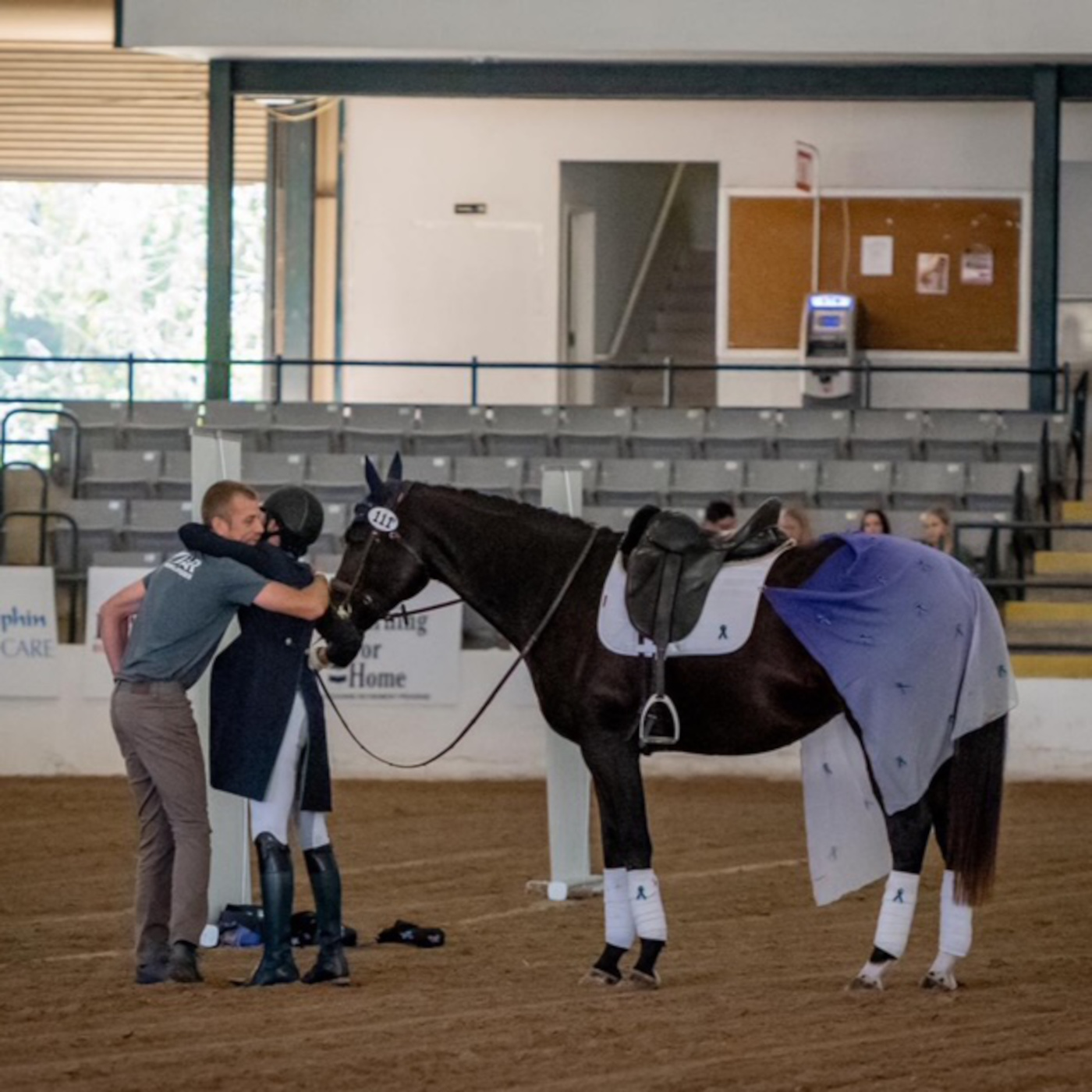
The Centaur
The Heart of a Thoroughbred
00:55:02
The Centaur Podcast is on the road! I was a volunteer at the Thoroughbred Makeover created by The Retired Racehorse Project to showcase the trainability and talent of off-track Thoroughbreds. The competition is intended to inspire good trainers to...
Loading summary
Transcript123 lines
- [00:08]
Alexandra Lerner
Oh, God.
- [00:15]
Cameron Adibi
Welcome to the Centaur Podcast. I'm Cameron Adibi and together we'll explore the fascinating world of horse human communication and the extraordinary connections that can develop between our species. In each episode, I interview individuals who share a genuine love for horses and a willingness to spread the love to others. This podcast is for anyone interested in discovering the incredible possibilities these animals have to offer. I took the Centaur Podcast on the road and boy, this was a real treat. I got to be a volunteer at the Thoroughbred Makeover in Lexington, Kentucky. This is a real special event sponsored by the Retired Racehorse Project. The there were over 250 competitors competing in 10 different classes. It was super special to just witness for my first time and to be at the Kentucky Horse park for the first time. I met so many people from so many different backgrounds, had such a passion and dedication to the thoroughbreds. I just want to start this show with you getting to hear some of the words from the competitors. These first competitors were from New York and their horse, Peanut Butter Toast. Ask them a few questions, share what they their experience was like. All right, so I'm at the Thoroughbred Makeover and I am with Alexandra Lerner.
- [01:27]
Cadence Manino
Cadence Manino and Peanut Butter Toast.
- [01:30]
Cameron Adibi
Peanut Butter. So I just watched them do the free freestyle event here at the Thoroughbred Makeover and I just going to ask you a few questions. All right, sure. So how do you feel right now?
- [01:40]
Alexandra Lerner
I'm excited. That was amazing. So much fun.
- [01:43]
Cameron Adibi
You guys did great. You did too, Peanut Butter. And that's why I came up to you because your, your horse is so relaxed right now. So tell me, how did you guys meet this human Peanut Butter? How'd you meet?
- [01:55]
Alexandra Lerner
We ride at the same barn in Leg Up Staples Western New York and he is owned by Leg Up Stables as one of their horses to be trained to become a school horse.
- [02:06]
Cameron Adibi
I try to ask every participant the same question. What do you like about thoroughbreds? And this was a very consistent response.
- [02:15]
Alexandra Lerner
I love how trainable they are. They come off the track with a little shortcut. They are used to riders and then you just have to show them how kind you are and they're willing to listen and do whatever you want. They, they're just, they're so fun and easy to guide to simple things. They just are like, yeah, ready?
- [02:36]
Cameron Adibi
And Peanut Butter was just licking when you said that. I'm gonna just ask him, Can I?
- [02:41]
Cadence Manino
Yeah.
- [02:41]
Cameron Adibi
Peanut Butter, you have anything you'd like to add? You did great, buddy. Good work.
- [02:45]
Alexandra Lerner
He's having fun.
- [02:46]
Cameron Adibi
He is having. He really can See it. So, I mean, I'm like, who wants to be here? And he was kind of like, you, I'm doing this. I got to meet Nathan Bowers, another guy from Colorado. So I had to go talk to him. Him and his horse Flying Cheeto did really well, and they won the competition. Trail competition. And I just asked him a few words after he finished. What's your secret to success here? You know, honestly, it's the right horse. He's just a great horse, and he wanted to do it. And so it's pretty easy to do things with a horse that wants to do things.
- [03:20]
Cadence Manino
So.
- [03:21]
Cameron Adibi
Was pretty fun. There was a quick. Quickly there became a common theme about what people had to say about thoroughbreds. And then finally I had to. Had to go up to this team. This is a team from Colorado. They were working with Christine Oliver and 19 oysters. They did such a great job with the theme about Colorado, including ski joring in an indoor arena. I think that's the first time I've seen that you could really see that there was a lot of support. Nobody was, you know, nobody was there alone. Everybody had team. And these people did such a great job. So I guessed them a few questions. Yeah, that was great. So this is John. You made John Dever proud.
- [04:06]
Alexandra Lerner
I sure hope so. Yeah.
- [04:07]
Cameron Adibi
So csu, are you Fort Collins based where you guys.
- [04:10]
Cadence Manino
Yeah. Okay.
- [04:11]
Cameron Adibi
Yeah. So let's see. I got 1, 2, 3, 4, 5, 6, 7 people here. And so you're like. You're part of the. You're the team.
- [04:17]
Alexandra Lerner
Yeah. We have another eighth person as well.
- [04:20]
Cameron Adibi
And so how did you choreograph all this?
- [04:22]
Alexandra Lerner
You go, oh, my gosh. This was the incredible work of Christine herself, her mastermind. She came up with this herself. Honestly, I. Yeah, all credit to her.
- [04:33]
Cameron Adibi
Yeah, that was good. And so who's the skijor here?
- [04:36]
Alexandra Lerner
That's me.
- [04:36]
Jacqueline Dickey
Yeah.
- [04:37]
Cameron Adibi
So what? Because I do a little bit with a little mini. So that's a. I think it's a new sport.
- [04:42]
Alexandra Lerner
I. I think I'm gonna have to take this up this winter.
- [04:44]
Jacqueline Dickey
Not gonna lie.
- [04:46]
Alexandra Lerner
Practicing seen a few months early, but excellent.
- [04:49]
Cameron Adibi
And then this is the final. We just did. And so you made some adjustments from. Because I saw the. The one two days ago. So how did you figure out what to do as.
- [04:58]
Cadence Manino
Adjust?
- [04:59]
Cameron Adibi
What'd you do to adjust?
- [05:00]
Alexandra Lerner
So it was me mainly Christine as well. She wanted just to showcase how much work she's done with him and how desensitized he's been to everything. She's brought that fish to Every lesson she had with her trainer and he's absolutely loved it. She jokes it's his emotional support fish and so just really wanted to show all the work, the hard work she's put in and represent Colorado.
- [05:19]
Cameron Adibi
You totally represent Colorado. Used to live in Golden Mesa State College graduate. So now Colorado Mesa University. But yeah. So are you guys all students here? What do you guys study?
- [05:33]
Alexandra Lerner
Most of us are equine science majors. I think I know Maddie has ecological restoration.
- [05:39]
Cameron Adibi
All right, that's my background. What's your background?
- [05:42]
Jacqueline Dickey
I'm equine science as well.
- [05:44]
Cameron Adibi
It was really cool to speak with Kyle Rothfuss. He was the announcer at the freestyle event. He's also the co founder of Mare Worthy Charities. He's really dedicated his life helping the broodmares and giving them a second home. Second life. Yeah.
- [05:58]
Kyle Rothfuss
So this year I'm announcing for the freestyle discipline. So I just get to basically sit and watch all the freestyle competitors and then announce as they come in, help manage their time and play their music. That's my role.
- [06:10]
Cameron Adibi
Yeah. Describe the freestyle a little bit. It's fascinating because I'm here volunteering and meeting everybody and there's a wide variety of people. But tell me some of the things that you like first. Can you describe the freestyle event?
- [06:25]
Kyle Rothfuss
Yeah. So the freestyle event itself is basically there's 10 disciplines at the makeover. This is the discipline that kind of is a catch all. So some people, the competitors each have eight total minutes in the arena and they get five minutes of judge time. They have some compulsory movements, so they have to do canter circles and drot circles and the reinback and other things. But they can do work at Liberty. Some people do a dressage freestyle, others might do polo. They might do some ground driving or actual driving. And it's really just a chance for them to showcase their relationship with their horse.
- [06:55]
Cameron Adibi
I asked Kyle to describe a little bit more about his organization, Mare Worthy Charities.
- [07:00]
Kyle Rothfuss
So we started kind of out of my work with the makeover. My 2019 mare that I competed with, her name was Worthy of Wings and she was a mare who came from puerto Rico, ran 138 races. And I've always had a soft spot for mares. I tend to find they're harder for people to find homes for because people have stereotypes about mares. And for me it was about how do I have a place for them. So her name was Worthy of Wings. We started Mareworthy as a little logo name for her year, the 2019 makeover, and ultimately turned Marworthy into a non profit in 2023 when we got our 501c3 and it's focused on retired broodmares. So now we focus on retired thoroughbred broodmares as an area of just great need. They're retiring a lot of they're harder to place. A lot of them aren't rideable or they're just aged and they might have some physical limitations. So for me, it's all about those are the horses that really drew me in where these old mares have done so much. And it really grew out of my work with the makeover, getting involved that way.
- [07:57]
Cameron Adibi
It was really great to talk to Julie Robbins, who's the judge of the freestyle event and also the founder of the Horsemanship Academy in Aiken, South Carolina. She did a great job, especially sitting in a cold, windy arena. And this is her perspective. All right, I'm with the judges, Julie Robbins and Jody and I just have a couple questions that near the end of the day and they're bundled up still here. Julie, as, as a judge, what motivated it it even do this job?
- [08:28]
Julie Robbins
This is not what motivates me, is I've been in the arena and I know how hard this is. And I just think I'm really looking to see in the new environment with a horse you haven't had very long, how great of a connection can you get? Whether it's in the saddle or on the ground, Western turkey, English tag, playing polo or having a ton of props, it's just super fun.
- [08:51]
Cameron Adibi
Sorry, I'm next to the fighter near the end of the day. And then what distinguishes exceptional makeover versus average makeover.
- [09:02]
Julie Robbins
Exceptional. Sometimes people think it's all the props, but really it is the simplicity of the partnership. So often so far, my favorite was an amazing dedication to suicide prevention. But what I loved the most was the fluidity of the rider. The horse and the rider looked like one. They were incredibly connected. Smooth transitions, walked trot, canter, even opened the horse up at a little bit of a gallop. But that horse and that human looked to be 100% in sync. And that is really what whether you have 100 props or there's no props, if you and your horse are in partnership and in the Zen, in the groove, that horse looks just content to be together with you. That herd of two, as I call it, that is what is a winning performance to me.
- [09:45]
Cameron Adibi
And one of the most memorable moments for me and many was meeting Jacqueline Dickey and her five year old gelding bander, also nicknamed Donner. It was such a pleasure to Meet her and her family and to learn more about her mission. Her son committed suicide, and this was her dedication to her son and to bring more awareness to mental health and suicide prevention. I got to speak to her a few days after she won the freestyle event. Yeah. And, Jacqueline, it's just great to reconnect and so grateful get to meet you and Donner and see you perform. You know, there's tears everywhere. People are still talking about your. Your performance at the freestyle event. And, you know, just if you. Again, it's only been a couple days, what, two or three days now. Do you have any kind of. Have you had any time to reflect? It doesn't sound like much, but have you any time for reflecting?
- [10:45]
Jacqueline Dickey
Yeah, I'm. I'm just incredibly thankful that Donner and I were able to give suicide awareness of voice in a very unique way, using horse and rider and giving that a voice in this way. And I'm even more. I was stunned that I won. I really did not expect to win. It wasn't about the win. It was about the suicide awareness piece. And so I feel incredibly fortunate that the win has even brought more attention to the suicide awareness platform that I have now decided is something that is going to be a big part of my life.
- [11:40]
Cameron Adibi
I'm so grateful to hear that. I was wondering, you know, how this, you know, you know, this is still, you know, you're still going through so much right now, and, you know, I. Again, I'll give just the courage you've had to kind of just, you know, make yourself so vulnerable through all this. I. But I wanted to ask, you know, it was such a. I was so amazed with this thoroughbred makeover event. Did you come across, like, any kind of surprises that you. Besides winning, some other things that happened during this, you know, you were there for almost, what, five or six days?
- [12:20]
Jacqueline Dickey
Yeah. I think one of the things that happened to me that was a big surprise was meeting other people that had experienced suicide in their families. And Kyle actually the. The announcer giving a voice to his own pain of the suicide of his dad. Those were surprising things that came out of this. And I was deeply touched by Kyle's story and his willingness to share that he had had some of his own struggles. And since then, I've received multiple messages on messenger and on Instagram from people who saw the performance and were touched by it, because a family member or they themselves have struggled. And that. That in itself was a big surprise.
- [13:27]
Cameron Adibi
Yeah. And I was there when Kyle, he was on the microphone and share and shared a Very emotional share. So, yeah, there's a lot of things here that probably, you know, still unfolding here. But the other one is I just saw you got a article in the Chronicle of the Horse. Very nice essay or article by Aaron Hardy. So there's this more. Seemed like there's a. There's kind of a ripple effect going on here.
- [14:00]
Jacqueline Dickey
Yes. Which is a very positive thing for suicide awareness and mental health.
- [14:06]
Cameron Adibi
Yeah. Has anybody from the thoroughbred makeover, you know, kind of reached out to you yet? I mean, they're still, they're still decompressing too.
- [14:16]
Jacqueline Dickey
I talked with Raina at the awards ceremony. She graciously gave me a hug and told me she was touched by the performance. And I, Kristin, of course, was busy doing the awards and whatnot, but I gave them both bracelets from active minds to help remind them that they are needed in this world.
- [14:43]
Cameron Adibi
Excellent. And by the way, just as point this out, you're riding a horse as we speak right now. You're back to work at your farm. That's your full time, full time gig, right? Training.
- [14:59]
Jacqueline Dickey
Yes, it is.
- [15:00]
Cameron Adibi
Yeah. And so, and I gotta ask, how's what Donner, you know, that was how, you know, I did see his. He had, you had a very tough kind of. You had to ask something, you know, beyond what he was. You had to do something that I thought was very. He had to do something very tough that he had to wait for the final presentation. But how did he do overall, do you think? Does. He was. Do you think he was. Do you think he's pleased with himself?
- [15:31]
Jacqueline Dickey
I was absolutely thrilled with his performance and his temperament throughout the entire week. He was a little tense in the dressage portion of our week. We competed in dressage as well.
- [15:50]
Cameron Adibi
Yeah.
- [15:51]
Jacqueline Dickey
But I really did not get him out as much as I would have in preparing a horse for the thoroughbred makeover because of what had happened with Austin. Yeah, I went to less shows. I went off property a lot less. So the expectation that he would go there and be perfect was a little above his pay grade at that moment. But the minute we went to do the freestyle, he clearly knew he had a job and he was on it, and he was fantastic. Every bit of what I asked him to do, he did. And his, his wonderful temperament shined through.
- [16:38]
Cameron Adibi
I, I again, I have to say, you know, as a observer, I thought so too. I really, you know, these horses do so much for us. And it looked like he knew, he knew his job, like you said. And you guys, you know, you guys had a beautiful performance. So Congrats on that. But, yeah, the bigger picture here, you're. You're doing something, you know, very valuable and service to the community, larger community, that people have gone through this experience. If you have any kind of thing that you would. Again, I'd ask you this, but again, you like to. People know that are struggling. What you know, what you would. Any suggestions for them?
- [17:20]
Jacqueline Dickey
If you're struggling, reach out, ask for help. If people know that you're struggling, they can help you. If they don't, they can't. Don't be afraid of the stigma involved with asking for help. We didn't know Austin was struggling. If we had, we would have done anything to help him.
- [17:43]
Cameron Adibi
Yes. Yeah. And I still want to get the copy of the Dash from Amazon. A book you put together with his photos. Your sister Justine shared that with me. Justine. Boy, one another, just phenomenal human being. I'm just grateful to meet both of you and just, you know, just as you know, please say no. But if you. Is there anything that this has changed your perspective? This, this whole, this imitate, this. Going through the thoroughbred maker makeover with Donner. Has this changed your perspective on life since your son's passing?
- [18:22]
Jacqueline Dickey
Well, I think that Donner has helped me to have a healing road that I would not have had if I didn't have him. And it also gave me a goal which was very instrumental in helping me to continue working with the horses and continue functioning in life. Because it's very hard after you lose someone to continue each day to get up and do your daily tasks. A loss of this magnitude can really put a wrench in things for an extended period of time. And I feel fortunate that the horse and the makeover was there for me to focus on something other than the magnitude of the loss.
- [19:16]
Cameron Adibi
Yeah, I really, I, you know, I still can't believe you've. And, and by the way, in the middle of a move, your move, you just moved yesterday. So keep up. You know you're not alone, Right. And your family was so great to meet everyone. Michael, your sister, Justine, your daughter. There's another woman there at the dinner table.
- [19:39]
Jacqueline Dickey
My sister in law.
- [19:41]
Cameron Adibi
Sister in law. Yeah. Very cool. So you got. You have some good support and I hope to see you again.
- [19:49]
Cadence Manino
And.
- [19:50]
Cameron Adibi
Oh, yeah. And finally, Donner is. You've decided to keep him part of your family.
- [19:56]
Jacqueline Dickey
Yes. And his next goal will be to do the freestyle down in Florida. They do another thoroughbred event in December.
- [20:06]
Cameron Adibi
Yeah.
- [20:07]
Jacqueline Dickey
For horses that are freshly off the track. And I'm gonna take him down there and do the freestyle again and continue his story with suicide awareness.
- [20:20]
Cameron Adibi
I honor Jacqueline and all who continue on after losing friends and family from suicide. You can buy Jacqueline's book, the Dash on Amazon, dedicated to her son. Austin. Really got lucky to talk to Shannon Reed, who is the board member of the retired racehorse project and consulting veterinarian. Huge responsibility she had and manage a team. And I really got to talking with her really showed how much care goes into each of the horses and how they evaluate them. But also, you know, what does this mean, you know, in terms of aftercare and how do you work with a horse that's coming off the track? Shannon's also a professor at Texas A.
- [21:00]
Alexandra Lerner
And M. My role is a little bit twofold. So first of all, I'm a board member for the RRP and I'm also the consulting veterinarian. And in that job I coordinate all of the arrival exams for all the of of the horses that come here. And that happens in the first two days here. So all the horses that show have to pass a two part arrival exam before they can show. And then I stay on the grounds to help the stewards and the judges to see if any horses are not looking their best and need to be looked at by a veterinarian or if anything happens while they're on the grounds, and then sort of help them to finish out strong with horse welfare throughout the week. So we do the arrival exams the first two days with 27 vet students and about 14 other veterinarians going through the barn and looking at all the horses. Yeah, I think this year I have to look at the exact numbers because they got a little bit squishy after being on the grounds all day long. I think it was around 275 or so. And we get about 18 hours to get through all of those. So for every year, the arrival exams happen from Monday and Tuesday and get them all done in that 18, 18 hour period of time.
- [22:07]
Cameron Adibi
That's impressive. So can you just kind of describe like, what's that, what's the process like when you do the exam? Sure.
- [22:16]
Alexandra Lerner
Okay, so what we do kind of, we have a meeting on Sunday night with a bunch of veterinary students and we train them to something called an electronic medical record. So this is not a vet hospital, but it's running similar to that. So they will have an electronic medical record for every horse they get preloaded in time the system when they check in. And then when they check in, a team of vet students and a veterinarian will head directly to their stalls. And they'll do part one of the exam in their stall. And part one of the exam focuses kind of holistically on the horse. And that looks at. They have to have a permanent identification system, microchip that has been registered with the Jockey Club and the rrp. They have to have an acceptable body condition score. And we. We use a body condition score of four as our marker. And if they have any sort of question about that or borderline about that, we do an entire, what's called a heineke body score system to grade the entire horse. So it's not just about, can they see a little bit of their ribs, but it's about the entire horse. They get checked for their body condition score. They get a tpr, temperature, pulse and respiration. We listen to make sure that their heart has a normal rhythm and that their lungs sound up okay. They get palpated all over to make sure they don't have any. What we would call significant lumps and bumps. A lot of these guys have raced for a while, so they have lumps and bumps that are no longer significant to them. So we say, basically, if it's old and cold, we're good. So they get looked at for lumps and bumps, and then sort of a discussion with the trainers about how it's been going if they have any concerns is the basic part of that. We also checked, make sure that they have a EHV 1 and 4, which is a herpes virus vaccine, within a certain period of time, and health papers and a coggins. So that all goes on in the first part. And then once they pass the first part, then they can head over to what we call the soundness check. So they go over to one of the other barns that has nice, flat footing, and we watch them go there to make sure that they're safe to move about the park. That's not a lameness exam. We're not looking to see how they jog. We're looking to make sure that they look good, they've arrived well enough to move around the park. So that's a separate team of veterinarians. They sort of get in line to do that, and it takes about five minutes to get that done and look them over. And then if they pass that off, they go. They get a blue sticker on their bridal tag that says they're good to go.
- [24:32]
Cameron Adibi
This is a lot of responsibility. How many people are we talking? Like, you're managing, like, in terms of your tall, Your whole vet staff?
- [24:39]
Alexandra Lerner
Yeah, so. So for I, I'm it for organizing. Before we get here, I choose the vet students. I get some help from friends and try to raise money for them to come. Then there's a team of veterinarians that either volunteer their time or Haggard is a sponsor of the arrival exam. So they send veterinarians over a year. This year we had, like I said, the vet students. There were a total of 15 to 16 vets that rotated through. But the day one we had 13 teams running. Day two we had 12 teams running throughout the day to get that all done.
- [25:13]
Cameron Adibi
And are you connected with local university, locally vet school?
- [25:17]
Alexandra Lerner
No. Well, I'm connected with Texas A and M University. I didn't start out there when I was doing I did retired racehorse project as a competitor and then I came back after I couldn't take on any more horses because I kept keeping them. I came back at the time I was at the University of Missouri and throughout this period I was at Ohio State and now I'm at Texas A and M. And when I went to Texas A and M, I actually had them write it into my contract that I could keep coming here.
- [25:42]
Cameron Adibi
Some basic things you can offer new owners for preventative care for horses like these.
- [25:46]
Alexandra Lerner
Well, what I always say is if you're going to get a thoroughbred and you did not get a pre purchase exam, that's great, but you should have a post purchase exam with a veterinarian because often that's the time to the first thing to focus on is nutrition. It's hard to bring these guys down off of the track and adjust them from the calories they were using to put on muscle, to start putting on new muscle or to relax into a new job. So a nutrition consult is paramount because a lot of people that have never owned thoroughbreds before aren't used to the calorie needs that they have even when they're coming down because they still have active muscle chewing up calories. So we wanted to get away from that myth that thoroughbreds have to be skinny. They don't, but they do need a proper nutrition program. So getting your vet out there right away looking at your hay and making sure it's appropriate hay for a thoroughbred who's got a lot of caloric needs still. And maybe not your Missouri foxtrotter that's been sitting around in a pasture for a while. So nutrition first. The other things we find with them is a lot of them may need support for gastric ulcers. And so that's a thing to talk with with your veterinarian is are they showing any signs of gastric ulcers and maybe even just speaking with them about just doing a preventative course of ulcer medication all the way through and then watching for that. And the other big things we have to look at is sometimes bringing their feet around to what that's going to look like. A lot of people just want to say, immediately change things or say thoroughbreds need to go barefoot. They should never be in shoes. And that may be. So you just got to get there in a gentle way. So I think the biggest thing is to have a post purchase exam with a veterinarian to put an eye on things and see what you have to watch out for. And what we do know after doing a lot of research is they do have some issues in the first year. It's part of transitioning. And what we also know is that by the time they get to the end of the first year, they have usually straightened themselves out or you've straightened them out. But the first year is a little bit of a roller coaster ride and that involves starting with a good veterinary consultant and then riding it out from there.
- [27:38]
Cameron Adibi
Just a quick reminder, all these horses are in their first year that are at this competition right now.
- [27:42]
Alexandra Lerner
Yeah.
- [27:43]
Cameron Adibi
So more importantly, like, why should somebody consider adopting a thoroughbred off the truck? Thoroughbred?
- [27:50]
Alexandra Lerner
Well, I mean there's a built in heart of an athlete in there and I think they, they do have, I don't want to say they don't have their challenges because there are some things you have to bring around, but it is the experience of bringing one through that transition and into it. New career will help you to grow as a person. That's the reason I think it's important is they are intelligent and sensitive and they have changed how I trained horses for sure. And it's because I was wrong, not them. So that's one reason in the end, most of them will give you your heart for just about anything. So what you're really getting is a horse that's had a thousand rides under saddle by the time you get it to you. And that they have been bred to have heart and stamina and athleticism. And even if that's not what your goals are, they have a lot of intelligence too. So it's a little bit of a. It's a fulfilling challenge, I guess.
- [28:44]
Cameron Adibi
Well said. I gotta just point out we were sitting right by an alley of all the thoroughbred champions here at Kentucky Horse Park. Pretty impressive really. So you mentioned something I honor that. Mentioned that you had to adapt and change in your vet care. What Are some of the biggest changes you've seen just in overall management and horse care?
- [29:07]
Alexandra Lerner
Yeah. Well, I think even why I come here as a consulting veterinarian is there was a lot of myths about thoroughbreds that were pervasive even throughout the veterinary community. And I think that that is something that is starting to fade away. So it was the assumption that they were always going to look rough for a period of time.
- [29:23]
Kirsten Green
Time.
- [29:24]
Alexandra Lerner
And they were always going to do this and they were always going to have joint problems. And it's, it's, it is true that there is a period of time that has to be adjusted to. And that would just be like if any of us had a major swing in our job and our metabolism and all those things at once, they're going to have that. But for veterinary care, recognizing that we can be proactive about how we transition them has made a huge difference. And we now realize you don't just kick them all out in a field for a year and then come get them because that's not easy for them to do. They went from a very rigorous schedule, a very hands on method and a routine and then you kick them out in the field and tell them eat on a round bale. So that part has changed in veterinary medicine. And for me, I think I transitioned away from being a part of racing and into aftercare because that's where I felt my home spot was, was to bring them out on the other side.
- [30:17]
Cameron Adibi
That's awesome. Thank you. I honor that. Thanks for your service here at this event as well. So I, you get to meet all these people. You're, you're really in the front lines. And how many years have you been doing this?
- [30:30]
Alexandra Lerner
I first came in 2015 as a groom for a friend. I competed in 2017 and 2018 and then we started the arrival exams in 2019.
- [30:41]
Cameron Adibi
And are you gonna, is this, I mean, you have a pretty important job. Are you gonna continue next year?
- [30:45]
Alexandra Lerner
Well, yeah, I'll definitely be here next year, but I also think that any organization, if you keep the same people and it can get stale. So I think I'm looking for over the next few years to find a transition. I don't have to leave, but I think it's just good for people to give different perspectives so that if there's another veterinarian that wants to come in for a couple of years and learn the ropes and then take over, I'll be happy to sit in stands and cheer for a bit. But I'll be here next year for sure.
- [31:08]
Cameron Adibi
Excellent. All right. Well, hey, this has been great. I really appreciate you taking the time. Thanks so much. And hope to see you maybe next year.
- [31:15]
Alexandra Lerner
Yeah, absolutely.
- [31:16]
Cameron Adibi
Thanks, Jen. I got to speak with. Just a couple days after the Thoroughbred Makeover, I got to speak with Kirsten Green, who is the executive director of the Retired Racehorse Project, and Kristen Kovac Bentley, who is the managing director, the Retired Racehorse Project. These two are really the ones who make this whole show work. There's so much history with the thoroughbreds, and it's really phenomenal the amount of interest that people have in the aftercare of these horses. It's really nice to sit down and hear more of what they do. Can you give me a little background? What's the inspiration for the Thoroughbred Makeover?
- [31:52]
Cadence Manino
Well, the Thoroughbred Makeover is a part of a greater organization called the Retired Racehorse Project, which was founded by Stuart Pittman back in 2010. And events and demonstrations and that sort of thing have kind of always been part of the organization's DNA. We've started out very much on a kind of horse expo circuit when those were, you know, there was kind of like a heyday of, you know, Horse World Expo, Virginia Horse Expo, like a lot of these Mid Atlantic horse Expos, and we would do a lot of demonstrations which kind of migrated into short format competitions. And it was kind of during also, like a heyday of, like, competitive reality TV was really kind of starting to become, like, a thing. And I think Stuart was really driven by that. Like, he. I really felt that there was something here that would get picked up by, like, Animal Planet or something like that. So there's a little bit of a combination of that. And then the Mustang Heritage foundation had started doing Mustang makeovers, which are also, like, very short format. And so this is kind of a riff on that. Did it turn into a reality TV show? Not exactly, but I would kind of argue that it's turned into something a little bit better and more authentic than that. And it's really, you know, one of the biggest, most visible ways that the Retired Racehorse Project executes its charitable mission, which is to increase demand for thoroughbreds who have retired from racing and provide services to the people affiliated to the horses. So here we are. The organization is 15, and the current iteration of the Thoroughbred makeover is 10 this year. So been going for a while now.
- [33:43]
Cameron Adibi
Yeah. Congrats. And so, Kirsten, Kirsten Green, you are the.
- [33:48]
Kyle Rothfuss
I have to.
- [33:49]
Cameron Adibi
Kirsten and Kirsten, Kristen. I'm going to get messed up a couple times. Kirsten, you are the executive director, and Kristen, you Are the managing director, is that correct?
- [33:59]
Kirsten Green
Yes. Frequently confused, but yes. We did plant that on purpose to be Kirsten and Kristin.
- [34:07]
Cameron Adibi
I was just there for three days. I mean, this is a year long project, correct? I mean, you're back to work now, I take it.
- [34:17]
Kirsten Green
Yes, it is one part of our bigger charitable mission, but it does sort of take the lion's share of our resources in time and energy and funding as well. We do a lot of things outside of the makeover, but that's certainly, I think, our biggest, you know, highest profile event that we, that we put on.
- [34:32]
Cameron Adibi
What are, what are some of the other things that you sponsor or other events?
- [34:37]
Kirsten Green
We don't do as much with events. We do have other demos and expos and events that we attend around the year. We are about to head to Fairhill to the Maryland five Star to help produce the Real Rider cup, which is a kind of a third party fundraiser that we run in conjunction with the Real Rider cup founders as well as beyond the Wire in Maryland and New Vocations Resource Adoption Program. So that's our next thing coming up just a week after the makeover. But the other pillars of our project include services as well as education. So as far as services go, we're providing free thoroughbred horse listings. It's the only thoroughbred exclusive horse listings on the Internet as far as we know. And we also have a pretty well stocked education library. We've got, I think about 200 articles as well as webinar and seminar recordings available. And that's all for free. So we don't put that behind a paywall anymore. That used a lot of our education content used to come through a print magazine and unfortunately people are just moving away from print. So we're sort of following the trends where they're going. So all of our education content is available for free online right on our website@the rrp.org so that's a big cornerstone of what we do. Um, you know, and if you were there at the makeover last week on Friday, you might have noticed that that was a dark day for competition. But we had clinics being offered. So that was opportunities for trainers to kind of end their week on a good note if their preliminary competition didn't quite go to plan. That was also open to graduate horses. So any of the over 5,000 horses who have gone through the program in the past 10 years could also come back and do those. Uh, and then we had some in person seminars as well. So yeah, education's a big cornerstone of what we do.
- [36:16]
Cameron Adibi
I appreciate that. As an educator. And yeah, this is a really tight community. That was my real. With a lot of heart. And so Friday, Friday, dark day, also day off for those who curious what that means. Really, you really thought this out? But again, I want to just emphasize also I got to volunteer at the freestyle event thanks to my friend Julie Robbins, who's one of the judges. And it was just the amount of heart. I mean, really, it was very evident there was so much heart into this from you, the people, the horses. And so, I mean, you have a wide audience, it looks like. But who can you kind of describe? Who is your target audience?
- [37:00]
Kirsten Green
Yeah, we're kind of straddling a couple of different worlds which, you know, is kind of a fun, ongoing challenge for us. So as far as competitors, we are seeking to use the makeover as a point of inspiration. So the idea is to inspire more equestrians to partner with thoroughbreds, whether recreationally or competitively, and choose them for their next partners. And of course that serves, you know, the 300 some trainers who apply to do this every year. But there's a bigger ripple effect that we don't necessarily have good numbers on because it's hard to know. But we do know that this event inspires more people to get involved with the breed, whether or not they actually do the makeover. So that's on the equestrian side. But then of course we're also serving a breed that is bred and raised to race. So we're also, you know, in a different way serving the racing industry. So, you know, we're seeking to further educate the folks involved in these horses lives, you know, in the first few years as to what equestrians are looking for and of course vice versa, you know, helping equestrians understand what their horse already knows, what their horse is capable of doing. So yeah, we're trying to cover, you know, bring all of these industries together through one organization and one event. So it's a, it's a fun challenge. Of course, our biggest audience, I think, is the horses. You know, we're above all, we always try to, you know, make all of our decisions with what is going to benefit the breed the most. Not necessarily always the people with the breed, but of course you benefit the people, you benefit the horse.
- [38:19]
Cameron Adibi
So thank you for saying that. Yeah, this is, this is a big challenge. I would, I do have some questions about how some of the challenges, but I mean, it sounds like you're a bridge, you're really kind of connecting because I don't know in the past, and maybe it was a little Disconnected. I don't know that's, you know, accurate. But so this is, you know, this is. That is the education component. I appreciate that. And that's. So you mean as you are, you just finished your 15th year and it looks like, I think I got the T shirt. So it was 10th. 10 years in Lexington, I believe. I'd like to clarification, but what's changed over the last 15 years? And have you been part of this all 15 years?
- [39:03]
Cadence Manino
I have been here 10 years full time this year actually. A lot has changed and a lot has stayed the same. We've tried pretty hard, specifically with the makeover, to adhere to the original vision. And a lot of the changes that we've made over the years have been with an eye towards increasing the level of horsemanship and the level of riding ability. We are very cognizant of the fact that we have a very high profile event that is meant to be showcasing the horses. And so the decisions that we're making are making sure that the horses are shown in the best possible light. So that has meant for us, you know, putting in place a bit more comprehensive of a trainer application process. I don't think a lot of people that haven't done this before necessarily realize that there is a pretty like robust trainer application process where we're really looking at effectively your writing resume and trying to make sure through a panel of independent evaluators that have had prior experience with the event, whether they, whether they have competed or officiated. We're looking at, you know, baseline. Are you going to come and be able to give a horse a positive experience throughout the training process and achieve the level of competition required at the event? And so that's, you know, a little tough to do with a couple hundred strangers from year to year, but that has really kind of progressively over the last couple of years elevated the level of horsemanship. It certainly changed our numbers a bit. We used to get quite a lot of people that applied somewhat arbitrarily when the process wasn't as comprehensive. And so we had a pretty decent dropout rate between the number of trainers that applied and the number of them that completed the process and brought a horse all the way to Lexington. So what's really happened is that our retention rate has improved even though we're not receiving the same volume of numbers. We're. Which frankly to me is a better picture that I would rather see. We've also implemented the arrival exam process, which is really another piece to the horsemanship puzzle in terms of just making sure that every horse that sets foot on the grounds is comfortable to be there. Again, we're doing a lot to try to dispel rumors and kind of stereotypes that these horses are used up and run down and all have, you know, some problem or another that has to be dealt with. And it's, you know, it's true that some will retire from racing with some level of rehab that is needed, but that's not the case with every single horse, and we're trying to make sure that that gets highlighted. So the arrival exam really helps us make sure that we are holding everybody to the same standard as far as condition and wellness and safety, soundness. So those are some of the big things. We've also added broodmares in the last couple of years. They compete alongside with the retired racehorses, but their eligibility criteria is a little bit different, and so they're pinned separately. The broodmare population is unique and has some different challenges that need to be addressed, which the makeover is only going to play a small part of, but we're happy to be contributing to that as well.
- [42:40]
Cameron Adibi
Yeah, I. I think that's definitely what I noticed was this. This. This is a quality. You know, let's just put it out there. Let's be honest. And, you know, you have prize money, but nobody's. I mean, come on, if you're with horses, you're not. You're not even breaking even with prize money. You know, this is just, you know, the recognition that people are probably there more for the prize money is just, you know, a little. Maybe pay for gas and some other things and. But, you know, so let's be honest. You know, this is not. People are driven by the, you know, the financial reward. I don't think that's. That's my impression. But I also was curious if either of you can answer. How do you measure your success of the thoroughbred makeover?
- [43:21]
Kirsten Green
It is interesting because I think we're really well positioned to capture data that no other aspect of, like thoroughbred aftercare can capture, because we're working across so many different areas. So, like, the whole thoroughbred aftercare landscape is just like a fascinating look at how different organizations are working to try to solve the bigger problem, which is how do we get more thoroughbreds into homes beyond racing? So you have. The Thoroughbred Aftercare alliance is a big player, so they accredit nonprofit organizations and provide some level of grant funding throughout the year. So they have data on sort of their piece, which is horses that move through these nonprofits. But what we found over the years Is that something like over 50% of horses that come to the Thoroughbred Makeover are still acquired directly from racing connections. So that's, you know, someone knows a guy who has a horse for sale or somebody goes through a listing agent that is helping to facilitate, you know, the movement of these horses. And there is no organization that's tracking that information. Like there is no accrediting organization for that direct sale. But we're able through of, you know, like Kirsten was mentioning earlier, we have that comprehensive application process and we also have a fairly comprehensive registration process for when horses enter the event. So we're capturing all that information on how they got there, you know, what was the purchase price for them. So that's one of the big statistics that we look at is how high is that purchase price gone? And we have noticed in 10 years of the makeover in Kentucky, and this is not just due to inflation, but we have noticed that the purchase price of horses has gone up. So to us, that's something that we can kind of hang our hat on to say, like, well, we have helped to increase, you know, helped. This is not the only reason that purchase prices for horses have gone up, but we've helped to increase that, that purchase price and demonstrated that these horses have more value. So if the horse has more value at the point of retirement, ideally the racing connections might be choosing to retire that horse a few races earlier. They might be choosing to retire that horse from a higher level of racing before it drops down the ranks, you know, and ends up maybe at a, a lesser quality track or in lesser quality hands. So, you know, when a horse has value, people are going to make different decisions for it. So we're hoping that that trend kind of continues. And of course we have an area of growth after that, which is to try to get the price for these horses after some retraining a little bit higher. Because right now, as you mentioned before, it's not super profitable to horse show and it's not generally really profitable right now for people to start retraining horses and then attempt to resell them because that secondary market hasn't caught up yet. So, but because of those statistics that we gather, you know, we can look back and say, okay, we know for sure that we have impacted directly. I think it's over 5,500 horses now. We know that the price for these horses at retirement is going up. We also gather information such as, you know, how much money have trainers invested in the 10 month retraining program. So we have a lot of statistics that we can gather and we can start to look at trends because we have about 10 years of data that.
- [46:22]
Cameron Adibi
We'Re sitting on that would be very cool. You think you might publish any of that data or will you share that in your community?
- [46:30]
Kirsten Green
Yes. So we have some of the stats published on our website and we are actually positioning ourselves to do a little bit more of like an annual report this year. So especially with it being the 10 year makeover anniversary and the 15 year retired resource project anniversary, it is a good time to kind of take a look back at where we started, where we are now and where we think we're going to go next. So, yeah, you've actually caught us at the perfect time. So yeah, stay tuned. Watch the space@therrp.org for more soon.
- [46:55]
Cameron Adibi
It's, you know, everybody's having to adapt right now. It's a changing world. Very quick, you know, very rapid changing world. And one of my motives for the podcast, you know, to highlight some of these cool things that are going on out there in a bigger picture. I did interview a woman breeder from Australia and you know, she kind of said similar things. You know, if you, you know, you, you have a higher value product, you're going to get more value out of the customer. So in sales, you know, there's age old, you know, you know, increase the price and you'll get, you'll get better, you'll get better buyers. So it's a, it's, I think there's something there that you just pointed to that's, I mean, these. Come on, we. Again, I'm gonna have to keep going back because I, So one of the things that kind of, you know, got me to you is that I got to work with an older 30 year old thoroughbred knocked off. I don't think he was a well man. We don't know his background. He just showed up in New England and I kind of found him in a back paddock, you know, doing nothing and kind of brought him back to life and brought him, I do this equine therapy thing with kids and he was, he, he loved it. He loved every minute of it. And that, you know, I think that's what I, when I interviewed everybody, like that was the common theme. Like everyone just talks so highly about the thoroughbreds, you know, their versatility, their adaptability, their willingness. But you know, you work with, you know, so you're, you have a good pulse of the thoroughbred community. Beyond the thoroughbred makeover. Do you have any long term plans or are you working with the Thoroughbred community. Anything that you'd like to share that might be bigger picture stuff?
- [48:40]
Cadence Manino
I think it's good that you asked that. We actually are completing a strategic planning process this year, which I think is going to yield some adjustments and updates to programming and that sort of thing. So, as Kristen said, definitely more to come. I think overall, like, organized aftercare in North America is, you know, roughly, you know, about 15 years old. There are certainly organizations that predate that, that, you know, new vocations, TR have been around for 30, 40 years. But when you really started to see, you know, the advent of the Thoroughbred Aftercare alliance, rrp, the Thoroughbred Incentive Program, like, we were all formed in, you know, 2010, 2012, and, you know, particularly with TAA coming on the scene and offering accreditation, that really kind of helped organize and mobilize our industry in a way that really hadn't been before. So I think what you're also seeing is that we're all reaching this kind of point of maturation where we're looking more seriously at, like, okay, well, what's the next frontier look like in this industry? And I think there's still a lot that can be done, you know, from our perspective. And, you know, a lot of people that work in aftercare have been, you know, championing this for a while and that we do need better traceability efforts. You know, the Jockey Club is the breed registry, but the Jockey Club really needs the help of the industry, the aftercare industry, inclusive of private individuals and for profit entities, to really help fill in the blanks on what the full lifecycle looks like. So I think we'll probably see a lot of movement there. And, you know, as Kristen was talking about, the data that we're capturing, you know, RRP certainly has a part to play there. I think the big thing that we think a lot about is, you know, the thoroughbred, for the thoroughbred riding horse, for all intents and purposes, really doesn't have a breed association. The Jockey Club is the registry. But there's a lot of that kind of, like, association elements that are getting left on the table that the horse really would benefit from. So I think you'll see RPM organizing in a little bit more of that mindset in terms of concepts like being able to identify who the. The resellers are and who the listing agents are, the people that are part of the industry that aren't necessarily as organized and well identified as they could be just purely because of tax status, basically, you know, really trying to identify those people, acknowledge and celebrate those people and their contributions. You know, advancing our data capture mechanisms to really start to tell the story of the thoroughbred horse, sport horse, in a clearer, more definitive way. A lot of what we see is very anecdotal. You know, we see horses, you know, like Phelps at the, at the five star level that, you know, are really coming out and winning and being competitive, and we just don't have a lot of ways to fill in that story. And also thoroughbreds that are being used in sport horse breeding programs that are, the offspring are being registered out to other stud books. And so the thoroughbred is really losing its credit for those contributions as well.
- [52:21]
Cameron Adibi
Kirsten, can you kind of sum it all up?
- [52:23]
Cadence Manino
I mean, for me, what attracts me to the thoroughbred? Like, I think there's. There's a certain, I guess, like nostalgia or romance about, you know, this breed that has been around for, you know, generations upon generations and hundreds of years and, you know, has been such a part of human history and continues on to this day, contributing immeasurably to the lives of humans. And, you know, I think there is an appreciation for that. There's certainly a kind of. I really do have an appreciation for the racing industry and the where these horses are coming from and what they're bred to do, but there's also a gratification of knowing that they can do just about anything that you put in front of them. And there's that versatility. And I think so many people would say it's the heart. And, you know, the risk of being corny or cliche, like, yeah, it's the heart. Like, what other breed has been around contributing in so many ways over so many hundreds of years? There really isn't one. So I think that's kind of where my inspiration comes from.
- [53:45]
Cameron Adibi
Well said. Yeah. That, you know, we would not be talking without the racetrack, the racehorse industry. So that's, you know, we got gratitude for them. And yeah, I always think about, you know, because I study a lot of the behaviors. They're watching us. They watch. They're studying us just as much as we're studying them, in my opinion. But hey, this has been so enjoyable. I really thank you for taking the time and hope to continue the conversation.
- [54:16]
Kirsten Green
Well, thanks for having us on and of course, thanks for volunteering at the makeover as well. We appreciate that.
- [54:20]
Cameron Adibi
And please definitely go check out the retired racehorse project. That's the rrp.org got a lot of great information and education too. Plan your calendars. Go check out the Thoroughbred makeover in Lexington, Kentucky next year. Again, thanks for listening. And if you like this show, please share with your friends and family. Appreciate it and stay tuned for more episodes. Thanks so much.