← The Centaur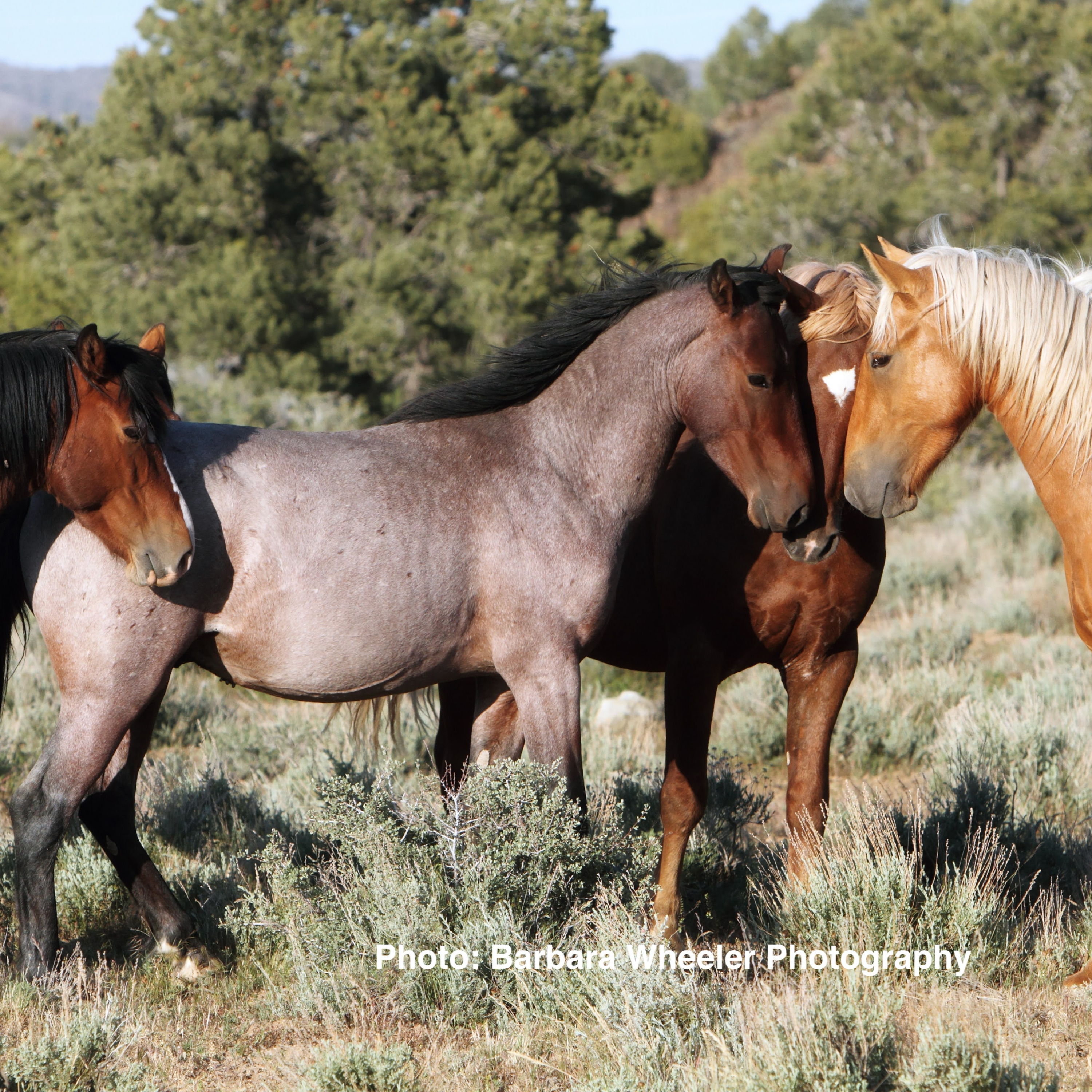
The Centaur
Wild Herd Dynamics with Mary Ann Simonds and Barbara Wheeler, Part 1
00:48:47
Part 1 of a phenomenal interview with Mary Ann Simonds, an esteemed equine behavioral ecologist, and Barbara Wheeler, a wild horse photographer. This is the first time I had them speaking together about the myths about wild herds, the overview of how...
Loading summary
Transcript158 lines
- [00:00]
Barbara Wheeler
Foreign.
- [00:06]
Cameron Adibi
Podcast. I'm Cameron Adibi, and together we will explore the fascinating world of horse human communication and the extraordinary connections they develop between our species. Join me as we delve into the unique ways humans and horses connect and understand each other. Through discussions with true innovators, we uncover the subtle cues, bonding techniques, and emotional connections that enrich our relationships with these remarkable animals. Whether you are a seasoned equestrian or simply curious about the language of horses, there's something here for everyone. I'm thrilled to have two remarkable guests. Marianne Simons, an esteemed equine behavioral ecologist, and Barbara Wheeler, a talented wild horse photographer. I've had them both on the show individually, but this is the first time I've had them both speaking and discussing some of Barbara's beautiful photographs and talking about some of the myths about wild herds. More of the overview and really looking at how functional and dysfunctional herds operate. It's such an interesting topic. If you have any interest in herd dynamics, please listen to this. This is going to be a very good show. For those of you who are listening to the audio version of the show, please go check out the YouTube link for this episode and just get a chance to see these beautiful and remarkable photos by Barbara Wheeler. Sit back and enjoy the show.
- [01:40]
Marianne and Barbara, thank you so much.
- [01:42]
Marianne Simons
This is.
- [01:42]
Cameron Adibi
This is actually, I. I'm thinking. I'm saying this is a historic moment. We got. I have. Barbara, you're a wild horse photographer. Marianne, you are an equine behavioral ecologist. And so the two of you together have this really interesting lens. And you've been working together. Got the rusty. I mean, the very well used book. Thank you, Marianne. And Barbara's.
- [02:08]
Barbara Wheeler
Oh, that is very well used. Good job, Cameron. I'm gonna have to buy more. Well used than mine.
- [02:15]
Cameron Adibi
Yeah, I'm gonna have to buy another copy, Marianne, so. And Barb.
- [02:19]
Marianne Simons
And it's on heavy paper, too.
- [02:21]
Barbara Wheeler
Yeah, it is.
- [02:22]
Cameron Adibi
Horse by nature. Marianne, you wrote the text. Barbara, you have a lot of your photos in here, so let's. I went to Spark. How did you guys two meet? What happened?
- [02:33]
Marianne Simons
Well, I was doing a presentation at a horse event in the Pacific Northwest, and I walked by this booth that had these beautiful wild horse photographs, and I noticed one which we'll show in a little bit. And I'm. I thought, oh, my gosh, who is this photographer? How did she capture it? Because I knew instantly what it was. And so she sought it out and. And I said, you know, that I thought it was what it was. And she looked at me and Said I'm. I'm purposely not saying what it is because if we show it, I want everybody to kind of guess, but because I've always used it in the lectures to say, what's going on here? And she looked at me and goes, you're the first person that actually knew that. That are interested in it. And we just hit it off because she had captured so many behaviors, these. These subtle behaviors that you miss if you aren't a good eye, a good listener. And I had observed those things in the field, but I hadn't seen a photograph. And she had beautiful photographs. So that was my story.
- [03:39]
Barbara Wheeler
Thank you, Marianne. And, you know, you're. You are the only person that has correctly identified that photo. And I think we met in something like 2008, 2007, 2008, some. I mean, it's been a long time. No one has ever, other than you, has ever correctly identified that photo.
- [04:01]
Marianne Simons
And that's that photo. Don't you think?
- [04:05]
Barbara Wheeler
Yeah.
- [04:06]
Marianne Simons
Yeah. You want to show that photo? It's a good way to start it out.
- [04:09]
Cameron Adibi
Let's start with. Let's look at this photo. So I'm going to share my screen.
- [04:14]
Marianne Simons
And this photo is special, and it's special in a lot of ways because it shows so much of how horses learn and the cognitive expression of the horse, and that can be translated. Not that one. The. The big one that Barbara sent. The big one. Not this one? No, no, the three. The threesome.
- [04:35]
Cameron Adibi
Oh, the threesome.
- [04:36]
Barbara Wheeler
Yes.
- [04:37]
Cameron Adibi
Okay.
- [04:37]
Barbara Wheeler
The two. Stallion. Yeah. Oops. I just. Yes, yes, that one.
- [04:42]
Cameron Adibi
All right, let's. And try to zoom in a little bit.
- [04:50]
Marianne Simons
Yeah, Blow that one up. That one's great. Because I really want to talk about why it's so special. Okay. So when I saw this photo, I was. I was pretty giddy and excited because you. The horses were doing exactly what it's. It's so important to teach people with the domestic horses to do. If you look, their eyes are all connected to each other. They are concentrating and aware of each other. Their behavior is being mimicked. And if you look, the stallion in the front is. His ears are a little bit back. The little colt is mimicking his dad, putting his ears back a little bit. And the stallion behind, which is probably an uncle, is keeping an eye on the youngster. And this was so typical of stallions, teaching youngsters how to go on patrol. And you can just see it in the behavior, the body language, the eye contact, the movement of saying to the young colt, hey, we're not your mom. Pay attention. Do not go in front of us. We're the ones going out on guard. And that translates so well when we look at how we relate to horses is that if whoever's eye is in front, that's the animal that's making most of the decisions. And so that mimicking behavior, the eye contact and connection and awareness, and all of them in a complete communication learning state, I just thought was absolutely spectacular.
- [06:22]
Cameron Adibi
It's really. It's incredible photo. And this is. This is from the book. It's in the book, correct, Marianne?
- [06:31]
Marianne Simons
Yes, it is.
- [06:32]
Cameron Adibi
So, Barbara, now can you tell us where the. More of the background from where this. This herd is?
- [06:38]
Barbara Wheeler
This was in an area in Nevada where the horses were really very used to people being around. In fact, they were right next to a highway, to a major highway. And we stopped because we saw horses. They obviously very, very used to people. So they didn't pay very much attention to us. And the benefit of that is that they just do their normal behavior. If they're not used to people, they don't act, they don't do things like this necessarily. So they. They grazed for a while and then I think they were just deciding to move off. And the stallion, who I agree, I mean, I don't think there's any way to know for sure for me, but I think looking at the posture of these horses, I would say that the lead horse was probably the band stallion, decided to leave. The mares were behind them, you know, walking in a leisurely manner. They were not hurrying, they weren't afraid. They were just going somewhere else. So what's unusual to me about this is that normally you would see that foal with a mare. You wouldn't necessarily see them walking with two stallions like this. And I don't know that I have seen this particular situation again where the whole band is leaving and the foals with the stallions. So it's still really a pretty unique photo for me.
- [08:09]
Marianne Simons
Well, and I.
- [08:10]
Barbara Wheeler
So then he entered off and that was that. And I don't think I had any idea what I had until Marianne said, that's something different. And I. I just didn't know.
- [08:22]
Marianne Simons
And that's what's that I said. And I had seen that behavior before, and that's why it was so special, because so much of perception of wild horses is that, you know, they're mayors. I mean, when I started my wild horse research in Wyoming, it was my undergraduate at the University of Wyoming. I did it in range management and wildlife conservation and management. So I picked Wild horses as my species. When I started, the predominant belief system was that stallions, there were harems of mares with a stallion and mares and babies, you know, took the stallion, took care of them. So I went out in the field with that kind of perception, expectation, and it was not right at all. And that's where learning to listen and see through the eyes and of a child that doesn't know anything was much better. So what I saw was things like this, two stallions teaching a cult going, those are two stallions with that cult. Where's the mom? And the mom might be off grazing with her girlfriends. And then you might have a two year old babysitting with all the youngsters around. And you know, one of my first experiences was a mare. I don't know if that's in the pictures or not, but it was. I know it's in the book, but it was a may that the. I was doing some work on the Red Desert herd and the BLM at the time, this is back in the 70s, so it was a long time ago. Wanted me to identify a band that was on some ranchers lands and a water trough. And they kept telling me about this bay stallion and he was this. And so I'm only, you know, 18 and I'm pretty naive in Wyoming. And so I see the bay horse that they were telling me about and. But you know, it didn't look like a stallion to me, but it was presenting itself up front. And so on that weekend I had the district manager and the range con come out with me and they kind of looked at me like, oh, this girl from California, she doesn't know anything. They had a spotting scope and they're like, there he is. Like, what's wrong with you? And I look at this bay horse and I said to them, if that's, you know, if that's the stallion you're talking about, what do you think the foal has been saying? Sucking on all week because that was a bear.
- [10:33]
Barbara Wheeler
I know what I always laugh at that story every time I hear.
- [10:38]
Marianne Simons
Was just perception. They're like, what? And I said the stallion was a little chestnut in the back, hurting the mares. And that was a big bay mare, not unlike the one that, you know, that's in the book that you have that just came up front. And I found that that behavior was not. I mean it was unique to that group, but it wasn't that odd, that mare. And oftentimes the mares would push their foals into the center of a group when they felt threatened. And sometimes the mares became very protective. It wasn't always stallion dominated and the mares all ran off with their foals. There was a lot of different behavior. And so it intrigued me that the behavior of the Red Desert horses were different than the horse than the Green Mountain horses that were different than McCullough Peak horses, that were different from, you know, the Green river horses. They and Colorado horses.
- [11:25]
Barbara Wheeler
They.
- [11:25]
Marianne Simons
So coming in as a behavioral wildlife ecologist and looking at, you know, the philosophy that the habitat was altering behavior. Yes, to some degree that's true. But it was not at all something conclusive. It was horses were learning and thinking different ways to behave and they were adapting according to, you know, their social skills and how they would be put together. So yeah, so it was. It was fascinating.
- [11:55]
Barbara Wheeler
Well and I want to clarif. I want to clarify that this isn't this. When I said this was the only time I had ever seen this particular scenario. I've seen so many stallions walking with FS that I can't count them. Oh, okay. It happens. It happens all the time. What I meant was, you know how generally Marianne will know this. Generally when the herd moves off, lots of times it's the lead mare. She's the one in the lead. This particular situation, the stallion was in the lead walking with probably I assume. Who knows that could be a 2 year old, 3 year old still in the band. It could be a lieutenant don't know. But anyway, another stallion and the foal in the lead. That's what made it unusual. Usually the foals are back with the mares. Well when they're moving off. All right.
- [12:48]
Cameron Adibi
So I got. I gotta. Here's the question because very. You know, you guys are really. I mean we still have a lot to learn is what I'm. I. That's with the.
- [13:00]
Barbara Wheeler
Some people have lots to learn.
- [13:01]
Cameron Adibi
Well I mean and the general population about how the behavior all these horses but the quiet. You told me this last time Barbara, that the. And Marian, you confirmed this that the stallions babysit the foals. That's.
- [13:14]
Barbara Wheeler
They do often.
- [13:16]
Cameron Adibi
I think that that's awesome. But a very. Not really necessarily I don't know my opinion known that's not really well understood.
- [13:26]
Marianne Simons
Well and there's a whole lot of behaviors and I think you know walking through what. What's a horse's life like And I think that's why you know, Barbara and I did a horse by nature is we talked a lot for years about doing like a A, like a log, like a field journal. So it would combine her photos with my field notes. And then years would go by and we progressed and finally it was like, okay, you know, I need a tip book for horse people who are serious. And so, you know, doing the whole first section of A Horse by Nature on wild horse behavior and sensing and communication just made sense. And, you know, Barbara, you'll enjoy this, but a comment came in from a client who forwarded it to me and, and she commented and said, you know, she was thanking the person that had done a book review, and I thought that was really sweet. And she said, thank you so much. It's been a game changer. And she went on to say, not only has it helped with my high performance horses, but I have mustangs. And it completely bridged the whole.
- [14:29]
Barbara Wheeler
Oh, my gosh, yes.
- [14:30]
Marianne Simons
And I want. Oh, my God, she gets it. You know, because the horse out on the range is different than the horse in the stall. And while it may have a different experience and education, it is the same creature. And that's where Dr. Dan Rubenstein, writing from Princeton's perspective and all of his Equid work, the opening to the first section, it's more like a National Geographic of saying, listen, I don't know how other people's field experiences were, but these are mine. And they correlate pretty well with a lot of other field biologists of Equid behavior around the planet at that time. And he's found the same thing with zebras, that, you know, zebra mares and babies have social facilitators, which was something that I was able to identify that just what you just said, it wasn't the stallion that oftentimes went off and made decisions, in fact, rarely.
- [15:23]
Barbara Wheeler
That's right. Most of the times it wasn't the stallion.
- [15:28]
Marianne Simons
Aware and on guard for other stallions. But they really aren't pretty particularly good at protecting and sensing, which is, you know, sad for mayors in captivity because they don't get rewarded for their high sensitivity and alertness. Instead, they get reprimanded, like, oh, my horse is so spooky. Well, she's trying to take care of you so you don't get eaten. And. And so they are the ones that are saying, okay, it's time to go to water. My foal is thirsty. Or they're the ones initiating. And the stallions kind of follow along when the mare is to decide to go because it's very full centric in terms of energy conservation, you know, to give a turn.
- [16:04]
Barbara Wheeler
And that's actually a great lead in to another photo. So y. Yep. Okay. So what Marianne was talking about, that's was very much what happened in the situation. This was a very wild herd. They were not used to people. And it was also very large band. So this stallion had probably a dozen mares and foals. So he had his hands full. All he wanted to do when we showed up was leave, and he was desperate to leave. But as you can tell by this photo. And this is the lead mare.
- [16:46]
Cameron Adibi
Sorry, go back. Good news. I'm going to just edit. You know what I'm going to do is post it.
- [16:52]
Barbara Wheeler
It's after it. After it.
- [16:54]
Marianne Simons
Go the. Go the other way.
- [16:57]
Barbara Wheeler
All right, There you go.
- [16:58]
Marianne Simons
There you go.
- [16:58]
Barbara Wheeler
This one. Okay. All right.
- [17:00]
Cameron Adibi
All right.
- [17:01]
Barbara Wheeler
So she did not want to leave. She's the lead mayor. She did not want to leave. She wanted to know all about us. And she. He ran them around in circles and she refused to leave. So we got a ton of photos, wonderful photos of this band, mainly because this lead mayor was not about to leave. So finally we. They finally did move off, but it was only when she consented. Well, I look for.
- [17:34]
Marianne Simons
What's so interesting is the expression in her eye and the expression in her foals eyes. The two of them are like, hey, looks interesting. And she's not. She's not in a threatening posture, but she is in high alert, high curiosity. Pole is in the same thing, like, oh, yeah, I see what you're talking about. What is that? And you can see his little nose working. And what's interesting is, is that another sibling behind her or is that. Tell me about that.
- [18:04]
Barbara Wheeler
Yes, I think that was her yearling, I'm pretty sure, based on just watching them for a few minutes, I think that was her yearling.
- [18:11]
Marianne Simons
Well, and even his posturing was protective of the foal. And you often saw that in family groups where a youngster would be protected, oftentimes by another sibling. And the mayor and. And sometimes if the. The mayor has other friends, those other friends, they put both their foals in between them and guard them. So there was this whole subtle dynamic of energy and proprioceptive movement that I always was very fascinated about, that it wasn't always the. The position of where horses are. And that's something again, that in domestic world, everybody thinks about round pens and chasing and lead ropes and chains on the noses. And horses don't have any of that. It's all about spatial awareness. And when you think, you know, they can feel flies on them, they Feel each other's energy. So when a foal is first born, you know, they're about 15 minutes old, 20 minutes old, they got to be able to get up and run. And when they run, they have to know how to stay at their mother's side, because if they start wandering off, they're going to trip other horses. So there is a lot of learning in those first few days for a foal to learn where to nurse and where to position itself next to mom to not get hurt, not hurt other horses. And you'll see the other siblings come in and snake their heads. You know, like, you'll see a yearling or a two year old snake their head and. And put that full back at the mayor's side or another mare will turn her head. And I used to think, you know, when I first saw that, I thought, oh, gosh, you know, why are those mares being so aggressive to that foal? And then it just was like a light went off. Oh, because that foal is wandering away its mother's hip. And if that group took off, that fo would get tangled up and get run over. And so this whole.
- [19:51]
Barbara Wheeler
And we have seen that happen, unfortunately. We have seen it happen. Yeah, where a fo and. And it. And the foal died. Y. So it. Yep, it's critical. It's critical.
- [20:03]
Marianne Simons
It's critical where you stay. And that's why that foal is in perfect position behind its mother's shoulder, Mom's in front of, and it's got a sibling or protection behind it. And so that foal is very well protected. Which tells me right off the bat that that's a very functional social group because of their. Of how they're. They're positioning themselves. And that's what I looked for to identify is functional social behaviors. Because in. In all social mammals, we look, humans, you know, included, you start looking for, what do you do, right, that keeps the glue of society together so that you can conserve energy and reproduce. I mean, that's nature's directives. And those horses that had strong social networks and good communication, good proprioception, you know, what are those factors? They actually had pretty low reproductive rates. They never had more horses than what they could manage comfortably. You saw very little aggressive behavior. They conserved energy. They spent their energy raising foals and maintaining social bonds. And by, you know, most mammal and social standards in psychology, when you can spend time socializing to reinforce social bonds and meet the needs of, you know, eating and, and sleeping and water, you're pretty successful.
- [21:24]
Cameron Adibi
Okay, so, Barbara, can you give us the background of. Of this herd?
- [21:28]
This.
- [21:29]
Barbara Wheeler
Well, that was. That was the one I said that they were so wild and the stallion had a very large band to manage by himself. That's a whole nother story. It's a whole nother podcast.
- [21:42]
Cameron Adibi
Yeah, you touched about. You did talk about that when we talked When.
- [21:46]
Barbara Wheeler
Yes, with our last podcast, in terms of having another stallion to help manage a large group of horses. Yeah. But he was by himself. Yeah. And he was. He, interesting enough, he was a very fairly small stallion, much smaller than she is, or his lead mare was. But he wanted to. Like I said, he wanted to leave. He wanted to snake his mares away. And she just was too curious, I think about it. She really wanted to know more, which Marianne just, I think put it in a nutshell in terms of their expressions here, you know, looking at us, like, not really afraid, just curious.
- [22:27]
Cameron Adibi
So this is southwest Oregon, right?
- [22:29]
Barbara Wheeler
No, this is Utah.
- [22:30]
Cameron Adibi
Utah. Utah. So. Well, still. So it's harsh winters there.
- [22:34]
Barbara Wheeler
I mean, again, very harsh winters there.
- [22:38]
Cameron Adibi
These do not look like wild animals. They do not look like wild horses. They're so, so healthy, even the way I see them. So can you talk about a little bit, both of you, about their diet and how they stay so healthy?
- [22:51]
Barbara Wheeler
What's going on? Well, that's more Marianne's bailiwick. Yeah, I just see them eat. She knows what they eat.
- [23:00]
Marianne Simons
Well, when I started school in wildlife and was studying wild horses, I was a little bit taken back that you could actually get a degree in wildlife biology without ever knowing. Taking more than a botany class to know what the animal ate. And I thought, oh, that is. That's ridiculous. So then I realized I have to go get another degree in range management. Well, range management was in the School of Agriculture and Wildlife Conservation. Management was in the School of Arts and Sciences. So they didn't even relate to each other much. So I went off and joined the range plant judging team. And being the only girl in wildlife biology and the only girl in range management, it was a bit of a. A learning curve for the University of Wyoming of what to do with this single female. But I managed to come out and enjoy and learn a lot. And so, you know, there's a lot of misnomers. So my early work was on dietary overlap of wild horses with other ungulates, cattle, sheep, elk. And that was a misnomer because, you know, some of that data has been. How can I say? Not interpreted the way that normal statistics would be interpreted because if, you know, I think it was 4 out of 14 sites where I looked at dietary overlap. 4 out of 14 had some direct overlap with cattle, but that meant that 10 of the 14 really didn't have much overlap with cattle. And yet that was the studies that kind of triggered the removal of wild horses because, you know, rangeland and aums, carrying capacities allocated for cattle. And what was interesting is I worked a lot with the ranchers, and for the most part, the ranchers had a system of managing the horses that worked really well for managing horses that maintained some of their, you know, the population probably did influence some of it. But the horses that had stable social bonds, stallions that had been with mares for a long time, they just left them. They didn't do a lot. But the stallions that were often bachelor bands, they oftentimes would send, put a Judas mare in a, in a corral. And then those bachelor stallions thought, well, easy picking, and they'd come down and then they'd get some, some bachelor youngsters and then they'd turn it into Geldis. And now they got ranch horses. So what they were doing in a, in a sort of informal way was culling the herd of adventuresome stallions out of the, the wild population and making them good ranch horses. So those stallions that had mares and stable populations and families really had the opportunity to continue maintaining that. And, you know, you did see foals every year, you know, in good years you did, but a lot of years it was every two years, every three years. And you didn't see youngsters getting in foal either. You know, the youngest horse. When I started my research in the 70s, I think that came in because the BLM had just started, you know, bringing wild horses in was a four year old, and there weren't many of them. Most of them were 5, 6.
- [25:57]
Barbara Wheeler
And that would be highly unusual for what I have seen.
- [26:00]
Marianne Simons
Oh, yeah. But that also shows reproductive stress because as the population gets reduced and you have less selection, you, you know, stallions don't typically ever breed their own offspring, but you get more stallions. And of course, the fertility control and all that, that's a whole another story that is really altered. And so, you know, I. That's what's so thrilling, Barbara, is why we're doing this is to have this data from the 70s and the 80s and the 90s, because I did my research from the 70s till the early 2000s. And then you started doing all your photography, you know, for the last 30 years, putting that together. That's 50 years of wild horse data. And it's not documented. Or if it's documented, it's not available, let's put it that way.
- [26:46]
Barbara Wheeler
Or if it's available, it's not paid attention to.
- [26:49]
Marianne Simons
Yeah, it's not paid attention. And in a lot of ways, it's very different out there now because things are. You know, it's. And. And really, the point was, you saw this. Different herds, different. Different behaviors, different cultures, and yet you look for those functional behaviors. It all gets back to strong social bonds, you know, limited aggression and cooperative raising of foals in a lot of cooperation. So, I mean, even with the stallions, you didn't see, you know, people always think about stallions out there fighting. And that was like the wild west of stallions. And, yeah, they can fight, but I mean, look at. I'm sure you've got pictures in here of all the stallions that are talking to each other and having some conversations and how they.
- [27:31]
Barbara Wheeler
Yes.
- [27:31]
Marianne Simons
With each other. And that's something in domestic world, the poor stallions don't ever get to know their offspring, their sperms.
- [27:38]
Barbara Wheeler
Right.
- [27:39]
Marianne Simons
And. And people don't realize that stallions like to teach and they like to communicate and they like to think.
- [27:46]
Cameron Adibi
Yeah. And this is. This is. I'm just. The beauty of these animals is incredible and makes me. You know, again.
- [27:56]
They don't look wild. I mean, they.
- [27:59]
Barbara Wheeler
You know, it's a funny story about that. When I was first on Facebook and first started posting mainly horses from Oregon, for many months, I was accused of going out and photographing domestic horses and posting them on Facebook as wild horses. And it was not. And it was not only once that that happened.
- [28:23]
Cameron Adibi
And so.
- [28:24]
Barbara Wheeler
And it wasn't the same person. Yeah, I was blown away. I mean, literally, I had no idea because we weren't horse people. I didn't know anything about horses, and I didn't know anything about wild horses when we started. So I didn't know they were supposed to be skinny, scrawny, ugly, you know, look half dead. This was normal to me.
- [28:47]
Cameron Adibi
Nice.
- [28:47]
Barbara Wheeler
None of your beautiful wild horses.
- [28:50]
Cameron Adibi
And Marion, is that your. Also your experience there?
- [28:53]
Marianne Simons
Well, yeah, there's a couple of stories that were pretty interesting. One was we had to. With another friend of mine, we had. This is a number of years ago, Fish and Wildlife didn't have to protect horses. And down in Sarabot, Arizona, they were removing all the wild horses. And so a friend of mine picked them up and she took them to her.
- [29:11]
Barbara Wheeler
Did you say. Did you say Surbat?
- [29:13]
Marianne Simons
Yeah.
- [29:14]
Barbara Wheeler
Who you're talking about?
- [29:14]
Marianne Simons
Yeah.
- [29:15]
Barbara Wheeler
Okay.
- [29:15]
Marianne Simons
And so they removed them, and my friend Robin took them to her farm in, at the time, Carmel Valley, California. But they. She had pastures and things. And we set everything up like all the paddocks were open, and they hauled the stallions and they held the mares and foals in the back of the van. And the TV crews were there, and everybody was there because it's like, oh, wild horses coming in. You know, San Francisco news stations were there, and because we could control it. There was no blm. There was just us, Robin and me. And so we opened up the van and said, let's just let them figure out where they need to go. And I kid you not, there were four stallions. They all got off and they went to each individual paddock and stall on their own. The mayors put their nose on the ground, you know, and took the foals and they went off into a pasture together and watered their foals. And Raj and I, we looked at each other like, wow, that was. They didn't even know where they were. And look how organized are. And the television station folks were so annoyed. They're like, these aren't wild horses. These are just horses, right?
- [30:19]
Barbara Wheeler
Yeah.
- [30:20]
Marianne Simons
Wild horses that are not stressed, that can actually think and smell and. And communicate what they need to do with no humans intervention in intervening.
- [30:28]
Barbara Wheeler
Right? There you go.
- [30:29]
Marianne Simons
You know, the same kind of thing would happen with Fred Wyatt, who used to run the Palomino Valley. And Fred was sort of a born again horseman. You know, he came from Spur, Texas, and Delightful man. And we would always get to talking and we'd be moving horses around the pens and for the. For people coming to adopt. And. And one particular time we got to talking so much, we. We couldn't find where the horses. And the way Palomino Valley was set up is they had these shoots, like alleyways. You'd open up a pen and then you'd put a trailer at the end of an alleyway. And we're looking all over. There's no trees. There's not. Not any place to hide. And we're thinking, did one of the horses get out and jump into another pen? I mean, these are tall fences. And where. Where do you think a bunch of wild horses would go if they were just left on their own? Into the horse trailer?
- [31:17]
Barbara Wheeler
Oh, no way. Oh, my.
- [31:19]
Marianne Simons
I not. I never would have guessed that horse trailer.
- [31:24]
Barbara Wheeler
I don't know if that's universal, but that was so cute story.
- [31:29]
Marianne Simons
Because what happened was one. Well, they Want to hide, you know, and one of them probably decided this was a good place to go in. And then all it takes is one. They're pretty social, you know, it's just like the. The mob behavior. One goes in then, right?
- [31:44]
Barbara Wheeler
One goes in. They all go in. So, like rolling.
- [31:47]
Marianne Simons
And there's like four or five of these. All of them were just already loaded in the stock trailer ready to go. Because that was. And it made sense because, you know, they. If you want to hide from a predator and you don't want to be pushed around, go into a quiet. Because they don't think, oh, they think you can't see me because I can't see you, therefore I'm hiding.
- [32:06]
Barbara Wheeler
Right.
- [32:07]
Marianne Simons
Yeah. So that was another sort of. Haha.
- [32:13]
Barbara Wheeler
So, Cameron, the. The picture that you have right here that I can see is a great story. And I'm sure Marianne will have plenty to say about this as well.
- [32:21]
Cameron Adibi
And then we'll do. Let's do the split one after this one, Marianne. But how about. Yeah, let's just talk about this one.
- [32:26]
This is.
- [32:27]
I like this one as well.
- [32:29]
Barbara Wheeler
Well, and like I said, it's a great story. This, this stallion, this red rose stallion was actually one of our favorites for the many years that we photographed in Wyoming. This is the Rock Springs Salt. Salt Wells Creek. And he was one of the dominant stallions in the herd. Real close to the top, I would say, if not the top. And he had a very unique, I think of a unique personality and a unique way of dealing with his band. So people would look at this and not probably have a clue what's going on here. But the palomino yearling on the far right is the red roan's offspring. The little buckskin in the front who's throwing his head up, has run over from another band, which was quite a ways away. So he ran in and you know my words, he's. I think he's saying, hey, is it okay for me to play with my buddy here? And this is the stallion greeting him. It went on for a little while. And those. And some of those other pictures are in the book. I just did these two. So this is their, you know, checking each other out. Then when he sort of said, okay, you know, go for it. The two of them went off to play. A third one joined from also the other band across the meadow. The three of them played together for quite a while. Then the lieutenant from the other band ran in, checked them all out, said, okay, I guess everything's all right. Ran back to his Band. They continued to play quite aggressively with each other. It was funny, it was fun to watch. And then the red roan stallion decided it was time to leave and he takes off. They're still playing and all of a sudden the palomillo goes, where's my band? What's going on? Where's dad? Looks up, sees them quite a ways away and tears off across the meadow to join them. That is the only thing that broke up that play. So it was. The whole thing was very fun. But that's not the only time we saw this stallion allow another youngster to come in and play, which is kind of unique. We didn't see that a lot. We saw it a couple of the times but not very many times where it's just, yeah, come one, come all, come on in, no problem. But they still, but they still had to check each other out.
- [35:10]
Marianne Simons
Well, and you're bringing up some really good points. I, I saw a lot of youngsters not so, not as young as these more yearling 2 year olds that would interact.
- [35:20]
Barbara Wheeler
These are yearlings.
- [35:21]
Marianne Simons
Yearlings, I would say.
- [35:23]
Barbara Wheeler
Yeah.
- [35:23]
Marianne Simons
I saw more 2 year olds that would start horse playing as they.
- [35:26]
Barbara Wheeler
Yes, yes. That's more common for sure.
- [35:30]
Marianne Simons
And the stallions from both from different bands would keep an eye. You could see them grazing the mirrors.
- [35:35]
Barbara Wheeler
Oh yeah.
- [35:36]
Marianne Simons
What was interesting is the mares rarely paid any attention. It's like I'm. Because the mares are more interested in the foal at their side. You know, once it's a two year old it's like, I don't care, just dad, keep him out of trouble. I'm not, I'm not responsible for him anymore. Almost. They just kind of almost ignored them unless the 2 year old would come bothering the mare. But this, the two year olds that had nothing to do is start playing. And I remember watching one stallion who was grazing, I watched him do an eye glance at the two and I thought they're getting pretty rough out there. And all of a sudden he decided they were getting too rough and he just laid out after the two of them and like you just knocked that off. And he.
- [36:13]
Barbara Wheeler
And we have seen exactly the same thing you're describing. Yep. And it was two year olds. Yep.
- [36:19]
Marianne Simons
Two year olds. Like, it's fine to practice your rearing and your biting, but when you start getting a little too rough, that's not okay.
- [36:27]
Barbara Wheeler
That's where we saw that too. We. I have seen at least once where a mare got mad at the 2 year olds because they were too close to her foal. And boy, she was ticked off. Generally they ignore. But you're right, generally they just ignore it. So here's the stallion grazing behind, paying no attention. The mare is, is interrupting the play because her little baby, and he was a fairly small a foal, was getting too close. And they were, of course, young stallions don't pay attention to anything except each other. So yeah, I think something in the.
- [37:13]
Marianne Simons
Book like that where the mayor is saying, okay, you guys are, you know.
- [37:16]
Barbara Wheeler
I think that might be in the book. I can't remember for sure where her ears are real pinned and the two youngsters are, are rearing up and the little foals in front.
- [37:26]
Marianne Simons
Yeah, I love the one maybe group where the mayor is. It's one of the chapter photos where the mayor is striking the stallions coming up and going, hey, babe. And she's like, no.
- [37:39]
Barbara Wheeler
Yep, there's a real story behind that one too.
- [37:44]
Cameron Adibi
I gotta get two questions in.
- [37:45]
Barbara Wheeler
It's not in here.
- [37:47]
Cameron Adibi
I gotta question in there because a couple of things that you guys are, you guys are really got some rich conversation. But two, one, two questions. What's the average size of a band in general? And then when does a horse leave a band?
- [38:03]
Barbara Wheeler
Oh, okay. Well, I will tell you what I've seen. Okay. Which I think might actually differ from Marianne's research because we're talking about many intervening years and lots of human interference. I would say probably the average band is something like six or seven horses, maybe a stallion, maybe two stallions with, you know, several mares and foals. Generally speaking, we've seen young stallions get kicked out of their band at around 2 years old. If it's older than that, they tend to become big problems because they want to breed. And the, the, the image that Marianne was just talking about, about the mare striking, that was a three year old who was still in the band. And the band stallion was under so much pressure from other bachelor stallions, he was unable to get that errant three year old out of there. And he, and he really, really needed to be out of there for a whole bunch of reasons. They become very disruptive. So if a three year old is still in the band, there's usually a lot of chaos in the band. And we have seen stallions run their 2 year olds off. 2 years plus off. Sometimes it doesn't stick. They just keep coming back and coming back and coming back. So that's my experience in the field. Does that differ from what you saw 30 years ago? Marianne?
- [39:40]
Marianne Simons
You know, things were so. Were Different. And I'd say that there was seasonal movement. The, you know, the average was probably a stallion, a mare, and two offspring. You know, there was a lot of individual family bands, and then they would come together in the spring, and you'd see these larger groups in the. On the meadows and desert, especially in Arizona, or in Utah and Wyoming. And of course, the priors are a little different, but they would be larger groups in the summer and spring. And then as forage got a little bit scarce, you'd see them break off into smaller groups. The bachelor bands were all over the place. Sometimes you see two or three stallions, and it was like, who's around that I can buddy up with? You rarely saw any.
- [40:24]
Barbara Wheeler
And they're. And they're fluid. Yeah, they come and stallions come. Exactly. They come and they go.
- [40:31]
Marianne Simons
And you've seen this, too. What was really fascinating is when you'd see a young mayor, either she lost her. Her where she got wandering and got kicked out, and then all of a sudden she's with all the bachelors and they're not eating her. She's like a tomboy. She's one of the. One of their pals. And, you know, they. They tended to associate by, I'd say, a group of whoever would be my friend at that age. And because a lot of times the older bachelor stallions would not let the younger ones in, and so they'd have to form their own kind of juvenile groups if they got kicked out. But with the mares, it was very different because typically a mare never got kicked out of the natal ban unless she'd done something wrong or wandered off or was a troublemaker. And most of the time they were not. They had to get recruited by a young, you know, a stallion that would have to take them. And sometimes they'd go wandering off and you would even see, I think you have some pictures like that where the stallion and the mayor just don't want that mare associating with another stallion, like they're protecting her from him.
- [41:37]
Barbara Wheeler
I have seen that many times.
- [41:40]
Marianne Simons
And they're like, you're too young. You. He's not going to be a good one. You know. And other times you'd see him, they didn't. And the boys, too. They had no interest in leaving. It's comfy here. I got, you know, family and friends. Why do I want to run off and be a wild stallion? So sometimes they're taking it, right?
- [41:58]
Barbara Wheeler
They don't. For whatever reason, they don't want to leave, which is kind of interesting. Because I think many times they would prefer to go off and join a bachelor band and be rowdy and play. And so it's not common, but there's been a few times they just haven't wanted to leave. And sometimes when they leave, they take a mare too. That's the other thing. They'll take a mare or two with them because they're old enough to do that and big enough.
- [42:24]
Marianne Simons
Let's run away.
- [42:25]
Barbara Wheeler
I wanna.
- [42:26]
Cameron Adibi
Yeah, yeah, yeah.
- [42:27]
Barbara Wheeler
I want to. Claire, I want to clarify something Marianne said, because when I'm talking about a band, I'm talking about a mama, a papa, babies. So the bands definitely join up together in the spring sometimes into very large, what I would call a herd or a semi, you know, part of a herd, sub herd, whatever. Sometimes 130 horses together. And then they later on in the summertime, in the fall, they will break up into individual bands again. So I think that what we've seen when the times that we've been able to do, you know, sometimes we're in the same place spring, summer and fall, so we see the same bands. The bands have stayed rather stable during those three seasons, but the herd has fluctuated. So the, the characteristics of the herd bands tend to come and go. Sometimes some of them, some of them are much less social than others and they want to be off by themselves after foaling is over. So they're definitely, definitely seasonal changes. You'll see completely different situation in the spring than you would say in the fall. And I've never been there in the wintertime because it's always very difficult to get to these places in the winter time. So I couldn't tell you what's happening in the winter time.
- [43:55]
Marianne Simons
Well, and you know, in. And I think some of their behavior changes based on habitat and forage too, because I remember.
- [44:02]
Barbara Wheeler
And water and water. Water is a big deal.
- [44:06]
Marianne Simons
Eastern Oregon. And they. I had a friend that managed down in the Kiger Plateau and we thought that they. There were must have been coyotes or wolves or something. You could see in a helicopter a flyover where there were circles around juniper trees. And so the oddest thing is there was a whole group of horses that were found and that this was not common. Most of them were down lower, but they had gone up in the juniper area in the snow and they were eating juniper berries. Browsing juniper berries.
- [44:37]
Barbara Wheeler
Oh my gosh. Yeah.
- [44:39]
Marianne Simons
And we were like, what if we had that? You know, it'd be like, what? And. And I was doing another range study in Northern California, Northeastern California, and again, if I hadn't seen horse manure on the rocks, I was literally climbing up like rock climbing. Only a mountain goat could get up that. That. Because the BLM said, well, that's. There's no horses up there. There's no horses up there. And I'm like, okay, so I'm climbing up there doing, you know, looking at deer scat and all kinds of things. Well, there was horse manure up there, so there were some horses wowed up there for sure. Wow, that was just fascinating. And again, the behavior was more individually than what I had, I guess thought. I, you know, like, I went into it thinking, oh, I'm going to make some broad, sweeping judgments about horses and horse behavior. What I came away with is that it's very dependent on. On the behavior and the temperament, the personality of the individual horses and their learning. And what I could come away with was factors of how do they communicate. They all make eye contact. They all like social. I think we should show that social greeting across the board was pretty much the same, even though the could be a little different. How they have their foals and how they interact and form social bonds pretty much the same.
- [46:01]
Barbara Wheeler
How they parent, however, is quite different.
- [46:03]
Marianne Simons
Totally different. Yes, some bears really were great and loved the foals, and others would just wander off and leave their foals like leaving.
- [46:11]
Barbara Wheeler
But. And stallions are the same way. They're very different in terms of how they approach discipline, person, you know, for lack of a better word, very, very different. That surprised me as well.
- [46:25]
Marianne Simons
But maybe we can show some.
- [46:26]
Cameron Adibi
But I have to say, but all stallions are involved with the raising of the foal.
- [46:31]
Barbara Wheeler
Every single one of them. Never seen one that wasn't.
- [46:36]
Marianne Simons
There have been some that have come and go. I've seen some come and go, but it's been more because the mayor ran them off than. And, you know, the curiosity was there to be there, but the mayor was like, you're having no part of them.
- [46:49]
Barbara Wheeler
So I'm sure maybe some of them would have wanted to do that. I don't know. You can tell sometimes when the mayor is not enthusiastic about their. About their stallion. But I can't say that I have ever seen a stallion. He might have different. A different way of approaching his family, but I don't think I've ever seen a stallion in a. In a band that I've watched year after year. And I guess that's the qualifier who has not been engaged in his family and his. And with his false just in different ways.
- [47:26]
Marianne Simons
And what's so interesting, and you've seen this too, is where a full might, you know, maybe its mom died giving birth to another cult or, you know, it gets lost, but there'll be a youngster and a bachelor group will pick up the youngster and protect it.
- [47:41]
Barbara Wheeler
And, well, there's a great image in here. How interesting you would say that.
- [47:47]
Cameron Adibi
Let's get that one out.
- [47:48]
That's the end of part one for this interview with Barbara and Marianne. Please stay tuned. Next week I'll have part two. It's such a fascinating topic and it's so important, if any, any interest in horses to really look at the dynamics in a wild herd. And this is these two are the they are just they know their stuff. Thank you for joining the episode this episode on the Centaur Podcast. I'm Cameron Adibi again and please check out my website to learn more about what I do@camronadibi.com that's C A M R O N A D I B I dot com. I hope you enjoyed this discussion and gained some valuable insights. Don't forget to subscribe and tune in next time for more engaging conversations. Until then, take care.