← The CGD Podcast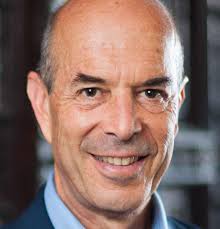
The CGD Podcast
Overcoming Myopia Before it Kills Us—Ian Goldin
00:17:29
It’s human nature to focus first on what’s immediately in front of us. That’s usually a good thing: it keeps us from tripping. But this tendency toward myopia also has huge risks, especially when it drives national and international...
Loading summary
Transcript28 lines
- [00:11]
A
Welcome to the Global Prosperity wonkast. I'm Lawrence MacDonald. My guest today is Ian Golden. He is the director of the Oxford Martin School at the University of Oxford. And one of their flagship projects is something we've been hearing about today, the Oxford Martin Commission for Future Generations. Ian, welcome to the show.
- [00:31]
B
Thank you very much, Lawrence.
- [00:33]
A
Ian, I've known you for a while. We work together at the World Bank. It's great to have you back here at the center for Global Development. And we had a breakfast this morning where you were telling our guests about the Oxford Martin School and the Oxford Martin Commission for Future Generations. And I said, please, please, please come join me on the Wonkast because I think my listeners are going to be keen to hear about it. Tell me first about the Oxford Martin School.
- [00:57]
B
So it's great to be at cgd. This is a startup in Oxford. We've been going about six years. It's a group of about 300 plus academics across 27 disciplines, from the frontiers of medicine and physical and life sciences to the humanities and social sciences, who come together in interdisciplinary teams to address the most pressing challenges of the 21st century. Ranging from questions like can we cure cancer? How do we overcome Alzheimer's, Parkinson's and dementia? To the big questions on new energy forms to get non carbon energy down way below the price of carbon, to better understand the impact of climate change, understand demographic change, to think about the big migrations that are likely to happen, and of course to address economic questions, not least the questions on how we're going to create more equity in societies and manage globalization more effectively. So we have a lot of ethicists, philosophers, economists, medics, physicists and others and we are doing incredibly exciting work.
- [02:05]
A
It sounds like it's the whole university, I mean, is this just you've got some money and you're, you know, say we've got 300 people, is basically the faculty at Oxford or are these people all around the world and they're new to Oxford and you've brought them in. What's the right. What would the Venn diagram look like of the Oxford University faculty and the Oxford Martin School?
- [02:27]
B
Well, we're relatively small in relation to the total faculty in Oxford, which is about 7,000. So we are the forward looking interdisciplinary part on research. So we bring people together in problem as opposed to discipline focused teams to address critical issues. We're very competitive. We accept about 10% of the applicants through competitive processes.
- [02:50]
A
The applicant pool is global or are there Oxford University professors you have to.
- [02:54]
B
End up in Oxford, but about 40% of the people we have weren't in Oxford when we started the process. So we fund people to be in Oxford, even if they're not originally there. But we only spend our money in Oxford. So this is an interdisciplinary team, partly because we want people to come together and to play off each other, to share ideas. We want them to be in the same location.
- [03:15]
A
So somebody in Durban or Los Angeles that put together a team could make a proposal, and provided they were willing to come to Oxford, they could get funded.
- [03:23]
B
If you chose them well, they'd need to put together a proposal in conjunction with people in Oxford. So we do have these teams primarily led by either professors in Oxford or people that will be appointed as professors in Oxford. So we create space. Yes, and then we have an international competition, and they can come from wherever they are in the world. But you need a platform to be able to get in through these competitive processes, which we run every three years or so.
- [03:49]
A
Tell me about Mr. Martin.
- [03:53]
B
Jim Martin is a visionary entrepreneur. He believes that humanity is at the crossroads, that this will either be our best century, because it's a century in which we will overcome poverty and disease, live good lives going forward, or could be our worst, because we find a whole new variety of ways, plus many of the old, in which we destroy. Much of the achievement over the past centuries, ranging from nuclear to climate change and many other things that we know about. And what he believes is that the outcome will depend on our ability to mobilize ideas, innovative ideas, to solve the problems, to harvest the opportunities and to transmit those ideas into the policy arena. So that's why he's given the money to Oxford, because he wants to change the world of ideas and he wants these ideas to be relevant. So we're bringing great minds together, working on the toughest issues, and, of course, connecting them to the policy world and the business world is absolutely crucial, too.
- [04:46]
A
I was very interested to see in reading his bio, for those who don't know, he's a leading thinker on information technology and computers, and it sounds from reading it, he's published, what, 46 books or something, that he actually made his money from ideas. One of the few people, I guess maybe you could say all big businesses ultimately are an idea, but in his case, his product is ideas and knowledge. Is that right?
- [05:09]
B
I think that is right. He's actually published more than 100 books. So he's one of the most prolific of the people alive today. And he has really made a lot of money, not only about writing, but Also talking business. He used to be in business, education in strategy, and that I think has been very successful too. But what's remarkable about him is his vision and his generosity. He's giving back to society and he's created this really unique in its breadth and depth. Group of leading scholars in Oxford, which I'm privileged to lead. And if I may turn to the Oxford Martin Commission.
- [05:46]
A
I was just going to ask you about the Oxford Martin Commission.
- [05:49]
B
What we're coming up with and whether it's on climate change or pandemics or cybersecurity or financial crisis, we live increasingly in a much more connected and integrated world. That's a remarkable opportunity. Our life expectancy and our opportunities are greater than ever in history. At the same time, there's a growing possibility of cascading crises and risks coming very much from the same force, from globalization and hyper connectivity. And so governments are becoming increasingly short term, they're becoming increasingly narrow focused at the national and the global level. And what we are very concerned about is there's no one there really to deal with the big looming global issues that we focus on in our work. And so what the commission is, is bringing together a group of wonderfully experienced former leaders of global institutions, a couple of Nobel Prize winners, really a fantastic combination of people chaired by Pascal Lamy, the outgoing head of the World Trade Organization, but including people like Amartya Sen, Nick Stern and Trichet and Michel Bachelet standing for the presidency of Chile. This sort of caliber of people who know the international system, who've thought a lot about how to reform it. And what we're aiming to do is to come up with some really practical ideas on how to unlock the gridlock in politics to make people able to think and act more on the long term. There's a huge amount of knowledge out there about what the issues are. The there's very little action. And what we're aiming to do is try and narrow that gap.
- [07:25]
A
How is this commission different from all other commissions? I mean, you have a very impressive roster. I think you certainly very clearly articulated the big problem, which is both the opportunities and the risks from globalization. The tendency of governments, firms, international institutions to focus on the near at hand problems, not the longer term problems. But why would you think that a commission is going to be able to do this? It seems like it may be embedded in human nature that we worry about the immediate and not the more distant things. And the larger our institutions, the worse they are at thinking forward.
- [08:00]
B
I think that's right. And it's an Absolutely fair question. What difference can we make? And it's a question we've asked ourselves. These are very busy people and they're devoting their time and energy to this. I think there's a sense of desperation, there's a sense of frustration amongst these people, many of who have run these big institutions themselves, who've been central to the resolution of crises, people like Bob Zoellick and Trichet, who run the European Central Bank. And the sense that this combination of people from very different countries and perspectives, we have the leading minister of economic reform from China, for example, as part of the group, can, through their experience and through their voice, through their ability to mobilize a person opinion nationally and globally, to hopefully communicate it in the media and elsewhere, can make a difference. We realize it's incremental. No one commission will change the world and there's no tipping point in this. But we think it's very important that we signal loud and clear that there's a problem, that the existing system is totally unfit for 21st century purpose. And unless there's rapid and urgent reform and citizens and governments get behind it, globalization could well unravel. Xenophobia, nationalism, protectionism, short termism could dominate. And the problems then will simmer and grow, be they climate change or pandemic risks or cyber risks or financial risks or others that come from this hyper connectivity will grow and cascade. So it's really out of a sense of the urgent need. It's a sense of the ability of this particular group of people to come unbiased because they're now released from their responsibilities of leading institutions to come unbiased from very wide perspectives and to contribute to debate and hopefully raise awareness through that. Our hope is that we can make some difference, even if that's modest. We would have done our job.
- [09:56]
A
One of the more interesting sets of questions at the breakfast this morning had to do with the receptivity or lack of receptivity to discussion of these issues in the United States. And people were asking whether the US is in some ways perhaps worse. So we have worse than other countries at this thing that no country is very good at, which is thinking further forward. And one of the aspects we didn't touch on is this, where people and societies draw the line between my own individual interests and the interests of the collective, the interests of the group. And in America, if you even say the interests of the collective, it somehow sounds bad because Americans draw that line of my individual interest in a very different place, I think, than Europeans. What are your thoughts about the role of the United States as a piece of the solution or an impediment to addressing these shared global challenges.
- [10:50]
B
Well, just briefly, there's definite conflict between self interest and collective outcomes. And one of the big problems we're dealing with is that economics has got us into the wrong place on this because it's taught us that basically the market signals and self interest will lead to collective good outcomes. We know increasingly externalities non price that are not priced in are having a big outcome, whether it's on the oceans, the atmosphere or in many, many other dimensions. And part of that is our society is prepared to take that on board. And clearly in climate in some other areas that's proving very difficult. In the USA. I think there's many, many wonderful things about the USA's potential and the freedom of ideas and communication that exists here and this real wellspring of font of ideas around these issues. There's a risk, I think of capture of politics and one of the growing inequality tendencies is that a small group of people are able increasingly to pay for a very large share of lobbying. And then there's a lot of politics flows from that or outcomes flow from that in terms of the regulatory and legislative processes. And I think that's something that's a great concern in the us, more so in Europe because of the role of lobbying. And the whole cost of being a congressperson or being part of the democratic process in the US is much greater than it is in most other democracies. So you need money and money talks in the US in a way doesn't elsewhere. And so when you have growing inequality, the wealthy have an increasing power over the way that this process thinks. So I think this is a fundamental question and it's also making it much more short term because the majority of citizens I think are not having their voice expressed over the long term issues. But that too of course, because it is such a democracy is coming subject to new citizens movements. We saw some very interesting signs around some of the big campaigns that have happened on the social media challenging some of this and I'm very hopeful that there can be more. One of the big puzzles in the us, it's the most scientifically literate in many respects of the global community. And yet citizens and science scientists haven't been very good in providing evidence base for choice. And I know CGD is very active in providing these sorts of transparency, indicators, indices and other means to help citizens form better choices. I hope we can be much more successful in that and that CGD can play a bigger role in this because that's the way you'll move the politics is when citizens are better informed.
- [13:31]
A
Final question. You've set yourself a very high bar. You've got a very impressive roster of commissioners on your commission. Small number of people actually putting words to paper, and I guess you're aiming to have a report out in September. Did I understand that correctly?
- [13:52]
B
Well, let's say the fall. We are. We have set ourselves extremely high bar and we've set ourselves a tight time limit. We're only going to produce a report if we feel that we've got something very interesting and new to say. We're not in it for its own sake. So we're working hard.
- [14:09]
A
I will be astonished if you don't produce a report. You said that today. And I thought, well, you can't bring these, the good and the great together and then say, well, thank you very much. We didn't think anything you said was worth.
- [14:19]
B
Yeah, I'm optimistic that we will be able to say something worthwhile. But we're looking for ideas and that's why we've been at CGD today to talk to the great people here about some of their ideas that we can filter in. So we're not starting this thing de novo. It's ambitious. I think it's very new in two respects. One is that it draws on this quite unique set of academics across the different disciplines from Oxford. So we are the engine room, as it were, of this, thinking about issues in new ways. And secondly, it brings together a group of incredibly experienced people. I'm not aware of any such group. And I would encourage your listeners to look at our website, the Oxford Martin School website, and to send us emails and engage if they have ideas of some of the things that we could put into this process.
- [15:06]
A
Well, Ian, thank you very much. We'll be watching with great interest. And I'm guessing perhaps you'll release some kind of a draft. Right. For sharing, or are you going to just wait?
- [15:17]
B
We're doing these consultative processes like we have been doing today, so we're not actually going to put anything to print out there. We're going to just talk before I think we publish a report.
- [15:26]
A
Terrific. Thank you very much. This has been the Global Prosperity Wonkcast from the center for Global Development. My guest today is Ian Golden. He is the director of the Oxford Martin School and we've been hearing about the Oxford Martin Commission for future generations. You can find the Wonkast online on itunes and on stitcher. Just search for wonkcast or CGD and subscribe to hear a new interview every week. And if you look online at the write up about today's interview, of course you'll find plenty of links to both the Commission and the Oxford Martin School at the University of Oxford. Until next time, I'm Lawrence MacDonald. Thanks for listening.
- [16:28]
B
Sam Sa.