
Podcast
The Chair
Hosted by Dr. Digby James Wren · EN
Geo-political Risk Analysis, Security Assessments, Economic Development Trends, Diplomacy and Public Diplomacy
theaseanchair.substack.com
theaseanchair.substack.com
10episodes
Episodes
Newest firstAll episodes
Pope Leo, Cameroon Convergence and BRICS+
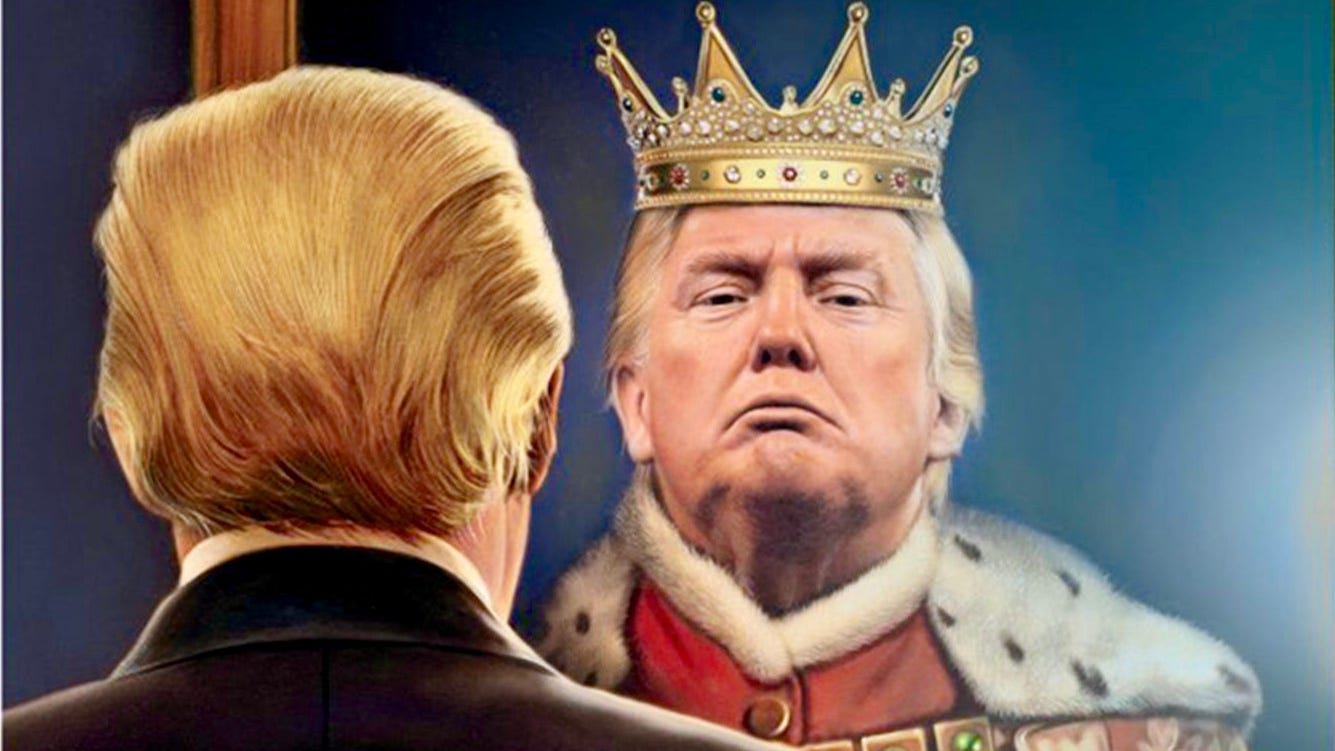
Apr 1900:48:40Tap to summarizeThe Roman Catholic geographies of the globe are vast. In Madrid, Pedro Sanchez called for the arrest of Benjamin Netanyahu. Rome’s message also echoed in the Hispanosphere and Lusosphere of Latin America, Mexico, Venezuela, Colombia, Brazil and Cuba. The twenty percent of US citizens who speak Spanish also overlap with the twenty percent who profess Catholicism.US president Trump has published images of himself as a divinity while US vice-president JD. Vance, a recent convert to Catholicism, has brazenly ‘clarified’ the Pope’s message for his followers. While the United States is transitioning from hegemony to imperium, the Donroe doctrine seeks dominion of the Western Hemisphere from the Arctic to the Antarctic.For almost all emerging economies of the Global South, the epicentres of global security and economic instability are in Washington and Jerusalem. For the Global Majority, implementation of American imperial design displays all the hallmarks of colonialism and late 19th century imperialism. President Trump’s imperial revivalism or “golden age’ is a repeat of past aggressions implemented via territorial expansion, resource acquisition, technological determinism, economic assaults and supply chain interruption.RELATED ARTICLES AND PODCASTS Get full access to The Chair at theaseanchair.substack.com/subscribe
Transcribe →
On Iran and the Role of Donald Trump
Mar 2300:30:07Tap to summarizeThe June 2025 and February 2026 attacks on Iran, first by Israel and then the United States of America, has confirmed the transformation of the US republic from unipolar hegemon into a neuralgic global tyrant. The Trump administration has completed the post 9/11 transformation of the US into a fiscal military state dedicated to the subordination of the Western hemisphere, Western Asia, Western Pacific, and beyond. Alarmingly, the so-called ‘West,’ under the banner ‘Coalition of the Willing,’ has directly supported the Trump administrations turn to global violence. This quote from US Secretary of War, Pete Hegseth, March 2026 illustrates the dangerous Hollywood movie script banality of US ambitions.“If you kill Americans, if you threaten Americans anywhere on Earth, we will hunt you down without apology and without hesitation and we will kill you”As the most profound source of aggression and instability in the world the US has not only exposed its state of heightened neuralgia, caused by the rise of China and the Global South, but also its inability to foster diplomatic solutions to global challenges through the global multilateral framework including the United Nations. The US withdrawal from international organisations is a calculated strategy to deflect global abhorrence inspired by its naked aggression and stated objective to regain global hegemony.After president Biden’s failed attempt to collapse the economy and government of Russia, the Trump administration embarked on a grand strategy of global energy domination via the weaponisation of direct and secondary sanctions and unconstitutional tariffs on both allies and adversaries alike and, destructive military interventions in Syria, Venezuela, and Iran. These economic and military attacks compound the regional instability caused by previous US/NATO campaigns against Libya, occupation of Iraq, attempted colour revolutions in the Caucuses and, dénouement of its proxy war in Ukraine.In its campaign to disarm and suborn Iran, the US has adopted Israels tactics of pre-emptive attacks and assassinations and thereby set a historic precedent for the deceptive use of diplomatic negotiations to cover military preparation, conduct capture and assassination operations against foreign leaders and officials, and to ensure Israeli hegemony, via military superiority underwritten by the US, over the region stretching from the Nile to the Euphrates, including Gaza, Lebanon, Syria, Yemen and now Iran.While questions remain over the ability of Iran to withstand the US/Israeli assaults and maintain national and social stability, the Iranian strategy is to use its advanced missile and drone capabilities to disrupt regional air and sea transport and global energy supply chains by attacking US military bases, closing the Strait of Hormuz and demonstrating its ability to attack oil and gas infrastructure. By overstretching the US’ ability to provide missile interceptors to all bases and regional allies, hold naval forces beyond airstrike distance, force evacuation of US military personnel and increase the economic, political, and social costs of a potential region-wide conflict, Iran seeks to inflict maximum financial, logistical and social damage upon the US and its allies.However, the predatory tactics and strategies of Israel and the US are accelerating not only the political fragmentation of West Asia, including Türkiye, and Europe, but also US domestic politics. While the EU, especially Germany and the UK, struggle to reindustrialise after the energy shock caused by their failed NATO campaign to topple Vladimir Putin, a second Iran energy shock is likely to further diminish the political, economic and social cohesion of ‘Western’ states, including France, Japan and, most importantly, the United States itself.The Trump administration faces serious economic challenges over and above the surge in energy, and precious and critical mineral prices caused by its cynical aggression toward Iran. With an already unsustainable national debt of $38 trillion, a declining dollar and treasury values, all-time highs in equities and probable financial bubbles in AI and semiconductor production, sticky inflation, falling living standards, continuing de-industrialisation, the fallout from the Epstein files, and strained relations with nearly all its neighbours and allies, the Trump administration has chosen to double down on territorial expansion, and/or controlling influence, in an attempt to balance its national accounts with resource acquisition and global supply chain control.Looking deeper, the Trump administration’s disengagement from Europe, imposition of the ‘Donroe Doctrine’ in the western hemisphere and aggression against Iran is not only the desire to dominate global energy and finance markets, but a tyrannical fervour to leverage its new territorial and resource acquisitions, or proxy control thereof, to weaken Russia before returning to its ultimate objective of undermining the security of East and Southeast Asia to contain China.For the BRICS+ and the Global South, a sustained campaign of de-Americanisation, including limiting US social media and software generally, cultural and religious activities and expulsion of activist NGO’s are as necessary as de-dollarisation and reduced purchases of US goods and services, disposal of US treasuries, and the imposition of carefully crafted sanctions and tariffs - designed to weaken the US military’s ability to operate and sustain expeditionary violence against sovereign states.Meanwhile, the very fabric of the post-WWII global order has effectively unravelled as the Trump administration attempts to sabotage the global transition to multipolarity, which it sees as the cause of its economic and diplomatic decline, by imposing a new form of global tyranny. Donald Trump’s foreign policy of naked aggression and disregard for sovereignty and international (and domestic) law is generating a wave of “global adversity,” that inadvertently creates the very conditions and motives for further US [Western] decline and Donald Trump’s own downfall - “sic semper tyrannis – thus always to tyrants”.NB: Dr. Digby James Wren is the Chair of BRCP Geopolitical Risk Advisors (Beijing, Melbourne, Paris, Phnom Penh), Visiting Professor at ICES, France, and publisher of Small State Diplomacy Substack. Get full access to The Chair at theaseanchair.substack.com/subscribe
Transcribe →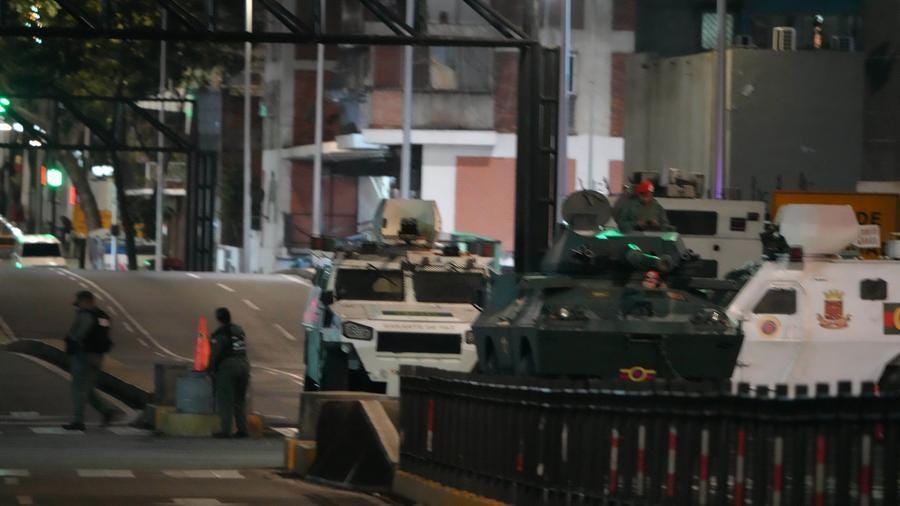
When power overrides law
Jan 1200:54:55Tap to summarizeFeatured contributor Professor Josef MahoneyThe U.S. forcible seizure of Venezuela’s President Maduro has sent shockwaves across the world. Is this abuse of unilateral power becoming a go-to tool for the United States? Are we witnessing the return of a “might makes right” logic in international affairs? And what kind of world order may emerge from this?Host Ge Anna is joined by Anna Rosario Malindog-Uy, Director and Vice President for External Affairs, Asian Century Philippines Strategic Studies Institute; Cao Ting, Director of the Center for Latin American Studies of Fudan University; and Josef Mahoney, Professor of Politics and International Relations at East China Normal University. Get full access to The Chair at theaseanchair.substack.com/subscribe
Transcribe →
U.S. “death line”
Jan 1000:54:56Tap to summarizeFeatured contributor Professor Josef Gregory MahoneyRecently, the term “U.S. death line” has been trending across Chinese social media. Originally a term from the gaming world, it’s now being used to describe the financial fragility haunting everyday Americans. Why are so many people in the U.S. just one crisis away from poverty? What does it tell us about the deep-seated institutional gaps in the country’s social safety net? Host Xu Yawen joins Prof. Li Lun, Assistant Professor of Economics at Peking University, and Prof. Josef Gregory Mahoney, Professor of Politics and International Relations at East China Normal University, for a chat. Get full access to The Chair at theaseanchair.substack.com/subscribe
Transcribe →
Melaka (Malacca) Strait Global Transport
Jul 29, 202500:23:21Tap to summarizeGet full access to The Chair at theaseanchair.substack.com/subscribe
Transcribe →
PAKISTAN INDIA RELATIONS - AN INTERVIEW WITH DR. YASIR MASOOD
May 9, 202500:26:01Tap to summarizeBy Dr. Digby James WrenIn the wake of the Pahalgam attack on April 22, 2025, which claimed 26 lives, India launched ‘Operation Sindoor’, a targeted military strike against alleged terrorist infrastructure in Pakistan-administered Kashmir and Pakistan itself. The operation, described by Indian officials as “focused and non-escalatory,” aimed at camps linked to groups such as Jaish-e-Mohammed and Lashkar-e-Taiba, notably in Bahawalpur and Mudrike. Pakistan condemned the strikes as aggression, reporting civilian casualties and retaliating by downing Indian aircraft. The incident underscores the perennial volatility of Kashmir, a region both nuclear-armed nations have contested since 1947. While the immediate conflict highlights Indo-Pakistani hostilities, it also intersects with India’s broader strategic imperatives—particularly its efforts to deepen ties with Central Asia, a region where geographic and political barriers, including Pakistan’s refusal to grant India land access, persistently challenge New Delhi’s ambitions. Get full access to The Chair at theaseanchair.substack.com/subscribe
Transcribe →
Partnerships, not pressure: what China offers where the West hesitates
Apr 22, 202500:55:00Tap to summarizePartnerships, not pressure: what China offers where the West hesitatesThree countries, one tour, and a clear message from Beijing- President Xi Jinping touched down in Vietnam, Malaysia, and Cambodia this week, marking one of his most strategic Southeast Asian tours in years. What's behind the charm offensive? While the U.S. is fueling global confusion and frustration with its tariff war, China and its Southeast Asian partners are trying to inject cooperation and stability into global growth. What does the whirlwind visit mean for China, Southeast Asia, and the world?Host Tu Yun joins Dr. Zha Daojiong, Professor of International Political Economy, School of International Studies, Peking University, Dr. Digby James Wren, External Relations Advisor, Royal Academy of Cambodia and Chair, Belt and Road Capital Partners, and Dr. Dylan Loh, Assistant Professor, Public Policy and Global Affairs Programme, Nanyang Technological University to decode the tour at the Chat Lounge.Key Quotes“I look at this as a consolidation of ASEAN and to do that, Malaysia, Cambodia and Vietnam are key countries to signal to the other members.” “It's more than just the infrastructure connection. You will have the connectivity in trade and investment.”“This meeting then comes in this context that has injected a new dynamic.”“The idea of the shared future and everywhere in Cambodia people know about this,they do talk about this.”“For Malaysia, what stood out to me was the agreement on using pay to satellites.”“Vietnam, I would think the most significant part is the reaffirmation of cross-border economic trade and investment linkages.”Guest SpeakersDr. Wren holds research degrees in both International Relations and Public Diplomacy and is a leading Sinologist and ASEAN geopolitical expert. He holds the Chair of Belt and Road Capital Partners, a geopolitical risk, investment and trade, and public diplomacy advisory firm. Dr. Wren is also the Publisher of Long Mekong Media, a leading resource for political and economic information across Asia and the Founder of the Young ASEAN Minds Education program.Prof. Zha Daojiong is a professor of international political economy in the School of International Studies, Peking University, where he also directs a Center on Transnational Issues and holds a professorship in the University’s Ocean Research Institute. He specialises in studying non-traditional security issues in China’s foreign relations, with a particular focus on energy, food, and trans-boundary water issues.His recent research interest has expanded to political risk management for Chinese investments overseas, which took him on field trips to Africa, Australia, and Southeast Asia. He serves on advisory boards of the China Chapter of Council for Security Cooperation in the Asia Pacific, Chinese Association for International Understanding, China-USA Friendship Association, and China-Myanmar Friendship Association.He has authored and edited six academic books, including Chinese Investment Overseas: case studies on environmental and social risks (Peking University Press, 2014), in addition to dozens of journal articles. He also served on guest research and teaching positions in Australia, Japan, the United States, Singapore and the Hong Kong Special Administrative region. He holds a Doctoral degree in political science from the University of Hawaii at Manoa and the East West Center.Dylan M.H Loh received his PhD in politics and international studies at Cambridge University. He was a Graduate Research Fellow at the Center of Rising Powers at Cambridge University from 2016 to 2018 and a Pre-Doctoral Fellow at the University of Copenhagen, Department of Political Science, from September 2018 - February 2019. His work has been published in journals such as Pacific Review, Journal of Chinese Political Science, Australian Journal of International Affairs, Cooperation and Conflict, Journal of Current Chinese Affairs, International Relations of Asia-Pacific and International Studies Review. His research interests include Chinese foreign policy, ASEAN regionalism, diplomacy and practice theory.Additionally, his commentaries and interviews have appeared in local and global media outlets such as Bloomberg, Channel 8, AFP, South China Morning Post, The Straits Times, 93.8 Live, Today, 联合早报, Berita Harian, The Nation and Global Times among others.https://radio.cgtn.com/podcast/news/5/Partnerships-not-pressure-what-China-offers-where-the-West-hesitates/2715404 Get full access to The Chair at theaseanchair.substack.com/subscribe
Transcribe →
Tariffs or Diplomacy: Will they divide the world?
Apr 18, 202500:01:51Tap to summarizeTariffs or Diplomacy: Will they divide the world?On April 9, 2025, a titanic 145% U.S. tariff on Chinese imports ignited Beijing's swift 125% retaliation. This move has created a cacophony of concerns. Featured contributor Dr. Yasir Masood engaged in a digital dialogue with Mike Billington, a renowned American geopolitical analyst, to unpack this high-stakes clash and its global fallout.Editor's note: CGTN's First Voice provides instant commentary on breaking stories. The column clarifies emerging issues and better defines the news agenda, offering a Chinese perspective on the latest global events.Yasir Masood: On April 9, 2025, a titanic 145 percent U.S. tariff on Chinese imports ignited Beijing's swift 125 percent retaliation. This move has created a cacophony of concerns across global markets, as U.S.-China tensions, once warmed by historic visits, now fray under hardline advisors and economic fears. With Europe eyeing Beijing and talk of cooperation fading, what's next?I engaged in a digital dialogue with Mike Billington, a renowned American geopolitical analyst, to unpack this high-stakes clash and its global fallout.Billington: I think the most important issue in terms of U.S.-China relations and these tariffs that were imposed and then partially withdrawn, except on China, is that we're dealing with a president, President Trump, who is surrounded by people who are rabidly anti-China. You have Peter Navarro as a top economic and trade advisor to Trump. Navarro is literally psychotic about China. Navarro also has been a leader in promoting these extreme tariffs and especially on China.But then you also have the Secretary of Defense, Pete Hegseth. This man is also virtually psychotic about China. Then you have Mike Waltz, who's the National Security Advisor. He was an aide to Dick Cheney, one of the most extreme neocons, so-called warmongers and he was the promoter when he was in the Congress of boycotting the Olympics in China in 2022. So, these are people who have no qualifications whatsoever on diplomacy, but are rabidly anti-China and unfortunately have a certain voice.Masood: Trump's first term kicked off with a rare thaw – visits with Xi, personal overtures and big promises. But Billington says that faded fast, driven by advisors with strong anti-China views – voices that sidelined diplomacy and favored confrontation over talks.Billington: Now, on the other side, you might remember that when President Donald Trump came in his first term, his initial response towards China was that he invited Xi Jinping to visit him in Mar-a-Lago and then he visited Beijing and spent a couple of days with Xi Jinping. Xi Jinping took him to the Forbidden City. He literally gave him a lesson on Chinese history and philosophy and Trump came back praising China and praising Xi Jinping as a great leader.Now, all of this is going on at the same time that the world financial system is on the brink of total collapse. There are now two quadrillion dollars – a quadrillion is a thousand trillion dollars – in gambling debts, what they call derivatives, which are sitting on top of the Western banking system, threatening to completely fall apart.And on top of this, Trump introduced these extremely high tariffs, not only on China, although that's the worst case, and he's removed most of the tariffs except for China. But is he going to continue them? It's not clear.The economic crisis in the West is evident, and these tariffs have properly frightened people around the world.Masood: Billington's perspective illuminates Europe's evolving role in response to Washington's isolationist measures. As U.S. policies marginalize longtime allies, European nations are decisively courting Beijing to forge stronger strategic ties. The overarching question remains: Will the U.S. shift toward cooperation, perhaps by embracing China's development model, as seen with the Belt and Road Initiative, or will its confrontational stance further destabilize the global order?Billington: I think even the Europeans are now trying to improve their relations with China and it's in part because they see that they're being targeted by the United States and they're probably going to lose the support of the United States as the bedrock of NATO and so forth.And I think the fact that most of the countries are willing to talk to the United States and to negotiate on what to do about these tariffs, that's probably, they have no choice. They really have to do that for the betterment of their people.Well, I think we have to be hopeful that Trump will recognize that we need to negotiate. He did say just the other day, I heard him say, just listening to him speaking at a news broadcast, that he recognizes that Xi Jinping is a brilliant person. And if he restores his earlier vision of U.S. and China cooperation and has respect for China's sovereignty, that's a first step to avoid the disaster.We have a model actually in China, which not only lifted 800 million of its population out of poverty and developed the most advanced technological country in the world, but then began to take these ideas of infrastructure and technology to the rest of the world through the Belt and Road. And the Belt and Road Initiative represents a model that the U.S. should join in order to put together a world based on a new architecture that addresses the economic and development needs and security needs of every single nation on earth.https://news.cgtn.com/news/2025-04-17/Tariffs-or-diplomacy-Will-they-divide-the-world--1CEaTKY1k9a/p.htmlWATCH the full version video Get full access to The Chair at theaseanchair.substack.com/subscribe
Transcribe →
Catastrophic Collapse
Apr 3, 202500:27:18Tap to summarizePresident Donald Trump’s second term in office has demonstrated his mastery of modern media, but also the weaknesses of being surrounded by ‘Yes’ men and women in his cabinet choices and administration generally.Moreover, his nostalgia for late 19th century American tariff regimes, the Monroe Doctrine and American Imperialism is based on the false assumption that such policies can work in a post-globalisation phase for the world economy. An overview of how the alley and partner hegemony of the US is and was financed and prosecuted also exposes the inherent flaws in late empire and the failure to understand the “cannibalisation effect.”Donald Trump’s aggressive “Art of the Deal” tariffs and sanctions are in effect a rampage against the boomerang effect of past US policies, which caused stagnation in it’s allies economies that were designed to keep allied economies subjugated to the dollar and American markets while weakening and exerting control over China, Russia and any other economy that did not ‘fall into line’. The net effect is that Cannibalisation of allies and partner economies has now generated stagnation in the US and that Trump’s questionable ‘corrective’ measures serve only to accelerate the decline of US economic, political, technological, military and diplomatic power.Meanwhile the incremental shocks to the US economy only further catalyse and, as a result, strengthen the economy of Russia and especially China. The ascent of China’s power, however, is not limited to external forces, but rather the internal dynamism led by deep traditions in political and social unity, unmatched organisation capabilities and the production of innovation at speed and scale matched with massive investments in infrastructure, education, health and technological advances applied to market at speed and scale.Is the US about to suffer catastrophic collapse? Watch the video and leave your comments below. Get full access to The Chair at theaseanchair.substack.com/subscribe
Transcribe →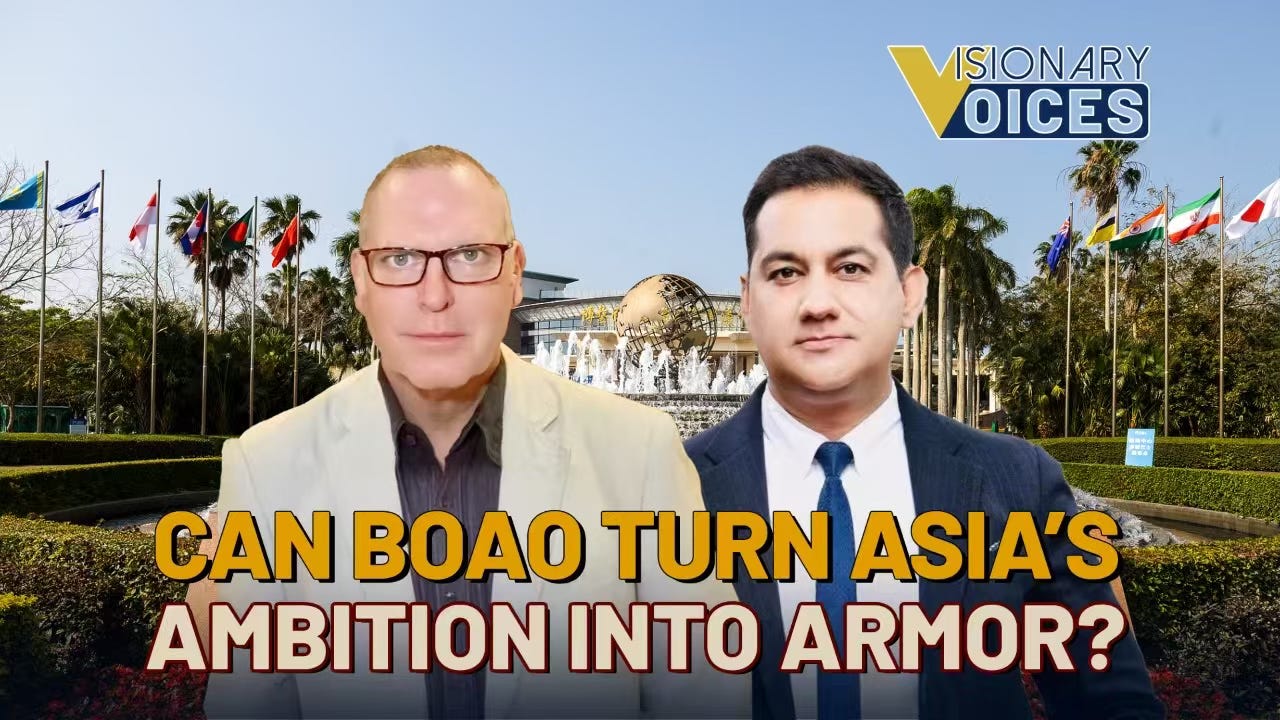
Can Boao Forum turn Asia's ambition into armour?
Mar 29, 202500:06:21Tap to summarizeBy Yasir Masood (CGTN)Editor's note: CGTN's First Voice provides instant commentary on breaking stories. The column clarifies emerging issues and better defines the news agenda, offering a Chinese perspective on the latest global events.Asia's push to lead in green and digital innovation faces fractured supply chains and geopolitical divides. Can ambition outpace division? The Boao Forum for Asia (BFA) Annual Conference 2025 tackles these challenges head-on, with Australian strategist Dr. Digby James Wren charting a path forward: turn dialogue into infrastructure, scale China's innovation engine and unlock financing for AI and green tech.With RCEP and ASEAN as anchors, Dr Wren advocates unified markets, seamless data flows, and grassroots partnerships. But in a world of tariffs and fragmentation, can multilateralism still prevail? Boao's answer: trust-driven progress, where talk becomes tomorrow. Next, Dr. Wren on bridging promises and progress.Translating policy discussions into economic impactDr. Wren: The Boao Forum is a really great platform for Asia, and (specifically for) Southeast Asia. Translating policy discussions like Boao into actionable initiatives is not necessarily an easy thing to do, but it drives economic impact.The things that are really important at the moment are turning dialogue into action is the key, and institutionalizing the follow-up mechanisms and working groups, converting ideas into blueprints, and developing permanent bodies.Scalability is another thing. I think that's very important, getting things done at speed and scale are really the hallmarks of China's innovation. The Boao Forum enables a platform to do that. So, I'd like to see more innovation models that can be applied to different countries, for example, to Pakistan, Cambodia, Malaysia, Indonesia and Vietnam.And mobilizing finance. I think finance is another area where there's not enough input, and it isn't easy to get the contacts you need at the right time for financing.And then probably the last one is prioritizing digital and green. And I think that's really key. China's leading in that area globally, and I'd like to see that being pushed or supported more strongly right across all of the partner countries in Asia. And then I suppose the last one would be stakeholder engagement.But progress demands more than ambition; it needs armor. From Cambodia's logistics bottlenecks to Indonesia's rail breakthroughs, Asia's supply chains are rewriting resilience. Dr. Wren cuts to the core: Strengthen access, unify systems, prioritise stability. Now, he tackles the trillion-dollar question: How do we futureproof growth in a fragmented world?Reciprocal tariffs and regional resilienceDr. Wren: Intermediate goods, especially Chinese intermediate goods, need clearer access to those new near shoring supply chains. That's important. Resilience of the supply chains is clearly going to have to be strengthened and prioritized. For example, some countries, like Cambodia, it is still very difficult. But there are some bright spots here, the Laos-China railway, Indonesia's railway from Jakarta to Bandung, that's an uplift.Geopolitical fragmentation is very problematic. That fragmentation is really caused by pressure that's being caused by mostly the United States and Europe. China is providing the greatest level of stability for Southeast Asia, for Central Asia, and right across Asia.Resilience is being built rail by rail, policy by policy. But as supply chains stabilize, a tougher test looms: Can Asia's economic alliances outpace geopolitical divides? Dr. Wren shifts focus to the rules of engagement: "Inclusive multilateralism isn't optional. It's survival." From RCEP's unifying power to battling digital Balkanisation, he charts a path where Huawei bridges ASEAN and where Boao becomes the ultimate toolkit. Dr. Wren unveils the strategy: How multilateral frameworks turn fractures into footholds.Navigating geopolitics and economic trajectoryDr. Wren: Inclusive multilateralism is the end way to go here. Boao needs to concentrate on the ones we do have, the networks that are already in place, like ASEAN and RCEP, that's perfect; in Central Asia, with the existing economic blocks; and also the regional ones with the partners in Africa and South America, to reduce fragmentation and create a more unified market. For example, ASEAN especially is a clear winner because it is the biggest trading partner for China.RCEP is also providing a positive magnetic force, which is good for Australians, New Zealanders, Japanese and South Koreans.Companies in China, like Huawei, Xiaomi and others, can all be involved in better governance, I think, communication governance and data-sharing governance. That needs to be looked at fairly closely.We don't want the Balkanization of all these ASEAN countries just because they don't want to connect to their storage systems. We need a toolkit for that, I suppose. Boao would be a very good way to set up a toolkit for doing that.Asia's future hinges on three pillars: speed, scale, and solidarity. From the Laos-China railway to RCEP's game-changing sway, Dr. Wren's playbook is clear: Turn debate into bridges. Turn friction into frameworks. Turn divisions into drive. This isn't about trade spats. It's about rewriting the rules. From Huawei's digital leaps to grassroots grit, Boao is Asia's ultimate toolkit. The race isn't against rivals. It's against the clock. And the finish line? A world where shared futures aren't just debated. They're built.https://news.cgtn.com/news/2025-03-27/Can-Boao-Forum-turn-Asia-s-ambition-into-armor--1C5hnvrF89G/p.html5G-Advanced: The Backbone of the AI RevolutionBy Dr. Digby James WrenThe convergence of artificial intelligence (AI) and 5G-Advanced (5G-A) networks marks a pivotal shift in technological capability, reshaping industries, governance, and daily life. As Yang Chaobin of Huawei emphasised at the recently concluded 2025 World Mobile Congress (WMC) in Barcelona Spain, “5G-A is not merely an upgrade—it is the foundation for unlocking AI’s full capabilities.” With over 60 telecom operators globally deploying 5G-A, its role in powering AI-driven solutions—from smart factories to telemedicine—positions it as the critical infrastructure for a globally interconnected future.The technical foundations of 5G-A, colloquially termed “5.5G,” build on 5G, but with three transformative enhancements: Ultra-High Uplink Speeds (up to 10 Gbps), essential for data-intensive applications like industrial sensors and real-time drone feeds; Near-Zero Latency (Network Slicing, which allocates dedicated bandwidth for specific AI tasks to ensure reliability. These three core advancements address inefficiencies in latency-sensitive environments, allowing AI systems to operate at peak efficacy.For example, AI-driven robotic arms in manufacturing require millisecond-level adjustments based on sensor feedback—a feat unachievable with traditional networks. Huawei’s collaboration with manufacturers reduced production errors by 30% using 5G-A-enabled systems. Similarly, autonomous drones, such as those deployed by JD Logistics in China, leverage 5G-A’s low latency and high uplink speeds to process LiDAR data in real time, slashing delivery times by 50%.Huawei’s AI-Centric Network Solution, presented at WMC 2025, focuses on three pillars of the AI driven economy: All-Domain Connectivity which ensure universal ultra-high speeds for AI applications; Predictive Operations that drive AI managed maintenance initiatives to reduces downtime by 60%; and, Experience Monetization allowing online services like gaming companies and education providers to offer tiered services such as premium latency for students and gamers.In gaming crazy South Korea, 5G-A connected AI systems in homes adjust energy use based on occupancy, saving families an estimated US$600 annually. Adidas is using AI-driven 5G-A systems to add customisation at scale and produce personalised sneakers in 48 hours (vs. 2 weeks), enabling it to capture a US$2 billion niche market. And, in customer engagement, Augmented Reality shopping, such as L’Oréal’s 5G-A-powered AR app, lets users “try on” makeup virtually, boosting online sales by 35%,through virtual makeup trials. Additionally, wearable devices like Huawei’s 5G-A-enabled watches can detect irregular heartbeats with astounding accuracy, alerting users to seek care before emergencies.Economic growth and business innovation rely on improved education outcomes. Education equity and personalised learning are being transformed by AI technologies. In Kenya, AI tutors on 5G-A networks adapt lessons to student needs, boosting literacy rates by 25%. In Mongolia, Huawei’s VR-enabled classrooms connect students to global institutions, bridging geographic divides.The transformation in smart manufacturing and autonomous systems are increasingly powered by the deterministic performance of 5G-A. Siemens’ predictive maintenance tools, integrated with 5G-A, reduced downtime by 60% at its Munich plant, saving €200 million annually. In logistics, Maersk’s AI platform on 5G-A predicts shipping delays with 95% accuracy, saving US$3 billion annually, while Amazon...
Transcribe →