Loading summary
Transcript47 lines
- [00:00]
Andrew Colvitt
Hey, everybody. Andrew Colvitt in for Charlie Kirk and the Charlie Kirk show team. Charlie's out today, so I'm anchoring alongside Blake Neff. We have a really robust discussion about auto pen. Is it real? Should we pursue it? Are the pardons of President Biden Nolan void so much more? We don't know the question, but it's a fascinating discussion. Then we bring in Josh Hammer who is the author of a new book, Israel and Civilization. We dive into some of the sticks, stickiest, hardest to understand issues of Israel and you're going to get educated in this interview. Josh knows this topic inside and out. Great guest, great conversation. Please consider joining members.charlie kirk.com that's members.charliekirk.com your one stop shop for being on the inside of the show, being on on the inside of the team, joining our live calls, live events, all the things. You get it that more. Please consider joining members.charliekirk.com Buckle up, here we go.
- [00:57]
Blake Neff
Charlie, what you've done is incredible here.
- [00:59]
Charlie Kirk
Maybe Charlie Kirk is on the college campus.
- [01:01]
Andrew Colvitt
I want you to know we are.
- [01:02]
Charlie Kirk
Lucky to have Charlie Kirk. Charlie Kirk's running the White House, folks.
- [01:07]
Donald Trump
I want to thank Charlie. He's an incredible guy. His spirit, his love of this country. He's done an amazing job building one of the most powerful youth organizations ever created, Turning Point usa.
- [01:18]
Blake Neff
We will not embrace the ideas that have destroyed countries, destroyed lives, and, and we are going to fight for freedom on campuses across the country. That's why we are here. Noble Gold Investments is the official gold sponsor of the Charlie Kirk Show, a company that specializes in gold IRAs and physical delivery of precious metals. Learn how you could protect your wealth with Noble gold investments@noblegold investments.com that is noblegoldinvestments.com it's where I buy all of my gold. Go to noblegoldinvestments.com.
- [01:55]
Andrew Colvitt
Andrew Colvett in for the one and only Charlie Kirk who is out. He's a little under the weather, but I'm being told he's on the mend. Is myself who I'm always honored to be with all of you and Blake Neff who's in studio. Blake. On my list are egg prices, Houthis and terrace reciprocal. So those are things I want to get to you pick which one of those or maybe surprise you with another one.
- [02:21]
Josh Hammer
I mean, should we talk about the, the Biden auto pen thing? We've, we've totally not talked about it.
- [02:26]
Andrew Colvitt
But okay, we could talk. We could talk about the Biden auto pen thing I'm sure we've got a clip of this. You know, Blake, why don't you set the stage and I'll see, I'll see if we can get the, get the right clip here.
- [02:36]
Charlie Kirk
Yeah.
- [02:37]
Josh Hammer
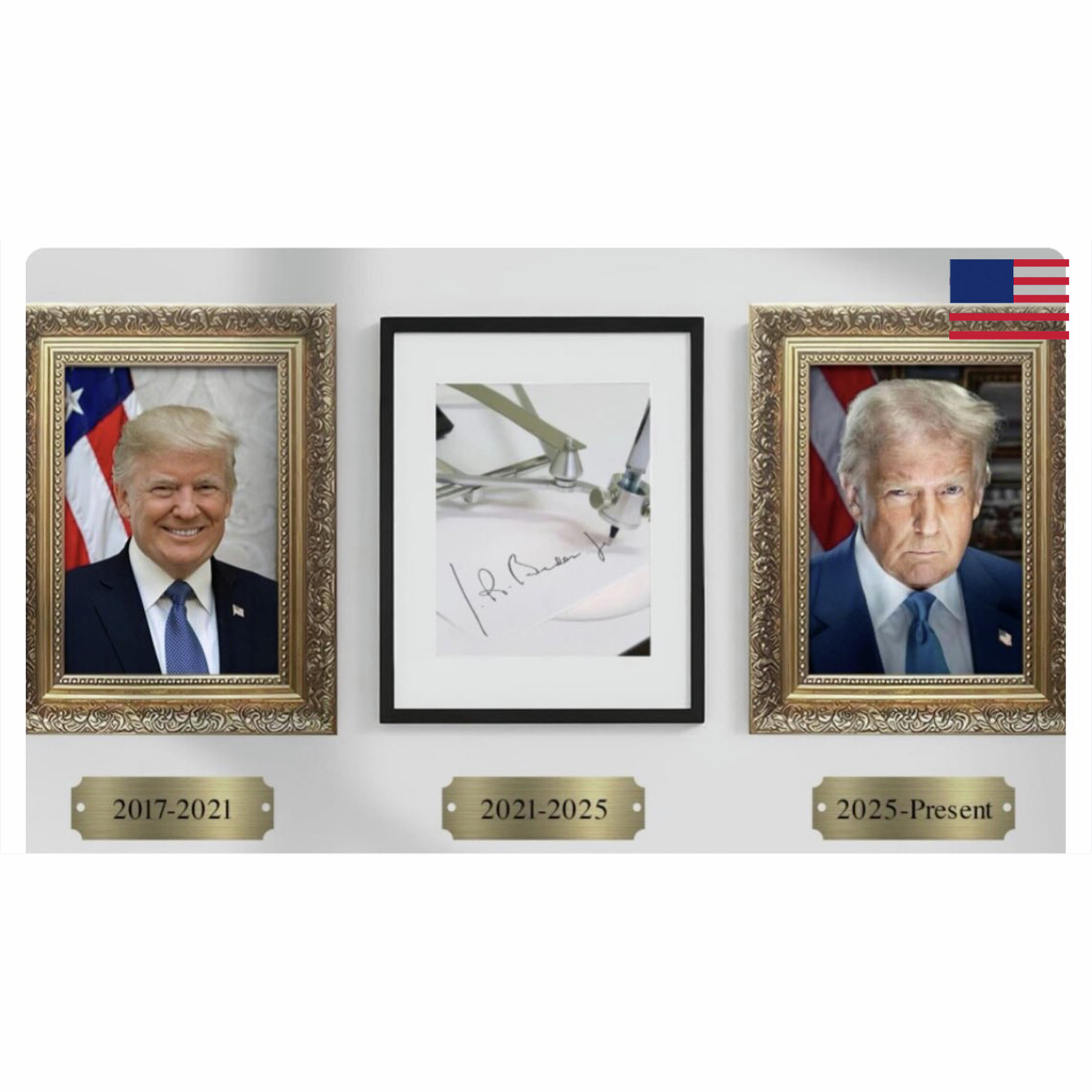
So this, so this dropped last night, I think after midnight Eastern time. So this has been building up for a few weeks. You know, people on, you know, in the right wing media have been talking about this, but I think it was something linked with Heritage. Did a review of Biden's executive orders or his pardons, and they noticed all of the signatures are completely identical. He clearly signed them with an auto pen. And the follow up, you know, thought some people have had, is Biden is signing all of these with an auto pen because he's totally out of it. So people are actually just signing things in Biden's name while he's not aware of it. And this led some people to follow up by saying then if Biden wasn't aware this was happening, it's invalid. And I didn't give too much thought to it. But one person who did is President Trump who last night came out and said he's declaring Biden's pardons to be null and void on the grounds of auto pen. And as a result, for example, he suggested he could investigate the people on the January 6th committee. My personal guess is this won't legally hold up because there are constitutional mechanisms for a president who is incapable. Like you can invoke, I think it's the 25th Amendment, and, and you can say, well, he's incapable, so the vice president is assuming the power of acting president, or, you know, the cabinet is going, is to declare this and Congress can also act, you know, through, they have, they have the power of impeachment, for that matter. So if the cabinet and the vice president are basically colluding to say the president is fine, I don't think there's a lot of room for, you know, the next president to come in and say, actually he wasn't fine and it's null. Also, Biden's still around. He, he clearly, even though he's in bad decay, he's still capable of speaking. He did deliver a farewell address. I imagine he could show up in any court and say, yeah, I approved all of these things. They weren't exactly done in secret, but it'll be certainly another, you know, showdown for the courts to litigate. And like I said, I'm, I'm kind of glad if we're going to have a big showdown with the courts that we're having it over the Trende Aragua thing rather than this.
- [04:53]
Andrew Colvitt
Yeah, I tend to, I tend to agree with you. I mean, I know that the MAGA base is excited about this auto pen thing because, you know, who's on that list? It's Adam Schiff, it's Adam Kinzinger. Two of the worst Adams ever, by the way. Can we just all agree that? It's Dr. Anthony Foushee, it's Hunter Biden. But I think to your point, I mean, it's not like Joe Biden is, you know, is passed on or something, you know, or incoherent at this point. He can simply say, listen, this was my will. You know, I wanted these pardons to be executed. And, you know, I tend to agree with you that looking forward, I get the desire of the base to make, to go after these people, to simply say, there is no pardon available. We're going to take these people out. Well, deservingly, but I think it's shaky legal grounds. I just want to set everybody's expectations. It's not that I don't understand where people are coming from and the inherent excitement about this. And it is disrespectful. I think Trump had a clip here where he basically said, you know, this is disrespectful to the office, first of all, and I totally agree with that, the fact that the President of the United States didn't take the time to actually sign the legal documents, the binding documents of this country and was using auto pen is massively disgraceful and disrespectful to the office. Beyond that, I don't know. You know, I don't know if it, if it's on steady legal footing. Let's go ahead and play cut 79. This is Trump talking about it.
- [06:27]
Donald Trump
We have thousands of murderers. That Biden and his incompetency. First of all, he's grossly incompetent. But that Biden and his people and his probably auto pen. It looked like we had an auto pen for a president and we would have been better off if we had probably. It looks to me like, you know, that's a big subject. I'm sure you won't ask about that, but the whole subject of autopen, did he know what he was doing? Did he authorize it? Or is this somebody in an office, maybe a radical left lunatic, just signing whatever that person was? That's not what it's all about. I never use it. I mean, we may use it as an example to send some young person a Letter, because it's nice. You know, we get thousands and thousands of letters, letters of support for young people, for people that aren't feeling well, etc. But to sign pardons and all of the things that he signed with an auto pen is disgraceful.
- [07:27]
Andrew Colvitt
Yeah. And, you know, he's basically saying they're null and void. And Trump then later goes on to say, it's not my decision. That would be up to the court, but I would say that they're null and void because I'm sure Biden didn't have any idea what was taking place. You know, with so much, so many battles on the horizon, I tend to agree with you that it's probably not the number, the number one fight that I would pick right now, Blake.
- [07:52]
Josh Hammer
Yeah, exactly.
- [07:53]
Andrew Colvitt
It's.
- [07:53]
Josh Hammer
It's understandable. We lived, you know, the Biden administration was awful. We all hated it. There's a lot of grievances against it, and there's a lot of bitterness over it was very ugly. He went and he just pardoned his son in a flagrantly corrupt manner to make sure he couldn't be held accountable for stuff that we basically all know he did that was incredibly corrupt and criminal. And that that stinks. But I think this is kind of grasping at something that we wouldn't, that wouldn't ultimately be productive. The best revenge is to govern well. And we're not. Any time we spend on basically trying to, like, re litigate the January 6th committee when we already won the election, we already pardoned the people who were persecuted by that committee. The need to, like, go all the way and like, oh, no, it's not over until Liz Cheney is a defendant in court on, like, a criminal charge. No, that's not. That has way more potential to go wrong than it has potential to go right. And it's just better to make, make Liz Cheney angry because we haven't started a war for four years. Make Liz Cheney angry because we disassembled the, you know, the intelligence, espionage, domestic, domestic surveillance state. Let me make him mad for that reason.
- [09:12]
Andrew Colvitt
Let me counter it with just one, one thought here, though. And to the base's credit, I, you know, I don't think it is about revenge. I think it's about accountability on some level. And I think this comes from a good place with the base. I, maybe this is a rabbit trail that gets us distracted. But, you know, Trump has proved that he can, you know, to use the leftist favorite expression, walk and chew gum at the same time. Let's just go, after all of this at the same time, like added to the mix, you know, because the fact that we were forced to endure this charade of a presidency where he was obviously in cognitive decline. He had sundowner syndrome, that's my theory, that he was basically good between a, like a very narrow window after a certain time. We saw this in the debate which ultimately led to the downfall of his candidacy to run for a second term. You know, it's, it's like we have to restore law and order. We have to restore a sense of dignity in the office of the office of the presidency. It's, we have to, you know, the legitimacy of a, of a cognitive in charge executive. And so I understand the desire to like, look back and say, hey, these things weren't right. And if we don't address them and we sweep them under the rug, that's not good either. So I agree with you. Is it my favorite fight? No. But I understand why he wants to pick it and I understand why people are excited about it because there was so much injustice done and perpetrated against the American people and so much of it is still very offensive to them and very offensive to me. And so I understand it.
- [10:45]
Blake Neff
If pain is affecting your life, make 2025 the year of feeling good again. The year of moving better, sleeping better, feeling more alive. And do it with Relief Factor. Relief Factor is a daily supplement that fights pain naturally. It doesn't just mask pain. Temporarily helps reduce or even eliminate it. Over a million people have turned to Relief Factor. Feel the difference it can make in your Life. Give their three week quick start a try. It's only $19.95, less than a dollar a day and just takes a phone call. Call 1-800-For relief. That is 1-800-For relief. Remember, every day you feel better is a day you live better. So wherever you're hurting back, neck, joints or muscles, make 2025 the year of feeling good again. Try Relief Factor right now. That is 1-800-for relief. 1,800-for relief.
- [11:33]
Andrew Colvitt
I'm joined now by Josh Hammer, who is the senior editor at large at Newsweek, host of the Josh Hammer show, and also author of the new book Israel and Civilization. Josh, welcome to the show. Congratulations on your new book. As somebody who's been in and around books, I've not written one myself, but been in and around them and helped Charlie with his books, launching them. It is no small task. And so congratulations. It's, it's just an accomplishment to get it done. Second of all, to have one of such import with Your book on Israel, which is at the top of a lot of people's minds these days, obviously. So congratulations my friend and welcome to the show.
- [12:13]
Charlie Kirk
Andrew. I really appreciate that. It is, it is a lot of work. It's kind of thing that I, that I said I wanted to do for years. It took me a lot of time to finally kind of get my butt and start moving towards the finish line there. But once it started, it was kind of just free flowing. It was a lot of fun to write this book. And you know, God willing, Andrew, it's gonna, it's gonna be successful. It's actually number three on, on Amazon.com right now for literally all the books. So it's off to a very strong start actually. So we'll see where it is at this time next week or so. But we're off to a great start.
- [12:41]
Andrew Colvitt
Well, congrats. That's fantastic, Josh. So Israel and civilization, the fate of the Jewish nation and the destiny of the West. I see what you did there, Josh, and I actually happen to agree with that. Now I am not Jewish. I am a proud American, First American, red blooded, homegrown. This is my country. I love Israel. And so I wanted to talk to you about this today because I think it brings up a lot of questions about what role does Israel play in our full foreign policy. If you are not Jewish, how should you think about Israel? It has become dramatically more controversial post October 7th, which I find somewhat appalling actually, but I think there's, there's valid questions to bring up. But in that subhead, specifically, Josh, you tie the fate of the Jewish nation Israel to the destiny of the West. Why do you tie those two together? What is the thesis statement there?
- [13:36]
Charlie Kirk
All right, so let me, let me take the foreign policy part first and then we'll kind of go back to the latter part there. So, so the foreign policy parts. And I'm really happy that we're talking here on this show because Charlie's amazing audience is exactly who I want to understand this message here. We're talking about foreign policy realism. I like you, Andrew. I'm a maga, America first foreign policy realist. I have been criticizing neoconservatives for longer than I think most people have even known what the word neoconservative means here. I am a genuine national interest foreign policy realist who views every single foreign policy issue around the world through essentially fairly singular lens as to whether or not involvement in this fear redounds to the American national interest. I actually have an entire chapter in this book, making the MAGA America first foreign Policy Realist case for close knit US Israel relations. Frankly, it's not a particularly difficult case to make because Donald Trump literally did it over the entire course of his first term. His entire first term was just a one grand extensive example. As to the realist MAGA America first case for US Israel relations, the basic case, Andrew, looks something like this. If you're an America first person, if you think that America has dwindling resources on the national stage there, then you have to understand that our number one threat, this entry actually comes from China. That should be fairly clear. America's civilizational challenge in the 21st century comes from the Chinese Communist Party. And accordingly, we absolutely do have to reprioritize resources towards the Indo Pacific. The relevant question, Andrew, is how do we do that while simultaneously safeguarding our interests in the region? You saw Donald Trump just this weekend actually in this lengthy post on Truth Social talk about for instance, the importance of the Red Sea, which is a core international waterway here. And he says that America should start bombing the crap basically out of the Houthis there. I'm happy he's doing that. But the point is that America's always gonna have various interests in this particular part of the world when it comes to oil and natural gas, when it comes to radical Islamic Jihad. We just saw the Bourbon street massacre on Trag on New Year's Day just two and a half months ago or so. The question then, the question, Andrew, is how can we make sure that America's interests are secured in the Middle east while simultaneously allowing us to ourselves prioritize on the Indo Pacific? And the solution is to embolden our like minded allies in the region to patrol this region essentially on our behalf. That was the whole purpose of the Abraham Accords. That's why I mentioned the Trump foreign policy from the first term. This idea that you will embolden Israel, that you will strengthen US Israel ties, bring Israel into these peace accords, within that case the uae, Bahrain, Morocco and Sudan, and then essentially pass them the baton and say, okay, you know, you guys do your thing because your enemies are our enemies there. When you're knocking off this jihadist or that jihadist, you're basically doing both of us a favor there. And last year there were actually some very important concrete examples of this. This is actually in chapter six of my book there. So for instance, there were a few months, Andrew, last year where Israel kind of went on this Michael Corleone kind of Godfather esque revenge killing spree and among the leading jihadists that they killed there, they basically took off the entirety of the Hezbollah leadership up to and including Hassan Nasrallah, the longstanding leader itself. But before they got Nasrallah, they knocked off two individuals who I'd like to mention. One guy named Fouad Shakur, the other named Ibrahim Akil. Why do I mention these two guys by name? They were the ones who were responsible for the 1983 Beirut, Lebanon bombings of the U.S. marine barracks and the U.S. embassy. In fact, the U.S. state Department had a five and seven million dollars bounty on those two jihadi's head for over four decades until Israel literally did the job for us there. So this notion that America does not in any way benefit here, this notion that we don't have the same enemies, it's ludicrous. We have exactly the same enemies there. And this is frankly a realist way to focus our resources on the Far east while essentially securing our interests in the region. So it's a perfect fit for a foreign policy realism. This notion that Israel is kind of this antiquated Bush administration neoconservative issue. It's total nonsense, frankly. Actually a lot of the neocons aren't actually even particularly stalwart supporters of the State of Israel there because they're obsessed with the idea of nation building, they're obsessed with the idea of trying to democratize, and they oftentimes get too involved in trying to carve out a brand new Palestinian Arab states and all the same failed experiments that ultimately met their ruination in Baghdad, Iraq and so forth there. So it's actually the neoconservatives, frankly, who are oftentimes not great supporters there. I happen to think that US Israel relations are a perfect fit for a foreign policy realist maga, America first paradigm approach there. But the broader book, and part of my filibuster there, but the broader book, Andrew, is making this fundamental case that Jews and Christians also have to be lockstep, arms to arms, linking arms, shoulder to shoulder. Here we say the Western civilization is at a crossroads, we're at an inflection point. And I totally agree with that. But I'm also a lawyer, Andrew, and I like to define terms. What is the West? Well, I mean, you know, we kind of sort of know, you know, it's Jerusalem, it's Athens there. But to me, when we say the west, we're really talking above all about the Bible, we're talking above all about the Judeo Christian heritage. I argue going back all the way to God's Revelation to Moses and the Israelites at Mount Sinai. So much of what we take for granted today in our constitutional structure, in our day to day lives and our law and our morals and our ethics there. It all goes back actually to what we Jews call the Torah, what Christians call the Old Testament. So much of it is in there, there. And I really painstakingly kind of explain this in the chapters all throughout there. But the point Andrew, is that unless we in the West, Jews and Christians, shoulder to shoulder linking arms in lockstep accord here, unless we double down on our biblical heritage, I do not think that we are going to be adequately equipped to push back against the three hegemonic forces that seek to destroy us, which I identify as wokeism, Islamism and global neoliberalism. You have to stand for something. Values neutrality is never an option. You want to defeat the wokes, defeat the radicalism, you got to stand on that. That's something, Andrew. That something is the.
- [19:47]
Andrew Colvitt
Josh, I actually think one of the strongest points that you can make in defense of your thesis is the approach that President Trump took to the Middle east and specifically to Israel in his first term. And what we saw from that is that we had an outbreak of peace for once in that region and it quickly fell apart without strong American leadership. But I think when America waffles on Israel, we embolden Israel's enemies, which are also our enemies. And that is one of the strongest sort of practical foreign policy positions that you can assert in this space without making it about some abstract, you know, moral good this way. But it really comes down to the fact that peace is good for the economy, right? It's good for oil prices. It's good. You know, we look, we talk about the Houthis right now There's a great clip from Marco Rubio that I actually going to play where he's just talking about the importance of that trade lane which is super important to American interest. Let's go ahead and play that. Cut 75.
- [20:46]
Marco Rubio
Well, first of all the problem here is that this is a very important shipping lane. And in the last year and a half, the last 18 months, the Houthis have struck or attacked 174 naval vessels of the United States, attacking the U.S. navy directly 174 times and 145 times they've attacked commercial shipping. So we basically have a band of pirates, you know, with guided precision anti ship weaponry and acting a toll system in one of the most important shipping lanes in the world. That's just not sustainable. We are not going to have these people controlling which ships can go through and which ones cannot. And so your question is, how long will this, will this go on? It will go on until they no longer have the capability to do that.
- [21:25]
Andrew Colvitt
And, Josh, this is an example of the moral clarity of the Trump administration, by contrast of this waffling of Joe Biden. Joe Biden did support Israel, but it was sort of, it was mixed signals. We were funding Hamas at the same time, and we were emboldening Iran and the enemies of the West. And this is the last point I'll make, and then I'm going to throw back to you, is that if you are an American who is frustrated with our support of Israel, never forget that the same Islamist forces that want to destroy Israel want to also destroy America. They want to destroy the West. They want to conquer us. They want to subdue us, they want to subjugate us. And they will do it over the long term. They'll do it by slowly coming in and then demanding more rights, having more children. You're seeing this in certain neighborhoods of the United Kingdom, all over, all over Europe. So whether or not you even buy into these larger civilizational arguments, if you just simply understand that radical Islamism is out to get the west and to subdue all of us, not just Israel, I think that's another piece that is important to realize when you talk about foreign policy realism. One minute. Josh, your reaction?
- [22:39]
Charlie Kirk
Yeah, look, I, I'll give you just one example that really kind of drives this point home. So I was giving a Talk in Washington, D.C. this past summer to a generally younger audience. I kind of noticed this guy who was dressed, dressed a little funny, standing in the back, who was like, you know, very vigorously nodding along to what I had to say. So he approaches me afterwards. He's from Iran. He grew up in Tehran there. And he told me that growing up in his K through 12, in his education there, their equivalent of saying the Pledge of Allegiance every day, like, like we in the United States do. Their equivalent to Iran is they basically say, I solemnly vow to do all that I can to help destroy the little Satan of Israel and the great Satan of America. Like that they actually believe this stuff. I mean, like, when I remember.
- [23:22]
Andrew Colvitt
Yeah, go ahead.
- [23:23]
Charlie Kirk
No, I'm just saying, I mean, like, they actually, genuinely believe this stuff. I mean, they really are out to get all of us. Hamas, Houthis, Hezbollah. They're not hiding it, Andrew, at all.
- [23:32]
Andrew Colvitt
No, I totally agree.
- [23:35]
Blake Neff
We see it all the time. When I visit college campuses, young adults demonize the concept of free markets and think government is the solution to every problem. How do we change this? By teaching our kids the foundational principles to counter what they are taught in public school. Parents want to teach their children about liberty, limited government and free markets, but often wonder, where do I start? That's where Tuttle twins can help. They empower parents by providing quality resources that break down these ideas in a way children can understand. Take their book. The Tuttle twins learn about the law in this story. The twins learn about their rights, that true laws protect people and that we should help others, and that stealing is always wrong. Children can only change the world for the better if they learn these important principles. Now go to tuttletwins.com Charlie today and purchase their 14 book children's series for your family. They'll learn to think for themselves. To stand for Liberty. Go to TuttleTwins.com Charlie today TuttleTwins.com Charlie.
- [24:37]
Andrew Colvitt
Josh this is a question that perplexes a lot of Americans and actually kind of frustrates the whole Israel discussion. Jews in Israel are actually pretty pro Trump, especially the more religious ones. Jews as a country are pretty favorable towards America, but Jews in America tend to vote left still. Are we seeing movement on that front? Are we seeing Jews in America get behind maga, get behind conservatives, get behind President Trump more? Are we still stuck in like 70, 30 or whatever it was? You know, it's been historically stuck at this overwhelming majority for Democrats.
- [25:15]
Charlie Kirk
Great question and lots of unpacking that, actually. So you're totally right. If you look at foreign countries, approval ratings of the United States, the state of Israel, Israelis as a whole have an extraordinarily high approval rating of the United States, certainly of President Trump. President Trump, as you can imagine, because he's so pro Israel, is a wildly, wildly popular figure in Israel. They, they literally named a town after him, Andrew, called Trump Heights in the Golan Heights. I know because I've been there, because I've literally driven by and took a, took a photo of it Just, just for the memories there. He, he's an extraordinarily popular figure there. Here in the United States, it's, it's complicated for a few reasons. There, there is, I guess I'll explain it this way. The problem, Andrew, you know, you're a Christian. Politics is very often downstream of religion, okay. And when you have a strong biblically based worldview, you're more likely than not going to end up with it with a conservative political worldview. That is why Evangelical Christians, Traditionalist Catholics, Orthodox Jews. I mean Orthodox Jews vote for Trump at like an 80, 20, 85, 15 rate. I mean so called ultra orthodox Jews aka do, it's literally like 95 to 5. I mean it's, it's beyond overwhelming margins.
- [26:34]
Andrew Colvitt
They vote in blocks too. They tell each other what they're going to, how to vote. I mean it's, you see this in neighborhoods in New York and I, I, I, I, I'm jealous of it. I, I, I love the, I love the unanimity of it. Continue.
- [26:48]
Charlie Kirk
I mean, yeah, I, I mean I, I, I'm, I'm religious, I go to Orthodox services there. The notion that you would find essentially anyone here where I go to synagogue in South Florida, you, you'll be hard pressed to find virtually anyone who voted for Kamala Harris. It's totally not a thing. Honestly. The problem is that demographically across the United States there, tragically, tragically most Jews, the statistical majority of them are not Orthodox, are not religious there, do not observe all the various commandments of Jewish law there. And it's because of the secularization of large swaths of American Jewry of the American Jewish people. That is why so many of them vote for left. So one of the audiences for my book, Andrew, I mean I have a lot of audiences here. I really want to reach young Christians. I want Christians to fall in love with the Bible, with, with the Old Testament again with everything from, from Genesis through, through Psalms and Proverbs and all that there, all that's in there, there. But I also have a special message to my fellow Jews as well because I actually grew up quite secular. I, I have not become religious until the past few years or so there. And part of my message is actually like, like I did it. You can do it too. I mean, you know, the Jews are called, Andrew, to be a light unto the nations in the book of Isaiah there. And the way that we are called to be a light unto the nations is to actually lead by trying to be holy, by trying to be moral, by actually observing God's law, the law of Moses and so forth there. So we have a very unique role to play in the kind of the grand scheme of things there. And I really make an at times probably aggressive, borderline acerbic arguments to my more secular inclined Jewish brethren, basically saying like you guys really ought to strongly consider doing this for real. The same way that I made a conscientious decision decision at some point that I was going to start doing it for real as well here. So, so God willing, as the religious demographics here in the United States change, the, the political results will change too. The good news, Andrew, is that statistically the demographics are on the side of Orthodox Jews because Orthodox Jews are actually marrying fellow Jews. They're having a lot of children. They're having large families. Reformed Jews are typically marrying out. They're not really having children because they're just secular like other seculars.
- [28:53]
Andrew Colvitt
And Josh, Josh, we're seeing the same, same dynamic with Christians. I mean people of faith are getting married more often, they're having more children. Me and my wife, we have three kids across, across my friend group, it's all the Christians that are getting married, having kids. It's going to be unclear how this plays out in 20, 30 years, but certainly we have a chance to outbreed these people. I mean I totally, I think that's a totally valid. I mean if the Muslims are putting that strategy in place like people of faith and Christians and Jews, faithful Christians and Jews should be doing the exact same thing. 100% agree with that.
- [29:27]
Blake Neff
While we may have won this election, the fight to restore our great nation is only beginning. Now is the time to take a stand and Patriot Mobile is leading the charge. As America's only Christian conservative wireless provider, Patriot Mobile offers a way to vote with your wallet without compromising on quality or convenience. Patriot Mobile isn't just about providing exceptional cell phone service. It's a call to action to defend our rights and freedoms. With Patriot Mobile you'll get outstanding nationwide coverage because they operate on all three major networks. If you have a cell phone service today, you can get a cell phone service with Patriot Mobile with a coverage guarantee. But the difference is every dollar you spend supports the first and second Amendments. Sanctity of life are veterans and first responders. Switching is easy. Keep your number, keep your phone or upgrade. Their 100% US based customer service team will help you find the perfect plan. Go to patriotmobile.com charlie or call 972 Patriot and get a free month of service with promo code. Charlie, switch to Patriot Mobile today and defend freedom with every call and text you make. Visit patriot mobile.com charlie or call 972 Patriot.
- [30:28]
Andrew Colvitt
I really wanted to ask you a question specifically because you and I were texting back and forth when this, when this news sort of happened originally and it's gone back and forth. I'm not sure where we stand. But the issue of Gaza, do you address that in your book? And if you don't, what do you make of it? And then I Want to ask you one follow up question about Israeli judicial activism because it plays into the news cycle now, but Gaza specifically, what do you make of it? What do you think needs to happen? What's the humane thing? What's the politically expedient thing to do? Your take, Josh.
- [31:02]
Charlie Kirk
All right, so I finished drafting the book, Andrew, this past October, So before the 2024 election, I mean, well before Donald Trump shocked the world with his comments about how the US Will take over Gaza. So none of that is addressed in the book. I do talk in the book certainly about the need to finish the job against Hamas, a US Recognized foreign terrorist organization, an organization that slaughtered and raped and beheaded and took hostage many American citizens as well. By the way, it's funny, Andrew, there are some people who kind of pump their chest and say, america first, not my problem there. But Americans were literally slaughtered. Americans were literally taken hostage. I mean, October 7th, even on its own America terms, was the single largest American hostage crisis Since Tehran in 1979 under President Jimmy Carter there. So Hamas has to go. And the question right now is frankly, whether or not Prime Minister Netanyahu gets the message and acts on it. Because President Trump admirably has been crystal clear. He has been above and beyond, do what you have to do, there will be hell to pay and this and this there. So the question frankly is really what Israel do? The ball is frankly, in Israel's court when it comes to eradicating Hamas in terms of what the actual future and the long term settlement of Gaza ought to be. Look, Andrew, in my heart of hearts, I would prefer that Israel take it over. I'm not enamored with the idea of the United States having a permanent presence there. Frankly, it's not my instinct because I'm not an imperialist, I'm a nationalist. I fundamentally get a little skittish when it comes to the idea of America just kind of having an ever increasing global footprint print around the world. I'm open to the idea, okay? I'm not totally opposed to it. I would like to hear a little more details as to exactly what President Trump has in mind. He obviously is an outside the box thinker and I'm very open and willing to be persuaded here. In my heart of hearts, I do think it's best in theory if Israel takes it over. But unfortunately, Andrew, something does have to happen to the Arabs there in order for Israel to take it over there. And that's kind of where this other part of Donald Trump, Trump's plan comes in there. You got to Try to put massive sticks and carrots diplomacy on Jordan, on Egypt and trying to get them to bring in lots of these Arabs there. I think pragmatically, realistically, the most likely thing that's gonna happen in Gaza if we, if we interpret Donald Trump's stance as an opening bid. The most likely stance, Andrew, is probably you'll have the Saudis, the Emiratis, the Bahrainis, these various other wealthy Sunni Arab states that go in with some sort of consortium. These are very wealthy countries. They can build up the infrastructure fairly closely there. The US will be involved in some capacity to make sure these Arabs are not putting in a bunch of, you know, crypto jihadis to basically make Hamas rise again there. But that's my guess as to what it actually looks like.
- [33:41]
Andrew Colvitt
Fair enough. I like that idea. I like that idea, Josh. Now I'm actually going to, I've got limited amount of time here and I'm going to change my second, my second and final question, Charlie goes on campuses and now like about a third of the questions is about Israel. I mean the young, younger generation is obsessed with Israel. And honestly it's a lot of negativity towards Israel. And one of the common things that they say about Israel is that they are essentially, it's a open air apartheid state that they have been abusing their Arab neighbors. I just want to give you two and a half minutes here to react to those accusations against Israel. And I know you're an American, you're not an Israel apologist, but what would you say to that?
- [34:20]
Charlie Kirk
Sure. So the notion that Israel is, is an illegal occupier, Andrew, is just legally incorrect. And I guess I will just take 30 to 60 seconds to explain the international law here. So the international law is basically as follows. So the modern Middle east is carved up after World War I. That's when you get the British Mandate for Palestine. The British Mandate for Palestine consisted of two parts. You had the mandate for, for the Emirates of Trans Jordan that became Jordan. Then you had Mandatory Palestine, that was the land of Israel. And the mandate for Palestine actually included Judea and Samaria, AKA the West bank as well as Gaza. This was actually the original two state solution. So quite literally anyone who's literate with history could tell you that Jordan about 100 years ago was actually the so called Palestinian state. So what happened then was the 1948 Israeli War of independence happens and the Jews had previously accepted a smaller two state solution. The Arabs had rejected it, they decided to invade Israel the next day. You have a series of temporary armistice lines there. These are not final semi lines. These are armistice lines. And yes, it's true that James Mario was not part of that, but it was, it was simply an armistice. So there was no final settlement. And under an international law principle known as UTI posiditis juris, it is, it is a commonly accepted international law maxim. This is how it works with the breakup of Yugoslavia. This is how it works in many African countries when a new sovereign state is formed that actually assumes the inherited borders of the previous existing sovereign entity in that particular sliver of the world. So when Israel was founded In May of 1948, it actually assumed the full borders of Mandatory Palestine, aka included Judea and Samaria and Gaza. So there's no illegal occupation going on here under international law. Your political mileage may vary is what you think is the best solution. But the best solution, again from an American national interest, emotionally detached perspective, is to embolden our ally because our ally is one who's taken out our enemies. They're the ones who are hunting down the jihadis. They're trying to kill us both. What is in the American national interest of trying to carve out yet another Muslim terrorist state, let alone one in the heart of the Holy Land that could, God forbid, have, have, have custody over Jewish and Christian holy sites? It's absolutely nuts. It makes no sense whatsoever. There is no, no, no American national interest that 000 so they're not an occupier. Under, under international law, there is no compelling political case whatsoever to carve out yet another state. Donald Trump is great credit, totally understands this. Andrew, you know, this rise of.
- [36:49]
Andrew Colvitt
Sorry, sorry to interject here. I just want to state one final thing here as well. And Josh, great book. A great job on the book. Congratulations. You're one of the most articulate defenders of this stuff and you know the issues inside and out. And I would just say, you know, there was a, essentially a two state solution in place before October 7th and see how that worked out. And remember that Israel gave land for peace and that peace has proven futile, unfortunately. And so something does have to take place that Hamas has proven that they are incapable of governing that area, at least in a peaceful, responsible way. I don't know what's going to happen. There's a lot of, a lot of people there and it's a complicated solution. I like your consortium idea. Perhaps that's the right way forward. But Josh, once again, congratulations and we'll have to have you on again soon to talk about it because it ain't going anywhere. This issue is top of the mind in the news. So congratulations, Josh. We'll talk soon.
- [37:47]
Charlie Kirk
Looking forward to it. Andrew. Thanks for your all your support.
- [37:49]
Blake Neff
I appreciate it.
- [37:50]
Andrew Colvitt
All right. Absolutely. Take care, Josh. Thanks so much for listening, everybody. Talk to you soon.
- [37:55]
Josh Hammer
For more on many of these stories and news you can Trust, go to charliekirk.com.