Loading summary
Transcript48 lines
- [00:00]
Charlie Kirk
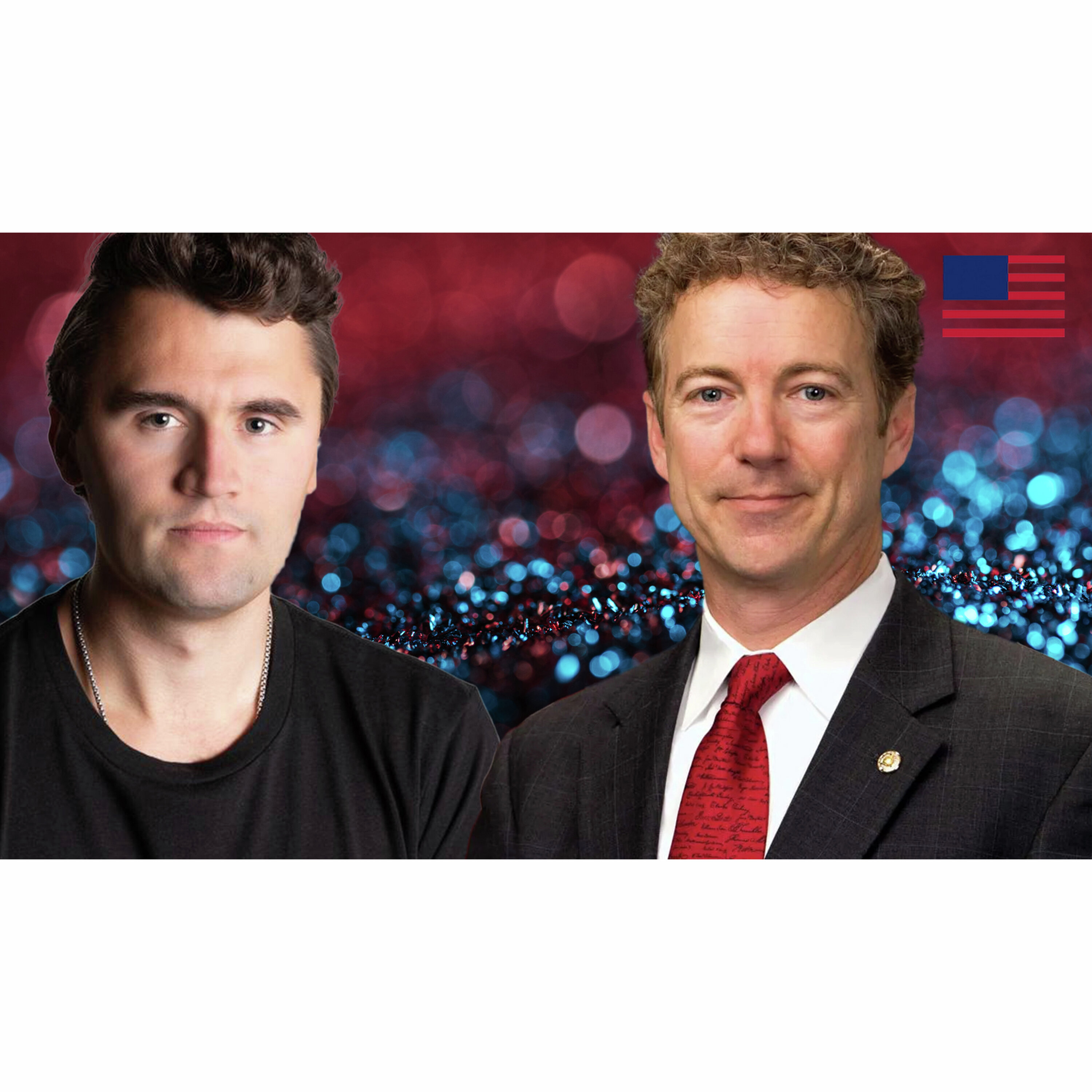
Hey everybody. Thank the Charlie Kirk Show. Senator Rand Paul joins the show about all things usaid. The first cabinet official to join the Charlie Kirk show of this new administration, Secretary of Housing and Urban Development Scott Turner. Great conversation about affh, his biography and more. Then finally, our Vice president, JD Vance gives a master class statesman speech at the Paris Artificial Intelligence Gathering. Does an amazing job. Email as always, freedomcharliekirk.com subscribe to our podcast. Open up your podcast application and type in Charlie Kirk Show. Get involved with turning point USA@tpusa.com that is tpusa.com Buckle up everybody. Here we go.
- [00:39]
Senator Rand Paul
Charlie, what you've done is incredible here.
- [00:41]
JD Vance
Maybe Charlie Kirk is on the college campus.
- [00:43]
Scott Turner
I want you to know we are.
- [00:44]
Charlie Kirk
Lucky to have Charlie Kirk.
- [00:47]
JD Vance
Charlie Kirk's running the White House, folks.
- [00:50]
Senator Rand Paul
I want to thank Charlie. He's an incredible guy, his spirit, his love of this country. He's done an amazing job building one of the most powerful youth organizations ever created turned Turning Point usa.
- [01:00]
Charlie Kirk
We will not embrace the ideas that have destroyed countries, destroyed lives. And we are going to fight for freedom on campuses across the country. That's why we are here. Noble Gold Investments is the official gold sponsor of the Charlie Kirk Show, a company that specializes in gold IRAs and physical delivery of precious metals. Learn how you could protect your wealth with Noble gold investments@noblegoldinvestments.com that is noblegoldinvestments.com it's where I buy all of my gold. Go to noblegoldinvestments.com joining us now is one of the most important members of the US Senate and an all around amazing person, Senator Rand Paul. Senator, great to see you. Senator, I am rejoicing in seeing finally the country talking about usaid. You have been leading this charge for your entire senatorial career trying to get people to care about transgender monkey surgeries in Senegal. You do your annual Festivus report and it seemed as if that just did not quite hit critical mass. Now we have a national conversation and action around usaid. I know you have hearings about this tomorrow about DOGE and usaid. But first, Senator Richard, remind our audience about your great work on USAID and why you have done so much work trying to expose it.
- [02:23]
Senator Rand Paul
You know, we've been talking for a decade or more about the idea that when we run a deficit here at home, we shouldn't be borrowing money to send it anywhere. So we send money all around the world, but it's all borrowed. And now it comes to pass that we find That a lot of the spending is for ridiculous and outrageous things. We discovered that 4.8 million was spent for social media influencers. In Ukraine, we discovered $3 million that was spent on girl centric climate change. In Brazil, we discovered $2 million was spent trying to secure the border in Paraguay. So the list goes on and on, from trans operas to trans comic books, all the craziness. Every left wing idea you can imagine in the last several decades has been funded by the State Department and usaid. But finally, you know, with the help of Elon Musk and with the Trump administration putting a padlock on the place, it's all coming out and nobody can defend it because it's so outrageous.
- [03:28]
Charlie Kirk
So, Senator, I have a question. Has Congress specifically underwritten these projects or is it more that they get a blank check and USAID then allocates it to their choosing? And I'm asking for a specific reason, meaning was USAID said, hey, here's, you know, 2 billion for this, 500 million for this. Or has Congress specifically said we want to have these outrageous projects?
- [03:52]
Senator Rand Paul
Most of the time money is allocated and USAID will get a certain amount of millions or billions of dollars for all of the projects. The individual projects are typically decided by the people who work over there. But that's why you have to fumigate the place and why I think Rubio is doing a good job of letting most of these people go. Most of them are left wing people promoting an agenda. So there is a need for a State Department. It's a critical part of our government. It should promote peace, diplomacy, discussions. But climate change, Girl centric climate change influencers, trans operas have nothing to do with peace or diplomacy. They have to do with the left wing agenda. So really changing the dollars and reducing the dollars is one way to go at it. But we also need to get rid of the people. So I'm completely behind the Trump administration. Fumigate the place, clean them out, get rid of these people who aren't really there for diplomacy, but they're there for their left wing agenda. But you're right that a lot of the money isn't specified necessarily when Congress passes a bill, but it's a lot of money. We spend about $40 billion on foreign aid, which is mostly USAID, but then it's divided down into these crazy grants. And that's why the more we know about the granular detail of how awful these grants are, the more inflamed the American public will be and more they be behind us in trying to reduce the Spending over there, just to remind.
- [05:18]
Charlie Kirk
Everyone, $1.5 million for advancing DEI in Serbia, $2 million for sex changes in Guatemala, 6 million for tourism in Egypt, hundreds of thousands for meals that went to Al Qaeda affiliated fighters in Syria. We are feeding our enemies. Senator, one of the more outrageous critiques that those of us that want to see USAID eliminated or even projects like this or Doge will receive is, oh, that's only 100 million bucks. That's only $250 million. That's only a couple billion dollars. What is your response to the where they try to diminish or they try to downplay the significance of these cuts?
- [05:59]
Senator Rand Paul
Well, you know, it's an invalid argument because I could tell you that for anything you object to, anything you object to in government, I could say, well, that's not enough to balance the budget. But it all does add up. But even if it all added up to an amount that was only 5% of spending and it wasn't going to balance the budget, why wouldn't we be for opposing the worst and most egregious and outrageous spending that is out there? I mean, we found hundreds of thousands of dollars being spent to study whether lonely rats use more cocaine than, well, socialized rats. So that kind of stuff, when you tell the American people it's being spent, they're outraged, and rightly so. But we have to reduce the overall spending. And will it balance the budget? It's a tip of the spear. Why not start with the most egregious stuff and keep going? It's sort of like immigration. We should end illegal immigration. The people who came illegally should go home, but we should definitely start with the most violent. And that's not the entire problem. But I think almost everybody agrees we should start with the most violent people. And I think that's one of the things. We're doing a pretty good job, or the Trump administration is doing a good job of getting rid of the violent people.
- [07:06]
Charlie Kirk
I totally agree. So, Senator, tell us about your hearing tomorrow, what we can expect and more broadly, how Congress can buttress up against the incredibly important work of Doge right now.
- [07:18]
Senator Rand Paul
So what we're going to do is it'll be a showcase. It'll be a showcase for not only what we've found over the last 10 years, but from our festivus, our waste report, our grievances about spending, also what Doge is finding, what others are finding. And we will have people testify to that. And I'm sure the Democrats will bring someone to testify. Why we need to continue all this aid. My point is, even when you get beyond the outrageous stuff, you know, the parades, the pride parades and all the other kind of stuff they're doing, even when you get beyond that, there is a question. Even if it's something valid, like something that we're doing, that is people would say, oh, that's charitable. Should you do that with borrowed money? And the example I give is if you make $25,000 a year and you have just enough money for rent and to pay for your family or for yourself, it's not that much money. Would you, when you pass a homeless person, go into the first bank and borrow $1,000 to give it to a homeless person? No, that's not the way people operate. You have to take care of, of you and your family first, and you don't go into debt to help people through charity. Charity comes out of your. What you have left over, what you can save in order to give for charity. But the government shouldn't be any different. We shouldn't be borrowing money. We essentially are borrowing all the money we send to Ukraine. Not just charitable money to Ukraine, but all the military. Everything we send over there is borrowed. We borrow it from China to send it to Ukraine. Then everybody complains. What about China? How are we going to, you know, be strong to stand up to China? It's like, well, maybe we could quit borrowing from China to pay Ukraine and to send USAID dollars all over the world. So, yeah, this is, the Trump administration is doing a great job bringing this ahead. Our committee is going to try to shine a light on it, and then we will come up with legislative proposals. Ultimately, what they're doing at US ID is USAID is going to require Congress to rescind that money. So my hope is they send half of it back or most of it back to us and say we're not going to spend it. But then Congress, to make this all lawful and legal, is going to have to vote on what's called a rescission package. But the good news is it can be done by simple majority, privileged vote, meaning there's no filibuster. So if the Trump administration says we're only going to spend half of the USAID money, or we're only going to spend a tenth of it, we're going to give it 80, 90% back, a simple majority, which would mean only Republicans in the Senate and the House can rescind that money and we can start saving it. So people need to realize this isn't the end of the deal. Doge is the beginning. Congress has to act. And you have a lot of feckless Republicans up here who, if you watch closely, love usaid, love all the welfare, love all the foreign aid. And so we have a big fight on our hands. And the people who watch your show need to realize they need to watch like a hawk their Republican representatives and make sure they will actually vote to cut this spending when it comes back.
- [10:15]
Charlie Kirk
This is so important. And Senator, we could not be more behind you that the same way that we did full throttle pressure on Bobby Kennedy for HHS or Tulsi Gabbard for DNI or Pete Hegseth for dod. We need full throttle pressure if there's going to be Republicans that are getting in the way of rescission of usaid. Understand that USAID right now, that President Trump, Elon Musk and the entire great team is going after right now is a bipartisan project for the last 30 years. Yes, it is easy to just blame, you know, Democrats right now, but it has been both parties that have grown this slush fund for the last 20 or 30 years. How well do you sleep at night? Real peace of mind comes from knowing your family is prepared for tough times. My Patriot Supply, America's most trusted name in emergency preparedness, is offering a limited time discount on their super sized Mega three month emergency food Kit. This isn't your typical survival food. Each kit provides over 2,500 calories daily for 90 days with delicious meals and extras including chicken, beef, fruits and veggies. We're talking quality meals that last up to 25 years in storage and still taste like they're home cooked. The pandemic taught us how quickly store shelves can be empty. Don't wait for the next crisis. Your Mega Emergency food kit includes free shipping, a disaster replacement warranty and 24. 7 US based support. This special discount is available for this week only. Visit mypatriotsupply.com that is mypatriotsupply.com for a $250 discount. If you order by 3pm they'll ship your order the same day. Go to mypatriotsupply.com but I want to ask you just kind of a fun, lighthearted question. I have been trying to push for your father, Ron Paul, to be Chairman of the Federal Reserve. You don't have to necessarily comment on that, but can you talk about the need for better leadership at the Federal Reserve?
- [12:09]
Senator Rand Paul
Absolutely. He'd be great. One of the great memes they had on the Internet the other day was a picture of Elon Musk saying, ron Paul, we need you back. We need you back here to help us with this. And had a picture of my father sort of looking like he wasn't interested. And then it had Elon Musk saying, we want you to be in charge of, you know, auditing the Fed. And then it had a picture of my dad on a bicycle speeding back to Washington. And no, he'd love nothing more to be part of auditing the Fed. He's talked about it, you know, for 50 years now, and it's still as necessary as it ever once was. And no, he'd be great to be part of this. And I love the fact that they've been talking about and listening to some of the things he has to say about Doge as well.
- [12:53]
Charlie Kirk
And what an honorable, consistent warrior for liberty your father has been and what a great kind of end to a career to be chairman of the Federal Reserve. Let's see, I'll put a maybe on it. So, Senator, finally, there's been some talk about judicial overreach that would justify ignoring a federal court. Do you have any thoughts on that, on the tension between the two branches of government and specifically what's happening with Doge and Doge having access to information?
- [13:20]
Senator Rand Paul
You know, I think it's kind of crazy some of the left that has gone after some of these young men that are helping Doge. One of the young men won an award at the University of Nebraska for some amazing research. They had these scrolls, I think they were from Israel, from maybe when the romans invaded in 68 AD 2000 year old scrolls that were burned and they couldn't be read or unraveled or they'd fall apart. And this young man, a computer science guy, looked at MRIs and applied artificial intelligence to it and was actually able to read the interior of the scrolls without unrolling them. And this amazing genius, we should be lauding him and applauding him for having or helping Doge to reduce spending problems, and yet the left is doxxing him and trying to get him attacked. I think it's despicable.
- [14:10]
Charlie Kirk
No, I completely agree. Senator, last question here and thank you for being generous with your time. I've been pushing for a while and you've been pushing for even longer than I have for the pardon commutation of Ross Ulbricht. I know that you mentioned this to the President when you saw him recently. Any comments on President Trump's pardon of Ross Ulbricht?
- [14:27]
Senator Rand Paul
You know, we were really excited about it. I spoke with President and his first administration about it. I've met with Ross's mom, we've talked about it. And it became kind of a libertarian cause because he was involved with something that was illegal, a website that had people trading drugs on it. But he was given two life sentences. And so I think the crime should be, the punishment should be proportional to the crime. In this case, it was extremely disproportionate. And so we were glad that the president granted the pardon. He's still a relatively young man, but he spent 11, 12 years in prison. And it'd be great for him to get out and be a productive member of society again. I think this went a long way towards libertarians who had a choice of voting for a third party or voting for Trump. And Trump was honest and to his word did pardon him. I think it was a good thing.
- [15:20]
Charlie Kirk
Senator, thank you so much. We look forward to the hearing Thursday. Thank you for your leadership. We really appreciate it.
- [15:25]
Senator Rand Paul
Thank you.
- [15:26]
Charlie Kirk
Email us as always, freedomarliekirk.com and subscribe to our podcast. I mean, Ron Paul being chairman of the Federal Reserve would be a game changer. Having Ron Paul to be able to audit the Federal Reserve, that would be something else. We'll do a whole show on the Fed and explaining the Federal Reserve at in a future date. Let's just go through some of the waste here of what USAID does. It's worse than you realize. $7.9 million to teach Sri Lankan journalists how to avoid binary gendered language. $20 million for a new Sesame street show in Iraq. Can we get a copy of that? I am a US Taxpayer. Can I get a copy of the Sesame Street. I want to see it. I want to understand the quality of production. $20 million for a new Sesame street show. You better believe that some sort of Hollywood racket like reverse money laundering. Let's go hire some Hollywood company to go do Iraqi Sesame. Let's go do Kurdish Sesame Street. And we have Suny Elmo. $4.5 million to combat disinformation in Kazakhstan. $1.5 million for the art of inclusion of people with disabilities. $2 million for sex changes in Guatemala. $6 million to transform digital spaces to reflect feminist democratic principles. $2.1 million to help the BBC to value the diversity of Libyan society. $2.5 million to promote inclusion in Vietnam. $16.8 million for separate inclusion group in Vietnam. $5 million to the EcoHealth alliance, one of the key NGOs that funded BAT virus research at the Wuhan Institute of Virology. $20 million for a group related to a key player in the Russiagate impeachment hoax. $1.1 million to the oldest Christian country in the world, Armenia, to fund an LGBT group. $1.2 million to help the African Methodist Episcopal Church Service and development agency in D.C. to build a 440 seat auditorium. $1.3 million to Arab and Jewish photographers and $1.5 million to promote gay advocacy in Jamaica. We the people check our Visa bills every month. Why can't our government check their invoices? It's our money. With the stock market at record highs, are you confident your portfolio can weather the next big downturn? Market corrections are quick and unforgiving, wiping out hard earned gains in an instant. Smart investors know the key to financial security is diversification. That's why Noble Gold Investments makes it easy for Americans to help hedge market volatility and diversify their investments with gold. Since 2010, central banks have steadily increased their gold reserves. And in 2024, gold prices soared over 25%. Gold is simple. You buy it, you own it, you control it. Over $2 billion in precious metal sales, Noble Gold Investments has helped thousands of investors diversify their portfolios with gold, IRAs and physical gold. And now when you open a qualified account, Noble Gold will gift you 5 ounce silver America the Beautiful coins. As a thank you to don't wait for the next downturn. To catch you off guard, visit noblegoldinvestments.com today and see how easy it is to incorporate gold into your investment strategy. That is noblegold investments.com noblegoldinvestments.com Our next guest has the honor of being our first cabinet official of this new Trump administration. On the program, Secretary of Housing and Urban Development Scott Turner. Great to see you and welcome to the program.
- [19:27]
Scott Turner
Hey, thank you, Charlie. It's great to see you. Thank you for having me first.
- [19:32]
Charlie Kirk
It's great to meet you over the video. I know we shook hands briefly during the inauguration. Secretary, you have an incredible story. Why don't you introduce your biography to the American people and to our audience.
- [19:45]
Scott Turner
Well, thank you so much. And first, you know I'm happy to be with you again and thank you for all of your friendship and support to my dear friend and mentor, Dr. Ben Carson. You and your team have been wonderful to him and so I appreciate you. You know, Charlie, I'm from Dallas, Texas, grew up there. I'm a product. I came from a broken home. My mom and dad, who I love so much, they were divorced when I was a young Boy. And, you know, the stats would say, you know, that the odds were against me, you know, coming from a broken home, being, you know, in that type of situation. But I was so blessed, you know, by the Lord to be able to graduate from the University of Illinois, to be drafted in the National Football League and play nine seasons for the Redskins, the Chargers, and the Broncos, and then to serve in the Texas House there in District 33 in Northeast Collin county, in Rockwell County. And then after that, Charlie, you know, I was honored to work with Dr. Carson and his team to lead the White House Opportunity and Revitalization Council, which dealt primarily with the opportunity zone policy in the first Trump administration. And so I'm grateful to the president for that opportunity. And now here, you know, back again to serve the American people. My wife Robin and I are so honored and humbled to be able to be here and be a servant, leader of HUD and work with this incredible team to serve the most vulnerable in our country as it pertains to housing. So I'm honored to be here, Charlie. I'm so grateful. And I thank God, you know, for what he's done in my life and his grace and mercy to bring me to this point.
- [21:21]
Charlie Kirk
I love that story. Thank you for that. And as always, invoking the Lord in all that you do, you are off to a very quick start. Tell us about it. You offered and ordered a secretarial order directing HUD to halt all payment and further enforcement to HUD's 2016 rule entitled equal access in accordance with an individual's gender identity. Tell us about this monumental order that you issued.
- [21:46]
Scott Turner
Well, Charlie, you know, we do, we want to uphold, you know, one first, you know, what the, what the Bible says about, you know, the sexes. There's male and female. And also with President Trump's leadership, you know, and really nailing down from a government standpoint, you know, there's two sexes, male and female. And so when you have HUD funded shelters, for instance, when you have a shelter that is for women, we want to make sure that those shelters, the leadership of those shelters, can properly identify the people coming in to those shelters. Men should not be entering into a woman only shelter, and transgender men should not. Women should not be able to enter into a women only shelter. A lot of times women that are in these situations are there because they have experienced very difficult situations like domestic violence, which I know about, I've seen and I understand. And so we want to protect the ladies of our country that are in these situations, that are in these shelters. And know that they're in a safe place to where they can receive help and need in very difficult times. And so we're very, not just proud, but we're very strongly supportive of tearing down the Equal Access rule and protecting the ladies that are in these women only shelters and beyond.
- [23:02]
Charlie Kirk
You have said repeatedly that HUD has failed at its mission of serving the most vulnerable in our nation in the name of far left gender ideology. Explain that further, please.
- [23:13]
Scott Turner
Well, you know, just in the first week, you know, after we took down the Equal Access rule, you know, the people on the left, the liberals on the left, they came after my Instagram and they took my Instagram down. It's up again, you know, because we're going to continue this work. It's not about politics for us, it's about policy and it's about people. And hud, regardless of record funding for housing, affordability, for homelessness, regardless of record funding, we are not serving, or have not been up to this point, serving the amount of people that we've been called to serve. And so that's why we're here, you know, to make sure that we're maximizing the resources and maximizing the budget here at HUD and all of our personnel, all of our team members for this mission that we've been called to, to serve the people of this country. And so we are laser focused on this, Charlie, to get everybody on one sound, one team, one voice, moving, taking inventory at HUD to make sure the programs that we have here are doing exactly what they're supposed to do. And the ones that aren't doing that, then you know what, we need to get rid of those programs here. Just recently, working with Doge and the team at HUD, we have found $260 million in savings on contracts alone. You know, so with President Trump's leadership and finding all the waste, fraud and abuse and streamlining our processes, you know, I'm happy to announce that we have found $260 million in savings already and to soon find more so that we're good stewards over taxpayer dollars.
- [24:49]
Charlie Kirk
That's extraordinary. Let me just reiterate that you've been there for a week and you already found $260 million. I mean, you're off to such a quick start where it could be in the billions. And just so everyone understands, HUD's budget is $60 billion a year. That's significant. That's a lot of money, everybody. 60 billion a year. So if you save 5 or 6 billion, that's 10% cost savings. If you then extrapolate that across the entire federal government and, you know, silence these critics, oh, it's only a billion. It's only that. Hold on. If every agency does their part for 10%. If every agency does their part, then we go from a $1.3 trillion deficit down to under a trillion. I mean, we're talking about hundreds of billions of dollars that we could save. A billion here and a billion there is serious money, isn't it, Mr. Secretary?
- [25:36]
Scott Turner
It is. And you know, thank you for putting that together because that makes it real. You know, we have a tremendous team here at hud and we're serious about being faithful stewards over taxpayer dollars. You know, the American people work very hard to pay taxes and to support the services. And I'm speaking from a HUD standpoint. And so, you know, our entire team, you know, we're very serious about being good servant leaders. And just like we manage our own personal finances, you know, we want to make sure that we continue to identify, you know, savings at HUD so that we can serve the people that we've been called to serve.
- [26:16]
Charlie Kirk
So, Mr. Secretary, I want to dive deeper into one of the other elements here, affh. What is AFFH and why should our audience be aware of it?
- [26:25]
Scott Turner
So affh was an Obama era rule, really, Charlie, from a 30,000 foot view, it re engineers neighborhoods and localities and states. So if a locality is receiving HUD funding, it has to apply to the rules and regulations from affh, which it makes it harder for localities to build. It makes it harder to build single family homes. It's cumbersome, it's burdensome, it's bureaucratic. Both people on the left and on the right don't like it, even if they don't say they don't because it makes it very, very hard. And so Director Russ Vogt and I, Director Vogt from the OMB and myself, according to the President's leadership, we are going after AFFH to restore the power, the flexibility, the rulemaking authority back to localities, back to states because they understand their needs, they understand the needs they have in their local neighborhoods. And so the federal government should not be heavy handed mandating how people zone or how people build in different localities. Texas is different from Florida, Florida is different from Ohio and Indiana and so on and so forth. And so we're going after AFFH to restore the power back to the states under the President's leadership of working with Director Vogt. So we're very excited about this we want to restore the American dream to the suburban neighborhoods of America. You know, to build single family homes so that people can be on a pathway to home ownership. And when you have these burdensome and regulatory policies, it makes it that much harder to do so. So thank you for bringing that up Charlie, because we're very excited about going out to affh.
- [28:12]
Charlie Kirk
Yeah. So finally, I want you to capture the imagination of our audience. Opportunity zones, beautiful new cities. Talk about the positive stuff, not just cutting the waste that needs to happen, but capture the imagination of our audience. What is the vision for HUD and what you want to deliver for the American people when it comes to something as fundamental as housing?
- [28:32]
Scott Turner
Right. So when you look at HUD, you know, HUD's mission is to serve, you know, low to modern and very low income people in our country as it pertains to housing. Housing affordability right now is at an all time high. People cannot afford to buy housing. Homelessness, according to the latest report that was put out in December, you know, hundreds of thousands, over 700,000 people in our country homeless on a single night in January of 2024. Disaster recovery. These are kind of the three top line missions of HUD. And so we want to come in and take inventory, take an assessment of all of these programs. See, are we serving the people that we've been called to serve? And if we are not, how can we do better? How can we better position ourselves to decrease and eradicate homelessness, including veteran homelessness, including family homelessness? How can we bring down the cost of home affordability and bring up the supply and restore, you know, local control and working with localities to build affordable and workforce housing? How do we help those who have been hit by natural disasters around our country to rebuild their families, to restore their businesses? And so we're laser focused on that. And so for the people who are listening to this time we have together, Charlie, I hope that they will understand that here at hud, our heart is for the American people. Our mission is to help the American people not to stay on government subsidies, but to get off of government subsidies and fulfill the American dream and fulfill their God given potential and get on the way to self sustainability and not just survive in America, but to thrive in America. And so myself and our entire team here at hud, that is our heart, that's the heartbeat and that's what we're going to do in the days ahead. And I'm looking so much forward to it. And I thank the President for his leadership and giving me this Opportunity and our team this opportunity to lead HUD.
- [30:29]
Charlie Kirk
Mr. Secretary, we are behind you 100%. Thank you for your energy and your commitment to the American people. And good luck. We have your back. Thank you.
- [30:36]
Scott Turner
Thank you, Charlie. God bless you, brother.
- [30:38]
Charlie Kirk
Excellent. That's so refreshing. I love the love, the spark and the love of country and the patriotism. It's just awesome. Hey, everybody, Charlie Kirk here. The numbers don't lie. The impact that balance of nature makes every single day is astounding. You can see the numbers for yourself on their website@balanceofnature.com listen to these stats concerning Balance of Nature's worldwide success. More than a thousand success stores reported each month, hundreds of thousands of customers worldwide, millions of orders delivered each year, and billions, yes, billions of fruits and veggie supplements consumed by people have decided to start living better. There's only one thing missing, and that is you do what I did and add yourself to these numbers and start taking Balance of Nature's whole food supplements like so many others around the world. Here's another number that should get your attention. 35%. Use my discount code Charlie to get 35% off plus free shipping and their money back guarantee. You must use my discount code Charlie. Call them at 800-246-8751 and use discount code CHARLIE or order online at balanceofnature.com use discount code CHARLIE to get 35% off plus free shipping, that is. Balanceofnature.com balanceofnature.com okay, next Thursday, I'll be at the University of South Florida. So if you live in the Tampa area, come there. We'll be promoting that all tomorrow, but I want to instead get into a phenomenal appearance by good friend of mine, the Vice President of the United States. Boy, that feels good to say. The Vice President of the United States. Surreal. Gotta tell you, I was sitting right here in this chair when it was Citizen Vance and he would just come on the show and he used to give us as much time as we asked for. Hey, J.D. can you come on the show and give us an hour and a half? Sure. Can you talk about these nine topics? Sure. And he'd talk about everything. Well, now JD Has a lot more important things to do than come on the Charlie Kirk show. But we remain 100% behind him. And of course, most importantly, behind the President's agenda and behind the country. J.D. mance is a rock star. I we on this program. I'll say we because it was a team effort. We are vindicated. We got so much backlash Oh, I won't let this one go. Oh, the amount of nasty grams I got from some people in the audience and from donors we lost money over for both promoting J.D. vance in the Senate primary and then of course in the vice presidential contest. The President deserves such unbelievable credit for making that choice. It was incredible. JD Vance right now is in Paris for a major AI summit, major artificial intelligence summit. And he just has this gravitas. To him, JD Vance has become a hero and an icon. What we have always hoped that he would become, this is in front of the entire planet. He had dinner with macron last night. J.D. vance is dealing at the highest possible level, in my opinion. Represented the country so incredibly well, much better than Kamala Harris. Oh, what a change. This is JD Vance articulating the moral case of how we approach artificial intelligence. We will embrace this technology with caution and understand that human beings come first. It's a positive, bold agenda, courageous and crisply delivered. Play cut 87.
- [33:50]
JD Vance
This administration wants to be very clear about one last point. We will always center American workers in our AI policy. We refuse to view AI as a purely disruptive technology that will inevitably automate away our labor force. We believe and we will fight for policies that ensure that AI is going to make our workers more productive. And we expect that they will reap the rewards with higher wages, better benefits and safer and more prosperous communities.
- [34:21]
Charlie Kirk
It's not about replacing, it's about amplifying. It's not about substituting. It's about flourishing. That's a different moral contract than some of the little gremlins that are running around Silicon Valley talking about a hyper robotic world. No, no, no. We have a obligation to the worker. It's a contrast of the doom and gloom. America is the most innovative country in history, but our innovation has always been to help ordinary people. Play cut 71.
- [34:50]
JD Vance
Now we've also watched as hostile foreign adversaries have weaponized AI software to rewrite history, surveil users and censor speech. This is hardly new, of course. As they do with other tech. Some authoritarian regimes have stolen and used AI to strengthen their military intelligence and surveillance capabilities, capture foreign data and create propaganda to undermine other nations national security. I want to be clear. This administration will block such efforts full stop.
- [35:25]
Charlie Kirk
And finally cut 90.
- [35:27]
JD Vance
I couldn't help but think of the conference today. If we choose the wrong approach on other things that could be conceived of as dangerous things like AI and choose to hold ourselves back, it will alter not only our GEO GDP or the stock market, but the very future of the project that Lafayette and the American founders set off to create. Now, this doesn't mean, of course, that all concerns about safety go out the window. But focus matters. And we must focus now on the opportunity to catch lightning in a bottle, unleash our most brilliant innovators and use AI to improve the well being of our nations and their peoples.
- [36:10]
Charlie Kirk
Masterclass. We have been waiting for that kind of that very clear signal. A human first AI speech. That's what a statesman looks like. Statesman for the United States of America. 10 out of 10. JD Very proud of you Mr. Vice President. Thanks so much for listening everybody. Email us. As always, freedomarliekirk.com thanks so much for listening. God Bless.
- [36:37]
Senator Rand Paul
For more on many of these stories.
- [36:38]
Scott Turner
And news you can Trust, go to charliekirk.com.