Loading summary
Transcript88 lines
- [00:04]
A
My name is Charlie Kirk. I run the largest pro American student organization in the country, fighting for the future of our republic. My call is to fight evil and to proclaim truth. If the most important thing for you is just feeling good, you're gonna end up miserable. But if the most important thing is doing good, you will end up purposeful. College is a scam, everybody. You gotta stop sending your kids to college. You should get married as young as possible and have as many kids as possible. Go start a Turning Point USA College chapter. Go start a Turning Point USA High School chapter. Go find out how your church can get involved. Sign up and become an activist. I gave my life to the Lord in fifth grade. Most important decision I ever made in my life. And I encourage you to do the same. Here I am, Lord. Use me. Buckle up, everybody. Here we go. The Charlie Kirk show is proudly sponsored by Preserve Gold, the the leading gold and silver experts and the only precious metals company I recommend to my family, friends and viewers.
- [01:10]
B
All right, our two of the Charlie Kirk show's underway January 22nd. Lots of good news today. Lots and lots of good news coming through. And something we want to make sure that is not being overlooked is some of the behind the scenes work that's being done to clear out a gut of terrible precedents that have been living just sort of behind the surface of the federal government for decades. And you brought it up when we had Kelly Loeffler. And we're actually gonna bring her back on because a lot of news has happened at Small Business Administration on something called 8A, which if you had to summarize quickly, Blake, before we bring Ben on, what is 8A?
- [01:52]
C
8A is. It's this giant morass federal program to basically or orders. It's a program created by Congress orders the government to give a certain percentage of its contracts to businesses that are certified as owned by disadvantaged people. Small businesses owned by disadvantaged people.
- [02:08]
D
Right.
- [02:09]
C
And this being America, who counts as disadvantaged has grown to the point where you are disadvantaged if you're anything other than a white man.
- [02:15]
A
Yeah.
- [02:16]
C
So if you're a woman, if you are basically any race, if you are from a national group that makes more money on average than white Americans, like I believe Indian Americans, Nigerians disadvantage they out earn white Americans.
- [02:29]
B
So here to help us explain, this is Ben Weingarten, who is a Newsmax contributor. He's also a Real Clear Politics contributor and writer. Ben, good to see you again. Welcome back to the show. I think this. Correct me if I'm wrong. Is this the first time we've had you back. So since, you know, we lost Charlie, I, I, I always want to give the guests an opportunity to reflect on that as a first, as a first step.
- [02:53]
D
Well, well, thanks so much for having me. And it is the first time since being back what a, what a loss it has been for the country. You guys have done an exceptional job picking up the mantle to the extent anyone can. And I think the way to honor his legacy is to fight with just as much vigor, just as much intellectual honesty and heft, and with as impassioned a sort of drive as we can possibly have to overcome these forces of evil and darkness that conspired to take him down. So, you know, as Jew, we say, may his memory be a blessing. And I would also say may his memory and his works inspire us to go forth and conquer in this war of ideas and for civilization on his behalf.
- [03:50]
B
Yeah, well said. Ben, you've been a longtime guest. Intermittently, you have these great pieces that come through real clear. I know you're also with Newsmax now. Congratulations on all your success and all the things you're doing. This is a huge story. Charlie was all over Disparate Impact. He was all over crt. He was all over dei, something we never talked about until just recently. And Christopher Rufo has been talking about it as well. And we're gonna have Kelly Loeffler, actually, Loeffler on the show tomorrow. She wants to come back on and give updates on what's going on over at sba. But how big of a problem is this insidious little thing called 8A and what's being done to solve it?
- [04:33]
D
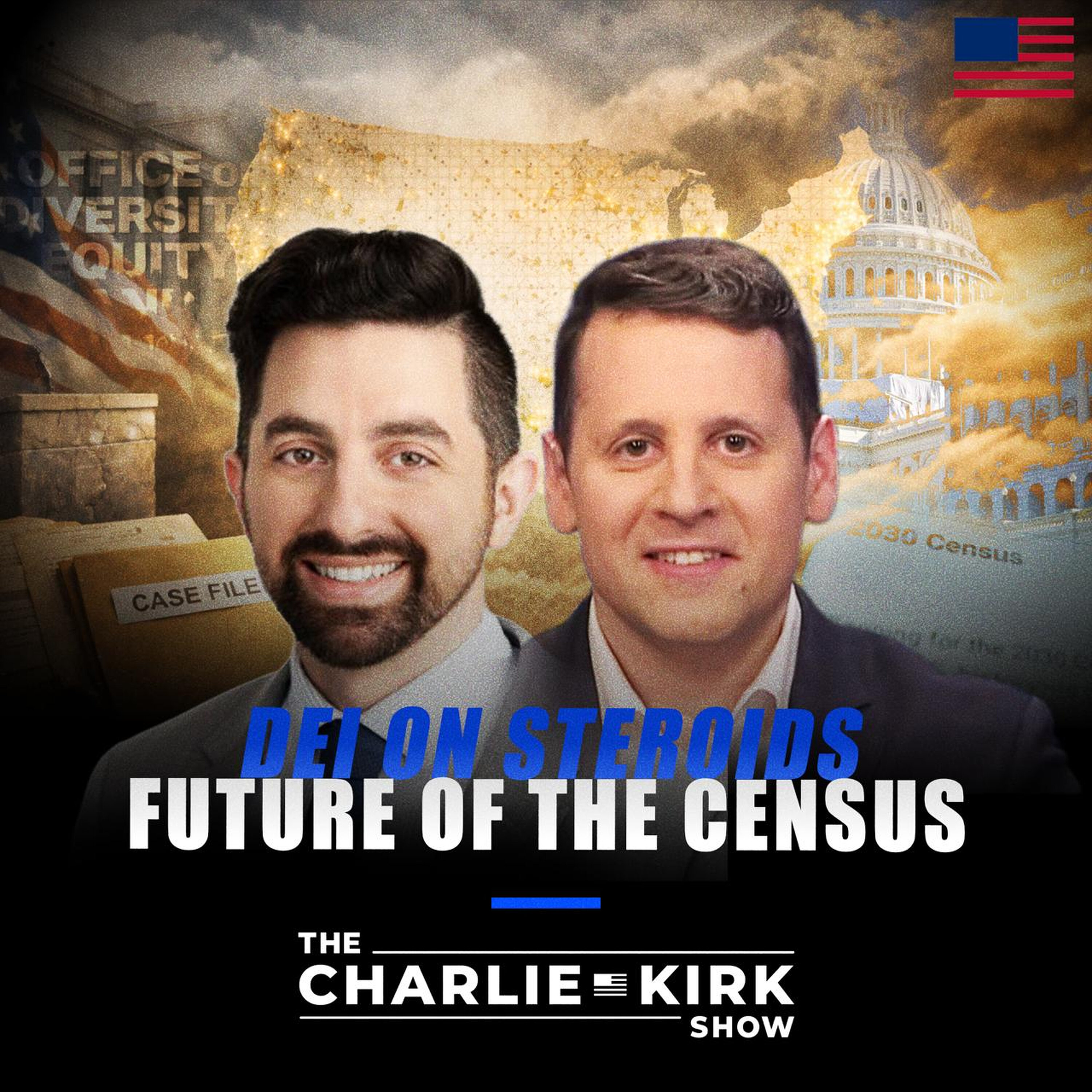
Yeah, well, thanks so much for those kind words. And 8A really looks like the Small Business Administration manifestation of DEI on steroids. And even if you think that that's a political characterization, we need look no further than the fact that intense focus by the Biden administration under its effort to infuse every single aspect of the federal government with, quote, unquote, equity. And what they wanted to do was, was raise the percentage of SBA contracts to 8A firms, 8 eligible firms, qualified firms, from 5% of contracts to small businesses to 15%. That's really all you need to know about how significant of a thrust this was. And what does that mean? We're talking percentages, but these are tens of billions of dollars in contracts every year that are steered towards purported socially and economically disadvantaged individually owned small businesses or majority minority owned small businesses. And so that's massive. Obviously, when we're Talking about no bid contracts or limited competition focus from federal authorities, and this is really dating back years, if not decades, is on the fact that the program is open to massive amounts of waste, fraud and abuse. There's been a recent prosecution over, in this case, of course, a US Aid administrator who was doling out contracts to the tune of hundreds of millions of dollars and receiving kickbacks pursuing with these eight A firms. But beyond that, the main allegations are that you have these pass through entities where a firm puts itself out there as being owned by a minority business owner and then subcontracts out the work to massive defense contractors, for example. So essentially the idea is that you have a front company that looks like a minority company, and they don't really do any of the work, but they collect the fees and then they shift a percentage of those fees onto a major company that actually does most of the work. And then of course, there's the idea that there are companies who claim to be socially and economically disadvantaged and in reality should not be based upon the criteria set up by sba. And there have been studies done by inspectors general to show that. So one thing is the waste, fraud, abuse, and that this, this looks like a racial preference program that is potentially rife with fraud. And that's led to all sorts of scrutiny by the sba, by the Treasury Department, now by the Department of War, according to a recent announcement by Secretary Hegseth. And beyond, the other aspect is, is this thing legal in the first place? And there are regulations underpinning how this program is actually executed that suggests that there is a rebuttable presumption that you are a socially and an economically disadvantaged business. If you are a member of a minority group, that presumption was challenged. So basically, if you are not a minority, you have to prove that you're socially and economically disadvantaged. But if you are, you're assumed to qualify for the program unless there's evidence shown to the contrary. And, and that evidence is basically never shown. Historically, that regulation was challenged, and at least one federal court found that it didn't pass legal muster. So to get around that ruling, the Biden administration said, okay, we're not going to use a rebuttable presumption, but under this program, you're going to have to draft a socially disadvantaged narrative essay to show ways in which you've been disadvantaged. And so this is basically like a proxy for what the Supreme Court assumed that a lot of universities might try to do to get around affirmative action being prohibited, which is just write an essay as a proxy for it. So we've seen that similar regulations have gone from the SBA and been applied by a slew of other agencies now in other programs. So while you, you had a court say this rebuttable presumption for the SBA doesn't pass legal muster, and the Biden administration tried to find a workaround, the underlying regulation has been adopted by a ton of other agencies in doling out awards under programs to advance, quote, unquote, socially and economically disadvantaged individuals. So this looks like racial preferences that continue to exist. And so I wrote in this recent story about real queer investigations, about a lawsuit that, that seeks to wash away this regulation and invalidate it, not just at the sba, but everywhere. It's been adopted across the federal government.
- [09:44]
B
Yeah. Just to put this in perspective here, because you didn't brush over it, but I just want to draw our attention to it again. In 2024, the SBA awarded some $78.
- [09:55]
A
Billion.
- [09:57]
B
Or 12% of all contract dollars. So they didn't even hit their 15% mark to so called small disadvantaged businesses, often under no bid or limited competition arrangement. So that's 78 billion in one agency. And to assume that there is some fraud, waste and abuse in there, I think would be a safe assumption.
- [10:18]
C
The waste is baked in because you're just allowed to pay more for something. You could get cheaper. That's already wasteful on top of the literal fraud that they do on top of that.
- [10:26]
B
And it's just interesting, as the demographics of the country shift benchmark, it's like, how long are we gonna keep up this ruse anyways? President Trump walked into a catch 22 when taking office. Do nothing and America would be staring at a ticking debt bomb, the kind of crisis that could cripple our future. Instead, he's taken action with strong policies to slow the train and buy us some time. But the effects of past administration spending are still working through the system. And experts predict dramatic price increases in market uncertainty. Trump is doing all he can. But no matter who's in office, President, protecting your retirement savings is ultimately up to you. And that's why many Americans are turning to real assets like gold and silver. Preserve gold is our go to choice here at the Charlie Kirk Show. We use them because they make it easy to own physical gold and silver even inside your retirement accounts, like an IRA or 401k. Now hear from Charlie in his own words.
- [11:19]
A
Preserve gold is my go to choice for all my precious metal needs. They are the real deal and I recommend them to My friends, family, family.
- [11:26]
B
And viewers get their free wealth protection guide now by Texting Charlie to 50505. President Trump is fighting for America's future. Now it's your turn to help protect yours. All right, Ben, there is news also on the eight A front that you mentioned this briefly, but it's kind of a program that's morphed and it's evolved and it's kind of spread to other parts of the government. And so Pete Hegseth came out and said that he's getting rid of 8A. How big of a chunk of money are we talking over at dodub?
- [12:00]
D
Well, we're definitely talking about billions of dollars annually. And the Department of Defense is among the biggest doors out of contracts to 8A eligible firms. So it's like DoD, HHS are some of the main agencies that contract through the SBA with these eight firms. And so there's been allegations of defense contractors oftentimes effectively winning business, using eight firms as fronts essentially to get business they couldn't otherwise get. And something that was mentioned that's really kind of perverse in this is shouldn't all companies be competing according to their merits on their own qualifications? And it's the same thing with affirmative action in school. Courts have said that these affirmative action type programs, it was always assumed that they would lapse, they would go away when we reached a place where discrimination wasn't rooted in all of these different institutions. And if it's been found in the schools, certainly wouldn't we have found it in the private sector as well at this time? And it's also worth noting, by the way, we're talking about 8A in a federal government. And there's questions about whether or not that can even comport with the Trump administration's own executive orders against DEI in federal contracting and in a federal government. But you also have these disadvantaged business enterprises, so called, that get carved out contracts at the state and local levels. So it's billions upon the federal billions of dollars that are involved here. And there's a whole racket arguably associated with it in the law firms that represent these companies, in the advisors, of course, the people who write the studies justifying the continued use of racial preferences. So it is a massive, massive deal. And in terms of dollar value, you could argue that it goes way beyond what it would mean to abolish affirmative action in colleges. This is tens of billions of dollars, at least just on the federal side every single year. Taxpayer dollars.
- [14:13]
B
Yeah, well, and I think that's really smart. And this Is, you know, some of this is wonky. I'm sure the audience is kind of, you know, it's a little bit in the weeds. But it's so critically important because when we have senators like Ron Johnson here saying we got to get back to pre Covid level spending, okay, which is what, four, $4.5 trillion now we're at like seven, okay, six and a half, seven. This is why it's so important because when you increase the federal budget like this and you got these 8A and this DEI and this disparate impact embedded within the federal code and all these statutes, you gotta just assume all your tax dollars just going away and getting flushed down the toilet for stuff that really is illegal. I mean, I remember Stephen Miller was on a crusade before he got back into the administration, suing a bunch of this anti white discrimination. And especially as the demographics of the country change, when you got 50% white country and you got 50%, you know, minority country, a lot of this, a lot of this doesn't make any sense.
- [15:10]
C
It's sort of like in Los Angeles, their school district has a special category.
- [15:15]
B
Ryan James graduates. Yeah, he's on next about.
- [15:17]
C
You'll create special categories where it's supposed to be. They'll have schools where they're marked as special because they're majority non white and they get special privileges because the idea.
- [15:27]
B
Is they're smaller class sizes.
- [15:28]
C
Smaller class sizes, more money, all these things. And it's 80% of the schools qualify for this.
- [15:34]
B
Well, because it's only 10% of the students in LA are now white.
- [15:37]
C
You're literally at the point where, okay, this is not a leg up for this disadvantaged small group. It's we just want to punish white people.
- [15:45]
B
It's spending a lot of money. Here's Pete Hegseth on reviewing and rooting out 8A within the Dow 398. So effective immediately, I'm ordering a line by line review of every small business sole source. Eight a contract that is over $20 million. And we'll look at everything smaller than that too. It's a two stage mission.
- [16:07]
E
First, if a contract doesn't make us more lethal, it's gone.
- [16:11]
B
We have no room in our budget for wasteful DEI contracts that don't help us win wars, period, full stop. Second, we're doing away with these pass through schemes.
- [16:20]
E
We'll make sure that every small business.
- [16:22]
B
Getting a contract is the one actually doing the work and not just some.
- [16:27]
E
Shell company funneling your money to a giant consulting firm.
- [16:31]
B
Ben, final word to you, this is.
- [16:33]
D
Similar to in Minneapolis. You have basically government programs with limited safeguards and of course they're gonna get abused. And I think the really important thing is this. The Trump administration is trying to do everything it can. Using executive power to get out of the DEI business can all turn right back on in a future administration.
- [16:50]
B
Yeah, I mean, it's so true. This is why we gotta win the midterms. We've got to win in 28. Ben Weingarten, Newsmax contributor, Real Clear Investigations thank you, my friend.
- [17:01]
E
This is Lane Schoenberger, chief investment officer.
- [17:04]
D
And founding partner of Y Refi.
- [17:06]
E
It has been an honor and a privilege to partner with Turning Point and for Charlie to endorse us. His endorsement means the world to us and we look forward to continuing our partnership with Turningpoint for years to come. Now hear Charlie, in his own words.
- [17:20]
D
Tell you about why Refi.
- [17:21]
A
I'm I want to tell you guys about why refi.com, that is yrefy.com why refi is incredible. Private student loan debt in America totals about $300 billion. Why refi is refinancing distress or defaulted private student loans. You can finally take control of your student loan situation with a plan that works for your monthly budget. Go to yrefi.com that is whyrefi.com do you have a co borrower? Why Refi can get them released from the loan. You can skip a payment up to 12 times without penalty. It may not be available in all 50 states, but go to yrefi.com that is yrefy.com let's face it, if you have distress or default to student loans, it can be overwhelming because of private student loan debt. So many people feel stuck. Go to yrefi.com that is yrefy.com Private student loan debt relief. Why refi.com.
- [18:10]
B
All right, got some breaking news. And then we're going to bring in Ryan James Gradusky, who has some interesting analysis. Always does, actually. Always brings really interesting stuff. So there's been a third arrest. William Kelly, who was this crazed lunatic. This guy was always wearing a beanie, barking at all these people, poor people in this church. He's been indicted or he's been charged and actually he's in FBI custody. So yesterday he was. Yep, there's a picture of him, real lunatic. And we have a video of him yesterday basically challenging Pam Bondi to come arrest him. 402.
- [18:48]
A
So you know Pam Bondi, you want.
- [18:49]
D
To come and arrest me?
- [18:50]
A
You want to come and give me charges so be it. And for all the people getting, you know, giving me death threats, threatening my life. Kill me. Go ahead, kill me.
- [18:58]
B
Because you know what?
- [18:59]
A
As Fred Hampton said, you can kill the revolutionary, but you can't kill the revolution.
- [19:06]
C
It's too bad this guy didn't go protest a church in Chicago, because then we could have had William Kelly on to discuss. William.
- [19:12]
B
William Kelly. That's a good point. So this guy's been spotted all over D.C. he's a complete lunatic. This is what he does full time. So he said, come arrest me. Pam Bondi said, okay, deal. I'll take that deal. Now, an update. Apparently a magistrate judge blocked the Don Lamond charges, so they. I'm not exactly. We're getting the details there. So Don Lemon has not been charged. Yeah, there you go. Magistrate judge rejects charges against Don Lemon over anti ICE protests in Minnesota church. Okay, this is prob. My guess here is that this is some sort of activist judge who didn't want to. You know, he just is treating Don Lemon as an independent journalist. Don Lemon was not an independent journalist. He was there as an activist. Okay? You don't kiss the main lead organizer who's also been charged and arrested. You don't tell them, thank you for your service and defend their actions. If you're just an independent journalist. He's an activist, okay? That's what he is now. Welcome back, Ryan. James Garduski there. We got the housekeeping out of the way there, sir. Welcome back to the Charlie Kirk Show. It's good to see you.
- [20:14]
E
Thank you. And you said a crazy guy with a beanie was arrested. I thought Tim Pool was going to show up, but, I mean, it's much better news.
- [20:20]
B
Yeah. As far as I know, Tim hasn't been raiding churches, storming churches, although I wouldn't put it past him. He's. He's. He's unpredictable. All right, so you had this interesting take here in. And I think we've got the graphic and we throw it up, but you basically break down the states that are losing population. And this is something that we've been on really, for a long time, Ryan, where you say green states that saw net positive migration from other Americans, purple states are states that saw net negative migration. And you say this immigration is the only thing keeping certain blue states like New York, Illinois, New Jersey, and California from losing 10 plus congressional districts. Take us back in time, because this was a fight in Trump 1.0, where they tried to make it so that in the census, we would not have illegals counted. In the census. What happened?
- [21:18]
E
Well, I mean, listen, when I say immigration, it is both legal and illegal, I think that has to be sat there and stated. From my recollection from the census thing they brought up to the Supreme Court, the Supreme Court said, no, that they have to be counted. Now, before that, there was also a court case and that said that only people of voting age and legality should be counted. In other words, children shouldn't be counted. And people who can't be voted, their residents or the visitors or their legal visitors or they are illegal aliens, should not be counted. Because that would at least make every congressional district of equal voting population. There are some congressional districts that have 100 or 150,000 more voters and other districts makes them much more expensive, harder to win. So that was interesting. But all the court has been very pretty consistent sitting there and saying, no, it's every person in the building gets counted. So with that, with that happening, especially because of COVID there was a mass change in movement. As far as people goes, California essentially has the same amount of people today as it did in 2020, right? American citizens are leaving that state. They're leaving New York, they're leaving Illinois. They're not willing to deal with the nonsense of failed government, Democrat governance. What is happening is, is that the 300,000 plus people who have moved to California from other countries have made up from the loss of population of Americans. So in the 2030 census, when California should be like, okay, when they say, how are the states doing? Where do people want to live? Where people moving. California should lose five seats, they really probably should lose five seats. They wouldn't have gained so many had it not been for illegal aliens over time. But they should lose five seats. It is only for legal and illegal immigration that they don't lose more. So it is very important in these four years where President Trump's really cracking down illegal immigration, he is putting up barriers for illegal immigration, that we sit there and we really reduce these numbers. Because in the 2030 decade, right as it stands now, Texas, Florida, Utah, Arizona are all set to gain. Idaho set to gain correctional seats. California, New York, Pennsylvania, Rhode Island, Illinois will all lose. Or Washington or Oregon is supposed to lose one as well. They will all lose. What does that actually mean as far as presidential politics go? It means that that decade will be the first decade where the entire blue wall does not matter. In other words, if a Republican wins North Carolina, Georgia, Florida, Texas, Arizona, they win the presidency. And Ohio, I should say Ohio too. As long as they win Ohio plus those other states, they win the presidency, there's no more conversation of how Wisconsin is going. I mean, it will be important to win those states and to sit there and campaign there. But, but it's not necessary anymore. The entire climate changes and it becomes very difficult for Democrats to really climb out of that as Florida is not a swing state anymore, as Texas has not become a swing state like they hoped it would be. Arizona, North Carolina and Georgia is really, you know, they have, they have work to do there, to sit there and try to win yet. And still they cannot count on these big blue states to live in because Americans don't want to live there.
- [24:23]
B
It's such a big topic, Ryan, because you know, you have native born Americans that are abandoning American states. They're, they're completely, they're opting out, they're walking. And it just, it seems like such a travesty that we have whole tracks of this country that Americans find so detestable that they refuse to live there. It doesn't matter.
- [24:44]
C
And they have states of America. California was, let's be frank, it was paradise for decades. And paradise is depopulating. It is a place of the very rich and the very poor.
- [24:54]
B
You have to be a special kind of stupid to drive people away from California. You just, you have to. Yeah, go ahead, Brian.
- [25:02]
E
Yeah, no, it's true. And think of, I mean, but think of like public schools, right? Public schools are literally free for people to attend and yet they still won't. Democrats will make something unlikable even if.
- [25:13]
B
You give it away for free.
- [25:14]
E
That is how bad some policies have been. And think of all the millions who are literally trapped there, who vote against its policies year in and year out and they sit there and they try to work their way to make sure super majorities maintain and the insanity continues. So I think it's very, very important though that the whole country doesn't go down that route. And we are no longer held hostage to these big blue states anymore because Americans don't want to live there. And if we can cut off illegal immigration, start deporting people, I mean, we are, but ramp it up. And if we can sit there and reduce legal immigration on top of that, we saw, we will see massive change to the tune of 1012 seats out of blue states into red 1012 electoral colleges. And it's a whole different ball game. It's just a completely. The 2000s change radically.
- [25:58]
B
Well, the 2000s change, I think there's an, I think there's an argument. Listen, if we look at what the Democrats are doing in Virginia. They're going full Marxist in an D +6 state. And we can't get Indiana to redistrict. We are taking a knife to a gunfight, if you will. And I mean, we're still playing under an old playbook. And I thought we were past that. I thought in the era of Trump, we'd finally learn our lesson after 2024. We have not. We have not. And so Ryan, you are the host of It's a Numbers game. You do natpop.substack.com you're also the founder of the 1776 Project Pack. You're like one of those people we bring on the show and I gotta have all these different titles ready to go.
- [26:39]
E
Yeah, it's okay.
- [26:40]
B
No, I appreciate the plug though. No, you're doing great work. So you are a numbers game guy. Talk about this deep mass deportations. You just said we gotta ramp it up. I agree. Then you got Axio saying that this is so unpopular, the Trump administration is looking at it. You got this story this morning of this five year old illegal that Democrats are spreading all this propaganda. Turns out the data banded him. How popular unpopular is it? And specifically with independents and minorities.
- [27:11]
E
So the New York Times poll that just came out this morning was terrible for Trump. It was horrible poll numbers, except on two issues, border security and deporting illegal immigrants. Now they're going to sit there and say, oh, look, the poll said that ICE is unpopular. Yeah, they don't, people don't like mass agents. They don't like watching families cry. They don't. People are people like, they have a heart. However, that doesn't mean that they don't endorse the deportation effort. It is the most popular issue still, when they ask what is Trump doing right, deporting illegal immigrants. It was popular among not only Republicans, but I think it was plus 12among independents. It was positive among all age demographics over the age of 30. So only the very young were opposed to it. It was pop, very popular among men. I think it was 5050among women. It is the issue that people voted for Donald Trump. Listen, there was no like, oh, I wonder what he'll sit there and do. The signs were at the convention, mass deportation. Now, so overall, yes, when they see the images on social media, they really don't like them. It's really given something. They don't like what happened in Minneapolis. However, they still support deport doing mass deportations. If blue states would get on board with actually allowing prisons to so, you know, obliged by ICE detainers and we could deport them straight from prisons, which blue states are stopping right now, or it would be a much easier and pragmatic approach. We can't have that. We should also be looking at finding increasing fines against employers at higher legals. That's an easier way to do it. But the good thing is that the brookings institute and AEI looked at this. We're having a net loss, about 100,000 illegal foreign born citizens this year. This year. And not citizens, but foreign born residents this year and about half a million next year. It is working. It might be a little painful for the people who are queasy, but, but it is working and it's a good thing.
- [28:58]
B
Hey guys, if you've been a faithful Kirk podcast listener for any amount of time, then you've probably already heard about Strong Cell. It was Charlie's favorite supplement. If you want to deal with your brain fog, fatigue, lack of energy or constant illness, then you have to try Strong Cell. People always ask Charlie how he's able to keep his mind so sharp and his energy up and Strong Cell was his go to every day. I traveled the country with Charlie, watching people ask him time and again if he really believed in strong cel. And I loved watching him tell him yes, he loved it and he used it and he made us all believers too. Here at the Charlie Kirk show, strongcel.
- [29:32]
A
Uses a proprietary delivery of NADH to make sure it goes straight to your cells to help your mitochondria. And since there are cells in every area of your body, then healthier cells equals a healthier you.
- [29:44]
B
And now you can try Strong Cell completely risk free with their 90 day money back guarantee. That's right. Completely risk free to try.
- [29:52]
A
That's strongcell.com Charlie. And don't forget to use special discount code Charlie at checkout to get a special 20% off just for Kirk listeners. StrongCell.com Charlie check it out. Right now.
- [30:10]
B
I want to play this clip from JD Vance and he's talking about we're not gonna stop. We're not going to stop deporting illegals. So get over it. 404, the far left has decided that the United States of America shouldn't have a border anymore. And they are willing to fight and penalize and dox and even insult our law enforcement officers in order to fight for the basic principle that anybody ought to be able to come into the United States of America. Well, I'll tell you right now, the Trump administration, we reject that we are going to get illegal criminals out of our country and, and we're not going to let a few left wing radicals stop us. So it seems like the administration is getting the memo here. Ryan James Gardusky, 1776 Pac Blake. Read some of these numbers though on this New York Times poll because I mean it's interesting to me.
- [30:59]
C
So as you mentioned he's strongest on the border but unsurprisingly people are annoyed about the Epstein files thing but for example he's only 41 approved, 53 disapprove on Venezuela which we talked to Rich Varis about that. It's interesting because Latin America does overwhelmingly seem to like it and it seems it basically did work whatever he was, what his plan was and you know.
- [31:25]
B
We didn't invade, we didn't have a war.
- [31:26]
C
So what are they unhappy about there or 3754 on the Israel Palestine conflict where it's imperfect but they actually did get a ceasefire in that one which is one of the things he promised he would get.
- [31:39]
B
So he's seen as too close to Bibi.
- [31:41]
C
Yeah, 34 negative 24, 34 to 58 on Russia, Ukraine, I guess it hasn't ended the war yet but nothing catastrophic has happened either.
- [31:50]
B
But if you look at that because.
- [31:52]
E
Because if you look at the numbers right it's, it comes down to the essential thing of inflation and cost of living. Right. The only thing that he does worse than cost of living on is the Epstein files and it's kind of like something. One thing is polluted and therefore everything is polluted. It makes no rhyme or reason. Like on, on Israel, he did a great Venezuela, everything worked out like. So there's the negative negativity towards the issue of cost of living and the feeling that he is not organized on the issue of cost of living and that's not a priority. Pollutes everything. The one caveat I will say about the Times, I'm not, I'm not a poll truther but the one caveat I will provide for the Times issue is when they ask independents do you lean Republican or Democrats? Overwhelmingly Democrats. So there could be some, maybe a little, maybe a margin of error in one way or the other but I think that the idea is that the priorities are not there. We want to really focus a lot on on American stuff and making sure American jobs are coming back. And I think that that is just creates negativity across the board on everything.
- [32:52]
C
What is driving the. So people say cost of living affordability is that a vibes based thing. Is there something specific they see? Because I just thought I was looking up and I know rental prices in a lot of big cities are stagnating or falling. So housing, especially for people, healthcare is.
- [33:11]
E
A big part of it. But also it is one of the worst times when to be young and looking for a job in our country, like that is just the truth. I don't know whether it's AI or jobs being moved overseas or whatever the case is. You hear a lot of things from a lot of different people and you kind of try to parse through to find the truth. That, though, is a really big part of it. And the number one group that is sit there and turned on Trump are young people. It's people under the age of 30. His numbers are very stable for people over the age of 30. I mean, they're really not horrendous. There are some numbers are that could be off, that could be better. However, the numbers under 30 are where you're seeing the biggest U turn against him. I kind of think in part. Part of it, it's vibes and it's social media and people getting outraged over, over every kind of nonsense there is. And part of it, I think is one of the worst times to be a young person to try to find a job.
- [33:59]
B
I will tell you, we had a bunch of turning point students on the show not too long ago, and I was struck by how much they kept going. And again, these are conservative kids. All right, okay, so it's a selected bias there. But I was struck by how much they talked about H1B. And listen, H1B is actually a small fraction of a much larger legal immigration.
- [34:25]
C
System to some extent. But it's what they talk about.
- [34:28]
B
It's symbolic for them because they feel like, yeah, they do have the AI onslaught coming. That's an entry level job killer. AI is going to take a lot of analyst jobs. It's going to take a lot of data jobs. So they look at H1B as a truly symbolic problem for their generation going into the workforce. I think they need to do more on that. I think they need to do more on legal immigration because legal immigration is actually, structurally, I think, one of the biggest problems facing the country.
- [34:57]
E
Yeah. And listen, President Trump is going all in on AI. He's making a really big bet. He says it's going to create more jobs than it takes away. Maybe it doesn't. Maybe we're just in the pain, period. I don't know. I don't have a crystal ball. However, if he is wrong. It is a generational consequence. Like, there's. I don't know if anyone sat there and said, Mr. President, what if you are wrong on this major, major thing and you're looking at a generation where 20% can't find a job? I think that that's a real conversation that Democrats on the left are having. Ro Khanna is having that conversation. Democrats are saying, what are we going to do about AI in a real way where we redistribute wealth? They're speaking about it as a solution towards socialism, as AI is the gateway to actually get real socialism in America in a way that we have never felt it. They think that that's the answer. And I know the internal polling that they have flagged, the President says that the numbers on AI are not great like they do. Most Americans are worried about it. They're not concerned. You are the AI President. I think that that's something that they should be sitting there and trying to calculate and say, okay, what are we doing?
- [36:02]
B
You know, I saw David Sacks was flagging this over at Davos, and he was talking about how China has, you know, the Chinese population has like an 80% positive rate when polled about AI. And in the United States, it's like 40, 40, 41, 43.
- [36:18]
C
I think the president is right to go for AI because it's not even whether AI will create jobs or not. It's that AI will exist. And do you want it to be in America, like, Or do you want to be in China and we lose whatever jobs it takes?
- [36:28]
E
Do you want to regulate it at all? That's the question is like, like, like Sachs will say, oh, we need a federal regulation. And then just ask Sachs, okay, what's the federal regulation you support and see if he says anything, because I have yet to see when, when you ask Silicon Valley to police themselves, they fail. Do. I mean, we, we can just go back to 2020, where they were literally on board with every single far left extreme thing that there was, and then Trump was popular and won, and now they're all on board, but they'll leave us again in 35 seconds. They don't care. They have no loyalty. If you ask what is the thing you're willing to sit there and actually get hard federal legislation on what is it? And I don't. Just tell me, you know, children, child pornography. Well, tell me real concrete thing.
- [37:10]
B
Yeah, I mean, listen. And I know there was a bunch of back and forth on the one big beautiful bill, and there was that one clause which was gonna put off any regulation at the state level for 10 years or whatever. It made sense because California and New York are so large, their economies are so large that they could basically dictate a patchwork of woke regulation at the state level on AI and it would screw everybody else. So I understood the sentiment. It got demonized and villainized. Yeah, 22nd.
- [37:38]
E
But Andrew, but remember Tennessee was what killed that part of the bill. I know Tennessee did. It wasn't New York or California. Texas has AI regulation. Florida has AI regulation. It is not just the thing is, yeah, we're going to end up with patchwork because there's no federal response. Either make a federal response and give up something instead of asking Silicon Valley for for advice, give up something that the taxpayer, the voters want or you're going to see just states continue to do it. You, you can't have it both ways, Ryan.
- [38:07]
B
James Jardesky, really good conversation. We'll have you on back again soon.
- [38:16]
D
For more on many of these stories.
- [38:18]
E
And news you can Trust, go to charliekirk.com.