← The Charlie Kirk Show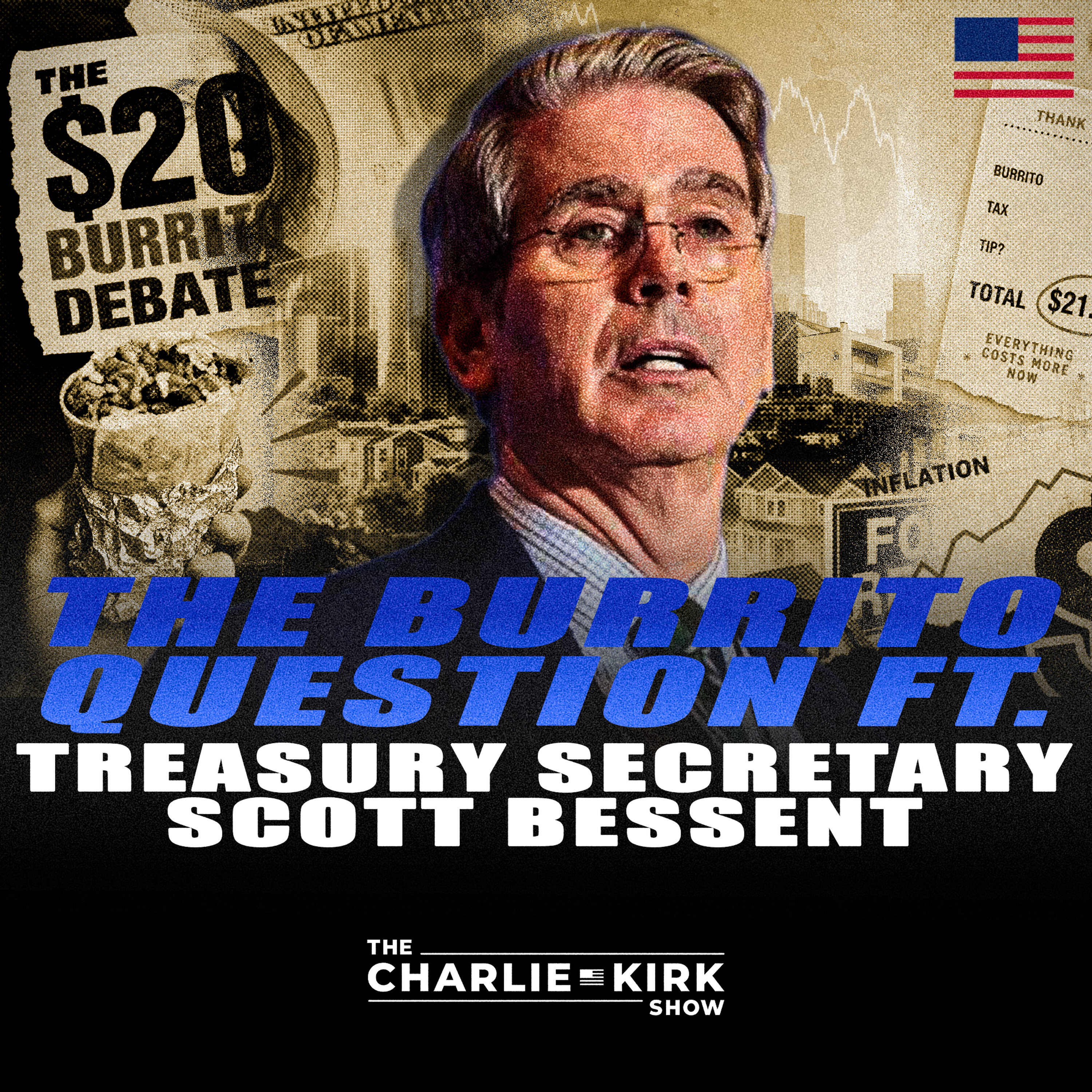
Loading summary
Transcript173 lines
- [00:00]
Dr. Charles N. Steele
Foreign
- [00:03]
Charlie Kirk
My name is Charlie Kirk. I run the largest pro American student organization in the country, fighting for the future of our republic. My call is to fight evil and to proclaim truth. If the most important thing for you is just feeling good, you're gonna end up miserable. But if the most important thing is doing good, you will end up purposeful. College is a scam, everybody. You gotta stop sending your kids to college. You should get married as young as possible and have as many kids as possible. Go start attorney Point USA College chapter. Go start a Turning Point USA High School chapter. Go find out how your church can get involved. Sign up and become an activist. I gave my life to the Lord in fifth grade. Most important decision I ever made in my life. And I encourage you to do the same. Here I am, Lord. Use me. Buckle up everybody. Here we go. Noble Gold Investments is the official gold sponsor of the Charlie Kirk Show, a company that specializes in gold IRAs and physical delivery of precious metals. Learn how you could protect your wealth with Noble gold investments@noblegoldinvestments.com that is noblegoldinvestments.com it's where I buy all of my gold. Go to noblegoldinvestments.com
- [01:24]
Andrew
all right, welcome everybody. We are here on set in Phoenix, Arizona at the Y Refi Studios. Welcome to you from sea to shining sea. Honored to be with you today. We're gonna have a very econ heavy show because that is the current discussion.
- [01:38]
Blake
Actually, it was gonna happen anyway and then it became the discussion which is a sign that fortune favors us.
- [01:47]
Andrew
Fortune favors the bold and the burrito, I will tell you. So here's our show. Let me just lay it out for you. We've got a couple open segments here. We're going to bring you up to speed on the great burrito debate of 2026. It's going to be fun. Then we've got a Hillsdale professor who is an economist and we're going to be talking about capitalism. And then we've got secretary Scott Besant in studio here in Phoenix, Arizona. So we're excited about that. And we're going to be talking about affordability and young people and economic literacy. So many things. And then we've got Nate Friedman. He's been doing great work documenting the Islamification of places like Michigan and the Bronx in New York. So we're gonna have a fun conversation about that. I don't know, fun is the right word. But let us get started on the great burrito debate of 2026. Now what do I mean, if you are not logged on to X or other social platforms, you might not know what I mean. We are having a discussion about $20 burritos. Is it true? Are they really costing 20 bucks? Are they much less? Should kids learn to cook at home? Are Gen Z a bunch of entitled brats? And yeah, there's the, there's the tweet that accidentally kicked it all off from yours truly. It said so Matt Walsh was going on. Grocery prices are insane. They're still rising. Addressing this problem should be the number one priority of every elected leader. End the stupid foreign wars and focus on this issue. It's one of the main reasons socialists are gaining power. And I replied, one of our TPUSA college students gave me his take on affordability. A burrito shouldn't cost 20 bucks. Yeah, a lot of this is a hangover from COVID and Biden era inflation, but the lived experience is the same. It just feels like basic things cost too much. So before we get too far down the road here, I want to ask and invite this audience. I want to know what you think because the reactions have been all across the board and actually I would say many of them have truth. So send us an email. Freedom charliekirk.com we're going to be reading them in the next segment or maybe if Blake gets them right now. Freedomarliekirk.com what is your take on the $20 burrito?
- [03:47]
Blake
Because it's. Well, because we should get into this because the reaction is very mixed because people of course if they say a burrito can cost $20, they're talking about fast food or even like Chipotle or above casual dining. Casual dining. Or if Chipotle is going to cost 20, it probably means they door dashed it. So they're playing a delivery or you
- [04:06]
Andrew
get like some guac on the side.
- [04:08]
Blake
Exactly.
- [04:08]
Andrew
Give them a tip. And so like is anti tipping at Chipotle.
- [04:12]
Blake
Chipotle. We'll get into that later. But so the kind of natural debate that's unfolded here is a lot of people have raised their eyebrow and say if you feel like you can't afford a burrito at Chipotle, you probably should not be eating out. And you can save a lot of money by eating at home more. And it's true, people eat out a lot more now than they did 10 years ago than they did when I was a kid, certainly than they did 50 years ago. And if you feel like you're falling behind, that could be a part of it. But the counterpoint is a Lot of people have said, oh, if you're going to lecture young people that they shouldn't buy so many burritos, it's like a revival of the, the avocado toast attack on millennials from about 15 years ago. And you can kind of go either way on it, really.
- [04:56]
Andrew
No, exactly. So multiple things can be true, which is a tough thing to get across on social media. Should young people be thrifty, especially when you're in college? Absolutely. You should be. I mean, when I was in college, I held down a part time job. Most of my friends did as well. We would eat anything free. We could get our hands on leftover pizzas, half a burrito that somebody else didn't eat anything. If a family was willing to have us over for dinner, we would go there. If there was a barbecue or an event that included free food, we were much more likely to go do that. You should do those things as a college student. But I personally didn't cook much at all in college, so that's another question. Did you cook in college? I didn't have a kitchen to cook in. I lived in the dorms the first year and yeah, I had a meal plan. Those, by the way, have become such a racket. The meal plans. Oh, totally. I've been inundated by emails and direct messages, people saying the meal plans are obscene.
- [05:48]
Blake
And that's part of what goes into this. Is that, okay, your college meal plan is a scam? And is that a scam coming from capitalism? Is that a scam coming from the free market? No, it's. We have a cartel. The college system that is endlessly subsidized by our government through student loans and a million other things. And then on top of that, they get you in and then they trap you in their cartel. Oh, well, you're going here. So you're required to buy our meal plan. When I was at the school I went to, they not only Cornell, whatever.
- [06:17]
Andrew
No, no.
- [06:18]
Blake
So they not only required you to be on the meal plan, but there was an aspect of it at the time where they would require you to have so float money. And if you didn't spend all of that money by the end of the term, they just confiscated it. They just empty, drained your account and took it. Like they wouldn't roll it over the next scam.
- [06:34]
Andrew
But so many schools are like, this is taking over social media. I've had like 20 people be like, only thing on my feed right now is burritos. And I apologize, but I'm not sorry if that Makes sense. All right. I think this is really interesting, though. This is chef Andrew Grohl, who is a friend and he's a restaurateur in Los Angeles. He said the funniest thing about. By the way, is 217. The funniest thing about the burrito debate is no one is getting rich off an $18 burrito. As a restaurant owner, I can tell you this. Nobody wants to charge $18 for a burrito. We'd much rather sell a $12 burrito and have you come back twice a week. The problem is the cost of running a restaurant has skyrocketed. That part was cut off. And he's got. He's got a little meme there. The great burrito debate of 2026. And then people are going around showing. So then I should add this immediately. Joel Berry, who I believe is formerly of the Babylon Bee and now he's working with Jeremy Boren, formerly boring, formerly of the Daily Wire. On his new show, he basically said, I can feed my family of, I believe. Did he say eight or six? I don't know. He's got a big family. He's been prosperous, fruitful, and multiplied. He's got a big family. He said he can feed his family on $20 a night if you just shop out. And there's people that are making that point too, which I think is valid. 219 is an example of this. It goes due to the stupid burrito debate, not, sorry, I made my 11 year old daughter see if she could feed our family of five burrito five burritos for dinner for $20 or less. I believe she nailed it. Please vote her in the upcoming midterms. So went to heb, bought a bunch of iceberg lettuce, bought some ground beef, 1830. Okay, so yes, you can. So again, two things can be true at once. Young people should not be living beyond their means. They should be being frugal. And that's a really good thing to learn. And to live within your means is a huge, hugely important thing. But what can also be true is that burritos are more expensive than they were just a few years ago. And that's okay to admit too. And I think that is deeper in this conversation and it needs to be made that it is politically unwise. Let's just say that. To walk around and do the Joe Biden thing and say, prices are fine, the economy's great, what you feel and what you've lived and your lived experience is not real. Everything is great. That is not true for A lot of people, and a lot of people have pointed to what we call the K shaped economy, where the top are expanding and the bottom are also expanding. So the top's getting bigger and the bottom's getting bigger and the middle class is getting hollowed out. And this is one of the phenomenons behind it.
- [09:07]
Blake
Well, it's why I miss Charlie, to be honest. So, for example, Dan Crenshaw had a tweet the other day taking part of this where he's like, just hearing about this dumb $20 burrito debate. So I thought I'd make the losers on social media angry before bed, stop whining, get a job, eat Raymond like the rest of us did in college, on a budget with four roommates. And I think Charlie was better. Where Charlie would actually approach this and he'd be able to say things are tougher. There is a lot of scams targeting you, but it is also possible for you to overcome those things by, for example, saving money and being frugal. And you can overcome them the same way George Washington overcame the British. He was very good at navigating that.
- [09:44]
Andrew
Of course, he's the best at it.
- [09:45]
Blake
That's a challenge that the right has to do. We can't have these Crenshaw smug lectures.
- [09:50]
Andrew
I agree. And we'll get into it. We got a ton of emails flowing in, so thank you for that. All right, Blake, let's get to the emails here. Yeah, let's just line up thinking, are we being. Are these kids a bunch of brats?
- [10:00]
Blake
Spectrum. It's a big spectrum. So I'll for example, Barry first. I think this is a very classic conservative position. He says it's simple. A burrito should cost what the customer is willing to pay for the burrito. It's a self fixing problem, I think. I think that's a very traditional view and a very reasonable one. Matt says we have five kids. Groceries are unaffordable. I am a Trump guy, but he is not turning this around. Doesn't matter how often he brags about eggs.
- [10:27]
Andrew
Well, we'll see.
- [10:27]
Blake
We'll see. We're having secretary Bessant on. I think he might have something to say with that. Jacqueline says I would pay $20 for a burrito if it meant the steak is grass fed and there's no GMOs. I order from Chipotle once a week. If I don't deliver, then I will walk to it to justify eating out. A $20 burrito is worth it.
- [10:47]
Dr. Charles N. Steele
And.
- [10:48]
Blake
But she does have a pretty decent household income. It Looks like Jeff says a $20 burrito doesn't bother any elected official because they are all worth 50 or 60 million dollars. Remember Nancy Pelosi with her $20,000 freezers to keep her Ben and Jerry's ice cream? I don't remember that. I've got to go look that up now. That sounds incredible. Nick says I need to lay off the burritos.
- [11:11]
Andrew
Yeah, that freshman 15, by the way, we haven't talked about.
- [11:13]
Blake
And G. Corey says this is not a binary discussion. The economy needs to improve in meaningful daily ways, like rent, energy, groceries, and, yes, burritos. It's not just the stock market and company earnings. That being said, people need to get smarter and more disciplined on how they spend their dollars while also getting knowledgeable and engaged in policies not only in tough times, but in good times as well. I think you and I would both basically agree with that.
- [11:38]
Andrew
I agree with all of this. My main point in wading into this debate was that I think it's political malfeasance to ignore the fact that things are expensive. Now, why are things more expensive? Blake, this is the critical piece of this conversation. We printed trillions of dollars during COVID There was massive supply chains disrupted. Okay? There was a lot of disruption to the normal way things were shipped and moved about internationally, both domestically and internationally. And when you print money, the basics of economics are there are more dollars chasing fewer goods. Cause the goods did not keep up with the dollars, especially during COVID So maybe it felt good to have that momentary check come in the mail. But guess what happened? That wealth ended up funneling up to the top percentiles of the economy. Why? Because they own assets that inflate when inflation happens. They own homes that get more expensive. They own stocks that rise in value. They own equities. These kind of things get more expensive. Now, if you don't have any of those things and you want to get into those things, guess what? They just got harder to get into. Okay? So if you're a working class person, if you're a young student at Turning Point and you're like, I want to own a home one day. Well, a $500,000 home just became worth a million. So now your payment just doubled. Plus interest rates went up to counter the inflation.
- [12:56]
Blake
Inflation hurts people who are most reliant on cash, the most salary workers, people who are keeping their savings primarily just in cash, which you shouldn't do, by the way. Any one of you can buy stocks these days, but. Or whatever equities you want. Got another email Here from Jenny Lee. This is silly. You suffer when you're young and you save. If the economy is bad, you cut back. You eat baloney, and you save. You don't keep buying Starbucks and $20 burritos and have your meals delivered. You don't build wealth if you spend every penny you make. We all did it. We did it for years. I taught school for 35 years and took my luncheon every day. The biggest help was she says Greg Ramsey, but I assume she means Dave Ramsey. You find him, listen to him, believe him, and do what he says. And I think it is worth emphasizing that point that we should listen if people say it feels like everything's more expensive, because they probably didn't get that idea out of nowhere. But as conservatives, we also have to tell people, you are capable of overcoming this. You are capable of defeating this. It is actually very possible to get ahead in America if you have better habits and better discipline than a lot of the people around you.
- [14:12]
Andrew
I totally agree. Let's. Let's give you a case in point here, because this is a burrito, apparently for a burrito menu from Chipotle in 2020 or 2012 in Los Angeles. Allegedly. All right, so the Chicken burrito was 625. This is image 2229, by the way. Chicken was 625. Steak was 670. Barbacoa, 670. Carnitas, 670 vegetarian, 625. Kind of getting ripped off if you're vegetarian, by the way. Now, here's one. Here's one from online at image 230. So a carnitas burrito is now 1140. So it's not 20 bucks, but it's 1140. This is pre tax, but if you get chips or chips and guac, that's $2.20 more or $5.15. Heaven forbid you get the Mexican Coca Cola. That's $3.75. So you could easily see how if you got 11 $40, burrito, chips and guac, $5.15, then you're at about 17, 18 bucks plus tax and tip, you're over 20 bucks. Okay.
- [15:12]
Blake
Tip at Chipotle.
- [15:14]
Andrew
Well, a lot of people do, Blake. A lot of people do. So. And there's other people that have been trying this and going out and finding out. Yeah, as a matter of fact, I went and got a burrito. By the way, there was a salmonella outbreak that affected Qdoba and salmonella in Chipotle yesterday, which is. Which is ironic. I would say, but yeah. So here it is. John Levine, who does he work at the Free Beacon, I believe now?
- [15:39]
Blake
Possibly.
- [15:40]
Andrew
But he said, I remember on Fox business once, maybe two years ago, I said I spent $20 for a Chipotle burrito bowl in New York City. The host all but called me a liar, confronted him with a receipt at the 1211 Sixth Avenue Gym. And he apologized to me, but not on air. So, like, people are paying $20 for a burrito. We know that they're out there. Are there cheaper burritos? Like. Yeah, there are. Should you buy those if you're a little bit poor? Absolutely. Should you cook at home? Yes, absolutely. But it doesn't negate the fact that things are still expensive, that it's not necessarily President Trump's fault. Yeah, there has been a supply shock on an energy because of the Iran war. And ultimately that's what this is all about, by the way. It's all big proxy discussion about was the Iran war worth it or not. But yeah, there are things that are headwinds in the economy, but we also have tailwinds. And we're going to talk about those some with Secretary Bessant. In the next segment, though, we're going to take, we're going to zoom out. We're going to zoom out a little bit and we're going to talk about a defense of capitalism because none of this is doomerism from us. None of this is saying that we should throw out a capitalist system and free markets at all. As a matter of fact, that would be the wrong way to go here. And that's what we're seeing with the rise of DSA and these commies and these socialists that want to seize the means of production, they're only going to ruin everything. They're going to make things more expensive. We'll talk about that next. I had the honor of a lifetime to call Charlie a friend. And what I remember most wasn't just what people saw on stage. It was what was behind the scenes. That was an unwavering commitment to his faith, his love for his family, and his genuine desire to encourage others to live with courage and conviction. Charlie believed that following Christ wasn't something you compartmentalize. He didn't put it in a box. He lived it out loud. It shaped how he lived, how he served, how he treated people every single day. Charlie Kirk, American martyr, captures that heart. This documentary isn't just simply about remembering Charlie. It's an invitation to, for each of us to ask what kind of legacy we're building and whether we're willing to stand firm in our own faith when it's tested. I hope that you'll watch it with your family and have those conversations together. Go to angel.comkirk that's angel.comkirk Become an angel Guild member. Watch Charlie Kirk, American Martyr, and help bring more stories of faith, courage and conviction to audiences around the world. Without further ado, we have Dr. Charles N. Steel. He's the director for the center for Commerce and Freedom at Hillsdale College. He's an associate professor of economics. And we figured this would be the best time to have you on, professor, because we have this insidious rise of democrat socialism where they legitimately want to seize the means of production. We got the Pierre de Terre tax, or however you say it in New York with Mamdani. And they're coming after capitalists. They're coming after the producers, the people that have built businesses. And it's scary for a lot of people. So at a very basic level, professor, why is capitalism the economic system that you believe is the best for America, for the world, for the West? The floor is yours.
- [18:52]
Dr. Charles N. Steele
Thank you. I'm very happy to be here. You're right, this is a great time to talk about capitalism, but it's always a great time to do that. Why is capitalism the important system? I'm actually writing a book on this right now, which is coming out next year, is the plan. But I open the book by pointing out that the way that we live today is highly unusual for human beings. It's something that's brand new in history, historically speaking. For thousands of years there was no development. To speak of the way that we live today is unusual. We are, we are the most blessed people in the world that have ever, ever walked the planet. At the beginning of the, of the. I think about the 20th century. At the beginning of the 20th century, the population of the. Of the Earth was about 1.7 billion at max. And the average income was a couple thousand dollars. It went up, the population went up. It quadrupled under the, under the influence of capitalism. And average income per person in the world went up enormously. It went up five to six times. We are in a blessed time. We have a system that does that. And there's no other system in history or conceivable that could ever do these sorts of things. The thing that makes that important is not that we have more stuff either. It's that we have better lives in multiple ways. I'm happy to talk about that. But it's something that People really do need today to understand. They need to understand the basics of the system, how it works and why it's important. Yeah.
- [20:34]
Blake
Dr. Steele, it just got me thinking. We've been discussing the first half of this show. A lot of people freaking out that, for example, it's more expensive to buy a burrito at their preferred place or various things feel like they've gotten more costly. And so this is a problem with our free market capitalist system. A lot of them believe. And yet if, if you zoom out, it's not ever, it's not ever socialism or communism that enabled you to have that in the first place. A hundred years ago, nobody was getting a burrito at a fast food place anywhere. Now you can get them in any city in the United States. And it's because of capitalism that made that possible in the first place, correct?
- [21:13]
Dr. Charles N. Steele
Oh, yes, you're quite right about that. The way that we live today is truly astonishing. I lived in the former Soviet Union and I spoke to my student, I taught there, I taught economics, I talked, talked to my former students who had lived in the Soviet Union, what life was like there. And we were talking about something pretty, pretty mundane. Bananas. Bananas turn out to be the most popular fruit in the United States. And I had a banana. I was in, this is post Soviet Russia, and I bought a banana. And we were talking about it and they said, you know, we lived in Moscow, you almost never saw a banana. A banana was a rarity. It was an exotic luxury and party officials could get them. And my students came from pretty well connected families, so once in a while they would get them. But something like a banana, something so prosaic, so basic as that does not exist outside of places where it grows or the capitalist world where we can, where we live honestly, like kings compared to what, what kings used to do.
- [22:18]
Andrew
So when we talk about this kind of current debate, there is an affordability issue that a lot of people are having, especially after Covid, right? We printed all this money, we injected it into the economy, and you had inflation. So asset prices got higher. It squeezed the middle class and the working class, hourly workers, salary workers in new ways. When we talk about solutions for this, right, you have the DSA Mamdani's offering grocery stores, one in each of the five boroughs. And he's going to make the prices 30% cheaper. And it's kind of endemic of a larger issue, is that many of our industries are not purely capitalist, right? They are controlled. There's price fixing, there's price gouging. What is the Solution. If you had a, you know, could wave a wand and you could make the system better. Currently, how do we get back to some more fundamentals in our economy?
- [23:15]
Dr. Charles N. Steele
It might help to talk about what capitalism really is because some people confuse capitalism with say the status quo that we have today. We do have a capitalist system, but it is rather badly hampered by regulation, by interferences, by protectionism for businesses, things like this. And those are the very kinds of things that destroy a capitalist system. The, the history of capitalism is, is interesting because it was really a system that came about late 1700s, early 1800s is when it really began to get going. It was under the influence of people such as adam Smith, his 1776 wealth of Nations. He was condemning the current at the time economic system, which was the system of mercantilism. Mercantilism is the system of special privileges for a few well connected businesses and as he put it, extraordinary constraints on others. And so it's rent seeking. It is government regulation and interference. Those things were invented in the 1500s and 1600s. That's the economics that capitalism got us out of by opening up markets, by opening up industries and things to anybody who wanted to come in and had an idea to entrepreneurship. I think one of the things that is least understood even by economists about capitalism and about the importance of the market system is entrepreneurship. And there are various theoretical reasons why economists have neglected this. But it should be seen that entrepreneurship, the potential for entrepreneurship, opens economic activity to anybody in the, anyone in the economy. Any person who comes up with an idea has the freedom to try it. And if it works, that's the thing that generates economic growth and it generates wealth. If you get economic growth, you actually get reduced, not higher prices, you get more and better things. Not, not, not unaffordability and things like that. A couple of the problems that we're facing with the affordability. I think affordability is kind of a mischaracterization. It's just that we can't afford things that we want. And there are many different reasons for that. Instead we ought to be looking at what causes various kinds of price movements. And one is, as you said, the increase of the money supply by the Federal Reserve. I think it was a bad policy. And increasing the money supply ends up putting more money, chasing the same amount of goods, or in the case of COVID they lock down the economy so even fewer goods and prices go up in general. But there are other problems, one of which he pointed out is the supply constraints, especially on oil, because the Iranians keep shutting down the Strait of Hormuz. And we have these, these kinds of problems. Tariffs have contributed to that as well. I think that's actually been a mistake in policy in most respects, depends on the case. And some other kinds of things we have. Our agricultural policy has actually made it very difficult to be successful in beef farming. Cattle stocks are way down and it is difficult to get them back up under current agricultural policy. At the same time, we're subsidizing corn and paying for corn that probably isn't necessary. And we've got people producing one good when they ought to be doing the other because of these government interventions. So all those things contribute to affordability problems. But there are multiple different things going on there. Professor, my magic wand, I'm going to wave it and we're going to end the unnecessary regulation of the economy that comes from the administrative state. That in itself. When Donald Trump in his first presidency did two things that really boosted the economy. One was the tax cuts, but far more important was the cut in regulation. And he's done that again. That's the most important single thing you can do because it makes it possible to actually do business and to produce things instead of having cost pile up on cost and nothing getting done.
- [27:55]
Andrew
I think that's interesting that you think cutting regulations actually did more to spur the economy in Trump 1.0 than cutting taxes. I mean, I know it's important, but I find it interesting that you put it ahead of cutting taxes. And some of these stories that you guys are sending us are actually really heart wrenching about what you're going through. And I think that's really important because you are conservatives, you probably love the president, you support the agenda, and yet your lived experience is tough.
- [28:23]
Blake
Yes. So, yeah, we just got one from a woman here and she's, I don't want to disclose her, but she's just saying that Biden inflation hit, our income was flat at the time and our necessities increased by 40%. And they've never gone down. Our mortgage went up because they had a variable rate mortgage. They had a medical issue that caused bills. And she's saying we haven't had a Christmas or birthday since the pandemic. We don't travel except for a wedding. We have no streaming or cable. We make our meals and never eat out. Our only expense we didn't cut was our dog's food. We, we have not lived like this since college. And they say bluntly, I'll never vote for a communist or a socialist, but I am, you know, let's see here especially I don't want to live like this for 20 more years. And I don't think any of the six figure salary with a pension and free health care. Republicans give a damn about anyone. They think everything is great.
- [29:21]
Andrew
And you had another one too about.
- [29:23]
Blake
It's a very tough one.
- [29:24]
Andrew
Yeah, some people are emailing us saying they're not celebrating Christmas and birthdays. I mean it's. This is, you know, I mean, listen, we believe our ideas work and we're gonna talk with Secretary Bessen about how some of those ideas are actually already working and the media refuses to cover it. But we also have to acknowledge the lived experience that people are going through. Okay, so professor, if I am Mamdani and I come in and we're talking about how government intervention so often ruins things. Cause this is a big DSA platform. We're gonna give free healthcare, we're gonna give free stuff. It's called free stuff. Populism. And we're gonna give you grocery stores that are 30% cheaper. What happens to me if I run a grocery store down the block and I have to pay normal price? I'm not getting subsidized. What happens long term effects in that economy? I'm just curious. Your predictions here.
- [30:13]
Dr. Charles N. Steele
I wanna say something. It might sound a little off track though. It really isn't. You read the letter from the woman who is hard times. Look, the benefit of capitalism is not that it makes us wealthier. Fundamentally it makes us freer and it allows people to flourish. There's so much more to life than physical wealth. That and money. That's not what this is really about. I emphasize that in the book that I'm writing. And incidentally, I do have an online course with the Hillsdale if somebody's interested in that. But the. So you asked this question in Venezuela, Hugo Chavez put price controls on. On groceries. Then when there were shortages, inevitable shortages in the supermarkets, he con. He said they're not doing their duty. So they confiscated them. That's how they nationalized them and took over the economy. Basically communist. Mamdani's plan is a little bit different. He has selected private operators who will be subsidized to cover those shortfalls in price. So that will drive out the bodegas, the small moms and pops, the small entrepreneurs. And then maybe the bigger change like Gustav and places like this. It's a way of consolidating power. It does not benefit the people. It institutionalizes what will ultimately be low quality and shortages. That's what I would think is going to happen. I think the idea that they want to do that Mamdani and others are trying here, is that they want to try this as kind of an experiment to see if they can't get it going in New York and then spread it around the country. The DSA does intend to fundamentally change this country and make it a full. Honestly, if you read their platform, a communist country, but the same kinds of things that were done in the Soviet Union.
- [32:03]
Andrew
I think that's a really good prediction, actually. I think it's going to drive out a lot of the small competition around those stores first. That'll be the first domino to fall. And then. But what about if I run a grocery store and I'm charging 30% more for the same good or a similar good, then why would anybody shop at my store? So then you're going to have shortages because then you're going to be winnowing everybody down into these five little stores and eventually people are going to lose options. Great businesses are going to go out, entrepreneurs are going to be driven out of the city. And we don't know where this goes. I mean.
- [32:39]
Blake
No, we know where it goes. And you can back me up on this, Professor Steele. Every time we've implemented this in communist and socialist countries, they'll implement policies that cause shortages and drive out entrepreneurs. And then they'll blame the problem on wreckers. They love that word, wreckers. People just deliberately sabotaging the economy to be evil and they use it to seize more control. We've seen this play out repeatedly.
- [33:01]
Dr. Charles N. Steele
Have we noticed it is actually a strategy. We've definitely seen that happen. The one thing I will say, and it was true in the Soviet Union, but probably even be more so in New York City, is that you also get a thriving black market. You get underground entrepreneurs who would rise up. I think Americans are much less susceptible to this kind of thing ultimately than Russian people were, just because of our history and our background. And we do still have this don't tread on me kind of concept built into our hearts, and I hope we keep that.
- [33:34]
Andrew
Dr. Steele and you mentioned, by the way, understanding capitalism is a free course that you teach. You can get it@charlieforhillsdale.com so everybody should check this out, especially with the rise of dsa. But we don't really have to look that far. We don't have to go full Cuba or Soviet Union to really understand the pitfalls here. Blake likes to point this out and maybe in the last two minutes you can expound on it. If you just look at the UK for example, if you go back a few decades, they were basically on par with us when it came to per capita gdp, things like this, energy prices, they have gone way down the path of stagnation in malaise. And now their average GDP per capita GDP is less than like Mississippi and Alabama. So some of our poorest states per capita are richer than the UK now, what did they do wrong? What can we look at Europe and kind of surmise about what we're doing right and what they're doing wrong?
- [34:32]
Dr. Charles N. Steele
Nationalization is one thing that he did of industries heavy, heavy regulation, heavy, heavy handed labor laws that made it almost impossible to fire somebody who doesn't work. And so that's been a huge problem. And that means that you end up with very high unemployment because nobody wants to hire someone who's not going to work. Every single country who's gone down the heavy regulation road has ended up this way. Argentina used to be the rival for the most, most for the highest growth rate of any economy in the new world rivaled the United States. And Argentina destroyed itself with Peronism and interventionism, which came more from the, arguably from the right than the left. But I think the right left distinction doesn't matter. When you're, when you're putting regulations on the economy, it's stagnation. That's what you get.
- [35:29]
Andrew
I think that's such a good point. Argentina is a cautionary tale because it was, they called it the Paris of the Western Hemisphere, Buenos Aires, and just had massive, massive inflation issues and currency issues. Professor Steele, this was excellent. Thank you so much. I think it's so important, it's fair to say the answer to the great burrito debate of 2026 is not. I'm from the government and I'm here to help.
- [35:55]
Dr. Charles N. Steele
The government doesn't make burritos. You're Americans. Eat a hamburger.
- [36:01]
Andrew
That's the right answer. Thank you, Dr. Steele. We'll talk to you soon. Secretary Scott Besant joins us in studio next. If you could go back in time and buy oil before the world relied on it, would you? Of course you would. Anybody would. So why aren't you buying silver right now? The people who recognized oil early didn't just make money. They got ahead of one of the biggest economic shifts in history. And today a similar opportunity is unfolding with silver. Silver is more than a precious metal. It's a critical resource used in solar panels, electric vehicles, defense systems, AI infrastructure and the massive data centers powering that digital world. While demand keeps Growing, it's still affordable enough that the average American can start accumulating it right now. That's why investors are turning to silver to protect against inflation and to own one of the world's most important strategic resources. Don't be the person who looks back in 10 years and says I saw it coming, I just didn't act. Visit noblegold investments.comkirk and learn how easy it is to own physical silver. That's noblegold investments.com Kirk own the metal the future depends on. We are joined by an absolute all star from the Trump administration and by the way, one of our students, absolute favorites. I want you to know that Secretary Bessant, you are time and time again we talk to the students and it's always like JD Marco and Scott Bessant.
- [37:27]
Secretary Scott Bessant
Great. Well it's great, great to be here Andrew. Good to be with you and Blake and I'm looking forward to going over and seeing some of the turning point students after this.
- [37:35]
Andrew
Yeah. And we have a whole new crop of new hires in our field program that are, I mean hundreds of them. And I got to talked to him yesterday and it, that group of new hires that are going to be working with our students all across the country at high schools and colleges is larger than our first ever chapter leadership summit. So it's just the growth is insane and we're just, we're grateful and you know, we, we're trying to honor Charlie at every step we take and, and see through the vision that, that he had which was, I know you knew it very well.
- [38:05]
Secretary Scott Bessant
Well, it's good to, it's great to see this kind of engagement and you know, Charlie's vision, you all know better than anyone was an optimistic vision. It was an open minded vision which is the opposite of what we're seeing in this political cycle with this hate vile messages and what we're seeing now. I wish Charlie were here to, I know, to debate some of these creeps who were poisoning the debate and our youth and indeed everybody.
- [38:39]
Andrew
Yeah, well I completely agree and I think about that every day, literally every
- [38:43]
Blake
day I think let's start with that then. Which is just there is a lot of negativity around, there's a lot of black pilling as we call it from young people who say they're falling behind, there's no hope, they don't have the opportunity they used to make the case. Like what has the administration been doing that actually is increasing opportunity for young people? Why should they actually be feeling more hopefully.
- [39:06]
Secretary Scott Bessant
Oh boy. What we're not Going to do with this administration is to do what the Biden administration did and tell people they don't know what they're feeling, especially young people. Young people like this generation came out of the box. First it was the great financial crisis. Maybe their folks were under pressure, maybe they lost their homes. Then they came into Covid. Then we had this terrible Biden inflation, the 21.5% cumulative inflation, probably higher for working Americans, for groceries, insurance, auto payments. So that might have been as high as 35. And everything that this administration, led by President Trump is doing first. It's kind of like a medical procedure. First, you got to stop the bleeding, which we did. And now we are seeing we're able to turn the ship. And the U.S. economy is like an aircraft carrier is not a PT boat. And I and my team are in there every day, the whole administration, and we're starting to see signs that things are turning. We've seen that for working Americans, just like in President Trump's first term. And what I will say is the reason people should be optimistic is this is not new for President Trump. He did it in his first term. He did it in his first term. And we're seeing exactly the same contours of that kind of recovery. Now. The inflation hadn't been as bad, but we are seeing an acceleration. The bottom 25% of wage earners made the 5.5% increase inflation.
- [40:45]
Andrew
We've got this graph. You tweeted it out this morning. 215. If you could throw it up and please continue. I didn't mean to cut you off there.
- [40:52]
Secretary Scott Bessant
No. And look, this was in response to some of the legacy media saying, I'd been saying that the K economy is ending and it is the rate of change and 5.5% real wage growth or wage growth versus 3.5% inflation. So you get 2% and 2% is not the beat all and end all. But then you start accumulating that over time. And we grow the economy because there are two ways to get out of this morass that we're in. One is to slow price increases. And we're doing that. We deregulated energy will get to the other side of this Iran conflict. Energy will come back down. Core inflation is lower. But the real way to prosperity is wage growth and job creation. It's like President Trump says, I could have created 12 million government jobs. But government jobs, they don't grow faster. They're all indexed to the inflation rate. So now that we've got private sector jobs, we're seeing this manufacturing boom both in terms of factory construction, and we're seeing numbers like we haven't seen in 15 years. So it's happening. Would I like for it to happen faster? Sure. But I think, like the mindset can start changing that we are, you know, we have a nascent turnaround and I think we can accelerate from here.
- [42:28]
Blake
And immigration is obviously playing a key role in that, which is we had, who knows, 10 million plus people waved in by President Biden. That's all going to be pressure on the wages of immigration. That 25th percentile that you're highlighting, that's lower skill work, younger workers. And so it's not surprising we see their wages rising the most because if there's less competition there from people they let in from abroad, they're going to get higher wages.
- [42:53]
Secretary Scott Bessant
And so, Blake, it wasn't just on wages and for years that we heard that somehow supply and demand, especially on the bottom and labor markets. Oh, it doesn't matter. Well, we got a real time experiment that's once again the smug elites proven wrong. But the other thing that happened too was these communities, when you get. And we don't know what it was, was it 10, was it 15, was it 25 million illegals? There's no new housing stock. So you saw rents go through the roof. And now people don't want to admit it, but there are academic studies that show where ICE goes. Rents go down.
- [43:31]
Andrew
That's exactly right.
- [43:32]
Secretary Scott Bessant
Rents go down.
- [43:33]
Andrew
So, Mr. Secretary, you know, we work with a lot of these students, we talk to a lot of them. And something that I am becoming increasingly passionate about because I'm realizing it's a felt need, is there's just a basic sort of economic illiteracy that is prevalent within younger generations. I'm not blaming them. It's actually our fault for not teaching them basic economic supply and demand. You know, I think about a conversation at CLS where one of the girls said, well, I would love for, you know, the minimum wage to go up. And I'm like, no, no, no, no, please. So what are we doing on that front? I know this is a passion of yours too. And how do we address it?
- [44:11]
Secretary Scott Bessant
Well, there are a couple of things. And you know, obviously we've been deficient in civics and turning Point, you know, when I think of turning Point, you know, I think of it as a civic engagement organization and turning teaching the good lessons of civic responsibility and learning. So we were deficient on that. We were also really deficient on financial literacy. When I think Back, I'm older than you gentlemen, but back in the day, think of the term home economics. It wasn't just a cooking class. It was to teach people how to run a budget. How do you run your home mortgage payments? And I can tell you, since I was a teenager, in my 20s, that's all gotten so much more complicated. Buy now, pay later, some of these credit card traps, which is the best mortgage? Is it better to when you're a certain age, is it better to rent? What's the best investment program for your retirement? And I think we've got to lean into that. That's why it's for a different generation or for people who are just having children now. But that's why I'm excited about Trump accounts, because I think that's going to be the ultimate real time learning experience. 38% of households do not have exposure to our great equity markets. And I understand they feel left out. And I say it is fitting that every American has a piece of the action. And that's an important part. Whether it's seeded with the thousand dollars, if you have a child born during President Trump's term, whether you open it for children, and the contributions come from the family, from employers, from states, from great philanthropists. But I think we're going to have a real time learning experience here because again, in these, there are two ways. There's to understand and budget properly, but then there's to grow your assets and to know how to do that in safe, smart and sound way. And that's what this administration's trying to do.
- [46:25]
Andrew
I love that you brought up Trump accounts because, and Blake will attest this was one of Charlie's passions. He loved it so much, loved this. I'm gonna play this clip. This is Charlie. Just when I think this was during the big, beautiful bill sort of debate. This is sat 10.
- [46:45]
Charlie Kirk
This could change the game and make people capitalists. At age 7, I could imagine a bunch of 9 and 10 year olds being like, hey, our stock is up today. By the way, if you win a spelling bee, they could be like, hey, I'm gonna put 25 bucks into your Invest America account if you win a sports championship. It's a way where moms, dads, grand grandfathers, companies, employers, you can tokenize this. Where kids can actually then save their entire childhood and have something to point forward to and be co owners in America, not just renters.
- [47:17]
Blake
Sometimes you'll hear people complain that, you know, America has a trillionaire now and Elon Musk and the reason we have A trillionaire is because he owns a big pile of equities in our stock market. Same for risks. All of our biggest billionaires, it's because they own a lot in our stock market. And so we should send that message, you too can own a piece of this from when you're born.
- [47:36]
Andrew
Well, and I love this because Charlie used to talk about the radical is if you want radicalized politics, get a nation of renters have no skin in the game.
- [47:43]
Secretary Scott Bessant
Yep.
- [47:44]
Andrew
And this is a way for young people to get skin in the game early. And already we're seeing great adoption of the Trump accounts. Right. These are people are embracing this.
- [47:51]
Dr. Charles N. Steele
Yeah.
- [47:52]
Secretary Scott Bessant
We've got 7 million signed up. We're going to they push it towards 70 million households who are eligible. And we're seeing more than 90% of the households signing up make less than $200,000. So these are likely people who don't already have a piece of the action and every American should. And you know, I couldn't agree more that when you own a piece of the pie, you don't want to throw it out the window.
- [48:18]
Andrew
That's right.
- [48:20]
Secretary Scott Bessant
I also think that we saw in nutrition we hear about food deserts. There are people who live in neighborhoods, whether urban or rural, that don't have access to fresh food, good food, well priced food. I think that there were financial service deserts and people didn't have the minimum amount. The percent of families that don't have $500 to meet a medical emergency, they're not thinking about opening an online brokerage account. But as you just said, for them, this is a new kind of savings vehicle. It's not 3% interest at the bank. It's for a birthday present. Put in $20 for graduation family members. Corporations can put in 100. I think it's going to be a big enticement and new fringe benefit that everyone is going to. When you're thinking of going to work at a company, do you have a Trump account match? Do you have a Trump account gifting program? Because companies can put up to $2,500 in.
- [49:27]
Andrew
That's amazing. And I so encourage if you're watching this, if you're seeing it on social media, do what Charlie was saying and tokenize it. Make it a part of a family culture where you incentivize your children to if they do certain things that they will get a contribution and then they're going to be 18, 21 years old. They're going to understand the way that compound interest works. They're going to understand these basic principles.
- [49:50]
Secretary Scott Bessant
So trumpaccounts.gov, go on, do it today. And the other thing too is at treasury, we've done 15 learning modules. Some of the modules, it's based for the children, it's based on age, whether you're 4, 6, 8. And then it's also for parents because we're aware that a lot of the parents who are signing up for this have never been involved in the market before. And it's really going to teach the benefits of long term compounding and riding with the American dream. We had the 250th anniversary on July 4th, and I always say our founders never could have imagined economically where we could have come. My predecessor, Alexander Hamilton, they set an incredible base for our economy. But in terms of the tech, in terms of the dynamism, in terms of the ability, I was getting attacked during my confirmation hearing by Senator Comrade Sanders and he was, well, Mr. Busson, billionaires, it's pretty good. I hear it a lot. So I can do Elon Musk, Mark Zuckerberg, Jeff Bezos, these are oligarchs. And I said the senator, they all made the money themselves. And Elon Musk was a student, immigrant. That's the way it works in America. Yeah.
- [51:20]
Andrew
Amen to that. So you talk about being optimistic. All right, so again, apologies for sparking the burrito debate of 2026. But if you're speaking directly to our students and, and you're giving them reason to be hopeful about the job market, we got AI all this stuff. You've got the price shocks of energy in Iran and all this stuff paint the picture of where you see the economy going through the end of this year, through the next couple years if we stay on our current track and the Trump effect continues.
- [51:54]
Secretary Scott Bessant
Yeah. And look, my contribution to the burrito debate is I'm staying away from iceberg lettuce for another month. That is a tough way, I hear, to lose weight. Yes, I don't want to do that. But look, as I said for this group, it has been a tough slog and we are just coming out on the other side of this. I think thanks to President Trump's policies and he was talking about them from day one and from his first term. We are going to see real income gains and we are going to get prices on under control core inflation away from food and energy, which are the part of the Iran conflict. We're going to get to the other side of this. I hope in the next few days we will have an agreement and start moving forward. Prices are going to come back down and the job opportunities in the private sector are very, very strong.
- [52:52]
Andrew
What are you seeing in the private sector that's giving you that confidence? I mean, are we seeing that manufacturing. But you mentioned it before, before. Are we seeing this direct investment in building factories and building jobs?
- [53:02]
Secretary Scott Bessant
Yeah. So the best in 15 years. The best in 15 years When I take my hometown of Charleston, South Carolina, Boeing plant, thanks to President Trump that is selling Boeing airplanes around the world everywhere we go. You should buy more Boeings. They're doing a 50% expansion on the Dreamliner. So that's construction jobs and then that's going to turn into a thousand, the high paying factory jobs. And that's replacing the jobs of my childhood, the textile industry, which got decimated. The other thing that we're seeing, I know there's a lot of anxiety about AI, but one of the things that we're seeing with AI that is not obvious is we are seeing small business formation go through the roof. So I was talking to one of the credit card companies. So you know, and payment companies that small businesses sign up for that they have seen an 80% increase in small business formation just in the past year. So with AI, there was an article, I tell all of your viewers and listeners to go back and have a look two weeks ago in the Wall Street Journal it said the rise of the one person company because if you wanted to go out, be an entrepreneur, start your own company before, you might need 5, 10, 15 employees. Now a lot of people are doing it with 1, 2 or 3 and some AI agents. So I think it's going to be a powerful trend for small business
- [54:38]
Andrew
fraud. It's another huge issue and you have been out front tackling this stuff using the tools of the Treasury. What's some good news on that front? Because I know there's plenty.
- [54:48]
Secretary Scott Bessant
Well the, the good news. Let me tell you how we're fixing the bad news. The bad news is once the money goes out the door, it is very difficult to get it back in. So we are cutting it off at the source. Vice President Vance, I'm proud to be part of his task force. It's an all of government effort and we are cutting the fraud out at the door. Dr. Mehmet Oz is doing an incredible job on healthcare. We are working on it in terms of payments and what we are seeing, the General Accounting Office estimates that there might be between 400, 600 billion of fraud every year. That is more, that's almost 2% of GDP.
- [55:35]
Andrew
It hurts to hear that.
- [55:36]
Secretary Scott Bessant
Yeah, I mean, it's terrible. And look, a lot of it. I was in Minneapolis and I did a roundtable. And what really tugs at your heartstrings is that these payments that were meant for autism centers are getting waylaid, and these fraudsters know how to do it. What every citizen, every one of your audience should demand is transparency. Because blue states and red states, they don't like to tell you where the money goes. So many Minnesotas, there's a lot of corruption there, but they were very transparent. That's how Nick Shirley could go from location to location and find the laring center. But you tried to do that in New York, Illinois, California, and even some of the red states, they've clammed up. So demand transparency. That should be like. Every politician should have to sign a transparency pledge.
- [56:36]
Andrew
That's great, but we're making great progress. JD Is doing a great job there. Blake, I know this is like in your sweet spot and you could get really into the weeds, but, like, we've only got a minute left. But the bond market. You were going to ask about the bond market.
- [56:48]
Blake
Oh, yes. So it does look like. I've seen people agitating that. Overall, interest rates on bonds are up. They're also up in Japan, which is another country that we have close ties to. Should we be worrying about this? I guess people like, it seems like we borrow a trillion dollars. It's now $50 billion a year of interest rates when it used to be 15 billion.
- [57:11]
Secretary Scott Bessant
Yeah, well, Blake, I can tell you I worry about it enough for all 342Americans. But good news is we actually brought the deficit, the GDP down, and the size of the debt outstanding is tremendous. But we are growing our way out of it. So as we grow our way out of this, it makes it. You know, think about if you had a mortgage, and you were. You got a mortgage when you were 30, and the monthly payments and everything were very tight, but then you did well at your job, you got good pay increases, and then you grew your way out of it. Everything we are doing is unleashing this economy. We can have 3.4percent real GDP growth, and the growth will cure all that if we are able to recover some of this waste, fraud and abuse and control our spending.
- [58:06]
Andrew
I am always so encouraged when I Hear you talk, Mr. Secretary. I think you are one of the true, standout stars of this administration. We have so much faith in you to navigate a very complex equation every day. You got conflicts in the Middle east, you got bond markets, you've got consumer prices Index, you got it all, and you're doing a phenomenal job. You got fraud. You're tackling that. By the way, we didn't even get to paid family leave, which is something you just issued new, I guess new
- [58:35]
Secretary Scott Bessant
guidance on this is a family friendly administration.
- [58:39]
Andrew
Yeah, you guys are doing so much good work. And I really, really do believe that. And this is kind of my worry is that all of these things that were done in the one big beautiful bill, the tax cuts, all this direct investment I'm hearing from restaurants are building new kitchens. They're taking advantage of these opportunities, the accelerated amortization opportunities. So these things are happening. My worry is that all this good news is it just takes a little while because you said this is like turning the Titanic around. And I just hope that it starts coming in. I hope the media gives you a fair shake and we start getting this good news in time for elections.
- [59:14]
Secretary Scott Bessant
Well, I know the media is not gonna give us a fair shake, but I think it'll be the opposite of the Biden Harris campaigns where the media was gaslighting the American people. They said, oh, it's a vibe session. You don't know how good you have it. Well, we believe what Americans are feeling. The media is telling them it's terrible, but I think they're going to start feeling, and they should be starting to feel better and that things are turning and the trend is your friend.
- [59:42]
Andrew
Yeah. Wages growing faster for the bottom income rungs than any other than even for wealthy Americans. You've got massive new small business growth and formation. You've got a lot of things that are, that are really, really good and really positive. And we got to start telling that story, too. Because what we cannot do is give in to these DSA commies and seize the means of production and let them price fix, because that leads to ruin. Secretary Besson, I know you got to run. We appreciate your time so much. God bless you for everything you're doing.
- [60:12]
Secretary Scott Bessant
Good to be with you.
- [60:16]
Andrew
If you're struggling with cravings, bloating, and stubborn weight gain, your gut health, it's probably playing a bigger role than you think. A damaged microbiome can affect everything from inflammation and digestion to cravings and weight gain. And with today's processed foods and environmental toxin, a lot of people's digestive health is taking a big, major hit. Which is why taking care of your gut health may be more important now than ever before. That's where a fermented food called kimchi can make a real difference. Kimchi is naturally rich in over 900 probiotic strains that help support gut bacteria. Because when your gut bacteria are properly supported, your body is better able to process food efficiently, regulate cravings and support digestion, even maintain a healthier metabolism. Overall, studies show that eating kimchi can reduce your body fat by 31.8%. But supporting your gut microbiome takes consistency. And most people aren't eating kimchi every day because of the taste, the smell, the hassle that comes with getting it. That's why Britecor created Kimchi one, delivering the benefits of fermented kimchi in a convenient capsule form to help restore your gut's natural balance every day. Because when your body is functioning properly from the inside out, everything else becomes easier. Today, you can get an exclusive offer by clicking on the link below for 25% off your entire order. Or for an even better deal, call our friends over at Brightcor for up to 50% off your order and free shipping. Give them a call right now. 888-317-9258. Kim Chi won from Brightcore Health starts in the gut. Get 25% off. Use code charlie@brightcore.com charlie. That's brightcore.com charlie. Or you can call 888-317-9258 for up to 50% off. That's 888-317-9258 for up to 50% off your order and free shipping. Without further ado, we have Nate Friedman. I call him the great Nate Friedman because he's doing, like, really, really important work. Host of the Nate Friedman show. You can follow him on xatefreedman97. He's an independent journalist that's going around the country right now documenting the rise of Islam in places like Michigan and New York. So, Nate, welcome to the show. It's good to have you, man. And thank you for your work. Why don't, why don't you tell us about what you're doing? Just give us a 30,000 foot view.
- [62:43]
Nate Friedman
Sure. So I expose paid protesting and I expose the rise of Islam in the West. I go all over the world and I speak to people and I hear them out.
- [62:53]
Andrew
Why are you focusing on the rise of Islam? Why is that important to you?
- [62:58]
Nate Friedman
Because it goes against our way of life. So when I speak to Muslims, I have never spoken to one that supports a ban on Sharia. I've spoken to many that are looking to implement Sharia in the United States and I don't want to. Eventually I will have children. I don't want my daughter to have to wear a burqa. And I don't want to live under Sharia.
- [63:21]
Andrew
I love that. I want to play a clip from Charlie just because we've got some clips from you that I'm really excited to show, but just to frame it for our audience, I think we've played this clip a few times, but it's so good and it's so important. Clip 20.
- [63:35]
Charlie Kirk
The spiritual battle is coming to the west, and the enemies are wokeism or Marxism, combining with Islamism to go after what we call the American way of life. And the American way of life is very simple. I want to be able to get married, buy a home, have kids, allow them to ride their bike till the sun goes down, send them to a good school, have a low crime neighborhood, not to have my kid be taught the lesbian, gay, transgender garbage in their school, while also. While also not having them have to hear the Muslim call to prayer five times a day. That's important. We want the American way of life, which is, by the way, Christendom.
- [64:23]
Andrew
The American way of life is definitely under siege. So you tell us, okay, where in America have you been going? And tell us what you're seeing when you're on the ground.
- [64:34]
Nate Friedman
Yeah, I mean, first off, I. I've featured that clip in multiple of my documentaries. Charlie was so spot on there. It's. It's unbelievable. So where have I gone in America? So I've gone to Patterson, New Jersey. I've gone to Dearborn, Michigan. But a lot of my work documenting the rise of Islam has been in Europe, so both in the UK and Italy and Spain. So it used to be that in order to show the American people what the rise of Islam means, you would go to Europe. But now it just seems like you have to walk out your front door.
- [65:09]
Andrew
Yeah, I agree with you on that. Let's go ahead and play. This is grocery shopping in Dearborn, Michigan. 21.
- [65:15]
Nate Friedman
If you were to do grocery shopping here in Dearborn, this is what you would see. In my two years of reporting on the ground, this is the most shocking footage that I have ever taken. Our country is becoming unrecognizable.
- [65:30]
Blake
I wish it went a little long. I'm looking at some of the B roll, and it's not even. It's not even just the hijab, which. That's the head scarf that they wear. You see a lot of, if I'm using my terms right, niqab, where you can only see their eyes and nothing else. And do you feel like you're seeing even more of that as a percentage of. Of the dress that people are wearing. Do you ever see full burkas?
- [65:52]
Nate Friedman
Absolutely. So I'll tell you, I've walked up to more than a hundred women wearing a niqab across the west, and I've only ever done an interview with one of them. Either they say they don't speak English, or they'll just look at me shocked, like I'm talking to them. This is not assimilation. I mean, what happens if a child lost their parent like their parents, they can't find them in the grocery store and they walk up to a woman who's wearing a niqab and can't speak English? This is not assimilation.
- [66:20]
Andrew
Yeah, you say it's unrecognizable. And yet the progressives, there is this Red Green alliance that is forming. And you see it with El Sayed in Michigan, where you've got Hasan Piker, radical progressive, who's raised in Turkey, by the way, partnering up with El Sayed, who is basically raised in Egypt. Yeah, he has, you know, American roots as well, but. And they're embracing these radical DSA policies, which are just gonna flood the country with even more Muslims. And they don't see any, you know, issues with Islam at all. They think of this Tabla rasa idea that human beings are blank slates, that they bring nothing in with their culture. But as Charlie was very eloquent about talking about, Islam is a conquering ideology. It is a political conquering ideology. And we have clips after CL of these imams saying, we are going to institute Sharia when we get enough power. They're pursuing incrementalism. Right. While our side is pursuing accelerationism. And they want to burn down the GOP because it's not ideological pure enough for them or something. And by the way, it's okay to have critiques. That's part of politics, to have criticisms of Trump or whatever. But they want to burn it all down to let the Democrats win. What's going to happen when that happens? You're going to have 3 to 5 million illegals flood the country. You're going to have a lot of Muslim immigration, and they're going to incrementally gain more and more political power. And what are they going to do with that political power? Do you have insights on what they want to do with that political powers they gain?
- [67:53]
Nate Friedman
Why don't we look at what they've already done? So what happens when they become a majority in a city? Look at Hamtramck. Is it progressive that they banned the Pride flag. When Muslims became a majority in Hamtramck, they banned the pride flag. And yet the left is marching, saying, we want more Islam. I mean, you can see this is not going to end well in the uk. Thankfully, in the United States, we have free speech. But I have spoken to Muslims in the UK that say we are going to put Muslim members into Parliament, they are going to instill Sharia, and then we are going to live under Sharia. They tell us their plans, and we have Elon who bought X, and we have free speech. But imagine we didn't. The destruction of the west would be excelled dramatically.
- [68:33]
Blake
You say going to. But Britain, we already see free speech
- [68:36]
Andrew
is radically curtailed, especially if you're criticizing,
- [68:40]
Blake
especially if you're critical of Islam. You'll have the. The police will call and say, you know, it's not illegal what you did, but, I mean, you're disturbing the peace. And, you know, we're very concerned about it. And sometimes they will just prosecute you for saying the wrong thing online. I also think it's so funny, Andrew, do you remember early Trump Day? They got obsessed. Early Trump's first term, they got obsessed with that show, the Handmaid's Tale.
- [69:01]
Andrew
Yes.
- [69:01]
Blake
And they were talking. They were going to put all the women in the Christian Nationalists. Were going to put all the women in the Handmaid costume.
- [69:08]
Andrew
That's such a good point.
- [69:08]
Blake
And I just think about that, and then I see these clips from Dearborn. They literally want to bring in as many Niqab wearers as possible, which is even more restrictive than those silly outfits.
- [69:17]
Andrew
That's a really good point, actually. We should make that point more loudly. Here's some more footage. I don't know if this is in Dearborn or in New York, but you can tell me after you see the clip. This is a guy casually admitting that he approves of Hezbollah. 22.
- [69:33]
Nate Friedman
I finally get to speak to someone, actually from Lebanon because a lot of people. No, they assume what you guys want and they assume. So my question to you is, like, where do you stand on which government is it? Is it Hezbollah or is it something else? Like where. What's going on? Actually, I tell you the truth.
- [69:50]
Secretary Scott Bessant
Yeah.
- [69:51]
Dr. Charles N. Steele
Only protects Lebanon.
- [69:53]
Nate Friedman
Yeah.
- [69:53]
Dr. Charles N. Steele
If there's no Huzballah, it's gone. Lebanon.
- [69:57]
Nate Friedman
Right.
- [69:57]
Dr. Charles N. Steele
Israel will take it over. That's the only thing keeping them out.
- [70:01]
Nate Friedman
Yeah.
- [70:02]
Dr. Charles N. Steele
Hezbollah don't cause trouble.
- [70:04]
Andrew
Oh, Hezbollah don't cause trouble. So these are people. These are your neighbors now, thanks to mass migration.
- [70:14]
Nate Friedman
When he says that Hezbollah doesn't cause trouble. Why doesn't he ask the over 200 Marines, families who lost their. Their brothers, their sons in the Beirut bombing? I mean, he is pro terrorism. This is a. This is a terror group that has killed over 200American Marines. And I asked him, do you want United States to be allied with Hezbollah? And he said, hell, yeah. So it's happening. It's here.
- [70:39]
Andrew
Jeez, that's a. That is actually a really shocking. Just to think about if they actually do gain political power and the rise of what we're already seeing on. On the Democrat side.
- [70:50]
Nate Friedman
Oh, yeah. If I can just add one thing about that really quick. When I asked him who he was voting for, he said, what do you think? I'm Arabic. So this is a voting bloc. It doesn't need to become a majority for us to live under the dsa. They need to get maybe double the amount again, one more time, and then that's it. If you look at. In the year 2000, we had 1200 mosques in the United States, and now we have 3200. It continues going at this rate, we will live under the dsa.
- [71:17]
Andrew
Well, and that's a really interesting point, too. I mean, I was about to make the point that. Imagine how our foreign policy is about to shift. You know, are we gonna form alliances with Hezbollah? Is that, like, where the. Is this. Is this where this is going? And, like, you know, Hamas. But there is another point that you're making, I think, Nate, that is really important. You don't need a majority. These people will fundamentally transform the country. When they get to 10%, when they get to 15%. And by the way, that is exactly their plan. They wanna outbreed us. They wanna outbreed us, and they wanna migrate to us. Go ahead, Nate. Final 20 seconds of this.
- [71:53]
Nate Friedman
If you look at the UK, right, so they've got a Muslim mayor and they've got a Muslim home secretary who's in charge of immigration, police. So. And even in Birmingham, I asked them, you know, you got 13 new Muslim councillors in Birmingham. 13 new Muslim councillors. So you do not need to be a majority of the. Of the whole country to get what you want.
- [72:15]
Andrew
America, okay? If we don't want them to implement secularism, so what do we want them to implement? They say that America now, okay, there is not enough Muslims for them and to implement this. But now it is our challenge, as duat, as intellectuals, as academic, to present solutions based on Islamic values, but in the second level degree, not to tell them, replace secularism with Islam. It won't work. So that is an Islamic scholar saying that there's not enough Muslims yet to implement Sharia law, and we have to get more power and implement it. Little by little, they're telling us what they want to do. And you want to see what it looks like. Look at 25. This is play clip 25.
- [73:20]
Blake
It just always stands out to me how it's very loud and, like, very. It's very intrusive public.
- [73:26]
Andrew
And that's not. That's not Europe, folks. That. That's not Amsterdam or something like that, or it's not England. That's New York City. I believe that was Central park, too. Nate Friedman joins us, host of the Nate Friedman Show. He's an independent journalist who's covering this all over the west, all over the world. Nate, what do you make of both those clips we just played? They're telling us their moves. They're telling us their play. They're telling us where they're going with this, but we're already seeing it.
- [73:58]
Nate Friedman
All we have to do is pay attention. The people that are propping them up, the left needs to pay attention the most. The people that are giving them a voice are the ones that need to pay attention the most. And something that you said that is very striking, Andrew, you said you had to show the audience this is not Europe. Isn't it quite something that you need to clarify that this mass congregation of thousands of Muslims praying out outside is not in Europe. You would. You would think you would have to say it's not in Kabul or something, but now you have to specify it's not in Europe because there's been a takeover in Europe.
- [74:28]
Andrew
That's a really good point. I didn't even. I didn't even realize what I was doing. But you're absolutely right. They're taking over the Bronx, though. This is some more footage that you have uncovered. And they're calling it Little Yemen. Little Yemen. Yemen is not a good place.
- [74:45]
Blake
I want a complete shutdown of new little countries until we can figure out what is going on.
- [74:50]
Andrew
Sat 23.
- [74:52]
Nate Friedman
I noticed your tattoo. Could you say what it says?
- [74:55]
Andrew
It says Hamas.
- [74:56]
Nate Friedman
Yeah. This his little Yemen. Does this look like the Bronx to you? I'm filming a YouTube video about little Yemen. Can I ask you a question? Arabic.
- [75:11]
Dr. Charles N. Steele
Yeah.
- [75:13]
Nate Friedman
This is Ibrahim Al Ahmadi way. So this was the former president of Yemen. And this street, the main street, has been renamed after him. If you didn't know that there was a Little Yemen, neither did I until Mamdani made this map of neighborhoods around New York City, including Little Egypt, Little Bangladesh, and Little Palestine. But he left out Little Italy.
- [75:37]
Andrew
Wow. I had not seen the end of that. He left off Little Italy in New York City.
- [75:43]
Nate Friedman
Oh, yeah, yeah.
- [75:45]
Andrew
And replaced it with little Yemen. This is what happens. Gosh, just the erasure of America.
- [75:53]
Dr. Charles N. Steele
Yes.
- [75:55]
Andrew
So what part of the this is in the Bronx that they have little Yemen now?
- [75:59]
Nate Friedman
Yeah, like I said, I didn't know there was a little Yemen. Right. So it's important to remind ourselves that the Houthis control the capital of Yemen and their slogan is Death to America. Another question for ourselves is how does a little Yemen. How does it benefit the United States?
- [76:19]
Andrew
I think it's clear it doesn't.
- [76:21]
Blake
All I can think of is just what? It's New York. So they're not exactly gung ho on stopping fraud as is. There's a lot of Nick Shirley esque stuff going on there with adult daycare and other in the home health aides in New York. And all I can think of is like, what percent of Yemen's GDP is basically New York, local, state, or federal programs for this or that that are funneling money into there. And then they skim off a bunch of it and they send it back to Yemen.
- [76:51]
Andrew
It's cultural suicide on so many levels. These people hate us. They want death to America. That gentleman was saying Hamas. This guy's pro Hamas. They want to rip off our welfare system. They want to manipulate our civics system to ultimately seize power, seize wealth, and topple the American way of life. And we are just letting it help happen. Go ahead, Nate.
- [77:14]
Nate Friedman
So the guy with the Hamas tattoo, get this. He wants Hamas to run the United States government, and he's on welfare. So you are paying for his cost of living.
- [77:25]
Andrew
Geez. More footage from the Nate Friedman Show. Sat 24.
- [77:32]
Nate Friedman
My first stop in Little Yemen was the Bronx Muslim American Society mosque, which just got a million dollars of taxpayer funds to build another location 10 times the size, all while being an arm of the Muslim Brotherhood. More on that later in this video.
- [77:47]
Andrew
Leaders at the center say the Muslim
- [77:49]
Dr. Charles N. Steele
community is growing and an expansion is long overdue.
- [77:54]
Nate Friedman
So it says ICE Law enforcement may not enter that a judicial warrant by CARE New York. No ICE or law enforcement. And yet their taxpayer funded.
- [78:03]
Andrew
Go figure.
- [78:03]
Nate Friedman
Well, I'm neither. So let's go in. This is the Islamic takeover of the Bronx.
- [78:09]
Andrew
Jeez, we're paying for paying for our own demise. I just can't get over it. And we won't even let ICE get rid of the illegals. What did you see when you Got inside?
- [78:19]
Nate Friedman
Yeah. I spoke to a man. I actually brought my Quran with me, and I talked to him about Sharia, and he said, inshallah, Islam will take over the west and that he supports it. But he says if we call a Sharia, people get worried. I said, well, that's what it is. So it was an interesting conversation. People can check it out on the channel,
- [78:39]
Andrew
inshallah. By the way, we have a clip. We should bring it up. The El Sayed saying a lot of inshallahs happening. If there was one thing, Nate, that you could just shake everybody and get them to understand what you've discovered in your reporting, what do you want people to know and understand at a more fundamental, deeper level?
- [79:06]
Nate Friedman
Sure. So in these neighborhoods I go to that have been overtaken by Islam, I don't see the progressive people that voted for it. I don't see them. Where are they? So I want people to think about that. In a democracy, our voice is our vote, and we can make our voice louder by telling people what's going on. So perhaps they won't vote for an Islamist communist.
- [79:36]
Andrew
Yeah. And you always got to Wonder, there are 50 Muslim majority countries in the world. Why are they moving to the West? Is it for our freedoms? No, because they want to institute zero freedom. They want to institute Sharia law. They're coming here to conquer us.
- [79:53]
Blake
They want to take over a country that they could have never created on their own.
- [79:58]
Andrew
Nate Friedman, thank you so much for this work. Thank you for continuing to do it. I know it's. It's hard. It's dangerous, but God bless you for doing it, man. Thanks for coming on.
- [80:08]
Nate Friedman
Thank you. Thanks for having me.
- [80:10]
Andrew
What a show. See you guys tomorrow.
- [80:17]
Dr. Charles N. Steele
For more on many of these stories
- [80:18]
Nate Friedman
and news you can trust, go to charliekirk.
- [80:20]
Dr. Charles N. Steele
Com.