Loading summary
Transcript34 lines
- [00:00]
Charlie Kirk
Hey, everybody, what is a supply chain disruption? It is shocking how much we are actually reliant on the Chinese Communist Party. For we dive into those details, email me freedomarliekirk.com, subscribe to our podcast, that is the Charlie Kirk show podcast page. Get involved with Turning Point USA@tpusa.com that is tpusa.com again. You can email me freedomarliekirk.com that is freedomarliekirk.com subscribe to our podcast and get a friend to do the same. Buckle up, everybody. Here we. Charlie, what you've done is incredible here.
- [00:31]
Stephen Moore
Maybe Charlie Kirk is on the college campus.
- [00:33]
Charlie Kirk
I want you to know we are.
- [00:34]
Stephen Moore
Lucky to have Charlie Kirk.
- [00:36]
Charlie Kirk
Charlie Kirk's running the White House, folks.
- [00:39]
Stephen Moore
I want to thank Charlie. He's an incredible guy, his spirit, his love of this country. He's done an amazing job building one of the most powerful youth organizations ever created, Turning Point usa.
- [00:50]
Charlie Kirk
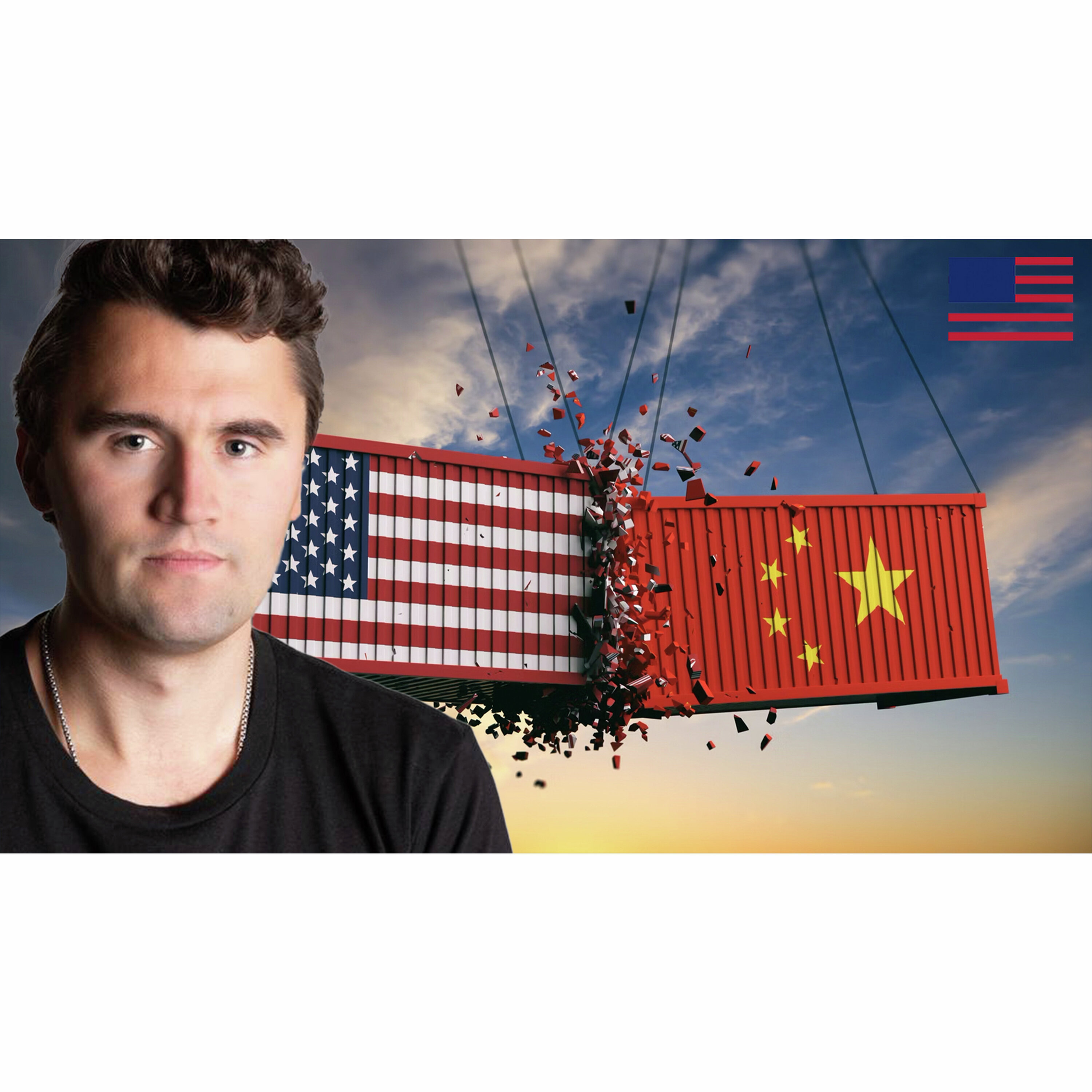
We will not embrace the ideas that have destroyed countries, destroyed lives, and we are going to fight for freedom on campuses across the country. That's why we are here. Noble Gold Investments is the official gold sponsor of the Charlie Kirk Show, a company that specializes in gold IRAs and physical delivery of precious metals. Learn how you could protect your wealth with Noble gold investments@noblegoldinvestments.com that is noblegoldinvestments.com it's where I buy all of my gold. Go to noblegoldinvestments.com Breaking news yesterday, China has announced that it is halting the shipment of rare earth minerals to the United States. We're going to explain that in just one second. We have eyes on the President Trump and Bukele, little press conference. It's a little all star team. You got Mike Waltz there. You got Suzy Wiles there. You got Stephen Miller there, You got Marco Rubio, you got Pam Bondi. We're keeping eyes on that. But let's dive into the breaking news that happened yesterday. The Chinese Communist Party has announced that it is suspending shipments of rare earth minerals to the United States. That the critical minerals that many American companies need to be able to survive and build things such as iPhones, electric vehicles are being put in suspension. Now, if you look at a periodic table, it seems as if we could print out a periodic table. It seems like China controls like half of the periodic table. Now, mind you, I have not looked at a periodic table in probably well over a decade. So in preparation for this program, I started to research what rare earth minerals specifically does China extract What are they used for? And then I had to go back to my periodic table and realize that the Chinese Communist party controls almost 85% of all the rare earths in America. This is a serious escalation in the trade war between the Chinese Communist Party and the United States. Here are just 10 rare earth minerals that China is the world's dominant supplier in. For example neodymium, North Dakota, otherwise known on your periodic table chart. This is used for high strength magnets for electric motors. Also used for headphones and hard drives. The suspension of ND very well could mean line down for so many electric vehicle manufacturers in America. It's understand that China doesn't control them because they naturally have all of them. They have just made it a priority to manufacture them while we didn't. So we shut down our mines and not develop them at all while China keeps their mines running. Or how about this one? Terbium, otherwise known as TB which is green phosphors in flat panel displays and LEDs. Or yttrium, otherwise known as Y used for LEDs and phosphors in colored TVs. Rare earth minerals compose so much of the technological revolution that we have been living through. We live in a world of globalized and tight supply chains. If you're a middle aged or older, this is a shift that has taken place in your lifetime. Logistics used to be a lot harder back in 1980. We didn't have widespread computers, we didn't have the Internet. Trade between different countries was more complicated and difficult. And so global trade reflected this. But since then everything has changed. We have the Internet and computers everywhere. And that has led to a very new form of economic organization. We now truly have globalized supply chains. It is now routine for the production of basic manufactured goods to take place all around the world. Consider a smartphone. The phone must be and might be designed in America and sold by an American company. But the raw materials in that smartphone are mined all over the world. In Africa, in Latin America, in Australia and so on. This is the Milton Friedman pencil which. Can you guys get the Milton Friedman pencil video on full display? But there is a fallacy and a problem in Milton Friedman's pencil lecture. Milton Friedman would say no one can actually make a pencil because all the components are extracted from around the world. However, time out Milton Friedman and I respect you with so much. Such a high degree of respect. What happens if the country that has the component that makes the pencil made possible stops trading with you? The fact that the Chinese Communist Party has suspended trade of rare earth Minerals with the United States of America proves Donald Trump's point. It proves that we are actually a vassal state of the Chinese Communist Party, that at any time they can flip a switch and we are reliant on them. And there is a short window for us to fix this. And if I might be candid with all of you, I feel as if supply chains have been an under emphasized component of this trade war. We've talked about bringing industry back to America pretty well. We've talked about how the Chinese Communist Party is a great enemy. I don't necessarily think we've built out the argument for supply chains. And it's not just the rare earth minerals like gadolonium, contrast agent and MRI scans. Pretty important. You want to have a heart mri, you want to have a brain mri. Well, you need GD now. You got to be really careful because it's also used in nuclear reactors. But it's incredibly important. MRI saves lives every day. Those rare earths are straight from China. We should not have to rely on our adversaries to be able to, for example, periodic element pr, an alloy, I can't pronounce it. Pradasodium minium alloy with magnesium for aircraft engines. Pretty important. A colorant for glass and ceramics. And it's not just the materials themselves. I composed a list of all of the goods that originate from the Chinese Communist Party. And this goes to show the scam of the free traders. The free traders would tell us, oh, we're just going to go make clothes and T shirts in China because it's cheaper. China has designed their economy so they're by far the world's biggest player in global supply chains. Even if the product is not made in China, it almost always includes parts or raw materials that are made in China. And China can cut off that supply at any moment if need be. We have chosen to let this happen because it lets us make money in the short term. But now we are dependent. We are a vassal state. This is slow motion self harm. We are hooked on the Chinese drug and I don't just mean fentanyl. The markets for these are not that large. We could develop these mines at a pretty low cost, but we didn't treat it as important and we pandered to the radical environmentalists. We shackle ourselves with the green environmental laws until it's impossible for us to build anything. And China pours more concrete in two years than America has poured in our entire history as a country. That is a fact. And let me just list off the other goods that we import, we import our medical equipment from China. Thermometers, pulse oxes, blood pressure monitors, ultrasound devices, all imported from China. Pharmaceutical ingredients. Do you know that 80% of active ingredients and US medicines originate from China or India, which itself often imports from China. So basically China. Or how about vitamins? Do you know that if a human being does not get vitamin C, you die? You make no vitamin C yourself. It's not like melatonin, it's not like dopamine, it's not like testosterone, it's not like estrogen. You do not make vitamin C. Now you can get vitamin C from lemons or orange juice, but most of America is vitamin C deficient. China about 30 years ago said, hey, what if we dominate the ascorbic acid, which is vitamin C market? So they're the only country that basically makes vitamin C. When you are taking a vitamin C oral supplement, it is made in China. So America's vitamin C deficient human beings need vitamin C to be able to survive and live. And China decided to corner the market and we ignored it. Our leaders, Bush, Obama, Biden never said, hey, probably not a good thing that we don't make vitamin C. Have you gone into surgery lately? Is someone wearing a surgical gown? Are they wearing night trial gloves, face shields or protective suits? All made in China. How about steel products? This one's pretty important. Rebar, steel, wire, sheets and pipes, all made in China. Aluminum products. Sheets, tubing, engine parts, cans. Aluminum is used in transportation for planes, trains and automobiles. Food packaging, power lines and medical devices or machinery parts, bearings, gears, motors, compressors, all made in China. Many US machines, from our elevators to our tractors, depend on Chinese manufactured parts. They have built a circular, an encircling strategy around the industrial manufacturing base of America. What President Trump is doing is to actually challenge us for the first time in a generation because we are becoming a vassal state of our greatest enemy. We see it all the time. When I visit college campuses, young adults demonize the concept of free markets and think government is the solution to every problem. How do we change this? By teaching our kids the foundational principles to counter what they are taught in public school. Parents want to teach their children about liberty, limited government and free markets, but often wonder, where do I start? That's where Tuttle twins can help. They empower parents by providing quality resources that break down these ideas in a way children can understand children. Take their book. The Tuttle twins learn about the law. In this story, the twins learn about their rights, that true laws protect people and that we should help others and that stealing is always wrong. Children can only change the world for the better if they learn these important principles. Now go to tuttletwins.com Charlie today and purchase their 14 book children's series for your family. They'll learn to think for themselves, to stand for Liberty. Go to tuttletwins.com Charlie today tuttletwins.com charlie a young man on campus recently asked me, he said, charlie, what's so wrong with a trade deficit? He said, when I go to a grocery store, I have a trade deficit with my grocer. And in that example, he is right. You are trading paper for goods. That's a great example. So let's play out that grocery store example. You go to the grocery store and they provide you with lettuce, tomatoes, bread, yogurt, whatever you need to feed your family. You don't produce any of that stuff yourself. So you go to the grocery store and you trade paper for food. Paper for food. So let's extrapolate that to the macro. Let's now look at the international we have been trading paper for stuff. Paper for stuff. But what if you're a grocer, had the power to starve you to death at any time and might if it felt like it? So funny Blake read my mind. That was exactly my response on campus. And Blake just put it in the chat and he said it better than I could have. That is exactly right in the ideal, in the libertarian abstract, what is wrong with a trade deficit? Of course you do what you do best and he does what he does best. But in the grocery store example, of course, it being China. China can say no rare earth minerals. Look at all the stuff that China could say that we are no longer going to import because of how stupid our leaders have been. No more rebar, no more steel wire, no more sheets, no more pipes, no more bearings, no more gears. No more motors. No more compressors. No more sheets. No more tubing. No more engine parts. No more vitamin C, vitamin D, multivitamins or herbal blends. No more antibiotics, painkillers, blood pressure medication. No more thermometers, oxygen monitors, pulse oximeters and blood pressure monitors. Not to mention all the rare earth minerals that I mentioned. How about this one? No more circuit boards. No more resistors. No more power suppliers. No more switches. No more drills. No more fasteners. No more wrenches. No more saws. No more tool kits. Oh, this is one that Emma will love. No more fertilizer such as phosphate and even glycephate. No more of that. So they're the China. Has they decided to corner the fertilizer market? That's right. They are the world's largest exporter of nitrogen and phosphate based fertilizer. Pretty important. Disruptions would immediately affect crop yields. Or how about drone components? Do you know that the components that we put into drones almost all made in China? And this is where Milton Friedman was mistaken. Hate to say it, love his book Capitalism and freedom. He's right. 99% of the time. He's a hero of mine. And in this beautiful, almost poetic video that we are about to watch, Milton Friedman talks about the beauty of international markets. He says, look at how this pencil is put together. None of these people knew each other and they all worked in harmony to put together the pencil. And everything he says is true. Except Milton Friedman. Except what if one of those components or one of those actors decides to stop trading with you because we've become so reliant on them? And Milton Friedman would say, well, then it's not in their best interest. And actually China could outlast us. They could. They're a totalitarian government. Experts sometimes say the winner of the next war is whoever can make drones the fastest. China could outproduce us 100 to 1. A thousand to one, maybe. And other than President Trump, there is no push for us to actually modernize our industrial capacity. Here's Milton Friedman and I'm gonna show you why he's wrong.
- [15:17]
Milton Friedman
Look at this lead pencil. There's not a single person in the world who could make this pencil. Remarkable statement. Not at all. The wood from which it's made for all I know, comes from a tree that was cut down in the state of Washington. To cut down that tree. It took a saw to make the saw. It took steel to make the steel. It took iron ore, we call it lead, but it's really graphite, compressed graphite. I'm not sure where it comes from, but I think it comes from some mines in South America. This red top up here, the eraser bit of rubber probably comes from Malaya, where the rubber tree isn't even native. It was imported from South America by some businessmen. Or the yellow paint or the paint that made the black lines or the glue that holds it together. Literally thousands of people cooperated to make this pencil. People who don't speak the same language, who practice different religions, who might hate one another if they ever met. When you go down the store and buy this pencil, you are in effect trading a few minutes of your time for a few seconds of the time of all those thousands of people.
- [16:36]
Charlie Kirk
Let me do the modern day version of the Milton Friedman pen or pencil. Well, this little rubber thing on the end of my pen that came from China and this part of the Pilot G220 was made in China and the ink that was also mined in China and the rare earth mineral that actually cast altogether was made in China. You see here, this pen right here was made by a bunch of zealots halfway around the world that hate us, want to murder us and take over the world, all from a singular country called China. Abstract philosophical ideas often unravel when confronted with the unpredictable weight of real life. And only President Trump is standing up for America against our greatest enemy. Gentlemen, let's get real for a second. Are you frustrated with today's woke dating scene? The apps, the games, the endless swiping. It's a waste of time. Finding a woman who shares your values, faith, family and patriotism feels nearly impossible. But it doesn't have to be. Selective Search, America's leading matchmaking firm is changing the game. They connect strong, successful men like you. Men who love God, love America and want a family with incredible women who share your values. These are intelligent, faith driven women who put family first and still believe in traditional values. Imagine that if you're single, 35 to 40 years old, conservative man in Southern California. Listen up. Selective Search has an exclusive network of women ready for the real thing. Here's the best part. Their candidate program is 100% free and confidential. Some of my closest friends have used Selective Search and let me tell you, they they're meeting incredible women. This is your chance. This is not an app, it's your answer. The perfect conservative woman is out there waiting for you. Visit selectivesearch.com california today. Let the professionals introduce you to women already looking for someone like you in Southern California. Don't wait for the perfect moment. Take action now. Go to selectivesearch.com California and start building the future you deserve. Joining us now is Stephen Moore, great friend, former Trump senior economic adviser, president of Unleashed Prosperity and author of the Trump Economic Miracle. Steve, great to see you. Thank you for taking the time. So Steve, I'm not as interested in talking to you about the tariff stuff because I think that's all gonna be settled. Instead I wanna talk about what you are advocating for on the domestic unleashing prosperity side. Because in order for us to have an economic boom, of course we need to figure out all the trade stuff. But most importantly, we must have a robust pro growth, hopefully historic tax package. What Are you hoping. And what can we expect to come out of Congress from no tax on tips, no tax on overtime, making the Trump tax cuts permanent. And talk about the significance and the profundity of locking in those wins.
- [19:23]
Stephen Moore
Great to be with you, Charlie. And one of the reasons I wanted to come on your show is that before we get into all the good stuff in the tax bill, I want to alert you and your listeners to something I'm hearing that I think is very dangerous. And we need to get all conservatives to shout out against this, which is that there are some in Congress, some Republicans, who want to raise the top income tax rate. That would be a total disaster for those of us who are old enough to remember when George H.W. bush raised taxes, and remember, read my lips, it split the party. It did great, great damage to the economy, and it led to the election of Bill Clinton. So Republicans would be making a major mistake if they raised the top rate. In fact, every time in history. By the way, my buddy Art Laffer has a great book out on this called Taxes have Consequences. Every time we've raised tax rates, the economy has gone into recession, the rich have actually paid less taxes, and the burden has shifted to lower income people. This is not a way to help America. And I just wanted to get out that out there. So I want your listeners to call your congressman or senator, say, do not raise tax rates on anyone. That's not what we do as Republicans.
- [20:34]
Charlie Kirk
So let's. So that, that I agree with that. I wanna try to build this out further so I am at the top. Income. The show does very well. So, you know, okay, lower taxes. What is though the macro argument for someone right now that says, hey, why shouldn't, you know, Elon Musk? So let's build out how does, how does lower taxes for a wealthier person impact the welder or the electrician?
- [21:01]
Stephen Moore
Yeah, that's a great question. And by the way, Elon Musk has a better answer to that than I am. You know, you may have seen him a month or two. He was asked that same question, Charlie. He said, look, who do you trust to invest in the American economy better? Someone like me, who's created me that he was talking about himself, who's created, you know, tens and tens of thousands of jobs and some of the greatest businesses ever, or politicians. So we don't. The people who are the job creators and the wealth producer in our economy are people at the top. They've gotten to the top because they're smart. They run, by the way, over half of all small businesses pay their taxes on the individual income tax rate. Do we want to be taxing the small business men and women in the country so it doesn't work? And the other thing about the rich and we, this is also in Laffer's book, is that they're smart. They have tax lawyers, they have a tax accountants. They're not going to pay these higher rates. They're going to find ways around it. And what happens is the tax burden really gets smashed onto the poor. So we don't want to do it. Reagan cut tax rates to the lowest rates we'd had in 75 years. We had the biggest boom ever. Trump cut tax rates. We had a big boom. Every time it works. It's just. Look, any student of history knows that lowering tax rates is a great thing. And the last two presidents who are Republicans who raised tax rates, Herbert Hoover and George H.W. bush, it didn't turn out too well for them.
- [22:24]
Charlie Kirk
So can you also talk to this idea of a brain drain, that we are in a competition for the world's best people and that when you start to deincentivize profit, then they very well might go to other countries in the data. Is brain drain drawn out or is that just a talking point that sounds good on tv?
- [22:46]
Stephen Moore
Oh, no, I mean, you raise a great point, Charlie. I should have said this at the outset. How do high income tax rates affect the risk rich? Just look across the states. How many times have you and I talked about this? You know, if you look, just. A new report came out last week showing again that California, Illinois, New York and New Jersey are losing population at the fastest rate of any state in the country. Those tend to be the highest. You know, California and New York have 13% income taxes. Now, you know that. Charlie. Where do you live, by the way? Are you in Florida?
- [23:16]
Charlie Kirk
I live in Arizona. So it's better than California.
- [23:19]
Stephen Moore
Oh, in Arizona.
- [23:19]
Charlie Kirk
But we're working, we're working to sunset our income tax here. Not. Not. We don't have it yet. Right, exactly.
- [23:25]
Stephen Moore
Well, that was the point I was going to make. Yeah, that was the point I was going to make is that you have states like Tennessee, Texas, Florida, they have no income tax and they have, they're booming. Arizona's got a pretty good low income tax rate. That's, that's working for them. So this is a very positive thing for the, for the low tax states. And you know, California could lose three new congressional seats if they stay on the course they're on.
- [23:50]
Charlie Kirk
That's right. So in the spirit of raising taxes. Here's one that I go back and forth on and I want to get your opinion, which is the carried interest loophole. Some on Capitol Hill are saying that we have to close it. Some are saying that Trump already fixed it. What is the carried interest deduction and how do you stand on that and what is the potential impact that it could have on the economy at large?
- [24:15]
Stephen Moore
Well, I'm glad you asked about that. Literally just this morning I finished writing my weekly column on that very issue. So you must be clairvoyant. But you know, look, the curious. I'm not going to get into the weeds on this. This is the private equity industry, which is what pumps money into small businesses, family businesses, to keep them alive or to allow them to grow into bigger businesses. We are almost unique as a country in having this incredible private equity industry that injects capital into smaller and medium sized companies so they can grow. And it works. It's an amazing thing. It's created like 20 million jobs through this private investment capital. And we don't want to tax that more. Look, it's very simple. If you tax something, you get less of it, right? If you tag. That's what Reagan taught us. Why would we want less equity going into small and growing businesses? It doesn't make any sense.
- [25:11]
Charlie Kirk
Yeah, it just, the argument that the other guys would say is, but it's a fat cat loophole made and designed for Wall street and it's used and abused the. So what?
- [25:22]
Stephen Moore
And I don't, I don't buy that.
- [25:23]
Charlie Kirk
Build it out at all because I trust.
- [25:26]
Stephen Moore
So basically we have two tax rates. We have capital gains tax, which is too high, we tax it that at 24% and then the personal income tax, which is taxed right now at 37%. So what these people want to do, and this is basically people like, you know, Bernie Sanders and Elizabeth Warren and some Republicans, they said, well, we should tax these, these people at the personal income tax rate, not the capital gains rate, which is, to me, I don't even get the logic of that. This is these companies. When, when a private equity person puts money into a company that's at risk capital, they, they're at risk of losing it all. That's why we have a lower capital gains rate, because it's a riskier investment.
- [26:07]
Charlie Kirk
So now speaking more broadly, let's talk about energy policy and other elements of the bill. So we wanna see the Trump tax cuts locked in. What exactly does that mean make the Trump tax cuts permanent? The left is losing their mind, they're saying it's just a tax cut for the rich. What would it mean if the Trump tax cuts are not made permanent?
- [26:29]
Stephen Moore
So first of all, that's a really important question because I think a lot, you know, we did a poll that half of Americans are not aware of this because, you know, a lot of Americans just don't pay a lot of close attention to this if they don't get this job done. Charlie we're talking about the biggest tax increase in American history on January 1st because all of the Trump tax cuts would go away and virtually all of them. And so the average family in America, I'm not talking about Warren Buffett and Bill Gates and, you know, Elon Musk, I'm talking about the average family would face a $3,000 increase in their taxes next year. We can't do that. And we've already got, you know, middle class families straight financially stressed out from Biden nomics. Can you imagine if the average family had to pay $3,000 more taxes? And then, of course, you know, the corporate rate would go up to 21% to one of the highest in the world, 35%. That's one of the great, you know, achievements of the Trump tax cut. So we don't want to have that happen. We've got to get this done. We got it done quickly. I'm telling Congress, get it done. Get a bill on the desk of Donald Trump by Memorial Day. We've seen a choppy stock market. Investors are fidgety. I think one thing that would really help restore investor confidence is for Republicans to sign seal and deliver this in the next month.
- [27:50]
Charlie Kirk
Steve. So let's talk now about heavy machinery deduction. The left will attack about this saying, oh, this is just a private jet deduction. What does a heavy machinery deduction mean for the economy at large and also for people that work with their hands, machinists, welders, people that are, you know, are fixing automobiles. And what does the data show about a 100% depreciation for heavy machinery?
- [28:15]
Stephen Moore
It's amazing that, you know, we even have to talk about this because it's so obvious if a business invests in a factory or invests in the kind of machinery you're talking about. I mean, a welder can't weld if he doesn't have the equipment to weld with, right? I mean, they don't have a job if they don't have the equipment. If there aren't factories, there aren't jobs. So we absolutely, absolutely want to allow companies not to just allow them, to encourage them to invest in, in factories and machinery and computers. Those are what make American workers more productive. It's the reason, you know, it's our capital investment and our know how that makes the American workers the most highly paid workers in the world. So we ought to say if company builds a factory, you can write it off. If you build, if you have, you know, heavy equipment like you're talking about, if you're buying a, you know, I talked to Fred Smith who owns Federal Express, you know, one of the great companies in America and he's saying once we, they allowed that, that deduction, they bought four jumbo jets so that they could transport packages around the world. Think of all the jobs that created for the Boeing workers.
- [29:25]
Charlie Kirk
Steve, in closing here, about 30 seconds remaining, what do you think is the probability of this bill passing and getting Republicans behind a pro growth agenda?
- [29:35]
Stephen Moore
I'm gonna put the odds at 85%. I think it's gonna get done. The sooner the better. And I think that it's gonna be a very positive development for the stock market and for workers. And no tax increases in that bill. No tax increases.
- [29:50]
Charlie Kirk
Steve Moore, thank you so much. See you soon.
- [29:52]
Stephen Moore
Thank you, Charlie.
- [29:55]
Charlie Kirk
A lot of students I talk to have private student loan debt and you might have private student loan debt as well. Why Refi can refinance your monthly payment and guarantees interest rates under 6% ensuring affordability and financial relief. Why Refi does not care what your credit score is? Why Refi refinances distressed and defaulted private student loans which are different from federal loans. Why refi offers a 3 minute rate check without any credit impact? Bad credit is accepted. Go to yrefi.com you don't have to ignore that mountain of student loan debt anymore. It may not be available in all 50 states. If you go to Yrefi, you can read the testimonials yourself from other people who've been where you are and how they've escaped. Go to yrefi.com Bad credit is accepted. They offer a three minute rate check without any credit impact. Go to yrefi.Com that is yre f y.com Unlike Joe Biden and unlike prior presidents, we have the President's health report right here. It's three pages long. And let me tell you, President Trump is objectively very healthy. I've seen President Trump eat ways that I would not eat. I'm a very careful eater. And I'll tell you, this guy is the exception. He is not the rule at 78 years old. And 10 months, nearly 79. He is 75 inches. So a strong sit F6 foot 3, 224 pounds. His resting heart rate is 62 beats per minute. Let me just pause there. That is a very, very good resting heart rate. Like, very good. His blood pressure is an exceptional 128 over 74. Awfully desirable. That's desirable if you're 31 years old, considering the stress that he's under. His Pulse OX is 99% on room air and a perfect temperature of 98.6. No issues with his eyes, his head, ears, nose or throat, neck or pulmonary. His lungs were clear. Connecticut scan of his chest shows no abnormalities. And the most remarkable of all is his cholesterol levels. Despite President Trump being known for liking a good sundae and having a good Trump burger, his total cholesterol is 140 milligrams. The optimal, of course, is under 200. His triglycerides is 56 milligrams under the normal level, which is where his good cholesterol is 77. His bad cholesterol is 51. All very desirable. And then his metabolic panel, I gotta, you know, I'm big into blood work. I try to do blood work four or five times a year. His metabolic panel is phenomenal. His blood work, I mean, his glucose level, little high, but not in bad territory. It's 89 out of 99. His hemoglobin is great, 5.2. Little bit on the higher, normal, but still perfectly fine. His vitamin B12 is perfect. And I don't think Trump has taken vitamin B12 shots. I could be wrong. His PSA is normal, ths normal. Urinalysis, perfectly fine. He's only had one surgery in his life, which was an appendectomy at age 11. That was probably pretty traumatic. My favorite of all of it, though, you say, how is he so healthy? I have an opinion. I have three reasons why President Trump is so healthy. It's not because of his diet. He does walk a fair amount when he golfs and he's walking around, he's very active. But there are three reasons why President Trump objectively is in probably some of the best health you'll ever find a president. When you are trying to end the Russian, Ukrainian war, when you are trying to close an invasion on the southern border and your blood pressure is 128 over 74. I'm impressed. I gotta tell you, I am impressed. There are three reasons I attribute this to. Number one, he's got great genes. Sorry. If you guys want to get healthy. Part of it is just genes, your genetics, who you come from. He's got phenomenal genealogy number two. He has purpose. I have found the people that live the longest and are the healthiest. They have a mission. They have a zeal for life that supersedes everything else. It's almost as if you invisibly communicate with all of your trillions of cells, meaning, keep me healthy, keep me alive. He has meaning and he has filled that existential void with a mission to save the United States of America. And the third reason as to why his cholesterol is very healthy and his blood pressure is great, and yes, he takes some cholesterol statins and all that, which of course is 78, is no big deal. But it's the most obvious on the entire report that is just glaring, that cannot be overlooked. Lifelong abstinence from tobacco and alcohol. The facts are the facts, everybody. Now, if you want to go drink, go drink. You want to smoke, you want to smoke. But if you want to be 78, running the free world with five kids worth billions of dollars and have blood pressure that's better than your average 28 year old out of the street, don't drink and don't smoke, kids. You too could become the leader of the free world. Looking at Donald Trump, 78 years old, 6 foot 3, 224. We might lose Donald Trump to the NFL draft in two weeks and this guy's going to play for the Tennessee Titans soon. All kidding aside, he's in fighting shape and fighting form, perfectly passing his cognitive test. And all of the suspicions around President Trump are put to bed and put to rest that he's ready to keep on being the man in the arena and God bless him. Thanks so much for listening, everybody. Email us. As always, freedomarliekirk.com thanks so much for listening and God bless.
- [35:37]
Stephen Moore
For more on many of these stories and news you can Trust, go to charliekirk.com.