Loading summary
Transcript30 lines
- [00:00]
Charlie Kirk
Hey, everybody. Charlie Kirk here live from the Bitcoin.com studio. Dr. Slack joins us. We ask the question, is diversity a founding American value? Also, Steve Hilton joins the show. He's running for governor of California. I've endorsed him. And we hear his case. Email us. As always, freedom. CharlieKirk.com get involved with Turning Point USA@tpusa.com that is TPUSA.com you can become a member today. Members.CharlieKirk.com that is members.CharlieKirk.com buckle up, everybody. Here we go. Charlie, what you've done is incredible here. Maybe Charlie Kirk is on the college campus.
- [00:31]
Steve Hilton
I want you to know we are.
- [00:32]
Charlie Kirk
Lucky to have Charlie Kirk.
- [00:34]
Steve Hilton
Charlie Kirk's running the White House, folks. I want to thank Charlie. He's an incredible guy, his spirit, his love of this country. He's done an amazing job building one of the most powerful youth organizations ever created, Turning Point usa.
- [00:48]
Charlie Kirk
We will not embrace the ideas that have destroyed countries, destroyed lives, and. And we are going to fight for freedom on campuses across the country. That's why we are here. Noble Gold Investments is the official gold sponsor of the Charlie Kirk Show, a company that specializes in gold IRAs and physical delivery of precious metals. Learn how you could protect your wealth with Noble gold investments@noblegoldinvestments.com that is noblegoldinvestments.com it's where I buy all of my gold. Go to noblegoldinvestments.com we now turn our gaze from the imperial capital to the West Coast. I have made an endorsement in the California governor's race. And honestly, it's the least I could do. This man was always so good to me and he was so generous and so kind and so magnanimous. He had me on his program on Fox News. So thoughtful and smart and gave me a platform that I'll never forget. And beyond that, I agree with him completely on what he wants to do for California. And I just love his spirit, his spunk, his wit, his charm. And it's Steve Hilton who is hopefully going to be the next governor of the great state of California. Well, the once great that we want to make golden again. Mikey on my team knows that every time I land in California, which is quite often, I'll be there next week quite a lot. I say the same thing. I say it is a catastrophe. It is a tragedy. What they did to this place, what they did to California is one of the greatest acts of self and deliberative destruction in American history. California is a gift from God. Objectively, it is beautiful. It's serene. Only in California can you wake up to a sunset surfing, go hiking with your family afternoon and end the day skiing. And if you really want to, you could drive ATVs on the dunes throughout California. The biodiversity from Yosemite national park, from Orange county to Santa Barbara to the Bay Area to the redwoods. There really isn't a place quite like California. And I have, I joke around with my team, I say if California was like as liberal as, I don't know, if it was like Nevada, if it was as liberal as like a moderate liberal state, I would live in California. It's that beautiful. It's that remarkable. The quality of life used to be something, but it is increasingly out of touch, out of reach. And Steve Hilton is aiming to make that American dream, and more importantly, that California dream accessible again. Steve, great to see you. Congratulations on your launch. Steve, tell us all about it.
- [03:24]
Steve Hilton
Thank you, man. It's so great to be with you. We are on the road fighting to save California. We're just driving from San Francisco where we were yesterday, dealing with all those horrendous issues, the complete collapse of civilization that you see on the streets of San Francisco. We're now out on the road to Fresno in the Central Valley, our amazing agricultural heartland. But first, Charlie, I just want to say thank you so much for being part of our amazing event in Huntington beach on Tuesday. I wish you'd been there to hear the gasp of excitement when we didn't tell people you'd be joining us. We just played your wonderful video and the crowd was so excited, as was I. And I really, really appreciate your friendship over the years and your support of me in this effort because it actually means, I say this the whole time, California is too important to let it slide further into stagnation and decline. It's too important for America. Never mind everyone who lives here in California. We've got to turn things around. We've got to end this 15 years of Democrat one party rule and go in a new direction.
- [04:29]
Charlie Kirk
So, Steve, tell us the agenda that you presented of exactly your plan to make California golden again.
- [04:36]
Steve Hilton
So it's got to focus on those positive, practical things that are common sense. That term that President Trump uses the whole time, it's exactly right. We've had so much ideology over these past years. That's what's driven all this extremism and ended with those terrible results that we all know. So we just got to think about those basic things. It's a simple story of the California Dream a good job where you make enough to raise your family in a home of your own, a safe neighborhood with a good school, so your kids have a better life than you. That is the ladder of opportunity. Every rung on that has been smashed by Democrat policy. We've got to rebuild it. We've got to allow people to actually live in California. So many families I speak to young people wanting to have families. So there's no way we could do that in California. It's so tough to live to just afford the basics. So the number one thing I want to do, the quickest thing we can do to directly put more money in people's pockets, is take working people and working families out of state income tax. Because it's insane. The level of taxation in California. You add it all up. We have the highest taxes in the country. So the first part of my plan is to take anyone earning $100,000 or less, which is not a big salary. California, considering how expensive everything is, won't pay state income tax. Right now they're paying 9.3% state income tax even if you're earning $70,000. It's insane. Secondly, we've got to make it easier to start and run a business in California. I've run businesses both here in America. I've started companies in England. It's so difficult with just the endless insane bureaucracy. It's coming out of state government. We've got to cut it right back and allow people to just follow their dream. And especially small businesses. They're being absolutely hammered by Democrat regulations and insanity from state government in Sacramento. Homes, we can't. We have the highest housing costs in America. The number one reason for that, we're just not allowed to build homes anywhere where people want to live. That dream of a single family home. We can raise your kids the yard, we can enjoy the weather. The Democrats are ideologically against that. They want everyone to live in apartments density in the middle of cities. That's not the California dream. So we've got to remove those restrictions, get rid of the complexity and all the building codes, make it easy and cheaper to build the homes we want. Then finally, I talk about great kids in the broader set. Of course the school system has to be improved. We have like barely half the kids in our public schools can meet basic state standards. In English for math, it's 33%. Those numbers should be 100%. And the way we do that is to get more transparency so that we can reward good teachers and remove bad ones. And so we got to Have a grade for every school, a grade for every teacher so that parents can see what's going on. Then you give them the power to make the changes. That's just the start of it. Is it? Common sense things wide agreement. This is not controversial, it's not ideological.
- [07:34]
Charlie Kirk
I mean I agree with every single word you just said, Steve, and you're right, this is not controversial. And I don't know if you heard what I said earlier, but it's a tragedy and a crime against the country. What the Democrat cabal have done to California. It is a gift from the heavens. When you go to. If you, if you guys have not spent extensive time in California, you'll know exactly what I mean. There is no state as beautiful as, I mean Alaska's close, but it's a separate issue. I mean California is its own, its own place amongst the beautiful areas on earth. Really. So Steve, about a minute and a half remaining, would you argue that decline has been a choice? That California made a choice through its political leaders. Talk about how decline is a choice and therefore the reversal of decline is equally a choice.
- [08:20]
Steve Hilton
Absolutely. Nailed it. These are man made problems or to be specific, Democrat made problems. These are policy choices that have given us all these insane costs. There was a time when we had the most affordable homes in the country in California. We would build, build, build. That's when the California dream, that suburban life we all imagine is the American dream that used to happen. We had the most fantastic building and engineering projects in the world. We're literally about to drive past one of them. San Luis Reservoir just here in just close to the Bay Area. Built in the 1960s. We built the state water project to collect the, the melted snow melt from the Sierras and get it to Los Angeles and dry parts of Southern California and the Central Valley. We did that a generation or more, two generations ago. Stopped being able to have the ambition and hustle and that's what we need to get back to. It's all possible and doable if we have the right mindset, the right ambition and get rid of this far left ideology that's ruined this beautiful state. That's how we make California gold.
- [09:28]
Charlie Kirk
If you guys want to help out these campuses indirectly refer someone to why Refi? Why Refi? They've been great supporters of the show. If you go to yrefi.com you can read testimonials from other people who have been where you are and how they've escaped. Bad credit is accepted. Go to yrefi.com youm can even skip a payment every 6 months up to 12 times without any penalty. Go to yrefi.Com May not be available in all 50 states. Call 888-yrefi34 or log on to yrefi.com that is yrefy.com do you have a co borrower? Why refi can get them released from the loan. You can give mom or dad a much needed break. Go to yrefi.com 8@8yrefi34 or log on to yrefi.com yrefy.com may not be available in all 50 states. So take a look at it right now yrefi.com all right Steve, you're going to hear this question 10 times a day and 11 times on Sunday. The three words can you win?
- [10:26]
Steve Hilton
So the version of it that was expected, Charlie, how the hell can you win?
- [10:30]
Charlie Kirk
There you go.
- [10:31]
Steve Hilton
In this deep blue state as it's described. Well, here's the plan and I just want to be really clear with you and with everyone, Charlie. That's why I'm doing this. To be the governor, not to run a good campaign or to get everyone excited or to help people down ballot. I want to do all those things because I think that we can build a real movement to change in California. But as you know, I've worked inside of a government back in the day in the uk, senior advisor to a prime minister. I know how government works. I can't wait to actually be the head of the executive branch of California so we can actually change things. That's why I'm doing it. So the first point is that California is already much more of a Republican state than people think. The average share of the vote in California for Republicans, Even the last 20 years or so where there hasn't been the kind of energy we're seeing Today, it's over 40, 40%. That's more than a lot of people think. But in the last year or so, you're seeing real energy and change. And I think it's part of the Trump factor that's sweeping the nation. So you look at the last election in California, you had 10 counties flip from blue to red in California, including where I'm heading today. Fresno county, the fifth biggest city in the state. These aren't just tiny little rural areas. Ten counties, Republican, Democrats, Republican. Then you see what happened on the statewide ballot initiatives in a way, last November, Republicans won in California without anyone realizing it. The measure, Prop 36 to make crime illegal again after Kamala Harris ridiculous. Prop 47 that legalized theft up to $950 a day. The notorious one that was overturned by 70% majority across the state. But also measures to stop a big tax increase, to stop rent control, to stop the minimum wage rising. Those all passed the Republican position on those issues. And then really we got to look at Huntington Beach. That's why I chose that as the location for my launch event four years ago. Huntington beach, iconic city. The biggest city in Orange county was run by Democrats 6:1 and then 20:22. A group of very energetic Republicans took over. They won 4:3, did a good job. They removed homeless encampments, they implemented common sense conservative policy. They prosecuted crime, they took the nonsense out of the school libraries. Just last November they won 7 0. So you have a place that went from 61 Democrat to 70 Republican in 44 years. The best bit, Charlie, two weeks ago Huntington beach was rated best run city in California. So it's a great story there. Common sense Republican ideas. You've got to have that fighting spirit. You can have clear, simple ideas that can give people hope. I think everyone understands you need change in California, but they haven't had that sense of this really good happen. So I should get engaged. That's the whole point of my campaign, say, look, here are the things we can do to make your life better. You've got to vote for change.
- [13:34]
Charlie Kirk
Steve. I love that answer. So what is your plan? You're going to be going up and down the state raising money. And what is the timeline? Give our audience a little window into your campaign against for the daunting task of winning the governor's race in California.
- [13:48]
Steve Hilton
It's daunting, but it's exciting. I mean, I've already been working on this for a long time. I set up a policy organization so we got them sort of golden together and it's got plans there. But you can see my plan@stevehiltonforgovernor.com F O R stevehiltonforgovernor.com and you've got a whole set of very simple ideas as we've been discussing. I'm going to be a high energy, high profile campaign at this state for too long, I think. We haven't taken the fight to the Democrats. They do not have a leg to stand on when it comes to their results. Everything's been a total disaster. I cannot wait to take them on. I'm going everywhere in the state. Day one was Orange County. In the evening we're in Los Angeles yesterday San Francisco today Fresno tomorrow Sacramento next week up in Napa. And Sonoma there's a whole farming industry there that's being crushed by Democrats. Every day I'm going to be telling the story of how we can change things for the better. We're going to be putting all out live streaming our events at a policy forum in San Francisco yesterday where we asked questions from the crowd on every single issue. And so this is going to be a very visible, high energy campaign and I hope people follow the best way to follow the campaign. Follow me on social media. Evehiltonx. See you on the road.
- [15:00]
Charlie Kirk
Very good, Steve. Thank you so much. Talk to you soon. God bless you and make California golden again. Thank you.
- [15:06]
Steve Hilton
Thank you, Charlie. See you soon.
- [15:07]
Charlie Kirk
Email us freedomarliekirk.com and subscribe to our podcast. Some breaking news. Our Turning Point USA chapter leader at Westchester University was volunteering ahead of a student event with Chloe Collins was just assaulted on campus. This is happening almost on a daily basis. The attacker ran up, spat in his face and punched him repeatedly. He's okay and is pressing charges. We're seeing if we have any video of that. This is the type of, let's just say, danger that our students face every single day on college campuses. Of course the media will not cover this. They are the violent ones. So pray for your Turning Point USA chapter leader. Get to know them, shepherd them, because they're on the front lines literally taking punches for our republic. Hey everybody, Charlie Kirk here. Brand new year. Brand new opportunities to change the world for the better. It's easier than you might think. You can save babies by providing ultrasounds with preborn. Together with the Sanctity of Human Life Month, we're gonna save 35,000 babies to show the world that not only do we believe life is precious, but we're gonna do something about it. Your gift of preborn will give a girl the truth about what's happening in her body so so that she can make the right choice. What better way to start this new year than to join us to save babies? And $28 a month will save a baby a month all year long. A $15,000 gift will provide a complete ultrasound machine that will save thousands of babies for years and years to come and will also save moms from a lifetime of pain and regret. I am a donor to this organization and you should be too. Start this new year by being a hero for life. Glade 338-502229 or click on the preborn banner@charliekirk.com that is charliekirk.com and click on the preborn Banner, I'm a donor. You should be too. Charliekirk.com Preborn Banner Phenomenal Guest here. I've taken some of his online course at Hillsdale College. That is charlieforhillsdale.com It's Dr. Kevin Slack. His book is War on the American how liberalism became despotism. Dr. Slack, welcome to the program. I want to talk to you mostly about this idea of immigration and the founding fathers. I want to ask you what were the American founders view on immigration? How did they incorporate that into law? Because if you were to ask just a regular person, they'd say one thing. We are a nation of immigrants. Everyone should be welcome. And that's what the founders believe, was that the founders view on immigration. Please educate our audience. Take as much time as you please.
- [17:32]
Dr. Kevin Slack
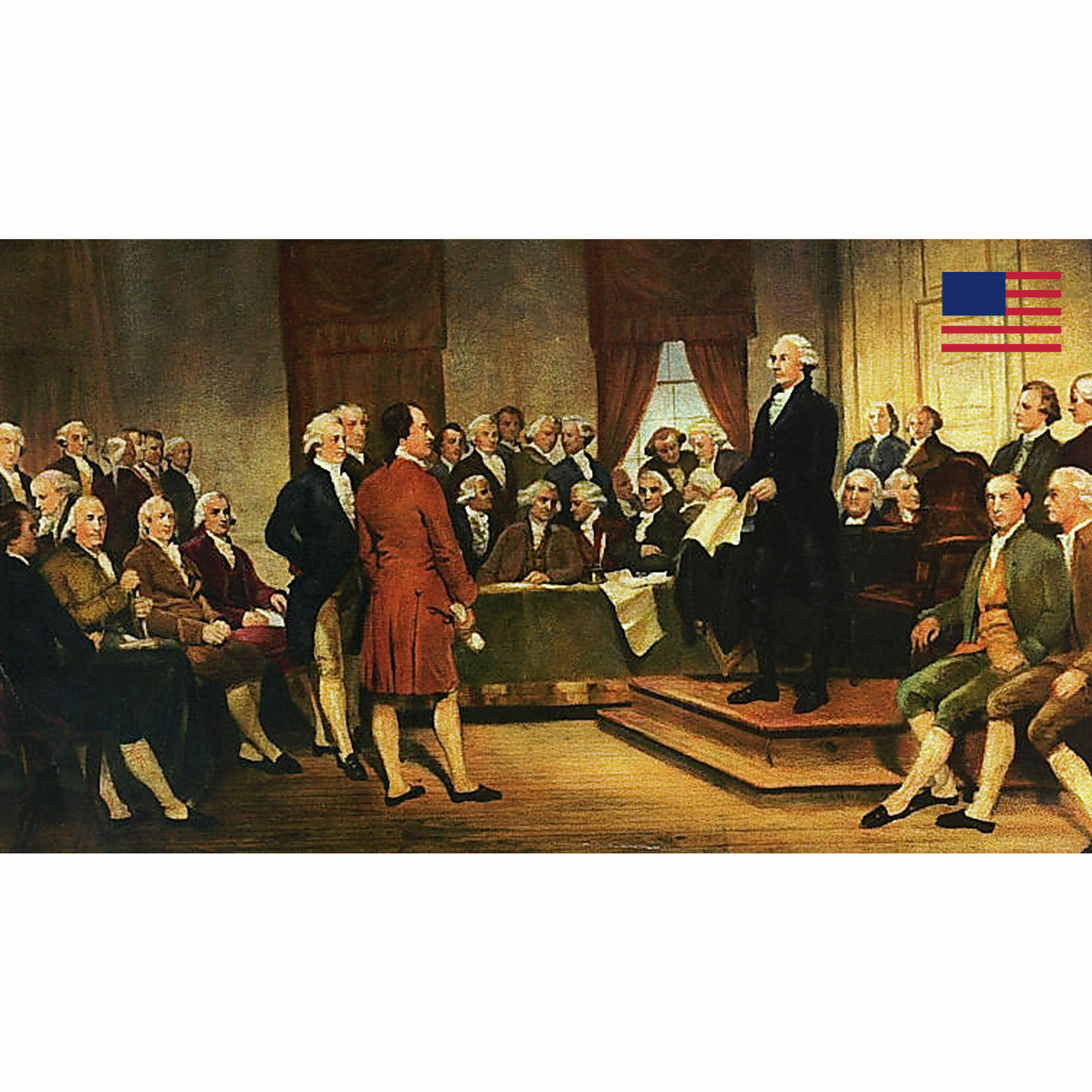
No. You know, and some of the founding fathers. Benjamin Franklin was probably the first to write about immigration. He does this in 1751 in his observations. His real concern was that he had tried to form this was an extralegal militia. It was a military association because the the Pennsylvania Quakers in the assembly wouldn't raise money for defense. And so he appeals to all of these different ethnicities in Pennsylvania to unite for the defense of life, liberty and property. It was a veritable social contract. It was extra legal. And the idea was they would protect themselves, all these different groups, the middling artisans of Philadelphia and Pennsylvania, against threats from the French and pirates in the Delaware as well as on the frontier. And what he saw was is that many of those, the Germans who had come over, they'd migrated and massed to the colonies, had not participated in this effort, even though he tried to woo them into it. And so in 1751 he'd made this effort in 1747, in 1751 he starts railing against the German immigrants. And he says why are we bringing in all of these German migrants? He says rather what's going to happen? They don't learn our language, they don't have our habits, they don't appreciate our laws. And that instead of anglifying them, they're going to Germanize us. And so he stresses this idea of assimilation. Now he would change his views on the Germans and the Scotch Iris over time. But one thing that he stressed, and this was adopted by the other founders, somebody like Thomas Jefferson as well, was the idea of unity. How is it that affection binds a people together to command the kind of sacrifices that are necessary to preserve a people? So when we talk about a people, we say Americans. It means we're presupposing that that entity exists and that it has something in common. And that meant that the foremost, if you read Franklin or Thomas Jefferson, what they really look to is to try to get your own citizens to have more kids. So that was, that was immigration awareness. Number one was we actually don't want to bring in lots and lots of immigrants because of certain threats that they pose, although we do admit immigrants. But it wasn't a nation of immigrants. That's a much later teaching that I think you can trace to the 1920s. The idea of a nation of immigrants really takes off in the 1950s. Thomas Jefferson and Franklin, they both really questioned whether we should bring over many of the old world European immigrants. And so I think that's a second point. First you have the idea of a common mind, what binds us together as a people. And the second was the kind of character, what are the manners and the habits of the people that are coming over and what kind of institutions will they endorse if they're allowed to vote in our political system, Is it the case that they're going to bring over some of the bad policies and habits that they had left and that they had fled from? So that was the second major important point. It's also the case that if we're going to be honest, the founders warning to us would be that diversity undermines unity. And that's why if you get to the first Naturalization act of 1790 and this, you know, this is just truth, it may offend us today, but the founders said only free whites could become citizens. And the reason for that wasn't just you have ideas of inequality, natural inequality. But even Franklin in the 1760s, he looks, he goes, visits the Negro school and he says, well, I've changed my mind about these black children. It seems like they can learn just like white children. But even then he says, I hope that will discourage migration. And the reason that Franklin and Jefferson, Jefferson as well took this position and notes on the state of Virginia was they didn't think you could have Republican freedoms if you had a population that was torn apart by faction. And so this becomes, of course, this guides immigration policy. Who can become a citizen all the way until the 14th Amendment and the new Naturalization act of 1870. And that's when white Americans say, particularly the radical Republicans, they could see that the attempt on the part of the Southerners was to reintroduce slavery through a loophole in the 13th Amendment. And so in the 14th Amendment they recognized natural born citizenship for the freedmen as well as they changed naturalization policy. And so you have whites and blacks can become citizens. This did not include other races. This did not include Asians for purposes of migration in order to include Indians. That status would change for Indians under public law in the 1920s. What and why? Why did they do this? Well, I think it was those three basic points. One was, how do you have a common mind, the idea of a common citizenry, so you have a country for its citizens. Second, how do we bring over immigrants who are going to share some of our common values? This is one of the reasons why the laborers did not want a large number of Chinese immigrants at the end of the 19th century. They were very much afraid that they would bring over a kind of paternalistic view of the ends of government. There's also why many of the Irish posed such a problem. You know, 75% of the Germans, they migrated off to the countryside, but about 75% of the Irish settled down in major cities. And the claim was, is they brought much of their paternalistic or view of government that further focused on patronage. And of course, every time you have mass migration, it increases crime. It also increases the. The entitlements program or the welfare programs of the localities and the states, and of course, today the federal government. And so from 1880 to 1920, we do see a change. We see the admittance of new groups. And I think that for us, and we can look at the last two waves of immigration, this poses a kind of challenge. And that is, in the founding period, they thought diversity undermined the kind of order necessary for republican freedoms. We have a diverse regime. Right. That's what we know. And I think the challenge to us is how do we maintain this sense of unity so we can protect those republican freedoms and freedom under the law? And so I can go to the last two waves in law. You have 1880 to 1920, these were largely southeastern Europeans. And that created all kinds of problems. The, the attempt to assimilate them into the body politic. It was also the case that they introduced new institutions to try to manage the migrants. What we look at is the family courts today. If you read Roscoe Pound, this was the. The dean of Harvard Law, he's writing about the family courts, and he says these are introduced to manage all of these southeastern Europeans who are coming over here who don't know our ways. And so in the family court, you don't have due process rights. You have maxims of equity that guide all the, the. The rulings of the judge. If you don't follow them, you're in contempt of court. So what happened after the 1920s was, was two laws passed, 1921, 1924, and they introduced a national origins quota. And this would have basically froze out those who could migrate to the United States. 70% of all migrants would come from just three countries, Northwestern European countries. But the real effect of that immigration law of 1924 was it stopped immigration generally. So the percentage of foreign born in 1920 was about 14%. When you get to 1960, it's about 4 or 5%. And what that meant was all Americans just had more kids, Americans of all different races, because there was a prioritization on those who were natural born citizens. The 1965 Immigration act, as we all know, changed much of that. And one of the great dangers that it introduced was this. At every period of mass migration, whether you talk about the Irish in the 1840s or the migrations from southeastern Europe, 1880 to 1920, that you had a period of assimilation that followed these waves. What's happened since 1965 is an ever increasing number of migrants. And it poses that great threat to us that I think the Founders warned about. And that is how do we maintain some kind of a unified. Yeah, go ahead.
- [25:31]
Charlie Kirk
So. No, no, no, please. That was phenomenal. I just, I want to make sure it's very clear. Was diversity a stated value of the American Founders? Because we're told that diversity is our strength. Was that a founding value of America?
- [25:45]
Dr. Kevin Slack
No. In the terms that we use it today, what kind of diversity was valuable? Well, if you read Madison In Federalist 10, he talks about diversity of talents and property. Yeah, that's valuable. But if you get to the end of Federalist 10, he warns about a lack of any common sense of the whole. And so there's a mean that has to be achieved. And then obviously again, the Founders did not think we could have a racially diverse body politic that would also secure Republican freedoms. And that's why in the Naturalization act, again, one of the first acts passed by Congress in 1790, only free whites could could become citizens. They were afraid. And this is why, you know, James Madison was president of the American Colonization Society. So anytime, you know, I have an establishment Republican, they look at me and they say, well, Madison loved diversity. And you say he was president of an organization whose end was to ship blacks back to Africa. That's the kind of diversity the American Founders thought possible with regard to race. Now, again, we don't agree with that anymore, but I think it remains a challenge to us. And who was around in 2020 that didn't see this appeal to tribalism flare back up. And I think this is where Trump has been excellent in trying to appeal to the things that unify us as Americans.
- [26:59]
Charlie Kirk
The American family's great again. At least we're getting there. So what are you doing this Easter to celebrate with your family, our good friends at Angel Studios? I love Angel Studios. Remember, Sound of Freedom. Have an incredible movie coming out this Easter called the King of An animated story of the life of Jesus. Featuring an all star cast including Oscar Isaac, Pierce Brosnan, Uma Thurman, Forest Whitaker and more. Using stunning animation with vivid theatrical scenes you've never seen in a movie like this, King of Kings brings the story of Jesus to the big screen for a whole new generation. I have a special offer for Charlie Kirk fans only so you could take your entire family. Become a premium member in the Angel Studios Guild, a membership that puts you in the driver's seat to help angel choose which movies is greenlit and it releases. You'll get two free tickets to see King of Kings and you'll actually get two tickets to every single theatrical release from Angel Studios. Moving forward, Angel Studios is run by you, the audience, not big Hollywood parents like you decide the projects that Angel Green lights through the Angel Guild and parents like you have created a movement to take back our culture from Hollywood. Get two free tickets to see King of Kings and join the Angel Guild as a Premium member@angel.com Kirk check out King of Kings in theaters this Easter and join the angel guild today. Angel.com Kirk Dr. Slack continues with us. The book is War on the American Republic and also charlieforhillsdale.com that is charlieforhillsdale.Com I need to ask about the 14th amendment. Do you believe the intent of the 14th amendment was to apply to the children of illegal aliens? Do you believe that was the original intent? And how should we think about it in a modern context?
- [28:42]
Dr. Kevin Slack
No, I think it's kind of absurd that those who wrote ratified the 14th amendment would have thought that it applied to the children of illegals. Even when the Supreme Court weighed in to establish those who were born on U.S. soil were U.S. citizens, that it was for a migrant worker who was here legally. So no, I don't think it applies. Obviously in the 14th amendment you've got that clause that talks about those who are not subject to a foreign jurisdiction and all those who are illegal immigrants would apply that would that they would be classified under that clause. So the Supreme Court's never ruled on that. We can see a case like Plyler v. Doe. They've talked about certain rights of the children of illegal immigrants to education in the United States, but Supreme Court's never actually ruled on that question, whether birthright citizenship applies to those who are here illegally, not legally, those who are here to work, but those who are here illegally.
- [29:38]
Charlie Kirk
Very good. And so going back to this idea of the Founders and their intent on immigration, it seems as if we are just constantly flooded with this idea that we must allow in the entire world and the entire planet. You said something noteworthy to me, which is faction. It seems as if we are suffering under great faction here in this country. In fact, it seems as if we are a nation of strangers, not a nation of neighbors, that we all have different origin stories, sometimes different languages, and we are ships passing in the night. Talk more about the Founders caution around faction, and connect it to some of the things that we're experiencing today in 2025.
- [30:16]
Dr. Kevin Slack
Well, you know, Madison, he defines faction in Federalist 10. He says anytime that there is an individual or a group whose ends would deprive other citizens of their rights, that's a faction. So he's in favor of interest groups. But the real caution that I think the Founders give us with regard to faction of ethnicity, race, those kinds of things, is you begin to see yourself as a member of a certain insular tribe. That's why they're cautious about some of these religious groups. You know, Roman Catholics, Jews, they were less than, you know, maybe a percent of the population. So Federalist, too, talks about all the things that would unite a people and that would be a common language, common customs, common religion, common ethnicity, migrating from the same parts of Europe. So that was their idea as to what would help root a people that would help to maintain the affection, that would preserve the common and the common good. I think what we've seen, and this is particularly since. And we see two, really two movements of this. The first one begins in the 1920s, and that's where you have certain thinkers who begin to argue that they ought to be able to maintain their group identity as well as be citizens of the United States. And so the argument there is America is nothing but an idea. And that really begins, as best as I can tell, in the 1920s. And so you have Elaine Locke talking about the new Negro and blacks being able to retain their own identity. You have the same thing for Jews in the 1920s, talking about how all these groups, they ought not to have to assimilate, but rather America is just a mere idea. It has no common ethical principles. And of course, they extend that to religion and all these other things. The danger with that is, and that kind of mentality is that once you begin to import more and more groups, they keep their tribal identities and there's no longer a pressure to assimilate. And by the time you get to the late 60s, then the problem is, is that in the interpretation of what you know, the 64 Civil Rights act, whether you agree with it in relation of the government, federal government to private business or not, that what had been a colorblind act, at least in its intentions, was interpreted in a very lawless way to begin to recognize different groups. And you have to understand this is why the founders revolted, that they revolted against the British Empire, because in the British Empire, you were accorded certain privileges and duties not based upon equal citizenship, but based upon your overlapping assigned group identities. And that's what we see beginning to happen in the 1970s through the EEOC, Title VI and Title VII, as well as even in Title 9, that in a very lawless way, we begin to manage and balance these different groups that only have their own interest in mind. You can see this, by the way, with some of the insular minorities who, when they talk about Donald Trump, will say something like, well, what have you done for my people? I think that's, that's the dangerous part, is you only think about the good of your people.
- [33:15]
Charlie Kirk
Dr. Slack, we'll have you on again soon. Thank you so much. Check out the book, Very Important War on the American Republic. Thank you so much, Dr. Slack. Thank you.
- [33:23]
Dr. Kevin Slack
Thank you.
- [33:24]
Charlie Kirk
Thanks so much for listening, everybody. Email us, as always, freedom at charliekirk. Com. Thanks so much for listening and God bless.
- [33:31]
Steve Hilton
For more on many of these stories and news you can trust, go to charliekirk. Com.