Loading summary
Transcript23 lines
- [00:00]
Charlie Kirk
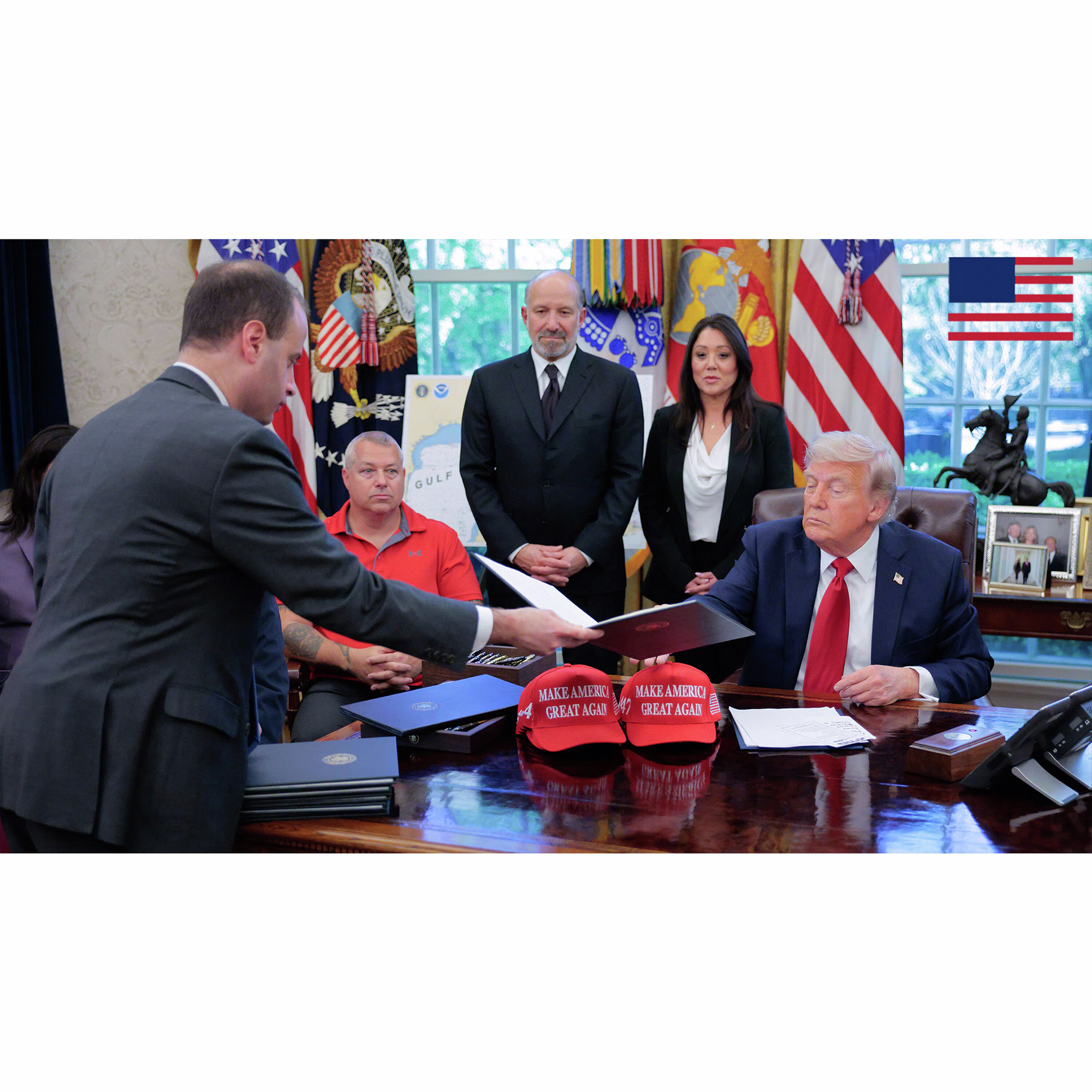
Hey, everybody. Charlie Kirk here live from the Bitcoin.com studio. Donald Trump just signed one of the most significant executive orders in 50 years. It's two words that aren't talked about a lot. It's called disparate impact. It's part of the three horsemen of the race obsession that has been strangling this country. We dive deep into it. I'm excited to share with you President Trump's amazing executive order around disparate impact. You're gonna learn something. I encourage you to listen to it once or twice. Text it to your friends. Some good news on this podcast, so make sure you enjoy. Email us, as always, freedom charliekirk.com, and then we have more news. Good news on top of it. Kevin Hassett joins us, director of the Economic Council, about some very good news coming out of the Trump White House when it comes to economic news and financial markets. Email US as always, freedomarliekirk.com subscribe to our podcast. That is the Charlie Kirk show podcast page. Buckle up, everybody. Here we go.
- [00:52]
Kevin Hassett
Charlie, what you've done is incredible here. Maybe Charlie Kirk is on the college campus. I want you to know we are lucky to have Charlie Kirk. Kirk's running the White House, folks.
- [01:02]
Unknown Speaker
I want to thank Charlie. He's an incredible guy. His spirit, his love of this country. He's done an amazing job building one of the most powerful youth organizations ever created, Turning Point usa.
- [01:13]
Charlie Kirk
We will not embrace the ideas that have destroyed countries, destroyed lives, and we are going to fight for freedom on campuses across the country. That's why we are here. Noble Gold Investments is the official gold sponsor of the Charlie Kirk Show, a company that specializes in gold IRAs and physical delivery of precious metals. Learn how you could protect your wealth with Noble gold investments@noblegoldinvestments.com that is noblegoldinvestments.com it's where I buy all of my gold. Go to noblegoldinvestments.com the media onslaught against the Trump administration is intensifying. And on campus, there are some people that are getting a little impatient. They say, I want more wins from President Trump. I want more wins. I'm not that sympathetic to that, to be perfectly honest, because what President Trump did in even the first week is more than what some presidents have done in four years, and it's not even yet been 100 days. The kind of impatient, let's just say attitude, it doesn't resonate with me. And it's also not rooted at all in. If you are watching the Daily News cycle. We talked about how yesterday, President Trump is trying to do the largest deportation effort in American history. He's being enjoined. We're working through how to solve that. He's trying to solve the Russian, Ukrainian war, but we are drill, baby, drill. The southern border is completely secured. We're getting a massive tax bill. We have the executive order on no men and female sports. We have the executive order on no chemical castration of children. 11% more voters are saying the United States is on the right track. Since January, it's big. And just wait until the economy stabilizes, we get our tax bill passed. And there's something that happened yesterday in the Oval Office that received almost zero media coverage. And to be honest, very few people in the conservative movement have been covering this. Not enough people in conservative media have been taking the time to say timeout and pause. This is a massive victory. It's an act of courage by President Trump, who's now going at the very core. He's going at the life source of dei. President Trump is going right at the, at the baseline. He's going at step one of how we started to see the slipping of excellence, the death of meritocracy, and the elevation of mediocrity. President Trump is addressing root causes. This, of course, is something called disparate impact. President Trump signed an executive order called restoring equality of opportunity and meritocracy. If you do not know about disparate impact, you should take out your pen. You should listen carefully. If you're in the car right now, you're going to learn something. You're going to learn that there was something that was embedded, encoded into the fibers, almost every single one of our laws and our hiring practices that you might not know about. President Trump signed an executive order yesterday repealing two regulations that have existed since LBJ and Nixon. That means Ronald Reagan didn't touch this. George H.W. bush didn't touch this. George W. Bush didn't touch this. And even in the first Trump administration, we didn't get to this. But that's why exile was good to us. That's why those four years of us not having power, we were able to study, go deeper and say, what is the root cause here? What was the first mistake? What was the original sin? And disparate impact is the original sin of the DEI monstrosity. The government will eliminate the use of enforcement of so called disparate impact liability. But what is that disparate impact? What's the big deal, Charlie? Come on, show me the real wins. No, no, no, no. You should be thanking the Lord about the significance of the profundity here. It's the sort of thing that few people have heard of but has completely remade American life over the last 50 years. Disparate impact is a legal doctrine that holds that any rule, any policy or requirement can be held to be illegal discrimination if it has a disparate impact on two different groups. So for example, in 1971, there was a Supreme Court case, Griggs v. Duke Power Company. Duke Power was sued because for people to get certain jobs at the company, they required them to either have a high school diploma or pass an aptitude test. Black applicants were less likely to have a diploma, and they do. They didn't do as well on the aptitude test. The Supreme Court ruled that Duke's job requirements were, quote, justified, were not justified by business necessity. And so they were illegally discriminatory. And thus the doctrine of disparate impact was born. You could probably guess why this doctrine is so incredibly pernicious. Literally every standard imaginable has created has some sort of disparate impact against a group. Nobody on this planet has ever designed a test or a standard that men, women, blacks, whites, Asians, Hispanics, Catholic Jews, gays, straights do so equally well. The very idea is an absurd fantasy. You're going to have different outcomes. But what disparate impact does is it says the test itself is wrong. It is a loophole that you could drive a semi truck through. It's a little sliver. You say, oh, disparate impact. What's the big deal here? No, no, no, no. This has been exploited by DEI actors for the last 30 years. So we have is a world where the federal government can go after any company, any school, or any state or any local government that they want to for discrimination using the Civil Rights act by deciding that whatever their hiring standards are, they don't meet a business necessity. So who decides the necessity? Well, not business owners, not entrepreneurs, not the people that actually own the property. No, instead, federal bureaucrats and judges decided since the feds can go after anyone for anything, everyone now lives in fear. People have tried to come after Turning Point USA unsuccessfully for disparate impact. Oh, we don't like your criteria for this. And they try to do some EEOC complaint. Thankfully we won all those complaints. And this is where so much of DEI comes in. So because you're so afraid of big government coming in, the leviathan of the anti racist state, they try to impress companies, impress the government, show how committed we are. To diversity. Companies know that they could be attacked at any time on the grounds of disparate impact. So they try to look good by having a massive DEI department. Don't come after us, go after some of the other companies. Sometimes this works, sometimes it doesn't. The system has imposed a massive regulatory and efficiency burden on the American economy. Dei, in my opinion, is the greatest silent regulation on American prosperity. Dei, Affirmative action and disparate impact. That is the evil trinity. That is the sinister triad, the three horsemen of the death of merit. Dei Affirmative action and disparate impact. Most people don't even know what those words would mean. Maybe affirmative action five or ten years ago, but it's been enveloping businesses, entrepreneurs for quite some time. Companies are terrified of a disparate impact complaint. The system has imposed a massive regulatory and efficiency burden. It's turned into a war against merit and against freedom. We've basically made it illegal for companies to simply try to hire the most talented people for a given job. And don't be surprised our companies are not as innovative as they used to be. This needed to change, and now the Trump administration is finally changing it to go deeper. We've actually seen a decline in standards and performance. In 2022, the Los Angeles Unified School District removed requirements for algebra proficiency. Why? Because they said black students don't do as well in algebra. So after they removed the algebra proficiency, black students got even worse at algebra, showing that lowering standards didn't actually improve outcomes. Disparate impact penalizes neutral and effective criteria. The use of standardized testing in New York City schools was curtailed due to racial disparities. Yet these schools produced more National Merit Scholars per capita than other state, highlighting that merit based selection correlates with excellence. This is how they're getting rid of the sat. They're getting rid of the actual. Here is the best way that I can summarize it effectively. You end up Disparate impact means punishing the test when students fail, not punishing the students when they fail the test. Instead, they're trying to rework the test, not try to improve the excellence or the merit of the applicant or the future student or worker at your company. If you're tuning into this podcast, it's because you care deeply about the future of our country. So do I. And so does amac. That's why I'm proud to partner with amac, the association of Mature American Citizens, because they are the voice of Americans who believe in faith, family, freedom, and the values that made this nation so great. While other Senior organizations push a woke left wing agenda. AMAC is doing the real work holding Washington accountable. They're fighting to make the Trump tax cuts permanent, protect Social Security, defend election integrity, and push back against radical policies that threaten our way of life. And here's the thing. AMAC also delivers real value. Members get exclusive discounts on travel, insurance, healthcare and more. Plus the award winning AMAC magazine packed with truth and conservative insight. Membership is just $16 a year, but right now you can get a five year membership for only 31 bucks. That's 47% off, but only through April 30th. So join me go to amac us kirk that is amec uskirk I'm intentionally not watching the NBA playoffs. The NBA is not what it used to be. But let's think about this. If disparate impact were applied to the NBA, the league would be even in further crisis. Not because of poor performance, but because you think about it like who would actually end up having to be represented? Black men only make up 13% of the US population, but they account for over 70% of NBA players. Well, that's disparate impact. Why is it that black Americans are able to do so well to go into the NBA? You see, because the NBA is an excellence driven organization. Should the NBA institute racial quotas on the court? Should they have to bench players based on the color of their skin to achieve equity? Should they replace merit with a lottery? You can start to see how destructive disparate impact is just in that singular example. Imagine a judge saying that height isn't a job necessity in the NBA. Phenomenal example, Blake. That's exactly right. The lunacy of disparate impact that almost every single company lived in fear of being criticized and potentially indicted for was that, well, is that a job necessity? Imagine a judge saying, well, height is not a job necessity because Muggsy Bogues wasn't tall. Oh really? So is height a job necessity to the NBA? I would say so. I would say that being tall is a job necessity. One reason the college cartel is so strong is that generally the government doesn't like the idea of simply giving job applicants an IQ test because those have disparate impact. You know, I should wear a shirt in this fall. The next fall tour. Blake is going to love this. Bring back IQ tests. What could be more fair than an IQ test? It's not even about where you went to school. Now, schooling can moderately improve your IQ test your IQ output moderately. They're fine with requiring an expensive college diploma, even though those also have disparate impact. Why? Honestly, the only reason is that federal bureaucrats like colleges. If we bring back IQ tests, it's much more fair, it's much more equitable. Someone that might not have gone to as good of a school, for example, they might not have gone to Stevenson High School in the suburbs of Chicago. They might have gone on the south side of Chicago. But an IQ test would be able to pluck out that individual that might not have had the same schooling because they might have the raw intellectual firepower and potential. Who could possibly be against IQ tests? Oh, they're against IQ tests because they want to have a credentialing lobby, which actually creates more disparate impact, which is what's hilarious. Requiring an expensive college degree is one of the few requirements companies are allowed to have, even though that definitionally is a disparate impact. So President Trump signing this executive order is one of the great step forwards to get back to a merit based system. When merit dies, mediocrity inherits the throne. Do you notice? And again, this is a little bit more anecdotal, a little bit subjective, but I think you'd all agree. Do you guys think the country works better, the same or worse as it did 20 years ago? I mean, basic stuff. The ability to go to a bank and get good service, the ability to have a flight on time, to not have your luggage lost, the ability to get a good driver if you want to get in a taxi cab. Do you think the basic necessities that keep a society going are getting better, worse, or they've stayed the same? Power outages are more common today. I think our quality of how we actually treat people in hospitals has declined rapidly. I'm afraid we're slowly slipping into a culture of mediocrity. And that is what happens when, when you no longer have a culture of meritocracy. And here is the sad but brutal truth. When you have a culture of meritocracy, sometimes the room is not going to look like Angelina Jolie's Christmas card. As Bill Maher would say. It's not going to look where everyone is different in pigmentation. It might be or it might not be. You see, when you have the merit, you don't know what the end result is going to be. It could be a bunch of Asians, it could be a bunch of Nicaraguans, it could be a bunch of Scots. And it's irrelevant because we actually don't care. And that is the point. We don't care about the melanin complexion of the end result. We care. Can that team, can that unit? Are they able to do awesome stuff? And forced diversity via disparate impact has been slowly suffocating. Excellence we are standing against and President Trump going against desperate impact is being ignored by all the legacy media. Honestly, that's okay. And all of you should be applauding and celebrating because it's a massive leap to get us back to our birthright of being an excellent country. The battle between good and evil seems to be escalating. It is easy to blame politicians, government or poor leadership, but behind all of that is a spiritual battle. Pastor Alan Jackson's new book Angels, Demons and you talk about the reality of this battle and the spiritual realm that exists around us. It has a real impact on us every day. As you read you will discover that that angels and demons are not imaginary, they actually exist. You can find them playing a variety of roles throughout the Bible and they're still influencing the world today. We don't need to be afraid, but we do need to be aware and prepared. Angels, Demons and you provides valuable insight, practical tools and biblical truth to help you recognize the spiritual battle around us and become a difference maker in our generation. Get your copy today@Alan Jackson.com Angels hear from people whose faith directly impacts our culture on Pastor Allen's Culture and Christianity podcast. Find it wherever you get your podcasts. Joining us now is Kevin Hassett, the director of the National Economic Council. So much to discuss here. So, so Kevin, let me begin by this I'm traveling the country, I'm on tour and even some Trump faithful are just a little bit confused about the direction of the tariff strategy and all this. They are very well intentioned, but they want a little bit of clarity. What would you say is the update in the message of the grand strategy to someone that loves President Trump, loves the agenda, but they are seeking clarity on what is happening with all of the announcements, tariffs and etc. Kevin, the floor is yours and thanks for making the time.
- [18:34]
Kevin Hassett
Yeah, it's great to be here, Charlie. Big fan and also big fan of the Hillsdale courses. I got to tell you, it's really good advice for folks to take those courses. It's way better than just sitting and watching some random TV show at night. The bottom line is that the President has been talking for a long time about how unjust our trade deals have been and how bad for American ordinary folks, ordinary workers they are. I'll give you an example that, you know, there are huge tariffs on Harley Davidson's like everywhere because It's a famous American product. And the European tariff on Harley Davidson, they hate American output so much that they actually have a tariff on Harley Davidson motorcycles, even if Harley Davidson makes the motorcycle in Europe. Can you imagine? And so that our trade deals are filled with things like this that are just unjust. And what President Trump showed in the last administration where I was honored to be chairman of the Council of Economic Advisers, is that when you make better trade deals, then it helps blue collar wages skyrocket. And so after basically 16 years of the previous four presidential terms, real wages in the US declined. In the first three years of the Trump administration, real wages went up for the typical family by $6,500. And the reason was that we put America first, We put America workers first. And so what he's doing now is he's doubling down on that strategy and he's doing it in Trump time. And as you actually, I have an update, which is today we've just got two more actually written requests for a trade deal with our trading partners that are way better for American workers. So we're up to 20 written requests and I think 30 negotiations. And US Trade Representative Jameson Greer is meeting with 14 trade ministers between now and tomorrow. And so what's happened is that President Trump with his tariffs has put everybody on notice that, look, you got to be nice to American workers, respectful of our trade. And if you come to the table and do that, then we'll make a deal with you. And the deals are moving forward at breakneck speed.
- [20:40]
Charlie Kirk
So I love all of that. And so let's now go deeper into what I think is going to be the great pairing. So we have the tariff strategy and trying to re domicile American manufacturing. And again, I hope everyone internalized what Kevin just said here, who's the director of the National Economic Council. You cannot even avoid European tariffs if you make your Harley Davidson motorcycle in Europe. So our best products are not even able to be sold in many of these countries. And so we actually have a free market spirit to us using tariffs. I know this is rather contrarian and paradoxical in some ways, but how is it a free trade agreement or paradigm? If you can't sell your stuff, then you're nothing more than one side of free trade. You're just a purchaser. You are not able to actually trade. You're not able to barter. And look, Europe, they play tough, they are protectionist, not to mention China. So I love that. And I think that also there's so much, there are assets here. Let Me ask you about liquefied natural gas. I think that's one of the biggest components here is that can we expect some announcements that using tariffs as a negotiating tactic and a leverage tool, we can start to decouple some of our allies from their addiction to Iranian and Russian oil. Can you cue our audience in a little bit on how LNG plays a dramatic role in these negotiations?
- [22:11]
Kevin Hassett
Yeah, the LNG is definitely part of the negotiations. It's interesting because I know how studious you are that you picked up on that. But one of the things that we're putting on the table in these negotiations is that we could agree to something called an offtake agreement. And so the idea would be that right now, if you're Japan, you're kind of like hostage to whoever's going to sell you LNG and oil. And if we can successfully expand pipelines in Alaska, then we can fund those pipelines basically with commitments to sell the stuff to Japan because we have enough of it in the US and that's really, really good for Japan. And it makes them so happy to not have to be dependent on oil and natural gas from other sources or even to have some insurance against the volatility of the price of oil in free markets that's so valuable to them that they're coming to the table with the best trade deal you ever saw. And I have one other thing to say about the trade deal, which is just shows the way President Trump thinks, Charlie, which I know you know it very well, is if you think about it, we just have a sort of an agreement of principle with India that was announced by JD Vance, the Vice president.
- [23:17]
Charlie Kirk
Yes, huge.
- [23:17]
Kevin Hassett
And you say, and you would say, why India? Well, it turns out that if you look at the history of non tariff barriers and not letting them, not letting us sell stuff in there and all that, that probably the worst actor can't sell motorcycles was India. Historically, over the last 30 or 40 years, you could argue that the worst actor on trade was India. And so why did President Trump say, okay, our first agreement in principle has to be with India because he wants to show that he can make a deal even with the hardest people to make a deal with. And if he can do that, then all the other deals should just fall into place.
- [23:53]
Charlie Kirk
So just as kind of like a geeky side point, motorcycles are a huge deal in India. Massive deal. In fact, I believe it is the preferred mode of transportation, much more so than traditional automobiles. And there have been massive import tariffs to be able to import our motorcycles into India. Just something to think about 85%. 85%, 85%. And so when you're trying again, there's a lot of consumers there that could potentially want to buy motorcycles and we want to be able to compete there. So now I want to segue to the second part of the component. And this is where people are missing this. The market is up really generously right now. I'm trying not to stare too much. The market day over day. I tell people, invest for the next 10 years, not for the next 10 minutes. And actually, you know what, can you comment on that? Can you comment on how you guys have been navigating some of the, let's just say, doomsday propaganda from the media? Because I actually think it's very admirable and incredibly courageous and has remarkable resolve. The fact that you guys have been rather unfazed by the jitters and focused on something much more meaningful and substantive and long term. Can you comment on that briefly, please, Kevin?
- [25:08]
Kevin Hassett
Oh, yeah, sure. And the thing is that the way I like to think about it is that that the mainstream media and then, you know, there are a lot of very partisan Wall street houses like, go read like what Goldman Sachs about says about the economy every time Donald Trump is running for office or as president. They just downgraded the U.S. growth this year to 0.5%, which, you know, is just impossible to be that low. But the point is that what happens in the mainstream media, and sometimes this moves markets for the short term, is that they seem to always expect the worst of Donald Trump. But from anyone with experience knows that you should expect that he's got a plan and he's going to deliver the best for the American worker. And that as that happens, then markets are going to celebrate because it's the golden age in America again. But what happens is that when we're making changes, then the media is filled with stories that basically characterize him as not having a plan and, you know, just whatever the worst thing you could imagine about Donald Trump is what they cover every day. But then the best thing you could think happens and it's over and over again. So why did we get $6,500 increase in wages, real wages for people right before COVID in the first three years of the Trump administration, after 16 years of nothing under Obama and Bush, well, the answer is he delivered. He delivered on his promises. He had a plan that was great for the American worker. And so people should sooner or later learn that you're not going to get the wor that you could imagine out of Donald Trump, you're going to get the best.
- [26:41]
Charlie Kirk
The other component of the conversation is the big, beautiful bill that is going to make America the most attractive financial market for investment on the planet. Give us an update on the big, beautiful bill negotiations.
- [26:54]
Kevin Hassett
Yeah. So the big, beautiful bill negotiations are led by Secretary Bessant and myself as part of the big six. The other four are the majority leader, the speaker of the House, the chairman of the Finance Committee and Ways and Means Committee. And we've been meeting regularly and through all the stuff, all the news that you read about day in and day out, we've got a massive amount of staff and leadership meeting all the time to make sure that the big, beautiful bill gets into the end zone by, say, June. And I can tell you that it's the talks and the writing of the language is so advanced right now that pretty much the train is leaving the station next week in the House. And so there's been historically fast progress on the largest tax bill ever that also has a heck of a lot of smart spending cuts as well. And so if you think about it, trade is about 14% of the economy, not trade or domestic stuff is about 86% of the economy. And we're about to give like an incredible vitamin shot to 86% of the economy and nobody's even really talking about it.
- [28:03]
Charlie Kirk
Well, yeah. And so just to repeat that news, you're saying that it's going to start being introduced in the Ways and Means Committee next week, is that right?
- [28:11]
Kevin Hassett
Oh, well, I'd say that the language is already being finalized next week. And so the House expects that it's going to have a bill passed, you know, maybe the next three or four weeks. But the point is that you're going to see the bill, you're going to be able to start to talk about in the news. You're going to start to see the bills next week. Yeah.
- [28:27]
Charlie Kirk
Oh, and I don't, I don't give investment advice, but I don't think the market will go down with that news. If you guys want to help out these campuses indirectly, refer someone to why Refi? Why Refi? They've been great supporters of the show. If you go to yrefi.com you can read testimonials from other people who have been where you are and how they've escaped. Bad credit is accepted. Go to yrefi.com youm can even skip a payment every 6 months up to 12 times without any penalty. Go to yrefi.Com May not be available in all 50 states. Call 888 yrefi34 or log onto yrefi.com that is yre f y.com do you have a co borrower? Yrefi can get them released from the loan. You can give mom or dad a much needed break. Go to yrefi.com 8@8yrefi34 or log on to yrefi.com yrefy.com may not be available in all 50 states. So take a look at it right now. Whyrefi.com Kevin Hassett is with us from the National Economic Council. So tell me more, Kevin, about what we can expect. There are some rumors here about potentially tax raises for the wealthy, a new bracket for 40% of the president. He struck down this idea of the millionaire tax. I know you have to keep your cards close to your chest, but conceptually, are we thinking about closing the carried interest loophole and then also spending cuts alongside of it? What is the philosophical approach you guys are taking every day to these negotiations?
- [29:56]
Kevin Hassett
Right. Well, the president has said that he thinks that there might be an argument for a higher marginal tax rate on people who are extraordinarily wealthy, but he doesn't think that now is the right time for that. And I think that it's also the case that if one did try to do that, it might be pretty heavy lift the hill. But the main theme really is that we're reducing taxes on ordinary Americans, not cutting taxes for the wealthy. That's not the theme of President Trump's tax cuts. On the corporate side, he's creating even bigger incentives for people to build factories in the US to create blue collar jobs in the US and that's what he's doing on the corporate side. And on the individual side, he's highlighted things like no taxes on tips, no taxes on Social Security and so on. And those are his main priorities. I could say that on the individual side, the new tax cuts are going to be, I think, even more impactful than what we saw last time. Again. And those tax cuts were amazing. But if you think about it right now, for example, if you're a person who just retired and you're getting your Social Security and you decide your Social Security benefit isn't as high as you would like and you want to go back to work, then when you go back to work and you earn a dollar, they take away 50 cents of your Social Security benefit. Think about it. So the highest tax people on earth are the people who decide, hey, I need to get a little more money than my Social Security, so I need to go back to work. And that Social Security taxes 50 cents on the dollar before, and then the other taxes on top of it. And so President Trump recognizes there are a lot of people out there who would like to participate more in society, would like to work more, but are discouraged from doing so because of the very, very high tax rates. And that's the real main priority in this bill for us.
- [31:46]
Charlie Kirk
Look, I'm at the higher income level. We're very blessed here on the podcast. If my tax, you know, thank you. But if my taxes go up 2 or 3%, I won't be celebrating. However, if there's a deal that is cut to do that and we get spending cuts, I'll say, okay, that's a prudent deal. We have. We have a small increase by 2 or 3%, and we get massive spending cuts. Like, I don't want to pay more in taxes. I'm already, you know, taxed enough already. I get it. But if it helps all of a sudden us get closer to a balanced budget, I'd rather have a dollar for my grandkids than two extra percent of my income. And I say that as someone who is on the higher income ladder. And so I don't know how that's going to float over the Hill, but I think. Can you comment on that, please, Kevin? About a minute and a half remaining.
- [32:34]
Kevin Hassett
Yeah. I could just say that as an individual. As an individual, I 100% agree with you. Although I guess government salaries being what they are, I'm not sure I'll be in the top tax bracket this year now that I'm out of the White House. But. But the bottom line is that there are a lot of people who think that balancing the budget is important, and it really, really is. And one of the interesting things is that I know a lot of people are disappointed in the spending cuts that Congress is talking about. They wish that they would be larger. But one of the things that we have a plan for that hasn't again been discussed a lot is, is that the Doge savings are real. The Doge savings are real. And what we could do throughout the year is that when we aggregate the Doge savings into something called a rescission package, that we can send a bill up to Capitol Hill and they can pass it without it being exposed to filibuster. So the same rules that allow you to pass something with a simple majority apply to the rescissions that we can send back because of all the great work that Elon's doing. And so when you look at the big beautiful bill and think, well, I really love the tax side, I wish the spending cuts were bigger. Just be aware that for the rest of the year, regularly, we're going to be rescinding the wasteful spending of the past because of all the great work that Elon's been doing.
- [33:51]
Charlie Kirk
Kevin, you've been one of the best guests we've had in a while. You had incredible insight and, you know, you communicate it in a way where the audience can really understand. So thank you and please come back soon. I mean that sincerely, of course.
- [34:03]
Kevin Hassett
This is a pleasure to be here, Charlie.
- [34:04]
Charlie Kirk
Thank you. You know what I like best about him? He was realistic, optimistic and cheerful. I like those three things. We need more of that. It's very dealing in reality. A great attitude is so much of life really is we're dealing with economics. A lot of it is attitude, oh, the world is falling or oh, we can invest in everything. A lot of it is mindset driven, positive mental attitude has a lot to do whether or not you're going to succeed. Thanks so much for listening, everybody. Email us. As always, freedom charliekirk.com thanks so much for listening and God bless.
- [34:39]
Unknown Speaker
For more on many of these stories and news you can Trust, go to charliekirk.com.