Loading summary
Transcript35 lines
- [00:00]
A
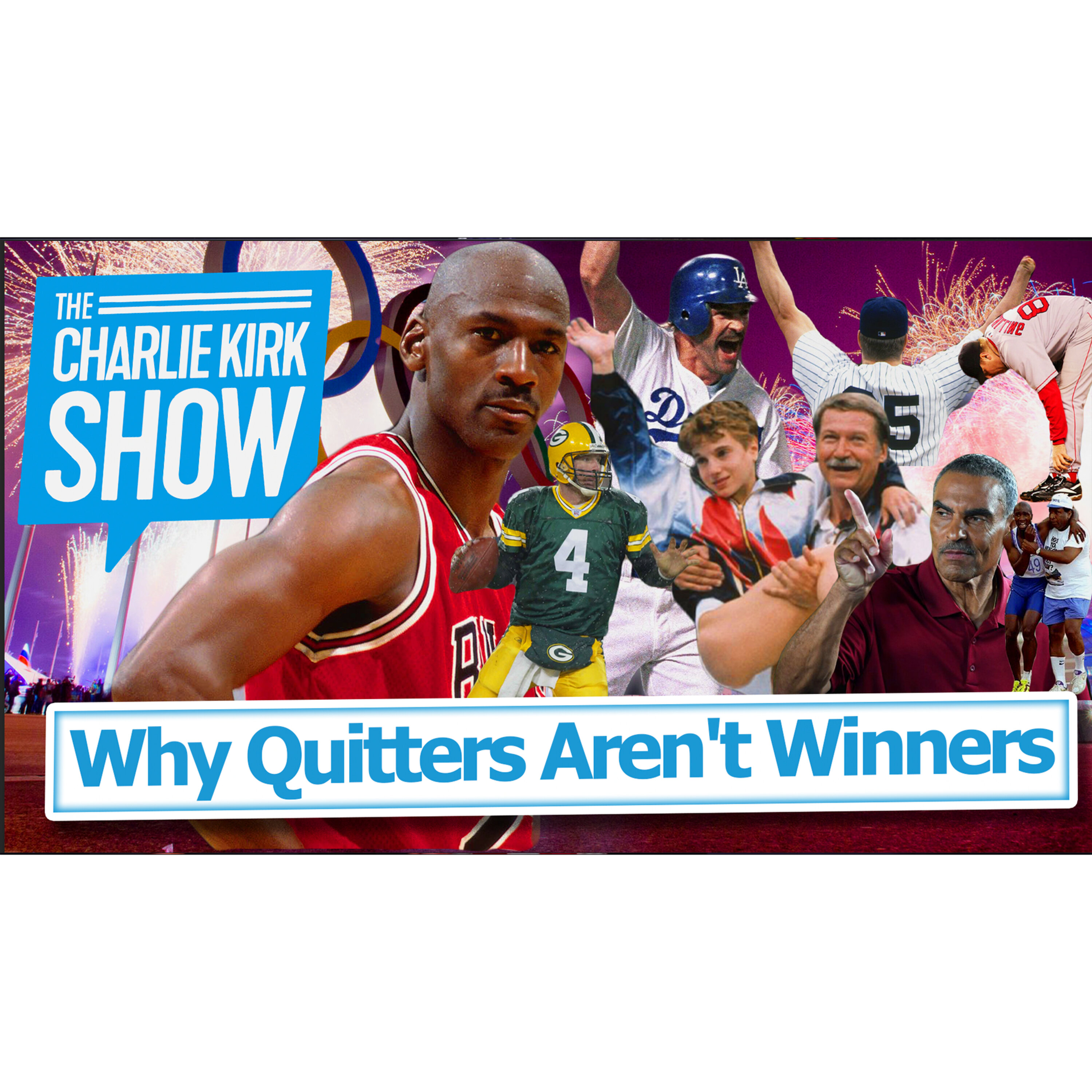
Hey, everybody. This episode is brought to you by my friends at ExpressVPN. ExpressVPN.com Charlie Secure your device. Anonymize your online activity. Protect your action online. Expressvpn.com Charlie help our show out by also helping yourself. Protect yourself. ExpressVPN.com Charlie hey, everybody. Coming off of what people have told me is a controversial take, I go through a very obvious truth. Quitters aren't heroes. If Simone has some mental health issues, I hope she gets help and compassion. That's not what we're dealing with here. She said that she wasn't having fun. She said that it was too much stress. We go through this episode of examples of athletes that have risen above stress and adversity. What does it mean to wear the Team USA jersey now? You might have said, charlie, I totally disagreed with your take in the last episode. Give me a chance to explain myself in this one. At least you'll be able to see where I'm coming from. People who quit do not honor the Lord. People who quit do not have the fruit of the spirit that God gives us to live and complete the final race. This topic has divided the country and with it the conservative movement, and I can't quite see why. I have compassion for people that are struggling. I have no tolerance for people that get up to the moment when things matter most and abandon their teammates and their nation. We explore that on this episode. You guys can email us your thoughts freedomarliekirk.com you guys know I'll always tell the truth and shoot it to you straight. You don't have to agree with us, but clarity matters more than agreement. If you want to support our program, go to charliekirk.comsupport to get behind our show. I want to thank Joe for supporting us. Thank you. I want to thank Carl for supporting us. Thank you. I want to thank Frank from Tennessee for supporting us. Thank you. I want to thank Steven for supporting us from Cincinnati. I want to thank Michael from california@charliekirk.com Support if you want to get involved with Turning Point USA, go to tpusa.com where we play offense with a sense of urgency to win the American culture war. Quitters are not heroes. People who quit on their marriages are not heroes. People who quit on their work are not heroes. People that quit when things get tough are not heroes. We should be clear about that. Buckle up. Here we go. Charlie, what you've done is incredible here. Maybe Charlie Kirk is on the college campus.
- [02:46]
B
I want you to know we are
- [02:47]
A
lucky to have Charlie Kirk. Charlie Kirk's running the White House, folks.
- [02:53]
C
I want to thank Charlie. He's an incredible guy. His spirit, his love of this country. He's done an amazing job building one of the most powerful youth organizations ever created, Turning Point usa.
- [03:03]
A
We will not embrace the ideas that have destroyed countries, destroyed lives. And we are going to fight for freedom on campuses across the country. That's why we are here. When's the last time you think you had American meat? Well, many people, it's far too long. Did you know that 80% of grass fed beef sold in the US is imported from overseas like China? You go to goodranchers.com to buy now you get a box. Subscribe and save 20% on each box of mouth watering meats. They are marbled beautifully. Producer Connor Every time we get this box that gets delivered, time stops. You guys ever see the movie the Day the Earth Stood Still? That's what it's like when Good Ranchers arrives at our office. What's for dinner tonight? Well, I know what Connor's having. It's a t bone from goodranchers.com the start of every good meal is, you guessed it, chicken, steak, pork or seafood at the place. And every meal center of a meal. Goodranchers.com Charlie saves you the trip down the meat aisle and brings steakhouse quality meat right to your door. Good Ranchers wants you to eat good while making memories with friends and family. GoodRanchers.com makes it easy for you to get food you can trust at a price you can't beat. They have the cuts you've been craving. T bones, strips, filet, gourmand burgers and more. Try the family feast that comes with steaks, chicken and more. Go to goodranchers.com Charlie right now and save $20. Or better yet, subscribe and save each box of mouth watering American meats. Go to goodranchers.com Charlie that's goodranchers.com Charlie at the end of the hour I gave a very, I think vanilla take, very kind of middle of the road, not very controversial take about how quitting when it's hard is something that is not an American value. Not exactly controversial, right? And of course I recognize and realize that people could have mental health challenges and problems in their own life. Obviously when you are in a gold medal match and you are considered to be the greatest gymnast of all time, which is probably true based on prior Olympic accomplishments and you have been put front and center as the focal point of American Olympics, not just gymnastics then I think competing when it matters most is something that is a no brainer. So yesterday I just made a couple comments about Simone Biles and I think that the reaction to that, which I've been told has been quite a lot. I don't have social media on my phones. People came up to me last night at an event I was doing. Charlie, you're trending on Twitter. Oh, really? Which one of the things, the masks, the vaccines, the mandatory vaccines, the lockdowns. What else do we got? Whatever. The Trump event, Voter integrity, Arizona audit. Which topic am I trending on Twitter today? They said, oh, no, the Simone Biles one. I said, what are you talking. Oh, you mean that thing that I said at the end of the hour about how quitting is not an American value? Like, that's not that controversial. People lost their mind. How dare you say that people shouldn't quit? So I think it actually warrants a deeper and thoughtful explanation and actually shows that Simone Biles and this entire situation is a microcosm of a macro trend that has set into our country. A political and philosophical trend, and one that is worthy of explaining. So first, let's just start with the Olympics. This is not just an athletic competition. This is a representation to the rest of the world of your values and your nation's values. Many of us grew up hearing the stories of Jesse Owens famously winning the Olympics in the 1930s and the National Socialist Workers Party of Germany refusing to associate with him. That was not about sports. That was about values and morals. Many of us grew up hearing the stories of. Many of you heard these stories, saw it of the American hockey team beating the Soviet Union. That was not about sports. That was about values and ideas and nations. It was about our home. You see, the Olympics is not just about who runs the fastest and who could do the best gymnastics routine of which I fully acknowledge is physically not just difficult. It's impressive what they're able to do. It's about what happens when it gets tough. You see this current generation, the Simone Biles generation, she's only a couple of years younger than I am. They have very little understanding, very little appreciation for how important the Olympics are. Now, maybe Simone Biles understands this, and if she does, it only makes what she did even worse. But understand, as every nation on the planet gathers, they're looking at what's going on in that country. What do they believe? How tough are they? Are they going to be able to stand up if we have to go to war against that nation? You see, throughout Olympic history, we have stories of heroes Like Carrie Strug,
- [09:03]
C
who
- [09:03]
A
was also in gymnastics. And she won the very last run of competition with two torn ligaments. Now, before we get to that, let's just frame. What happened with Simone Biles? Did she have a mental breakdown? I don't quite know. I do know she was articulate enough to be able to do a flippant and condescending press conference in cut 43. I want you to listen to this. She was asked, well, what happened? Did you sprain your ankle? Did you, you know, have a back issue? Do you have a wrist issue? Very big deal in gymnastics if you have a wrist issue. No, she said, look, it's about having fun, and I'm not having fun anymore, so why even do it? You see, for the current generation that has been taught that America is trash, to believe that America is just garbage, then, yeah, when she's wearing that Team USA jacket, she doesn't like, yeah, whatever. It's not a big deal. I'm not having fun. You see, it's all about me. No duty, no commitment to something bigger than herself. Play tape, too.
- [10:28]
D
So it's okay sometimes to even sit out the big competitions, to focus on yourself because it shows how strong of a competitor and person that you really are, rather than just battle through it. No. No injury, thankfully. And that's why I took a step back, because I didn't want to do something silly out there and get injured. It's been a long week. It's been a long Olympic process. It's been a long year. So just a lot of different variables. And I think we're just a little bit too stressed out, but we should be out here having fun. And sometimes that's not the case.
- [11:03]
A
Okay, so I'm just going to use her own words and just go through them. Long week, long process. Yeah. That's the point of competing in the Olympics. Okay? Stress out. Welcome to the club. You're in the Olympics. You see, Simone Biles wants glory without bravery. She wants recognition and adoration without courage. You see, in the west, we elevate people that acknowledge stress. Long weeks, difficulty, and, yes, sometimes not having fun. You don't go compete in the Olympics because it's not a night out with your friends. It's not a chance to go explore Tokyo. You do that afterwards, you go to win. That's what Americans do. You suck it up. And if you're not ready for that, then I have compassion for you and I have empathy for you. Don't show up. Don't go through that process. Remember, when we used to have winners. Grit and perseverance are the two things that have always made America the toughest and greatest nation ever to exist. Not I'm too stressed out and I'm not having fun. Be one thing if she said I had a total mental breakdown and I couldn't even remember my name. I know. Seriously, I have compassion for that. Instead, with a smug, condescending flipping attitude, well, look, we need to have fun out there. We're not always having fun. With the ever increasing numbers of makes and models like Fiat, Kia, Pacifica, xt, Vive and more, it is now impossible to stock all the parts you need in a traditional chain storefront. Why endure often pointless or seemingly intimidating questioning and wait while the counterman orders the parts on his computer, choosing the only brand his warehouse happens to carry. You have computers with access to Rockauto.com at home and in your pocket. One reason to repair and maintain your cars is to save money that you can then use for other important things. Chain stores have different price tiers for professional mechanics and do it yourselfers. Rockauto.com, a wonderful family run company, will always offer the lowest prices possible rather than changing prices based on what the market will bear like airlines do. Rockauto.com is for everybody and does not require membership or an account login. Rockauto.com is a family business serving auto parts customers online for 20 years. Go to rockauto.com to shop for auto and body parts from hundreds of manufacturers. Rockauto.com catalog is unique and remarkably easy to navigate. Go to rockauto.com right now and see all the parts available for your car or truck. Write Charlie Kirk in the how did you hear about us? Box so they know we sent you. Amazing selection, reliably low prices. All the parts your car will ever need. Rockauto.com
- [14:20]
C
this is what's great about sports. This is what the greatest thing about sports is.
- [14:26]
A
You play to win the game. Hello.
- [14:33]
C
You play to win the game. You don't play to just play it. That's the great thing about sports. You play to win. And I don't care if you don't have any wins. You go play to win. When you start telling me it doesn't matter, then retire, get out. Because it matters.
- [14:57]
A
One of the greatest sports takes that's right up there with I'm a man, I'm 40. That is right up there with Gundy from Oklahoma State. You play to win the game. You don't play to have fun. Now people say, well, Charlie That's a little bit cruel. Anyone who's ever been in athletic competition knows that the fun happens at times you least expect. It's part of the process. You want to know what's fun? Winning is fun. Championships are fun. And they're hard. They take sacrifice, discipline, duty. But even beyond that, the Olympics, because we don't teach our children to have a reverence for our nation. Simone Biles just. And by the way, she's a BLM activist, just so we're clear. And again, that doesn't make her a bad person. I'm just going to add this for some context. We have all sorts of stories here. She comes out and she talks about Brianna Taylor and blm, and she said, we tried peaceful protests. And then Colin Kaepernick lost his job, he lost his career. It's working. You just have to be the first people. And we'll follow. Again, I'm not getting into her politics. Again, it's par for the course. It's to be expected from an athlete. She says, we need change. We need justice for the black community. With a peaceful protest, it starts to change. How many times has this happened before we had cell phones, all these people. Again, this is back in July of last year. Whatever. Not. Not gonna focus on that. But I am saying, though, the BLM narrative, that is anti American at its core, that is critical of America at its core, why should she revere the Team USA jacket, as she puts it on, if America's trash, then, yeah, it's just all about having fun. But if you believe America's a gift from the Lord like I do, that it's so special and beautiful in this republic, that is something that is exceptional and rare, that if I put on that Team USA jacket, I would have to have a broken arm not to compete and whatever that would be. And I'm not the only one that feels that way. Someone who is also a gymnast, Carrie Strug, she. I believe she had two torn ligaments, and she still competed in one of the most amazing moments in gymnastics history. Now, some of the naysayers say, charlie, that's just physical pain. Simone had mental pain as well. Hold on a second. If anyone's ever torn a ligament like I have, that's not just physical. That's not just mental. That's spiritual. That's emotional, okay? You start questioning your whole existence when you tear ligaments, okay? That is pain. That is stratospheric. So don't give me that. Oh, well. Simone had a much deeper type of pain. She just had Mental pain. Anyone's ever torn a ligament, you start making up words because you're in so much pain, you start just combining swear words. Jim Carrey style play cut 44.
- [17:53]
E
Strug had heard a snap. Strugg had torn two ligaments in her ankle. In normal circumstances, that would mean the end of her Olympic Games. The US Needed one last solid vault to seal the nation's first first ever gold medal in the team all around. The US had their first gold medal in the team all around. Pain is temporary. Pride is forever.
- [18:27]
A
Pain is temporary. Pride in your nation is forever. As it's narrated by someone from Britain or something. Am I hearing that right? Someone had an accent in that. I don't know what, it's kind of hilarious, you know, that's the first time Russia won gold since 1992 in that type of competition. Americans aren't quitters. And it would be one thing if Simone Biles came out and she said, I collapsed and I just couldn't take it anymore. I had an overwhelming mental breakdown. I have compassion for that. Instead, her explanation, to use her own words, is, you know what? I want it to be about me. I'm a little stressed out and my teammates and I aren't having fun anymore. If you're gonna pull the plug on an Olympic gold medal competition, here's some advice. Simone, at least wordsmith it a little bit more than that. Maybe kind of go to a thesaurus and say, okay, what else could we say without fun? How about mental stability like anything. Instead, she literally uses the word fun. Fun. As if this is Saturday night out with the friends at a club in Beverly Hills. The Olympics is a short period in time when we see what nations are ready for tough stuff and what nations are on fragile footing. If you run a conservative or faith based business or organizations that accept credit cards for donations, events and merchandise, or anything, Listen carefully. Do not expose yourself to being shut off because of cancel culture. The Charlie Kirk show relies on Cornerstone Payment Systems to provide uninterrupted credit card processing for all of our work. We trust Cornerstone for our processing because I believe, and I think you will too, you'll benefit from their solutions, their low costs, and most importantly, their commitment to safeguard your transactions. Cornerstone provides all types of credit card solutions, including E commerce, retail donations, crowdfunding and text to give. Please contact Cornerstone Payment Systems today and let them know you heard about them on my show. You can reach Cornerstone at 714-912-617 or online at Cornerstone. CC Kirk again, that's Cornerstone. CC Kirk, let them know I sent you. Team USA is not Team Simone. She represents a nation of over 340 million people. The selfie generation, which is her generation, is narcissistic. All about one's own self. I would argue, and there are legitimate mental health issues for sure. I would argue that one of the reasons we're seeing an increase in mental health issues though is, is the overemphasis on self esteem and self love. One of the reasons why generations prior did not have as many mental health issues and there were plenty, but not as much as now is that there was more of a commitment to duty and responsibility and a purpose bigger than yourself. You know what that does? Puts a lot less pressure on yourself to figure yourself out. Follow your heart is what a lot of people say. That's a lot of pressure. You see that happen in a lot of different ways in this generation. Instead it should be follow the good, do the right thing, serve an ultimate purpose, find your place in a transcendent order. Do difficult things, dig deep when it gets tough. Sports, just like music, just like movies. It's part of culture. And culture can tell us a lot about where the country is headed. Remember when Kirk Gibson, remember when he had two bad knees? He came out and he famously hit the home run and then he goes in that famous around second base. Yeah, Dodgers. See, I know my sports history. Play tape.
- [22:35]
F
Dodgers manager Tommy Losorda thought he'd be without NL MVP Kirk Gibson for Game 1 of the 1988 World Series due to injuries to both legs. But Gibson told Lasorda he might have one good swing left as a pinch
- [22:48]
A
hitter
- [22:51]
F
in the bottom of the ninth. Down by one with two outs and a man on, he limped to the plate looking to make a difference against all star relief Aced in Silver. Gibson connected. It was his only contribution to the series. But Gibson's game changing swing helped power the Dodgers to the World Series crown.
- [23:17]
A
I don't believe what I just saw. Now, just so you know, Dennis Ecker Eckersley was a great pitcher too. That was no schlep that he hit a home run with. That's the America I want to get back to. I don't even know if I can walk. But I'm going to be there for my teammates. And that wasn't even the Olympics, by the way. Remember Jim Abbott, one handed pitcher who threw a no hitter. Literally a one handed pitcher who threw a no Hitter. Cut 46. Jim Abbott Vierga batting 3:18.
- [23:58]
C
And the ground ball to Short Velardi. He did It. He did it. No hitter for Jim Abbott. Jim Abbott throws a no hitter and shuts out the Cleveland Indians four to nothing.
- [24:16]
A
You want to have fun, win. That's what Americans do. The greatest basketball athlete of all time, who by the way, also lost his father in this decade, might have been served a pizza intentionally full of poison. In fact, the way that Michael Jordan tells this story is that I think he was in Utah when this was being when this happened. If I'm not mistaken, this was in the Utah. Right. And it's all kind of cataloged. Yeah, it is Utah. In the last dance where he was hungry and the pizza delivery people come up and there was like five people that delivered this pizza. Michael Jordan eats the pizza no one else did, and he gets sick. Michael Jordan, despite having body aches and throwing up worse than you could possibly imagine, reached a whole new level of sports excellence known as the flu game. He dug deeper. He committed himself to something bigger than just number 23. He said, I want to be there for my teammates. I want to be there for Scotty, I want to be there for Dennis. I'm not going to let the people of Chicago down. Cut 47.
- [25:28]
C
Back in the back room, he was in a dark room trying to get some rest, but, but still throwing up. And Marv, I talked to him, I said, how do you feel? He said, I really feel horrible at his history. Games where he's either been hurt or sick, has been bad news for the opponent. And as you can see, he's ready to go tonight. Mark the Chicago falls and defeated the Utah Jazz to take a three games to two lead. They win at 90 to 88. A courageous classic performance by the flu ridden Michael Jordan.
- [26:03]
A
Michael Jordan famously said that he never wanted to not go 100%, not because of himself, but that he knew that if he was traveling at some arena somewhere, someone was coming just to see him. And he didn't want to let that person down. Michael Joel Jordan was and is a role model for millions. Simone Biles, you are too. Derrick Redmond. Remember when he tore his hamstring at the 1992 Olympics and he still finished the 400. Cut 49. Derek Redmond.
- [26:41]
B
Derek Redmond was one of the top athletes Competing at the 1992 Summer Olympics in Barcelona. Redmond unfortunately suffered a torn hamstring during the 400 meter semifinal race. Unable to get up and finish, Redmond received some help from his father. Johnson got disqualified for receiving assistance. But did it matter? Nah.
- [27:00]
A
That's what heroes do. They don't quit. They don't give up. There's a great quote by Cicero. One year Roman Council. Some would call him a Stoic. In Latin it's non nabis solemn nati sumus. Which means not for ourselves alone are we born or are we alive? Purpose bigger than yourself, more than your Snapchat, more than your TikTok. Are you connected to something bigger than yourself? That's what the Olympics used to embody. There was a ethos of Team usa. There was a belief that you're representing a nation, and not just any nation, a nation founded on moral ideas. A nation that steps up when things seem impossible. Now, all those other examples were physical difficulties, which can come into mental difficulties. Remember when Brett Favre, who might be one of the greatest quarterbacks of all time, I wouldn't say he's the best. He was definitely one of most entertaining, most touchdowns thrown while he. I think someone might have broke his record. I think Drew Brees brought his record, broke his record most touchdowns and most interceptions. He was a gunslinger. The man from Mississippi. I loved watching Brett Favre growing up and he was a. He was a menace to those of us that were Bears fans. But Brett Favre lost his father. I remember. I think this is a Monday Night Football game. I used to watch Monday Night Football like a religious experience. Remember Madden? Is Madden still alive? Are you serious? Whoever took Madden off a Monday Night Football should be fired. I want to find that person. Used to come in a bus. Was it John Madden? Is that right? Yeah, John Madden. He was afraid of flying. So he used to drive this massive bus to every Monday Night Football game. You remember this? It was a beautiful thing. Now Monday Night Football is. I don't know who does Monday Night Football. I don't even watch the NFL anymore. So what am I talking about? Brett Favre. This is when America was special and still special, obviously. Simone Biles. I hope that you look at Brett Favre and say, man, he lost his father and he still played the next night. And he was exceptional. Play tape.
- [29:21]
B
NFL hall of Famer Brett Favre was very close to his father Irvin, who coached and mentored the three time MVP when he was a kid. Sadly, Irvin passed away unexpectedly on December 21, 2003. Rather than sit out the following day's game against the Oakland Raiders, Brett Favre opted to play for his father on national television.
- [29:40]
C
How Brett Favre is going to be able to handle this, I have no idea. So under tremendous emotional duress, Brett Favre goes to work.
- [29:52]
B
399 yards and four touchdowns for Favre in that one, America was behind him the whole way and he performed in a way that would have made his late father so proud.
- [30:01]
A
Sports and, and athletes are obviously not the most important thing in society, but it is a temperature test of where your culture's at. Do you think the Chinese Communist Party is snickering and laughing at us right now? If we have to go to war with China, do you think that we would win? Do you think our nation is tough enough to stand up against the difficulty it would take to win an all out conflict against the Chinese Communist Party? You see Simone, talented athlete, but she imperfectly embodies what BLM and CRT teach. America's not worth sacrificing for. America's just an awful place. It's not worth pushing boundaries for. Simone Biles. She is the mascot for Critical Race Theory. You want to see where this plays out? It'll be a generation that says, eh, who cares about the nation? I care about my own fun that is upside down. In the midst of quitting, it seems that someone has done the opposite. Pulled off a huge upset in the Olympics. I just want to say we're getting a lot of interesting feedback. People are saying things that I didn't say. First of all, if you have any issue with what I'm saying about Simone Biles, actually go back and listen to what Simone Biles actually said. People are saying, oh, she was suicidal. She never said any of that. Okay. She said, oh, she had a mental breakdown. She never said that either. You know, it's actually worth playing this back. They're reading the press and they're listening. Listen to why she said she quit on America. She said she was not having fun, she was a little stressed out. And it's been a long process. So basically I don't wanna do this anymore. I don't care about the nation, I don't care about my portrayal of America to the rest of the world. For all of you listening, I encourage you to actually hold people accountable to what they say, not what you think other people are saying about it. Listen again to what Simone Biles said about giving up and turning her back on America. Play tape too.
- [32:19]
D
So it's okay sometimes to even sit out the big competitions to focus on yourself because it shows how strong of a competitor and person that you really are rather than just battle through it. No, no injury, thankfully. And that's why I took a step back, because I didn't want to do something silly out there and get injured. It's been a long week it's been a long Olympic process. It's been a long time year. So just a lot of different variables and I think we're just a little bit too stressed out. But we should be out here having fun. And sometimes that's not the case.
- [32:54]
A
We should be out there having fun. Whoever told you something as ridiculous as that, the moment you put on the Team USA jersey, it is about duty, responsibility, obligation to the nation and victory. You want to have fun, Simone? Well, you've done it before. You looked pretty fun when you won back in previous Olympics. You want to have fun, Break through the odds, become the most decorated Olympian of all time. Well, that would be Michael Phelps, who, by the way, is a terrific guy. I have a lot of respect for Michael Phelps because he very easily could have quit and given up given all the controversy. I have a respect for Tiger Woods. Same thing. I love comeback stories. I can't stand my quitters. It's not American. Well, anastasia Zola, teach 18 year old American upset victory against the Ruskies. Right? Against the Russians. This is a good story. She's a hero. Play tape.
- [33:55]
C
We have the first woman gold medal in Olympic history. Anastasia did the thing. This is what we've been waiting for, working for, dreaming about. This is a moment in time. I can't take it. I can't take it. I can't take it. I can't take it. I can't take it. The rapid ascent of 18 year old American Anastasia Zalotich continues all the way
- [34:21]
A
to the top of the podium in
- [34:23]
C
Tokyo as she becomes the first American woman to win Olympic gold in taekwondo. Oh, my gosh. My gosh, my gosh.
- [34:34]
A
Cry more. Russia. I love it. You see the little, you see the Ruski coming off stage just with the head down. That's what it's all about. Suck it up. You think that 18 year old Anastasia Zola teach the American. You don't think she had a little bit of stress? Long process. That right there is bigger than Anastasia versus what, Tatiana Minia, who? You know, it's gonna make Putin very angry. No, this is about nations colliding. That's what the Olympics is about. It's not about my own personal fun. We're supposed to go out there and have fun. That's not what the Olympics is about. That's what. Okay, Simone. That's what Saturday Night Live is about. When you go host Saturday Night Live, that's what that's about. When you go on the COVID of Vogue magazine. That's what that's about. The Olympics is peaceful geopolitical combat. If it was just about having fun or competing you'd just be wearing a team jersey on your back or it'd say Team Simone. Instead it says Team USA with the very same colors and flag that was raised over Iwo Jima that liberated Berlin, that liberated South Korea, the very same history that won the American Civil War and was raised again on 9 11. That's what USA means and I have compassion for people that have mental health struggles. She said it was all about having fun. Winners have fun and Americans are winners. In the midst of all of this nonsensical news cycle we got ourselves tied up in Anastasia Zolotich. God bless you. You're what it means to be an American defeating the Russians and it's celebrating after. Thanks so much for listening everybody. Email us your thoughts freedomarliekirk.com if you want to support our program go to charliekirk.com support thanks so much for listening everybody. God bless.