← The ChatGPT Experiment - Simplifying AI For Curious Beginners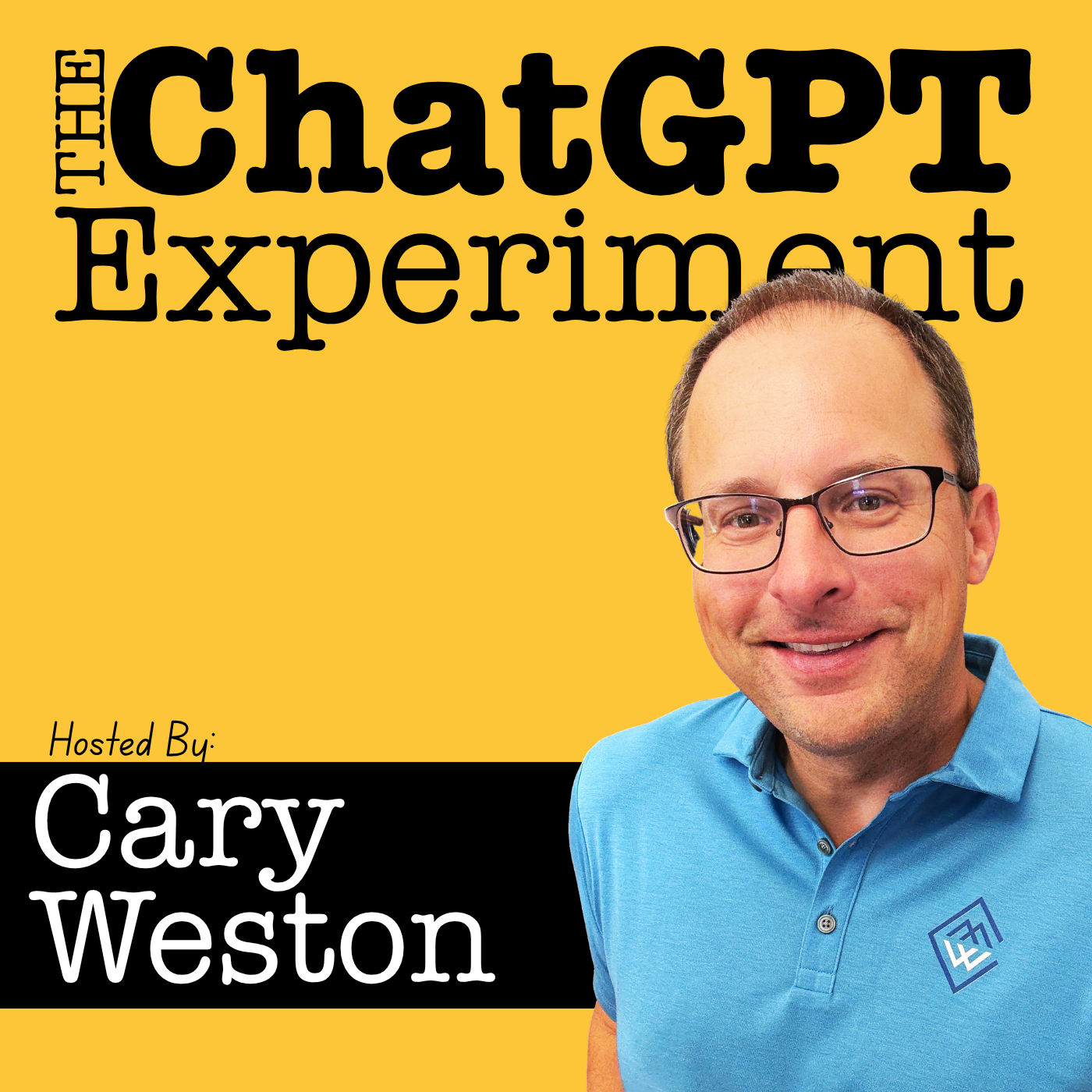
The ChatGPT Experiment - Simplifying AI For Curious Beginners
Ep 104 - My Trip To Visit Dr. G and His Chat GPT Class at St. Joseph's College of Maine
00:23:28
Loading summary
Transcript3 lines
- [00:00]
A
A text says, you're on my mind. A bouquet from 1-800-FLowers says, you're my everything. Heartfelt moments belong in the real world, not just your phone. For 50 years, 1-800-Flowers has helped millions of people make memories that'll last a lifetime with gifts they'll cherish forever. Their expertly curated arrangements and gift baskets shipped nationwide with a 100% satisfaction guarantee. Don't wait for the next big moment. Make it when you visit 1-800-flowers.com podcast. That's 1-800-flowers.Com podcast.
- [00:30]
B
Hey, it's Kerry. Hey. Last week I had the honor of visiting St. Joseph's College here in Maine, and I got to meet Dr. G, who's put a class together specifically around the frameworks and principles we talk about here on the podcast. I got to meet the students who are using ChatGPT to help them plan for life after college. And I'll share with you my observations and some of the conversations I have, if that sounds interesting to you. So stick with me and I'll see you on the other side of the music. Hey there. Welcome to the ChatGPT experiment. This is the podcast designed to help you better understand tools like ChatGPT and how to get a nugget of benefit for your personal or professional needs. My name is Kerry Weston. I'm your host and I'm glad you're here. And this week I wanted to share an experience that I had visiting a college campus and talking with, working with set of students that are in a class specifically designed to learn how to take ChatGPT, how to understand what ChatGPT is, learn it from the inside out, and apply it to things that are meaningful to them. Okay. So I want to share with you what my trip was like, the discussion that we had, and just kind of give you a recap. There's going to be some things here that are highly relevant to some of the things that you're thinking, some of the things that you're dealing or want to do. And I thought I'd share through the story of visiting the class in hopes that there's something here that might be beneficial to you. So, first of all, I shared with you a while back, if you've been a regular listener and if you're new to this, kudos. Welcome. Glad to have you. If you're. If you're a regular listener, you may have heard me talk about a professor at a college who put together a curriculum based on the framework of this podcast. Well, that professor was Dr. Anthony Girondo down at St. Joseph's College in Maine and his students call him Dr. G. And I had the opportunity last week to visit St. Joseph's College, talk with Dr. G, got to meet with President Cassidy and tour the campus. First thing you want to know here is the campus is gorgeous. It's a small college, but it happens to overlook a lake. And on this lake they have a shoreline and a beach and they have canoes and boats and whatnot for folks to go out. I'd say that's a pretty good asset or for a, for a college in Maine, beautiful setting. In fact, there was someone. Of course, if you're in Maine and you've got a lake in the summer and you know in the warm weather you can take a boat out, but during the winter it freezes, right? So there's ice fishing. They shared with me they had a student from Texas who this winter went out and did ice fishing and couldn't believe that he was actually walking on top of a lake. So a couple things that I wanted to share here. Number one, the vision. I want to give kudos first and foremost to President Cassidy and the college because what I saw, this was part of an on purpose effort to bring real world perspective to students and this was a test pilot. So what Dr. G shared with me is this was the first semester that they're doing it, but they're already planning to double it next semester. And so they're going to go from one class to two and they're working it into other classes and other curriculum. And it was really interesting to hear the reasons why. Right. So Dr. G teaches business, he's got some finance and investing. And so not only did he have a course on how to use ChatGPT, but he was sprinkling it in amongst the other topics so that the students could see how to apply what they were learning from basic lessons into some of the other curriculum and course studies that they had. In fact, the students, when I went around, shared with me some of the projects that they are working on and the reasons why and we got to do a one on one with each project and talk about what they're doing and, and what the outcome is and what the goal is and of course we walk through in real time, maybe some suggestions and changes on how to get more out of it. But what I was really, really impressed with was curiosity top to bottom in talking with President Cassidy. Now you got to understand, I've spoken with other academics, I've spoken with folks that are other institutions. And though St. Joseph is not the only one, I would say that they are the exception. The ability for the institution to look at a tool like this and not step away from and be fearful, or they thou shall not address it, but to look at it and say, how do we embrace it? Not only how do we teach our students to look at it from the big picture point of view, but how do we embrace it so that folks here at our organization, at our institution can find some benefit from it? And they're early in that stage, but they're ahead of the curve in that stage, and I applaud them for that. And the curiosity extended top down. So President Cassidy's sharing with me their desire to work this into their entire faculty and the organization as a whole, because they could see the efficiencies. And we talked about ways like we've talked about here, the busy middle of shrinking. The busy middle, the place that takes our emotional bandwidth and our energy, the repetitive stuff, the busy stuff. If we can shrink that, then we can apply the expertise and experience that we have and the highest and best use. And I've shared with you before that, in business, oftentimes I would see people get hired for their expertise or for their experience, but they would be paid to be simply busy because we do get lost and busy. And so we had some conversations with Dr. G, and President Cassidy, talked about, you know, here are ways that we can introduce that one thing, find that one thing in your day where you might be able to shrink some of that busy middle where you may be able to find efficiencies. What if you could save an hour or two a day on things that typically take up your time? And it started the idea, treadmill spinning. There was some ideas, and geez, I can see how this could apply. And I share that because I can't tell you how many times people get overwhelmed with the goal, the mission, the anxiety of I have to learn ChatGPT, or I have to learn AI or I have to learn Claude. You don't. You don't have to learn anything. You have to just work with it. And if you can find just one way in, one thing that it can do for you, then the anxiety can decrease, the aha moments can increase, and you can start generating benefit from just having a conversation. So that curiosity was refreshing to see and the ability for someone to see how to personalize the approach. So from the students, when I walked in and talked to the students, they shared with me their initial questions. And they were very similar to the questions that I get from folks listening to Podcast and from folks that I meet in workshops and working with clients and they were around. Show me some real world benefits to this. Can you help me understand how people are using this in the real world? Can you share with me how it's helped you? They're asking me that, is there a path, is there a way that what we're doing here can be beneficial in the working world once we graduate? So there were very intelligent, curious questions around why are we learning this and what can we do with this? Because they knew that it was cool. They could see because of what they were building that there was something of value here. But they wanted to know, they wanted confirmation and they wanted to see the value of outside the classroom. What will this become? And here's one thing I shared with them and here's one thing I'm going to share with you. It's not so much what jobs are going to require, knowing how to use a tool like Cloud or ChatGPT, it's the fact that you know how to use it and you can bring that to the job, the position, the opportunity that you're going to have. And I firmly believe this. If you can understand how to think and talk with a tool like ChatGPT, you are ahead of, and I'm just going to use a conservative number here, but you are easily ahead of 90% of the people in the workforce today. And here's why. The approach to how do I use this thing, what does this thing do primarily can fall into three camps. Number one, the curious. Okay, the ones that say, I wonder if this could do this, I wonder if it could help me do this. I wonder if we can do this with it. And that's the minority camp. That's a very, very small piece of what's happening up. The second is top down mandate, which is thou shall go learn this. You will figure it out. You will take a course, you will do this. Because I've heard that it'll, it'll help our business and I heard that it'll make us more efficient. Now go figure it out. That top down mandate, without curiosity and collaboration is hard. Doesn't matter if it's Chad, CBT or anything else that top down you need to go do this because I said so. It's very hard to internalize that, personalize it and make it beneficial of any way. Right. And that's happening a lot. There is a misunderstanding of how to roll this out in a lot of organizations. In fact, I've found many articles talking about decreased productivity when trying to force AI learning into an organization because there's no purpose, there's no sharing, there's no plan. Right. There's no collaboration or curiosity. It's seen more as a physical skill which takes time away from being efficient. So you don't actually get to the point where I can see how this would work. I can see how we can apply this. Let's take this little nugget of benefit and then scale it and make it bigger. Right? And that's important. And then there's the I tried it once and it didn't work, or I tried it once and I didn't get anything out of it, so I'm not going to go back again. So those are primarily the three, I guess, groups of people that I tend to run into in the corporate world. And the curious, you know, the continual curious where try something out, get a small amount of benefit or learn from it. And that was one of the lessons that I, that I shared with them, is that you're not failing at all if you learn something. This is just AI tuition. And the only reason that someone like myself can come and share with you objective ways of getting some more value out of the things that you're doing is because I've made more mistakes than you. I've just tried it. And so the ability to dig in and be curious and see where we're going to go, that was one of the lessons I want to share. Inside the classroom, the students had projects that they had been building up. And one, for instance, wanted to start a company when they left the class, wanted to start a hardscape landscape company. And they were using the tool to build out what that company could look like, what the customers might look like, what services we could look like, what competition was in the field, almost as a business plan. Right. Very, very smart. Another one was looking to get into sales and had built a tool to take certain areas of interest, go to LinkedIn, find people who are in those industries so they could connect with them, and then dig through the profiles to find connection points and then help them create messaging so that they can perhaps start a conversation network. Right. And build out some education. And I'll pause there for a second because I love the initiative. First of all, I loved it. And one of the things that we talked about was, is it good enough to just do it, or can we work in empathy and understanding so that we can use the tool to be more personal? Right. Rather than just use the tool at scale? And here's what I mean by that. Instead of Going in and sending a message that says, I see you are in sales. Can you tell me something about sales? I want to work in sales. Can we use the information and can we have a tool like ChatGPT help us find that information to be a little bit more personal? Right. So that the person reading it can see that there's thought and purpose behind the reach out and not just an automated message that may have come from a tool. And that's, you know, a lot of the conversations that I have with people is I tried writing with it, I tried doing this thing and it didn't feel like me. Right? How do I get it to sound and feel like me? So we spent some time, let's adjust the message, let's look at every sentence that we're putting together and does it make sense? Does it connect? Right. Read it from the other person's point of view. Put some empathy into this. Does it look like something that would get your attention? And I shared with them this, this example. I asked, do you play sports? They said yes. I said, what do you play? Baseball. What position? Pitcher. I said, great, so you play pitcher. I have a 15 year old baseball player myself. Okay. And you know, looking up to older kids is something that they do. When you are in little league and you see a high school varsity player, that's big time for them, you know. And when you're in high school and you see a collegiate player, that's big time for them. And so what would you say if a 15 year old walked up to you and said, hey, I see, I watch you play. You're really good. I want to play college ball at some point, but I'm not quite sure how I'm going to do it. I don't know what I know. Maybe I'm even scared, maybe I'm anxious. Would you be interested in showing me anything that I might know to help me kind of understand or be a better player? If somebody said that to you, what would you think? He said it'd help them out. And I said, why? And he said, because it's personal. Right? They were being sincere and authentic and they were asking for help in a meaningful way. I said, great. What if that same person came up to you and said, I see you are a baseball player. I see that you throw a ball to a batter. I can see that you like baseball. Can you tell me why you like baseball? You would take that in a different way. It would feel different. It wouldn't feel sincere. Right. It wouldn't feel like you had a Connection and your desire to act on that is different. And I exaggerated a little bit, but it's not far removed from what's happening when, when people are using a tool like ChatGPT, when it comes to writing is, yes, the boxes are being checked that I said this and it's doing this, but it's becoming so mechanical and robotic that it doesn't feel like a human talk, Right? And so with that, we went through and said, how do I get the work that the ChatGPT bot is doing to feel more authentic, to feel more sincere, to create more connection? And we spent some time there. Another one, this is really impressive to me. Another student created a custom GPT to help them learn how to become an EMT or a firefighter. And for no other reason than that's what he wanted to do. There's no history or family or whatnot. He just decided that this is the path that he wanted to go in. He wanted to serve, he said, he wanted to be helpful, he wanted to contribute in society, and this is the way that he wanted to do it. And he was using the custom GPT to help him understand the basics and then move through in terms of what he'll need to study, what exams he'll have to look at and pass, the different levels, the different opportunities within the workplace themselves, what didn't he know? It was quizzing him, it was creating checklists, it was study guides, and it was very impressive. And it was coming at it from the point of view of that interested person that wanted to know more and learn more. And like he said, I'm starting from ground zero. So it started at zero with me, and it's moving, it's moving through. There were a number of examples of a tool like ChatGPT out of the box, capable of doing many things, being used to help shape a personal interest, a personal goal, a personal desire. In this case, it would be post college. It would be, quote, unquote, the real world, right? They were using these tools to foster opportunity and learning and connection and whatever it might be for where they're going to go next. So kudos to Dr. G for not only introducing and giving permission to the students for using this in class, but having a class designed around using it. Right? But not just stopping with, this is what the software is and this is where it does. But is there something that is meaningful to you? Is there a nugget that would be of value to you? Is there a nugget that would be beneficial to you? Is there something that you can Use this with, to get personal gain and move a particular goal or an interest forward. And I want to stop there because that's the whole point with what I'm trying to share with you here. And what I find to be most successful is stop looking at it as software that you have to learn. Stop looking at it as something functional that you have to understand the menus and the buttons and just start working with it. Just start talking to it. Okay. One of the questions that came up was how do we do the things that you're talking about? How do we know that we can improve? How do we fix? How do we know what to fix in terms of, let's say a project or a custom GPT where I was telling them to be more authentic and it was conversing and having conversation back and forth with ChatGPT itself. So one of the things that I shared was the best tool to revise and enhance and improve ChatGPT is ChatGPT itself. Okay? So the feedback that you give it in terms of real conversation, we are doing this. And I'm not quite happy with how this is working. I need to get more authentic. I need to do this, I need to do that. Can you help me? Right. And so the ability for using the four part framework, and I'll repeat the four part framework because they did. I was very happy. The first thing Dr. G did when we opened the classes, have them recite the four part framework, which they did, which I loved. That was so good. It was so cool. The what are we doing? One, why are we doing it? Two, what does success look like? Three, and do you have any questions for me? Four is the method in which approaching ChatGPT or tools like it will give you the most benefit. And if you are, let's go back to that sales outreach tool where he's talking about connecting with people on LinkedIn and it feels a little robotic. If you were to give more feedback as to what less robotic looks like, then it can learn and give you the Update itself. So ChatGPT is a tool that can help you enhance ChatGPT. Right? But the ability of having meaningful conversations and finding a nugget and being curious. I saw them all on display at St. Joseph's College of Maine and saw them all on display in Dr. G's classroom. And so to the students that allowed me to come in and spend some time with you, I thoroughly was impressed with your innovation and your ability to think strategically on how do I take this tool and apply it to something meaningful to me. To those that are listening to this story, I'll repeat, the best way that you can possibly gain traction, gain that nugget of value, is not by learning the tool itself, but by finding one way in which the tool can be helpful to you. Save time, be more efficient, be better at something. And the way you do that is just talk to it. So start here. This is who I am. This is what I do. I have no idea if you can help me, but let me share something and you tell me where you might be able to be impactful or help me, right? That's the only conversation you need with a tool like ChatGPT to start getting benefit. And if you learn to talk to it, if you learn to have a conversation, if you learn to share in a meaningful way, use the framework. It's going to be amazing as to some of the things that you're going to be able to find value in, do better, be more efficient, and, and see where this can help you. So I got to tell you, terrifically cool to go to a college and have a curriculum based on the things that we talk about here on the podcast. Really great to meet Dr. G. Really good to talk to folks like President Cassidy and see what's happening there. But it was really encouraging for me to hear from the students and to see the students putting thought and purpose into something that's going to help them later on by using some basic principles that we talk about here. So I was encouraged by the curiosity and the creativity, and it was really, really good to see the ability of freedom and expression and use on the college campus using a tool like this. So good. So I just want to share that story with you. It was really neat to see real world coming together from this side of the mic to that side of the classroom. And I hope that they. I hope that they continue to do great things out of the classroom. And like Dr. G had said, next semester they're going to double and go with two classes. So if you want to check it out, St. Joseph's College of Maine is the college in Standish, Dr. G. Anthony Girondo is the professor. And kudos, Dr. G, for having me down. I appreciate the time that you spent with me and I was very encouraged when I left. You got a great group of folks in that classroom and I know that they're going to go on and do awesome things. So. All right, well, that's it for this episode of the ChatGPT experiment. The website is chatgptexperiment.com if you've got something to share or you think that there's a guest that might make a good story on the show? Send it my way. I do do trainings, individual business and workshops. You'll find information there. And I'm going to leave you this last thought, and this is what I saw at St. Joseph's which is the most important component to finding any Success in using ChatGPT is your own curiosity. Okay? So until we talk again, do stay curious. Talk soon.
- [23:58]
A
Most people overpay for car insurance, not because they're careless, but because switching feels like too much hassle. That's why there's Jerry, your proactive insurance assistant. Jerry compares rates side by side from over 50 top insurers and helps you switch with ease. Jerry even tracks market rates and alerts you when it's best to shop. No spam calls, no hidden fees. Drivers who save with Jerry could save over $1,300 a year. Switch with confidence. Download the Jerry app or visit Jerry AI Libsyn today. That's J E R R Y AI libsync.